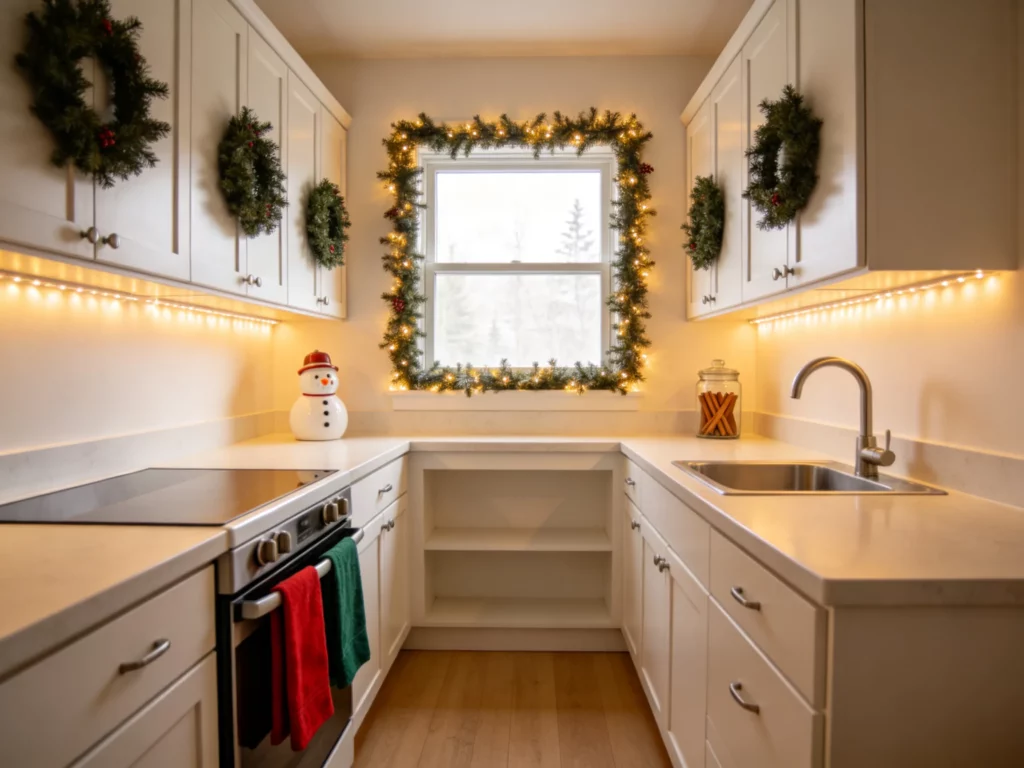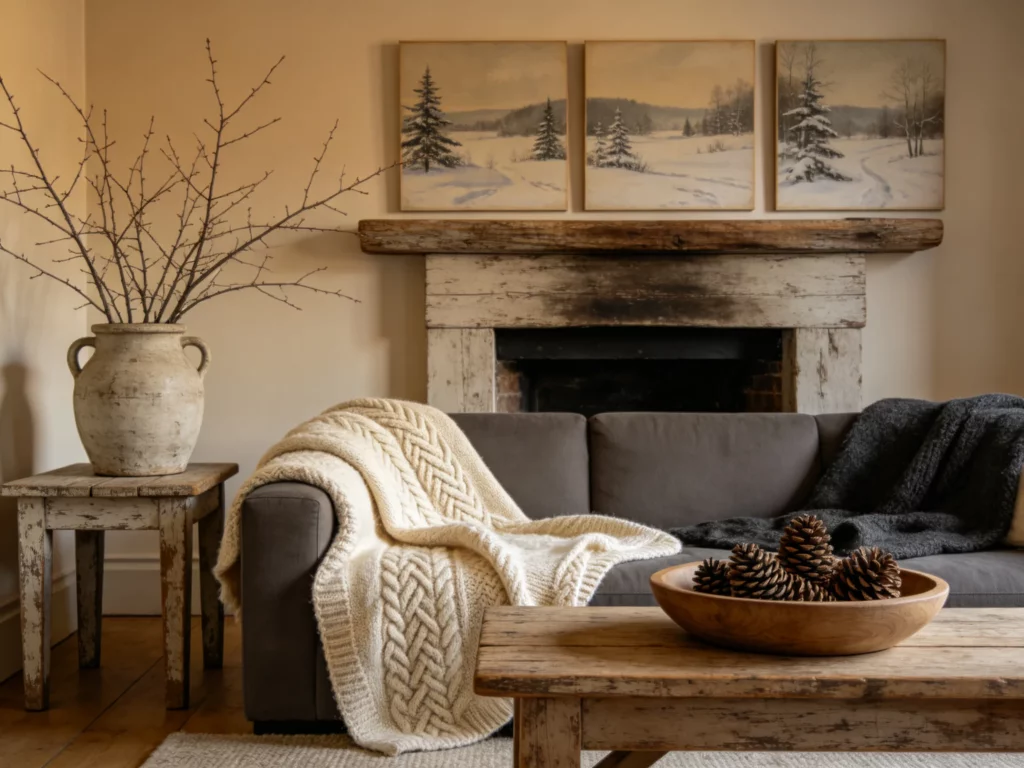
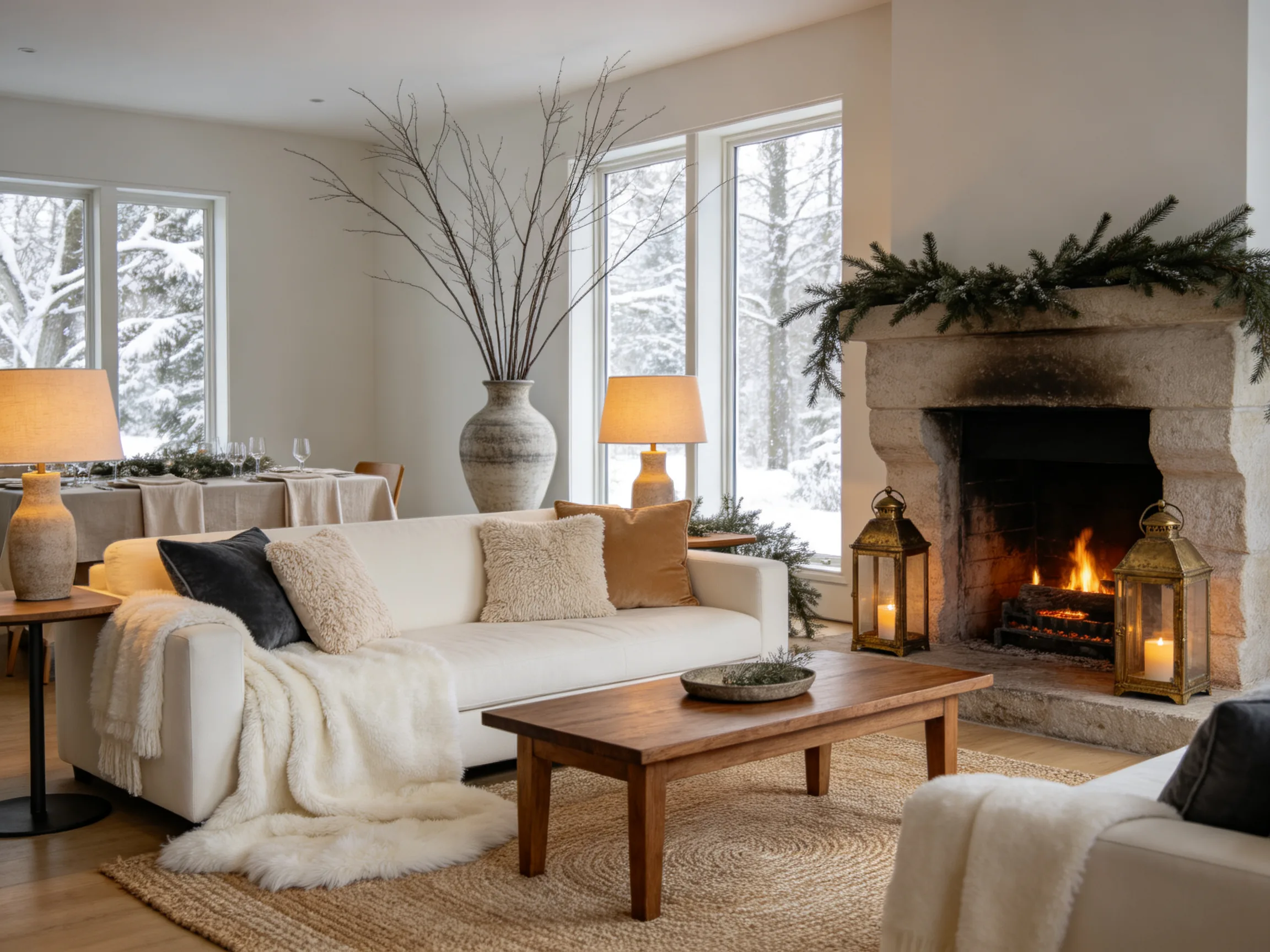
Luxury winter home decor works best when it layers warmth, texture, and soft light without making rooms feel crowded. Use natural materials, restrained seasonal color, substantial textiles, and carefully placed accents to create a polished winter atmosphere in living rooms, bedrooms, entryways, dining areas, bathrooms, and workspaces.
1. Layer an Ivory Wool Rug Over a Larger Natural-Fiber Rug
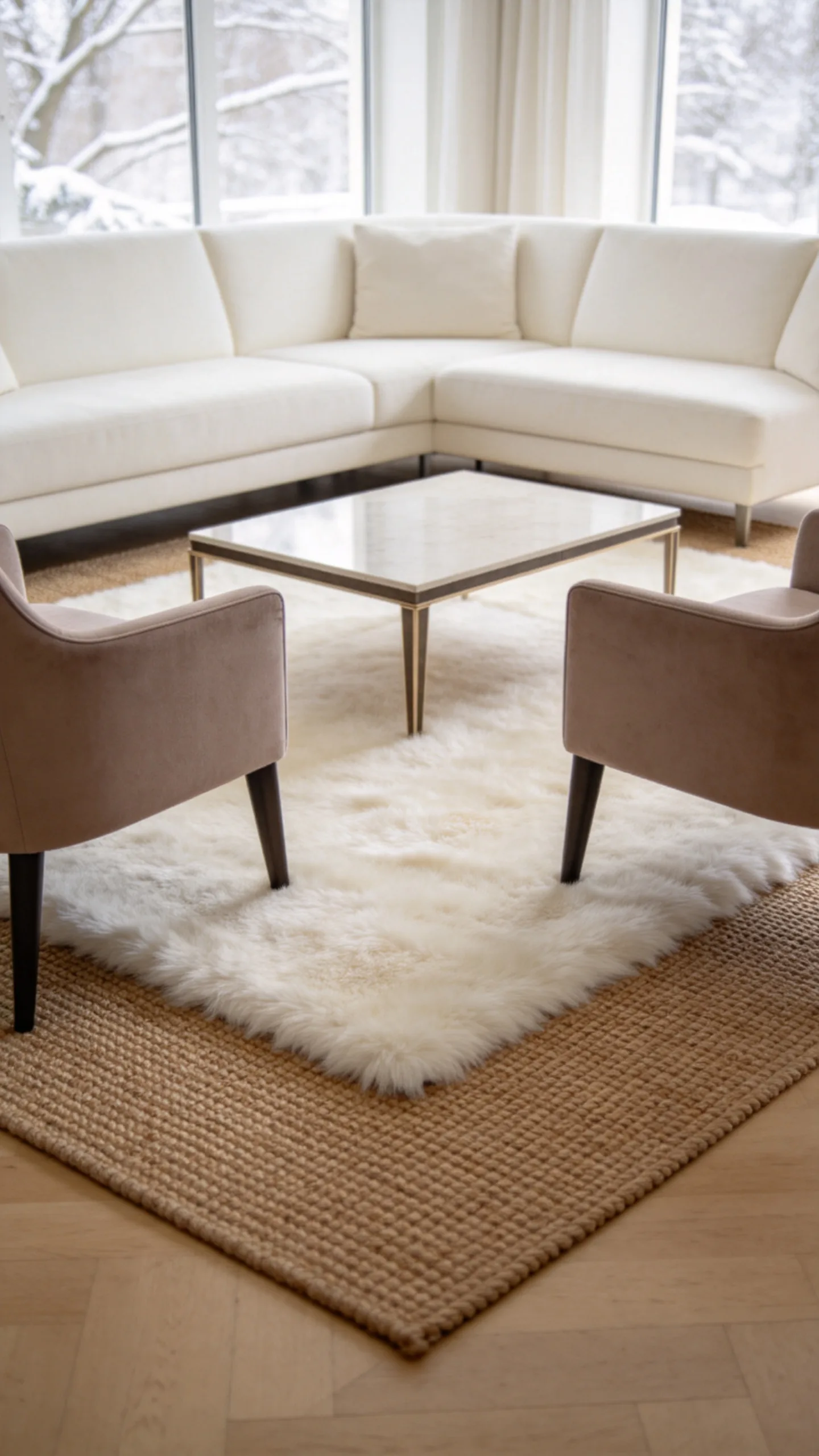
In the living room, place a smaller ivory wool rug over a larger jute or sisal rug to create depth beneath a coffee table and seating group. The woven base adds structure, while the plush top layer makes the conversation area feel warmer during winter.
Keep the layered rugs centered under the sofa and front legs of the chairs so the furniture remains visually connected. Choose low-contrast cream, oatmeal, and warm taupe tones to preserve open sightlines in a compact room.
2. Frame the Fireplace With Aged Brass Lanterns
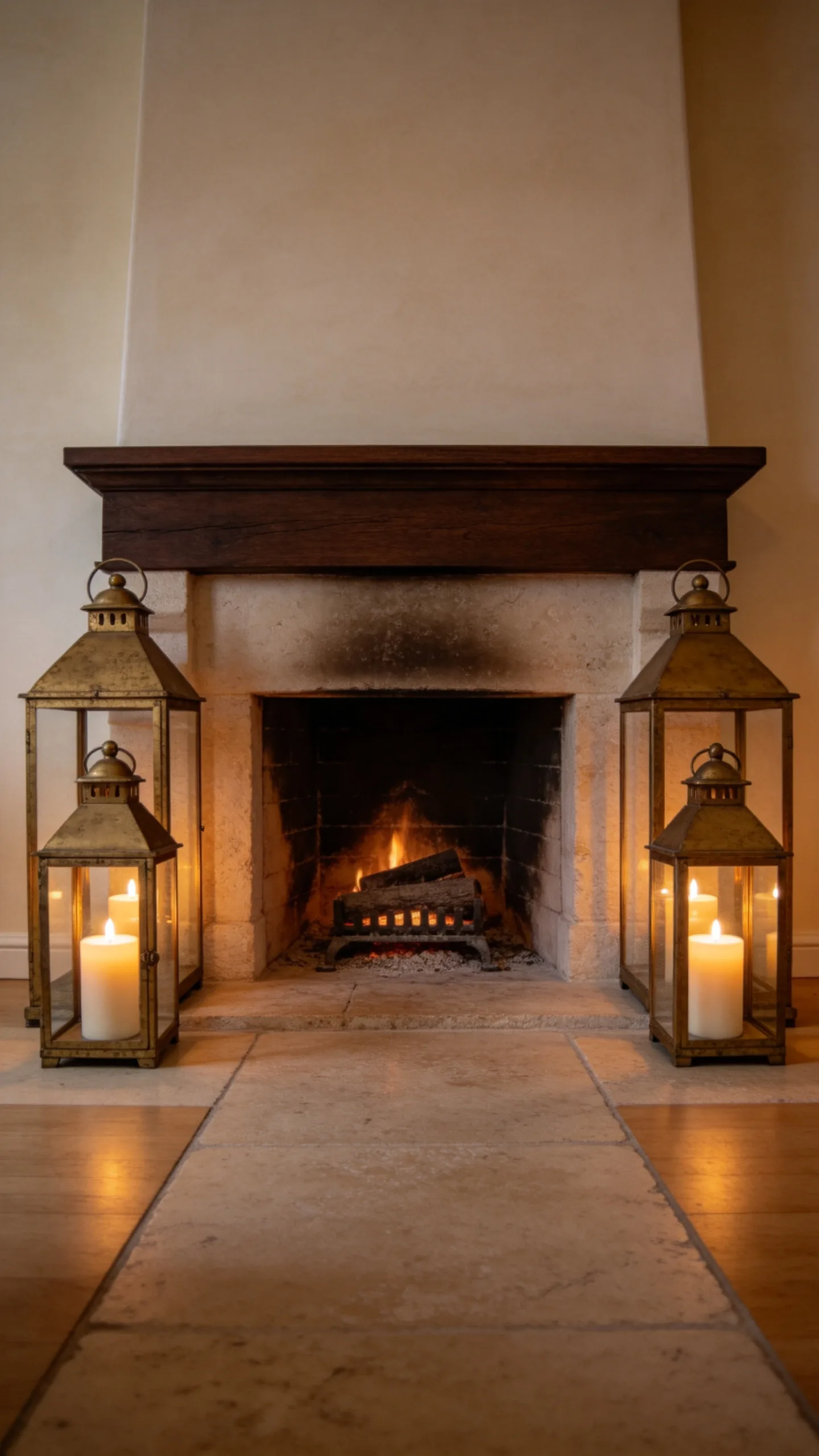
Style the floor on both sides of a fireplace with pairs of aged brass lanterns in different heights. Use flameless pillar candles for a steady glow that highlights the mantel without competing with artwork or a television.
Balance the metallic finish with a stone hearth, dark wood mantel, or limewashed wall. Leave enough clearance around the firebox and maintain a clear walking path between the fireplace and coffee table.
3. Drape a Cashmere-Style Throw Across a Tailored Sofa
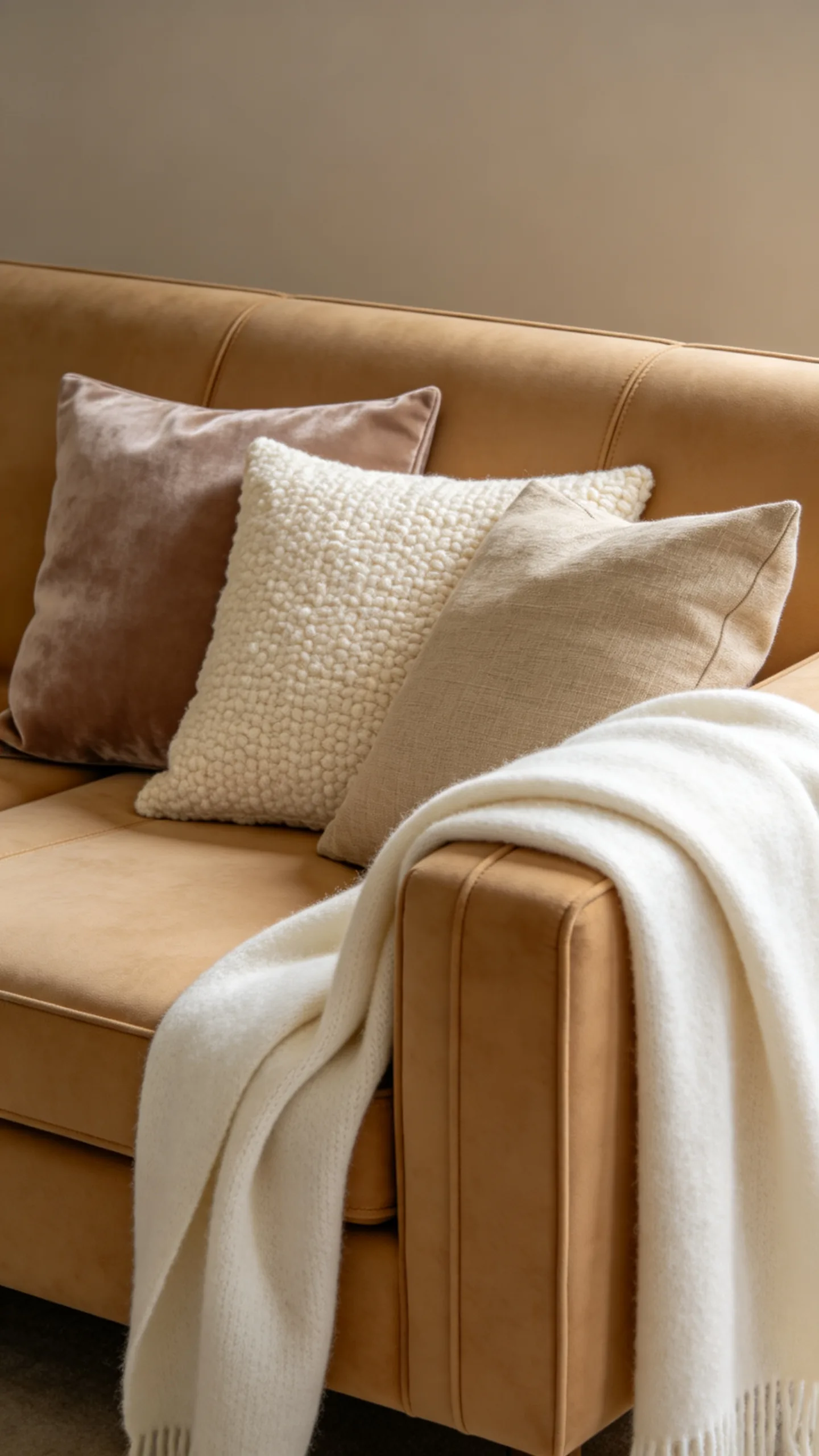
Add a generously sized wool, alpaca, or cashmere-style throw to the arm of a structured sofa in camel, mushroom, soft gray, or winter white. A loose fold looks intentional while still making the seating feel inviting.
Pair the throw with two or three pillows in contrasting textures, such as velvet, boucle, and linen. Keep the palette limited so the textile layering feels edited rather than cluttered.
4. Create a Winter Entryway With a Marble Console
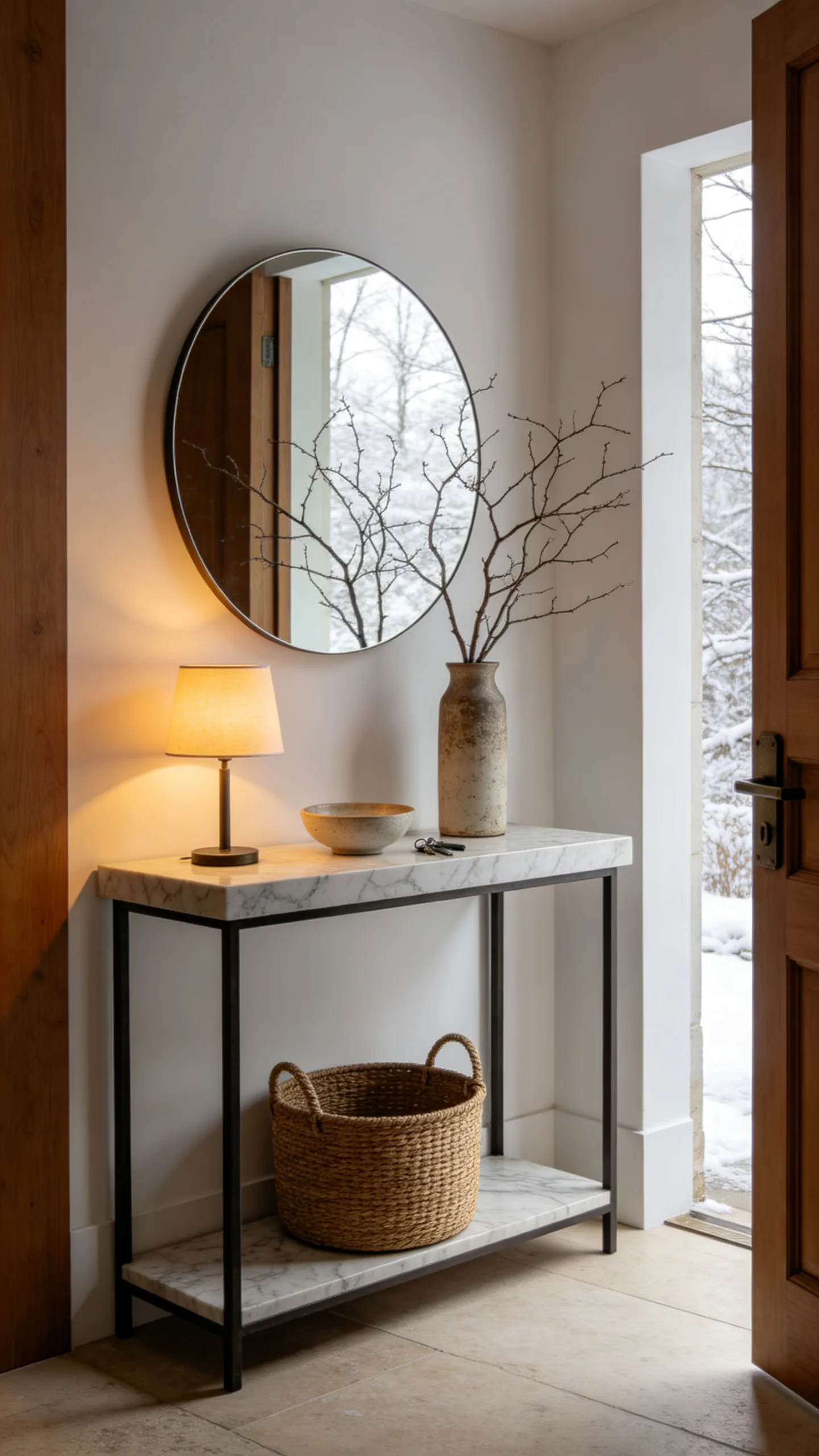
Use a slim marble-topped console against the entryway wall to establish a refined focal point without narrowing the passage. Style it with a ceramic bowl for keys, a small table lamp, and one tall arrangement of bare branches.
Hang a mirror above the console to reflect daylight and expand the visual depth of the foyer. Leave the lower shelf mostly open, using only one woven basket for gloves, scarves, or winter accessories.
5. Use Oversized Branches in a Sculptural Floor Vase
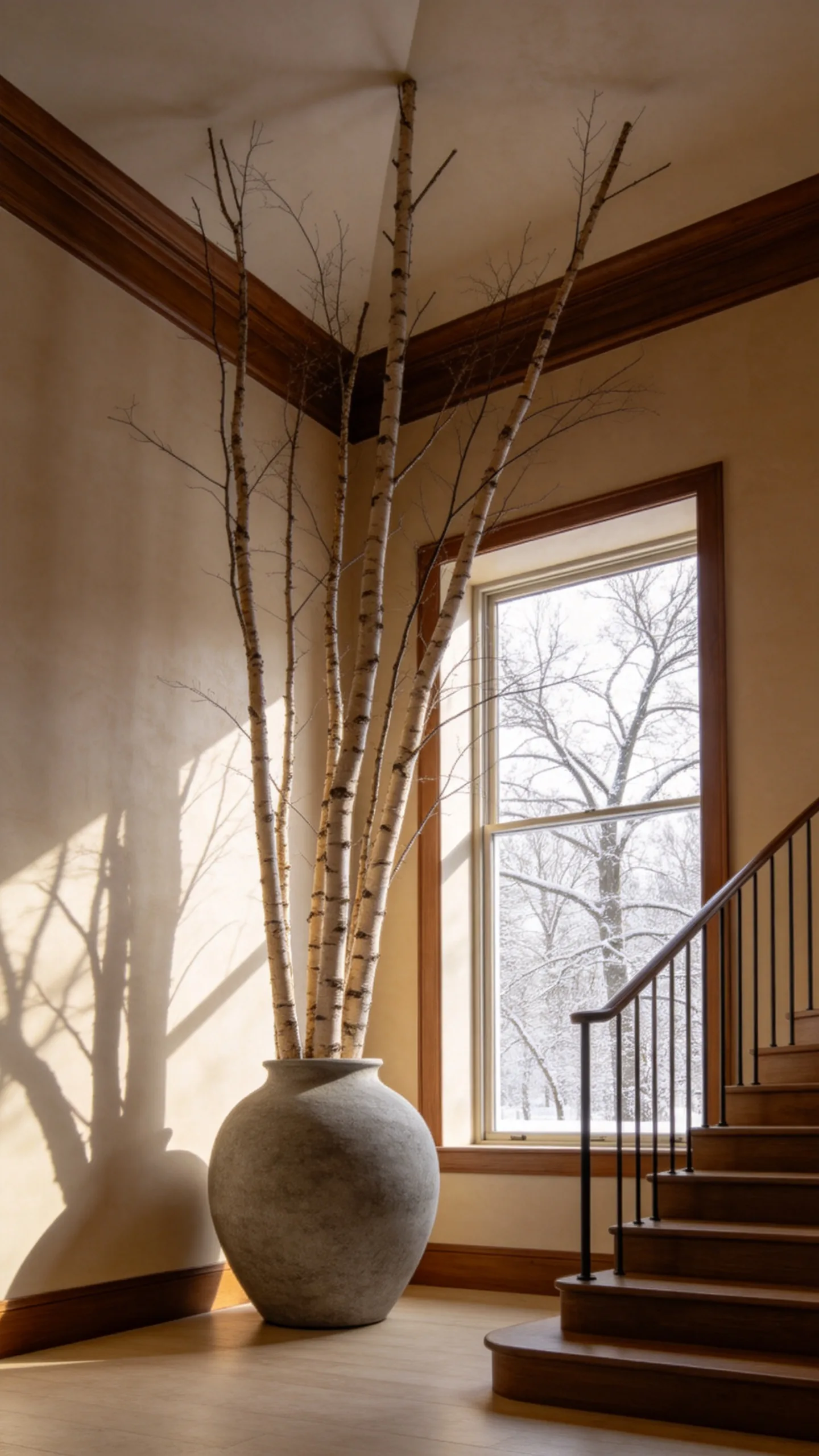
Place tall birch, willow, magnolia, or eucalyptus branches in a matte ceramic or stone floor vase near a living room corner, stair landing, or dining area. The vertical arrangement fills unused height and draws the eye upward.
Choose a vessel scaled to the room rather than a small tabletop container. Keep the branches narrow enough to avoid blocking windows, doorways, or the sightline between seating and the main walkway.
6. Style a Dining Table With Linen, Velvet, and Stone
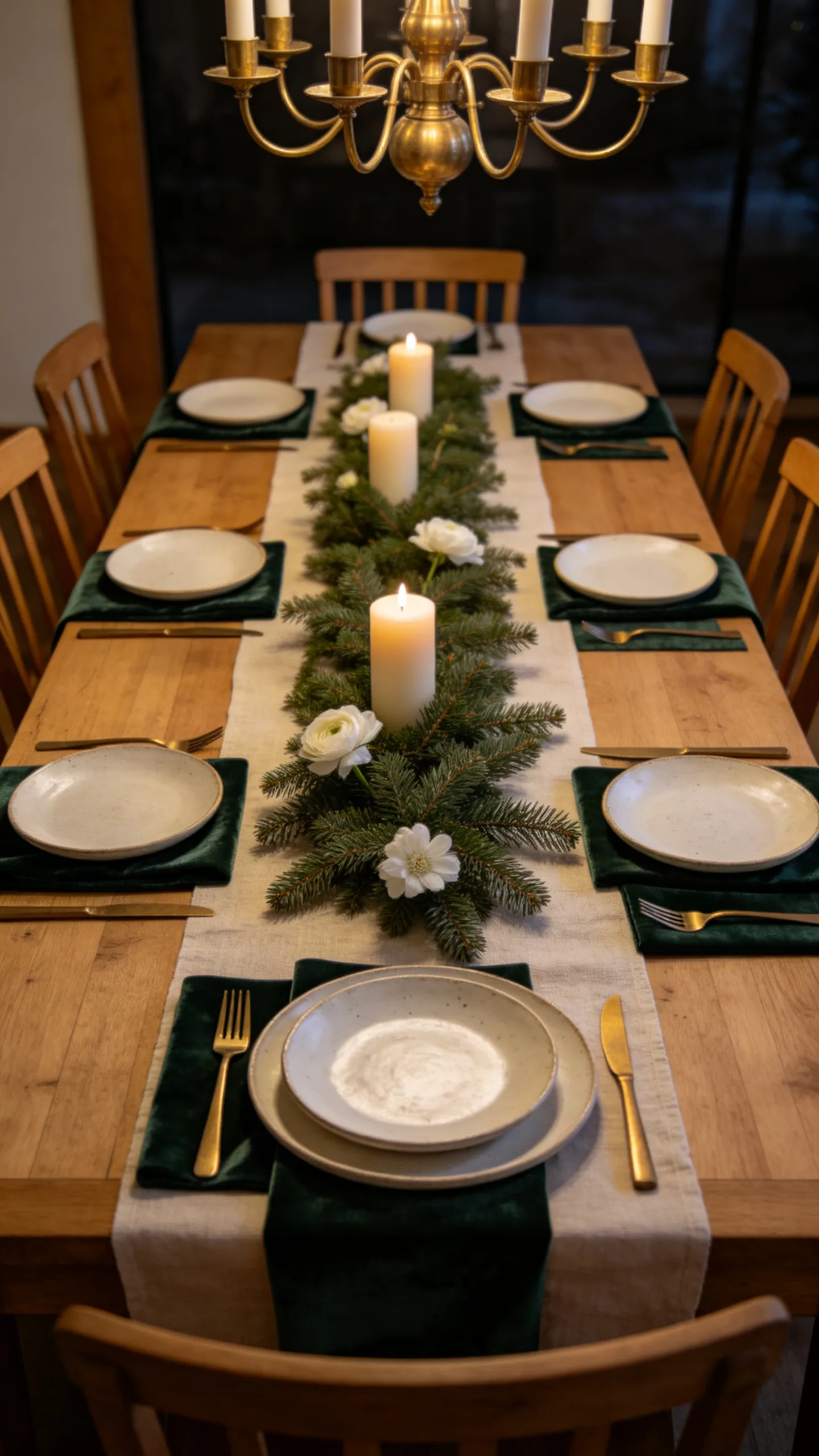
For a winter dining room, layer a washed linen runner over a wood or stone table and add velvet napkins in charcoal, forest green, cinnamon, or deep burgundy. Use stoneware plates and brushed metal flatware to keep the setting tactile but practical.
Place a low centerpiece of evergreen sprigs, white flowers, or unscented candles so guests can see across the table. Repeat one material from the room—such as brass from the chandelier or oak from the chairs—for a cohesive arrangement.
7. Install Warm Lighting at Multiple Heights
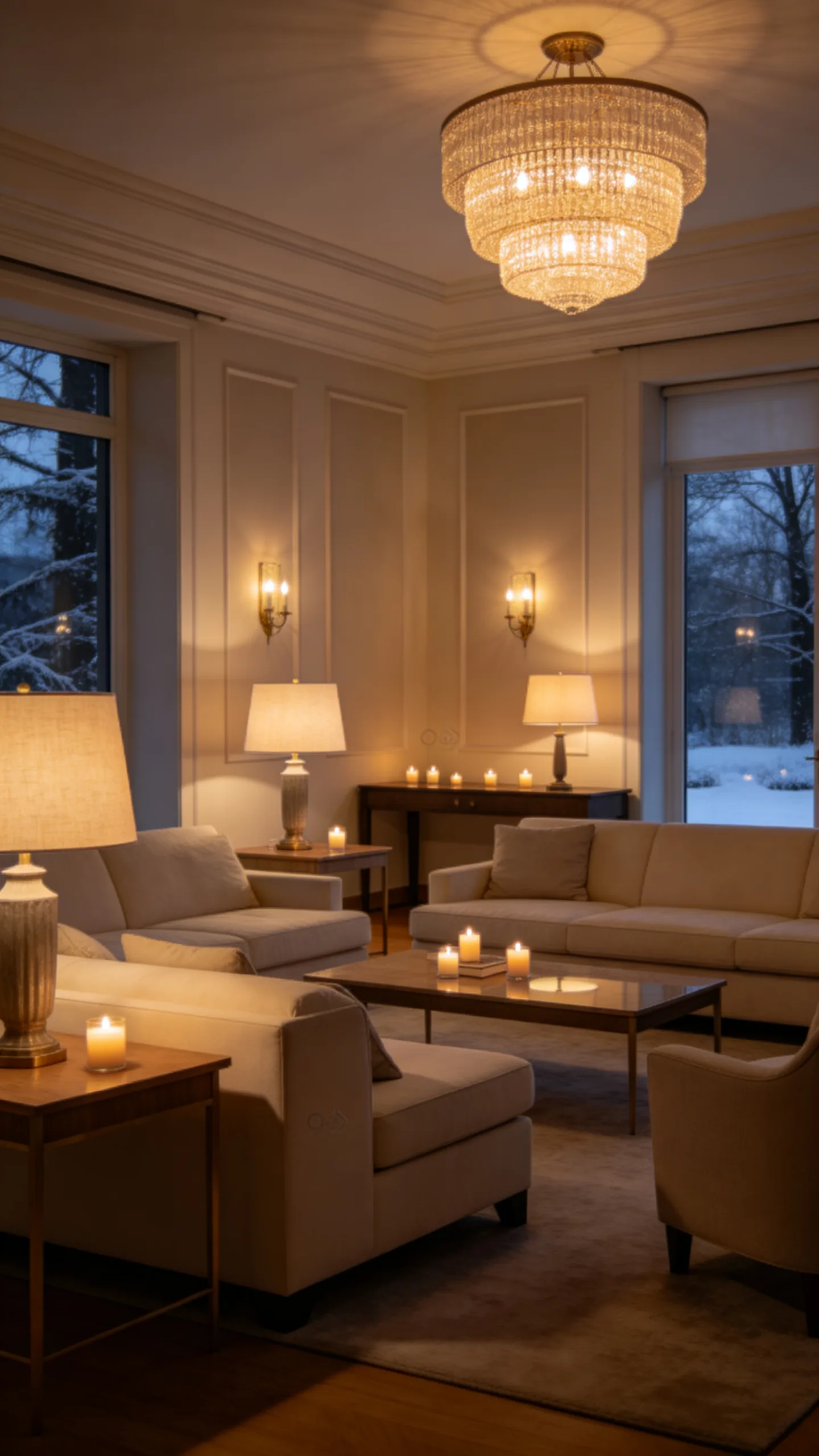
Combine a ceiling fixture, wall sconces, table lamps, and candlelight to make a large room feel warmer after sunset. Choose bulbs in a warm white range and use dimmers where possible to adjust the mood for reading, entertaining, or dining.
Position lamps on side tables, consoles, or a bar cabinet so light reaches several zones instead of concentrating at the center of the ceiling. Silk, linen, or parchment shades soften glare and add texture to the room.
8. Dress the Bed in Layered Winter Neutrals
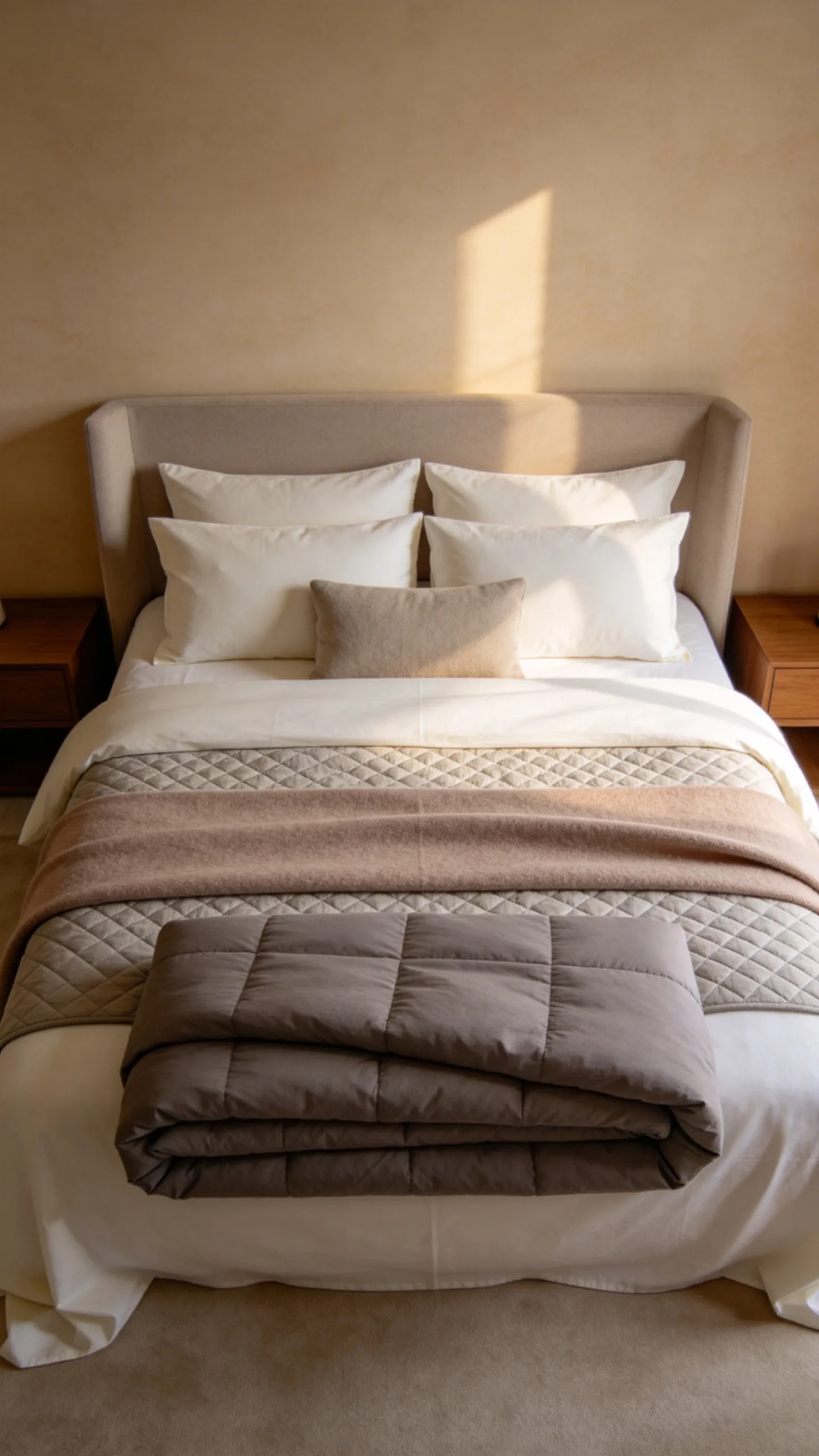
Build a sophisticated bedroom bed with crisp cotton sheets, a quilted coverlet, a wool blanket, and a heavier duvet or folded cover at the foot. Combine ivory, stone, taupe, and muted gray rather than relying on one flat color.
Use euro shams at the headboard, two standard pillows, and one lumbar cushion to create height without overcrowding the bed. Keep the bedding proportions aligned with the mattress so the layers fall neatly instead of pooling on the floor.
9. Add Velvet Drapery to a Bedroom With Drafty Windows
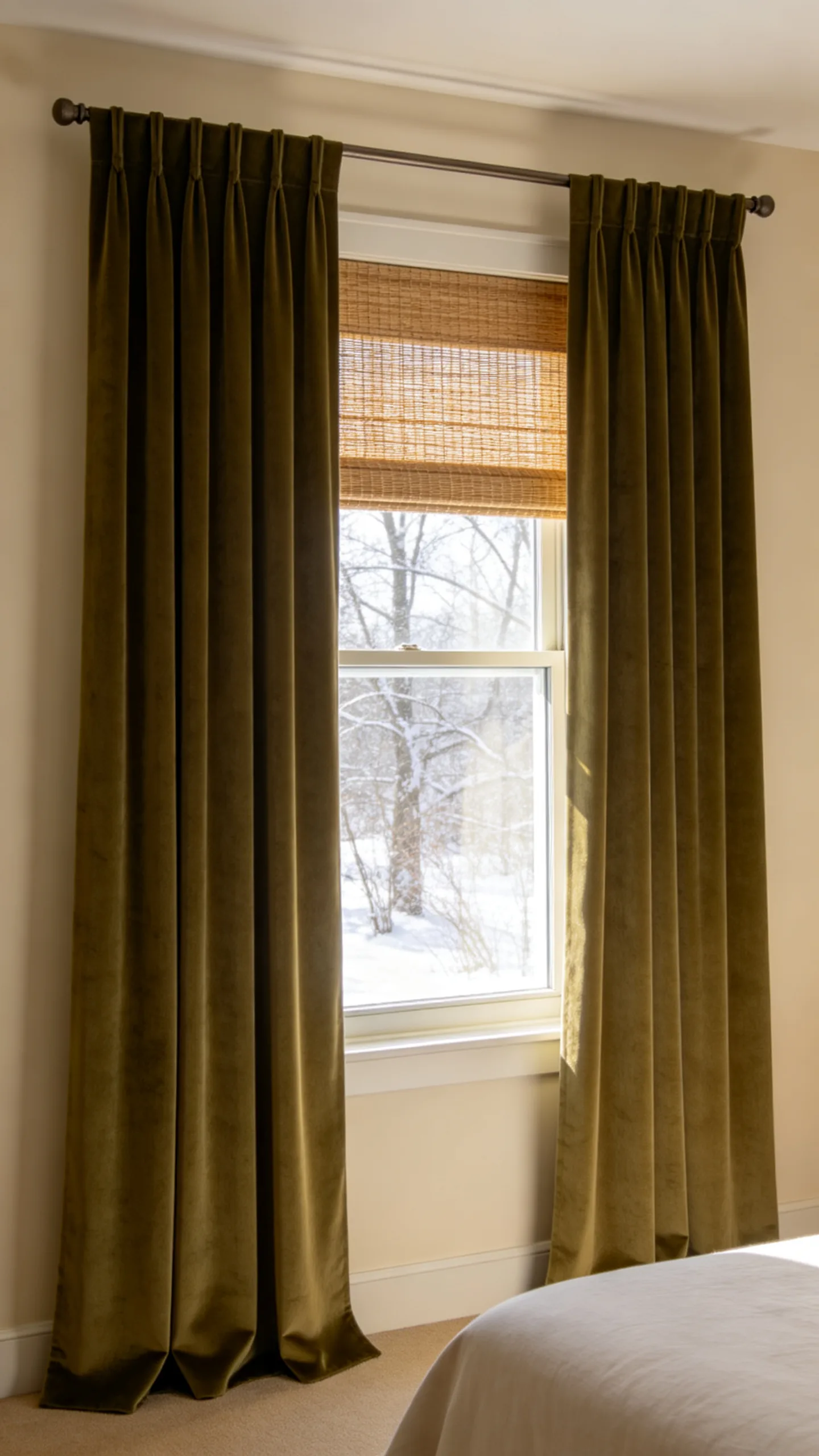
Hang full-length velvet or lined thermal curtains from ceiling height to the floor to soften a bedroom and reduce the visual harshness of bare windows. Deep olive, warm gray, navy, or muted aubergine can add winter depth without requiring a new wall color.
Mount the rod several inches beyond each side of the window so the panels can open fully and preserve natural light during the day. Pair the drapery with simple woven shades for privacy and better nighttime insulation.
10. Turn a Bedroom Corner Into a Reading Retreat
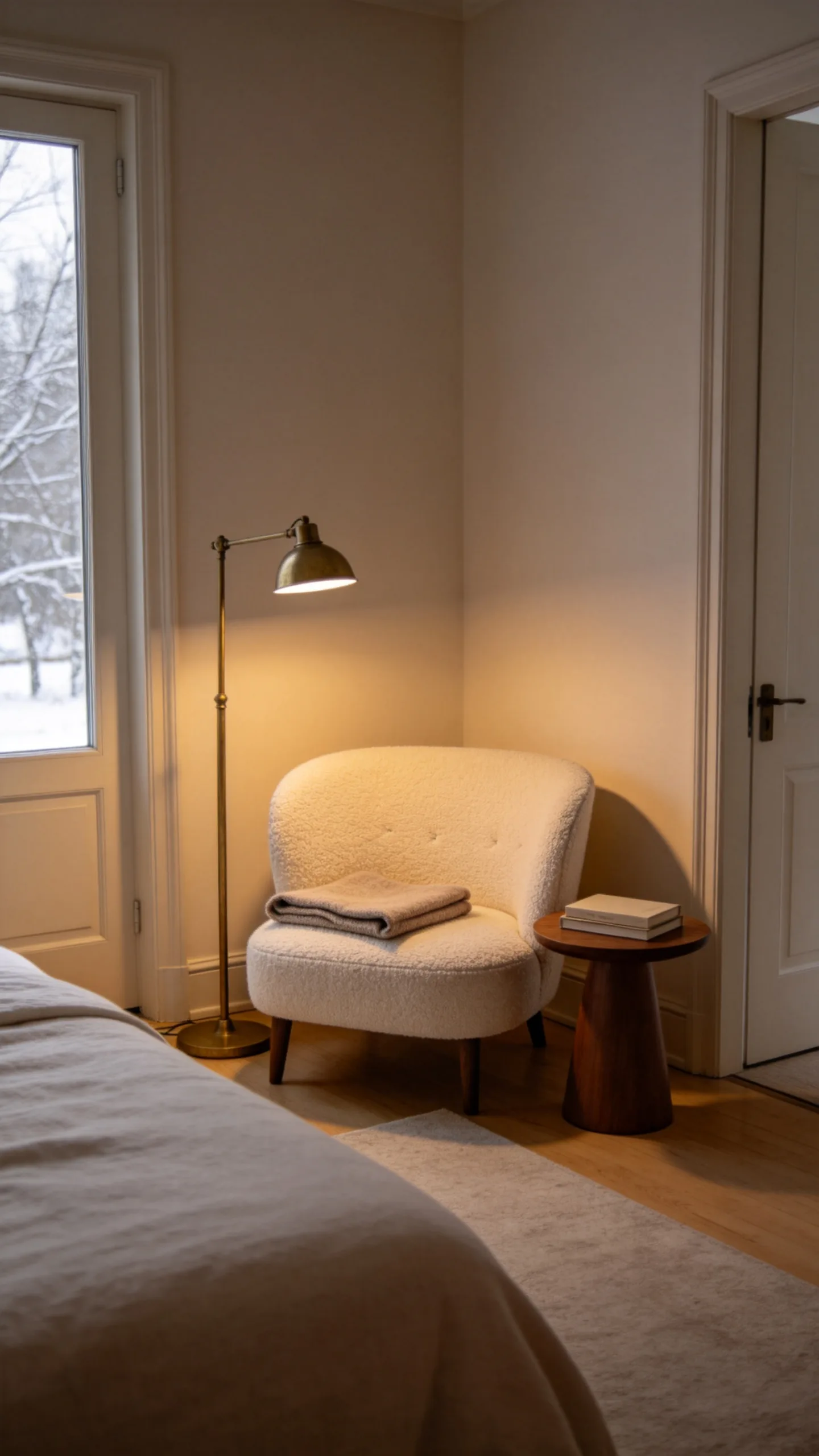
Place a compact upholstered lounge chair beside a floor lamp and a small round drink table in an unused bedroom corner. A boucle chair, wool seat, or leather armchair introduces a substantial material that contrasts with smooth bedding.
Keep the chair outside the main circulation path from the bed to the door. Add one throw and a small stack of books, but avoid filling the floor with extra baskets or stools that make the corner difficult to use.
11. Style a Kitchen Island With a Single Seasonal Arrangement
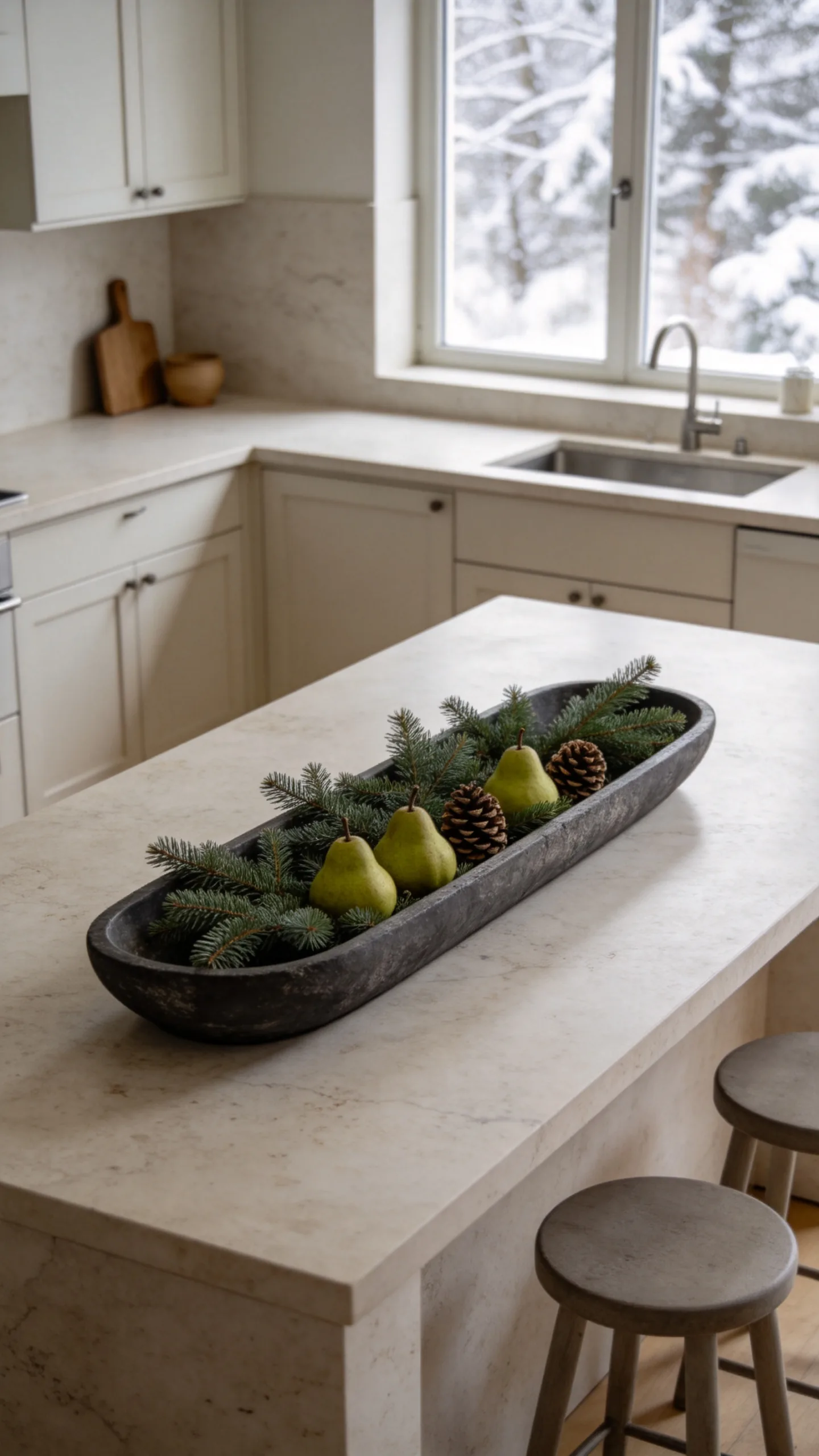
Use a long stoneware trough or dark wood bowl as the centerpiece of a kitchen island. Fill it with clipped evergreen branches, pinecones, pears, or winter citrus for an arrangement that suits food-preparation space without taking over the counter.
Keep the centerpiece low enough to preserve conversation and work visibility. Set it toward one end of the island, leaving the opposite side clear for serving, chopping, or placing a pair of counter stools.
12. Add Brass Hardware and Dark Wood Accents to the Kitchen
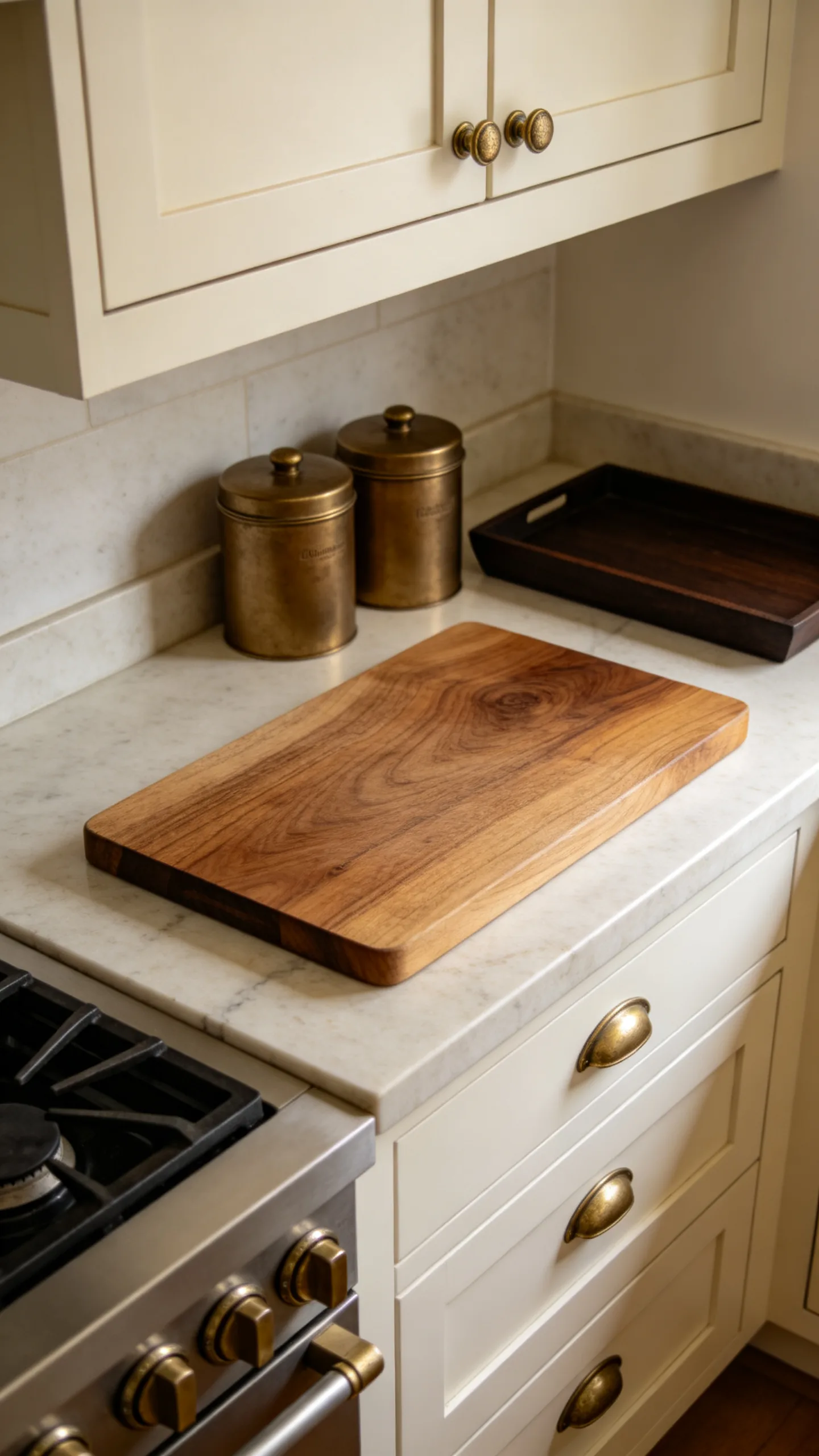
Introduce winter warmth through small, replaceable details such as aged brass cabinet pulls, a walnut cutting board, bronze-toned canisters, and a dark wood tray. These materials add depth to white, cream, or gray cabinetry without a full renovation.
Group countertop objects into one or two purposeful zones near the range or coffee station. Keeping appliances and accessories contained reduces visual clutter and allows the hardware to remain a subtle design feature.
13. Create a Coffee Station With Ceramic and Wood
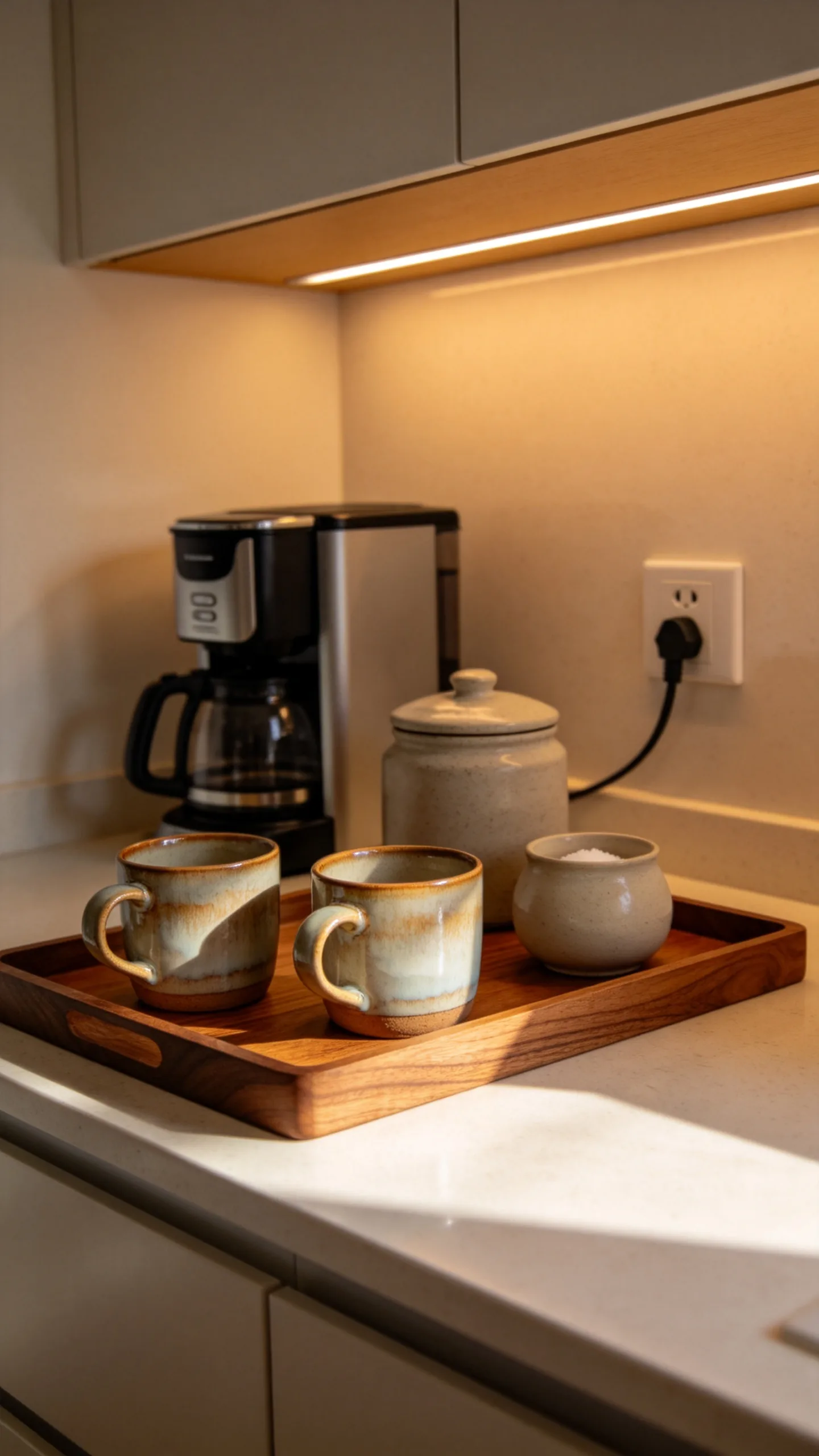
Designate one section of a kitchen counter or sideboard for a refined winter beverage station. Arrange a ceramic sugar bowl, matching mugs, a wood tray, and a lidded canister for coffee, tea, or cocoa.
Use a small lamp or under-cabinet light to give the station a warm glow in the morning. Keep the tray close to an outlet and water source while leaving enough counter space for daily preparation.
14. Use a Leather Bench in the Mudroom
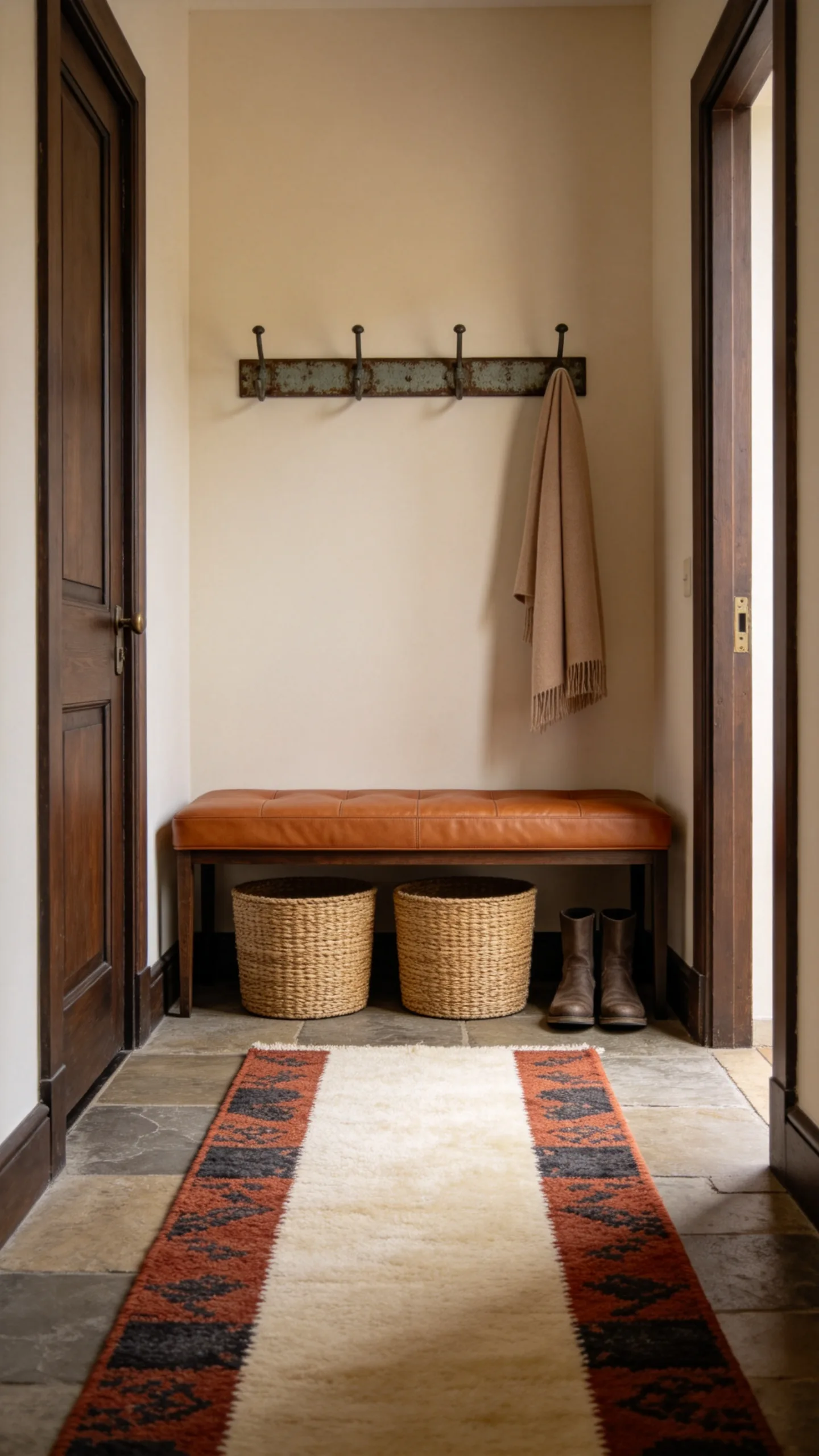
Place a narrow leather or faux-leather bench beneath a row of hooks in the mudroom or back entry. The seat provides a practical place to remove winter boots, while the smooth material handles everyday use more easily than delicate upholstery.
Add two labeled baskets beneath the bench for hats, gloves, and scarves. A washable runner should extend along the main traffic path to protect the floor and define the drop zone.
15. Hang a Gallery of Winter Landscape Art
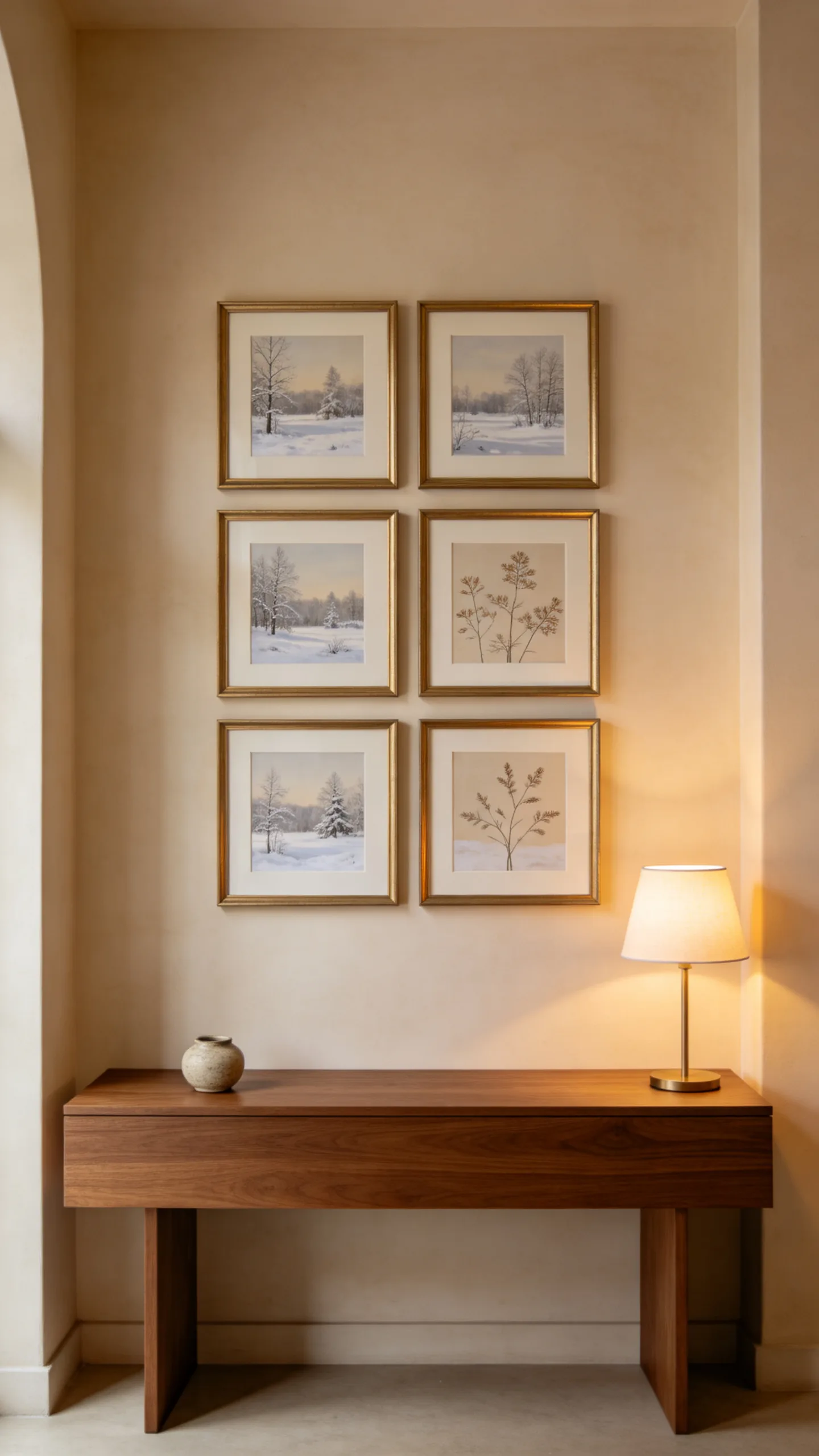
Arrange a small gallery of winter landscapes, botanical prints, or monochrome photography above a console, sofa, or stair wall. Use consistent frames in black, walnut, antique brass, or natural oak to make different images feel connected.
Leave even spacing between the frames and keep the group centered on the furniture below. In a narrow hallway, a horizontal sequence of smaller prints maintains the sightline and prevents the wall from feeling visually heavy.
16. Layer a Runner and Runner-Scale Lighting in the Hallway
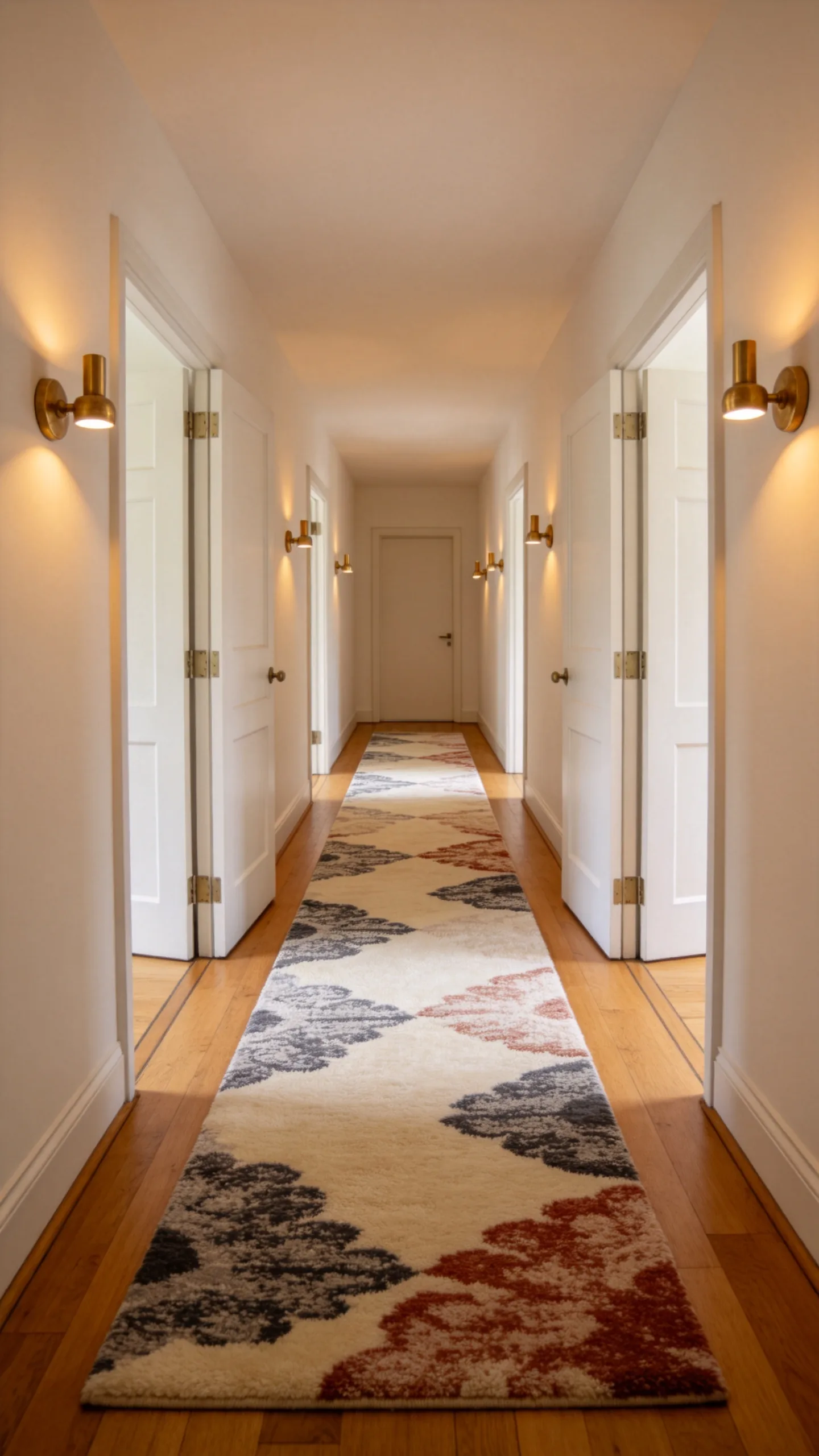
Place a long, low-pile runner in the hallway to introduce warmth and guide movement between rooms. Choose a restrained pattern in cream, gray, rust, or charcoal that can disguise winter dirt while complementing nearby flooring.
Add small wall sconces or narrow console lamps at intervals instead of using only a bright ceiling fixture. Keep the runner far enough from the walls and doors that it does not interfere with opening doors or everyday foot traffic.
17. Give the Bathroom a Spa-Like Winter Update
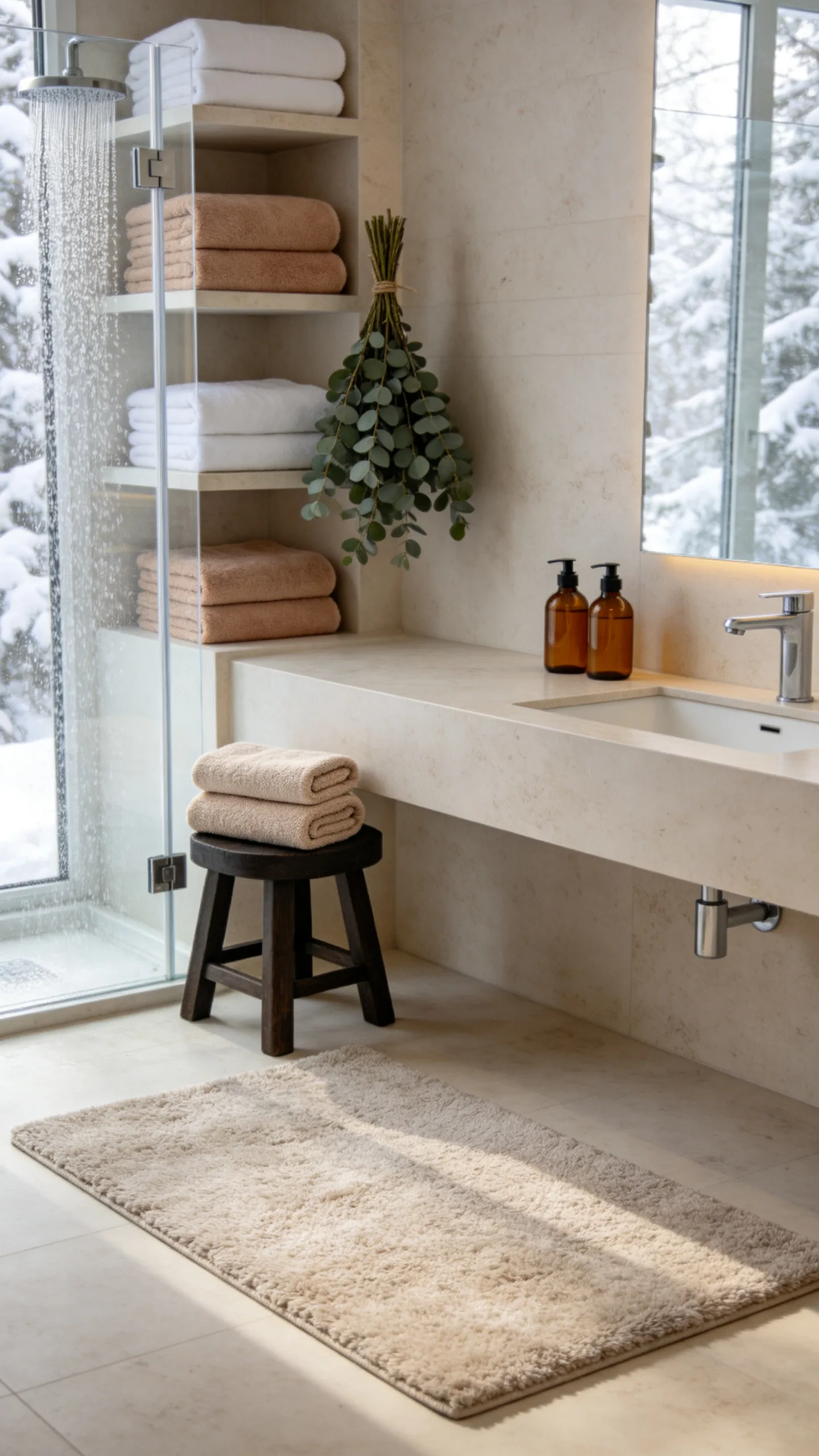
Replace thin bath mats with a substantial cotton or teak mat, then add oversized white or stone-colored towels on open shelving. A small stool in dark wood or brushed metal can hold folded towels without crowding the vanity.
Use amber glass containers for hand soap and lotion, and place a single eucalyptus bundle near—not directly under—the shower stream. Keep textiles away from water splashes and preserve clear floor space around the toilet and vanity.
18. Warm a Powder Room With Moody Color
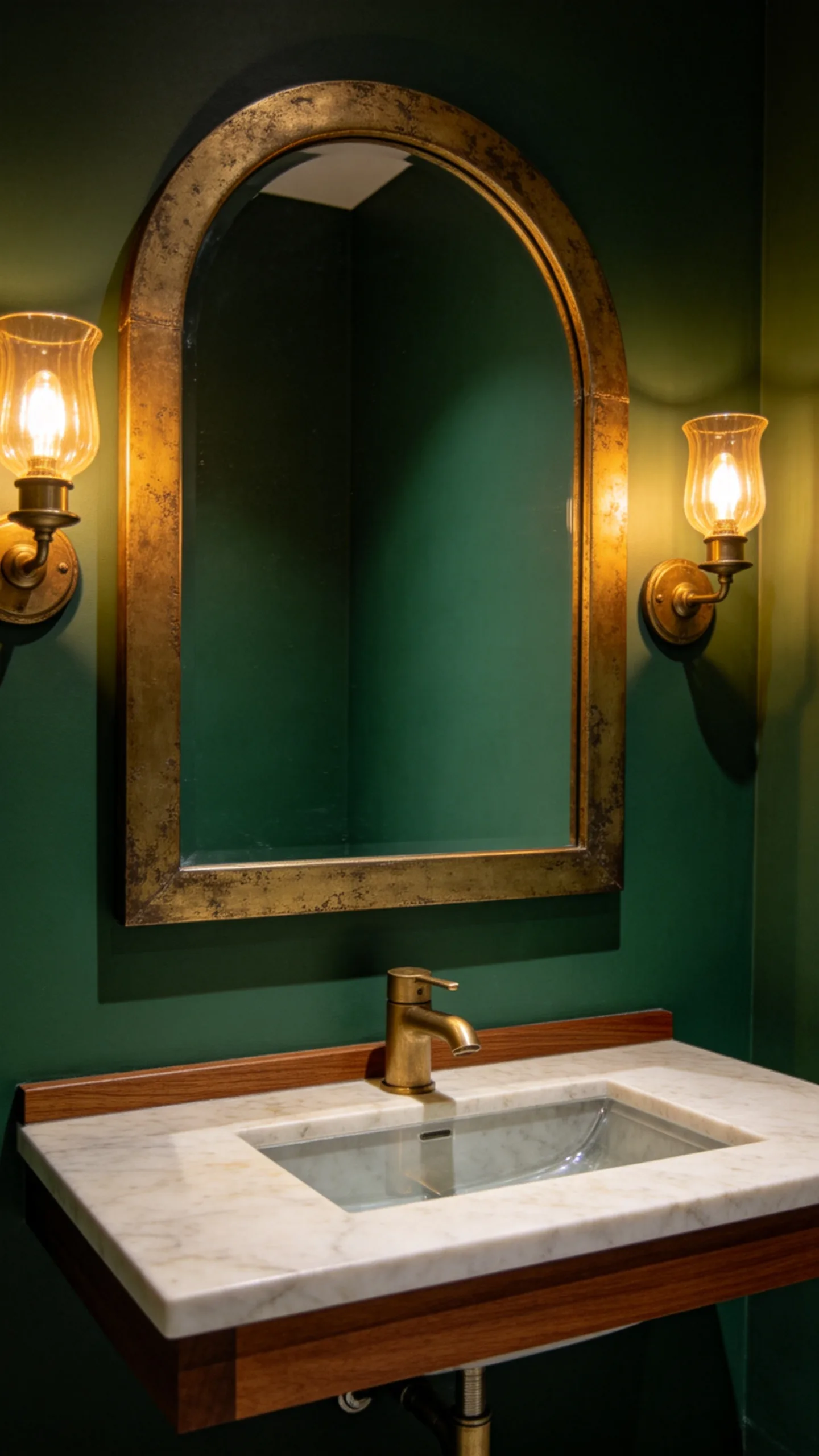
Paint a powder room in charcoal, deep green, warm brown, or navy to create a compact jewel-box effect during winter. Pair the wall color with a light stone vanity, brass mirror, or wood-framed artwork to prevent the small room from feeling flat.
Use one decorative wall light on each side of the mirror when possible. Side lighting provides more flattering illumination than a single overhead fixture and highlights the finish of the faucet and mirror frame.
19. Build a Refined Bar Cart for Winter Entertaining
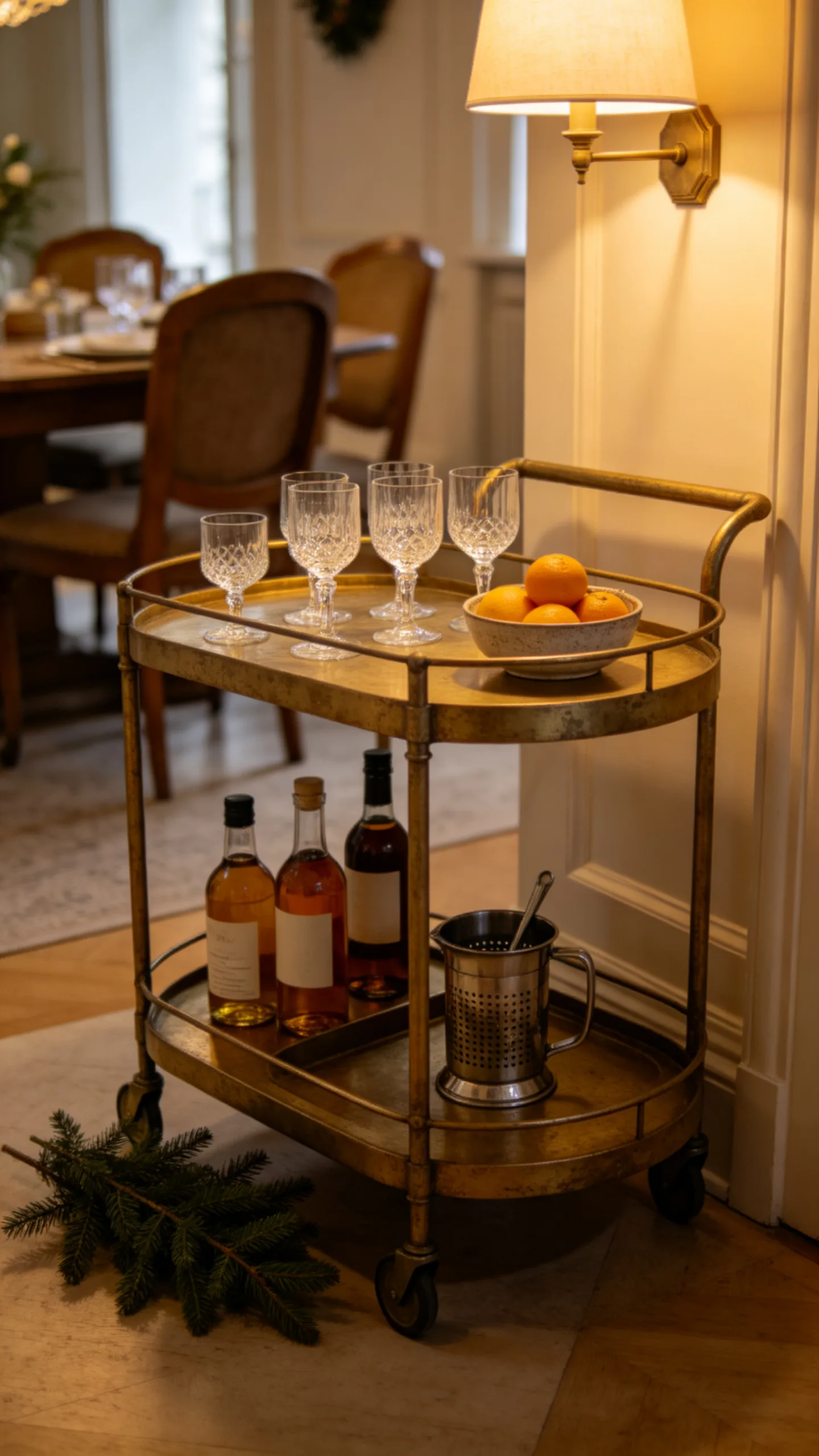
Place a brass, black metal, or wood bar cart in a dining room corner or beside a sideboard. Arrange glassware on the upper tier, bottles and a cocktail shaker on the lower tier, and one small bowl of citrus or cocktail garnishes within reach.
Keep the cart away from the main dining chair path and secure bottles on a stable surface. A small lamp, framed menu, or evergreen clipping can add personality without sacrificing serving space.
20. Style Open Shelves With Negative Space
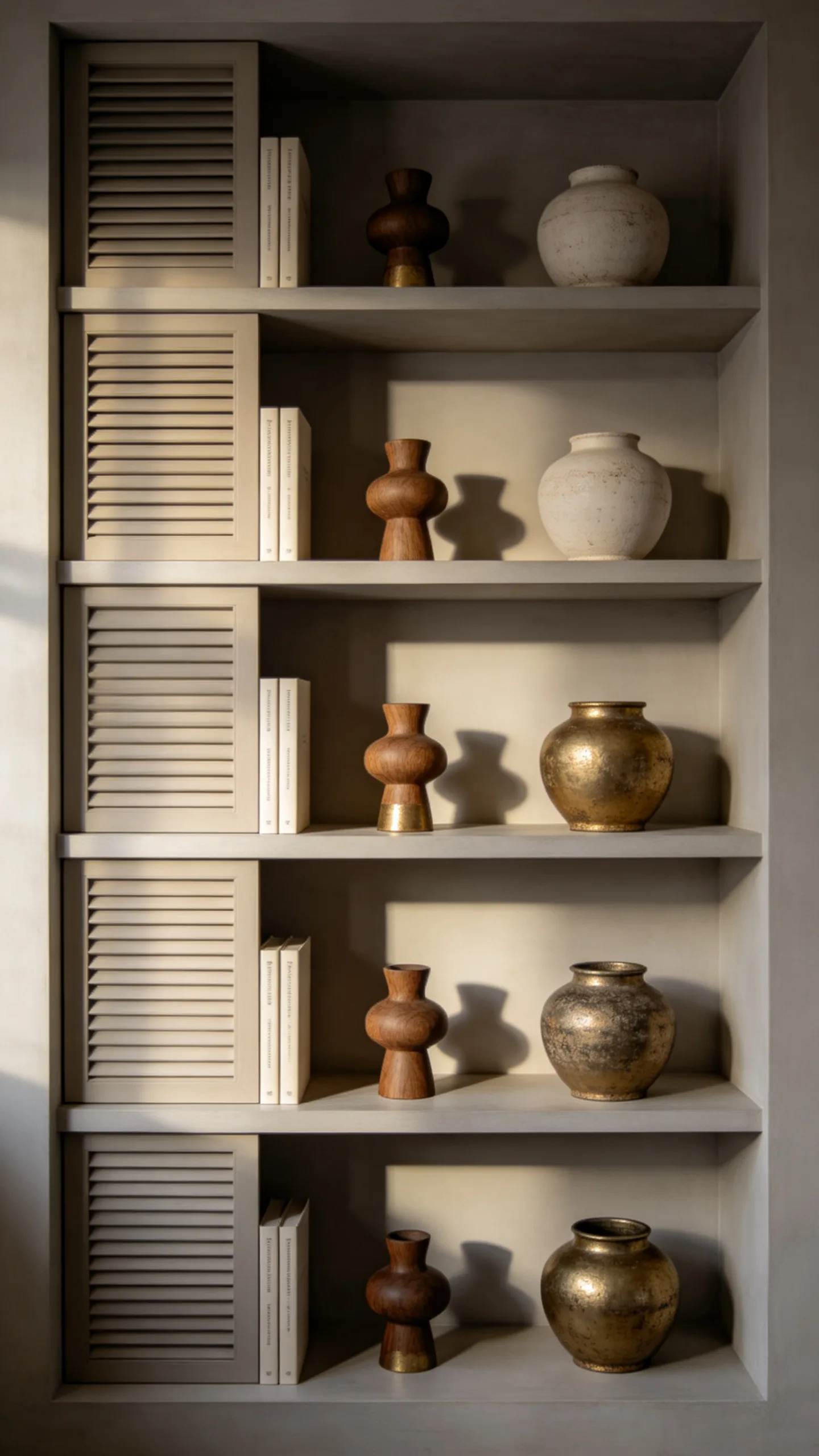
Edit living room, kitchen, or dining room shelves into groups of three: one stack of books, one sculptural object, and one vessel or framed piece. Repeat materials such as ceramic, wood, and aged metal across the shelves for visual continuity.
Leave portions of each shelf empty so the wall color and objects can breathe. Place heavier pieces on lower shelves and lighter vessels higher up to keep the arrangement balanced and easy to dust.
21. Add a Velvet Ottoman Instead of Extra Chairs
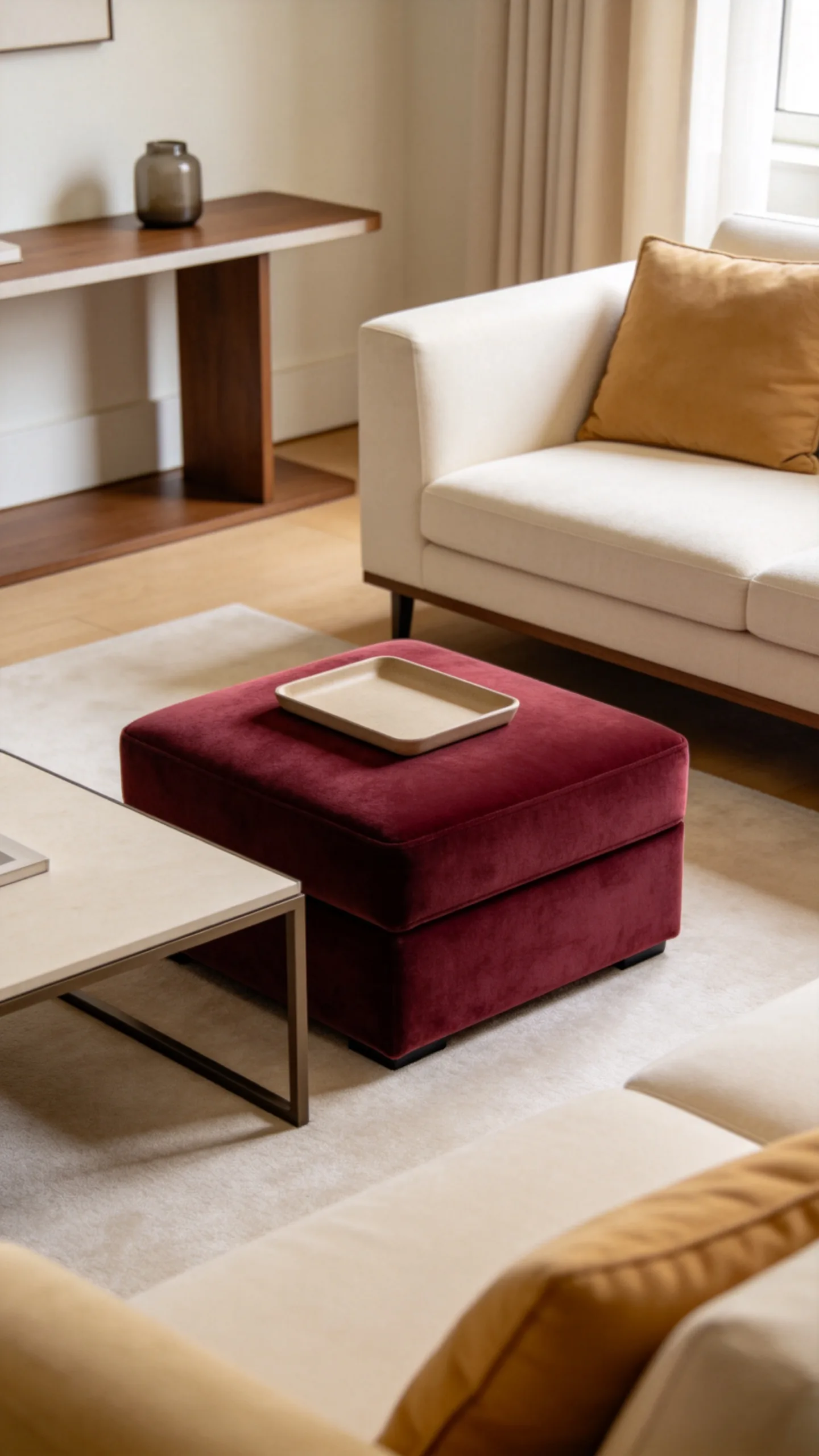
Use a compact velvet ottoman in the living room as a footrest, occasional seat, or flexible surface for a serving tray. Choose a shape that fits beneath a console or coffee table when not in use, preserving floor area in a smaller room.
A jewel-tone ottoman can become the single winter accent in a neutral space, while cream or tobacco velvet creates a quieter effect. Select a performance fabric or removable cover if the piece will be used frequently.
22. Create a Layered Window Seat
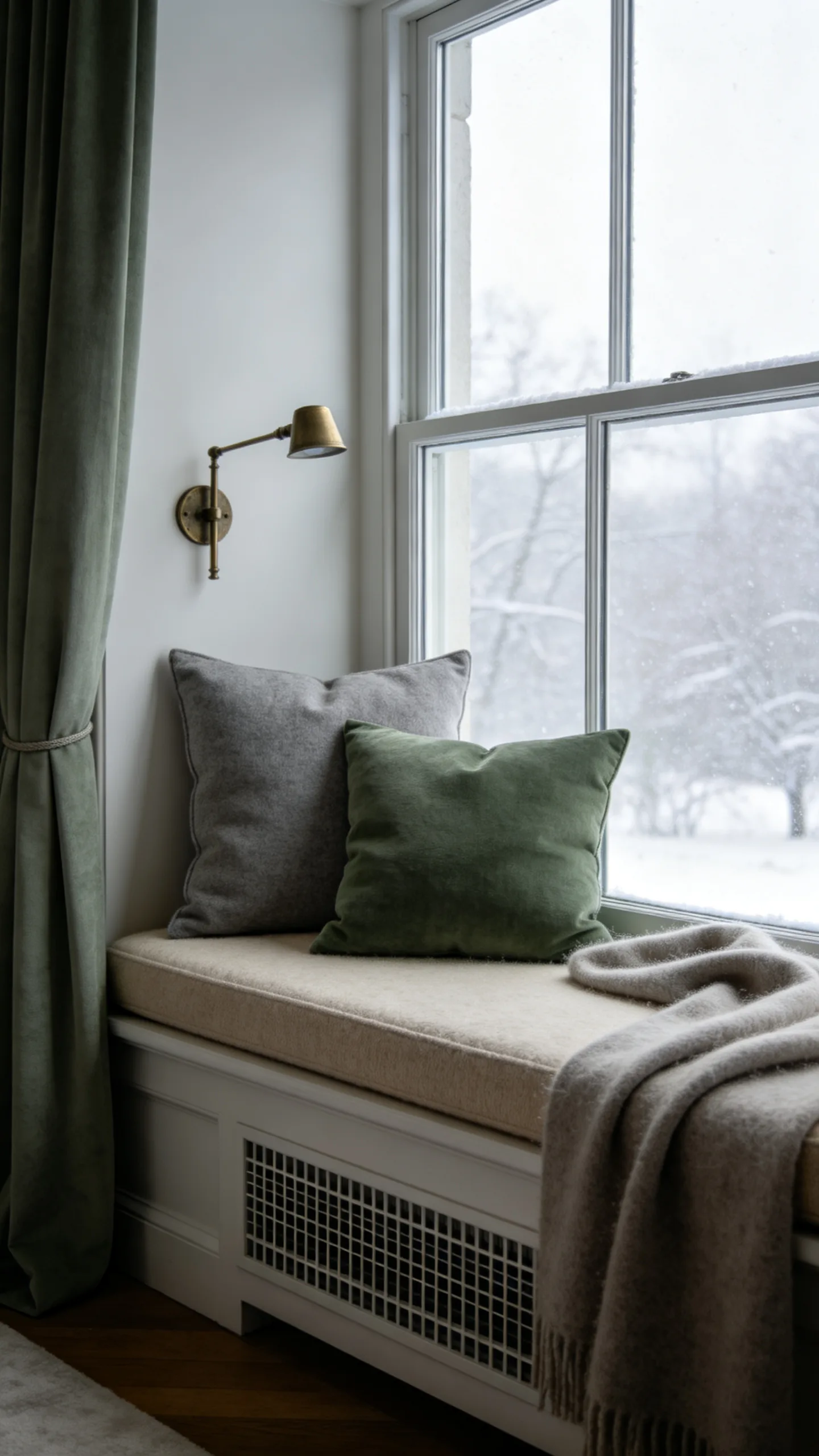
Turn a deep window ledge or built-in bench into a winter retreat with a fitted cushion, two oversized pillows, and a wool throw. Use colors pulled from the surrounding rug or curtains so the seat feels integrated rather than added on.
Keep the cushion depth compatible with the window recess and avoid blocking the radiator or heating vent. The vertical wall space above the seat can hold one narrow picture ledge or a simple sconce for reading.
23. Use a Sculptural Mirror to Reflect Candlelight
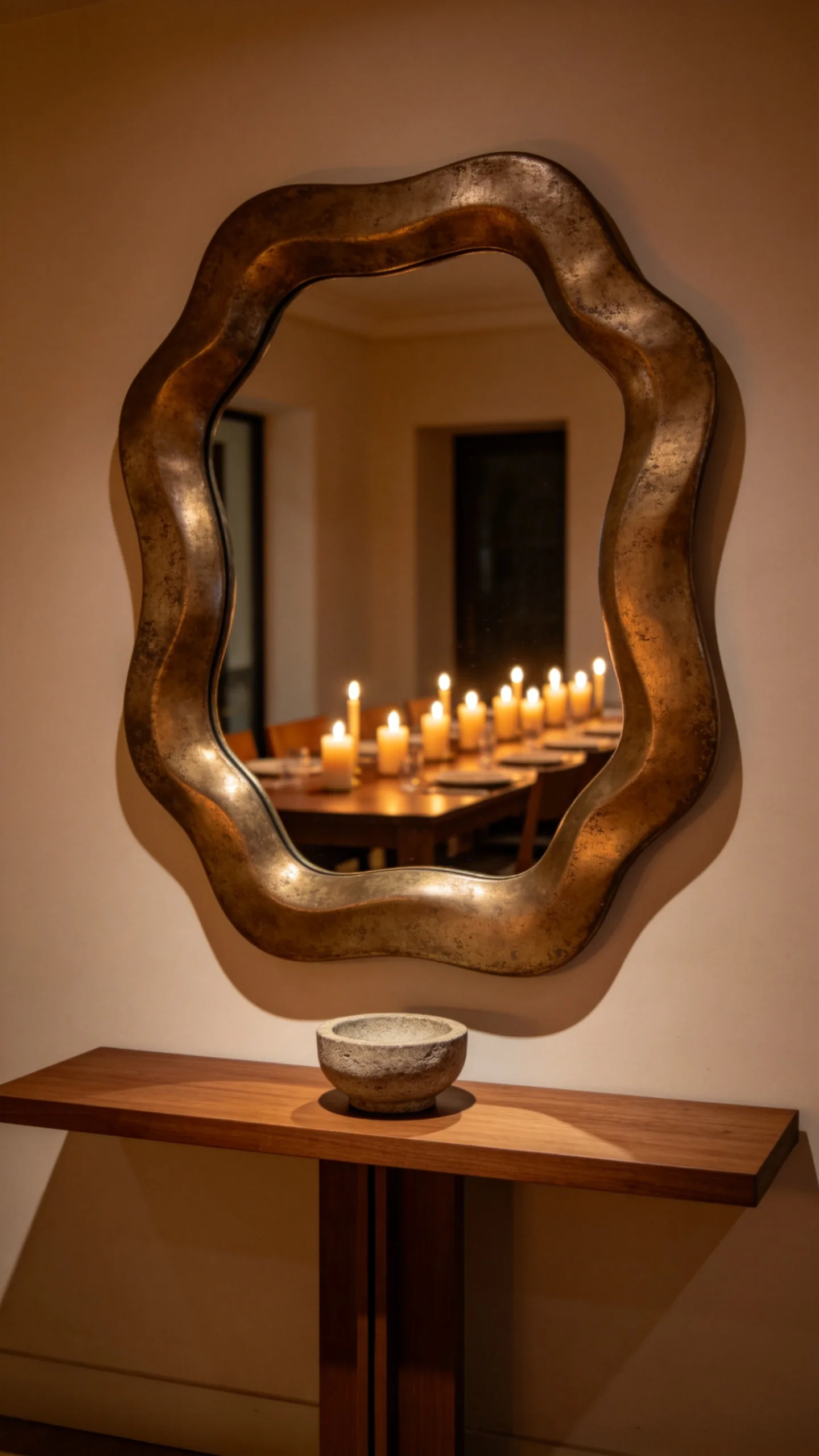
Hang a round, arched, or irregularly shaped mirror opposite a window, fireplace, or dining-room candles. A walnut, bronze, or antiqued frame adds character while the reflective surface spreads light through the room.
Check the mirror’s placement from standing and seated viewpoints before securing it. Keep it centered over a console or aligned with a major architectural feature so it reads as a deliberate focal point.
24. Make a Home Office Feel Warm With Wood and Textile Layers
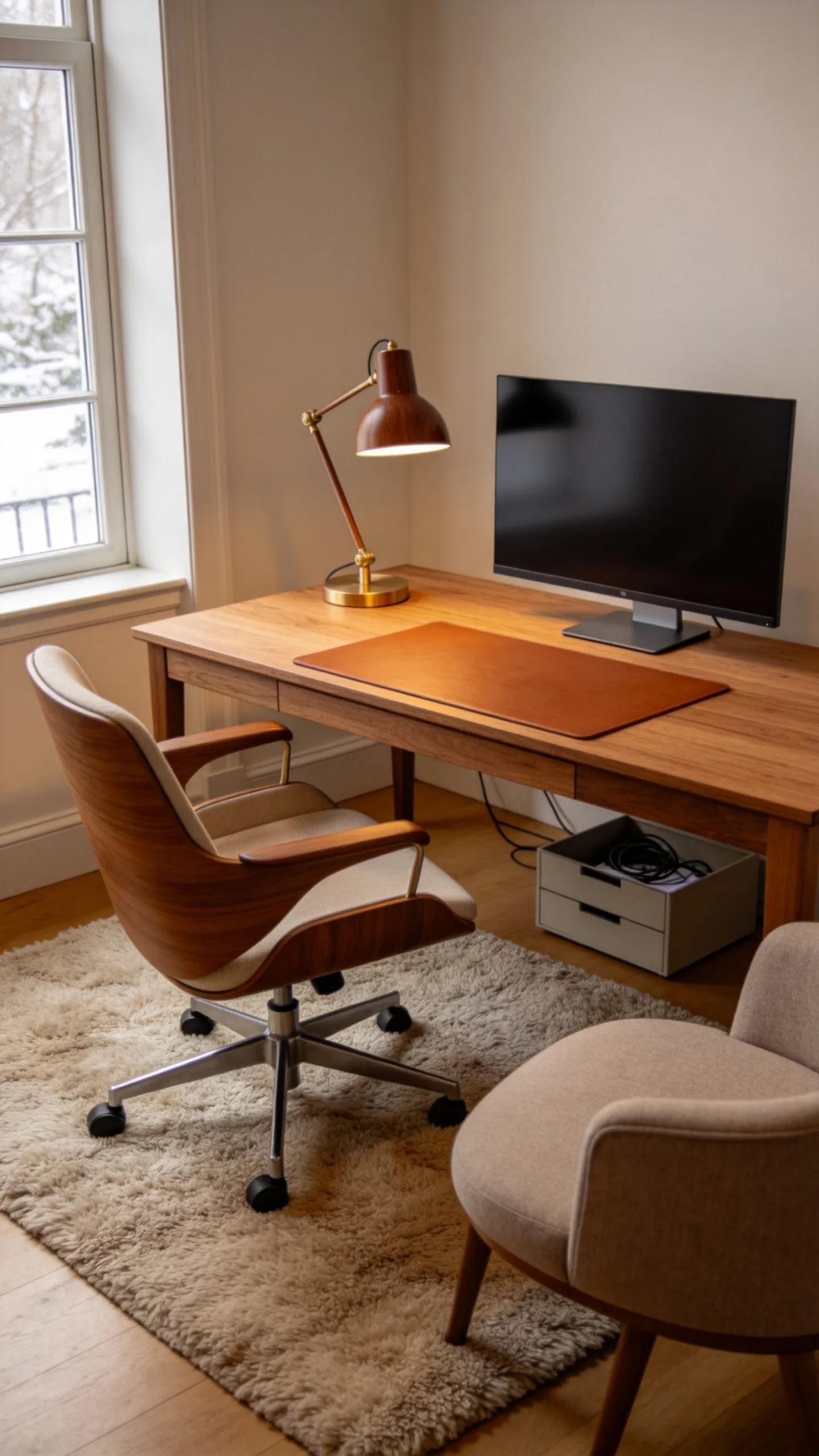
Anchor a home office with a substantial wool rug beneath the desk and chair, then add a walnut desk lamp, leather desk pad, and upholstered guest chair. These materials soften the hard surfaces common in work areas and make the room comfortable through winter.
Keep the desk near natural light while positioning the chair so it does not block the doorway. Use one closed storage box or drawer unit for cables, papers, and supplies to maintain a calm background during video calls.
25. Finish the Whole Home With a Restrained Winter Palette
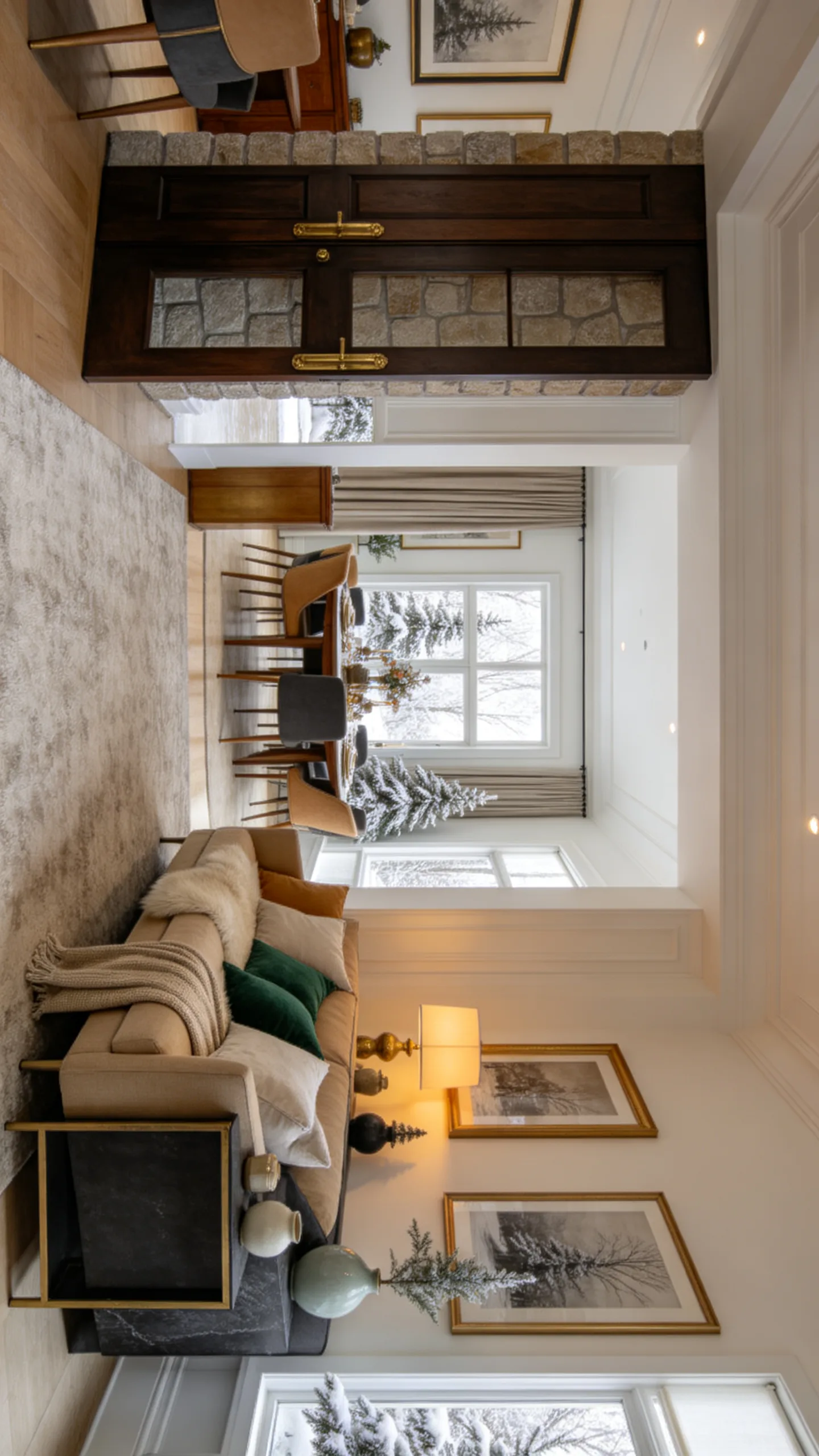
Unify adjoining rooms with a palette of warm white, camel, walnut, aged brass, charcoal, and one seasonal accent such as evergreen or burgundy. Repeat the colors through pillows, ceramics, art frames, runners, and small accessories rather than decorating every room identically.
Vary the textures by room: wool in the living area, linen in the dining room, velvet in the bedroom, and stone or wood in the entryway. This approach creates a connected luxury winter home while allowing each space to retain its own function and focal point.

From the editors
Decor Compass Editorial Team
We turn practical home research into clear, useful room-by-room ideas.