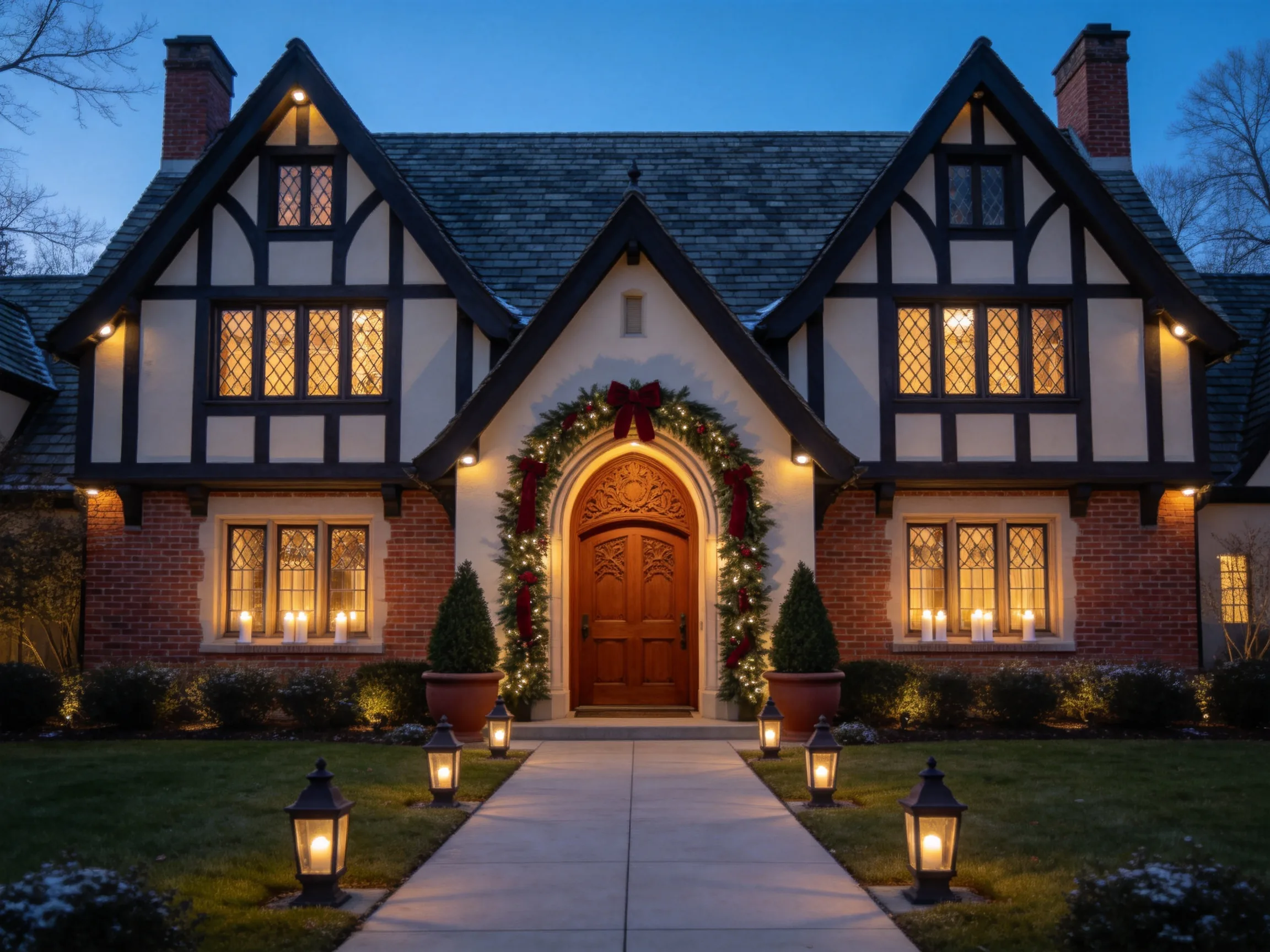
Tudor homes already offer strong Christmas curb appeal through steep rooflines, dark timber details, brick or stucco walls, arched doorways, and divided-light windows. Use greenery, warm lighting, and restrained color in ways that follow the architecture rather than covering its distinctive lines.
1. Frame the Arched Entry with Cedar Garlands
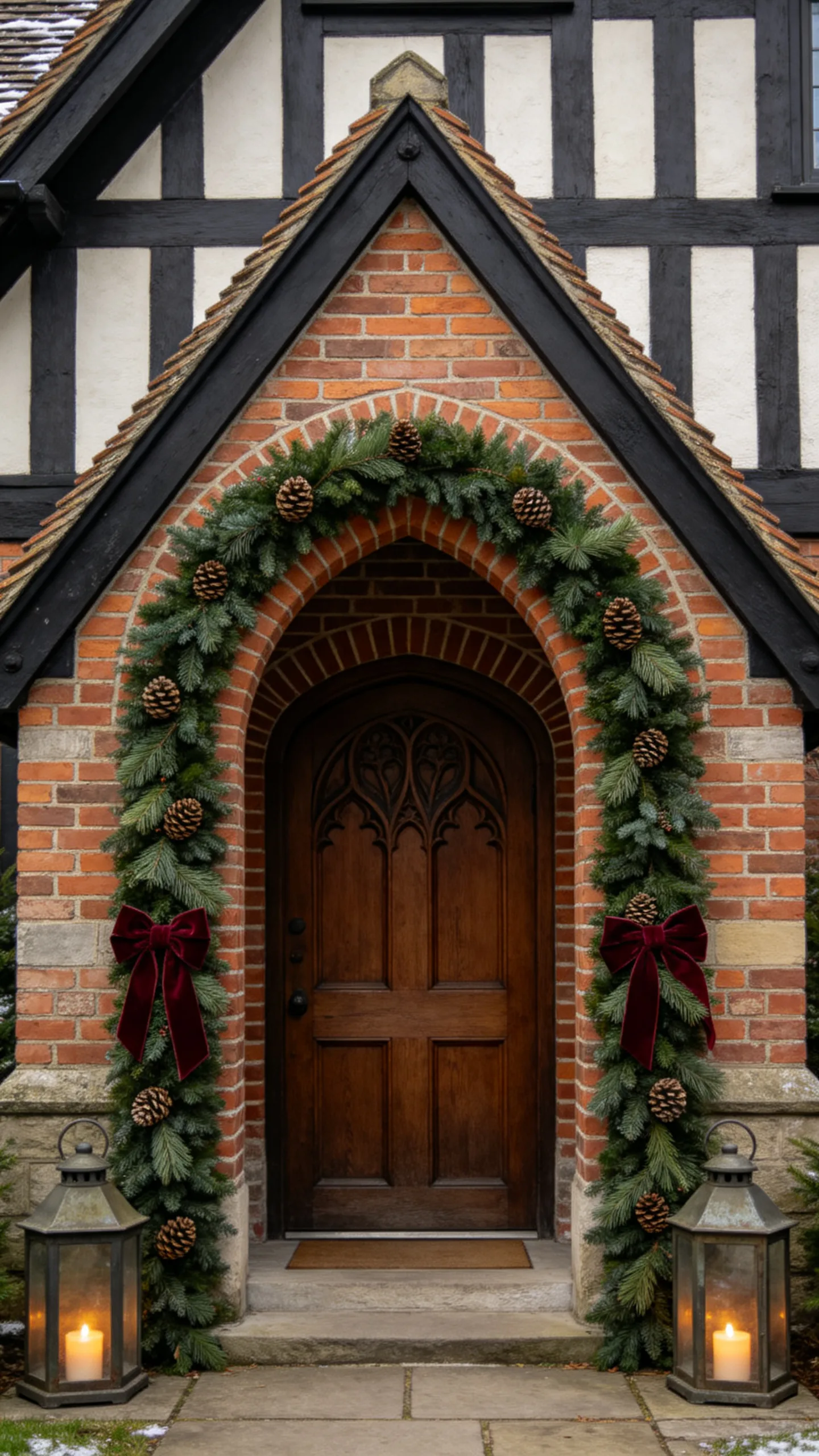
Drape a thick cedar or fir garland around the front door arch, allowing the greenery to follow the curve without hiding the brick molding or timber trim. Secure it with removable hooks or discreet ties, then add small pinecones and burgundy ribbon for a traditional Tudor-friendly accent.
Keep the garland slightly narrower than the doorway so the entrance remains easy to use and the pointed or rounded arch stays visible. Pair it with two simple lanterns or urns rather than adding oversized decorations to the small entry area.
2. Line the Walkway with Warm White Lanterns
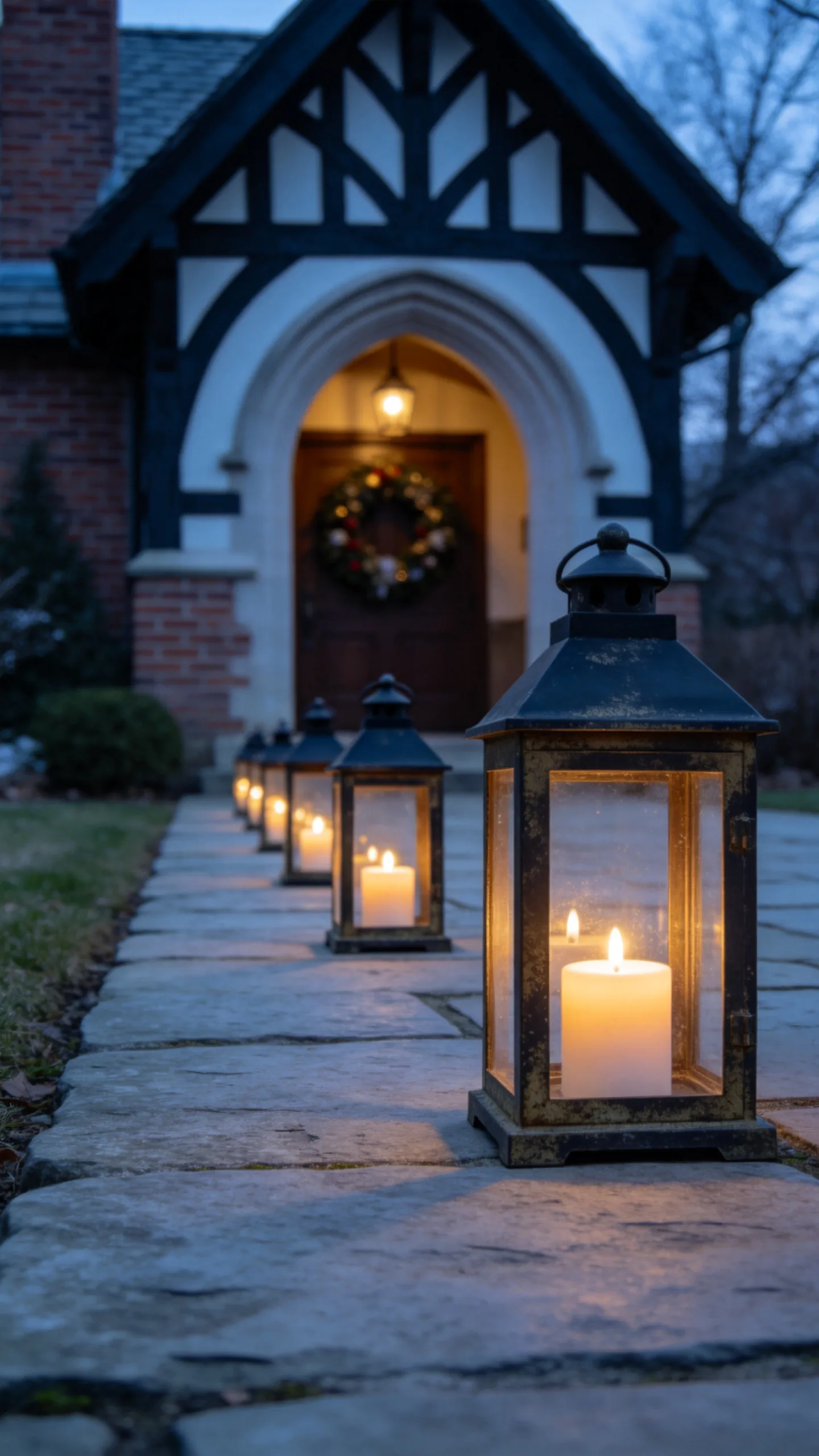
Place weather-resistant lanterns at even intervals along the front path to create a welcoming route from the sidewalk to the door. Choose black, aged bronze, or dark brown finishes that coordinate with Tudor beams, window frames, and wrought-iron hardware.
Use warm white LED candles at different heights inside the lanterns, keeping them low enough that they do not compete with the doorway garland. On a narrow walkway, position the lanterns along one side or at wider turns to preserve traffic flow.
3. Dress Half-Timbered Gables with Minimal Greenery
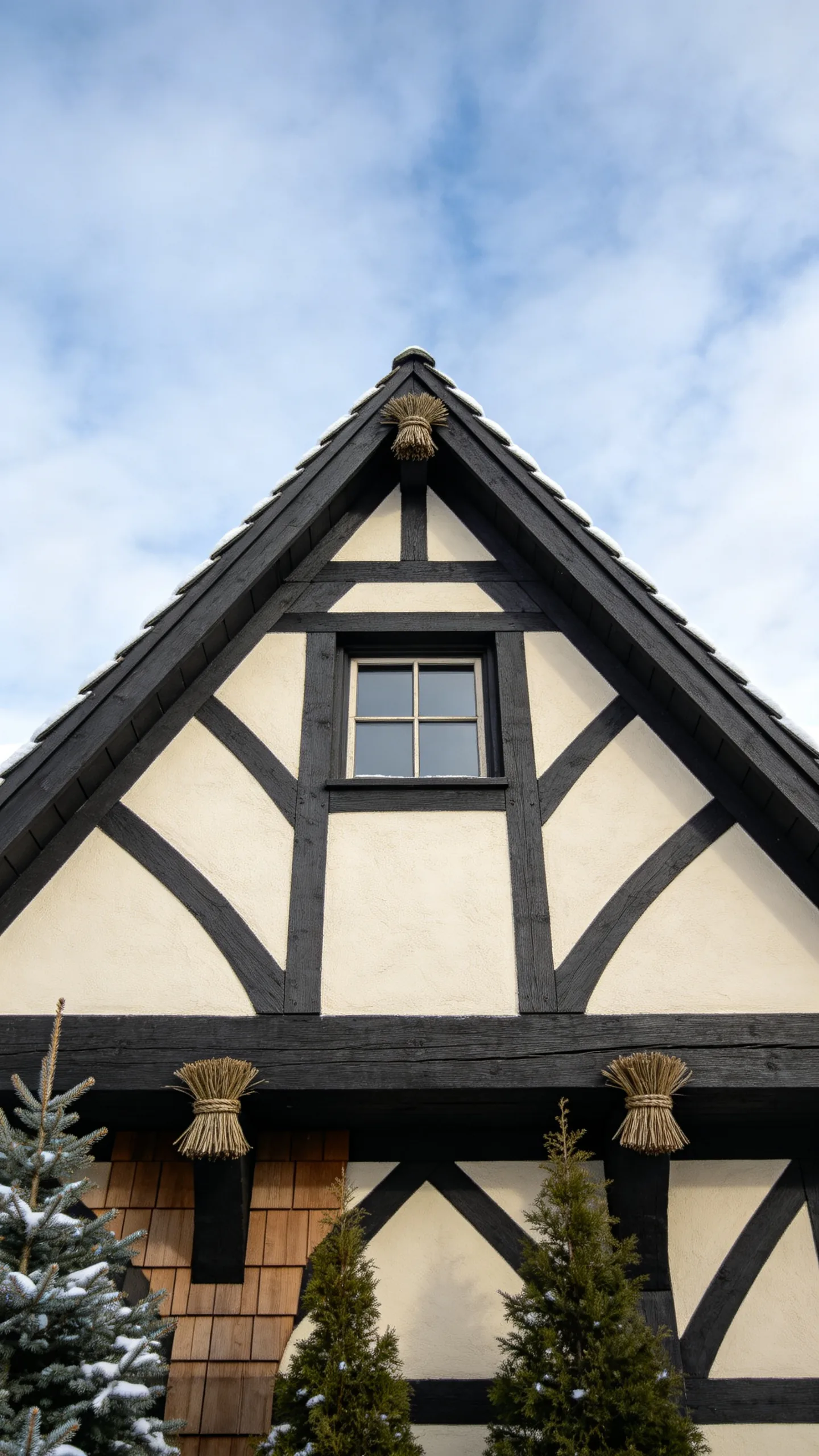
Accentuate a prominent half-timbered gable with short sections of evergreen tucked along the lower roof edge or beneath the horizontal beam. This approach adds seasonal color while keeping the dark geometric timber pattern visible from the street.
Avoid running garland over every beam, since excessive greenery can flatten the architectural contrast. A few cedar bundles at the gable corners or beneath a small window often create a more intentional focal point.
4. Add Matching Evergreen Urns at the Front Door
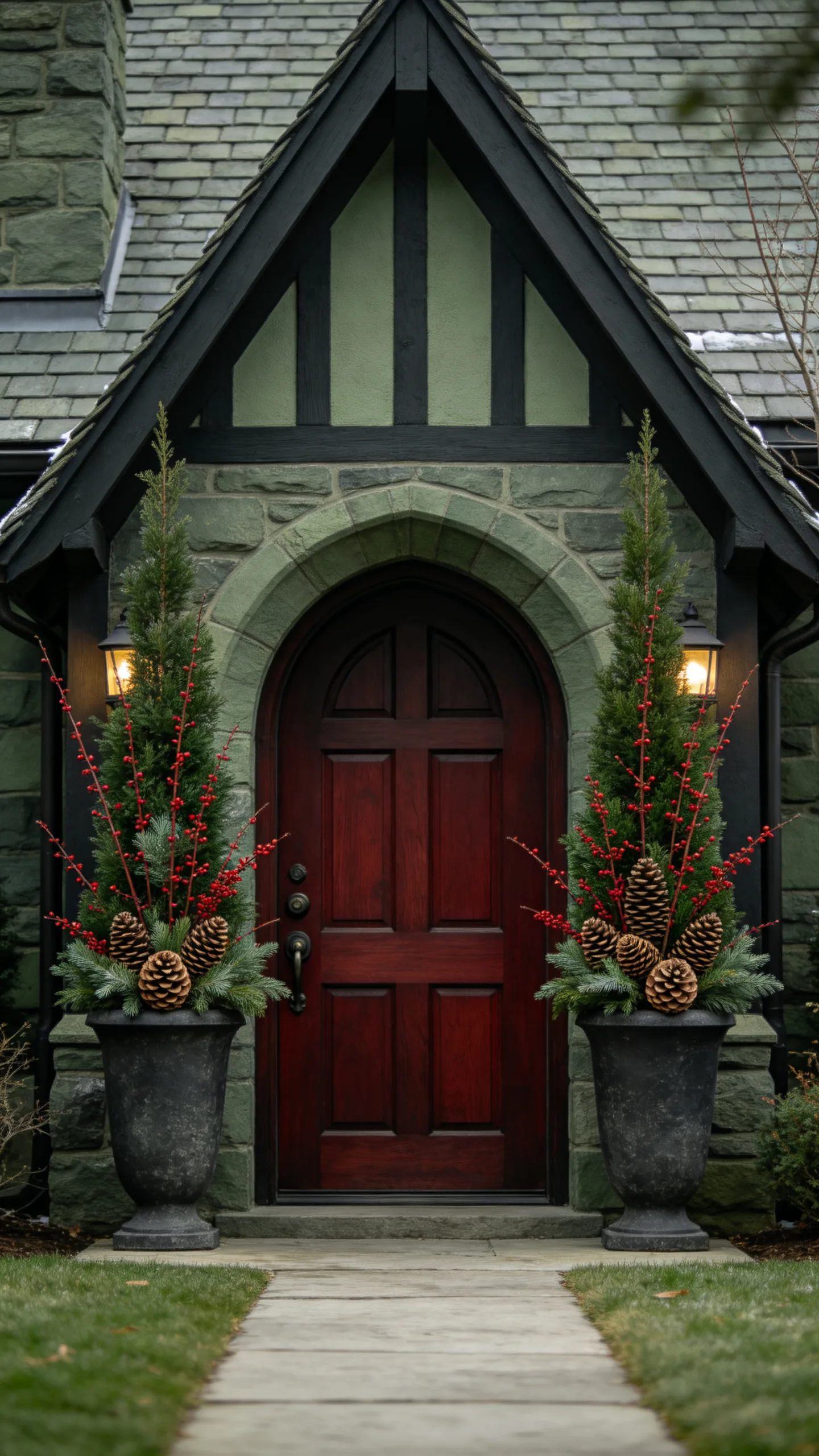
Place a pair of tall urns on both sides of the entrance and fill them with fir branches, cedar, red twig dogwood, and a few pinecones. The vertical arrangement complements a steep Tudor roofline and gives a compact porch more height without requiring additional furniture.
Select urns in stone, black metal, or aged terracotta to coordinate with the facade. Keep each container narrow enough to leave a clear walking path and trim the greenery so it does not block sidelights or obscure the arched door.
5. Highlight Leaded-Glass Windows with Interior Candles
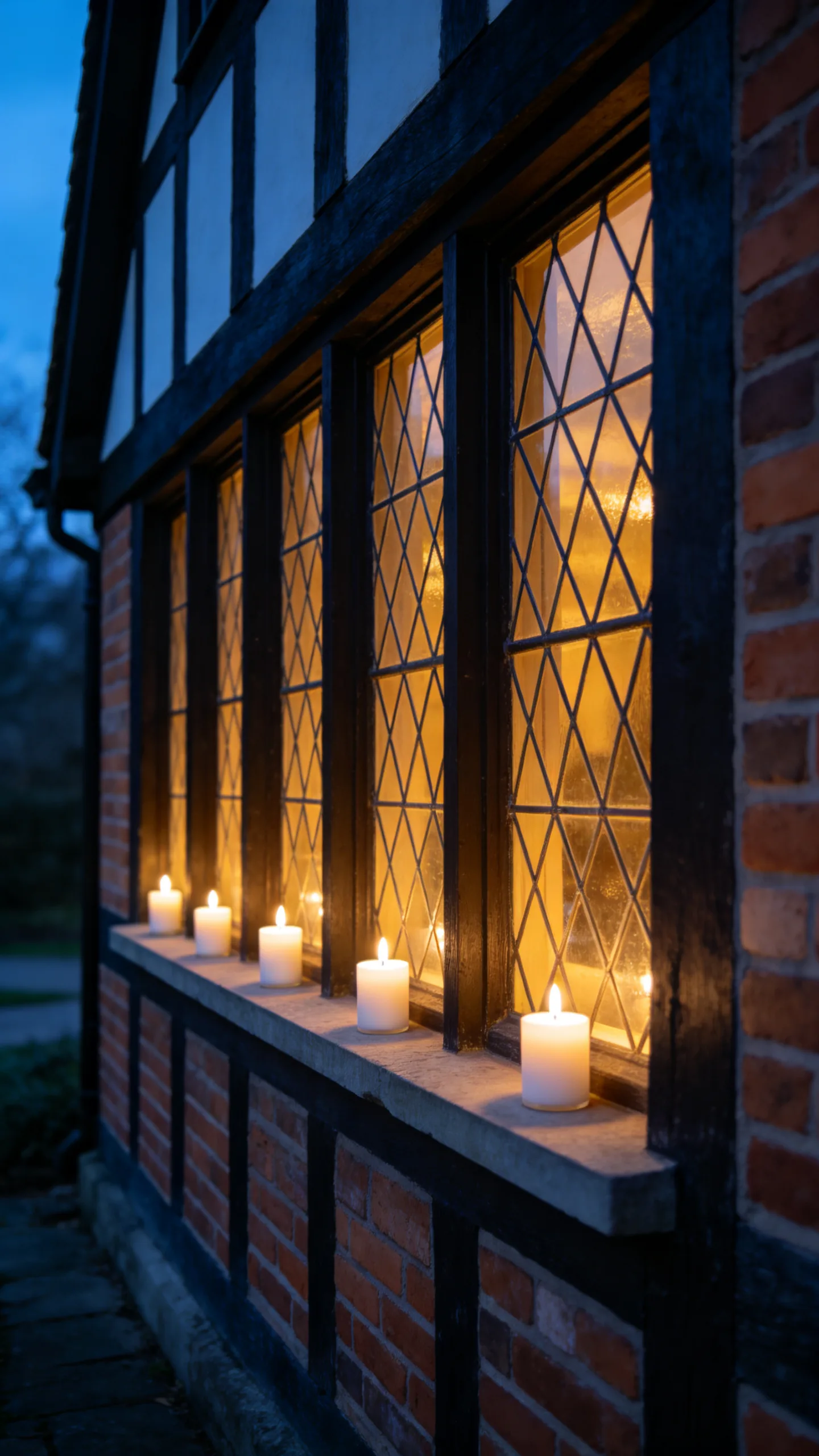
Set flameless taper candles or small LED votives on interior window sills to make leaded or divided-light windows glow from the street. The simple light source emphasizes the window pattern without attaching bulky decorations to delicate exterior trim.
Use matching candle heights across a row of windows for a composed look, or place lights only in the most visible front-facing rooms. Warm white bulbs work especially well with brown brick, cream stucco, and dark wood accents.
6. Use Burgundy Ribbon on the Front Door Wreath
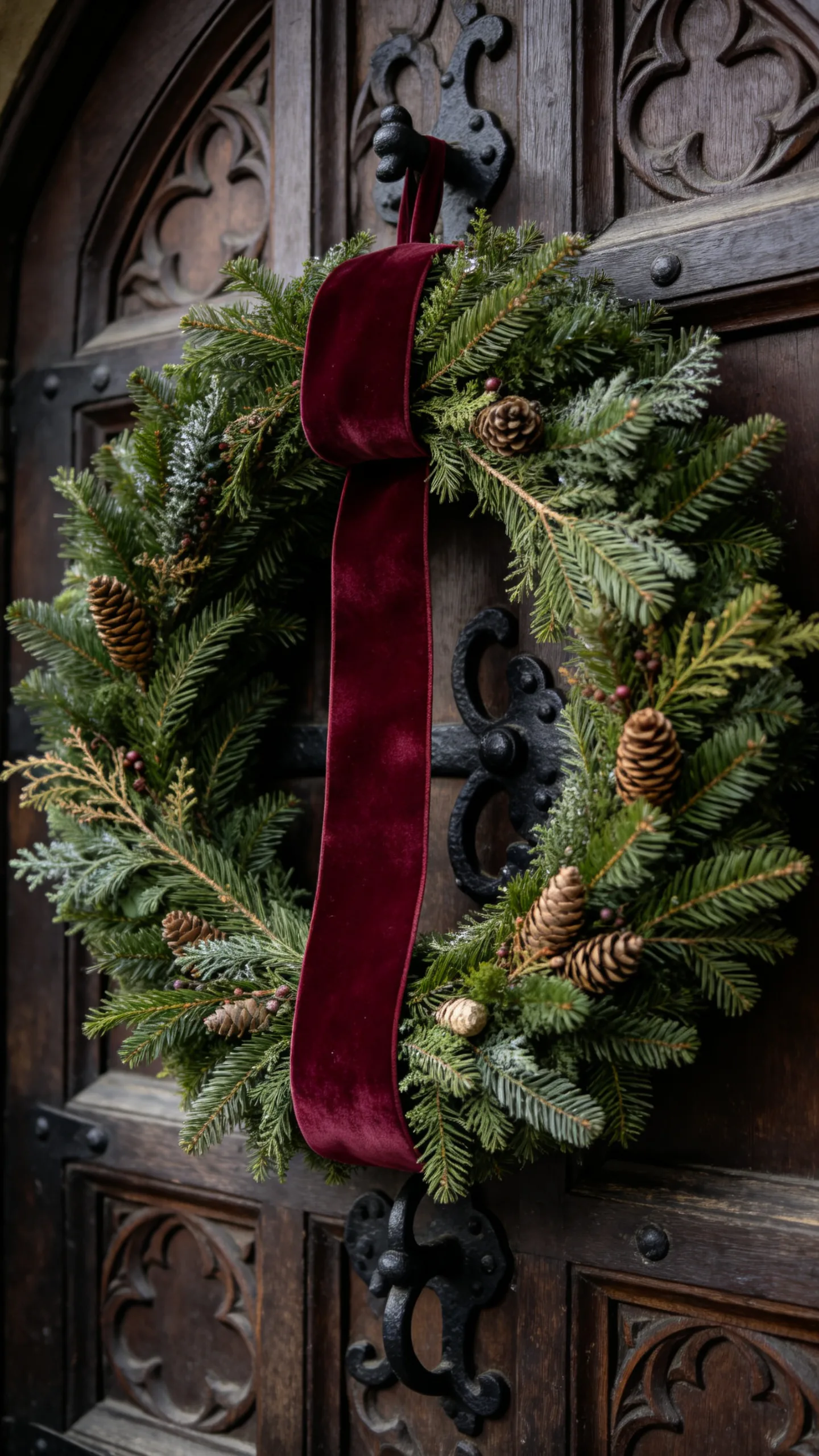
Hang a natural evergreen wreath on the front door with a wide burgundy velvet ribbon or a muted tartan bow. Deep red tones echo traditional Christmas colors while complementing the warm brick and dark wood commonly found on Tudor exteriors.
Choose a wreath diameter that leaves a visible border of door surface around it. On an ornate door, keep the wreath mostly natural and avoid large novelty ornaments that could compete with carved panels, iron hardware, or decorative glass.
7. Create a Boxwood-and-Fir Window Box Display
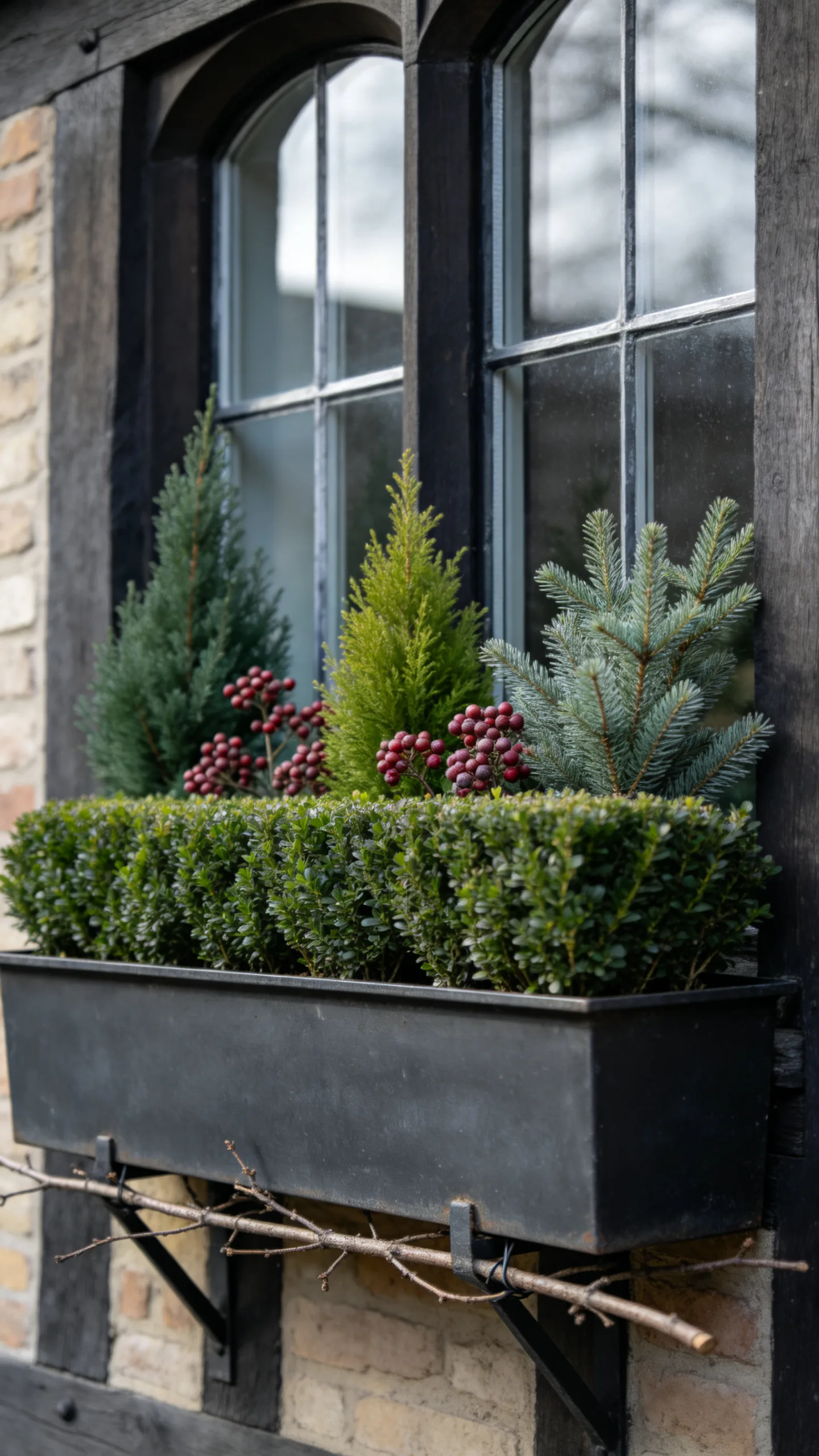
Fill front window boxes with clipped boxwood, fir tips, cedar, and small red berries for a low-profile arrangement beneath the windows. The layered greenery adds holiday texture while preserving the vertical divisions of leaded glass or wood muntins.
Use moisture-resistant liners and secure the branches so wind cannot push them against the glass. For a symmetrical facade, repeat the same plant recipe in each box; for an asymmetrical Tudor elevation, concentrate fuller boxes near the main entry.
8. Wrap Porch Posts with Loose Evergreen Swags
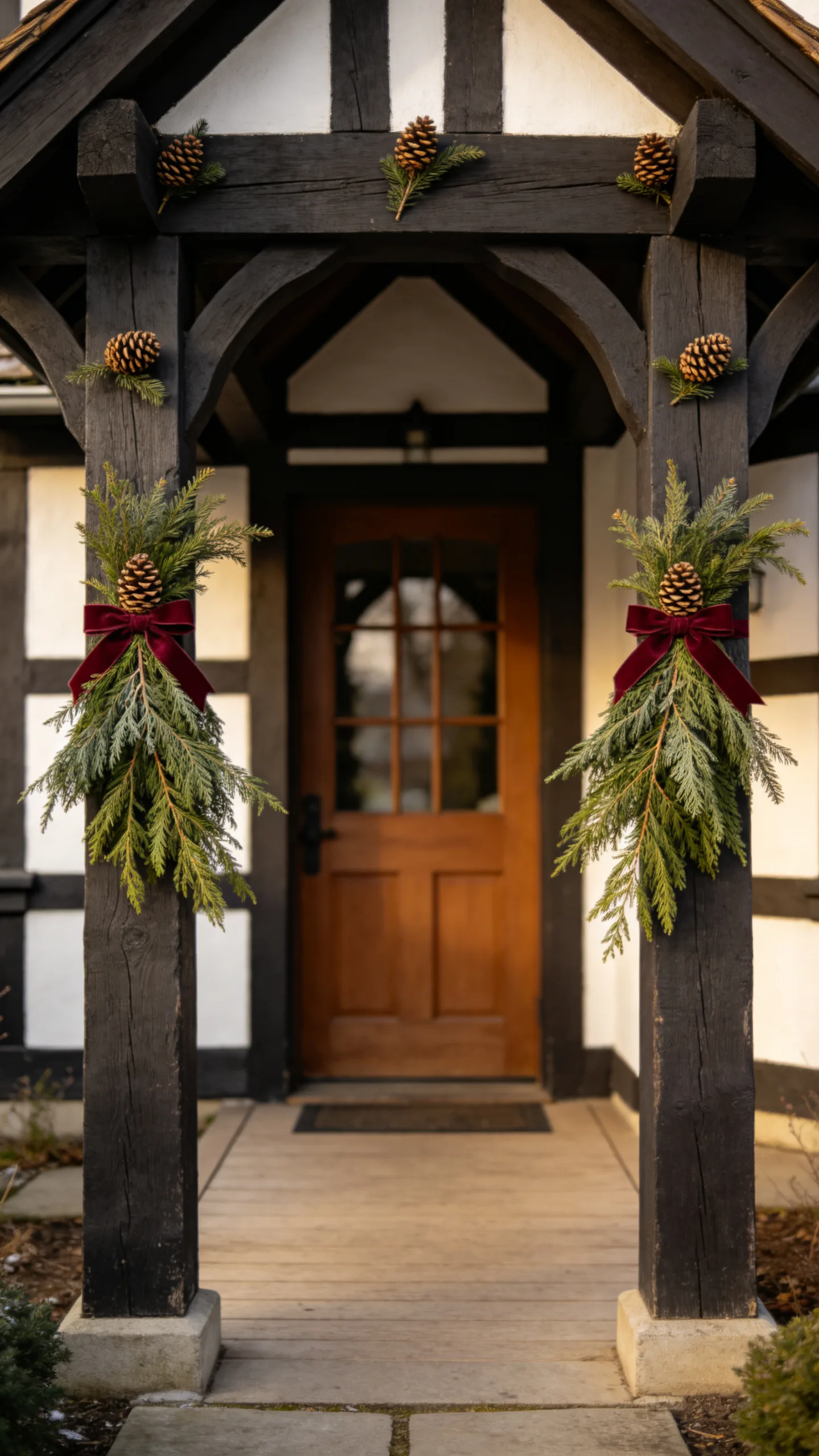
Decorate porch posts with loose swags rather than tightly winding garlands from top to bottom. Attach one evergreen bundle near the upper third of each post and let the branches angle downward toward the entry.
This leaves the post material visible and prevents the porch from feeling crowded. Add a small cluster of pinecones or a single ribbon knot at each attachment point for detail that can be seen from the curb.
9. Accentuate the Roofline with Discreet Eave Lights
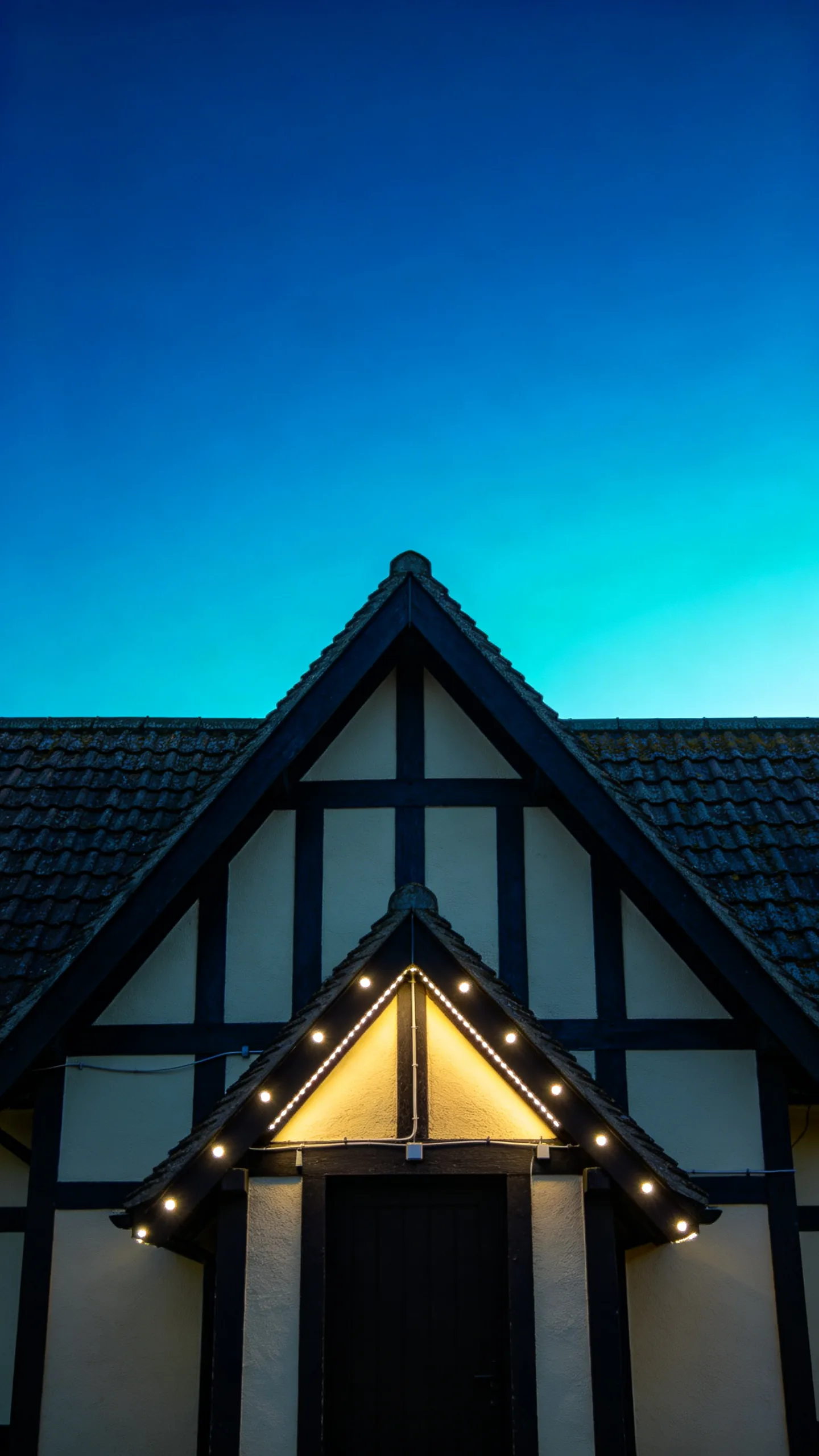
Install warm white string lights along a selected front eave, porch roof, or gable edge to outline the Tudor silhouette. Choose thin, evenly spaced bulbs and use clips designed for the roof material instead of staples or visible tape.
A partial roofline treatment often looks more architectural than outlining every peak and dormer. Focus on the entry gable or the most visible roof slope so the lights guide the eye toward the house’s strongest shape.
10. Hang a Traditional Door Basket
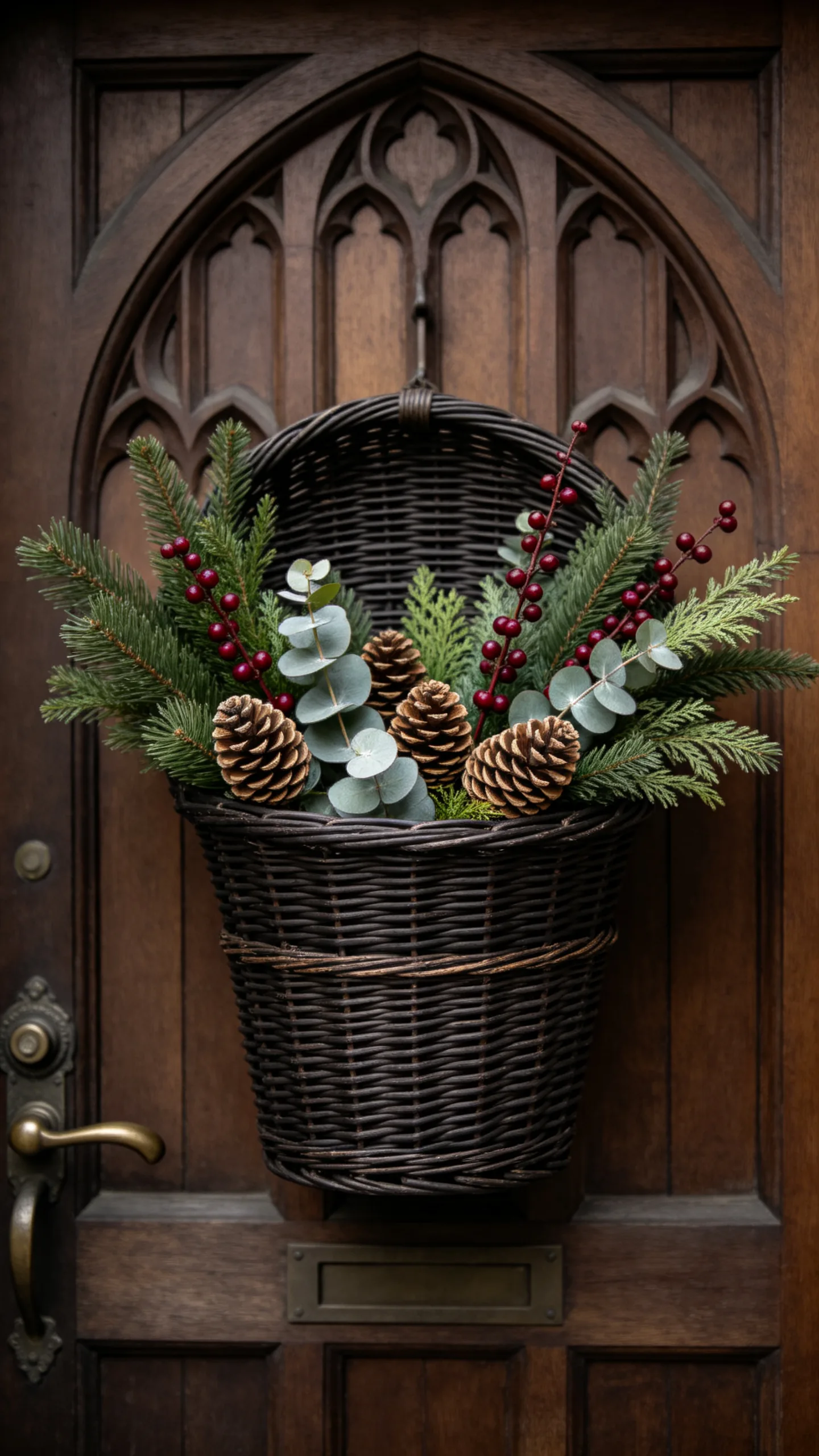
Replace a standard wreath with a woven door basket filled with fir branches, cedar, eucalyptus, pinecones, and a few berry stems. The basket introduces natural texture that suits a Tudor entry while providing a less formal alternative to a perfectly round wreath.
Choose a dark willow or seagrass basket that contrasts gently with the door. Keep the arrangement concentrated in the upper half so the basket does not strike visitors or interfere with the door handle.
11. Add Plaid Bows to Fence Posts
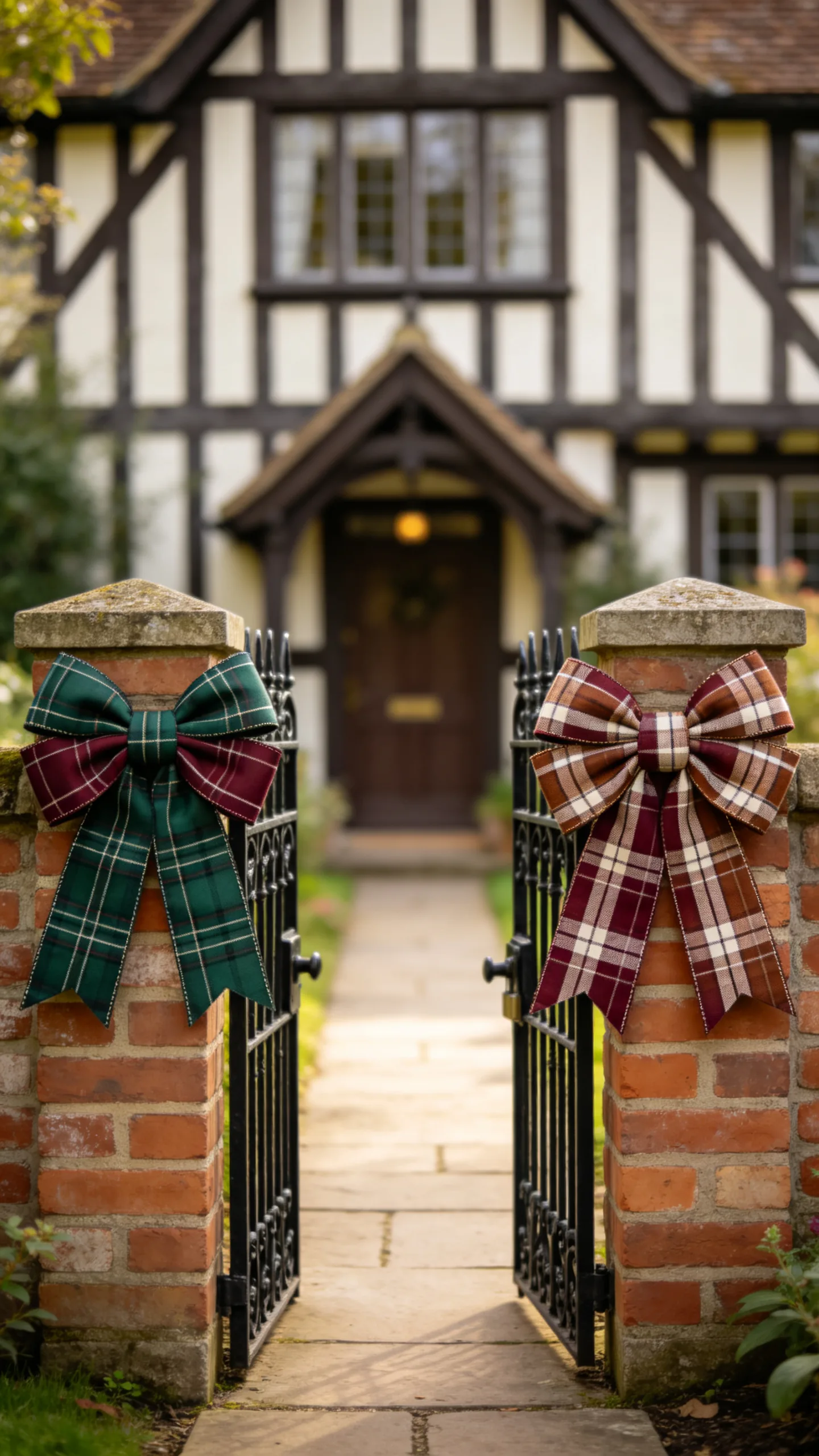
Tie restrained plaid bows to front fence posts, gate hinges, or the end posts of a low brick wall. A pattern using forest green, oxblood, cream, or brown connects the Christmas decor to the home’s historic palette without adding bright primary colors.
Use wired ribbon that holds its shape outdoors and cut the tails at a diagonal. Space the bows only at important entry points so the fence remains a boundary detail rather than becoming the main visual feature.
12. Decorate a Brick Chimney Base with Greenery
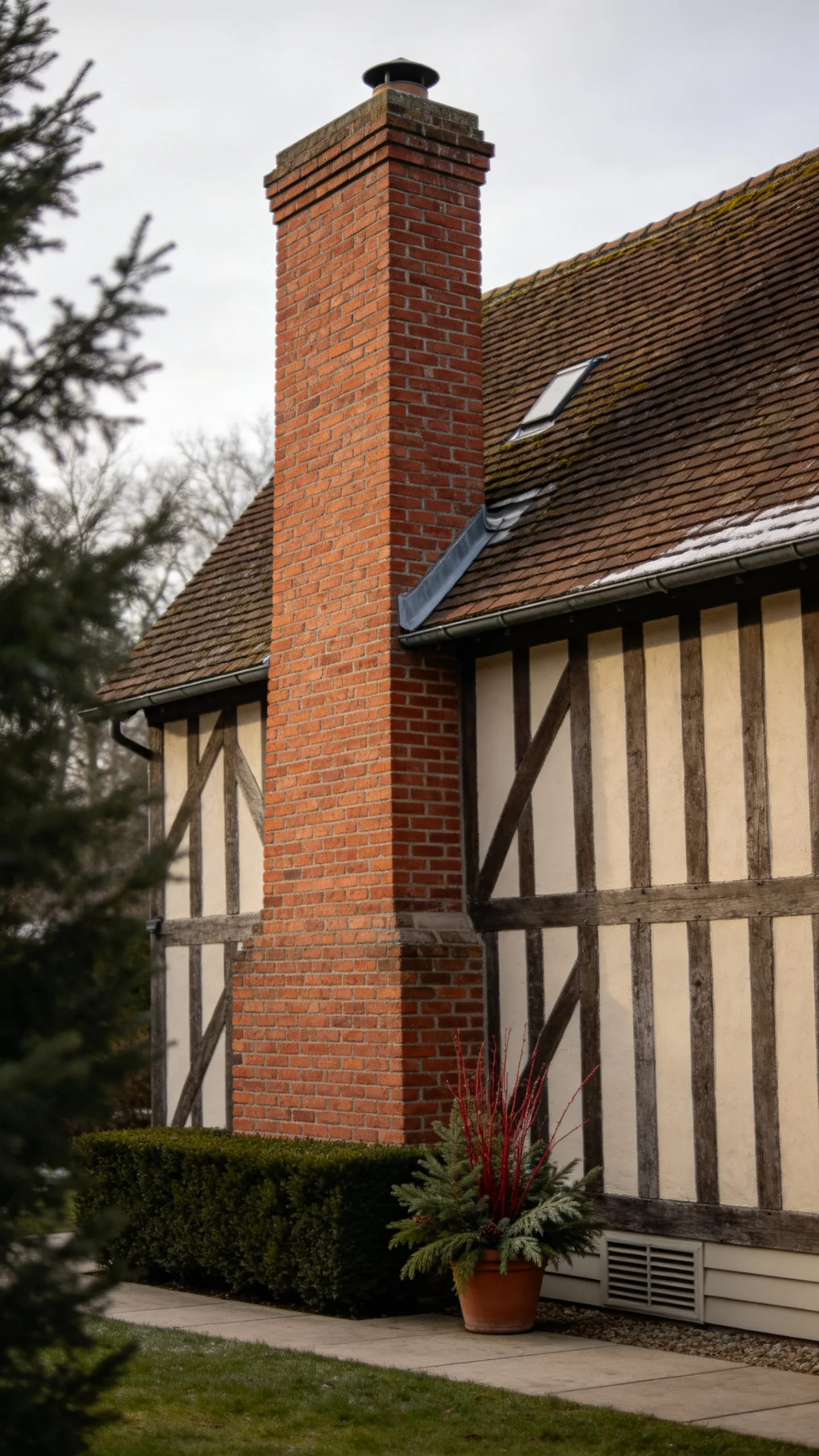
Place a low evergreen planter or a pair of small containers near the base of a visible brick chimney. Fir, cedar, and red twig branches draw attention to the vertical masonry while keeping the roof and chimney cap clear for safety.
Choose pots that sit away from siding, vents, and walkways. The arrangement works particularly well when the chimney is visible from the street but the front door has limited space for urns or large planters.
13. Build a Classic Red-and-Green Window Display
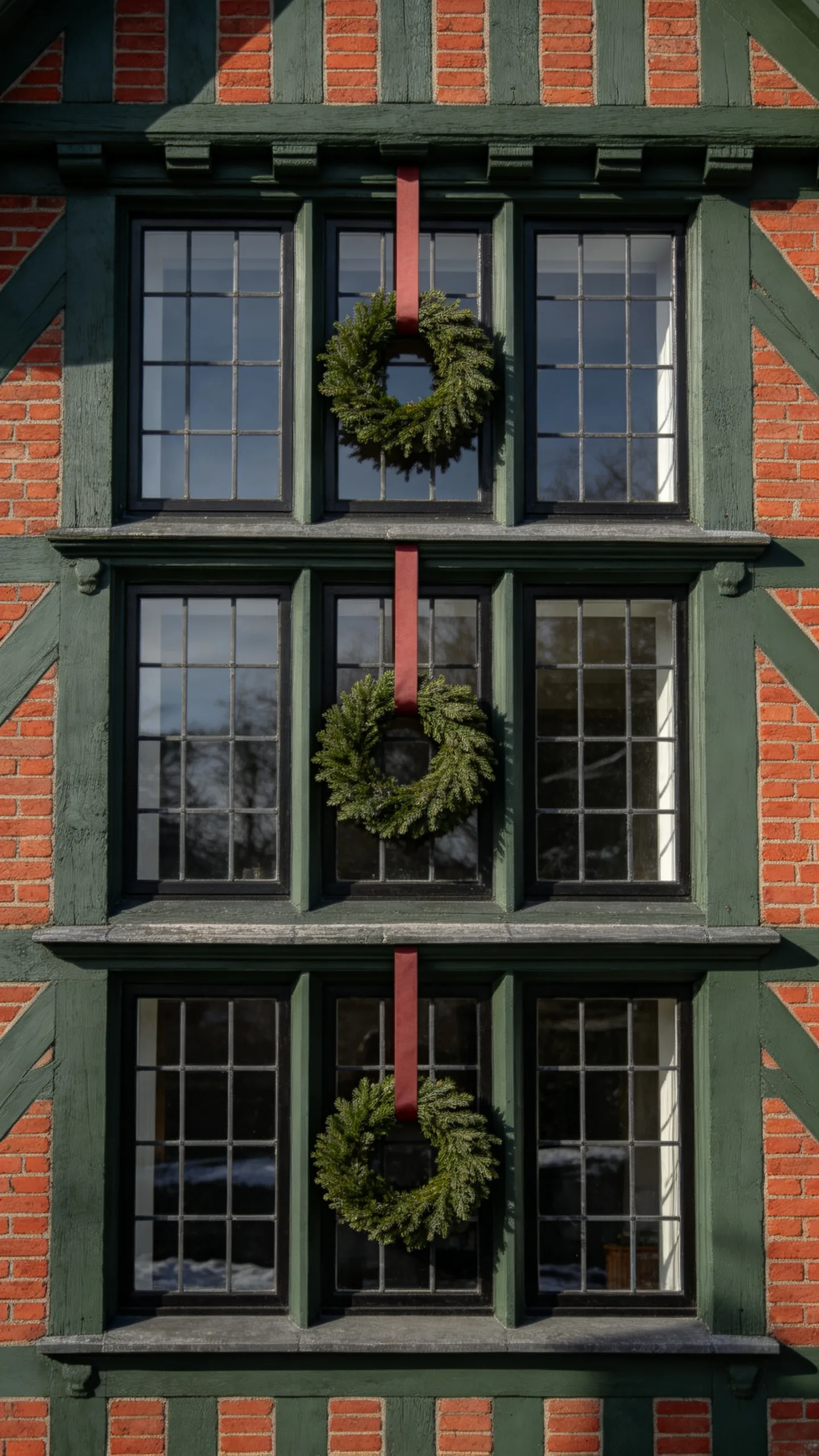
Use small wreaths on the most prominent front windows, adding narrow red ribbons that hang straight from the upper sash. Matching wreaths create rhythm across a symmetrical row while still allowing the Tudor window divisions and dark frames to show.
For windows with exterior shutters or decorative timber, select wreaths smaller than the window width. On an asymmetrical facade, decorate the central or largest window rather than forcing identical pieces onto every opening.
14. Style the Front Steps with Layered Planters
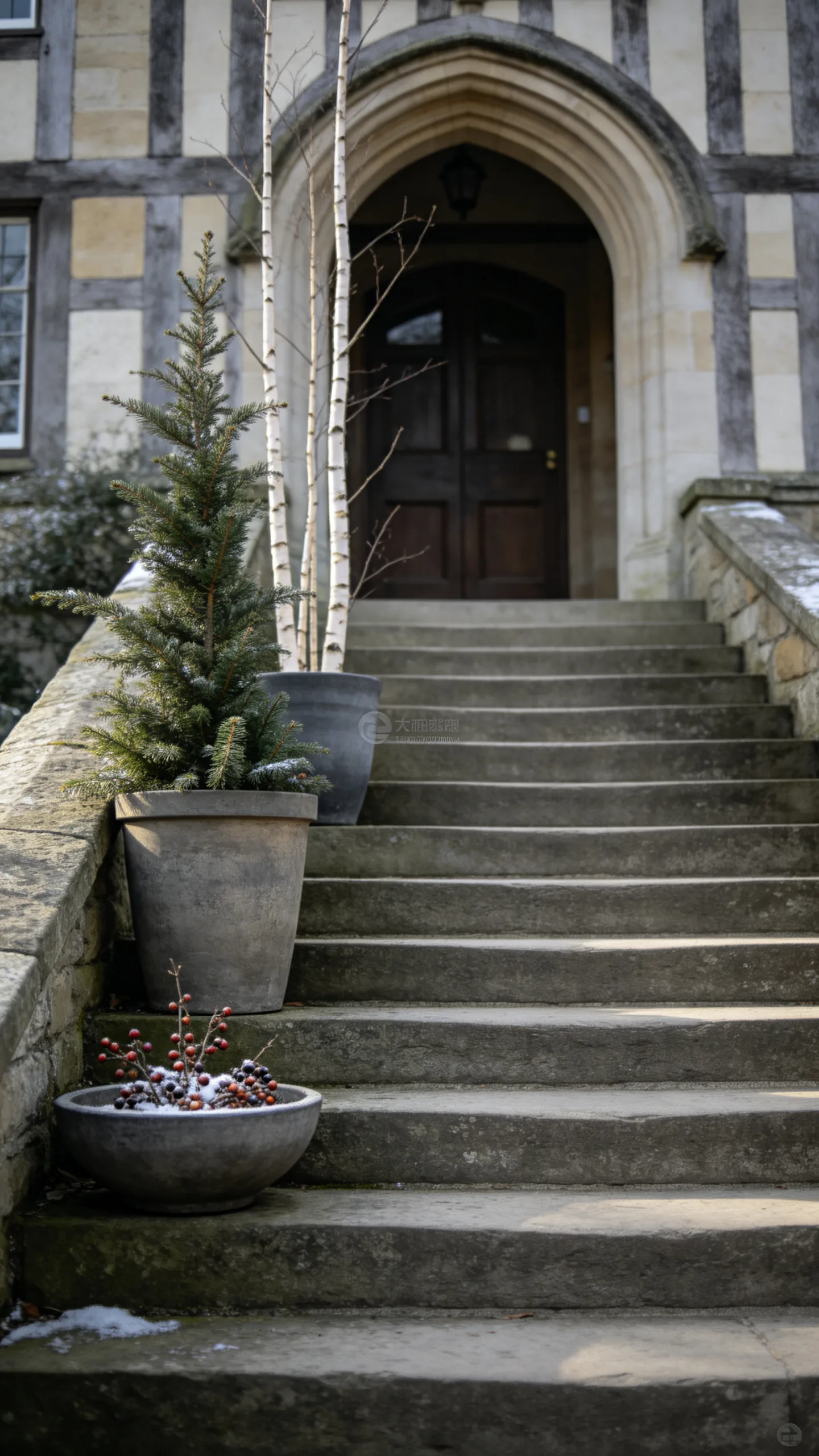
Arrange one tall planter, one medium pot, and one low bowl along a broad set of front steps using evergreen branches, birch stems, and winter berries. Varying heights create a layered display that follows the rise of the staircase and frames the entrance.
Leave the center of each step open for safe footing, especially when greenery may become wet or icy. Use heavy containers or discreetly anchor the branches so the display remains stable during winter weather.
15. Use Copper or Bronze Holiday Accents
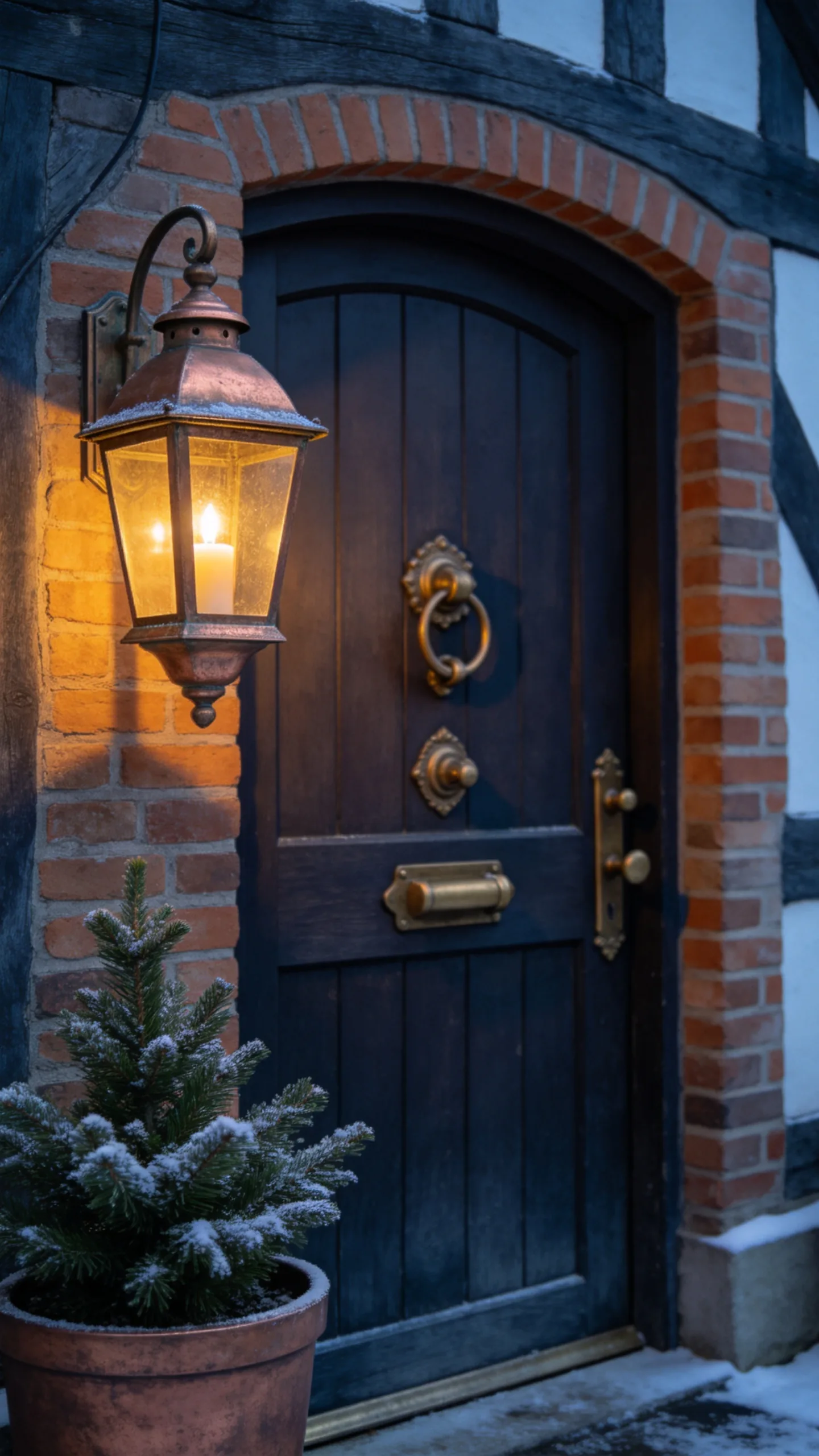
Add copper lanterns, bronze bells, or aged-metal planters to introduce warmth beside brick, stucco, and dark timber. These finishes provide a subtle alternative to shiny silver and coordinate with traditional Tudor hardware.
Place one metal accent at the door or in a planter rather than scattering several unrelated objects across the facade. Aged finishes look especially cohesive when repeated in the porch light, door knocker, or mailbox details.
16. Hang a Greenery Swag Beneath a Front Gable
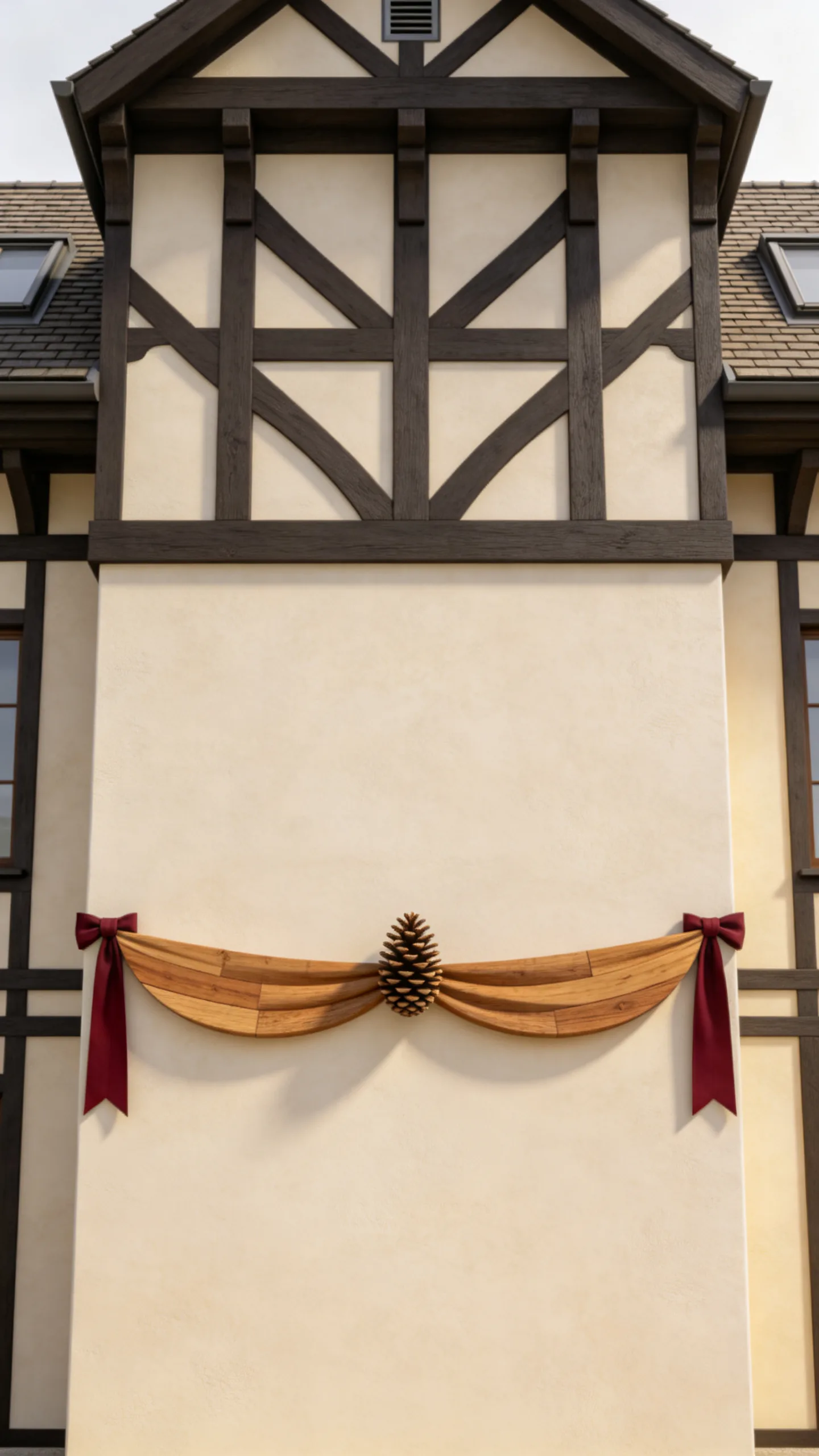
Suspend a horizontal evergreen swag beneath a front-facing gable or over a covered porch opening. Let the center dip slightly, with the ends secured at equal heights, to soften a large blank section of stucco or brick.
Keep the swag below decorative timber and away from attic vents. Add two matching ribbon tails or a few pinecones at the center so the display has a clear focal point when viewed from the street.
17. Decorate the Mailbox with a Small Cedar Tie
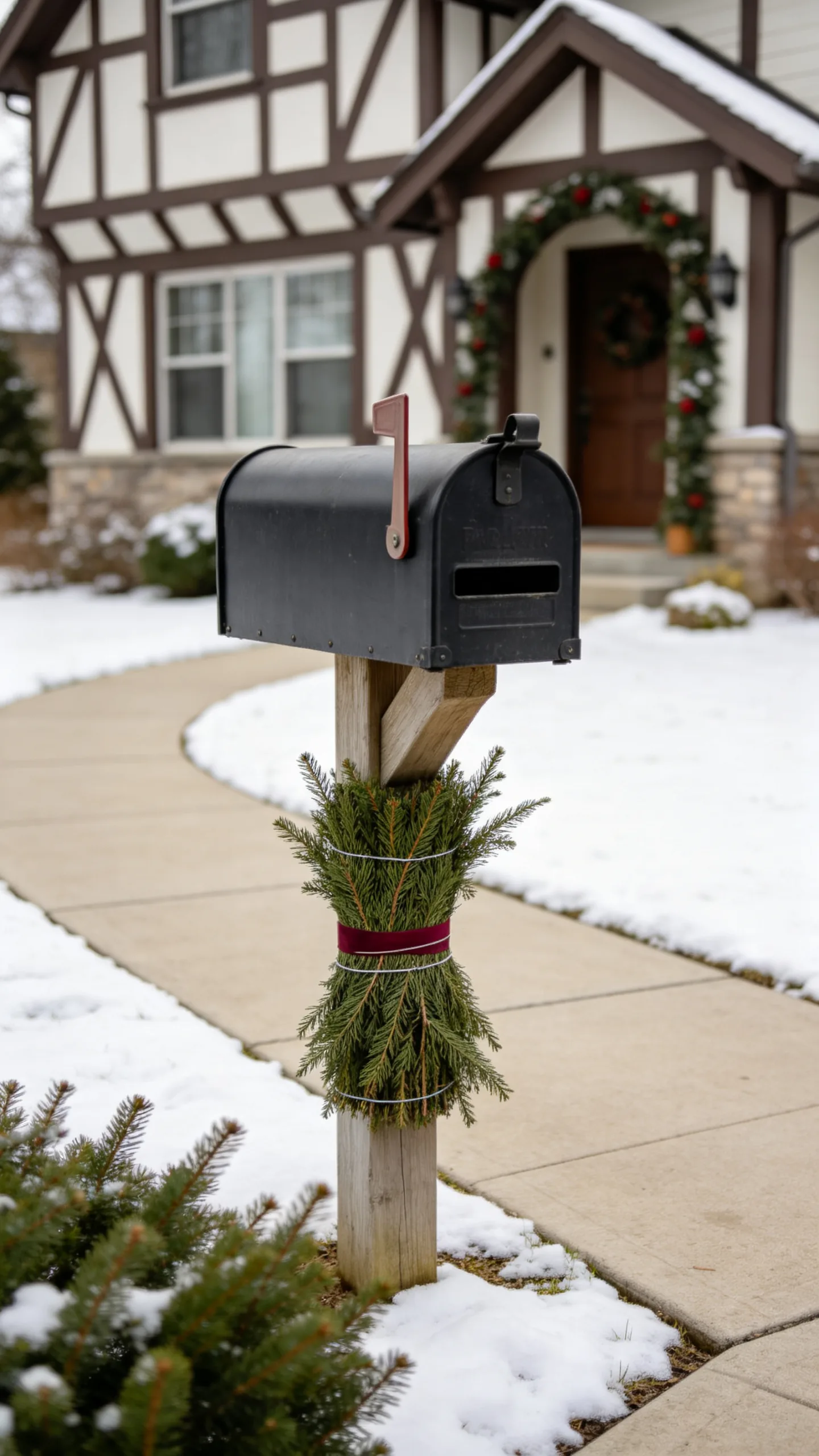
Wrap a short cedar bundle around the mailbox post or attach a small wreath to the front of a wall-mounted mailbox. Use thin wire or outdoor ribbon so the flag, handle, and delivery opening remain unobstructed.
Choose a modest arrangement if the mailbox is close to the sidewalk or shared walkway. A small seasonal detail can connect the curbside area to the front entry without making the house feel overdecorated.
18. Emphasize Tudor Timber with Soft Uplighting
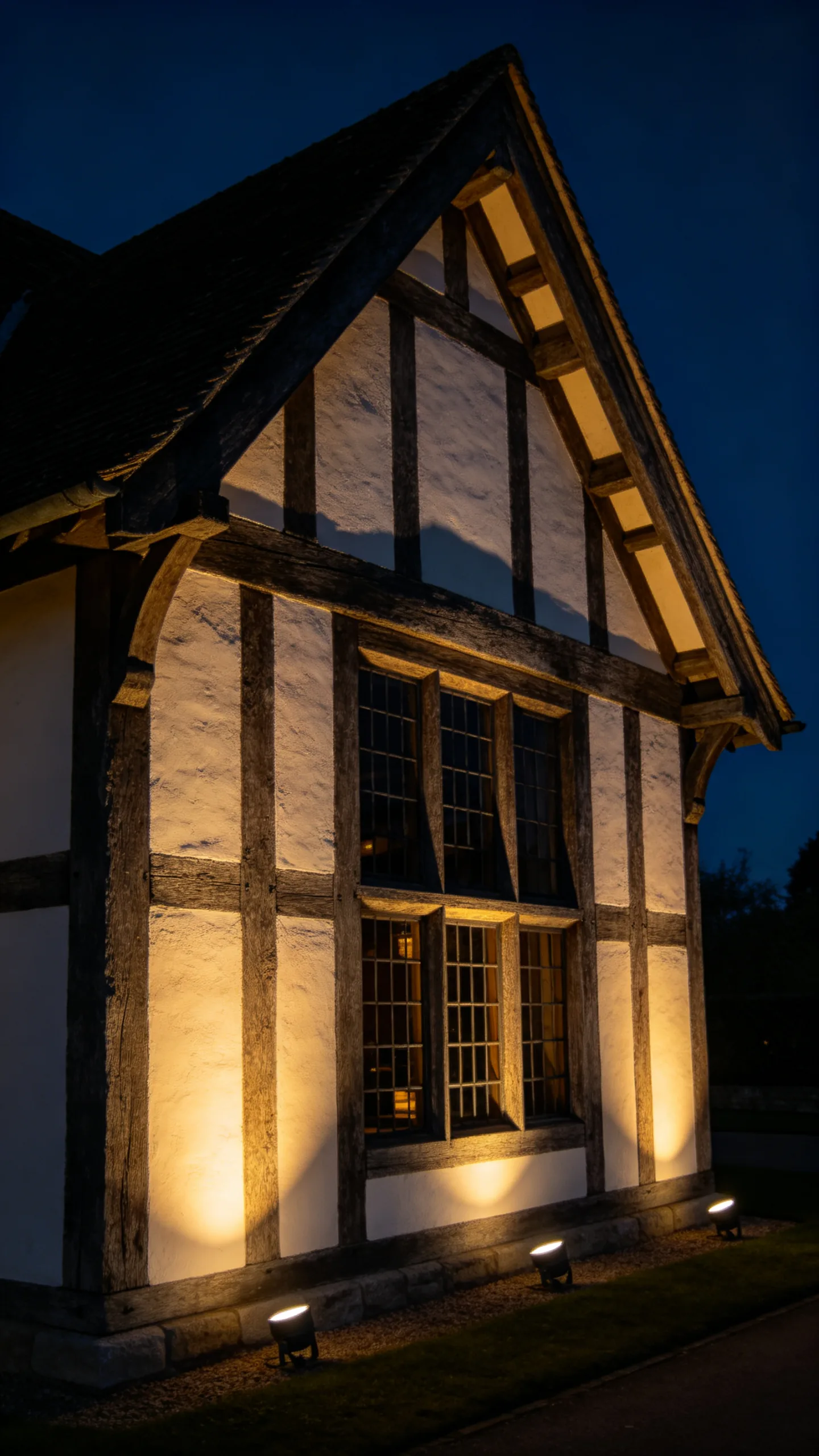
Aim low-voltage, warm-toned landscape lights at a prominent half-timbered wall, chimney, or projecting gable. The light should wash across the surface gently, revealing the contrast between dark beams and lighter stucco after sunset.
Position fixtures several feet from the wall and angle them away from windows to limit glare. Use only a few focused lights so the architectural shadow lines remain visible instead of turning the entire facade into a bright, flat backdrop.
19. Place a Christmas Tree in a Visible Front Window
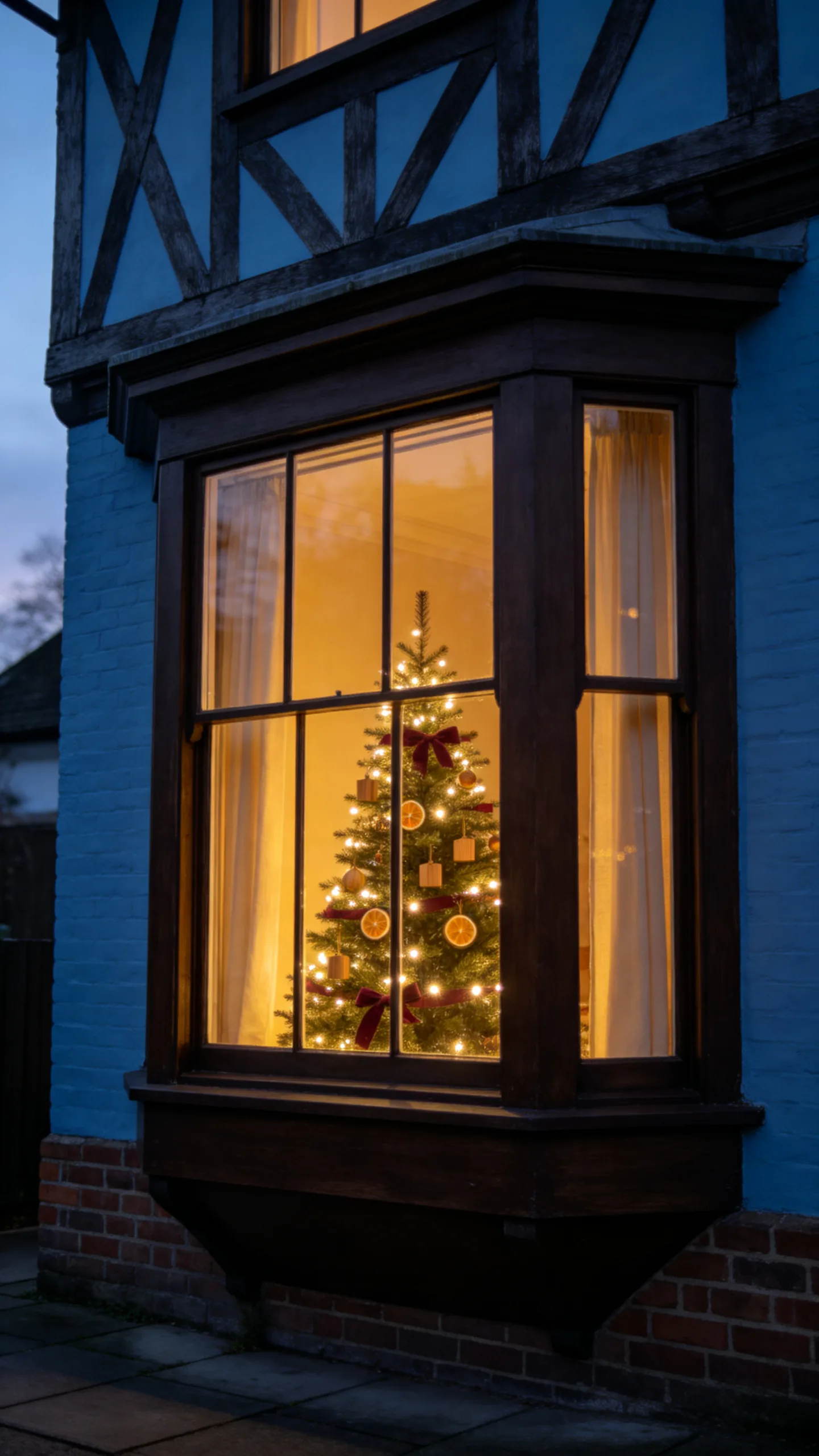
Set a slim, undecorated or traditionally decorated Christmas tree near a front-facing window where it can be seen from the sidewalk. Warm white lights, wooden ornaments, dried orange slices, and burgundy ribbon reinforce the home’s old-world exterior character.
Measure the window bay and nearby furniture before choosing the tree so it does not press against the glass or block curtains. A narrow tree works well in a Tudor living room with deep trim, built-in seating, or limited space near the facade.
20. Create a Natural Woodland Entry Arrangement
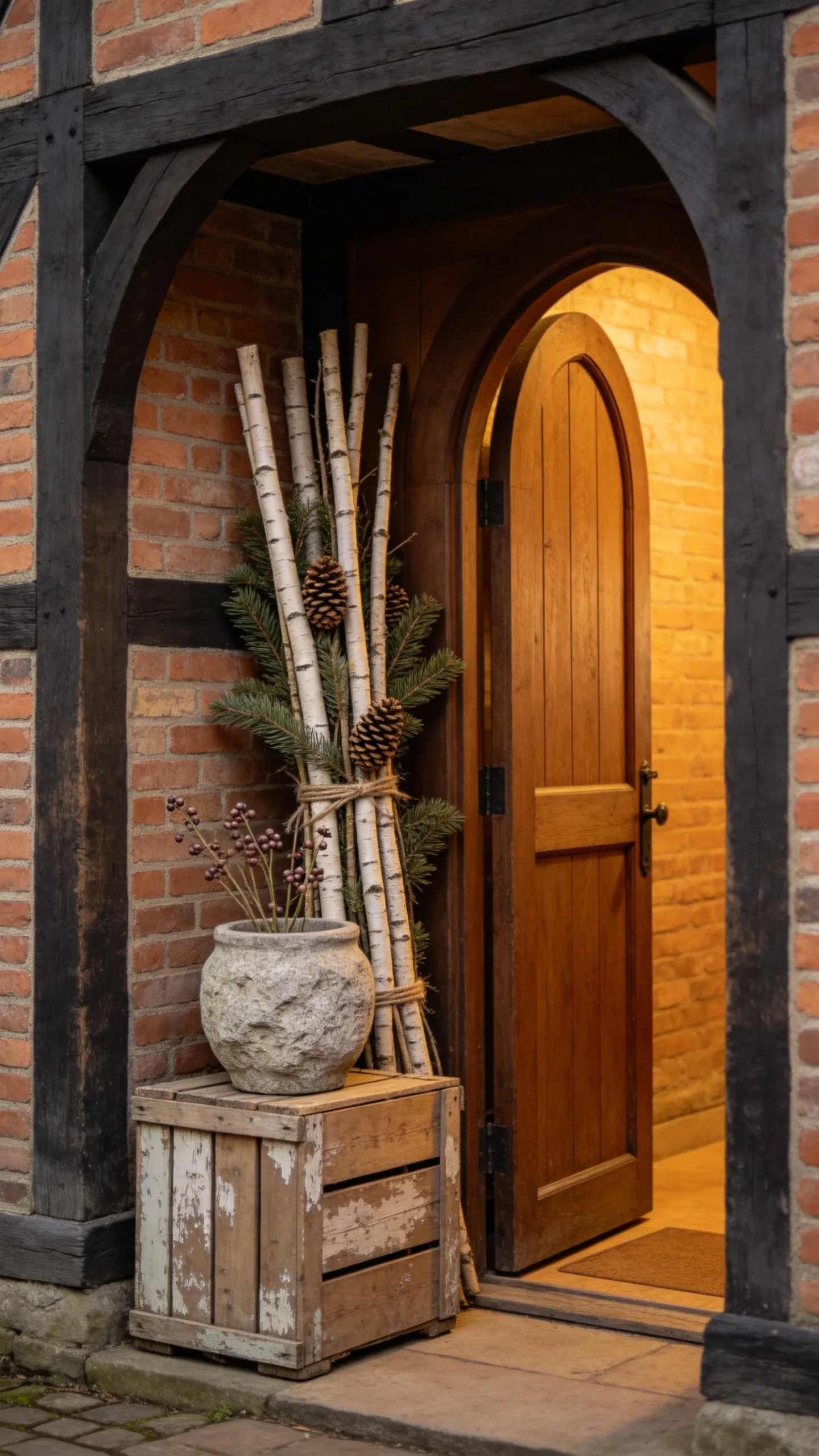
Combine a weathered wooden crate, a stone pot, and a bundle of birch branches near the front door for a woodland-inspired display. Add fir clippings, pinecones, and muted berry stems to echo the materials and colors found in a traditional Tudor landscape.
Keep the arrangement at one side of the entry if the porch is narrow, and select containers that match the scale of the doorway. The varied textures create interest without relying on oversized inflatable figures or brightly colored plastic decor.
21. Finish the Facade with Coordinated Warm Lighting
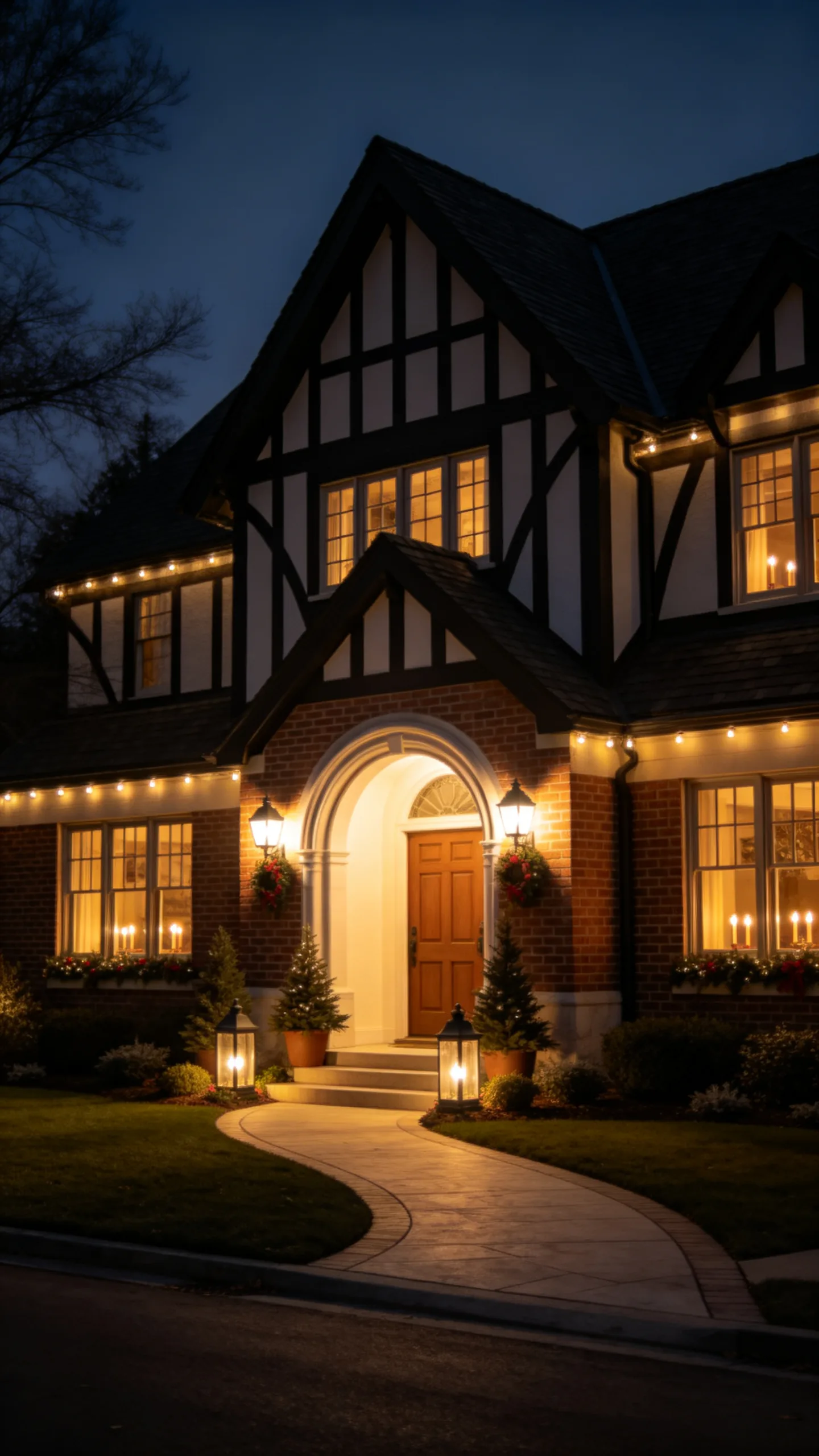
Use the same warm white light temperature on the porch fixture, window candles, pathway lanterns, and selected evergreen arrangements. Coordinated lighting makes separate decorations read as one exterior plan and keeps the brick, timber, and greenery visually connected at night.
Place brighter illumination at the door and softer light along the path or windows. Check the view from the street after dark to reduce glare, preserve the strongest architectural features, and keep the Tudor home’s classic lines as the main focus.

From the editors
Decor Compass Editorial Team
We turn practical home research into clear, useful room-by-room ideas.