Blue can make a compact living room feel calm, layered, and intentional without turning every surface into a bold statement. Use the color strategically through paint, upholstery, textiles, art, and accessories while keeping sightlines open and furniture appropriately scaled.
1. Paint One Deep Blue Focal Wall
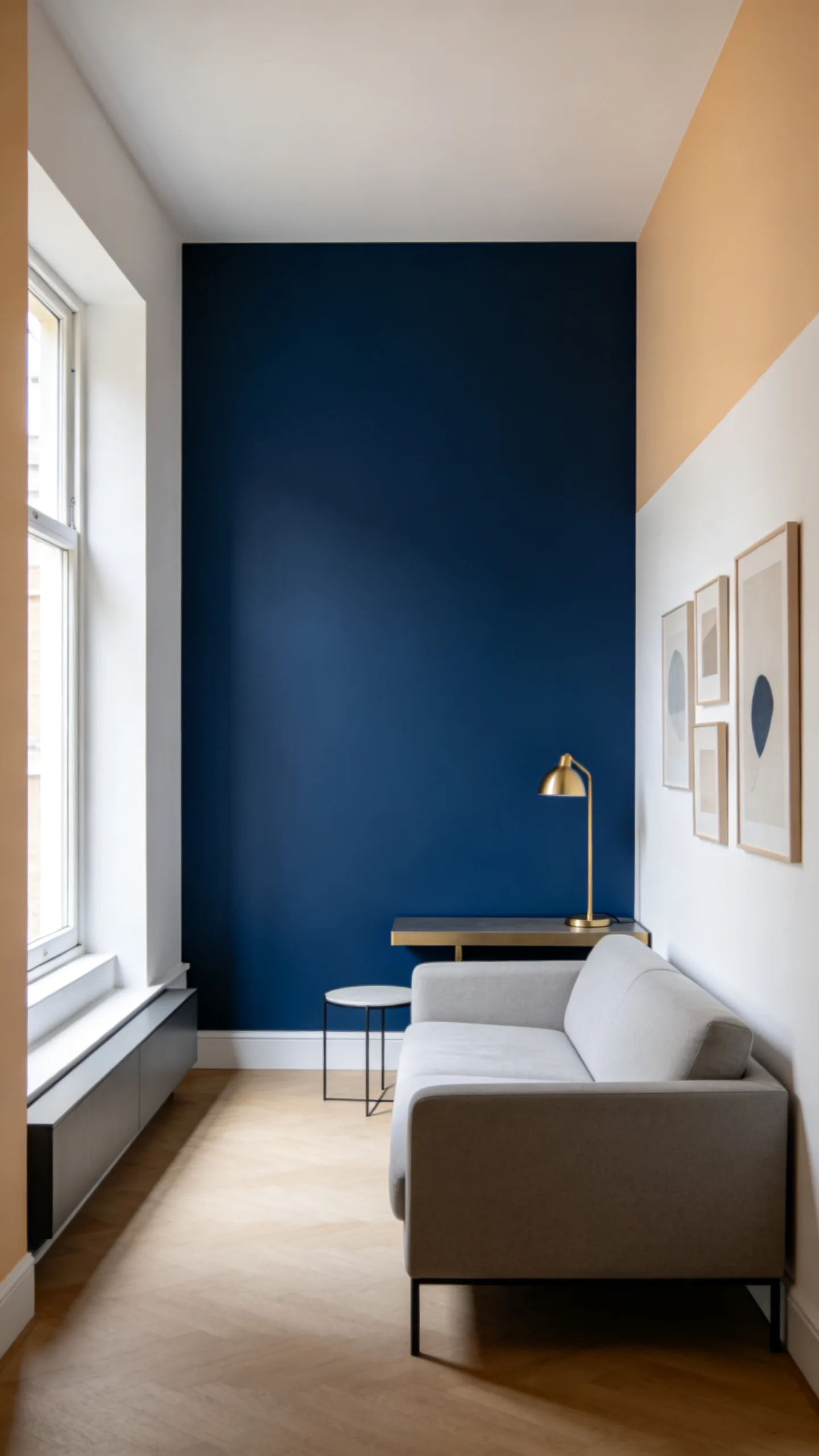
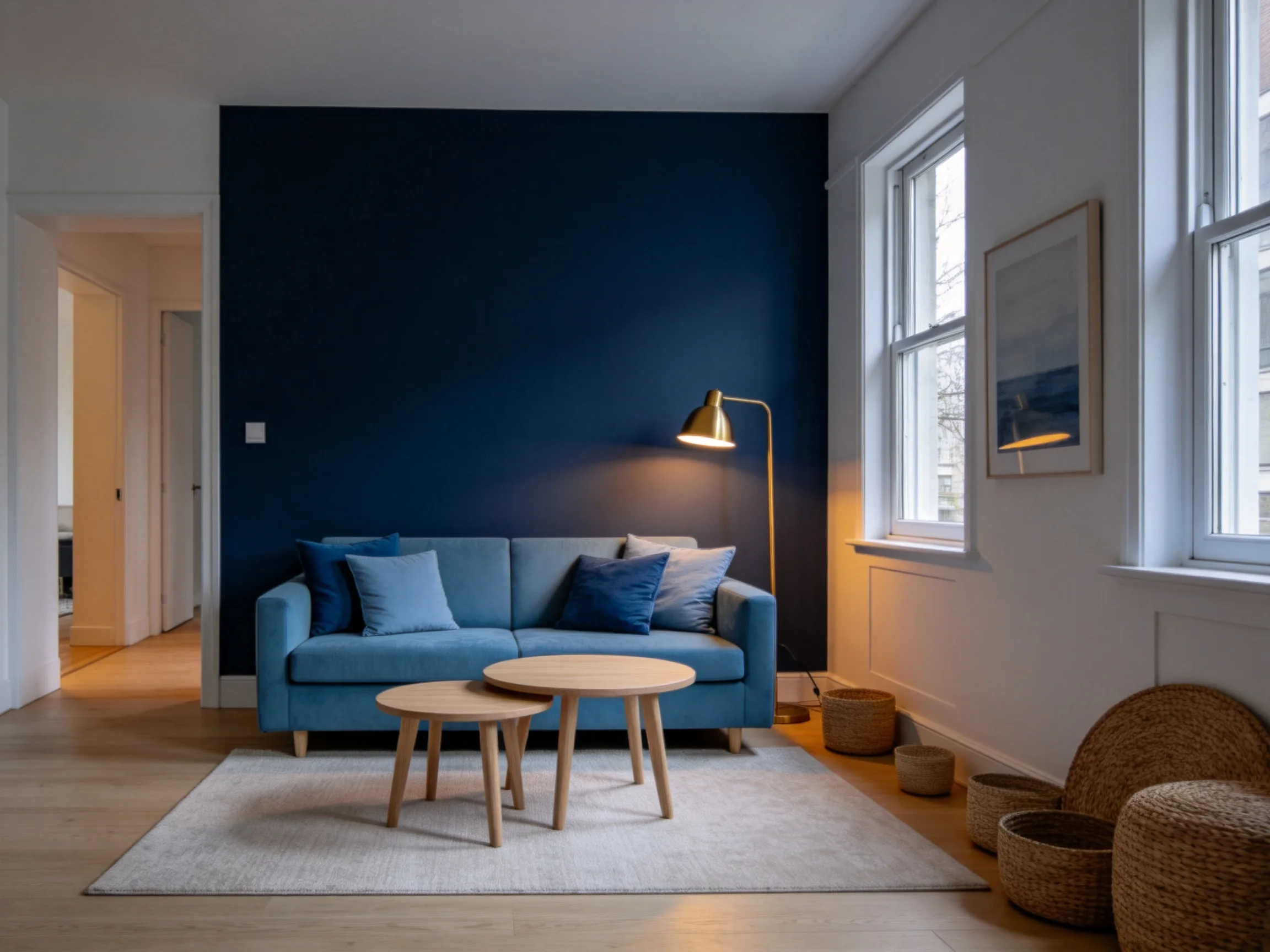
Choose one wall behind the sofa or television for a saturated navy, cobalt, or ink-blue finish. Keeping the other walls warm white or pale gray prevents the room from feeling enclosed while giving the seating area a clear focal point.
Place a slim console, low bookcase, or streamlined sofa against the blue wall so the furniture reinforces the composition. Matte paint helps conceal minor wall imperfections and creates a softer backdrop for framed art and brass lighting.
2. Pair a Pale Blue Sofa With Warm White Walls
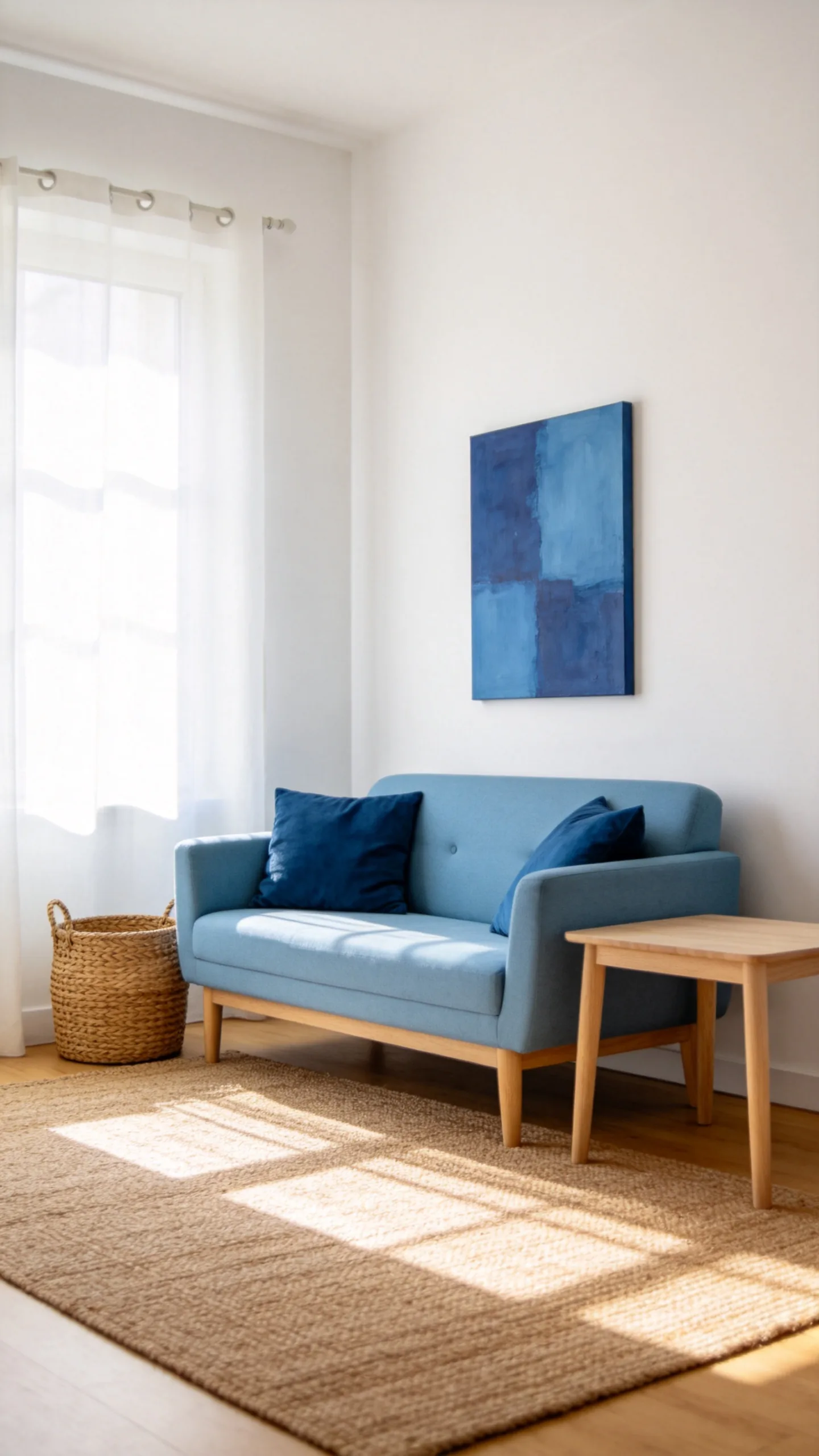
A powder-blue or muted denim sofa adds color without visually weighing down a small living room. Set it against warm white walls and pair it with light oak legs, a natural jute rug, or a woven rattan basket.
Use two or three darker blue accents in the pillows or artwork to connect the sofa to the rest of the room. This tonal approach keeps the main seating piece airy while still making blue the dominant color story.
3. Create a Navy-and-Camel Color Scheme
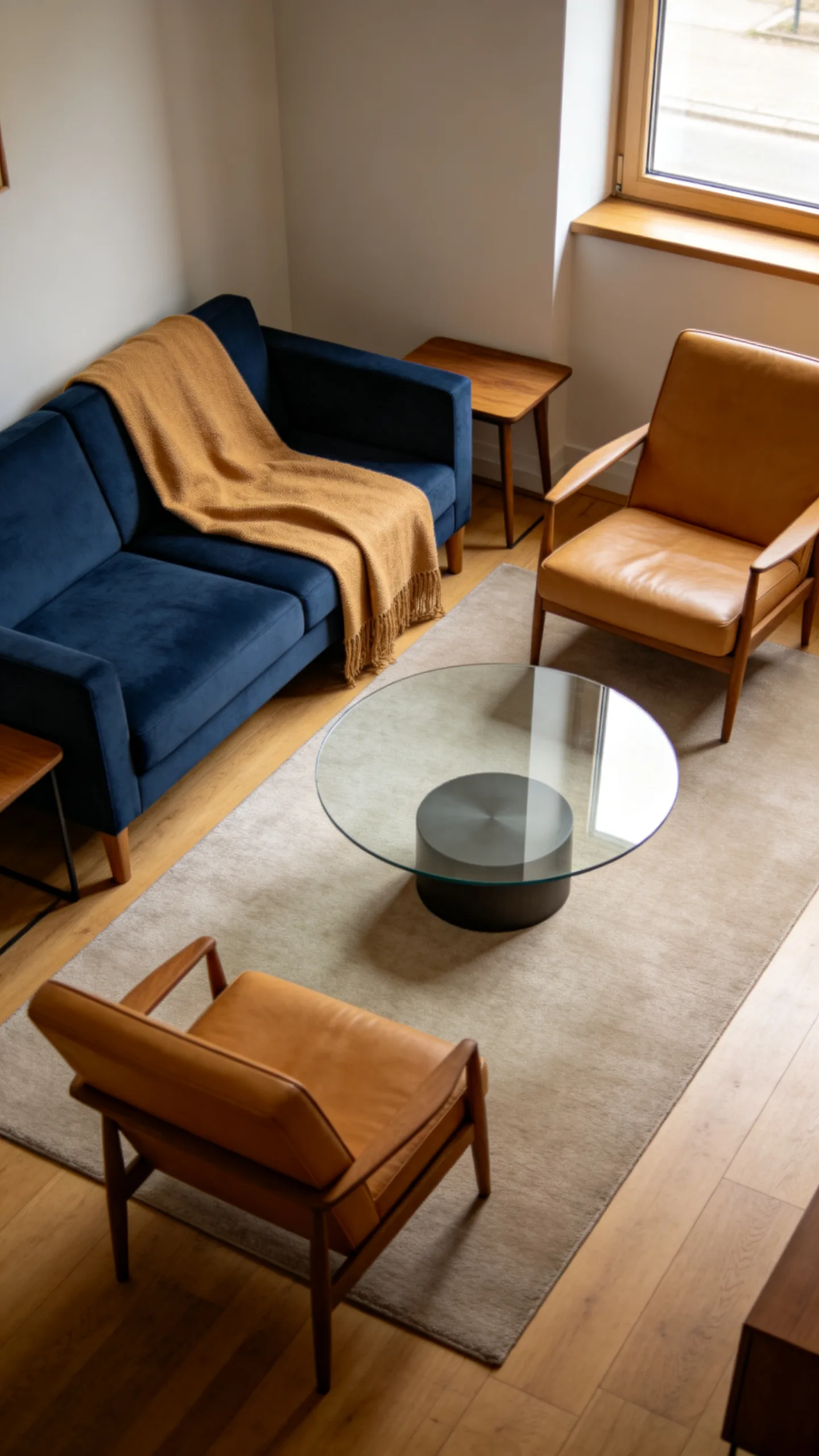
Combine navy upholstery or curtains with camel leather, tan linen, and medium-tone wood. The warm materials prevent a blue living room from feeling cold and add contrast without requiring additional bright colors.
In a compact layout, use a camel accent chair with narrow arms or a small leather ottoman instead of a bulky recliner. Keep the coffee table visually light, such as a round wood or glass design, to preserve walking space.
4. Use Blue Curtains to Emphasize Ceiling Height
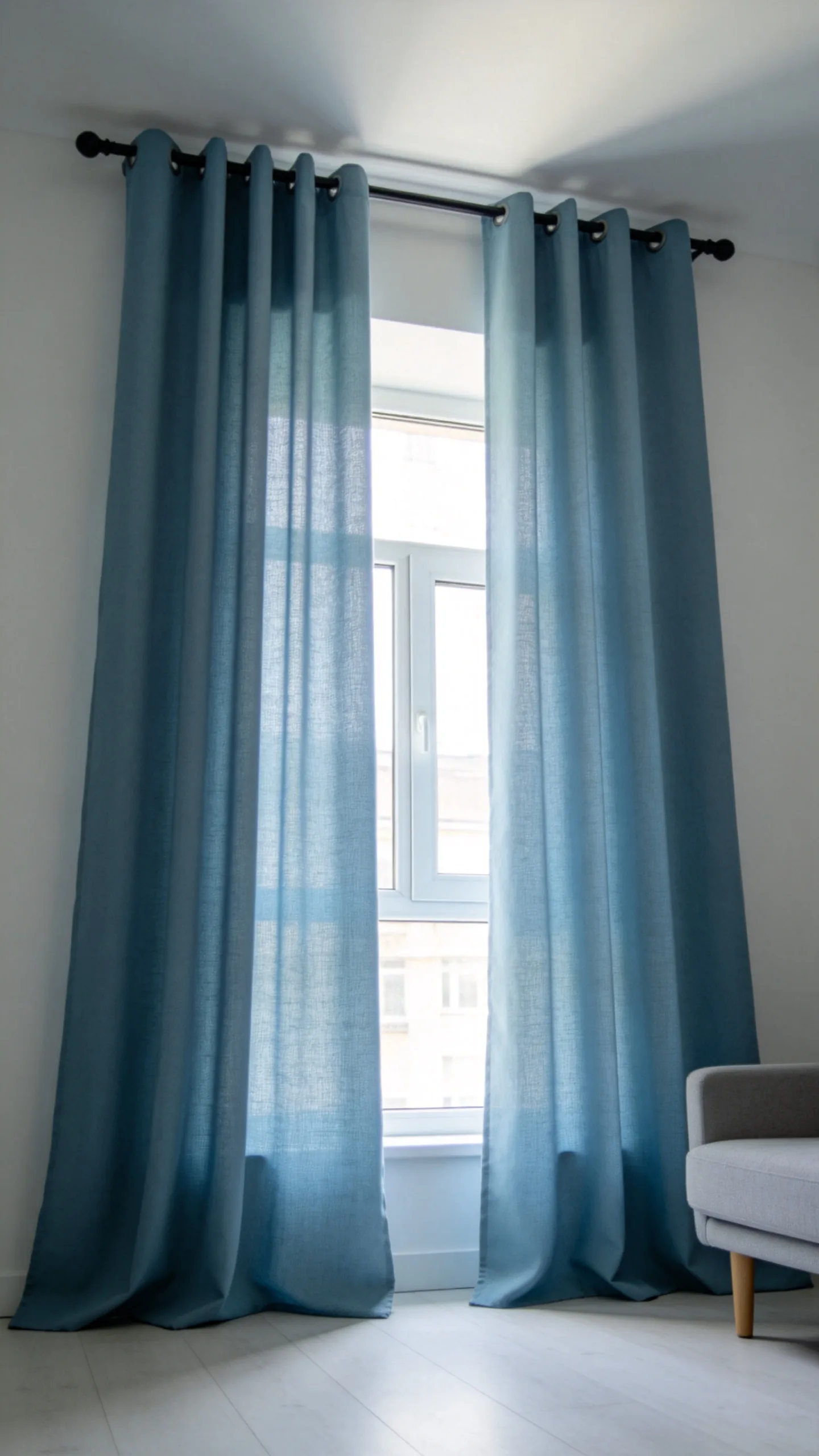
Hang blue curtains close to the ceiling and let them fall to the floor, even when the window is relatively short. Long vertical panels draw the eye upward and make a small living room feel taller.
Select lightweight linen or cotton curtains in a muted blue so daylight can still enter. Mount the rod slightly beyond the window frame to make the opening appear wider without blocking useful natural light.
5. Layer a Blue Rug Over a Larger Neutral Rug
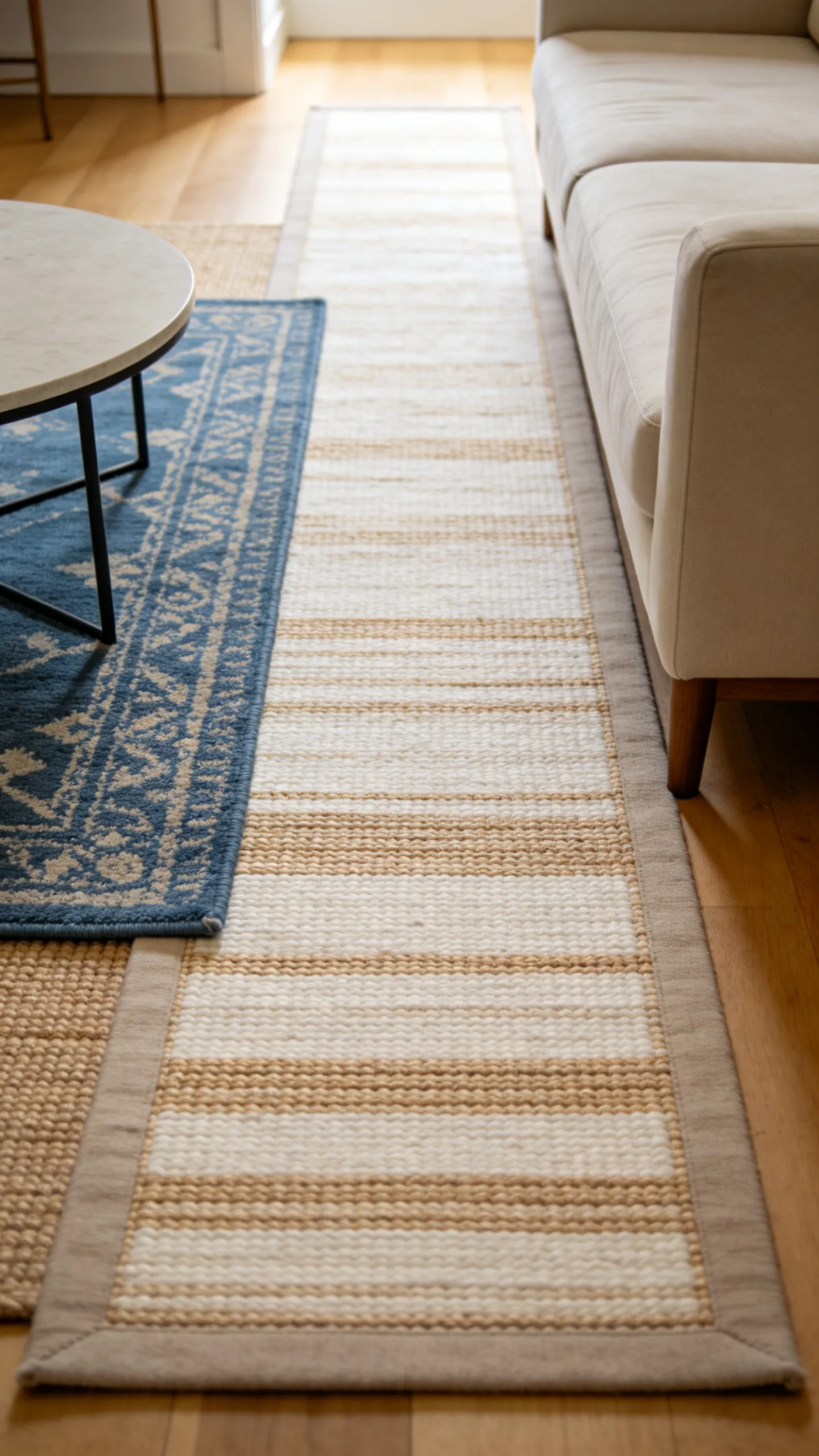
Place a small patterned blue rug beneath the coffee table and layer it over a larger jute or ivory flat-weave rug. The layered arrangement defines the seating zone while allowing the neutral border to visually expand the floor area.
Choose low-pile rugs that do not interfere with doors or chair legs. In a narrow living room, position the larger rug lengthwise with the sofa to emphasize the room’s strongest sightline.
6. Add Blue Through a Compact Sectional
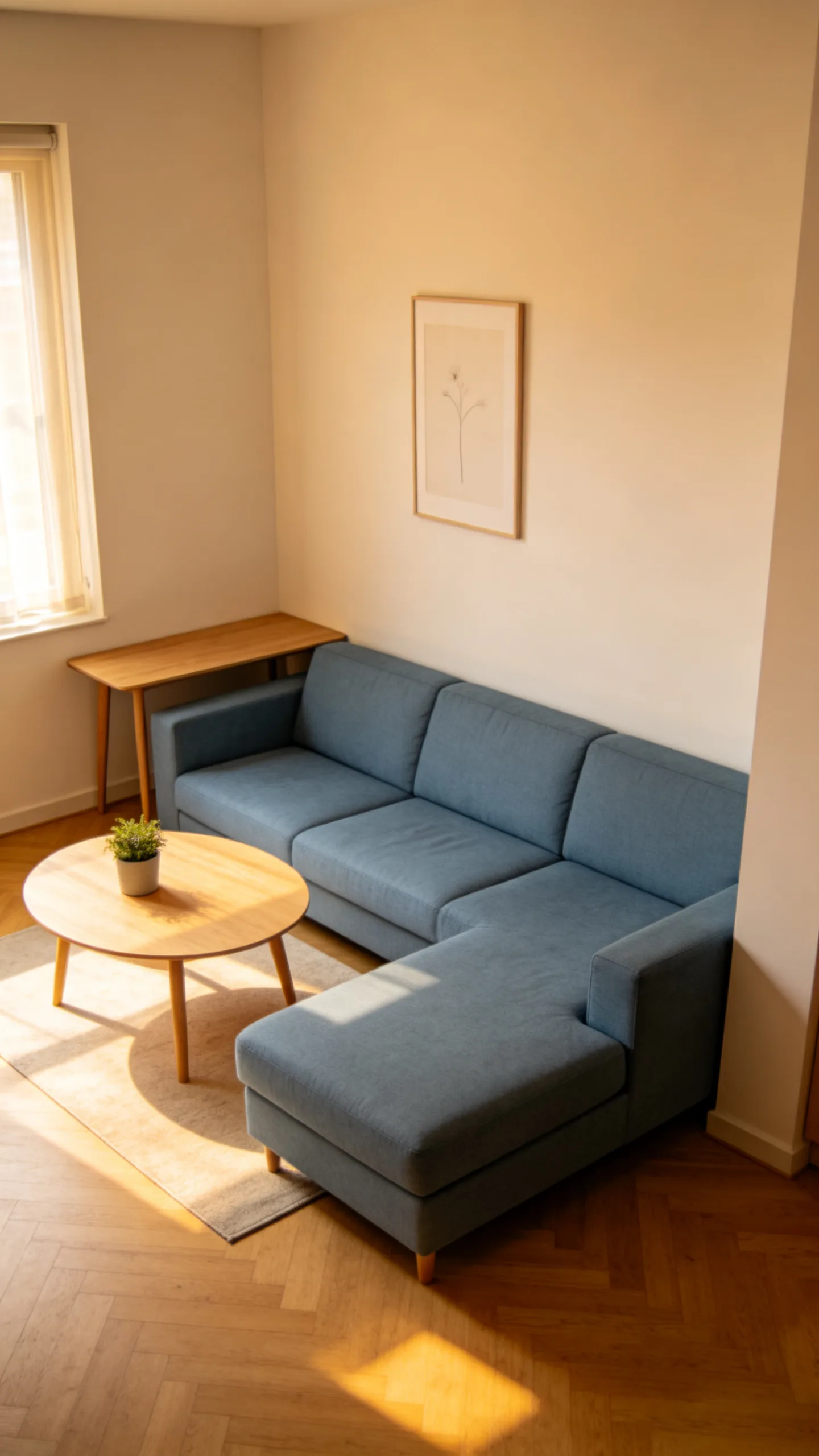
A small L-shaped sectional in slate blue or muted teal can use corner space efficiently while providing more seating than separate chairs. Measure the chaise depth carefully so it does not obstruct the main walkway.
Float the sectional a few inches away from the wall if circulation allows, then place a narrow sofa table behind it for lamps or baskets. Keep the coffee table rounded to soften corners and improve movement around the seating.
7. Style a Blue-and-White Gallery Wall
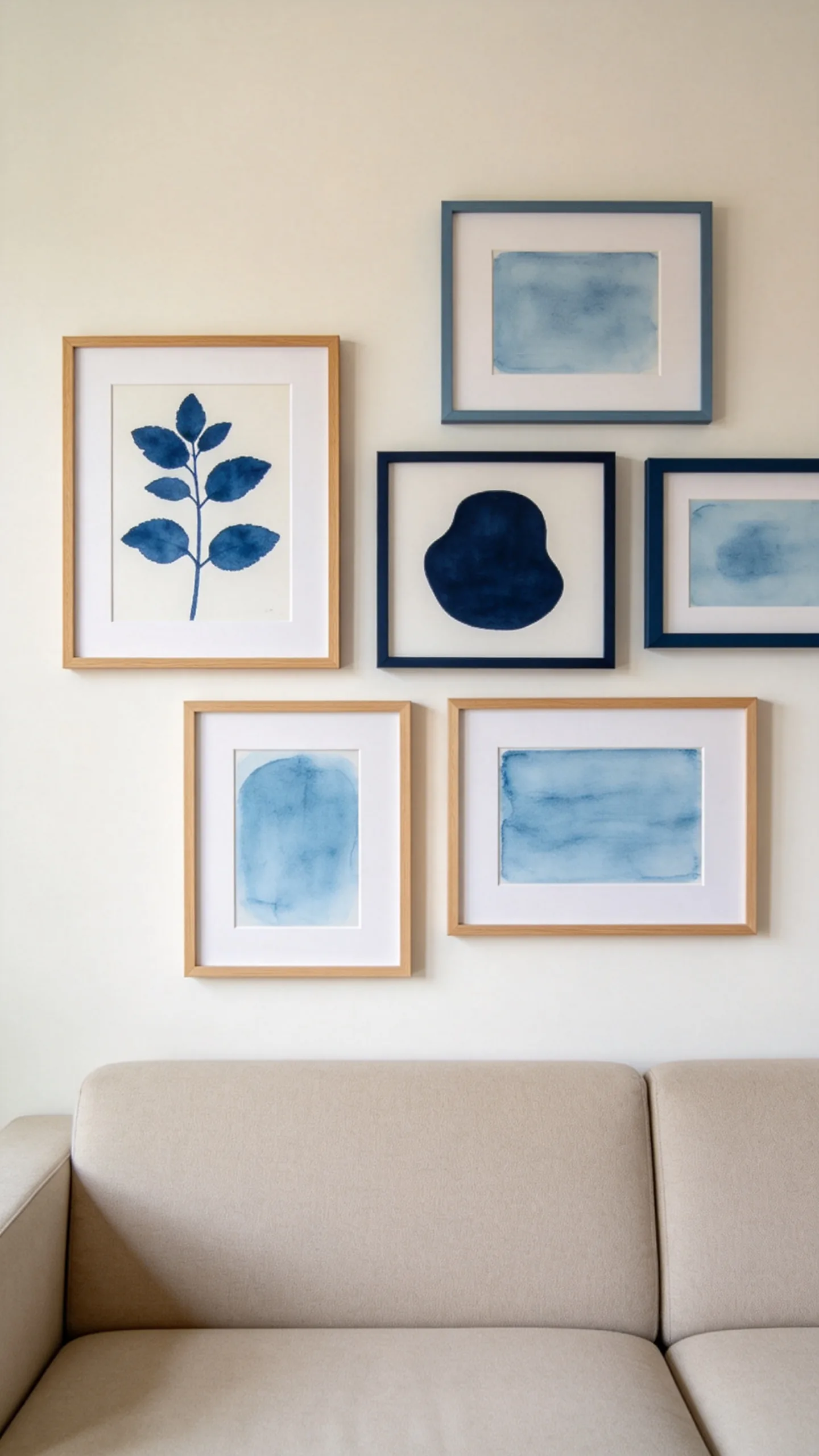
Build a gallery wall with blue botanical prints, white mats, small navy illustrations, and one or two natural wood frames. Hang the collection above a sofa, leaving enough space between the top cushion and lowest frame for a balanced transition.
Use a consistent frame color or repeated blue tones to keep the arrangement from looking busy. In a small room, a unified gallery wall creates a strong focal point without using floor space.
8. Install Blue Built-In or Freestanding Shelving
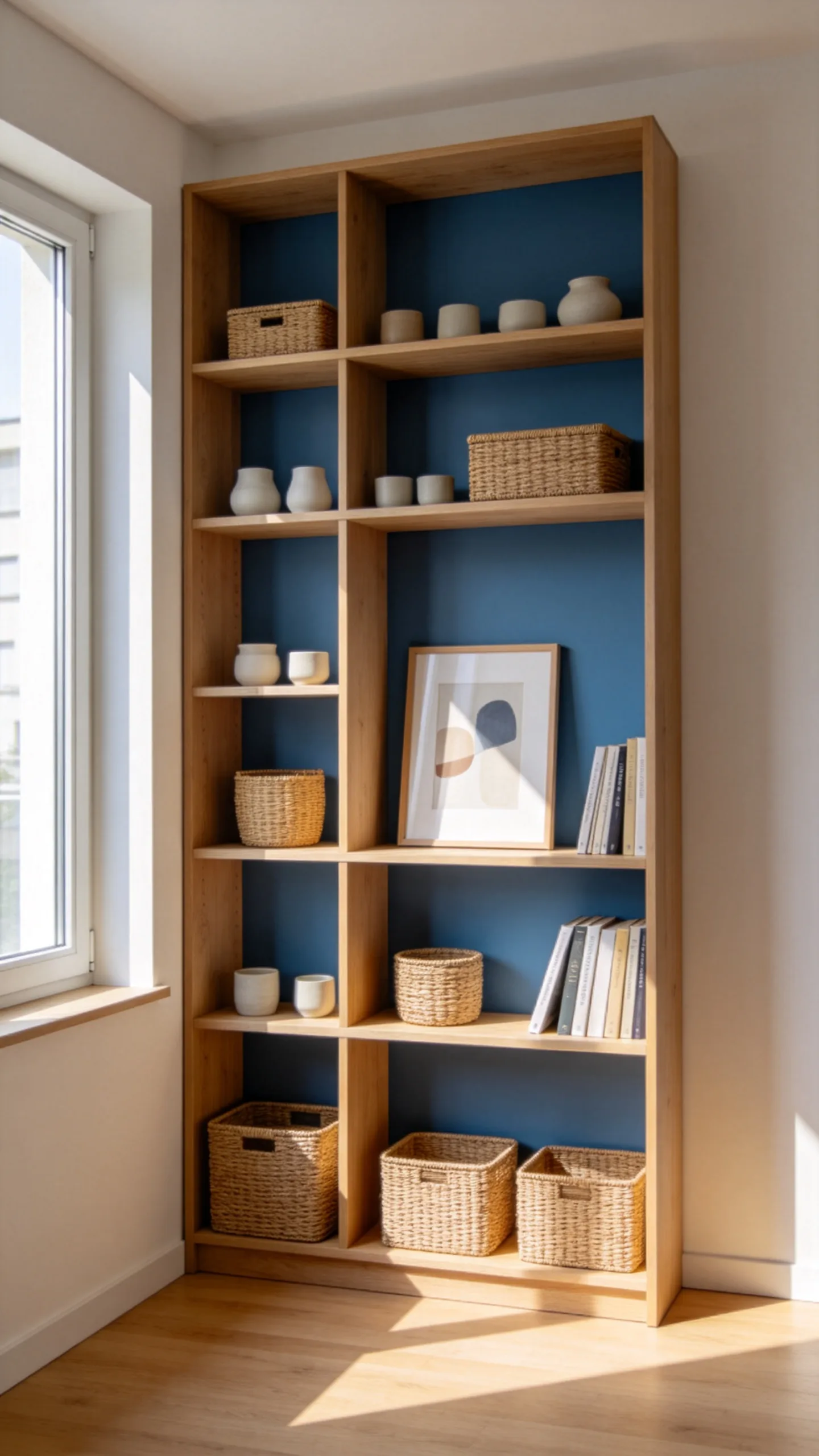
Paint the back panels of open shelving a medium blue while leaving the shelves white, natural wood, or pale gray. The color creates depth behind books, ceramics, and framed photographs without making the entire storage unit visually heavy.
Arrange objects in small groups and leave some open space on every shelf. This treatment works especially well in an apartment living room where vertical storage replaces bulky cabinets and keeps the floor clear.
9. Choose a Blue Velvet Accent Chair
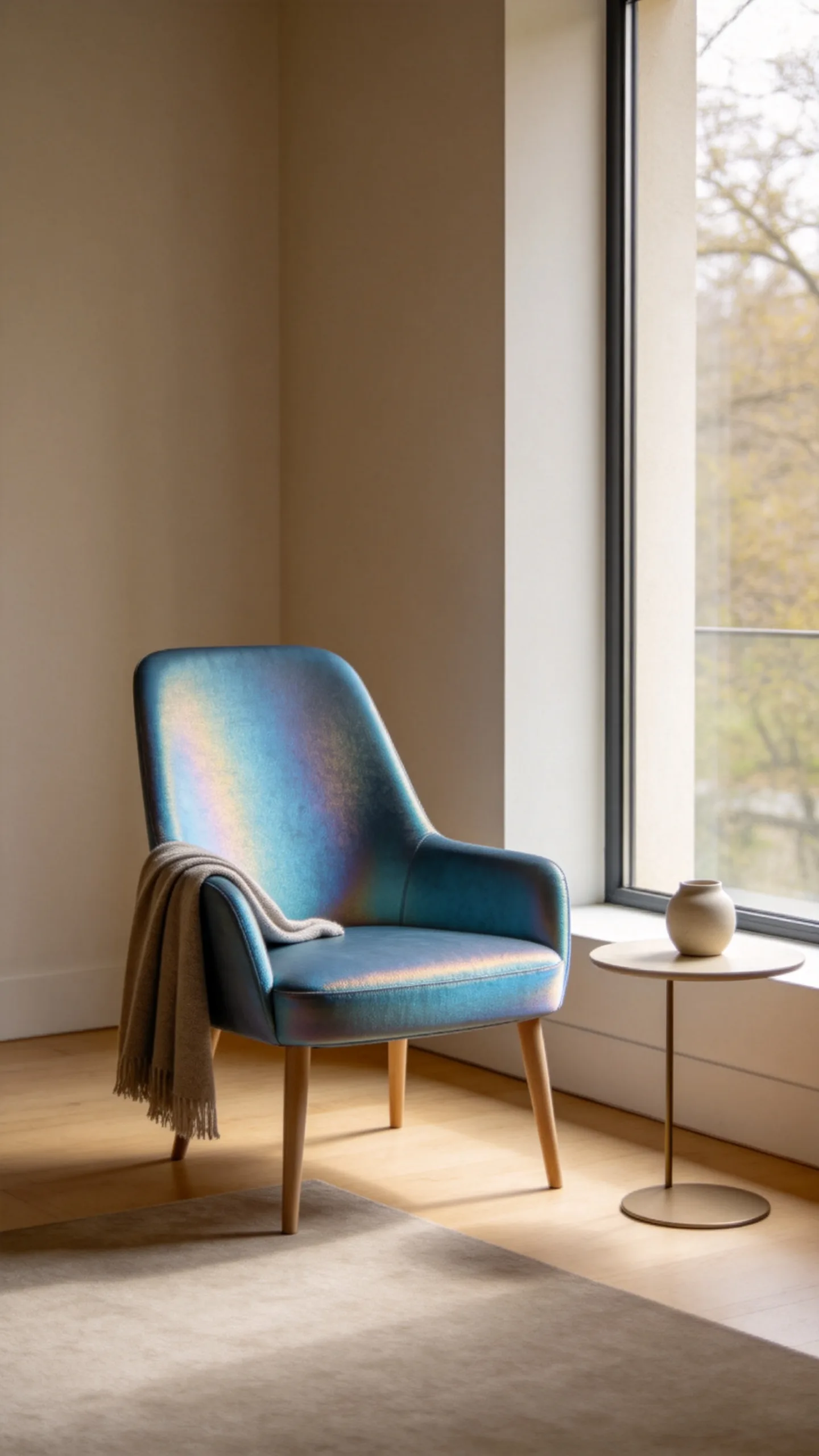
Add one compact velvet chair in sapphire, navy, or dusty blue beside a window or opposite the sofa. A single upholstered accent introduces texture and color while avoiding the visual heaviness of a matching blue seating set.
Select a chair with exposed legs and a narrow profile for better sightlines. Pair it with a small round side table rather than a large end table so the reading corner remains easy to navigate.
10. Use Blue Pillows on a Neutral Sofa
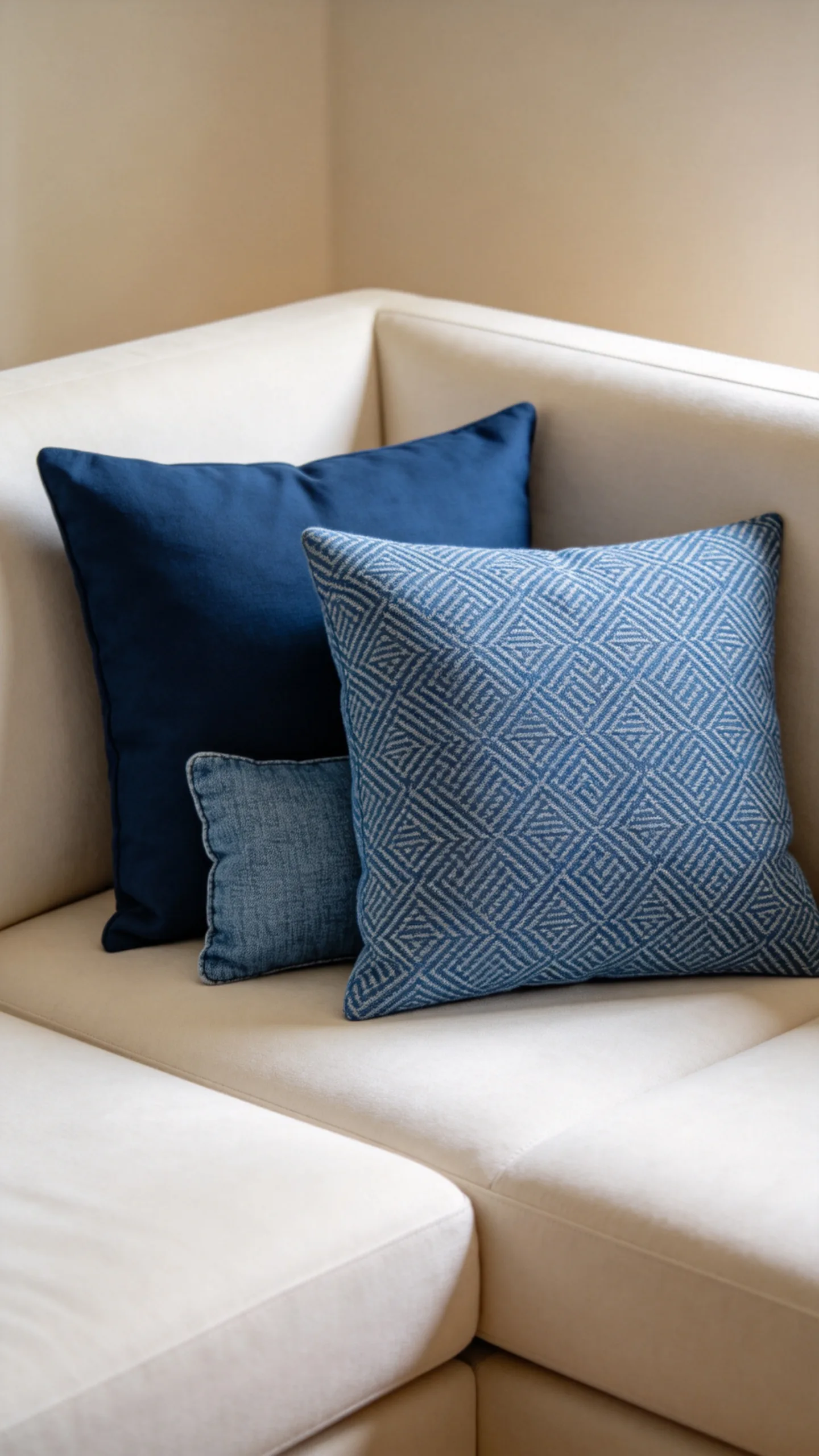
Keep the main sofa in ivory, beige, or light gray, then build a blue pillow arrangement with different shapes and fabrics. Combine a solid navy lumbar pillow, a patterned square, and a smaller textured cushion in denim or chambray.
Limit the palette to two or three blue shades so the sofa looks layered rather than cluttered. A neutral sofa also makes it simple to change the accent color seasonally without replacing major furniture.
11. Paint the Ceiling a Soft Blue
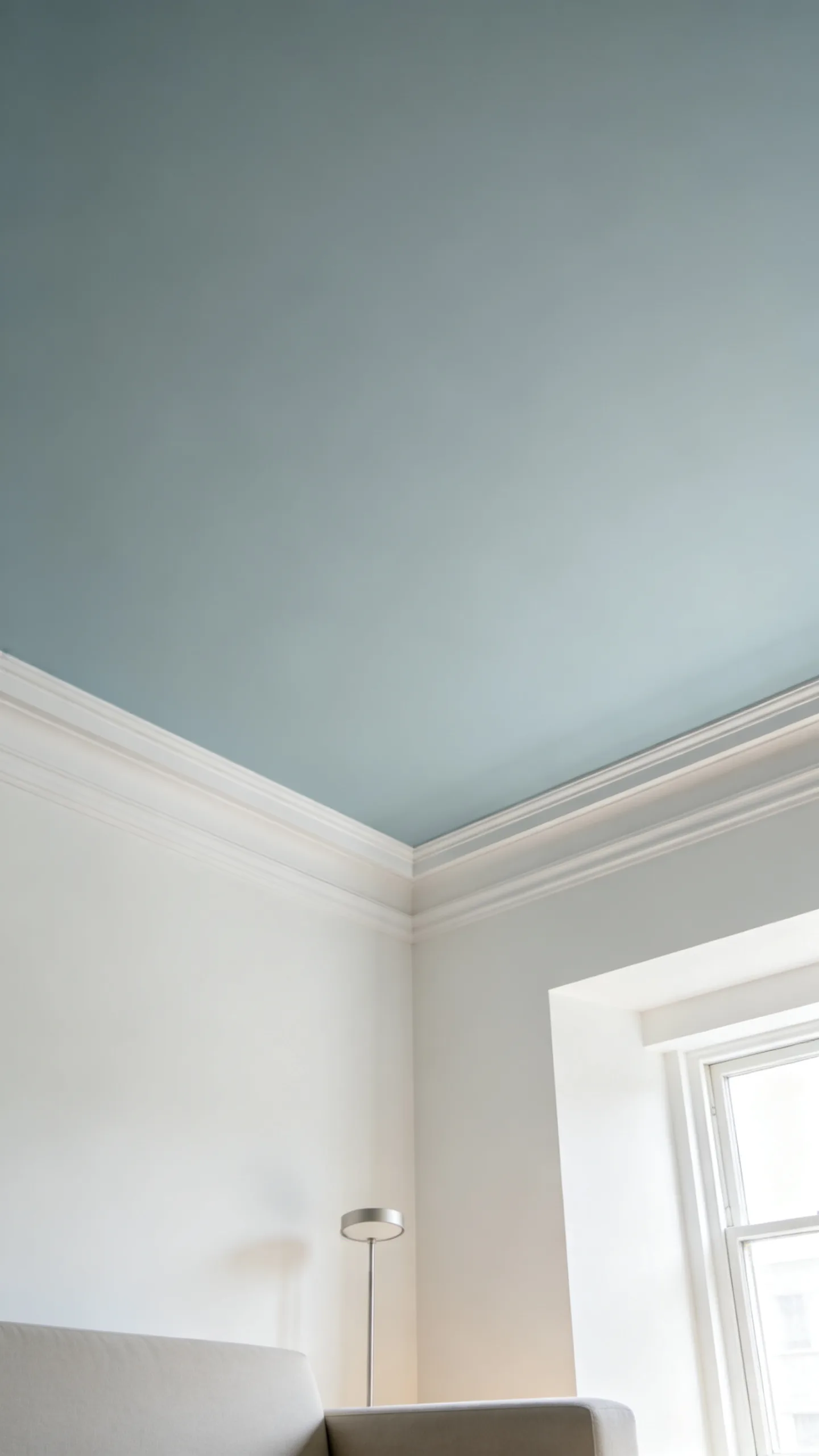
Use a pale blue-gray on the ceiling to create a subtle sky-like effect above a white or neutral living room. This idea adds personality without taking up wall, floor, or storage space.
Choose a low-saturation shade that works with the room’s natural light. Keep crown molding and trim bright white to define the ceiling plane and maintain crisp edges in a compact space.
12. Combine Blue With Light Wood Furniture
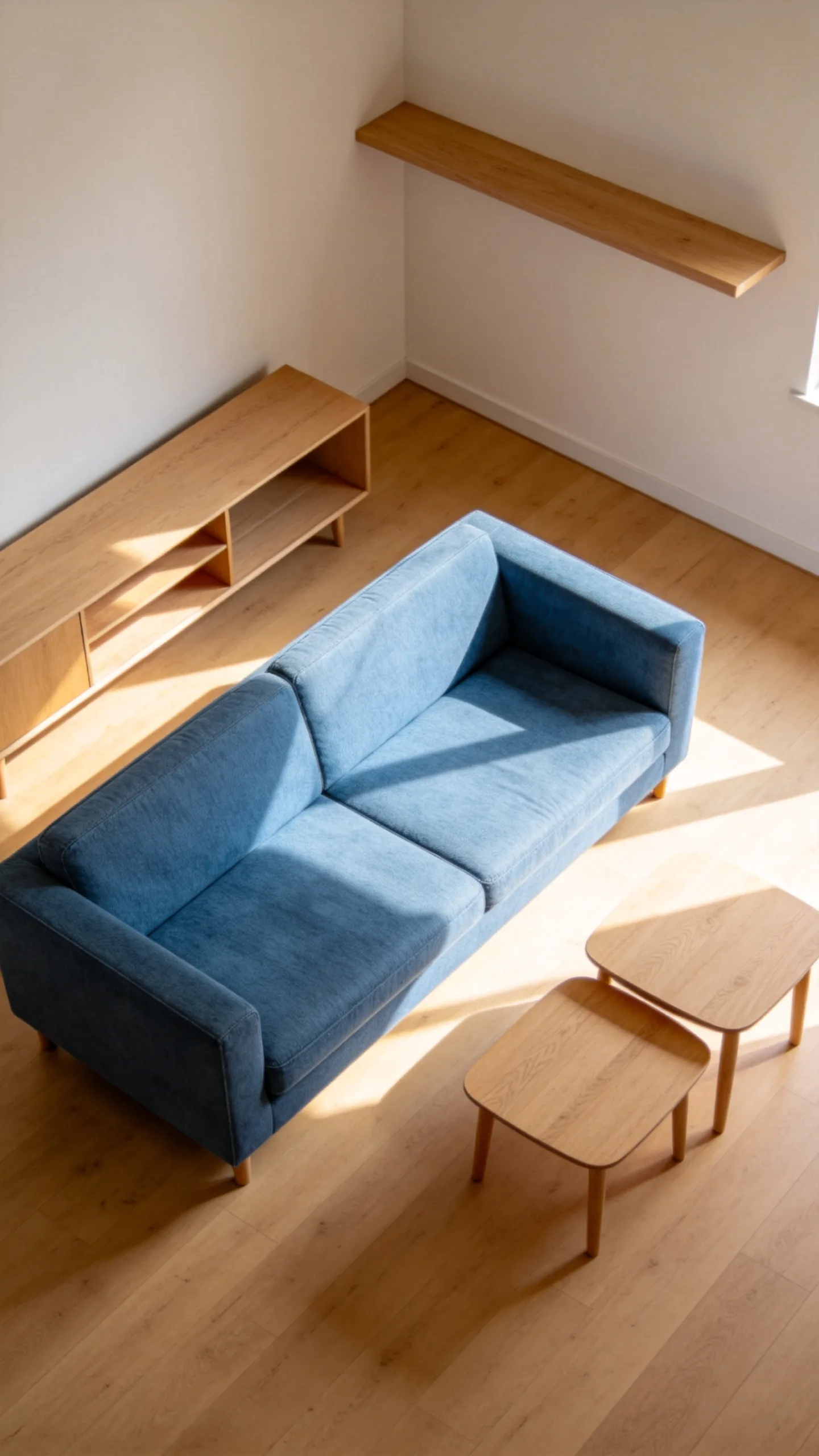
Pair a blue sofa, wall, or rug with pale oak, ash, or birch furniture. Light wood reflects more light than dark finishes and keeps the room feeling open while supplying warmth and natural texture.
Use a narrow media console, nesting tables, or a floating shelf in the wood tone. Repeating the same finish across two or three pieces creates cohesion without filling the room with matching furniture.
13. Try a Blue-and-Terracotta Accent Palette
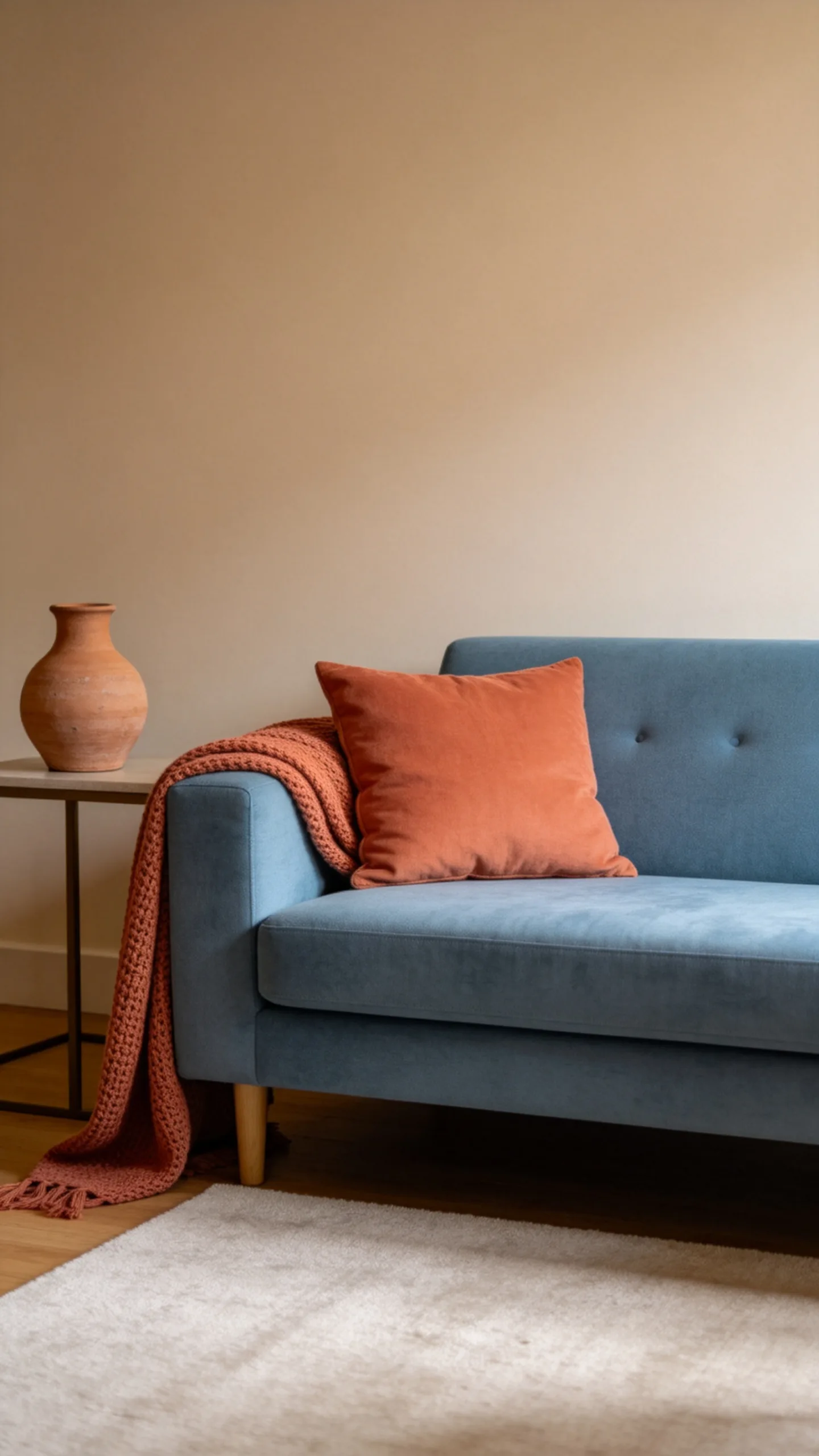
Balance blue upholstery or artwork with small touches of terracotta in pottery, pillows, or a woven throw. The orange-based hue provides contrast and brings warmth to rooms with cool daylight or gray flooring.
Keep terracotta on portable accessories rather than large furniture pieces. This makes the palette easy to adjust while allowing the blue sofa or accent wall to remain the primary focal point.
14. Add a Blue Painted Media Cabinet
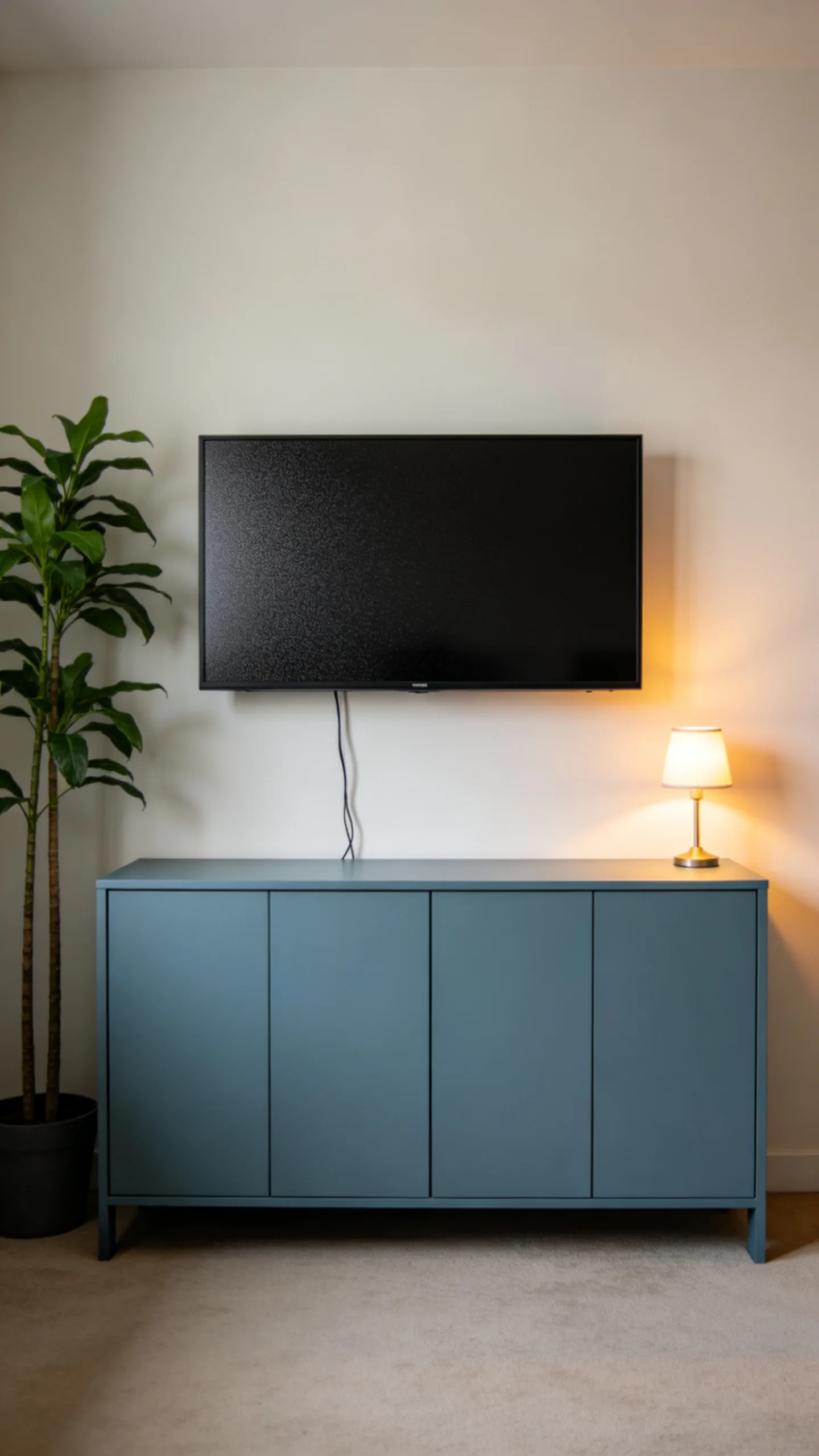
Choose a low media cabinet in navy, dusty blue, or deep teal to anchor the television wall. A closed cabinet hides electronics, game controllers, and cables, helping a small living room maintain a cleaner visual field.
Select a piece lower than the television and proportionate to the wall width. Leave some breathing room on both sides, or add one tall plant and one small lamp instead of filling every inch with decor.
15. Use Blue Grasscloth or Textured Wallpaper
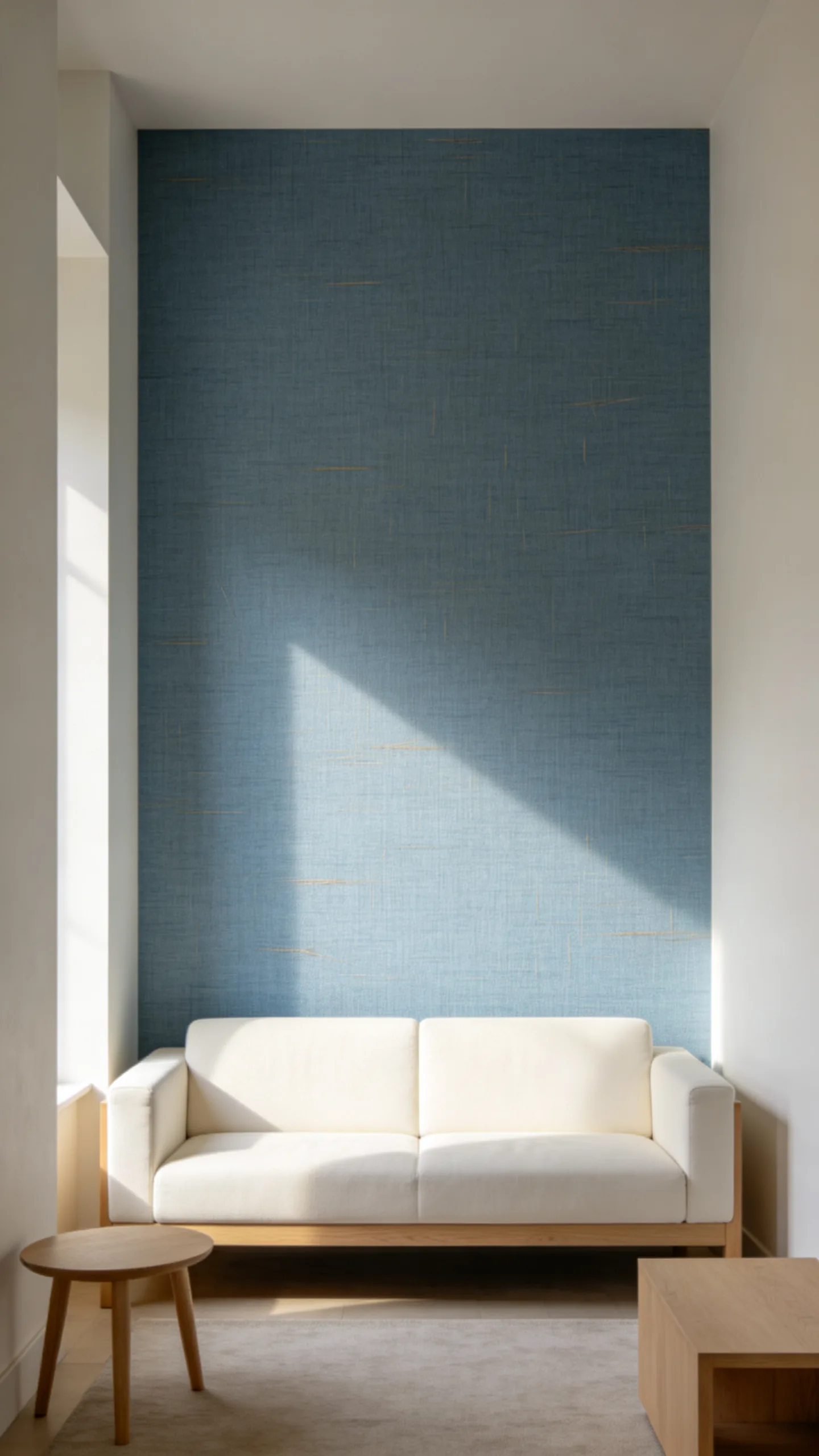
Apply blue grasscloth or a subtle textured wallpaper to one accent wall behind the sofa. The material adds dimension through its weave and catches light differently than flat paint.
For a rental-friendly approach, use removable wallpaper on a single wall or inside a bookcase. Keep nearby furniture simple, because the wall texture already supplies visual interest and should not compete with a busy sofa pattern.
16. Frame a Blue Window Seat
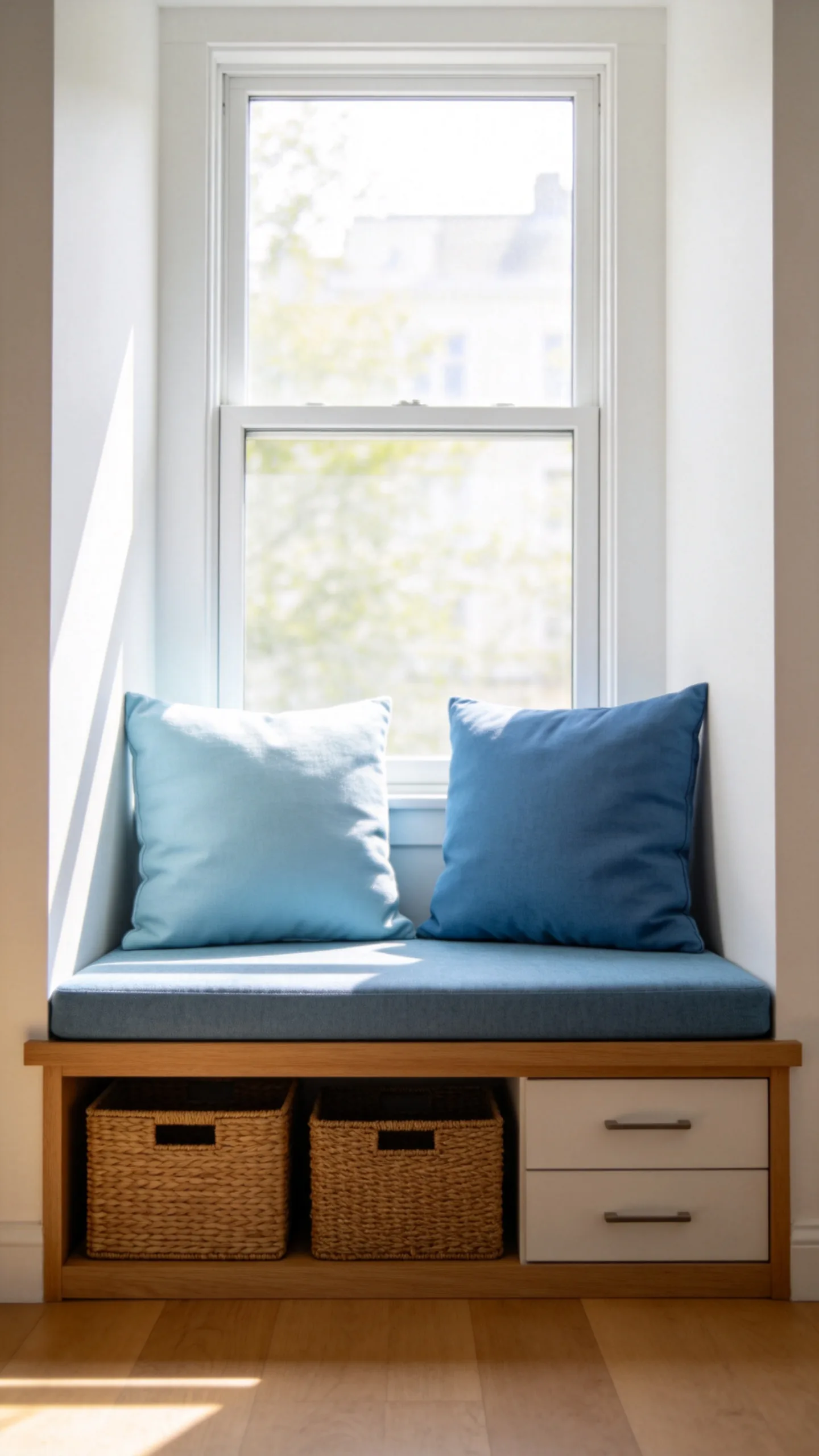
Turn a shallow window ledge into a blue reading nook with a tailored cushion and two washable pillows. A built-in or freestanding bench can provide seating, storage, and a clear connection to natural light without extending far into the room.
Use drawers or baskets underneath for blankets and books. Choose a cushion fabric that coordinates with the main sofa but does not exactly match it, creating a layered seating arrangement.
17. Hang Oversized Blue Artwork
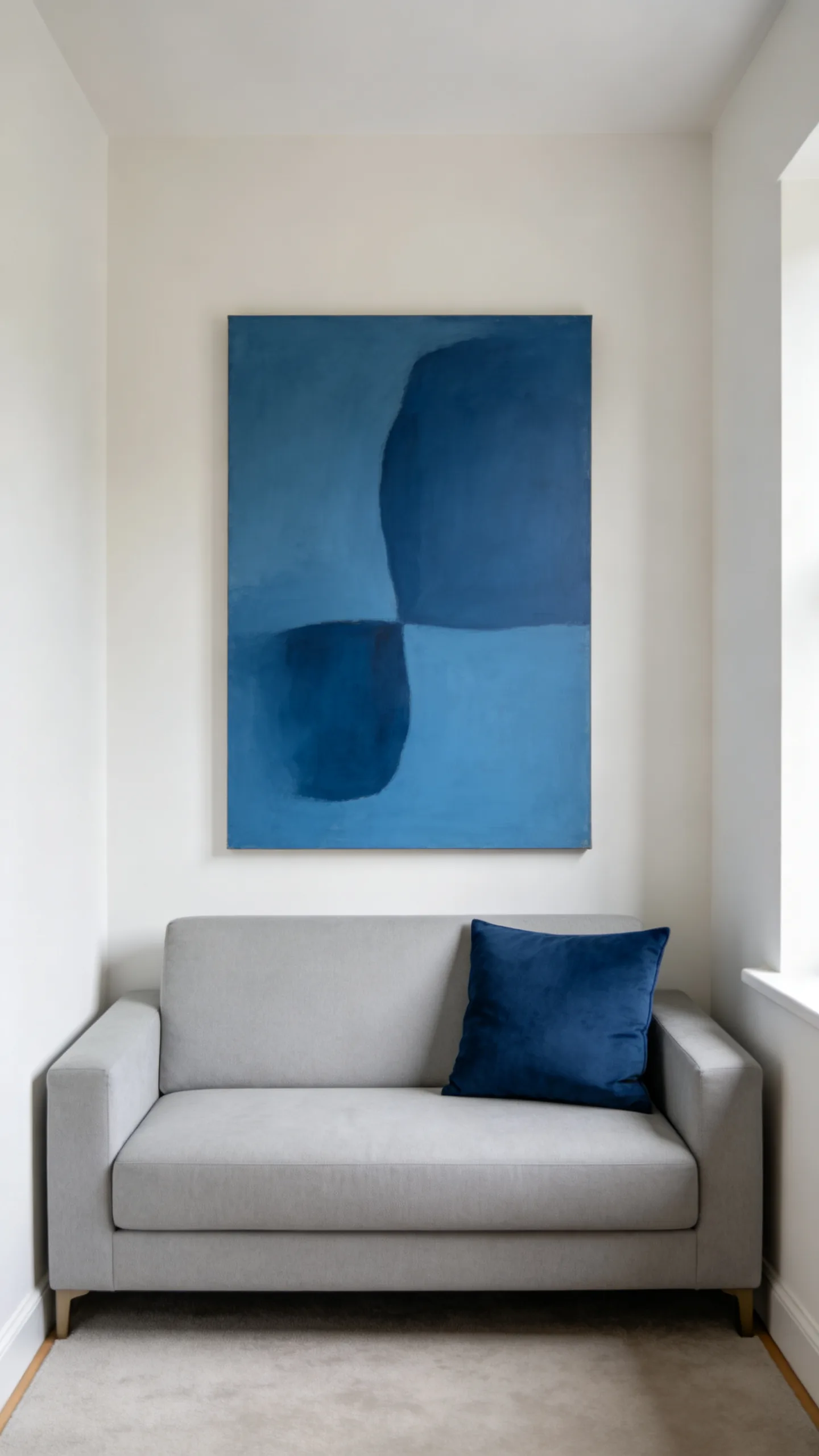
Use one large blue abstract, landscape, or geometric artwork above a sofa instead of several small pieces. A single composition gives the wall a clear focal point and reduces visual fragmentation in a compact room.
The artwork should generally be narrower than the sofa and hung with its center near eye level. Repeat one color from the piece in a pillow or throw so it feels integrated with the furnishings.
18. Choose a Blue-and-Brass Lighting Scheme
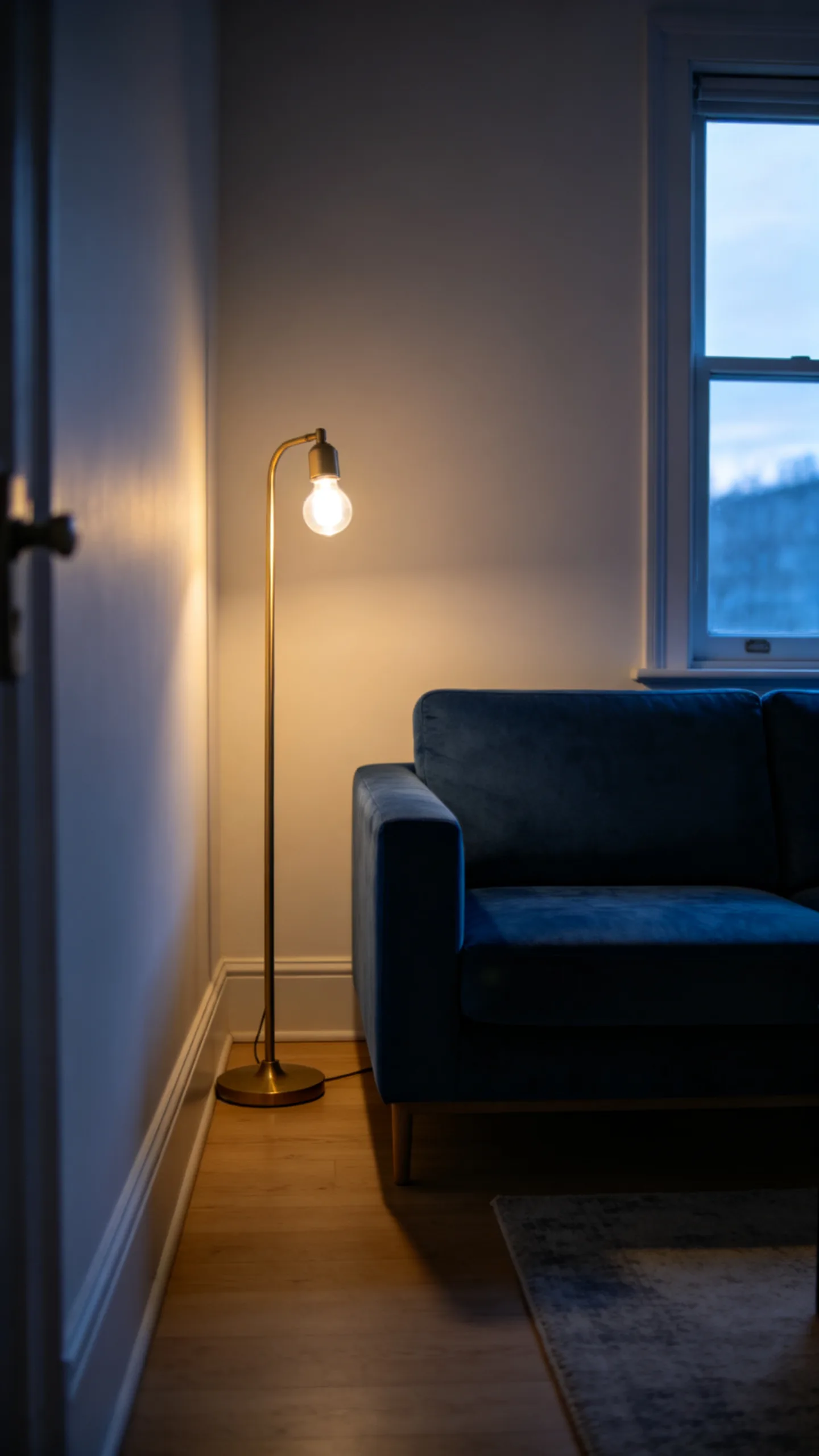
Install a brass floor lamp beside a navy sofa or hang a small brass pendant in front of a blue accent wall. Warm metal reflects lamplight and keeps deeper blue shades from appearing flat in the evening.
Use a slim lamp base and a shade that does not interfere with the walking path. Add warm-white bulbs to support a comfortable atmosphere without relying on overhead lighting alone.
19. Style a Coastal Blue Room Without Nautical Clutter
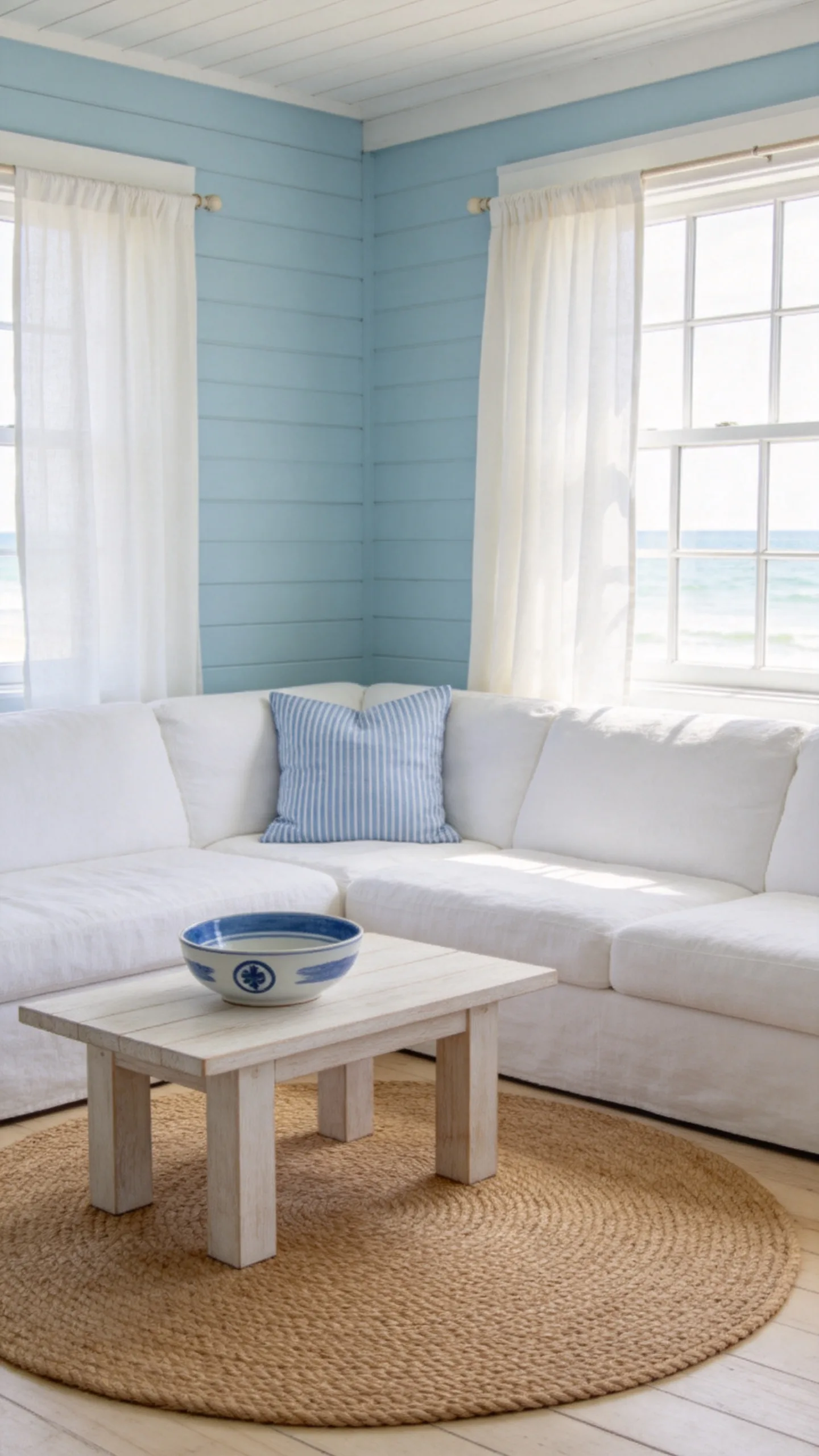
Combine soft blue walls, white linen, pale wood, and woven textures for a relaxed coastal look. A striped pillow or blue-and-white ceramic bowl can suggest the theme without introducing anchors, ropes, or excessive beach accessories.
Use one large natural-fiber rug to ground the room and keep window treatments light. The restrained palette reflects daylight and helps a compact living room feel fresh rather than overdecorated.
20. Add a Blue Geometric Rug
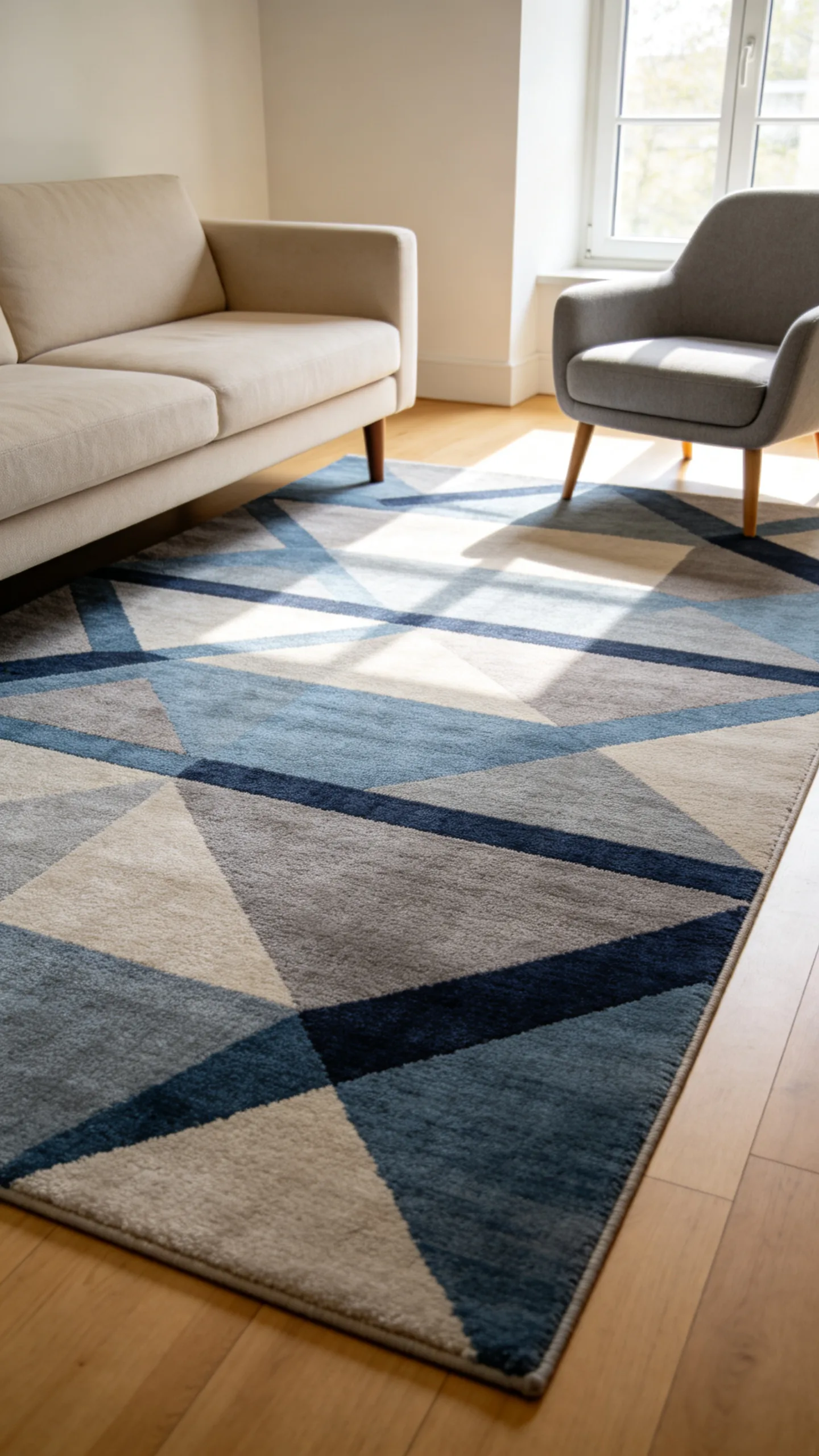
Anchor the seating area with a rug featuring navy, slate, or denim geometric lines. A pattern can hide everyday marks and add energy while the repeated angles echo the room’s furniture.
Choose the largest size that allows at least the front legs of the sofa and chairs to rest on the rug. If the room is narrow, select a design with a subtle pattern scale so the floor does not look crowded.
21. Use Blue on the Lower Half of the Walls
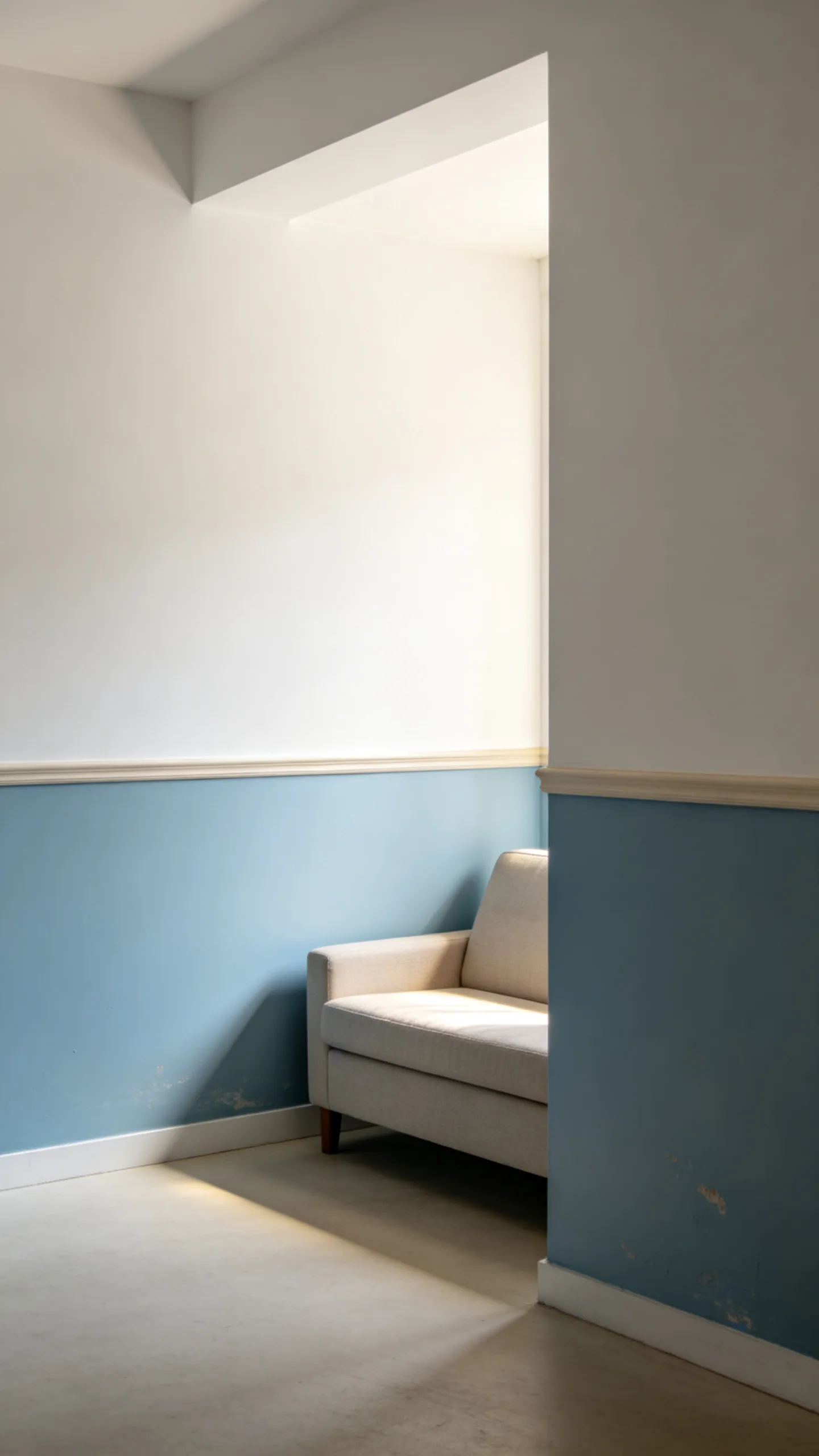
Paint the lower portion of the walls blue and keep the upper portion light, separating the colors with a slim chair rail or crisp painted line. This creates architectural definition and protects the upper sightline from becoming visually dense.
Use the lower blue section behind a sofa, around a dining transition, or along a high-traffic wall. A satin finish below can be easier to wipe clean, while matte paint above keeps the room soft.
22. Build a Monochromatic Blue Living Room
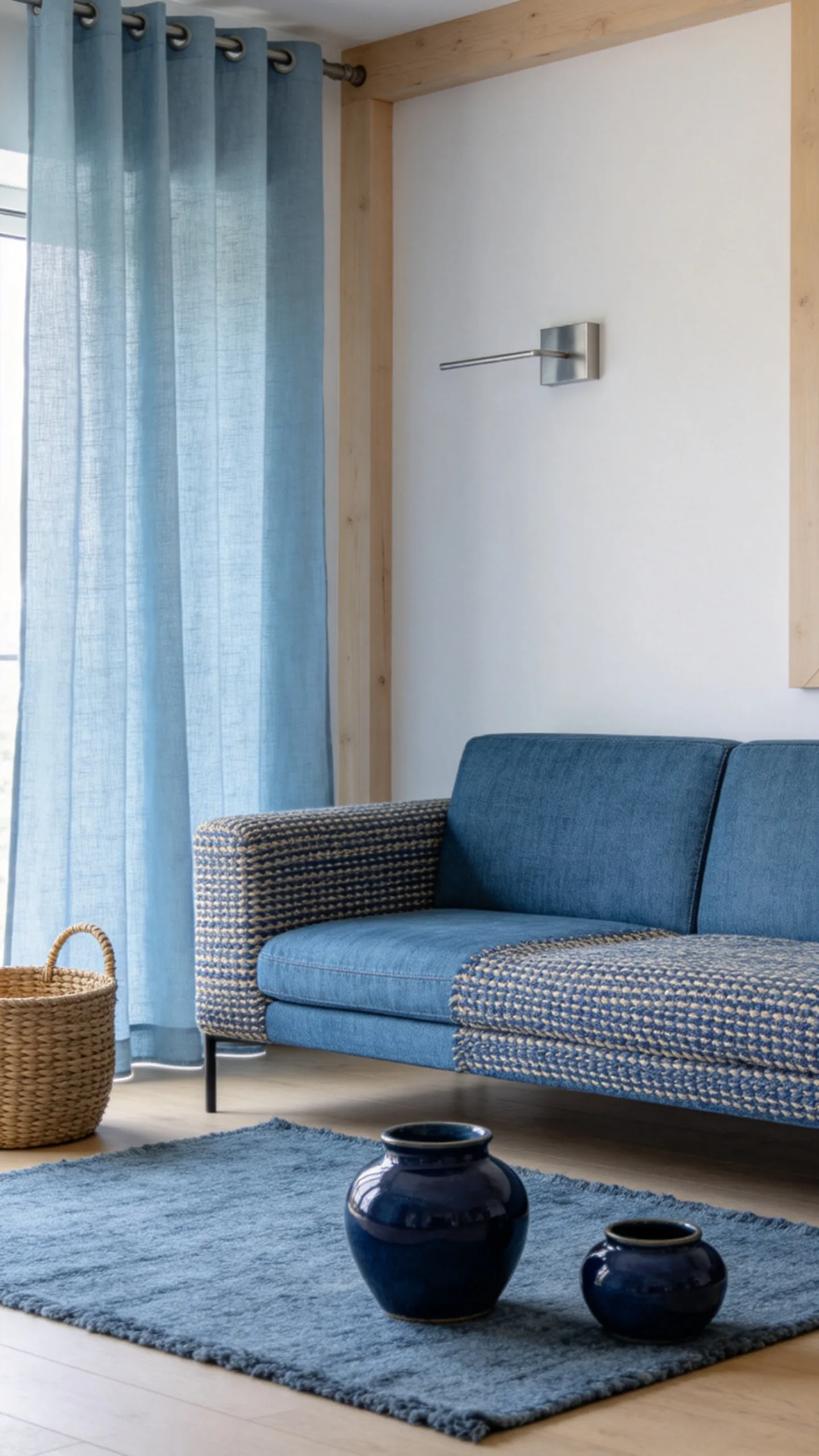
Layer pale blue, denim, slate, and navy instead of introducing multiple unrelated accent colors. Vary the shades through the sofa, rug, curtains, ceramics, and artwork so the room feels coordinated but not flat.
Break up the blue with white walls, natural wood, woven baskets, and brushed metal. Repeating one color family works particularly well in small spaces because fewer contrasting hues create a calmer visual flow.
23. Add Blue Storage Baskets and Boxes
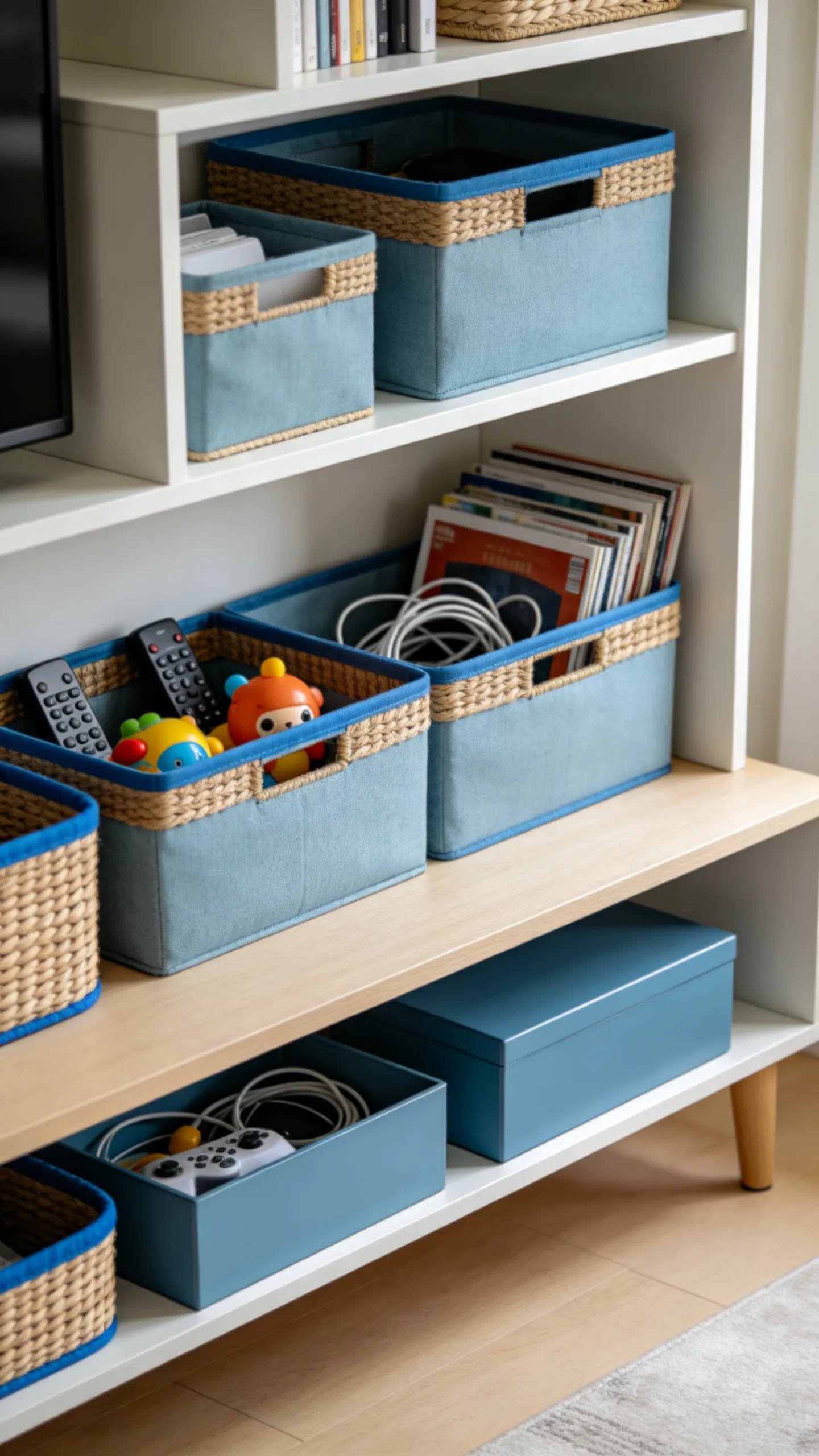
Use blue fabric bins, woven baskets with blue trim, or lacquered boxes on open shelving and beneath a console. These small storage pieces bring the accent color into practical areas while concealing remotes, toys, magazines, and charging cables.
Choose containers that fit the exact shelf or cabinet dimensions. Keeping clutter contained at lower levels preserves clear sightlines across the room and makes the blue accents look intentional rather than scattered.
24. Mix Blue With Blush and Cream
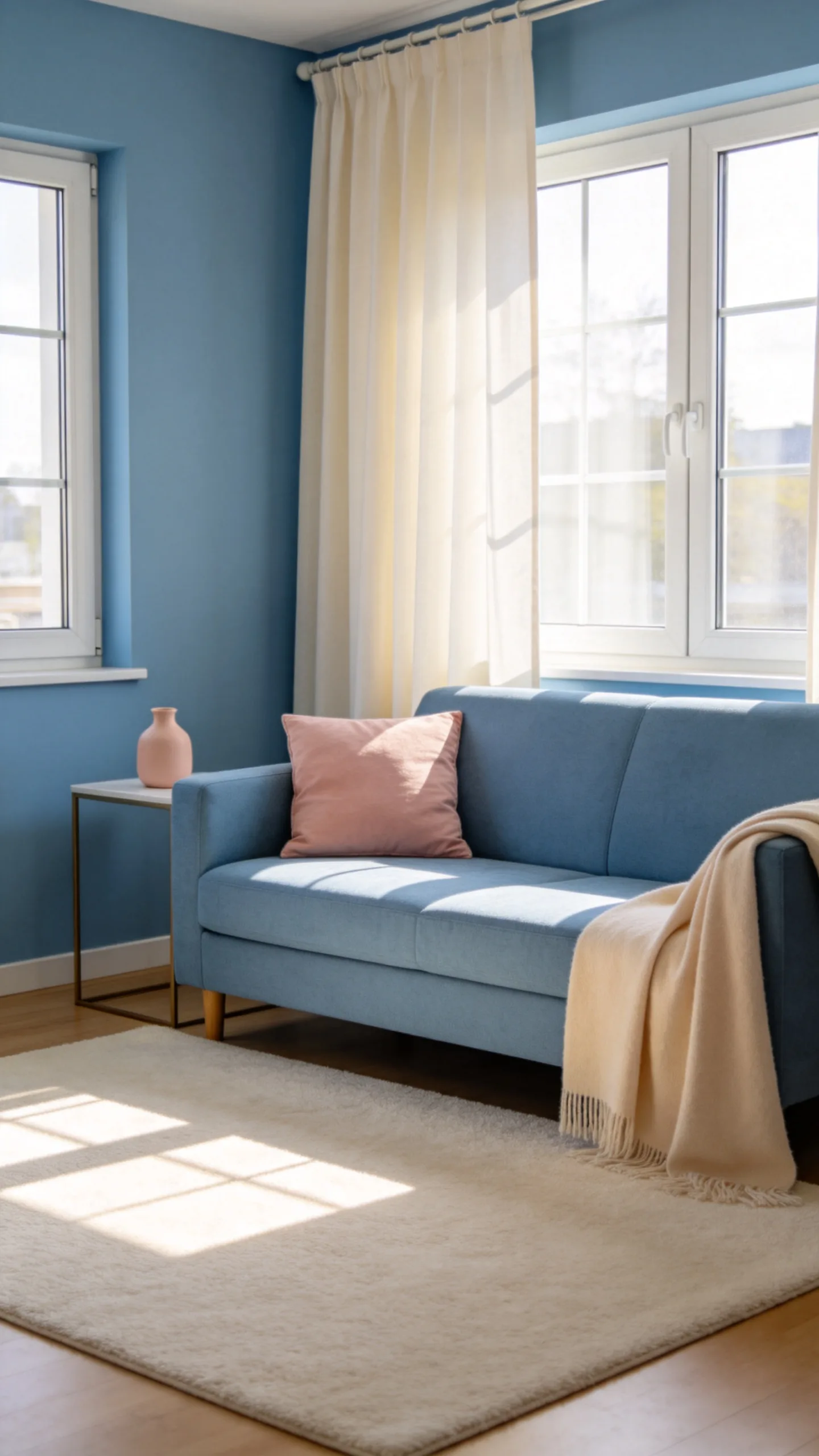
Pair a muted blue sofa or wall with blush pillows, cream upholstery, and soft beige accessories. The gentle pink adds warmth and contrast without the sharpness of a bright complementary orange.
Use blush in small quantities, such as one lumbar pillow, a ceramic vase, or abstract artwork. Cream curtains and a light rug keep the overall palette bright enough for a compact living room.
25. Create a Blue Reading Corner With Vertical Storage
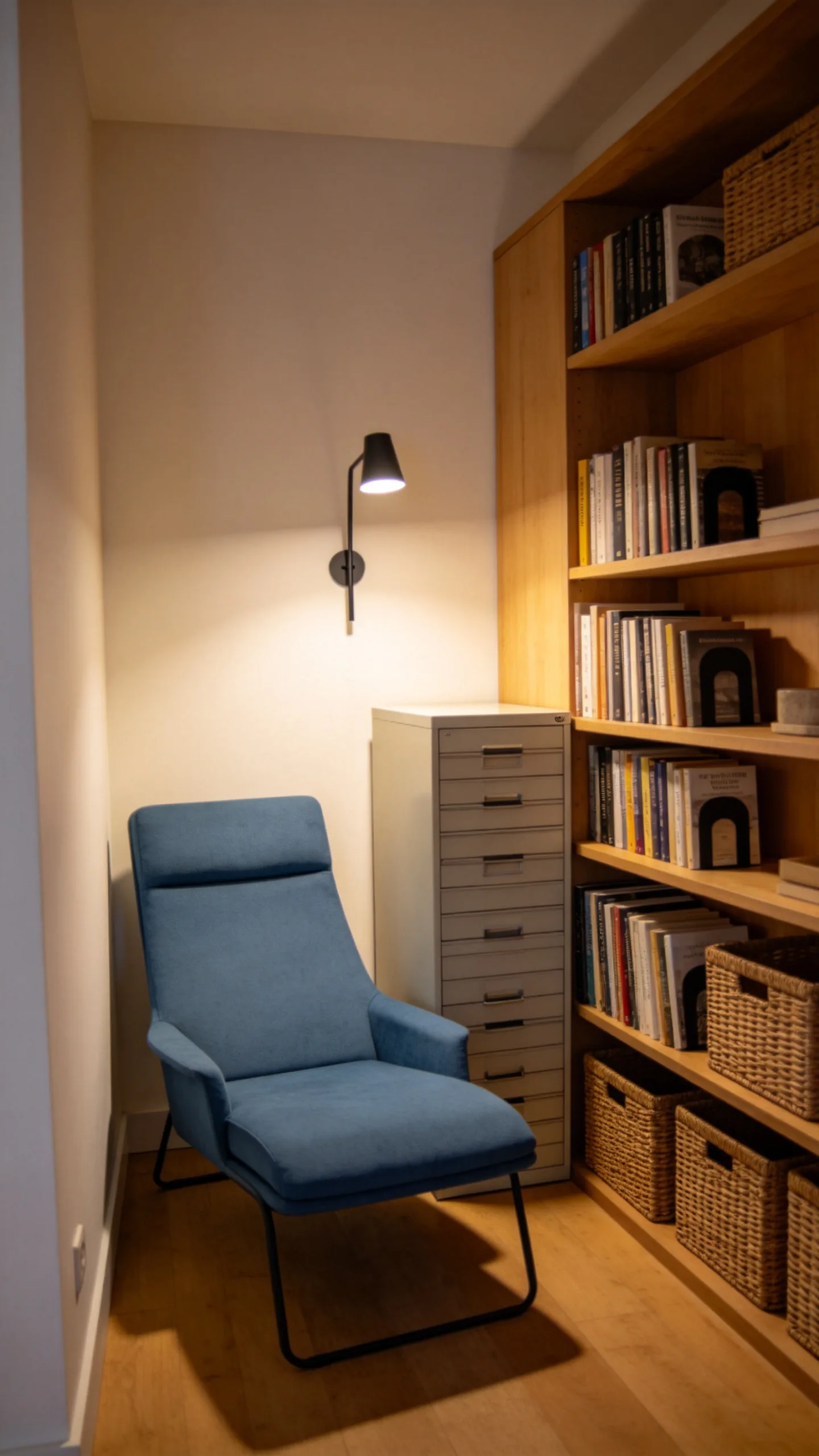
Place a blue lounge chair beside a tall, narrow bookcase to form a dedicated reading zone without using much floor area. Add a wall-mounted sconce or an adjustable floor lamp so the chair does not need a large side table.
Keep the bookcase shallow and style it with alternating books, baskets, and open gaps. Drawing storage upward preserves floor space, while the blue chair creates a focused accent that adds personality without overwhelming the entire room.

From the editors
Decor Compass Editorial Team
We turn practical home research into clear, useful room-by-room ideas.