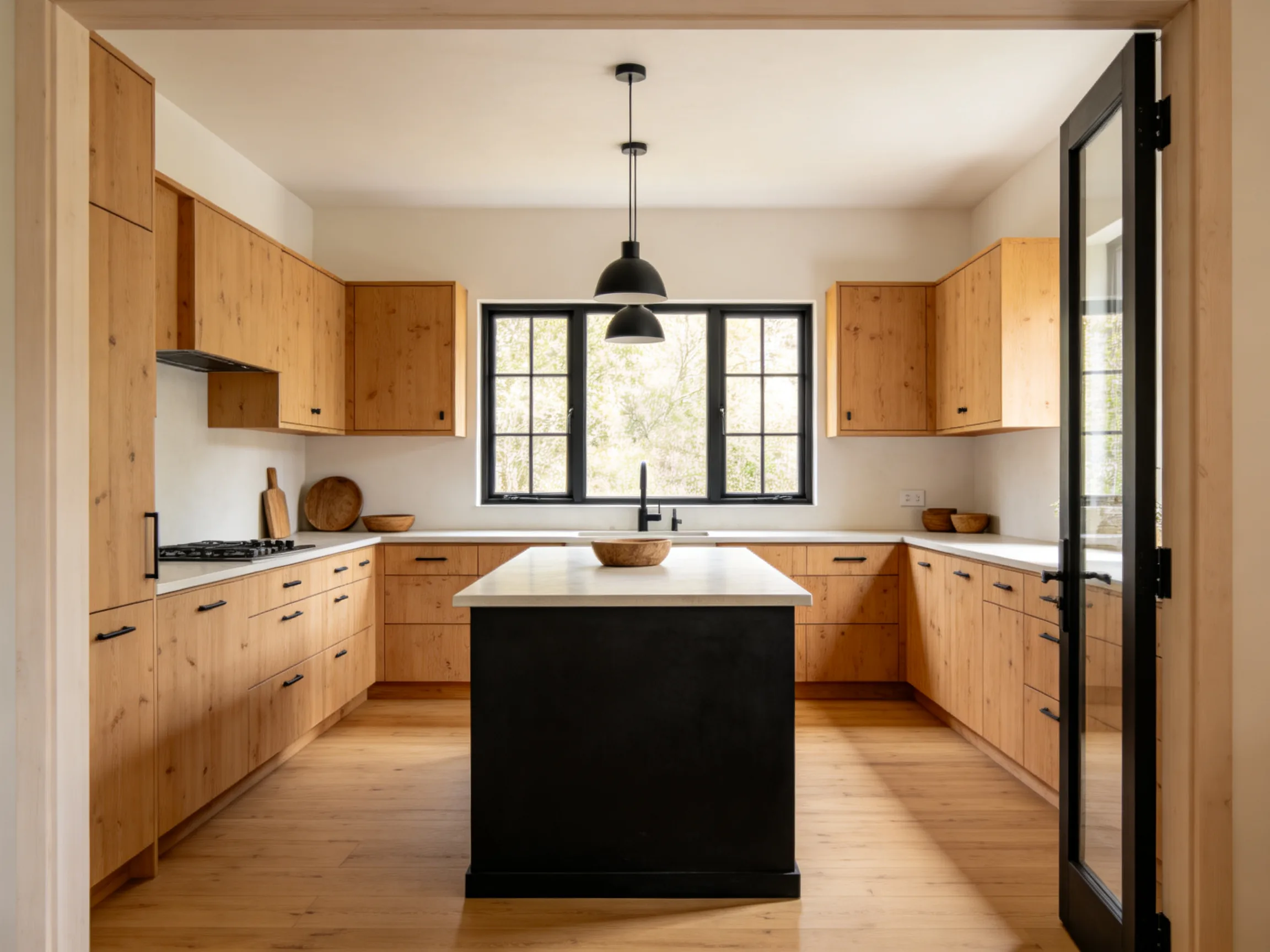
A rustic modern kitchen balances the warmth and texture of natural wood with the clean definition of matte black details. From cabinets and open shelving to lighting and hardware, these ideas show how to combine both finishes while keeping the room practical, inviting, and visually uncluttered.
1. Pair Natural Oak Cabinets With Matte Black Pulls
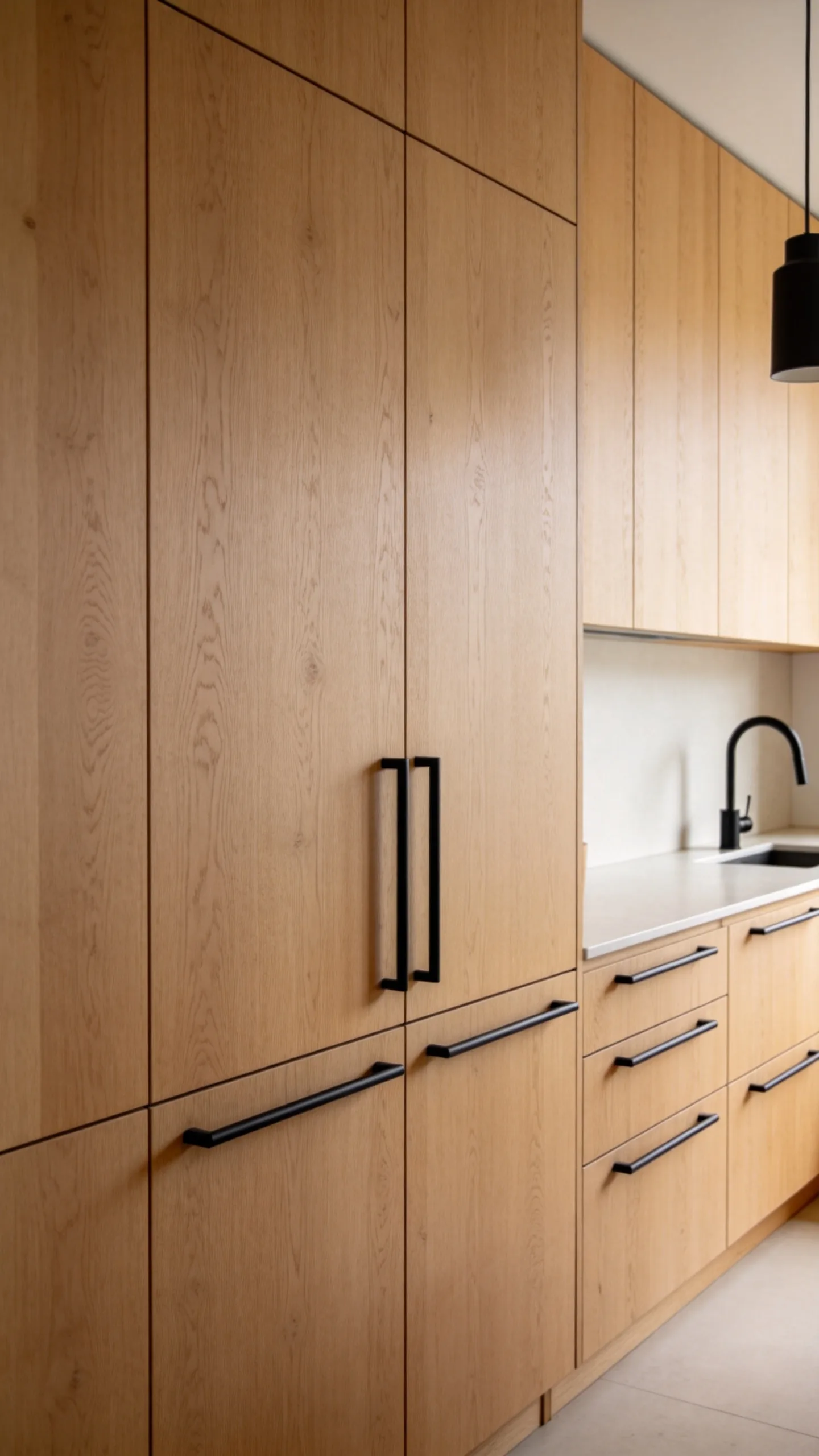
Choose flat-panel or slim Shaker cabinets in natural white oak for a warm foundation that still feels streamlined. A clear matte finish protects the grain without adding the orange cast associated with darker stains. Long matte black pulls give the cabinetry crisp lines and make the wood grain stand out.
Keep the hardware scale consistent with the cabinet fronts. Short pulls work well on narrow doors, while longer bar pulls can visually balance wide drawers beneath a range or cooktop. Continue the black finish on the faucet or pendant lights to make the hardware feel intentional rather than isolated.
2. Add Black Lower Cabinets Beneath Wood Uppers
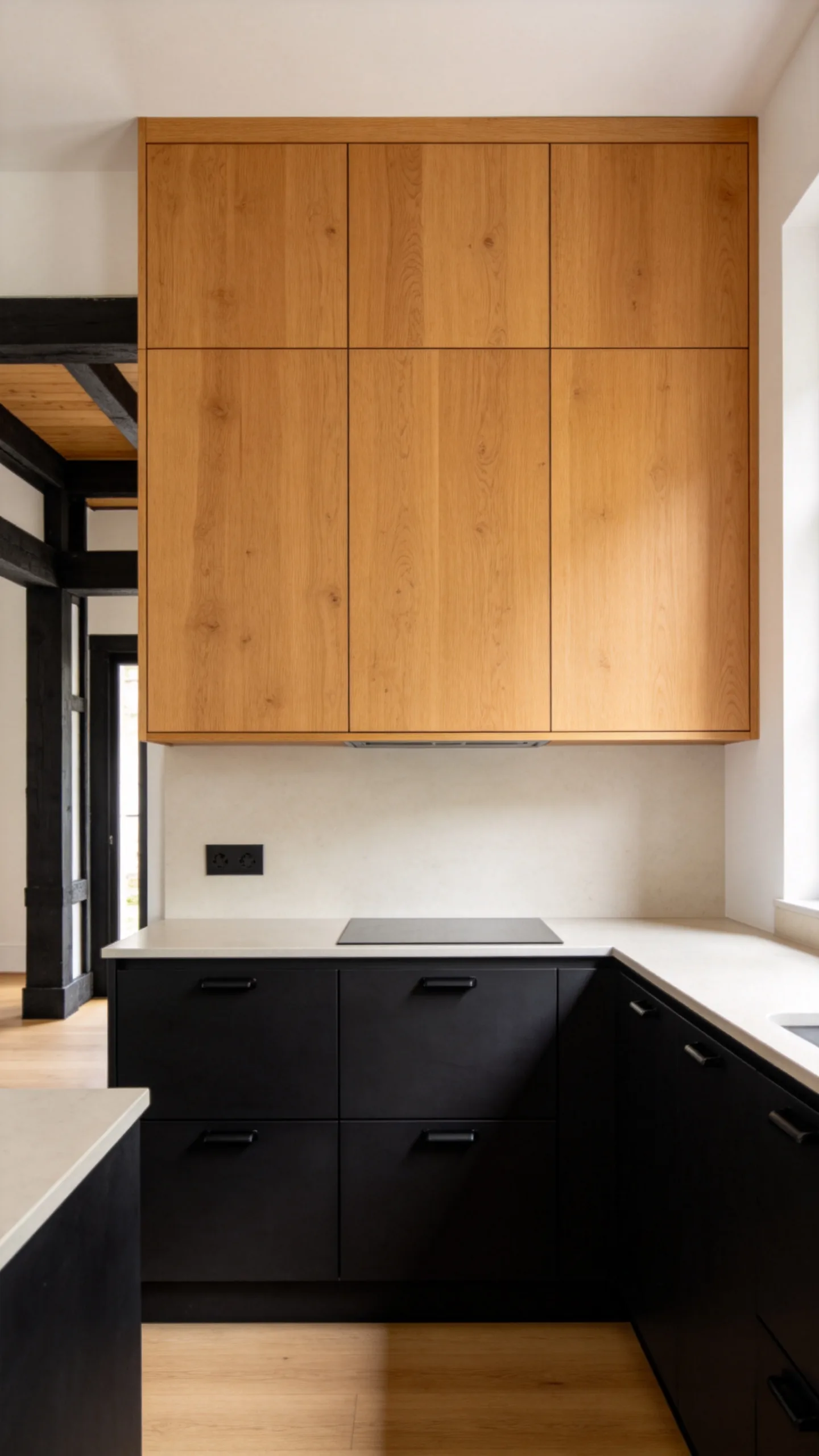
Ground the kitchen with matte black base cabinets and use natural wood for the upper cabinets. The darker color gives the lower half of the room visual weight, while wood near eye level keeps the space from feeling too severe.
This combination is particularly useful in an open kitchen because the black bases can connect with nearby metal furniture, window frames, or a dark fireplace surround. Use a pale backsplash and warm white wall paint to preserve clear sightlines and reflect light around the darker surfaces.
3. Install Chunky Wood Shelves on Black Brackets
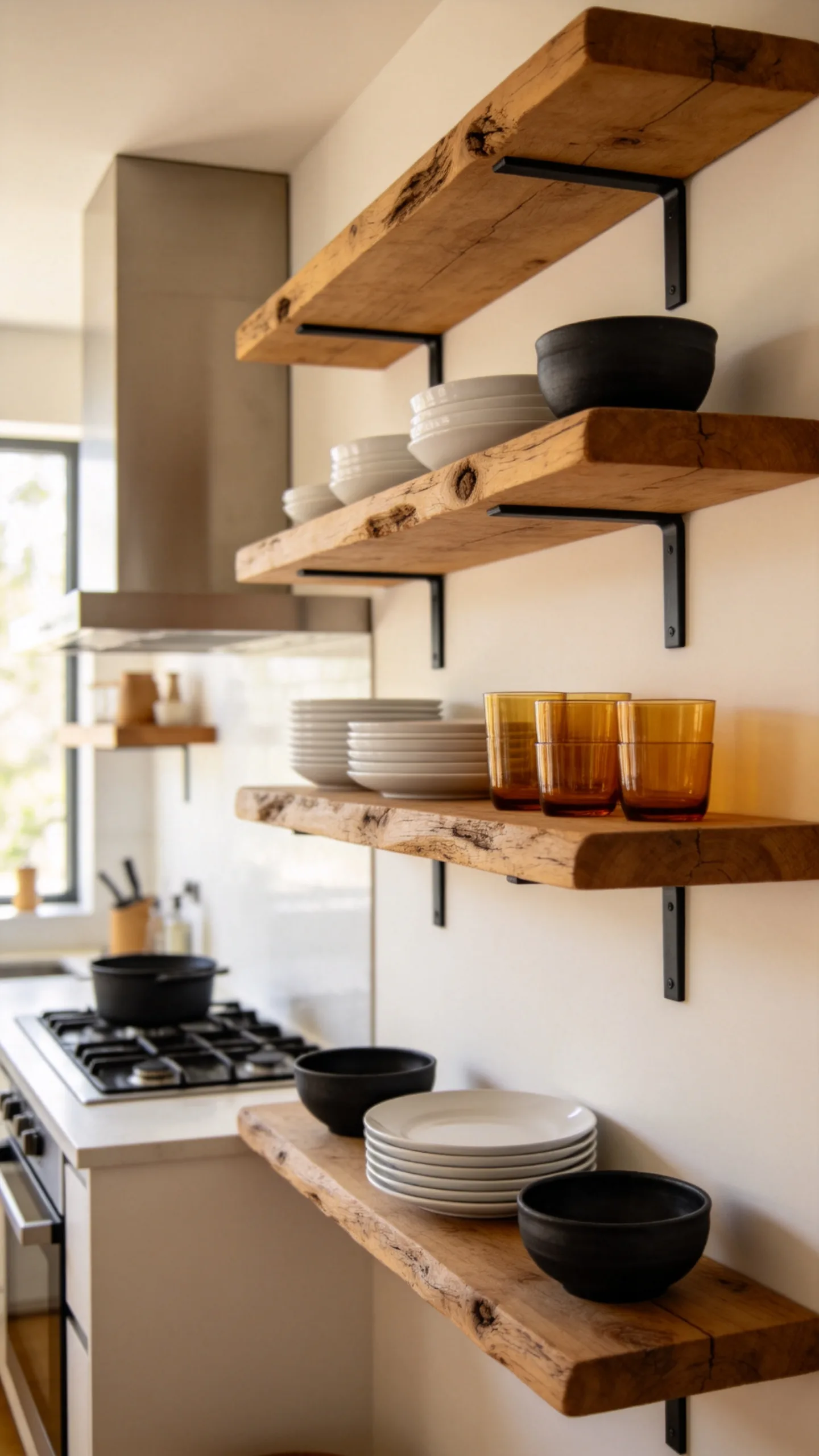
Replace a small section of upper cabinetry with thick reclaimed-wood or knotty oak shelves supported by simple matte black brackets. The wood introduces rustic character, while the black supports repeat the kitchen’s modern metal finishes.
Install the shelves beside the range, over a coffee station, or above a short counter where they will not interfere with cooking traffic. Style them with everyday white dishes, amber glassware, and a few black ceramic pieces, leaving open space between groups so the arrangement does not look cluttered.
4. Frame a Wood Island With a Black Base
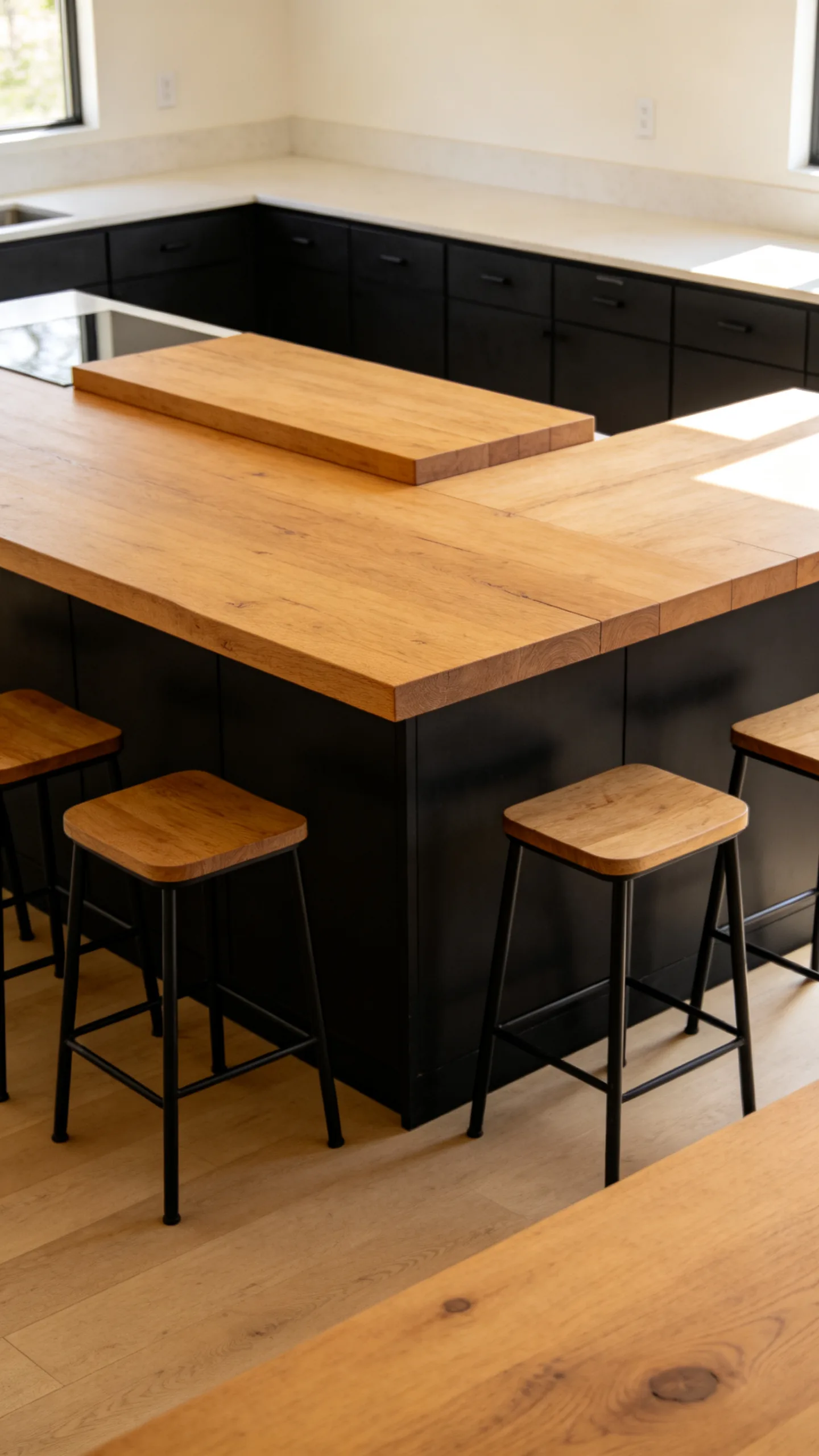
Make the island a focal point by pairing a matte black cabinet base with a natural wood countertop or butcher-block section. The dark base helps disguise scuffs around stools, while the wood surface creates a warmer place for casual meals and food preparation.
For a large island, use wood on the seating end and a more durable stone around the sink or cooktop. Choose black stools with wood seats to bridge both finishes, and allow at least 36 inches of clearance around the island so the strong color does not overwhelm traffic flow.
5. Hang Matte Black Pendants Over a Wood Island
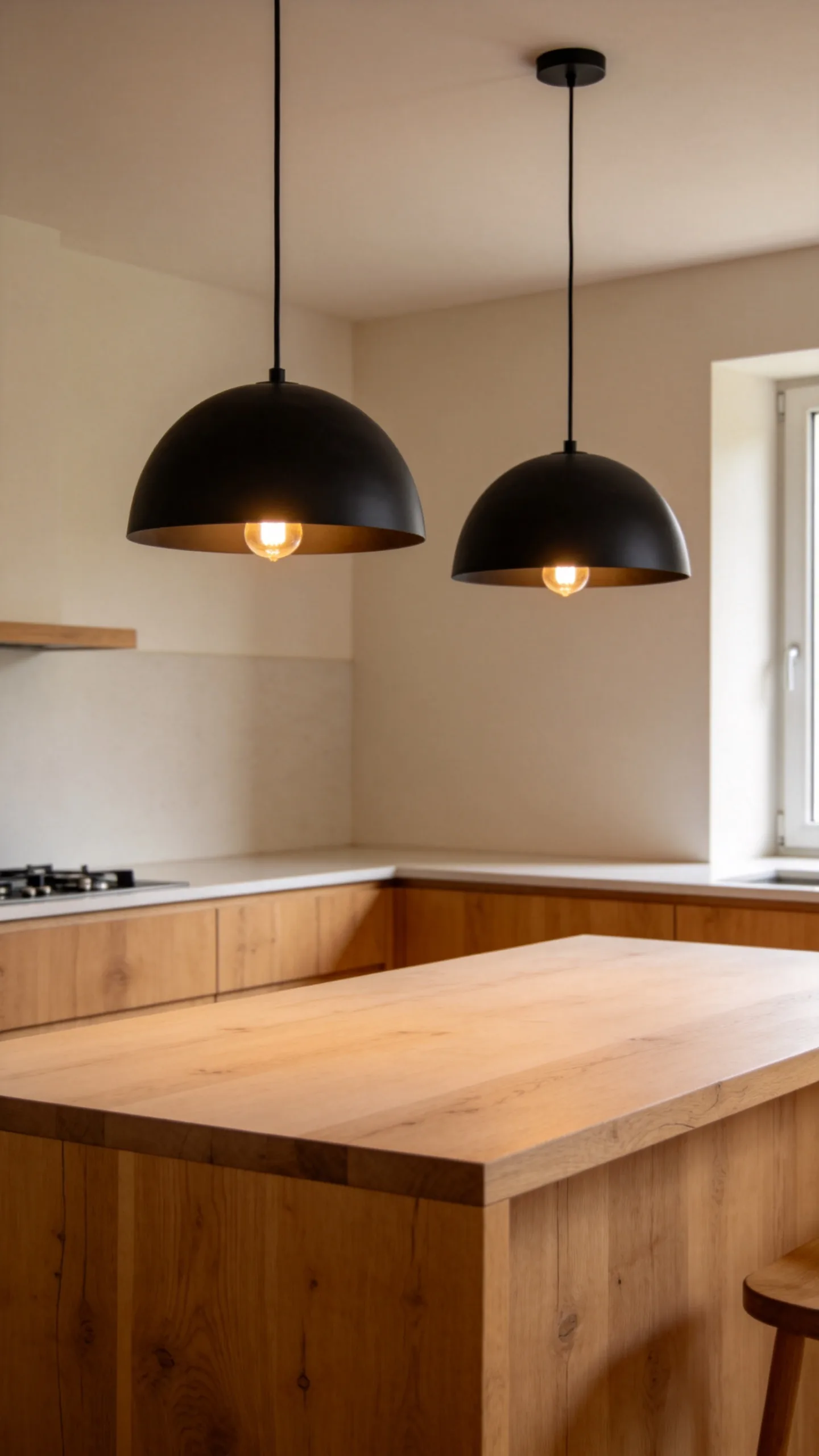
Suspend matte black pendants above a natural oak or walnut island to create a clear vertical contrast. Dome, cone, and linear fixtures suit rustic modern kitchens because their simple silhouettes offset the irregular grain and texture of the wood.
Select fixtures that provide focused light without blocking the view across the room. In most kitchens, the bottom of each pendant should sit approximately 30 to 36 inches above the countertop. Warm bulbs will flatter the wood finish and soften the appearance of black metal.
6. Use a Black Range Hood Against Wood Cabinetry
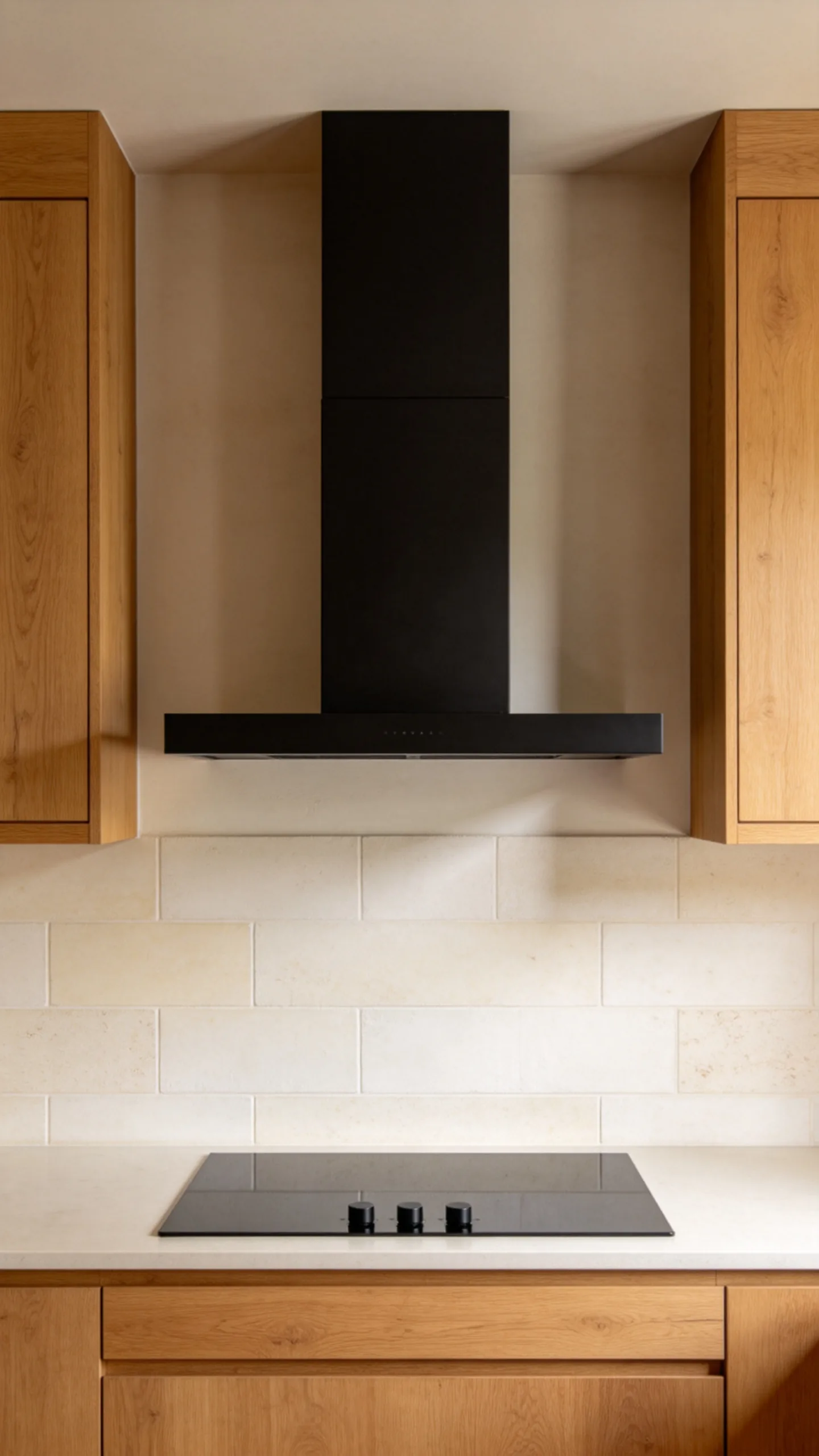
Turn the cooking wall into a focal point with a matte black range hood surrounded by natural wood cabinets. A simple box-style hood or gently tapered metal design gives the wall modern structure without competing with the cabinet grain.
Keep the backsplash quiet so the hood remains visually distinct. Handmade cream tile, pale stone, or off-white plaster can soften the transition between black and wood. If the hood is large, limit other black elements on that wall to small knobs or a pot filler.
7. Build a Slatted Wood Feature on the Island
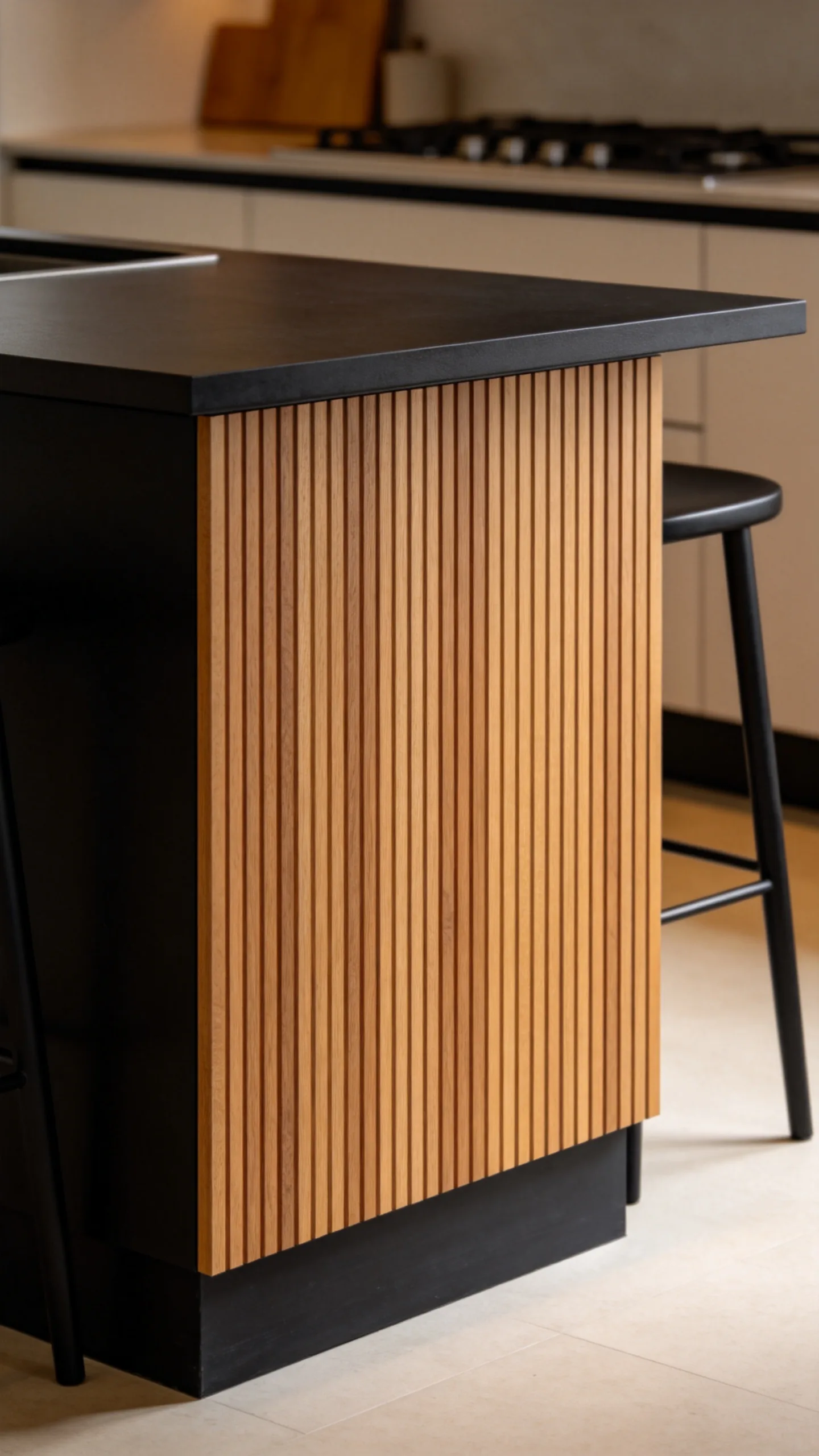
Cover the back or sides of the kitchen island with narrow vertical wood slats. The repeated lines bring texture to a flat surface and give a basic island the appearance of custom millwork without requiring changes to the room’s main layout.
Paint the cabinet side of the island matte black, then use oak, ash, or walnut slats on the outward-facing panel. Vertical slats emphasize height and create a tidy rhythm, while black toe kicks and stool frames keep the detailed wood treatment from looking overly rustic.
8. Combine a Black Faucet With a Live-Edge Wood Shelf
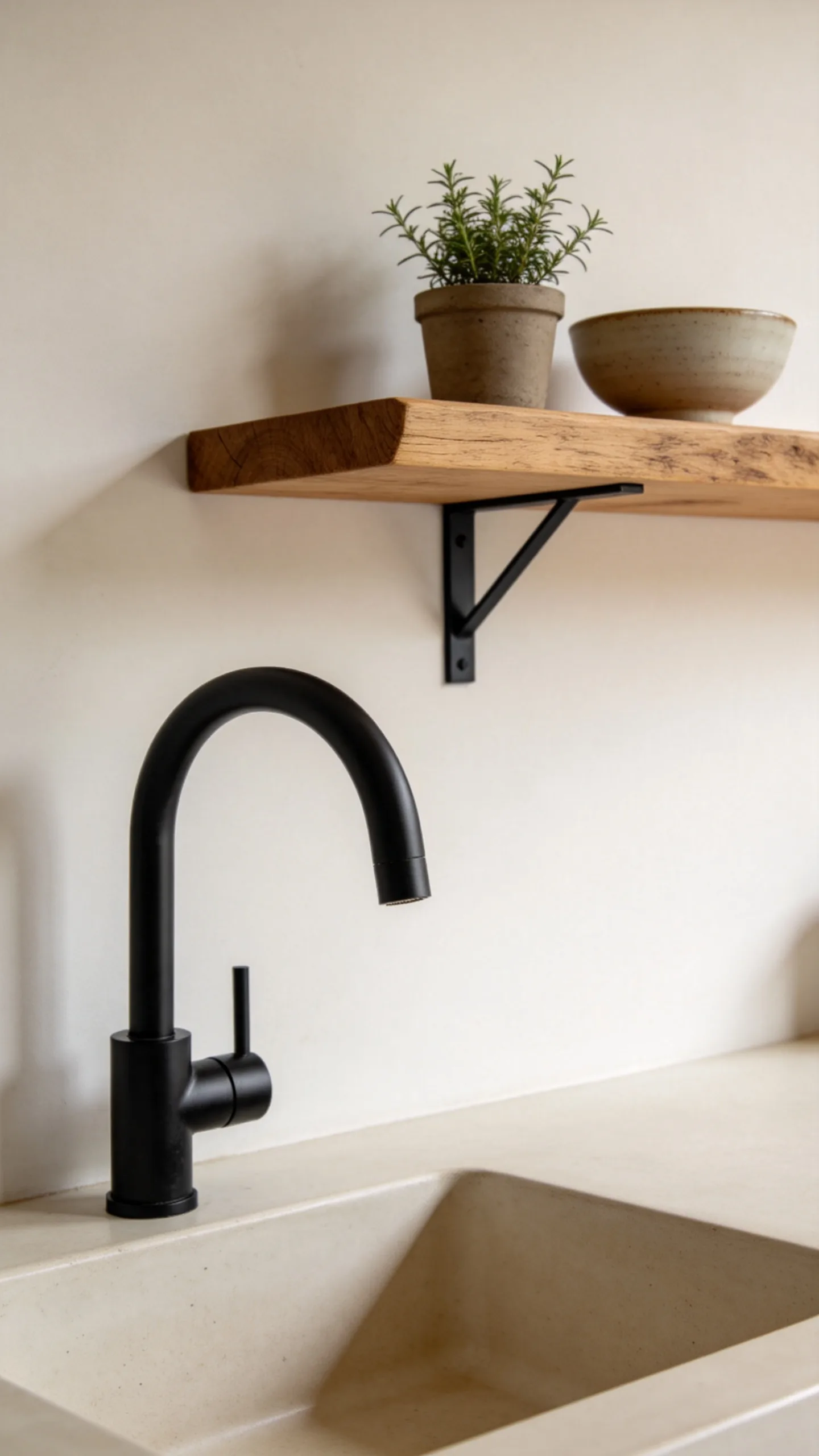
A matte black faucet creates a defined silhouette against a light sink and countertop. Balance that sharp modern detail with a live-edge wood shelf placed above the sink or along an adjacent wall.
Use the shelf for a small herb pot, hand-thrown bowl, or frequently used glassware rather than filling every inch. Because a live edge already has strong visual texture, simple black shelf supports and a restrained display will keep the area practical and prevent visual clutter around the sink.
9. Choose Black-Framed Glass Pantry Doors
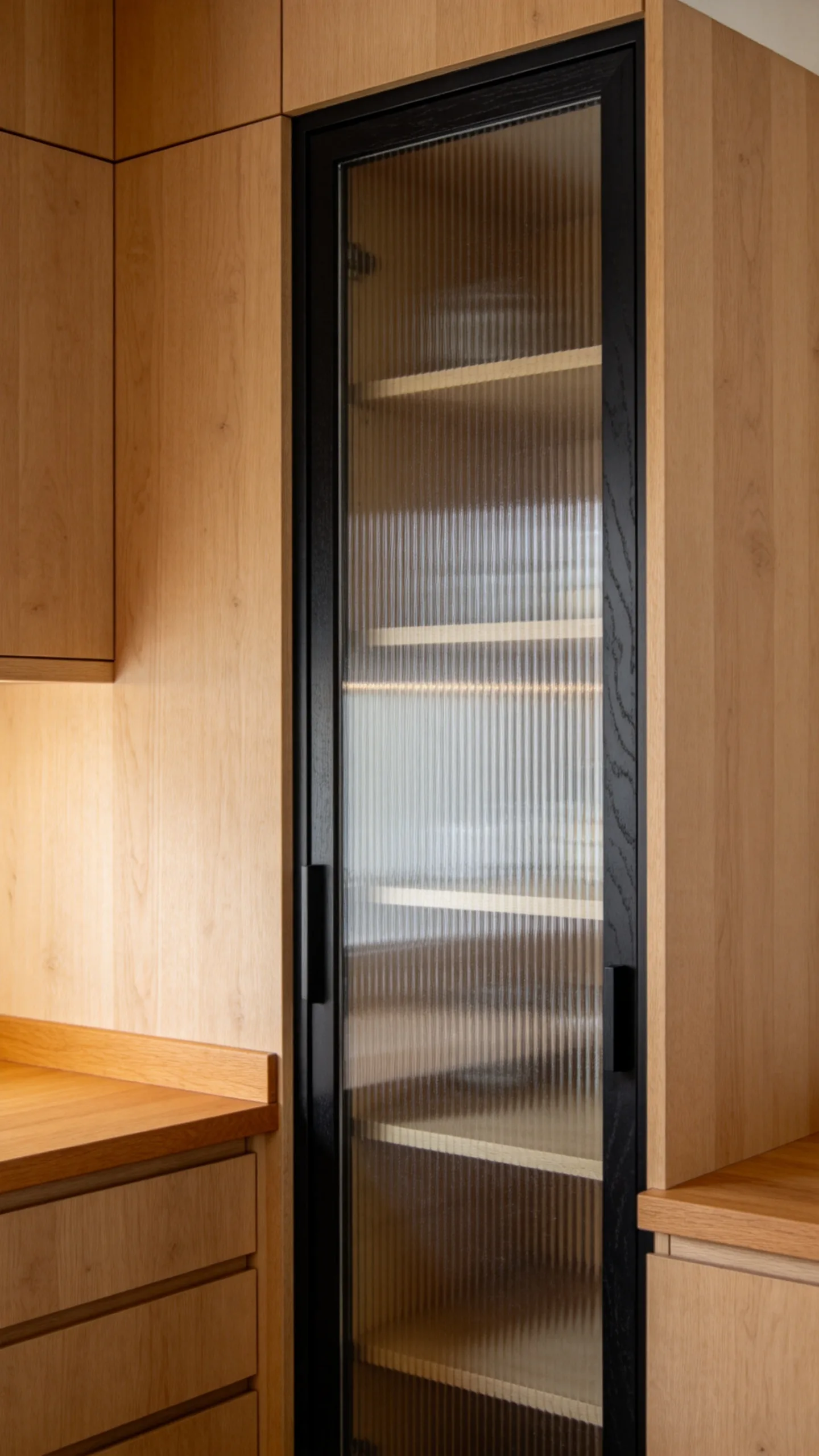
Replace a solid pantry door with a black-framed glass door to introduce an architectural element without changing the kitchen footprint. Reeded, fluted, or frosted glass conceals pantry clutter while still allowing light to pass through.
Surround the door with natural wood trim or place it beside wood cabinetry to soften the metal frame. This approach works especially well in narrow kitchens because the glass maintains depth and sightlines, while the black border clearly defines the pantry entrance.
10. Mix Wood Counter Stools With Black Metal Frames
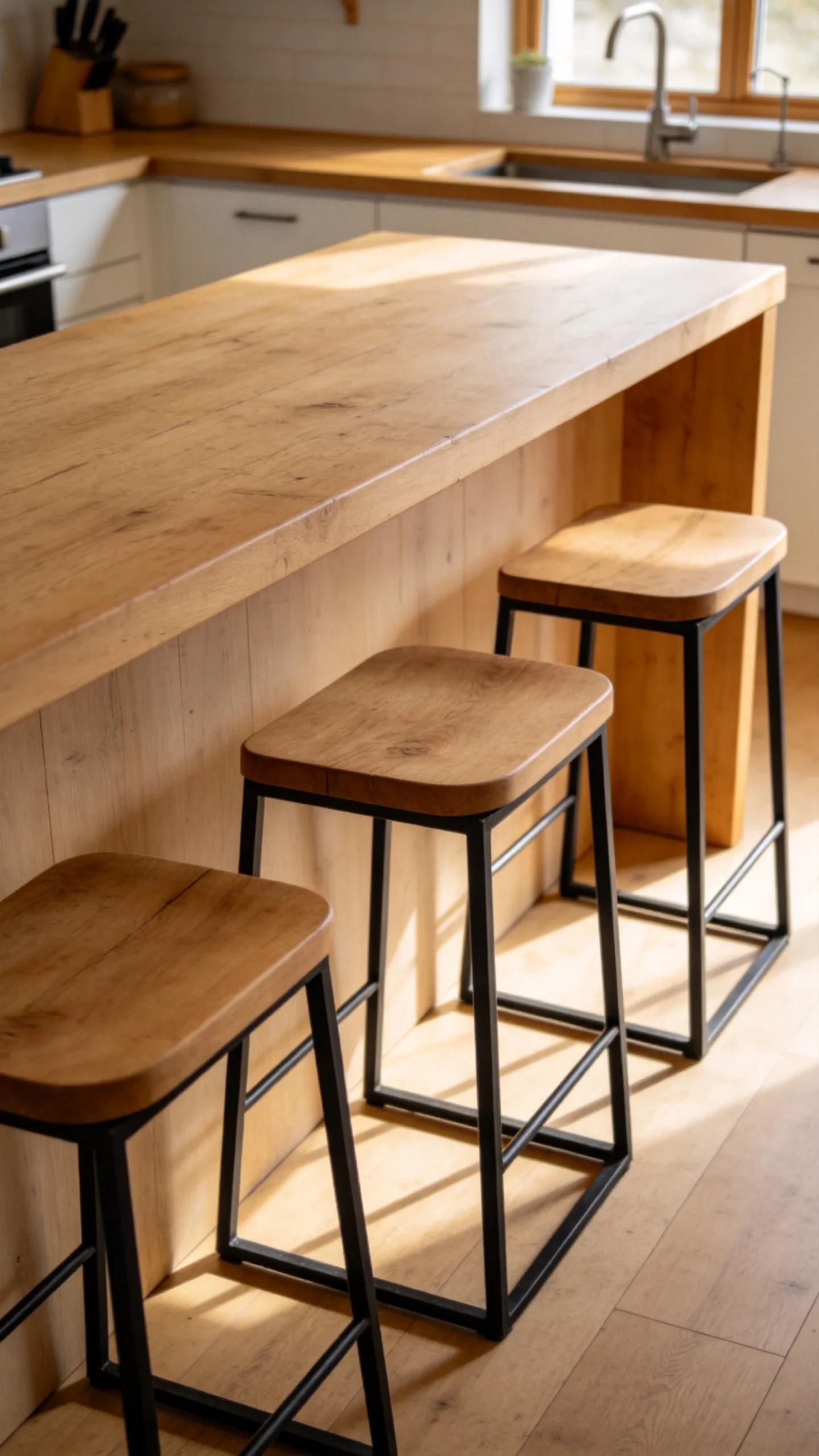
Use counter stools with matte black metal bases and solid wood seats to connect the kitchen’s two primary finishes. Slim frames keep the floor visible beneath the island, which can make a compact kitchen feel less crowded.
Choose backless stools if they need to slide fully under the overhang, or low-back designs for extra support without interrupting views into the kitchen. Match the seat wood closely to the cabinets or island paneling, but allow minor grain variation for a natural, collected look.
11. Create a Wood Coffee Bar With Black Accessories
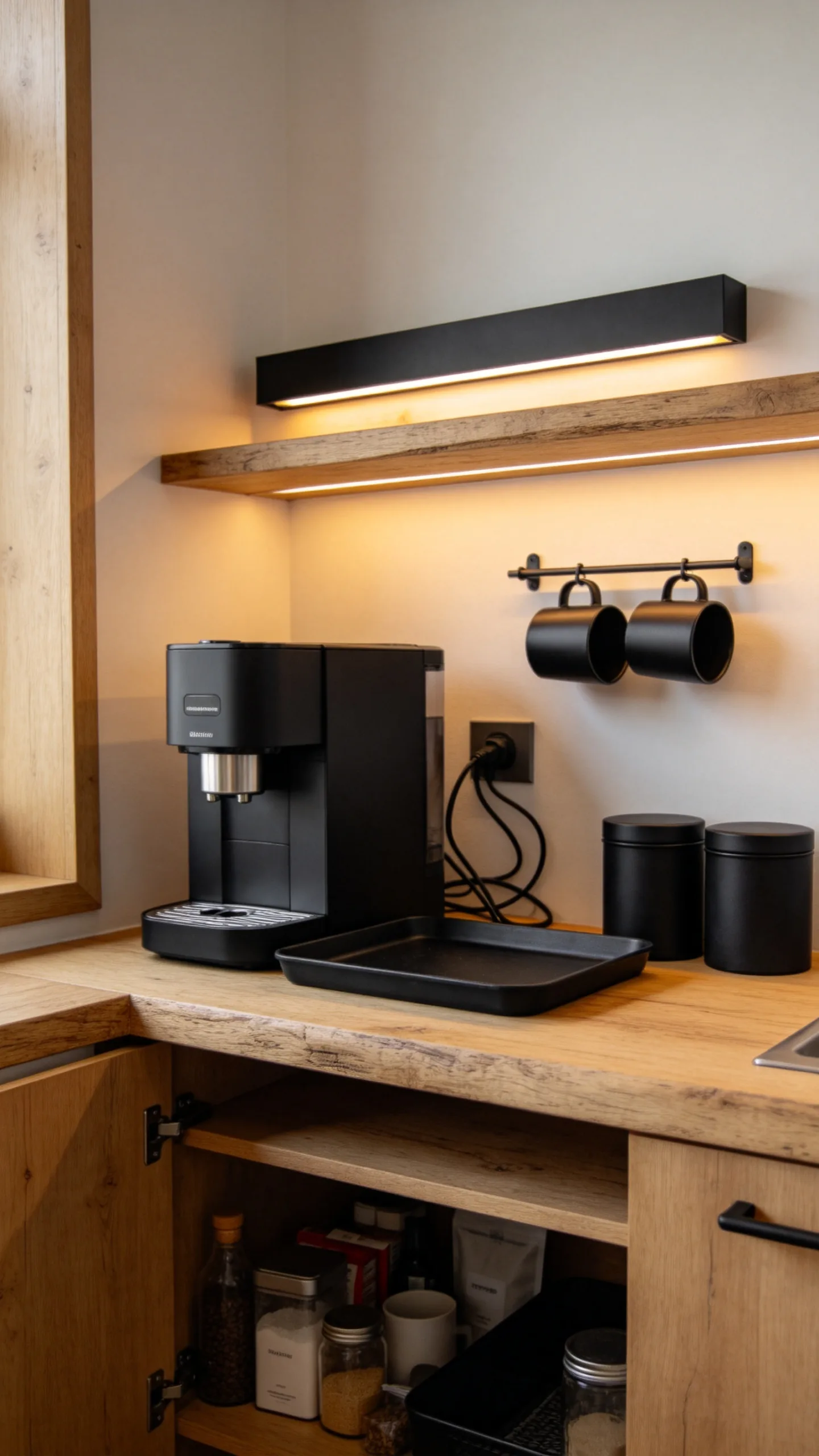
Turn a short run of cabinetry, an unused corner, or a pantry recess into a dedicated coffee bar. Use a natural wood counter or floating shelf as the warm backdrop, then add a matte black coffee machine, tray, canisters, and wall-mounted mug rail.
Keep cords and extra supplies inside a drawer or lower cabinet so the station remains visually tidy. Under-shelf lighting can brighten the work surface, while a black picture light above the shelf gives the small zone a polished focal point.
12. Lay Wide-Plank Wood Floors Beside Black Cabinets
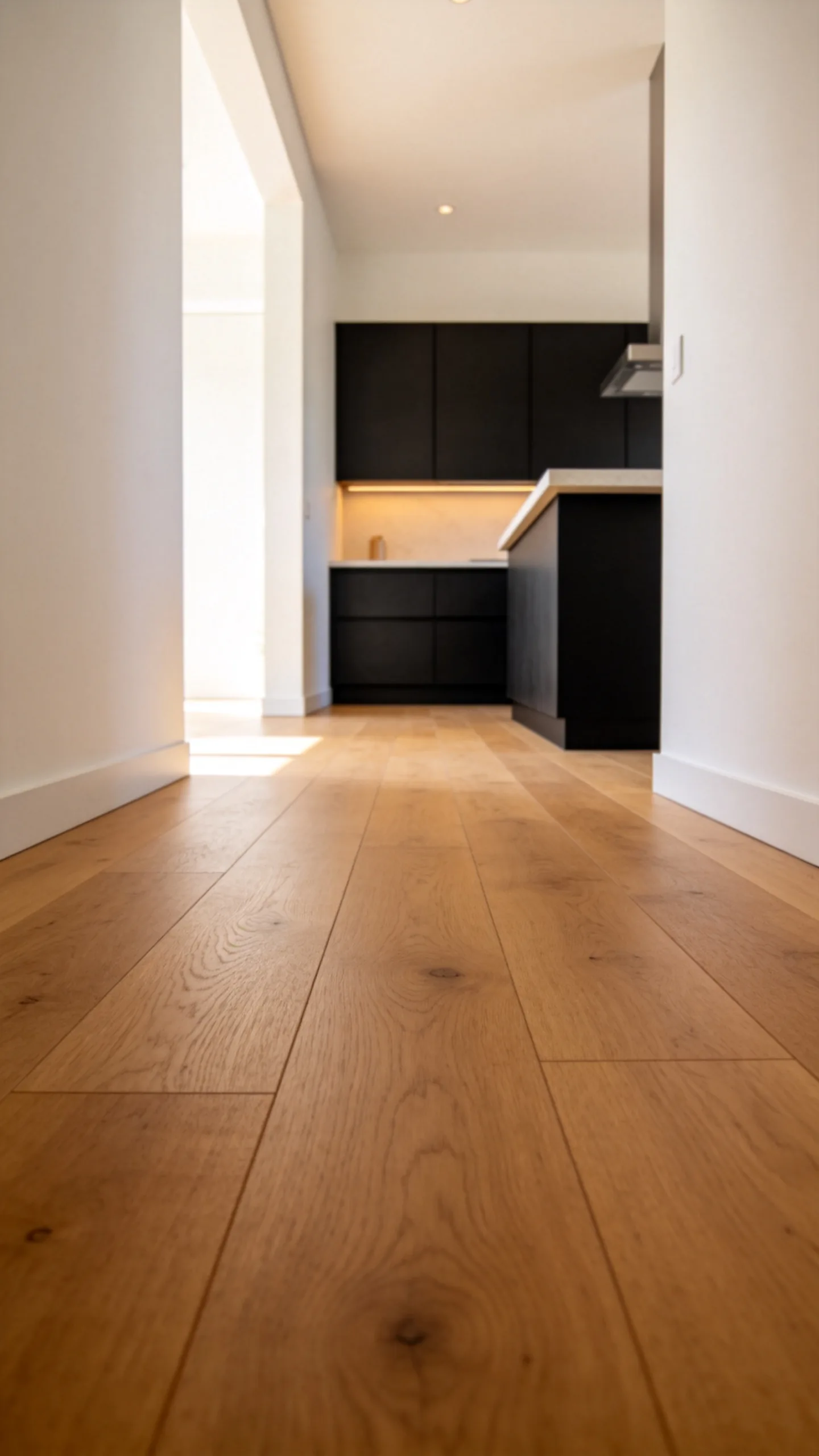
Wide-plank oak or engineered wood flooring adds rustic texture beneath smooth matte black cabinets. A medium natural finish is practical for showing less dust than very pale or nearly black floors, and visible grain prevents the room from feeling flat.
Run the planks in the direction of the longest sightline to visually lengthen the kitchen. If the cabinets are dark, use a warm white ceiling, pale counters, and an open lighting plan so the flooring reads as a warm foundation rather than another heavy surface.
13. Accent a Wood Ceiling With Black Beams
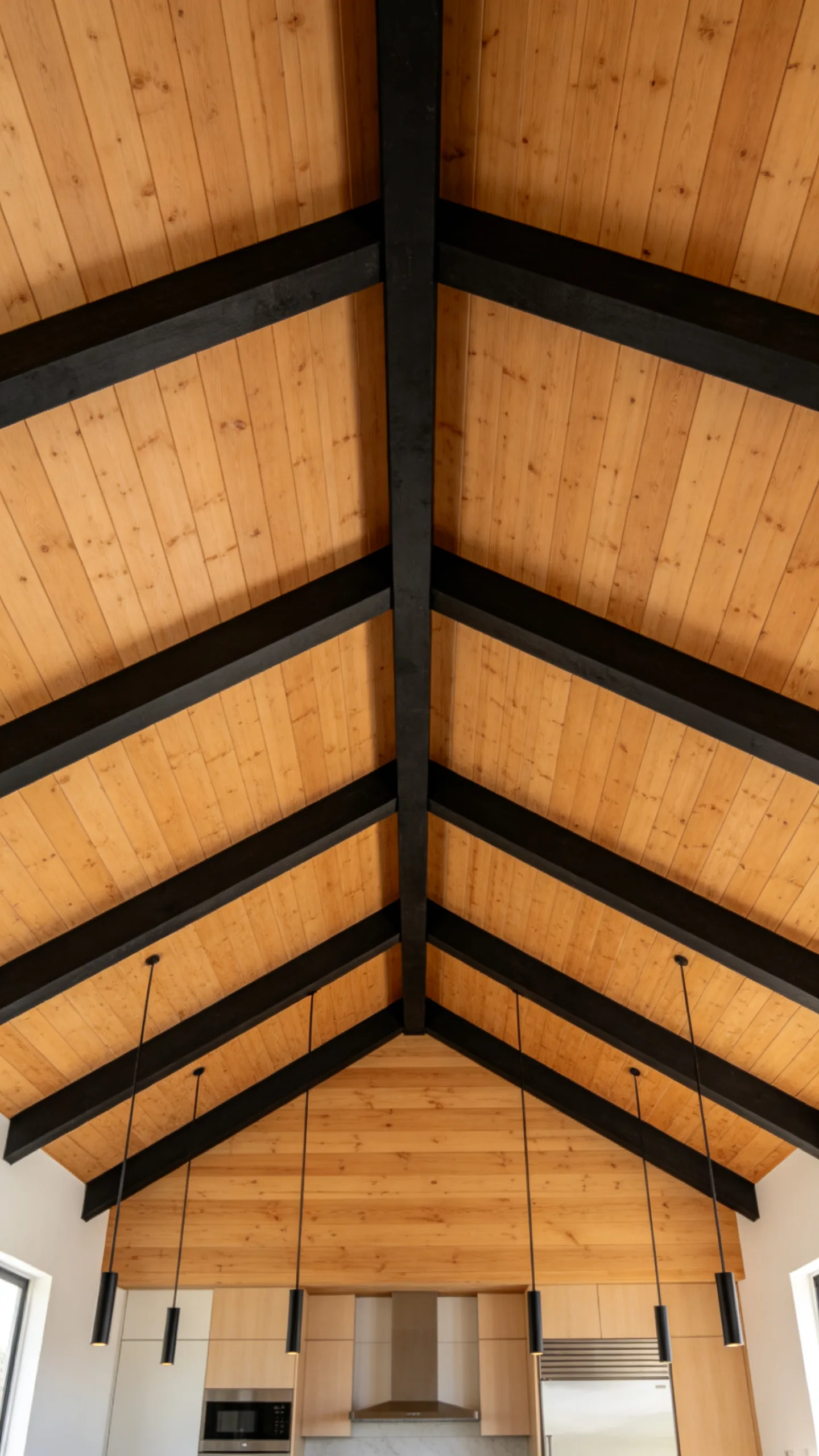
For a kitchen with a vaulted or high ceiling, pair natural wood planks with matte black beams or beam wraps. The black lines emphasize the architecture, while the wood prevents the ceiling from feeling stark or industrial.
Use this treatment selectively in smaller kitchens. A few widely spaced beams will preserve visual height better than a dense grid. Repeat the black finish in pendant rods or window frames below so the ceiling connects with the rest of the room.
14. Add a Matte Black Rail to a Wood Backsplash
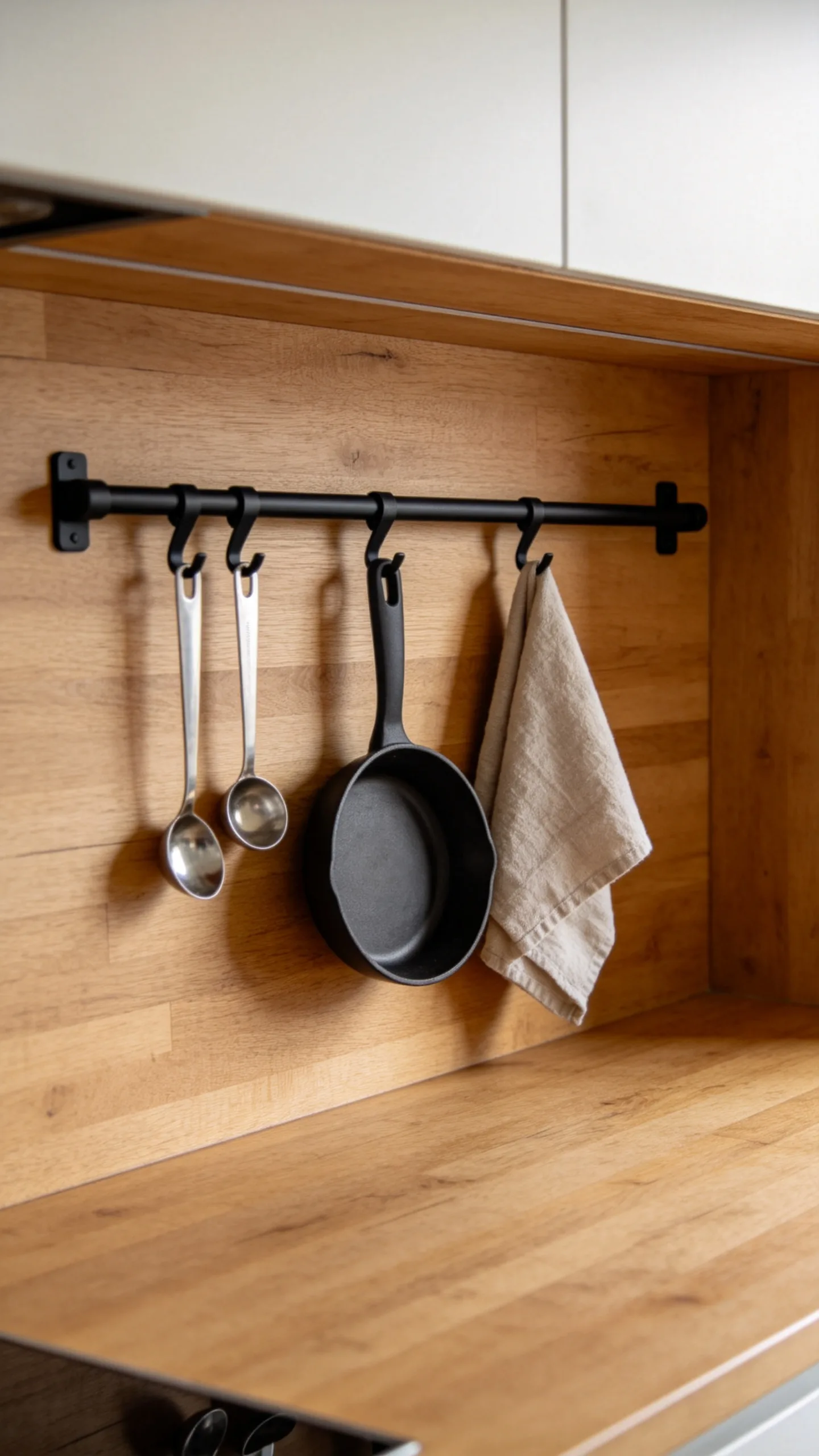
Install a slim matte black utility rail over a sealed wood backsplash or wood-look panel. Use hooks to hold a few practical items, such as measuring spoons, a small pan, or a linen towel, while keeping the main countertop clear.
Place the wood treatment in a lower-splash zone away from direct heat and heavy water exposure, such as behind a coffee bar or prep counter. A washable, moisture-resistant finish is essential for maintaining the surface in a working kitchen.
15. Contrast Black Windows With a Wood Breakfast Nook
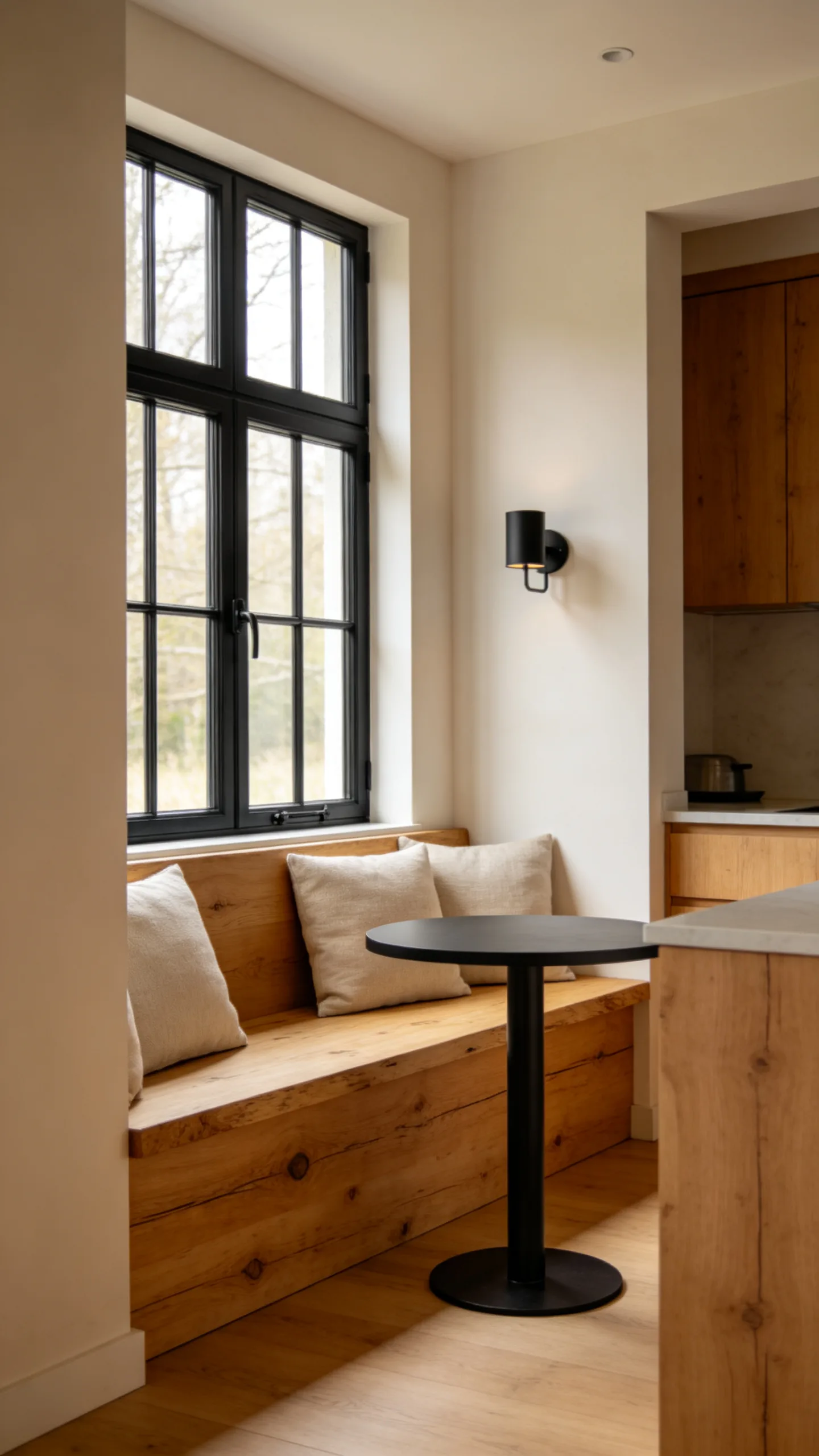
Black window frames create a bold outline around outdoor views, while a built-in wood bench turns the surrounding area into a warm breakfast nook. Match the bench to the kitchen cabinetry or choose a slightly deeper wood tone to define the dining zone.
Add neutral seat cushions in oatmeal, flax, or warm gray, then use a black pedestal table or black wall sconce to repeat the window finish. Built-in drawers beneath the bench can store linens and small appliances without adding freestanding furniture to the traffic path.
16. Style a Black Tile Backsplash With Wood Shelves
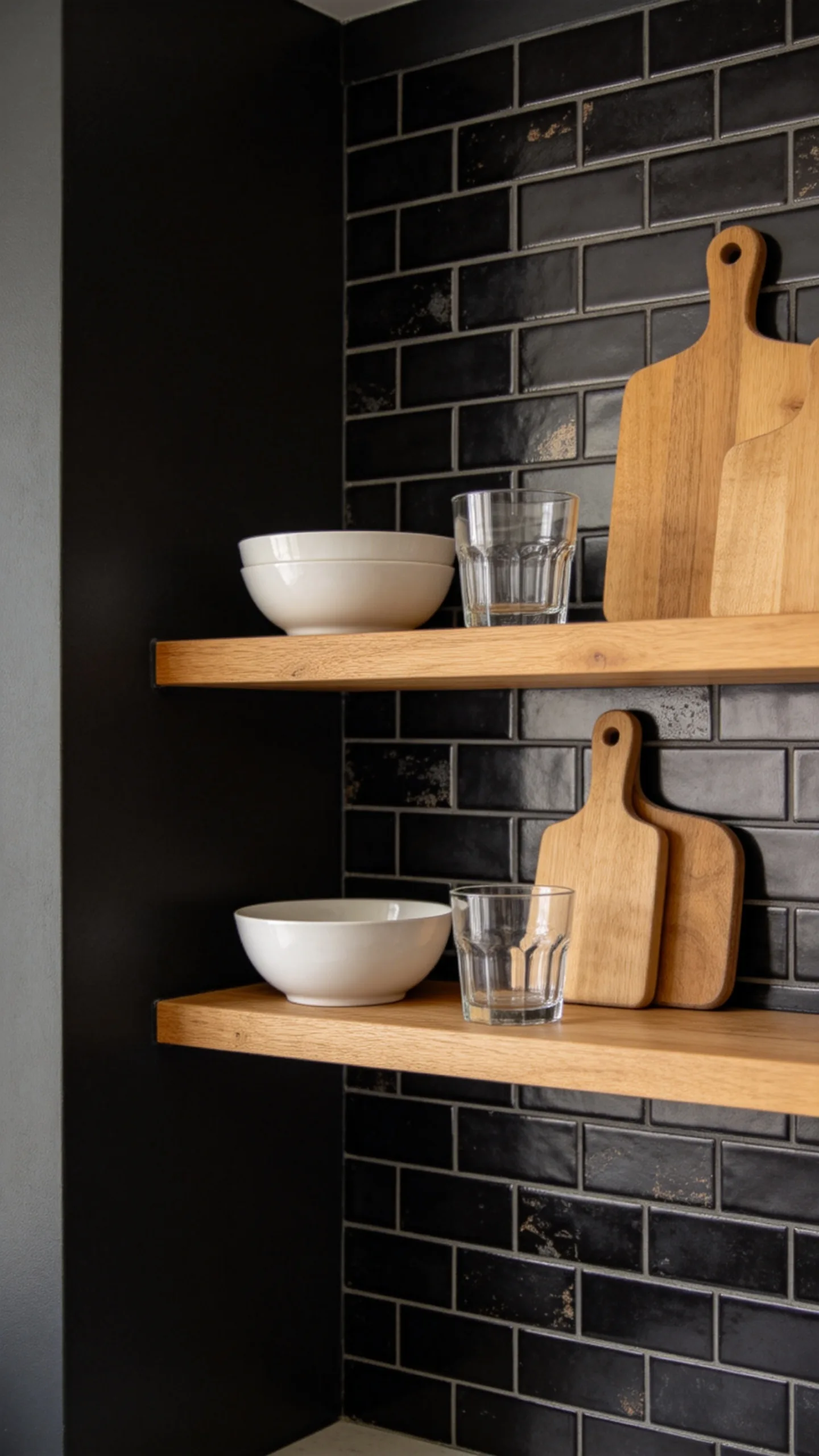
Use matte black tile on one compact focal wall, such as behind the range or a bar sink, and break up the dark surface with natural wood shelves. Square zellige-style tile adds subtle variation, while elongated subway tile creates a cleaner horizontal effect.
Choose light or medium grout if you want the tile pattern to remain visible, or dark grout for a quieter backdrop. Keep shelf displays pale and practical—white bowls, clear glasses, and wood cutting boards will brighten the wall without covering the tile completely.
17. Install a Natural Wood Pot Rack With Black Hooks
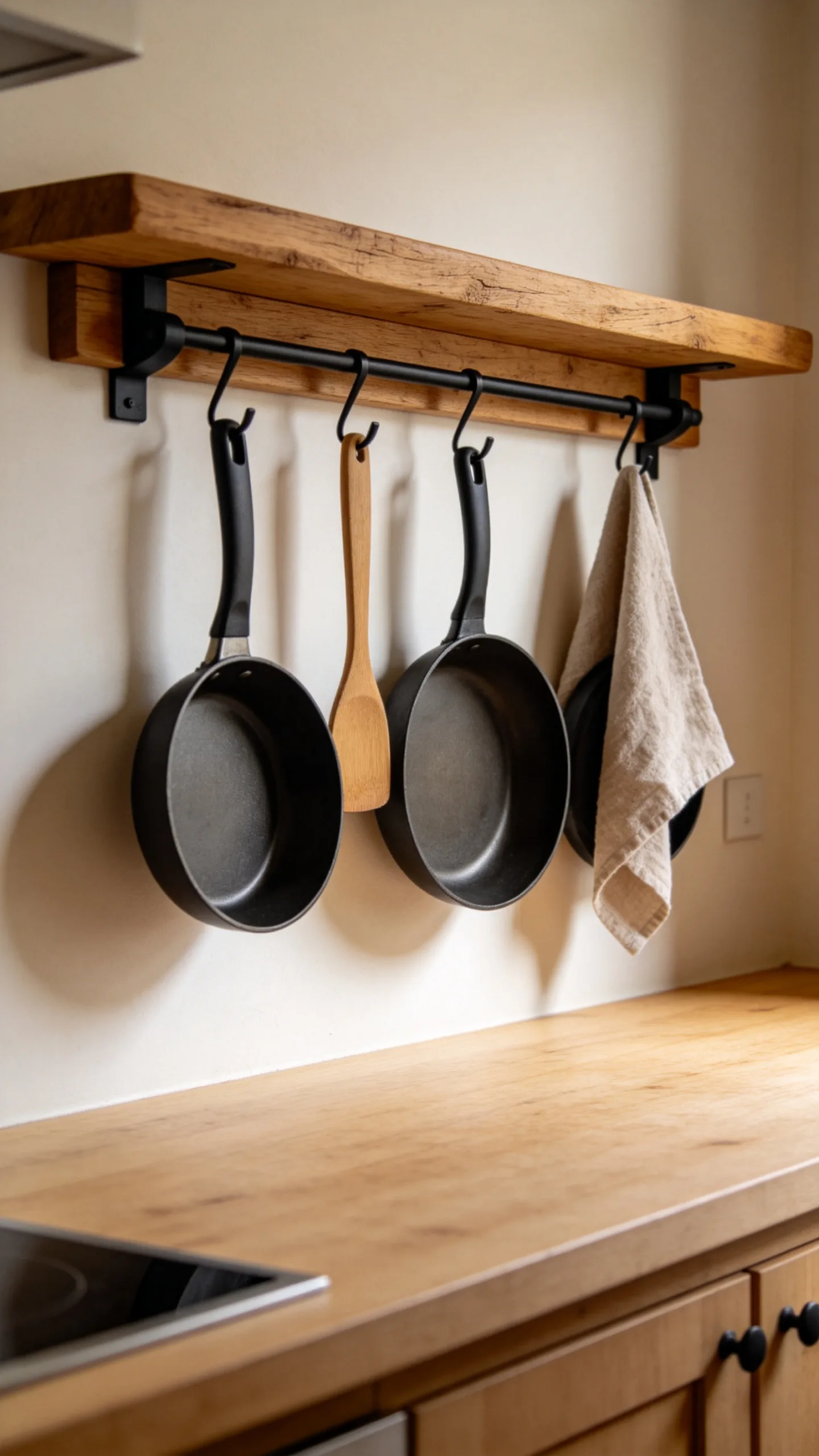
Mount a sturdy wood rail or ceiling rack with matte black hooks for frequently used pans and utensils. This detail adds functional storage and rustic texture, especially in a kitchen with limited drawers or closed cabinetry.
Position the rack where hanging cookware will not obstruct cabinet doors, pendant lights, or walkways. A wall-mounted version above a prep counter is often easier to access than a ceiling rack, and limiting the display to matching or well-used pieces keeps it orderly.
18. Use Black Appliances Within Wood Cabinet Walls
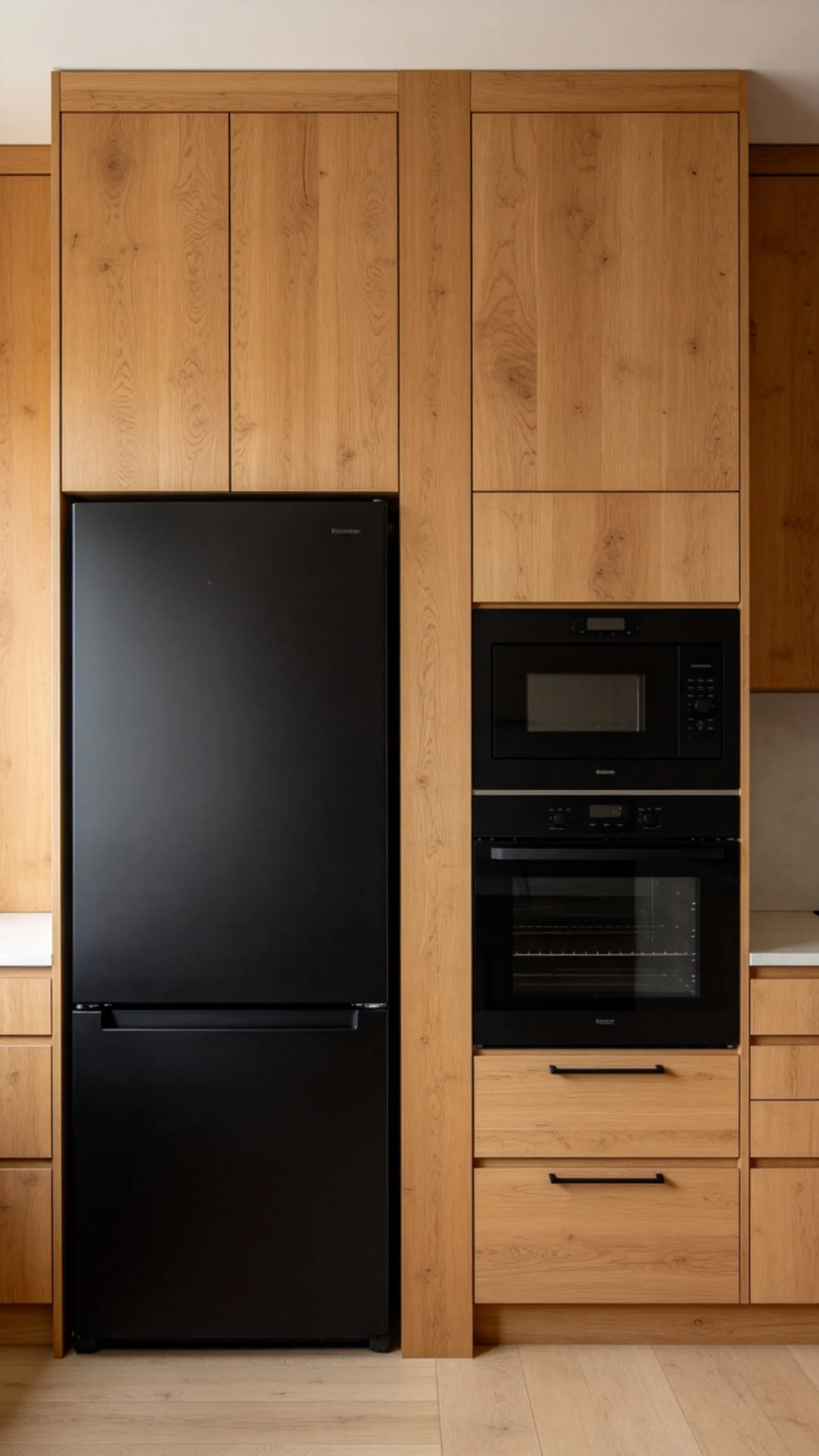
Integrate matte black appliances into a full wall of natural wood cabinetry. A black refrigerator, wall oven, or range creates strong contrast while allowing stainless-steel glare to take a lesser role in the room.
Align appliance edges with cabinet doors and drawer lines for a built-in appearance. If several appliances sit together, add a wood panel between them or surround them with tall pantry cabinets so the black area does not become one oversized visual block.
19. Add a Black Sink to a Butcher-Block Counter
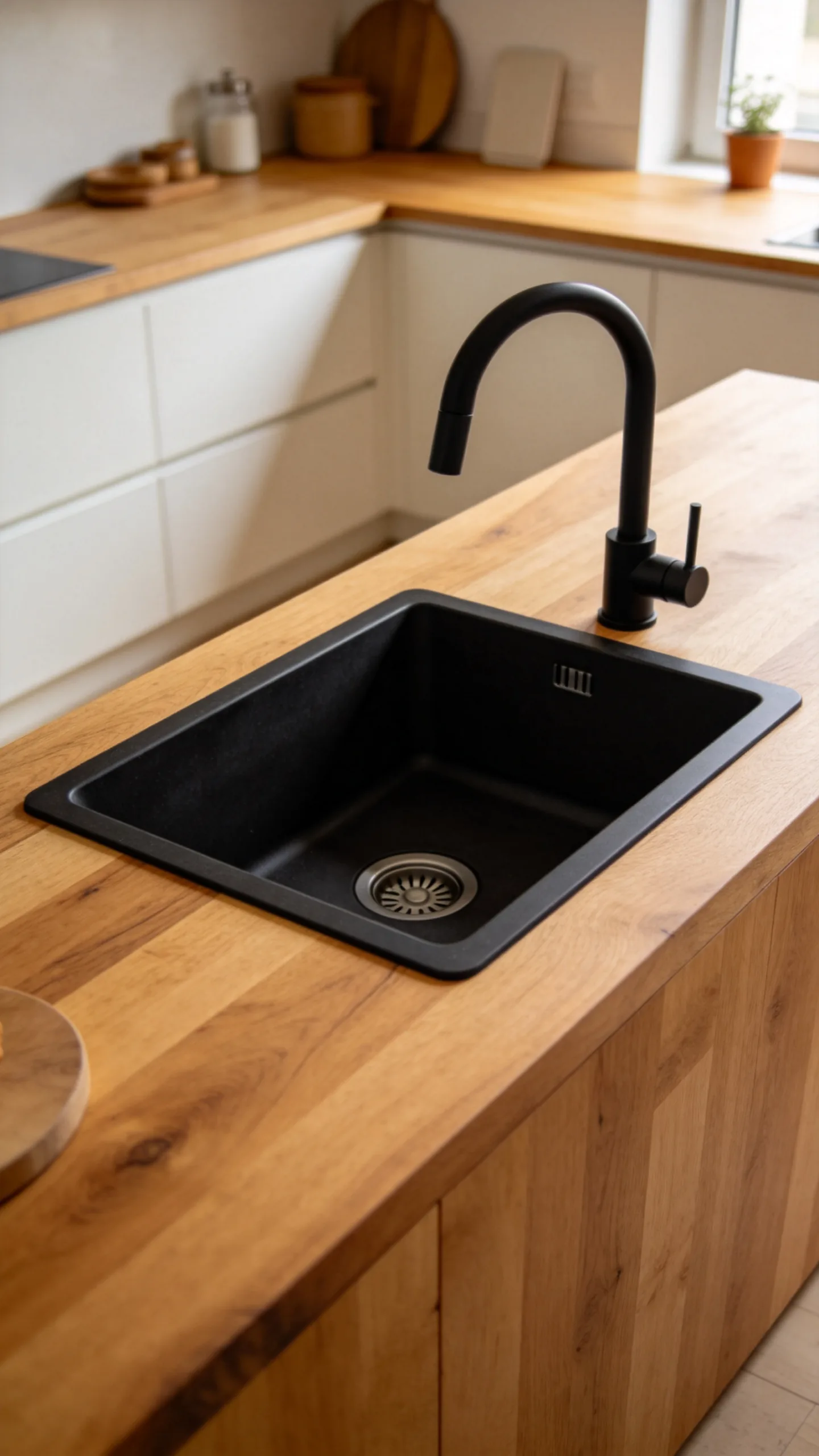
Set a matte black composite sink into a butcher-block or thick wood counter for a tactile mix of modern and rustic materials. The sink becomes a graphic focal point, while the surrounding wood makes the work zone feel warmer than an all-stone surface.
Protect the counter with a food-safe, water-resistant finish and wipe standing water from the sink edge regularly. For easier maintenance, use butcher block on an island prep sink or bar area rather than around the kitchen’s hardest-working cleanup sink.
20. Define the Dining Area With a Wood Table and Black Chairs
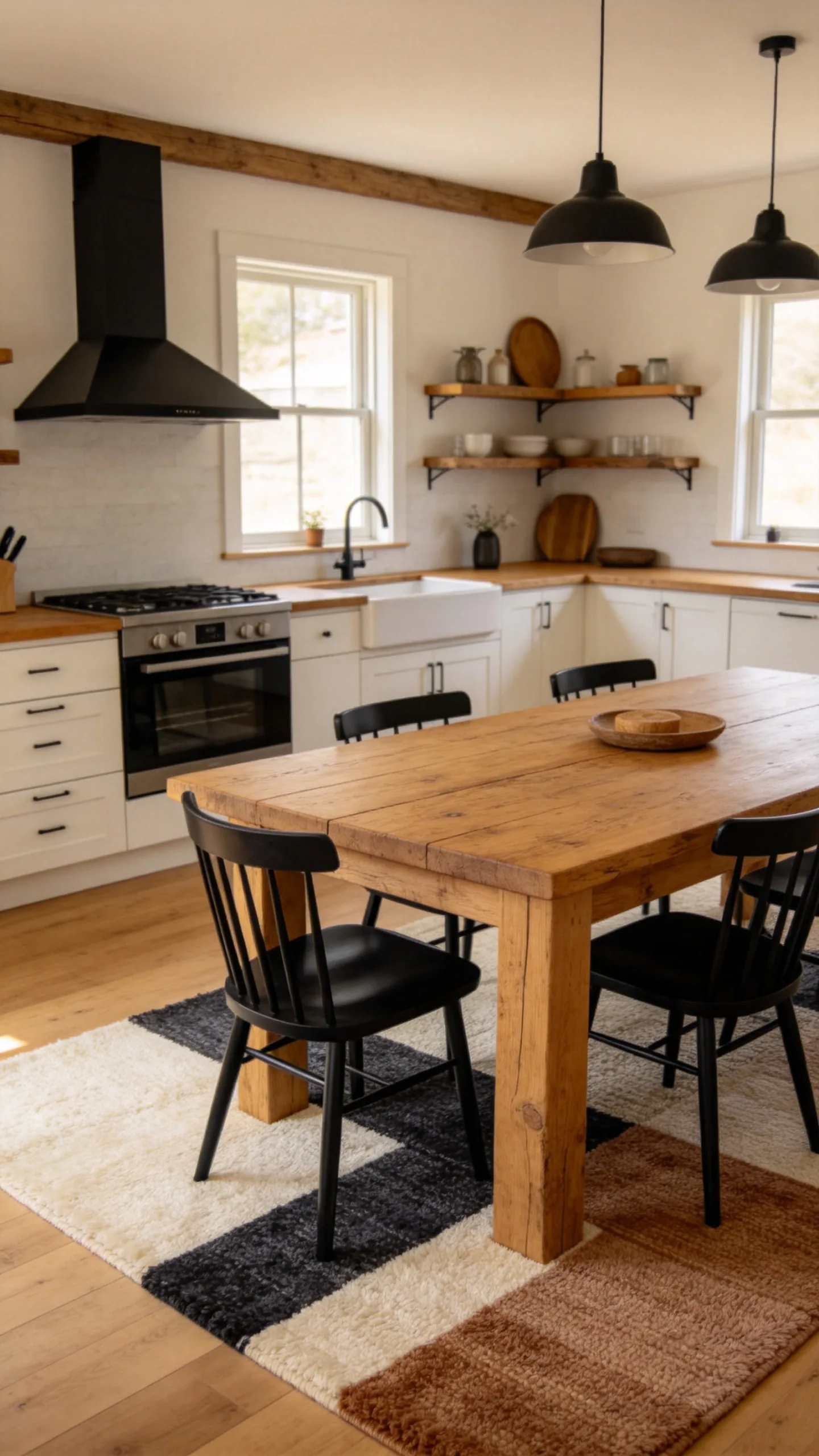
In an eat-in kitchen, place a solid wood table beside matte black dining chairs. The table adds natural grain and weight, while the dark chair frames create a neat outline that coordinates with cabinet hardware, lighting, or the range hood.
Choose chairs with open backs to maintain sightlines between the dining area and kitchen. A flat-woven rug in cream, charcoal, and muted brown can define the zone, but it should be large enough for chair legs to remain on the rug when pulled out.
21. Layer Black Picture Lights Over Wood Display Shelves
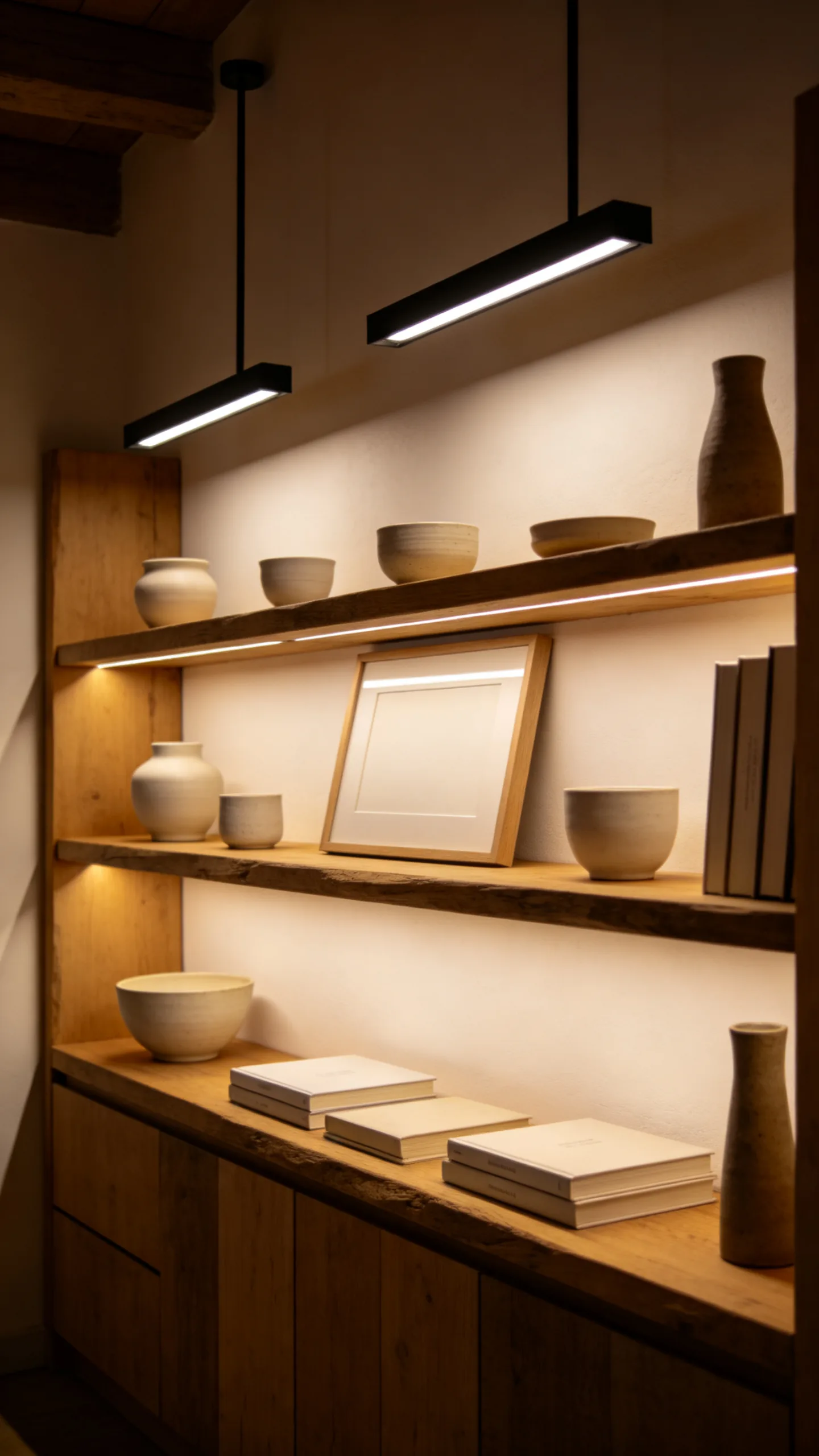
Mount matte black picture lights above natural wood shelves displaying ceramics, framed art, or cookbooks. The directed lighting adds depth to the wall and turns practical storage into an evening focal point.
Keep the fixtures proportional to the shelves; a light that spans roughly half to two-thirds of the shelf width usually feels balanced. Use warm-white bulbs and place taller objects toward the ends so they do not block the light from reaching the display surface.
22. Finish With Black Hardware and Rustic Wood Accessories
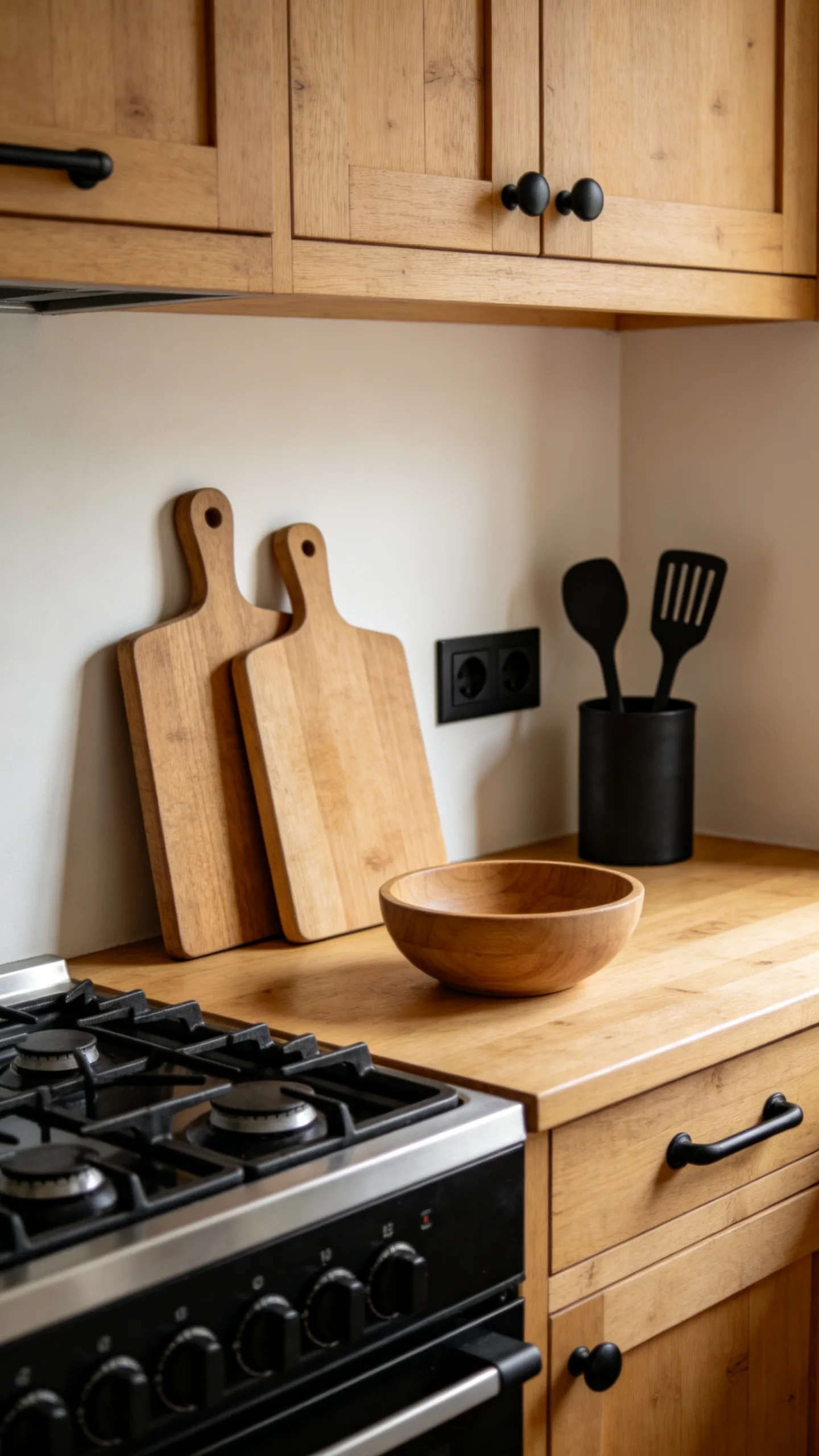
Unify the kitchen with a final layer of matte black hardware and natural wood accessories. Black cabinet knobs, outlet covers, towel bars, and switch plates can repeat the accent color, while cutting boards, bowls, trays, and pepper mills add portable wood texture.
Group accessories by function instead of scattering them across every counter. Lean two wood cutting boards near the range, place a shallow bowl on the island, and keep utensils in one black crock. This restrained styling preserves workspace, reduces visual clutter, and lets the wood-and-black palette remain the defining feature.

From the editors
Decor Compass Editorial Team
We turn practical home research into clear, useful room-by-room ideas.