
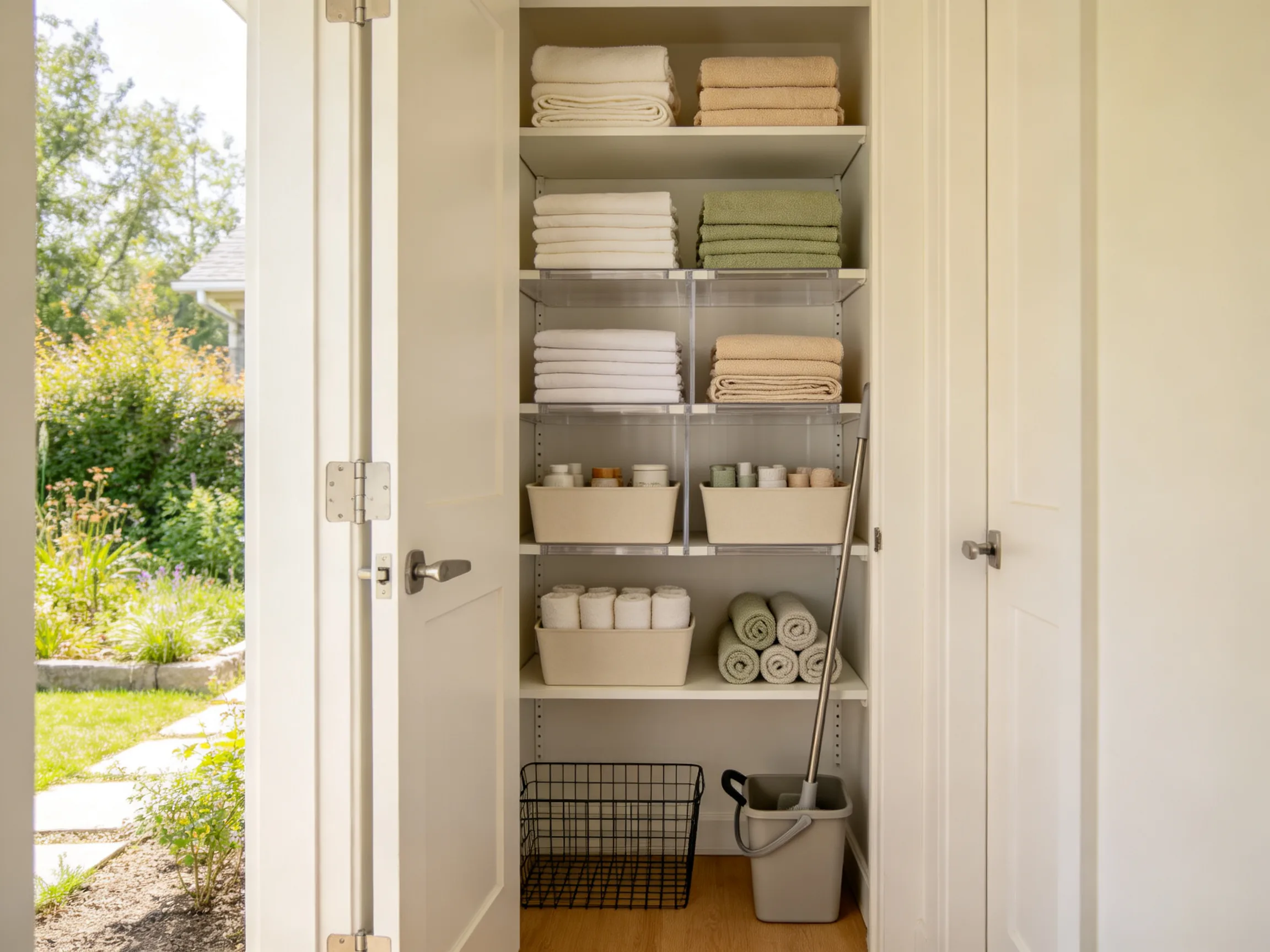
A compact linen closet can hold towels, sheets, toiletries, and cleaning supplies without becoming an overstuffed catchall. The best linen closet organization ideas use shelf depth, vertical clearance, doors, and small gaps efficiently while keeping frequently used items easy to reach. These practical solutions can help you create a tidy, functional closet without changing its basic layout.
1. Group Sheet Sets Inside Their Pillowcases
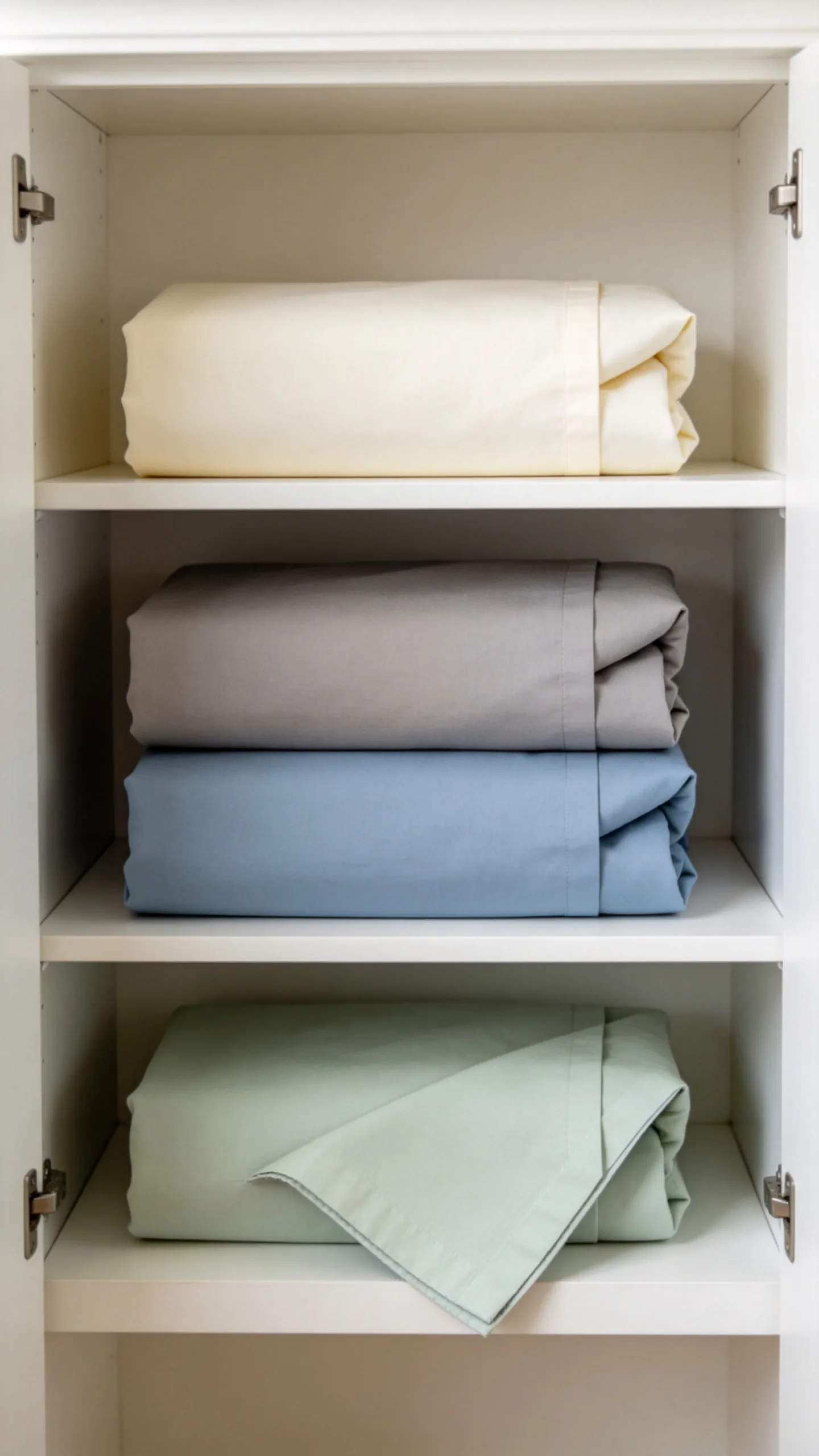
Fold the fitted sheet, flat sheet, and one pillowcase together, then slide the bundle inside the remaining pillowcase. This creates a compact package that keeps every piece of the set together and prevents loose linens from spilling across the shelf.
Arrange the bundles by bed size, with labels such as “Twin,” “Queen,” or “Guest Room” placed along the shelf edge. Store the most frequently used sets at eye level and occasional bedding on a higher shelf to reduce unnecessary rummaging.
2. Add Shelf Dividers Between Linen Stacks
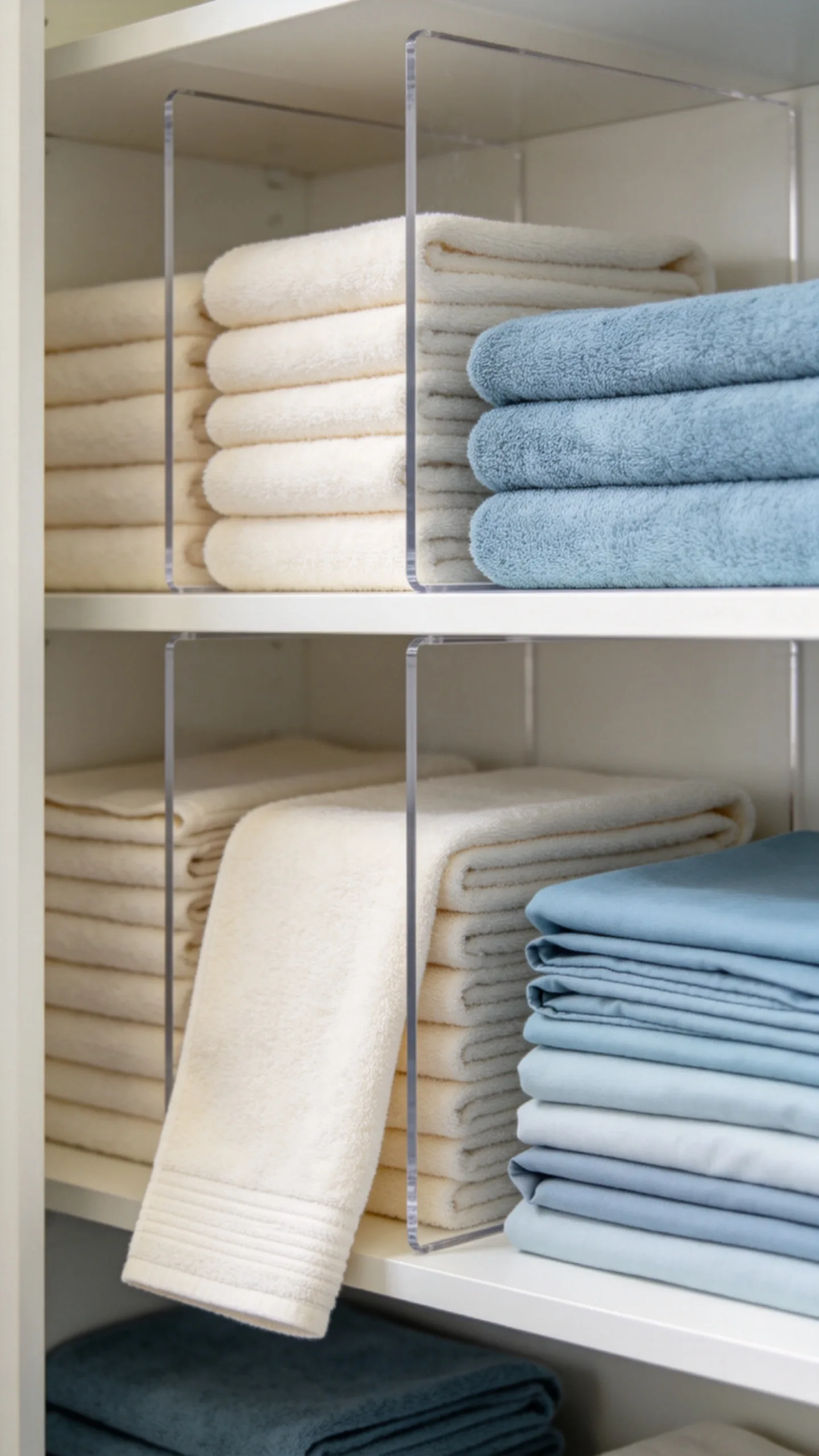
Use acrylic, wire, or clip-on shelf dividers to separate bath towels, hand towels, washcloths, and sheet sets. Dividers stop tall piles from leaning into one another, so you can remove one towel without collapsing the entire shelf.
For a narrow closet, keep each stack approximately 10 to 12 inches wide. Clear acrylic dividers create less visual clutter, while ventilated wire versions work well on solid wood or laminate shelves where airflow around linens is helpful.
3. Use Labeled Baskets for Small Essentials
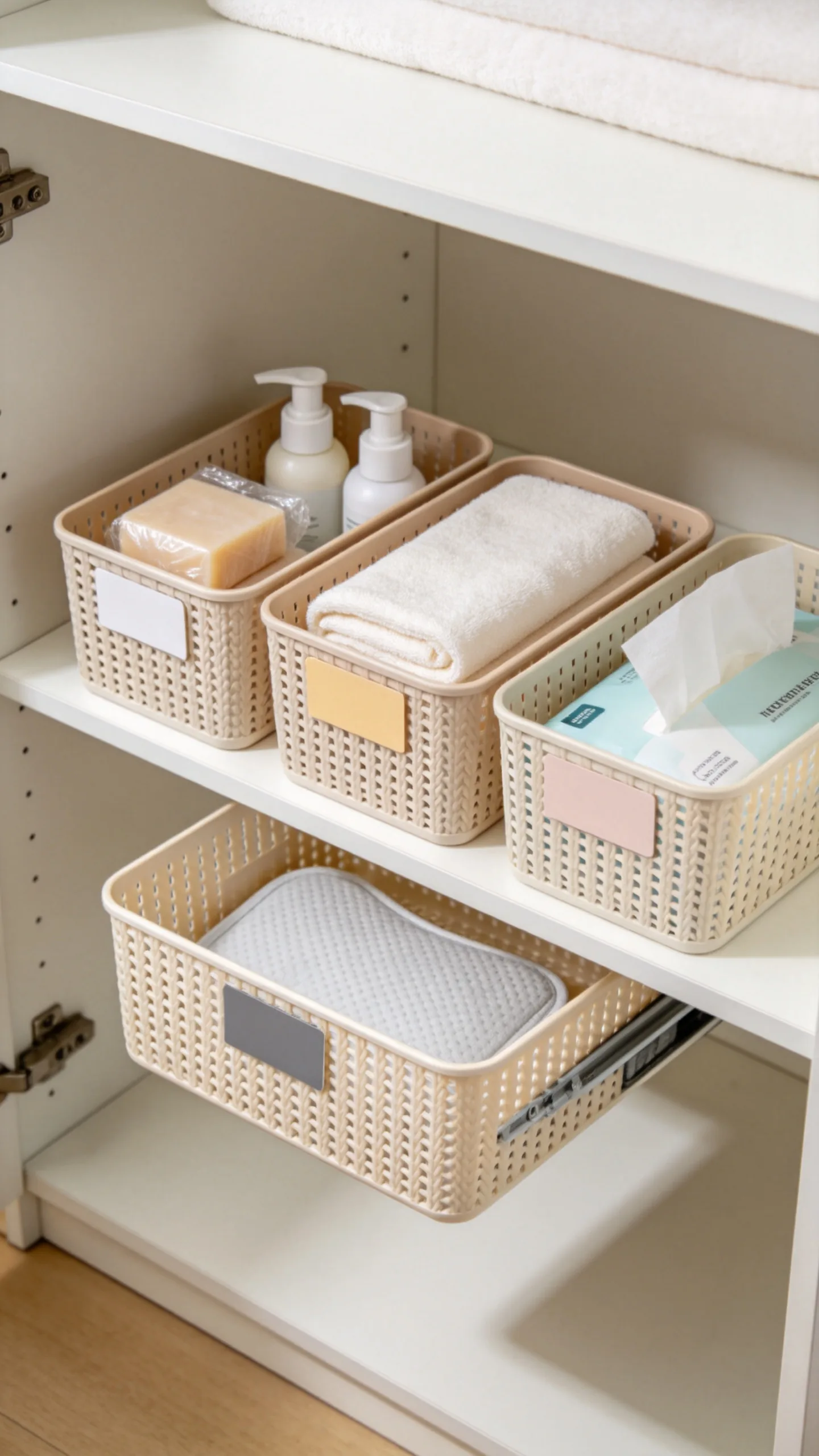
Place loose items such as extra soap, travel toiletries, washcloths, heating pads, and tissue boxes in shallow baskets. Containers make full use of the shelf depth while preventing small packages from disappearing behind folded towels.
Choose rectangular baskets with straight sides rather than tapered bins, which waste valuable shelf space. Add front-facing labels so everyone knows where to return items, and assign one basket to each category instead of mixing unrelated supplies.
4. Install an Over-the-Door Storage Rack
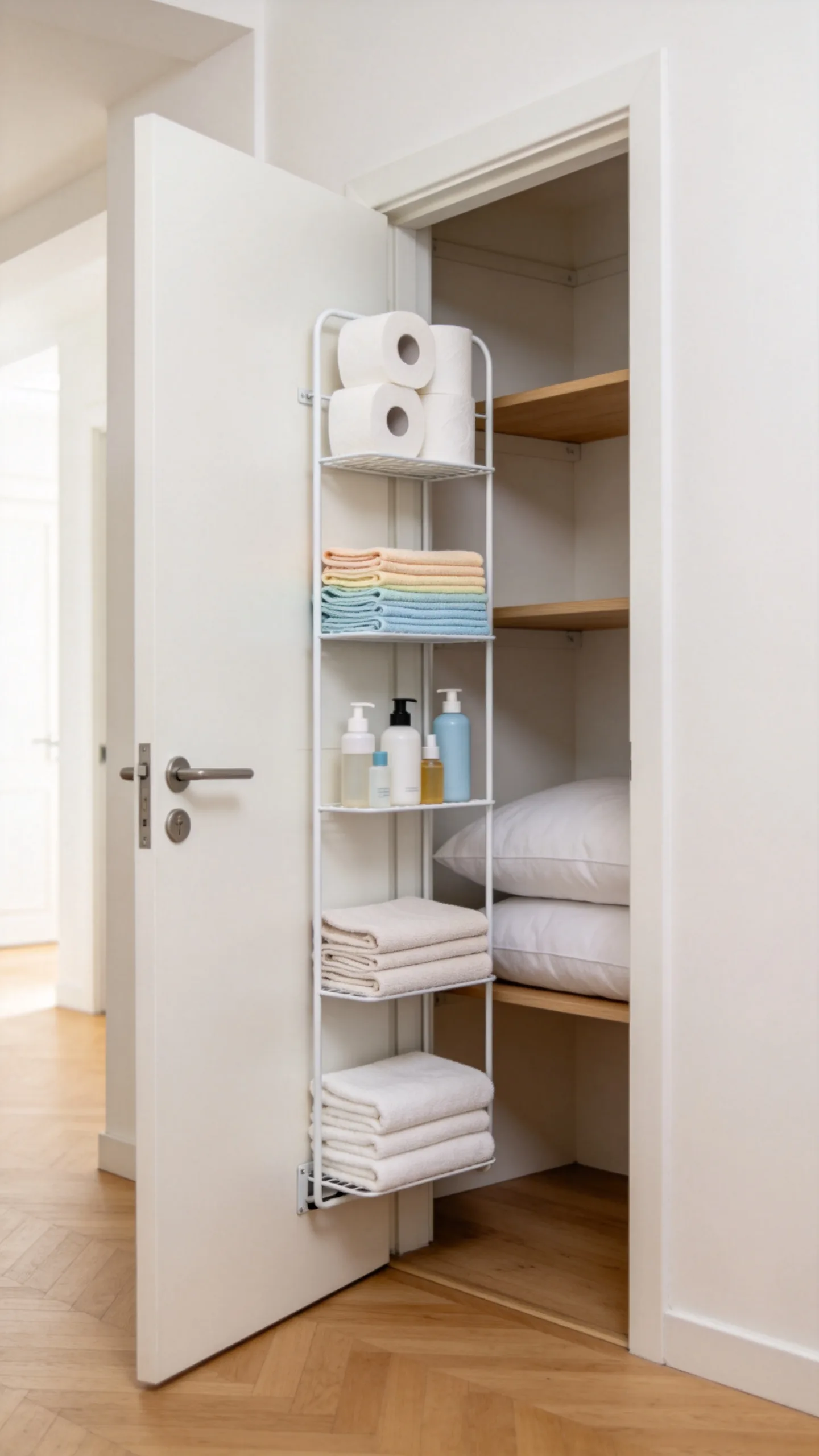
Turn the inside of the closet door into storage for lightweight supplies. A slim metal rack or fabric pocket organizer can hold toilet paper, cleaning cloths, toiletries, pillowcases, and other compact items that would otherwise occupy shelf space.
Measure the gap between the closed door and the front edge of the shelves before buying an organizer. Select a low-profile design that will not press against towels or prevent the door from closing, and secure the bottom so it does not swing into the closet frame.
5. Roll Towels to Fill Narrow Shelf Gaps
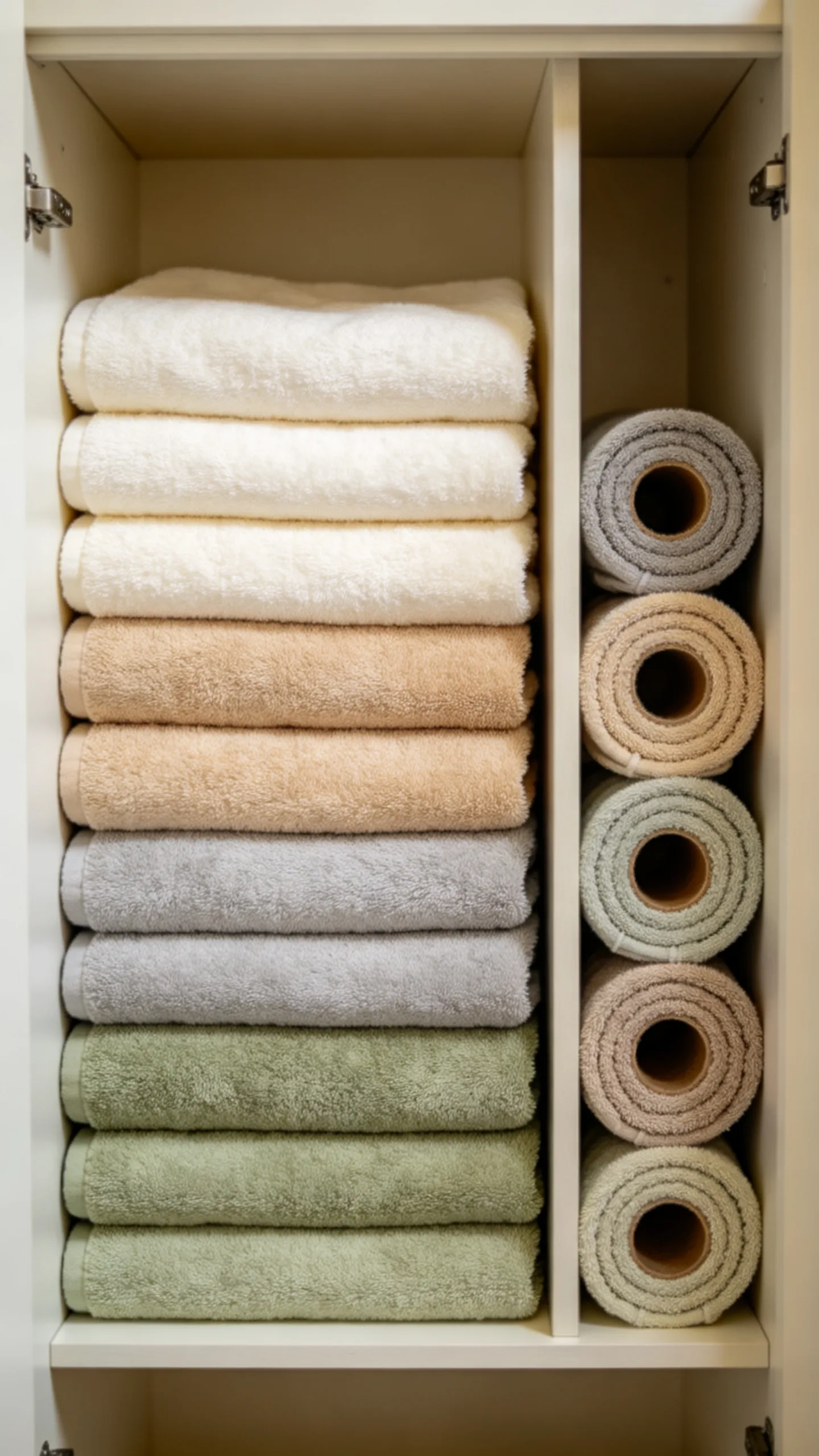
Rolled towels fit neatly into narrow cubbies, baskets, and awkward spaces beside larger linen stacks. This method is especially useful for washcloths, hand towels, beach towels, and guest towels that vary in size.
Place rolled towels horizontally with the ends facing forward so each one can be removed independently. Avoid tightly rolling every bath towel if the closet is very shallow; a mix of folded bath towels and rolled smaller linens usually uses the shelf depth more efficiently.
6. Add Under-Shelf Wire Baskets
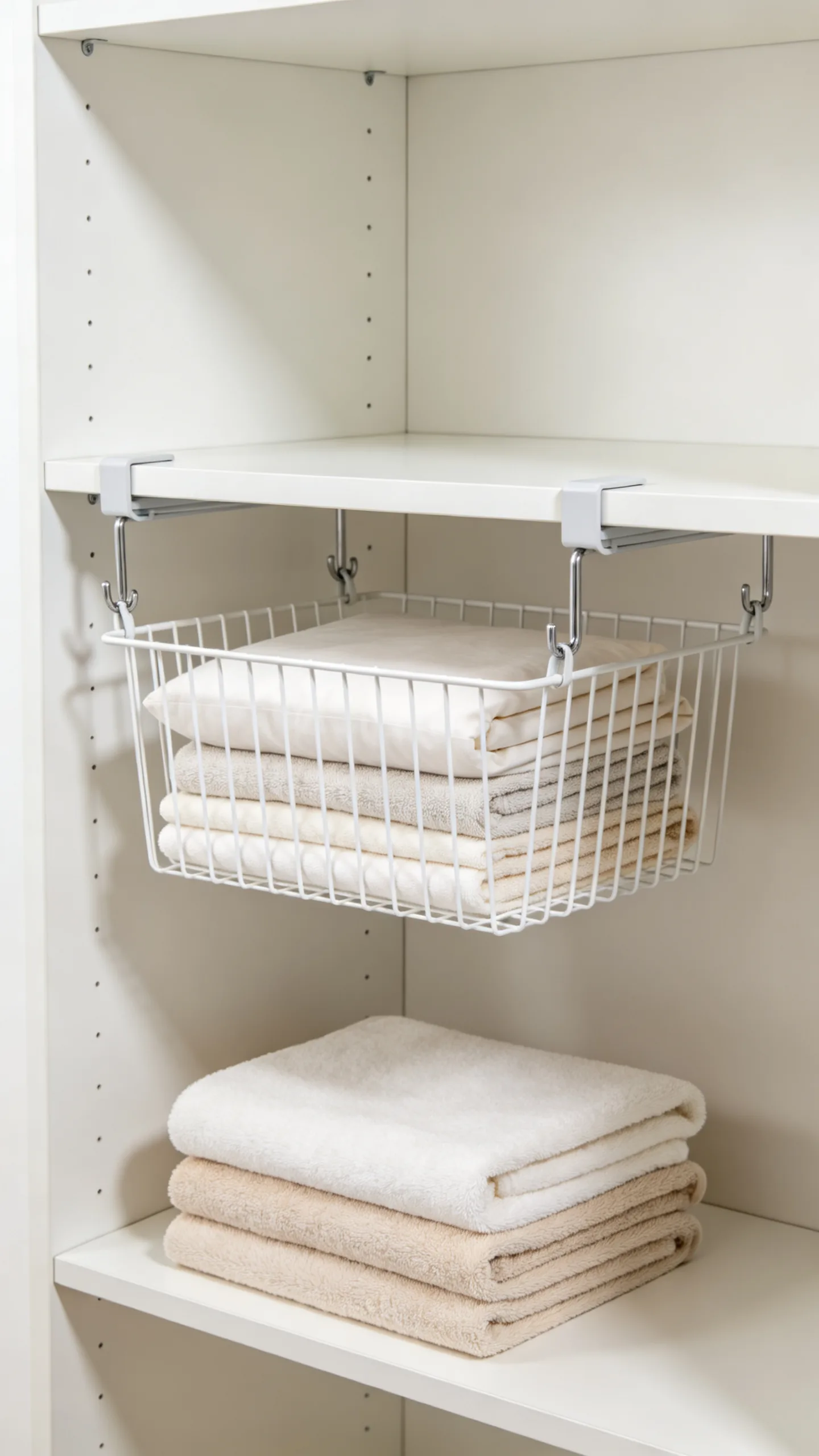
Slide an under-shelf basket onto a sturdy shelf to capture unused vertical space beneath it. These baskets are ideal for pillowcases, washcloths, cleaning rags, or lightweight hand towels that do not need a full shelf.
Choose a basket that does not hang so low that it blocks the items underneath. In a small closet, one or two strategically placed baskets are more practical than covering every shelf, which can make the interior feel crowded and reduce visibility.
7. Store Bulky Bedding in Zippered Bags
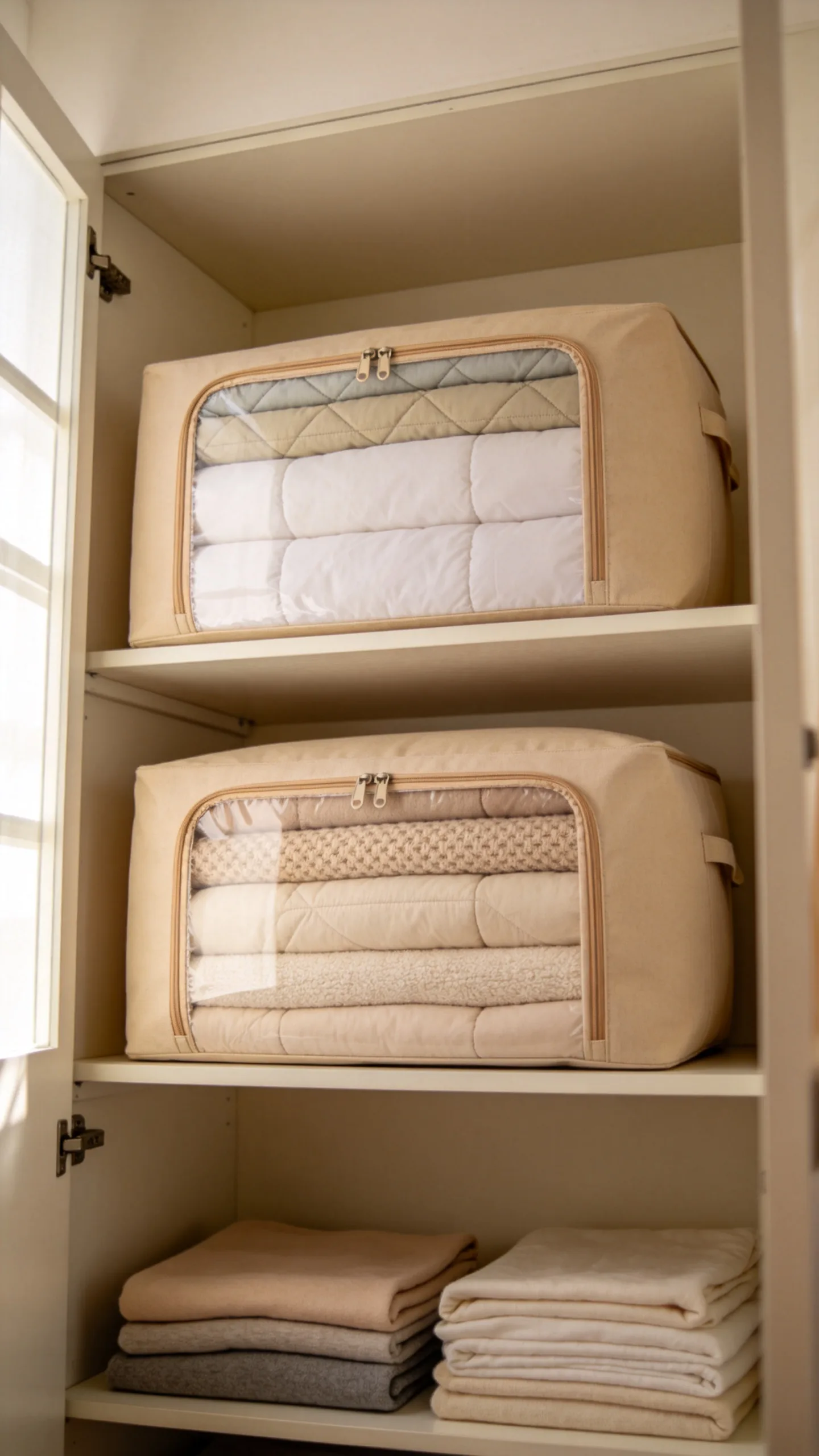
Place seasonal quilts, duvet inserts, mattress pads, and extra blankets in zippered fabric storage bags. Soft-sided bags compress bulky textiles into manageable shapes while protecting them from dust and preventing unstable piles.
Store these bags on the highest shelf or closet floor, depending on their weight. Clear windows or large labels make contents easy to identify, and breathable fabric is preferable to airtight plastic for long-term linen storage.
8. Create a Backstock Bin for Extra Toiletries
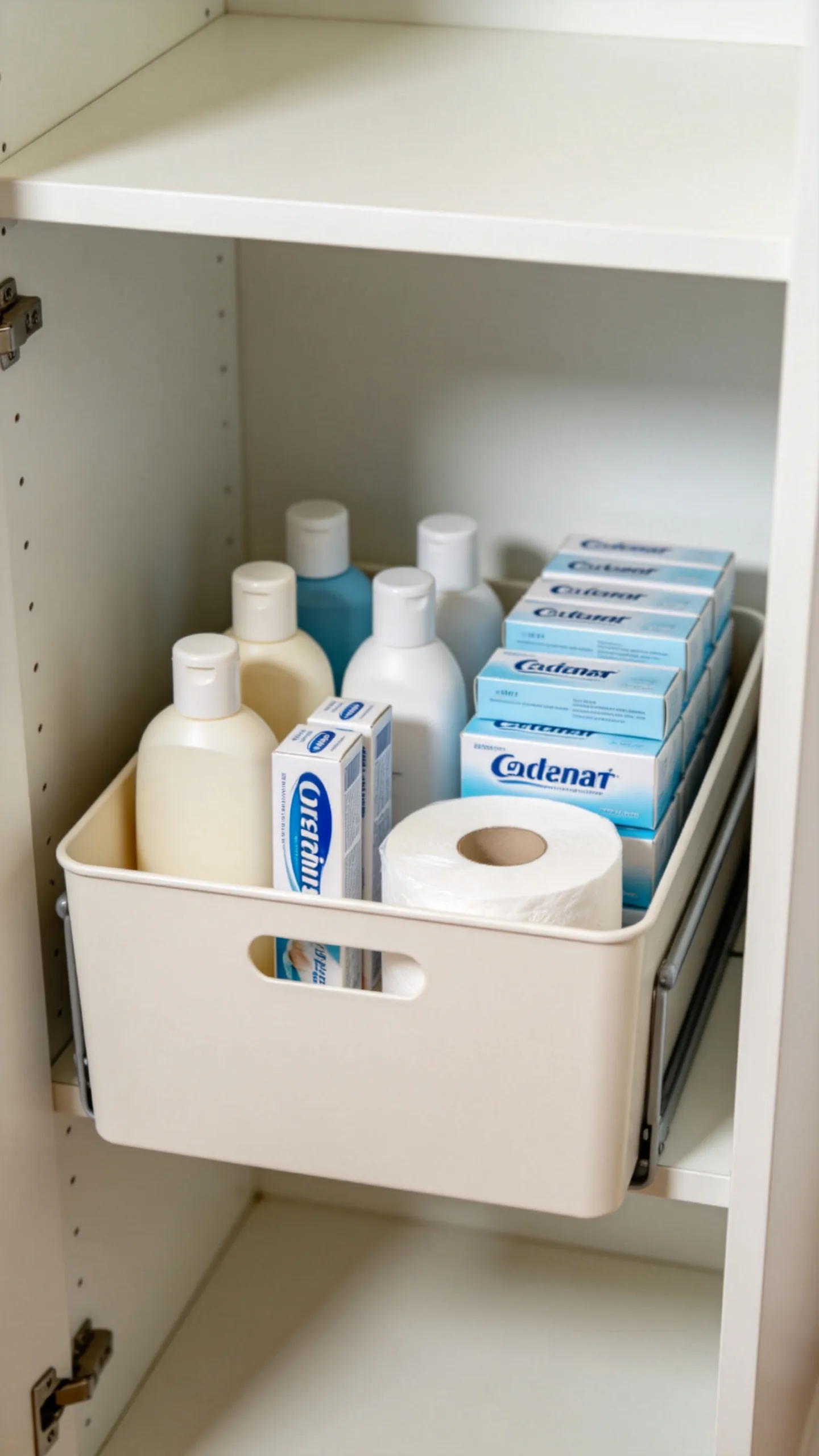
Designate one contained area for unopened shampoo, toothpaste, soap, paper goods, and other household backups. A backstock bin prevents duplicate products from spreading across several shelves and makes it easier to see what you already have before shopping.
Limit the category to a single basket or pull-out bin sized to the shelf. Place newer items behind older ones, and keep opened products in the bathroom rather than allowing partially used bottles to clutter the linen closet.
9. Adjust Shelf Heights Around What You Store
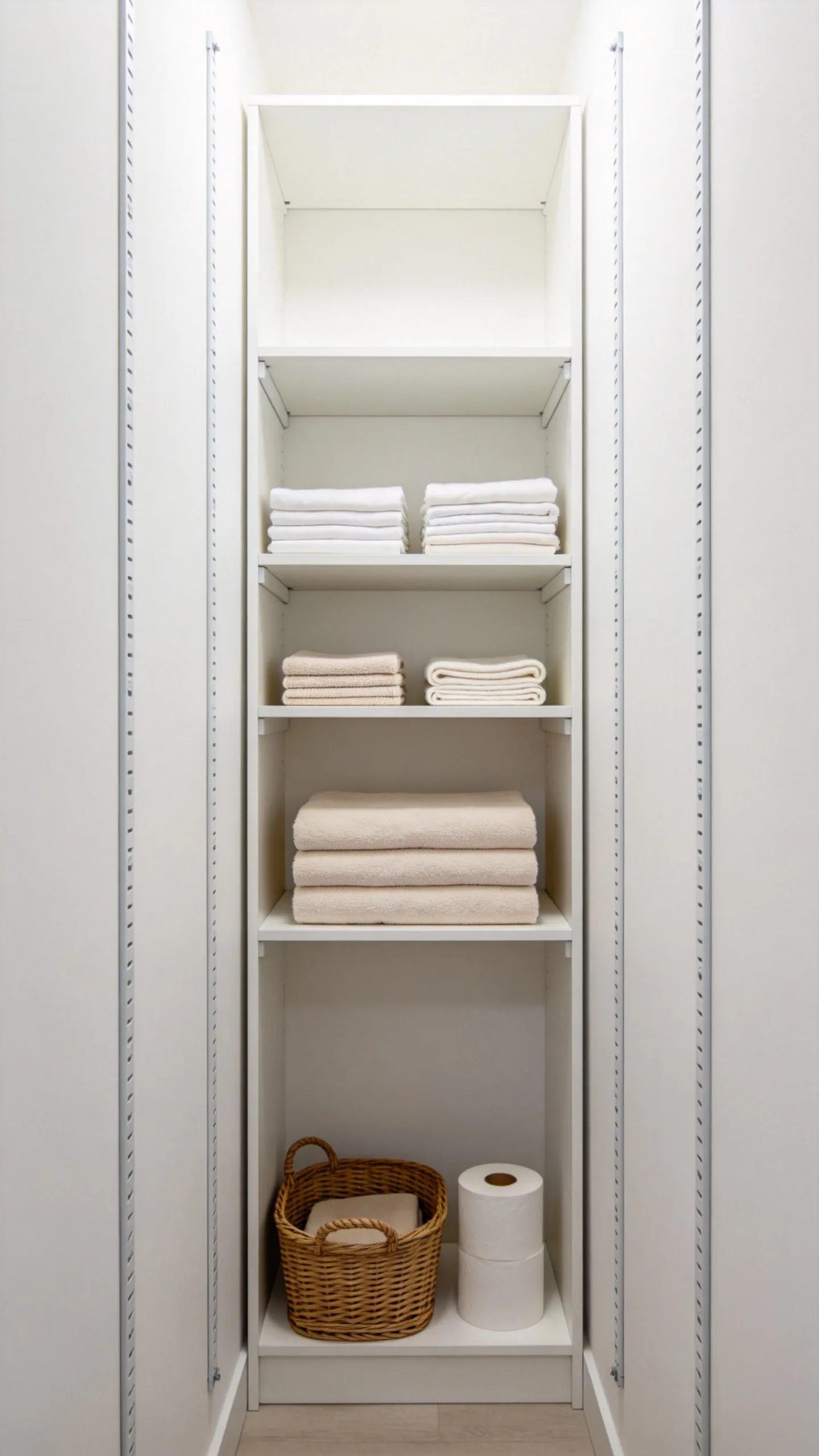
If the closet has adjustable shelf tracks, reposition each shelf according to the height of its contents. Closely spaced shelves work well for sheets and washcloths, while taller openings can accommodate baskets, toilet paper, or folded blankets.
Avoid leaving large gaps above short towel stacks. Even moving one shelf by a few inches can create room for an additional storage level, improving vertical-space use without adding furniture or altering the closet walls.
10. Add a Freestanding Shelf Riser
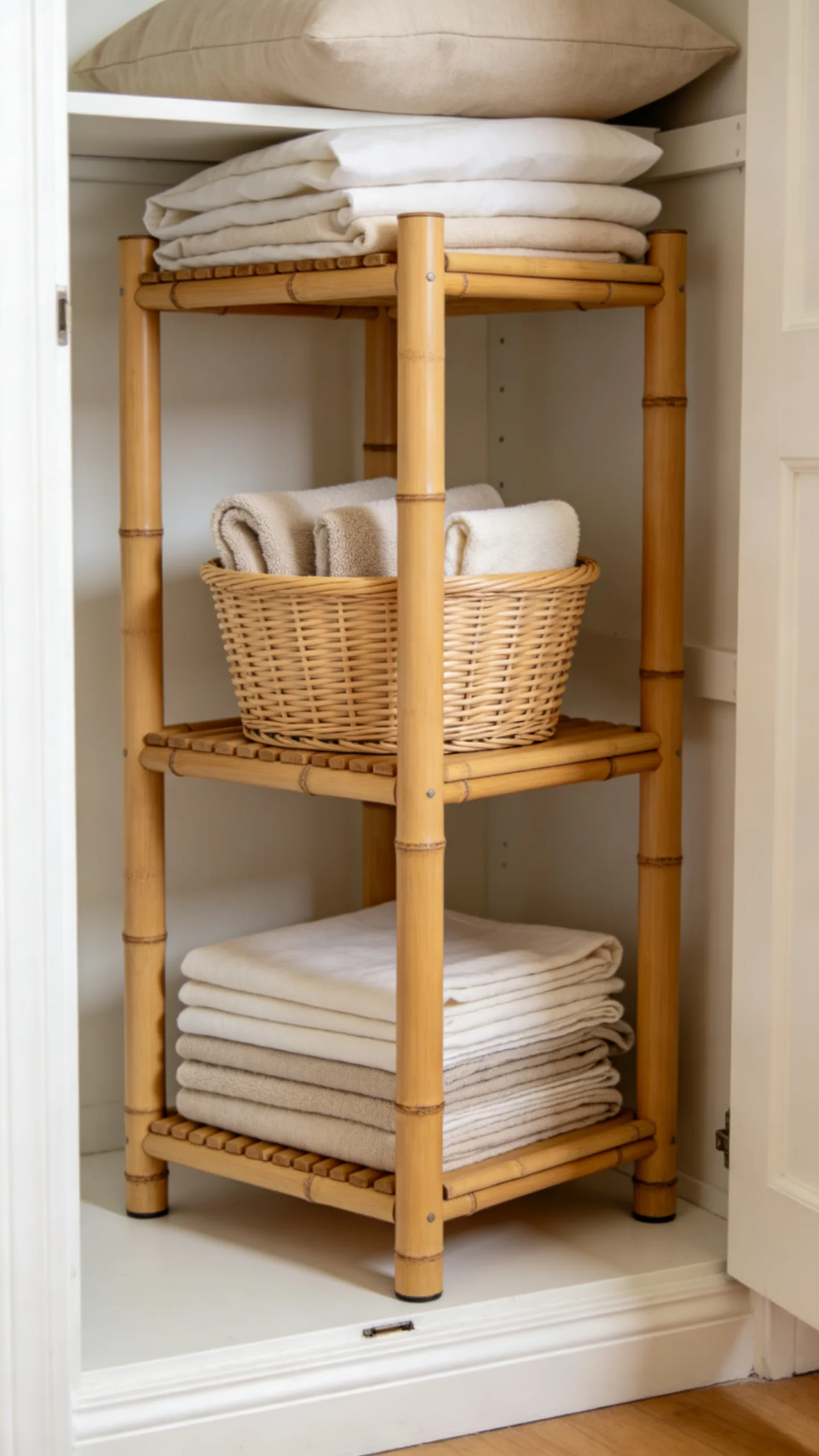
Place a metal, bamboo, or acrylic shelf riser on a tall shelf to create two storage levels. Keep folded sheets or towels underneath and lighter items, such as pillowcases or washcloth baskets, on top.
A riser works particularly well in older linen closets with fixed shelves and excessive vertical clearance. Select one slightly narrower than the shelf so it does not block the door trim, and avoid stacking heavy bottles on a lightweight riser that could bow or tip.
11. Use Clear Pull-Out Bins on Deep Shelves
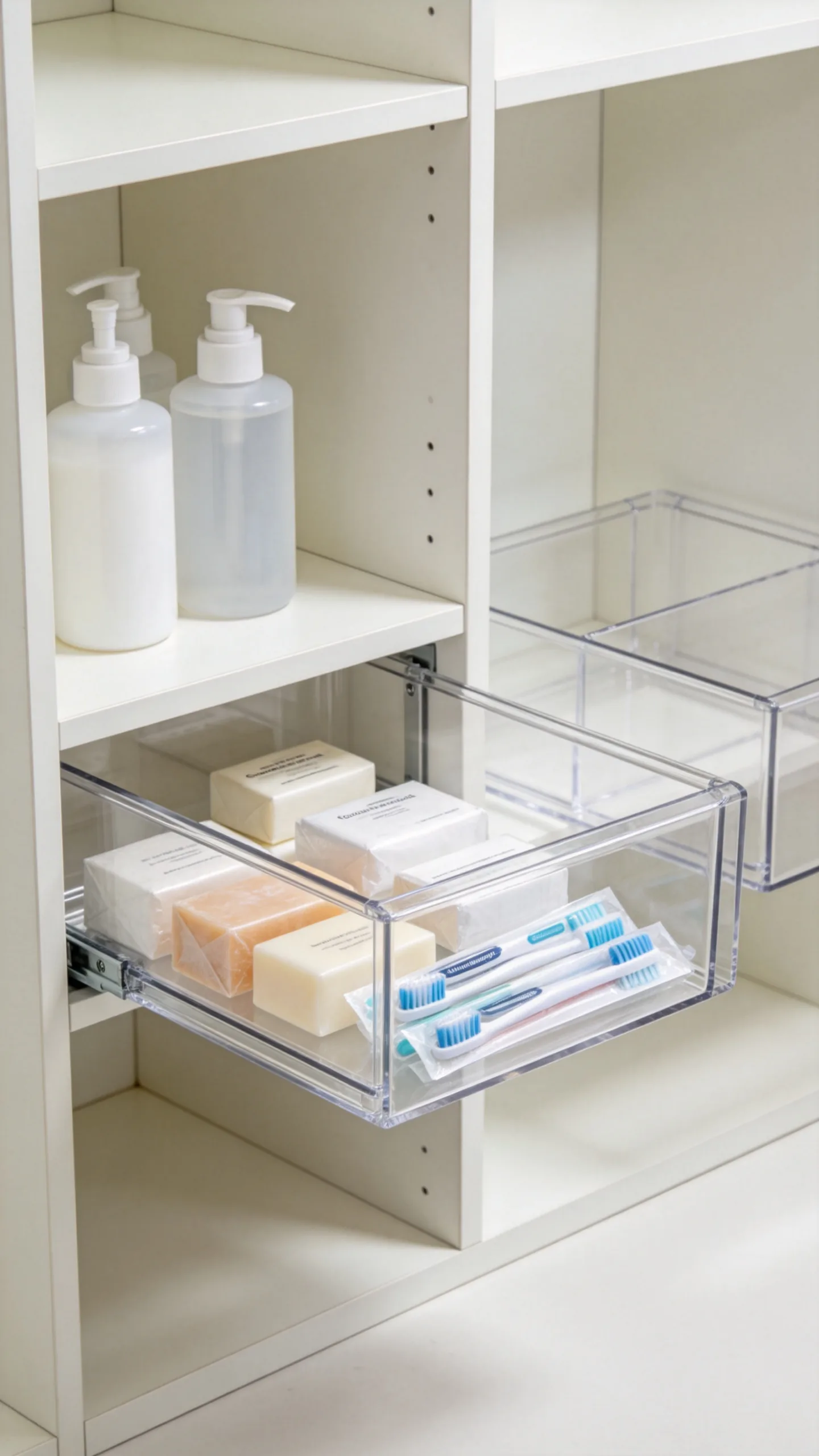
Deep linen closet shelves often allow small items to become hidden at the back. Clear pull-out bins let you access the entire shelf like a drawer, making them useful for first-aid supplies, toiletries, cleaning products, or guest bathroom essentials.
Choose bins with handles and enough clearance to slide out without scraping the shelf above. Keep each bin limited to one category, and place taller products toward the back so their labels remain visible through the clear sides.
12. Reserve Eye-Level Shelves for Daily Linens
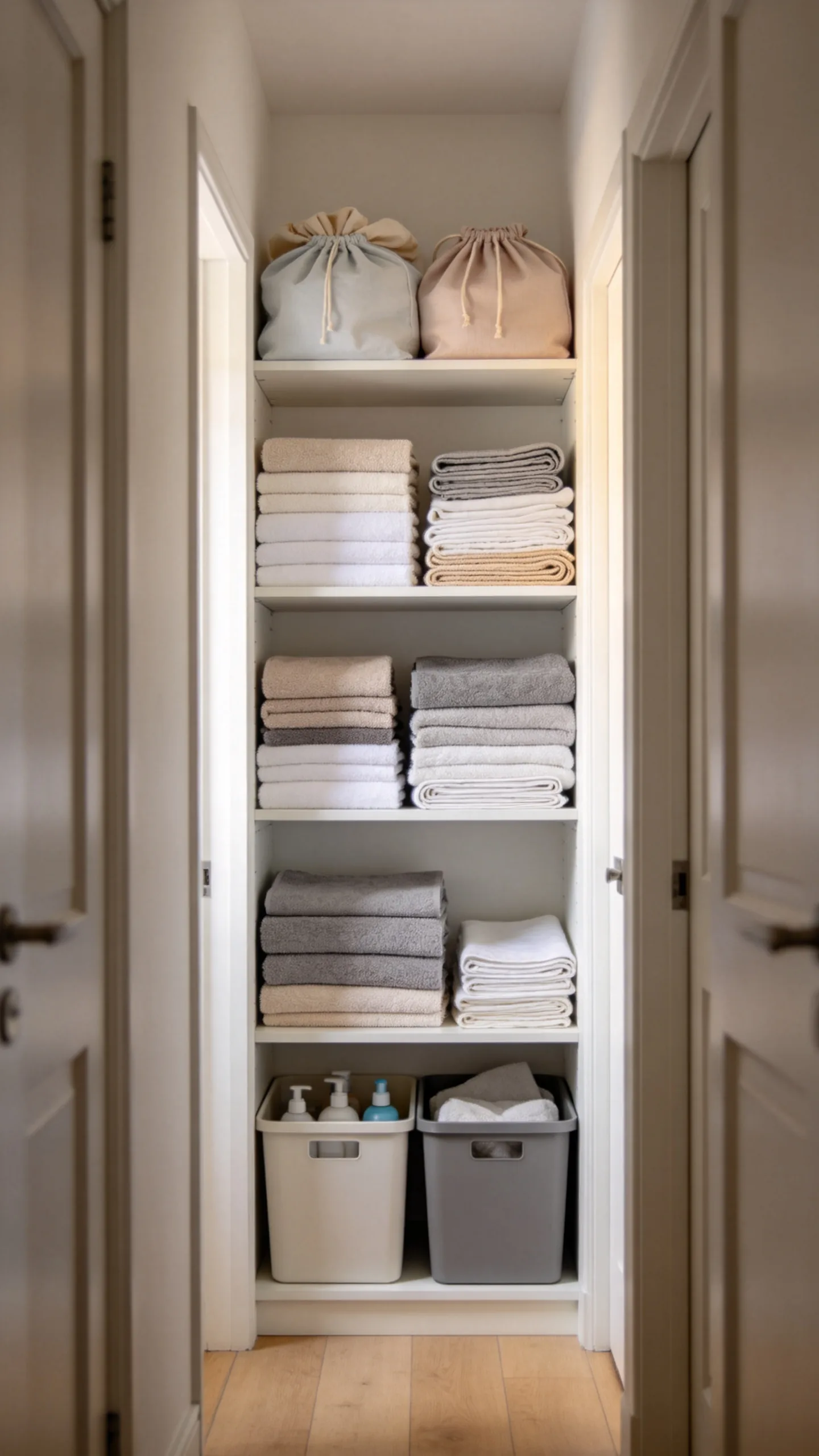
Place everyday bath towels, washcloths, and frequently changed sheet sets between waist and eye level. This keeps the most-used items within easy reach and reduces the chance of knocking over surrounding stacks.
Use upper shelves for lightweight seasonal linens and lower shelves for heavy or less attractive supplies. This arrangement improves traffic flow around the open closet because family members can retrieve essentials quickly without setting other items on the hallway floor.
13. Mount Hooks on an Empty Side Wall
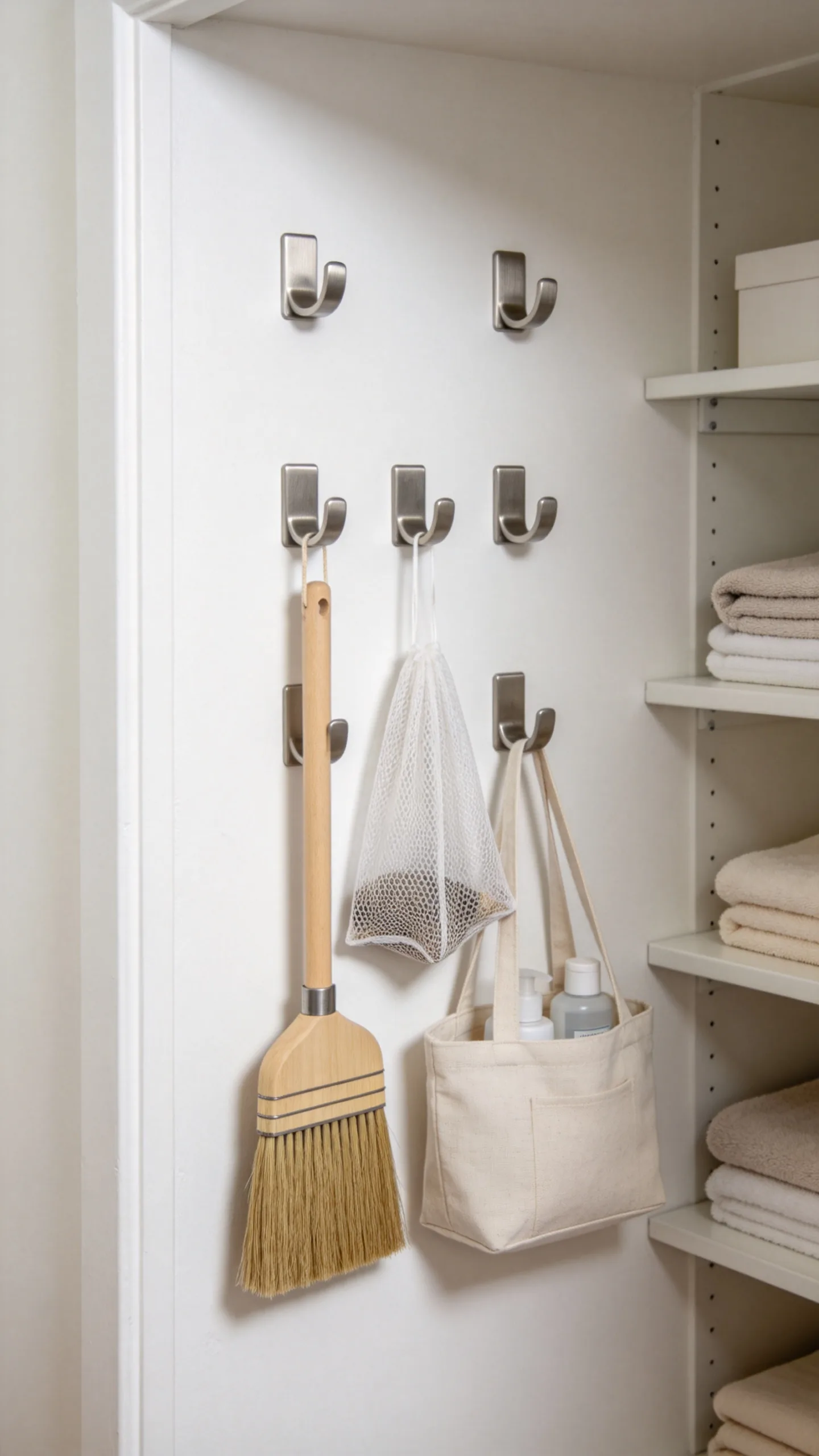
Install small adhesive or screw-in hooks on an unused interior side wall. Hooks can hold a hand broom, mesh laundry bag, heating pad cord, reusable cleaning bag, or lightweight tote containing guest supplies.
Keep hanging items shallow so they do not interfere with shelf access. Matching hooks in white, black, or brushed metal can also give a painted closet interior a more intentional appearance without taking up valuable horizontal storage space.
14. Corral Cleaning Supplies in a Handled Caddy
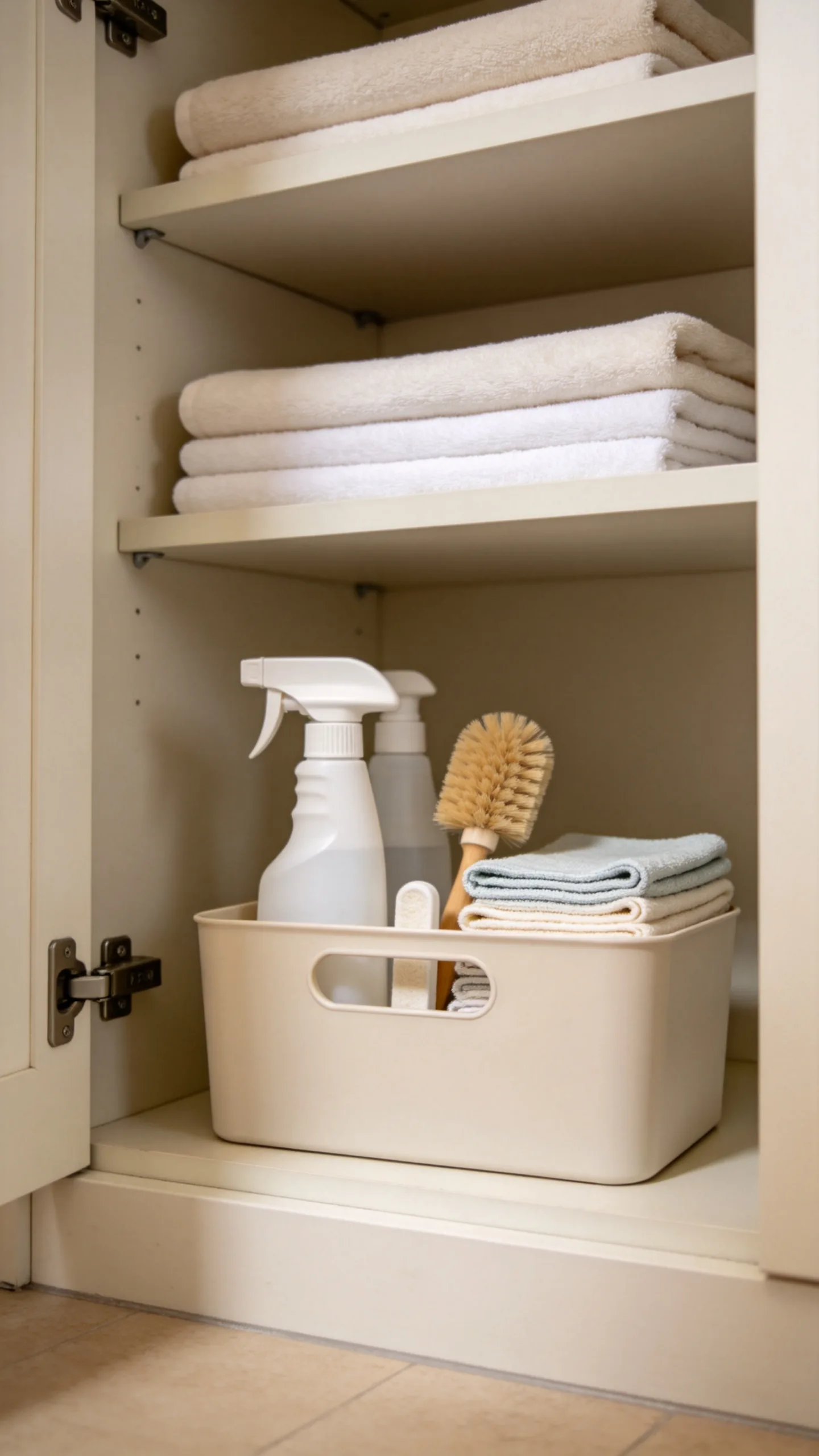
Store sprays, dusting cloths, brushes, and small cleaning tools in a handled caddy rather than lining them up individually. The caddy contains leaks, keeps bottles upright, and can be carried directly to the room being cleaned.
Place it on the lowest shelf or closet floor to keep chemical products away from bed linens. If children can access the closet, use a secure latch and follow all product storage instructions rather than relying on shelf height alone.
15. Use Matching Slim Bins for a Cleaner Sightline
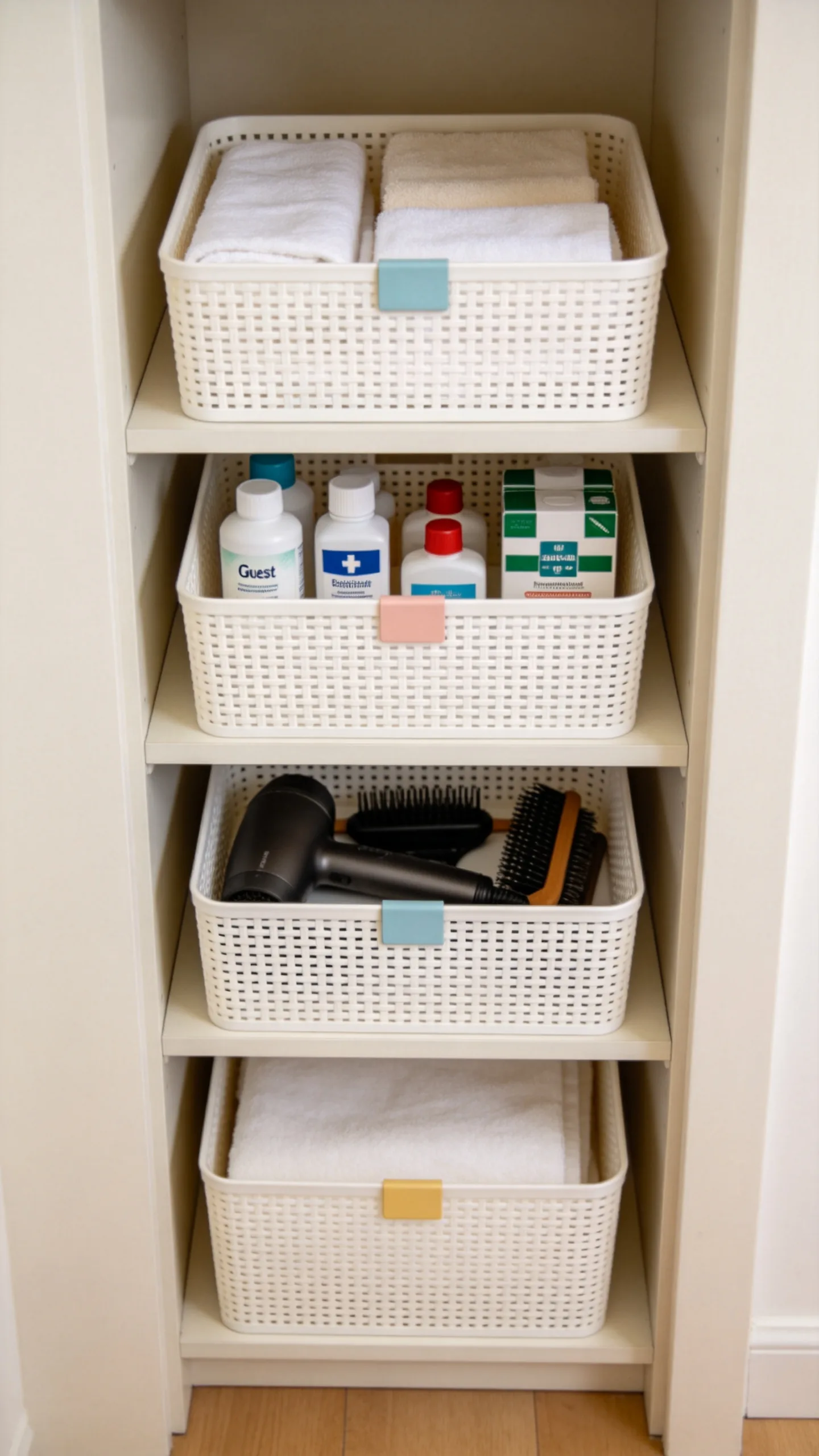
A row of slim, matching bins creates a calmer visual field than a mix of open packages and containers. In a small linen closet, consistent bin shapes also reduce gaps and make better use of the full shelf width.
Choose bins in white, clear, woven plastic, or another moisture-resistant material that suits the closet’s painted or wood shelves. Keep labels specific—such as “Guest Towels,” “First Aid,” and “Hair Tools”—so the streamlined appearance does not make contents difficult to find.
16. Turn the Closet Floor Into a Storage Zone
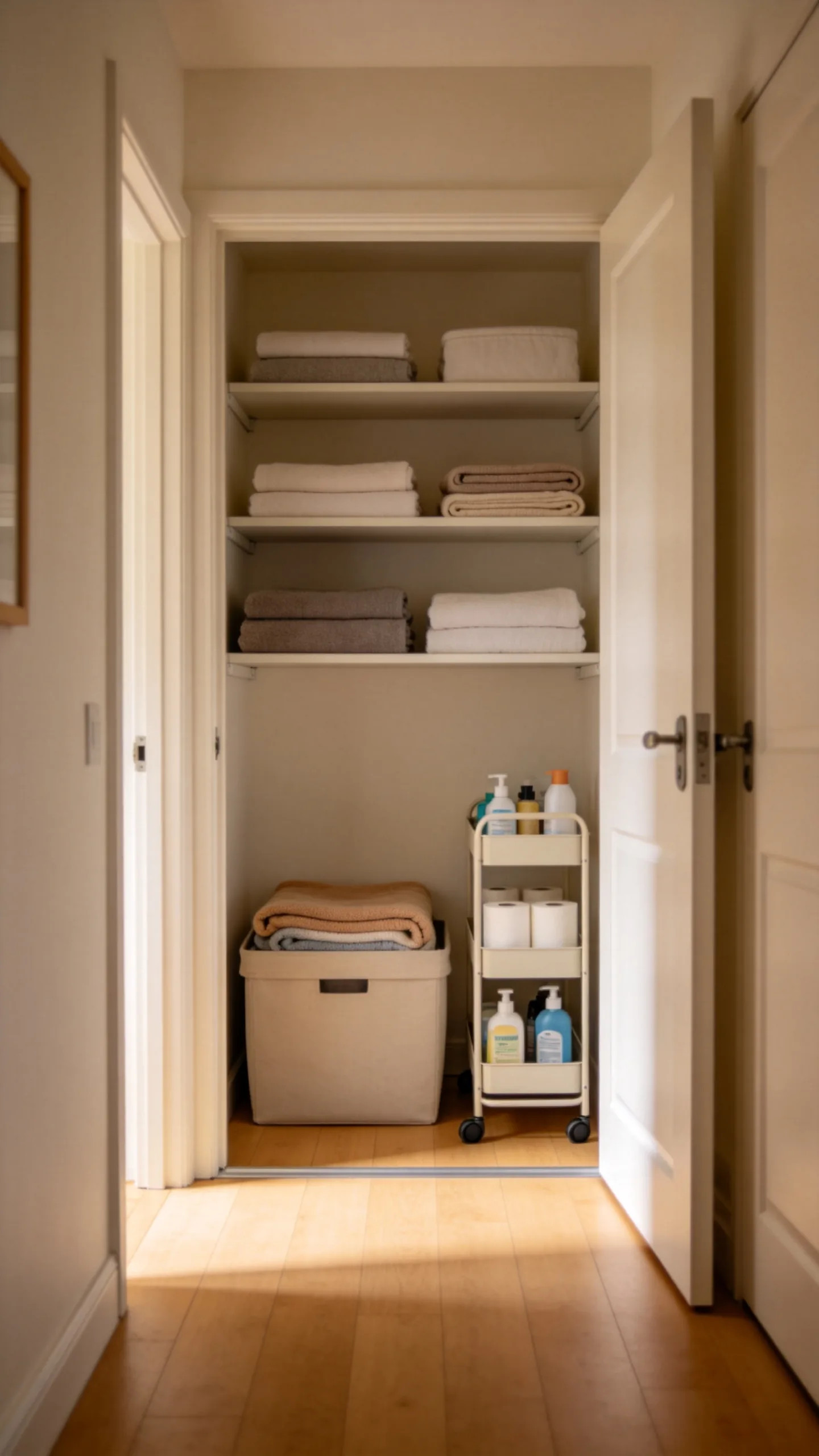
Use the floor for sturdy, low-frequency items instead of allowing it to become a drop zone. A lidded bin can hold seasonal blankets, while a narrow rolling cart can organize toilet paper, cleaning supplies, or extra bathroom products.
Leave a few inches of open space near the doorway so items do not catch on the door or obstruct the hallway. Keeping floor storage contained also makes vacuuming easier and prevents linens from resting directly on dusty surfaces.
17. Label Shelf Edges to Protect the System
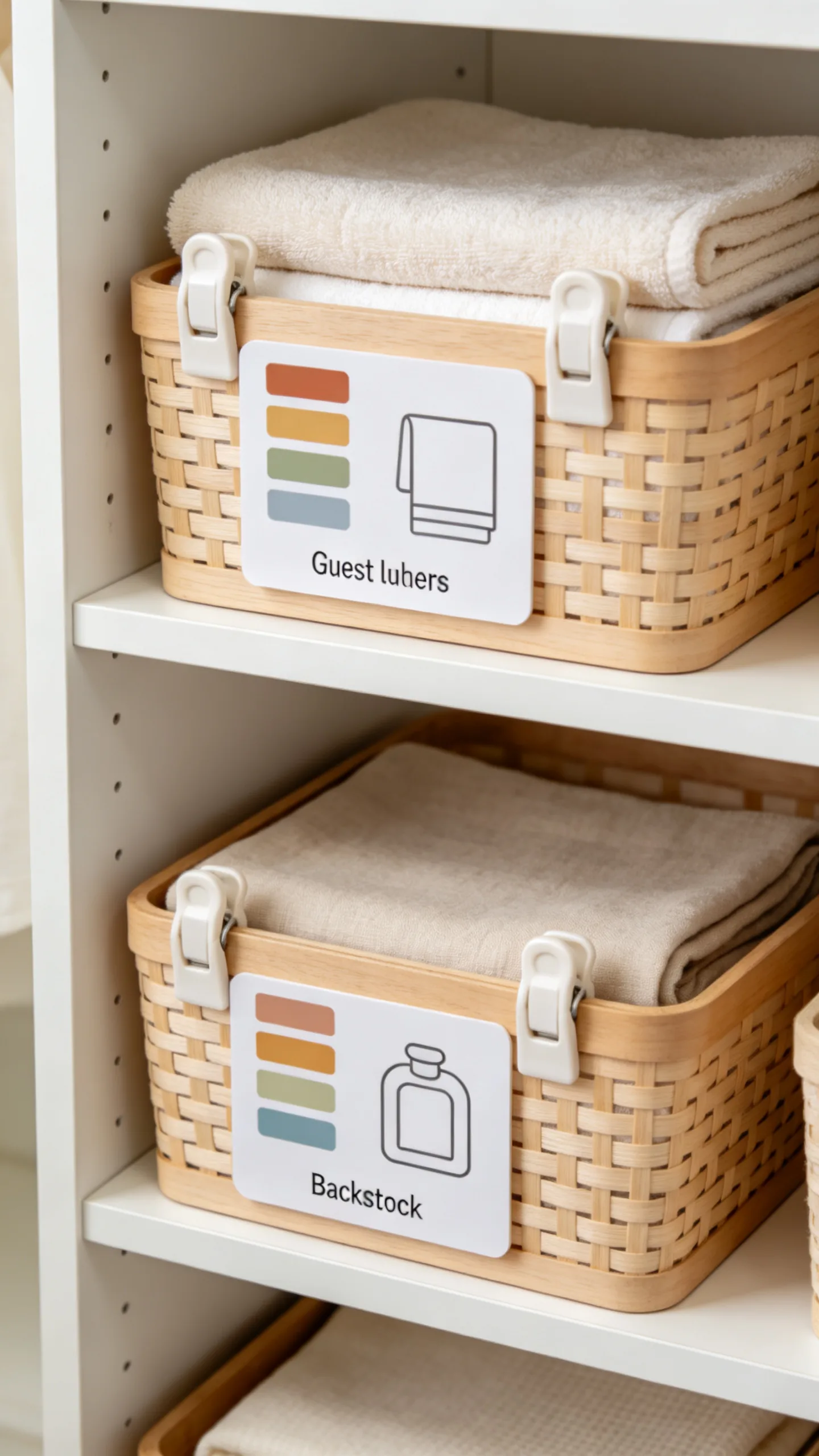
Attach simple labels to shelf edges, baskets, and bins so each category has a permanent home. Labels such as “Bath Towels,” “Queen Sheets,” “Guest Linens,” and “Backstock” help prevent unrelated items from being pushed into the nearest open space.
Use removable clips or low-tack adhesive labels on painted, laminate, or wood shelves to avoid surface damage. A clear labeling system is especially helpful in shared households because it makes the organization easy to maintain without a detailed explanation.
18. Keep One Shelf Partially Empty
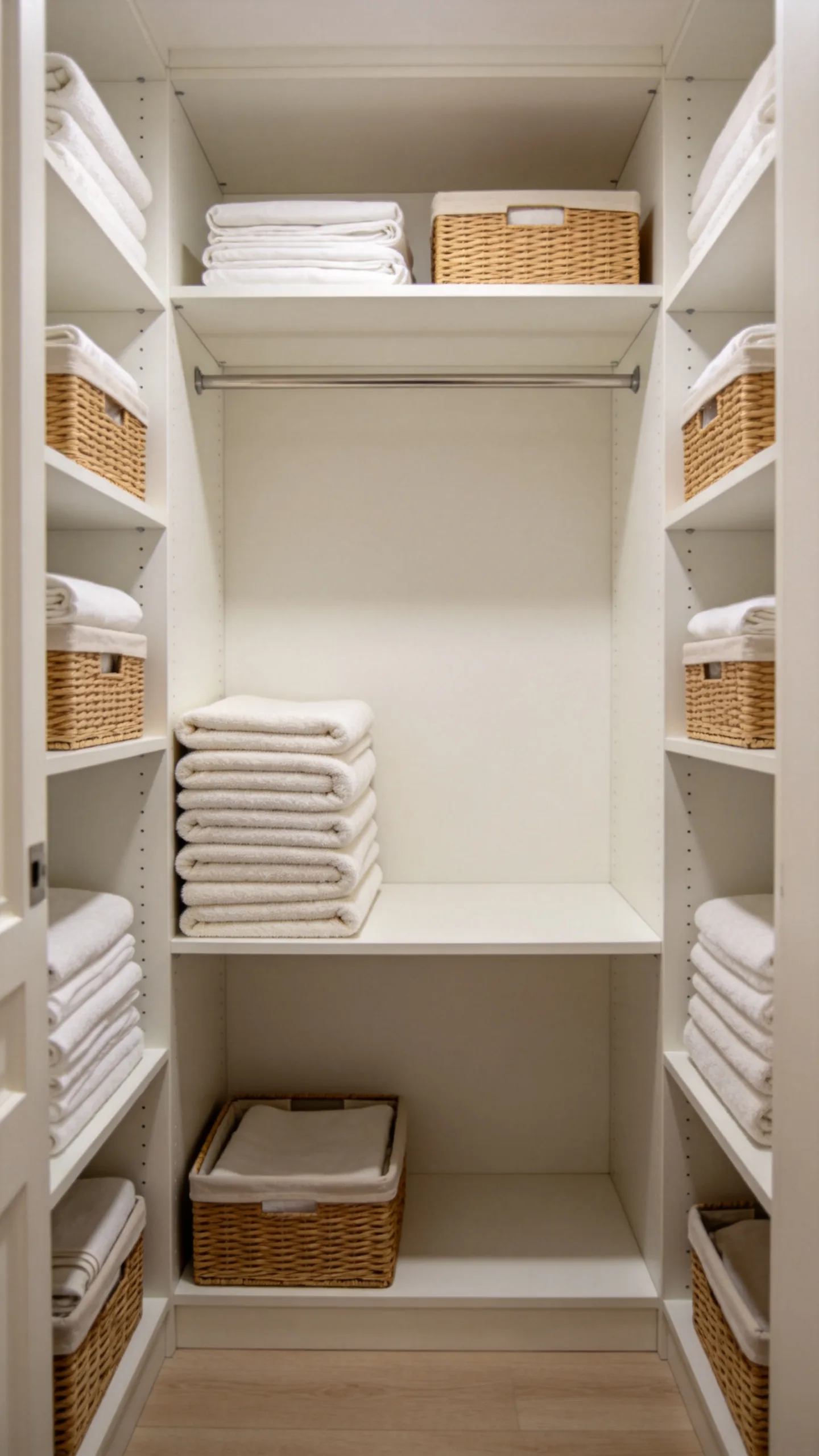
Resist filling every inch of the linen closet. Leaving part of one accessible shelf open provides a temporary landing spot for freshly washed towels, a new package of paper goods, or linens waiting to be sorted.
This small amount of breathing room protects sightlines and prevents items from being wedged into unstable stacks. It also gives the closet flexibility when household needs change, helping the organization system remain functional instead of becoming overcrowded again.

From the editors
Decor Compass Editorial Team
We turn practical home research into clear, useful room-by-room ideas.