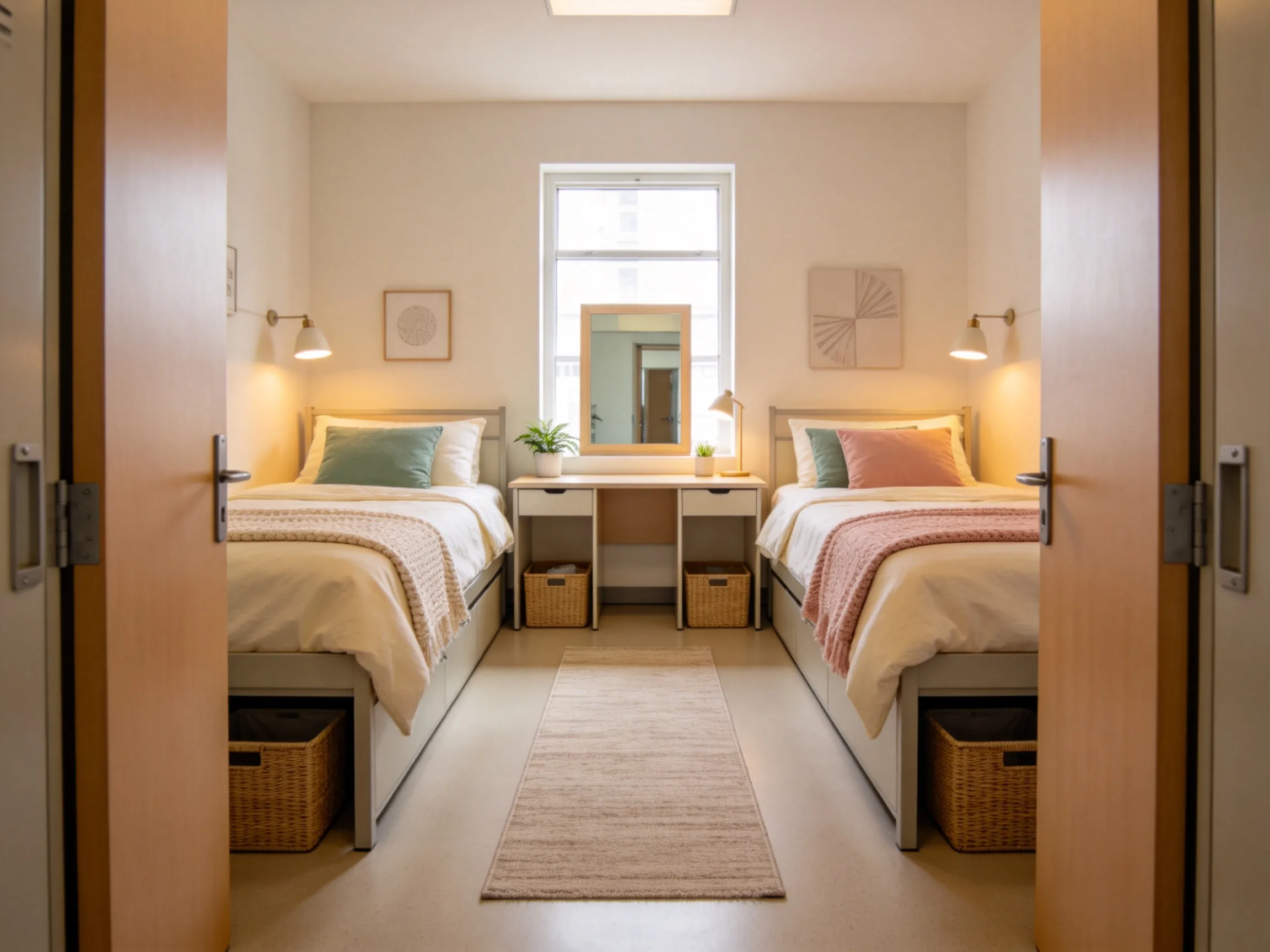
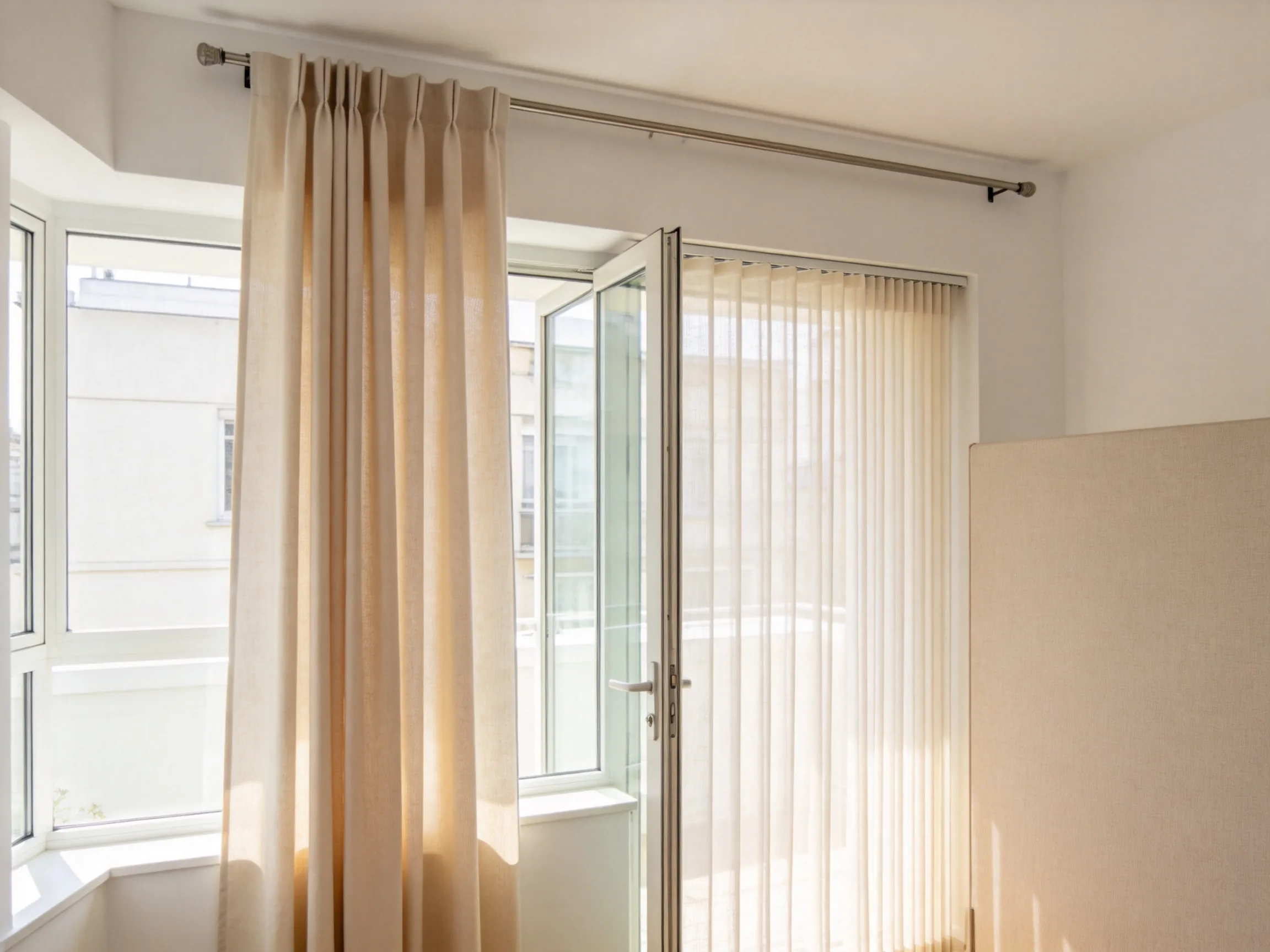
Temporary curtain ideas are especially useful in rentals, dorms, apartments, and no-drill spaces where privacy, light control, and style still matter. With the right hardware and fabric choices, you can soften a room, cover an awkward window, divide an open layout, or hide storage without putting holes in the wall or making permanent changes.
1. Tension Rod Curtains Inside the Window Frame
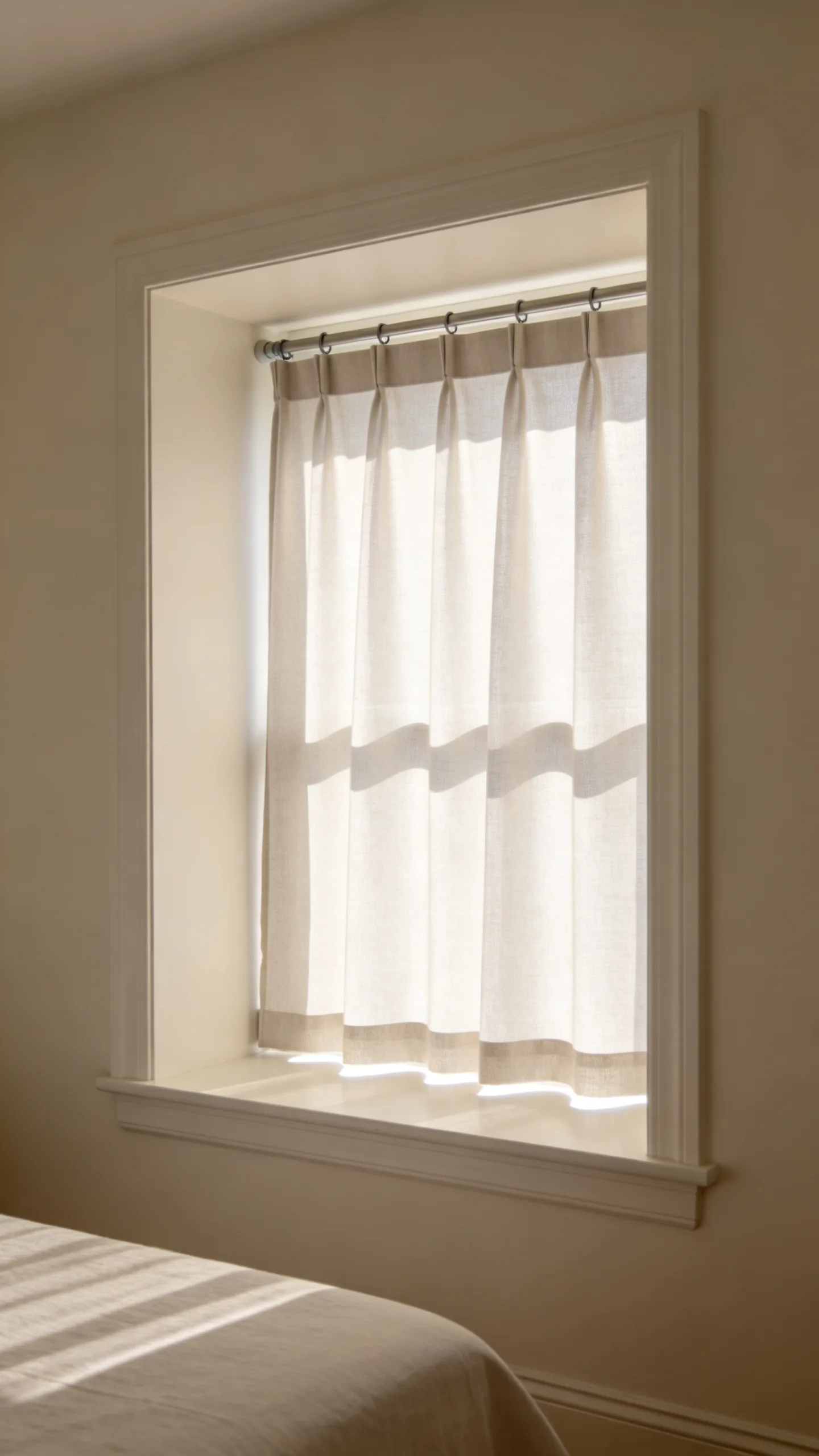
A tension rod is one of the simplest no-drill curtain solutions for renters because it fits directly inside the window frame. It works best on standard windows with a recessed frame, such as bedroom, bathroom, or kitchen windows where the rod can press securely between two side surfaces.
Choose lightweight curtain panels, café curtains, or sheer linen-look fabric so the rod does not sag. For privacy in a bedroom or street-facing living room, use a slightly thicker cotton or polyester panel that sits close to the glass. Since the curtain hangs inside the frame, it keeps the surrounding wall visible, which helps small rooms feel cleaner and less crowded.
This idea is also helpful when you want curtains without covering trim or blocking nearby furniture. In a small apartment bedroom, a white or brass tension rod with soft neutral panels can add privacy while keeping the window area simple and renter-friendly.
2. Twist-and-Fit Curtain Rods Above the Window

A twist-and-fit curtain rod works like a tension rod but is designed to sit outside the window frame, usually between two walls or inside a window alcove. This gives you the look of a traditional curtain rod without screws, brackets, or wall anchors.
Use this option for windows placed in a recessed nook, between cabinets, or along a narrow wall where both ends of the rod can press against solid surfaces. Hanging panels slightly wider than the glass can make the window look larger, especially in a small living room or bedroom.
For a polished look, choose curtain rings with clips or grommet panels that glide easily across the rod. Keep fabric weight moderate, such as cotton blend, linen blend, or lightweight blackout curtains, so the rod stays secure and the curtains open smoothly.
3. Command Hook Curtain Rod Setup
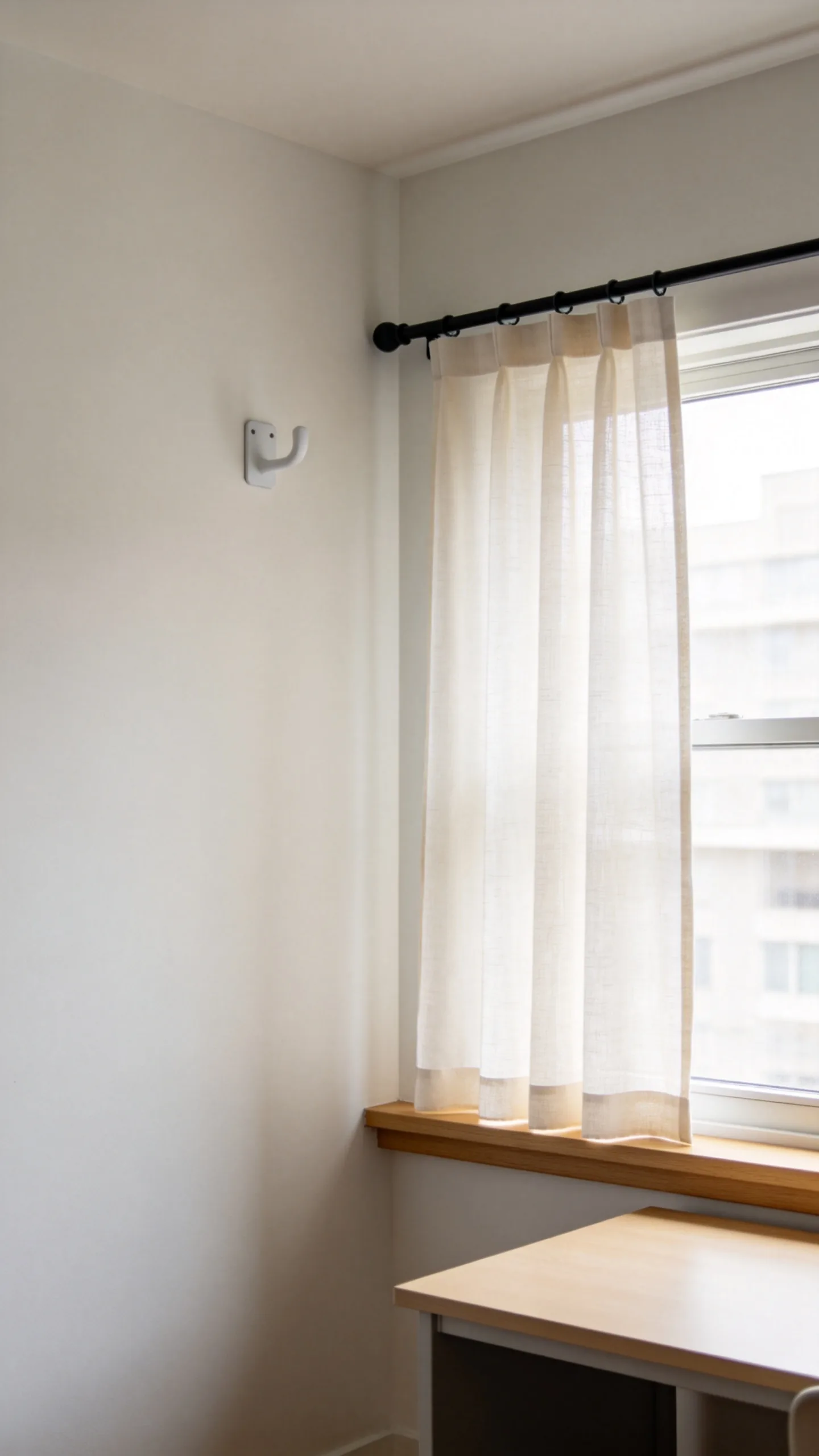
Adhesive wall hooks can hold a lightweight curtain rod when drilling is not allowed. This method works well for renters who want curtains above the window instead of inside the frame. Use large, weight-rated hooks and follow the package instructions carefully so the adhesive bonds properly to painted drywall or smooth trim.
A slim rod in black, white, or brass can sit across two or three hooks, depending on the window width. This setup is ideal for sheer panels, voile curtains, or lightweight linen-look panels in a living room, office, or guest bedroom. Avoid heavy velvet or thermal drapes unless the hooks are specifically rated for the load.
Place the hooks a few inches above the window trim to create the illusion of taller windows. If the room is small, hang curtains in a color close to the wall paint, such as warm white curtains on cream walls, to keep sightlines soft and open.
4. Peel-and-Stick Curtain Track on the Ceiling
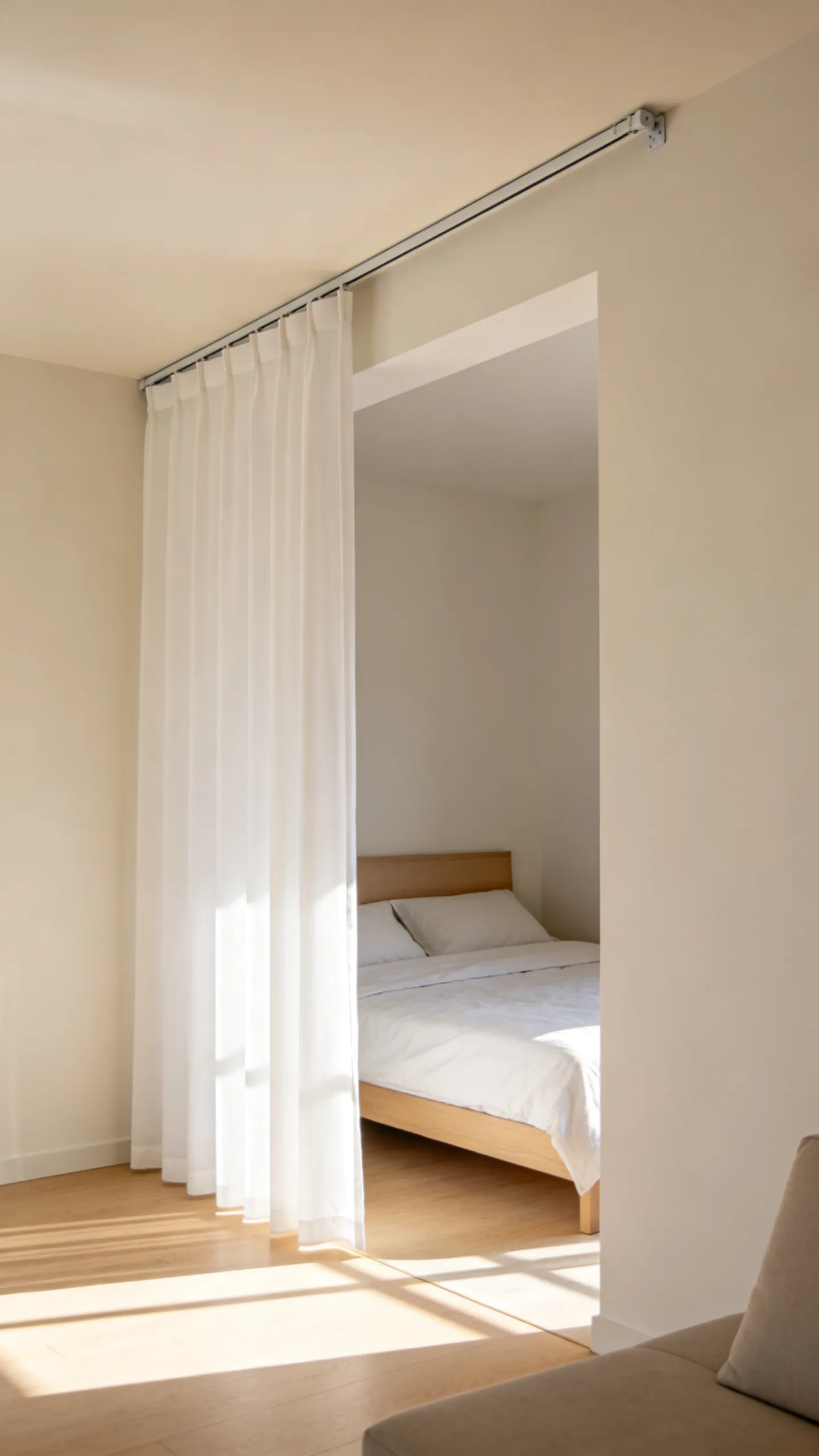
A peel-and-stick curtain track can create a sleek, modern look without visible rods or brackets. This idea works especially well in rooms with awkward window placement, sliding doors, or ceiling-mounted privacy curtains in studio apartments.
Use a lightweight ceiling track with adhesive backing designed for smooth surfaces. It can be placed just in front of a window, across a closet opening, or around a sleeping nook. For a renter-friendly layout, choose washable sheer or semi-sheer panels that move easily along the track and do not pull too much weight on the adhesive.
Ceiling-mounted curtains draw the eye upward, which can make a small room feel taller. In a studio apartment, a track with floor-length curtains can separate a bed from the living area while keeping traffic flow flexible when the curtains are open.
5. Magnetic Curtain Rods for Metal Doors
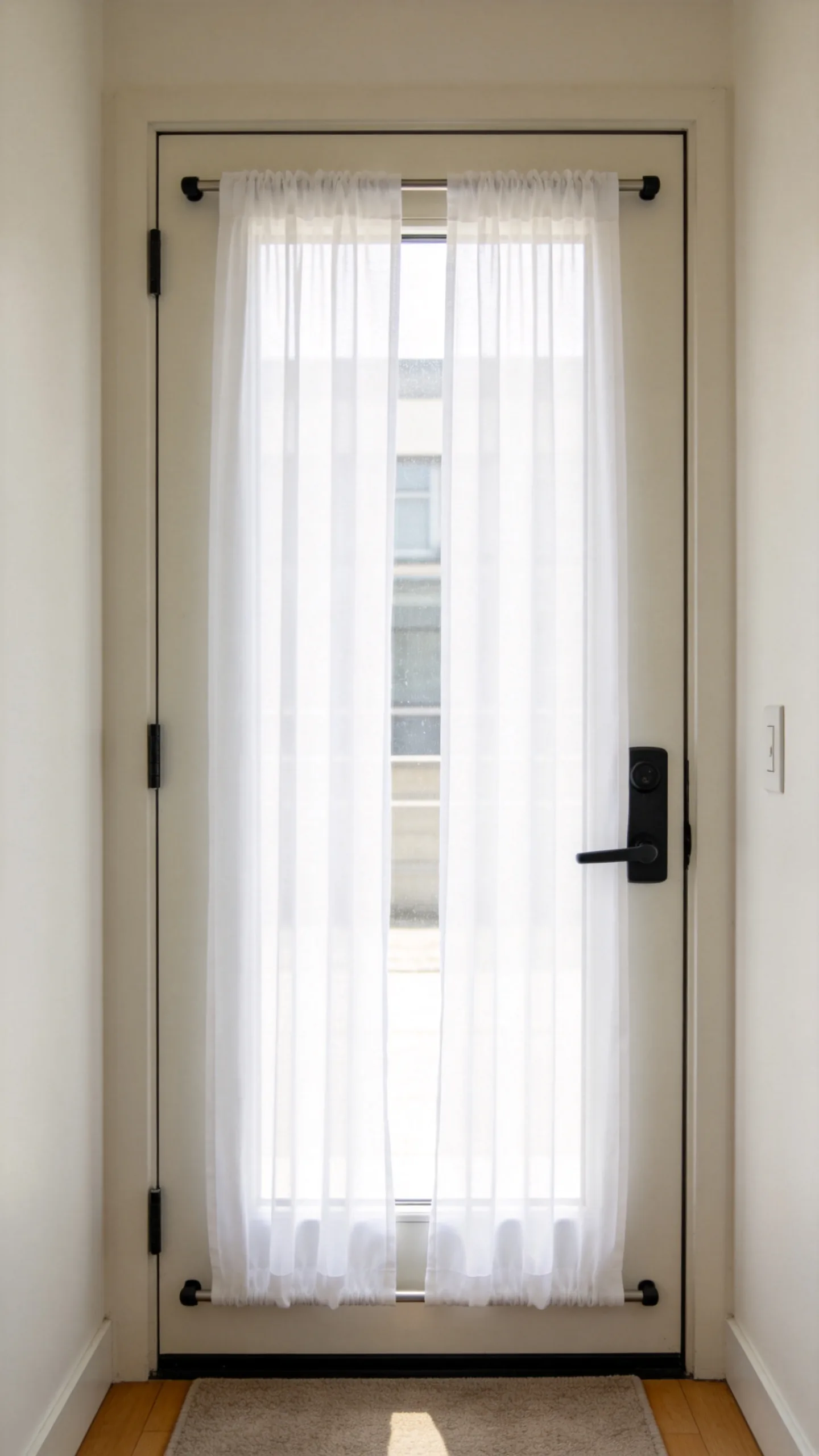
Magnetic curtain rods are perfect for metal doors, steel-framed windows, laundry room doors, and some basement entries. They attach directly to the metal surface with magnets, so there is no drilling, adhesive, or hardware removal to worry about.
This solution is useful for covering a glass panel on a front door, back door, or French door where privacy is needed. Choose narrow curtain panels made for door windows, or use a lightweight café curtain gathered at the top and bottom for a tailored look.
For a clean entryway, match the rod finish to nearby hardware. A black magnetic rod can coordinate with black door handles, while a white rod blends into a painted door. Use opaque fabric if the door faces a hallway, sidewalk, or shared outdoor area.
6. Clip-On Café Curtains for Kitchen Windows
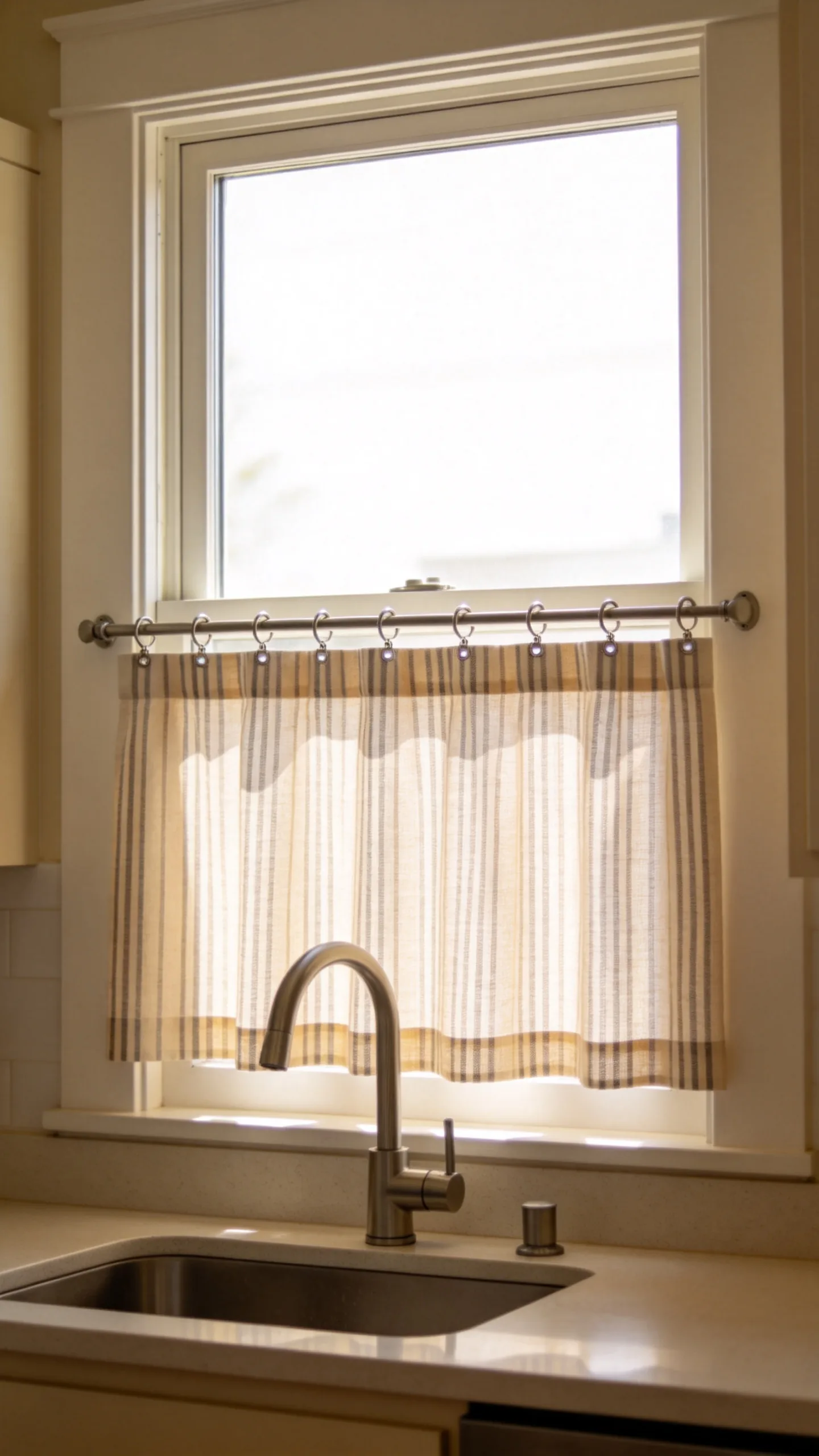
Café curtains cover only the lower half of a window, making them a smart temporary choice for kitchens, breakfast nooks, and bathrooms. They provide privacy at eye level while still allowing daylight to enter from the top of the window.
Install them with a tension rod, magnetic rod, or adhesive hooks depending on the window type. For a kitchen sink window, choose washable cotton, gingham, linen blend, or striped fabric that can handle moisture and frequent cleaning. The shorter length keeps fabric away from countertops, faucets, and appliances.
This style is especially useful in small kitchens because it does not visually crowd the wall. A simple café curtain can soften tile, stainless steel, or painted cabinetry while keeping the window practical for daily use.
7. No-Sew Fabric Panels with Clip Rings
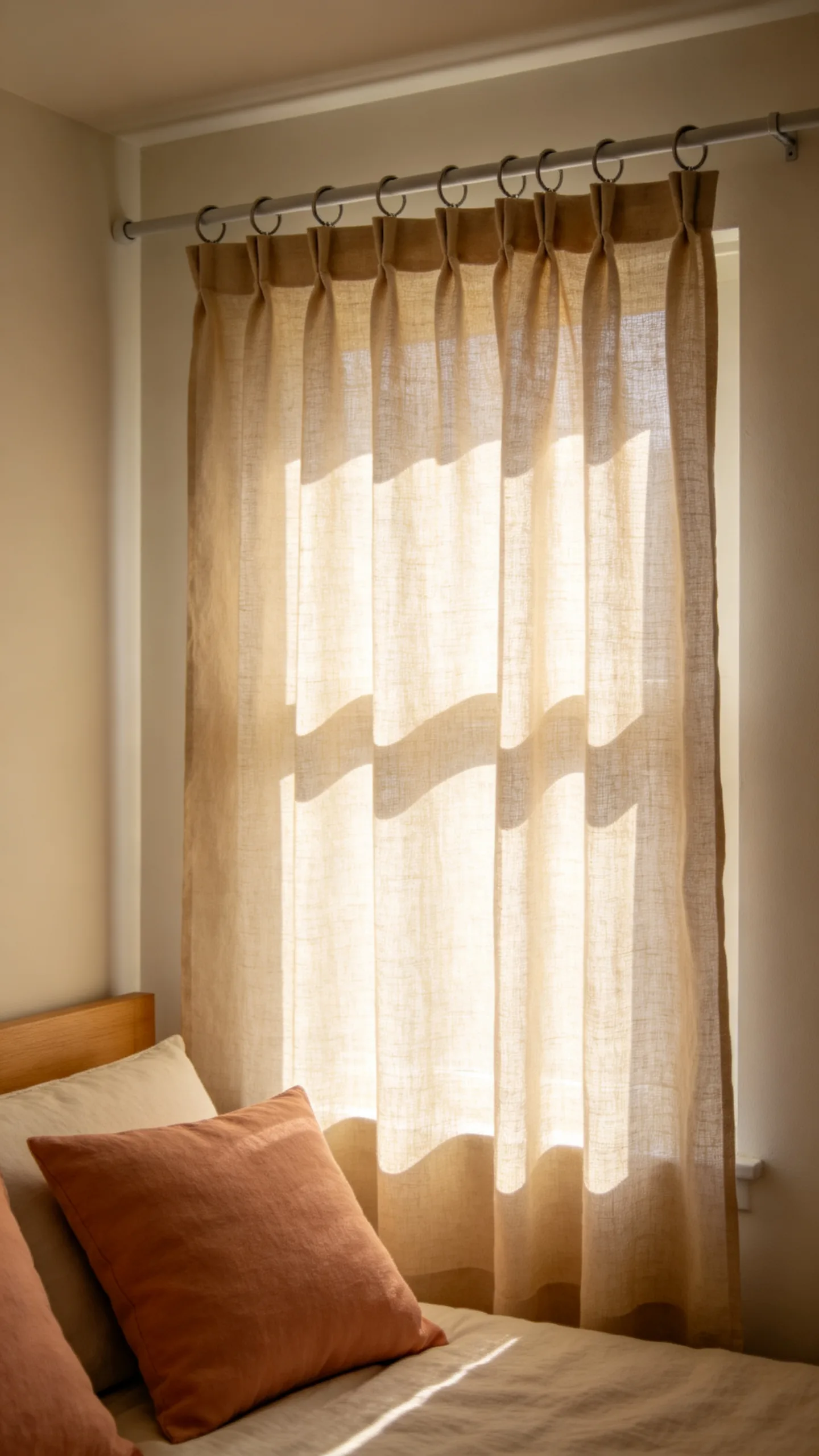
Clip rings make it easy to turn fabric into temporary curtains without sewing. Use fabric yardage, a tablecloth, a flat sheet, or lightweight textile panels, then clip them evenly along the top edge and hang them from a tension rod or adhesive-hook rod setup.
This idea is helpful when standard curtain sizes do not fit your rental windows. You can fold fabric to the right length, clip it in place, and adjust the height without hemming. For a bedroom, use a thicker cotton or canvas fabric for privacy. For a living room, choose linen-look fabric that filters light while adding texture.
Clip rings also create soft pleats, making inexpensive fabric look more intentional. In a small room, repeat a color from the rug, bedding, or throw pillows so the temporary curtains feel connected to the rest of the decor.
8. Lightweight Sheer Curtains on Adhesive Hooks
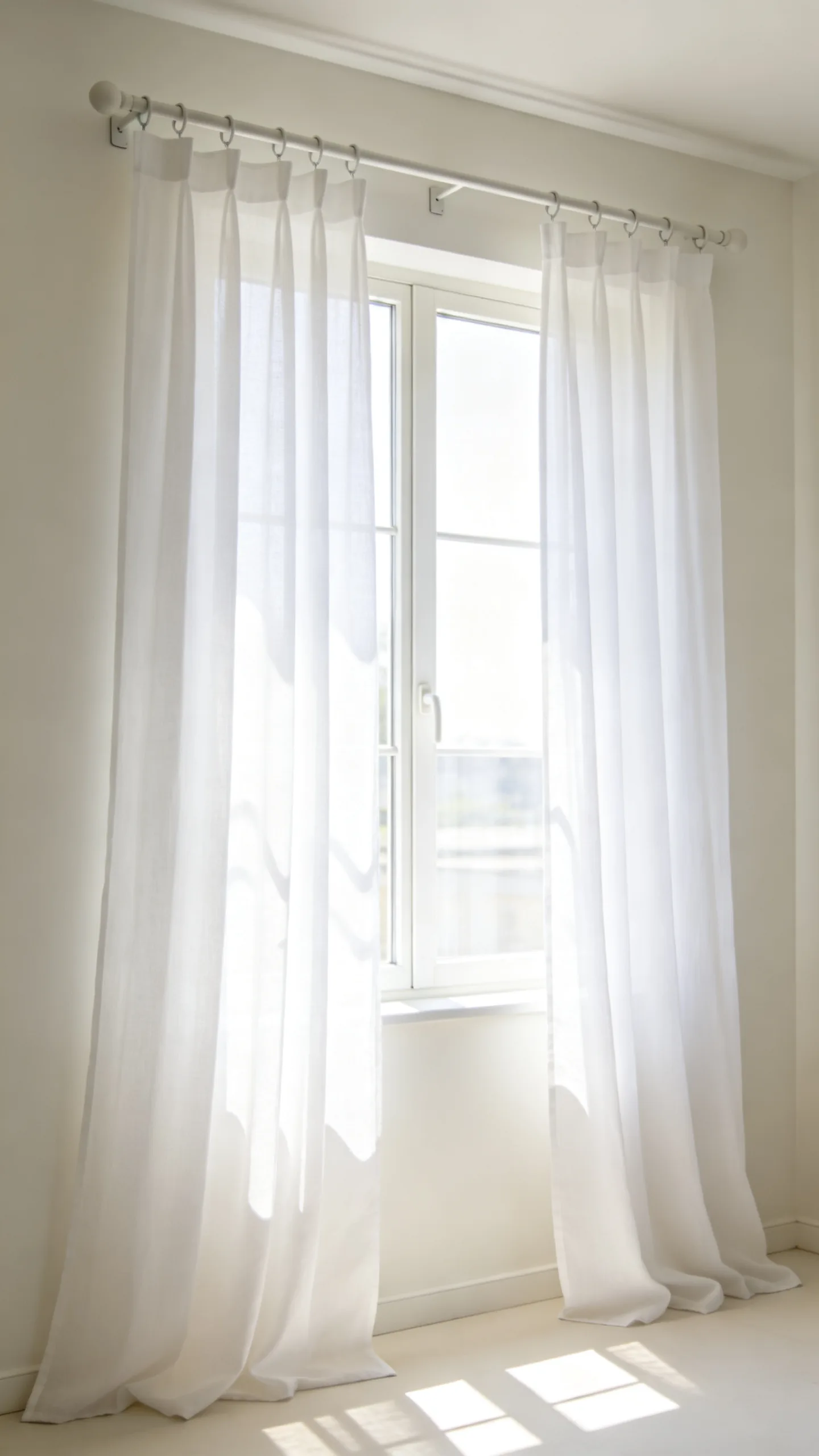
Sheer curtains are ideal for renters who want softness and daytime privacy without making a room feel dark. Because they are lightweight, they work well with adhesive hooks, slim rods, or even a strong cord stretched between removable supports.
Use sheer white, ivory, or pale gray panels in a living room, dining area, or bedroom where natural light is important. The fabric diffuses harsh sunlight, softens window trim, and adds movement without heavy visual weight. This can make a small space feel brighter and less boxed in.
For a more finished look, hang two sheer panels wider than the window so they can gather at the sides. If the wall color is light, matching the curtain color to the wall keeps the design airy and helps maintain open sightlines.
9. Temporary Blackout Curtains with Tension Rods
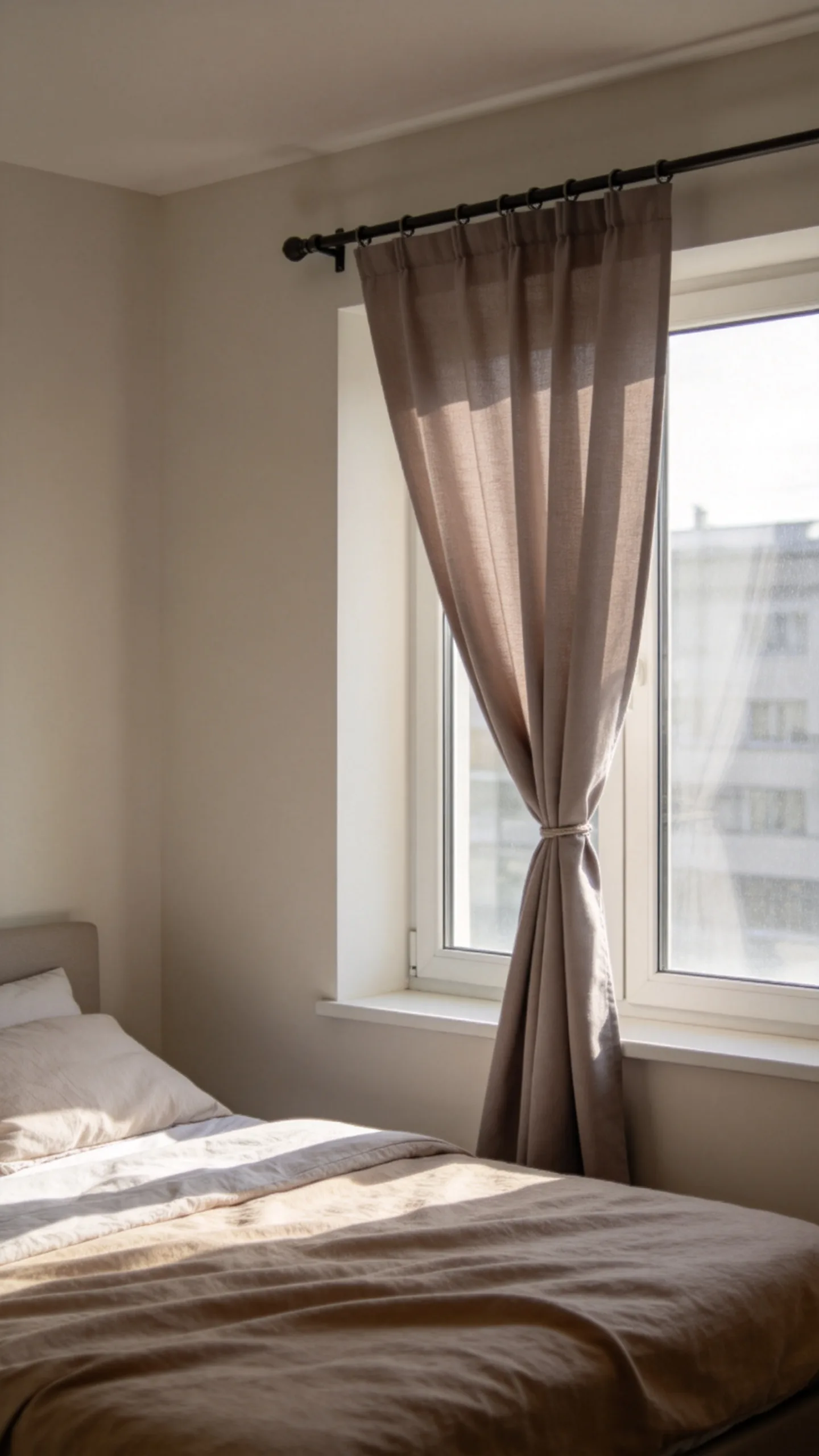
Blackout curtains can still be renter-friendly when paired with a strong tension rod or no-drill rod system. This is especially useful for bedrooms, nurseries, guest rooms, or street-facing apartments where light and privacy are daily concerns.
Choose lightweight blackout panels rather than extra-heavy hotel-style drapes. Look for panels labeled as room-darkening or thermal but check the weight before using them with adhesive hooks or tension hardware. A tension rod placed tightly inside the window frame can reduce light gaps and keep the curtain close to the glass.
For a small bedroom, use blackout curtains in a color that blends with the wall or bedding. Soft taupe, warm white, charcoal, or muted navy can block light while still fitting the room’s style. Add tiebacks or clip-on holdbacks during the day to keep the window open and the floor area uncluttered.
10. Adhesive Curtain Rod Brackets
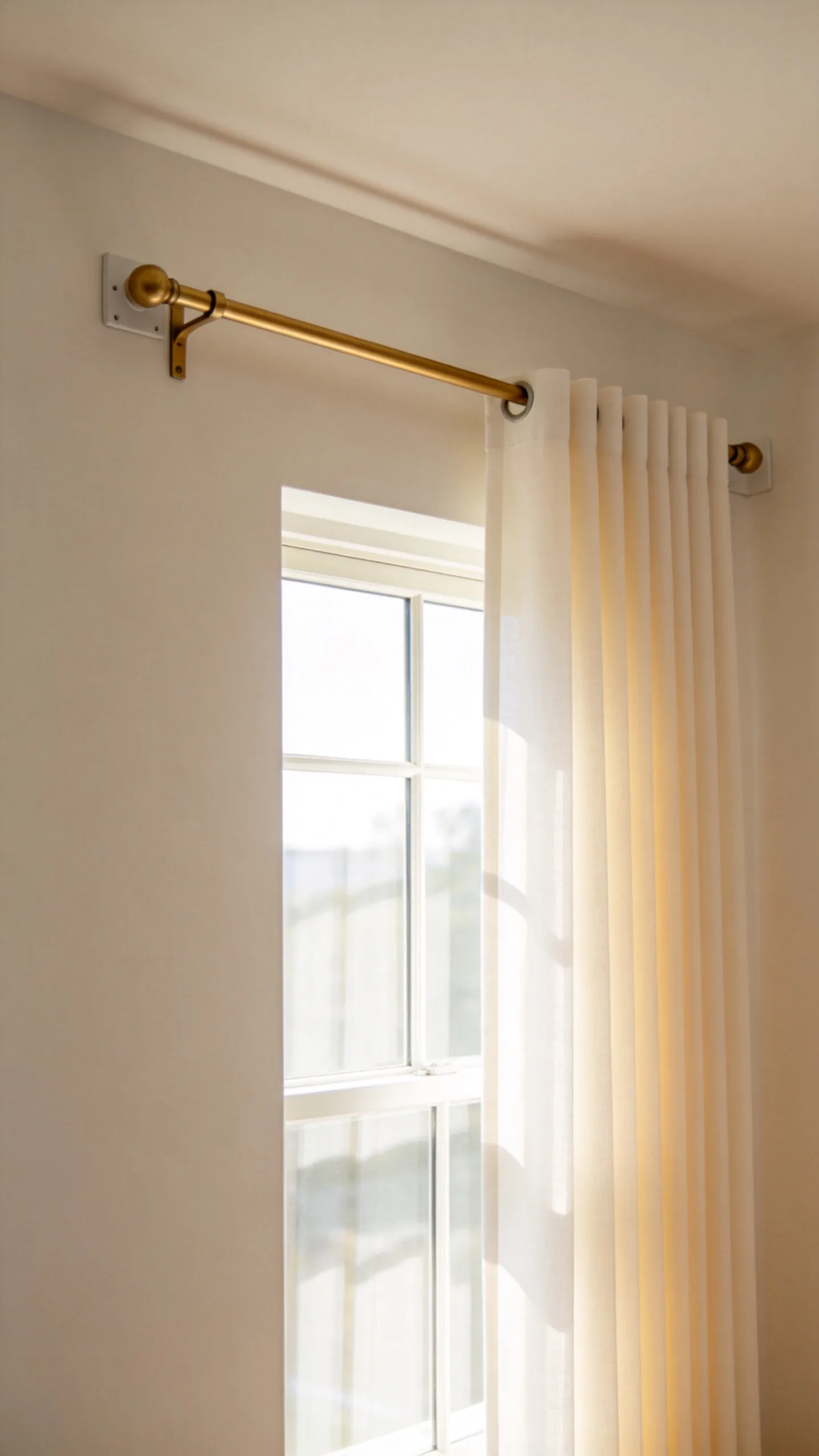
Adhesive curtain rod brackets offer a more traditional curtain look without drilling holes. These brackets stick to the wall and hold a slim rod, making them useful for renters who want panels that hang outside the window frame.
This method works best on smooth, clean painted walls or tile surfaces and with lightweight curtains. Use it in a bedroom, home office, or living room where you want the rod slightly above and wider than the window. Hanging curtains wider than the frame lets the panels stack beside the glass, allowing more daylight in when open.
Choose a narrow rod and simple panels to avoid stressing the adhesive. For a cohesive room, match the rod finish to lamp bases, cabinet pulls, or picture frames. This makes the temporary hardware look planned rather than improvised.
11. Curtain Wire with Removable Wall Hooks
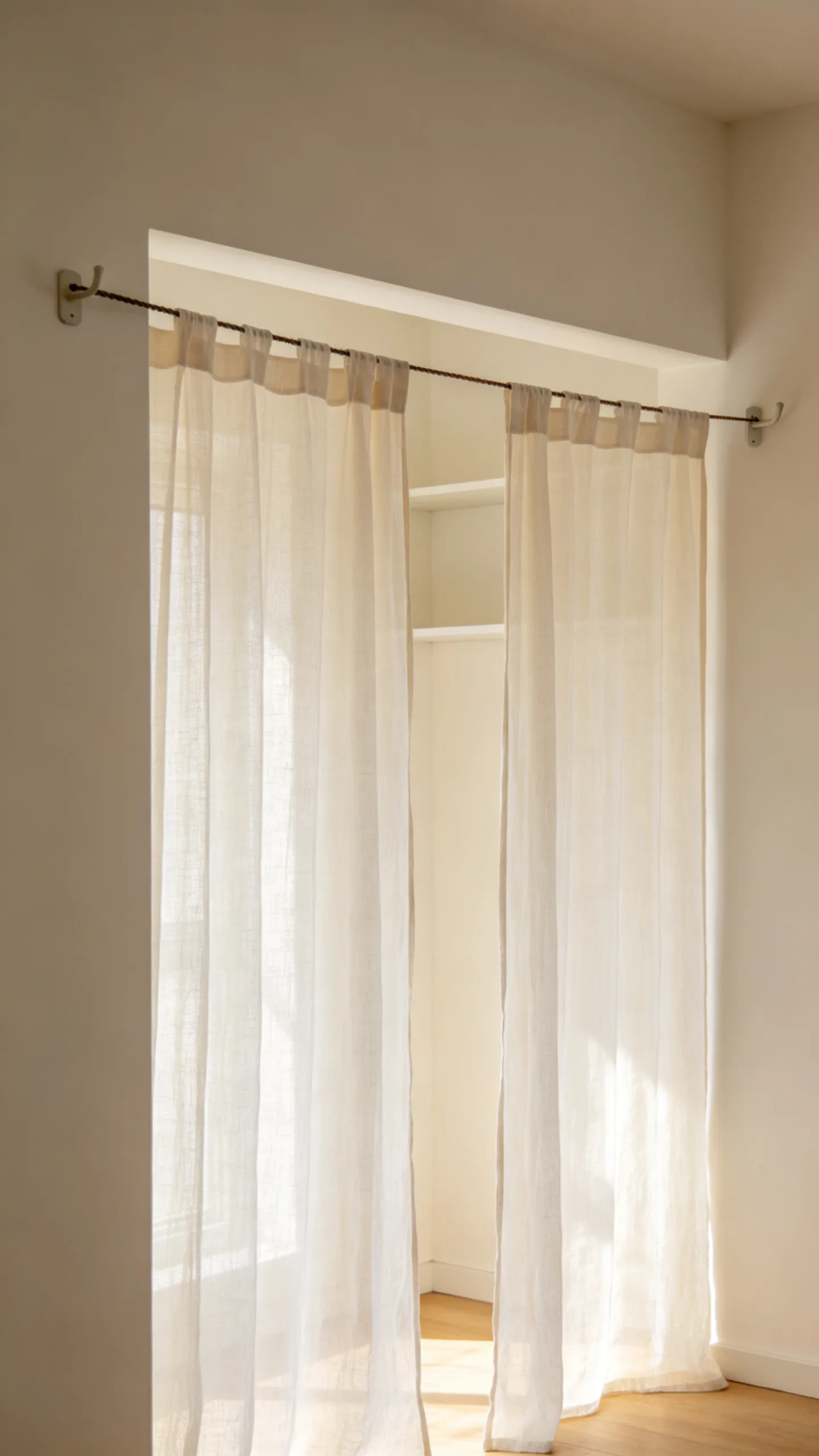
Curtain wire creates a casual, flexible curtain system that works well for lightweight panels, sheers, or fabric dividers. It can be attached to removable hooks or adhesive anchors, depending on the wall surface and the weight of the fabric.
Use this idea for wide windows, closet openings, dorm rooms, or studio apartment zones where a rigid rod may not fit. Curtain wire has a softer, less formal appearance, making it suitable for relaxed bedrooms, creative workspaces, or boho-style living areas.
Keep the fabric light so the wire does not droop. Sheer panels, gauze cotton, or thin linen-look curtains work best. In a small room, a curtain wire can add privacy without bulky hardware, preserving wall space for shelves, art, or lighting.
12. Spring-Loaded Shower Rod as a Room Divider
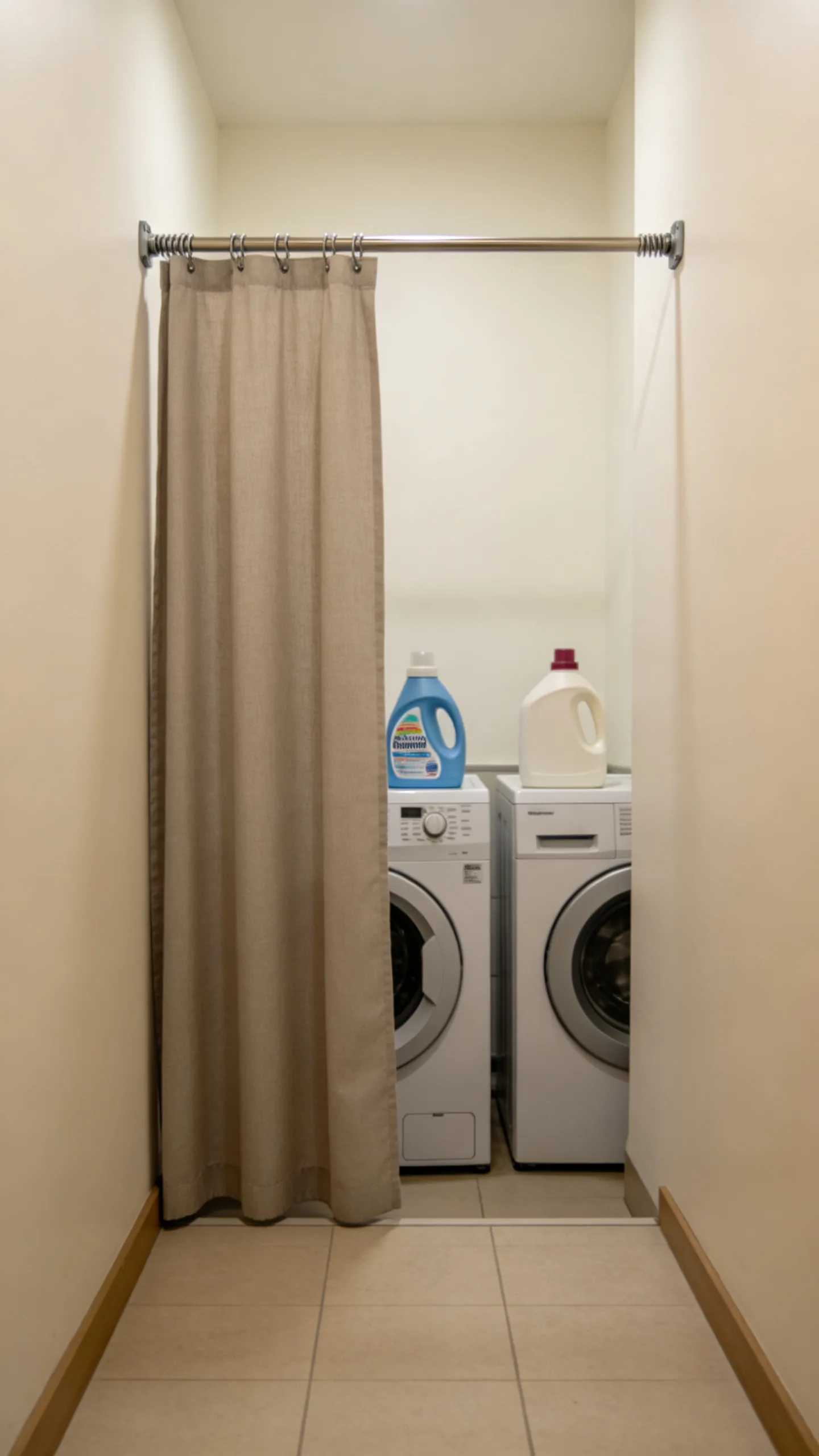
A spring-loaded shower rod can be used beyond the bathroom as a temporary room divider. It works well in narrow openings, alcoves, studio apartments, shared bedrooms, or laundry corners where two opposite walls can support the rod.
Hang fabric panels, lightweight curtains, or even a washable shower curtain depending on the purpose. In a studio, place the rod between two walls to separate a sleeping area from a living space. In a laundry nook, use a neutral curtain to hide appliances, hampers, or cleaning supplies.
This idea improves visual clutter without changing the layout permanently. When the curtain is open, traffic flow remains easy. When closed, it creates a clear zone, which is helpful in small apartments where every area is visible from the main room.
13. Velcro-Attached Fabric for Awkward Windows
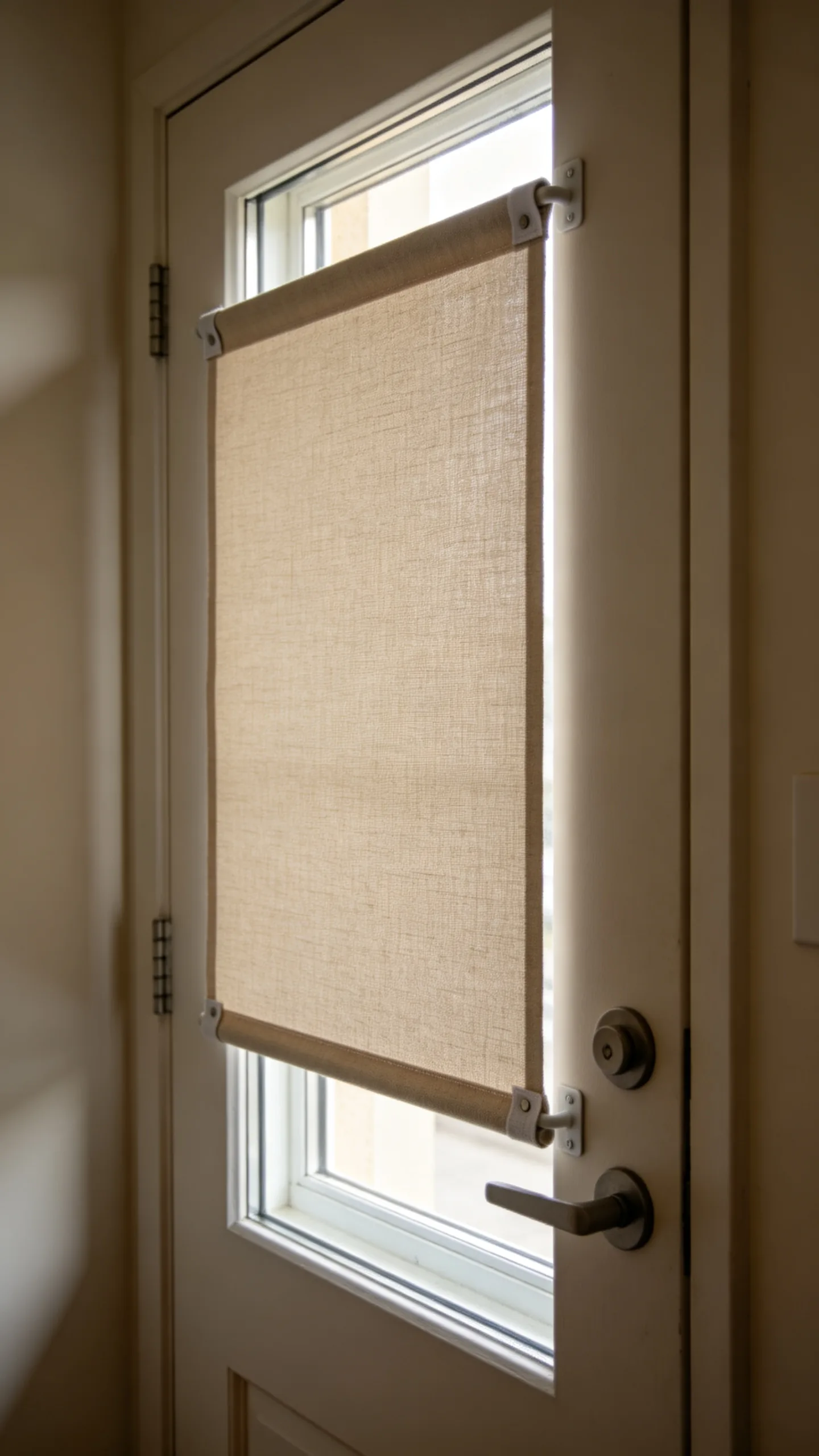
Removable hook-and-loop strips can attach fabric directly to a window frame, wall, or door without a rod. This is useful for awkward windows where a rod will not fit, such as narrow sidelights, small bathroom windows, dorm windows, or oddly shaped rental frames.
Cut fabric to cover the glass or frame area, then attach one side of the removable strip to the surface and the other side to the fabric. This creates a flat curtain panel that can be removed for washing or adjusted as needed. Use cotton, linen blend, or privacy fabric depending on how much light you want to block.
Because the fabric sits close to the window, it takes up almost no room. This makes it practical for tight spaces near desks, beds, kitchen counters, or entry doors where swinging panels would get in the way.
14. Freestanding Curtain Stand for Flexible Privacy
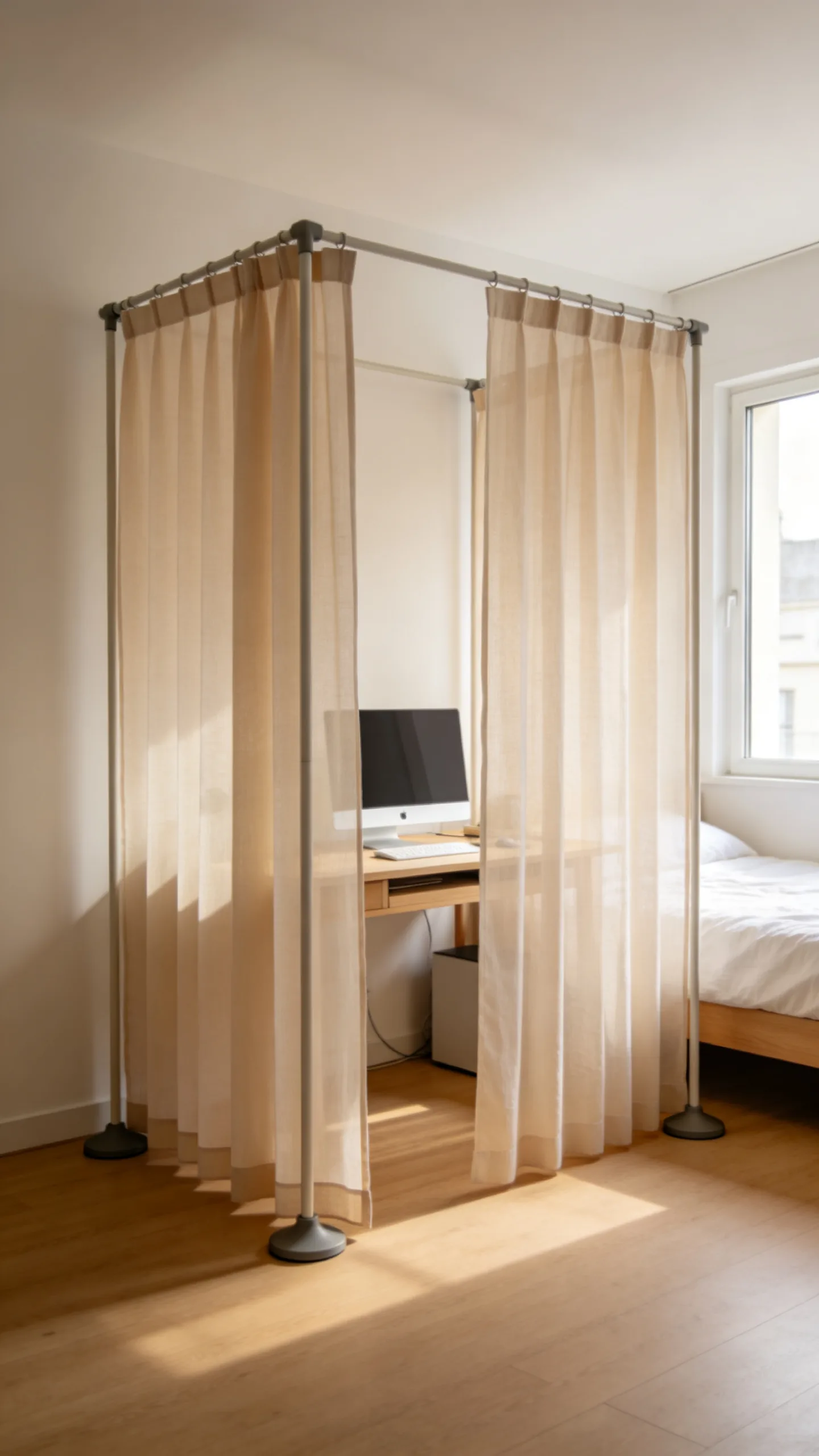
A freestanding curtain stand is a no-drill option that does not rely on walls, trim, or adhesive. It works well for renters who need privacy in a studio apartment, shared bedroom, home office corner, or open closet area.
Choose a stand with a stable base and a width that fits the room without blocking walkways. Hang lightweight curtain panels that reach close to the floor for a finished look. In a bedroom, place the stand behind a bed or beside a dressing area. In a living room, use it to screen off a work-from-home desk or storage shelves.
This idea is especially useful when you cannot attach anything to the walls or ceiling. To keep the room from feeling crowded, use fabric in a color close to the wall or choose a sheer panel that separates zones while allowing light to pass through.
15. Temporary Canopy Curtains Around a Bed
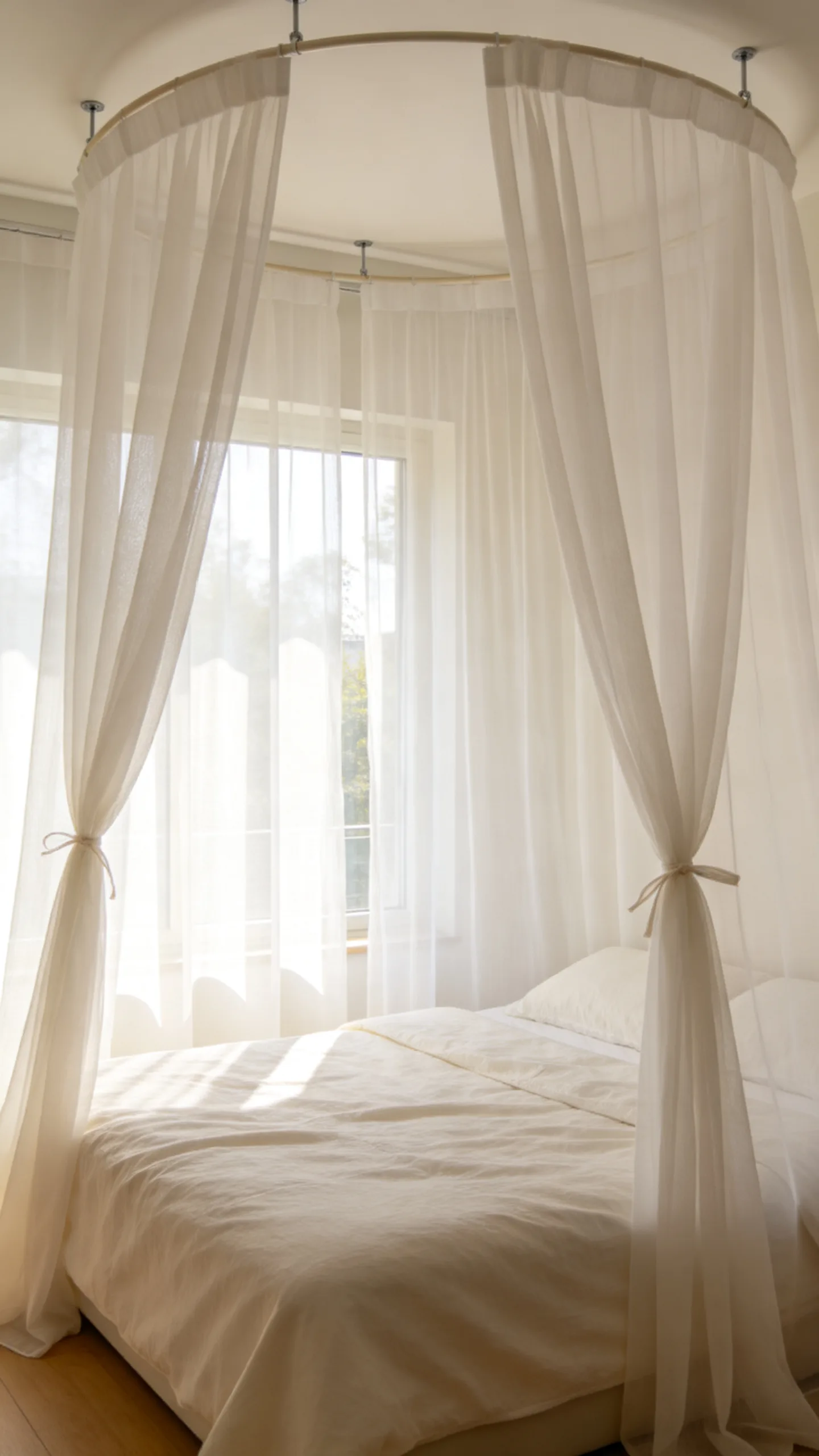
Temporary canopy curtains can add privacy and softness around a bed without permanent installation. Use adhesive ceiling hooks, a lightweight hoop, tension rods between close walls, or a freestanding canopy frame depending on the room layout and rental restrictions.
This works well in studio apartments, shared rooms, or bedrooms where the bed is the main focal point. Sheer white curtains can create a soft sleeping zone without blocking light, while cotton panels can add more privacy. Keep the fabric lightweight so the hardware remains secure.
For a small bedroom, hang panels so they can be tied open during the day. This keeps traffic paths clear around the bed and prevents the room from feeling closed in. Match the canopy fabric to bedding, rugs, or wall color for a calm, cohesive look that feels intentional rather than temporary.

From the editors
Decor Compass Editorial Team
We turn practical home research into clear, useful room-by-room ideas.