The right curtains can make a living room feel taller, softer, warmer, and more intentional without changing the furniture. These living room curtain ideas focus on fabric, length, color, rod placement, layering, and practical styling details that help windows look complete instead of bare or unfinished.
1. Floor-to-Ceiling Linen Curtains
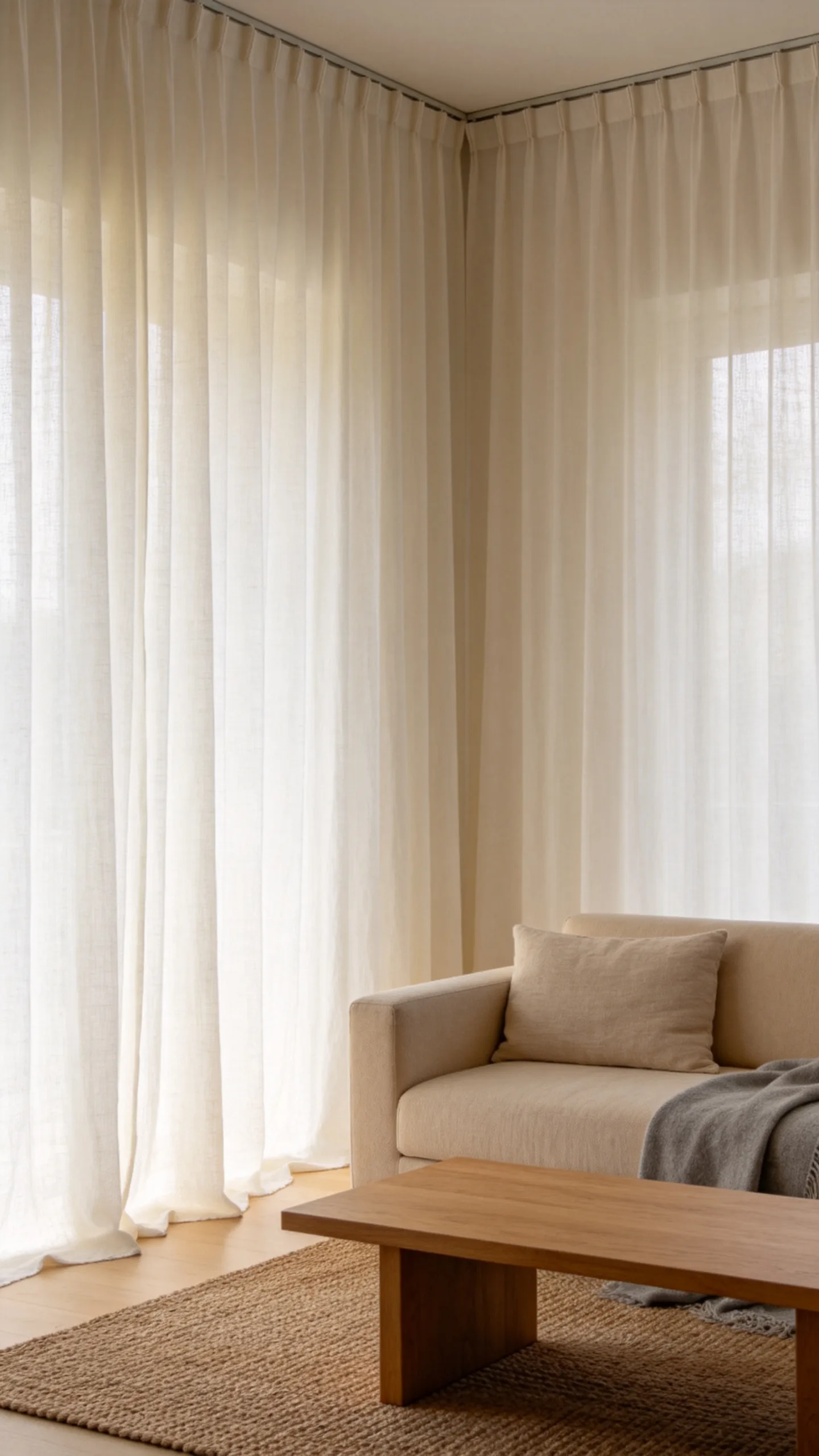
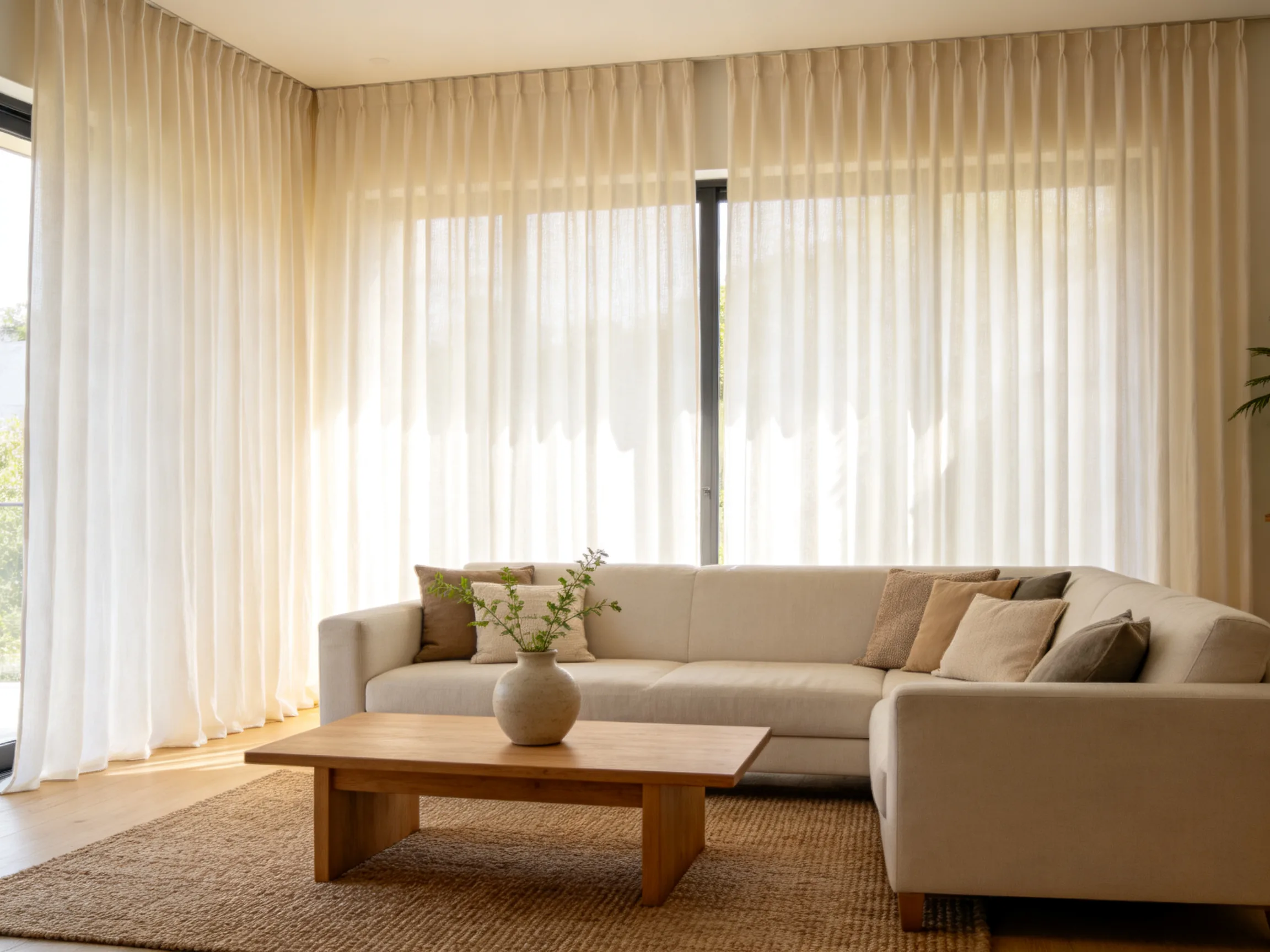
Floor-to-ceiling linen curtains are one of the easiest ways to make a living room feel polished. Mount the curtain rod close to the ceiling instead of directly above the window frame, then let the panels fall all the way to the floor. This draws the eye upward and makes the wall feel taller, especially in rooms with standard-height ceilings.
Choose a natural linen or linen-blend fabric in ivory, oatmeal, warm white, or soft gray for a relaxed but finished look. In a living room with a neutral sofa, wood coffee table, and woven rug, linen curtains add texture without overwhelming the space. The slightly slubby fabric keeps the room from feeling too flat or overly formal.
2. Extra-Wide Curtain Panels for Fuller Windows
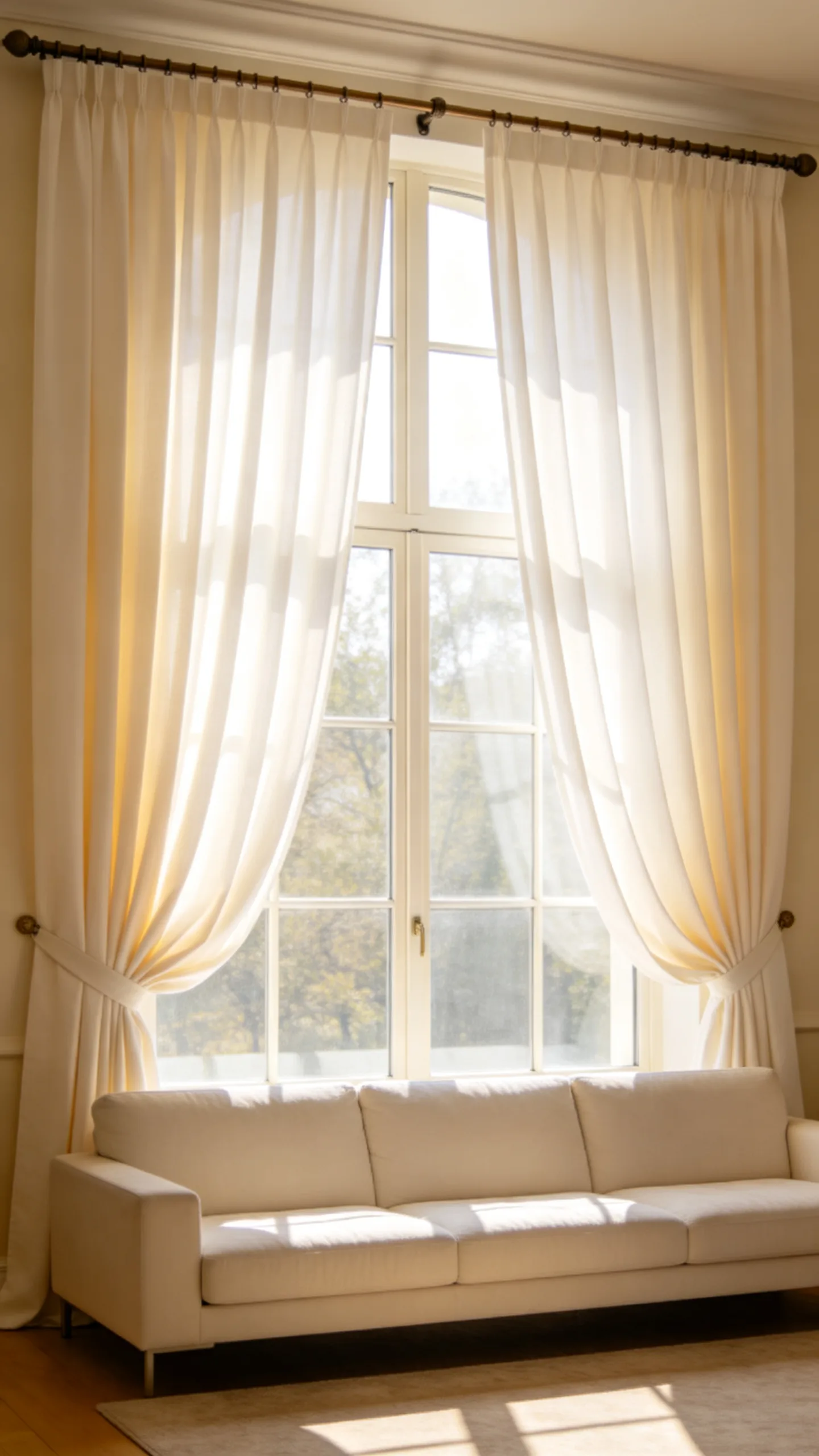
Thin curtain panels can make even a beautiful living room window look underdressed. For a fuller, more custom look, choose panels that are at least two to three times the width of the window area. When the curtains are closed, they should still have soft folds instead of stretching flat across the glass.
This idea works especially well for large picture windows, sliding doors, or a living room with a long sofa placed beneath the window. Wider panels create a sense of softness around hard architectural lines and help the window feel like a true focal point. Use a sturdy curtain rod with center support so the fabric hangs neatly without sagging.
3. Soft White Curtains Against Warm Neutral Walls
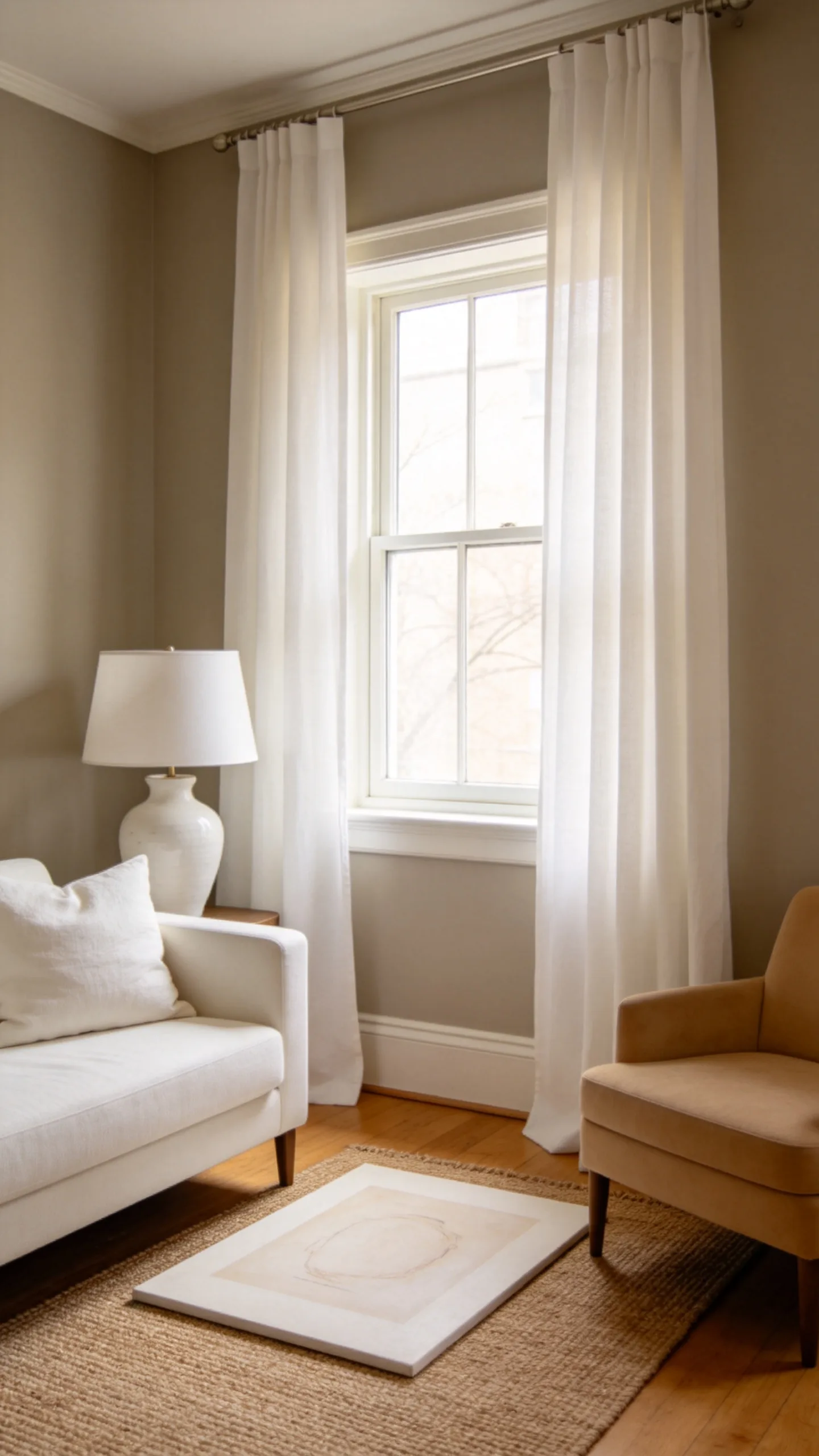
Soft white curtains can instantly freshen a living room with beige, greige, taupe, or warm gray walls. The contrast is subtle, but it gives the window a crisp frame and keeps the room from looking muddy. This is especially helpful if the living room has tan upholstery, wood floors, or a jute rug.
To keep the look intentional, repeat white in at least one other place in the room, such as a lampshade, throw pillow, ceramic vase, or framed art mat. The curtains then feel connected to the overall palette instead of looking like an afterthought. Choose off-white rather than stark blue-white if the room has warm wood tones.
4. Velvet Curtains for a Cozy Finished Look
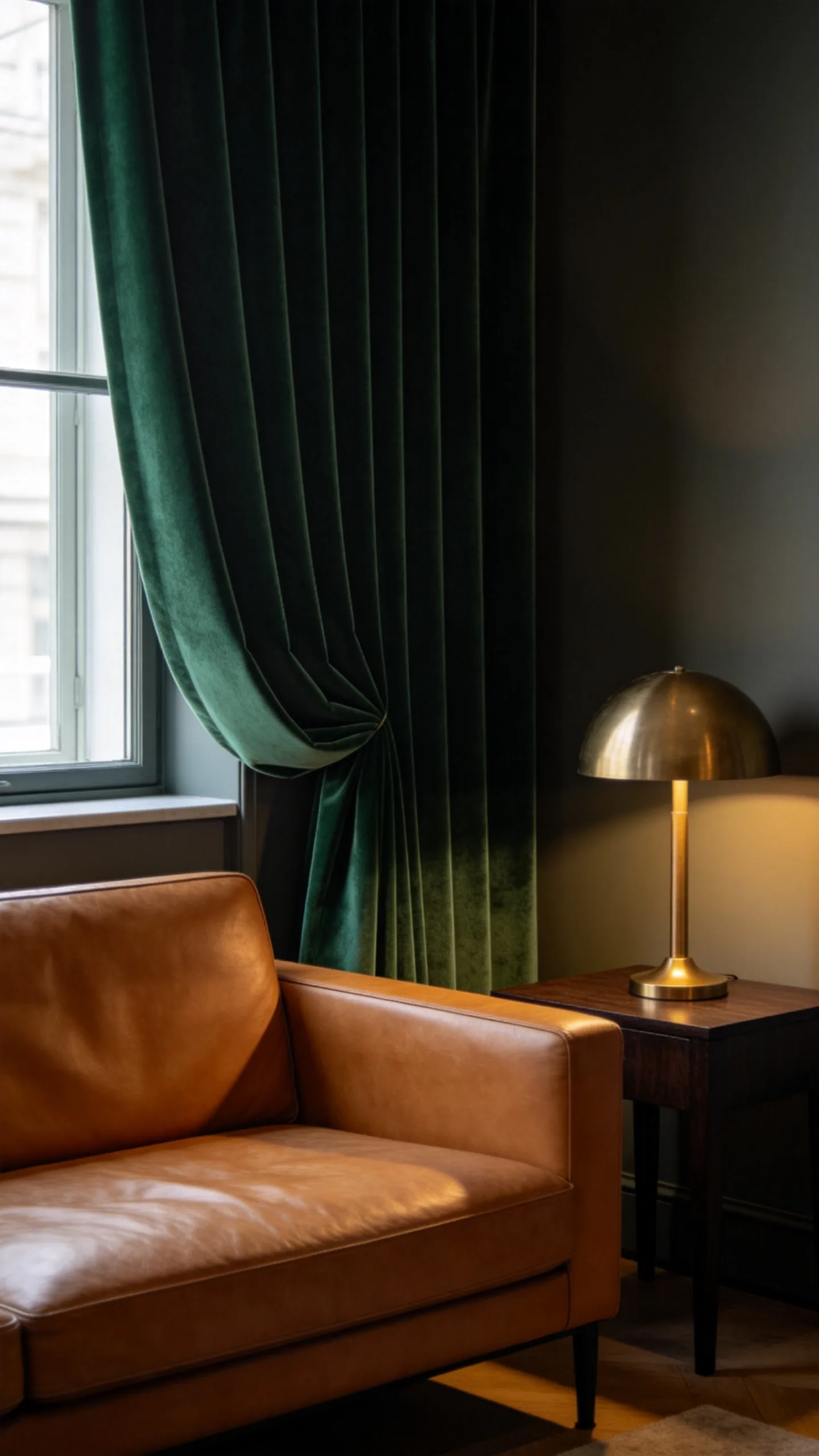
Velvet curtains bring depth and softness to a living room, making the space feel more layered and complete. They work especially well in rooms with leather sofas, dark wood furniture, brass lamps, or moody wall colors. The heavier fabric also helps the curtains hang with a clean, structured drape.
Deep green, rust, navy, charcoal, and chocolate brown are strong choices for a cozy living room. If the room is small, use velvet on a single large window wall and keep the surrounding decor simpler so the fabric does not feel heavy. Pair velvet panels with a simple metal rod to balance the richness of the material.
5. Sheer Curtains for Soft Daytime Light
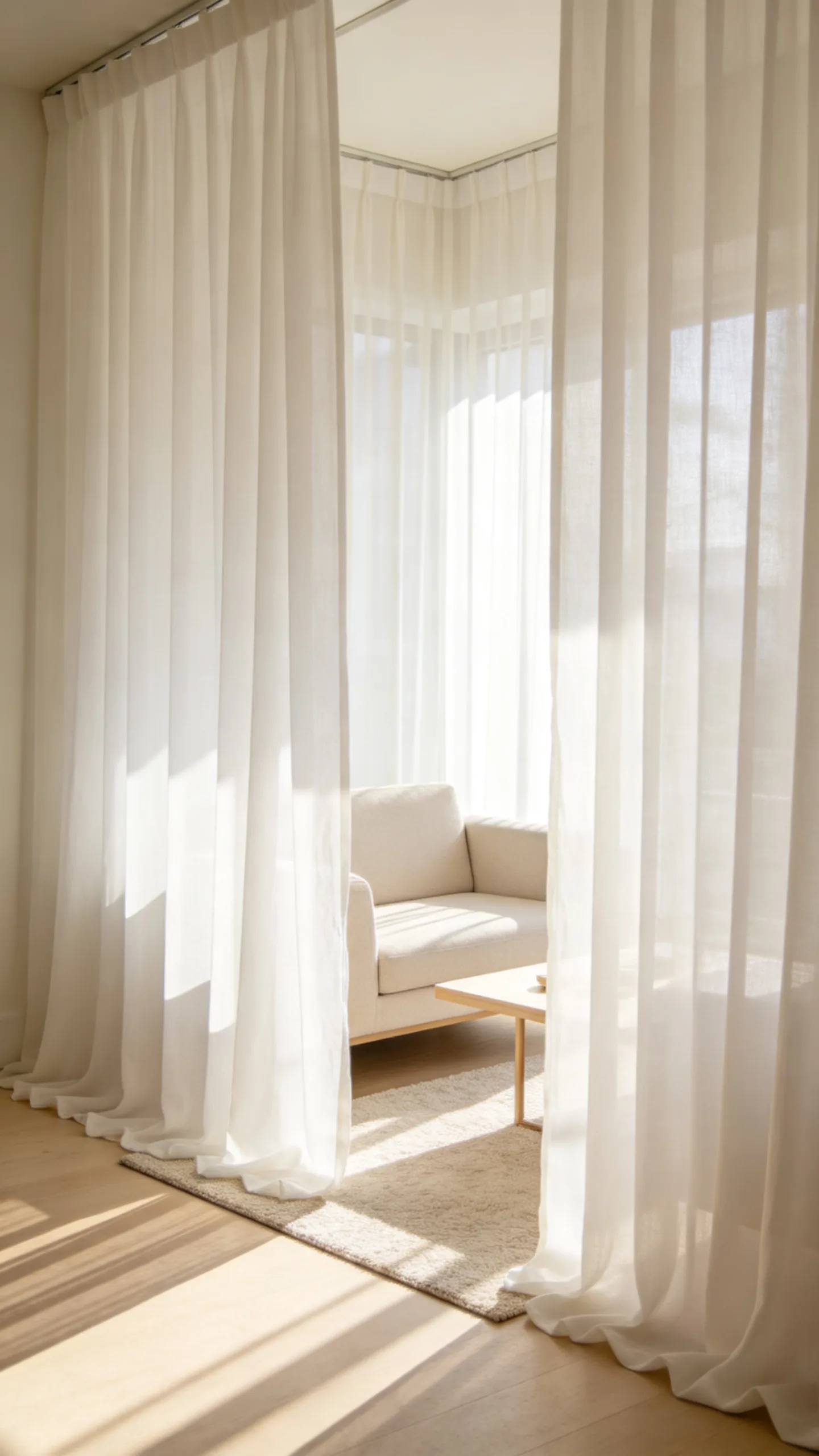
Sheer curtains are ideal when the living room needs privacy without blocking natural light. They soften harsh sunlight, reduce glare on the television, and make the window feel dressed even during the day. White, ivory, or pale beige sheers work with most color schemes and keep the space feeling airy.
For a more finished look, use sheers that reach the floor and have enough width to form gentle folds. Avoid panels that stop at the sill unless the furniture layout requires it. In a small living room, sheer curtains help preserve sightlines while still adding movement and texture to the window wall.
6. Double Curtain Rod with Sheers and Drapes
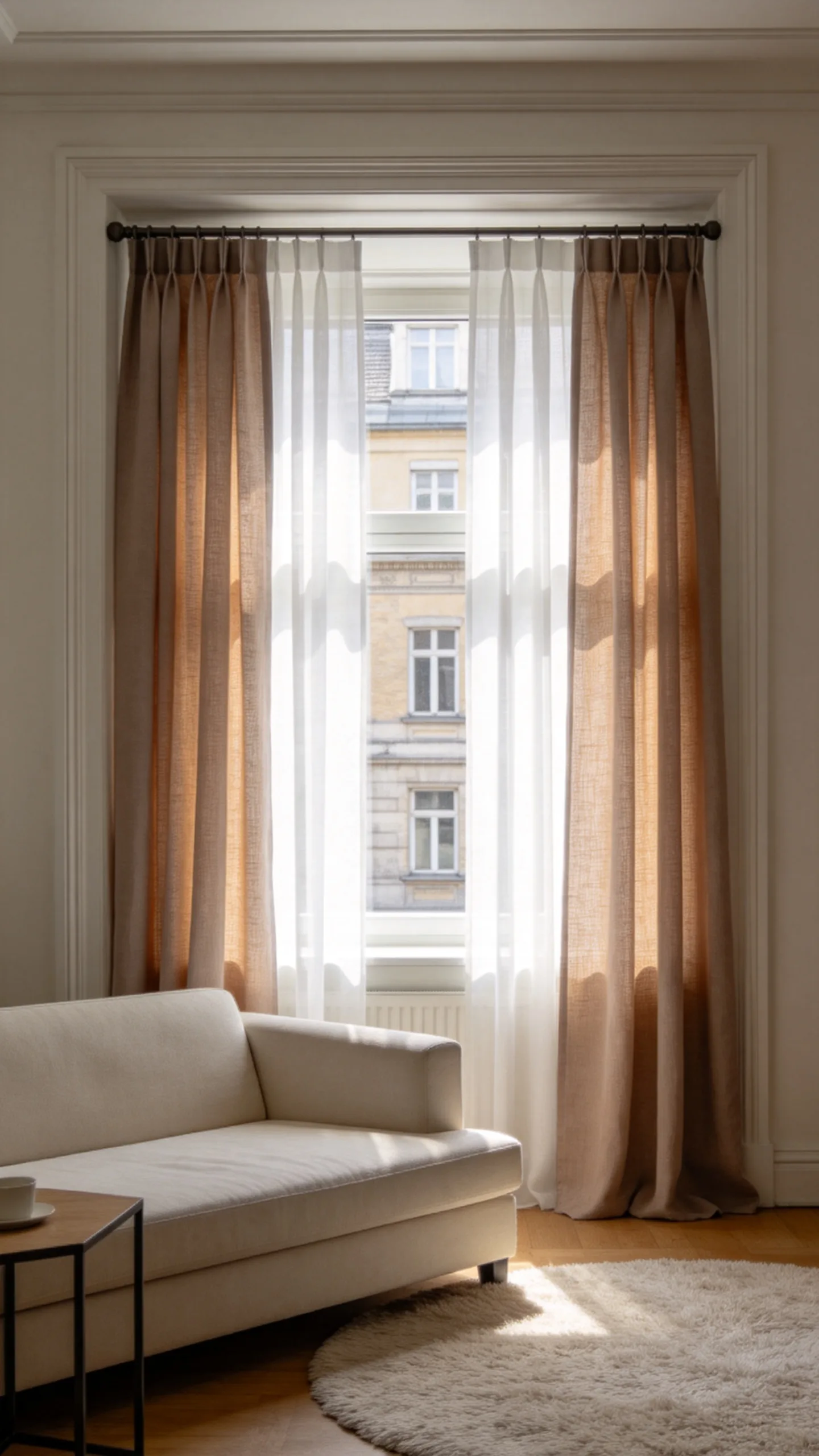
A double curtain rod creates a layered, designer-style window treatment that is also practical. Hang sheer panels on the inner rod for daytime privacy, then use heavier drapes on the outer rod for evenings, movie nights, or colder months. This combination makes the living room feel complete from morning to night.
Choose related tones for a cohesive look, such as ivory sheers with taupe drapes or white sheers with soft gray linen panels. The layered fabric adds depth around the window and can make a plain wall feel more architectural. This approach is especially useful for street-facing living rooms or apartments where privacy matters.
7. Curtains Hung Wider Than the Window Frame
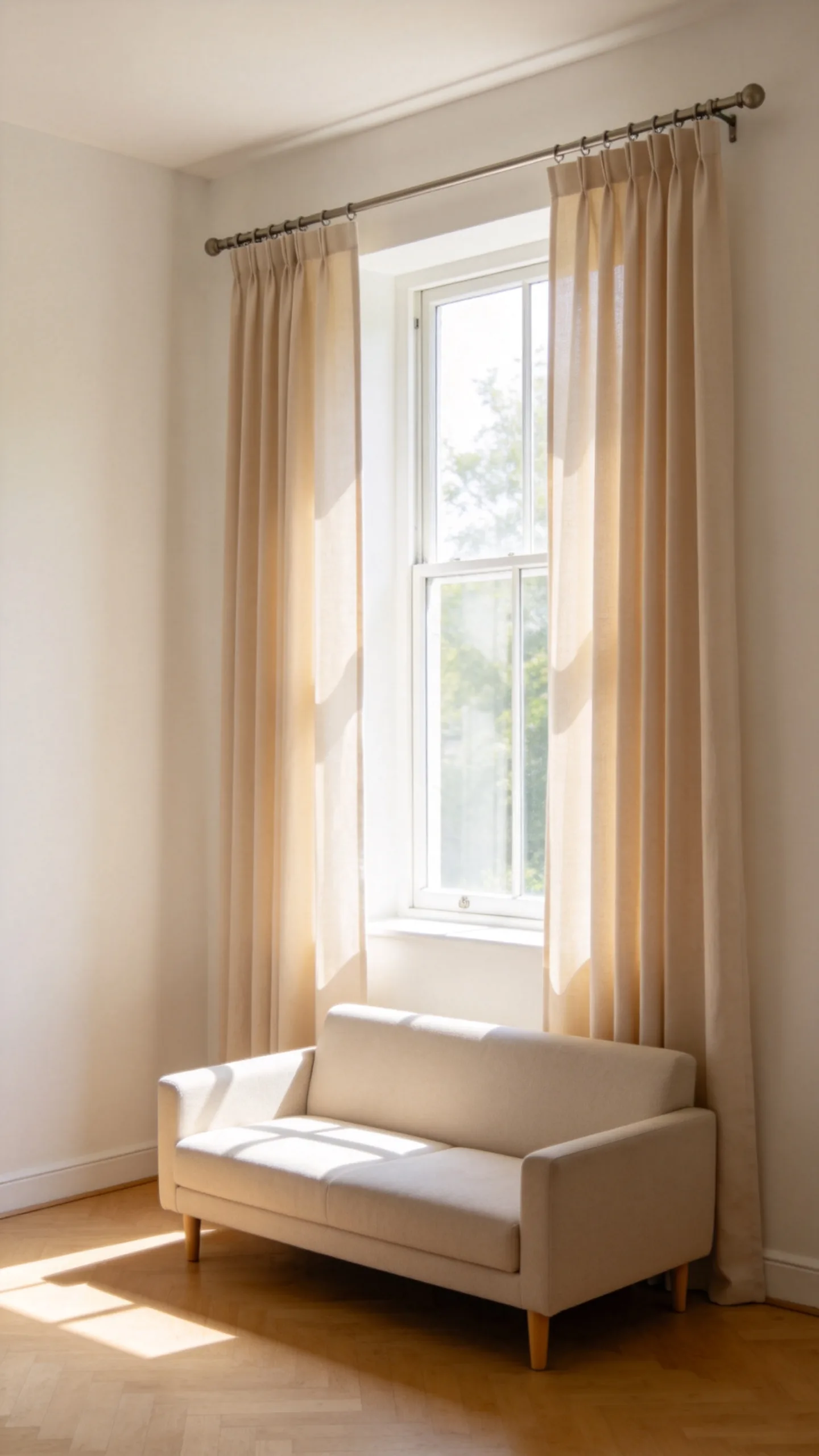
Mounting the curtain rod wider than the window frame makes the entire window area look larger. Extend the rod 8 to 12 inches past each side of the frame if the wall allows. When the panels are open, they stack mostly on the wall instead of covering the glass, which lets in more light.
This trick works beautifully in small living rooms because it improves sightlines and makes the room feel brighter. It also helps narrow windows look more balanced, especially when a sofa or console table is centered below them. Use this method with full-length curtains for the most polished effect.
8. Pinch Pleat Curtains for a Tailored Living Room
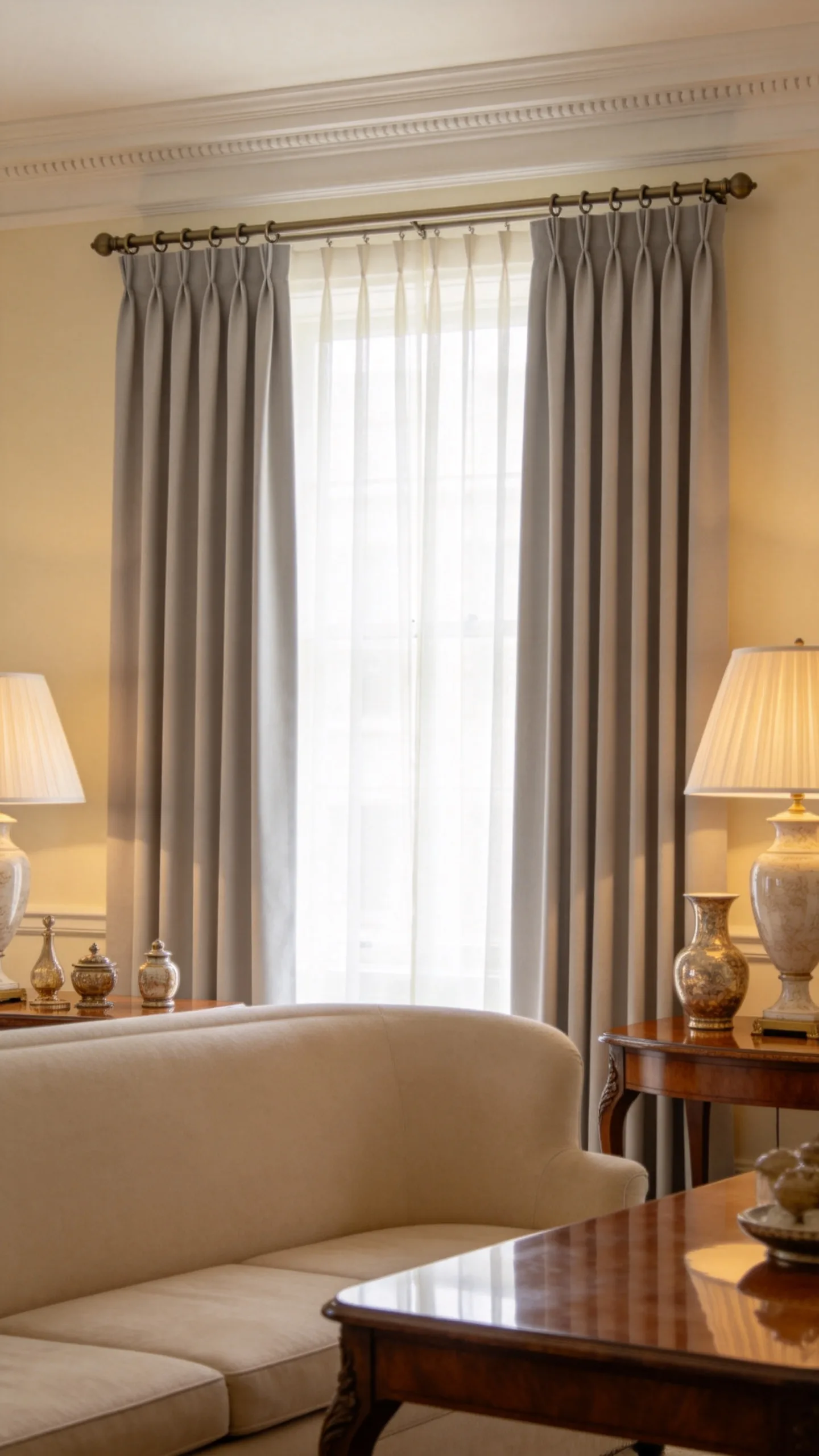
Pinch pleat curtains create evenly spaced folds that look structured and intentional. They are a great choice for a formal living room, a traditional space, or any room where you want the windows to feel carefully finished. The pleats keep the fabric hanging neatly whether the curtains are open or closed.
Use curtain rings or hooks with pinch pleat panels to get a clean drape from the rod. This style pairs well with linen, cotton, velvet, or lined fabric. In a living room with crown molding, framed art, and an upholstered sofa, pinch pleats reinforce a polished, collected look.
9. Black Curtain Rods for Clean Contrast
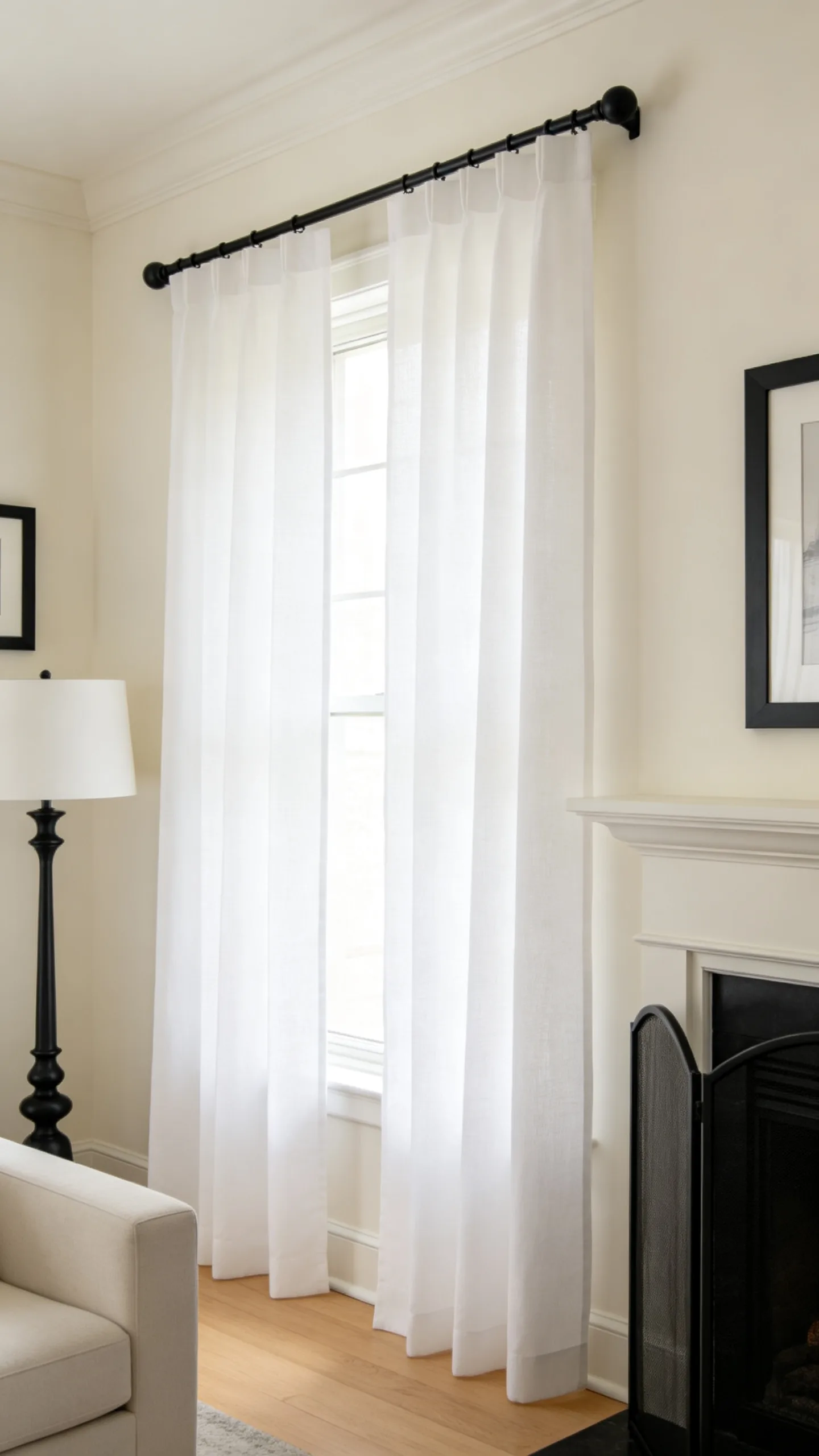
A black curtain rod can make living room curtains look more deliberate, especially against white, cream, or light gray walls. The dark line frames the window and adds structure without requiring bold fabric. This is a simple way to connect curtains to other black accents in the room, such as picture frames, lamp bases, cabinet hardware, or a fireplace screen.
For a modern living room, pair a slim matte black rod with white linen or beige cotton panels. In a farmhouse or transitional space, a slightly thicker black rod can balance rustic wood furniture and woven textures. Keep finials simple if the room already has several decorative details.
10. Brass Curtain Rods for Warmth and Polish
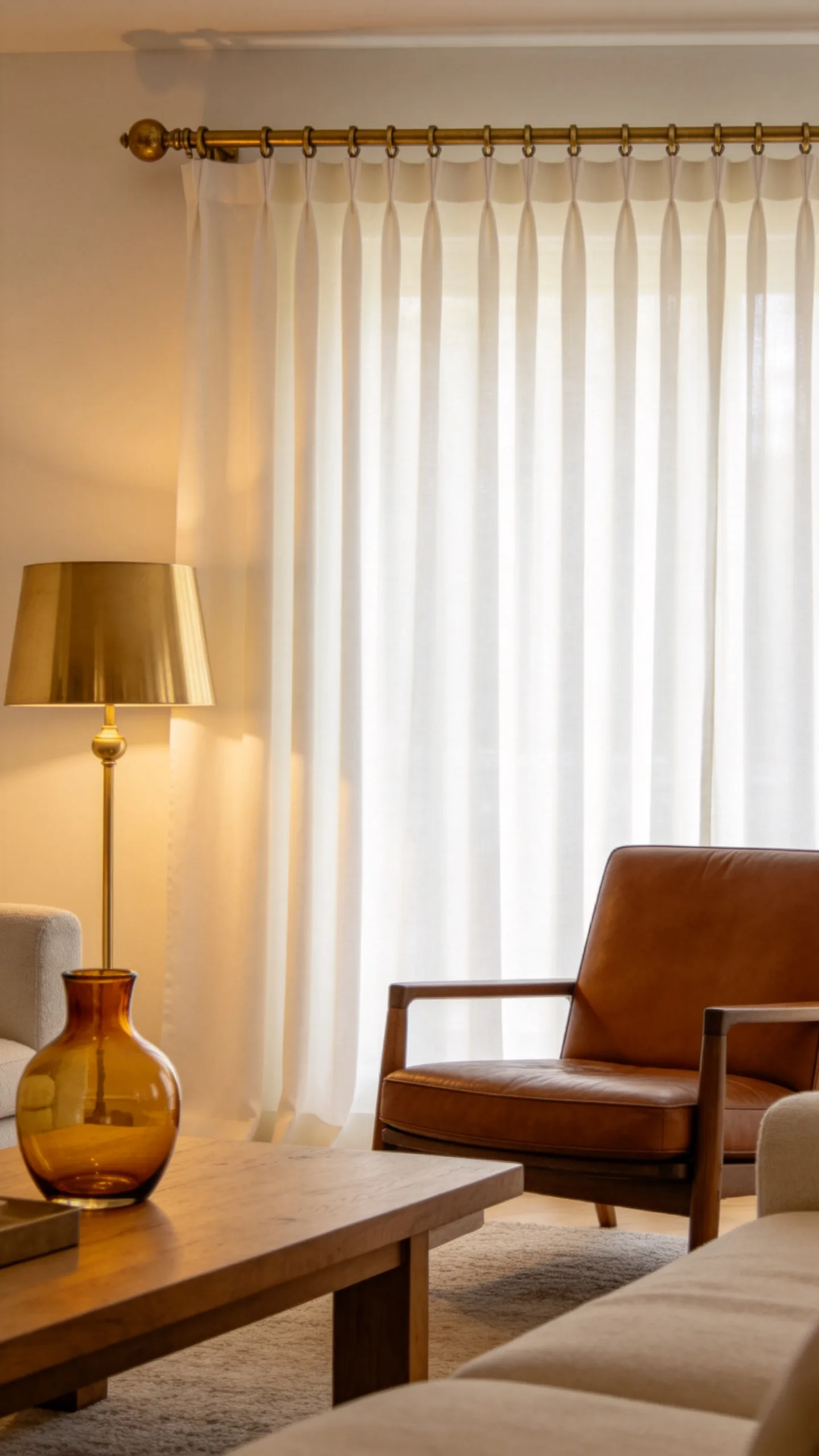
Brass curtain rods add warmth to a living room and can make simple curtain panels feel more finished. They work well with cream, olive, rust, navy, blush, and charcoal fabric. The warm metal also pairs beautifully with wood furniture, amber glass, leather seating, and vintage-inspired lighting.
Choose brushed or antique brass for a softer look rather than a highly shiny finish. If the living room has brass lamps, side table legs, or picture frames, the rod will feel connected to the rest of the design. This small hardware choice can make inexpensive panels look more elevated.
11. Patterned Curtains That Pick Up Accent Colors
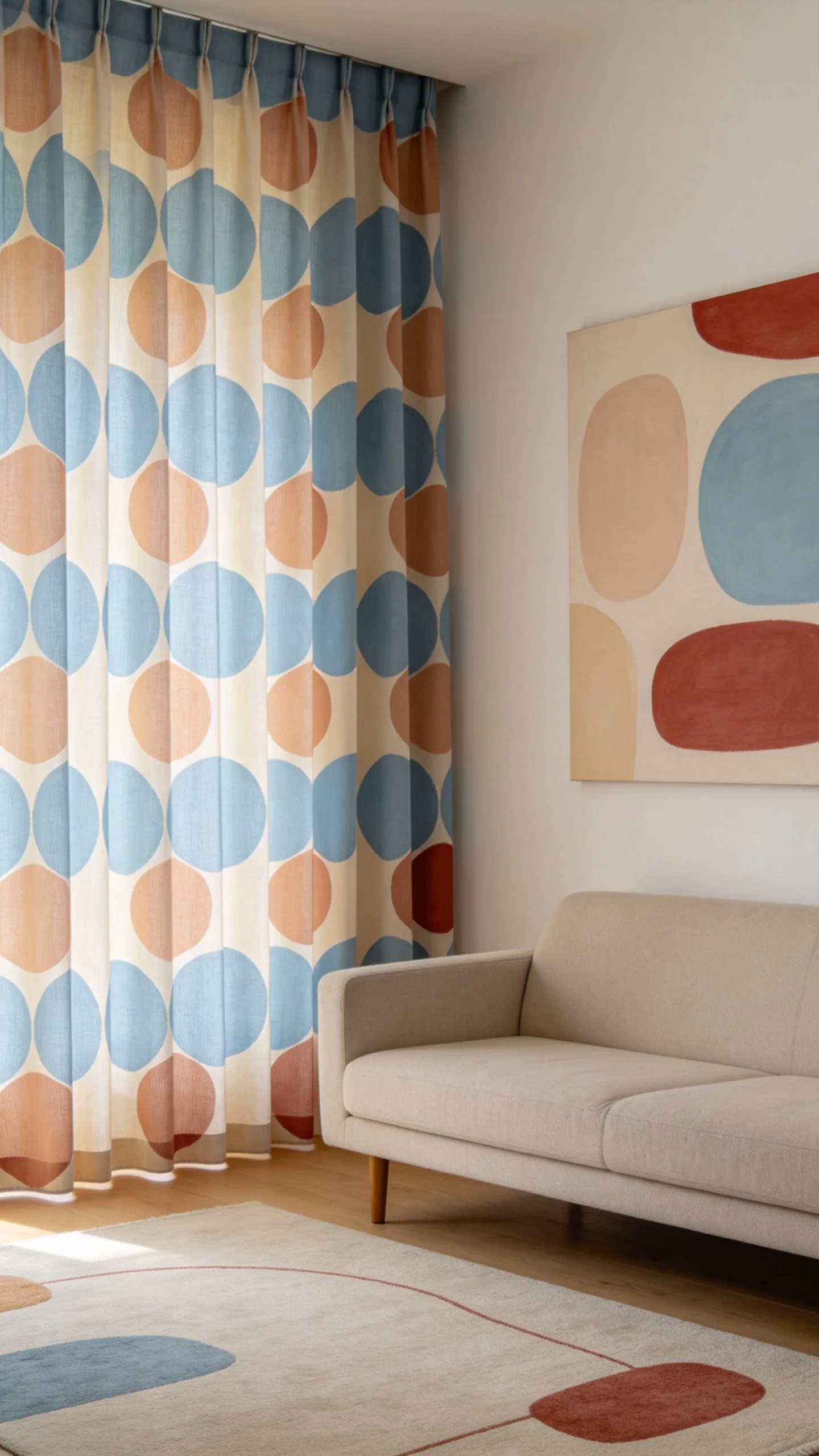
Patterned curtains can tie together a living room color scheme when the print repeats shades already used in the space. Look for patterns that include the sofa color, rug tone, pillow color, or artwork palette. This makes the curtains feel integrated rather than busy.
Florals, stripes, block prints, checks, and subtle geometrics can all work depending on the room style. In a neutral living room, patterned curtains can become the main decorative feature on the window wall. Keep the rug or throw pillows quieter if the curtain pattern is large or high contrast.
12. Striped Curtains to Make the Room Feel Taller
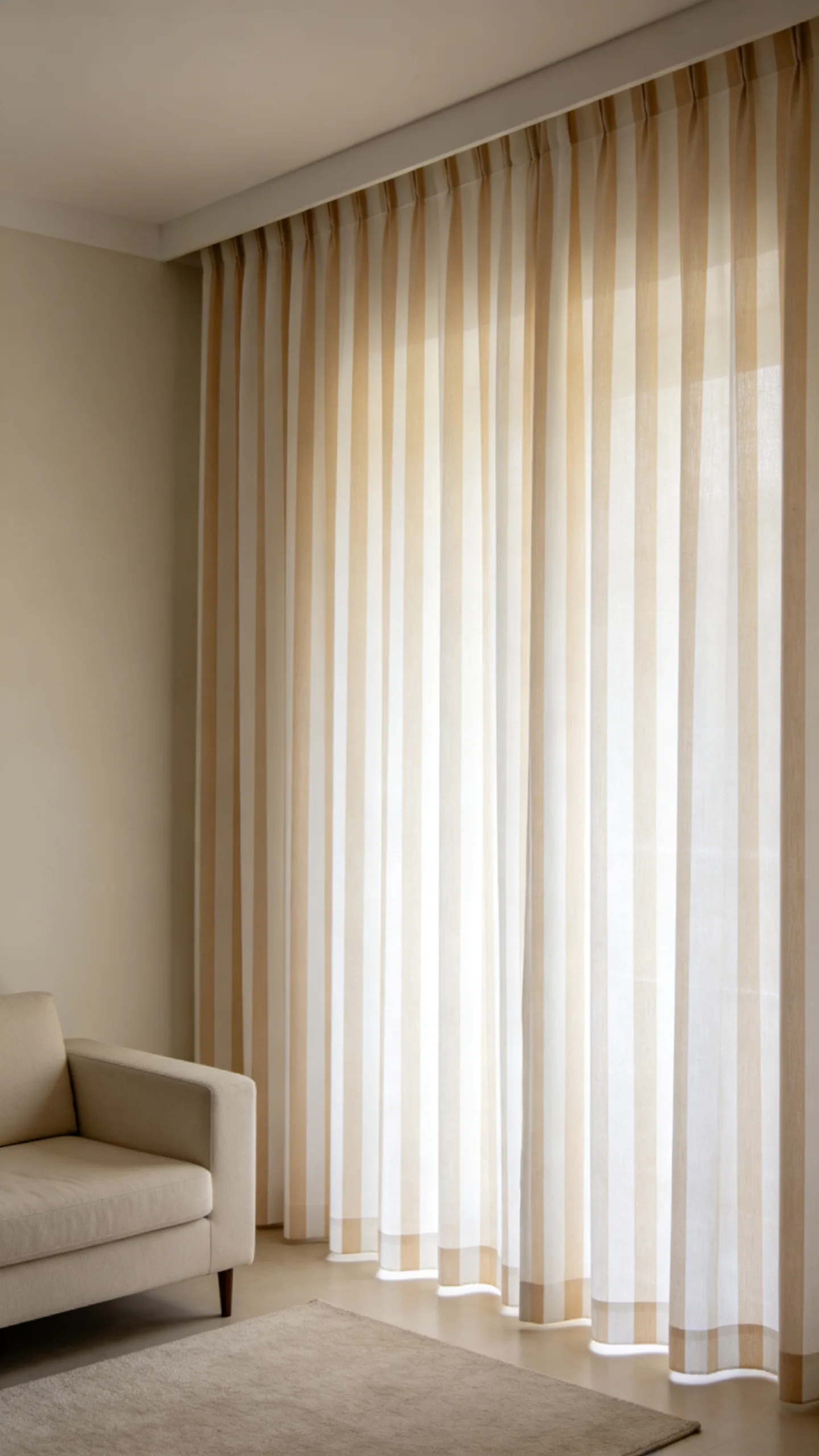
Vertical striped curtains can visually lengthen a living room wall, especially when the panels are hung high and reach the floor. Thin stripes feel classic and subtle, while wider stripes create more of a statement. Choose soft contrast, such as beige and white or gray and ivory, for a timeless look.
This idea is useful in living rooms with low ceilings, short windows, or bulky furniture that makes the room feel grounded. The vertical lines guide the eye upward and add structure to the space. Pair striped curtains with simple furniture silhouettes so the room does not feel too visually crowded.
13. Color-Matched Curtains and Walls
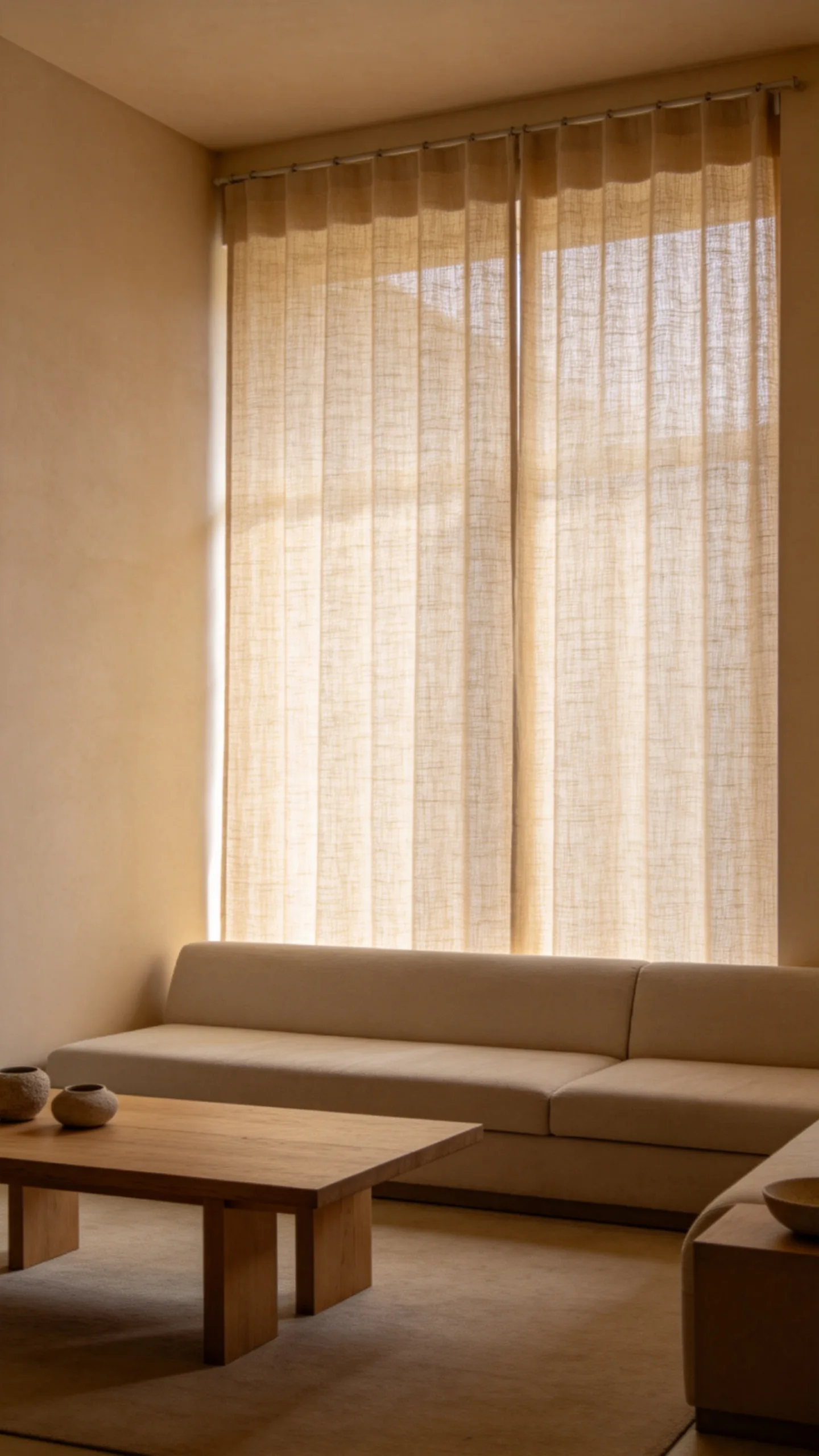
Matching the curtains to the wall color creates a seamless, calm look that can make a living room feel larger. Instead of breaking up the wall with contrast, the fabric blends into the background while still adding softness and movement. This works especially well in small rooms, open-concept spaces, or minimalist interiors.
For best results, choose curtains in the same color family as the walls but with a slight texture difference. For example, pair warm beige walls with linen beige panels or sage walls with soft cotton sage curtains. The texture keeps the room from feeling flat while the matching color supports a finished, cohesive look.
14. Dark Curtains for a Dramatic Focal Wall
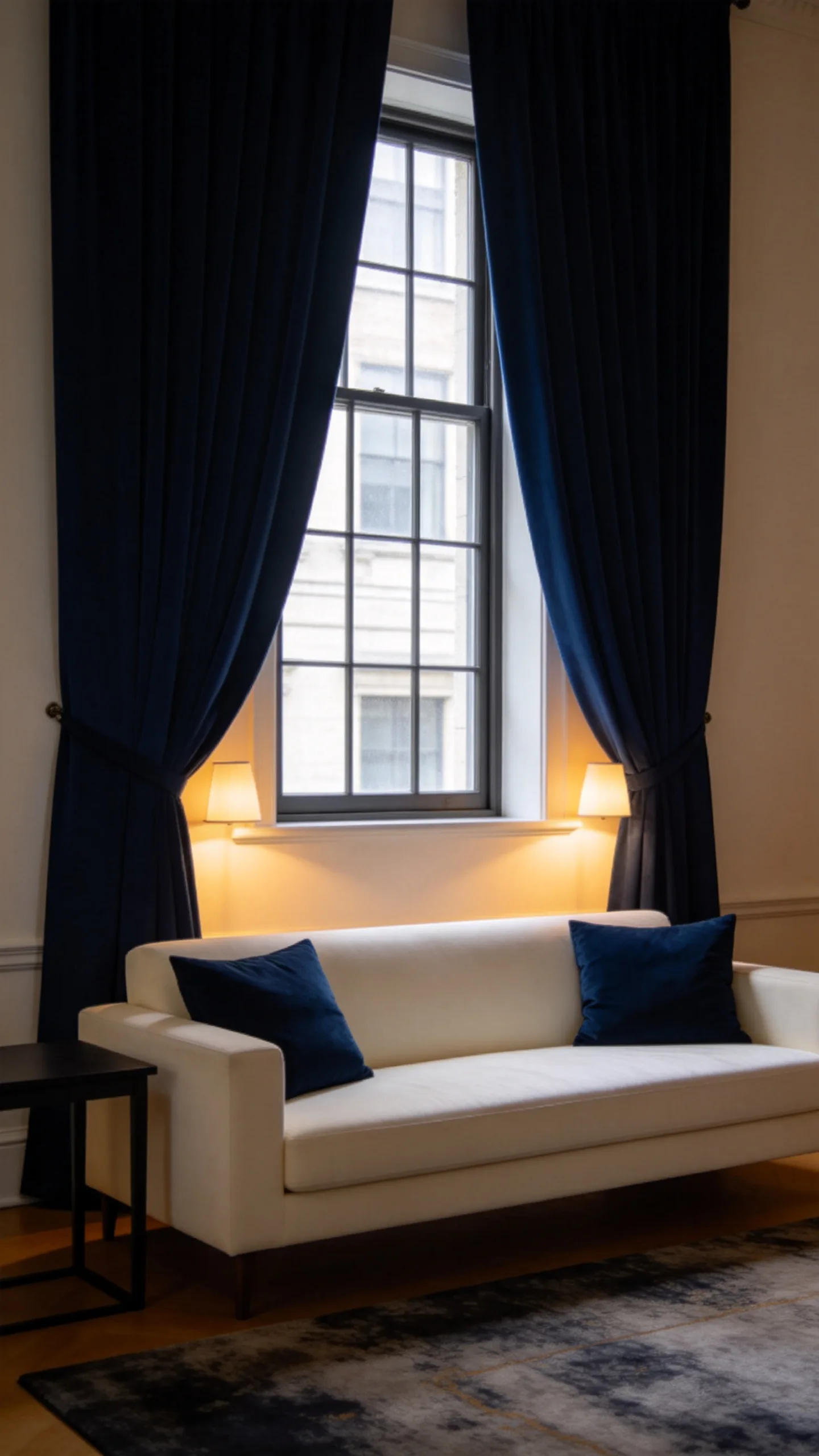
Dark curtains can anchor a living room and make the window wall feel intentional. Navy, forest green, charcoal, espresso, and deep plum work well when balanced with lighter walls or furniture. The key is to repeat the dark tone elsewhere in the room through art, pillows, a side table, or a patterned rug.
This idea is especially effective behind a light-colored sofa or near a fireplace wall. Dark fabric frames the window like an architectural feature and creates a cozy atmosphere in the evening. Use lined panels so the color looks rich and the curtains hang with weight.
15. Cafe Curtains for Lower-Window Privacy
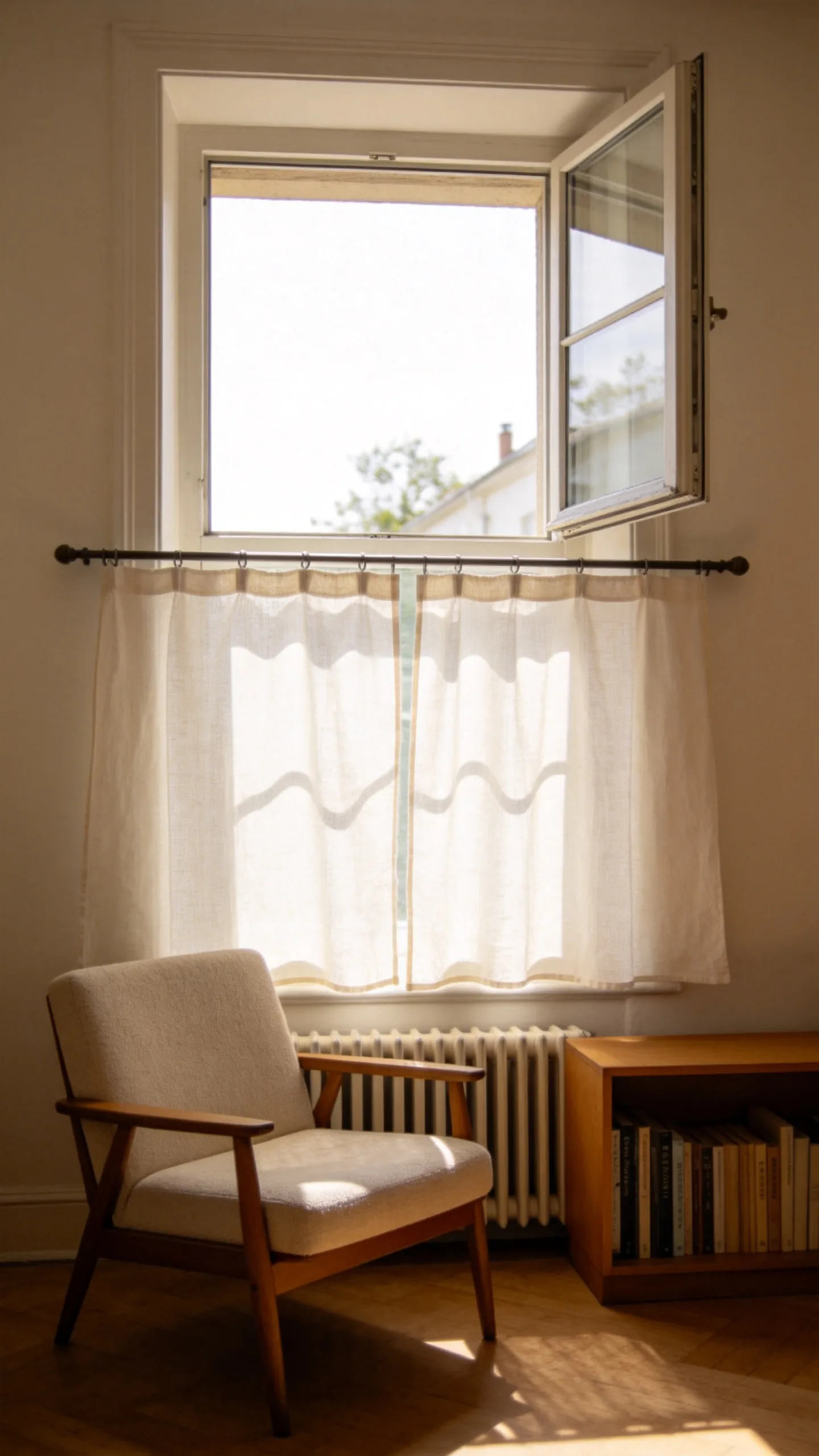
Cafe curtains cover only the lower portion of a window, making them useful for living rooms that face a sidewalk, neighboring house, or shared courtyard. They provide privacy at seated eye level while still allowing light through the upper glass. This is a charming option for cottage, vintage, or casual living room styles.
Use a slim rod mounted inside or across the lower window frame. Lightweight linen, cotton, or sheer fabric works best so the treatment does not look bulky. Cafe curtains are also helpful when full-length curtains would interfere with a radiator, built-in bench, or low bookcase beneath the window.
16. Roman Shades Layered Under Curtain Panels
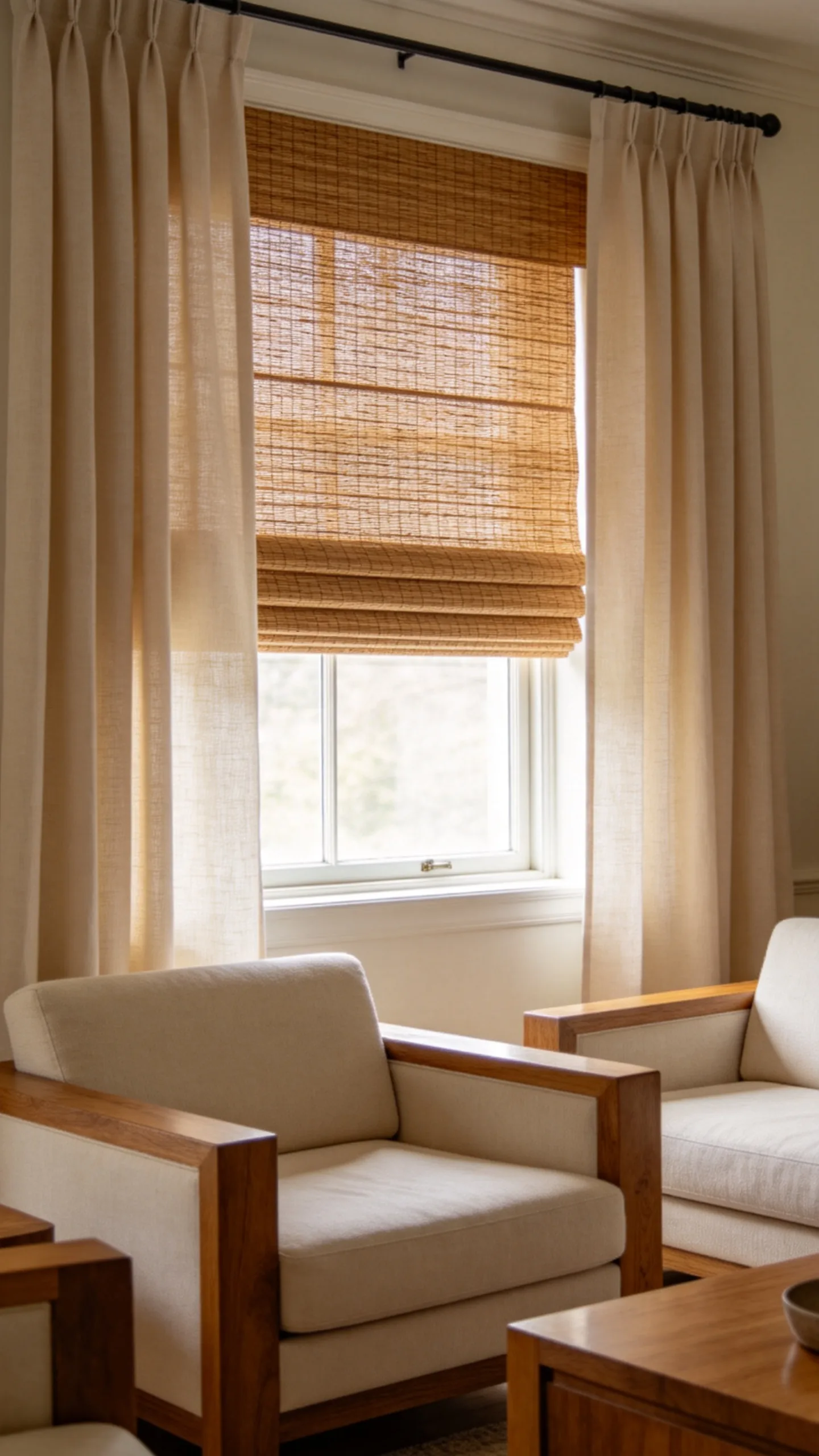
Roman shades and curtain panels create a refined layered window treatment without feeling overly formal. The shade provides privacy and light control, while the side panels soften the wall and make the window feel complete. This is a strong choice for living rooms with multiple windows that need a consistent look.
Choose a woven wood Roman shade for warmth, then add simple linen or cotton panels on either side. For a cleaner style, use a fabric Roman shade in the same tone as the curtains. This combination works well when furniture sits close to the window because the shade controls light without requiring wide curtain movement.
17. Woven Wood Shades with Simple Side Panels
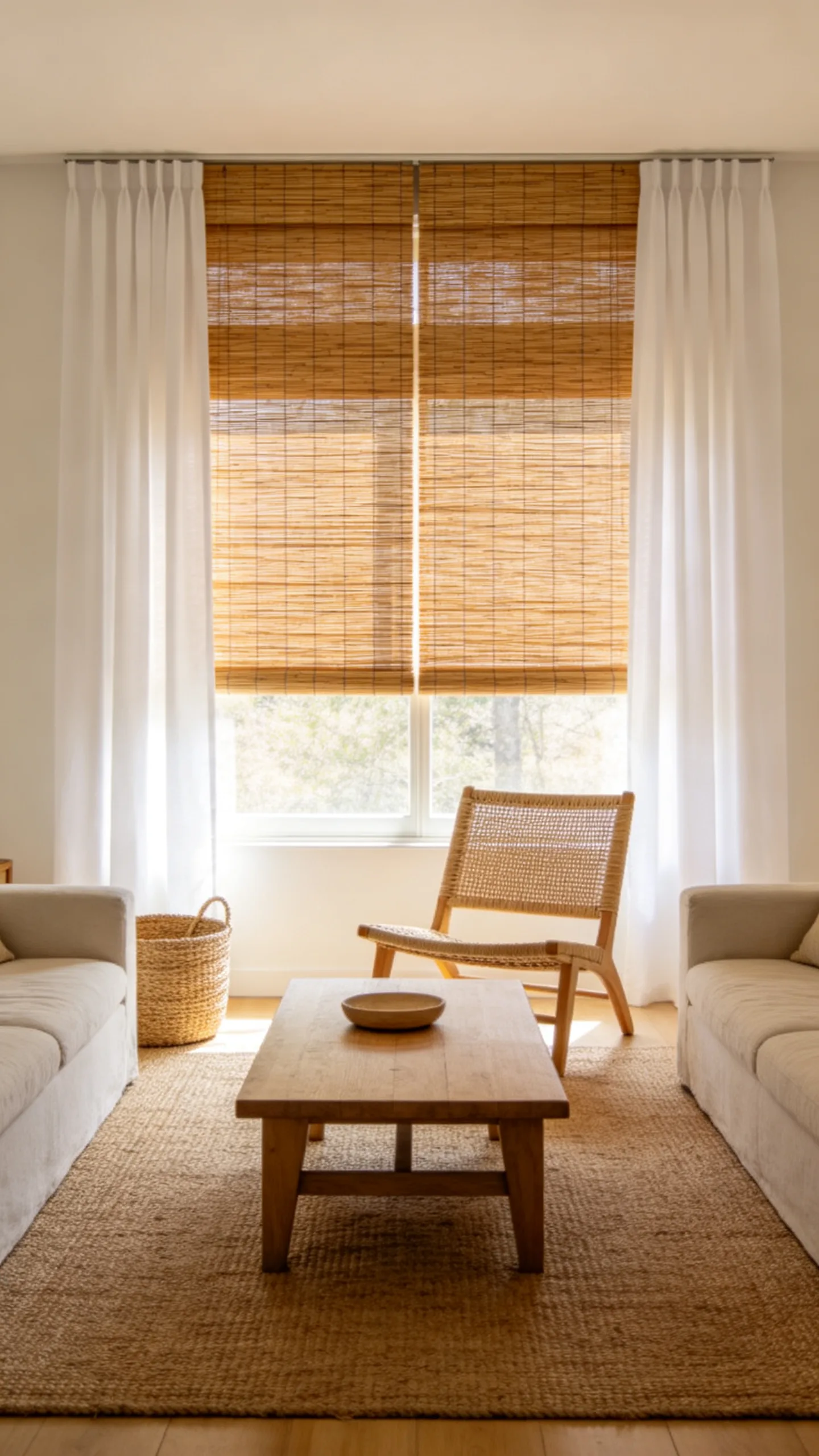
Woven wood shades add natural texture to a living room and pair beautifully with curtain panels. Bamboo, rattan, reed, or grasscloth-style shades bring warmth to white walls, painted trim, and neutral upholstery. The texture helps the window feel styled even when the curtain panels stay open.
Add full-length side panels in white, cream, oatmeal, or soft gray to soften the edges of the shade. This layered look is especially useful in coastal, organic modern, farmhouse, and transitional living rooms. It also connects well with jute rugs, wood coffee tables, cane chairs, and woven baskets.
18. Curtains That Frame a Large Picture Window
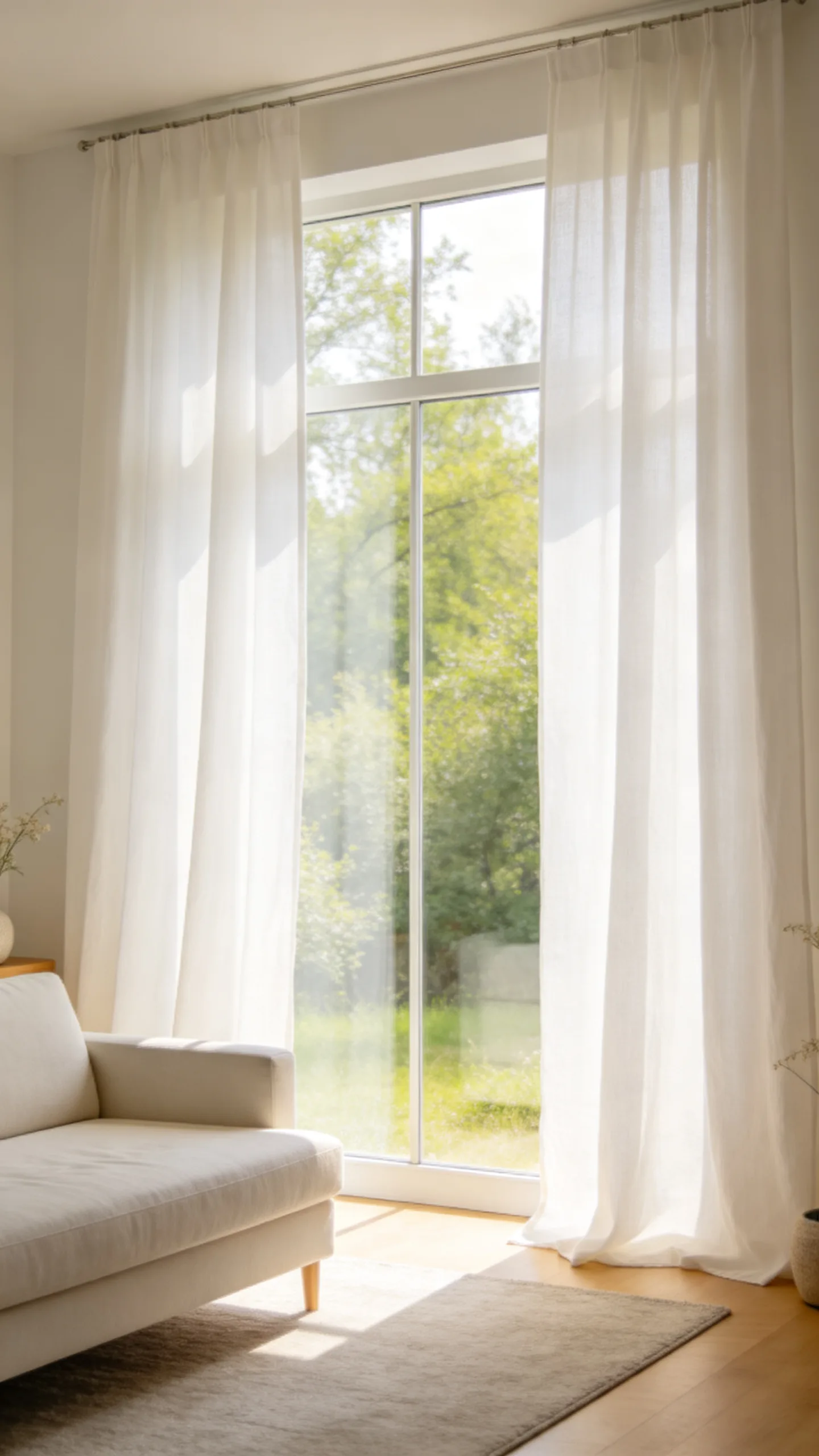
A large picture window often needs softness around the edges without blocking the view. Hang curtain panels wide enough that they rest mostly outside the glass when open. This frames the window like artwork and keeps the outdoor view as the focal point.
Use fabric that complements the room without competing with the scenery. Soft white linen, warm beige cotton, or pale gray panels work well in rooms with garden, city, or tree views. If the window wall is very wide, consider using multiple panels on each side so the fabric looks full and proportional.
19. Neutral Curtains with Textured Weave
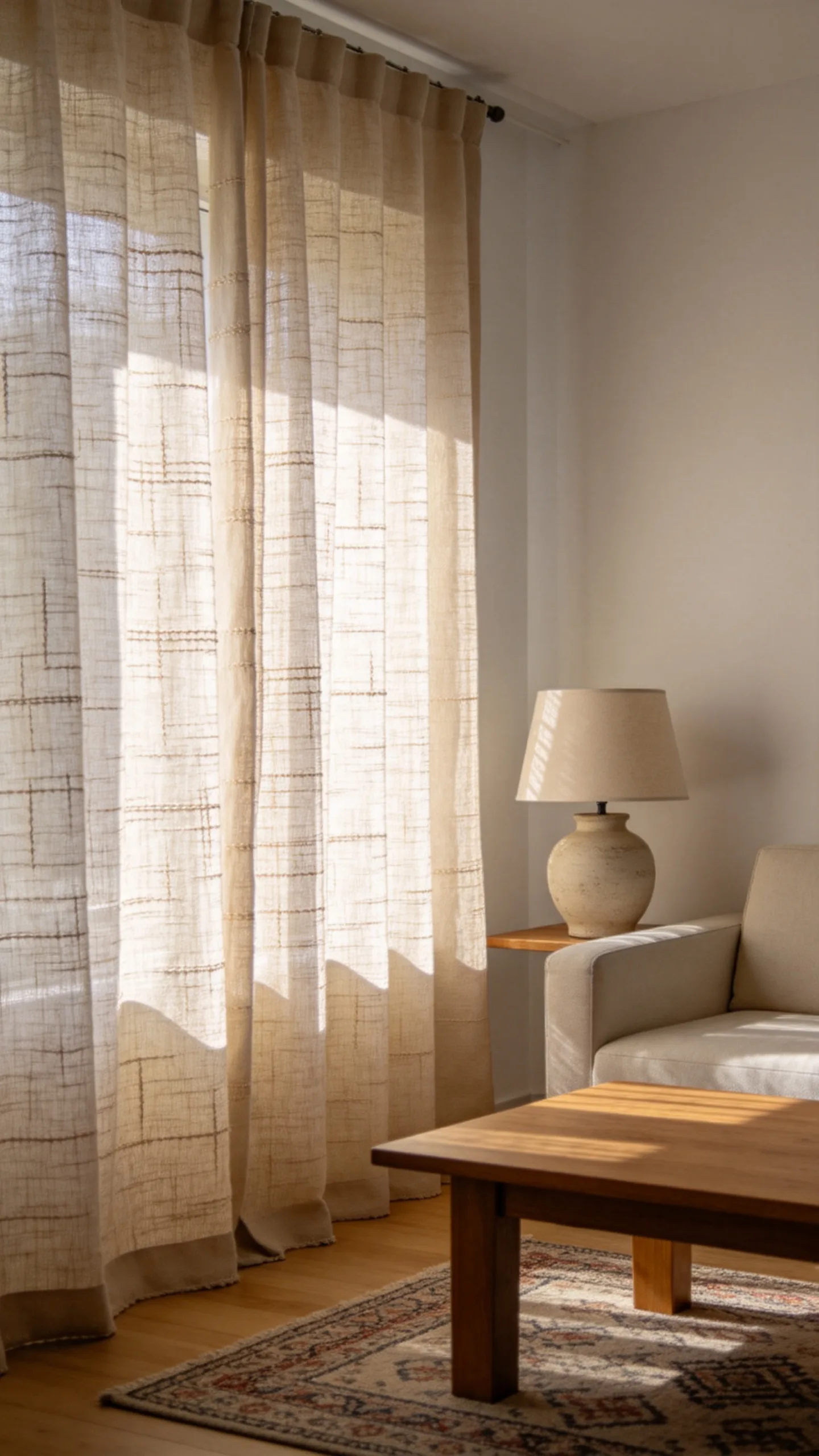
Neutral curtains do not have to be plain. A textured weave, slub linen, subtle herringbone, or basketweave fabric can add dimension to the living room while keeping the color palette calm. This is useful when the room already has patterned pillows, a detailed rug, or colorful artwork.
Texture helps curtains look intentional in photos and in person because the fabric catches light differently throughout the day. Pair textured neutral panels with smooth walls, wood furniture, ceramic lamps, and soft upholstery. The result is finished but not overly decorated.
20. Curtains That Match the Sofa Tone
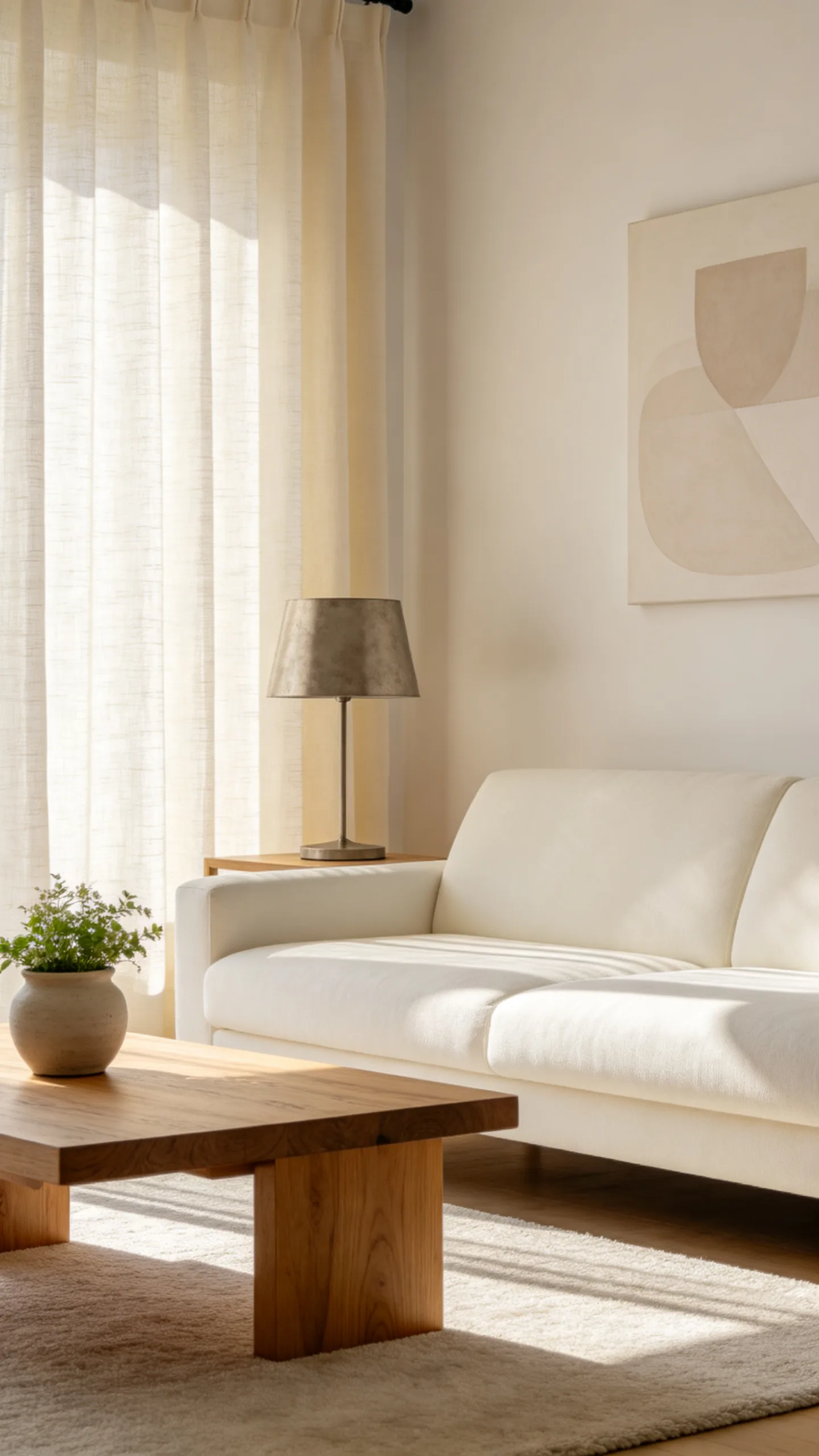
Matching the curtain color to the sofa can make a living room feel coordinated and calm. For example, pair a cream sofa with cream curtains, a gray sectional with soft gray panels, or a camel sofa with warm tan drapes. This creates a strong visual connection between the seating area and the window wall.
To avoid a flat look, vary the textures. A smooth upholstered sofa pairs well with linen curtains, while a bouclé or velvet sofa may look better with simple cotton or matte fabric panels. Add contrast through wood, metal, art, or greenery so the room still has depth.
21. Subtle Check Curtains for Casual Character
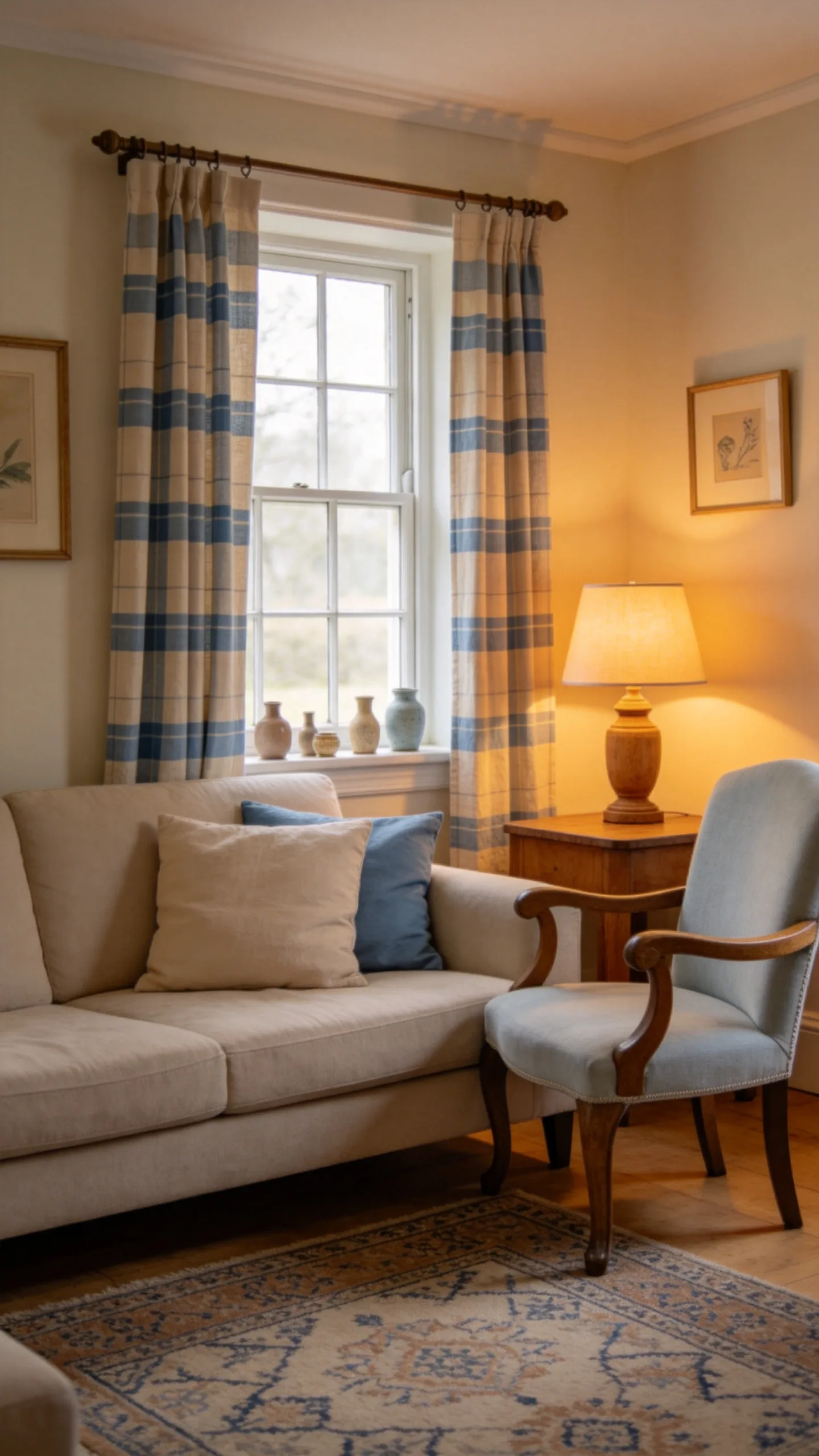
Subtle check curtains add pattern without overwhelming the living room. Small-scale checks in beige, gray, blue, olive, or brown can make the room feel cozy and collected. This is a good choice for traditional, cottage, farmhouse, and English-inspired living rooms.
Use checked curtains with solid pillows or a simple rug to keep the space balanced. If the living room has a plaid chair, patterned rug, or gallery wall, choose a smaller, quieter check. The goal is to add charm to the window while still making the room feel finished and easy to live in.
22. Blackout Curtains for TV-Friendly Living Rooms
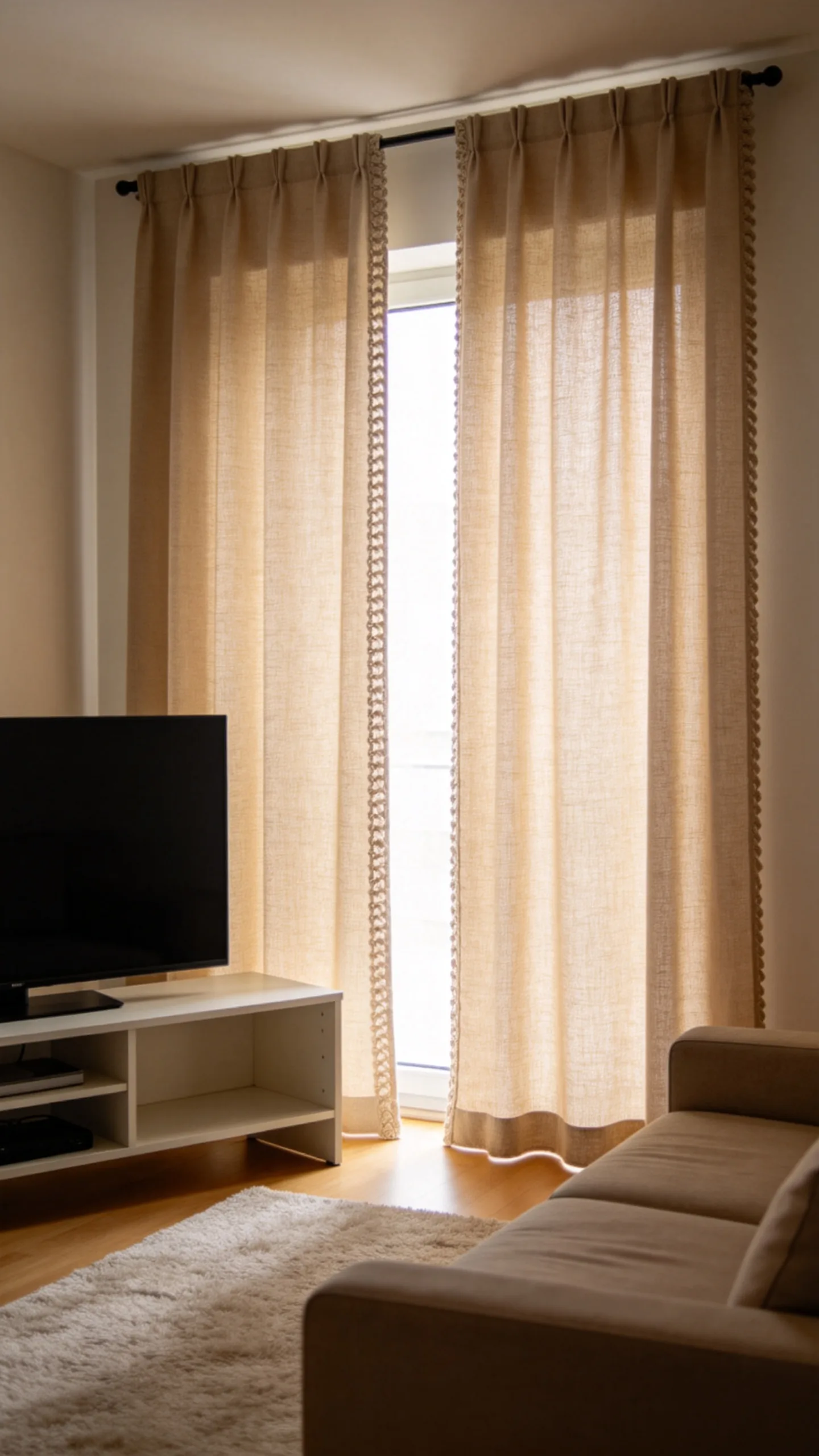
Blackout curtains are practical for living rooms where the television faces a bright window or where afternoon sun creates glare. They also give the windows a more substantial, finished look because the lining helps the fabric hang neatly. Choose panels that look decorative from the room side rather than purely functional.
For a polished result, use blackout curtains in linen-look, velvet, or cotton-blend fabric. Hang them high and wide so they block light effectively when closed but reveal as much glass as possible when open. This is especially helpful in media-focused living rooms, apartments, and west-facing spaces.
23. Curtain Panels Behind a Sectional Sofa
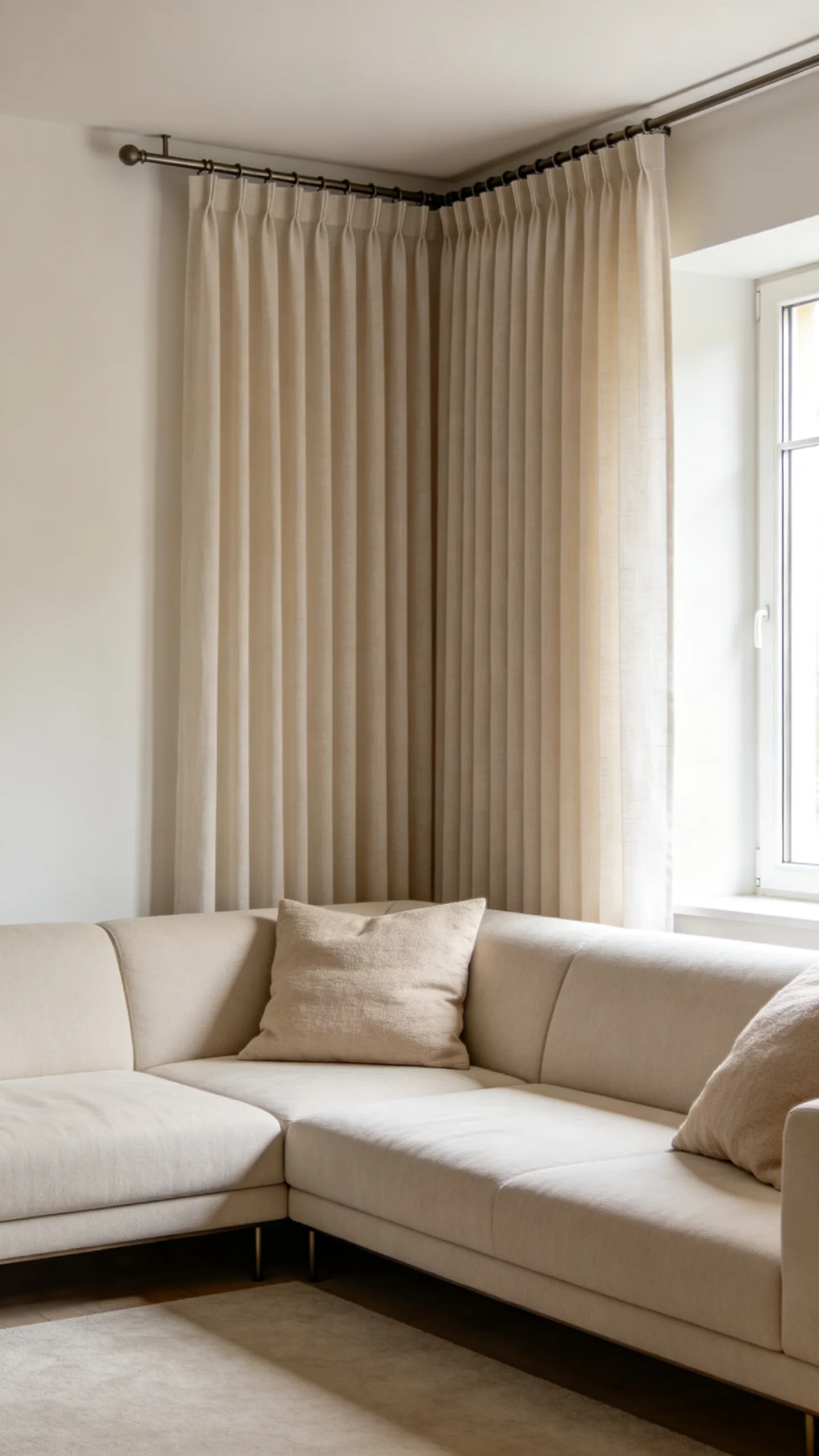
When a sectional sofa sits in front of a window, curtains can still work if they are installed thoughtfully. Use floor-length panels that hang behind the sofa, and mount the rod high enough to create a vertical backdrop. Keep the fabric simple so the area does not feel cramped.
Choose slimmer curtain stacks if the sofa arms are close to the window edges. Linen, cotton, or light-filtering panels are easier to manage behind furniture than heavy drapes. This approach softens the wall behind the sectional and makes the seating zone feel intentionally layered instead of pushed against a bare window.
24. Bold Color Curtains as the Main Accent
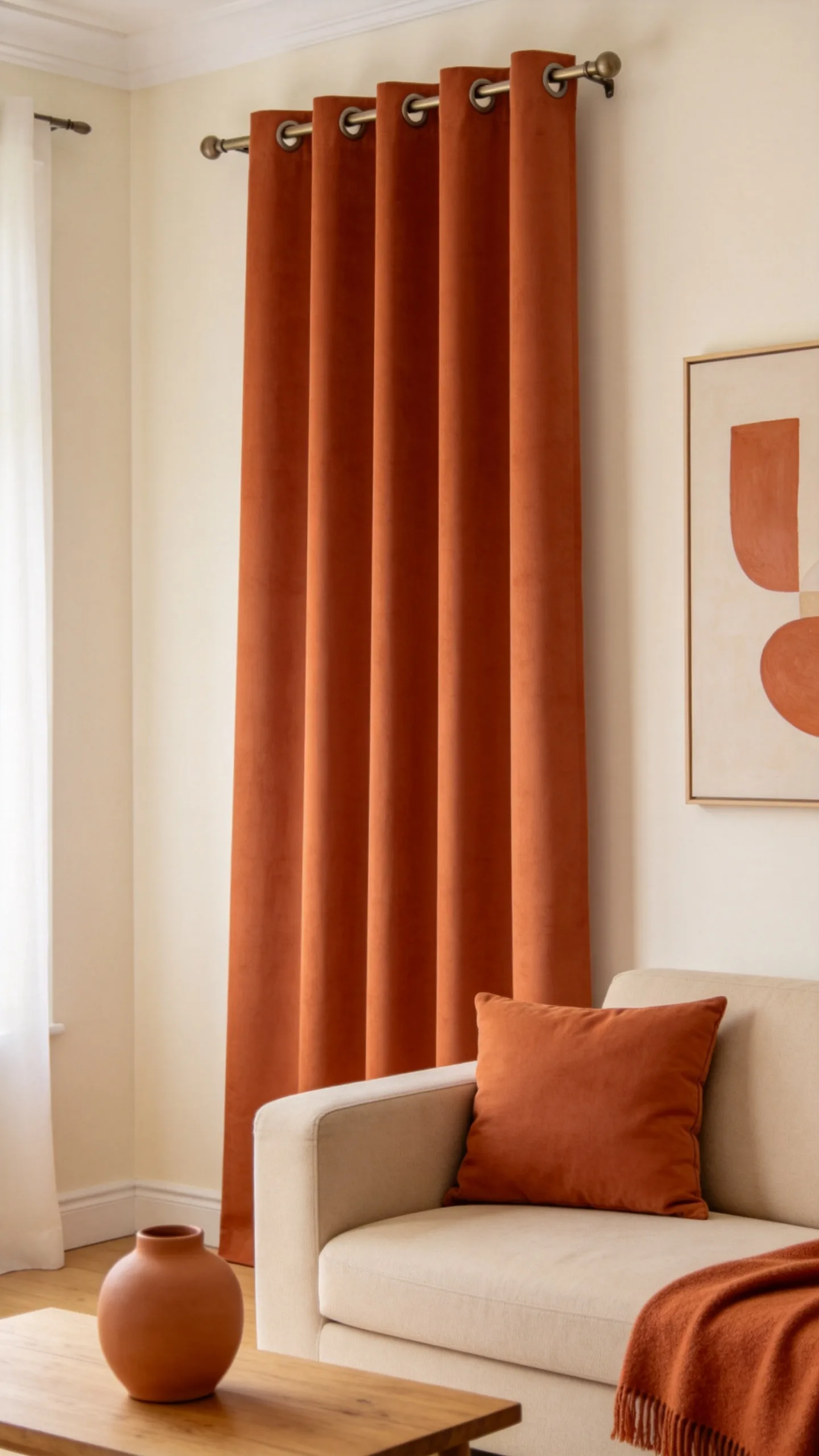
Bold curtains can act as the main color statement in a living room. Terracotta, mustard, emerald, cobalt, burgundy, or dusty rose panels can bring personality to a room with neutral walls and furniture. The key is to repeat the curtain color in smaller touches, such as a pillow, throw blanket, book spine, vase, or artwork detail.
This idea works best when the curtains are well-fitted and full-length so the bold color looks deliberate. Keep the rod and hardware simple to let the fabric stand out. In a rental or budget-friendly refresh, colorful curtains can transform the room without painting walls or replacing large furniture.
25. Puddled Curtains for a Soft Romantic Finish
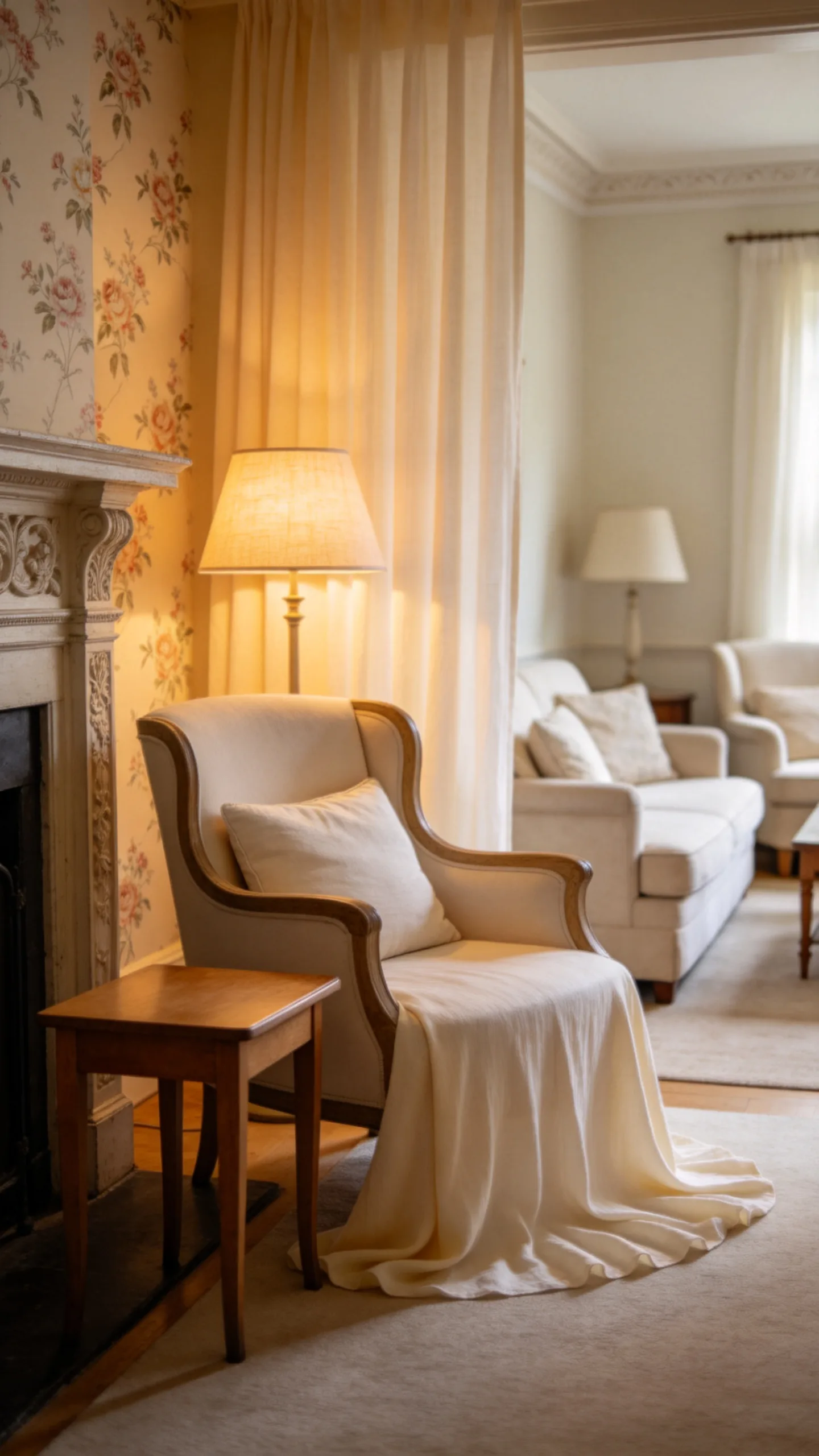
Puddled curtains extend slightly past the floor so the fabric gathers at the bottom. This creates a soft, romantic look that works well in traditional, vintage, cottage, or relaxed elegant living rooms. A small puddle of 1 to 3 inches is usually enough to feel graceful without becoming messy.
Use lightweight linen, cotton, or velvet that drapes naturally. Puddled curtains are best in lower-traffic areas where pets, children, or vacuuming will not constantly disturb the fabric. Place them beside a reading chair, fireplace, or formal seating area to give the living room a finished, styled softness.

From the editors
Decor Compass Editorial Team
We turn practical home research into clear, useful room-by-room ideas.