Voile curtains are a practical way to soften a room, blur views from outside, and keep daylight moving through the window. The key is choosing the right fabric weight, hanging style, color, and layering method for the room you are decorating. These voile curtain ideas focus on privacy without making a living room, bedroom, kitchen, or small space feel dark or closed in.
1. Wall-to-Wall White Voile Curtains in a Living Room
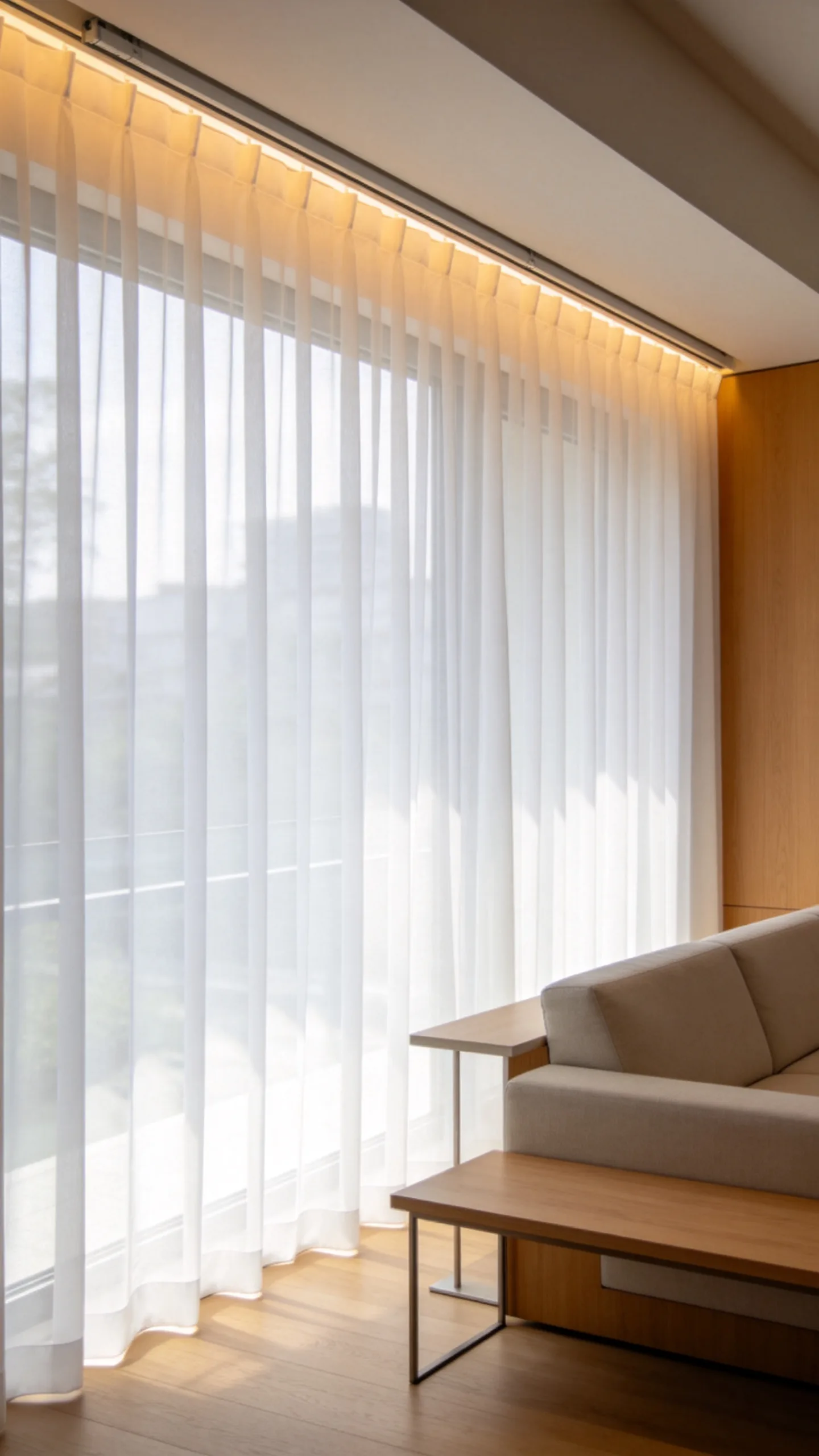
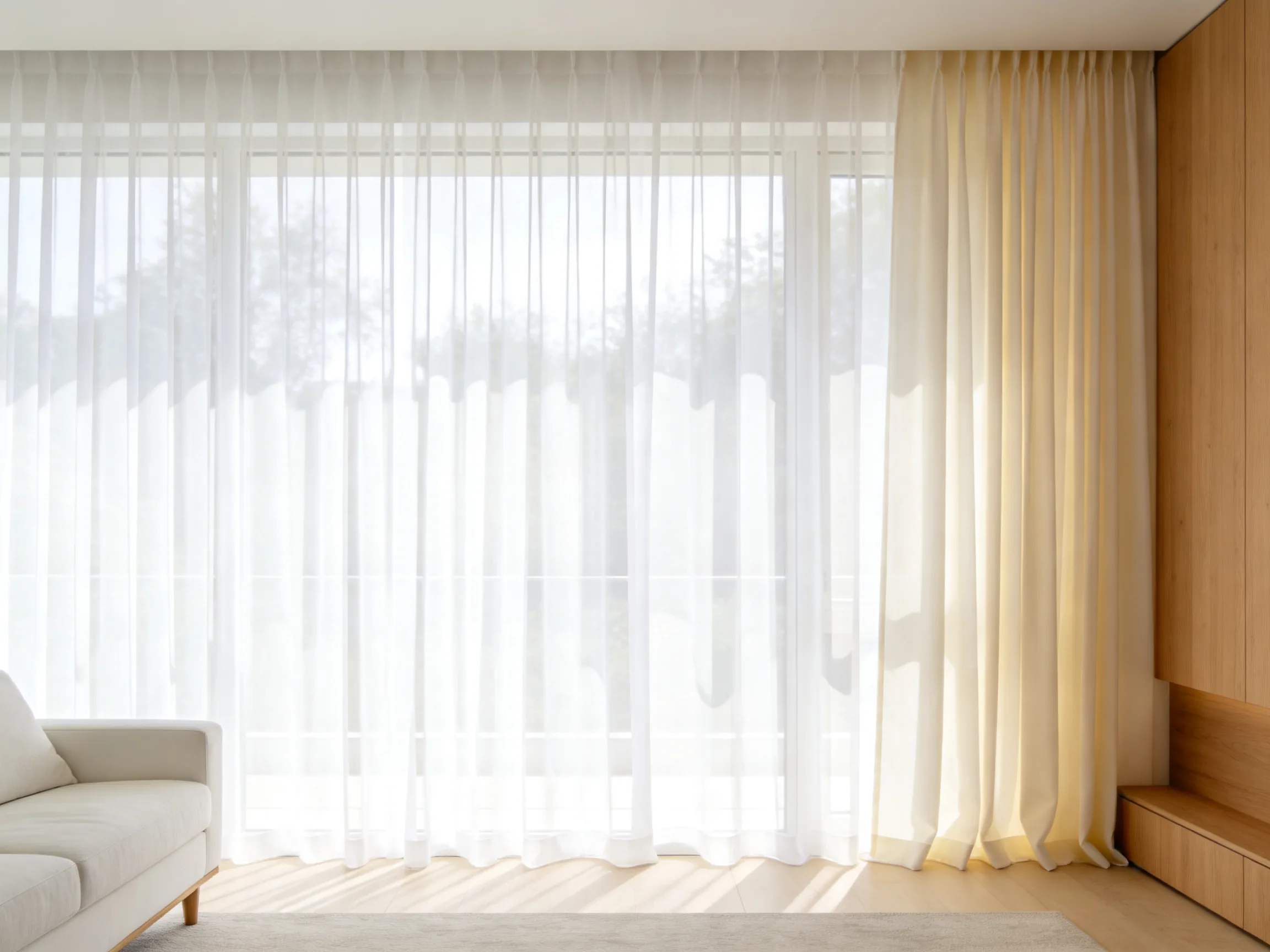
Running white voile curtains across the full width of a living room wall creates a soft, continuous backdrop instead of drawing attention to one small window. This works especially well behind a sofa, console table, or pair of accent chairs where you want the window wall to feel calm and finished.
Mount the curtain track or slim rod close to the ceiling and extend it beyond the window frame on both sides. The extra width allows the voile panels to stack away from the glass during the day, keeping the sightline open while still giving you the option to pull them closed for daytime privacy.
Choose a slightly full gather rather than a flat panel. A fuller drape adds more layers of fabric across the glass, which helps blur views from the street while still allowing natural light to filter through the room.
2. Layered Voile and Blackout Curtains for Bedroom Privacy
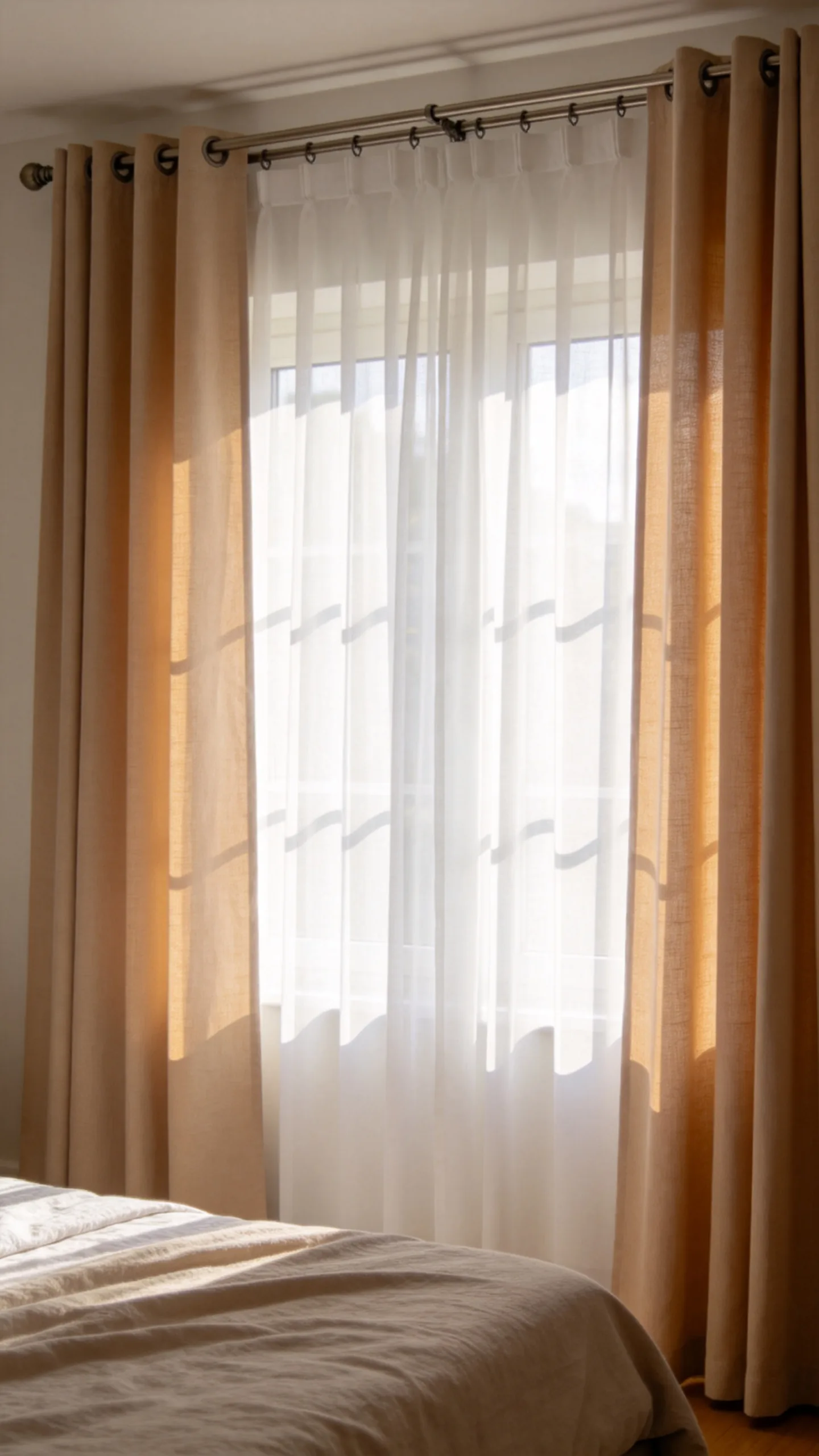
In a bedroom, voile curtains work beautifully as the inner layer paired with heavier blackout curtains on the outside. The voile can stay closed during the day for privacy, while the blackout curtains can be drawn at night for darkness and insulation.
Use a double curtain rod or ceiling-mounted double track so each fabric layer moves independently. Hang the voile closest to the window and the heavier curtains toward the room. This arrangement keeps the bedroom bright in the morning without exposing the bed, dresser, or seating area to outside views.
For a soft bedroom look, pair white or ivory voile with linen-look blackout curtains in warm beige, taupe, clay, or muted blue. The heavier outer fabric frames the window, while the voile keeps the room from feeling bare when the main curtains are open.
3. Café-Style Voile Curtains for Kitchen Windows
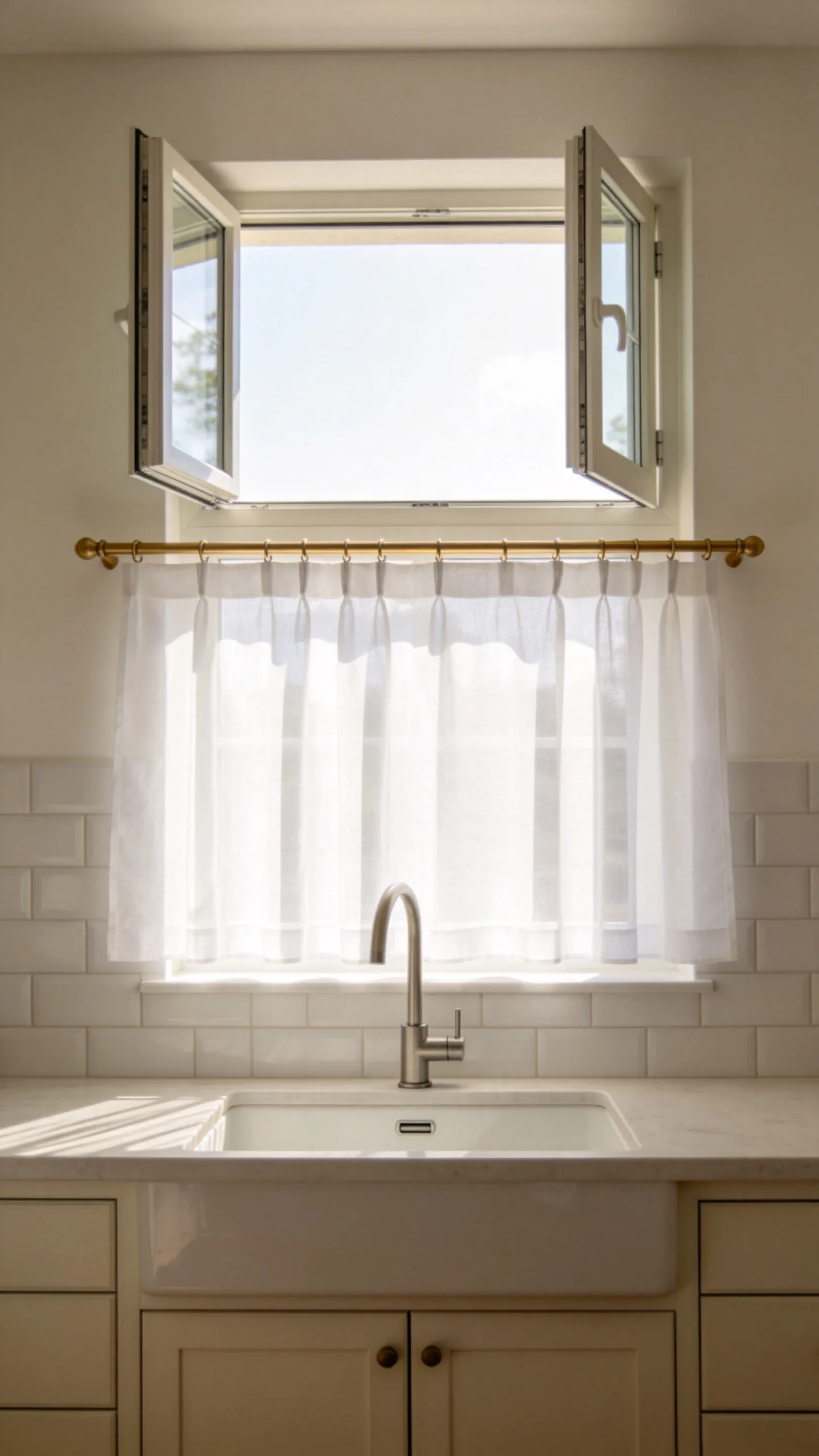
Café-style voile curtains cover only the lower half of a kitchen window, giving privacy at eye level while leaving the upper glass open for daylight. This is especially useful for kitchens facing a sidewalk, driveway, or neighboring house.
Install a slim tension rod or small brass rod across the middle of the window frame. The voile panel should sit just below the sill or lightly skim it, so it does not interfere with the sink, faucet, or countertop items.
This idea works well with white subway tile, painted cabinets, butcher block counters, or a small breakfast nook. The lower voile panel hides everyday kitchen activity without blocking the top portion of the window where the brightest light enters.
4. Floor-Length Voile Panels for a Soft Dining Room
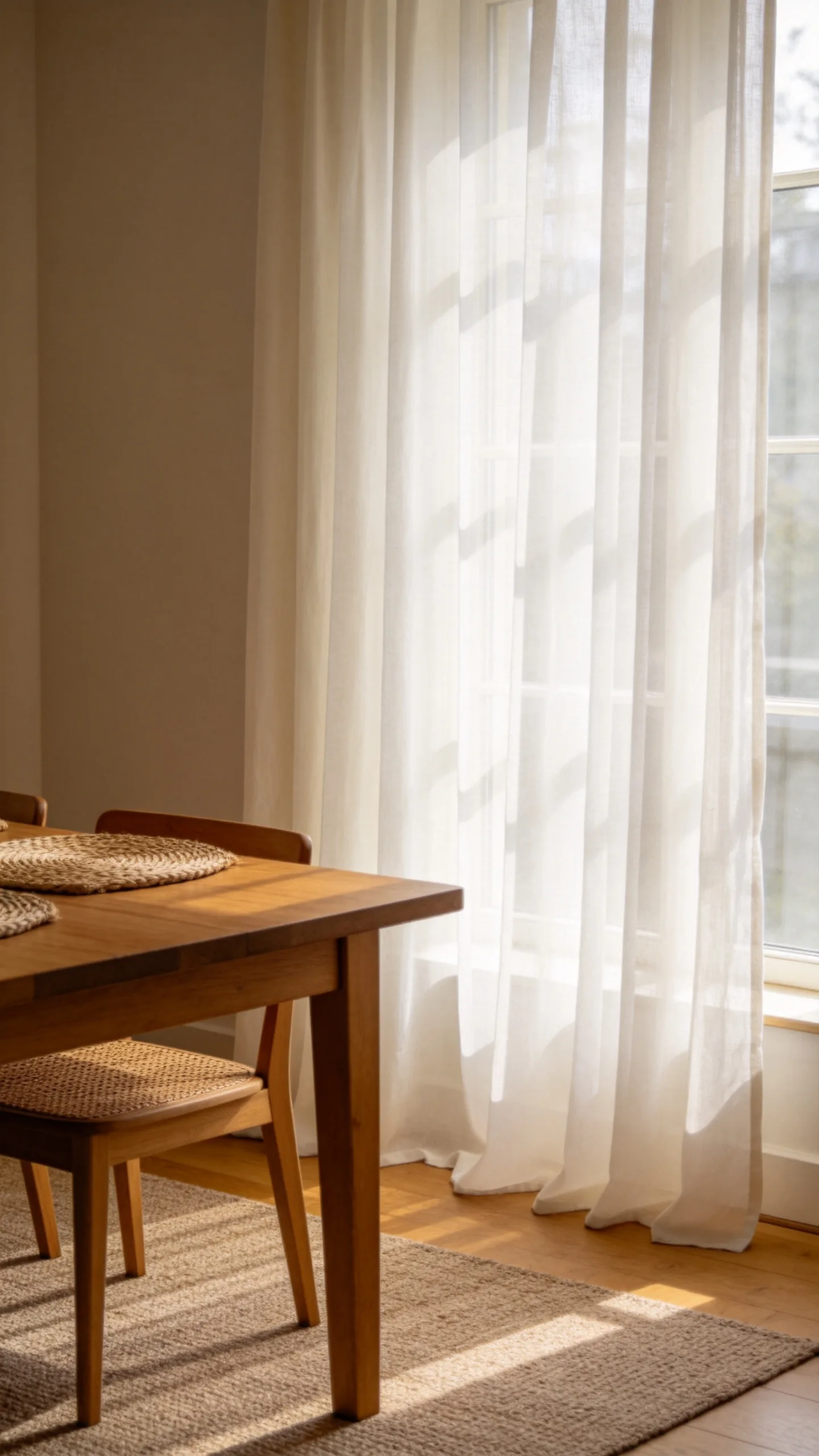
Floor-length voile curtains can make a dining room feel more finished without making it formal or heavy. They are especially useful for windows near a dining table where privacy is needed during meals but natural light still matters.
Hang the panels high and let them just touch the floor for a clean look. If the room has a narrow walkway around the table, avoid puddled fabric because it can collect dust and interfere with chair movement.
For a dining room with wood furniture, woven placemats, or a neutral rug, choose off-white voile rather than bright white. The warmer tone softens the contrast between the window and the furniture while keeping the room bright for daytime meals.
5. Sheer Voile Curtains Behind Roman Shades
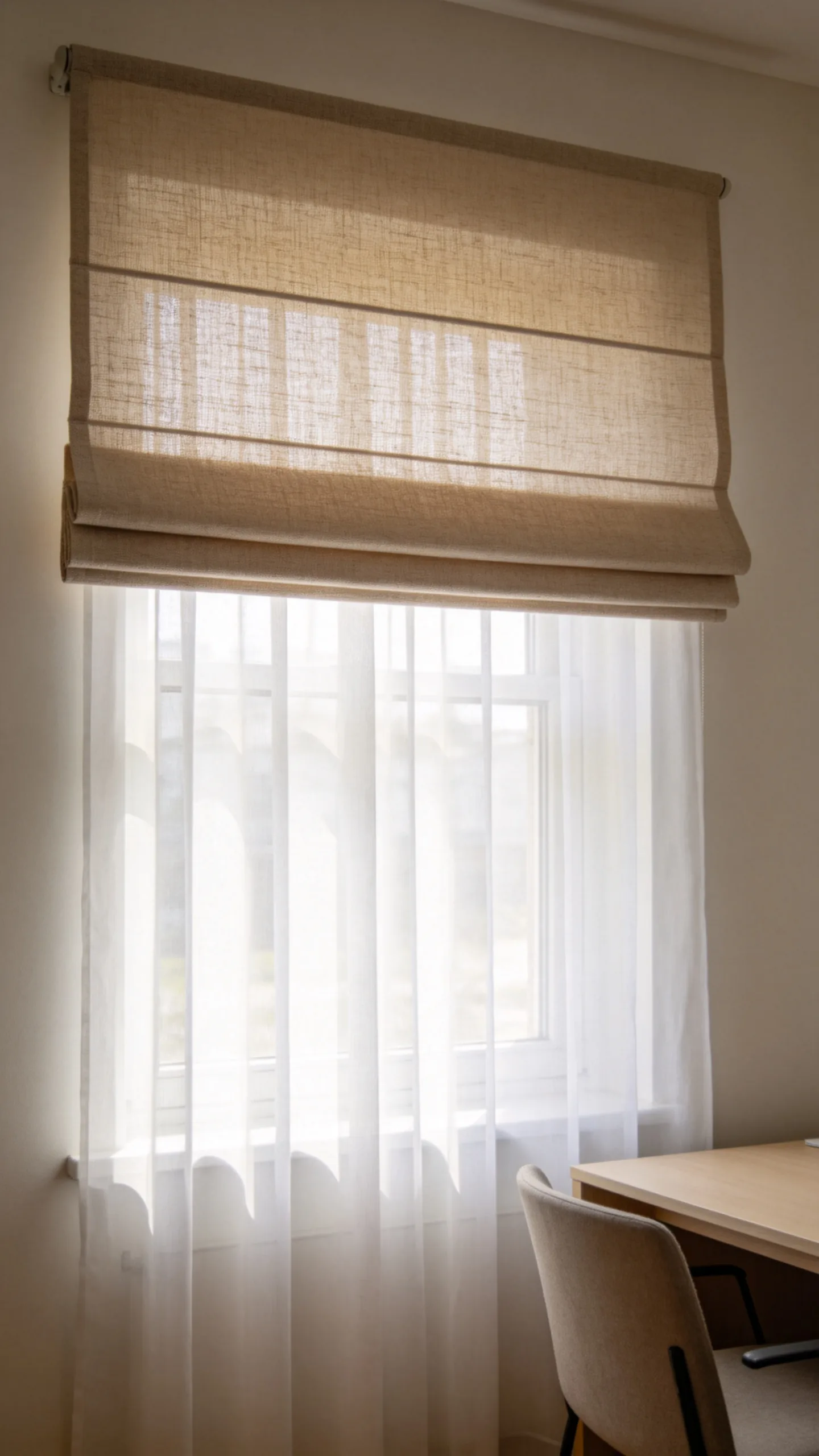
Layering voile curtains behind Roman shades gives a window a flexible privacy setup. The Roman shade can be raised during the day while the voile remains closed, allowing light through without leaving the glass exposed.
This is a strong option for home offices, bedrooms, or street-facing living rooms. The voile softens the window when the shade is up, and the Roman shade adds structure, color, and full coverage when needed.
Choose a plain voile if the Roman shade has a pattern, such as ticking stripe, block print, or floral fabric. If the shade is solid linen or cotton, a lightly textured voile can add depth without making the window treatment feel busy.
6. Extra-Wide Voile Panels for Better Daytime Coverage
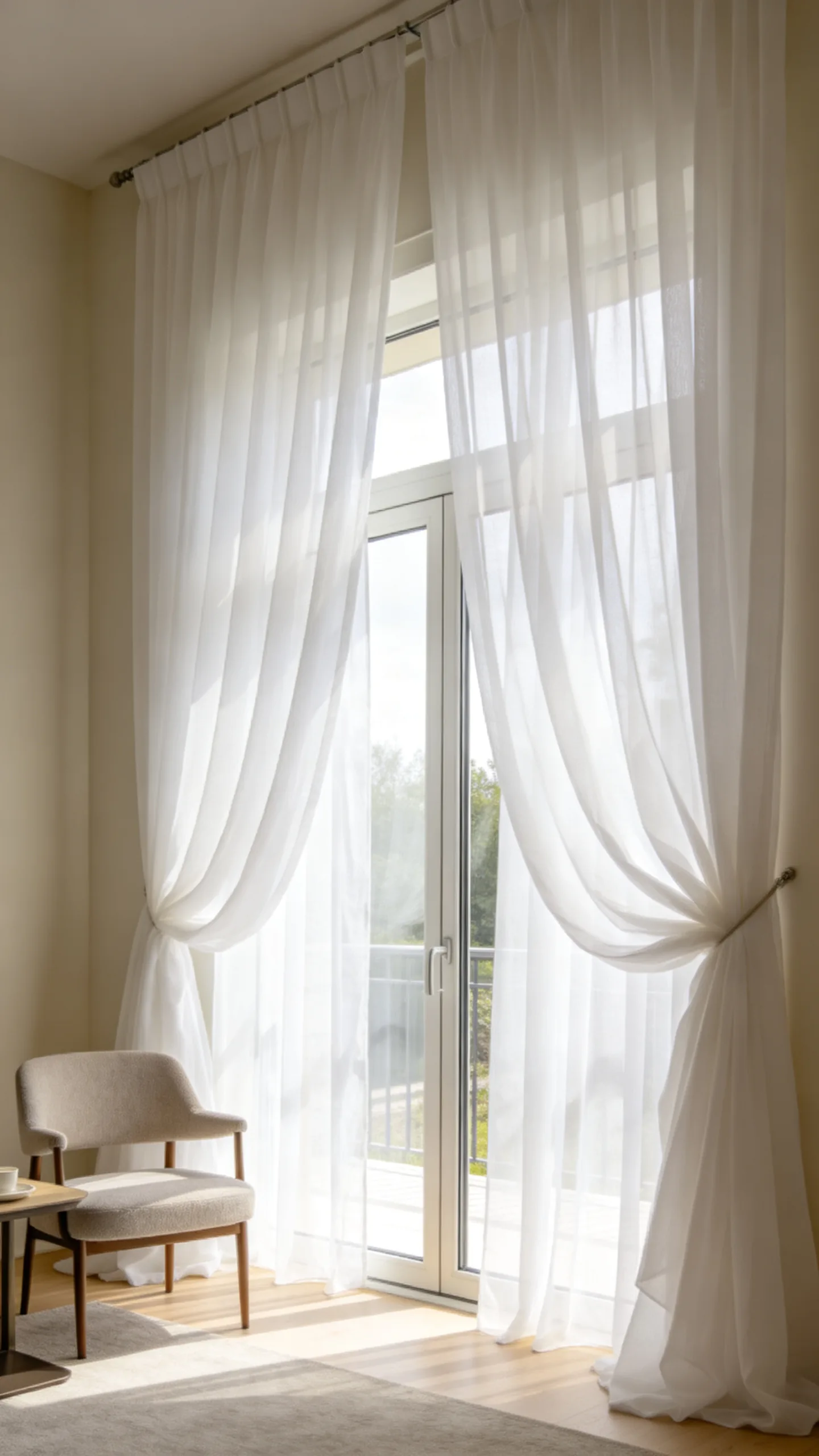
For more privacy, use wider voile panels rather than stretching narrow panels flat across the window. Extra fabric creates folds, and those folds help obscure the view into the room while still letting light pass through.
A good visual rule is to use curtain panels that are at least two times the width of the window or track. For a large living room window or sliding door, consider multiple voile panels instead of one thin pair.
This approach is helpful in small rooms because the fabric remains light in color and texture, but the added fullness reduces the clear view through the glass. It keeps the room feeling open while giving the window a softer, more private finish.
7. Ceiling-Mounted Voile Curtains to Make Windows Look Taller
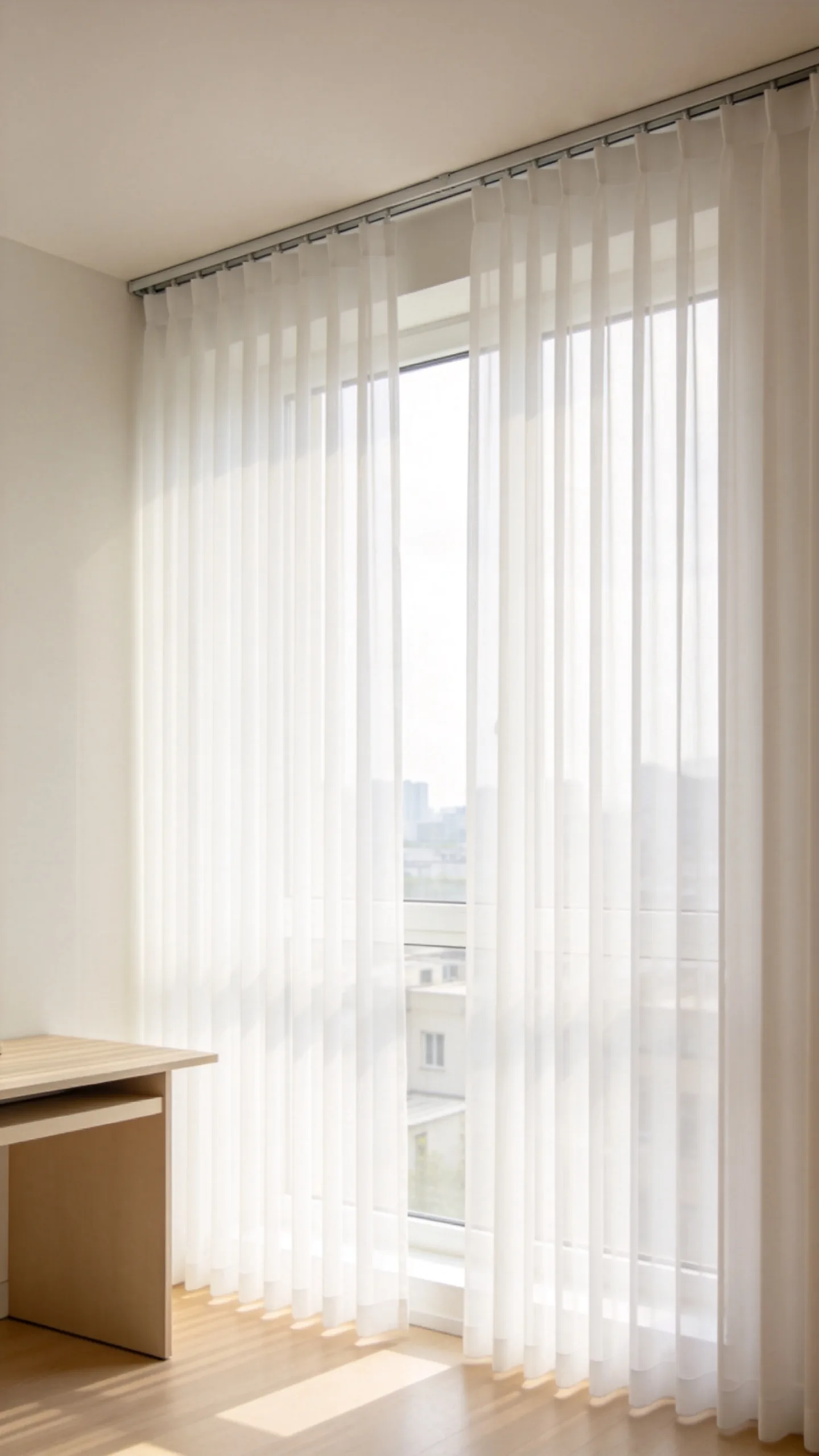
Mounting voile curtains at ceiling height draws the eye upward and makes the window wall appear taller. This works well in apartments, small bedrooms, and compact living rooms where the window itself may be short or awkwardly placed.
Use a discreet ceiling track for a streamlined look, especially if the room has modern furniture or limited wall space around the window. Let the voile panels fall in straight vertical lines to the floor, which helps the room feel less cluttered.
Because voile is lightweight, a ceiling-mounted installation does not visually weigh down the room. It adds privacy across the glass while enhancing vertical space and making the ceiling feel higher.
8. Voile Curtains with a Subtle Linen Texture
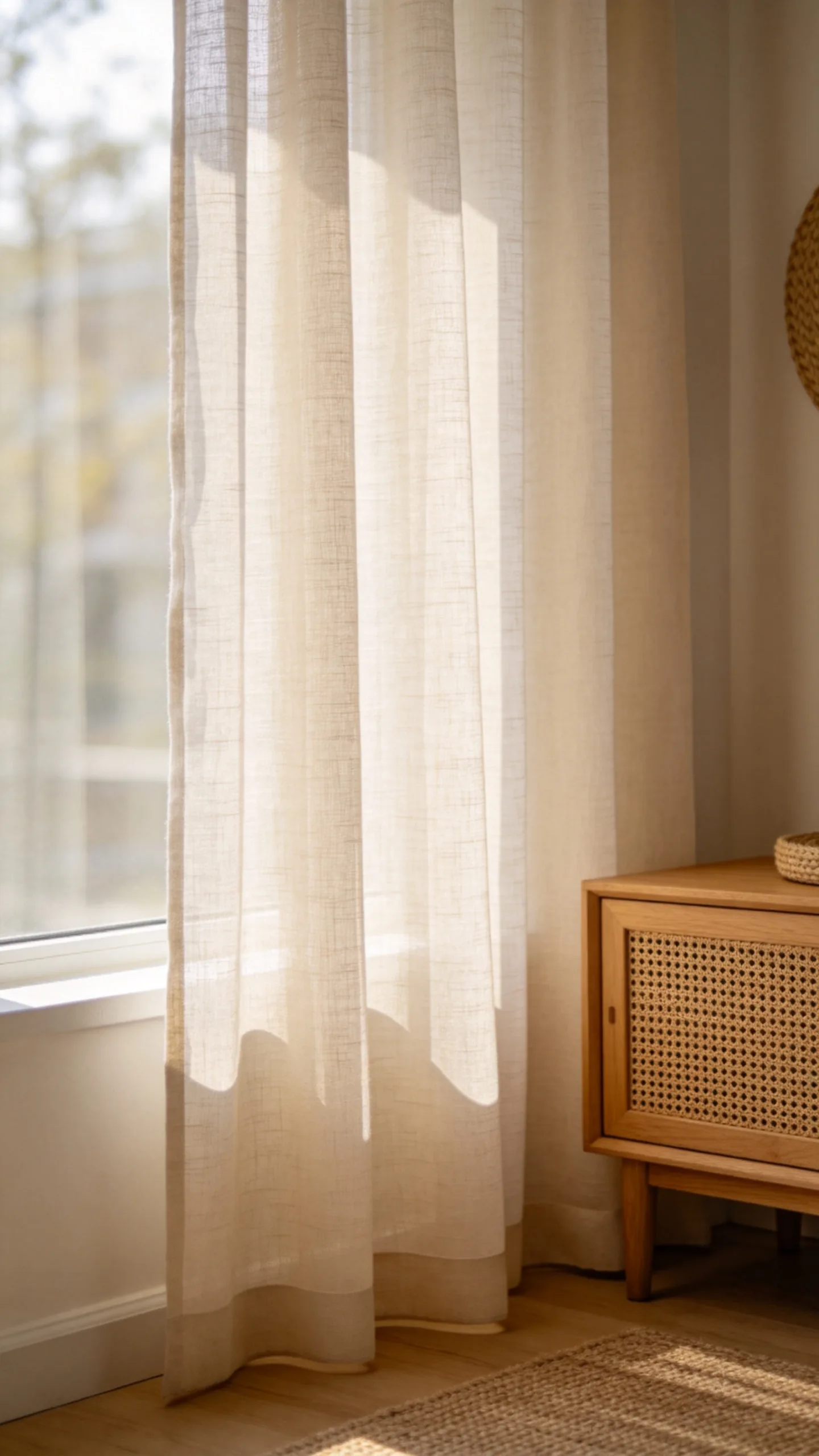
Plain voile can look very crisp, but a linen-textured voile adds softness and depth without becoming opaque. The slight weave variation helps diffuse light and blur views more effectively than a very smooth sheer fabric.
This idea works well in bedrooms, living rooms, and relaxed dining spaces with natural materials such as oak furniture, rattan chairs, jute rugs, or stoneware accessories. The texture keeps the window from looking flat, especially against white or greige walls.
Choose a linen-look voile in white, oatmeal, ivory, or pale gray. These tones maintain brightness while giving the fabric enough visual weight to feel intentional and layered.
9. Double-Layer Voile Curtains for Street-Facing Rooms
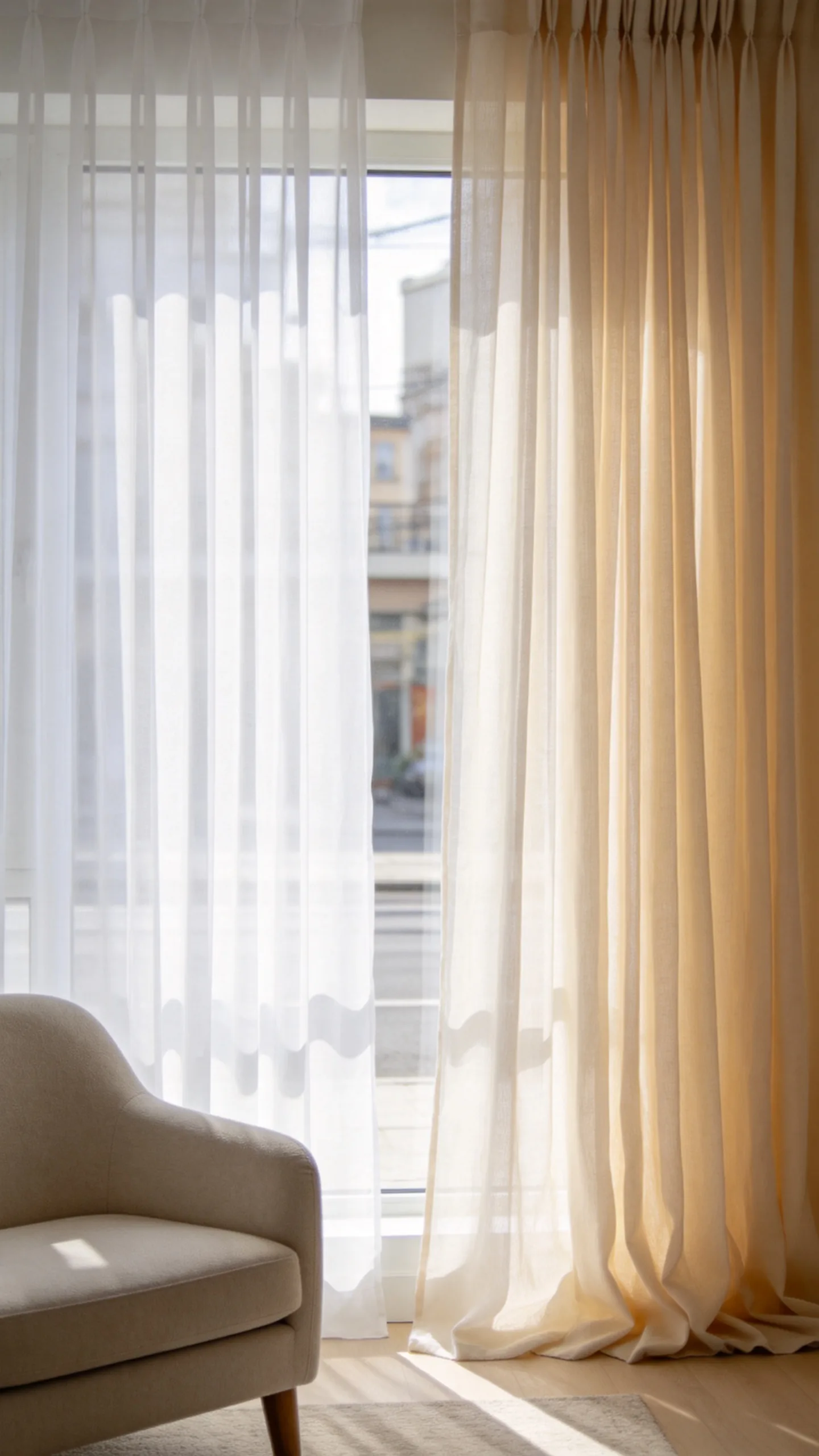
If one layer of voile feels too transparent, use two layers on the same window. A double layer gives better daytime privacy while keeping the look much lighter than thick drapes or blinds.
Install two sheer panels per side or use a double track with voile on both tracks. This method is useful for street-facing living rooms, ground-floor bedrooms, and front windows where passersby can see directly inside.
Keep both layers light in color to avoid dimming the room. White over white gives a crisp effect, while ivory over beige creates a warmer, softer glow. The layered folds make the view into the room less clear without cutting off daylight.
10. Patterned Voile Curtains for Gentle Privacy
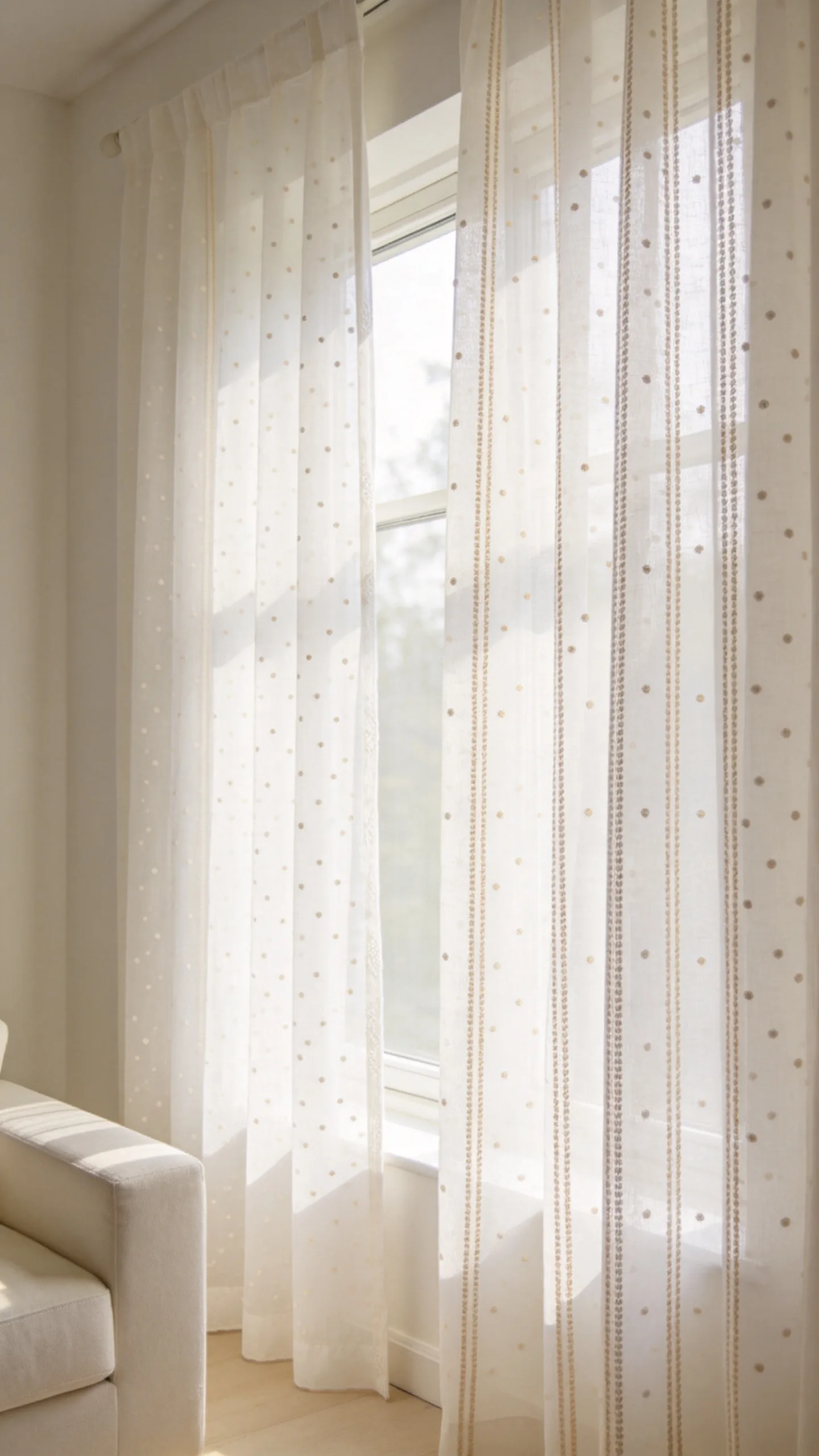
A subtle pattern on voile fabric can help interrupt sightlines through the window. Small stripes, dots, botanical embroidery, or woven checks add privacy while still feeling airy.
Use patterned voile in rooms where the furniture and walls are mostly simple. For example, a white bedroom with a wood bed frame can handle embroidered voile, while a busy living room may look better with a narrow stripe.
Keep the pattern soft rather than high contrast. Tone-on-tone white, cream, or pale gray patterns offer visual coverage without making the window treatment dominate the room.
11. Voile Curtains Across Sliding Glass Doors
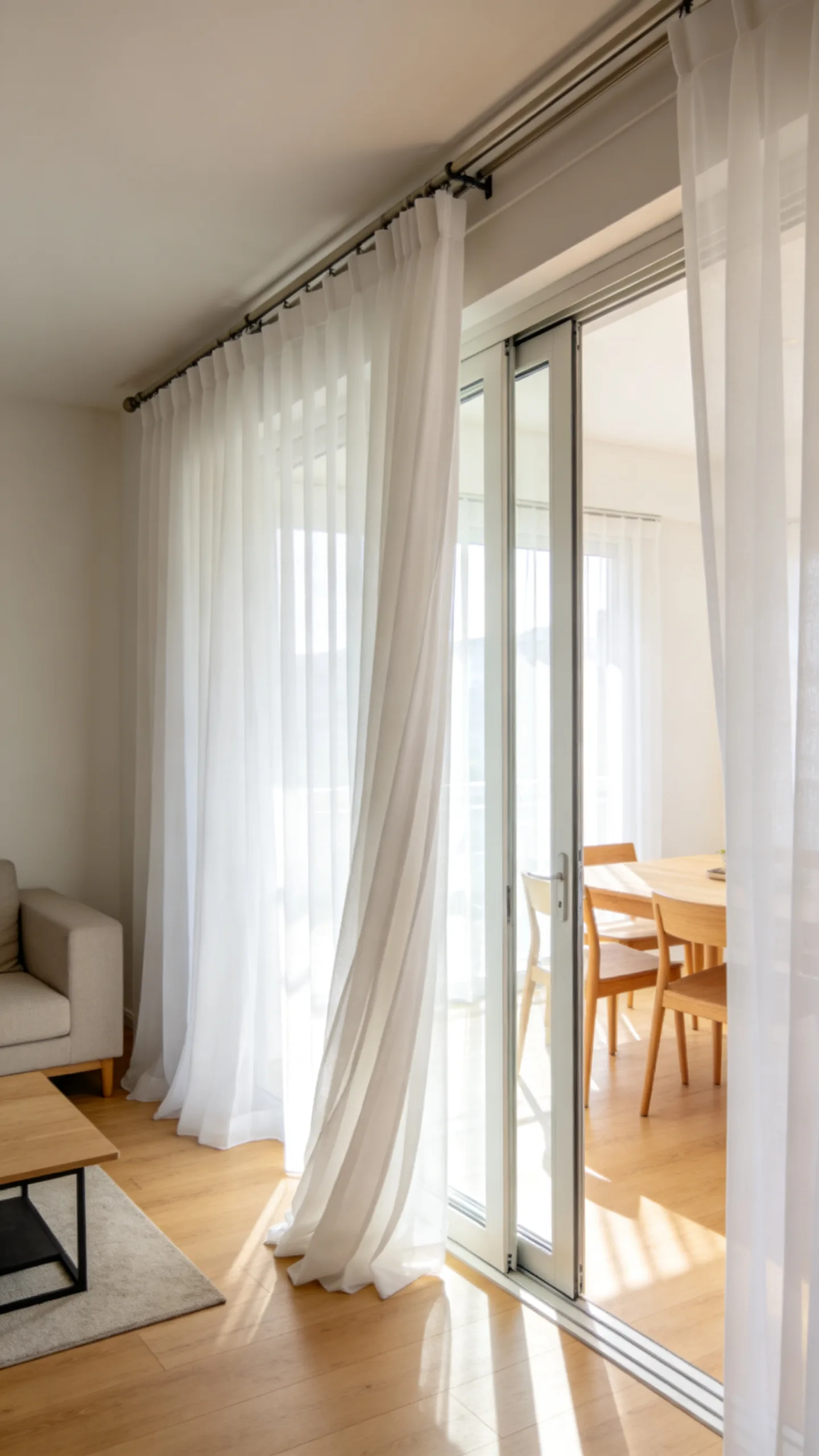
Sliding glass doors bring in a lot of light, but they can also leave a living room or dining area feeling exposed. Voile curtains across the full door width create privacy without blocking the brightness that makes the room feel spacious.
Use a ceiling track or long curtain rod that extends beyond the door frame so the panels can move completely out of the way when the door is in use. This protects traffic flow and keeps the fabric from getting caught near the opening.
For a clean look, choose multiple panels rather than one very wide sheet of voile. Separate panels move more easily, create softer folds, and allow partial coverage when you only want to shield one side of the glass.
12. Short Voile Curtains for Bathroom Windows
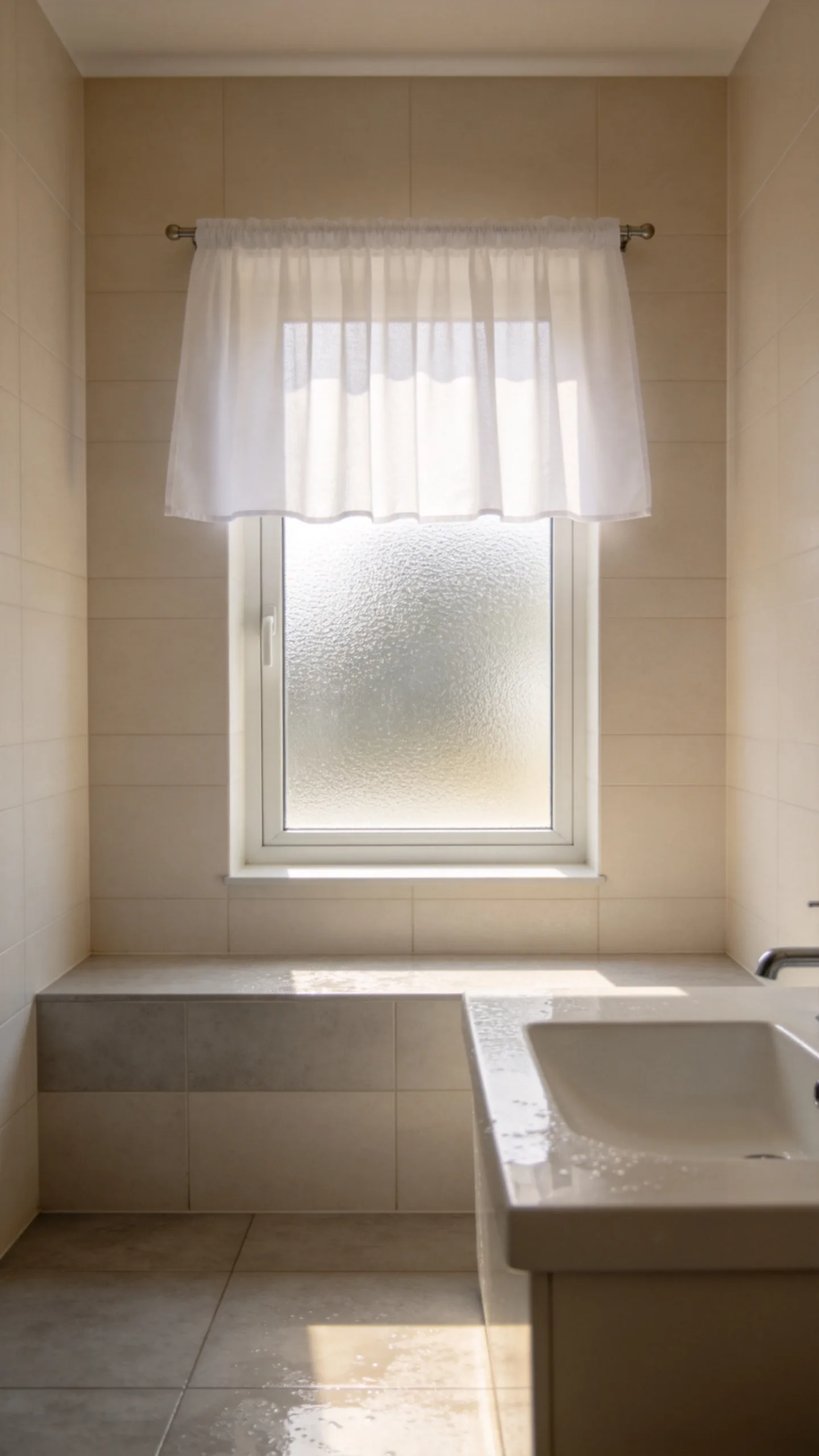
Voile curtains can work in a bathroom when privacy is needed but a heavy window treatment would feel damp or bulky. A short voile panel is best for a frosted, textured, or high bathroom window that only needs extra softness.
Use a washable polyester voile or a quick-drying blend, especially near a tub, shower, or sink. Keep the curtain above wet surfaces and avoid fabric pooling on tile floors or window ledges.
For privacy, pair voile with frosted glass film or a bamboo shade if the bathroom window faces a neighbor. The voile adds softness and daylight diffusion, while the extra layer handles evening privacy when interior lights are on.
13. Warm Ivory Voile Curtains for North-Facing Rooms
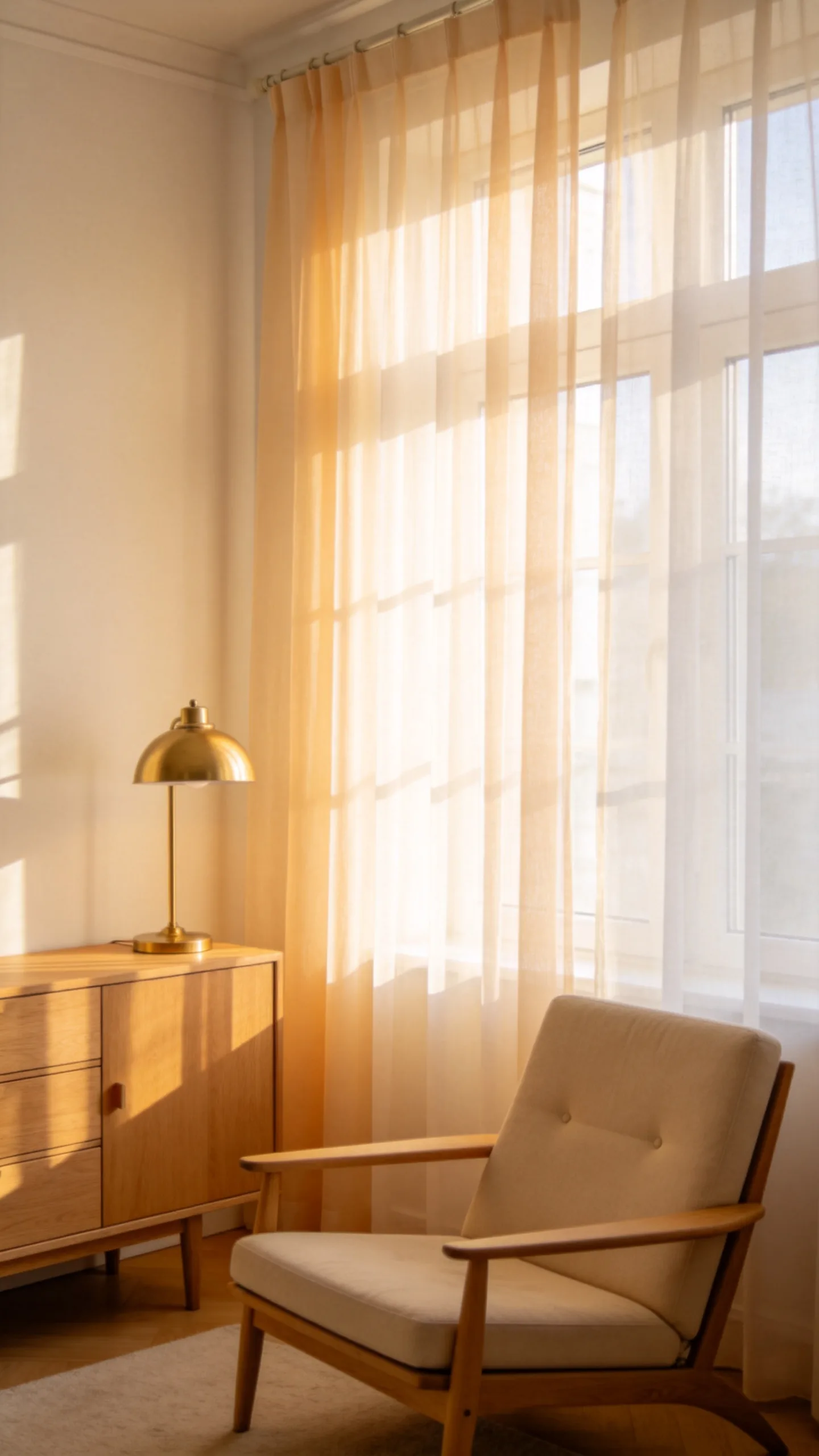
North-facing rooms can feel cool because the daylight is softer and less direct. Warm ivory voile curtains help maintain brightness while adding a gentle glow to the window wall.
This color works well with cream walls, light oak furniture, brass lamps, and beige upholstery. It softens the room more than stark white voile, especially when the light is gray or blue-toned.
Use ivory voile in bedrooms, reading corners, or dining rooms where you want a calm atmosphere without sacrificing daylight. The fabric keeps the window covered during the day while making the room feel warmer and more inviting.
14. Voile Curtains Paired with Wooden Blinds
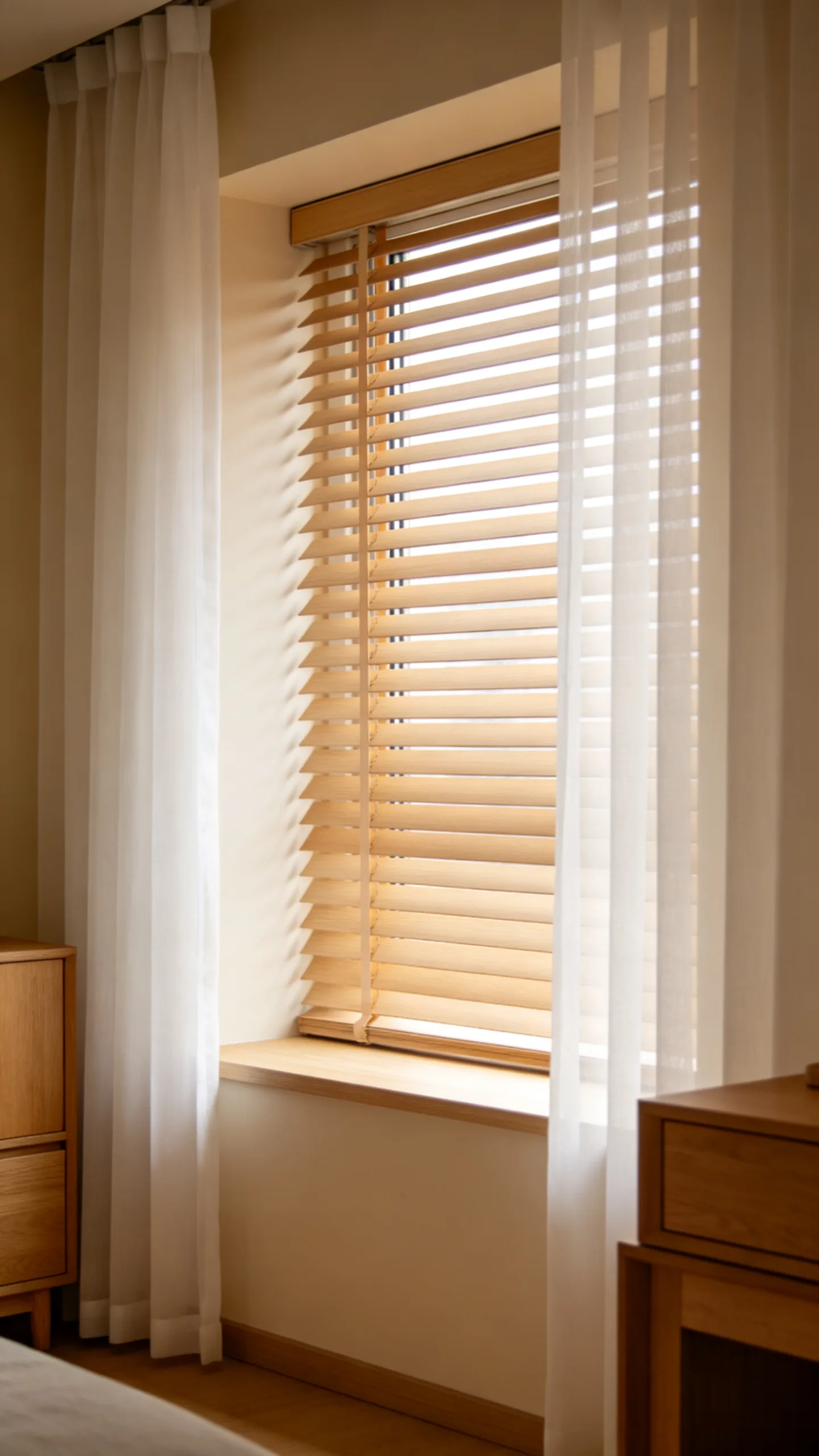
Pairing voile curtains with wooden blinds gives you precise light control and a softer decorative finish. The blinds can tilt for privacy, while the voile softens the hard lines of the slats.
This combination works well in living rooms, home offices, and bedrooms with wood furniture or warm neutral decor. Choose white voile with pale wood blinds for a light coastal look, or ivory voile with walnut-toned blinds for a richer, traditional feel.
Install the voile panels outside the window frame and keep the blinds inside the recess if possible. This layered arrangement keeps the window neat, adds depth, and allows each treatment to function without crowding the wall.
15. Voile Curtains in a Bay Window
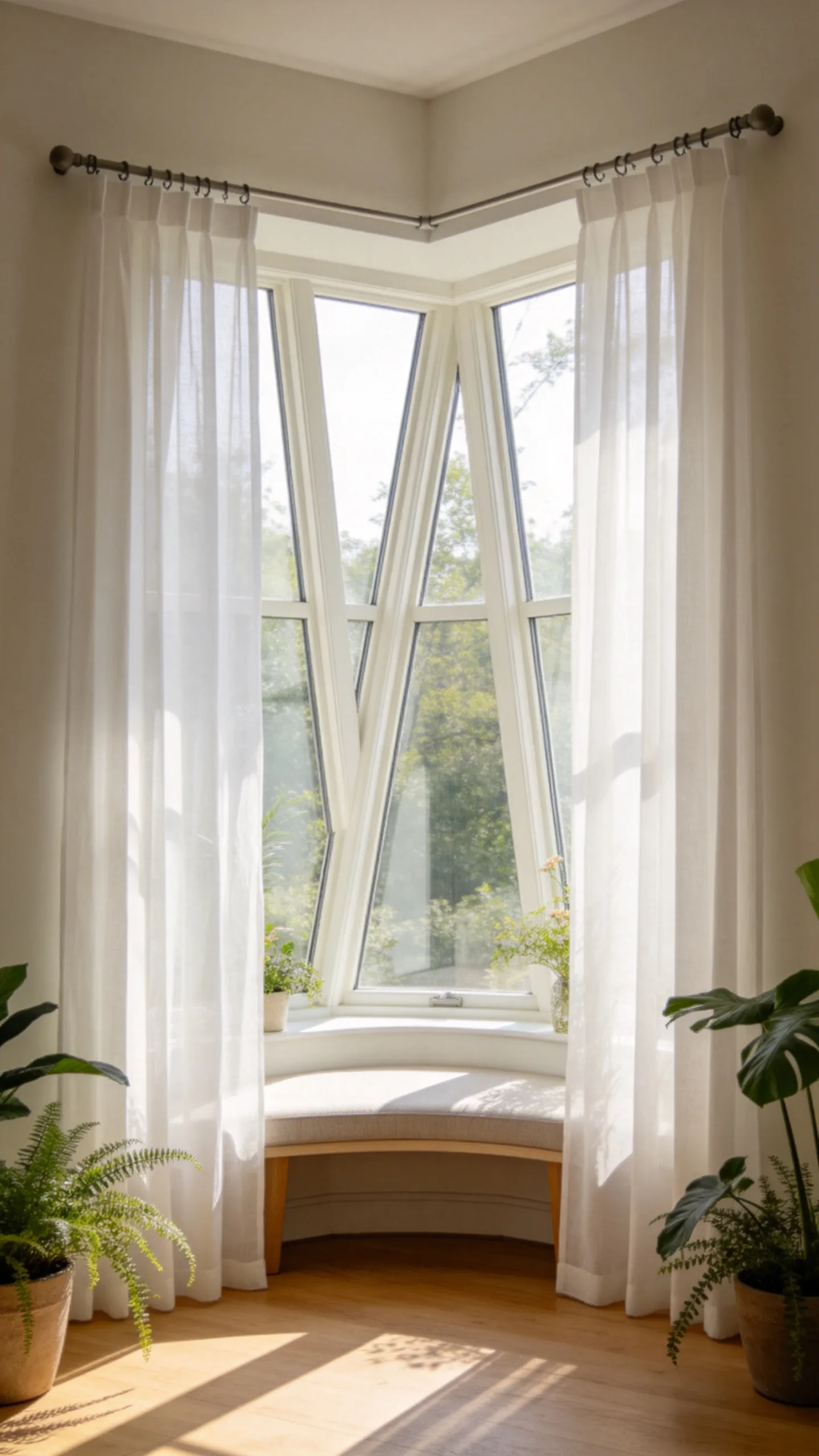
Bay windows often need privacy from several angles, but heavy curtains can hide the shape of the architecture. Voile curtains are a good fit because they follow the curve or angles of the bay while keeping the area bright.
Use a flexible curtain track or individual rods for each window section. The voile should hang close to the glass if the bay contains a bench seat, plants, or a small table, so the usable floor space remains open.
Light voile panels make the bay feel softer without blocking the natural focal point. They also reduce visual clutter from outside views, helping the bay read as a calm sitting area rather than a fully exposed glass corner.
16. Voile Curtains with Tiebacks for Adjustable Light
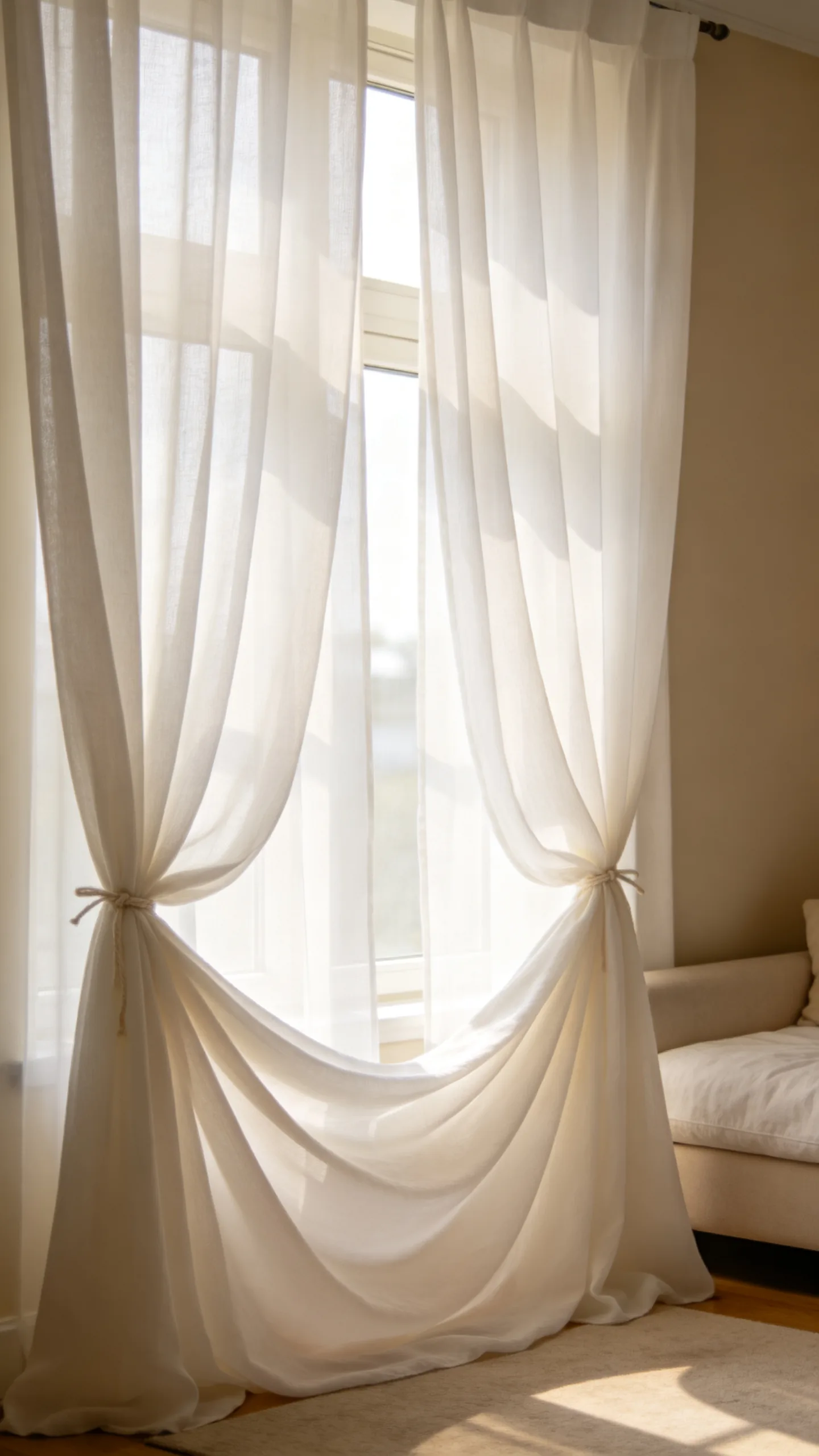
Tiebacks let you control how much of the window is covered throughout the day. You can pull voile panels loosely to the sides for more daylight or release them across the glass when privacy matters.
Use fabric tiebacks for a soft look in bedrooms and living rooms, or choose metal holdbacks for a cleaner finish in a dining room or home office. Place the tieback around the lower third of the curtain for a relaxed shape that still covers the center of the window.
This idea is useful for rooms that change function during the day. A living room may need open light in the morning, filtered privacy in the afternoon, and a softer covered window in the evening before heavier curtains are closed.
17. Colored Voile Curtains in Soft Neutral Tones
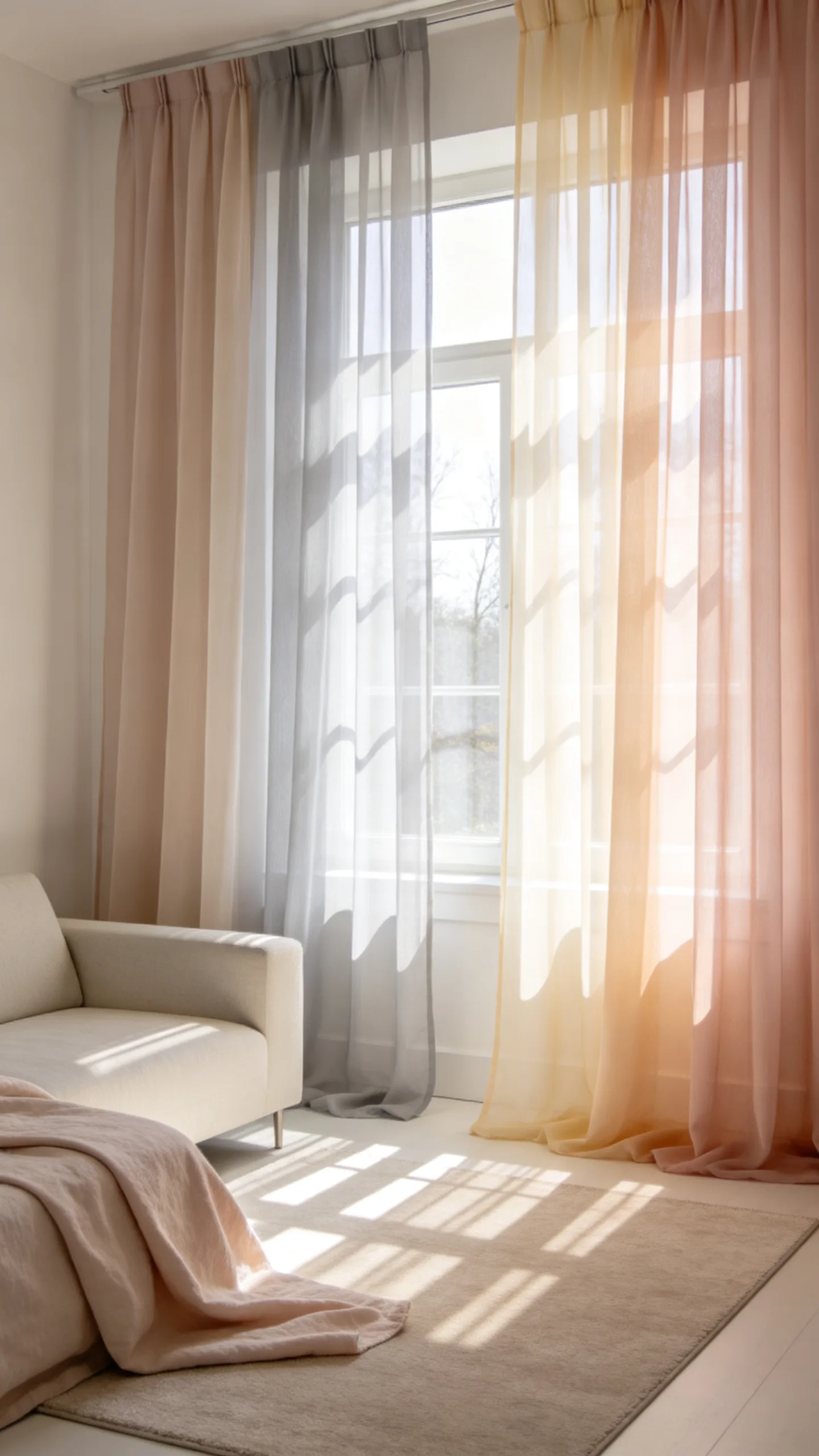
Voile does not have to be pure white. Soft neutral colors such as mist gray, sand, pale taupe, warm cream, or muted blush can add privacy and style while keeping the room light.
Use colored voile when the room needs a little contrast against white walls or when you want the curtains to connect with a rug, bedding, or sofa fabric. A pale gray voile can suit a modern living room, while a sand-colored voile works well with natural wood and woven baskets.
Keep the color light enough for daylight to pass through easily. Darker sheer fabrics may look elegant, but they can reduce brightness and feel heavier in small rooms.
18. Voile Curtains as a Soft Room Divider Near Windows
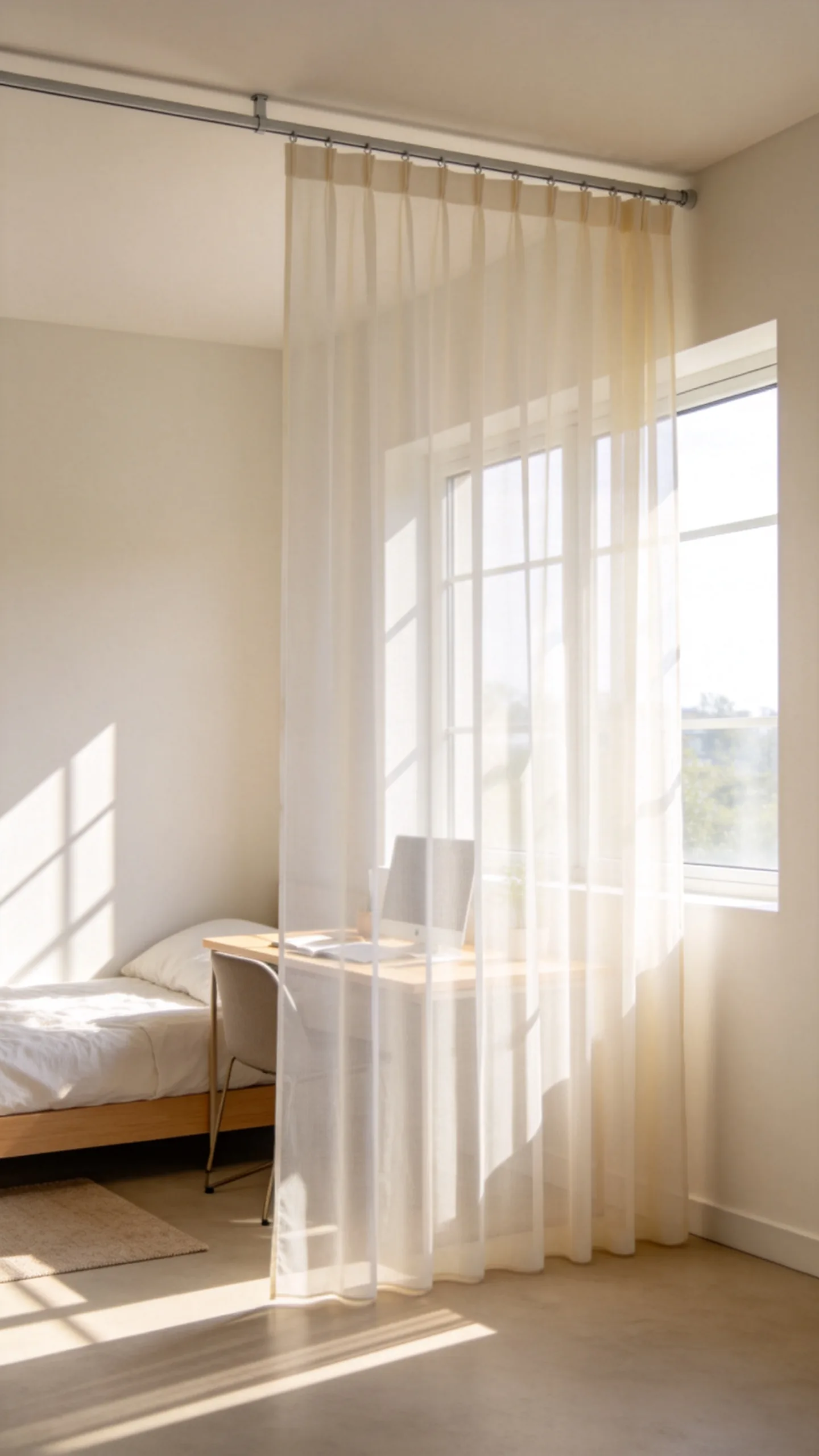
In open-plan spaces, voile curtains can act as a light room divider while still allowing brightness to travel through the area. This is useful near a studio apartment bed, a reading nook by a window, or a small home office corner.
Install a ceiling track so the voile can be pulled across only when needed. Because the fabric is translucent, it separates zones without creating a solid visual barrier or making the room feel smaller.
Choose a plain white or ivory voile for this use so the divider blends with the window treatments. The result is a softer boundary that improves privacy while keeping sightlines and natural light flowing through the space.
19. Voile Curtains with a Clean Wave Fold Finish
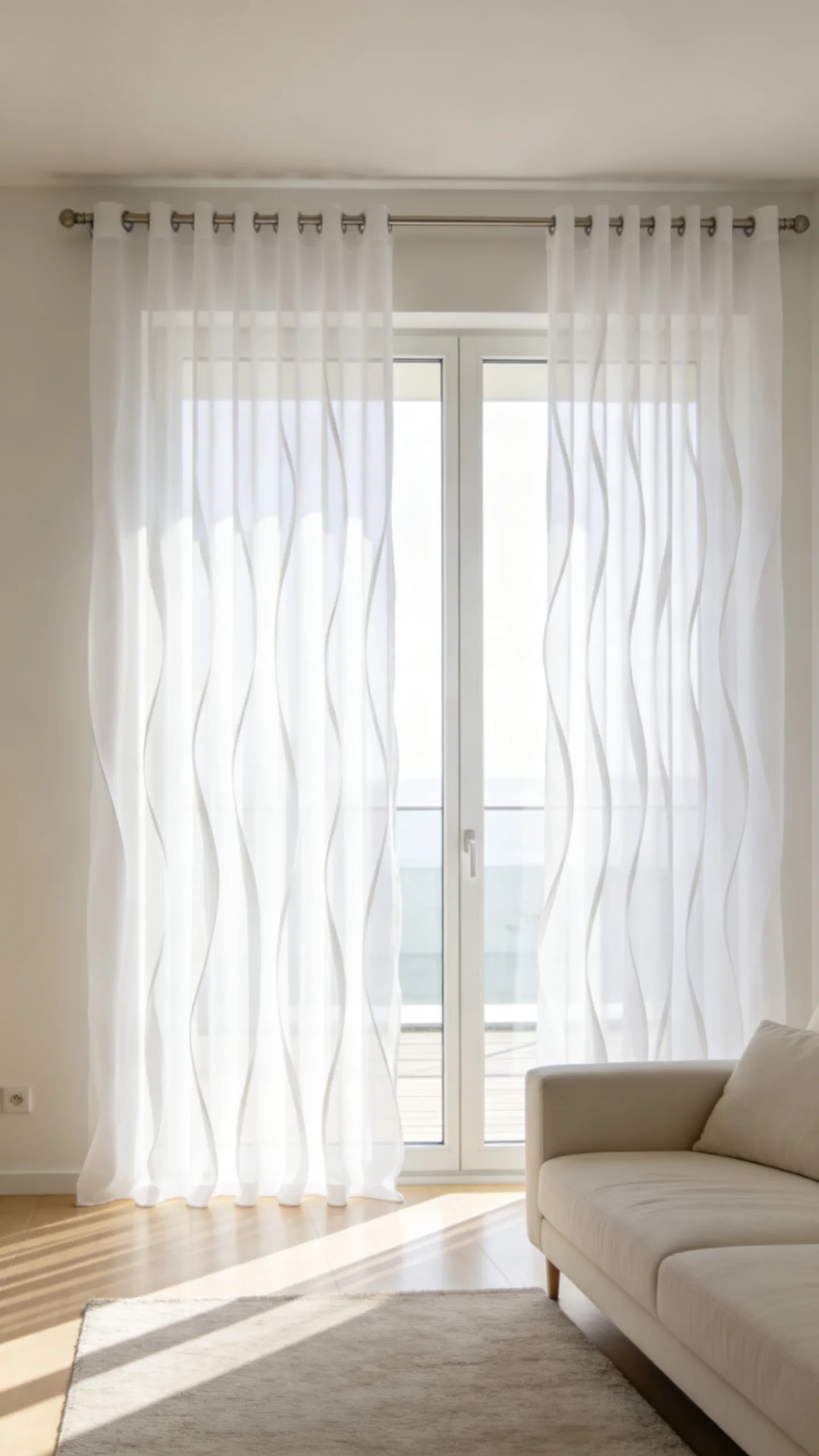
A wave fold heading gives voile curtains a neat, modern drape with even vertical curves from top to bottom. This style looks especially good on large windows, patio doors, and minimalist living rooms where messy gathers would feel too casual.
Use a curtain track designed for wave curtains so the folds stay consistent when the panels are open or closed. The regular spacing creates layered fabric across the glass, which improves privacy without using a heavy material.
Wave fold voile works well with smooth walls, low-profile sofas, simple rugs, and uncluttered shelving. It gives the window a polished finish while preserving the light, airy quality that makes voile curtains so useful.

From the editors
Decor Compass Editorial Team
We turn practical home research into clear, useful room-by-room ideas.