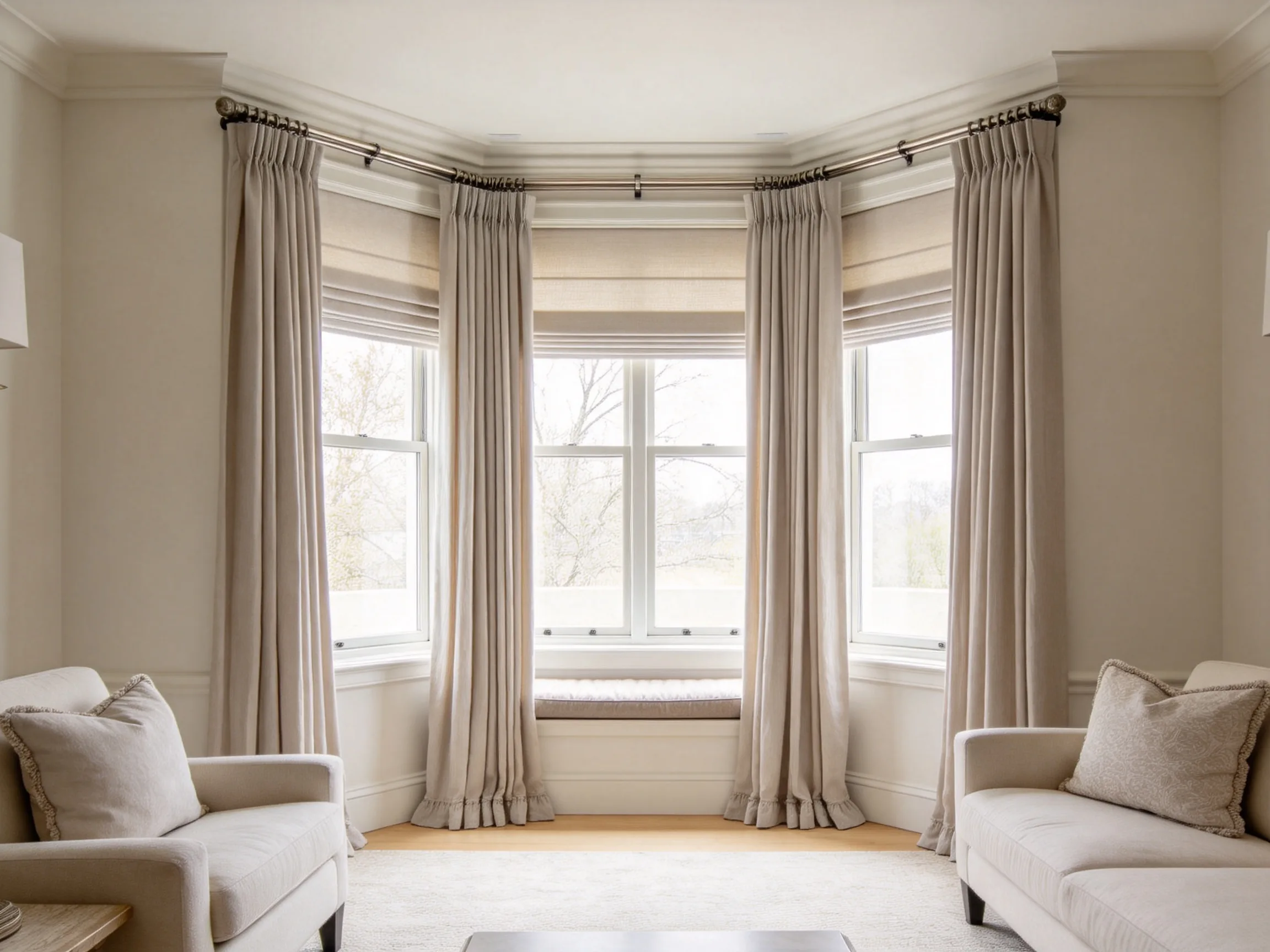
Bay windows can make a room feel brighter and larger, but they also make curtain planning more complicated. The angled walls, multiple glass panes, deep sills, and wide spans often need a more intentional layout than a standard straight window. These bay window curtain ideas focus on practical rod, track, panel, and layering solutions that help manage privacy, light control, awkward corners, and furniture placement without hiding the shape of the window.
1. Ceiling-Mounted Track That Follows the Bay Shape
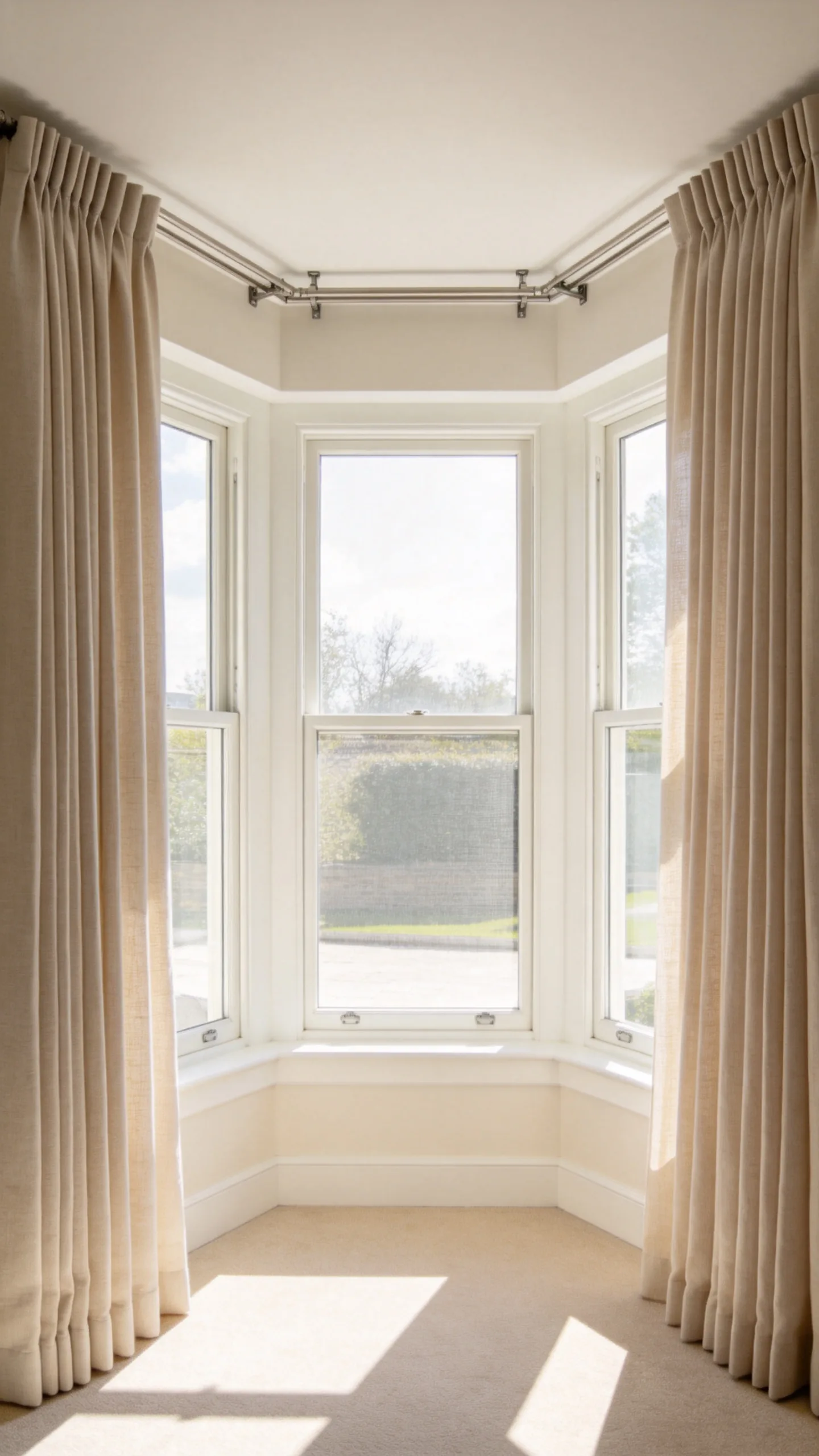
A ceiling-mounted curtain track is one of the cleanest layouts for a bay window with tight angles or limited wall space above the frames. The track can be fitted in sections around the bay, allowing the curtains to glide along the full shape instead of stopping awkwardly at each corner.
This works especially well in living rooms, bedrooms, and dining rooms where the bay window is a major focal point. Choose ripple-fold or pinch-pleat panels for a tailored look that stacks neatly at the outer edges when open. Mounting the track to the ceiling also draws the eye upward, which helps the room feel taller and keeps the window area visually uncluttered.
For a soft, finished look, use fabric panels that reach the floor rather than stopping at the sill. Linen, cotton-blend, or light-filtering polyester panels can soften the hard lines of the bay while still preserving the architectural shape.
2. Separate Short Rods for Each Window Section
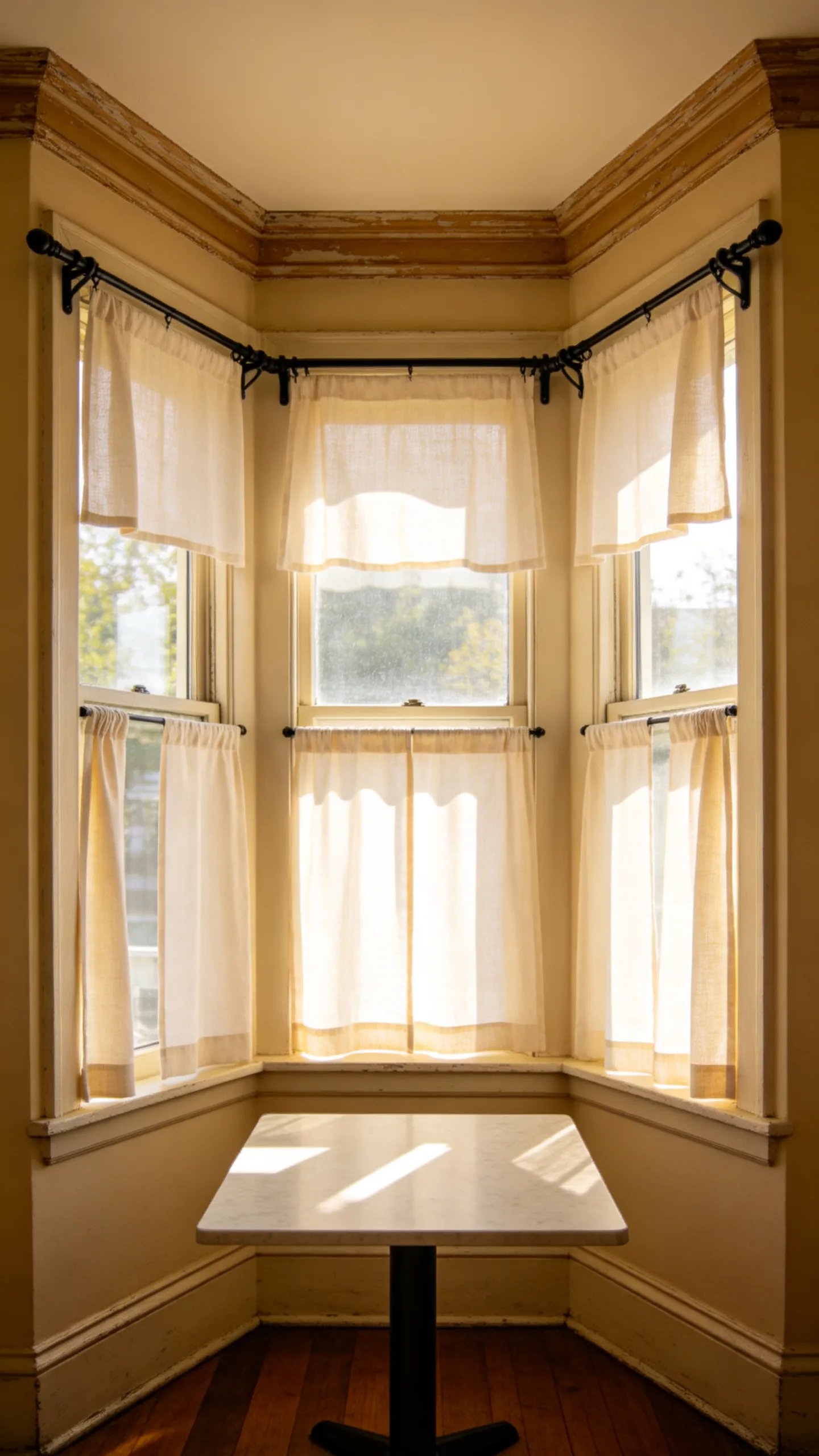
Using individual rods for each pane is a practical option when the bay window has sharp angles, decorative trim, or separate window frames. Each rod sits above its own section, allowing every curtain panel to move independently.
This layout is useful in breakfast nooks, small bedrooms, or older homes where custom bent rods may be difficult to install. It also gives you more control over light and privacy because one section can stay covered while another remains open.
To keep the design cohesive, use matching rods, brackets, finials, and curtain styles across all sections. Simple black metal rods work well in modern spaces, while warm brass or wood rods can suit traditional, cottage, or transitional rooms.
3. One Long Front Rod Across the Bay Opening
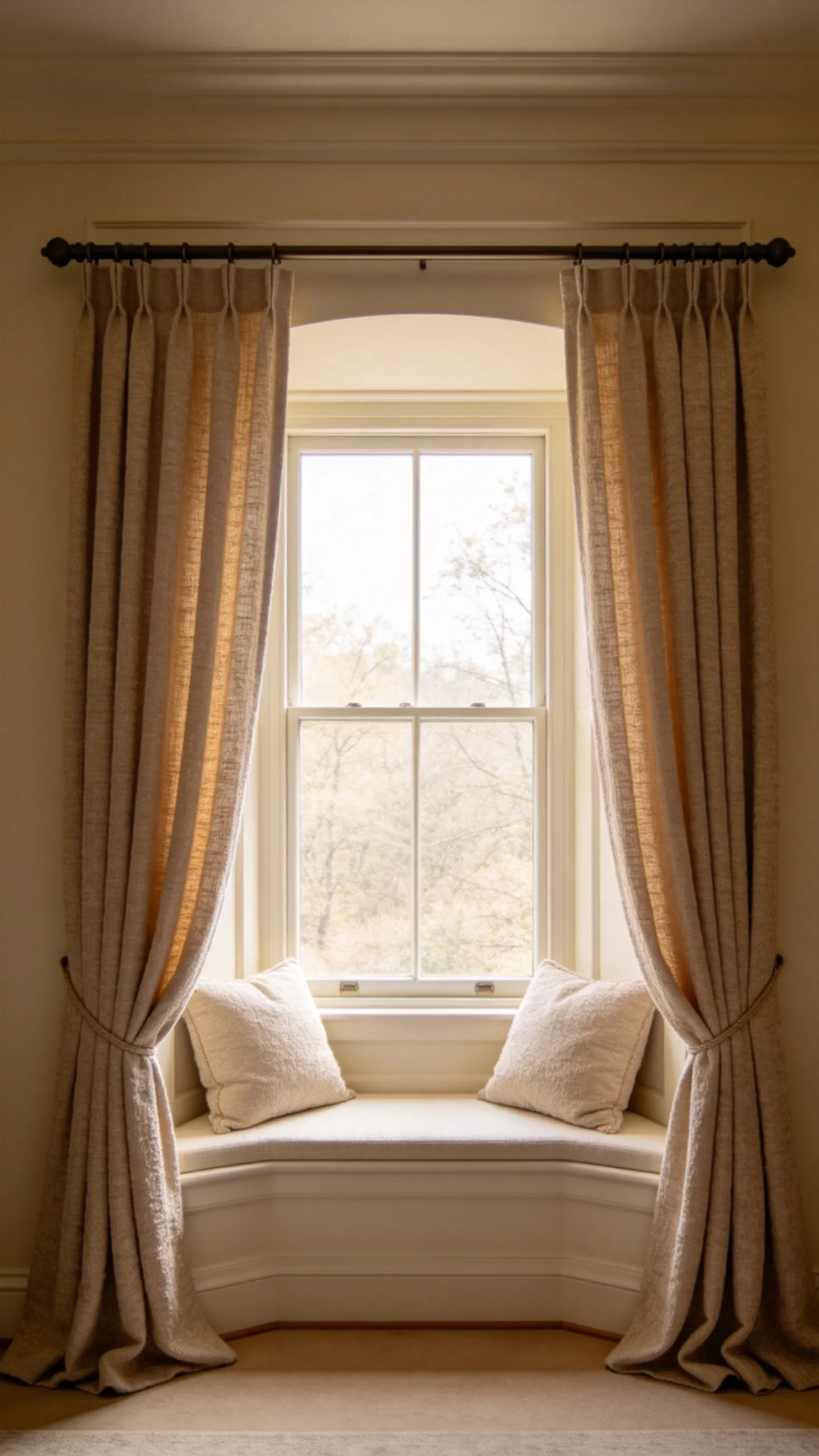
If the bay window sits inside a recessed area, a single straight rod mounted across the front of the opening can be a simple and dramatic solution. Instead of following each angled pane, the curtains frame the entire bay as one wide feature.
This layout works well when there is a window seat, built-in bench, or small reading nook inside the bay. When the curtains are open, the full alcove is visible. When closed, the entire bay disappears behind one continuous curtain wall.
Use this idea when you want a cleaner room-facing view or need better insulation at night. Floor-length panels in a heavier fabric, such as velvet, lined cotton, or textured weave, can make the bay feel cozy without requiring hardware inside every angle.
4. Curved Bay Window Rod With Corner Connectors
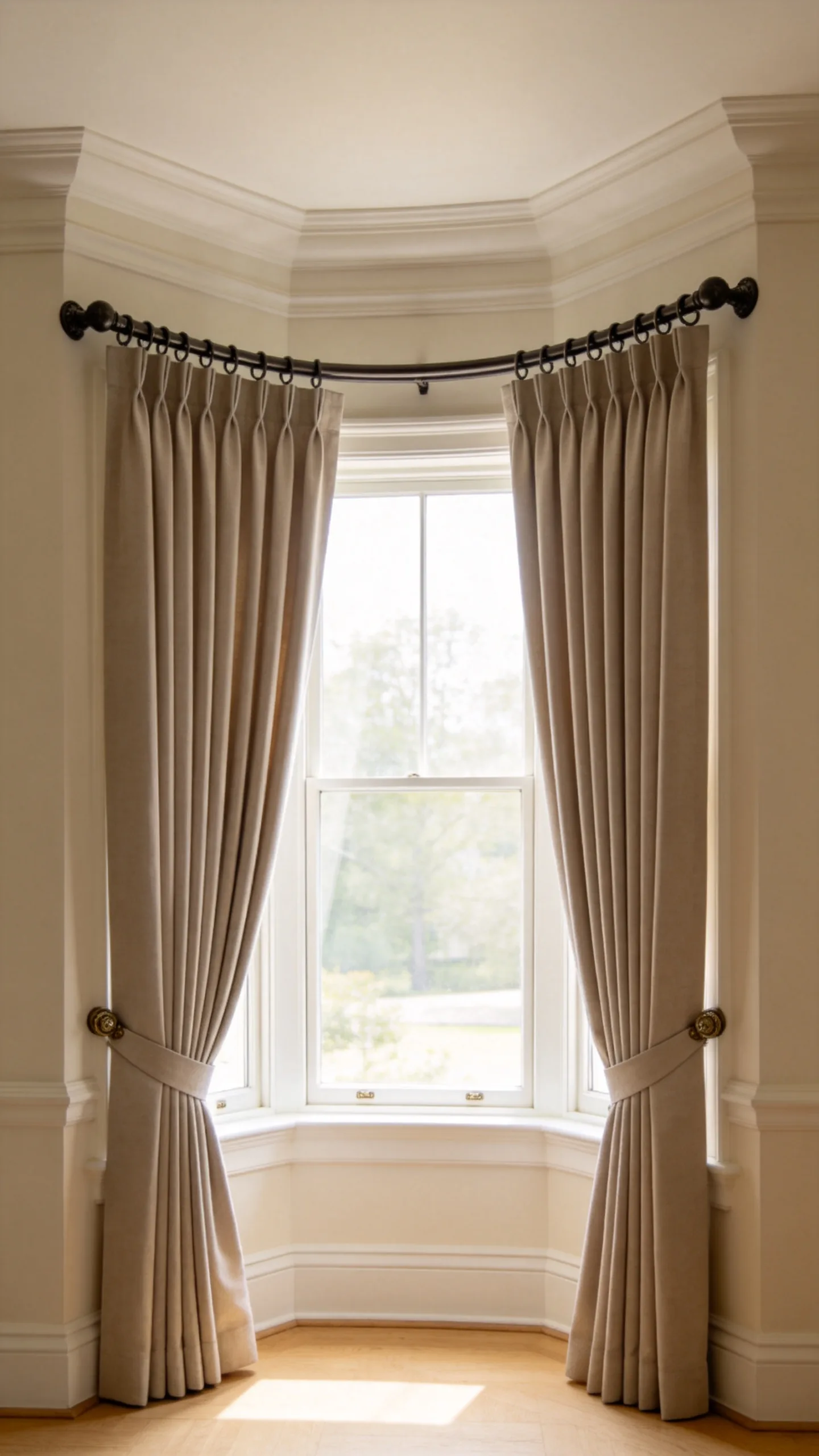
A curved or angled bay window rod is designed to follow the shape of the bay while still looking like one continuous curtain rod. Many systems use adjustable corner connectors, making them useful for three-sided or five-sided bay windows.
This is a strong choice for living rooms where you want visible decorative hardware instead of a hidden ceiling track. The rod becomes part of the design, especially when paired with ring clips, pleated curtains, or substantial finials.
Measure each wall section carefully before buying this style, including the depth of the bay and the angle between sections. Panels should be wide enough to cover the full span without pulling tight at the corners.
5. Sheer Panels Inside the Bay With Outer Drapes
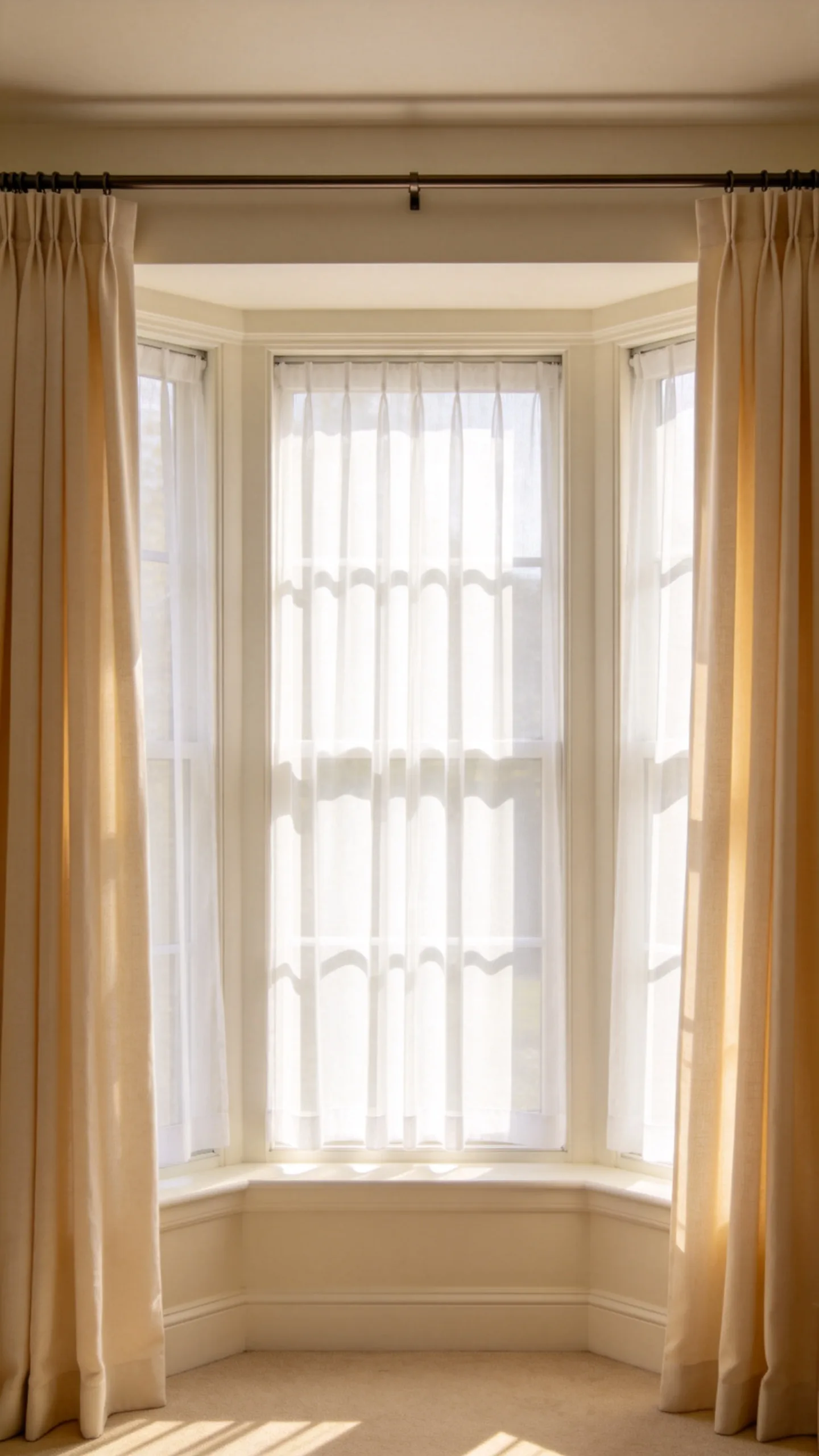
Layering sheer curtains inside the bay with heavier drapes outside the opening gives you flexible light control. The sheers soften daylight and add daytime privacy, while the outer panels can close fully in the evening.
This layout is ideal for street-facing living rooms, bedrooms, or dining rooms where privacy changes throughout the day. Install the sheers on small rods or tracks close to each window pane, then mount the heavier drapes on a straight rod across the front of the bay.
Choose white, ivory, or warm beige sheers if you want the bay to stay bright. For the outer panels, use a fabric that coordinates with the room’s sofa, bedding, rug, or dining chairs so the window treatment feels connected to the rest of the space.
6. Roman Shades on Each Pane With Side Curtain Panels
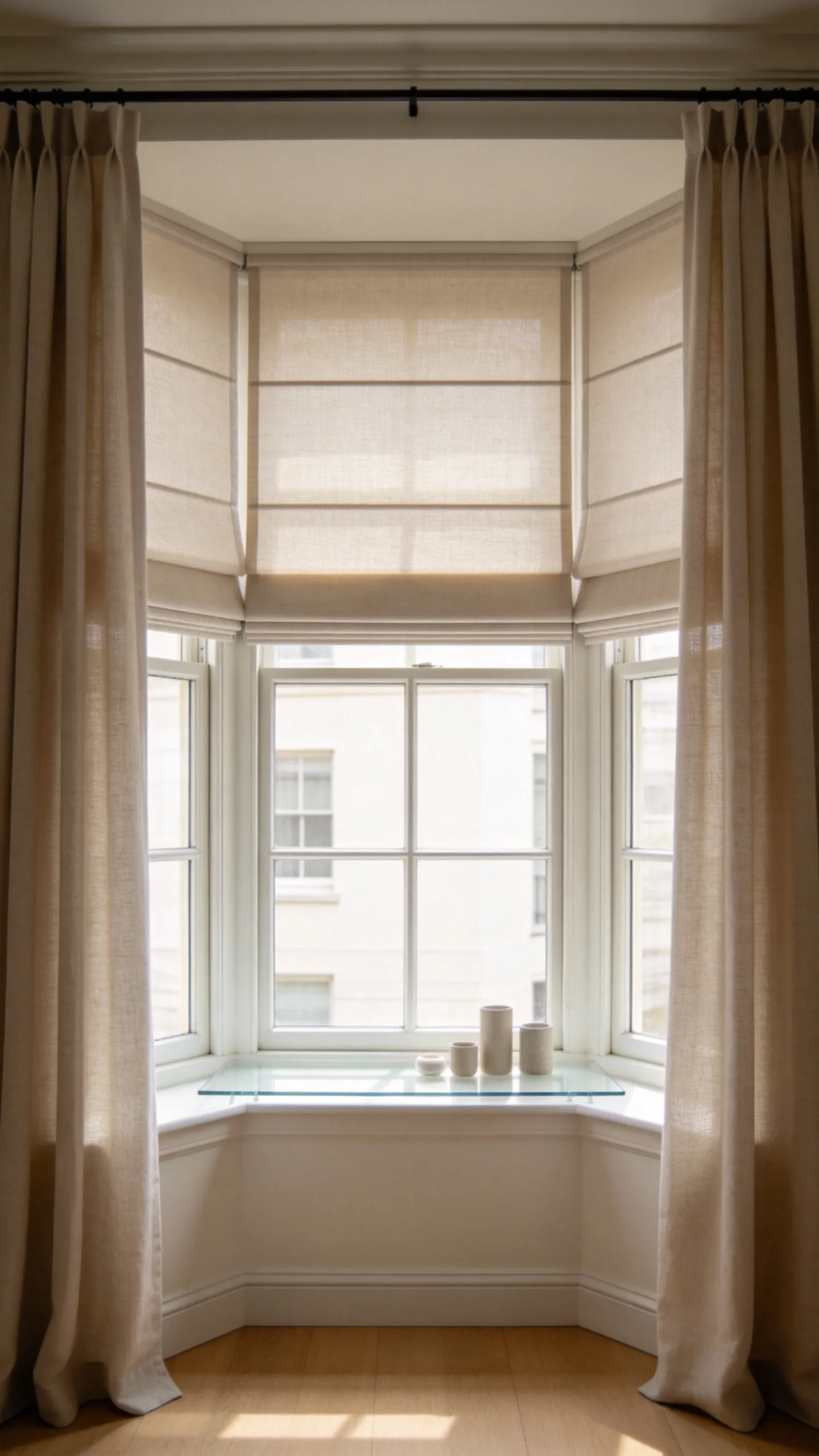
Roman shades fitted to each bay window pane create a neat, tailored base layer. Add decorative curtain panels at the outer sides of the bay to soften the room and frame the view without covering every angle with fabric.
This is a smart layout for bedrooms, home offices, and small sitting rooms because the shades handle privacy while the side panels add height and texture. It also keeps the bay’s sill or bench area open for plants, cushions, or books.
Use flat Roman shades for a crisp modern look or relaxed Roman shades for a softer cottage feel. The side curtains can be stationary if you only need them for decoration, which reduces fabric bulk around the corners.
7. Cafe Curtains Across the Lower Window Sections
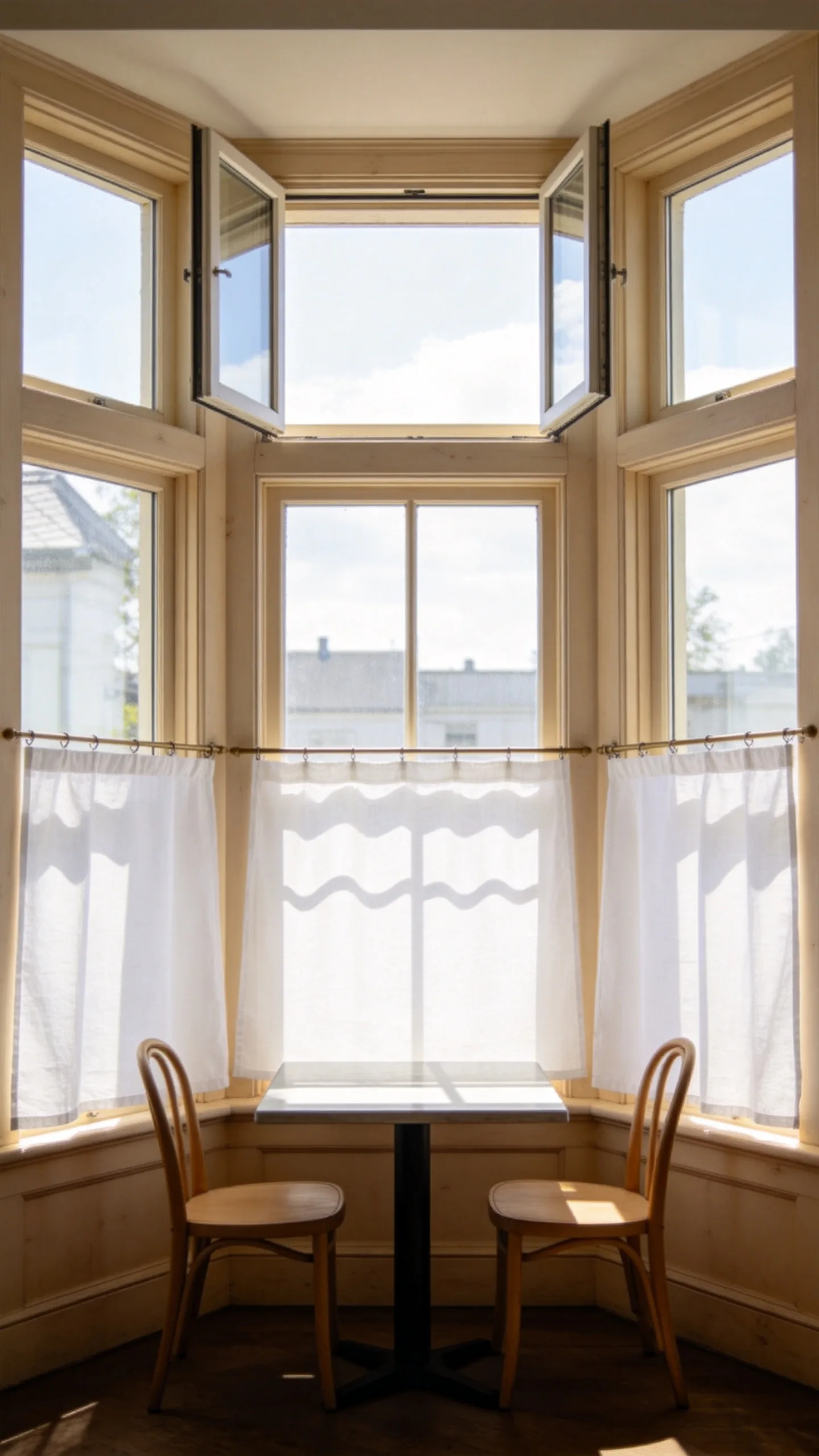
Cafe curtains cover only the lower half of the bay window, making them ideal for kitchens, breakfast nooks, and bathrooms where privacy matters but natural light is still welcome. Install a slim rod across each lower pane or use a tension rod if the window frame allows it.
This layout keeps the top of the window open, which helps the bay feel airy and bright. It is especially useful when the bay faces a sidewalk, neighboring house, or patio but you still want sunlight over the sink, table, or tub.
Light cotton, linen, or gingham fabric gives cafe curtains a casual look. For a more polished style, choose solid white or cream fabric with a simple hem and pair it with brass, black, or nickel hardware.
8. Full-Length Panels Stacked Outside the Bay
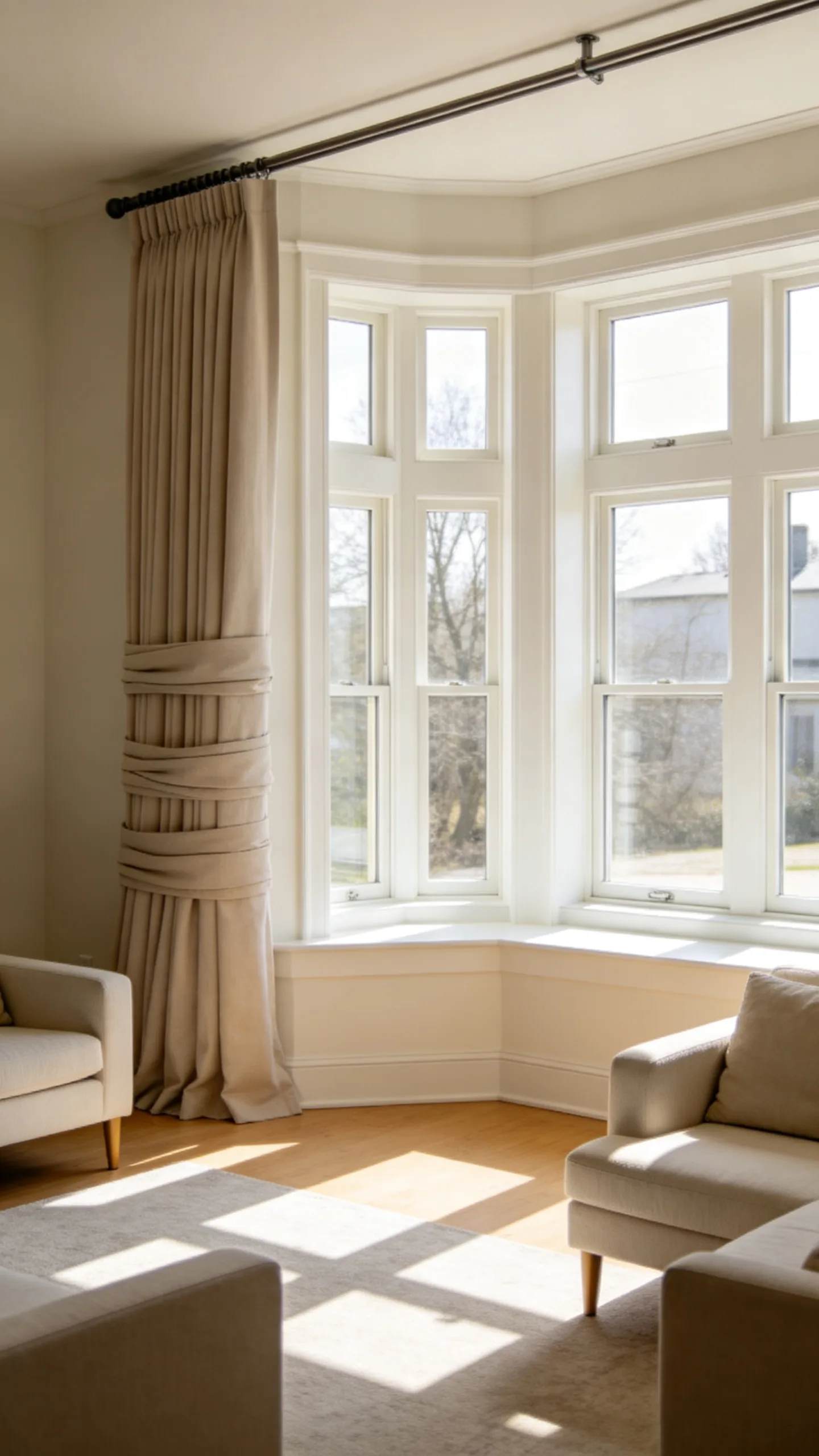
For a wide bay window, mounting panels outside the bay opening allows the curtains to stack on the adjacent wall instead of blocking glass. This keeps the window clear during the day and makes the room feel brighter.
This layout is helpful in living rooms and bedrooms where the bay window already takes up a large portion of the wall. Place the rod high and wide so the curtain stack sits beyond the window trim when open.
Use enough panel width for fullness when the curtains are closed. A too-narrow panel can look flat across a large bay, while fuller fabric creates a more intentional and balanced look.
9. Double Curtain Track for Sheers and Blackout Panels
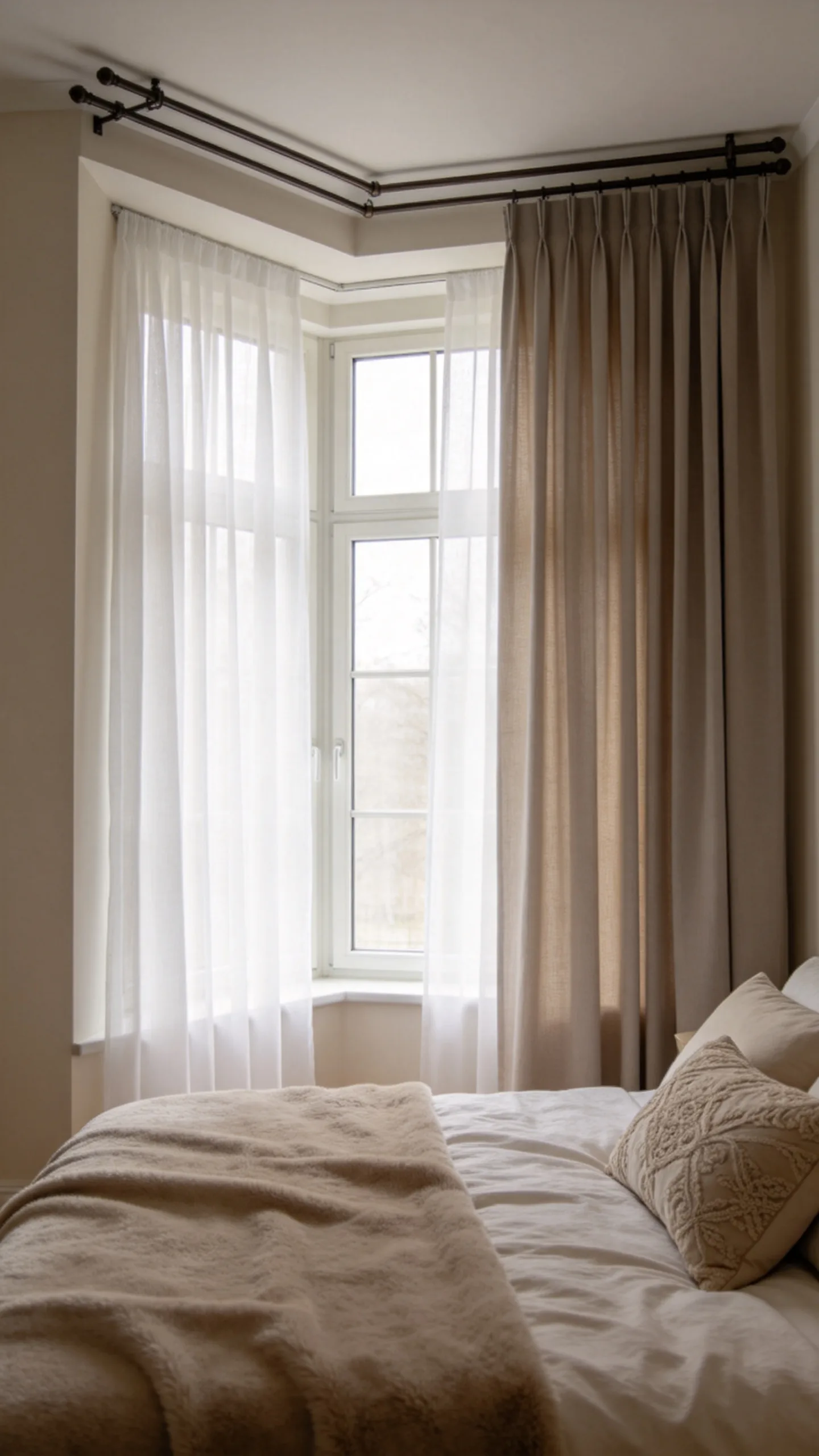
A double curtain track lets you hang two layers from the ceiling or wall: one sheer layer for daytime and one blackout or room-darkening layer for night. This is especially useful for bedrooms, nurseries, and media rooms with bay windows.
The track can follow the bay angles so both layers move smoothly around the window shape. Keep the sheer layer closest to the glass and the heavier panels closer to the room for easy access.
Choose blackout panels that match the wall color if you want a calm, seamless effect. For a more decorative look, use patterned or textured outer panels and plain sheers underneath.
10. Stationary Side Panels With Functional Center Shades
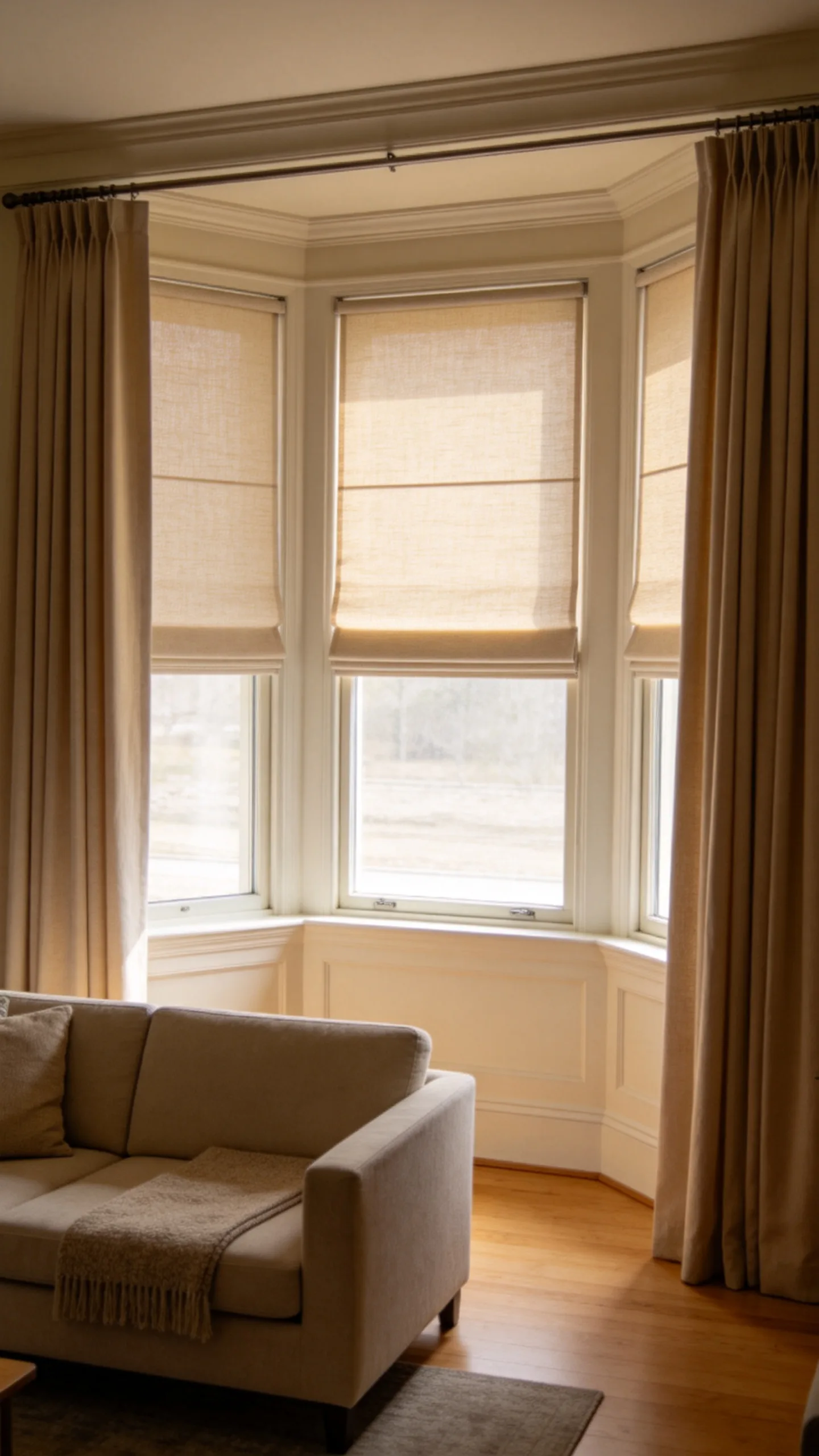
Stationary side panels give the bay window a finished look without requiring curtains to move around every corner. Combine them with roller shades, woven shades, or Roman shades on each window section for practical light control.
This layout works well when furniture sits close to the bay, such as a sofa, desk, or dining banquette. Since the side panels do not need to slide, they can remain neatly arranged without interfering with traffic flow.
Mount the panels high and just outside the bay opening to add height. Then use fitted shades inside each pane so the window itself remains functional and uncluttered.
11. Inside-Mount Roller Shades With a Decorative Valance
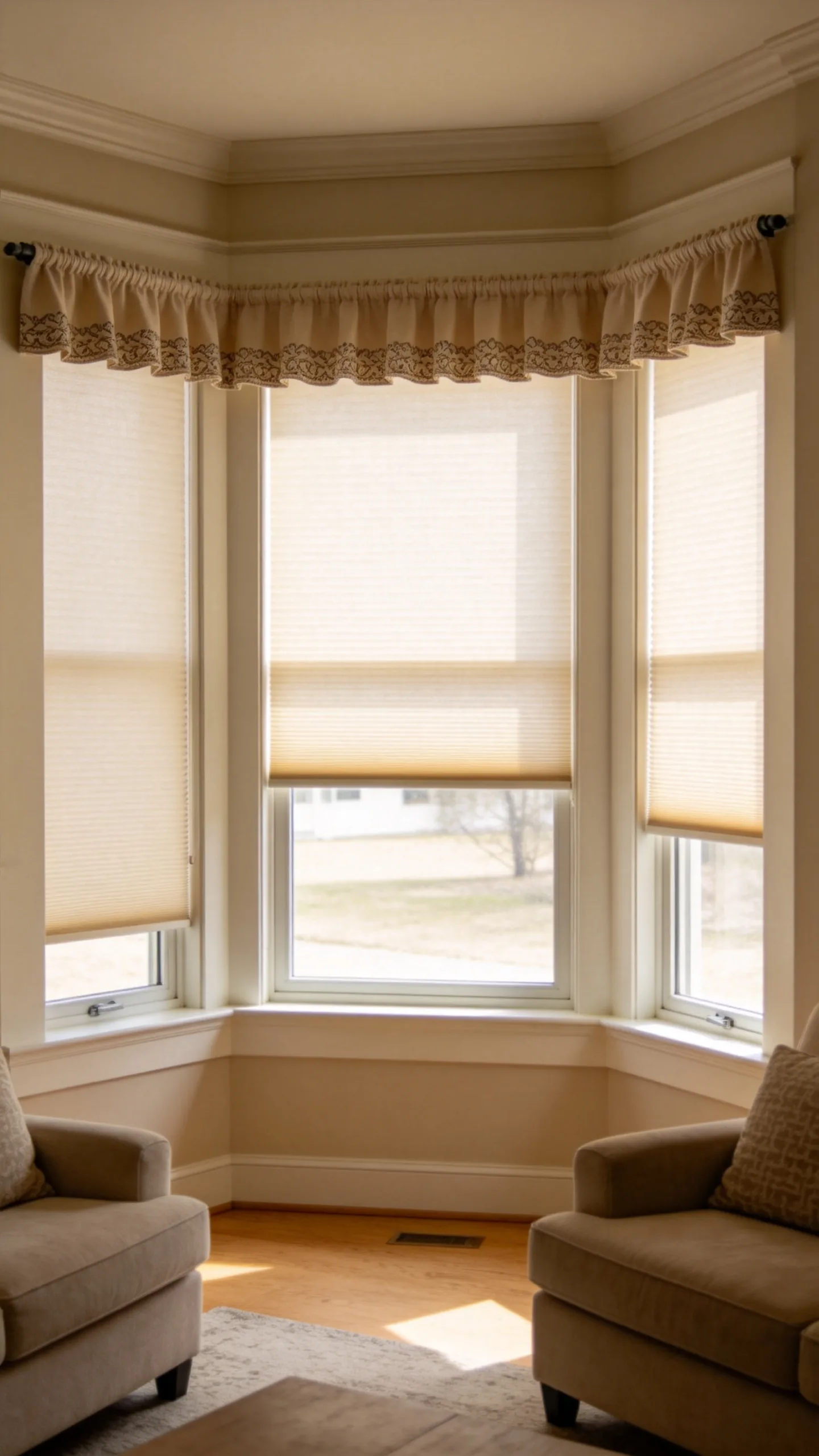
Inside-mount roller shades are a clean choice for bay windows with deep frames. Each shade fits within its own window section, creating a simple privacy layer without bulky fabric at the corners.
A decorative valance across the top can hide shade mechanisms and make the layout feel more finished. This is especially useful in kitchens, bathrooms, or casual family rooms where full curtains may feel too heavy.
Choose light-filtering roller shades for soft daylight or solar shades to reduce glare near a TV, desk, or reading chair. A fabric valance in a stripe, small print, or solid linen can add pattern without overwhelming the bay.
12. Woven Wood Shades With Linen Side Drapes
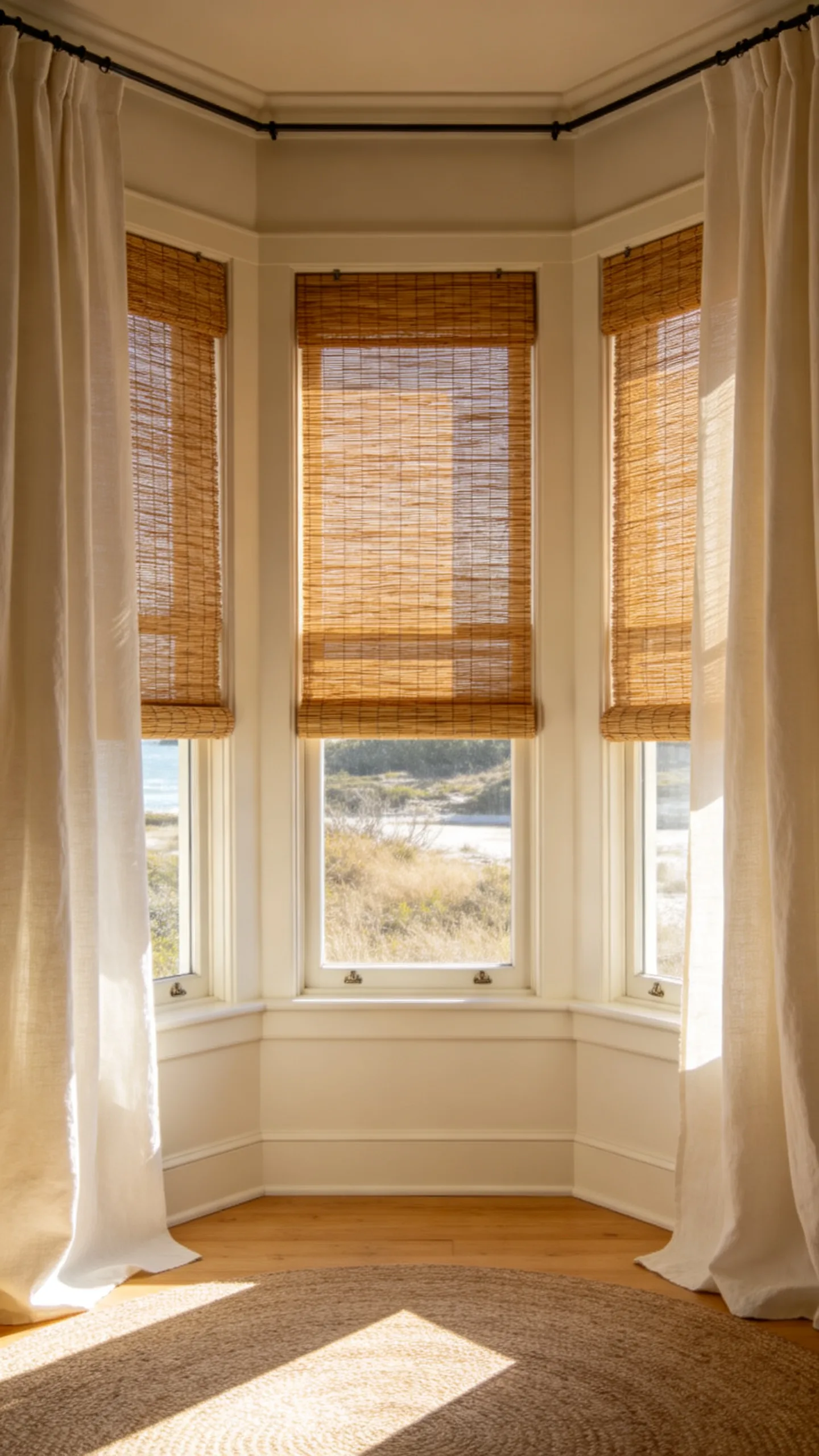
Woven wood shades bring texture to a bay window and work beautifully with simple linen side drapes. The shades can be mounted inside each window frame, while the drapes sit at the outer edges for softness.
This combination is useful in coastal, organic modern, farmhouse, and transitional rooms. The woven material adds warmth against white walls, painted trim, or pale wood floors, while the linen panels keep the window from feeling too hard-edged.
For bedrooms, choose woven shades with privacy or blackout liners. In living rooms and dining rooms, unlined woven shades can filter light while still giving the bay a relaxed, layered look.
13. Pinch-Pleat Curtains on Rings Around the Bay
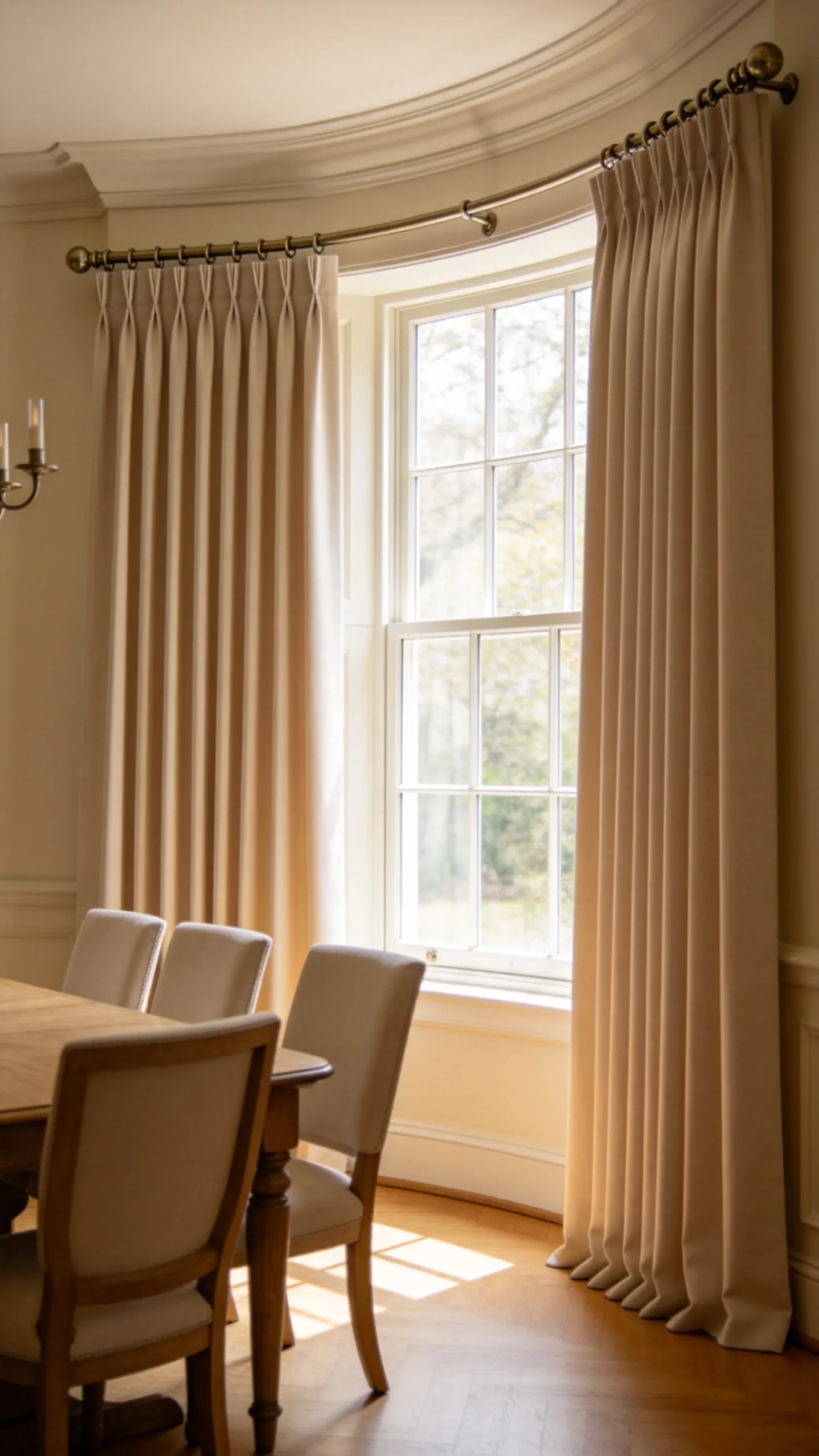
Pinch-pleat curtains bring structure to a bay window because the pleats hang evenly and stack neatly. When paired with rings, they glide more easily along rods or tracks and look polished from across the room.
This layout suits formal living rooms, dining rooms, and primary bedrooms where the bay window is a major design feature. Use a bay rod or ceiling track that follows the window angles, then hang pleated panels long enough to skim the floor.
Pinch pleats work best with enough fabric fullness, so avoid panels that barely meet in the middle. A lined fabric can help the pleats hold their shape and provide better privacy at night.
14. Ripple-Fold Curtains for a Modern Bay Window
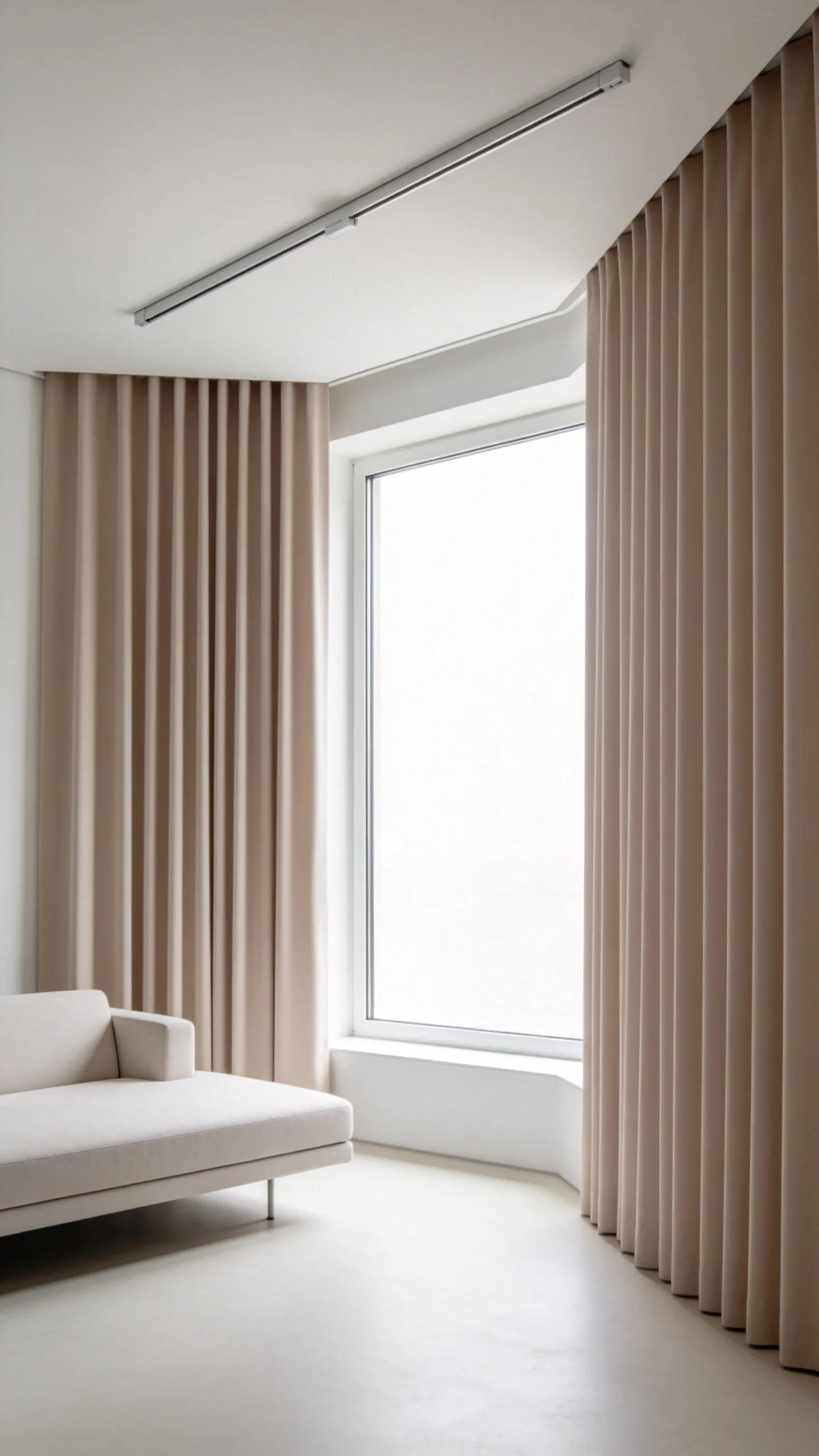
Ripple-fold curtains create smooth, even waves across a bay window, making them a strong option for modern and minimalist rooms. They are usually installed on a track system, which works well for angled or curved bays.
This style is especially useful for large bay windows because the fabric movement looks controlled rather than bulky. The repeated folds create visual rhythm while keeping the window treatment clean and simple.
Use solid fabric in white, oatmeal, gray, or soft taupe for a calm backdrop. If the room has strong architectural lines, such as a low sofa, sleek dining table, or built-in shelving, ripple-fold curtains can complement the space without adding visual clutter.
15. Bay Window Seat Framed by Curtains
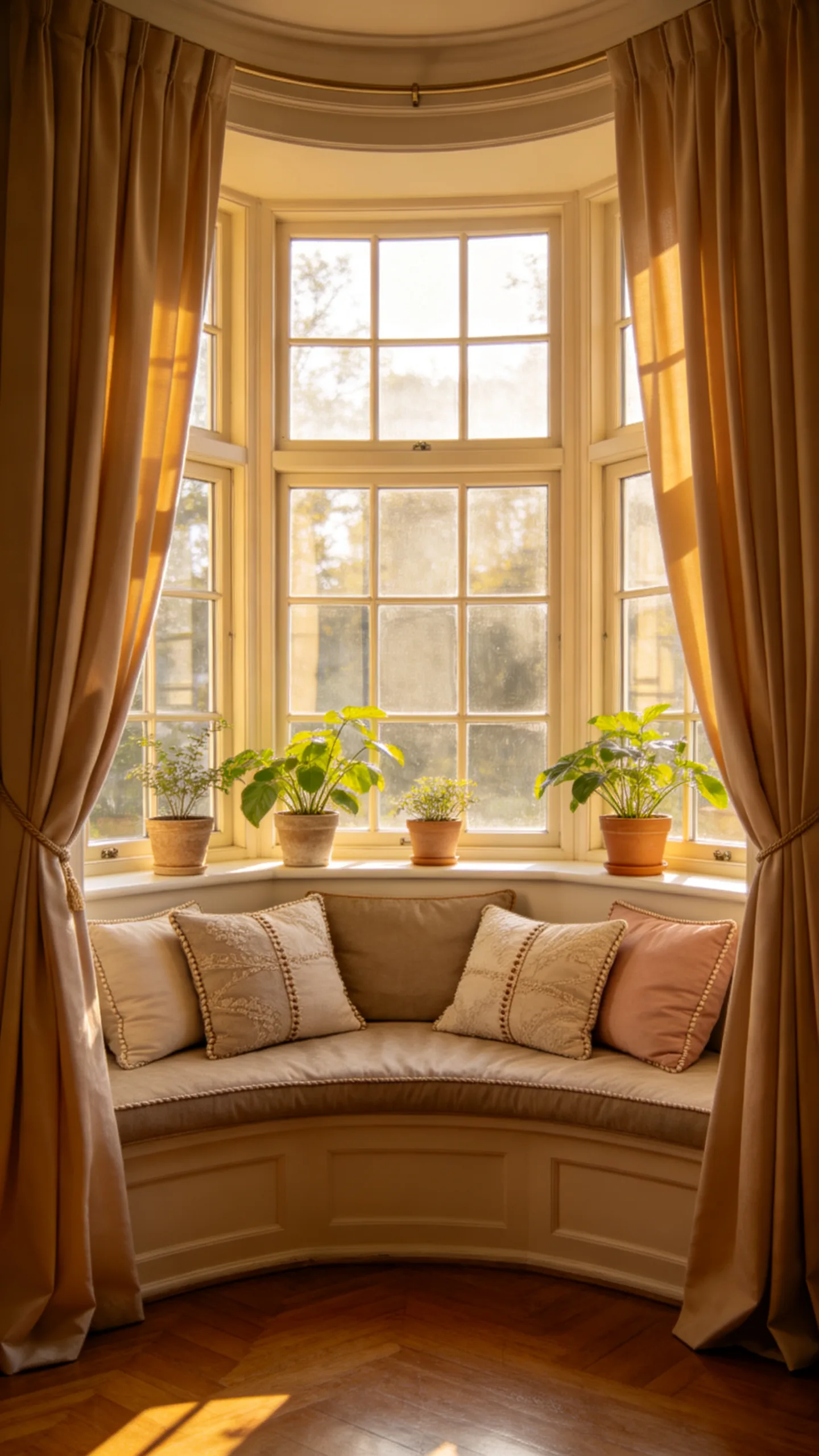
If your bay window includes a bench or window seat, use curtains to frame the entire nook rather than covering each pane separately. A rod or track mounted across the front edge turns the bay into a cozy alcove.
This layout works beautifully in bedrooms, living rooms, and reading corners. When open, the curtains sit to the sides and reveal cushions, pillows, plants, or built-in storage beneath the seat. When closed, they create privacy and make the nook feel tucked away.
Choose floor-length curtains if the window seat is set back from the room. If the seat projects outward or has drawers below, make sure the curtain length does not catch on hardware or block access to storage.
16. Minimal Tension Rods for Rental-Friendly Bay Windows
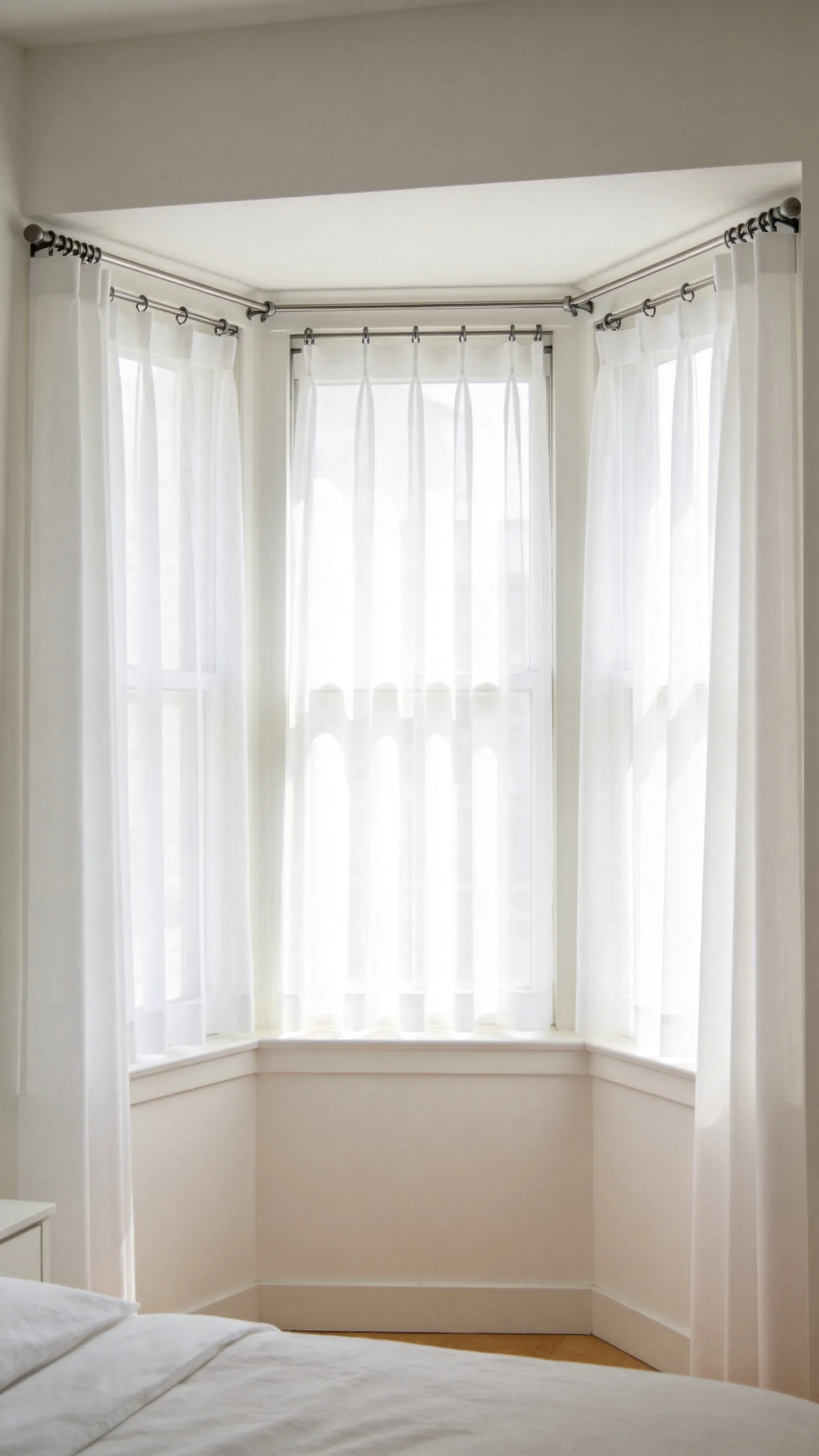
Tension rods can be useful for renters or anyone avoiding permanent holes in trim or walls. They work best on individual bay window sections with sturdy inside frames where the rod can sit securely.
This layout is practical for lightweight cafe curtains, sheer panels, or short privacy curtains. It is not ideal for heavy blackout drapes, but it can solve privacy issues in kitchens, bathrooms, and temporary bedrooms.
To make tension rods look intentional, choose matching finishes and keep the fabric consistent across all panes. White sheers, linen-look panels, or simple cotton curtains can create a tidy appearance without custom hardware.
17. Floor-to-Ceiling Curtains for a Tall Bay Window
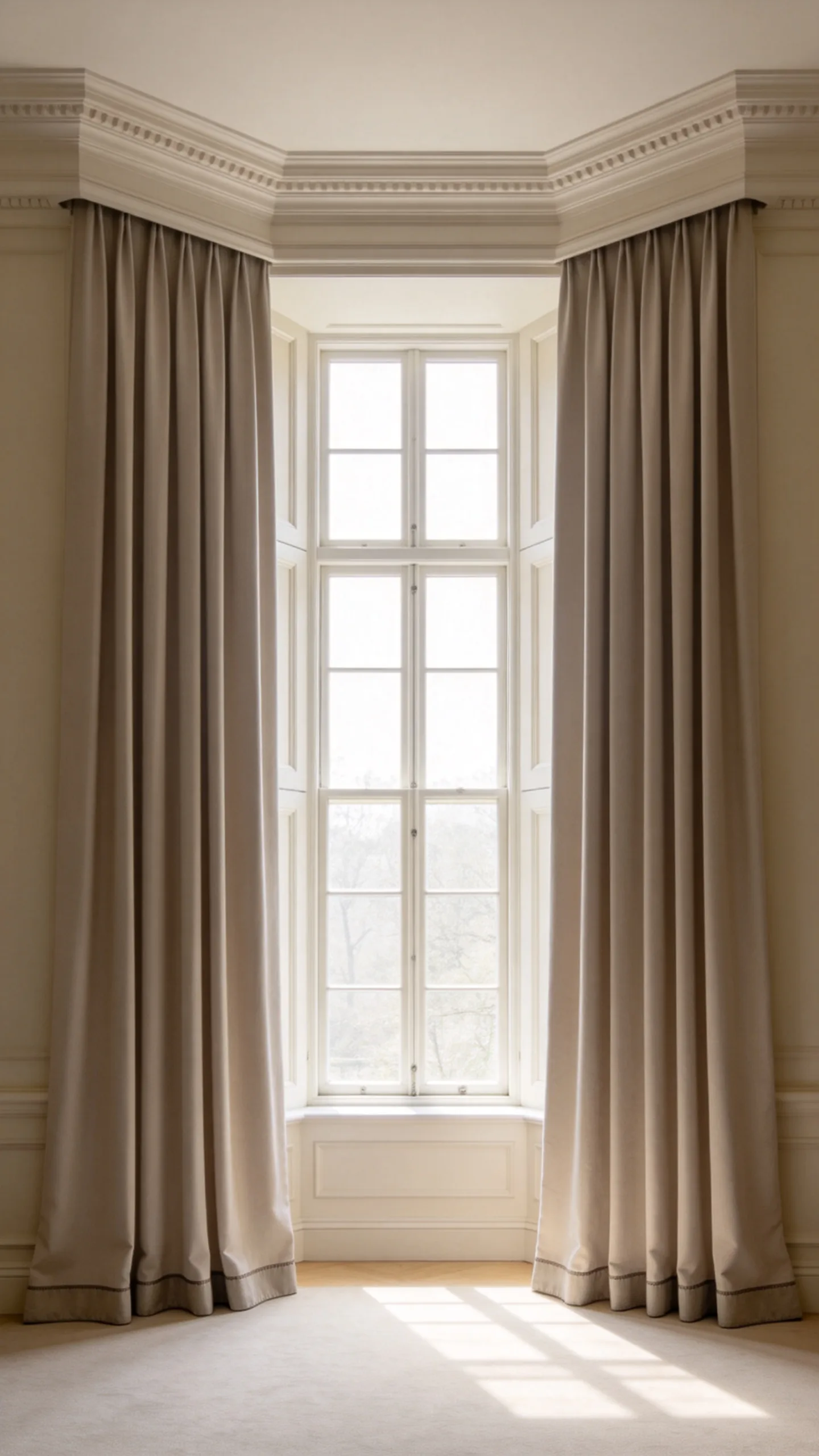
Tall bay windows can look even more impressive with floor-to-ceiling curtains. Mount the track or rod close to the ceiling rather than just above the trim to emphasize height and create a grander vertical line.
This layout works well in rooms with high ceilings, tall baseboards, or dramatic crown molding. It can also help a standard-height room feel taller by drawing attention upward.
Keep the fabric length precise. Curtains that skim the floor feel tailored, while a small puddle can create a softer romantic look in bedrooms or formal sitting rooms. Avoid short curtains on tall bays unless the layout requires them for a radiator or built-in bench.
18. Patterned Panels on the Outer Edges Only
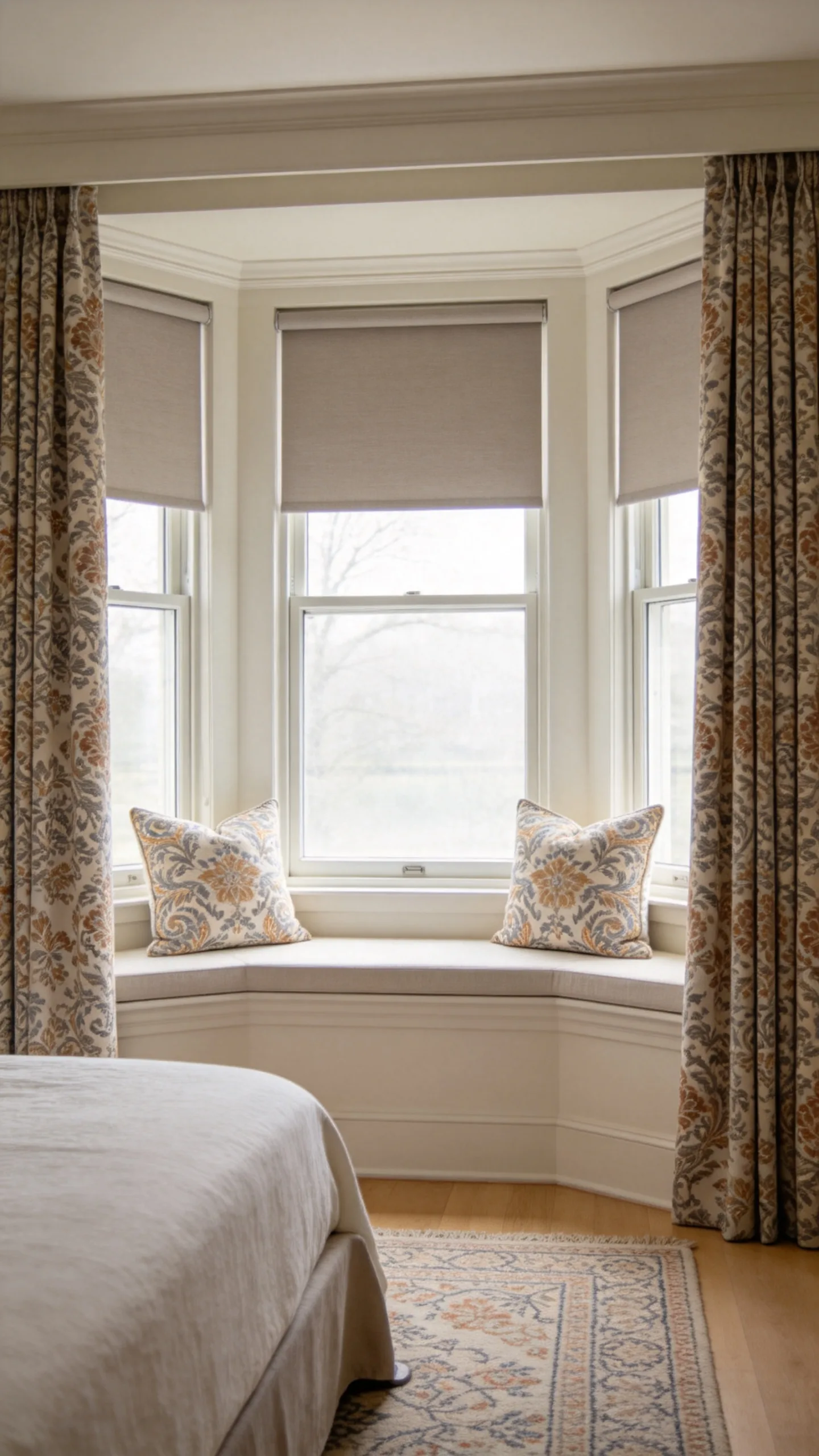
If you want pattern without overwhelming the bay window, use patterned curtain panels only at the outer sides. Then keep the interior window treatments simple with plain shades, sheers, or bare glass.
This layout is helpful when the bay already has multiple frames, mullions, or a busy view. Patterned side panels add color and personality while keeping the angled panes visually calm.
Choose a print that repeats colors from the room’s rug, pillows, bedding, or artwork. Florals, block prints, ticking stripes, and subtle geometrics all work well when balanced with simple furniture and neutral walls.
19. Corner Panels Between Each Bay Section
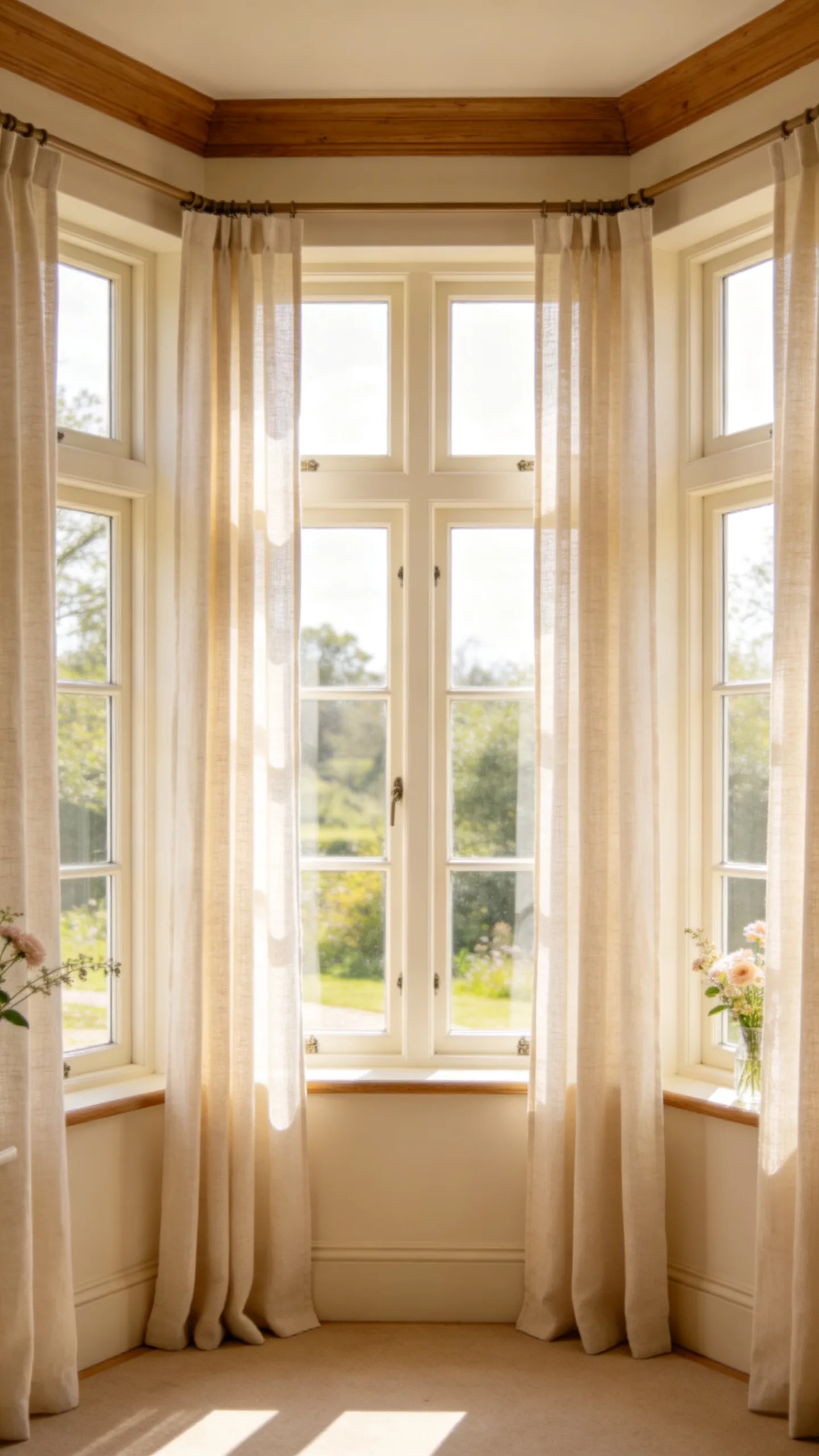
Instead of placing panels only at the sides, add narrow curtain panels at the corners between bay sections. This creates a soft vertical break between panes and can help disguise awkward joints or uneven trim.
This idea works best for wide bays with enough space between windows for fabric to hang without covering too much glass. It can make a large bay feel layered and intentional, especially in traditional or cottage-style rooms.
Use lightweight fabrics so the corners do not become bulky. Sheer, voile, linen-blend, or unlined cotton panels are easier to arrange and keep the window area from feeling crowded.
20. Track Curtains Hidden Behind a Cornice Board
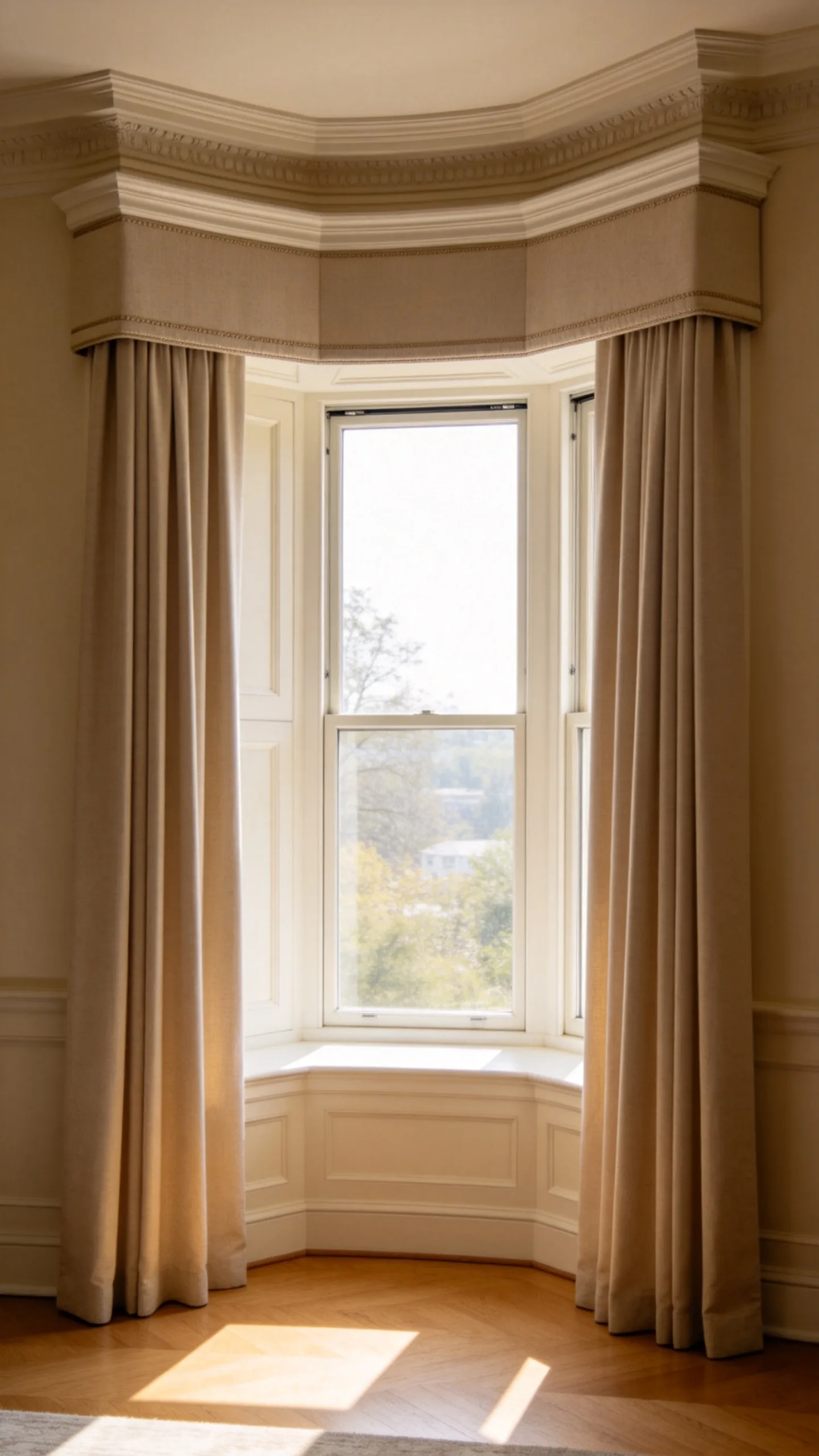
A cornice board can hide curtain tracks, brackets, and uneven wall angles around a bay window. The result is a more built-in look, especially when the cornice is upholstered or painted to match the trim.
This layout is useful in formal dining rooms, bedrooms, or living rooms where visible hardware would distract from the window shape. The curtains can hang from a hidden track behind the cornice and move around the bay as needed.
An upholstered cornice can introduce fabric texture or a subtle pattern above the window. A painted wood cornice feels more architectural and works well with crown molding, paneled walls, or built-in cabinetry.
21. Sill-Length Curtains for Radiators or Deep Window Ledges
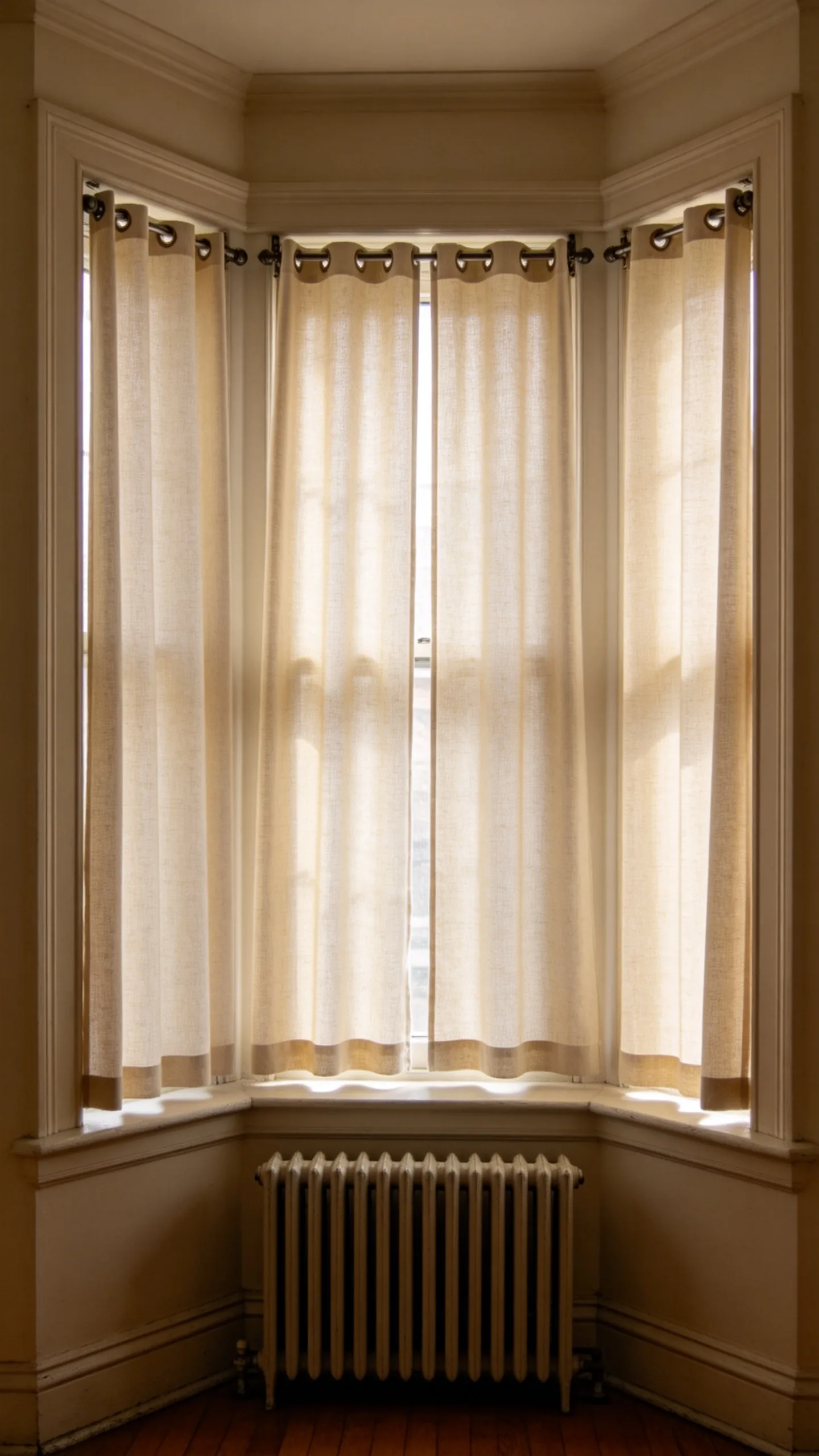
Sill-length curtains are practical when a bay window has a radiator, deep ledge, desk, or built-in storage below it. Instead of dragging behind furniture or blocking heat, the curtains stop neatly at the sill or just below the trim.
This layout is useful in older homes, apartments, and compact bedrooms where floor-length curtains are not realistic. Use separate rods or a fitted track for each bay section so the shorter panels look planned rather than improvised.
Choose a fabric with enough weight to hang straight, such as cotton, linen-blend, or lined light-filtering material. Avoid overly stiff fabric, which can flare out awkwardly on short curtains.
22. Mixed Shade-and-Curtain Layout for Maximum Flexibility
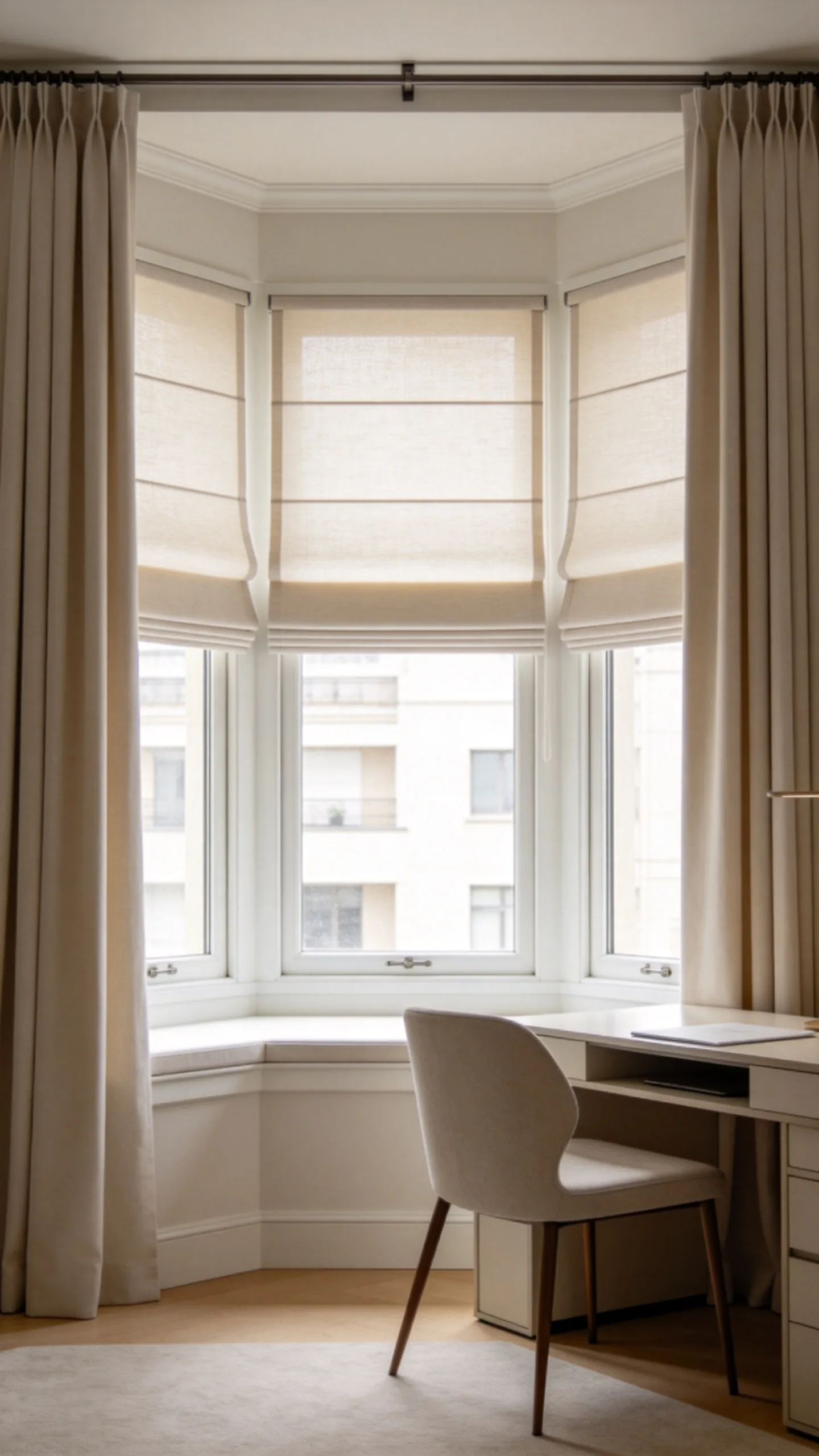
A mixed layout combines fitted shades on each bay pane with curtains that frame the whole bay. This gives you the most control over privacy, sunlight, glare, and nighttime coverage.
Use Roman shades, roller shades, or woven shades inside the frames, then add drapery panels on a ceiling track or front-facing rod. The shades handle daily adjustments, while the curtains add softness and insulation when needed.
This is one of the most adaptable bay window curtain ideas for bedrooms, living rooms, and multipurpose spaces. It works whether the bay is used for seating, plants, a desk, or simply as a wide source of natural light.

From the editors
Decor Compass Editorial Team
We turn practical home research into clear, useful room-by-room ideas.