Living room curtains do more than cover windows. They frame the wall, soften hard edges, control light, and make the furniture layout feel more intentional. The right curtain length, fabric, color, and hanging height can make a basic living room look planned instead of unfinished.
These curtain ideas for living room styling focus on designer-looking details you can actually use: proper scale, thoughtful layering, better hardware, and fabric choices that work with sofas, rugs, wall colors, and natural light.
1. Floor-to-Ceiling White Linen Curtains
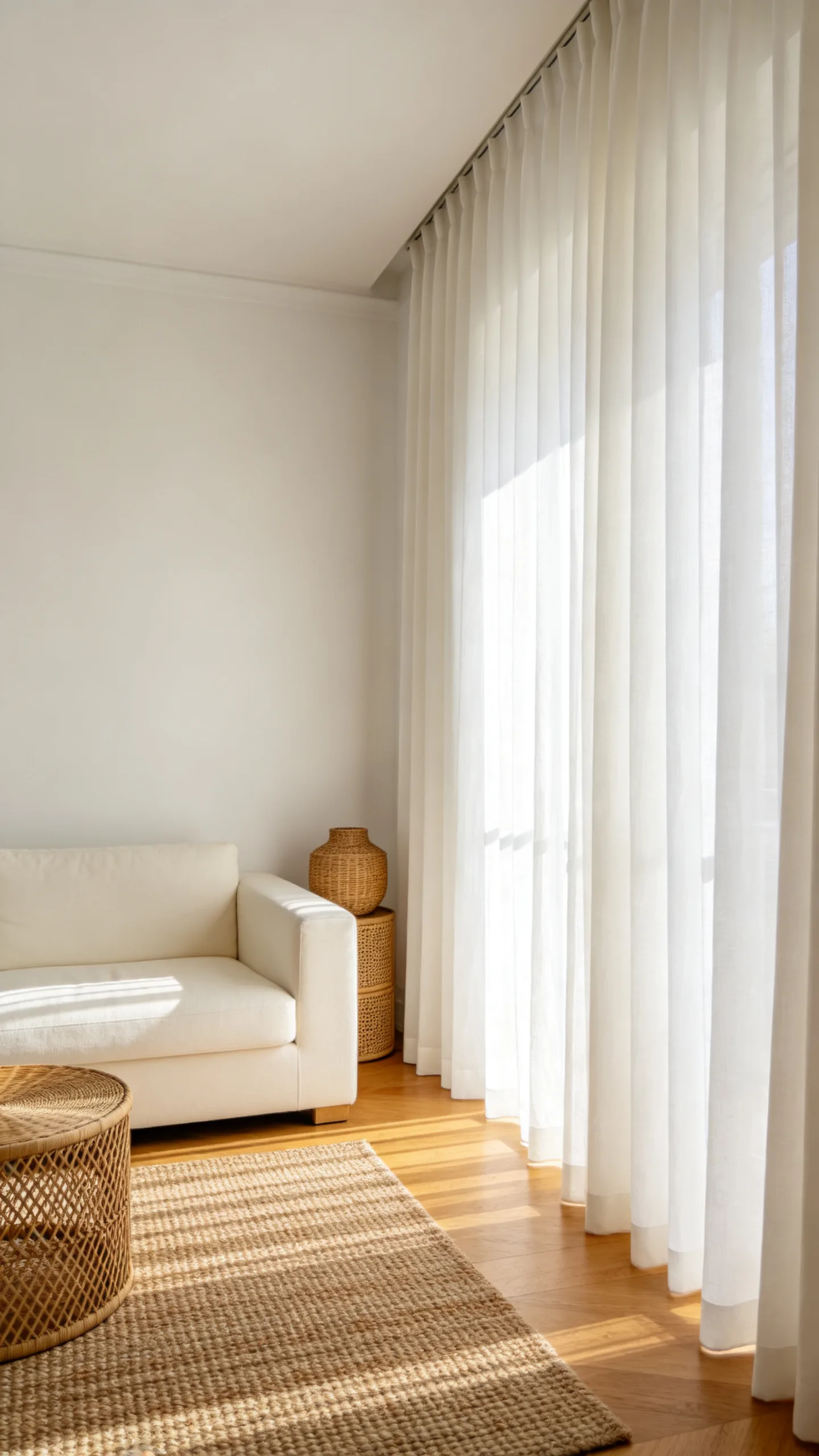
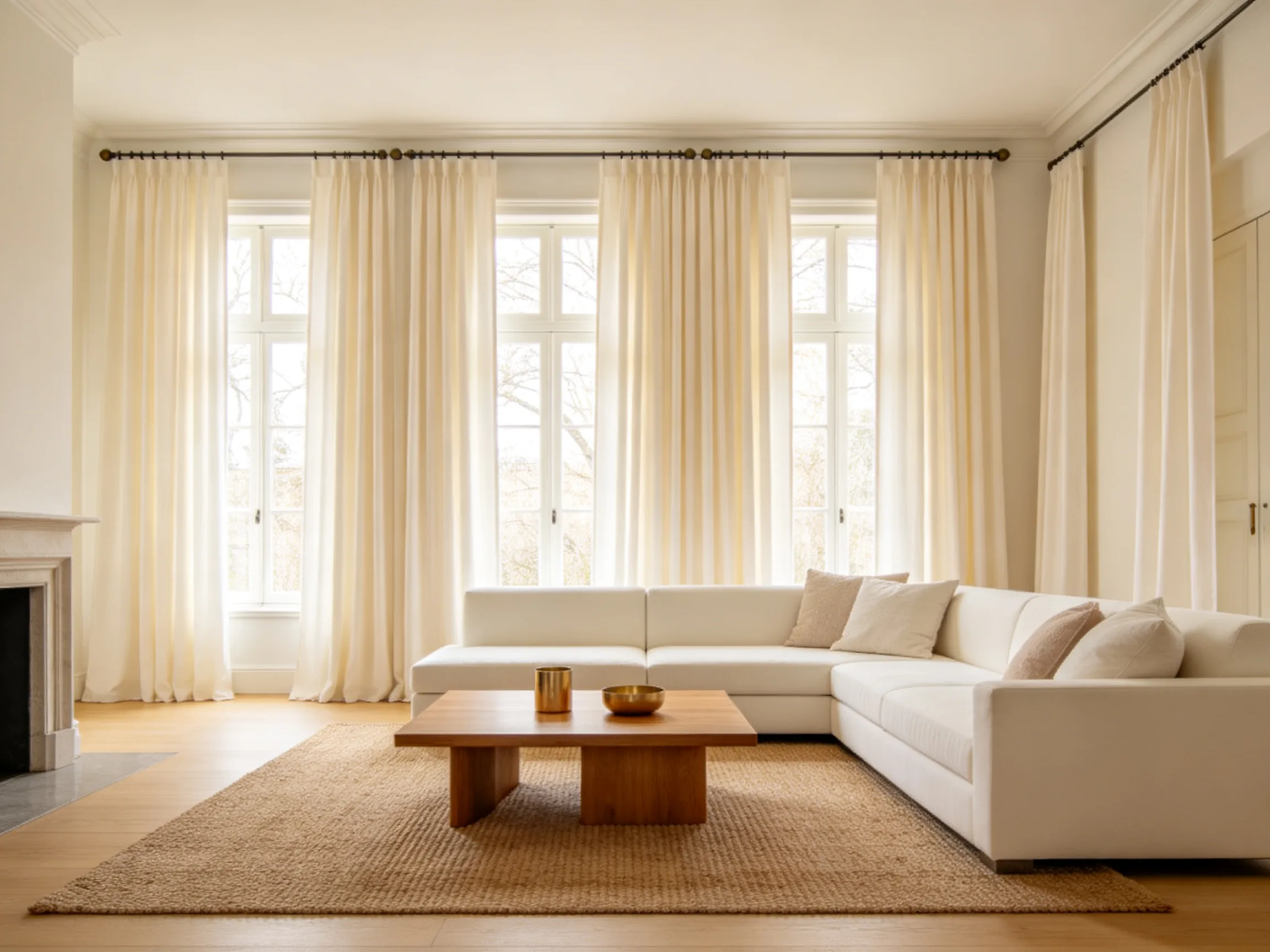
White linen curtains are one of the easiest ways to make a living room feel calm, bright, and polished. Hang the rod close to the ceiling rather than just above the window trim, then let the panels fall all the way to the floor. This draws the eye upward and makes the wall look taller.
For a designer look, choose a soft white or warm ivory instead of a stark blue-white if your living room has beige walls, wood floors, or a cream sofa. Linen adds texture without feeling heavy, so it works especially well in rooms with woven rugs, rattan accents, oak furniture, or plaster-style walls.
Use enough curtain width so the panels still look full when closed. A skimpy single panel on each side can make the room feel under-dressed, while fuller linen panels create relaxed movement and better balance around the window.
2. Double Curtain Rods With Sheers and Drapes
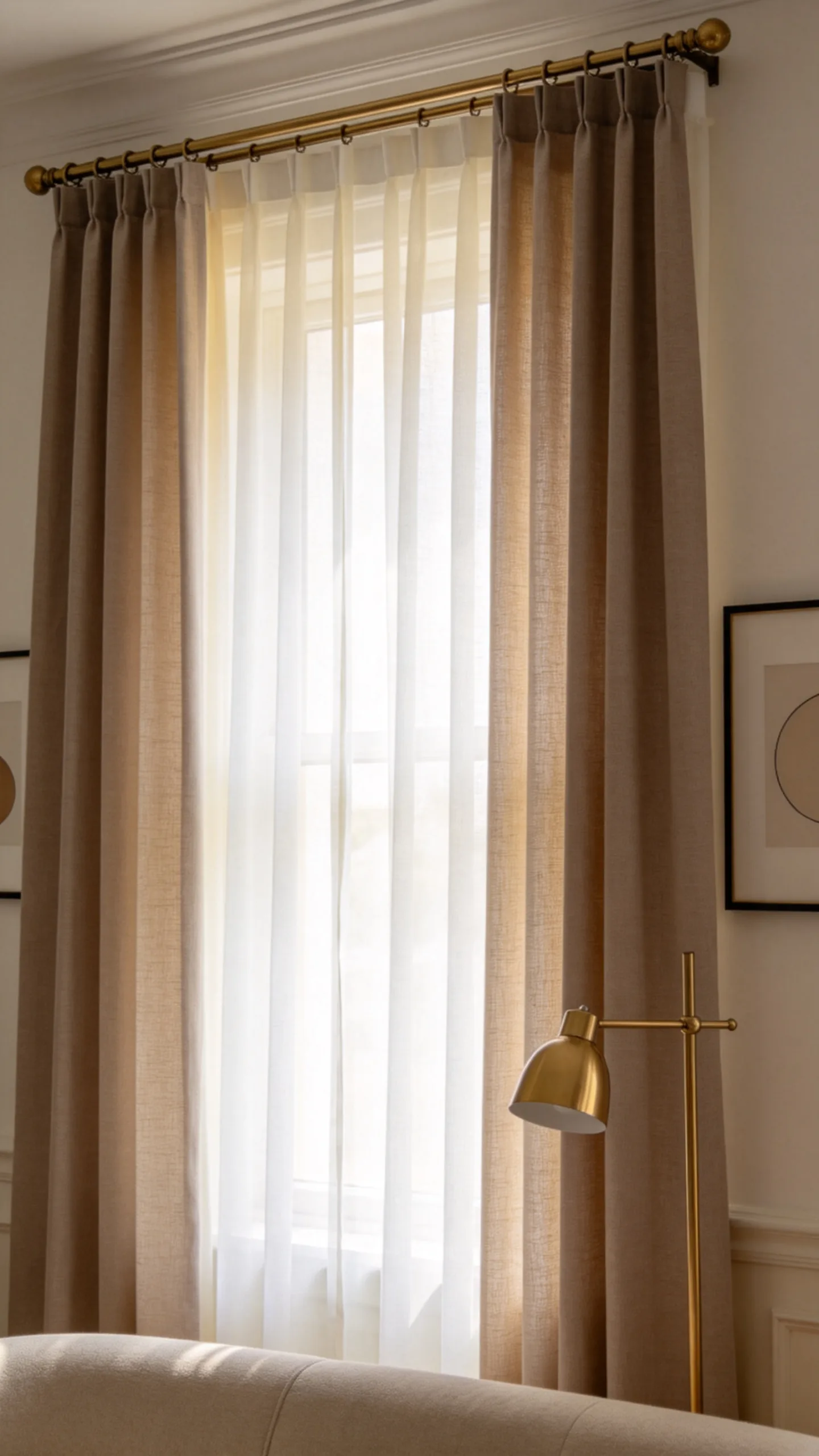
Layering sheers behind heavier drapes gives a living room a finished, decorator-style window treatment. The sheer layer filters daylight during the day, while the outer drapes add privacy, color, and softness in the evening.
This works beautifully in living rooms with large street-facing windows or sliding glass doors. Use white or cream sheers on the inside rod, then choose outer panels in a fabric that matches the room’s mood, such as taupe velvet, oatmeal linen, charcoal cotton, or muted green.
The key is keeping the hardware simple and intentional. A slim black, brass, or bronze double rod looks cleaner than bulky decorative hardware, especially if the living room already has statement lighting, framed art, or a patterned rug.
3. Pinch Pleat Drapes for a Tailored Look
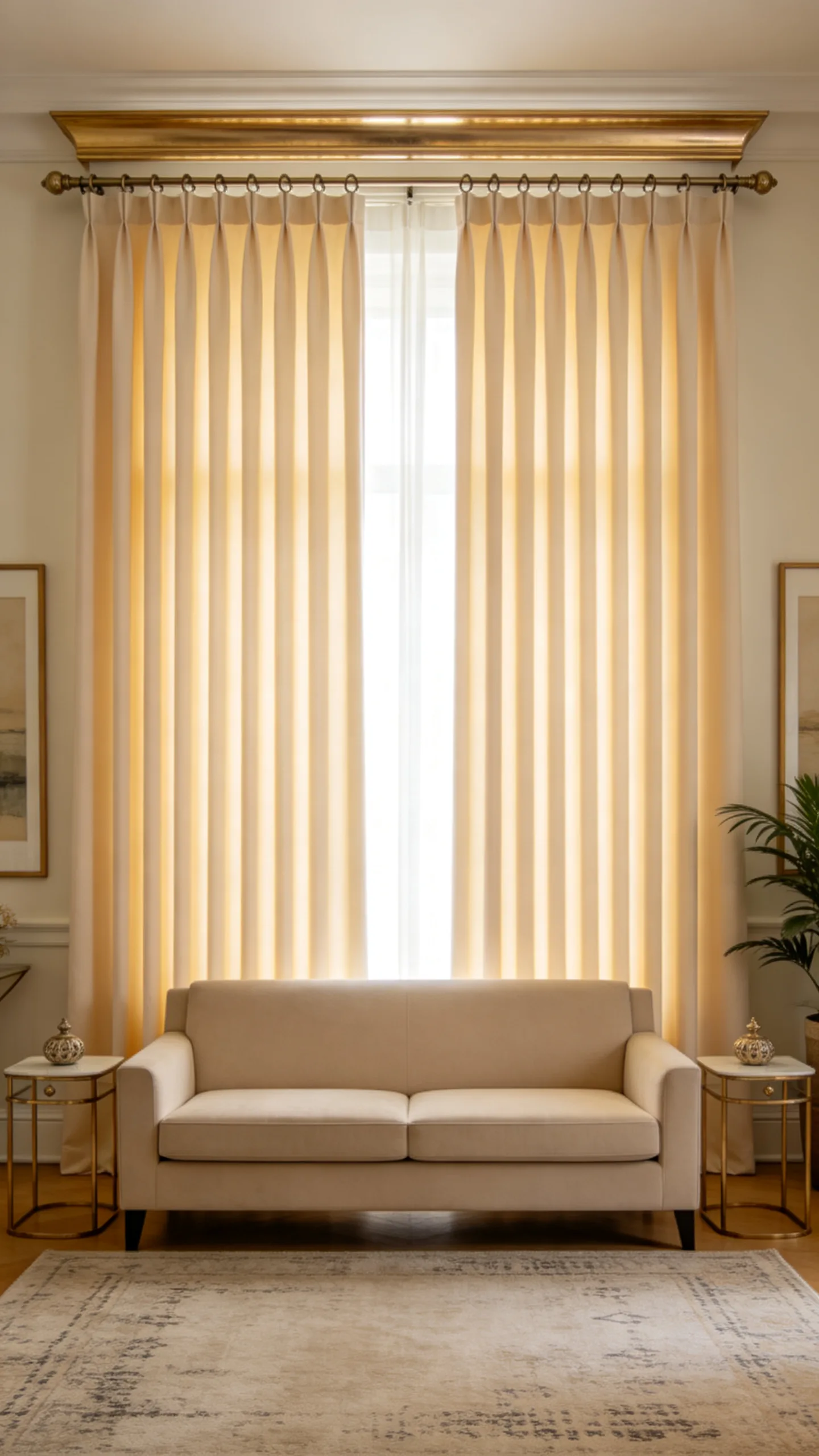
Pinch pleat curtains instantly make a living room look more custom. The pleats create even folds from top to bottom, which feels much more refined than loose rod-pocket panels. They are especially effective in formal living rooms, transitional spaces, or any room with a structured sofa and symmetrical furniture layout.
Choose pinch pleat drapes in a solid fabric if your living room already has patterned pillows, a textured rug, or bold artwork. The neat vertical lines help calm the space while still looking elevated.
For the best effect, hang them from rings or a track system so the pleats move smoothly. Let the panels either just kiss the floor or lightly break at the bottom for a soft, expensive-looking finish.
4. Warm Beige Curtains Against White Walls
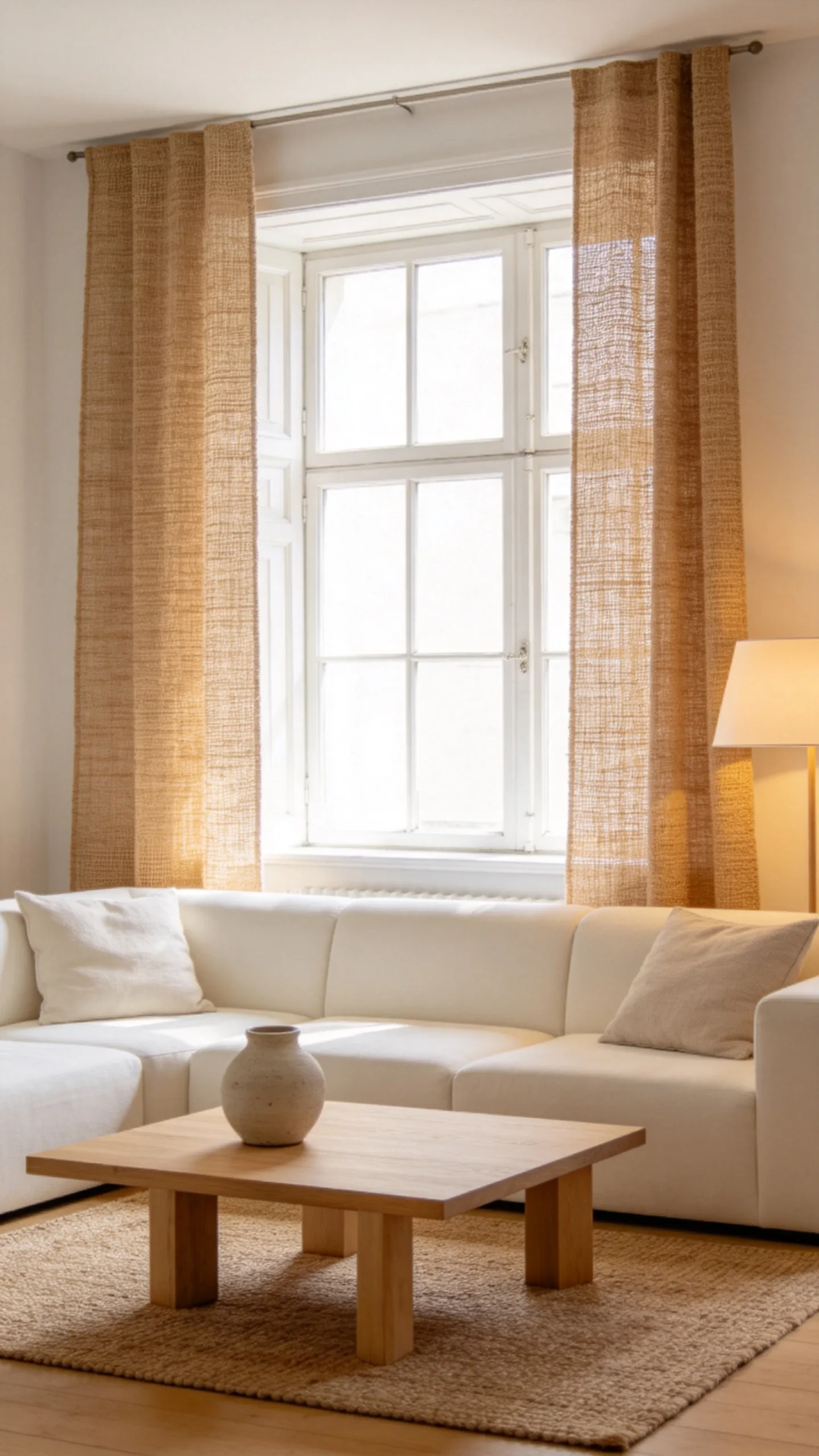
Warm beige curtains can make a white living room feel less stark. They add depth around the windows without creating a strong contrast, which is helpful if you want a soft, layered, neutral space.
Pair beige curtains with white walls, a light oak coffee table, a cream sofa, and a natural fiber rug for a calm designer palette. The curtains become part of the room’s texture rather than a loud focal point.
Look for beige fabrics with a woven texture, such as linen blend, cotton slub, or light basketweave. Flat beige polyester can look plain, but textured fabric catches light and gives the window area more dimension.
5. Black Curtain Rods for Crisp Contrast
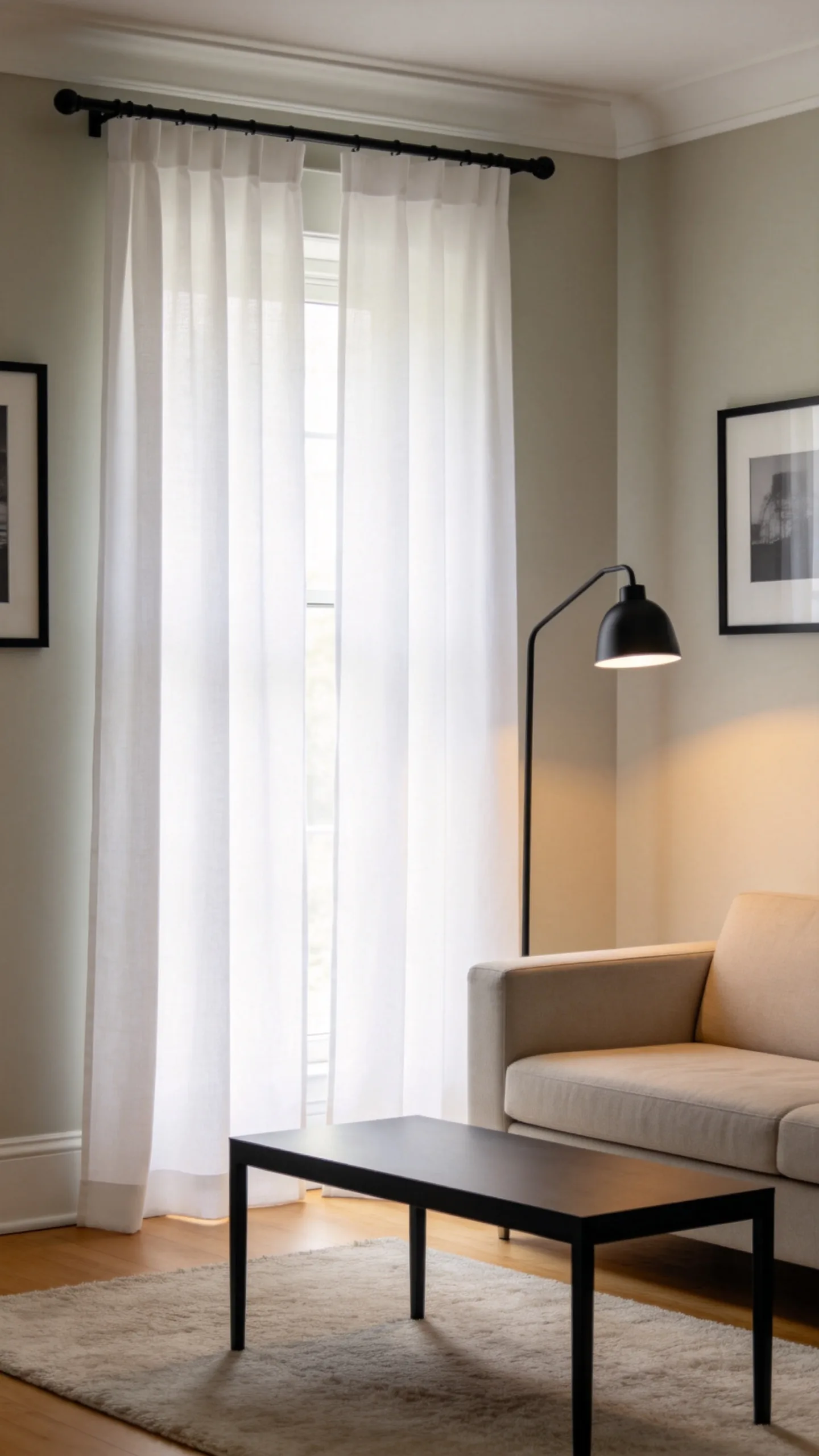
A black curtain rod can make even simple curtain panels look more intentional. It outlines the window area and adds a clean contrast against white, greige, taupe, or pale gray walls.
This idea works especially well in living rooms with other black accents, such as picture frames, metal floor lamps, fireplace screens, cabinet pulls, or coffee table legs. Repeating black in small amounts keeps the curtain hardware from looking random.
Use black rods with white linen, beige cotton, olive green drapes, or charcoal panels. The contrast gives structure to soft fabric and helps the curtains feel like part of the overall design plan.
6. Velvet Curtains for a Rich Focal Point
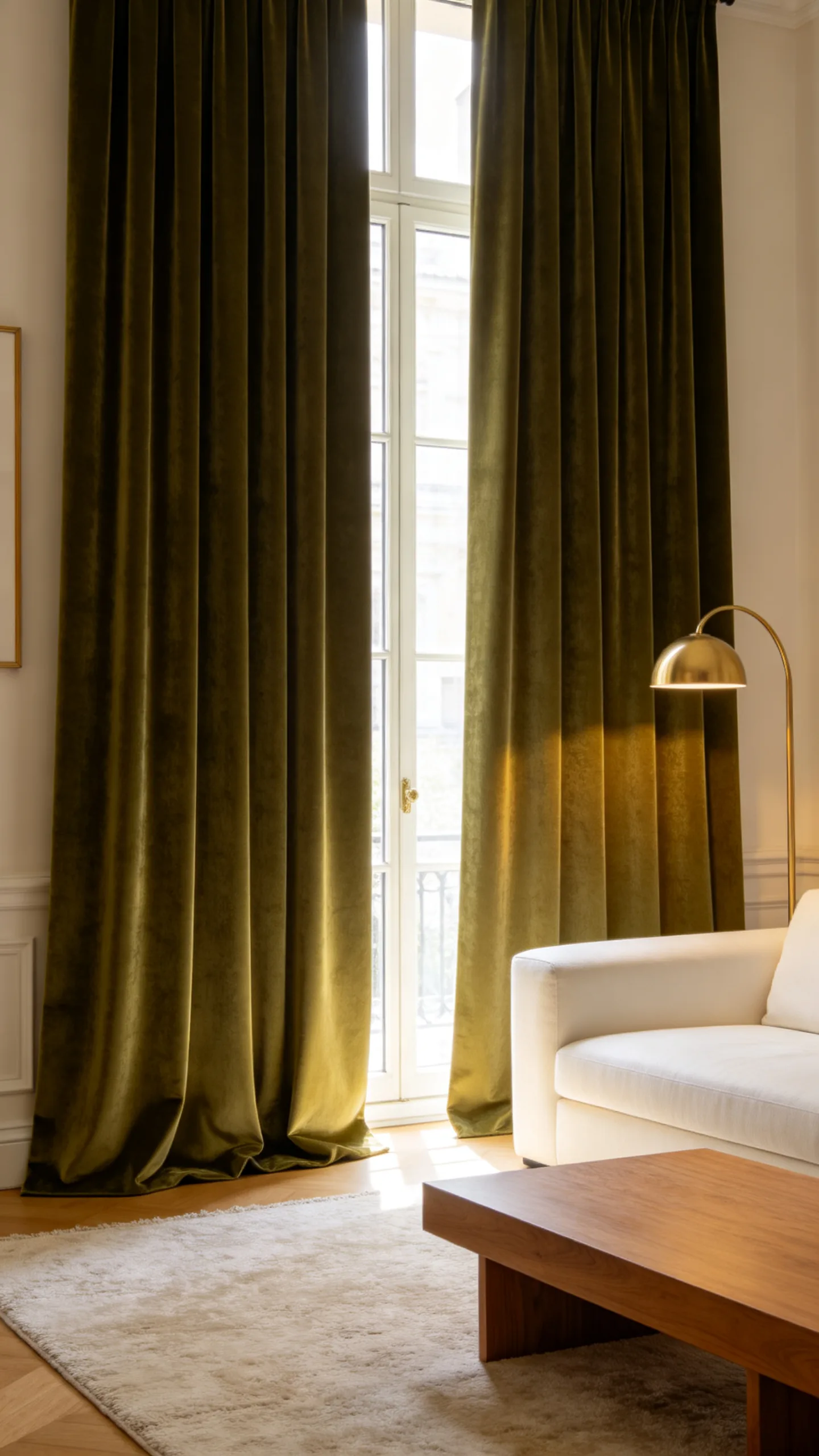
Velvet curtains add depth, softness, and a dramatic focal point to a living room. They are especially useful in rooms with tall ceilings, dark accent walls, a fireplace, or large windows that need visual weight.
Choose velvet in colors that feel grounded rather than overly bright. Deep olive, tobacco brown, slate blue, charcoal, burgundy, or warm taupe can look sophisticated with wood furniture, brass lighting, and vintage-style rugs.
Because velvet is visually heavy, balance it with lighter elements nearby. A cream sofa, glass coffee table, pale rug, or white walls can keep the living room from feeling too dark while still allowing the curtains to feel luxurious.
7. Matching Curtain and Wall Color
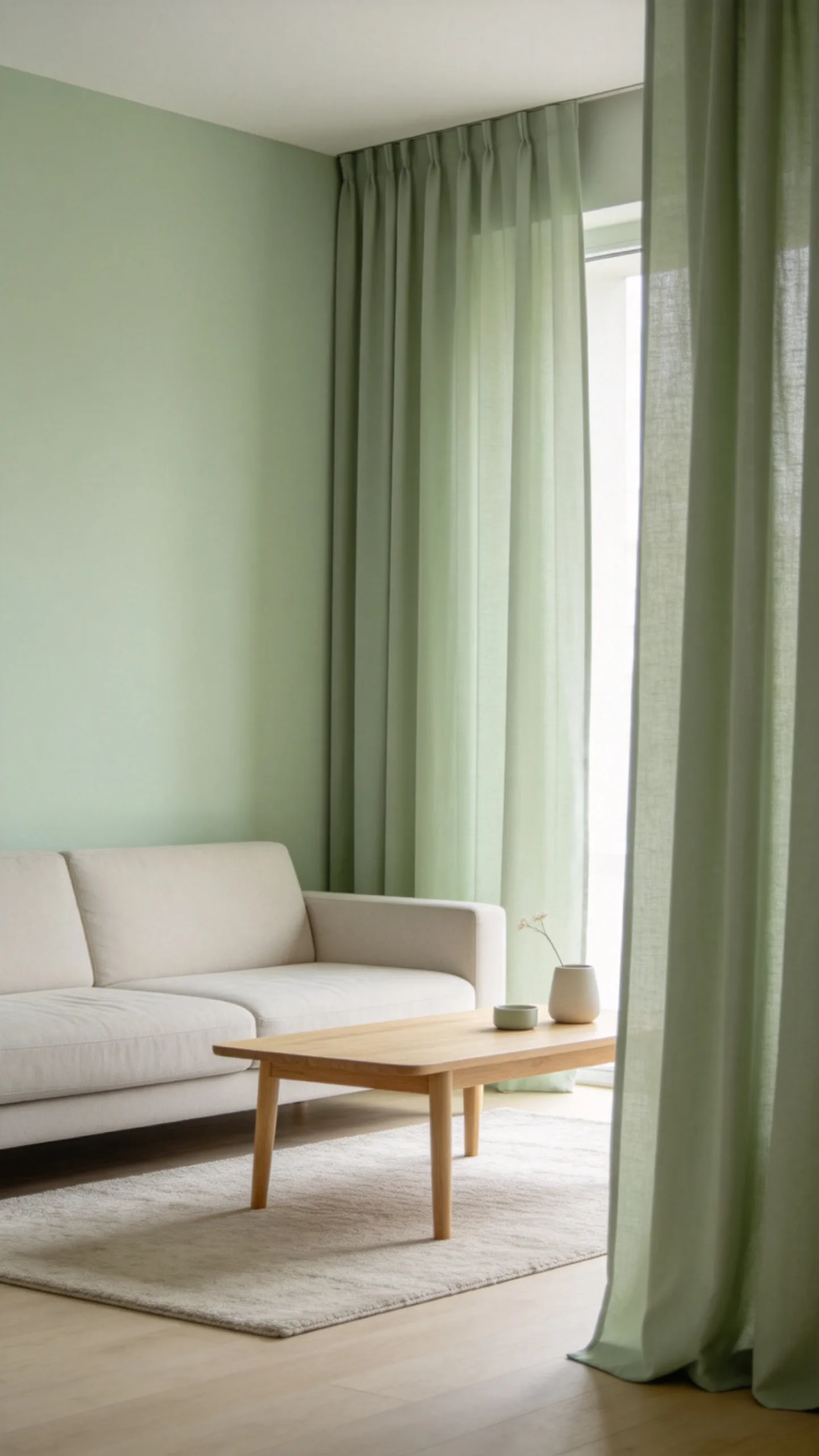
Choosing curtains in nearly the same color as the wall creates a seamless, designer-style look. This works well when you want the living room to feel larger, calmer, and less visually busy.
For example, pair warm white curtains with warm white walls, greige curtains with greige walls, or soft sage curtains with a muted green wall. The window treatment blends into the architecture while still adding softness and texture.
This approach is especially useful in small living rooms because it reduces contrast and keeps sightlines open. Instead of chopping up the wall with a bold curtain color, the fabric becomes a quiet layer that supports the furniture, artwork, and lighting.
8. Extra-Wide Curtain Panels for Fullness
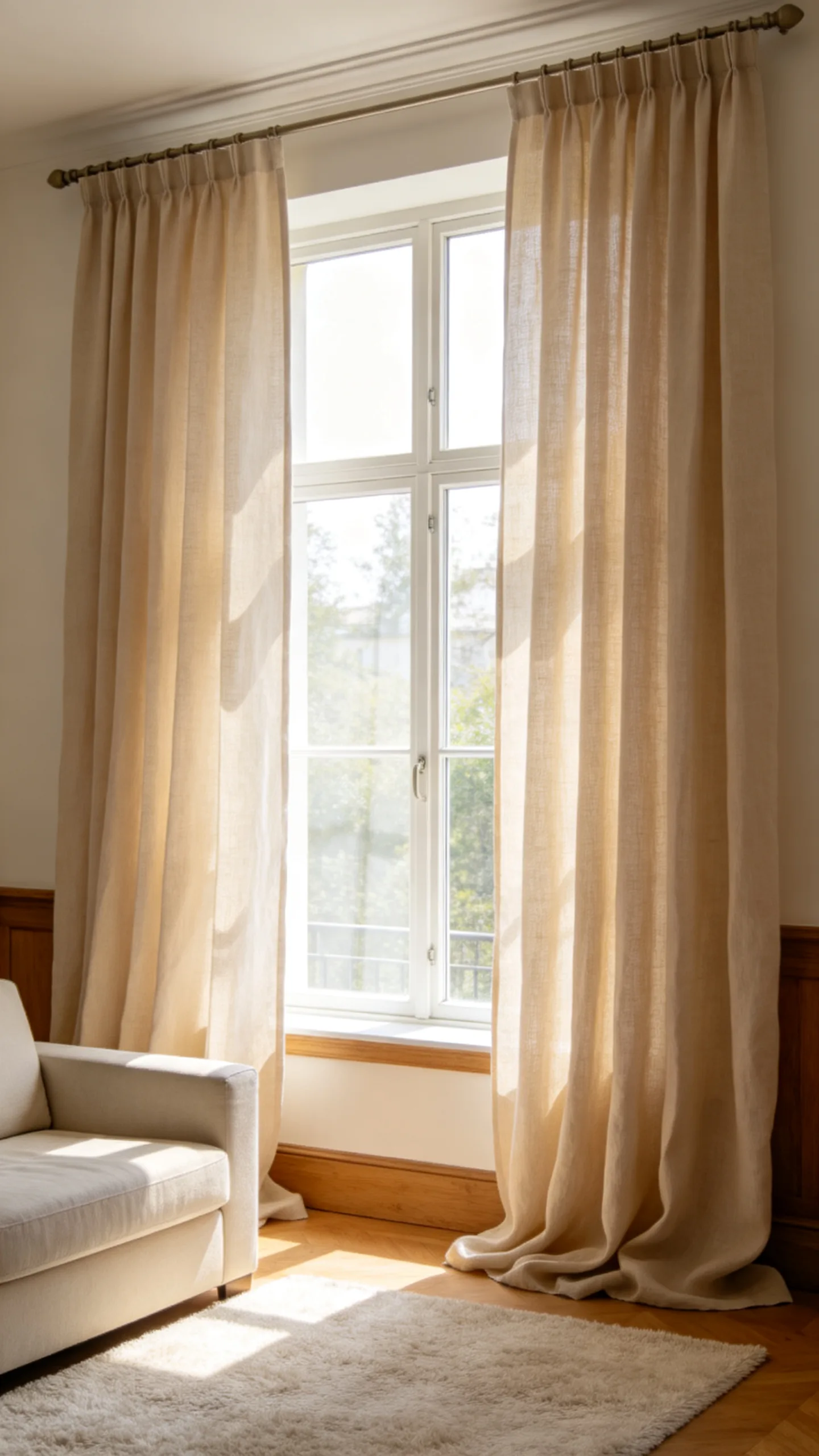
Full curtains look more expensive than narrow ones. A designer-style window treatment usually uses enough fabric so the panels have generous folds even when closed. If the curtains flatten out across the window, they can make the room feel unfinished.
As a general styling rule, choose curtain width that is at least twice the width of the window or curtain rod. For a large living room window, this may mean using two panels per side or ordering extra-wide panels.
Fullness matters most with lightweight fabrics like linen, cotton, and sheers. The extra fabric creates graceful vertical folds, which makes the wall feel softer and more elegant.
9. Curtains Hung Wider Than the Window
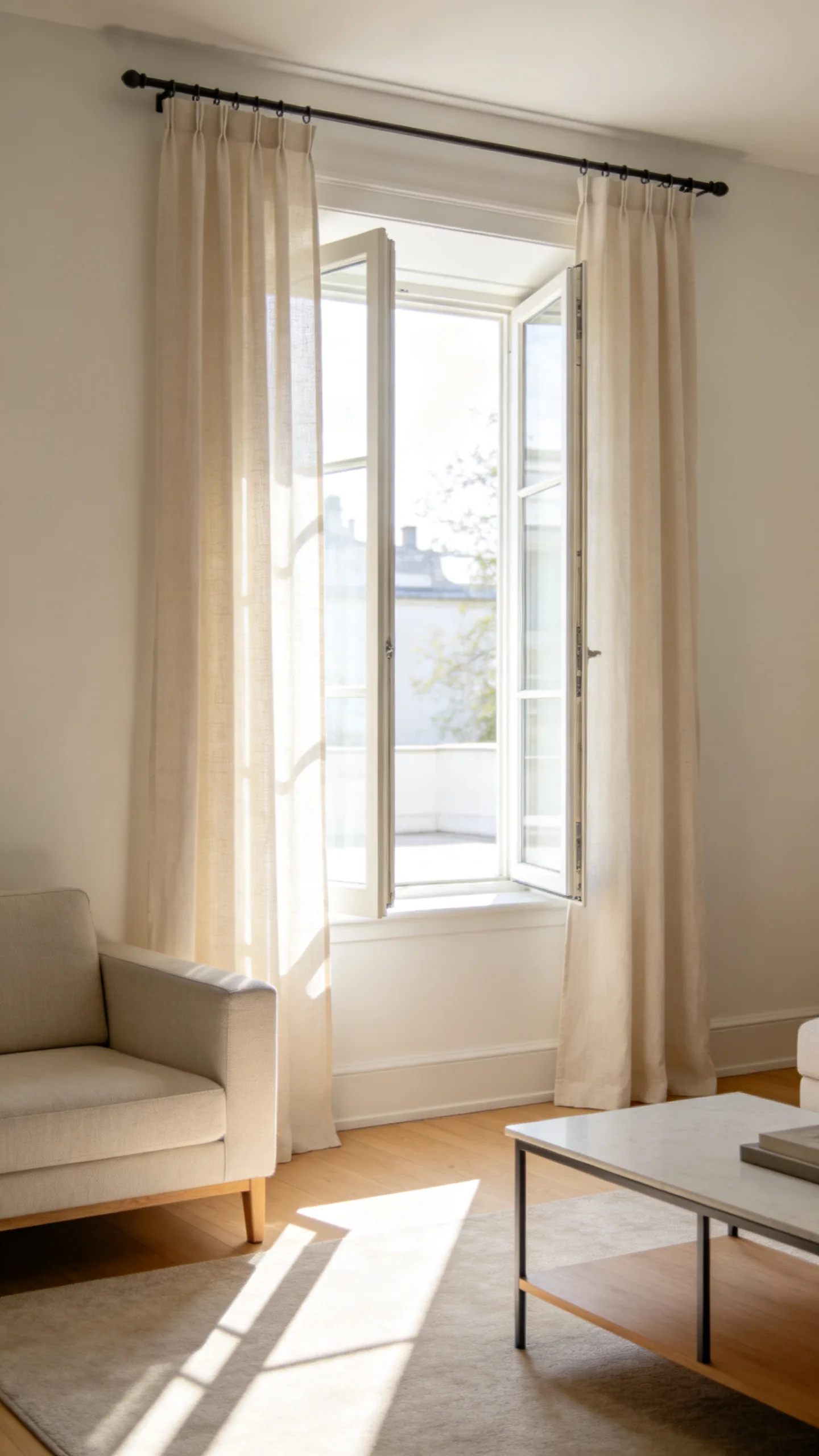
Extending the curtain rod beyond the window frame makes the window look larger and lets more daylight into the living room. When the curtains are open, the panels rest on the wall instead of covering the glass.
This is a smart idea for small living rooms, narrow windows, or rooms where natural light is limited. By exposing more of the window, you improve brightness and make the seating area feel more open.
Aim to extend the rod several inches past each side of the window when wall space allows. The wider placement also gives the window a stronger presence behind a sofa, console table, or pair of accent chairs.
10. Soft Gray Curtains for a Calm Modern Room
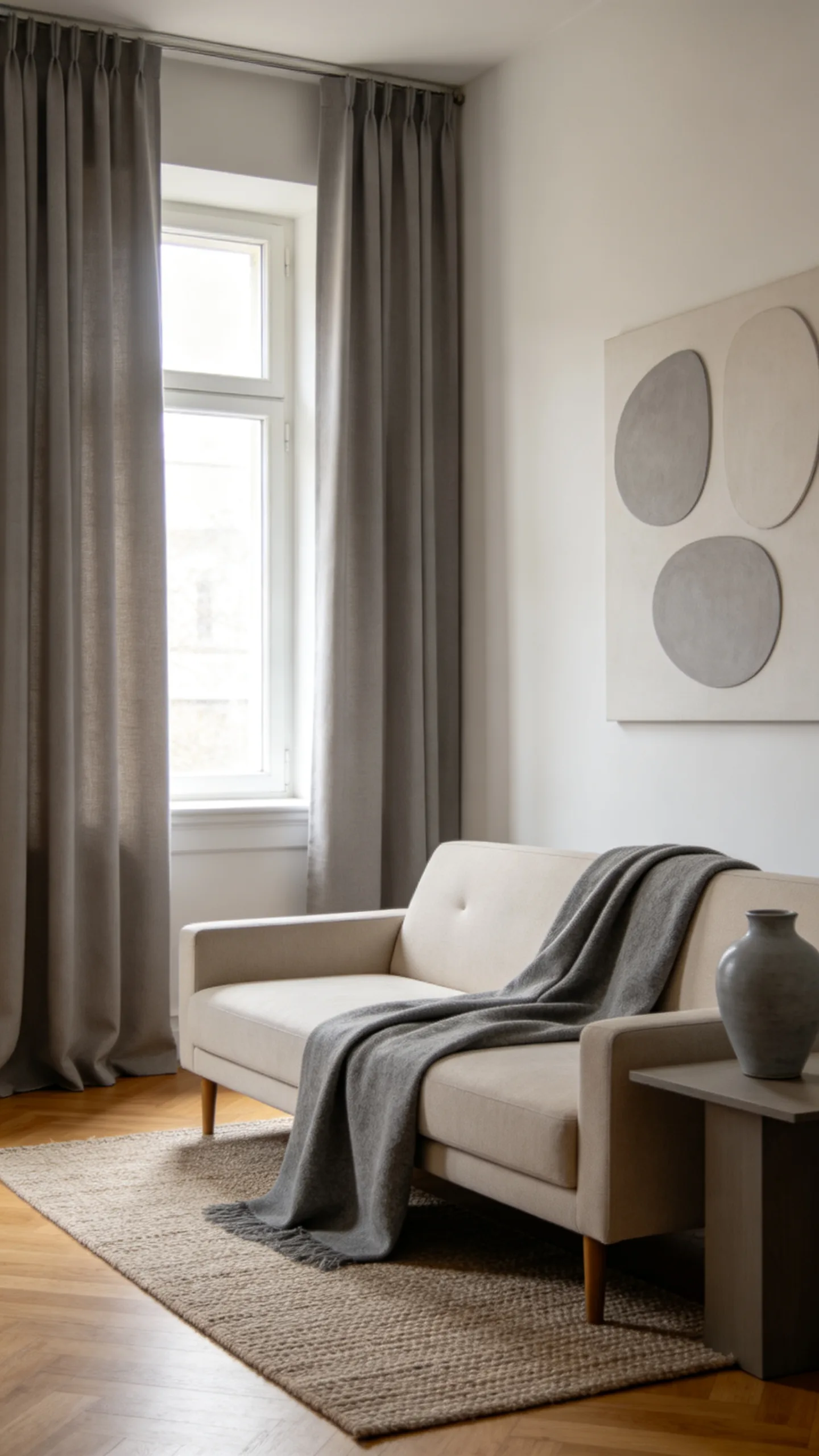
Soft gray curtains can make a living room feel modern without looking cold. The trick is choosing the right undertone for the room. Warm gray works well with beige upholstery and wood floors, while cooler gray pairs better with white walls, black metal accents, and blue-toned rugs.
Use gray curtains when the room already has a lot of visual texture, such as a patterned area rug, bookcases, or a gallery wall. The curtains provide a quiet backdrop that does not compete with other decor.
For a polished look, repeat the gray elsewhere in the room through a throw blanket, ceramic vase, accent chair, or artwork. This makes the curtains feel connected to the design instead of added at the end.
11. Patterned Curtains With Solid Furniture
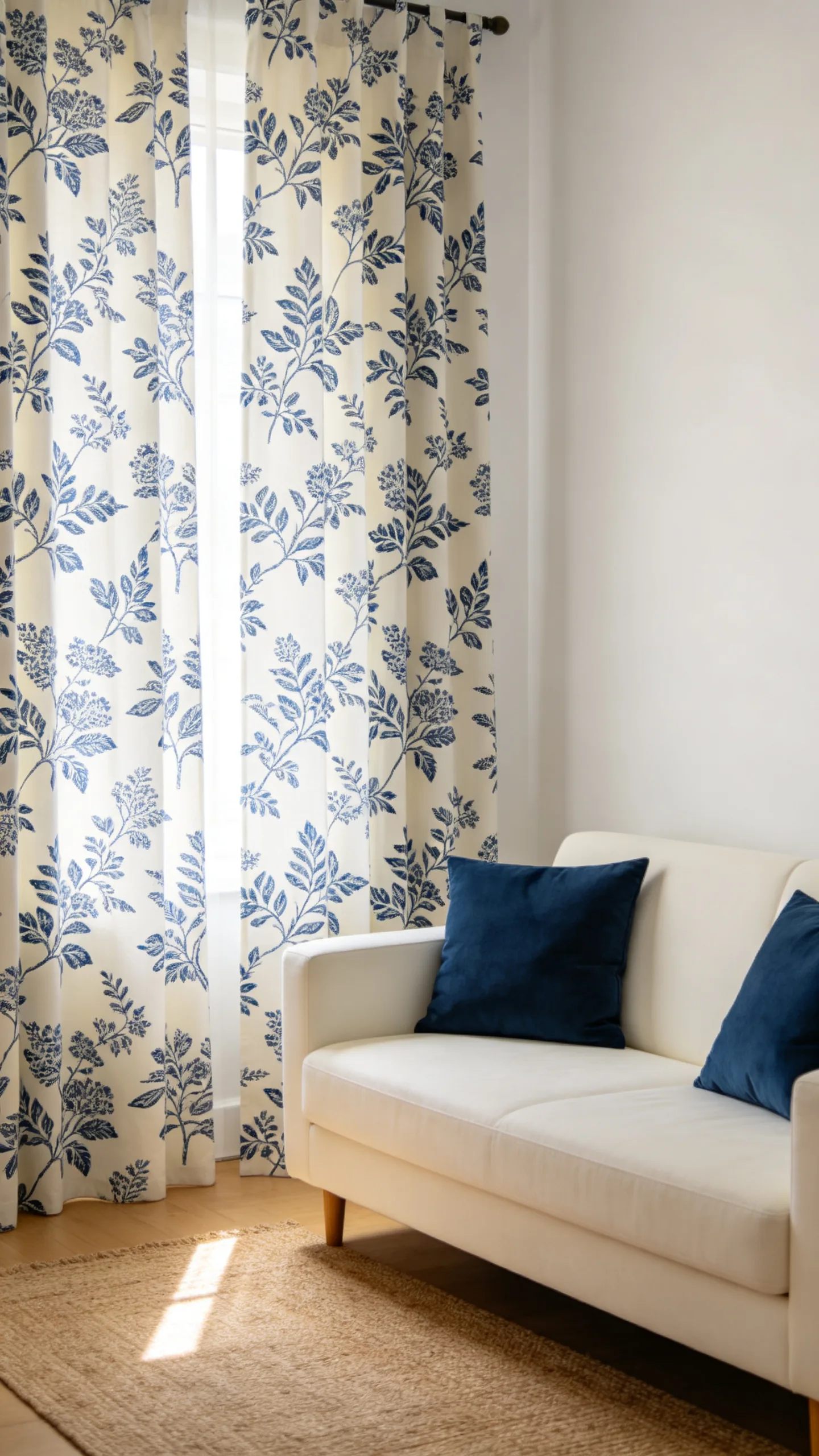
Patterned curtains can become a beautiful focal point when the rest of the living room is fairly simple. They work best with solid sofas, plain walls, and minimal rug patterns so the room does not feel crowded.
Try subtle patterns such as block print, ticking stripe, small-scale floral, geometric trellis, or faded botanical designs. These bring personality to the window area without overwhelming the seating arrangement.
Pull at least one color from the curtain pattern into the rest of the living room. A blue print can connect with navy pillows, a tan pattern can echo a jute rug, and a green motif can tie in with plants or artwork.
12. Natural Woven Shades Under Curtains
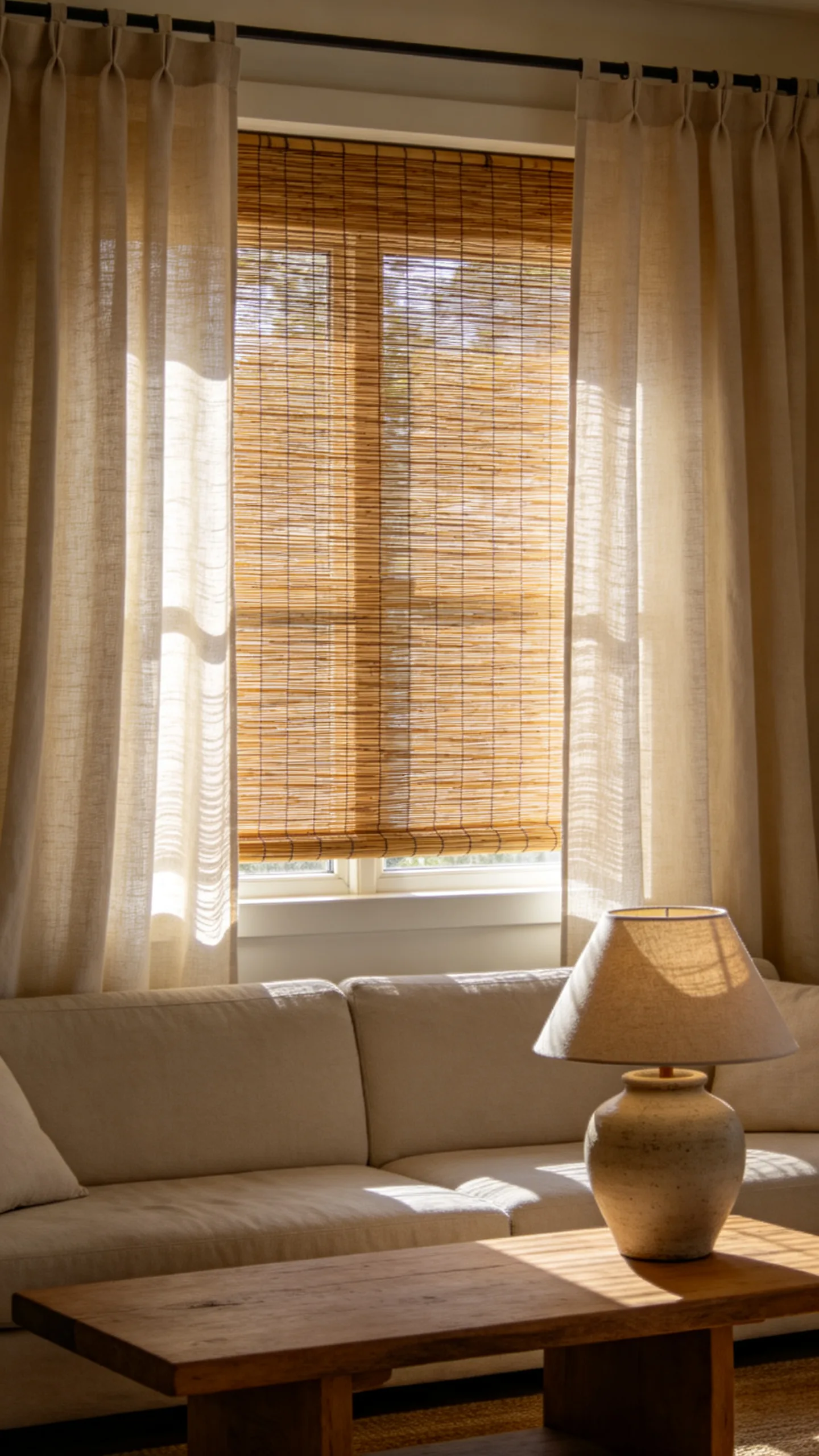
Combining woven shades with curtain panels creates a layered look that feels warm and intentional. The woven shade adds texture directly inside the window frame, while the curtains soften the sides of the wall.
This works especially well in living rooms with coastal, organic modern, farmhouse, or transitional decor. Bamboo, matchstick, or natural fiber shades pair beautifully with linen curtains, wood coffee tables, ceramic lamps, and neutral upholstery.
The layered treatment also gives practical light control. The shade can filter glare during the day, while the curtains add privacy and visual softness in the evening.
13. Dark Curtains in a Light Living Room
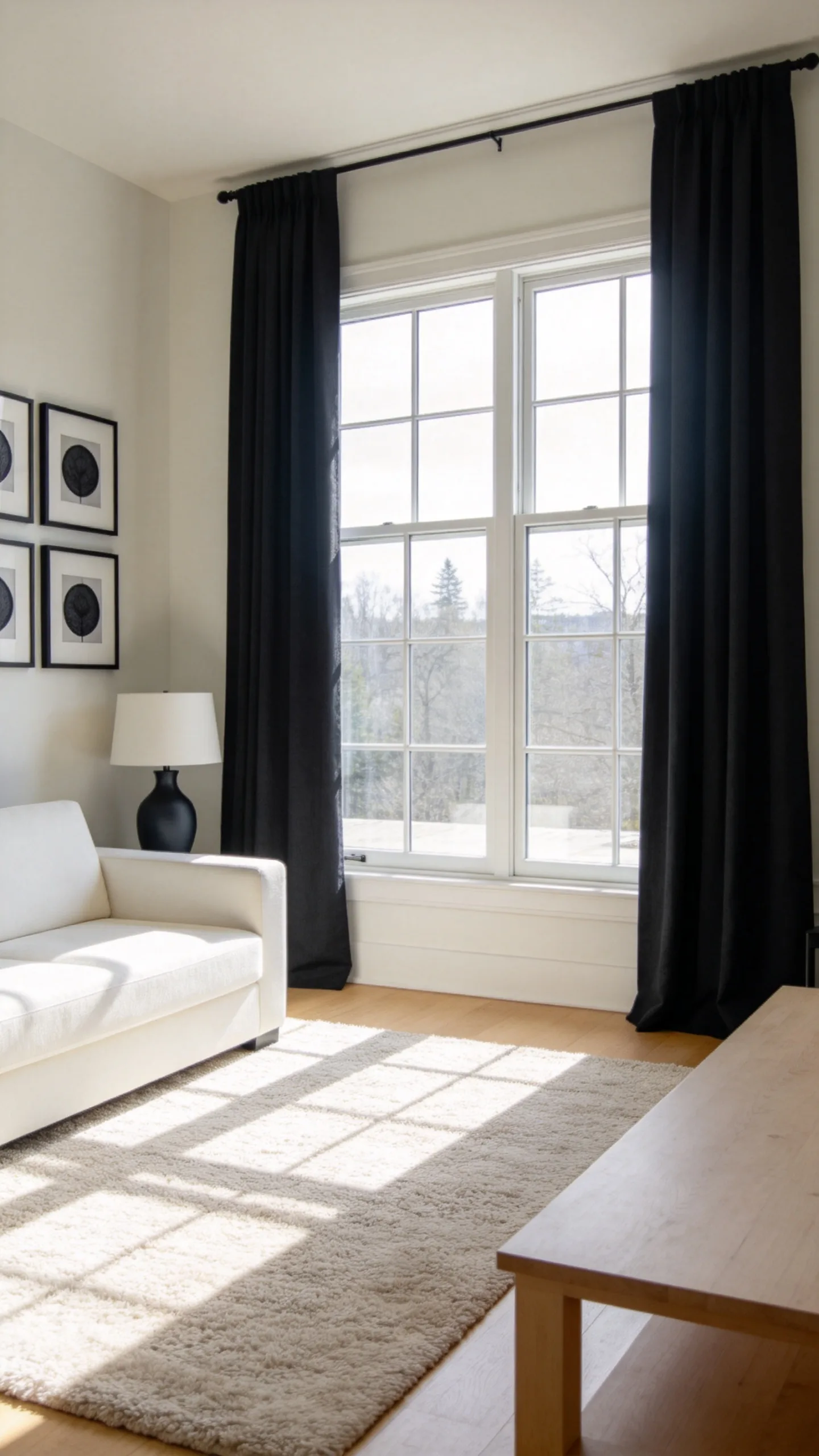
Dark curtains can look striking when used in a bright living room with pale walls and light furniture. They frame the windows like artwork and create contrast that feels deliberate.
Charcoal, espresso, navy, forest green, or black-brown curtains work well when repeated in small accents around the room. Use similar tones in a side table, lamp base, picture frame, rug detail, or throw pillow.
To keep the room balanced, avoid pairing dark curtains with too many heavy dark pieces. Let the curtains be the anchor while the sofa, rug, and walls stay lighter to preserve an open feeling.
14. Ceiling Track Curtains for a Sleek Finish
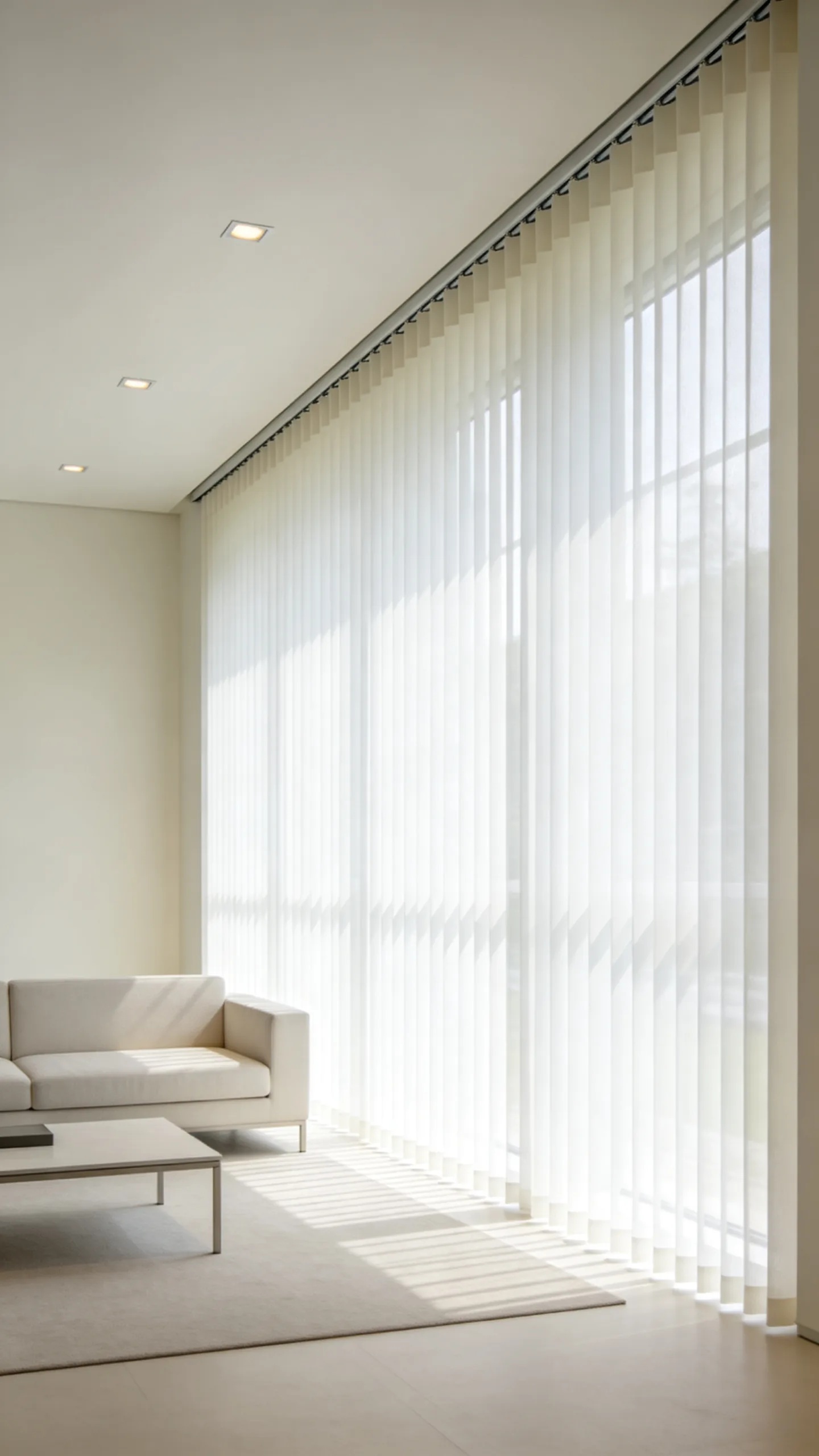
Ceiling track curtains create a clean, architectural look because the fabric appears to fall straight from the ceiling. This is a smart choice for modern living rooms, apartments, and spaces with awkward window placements.
A ceiling track works especially well across a full wall of windows or sliding doors. It removes the visual interruption of bulky rods and makes the curtain line feel continuous.
Use simple ripple fold or pleated panels for the best effect. The smooth movement and even spacing make the living room look polished, especially when paired with low-profile furniture, recessed lighting, and uncluttered walls.
15. Cream Curtains With Brass Hardware
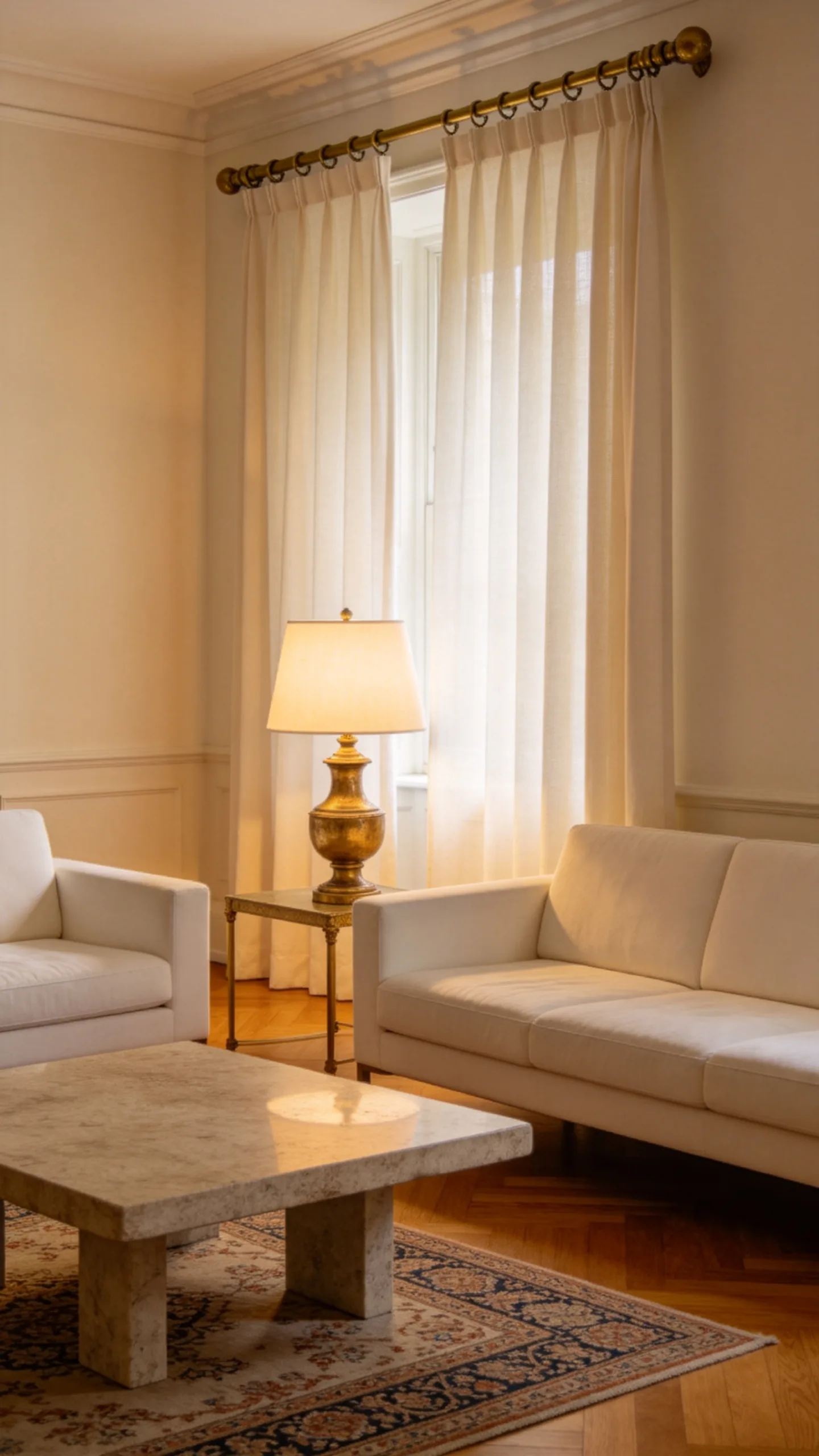
Cream curtains and brass hardware create a warm, elevated combination that suits many living room styles. The cream fabric keeps the window soft and light, while the brass rod or rings add a refined metallic detail.
This pairing works beautifully with warm wood floors, beige or ivory upholstery, traditional rugs, and marble or stone coffee tables. It also complements brass picture lights, table lamps, cabinet hardware, or mirror frames.
Choose brushed or antique brass if you want a softer designer look. Very shiny yellow-gold hardware can feel harsh, but muted brass adds warmth without overpowering the curtains.
16. Striped Curtains to Add Height
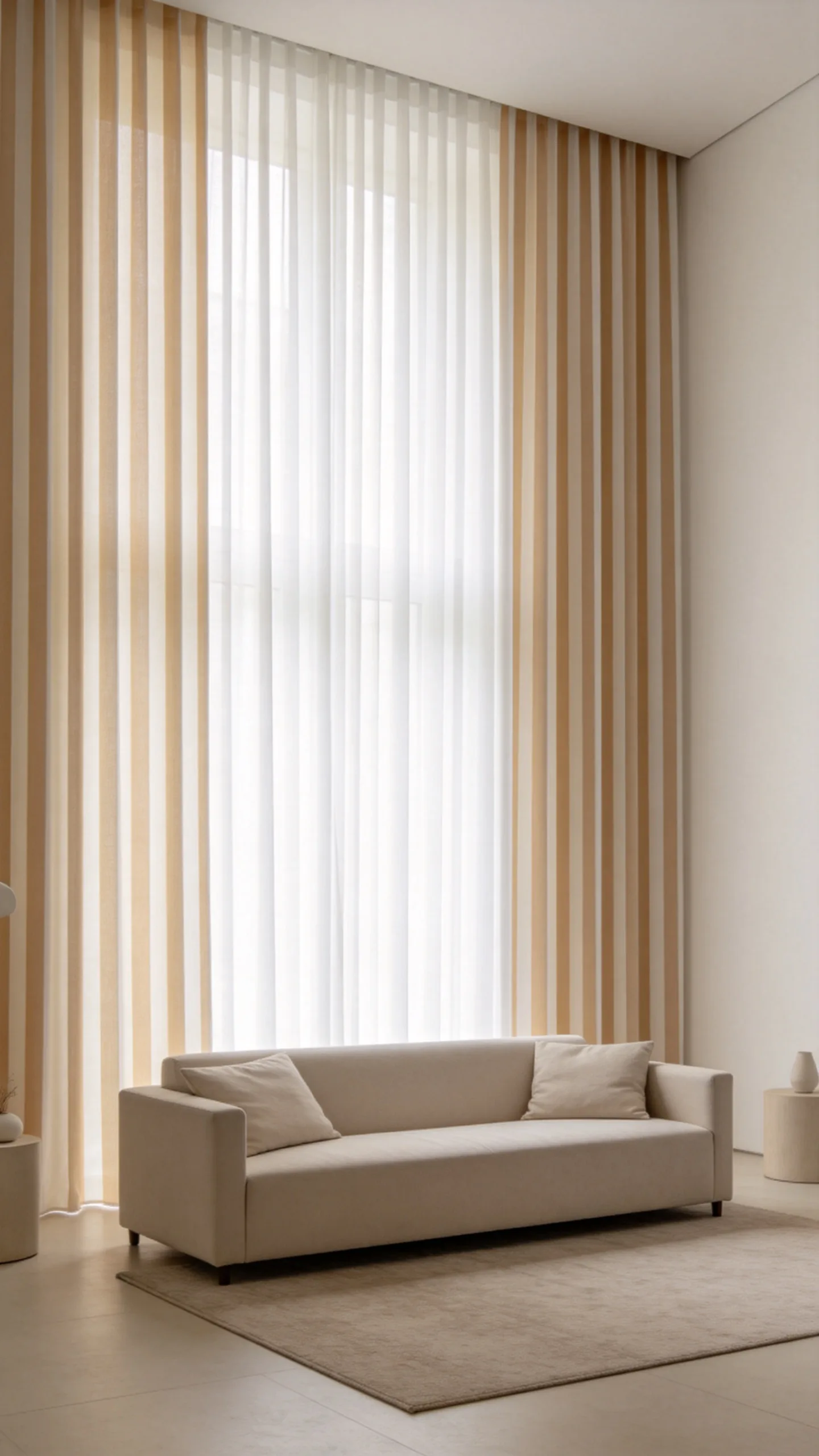
Vertical striped curtains can visually stretch the wall and make a living room feel taller. This is especially helpful in rooms with standard eight-foot ceilings, low windows, or bulky furniture.
Choose narrow or medium stripes for a more refined look. Beige and white, blue and cream, gray and ivory, or olive and natural linen stripes can add pattern without becoming too busy.
Keep the rest of the room relatively simple so the stripes can do their job. A solid sofa, plain pillows, and a quiet rug allow the vertical lines to become the main design detail around the window.
17. Color-Blocked Curtains for a Custom Detail
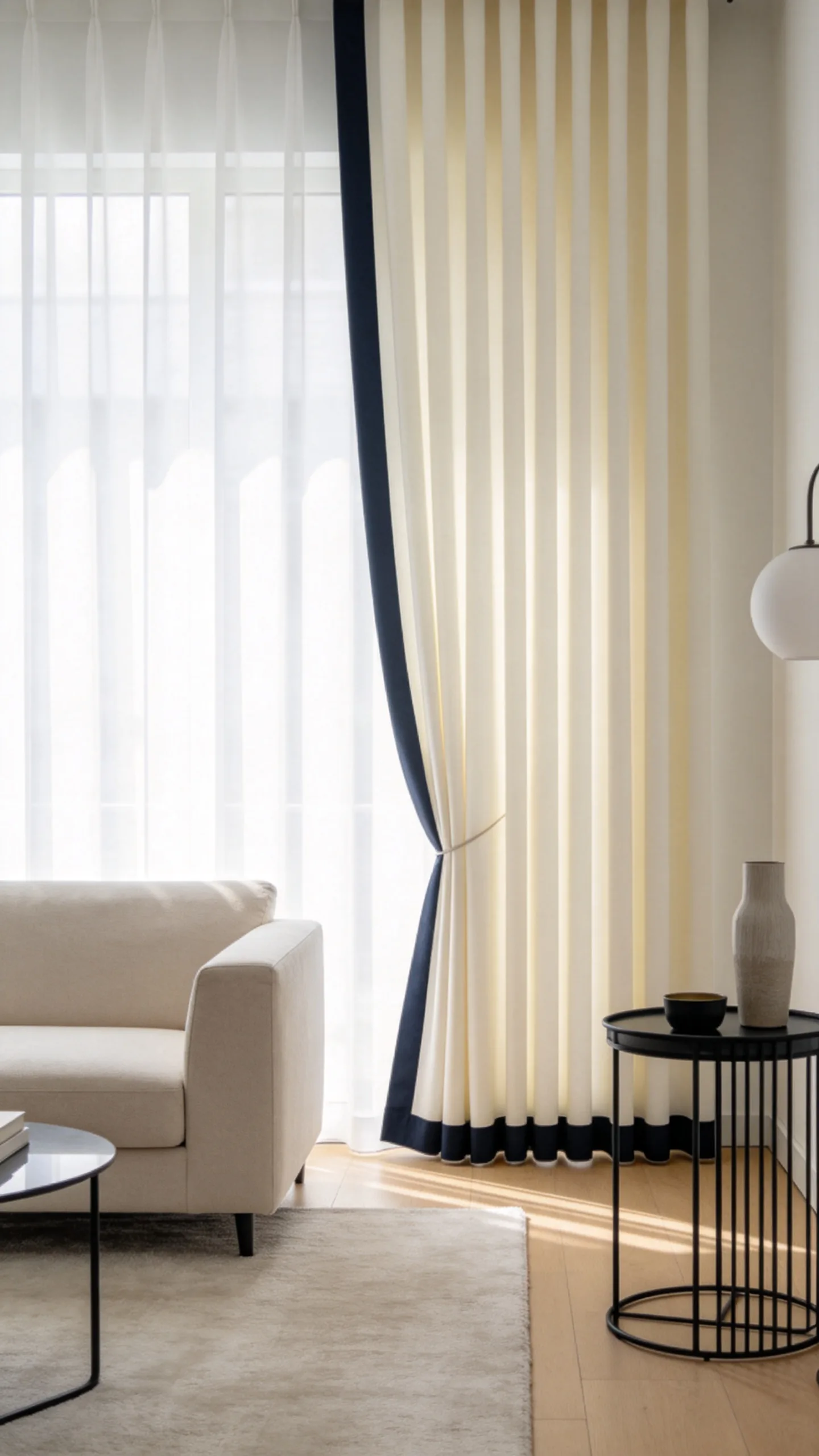
Color-blocked curtains can make a living room feel custom without requiring bold wall paint or expensive furniture. These curtains usually feature one main fabric color with a contrasting band along the bottom, side, or leading edge.
A cream curtain with a charcoal border looks crisp in a modern room. Beige panels with a rust or olive edge can add warmth to a neutral seating area. White curtains with a navy band work well in coastal or traditional living rooms.
Use color-blocking when you want a subtle statement. The contrast helps define the curtain shape and adds a tailored detail that looks more intentional than plain panels.
18. Sheer Curtains for an Airy Apartment Living Room
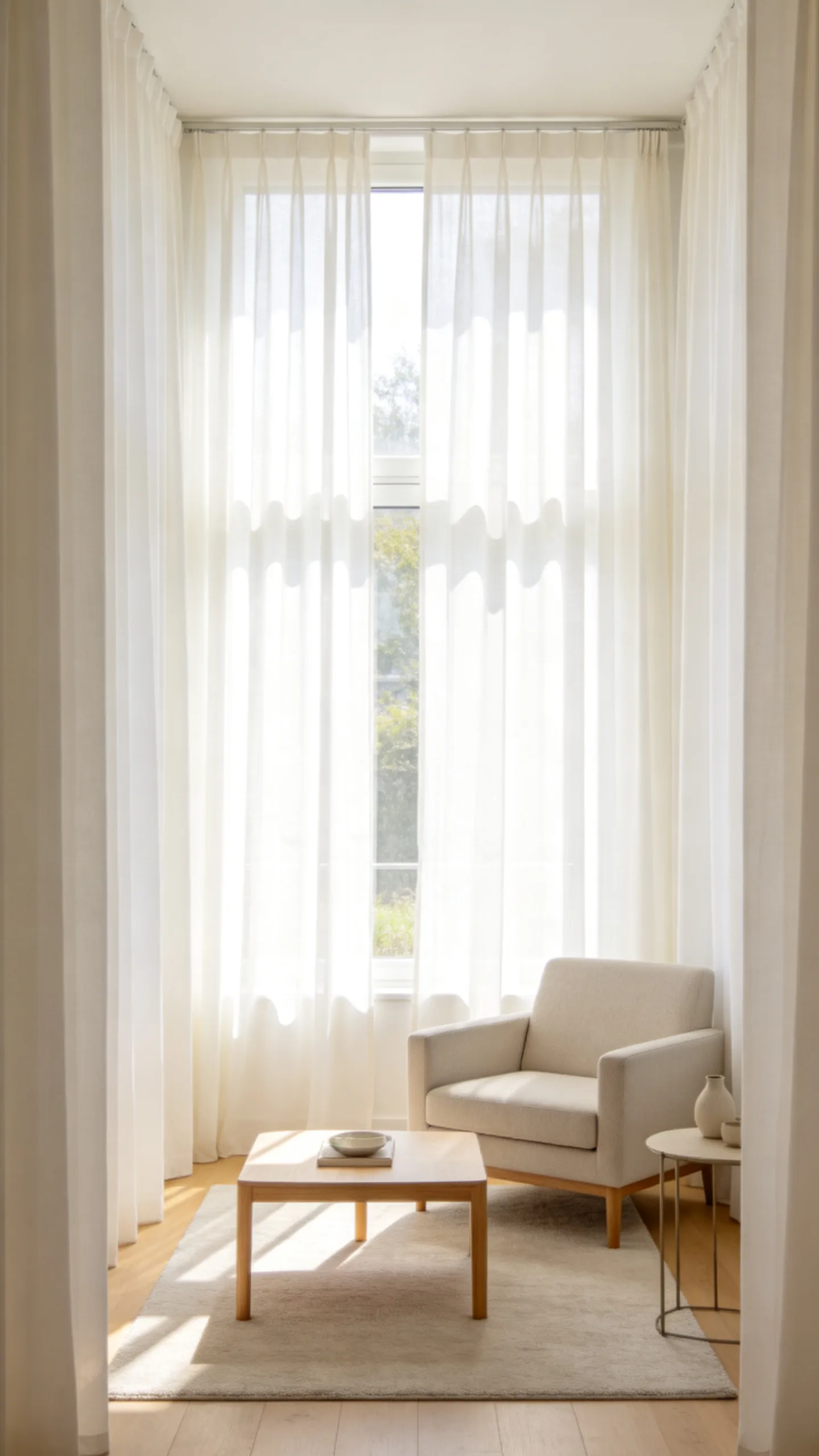
Sheer curtains are ideal for apartment living rooms where you want privacy without blocking too much light. They soften the window, reduce glare, and make the room feel more finished while keeping the space bright.
Hang sheers high and wide so they frame the window instead of covering it tightly. This helps a small living room feel more open and prevents the curtains from visually shrinking the wall.
Choose white, ivory, or warm beige sheers depending on the wall color and flooring. If the living room has cool white walls, crisp white sheers feel clean; if it has warm wood floors or beige furniture, ivory sheers usually blend better.
19. Moody Curtains That Match the Accent Wall
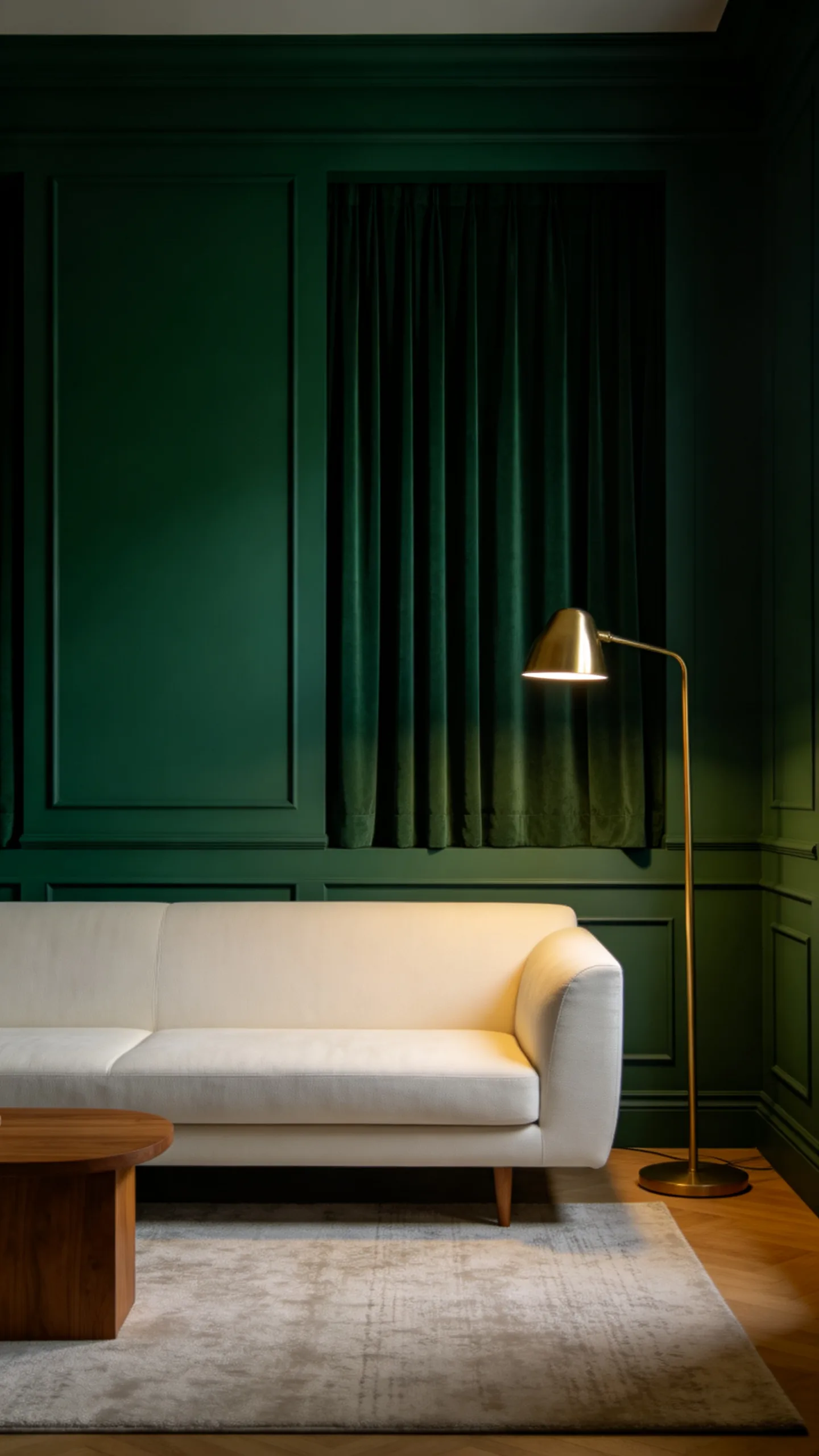
Matching curtains to a dark accent wall creates a dramatic, enveloping look. This works well behind a sofa, around a fireplace wall, or in a living room used mostly in the evening.
For example, pair deep green curtains with a green accent wall, navy curtains with a navy media wall, or charcoal curtains with dark gray built-ins. The matching color makes the curtains feel integrated rather than separate.
Add contrast through lighter furniture and warm lighting. A cream sofa, brass floor lamp, pale artwork, or textured rug can keep the dark curtain wall from feeling flat.
20. Textured Neutral Curtains for Layered Minimalism
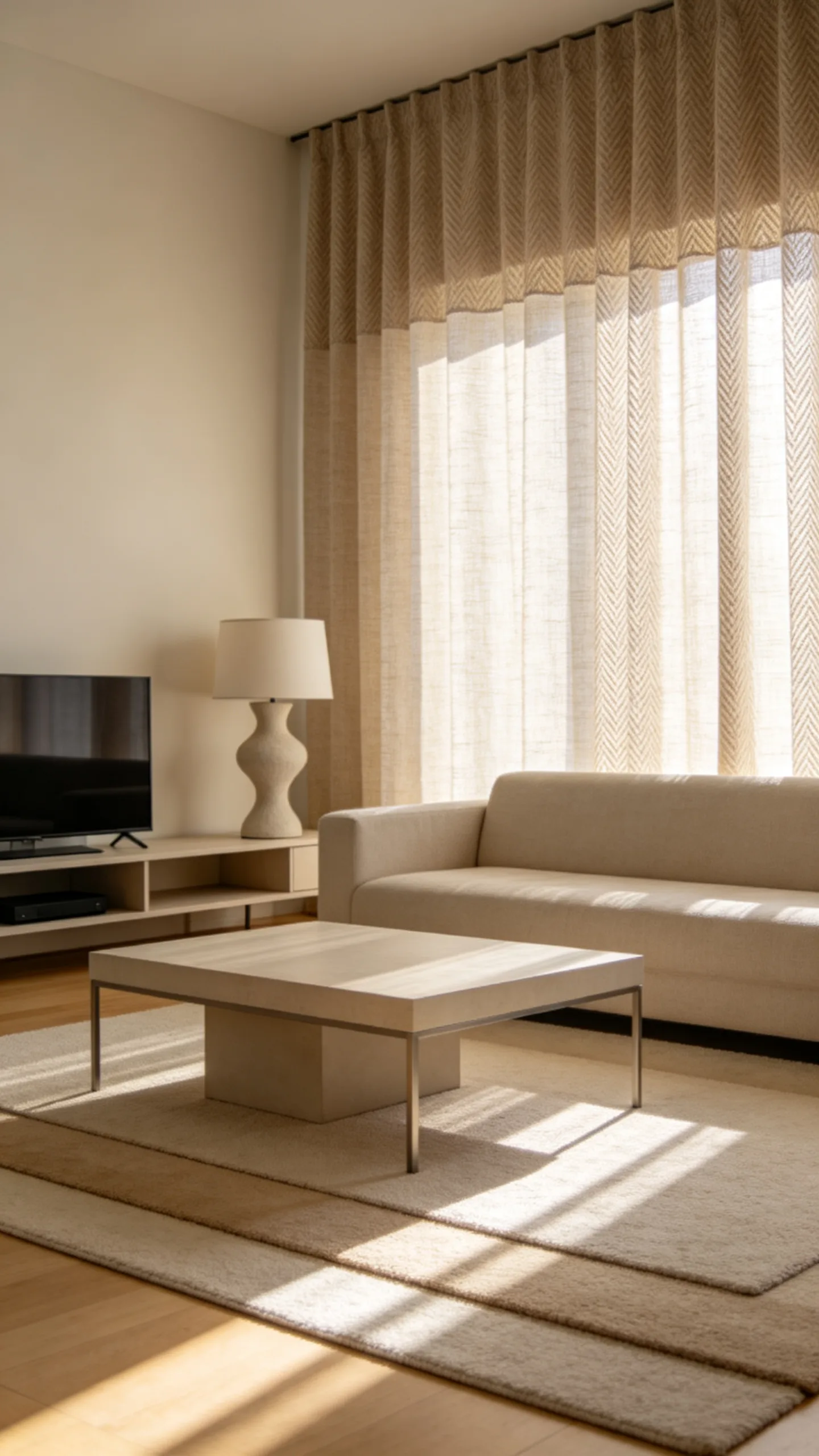
Textured neutral curtains are perfect for a minimalist living room that still needs warmth. Instead of relying on bright color or pattern, the design interest comes from fabric texture.
Look for linen blends, bouclé-inspired weaves, cotton slub, raw silk textures, or soft herringbone fabric. These details are subtle from a distance but add richness when light hits the panels.
Pair textured curtains with a simple sofa, clean-lined coffee table, low-profile media console, and sculptural lamp. The result feels calm and curated rather than empty.
21. Curtains Framing a Living Room Focal Point
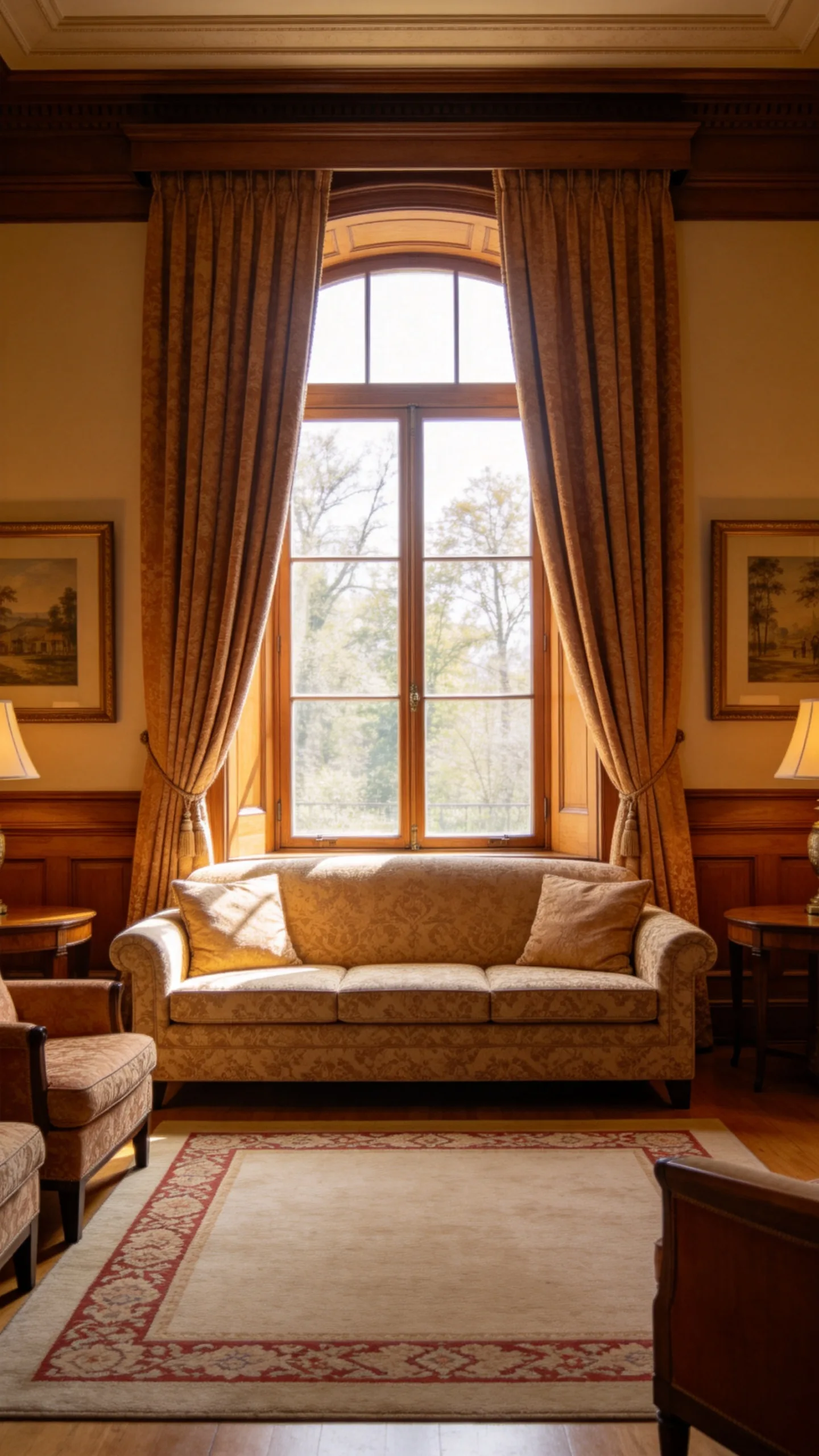
Curtains can help define the main focal point in a living room, especially when windows sit behind a sofa, beside a fireplace, or around a media wall. Instead of treating curtains as an afterthought, use them to frame the room’s most important view.
If your sofa sits in front of a large window, hang full-length panels wider than the frame so the seating area feels anchored. If windows flank a fireplace, use matching curtain panels on both sides to create symmetry. For a living room with sliding doors, run curtains across the full wall to make the opening feel grander.
Coordinate the curtain color with nearby elements, such as the sofa fabric, rug border, wall art, or wood tones. This makes the window treatment part of the overall room composition and gives the living room a more designer-finished look.

From the editors
Decor Compass Editorial Team
We turn practical home research into clear, useful room-by-room ideas.