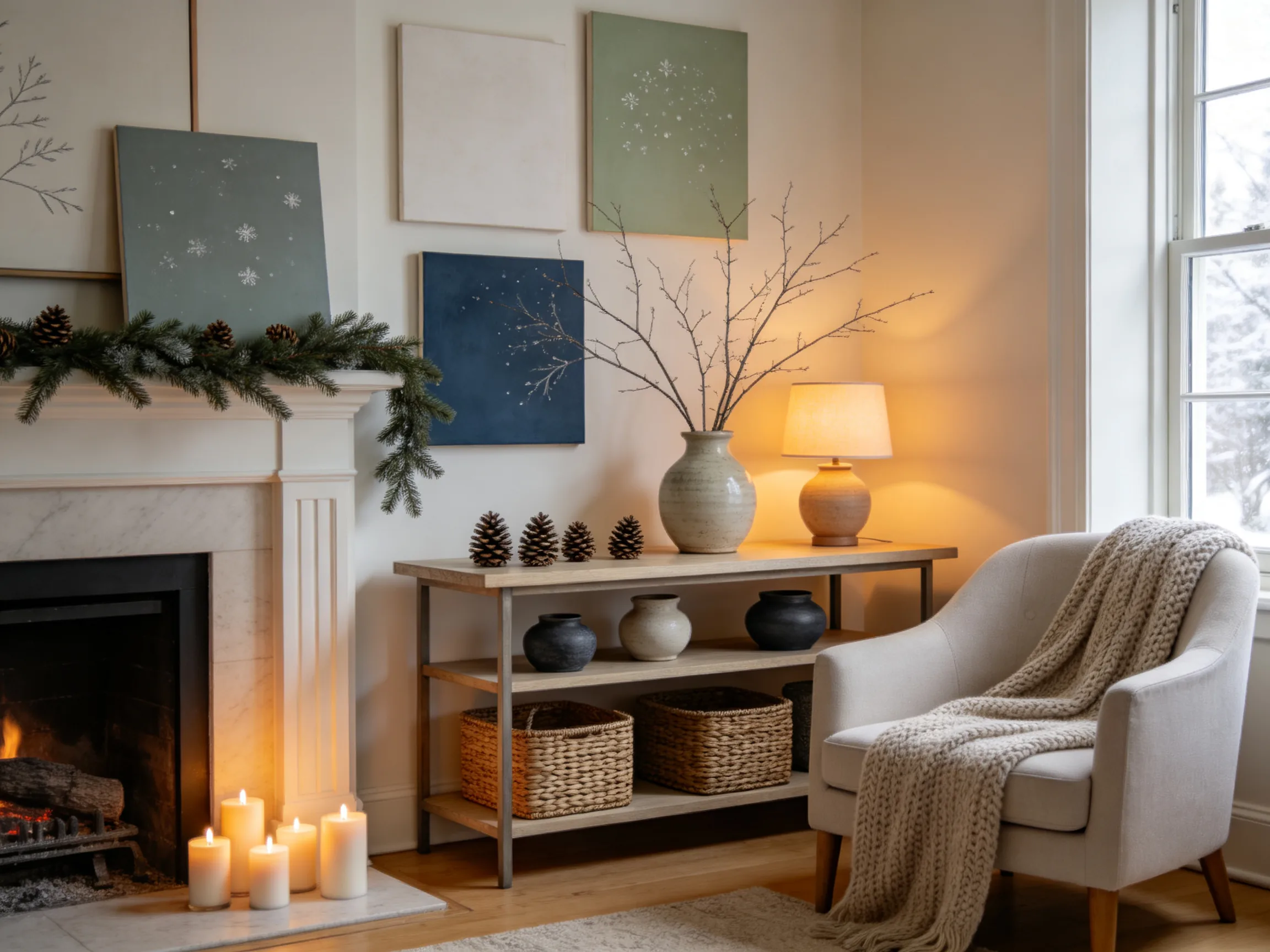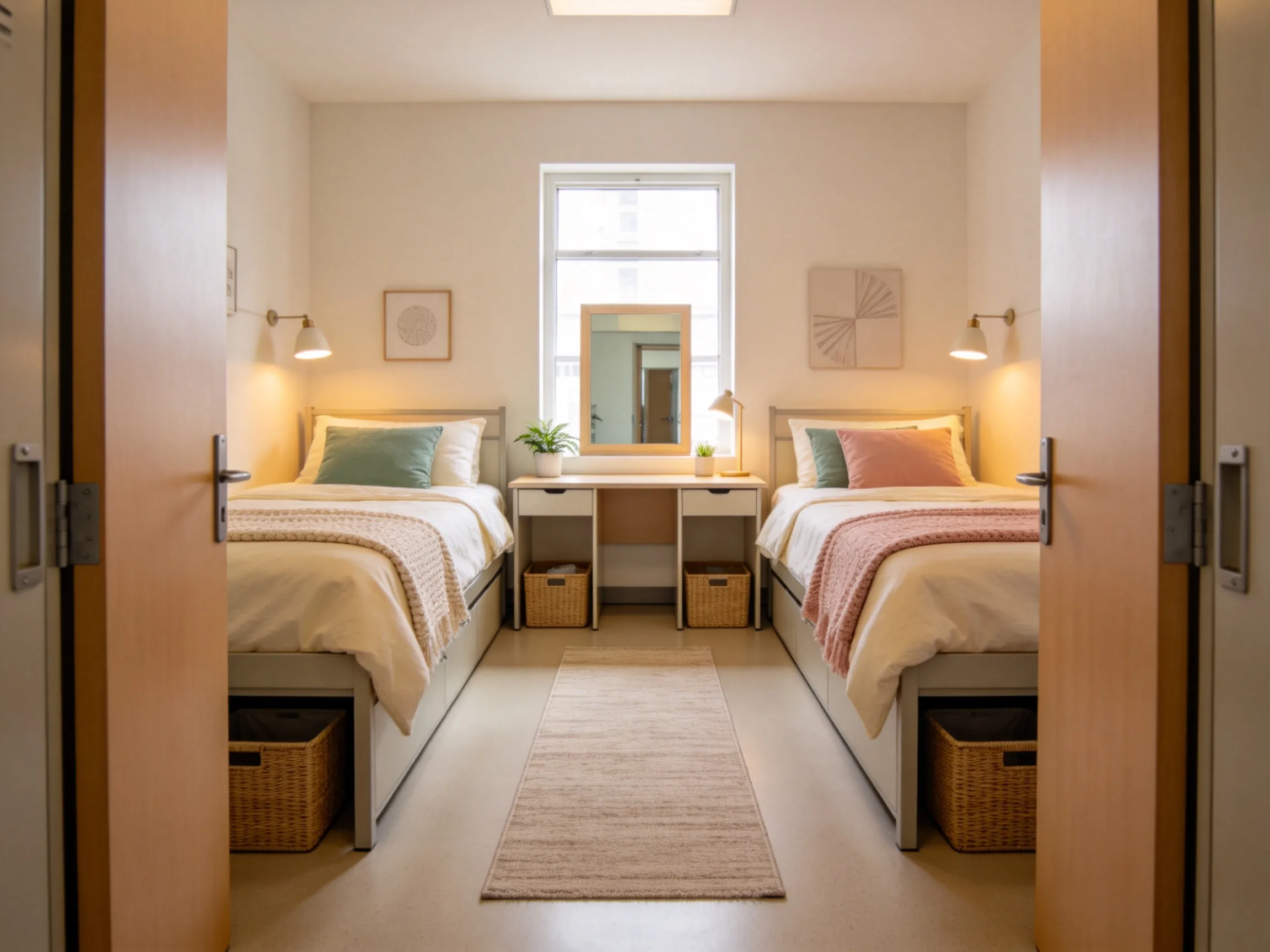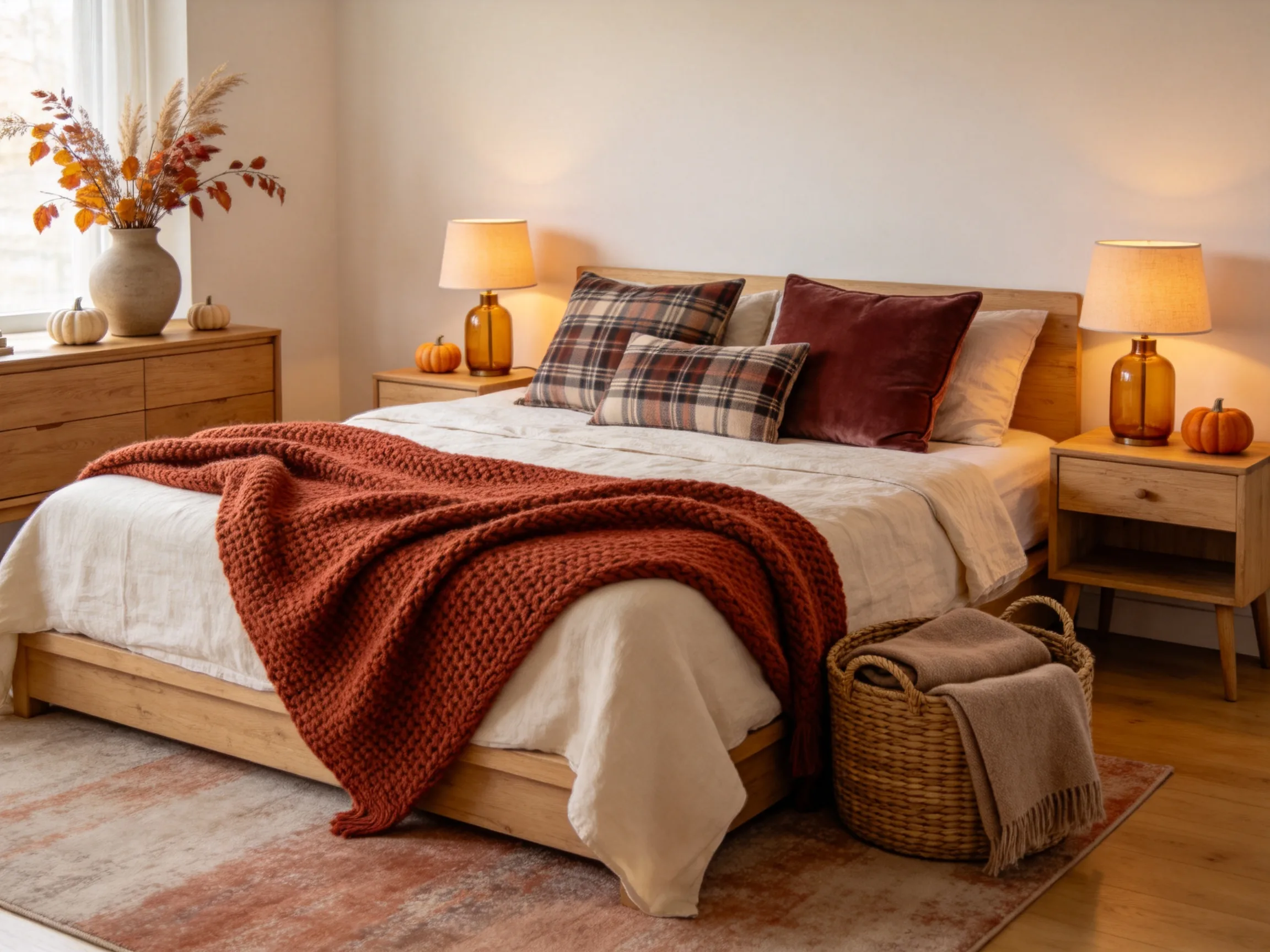
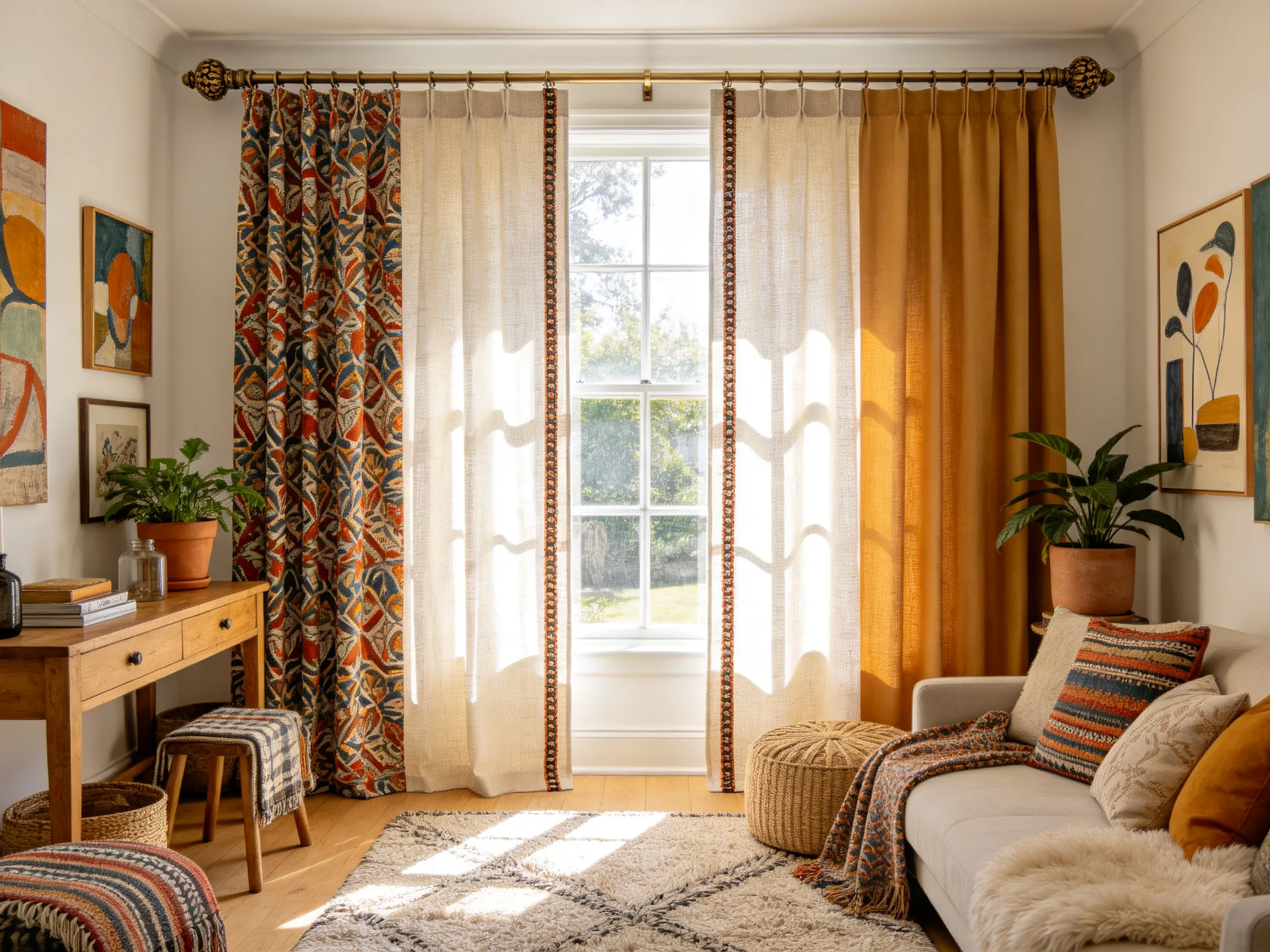
Curtains can do far more than cover a window. The right fabric, hanging method, color, trim, or placement can make a plain living room, bedroom, dining nook, hallway, or home office feel more layered and intentional. These unique curtain ideas focus on character-building details that are easy to notice, practical to use, and memorable enough to make a room feel finished.
1. Vintage Tablecloth Curtains
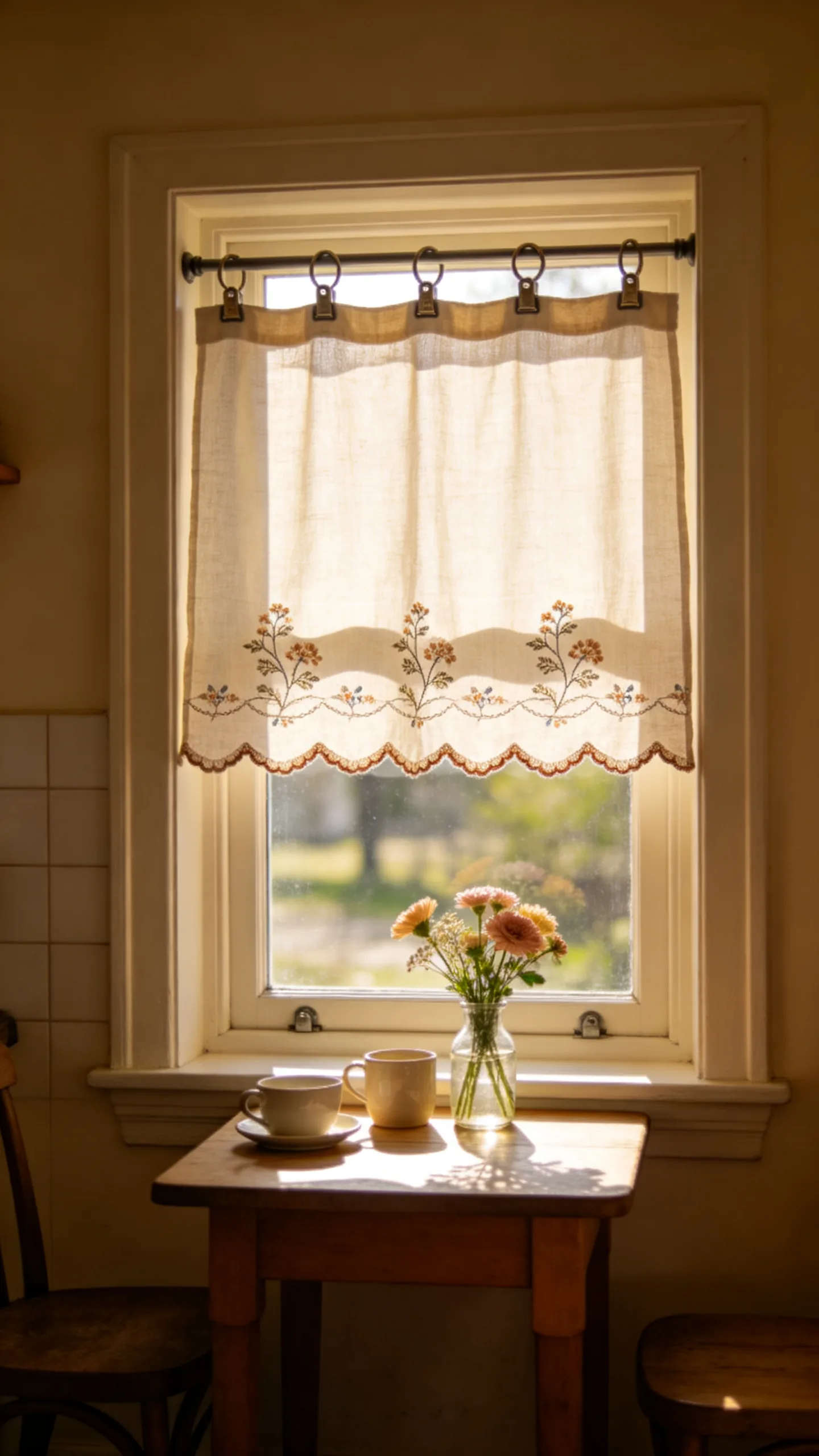
A vintage tablecloth can become a charming curtain panel for a kitchen window, breakfast nook, laundry room, or cottage-style bedroom. Look for cotton or linen pieces with embroidered edges, scalloped borders, gingham checks, or floral prints that already have decorative detail built in.
Use clip rings to hang the tablecloth without sewing, especially if the fabric has a pretty hem you want to preserve. This works beautifully over a small café rod, inside a window frame, or across the lower half of a window where you want privacy without blocking all the daylight.
2. Contrasting Border Curtains
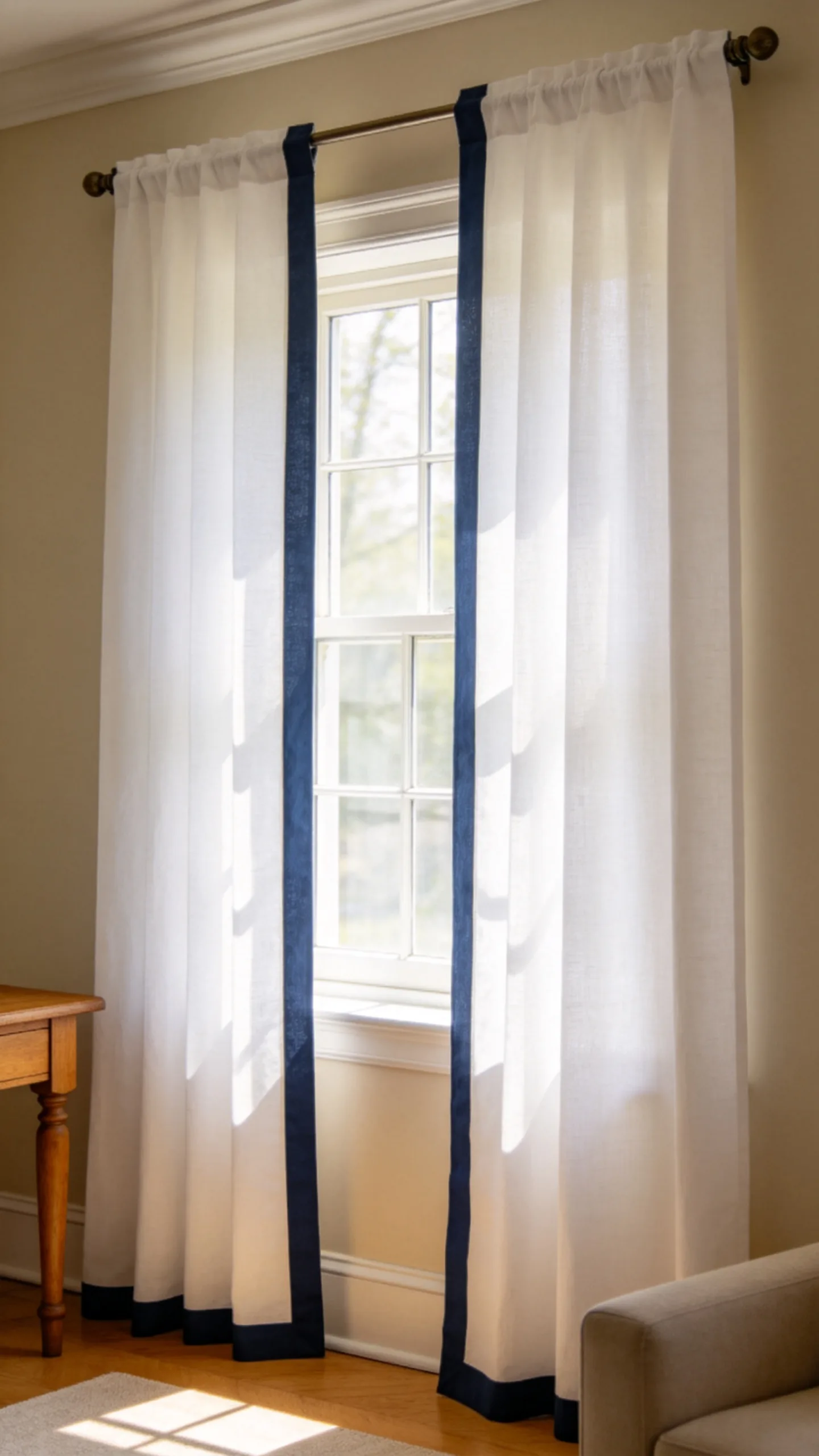
Adding a contrasting border gives simple curtain panels a custom look without changing the whole room. A white linen curtain with a navy, olive, rust, or black border can frame a living room window like tailored trim around artwork.
Use the border along the leading edge, bottom hem, or all four sides depending on how bold you want the effect to be. This idea is especially useful in rooms with neutral walls because the border creates definition and makes the window feel more designed.
3. Café Curtains in an Unexpected Room
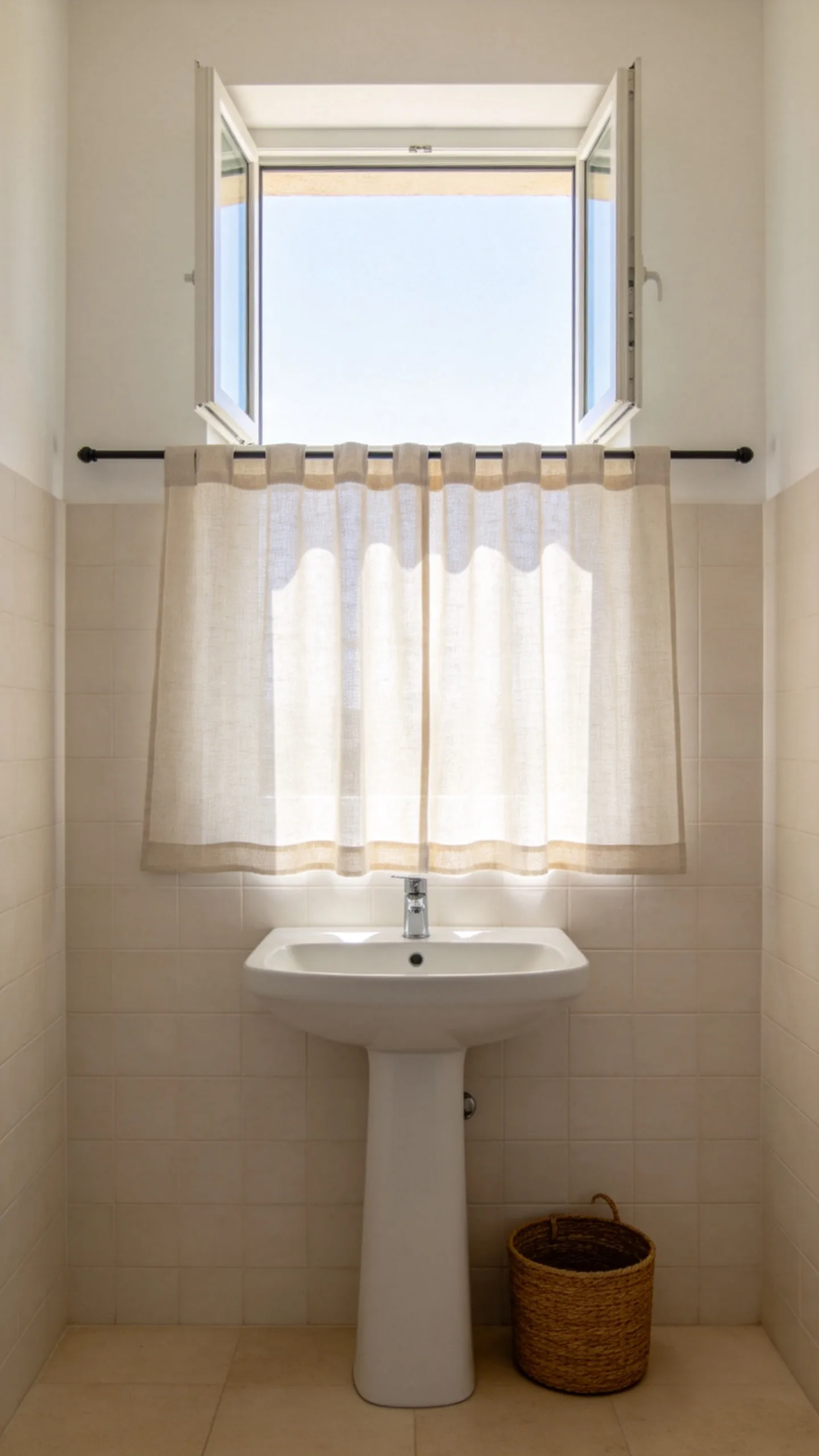
Café curtains are often used in kitchens, but they can bring softness and privacy to bathrooms, bedrooms, mudrooms, and home offices too. Hanging them across only the lower half of the window keeps the upper glass open for natural light and views.
Choose crisp cotton for a clean look, sheer linen for softness, or patterned fabric for extra personality. In a small bathroom, café curtains can reduce visual clutter compared with bulky blinds while still making the window feel intentionally styled.
4. Two-Tone Color Block Curtains
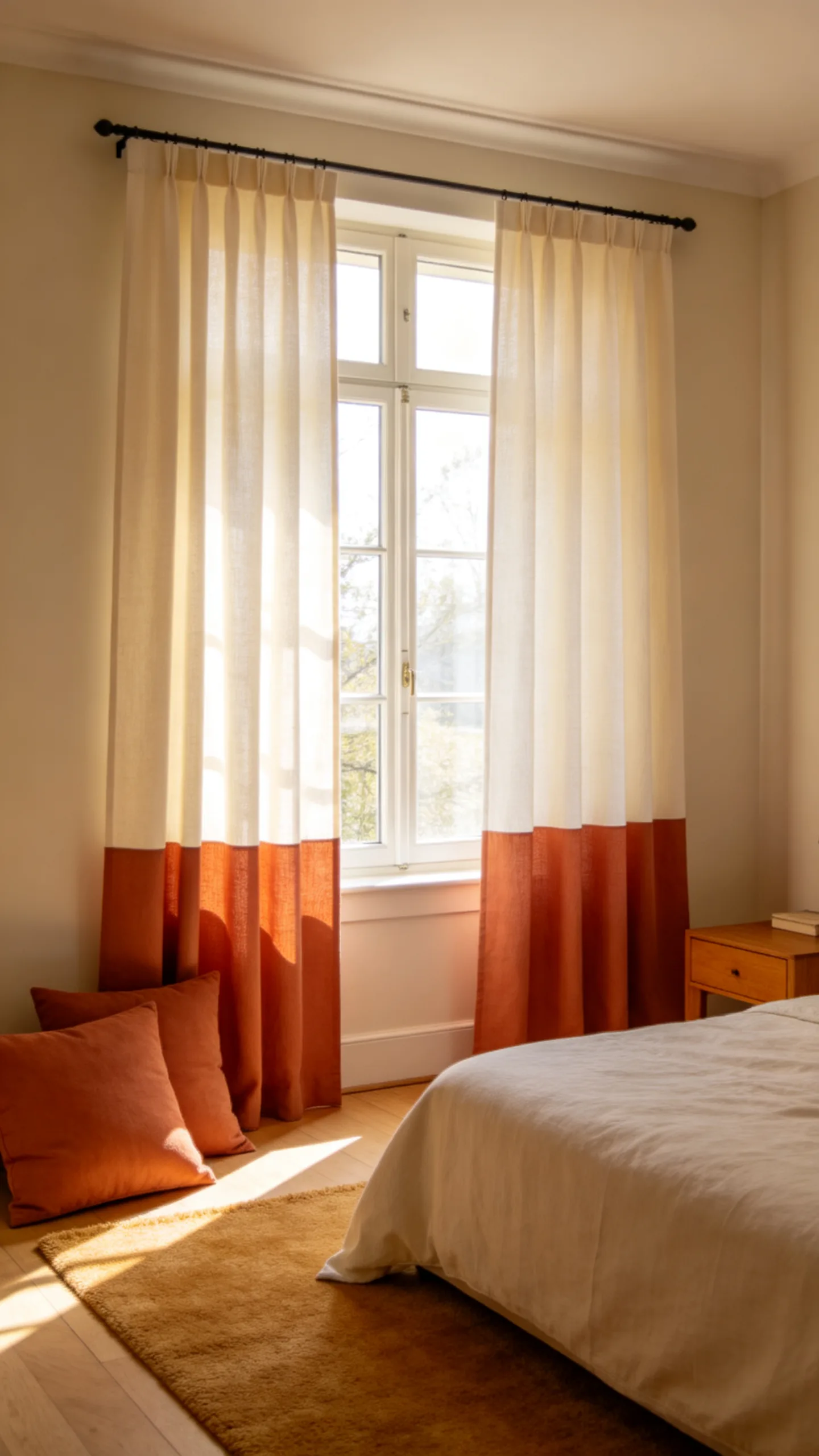
Color block curtains create instant character by combining two fabrics in one panel. Try cream with terracotta, oatmeal with charcoal, blush with burgundy, or sage with ivory to echo colors already used in your rug, bedding, sofa pillows, or wall art.
Place the darker color at the bottom to visually ground the window, or use a vertical color block along the inner edge to draw the eye upward. This is a smart option for rooms that feel unfinished because the curtains add pattern-like interest without using a busy print.
5. Patterned Curtains Behind Solid Furniture
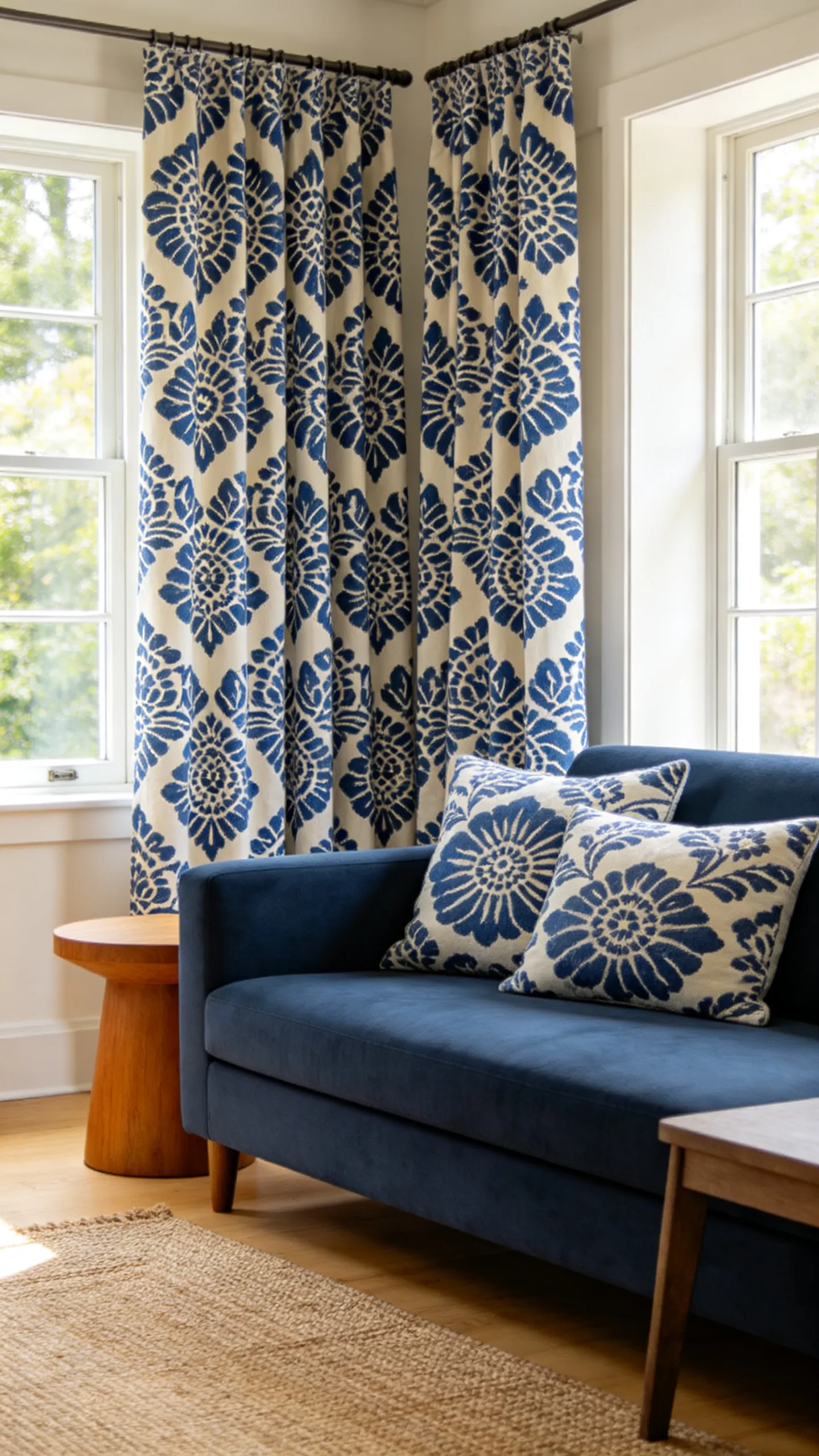
If your room has a plain sofa, simple bed frame, or minimal dining set, patterned curtains can supply the missing character. Florals, block prints, stripes, checks, or small-scale geometrics can make a neutral room feel warmer without replacing large furniture.
Keep the palette connected to nearby textiles so the curtains look deliberate rather than random. For example, use a blue-and-cream print beside a navy sofa, or a rust botanical fabric in a bedroom with warm wood nightstands and a tan rug.
6. Ceiling-Height Curtains for Low Rooms
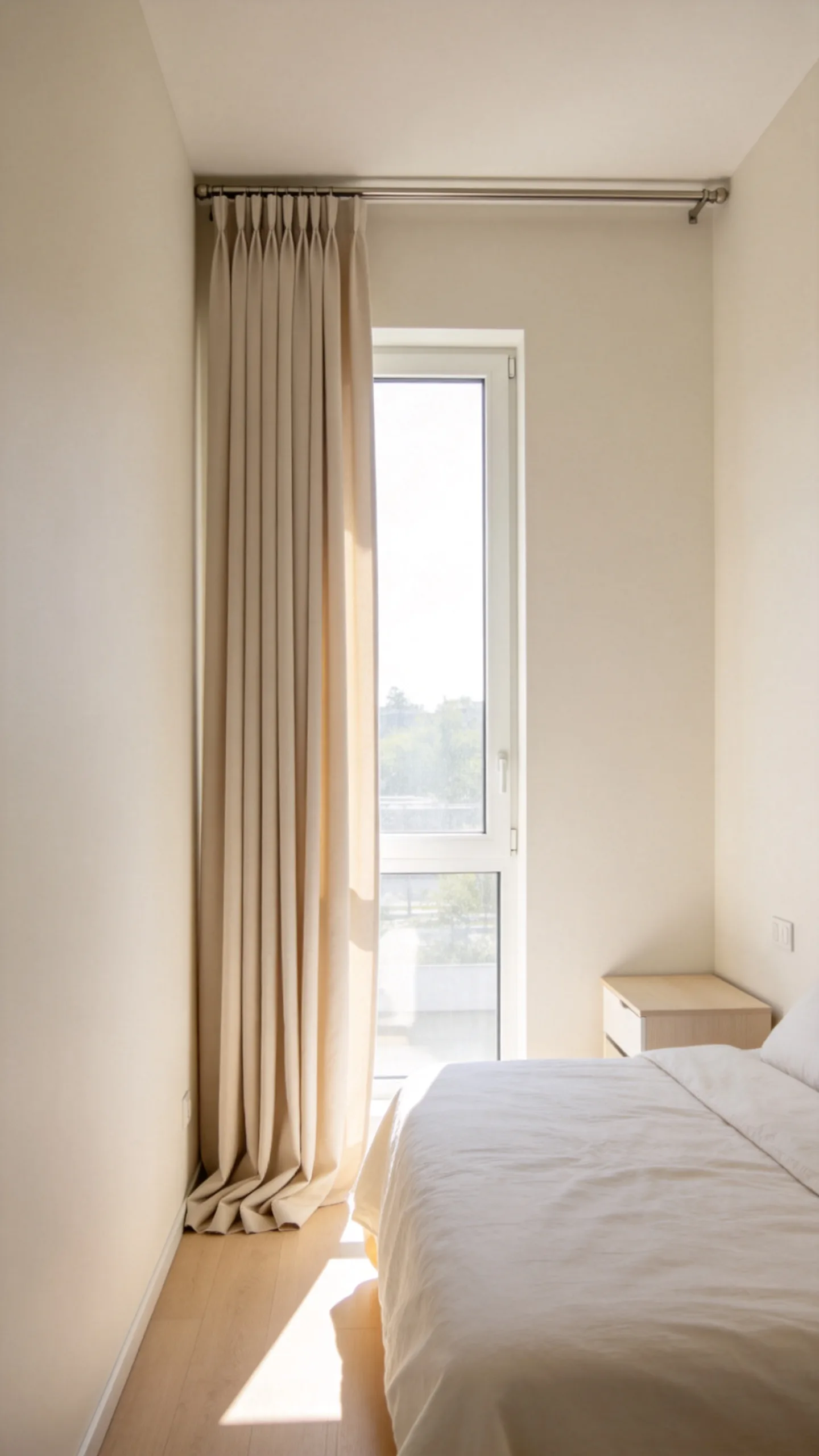
Mounting curtains close to the ceiling can make a low room feel taller and more polished. This works especially well in apartments, small bedrooms, and living rooms where the window trim sits awkwardly low on the wall.
Use full-length panels that just kiss the floor or break slightly at the hem. Keeping the rod wider than the window allows the curtains to stack beside the glass instead of covering it, which improves sightlines and lets more daylight into the room.
7. Sheer Curtains Layered Over Bamboo Shades
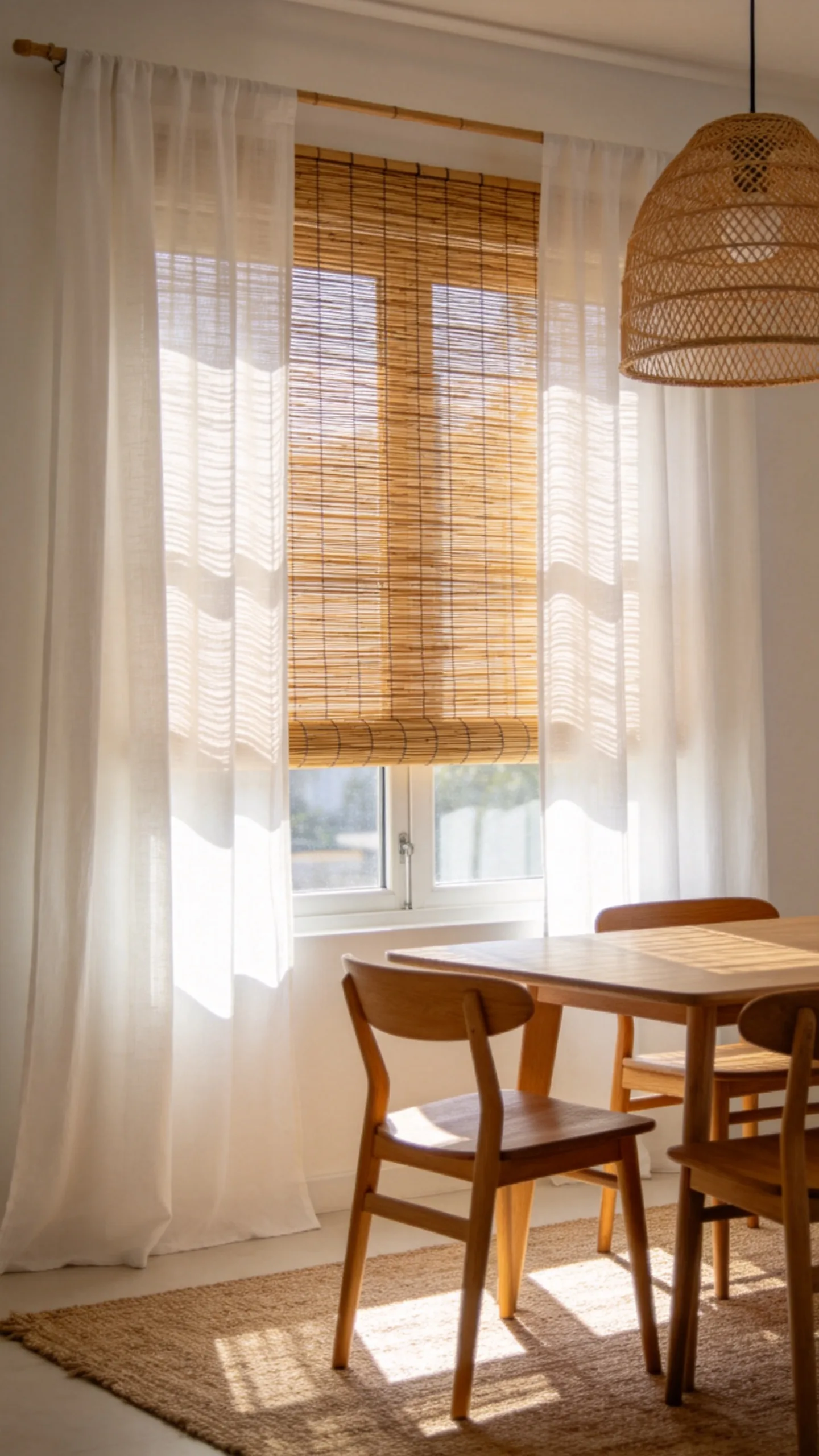
Layering sheers over bamboo shades combines softness with natural texture. This pairing works in living rooms, bedrooms, sunrooms, and dining spaces where you want privacy, filtered light, and a relaxed focal point around the window.
The bamboo shade adds warmth and structure, while the sheer curtain softens the hard rectangle of the window. Use white, ivory, or warm beige sheers for an airy effect, and choose a bamboo tone that relates to wood furniture, woven baskets, or rattan lighting in the room.
8. Velvet Curtains in a Casual Room
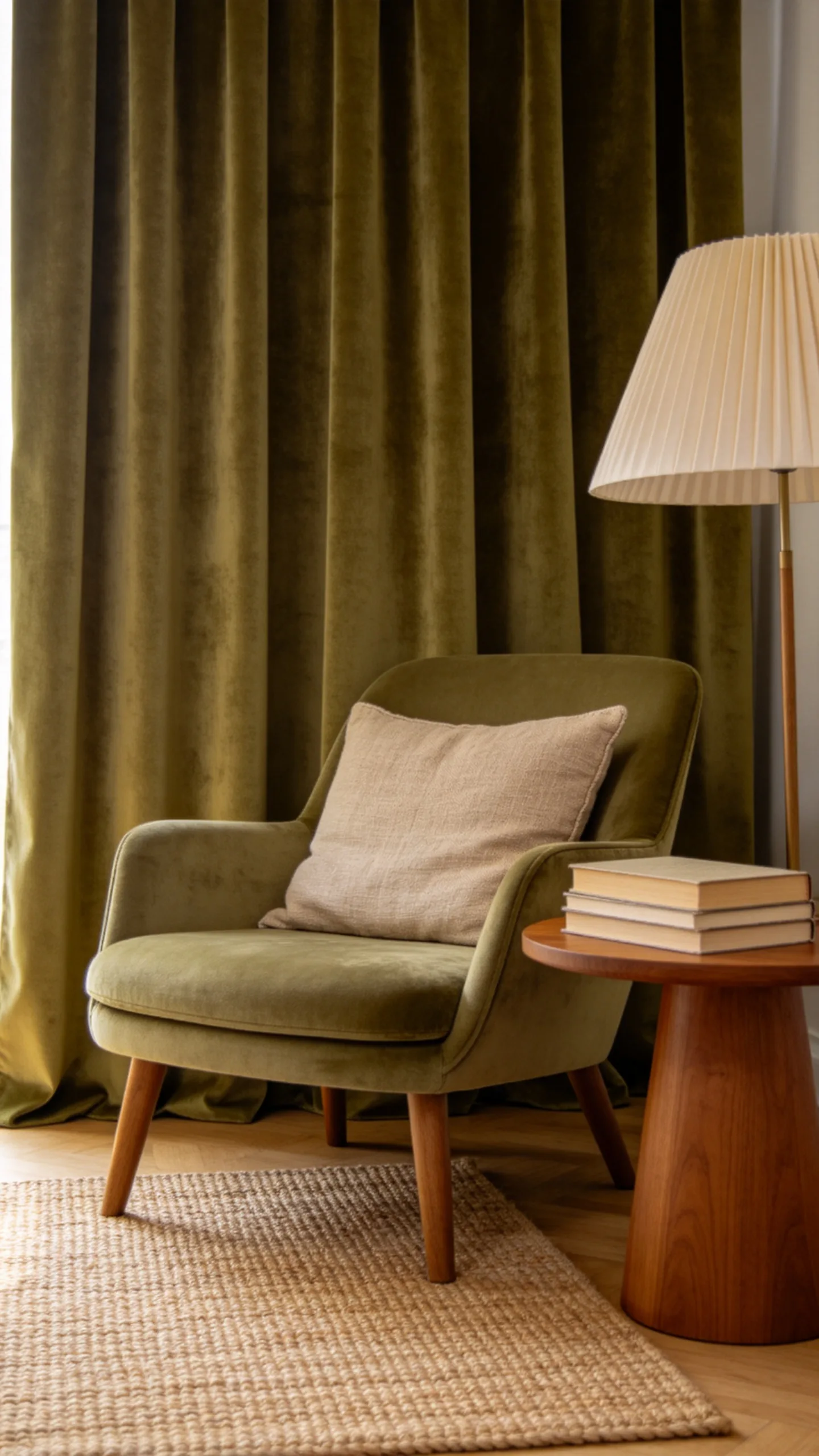
Velvet curtains are often associated with formal spaces, but they can add surprising depth to a casual bedroom, den, or reading corner. A muted velvet in olive, cocoa, dusty blue, rust, or mushroom can make simple walls and basic furniture feel richer.
Balance the heavier fabric with relaxed elements such as a jute rug, linen bedding, a wood side table, or paper shade lamp. Velvet also helps visually anchor tall windows and can make a bare corner feel more intimate when used behind an accent chair.
9. Striped Curtains Hung Extra Wide
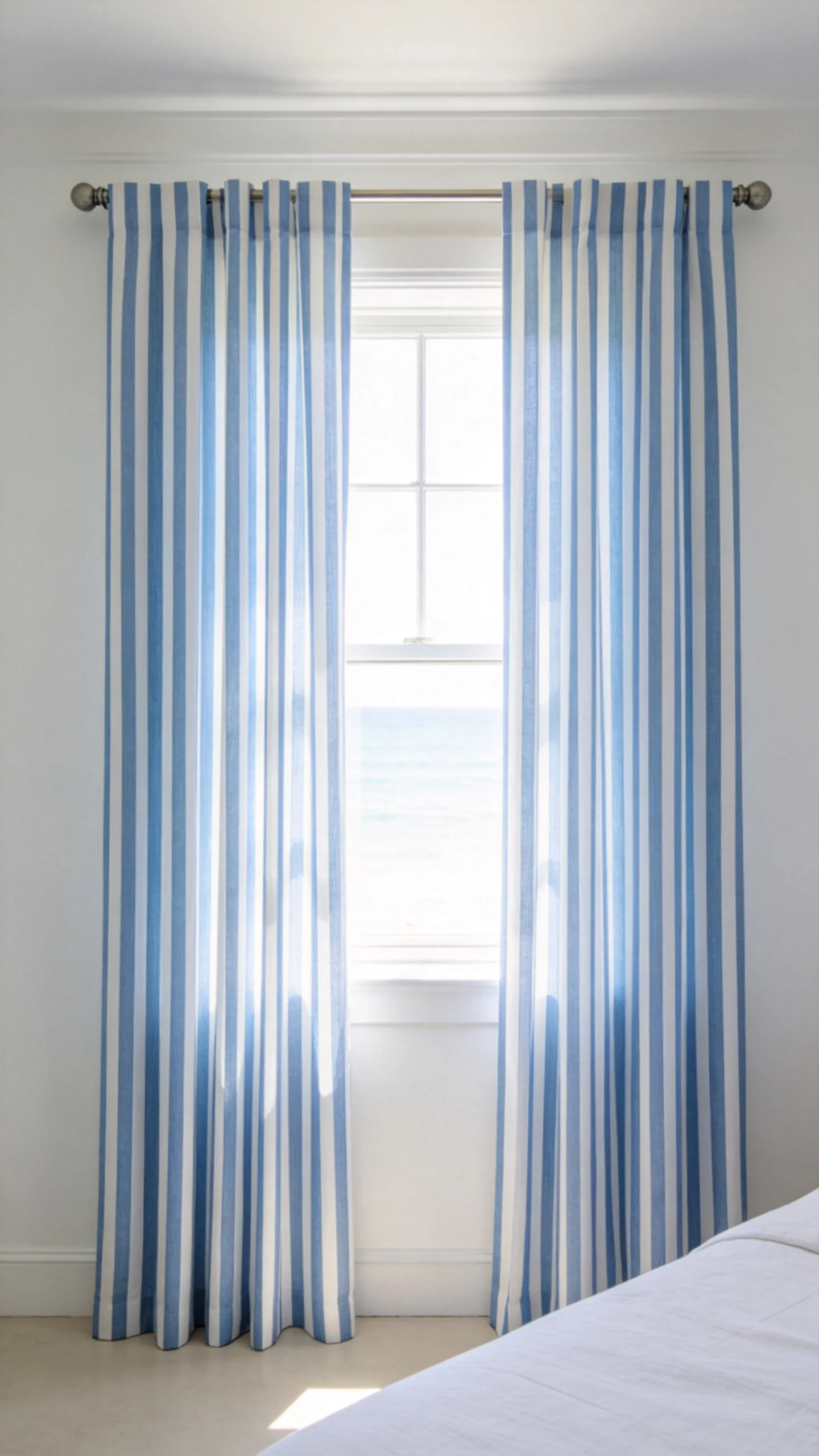
Striped curtains create rhythm and structure, especially when hung wider than the window frame. Vertical stripes can make a short wall appear taller, while ticking stripes, cabana stripes, or narrow pinstripes add personality without overwhelming the room.
This idea works well in bedrooms, nurseries, dining rooms, and coastal-inspired living spaces. Keep furniture placement clear so the curtain panels can stack fully to the side, preserving traffic flow and keeping the window from feeling squeezed.
10. Mismatched Curtain Panels
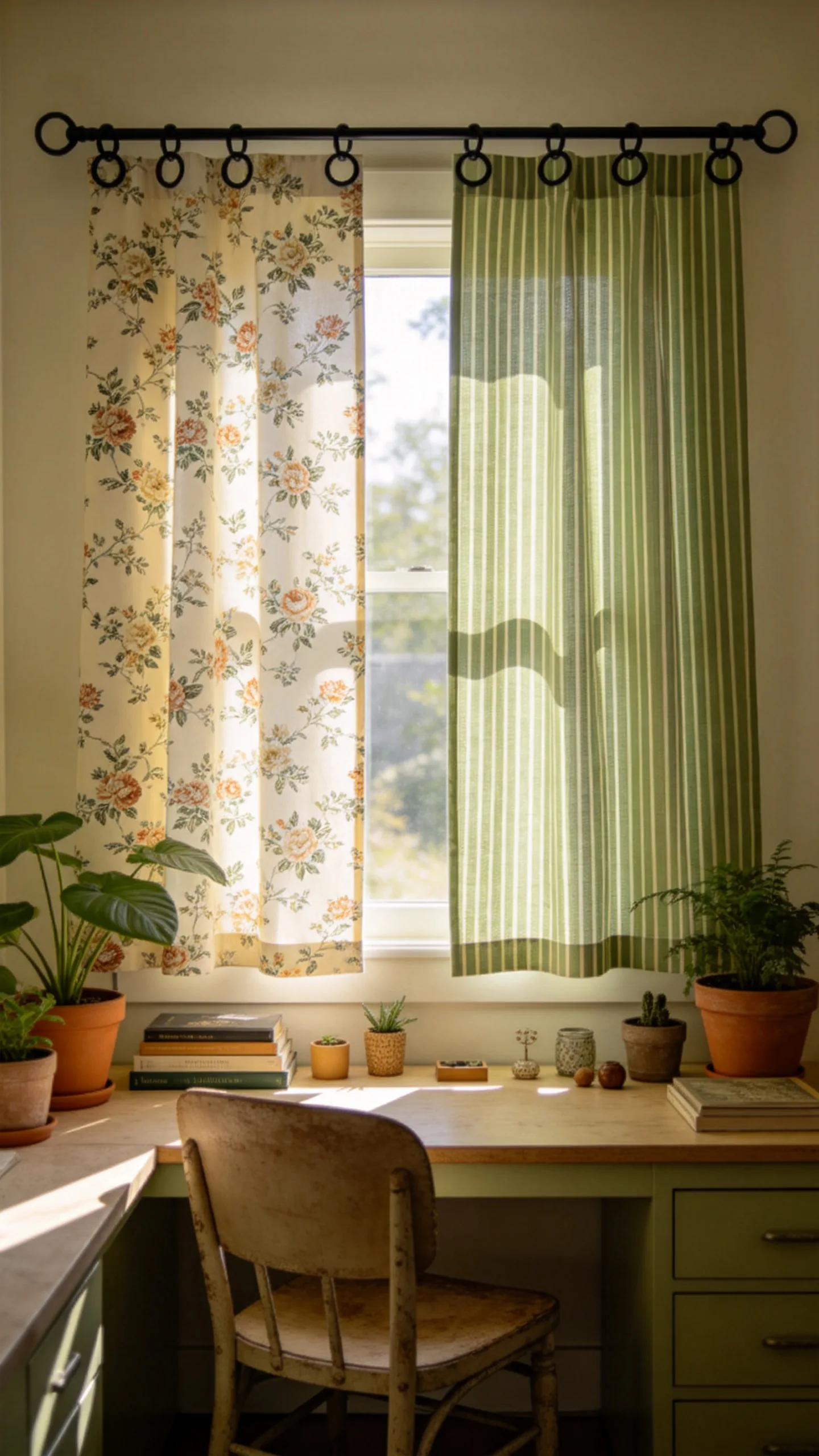
Mismatched panels can look collected and artistic when they share one common element. Pair two different floral prints in the same color family, combine a stripe with a solid pulled from the stripe, or use two vintage fabrics with similar weight and texture.
This idea works best in creative spaces such as a home office, guest room, studio corner, or eclectic living room. Keep the rod and rings consistent so the mismatch feels intentional instead of accidental.
11. Curtains With Tassel Trim
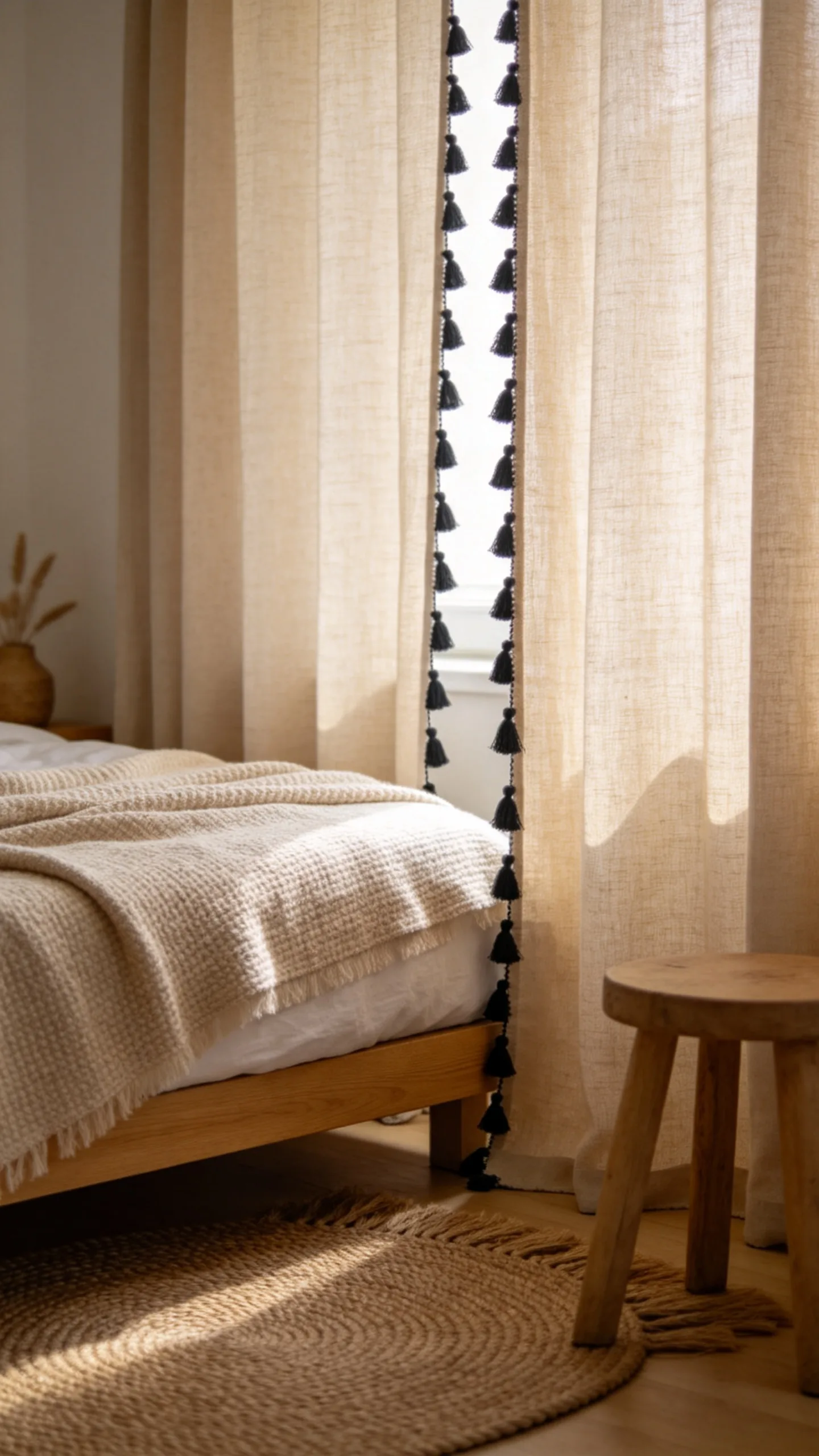
Tassel trim can turn basic curtain panels into a decorative feature. Add small tassels along the inner edge for movement, or use a larger tassel border along the bottom hem for a playful bedroom, nursery, or bohemian sitting area.
Choose trim that complements the fabric rather than competing with it. Cream tassels on linen feel soft and relaxed, while black tassels on natural cotton create stronger contrast for a modern eclectic room.
12. Doorway Curtains Instead of Doors
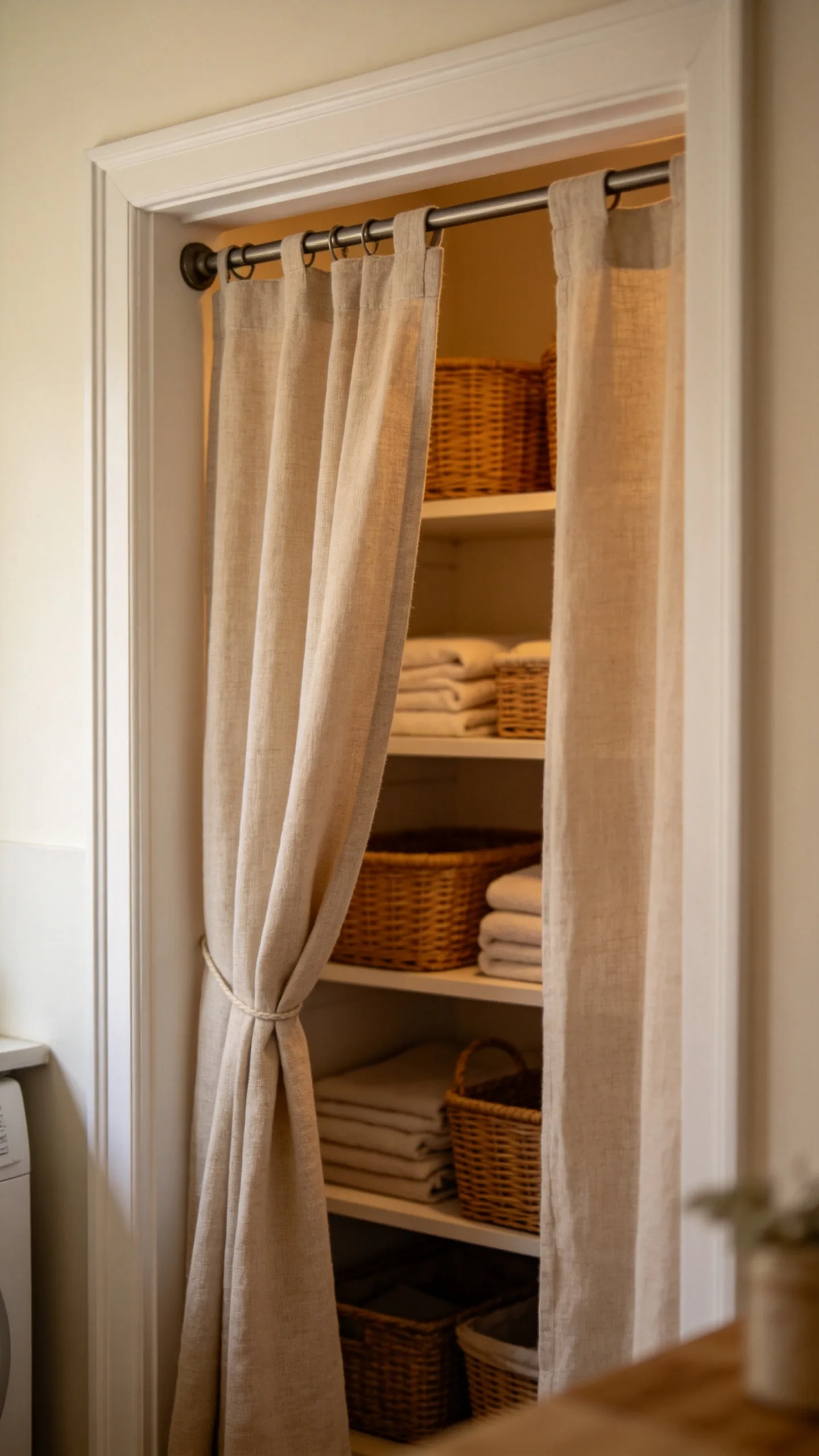
A curtain hung in a doorway can soften a transition between rooms while saving floor space. This is useful for closets, laundry alcoves, pantries, studio apartments, or open shelving areas that need occasional concealment.
Choose a fabric with enough weight to hang neatly, such as cotton canvas, washed linen, or a lined patterned panel. Mount the rod slightly above the doorway casing to make the opening feel taller and to keep the curtain from interfering with daily movement.
13. Linen Curtains With Raw-Look Texture
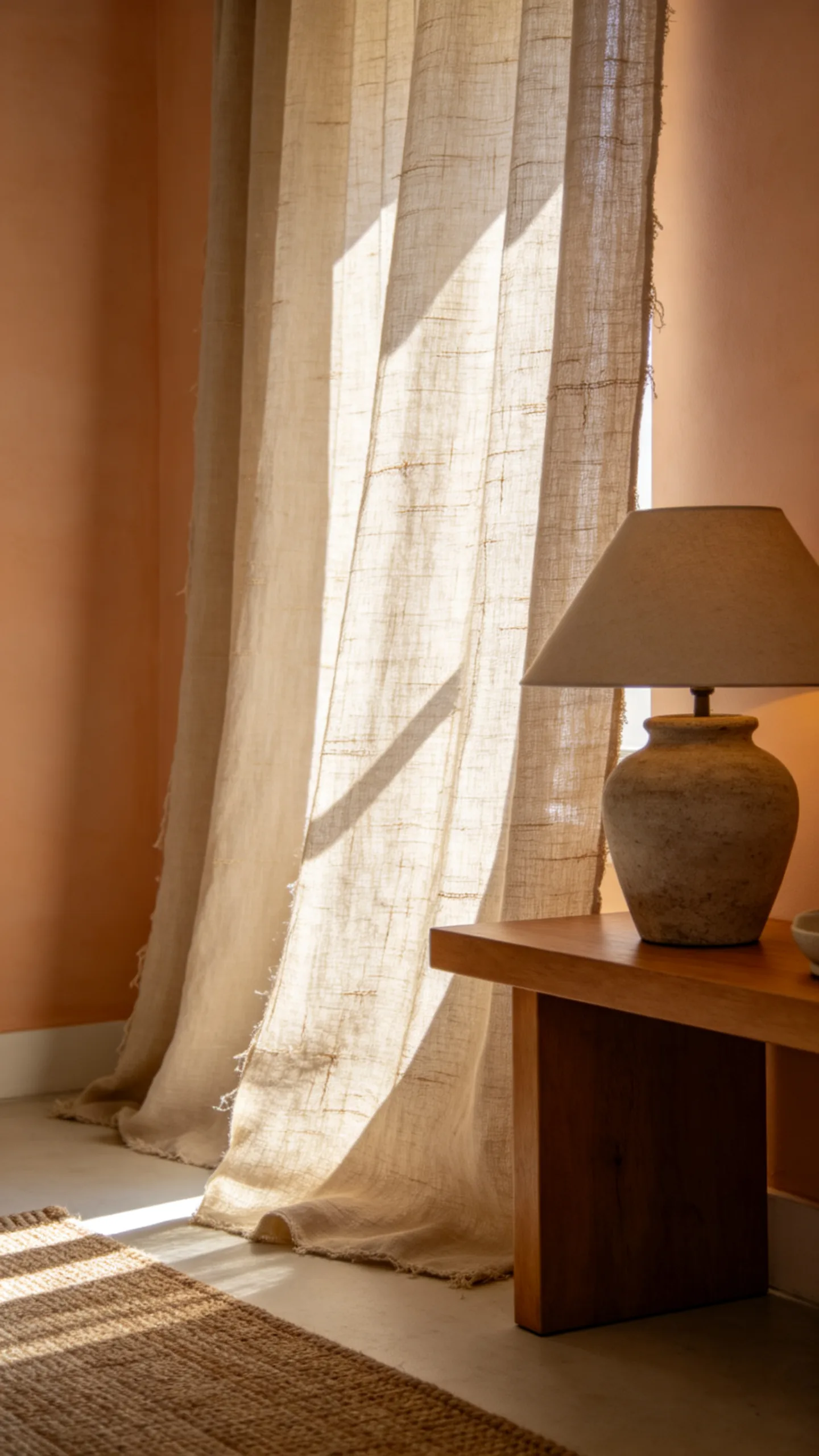
Textured linen curtains add character through weave, slubs, and natural movement rather than bold color. They work well in bedrooms, living rooms, dining rooms, and calm home offices where the goal is warmth without visual noise.
Choose ivory, oatmeal, flax, clay, or soft gray depending on the wall color and flooring. Linen is especially effective beside painted walls, wood furniture, stoneware lamps, or woven rugs because it adds a tactile layer that makes the room feel more lived-in.
14. Plaid Curtains in a Modern Space
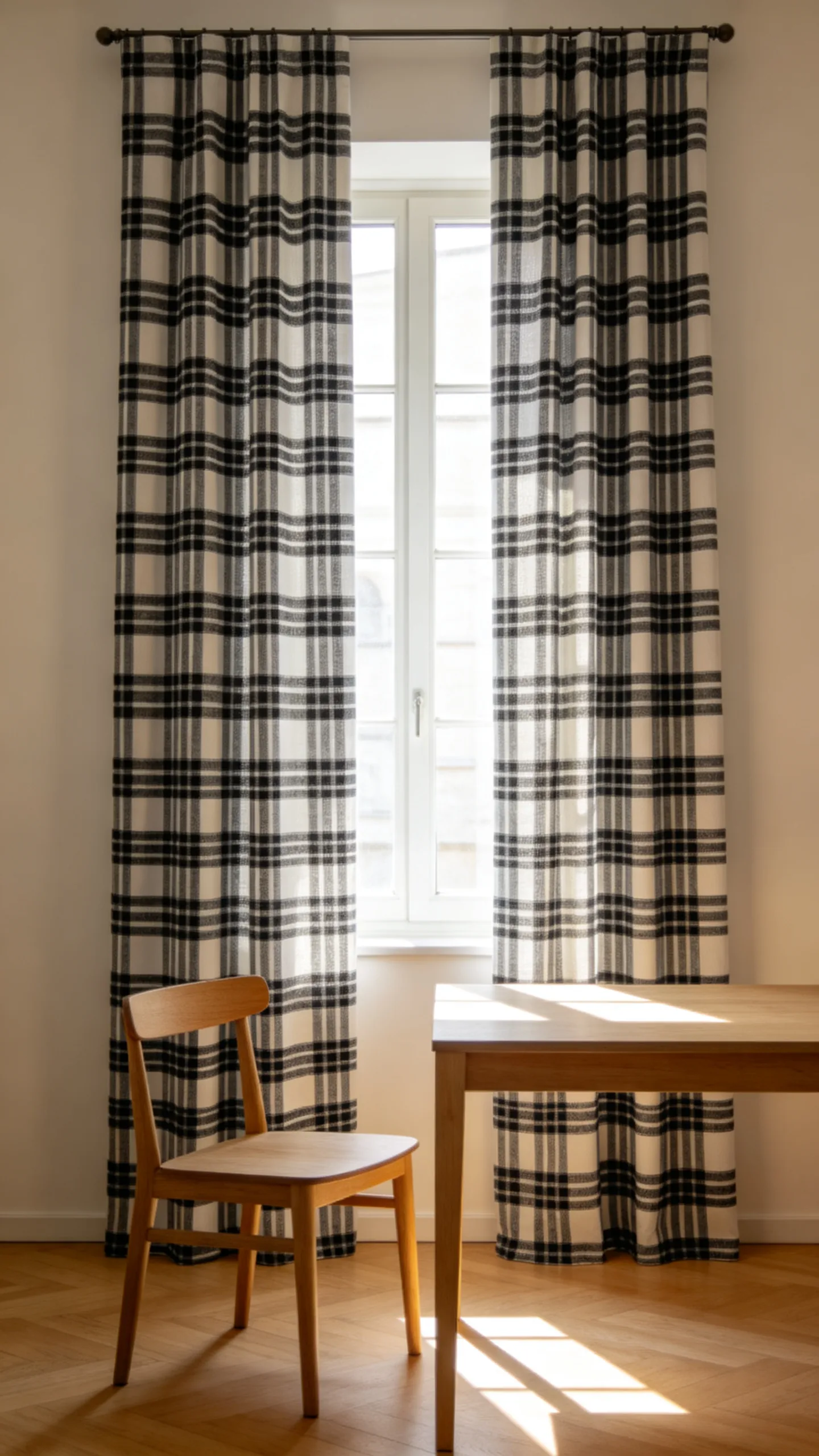
Plaid curtains can bring a surprising sense of structure to a modern room. Instead of rustic red tartan, try oversized windowpane checks, subtle beige plaids, black-and-white grids, or muted green and cream patterns.
Use plaid curtains in a dining room with simple wood chairs, a bedroom with plain bedding, or a home office with minimal furniture. The pattern adds architecture to the wall and can make a blank window feel like a real focal point.
15. Curtains Used as a Bed Backdrop
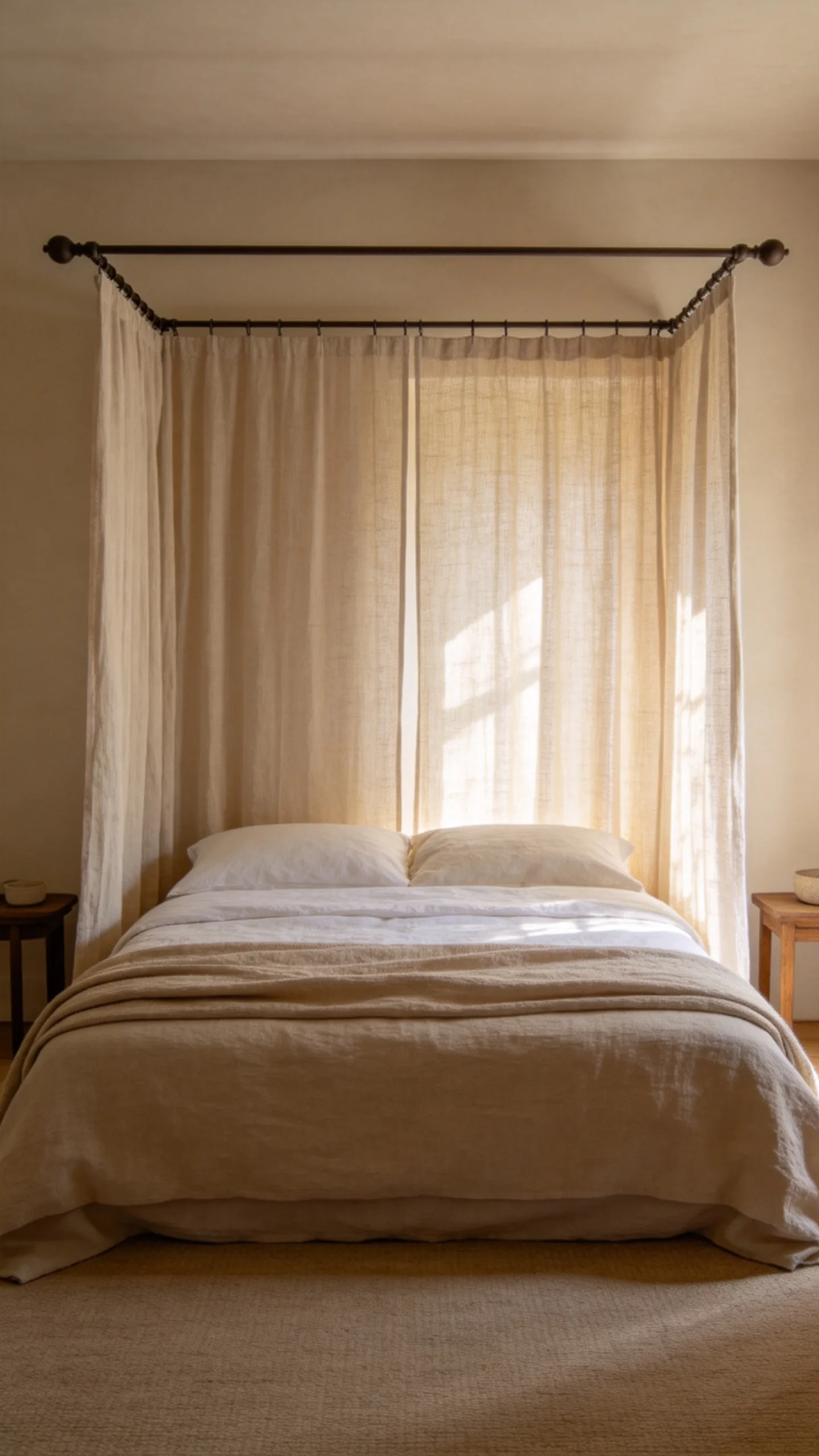
Curtains can create a soft backdrop behind a bed, especially when the room lacks a headboard or architectural detail. Hang panels across the wall behind the bed to frame the sleeping area and give the room a boutique, layered look.
Use a rod that extends wider than the mattress so the fabric creates a generous visual frame. Linen, velvet, gauze, or patterned cotton can all work depending on whether you want calm texture, dramatic color, or a more romantic focal point.
16. Embroidered Curtains for Quiet Detail
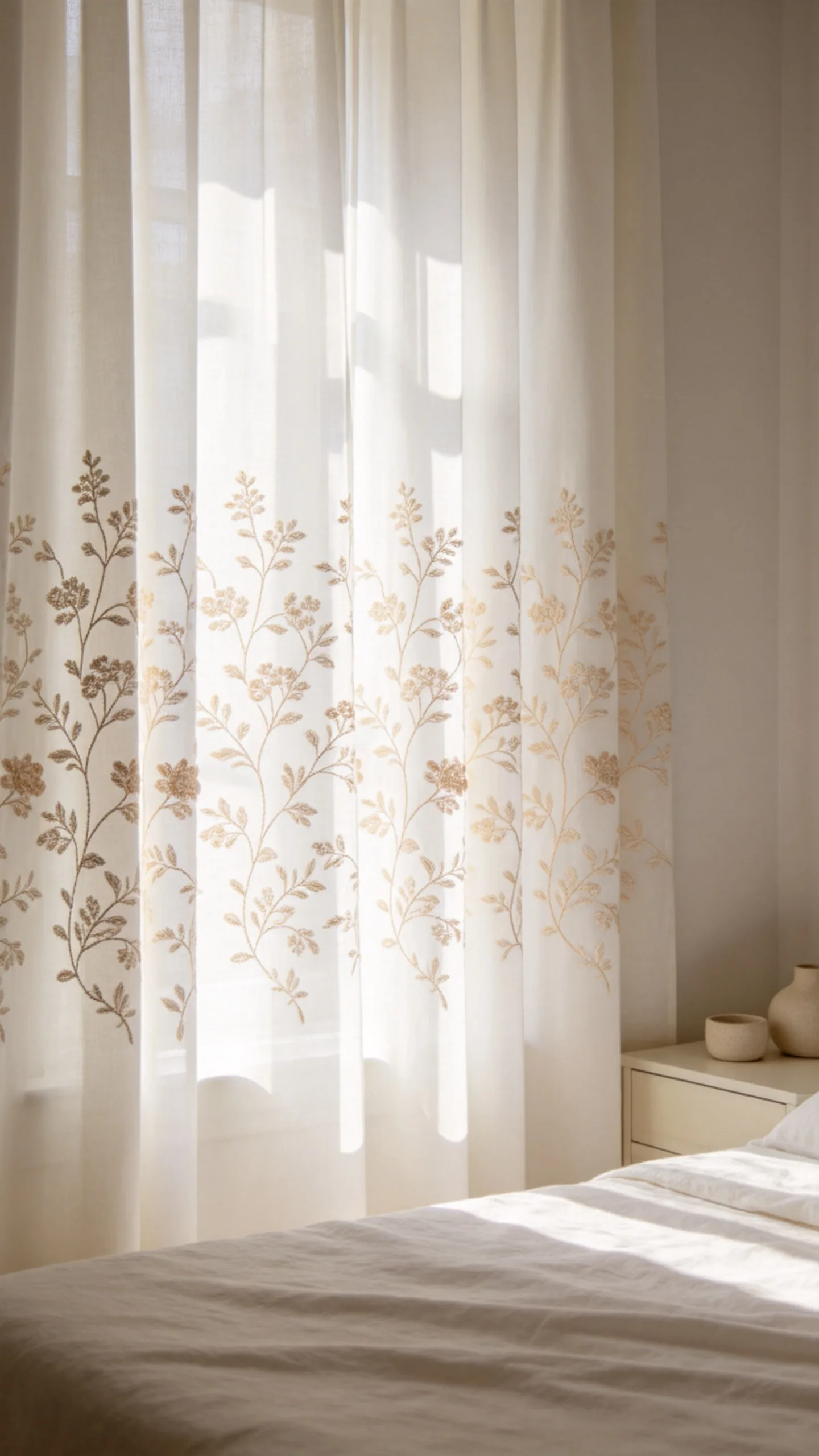
Embroidered curtains add subtle character without relying on bold patterns. Look for small botanical motifs, tone-on-tone stitching, border embroidery, or geometric details that show up when light passes through the fabric.
They are especially useful in bedrooms, guest rooms, nurseries, and sitting rooms where you want a gentle decorative layer. Pair embroidered panels with simple bedding, smooth painted walls, and uncluttered bedside tables so the stitching has room to stand out.
17. Dark Curtains Against Light Walls
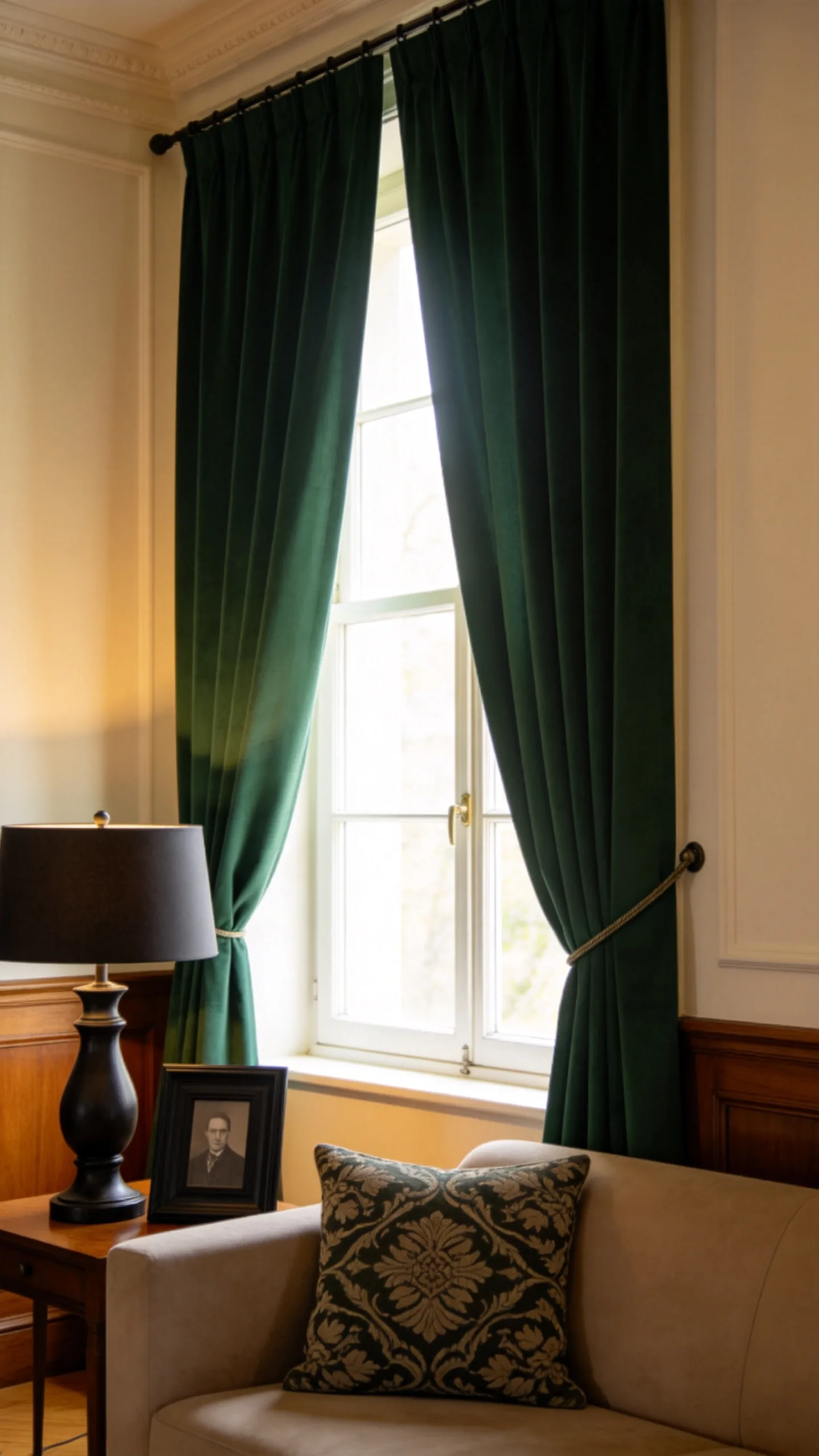
Dark curtains can create a striking frame around windows in rooms with white, cream, pale gray, or soft beige walls. Charcoal, espresso, deep green, navy, or oxblood panels make the window feel intentional and help anchor the room.
This idea works well in living rooms, dining rooms, and bedrooms that need contrast. Keep the rest of the room balanced with dark accents such as a lamp base, picture frame, side table, or patterned pillow so the curtains do not feel isolated.
18. Sheer Printed Curtains
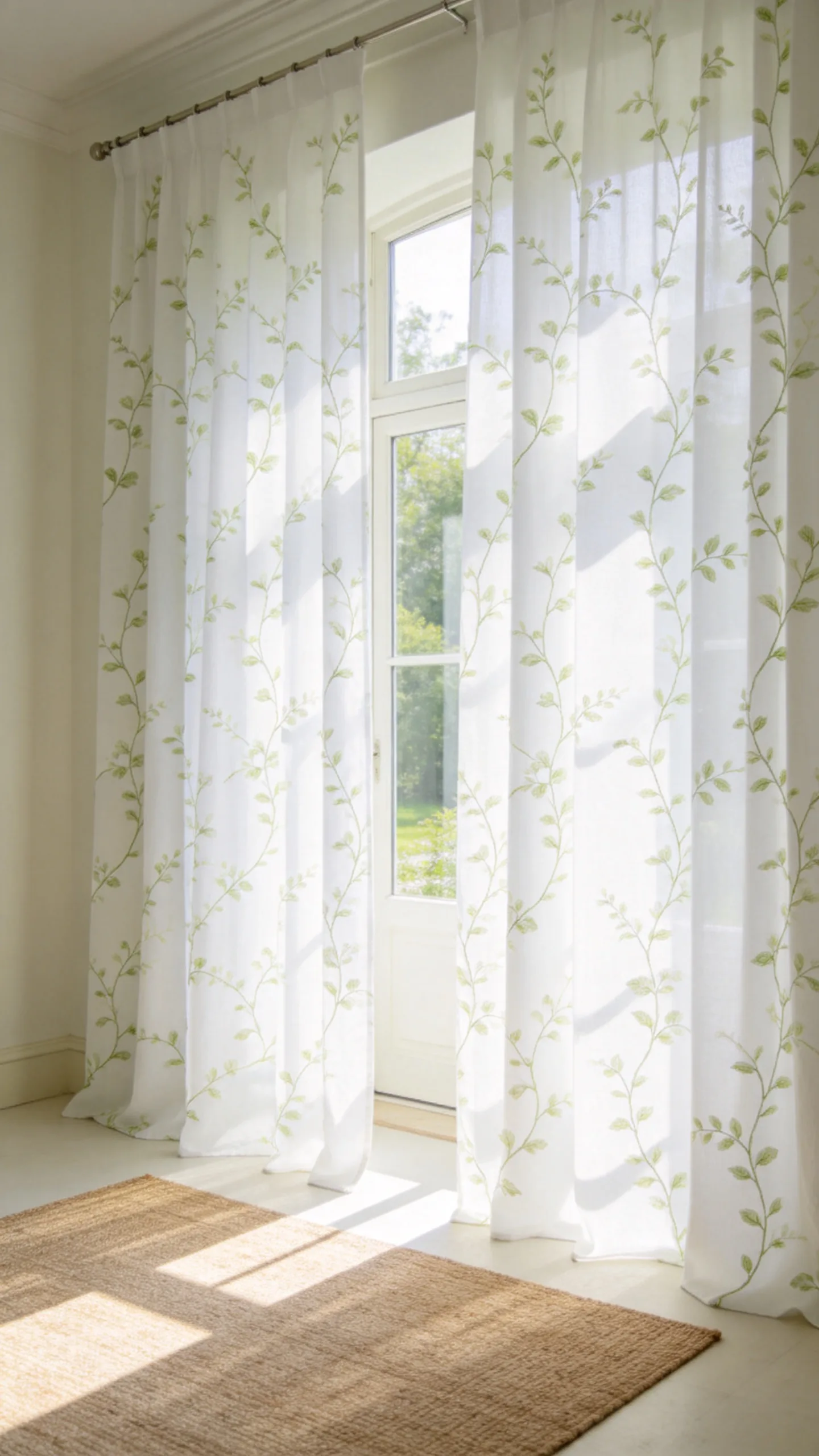
Printed sheers offer privacy and personality while keeping the room light. Small florals, delicate vines, abstract dots, or subtle block prints can soften a window without the visual weight of lined drapes.
Use them in kitchens, sunrooms, bathrooms, and bedrooms where natural light is important. A sheer print is also helpful in a small room because it adds interest while keeping sightlines open and preventing the window wall from feeling heavy.
19. Curtain Panels Framing a Bookcase
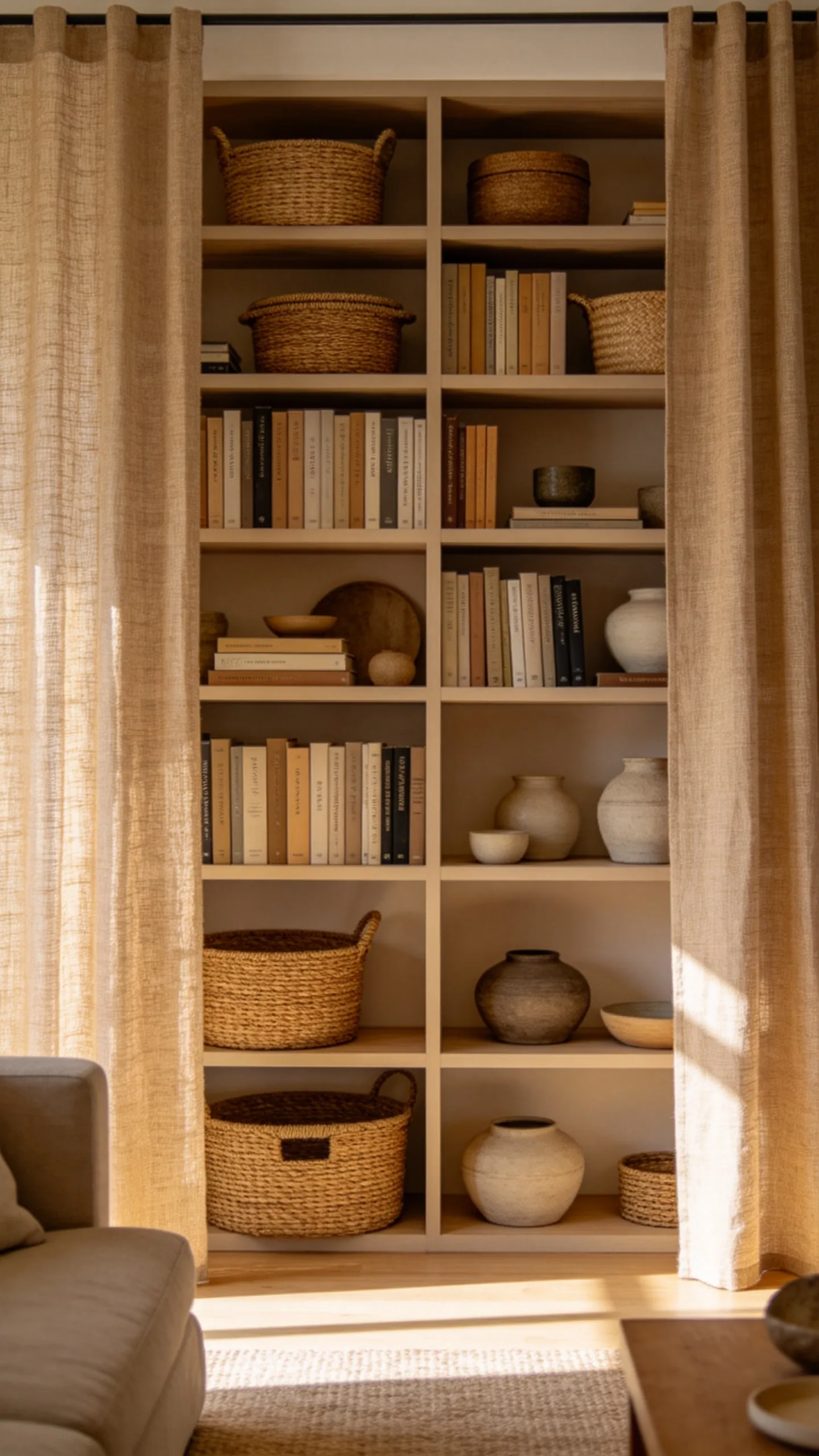
Curtains do not have to be limited to windows. Hanging narrow panels on either side of a bookcase, built-in, or open shelving unit can make storage look more like a designed focal point.
Use this idea in a living room, office, playroom, or bedroom where shelves hold a mix of books, baskets, ceramics, and everyday items. The fabric softens the vertical lines of the shelves and can help visually contain clutter without hiding everything completely.
20. Checked Café Curtains Under Open Shelves
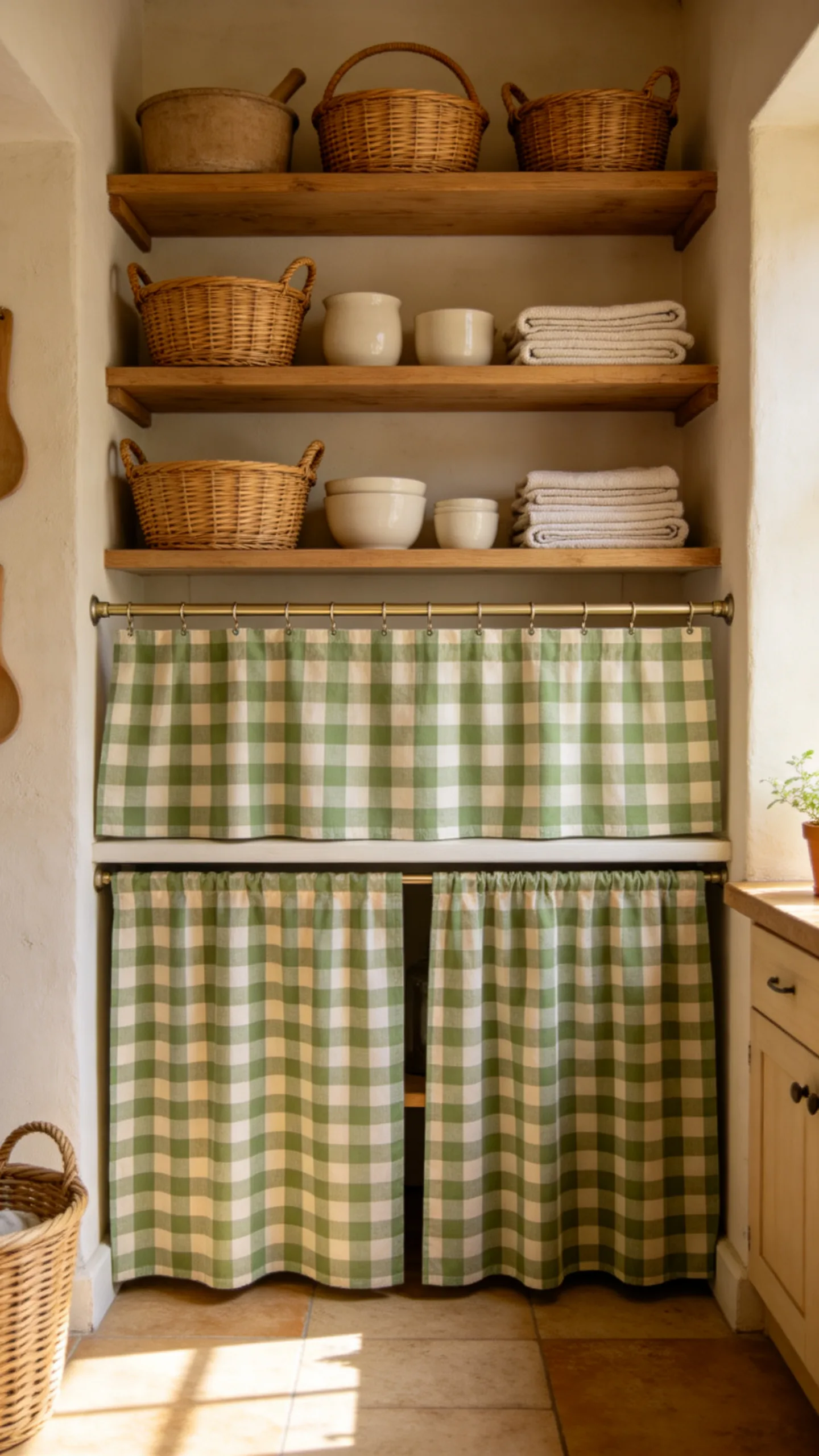
Checked café curtains beneath open shelves create a cozy layered look in kitchens, laundry rooms, and utility spaces. A gingham, buffalo check, or small windowpane fabric can hide under-sink storage, cleaning supplies, or pantry overflow while adding pattern at a low height.
This approach is practical for areas where cabinet doors would feel bulky or expensive to change. Use a tension rod or slim café rod, and keep the fabric short enough that it does not drag on the floor or interfere with foot traffic.
21. Curtains With Decorative Tiebacks
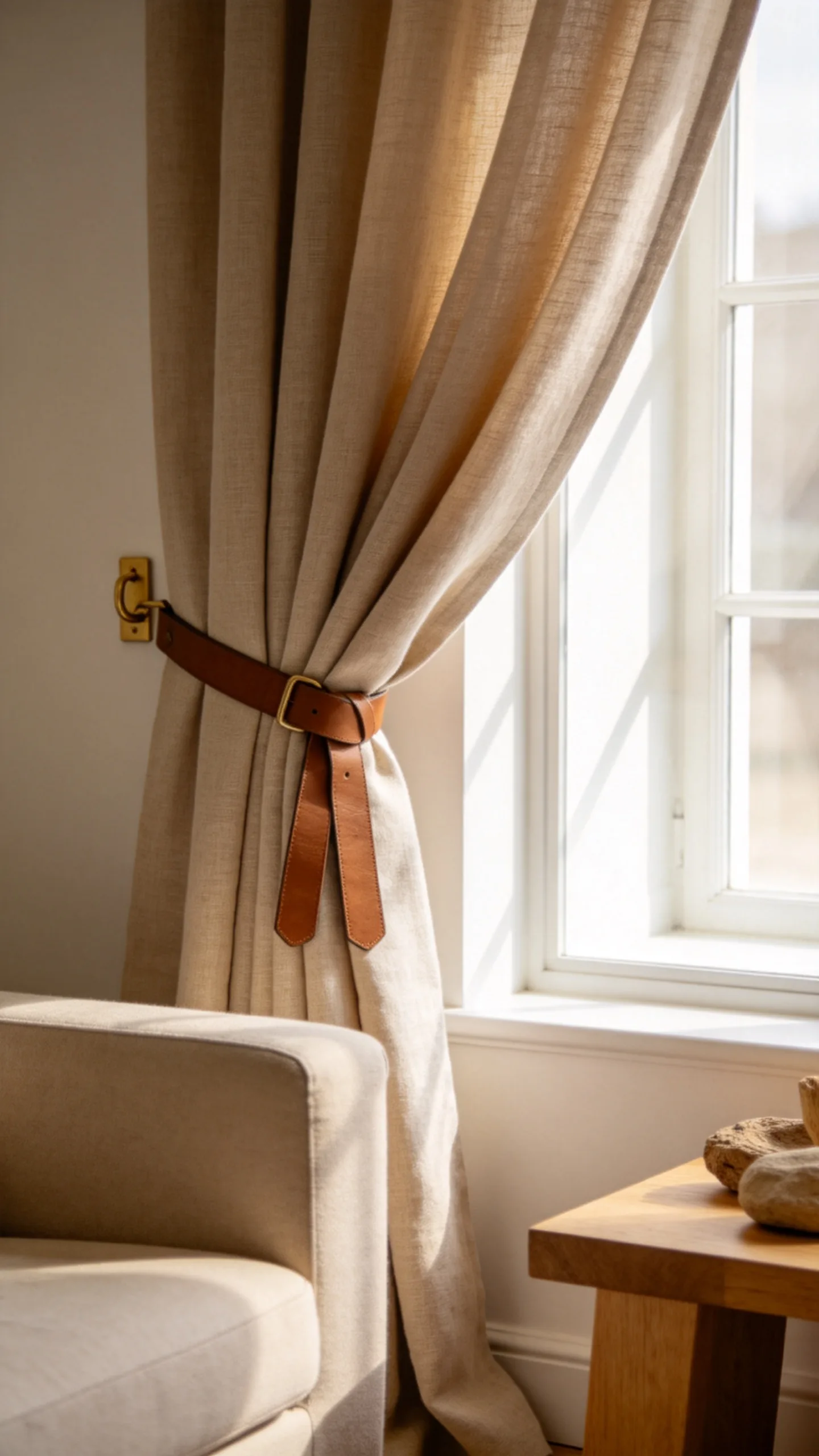
Tiebacks can change the entire shape of a curtain. Instead of basic fabric loops, use rope, leather straps, ceramic wall hooks, brass holdbacks, beaded ties, or vintage ribbon to add a distinctive detail beside the window.
This is useful in rooms where curtains need to stay open during the day, such as living rooms, kitchens, and offices. Place tiebacks at a height that creates a graceful sweep without blocking the glass or making the panel bunch awkwardly.
22. Arched Curtain Styling for Square Windows
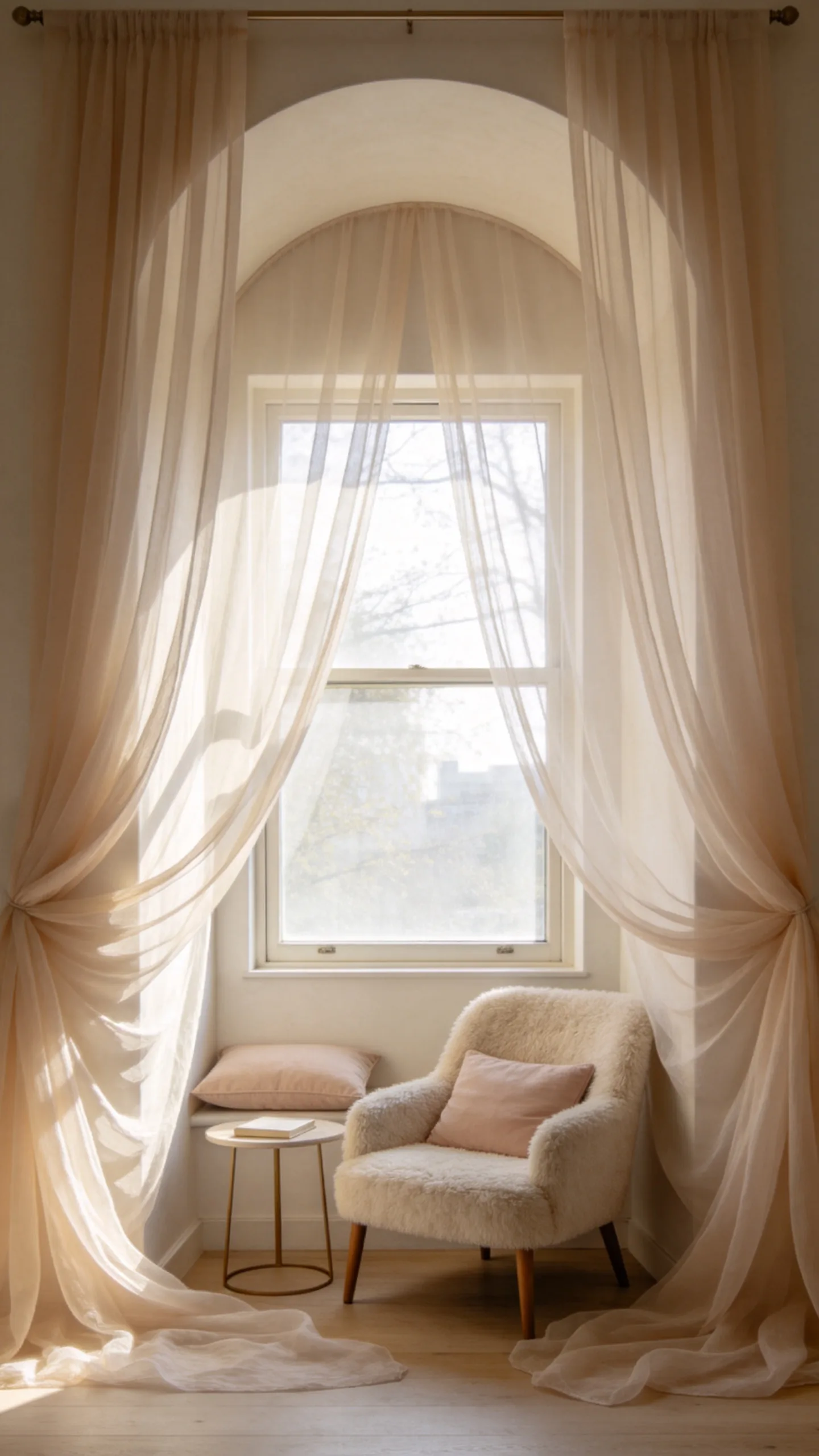
You can suggest an arched shape even on a standard rectangular window by using a curved rod, a centered swag, or panels pulled back high on each side. This adds architectural softness where the room has mostly straight lines.
Try this in a bedroom, nursery, dressing room, or romantic reading nook. Keep the fabric lightweight enough to drape well, such as voile, gauze, linen blend, or soft cotton, so the shape feels fluid rather than stiff.
23. Curtains in the Same Color as the Walls
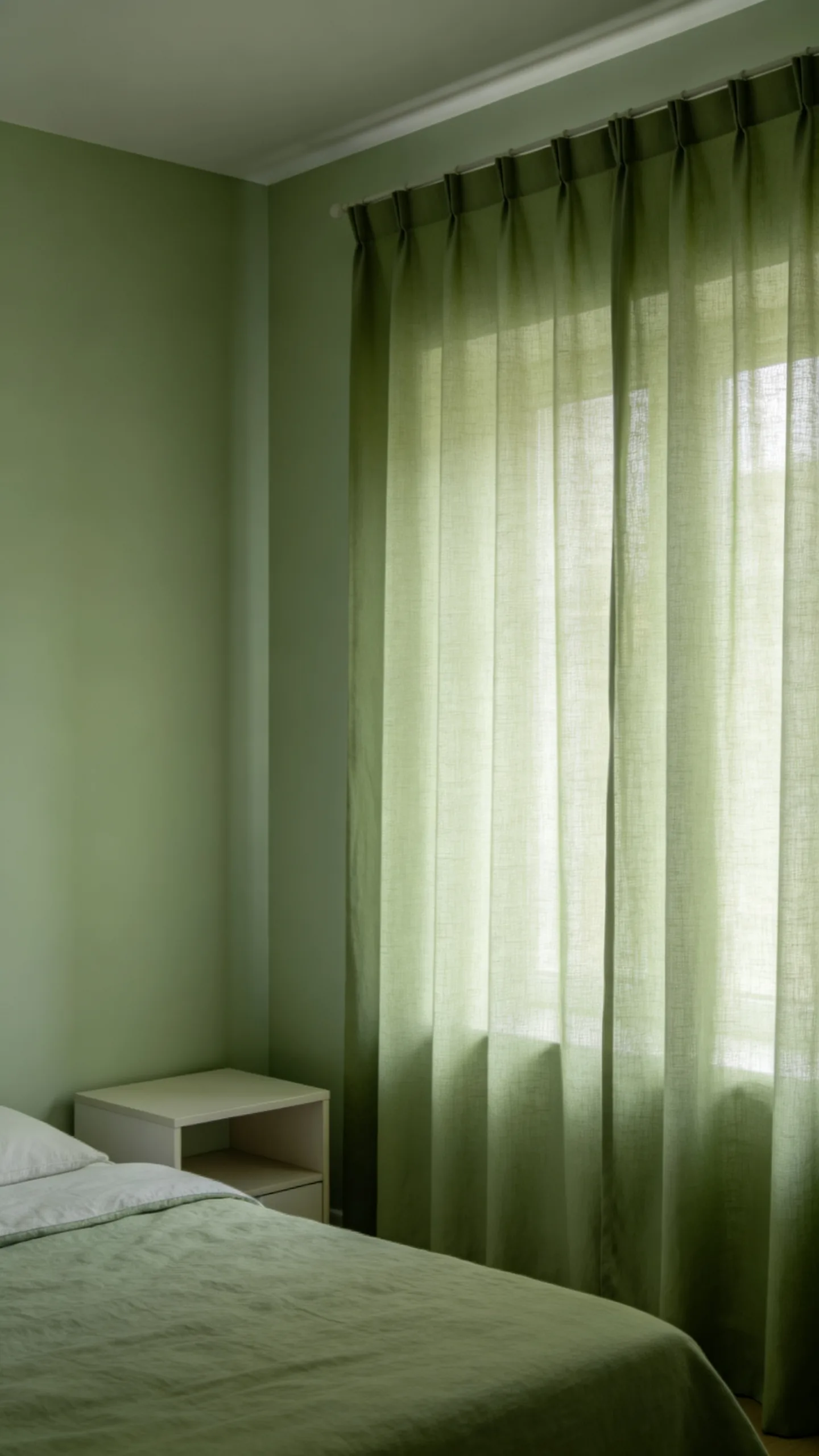
Matching curtains to the wall color creates a wrapped, seamless look while still adding texture. This is especially effective in small bedrooms, apartments, and narrow living rooms because it reduces visual breaks and can make the wall feel wider.
Choose fabric that is slightly lighter, darker, or more textured than the paint so the curtains do not disappear completely. For example, pair warm white walls with ivory linen, sage walls with muted green cotton, or clay walls with terracotta gauze.
24. Floor-to-Ceiling Sheers as a Room Divider
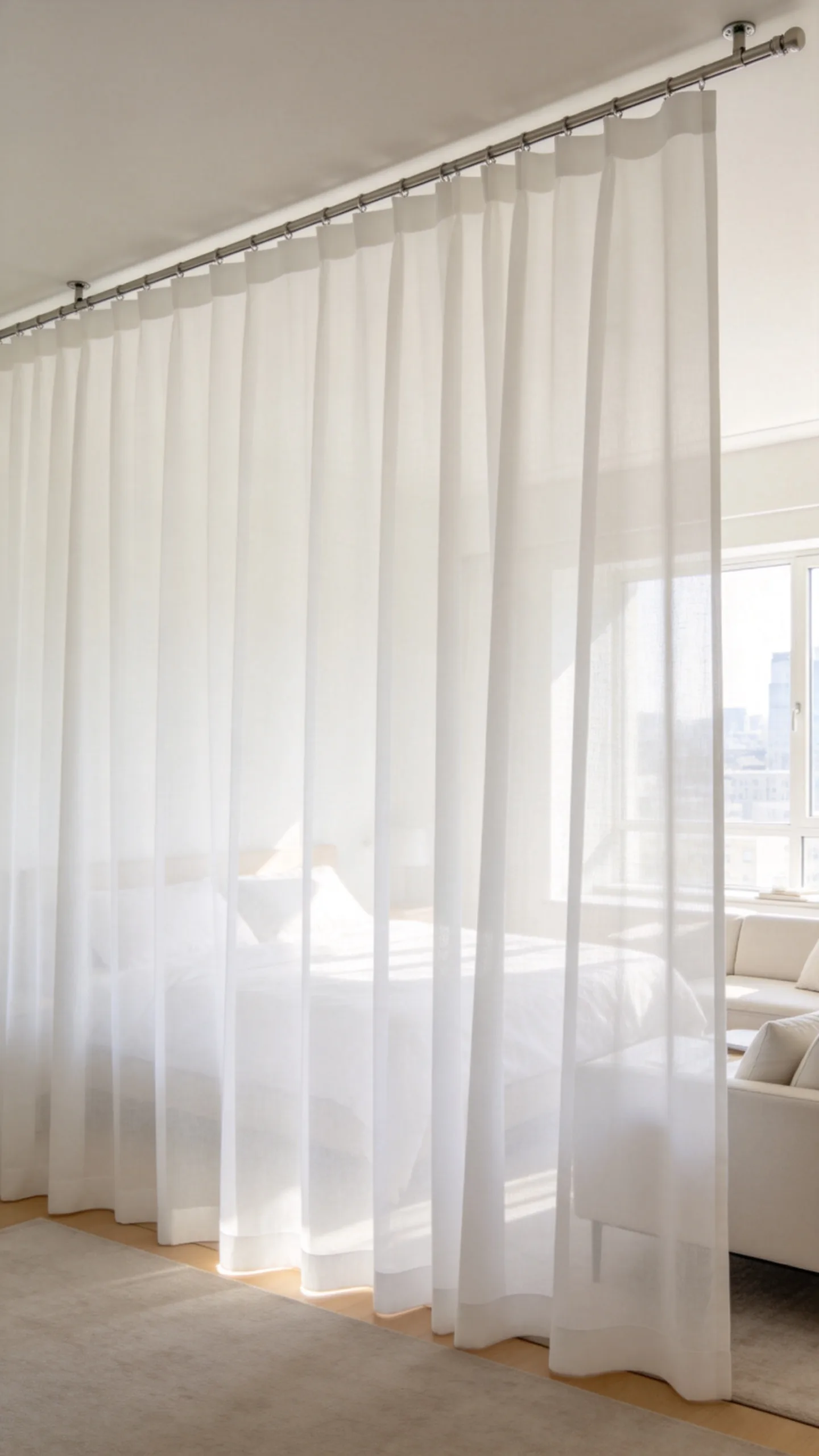
Sheer curtains can divide a space without blocking light, making them useful in studio apartments, shared bedrooms, dressing areas, or open-plan living rooms. They create separation while preserving sightlines and keeping the room from feeling chopped up.
Use a ceiling-mounted track for a clean look and choose extra-wide panels so the fabric gathers softly when closed. White, ivory, taupe, or pale gray sheers keep the divider subtle, while a muted color can make the zone feel more intentional.
25. Statement Curtain Rods With Simple Panels
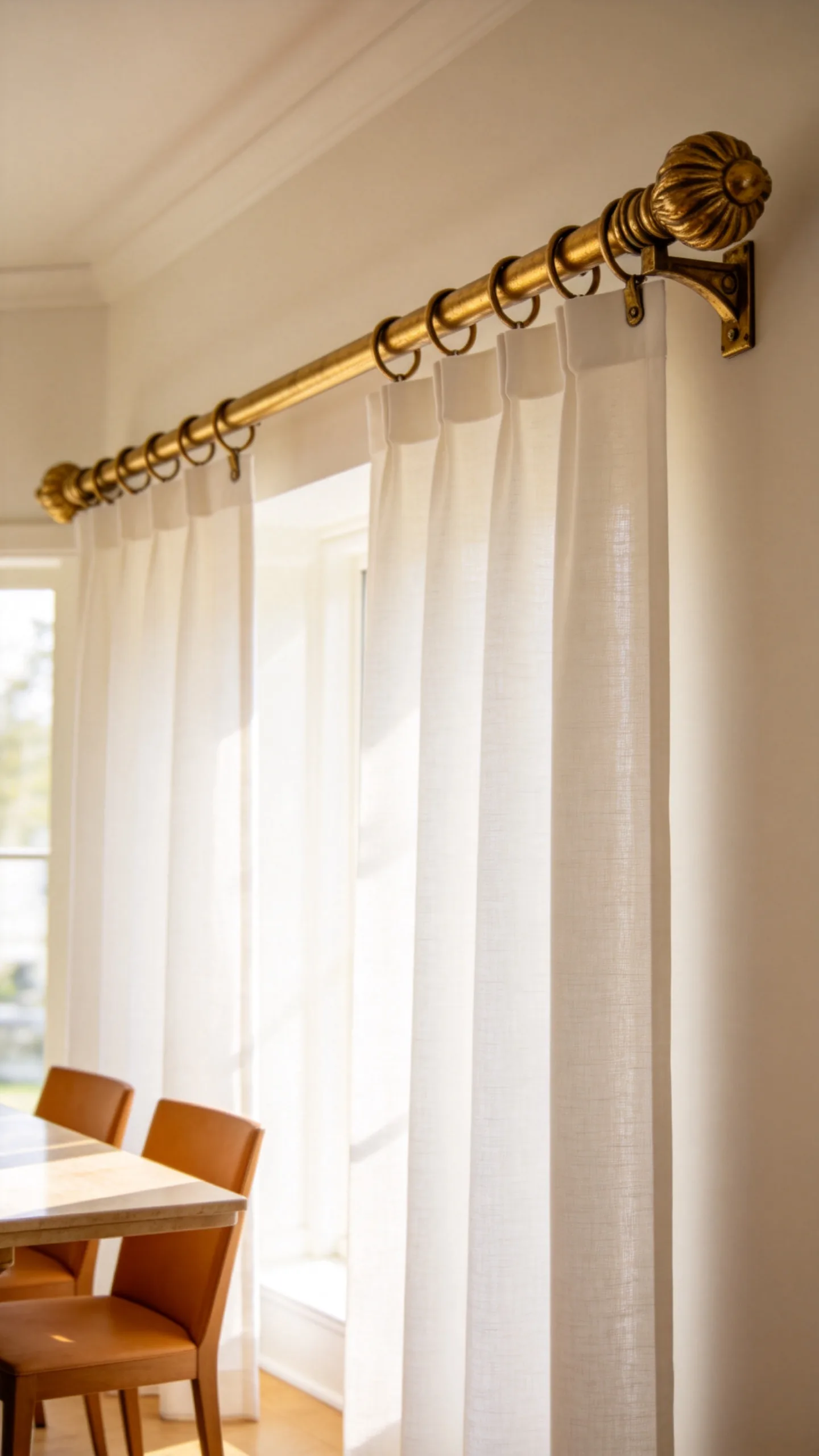
Sometimes the unexpected detail is not the curtain fabric but the hardware. A bold rod in brass, matte black, wood, acrylic, or antique bronze can make plain panels look much more deliberate.
Use simple linen, cotton, or velvet curtains so the rod, brackets, and finials stand out. This works well in living rooms, bedrooms, and dining rooms where the window needs character but the rest of the room already has pattern through rugs, art, or upholstery.

From the editors
Decor Compass Editorial Team
We turn practical home research into clear, useful room-by-room ideas.