Doorway curtains are an easy way to add privacy without installing a full door, especially in rentals, small apartments, open-plan homes, closets, laundry nooks, and bedrooms with awkward entries. The right fabric, rod, length, and color can soften a room while also hiding clutter, dividing zones, controlling light, and making a doorway feel intentional instead of unfinished.
1. Linen Doorway Curtain for a Soft Bedroom Entrance
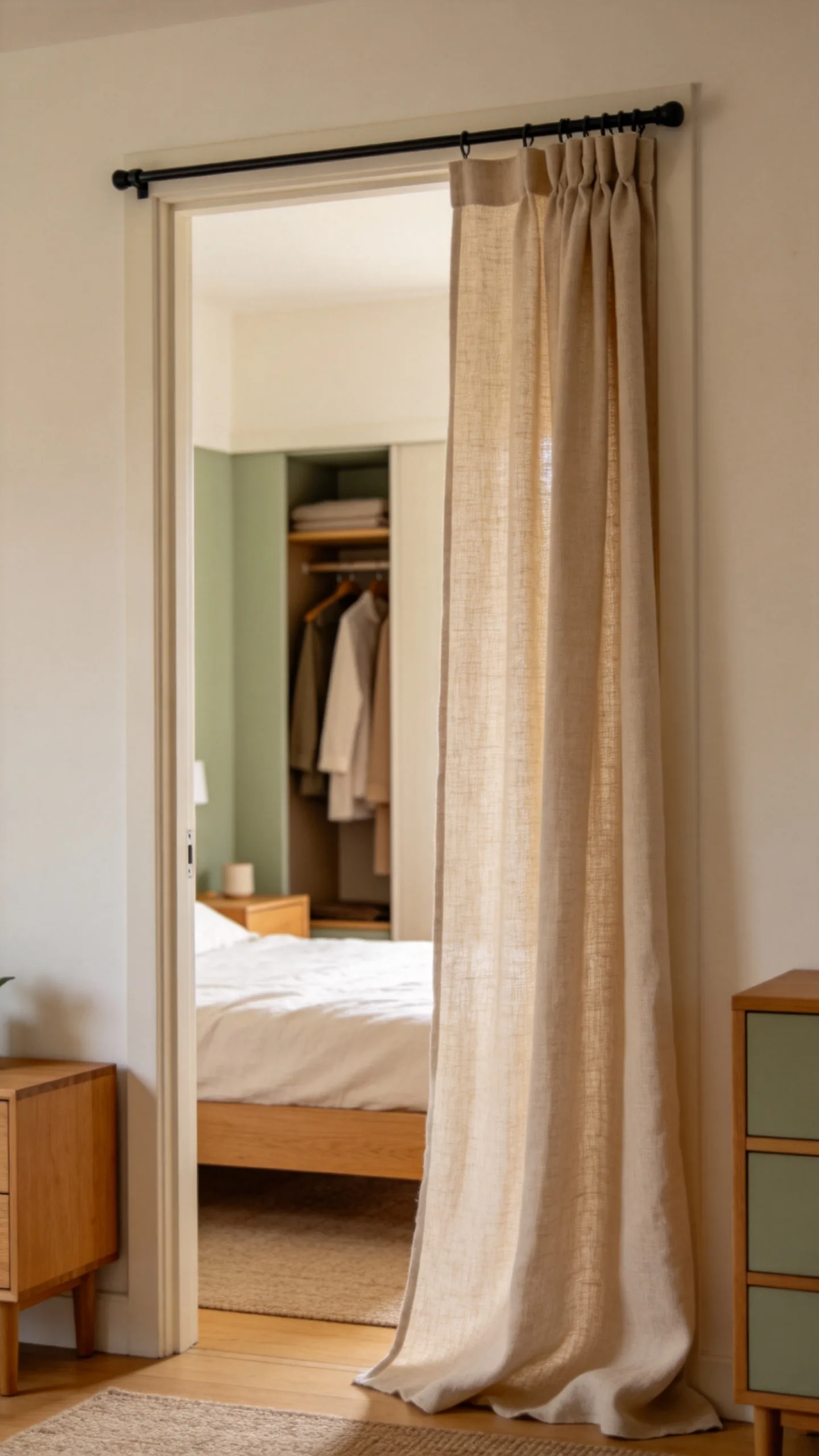
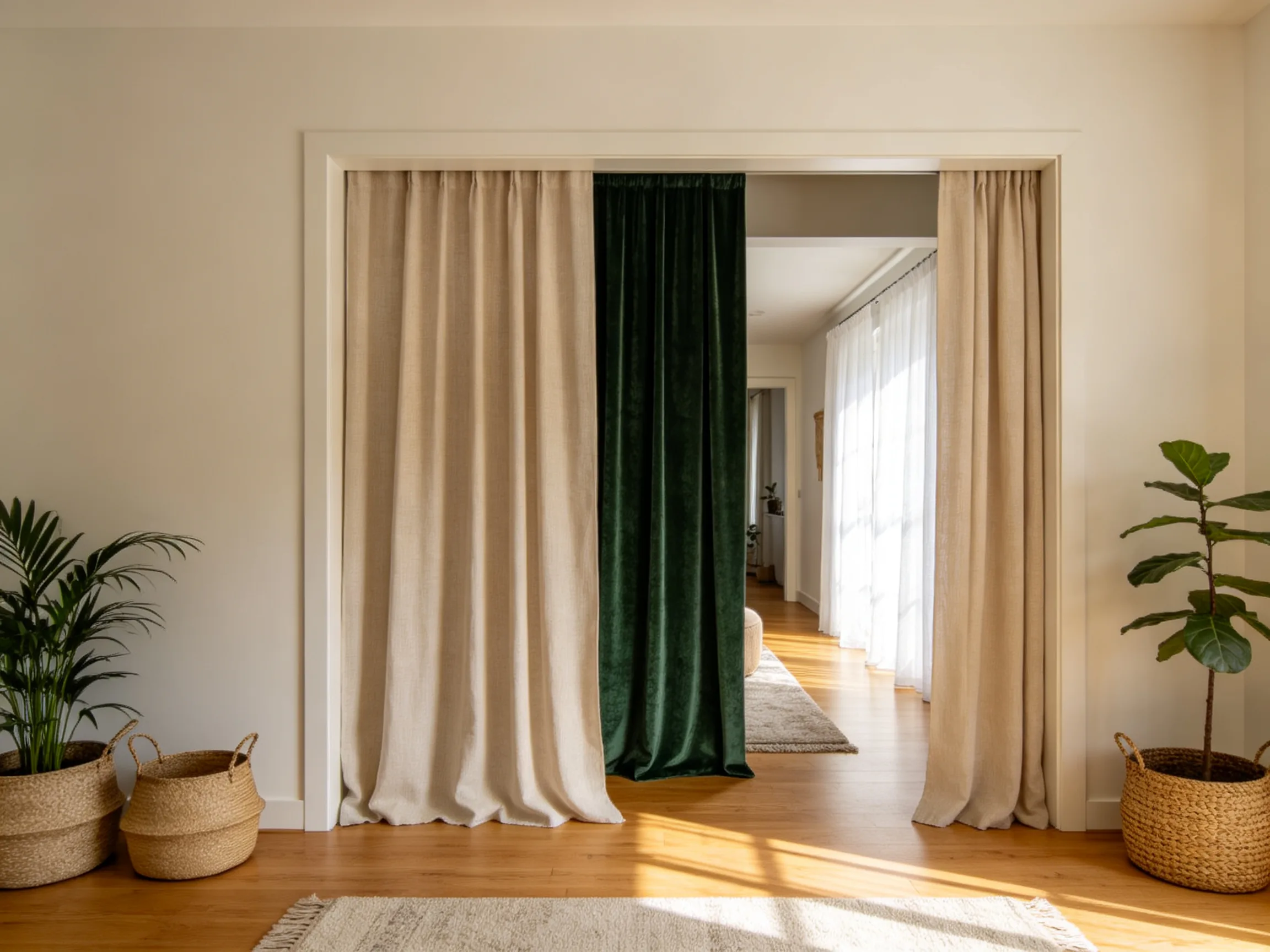
A linen doorway curtain works beautifully between a bedroom and a small dressing area, closet, or en suite-style nook. Choose a medium-weight linen in ivory, oatmeal, warm gray, or muted sage so the fabric filters light while still giving the doorway a relaxed, finished look.
For privacy, hang the panel from a slim black, brass, or wood tension rod mounted inside the doorway frame. Let the curtain skim the floor instead of puddling, especially in a narrow bedroom where extra fabric can interrupt traffic flow. Linen adds texture without making the room feel heavy, which helps keep sightlines soft and airy.
2. Velvet Doorway Curtain for a Dramatic Room Divider
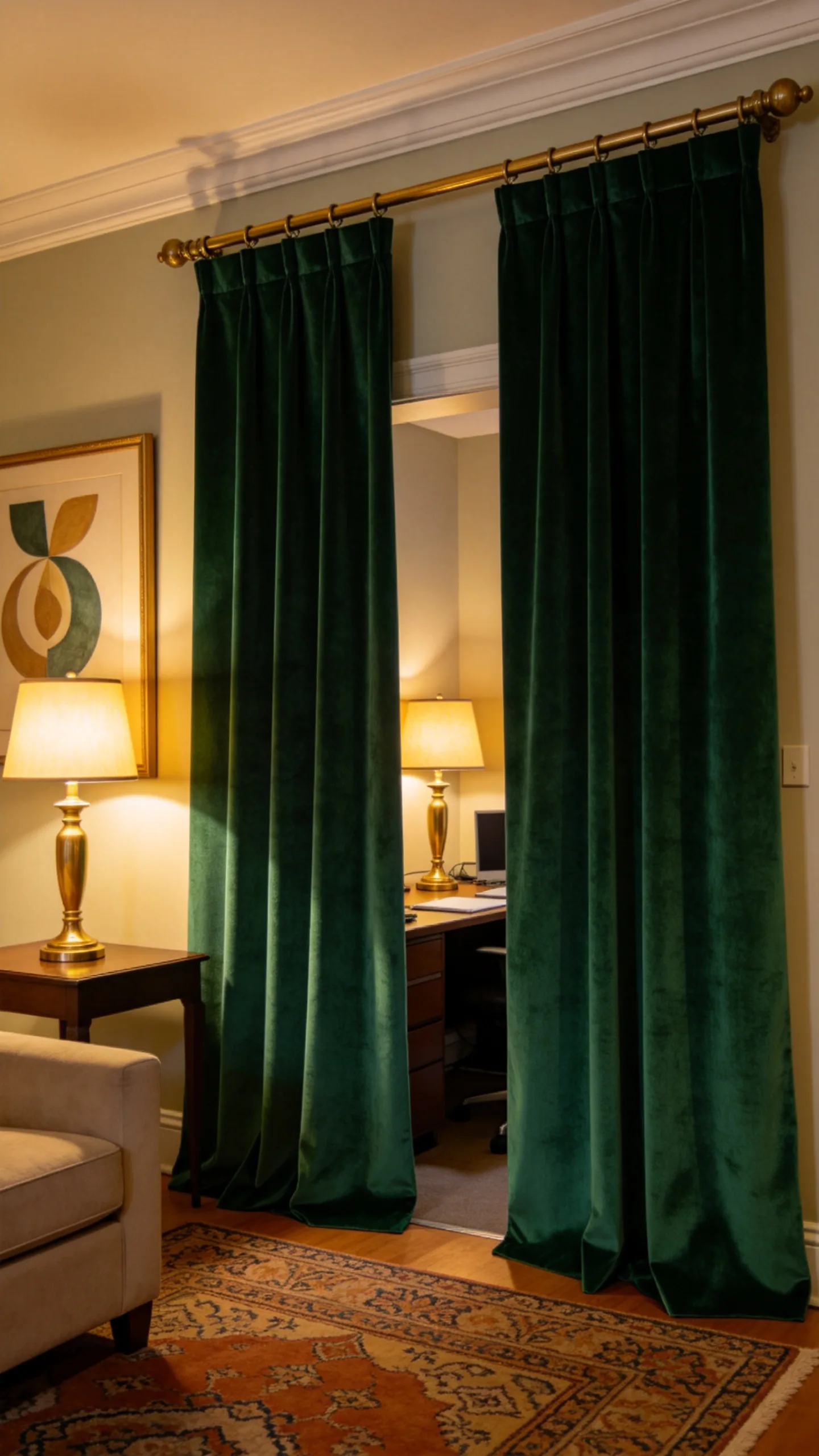
A velvet curtain is a strong choice for separating a living room from a home office, dining nook, or bedroom alcove. The thicker fabric blocks more visual clutter than sheer or cotton options, making it useful when you want a private zone behind an open doorway.
Deep colors like forest green, navy, rust, plum, or charcoal can turn the doorway into a focal point. Use a sturdy wall-mounted rod above the trim so the curtain hangs taller and makes the ceiling feel higher. Pair velvet with warm table lamps, framed art, and a patterned rug to make the divider feel like part of the room design rather than a temporary fix.
3. Sheer White Curtain for Light Privacy in a Hallway
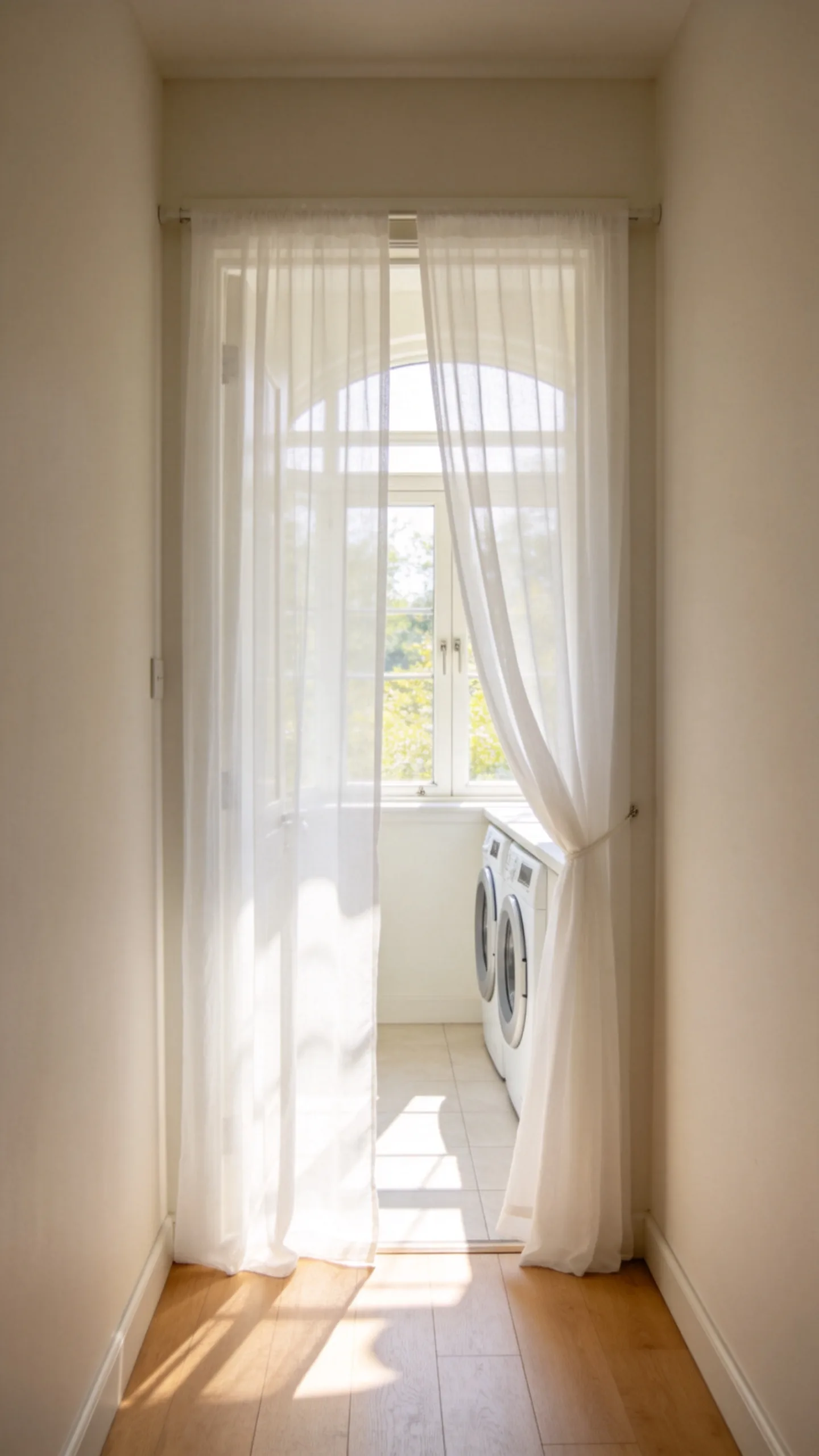
A sheer white doorway curtain is ideal when you want to soften a hallway opening without completely blocking light. It works well between a living room and sunroom, bedroom and balcony doorway, or hallway and laundry corner.
Choose a full-width panel so the fabric gathers gently when closed. The folds create visual privacy while still letting daylight pass through. In tight hallways, a sheer curtain keeps the walkway from feeling boxed in, and white fabric blends easily with painted trim, pale walls, and light wood flooring.
4. Bamboo Bead Curtain for a Natural Boho Entry
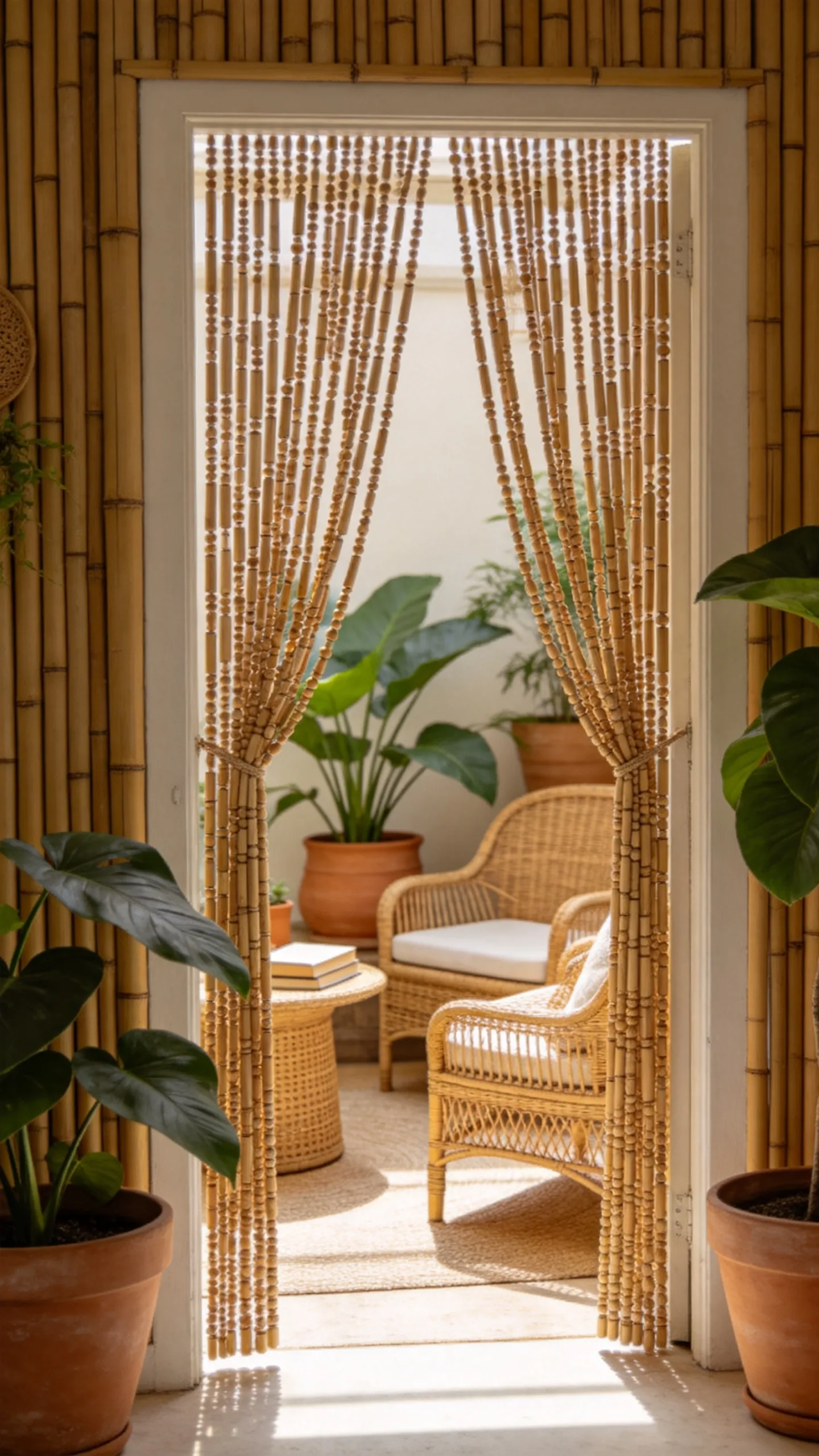
A bamboo bead curtain adds movement and texture to a doorway while keeping the space open. It is a good option for a craft room, reading nook, covered porch entry, or casual bedroom doorway where you want partial privacy rather than a solid barrier.
Look for natural bamboo, painted white beads, or patterned bead strands depending on the room palette. The vertical lines draw the eye upward, which can make a small doorway feel taller. Since bead curtains do not block sound or light, use them where style and gentle separation matter more than full privacy.
5. Macrame Doorway Curtain for a Handmade Accent
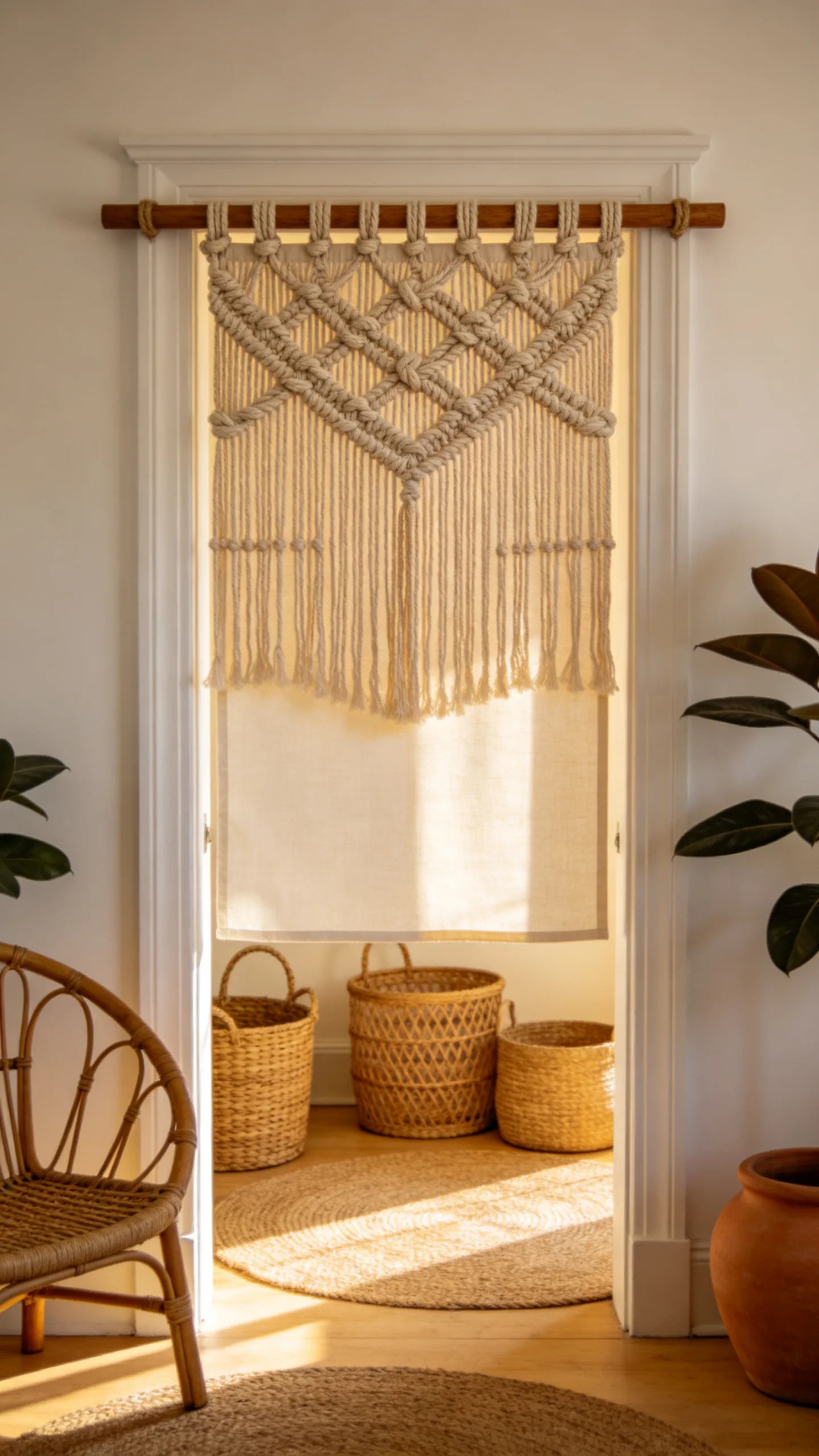
A macrame doorway curtain gives a doorway a decorative, handcrafted look, especially in bedrooms, nurseries, plant corners, and boho living rooms. The woven cotton knots create partial screening while keeping airflow and light intact.
Hang macrame from a wooden dowel or simple rod just above the trim. It pairs well with rattan furniture, terracotta pots, woven baskets, jute rugs, and warm white walls. For a more private setup, layer the macrame over a plain cotton panel so the knots become a decorative front layer.
6. Blackout Curtain for a Studio Sleeping Area
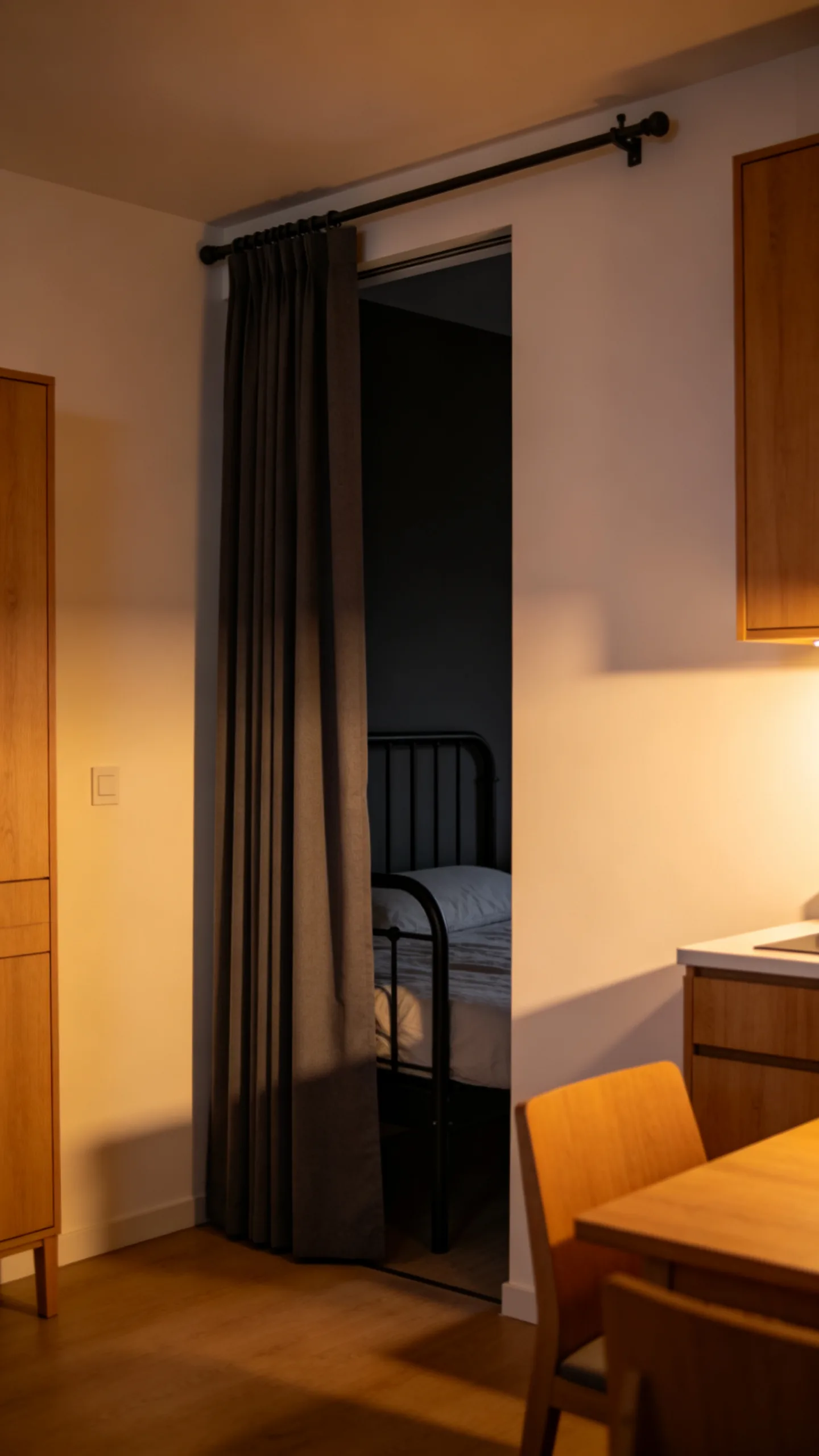
A blackout doorway curtain is practical in a studio apartment, shared bedroom, or open loft where a sleeping area needs real privacy. It can help hide the bed from the living area and create a darker, calmer zone at night.
Use a ceiling-mounted track or a rod mounted wider than the doorway so the curtain overlaps the wall on both sides. This reduces gaps and makes the division feel more complete. Choose a color that connects to the room, such as charcoal with a black metal bed frame, beige with warm wood furniture, or navy with a patterned area rug.
7. Patterned Cotton Curtain for a Cheerful Kitchen Pantry
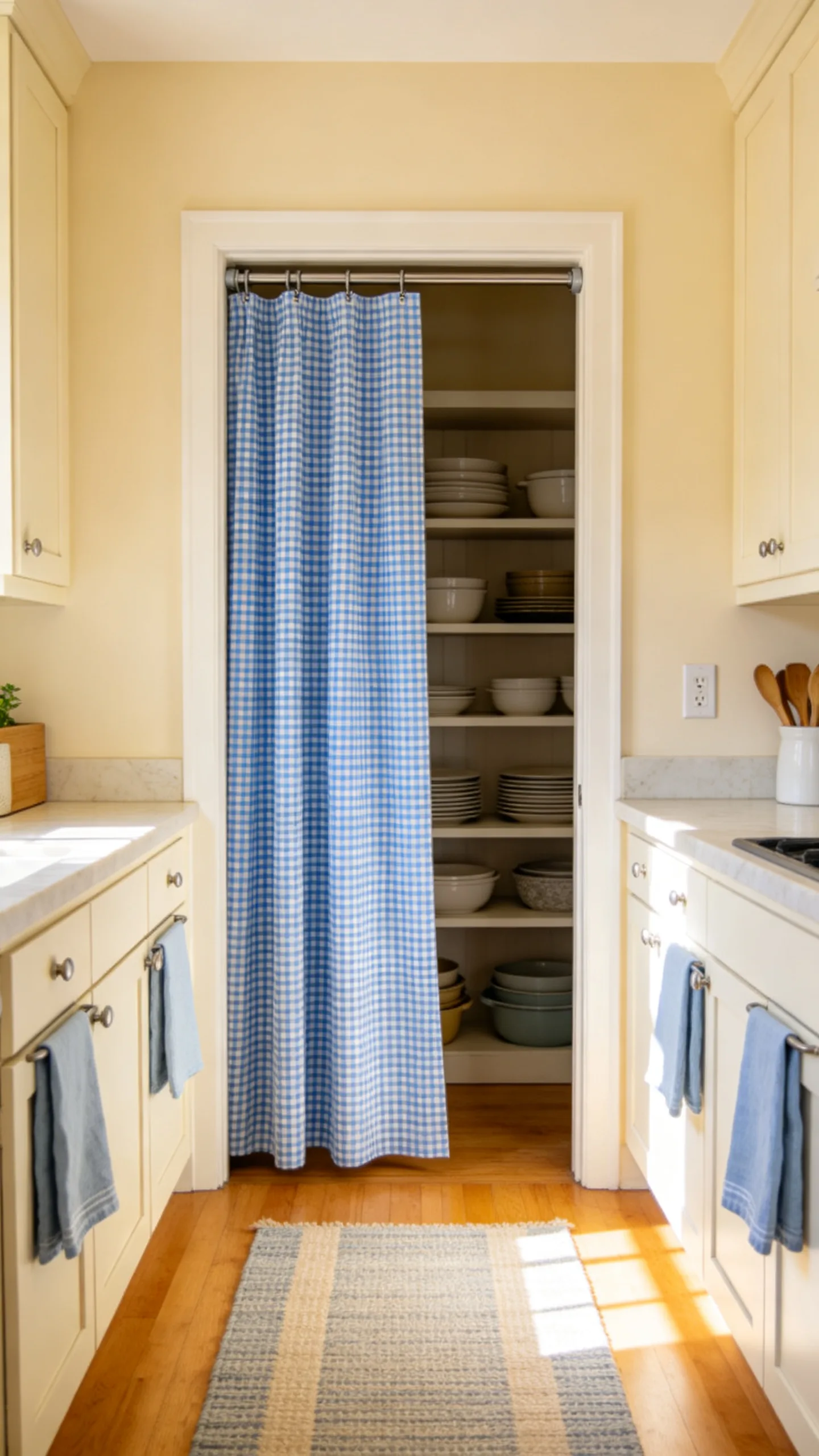
A patterned cotton doorway curtain is a charming way to cover an open pantry, utility closet, or kitchen storage nook. Small checks, stripes, block prints, florals, or café-style patterns can add personality while hiding shelves, bins, and food containers.
In a kitchen, choose washable cotton or a cotton blend because the curtain may collect dust and cooking residue. Mount it inside the doorway frame with a tension rod for an easy, renter-friendly update. Match the curtain colors to dish towels, cabinet hardware, or a runner rug to make the pantry curtain feel planned.
8. Striped Curtain to Visually Heighten a Low Doorway
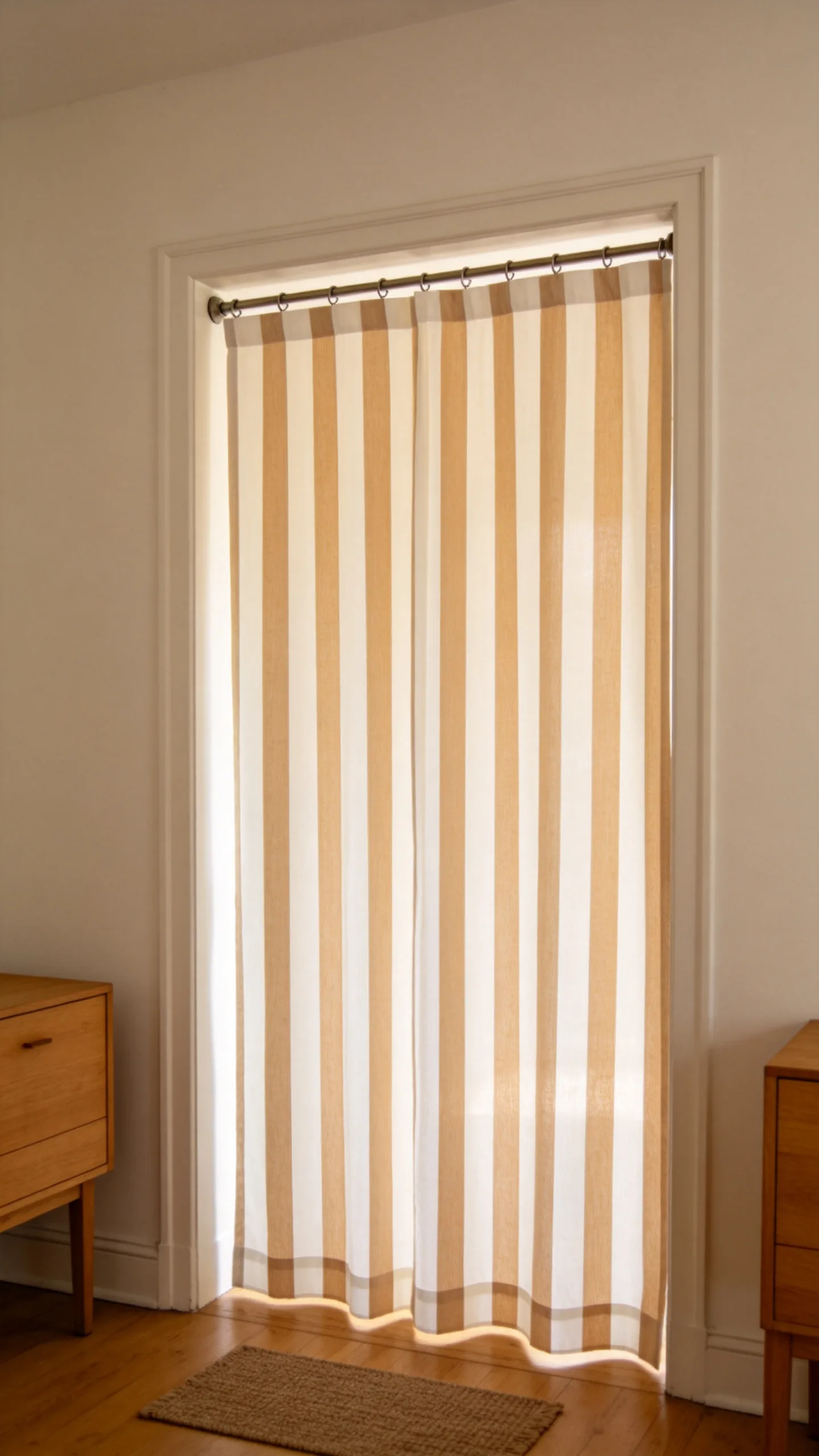
Vertical stripes are useful for a doorway that feels short, narrow, or visually plain. A striped curtain in cream and tan, blue and white, black and ivory, or sage and linen can draw the eye upward and make the entry feel taller.
Hang the rod several inches above the door trim if wall space allows. Let the fabric fall in clean vertical folds to reinforce the height effect. This works especially well in small apartments, cottages, and older homes where doorways may be lower than standard and need a subtle visual lift.
9. Ceiling-Track Curtain for a Clean Room Divider
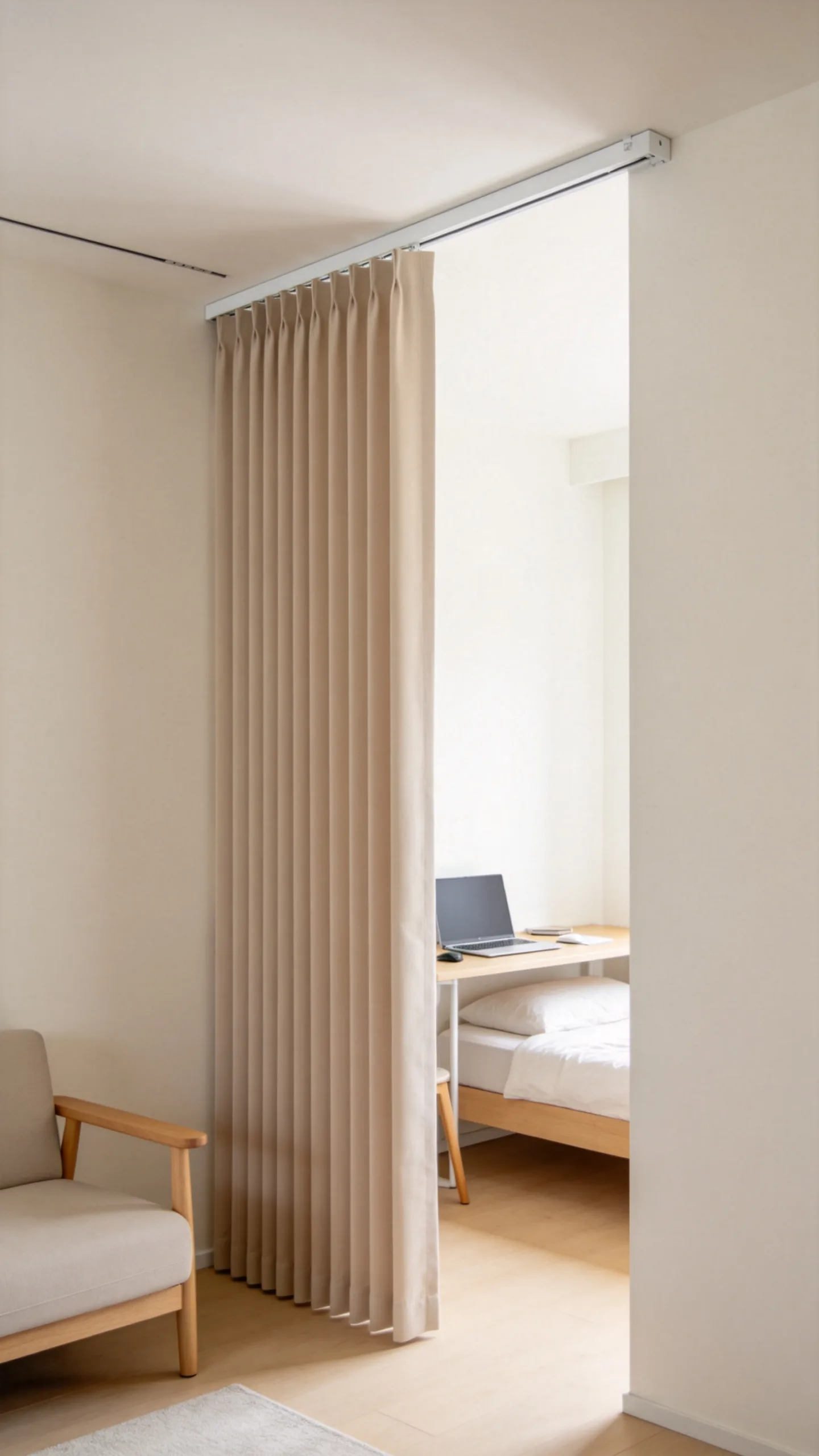
A ceiling-track curtain creates a sleek divider between two open areas, such as a bedroom and workspace, living room and dining area, or entryway and storage zone. Because the curtain hangs from the ceiling, it can make the separation look intentional and modern.
Choose ripple-fold, pinch-pleat, or simple grommet-free panels for a cleaner line. A ceiling track also helps the curtain slide smoothly, which is useful in high-traffic areas. In a small space, select fabric close to the wall color so the divider adds privacy without visually shrinking the room.
10. French Doorway Curtain for Glass Panel Privacy
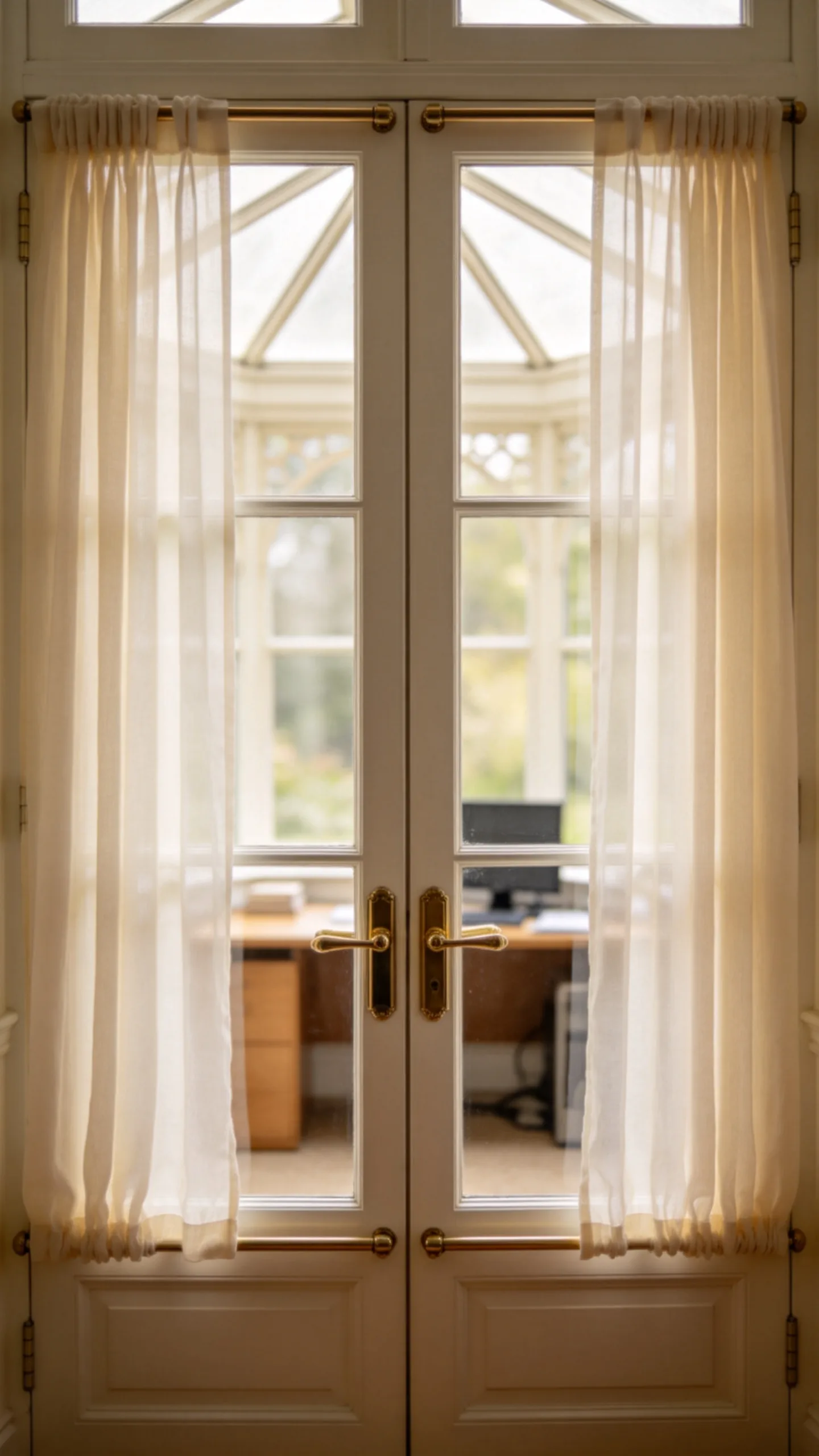
If your interior doorway has glass panels, a fitted curtain can add privacy while preserving the charm of the door. This works well for home offices, bedrooms, bathrooms, laundry rooms, or sunrooms with divided-light doors.
Use slim sash rods at the top and bottom of the glass panel to keep the fabric in place. Linen, voile, cotton, or lace can all work depending on how much privacy you need. For a tailored look, choose a curtain that is slightly gathered but not overly bulky, so the door can still open and close easily.
11. Heavy Canvas Curtain for a Utility Room Opening
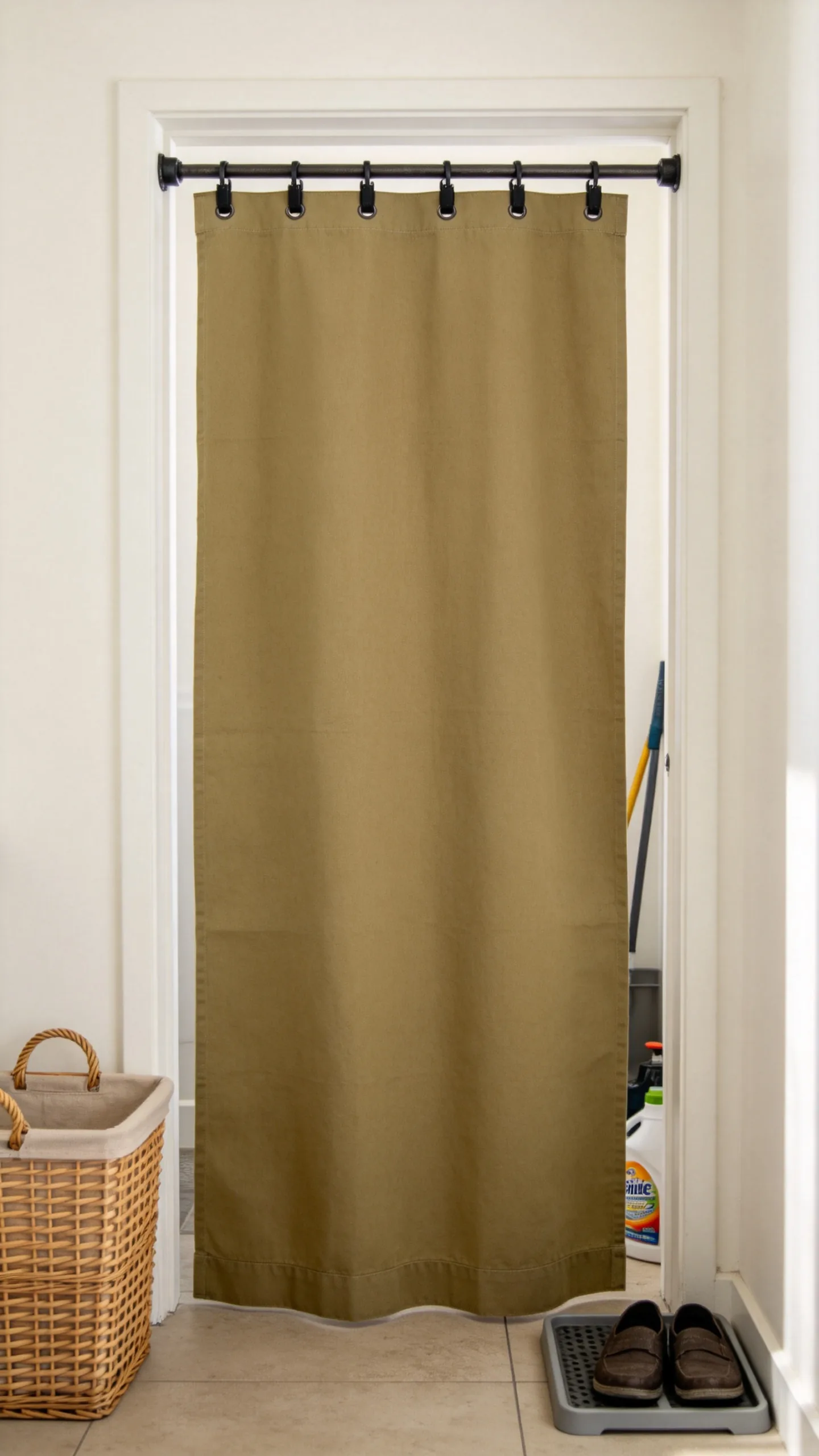
Canvas is a practical fabric for hiding a laundry area, mudroom, garage entry, or cleaning supply nook. It feels more structured than sheer fabric and can conceal shelves, brooms, hampers, and appliances behind an open doorway.
Neutral canvas in natural, khaki, gray, or black works well with utility spaces because it looks simple and durable. Use clip rings for easy removal when the curtain needs washing. In a narrow hallway, keep the curtain length just above the floor so it does not drag near shoes, pet bowls, or laundry baskets.
12. Lace Doorway Curtain for Vintage Cottage Charm
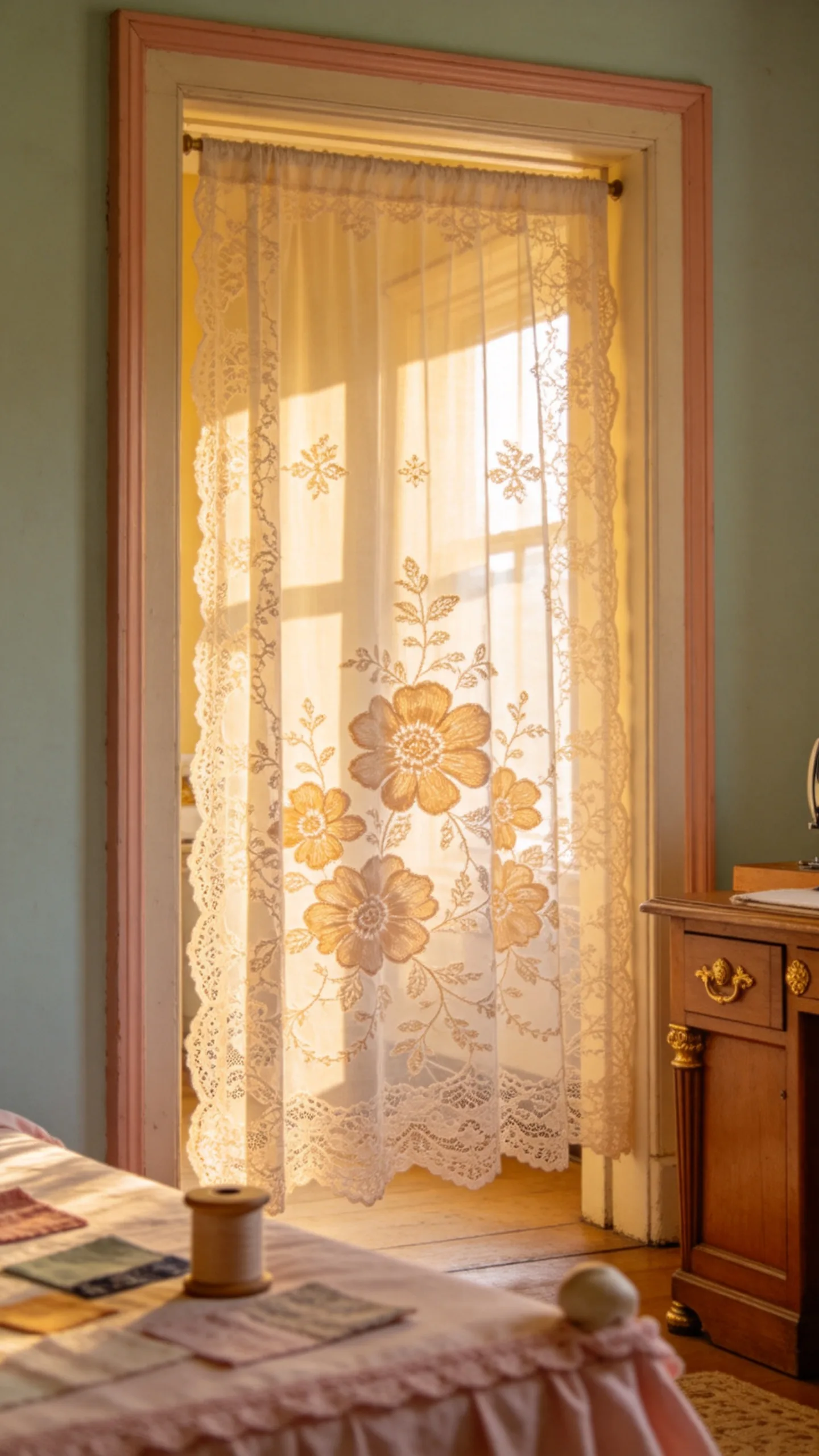
A lace doorway curtain adds a soft vintage layer between rooms without fully closing them off. It is especially pretty in cottages, guest rooms, sewing rooms, breakfast nooks, and bedrooms with painted wood trim.
Choose lace with a larger motif if you want more texture, or a fine lace if the room already has patterned wallpaper, floral bedding, or busy rugs. White and cream lace work well with pastel walls, antique furniture, and brass accents. Since lace is semi-transparent, use it for gentle privacy rather than complete coverage.
13. Double Curtain Panels for a Symmetrical Entry
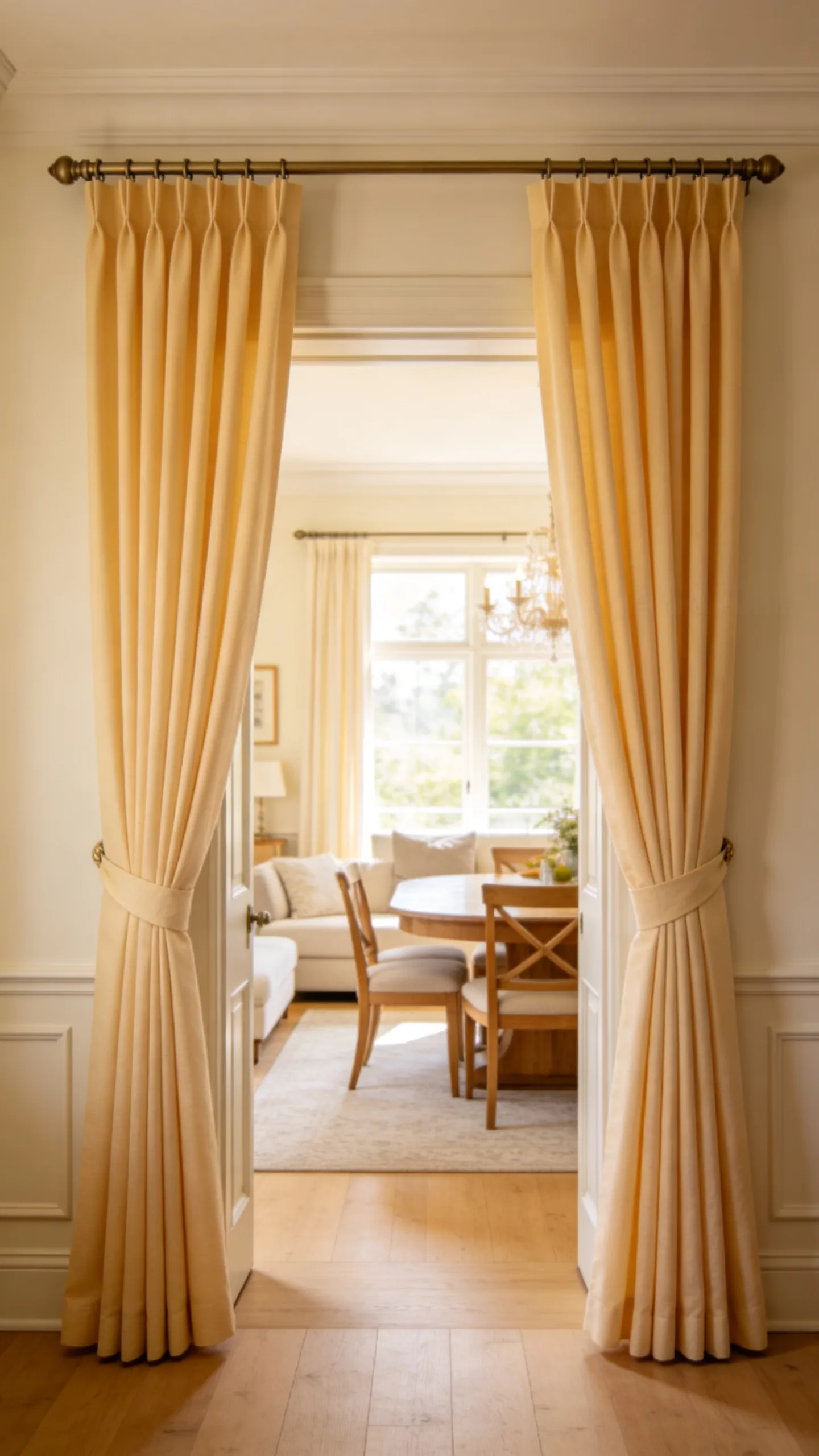
Two curtain panels can make a doorway feel balanced and formal, especially between a dining room and living room or a bedroom and sitting area. Instead of one panel pulled to one side, two panels frame the opening like a soft architectural feature.
Mount the rod wider than the doorway so each panel can stack neatly against the wall when open. This keeps the traffic path clear and makes the doorway feel larger. Choose matching tiebacks, rope, or simple fabric bands if you want the panels held open during the day.
14. Neutral Curtain That Blends With the Wall Color
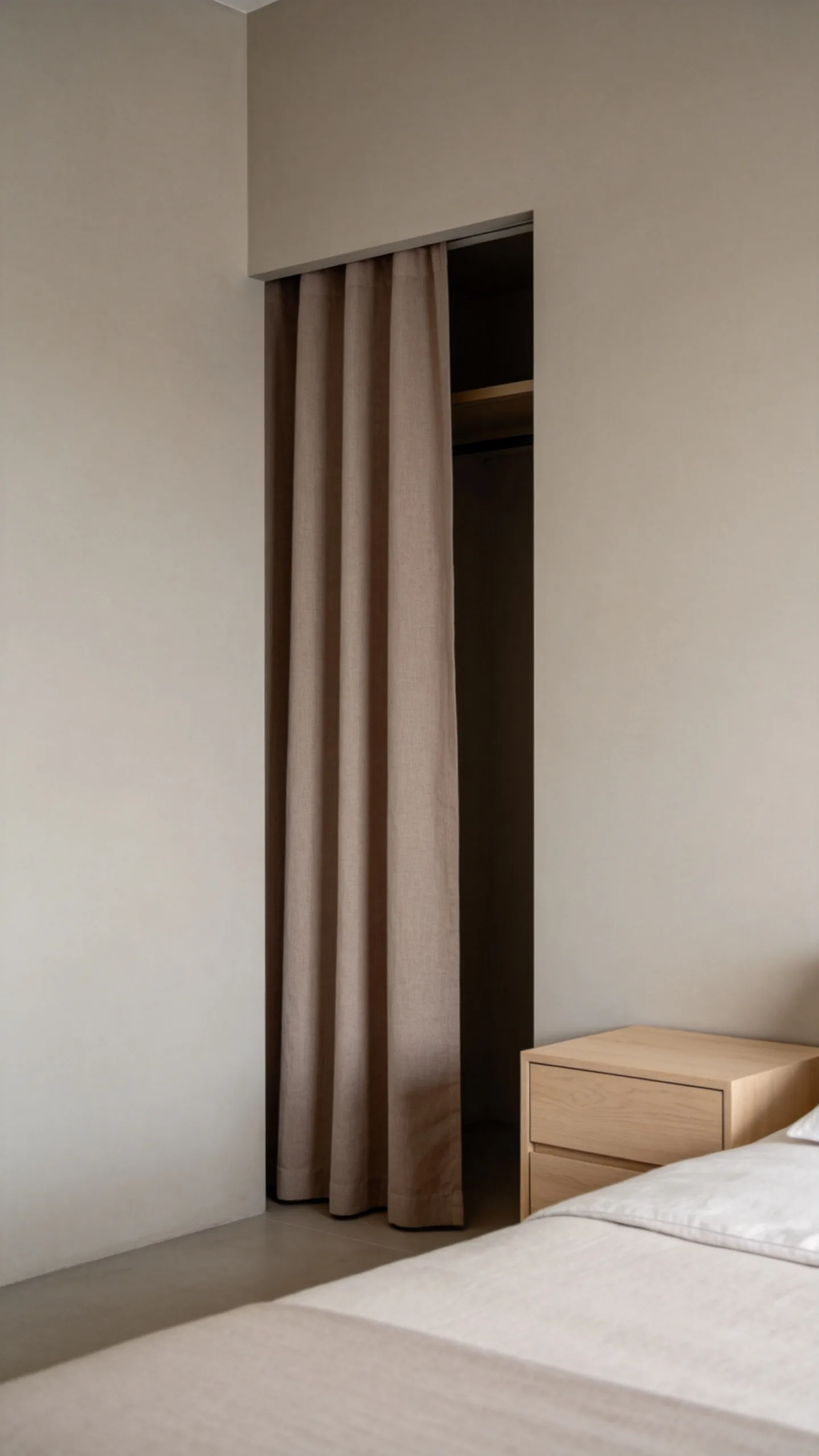
A doorway curtain does not always need to stand out. In a small room, a curtain that closely matches the wall color can add privacy while keeping the space calm and visually open.
For white walls, try ivory, cream, or warm white fabric. For beige or greige walls, use taupe, sand, or oatmeal linen. This approach works well for studio apartments, small bedrooms, and hallway closets because it reduces contrast and helps the curtain recede into the background.
15. Bold Color Curtain as a Doorway Focal Point
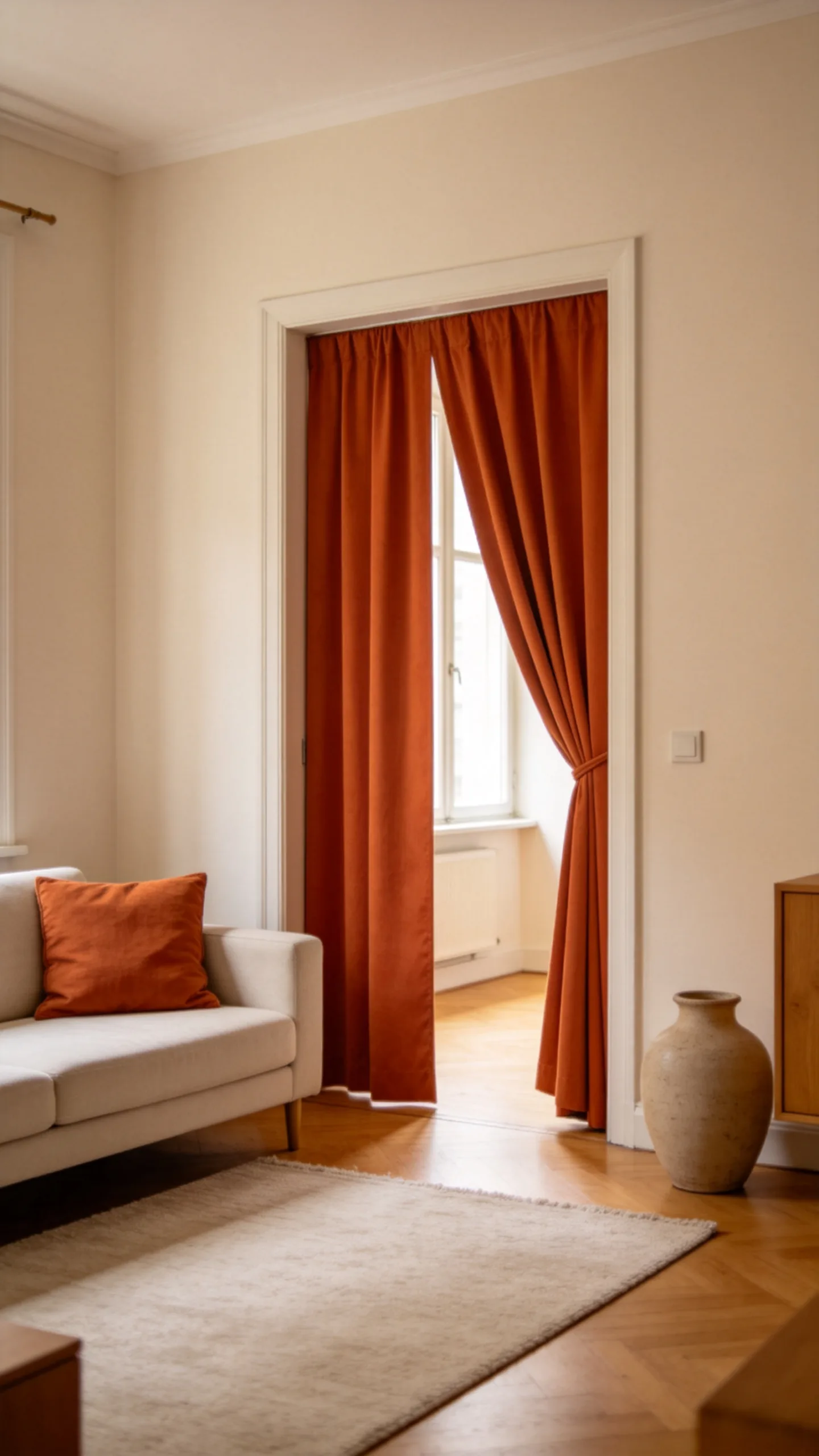
A bright or saturated doorway curtain can become the statement piece in a simple room. This idea works well when the walls, sofa, bedding, or cabinetry are neutral and the doorway needs personality.
Try mustard yellow in a white kitchen, terracotta in a beige living room, cobalt blue in a hallway, or emerald green in a bedroom. Repeat the color once or twice in nearby objects, such as a throw pillow, vase, art print, or lampshade, so the curtain feels connected to the room instead of random.
16. Doorway Curtain With Tiebacks for Flexible Privacy
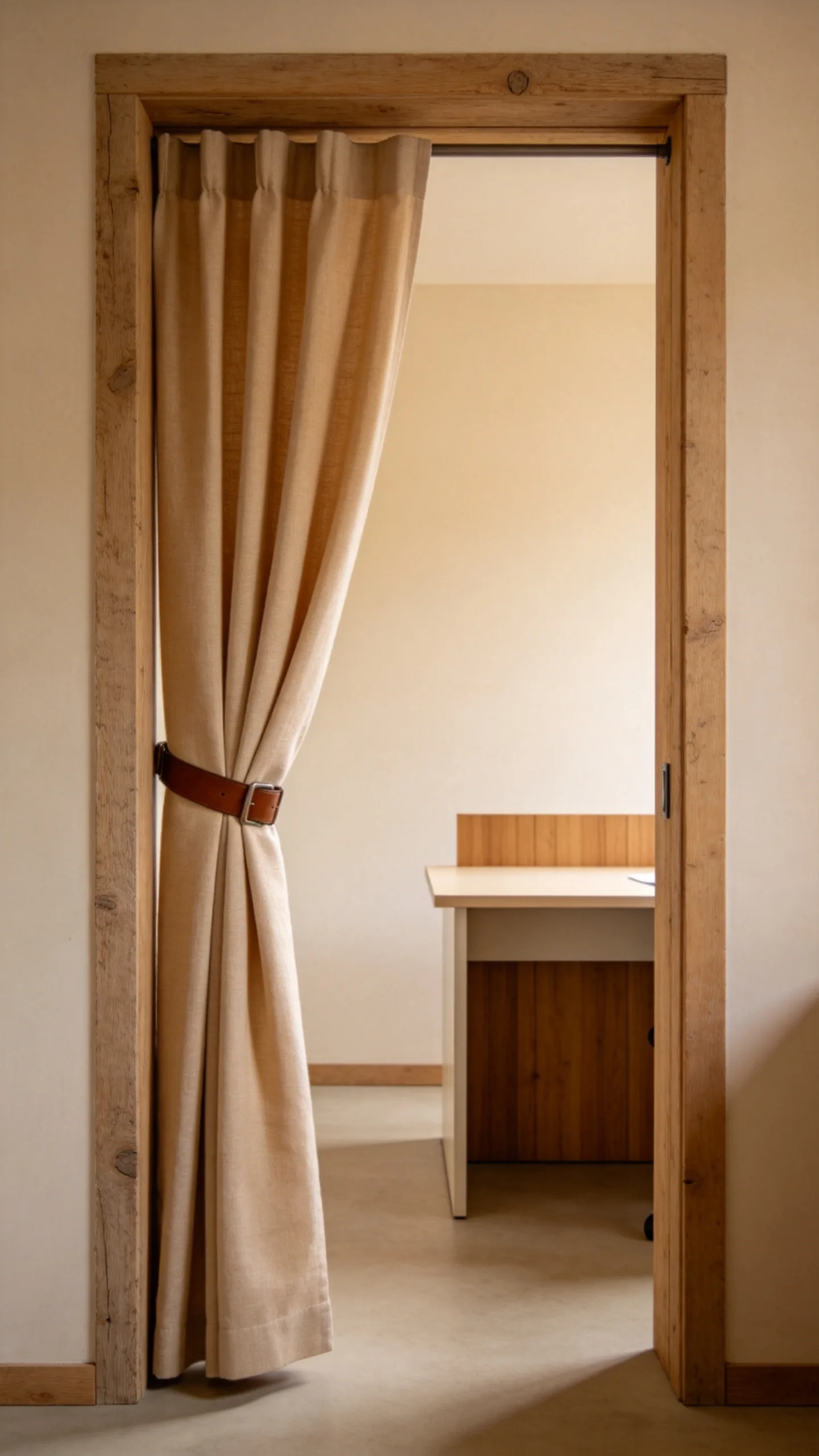
Tiebacks make a doorway curtain more practical because you can open the space during the day and close it when privacy is needed. This is useful for guest rooms, home offices, laundry areas, closets, and small apartments where one doorway serves multiple functions.
Choose tiebacks that match the mood of the room. Leather straps suit modern rustic spaces, rope works well with coastal or farmhouse decor, and metal holdbacks look polished in traditional rooms. Place the tieback high enough that the curtain clears the walkway when gathered.
17. Pleated Curtain for a Tailored Interior Doorway
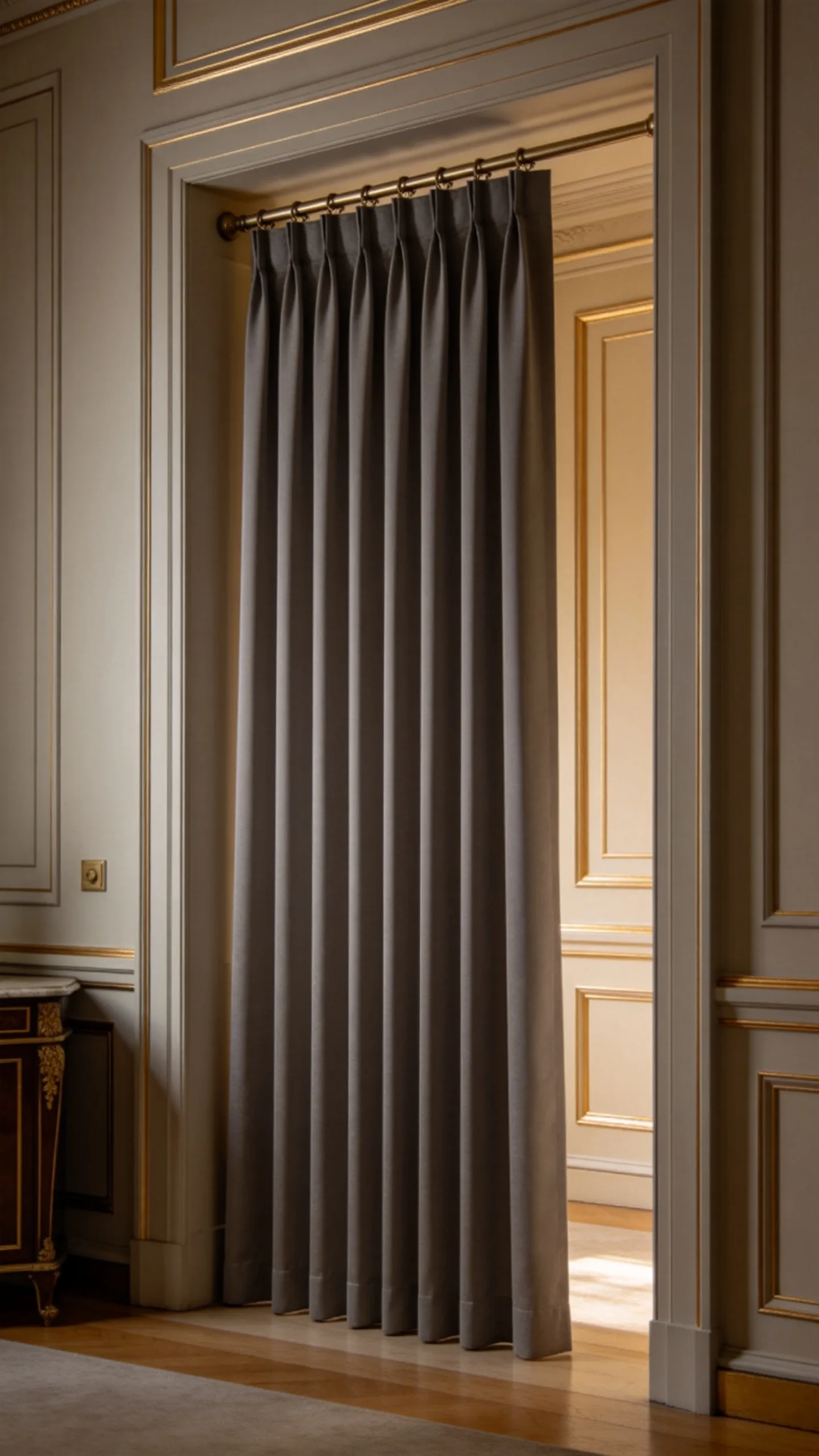
Pleated curtains give a doorway a more finished, custom look. Pinch pleats, box pleats, or tailored ripple folds work especially well in formal dining rooms, primary bedrooms, home offices, and living rooms with classic furniture.
Use a proper drapery rod or track instead of a thin tension rod if the fabric is weighty. Pleats create consistent vertical lines, which can make the doorway look taller and neater. A solid fabric in linen, cotton, velvet, or a woven blend will show the pleat structure clearly.
18. Printed Block-Print Curtain for an Artistic Accent
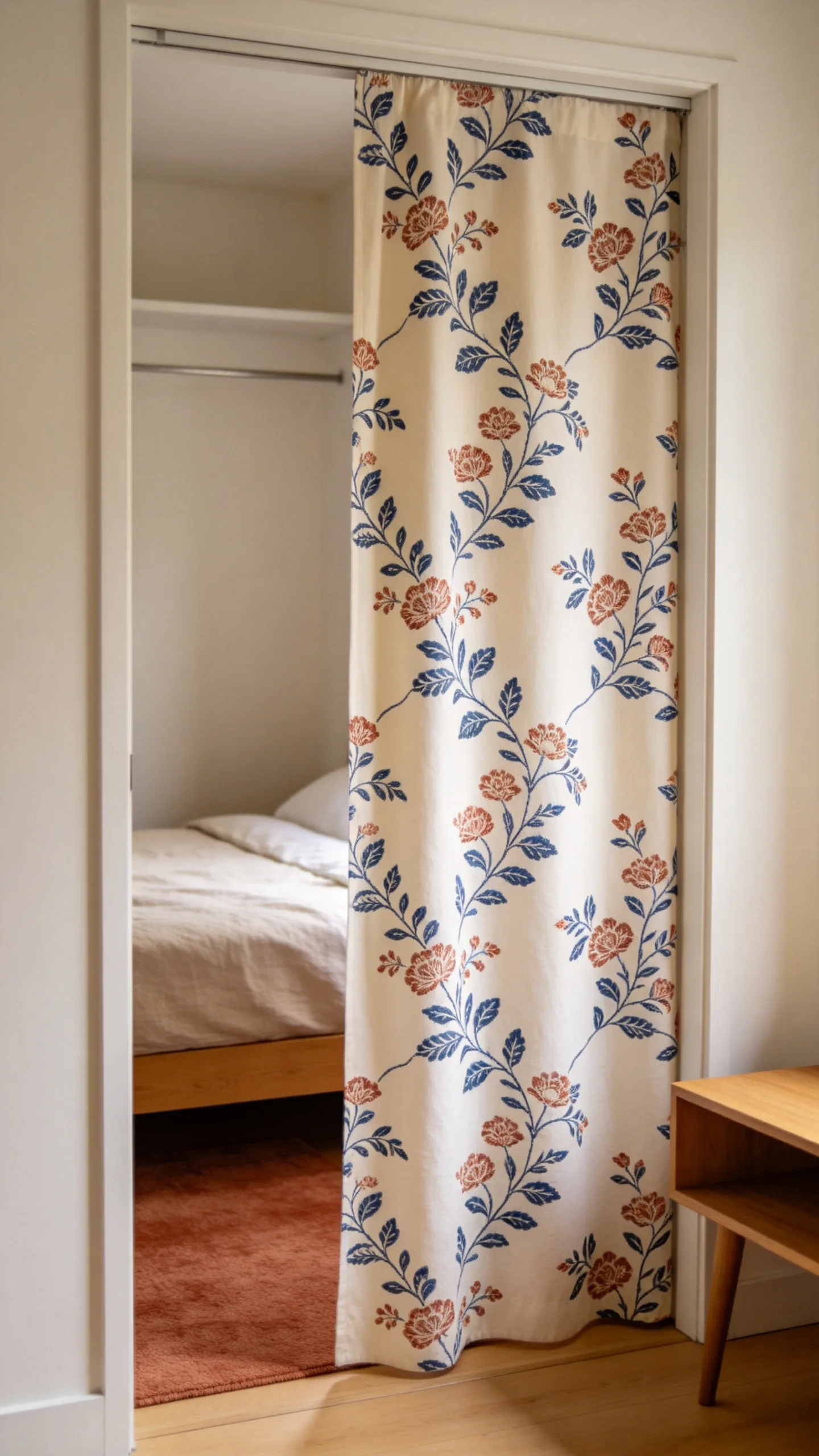
A block-print doorway curtain adds pattern without needing wallpaper or new paint. It works well for bedroom closets, reading corners, craft rooms, and kitchen entries where a flat doorway needs more visual interest.
Look for hand-block-inspired florals, vines, paisleys, or geometric motifs in two or three colors. Keep nearby decor simple if the print is busy: plain bedding, a solid rug, or simple wood furniture will let the curtain stand out. This idea is especially useful in rentals because the curtain can bring pattern to the room without permanent changes.
19. Doorway Curtain for an Open Closet
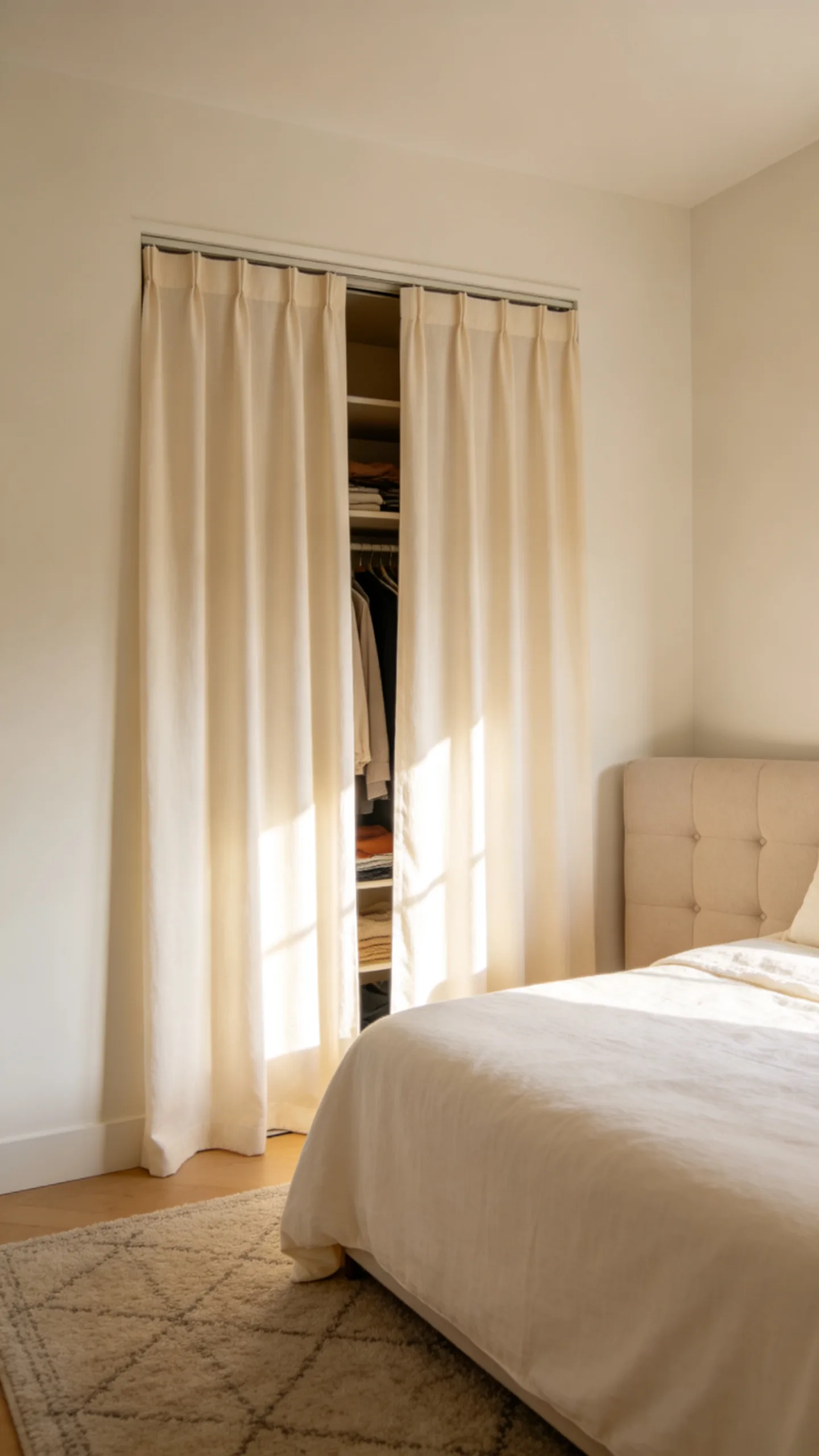
An open closet can make a bedroom feel cluttered, even if the shelves are organized. A curtain softens the closet wall and hides clothing, shoes, boxes, and laundry baskets from view.
Use a full-length panel or two narrow panels depending on the closet width. If the bedroom is small, choose a fabric close to the wall color to reduce visual busyness. For a more decorative look, coordinate the curtain with the bedding, area rug, or upholstered headboard so the closet curtain feels like part of the room design.
20. Woven Jute or Raffia Curtain for Textured Privacy
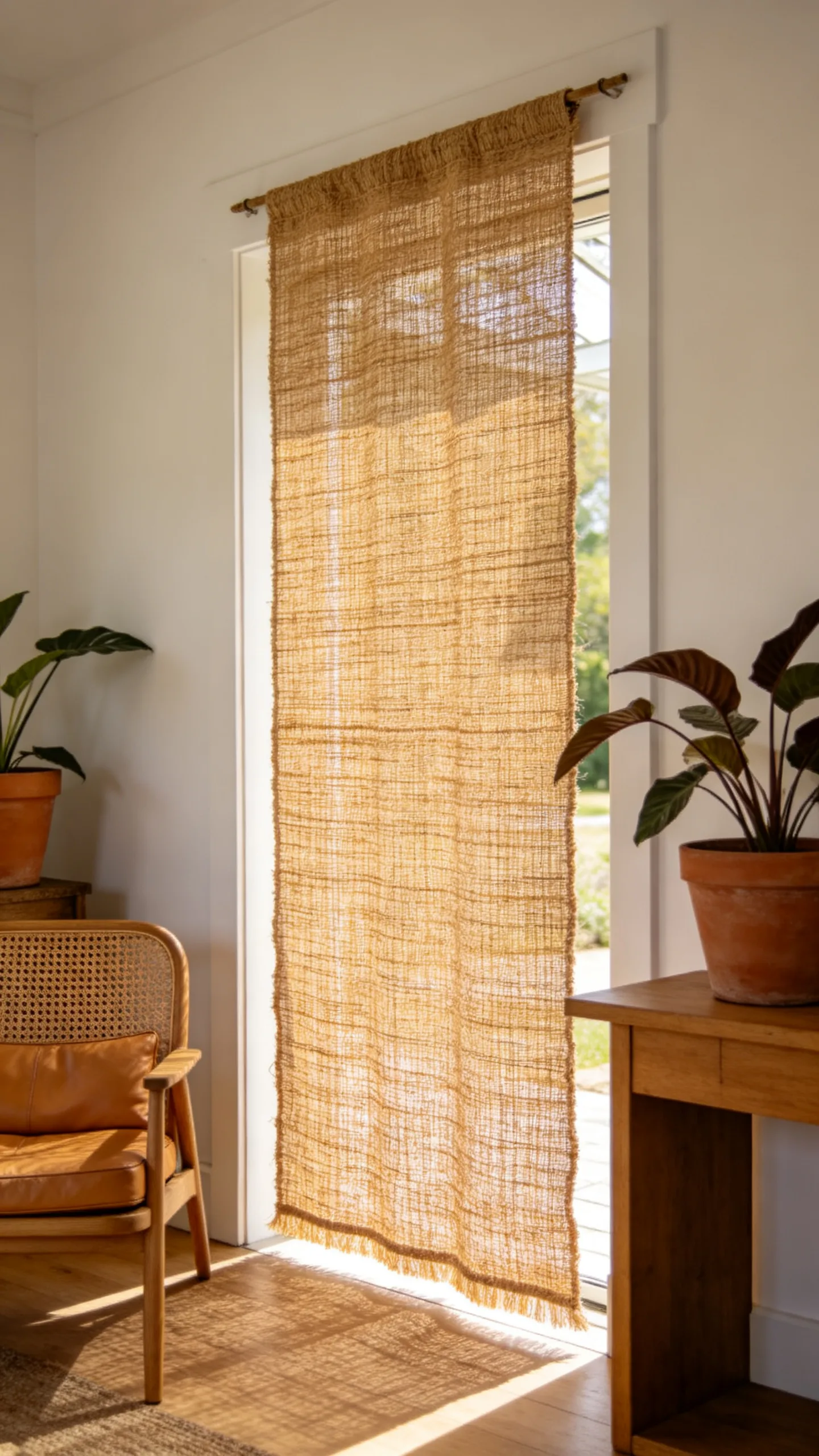
A woven jute, raffia, or natural-fiber curtain adds earthy texture to a doorway while keeping the palette warm and relaxed. It can work between a sunroom and living room, bedroom and closet area, or covered patio and indoor entry.
Natural fibers pair well with white walls, tan leather, rattan chairs, wood consoles, and clay planters. Because woven materials can be more rigid than fabric, use them in doorways that do not need constant opening and closing. They add privacy by breaking up the view while still feeling breathable.
21. Cafe-Style Half Curtain for a Small Doorway Window
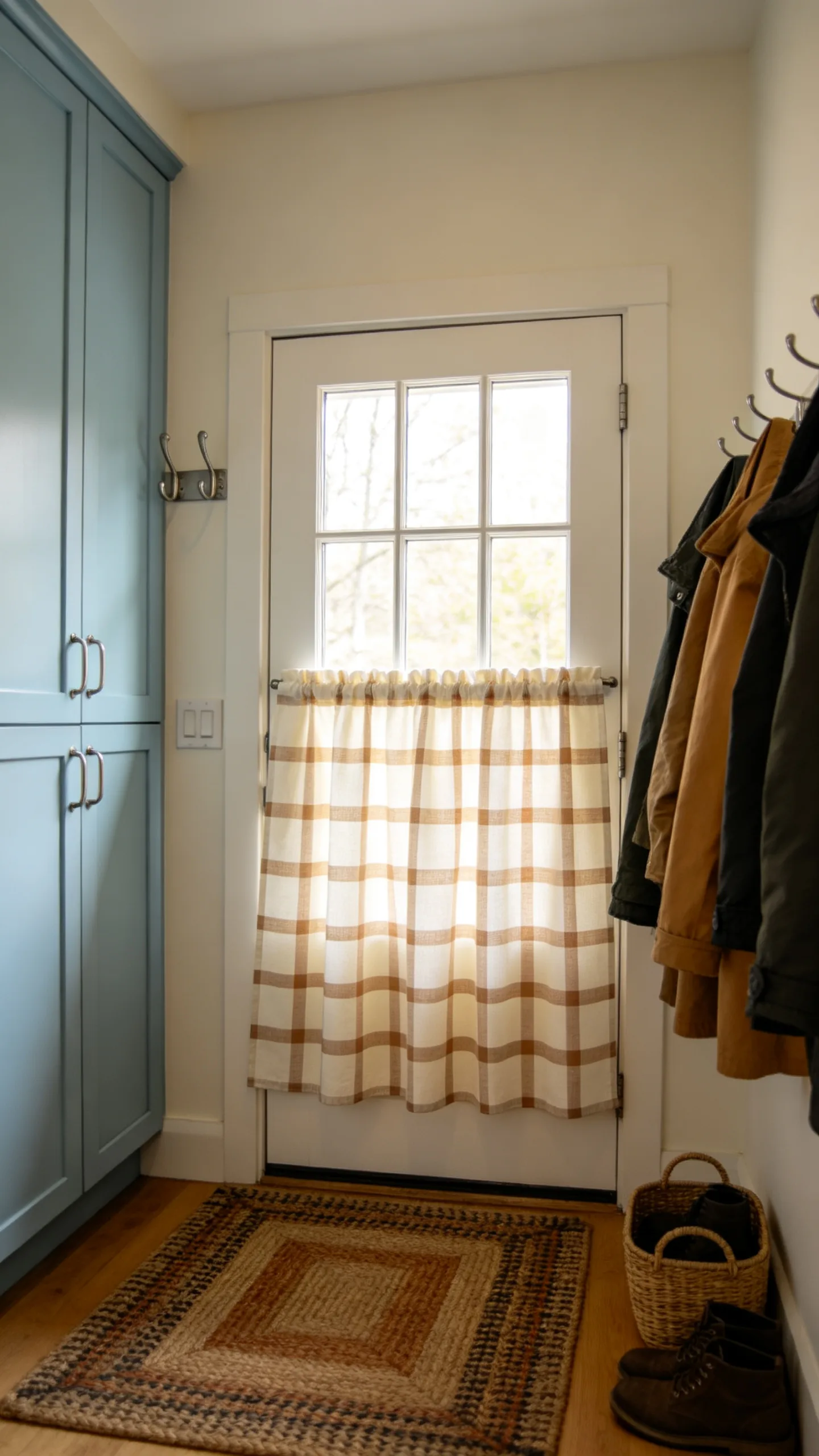
If the privacy issue is a small window within or beside the doorway, a half curtain can be enough. This works for mudroom doors, kitchen doors, bathroom entries, and back doors with glass panes.
Hang the curtain across the lower half of the glass so natural light still enters from above. Use cotton, linen, lace, or gingham depending on the room style. This solution is especially useful in compact kitchens and entryways because it adds privacy without darkening the entire doorway.
22. Sliding Panel Curtain for a Modern Open Plan Space
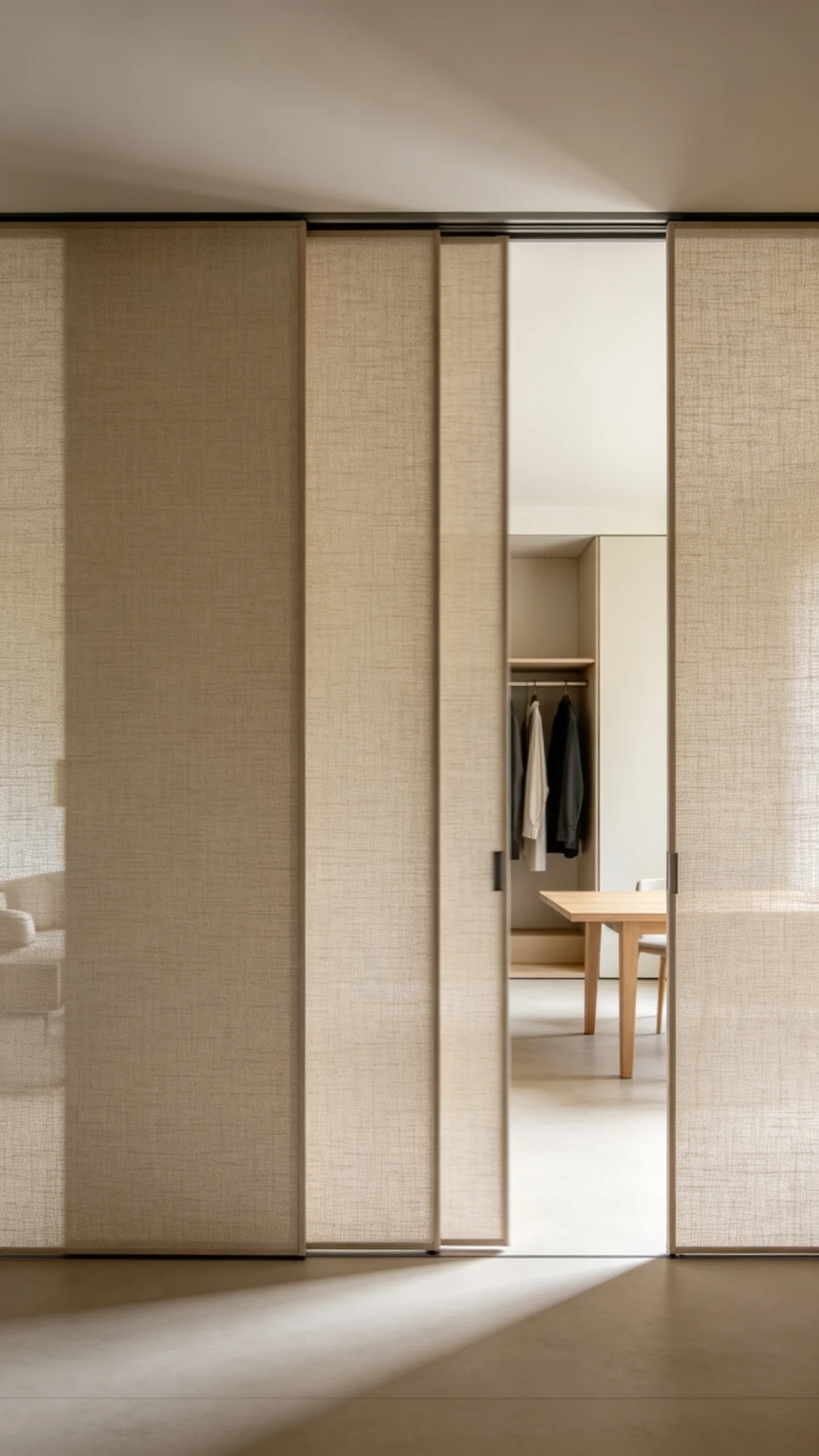
Sliding panel curtains are a clean option for wide doorways, alcoves, and open-plan room divisions. They work well between a living area and dining space, bedroom and wardrobe wall, or office nook and hallway.
Choose flat fabric panels in a neutral weave, subtle texture, or simple geometric pattern. Because the panels move in straight lines, they keep the room looking organized and uncluttered. In small spaces, sliding panels are useful because they do not swing open like doors and do not gather into bulky folds.
23. Thermal Curtain for a Drafty Doorway
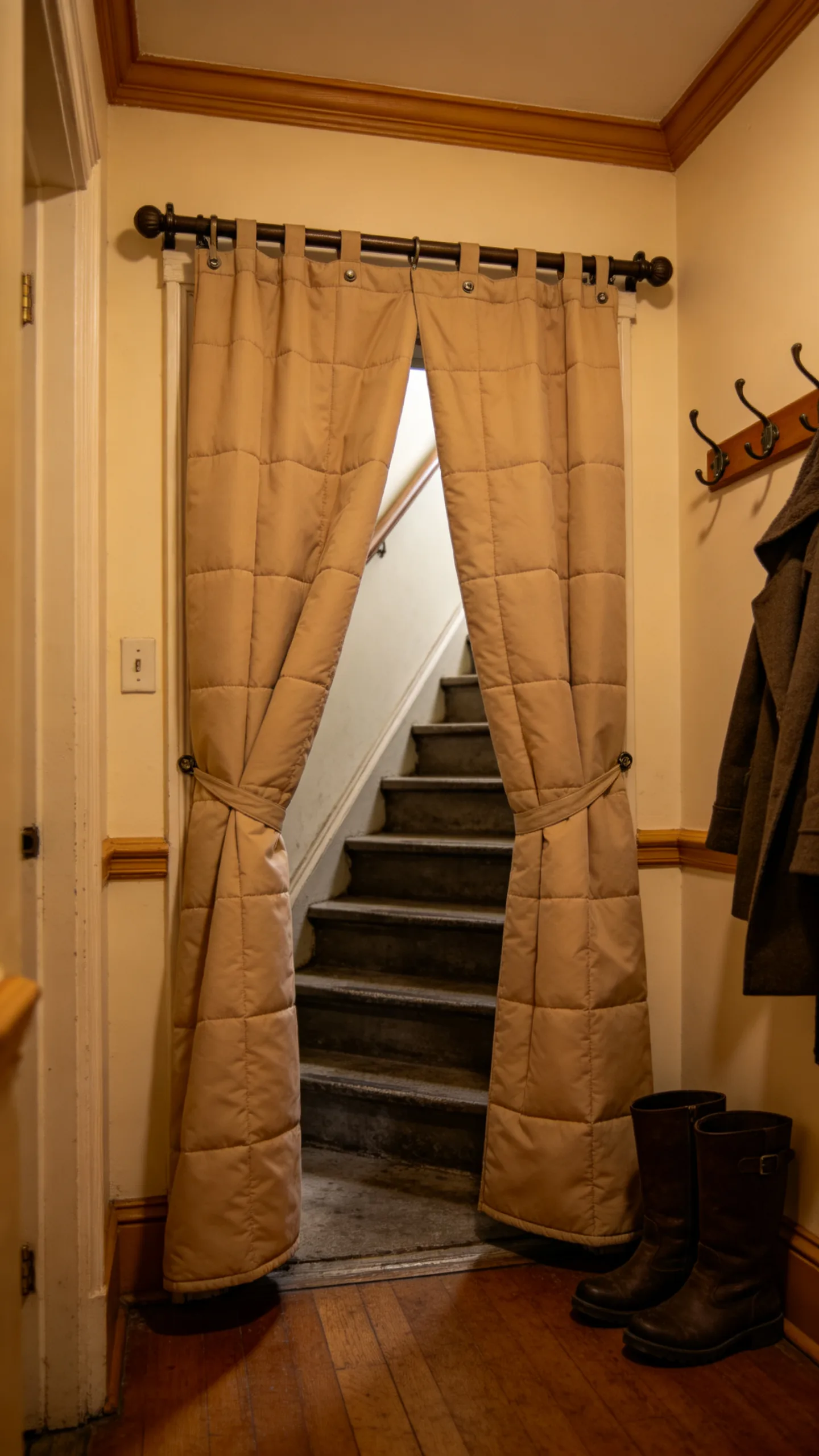
A thermal doorway curtain can add privacy and help make a drafty passage feel cozier, especially near an entry hall, basement doorway, attic stairs, or older interior door opening. The thicker lining gives the curtain more structure and better coverage than lightweight fabric.
Choose a panel that fully covers the doorway and overlaps the sides slightly. Darker colors can feel cozy in winter, while beige, gray, or cream can blend into a hallway. Use a sturdy rod with secure brackets because thermal curtains are heavier than decorative sheers.
24. Layered Sheer and Solid Curtains for Adjustable Coverage
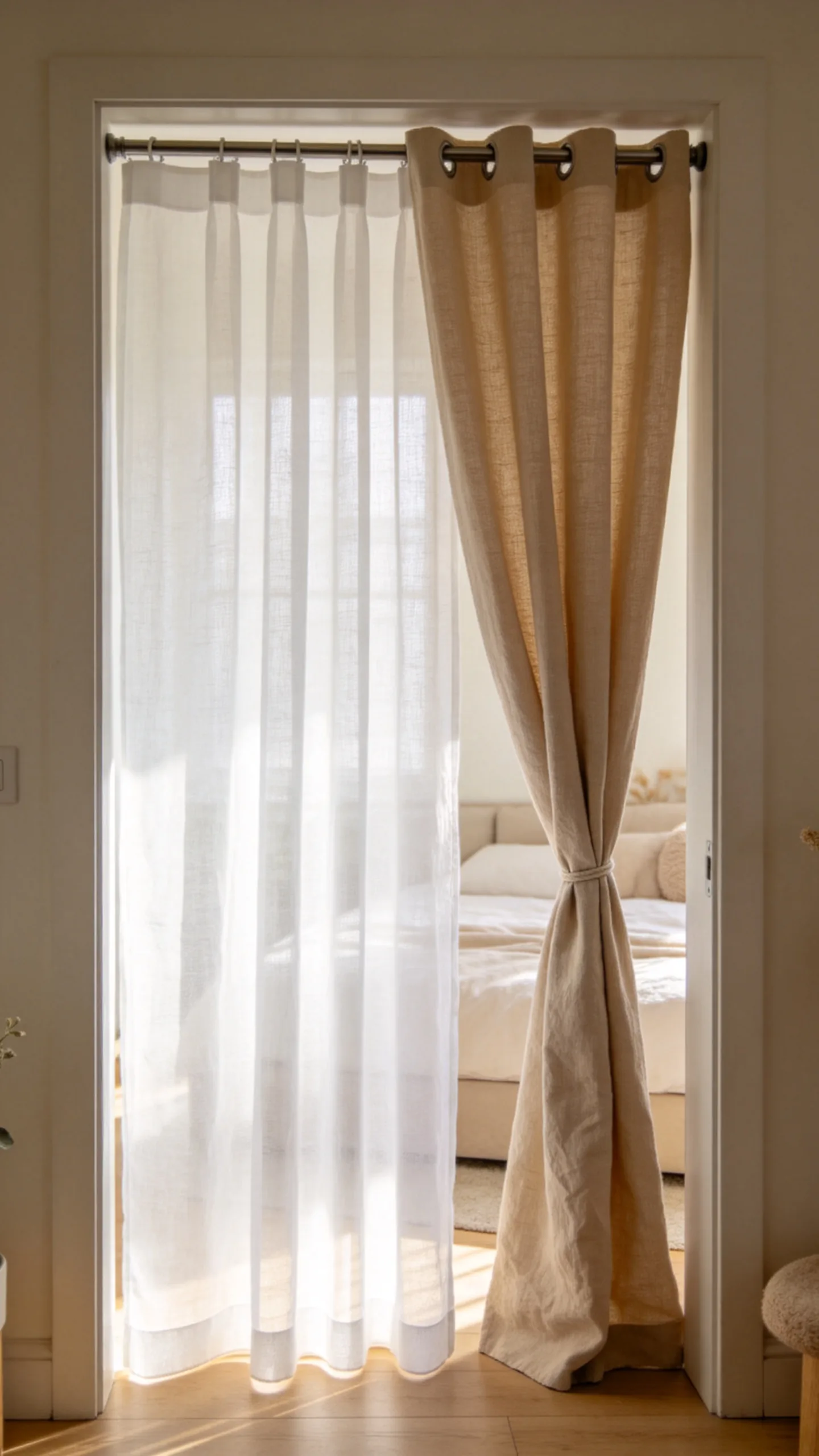
Layering a sheer curtain with a solid panel gives you flexible privacy throughout the day. The sheer layer can stay closed for filtered light, while the solid layer can be pulled across when you need more coverage.
This works well for bedroom doorways, dressing areas, home offices, and shared apartments. Use a double rod or track if there is enough wall depth above the doorway. Keep the colors coordinated, such as white sheer with oatmeal linen, cream sheer with sage cotton, or gray sheer with charcoal velvet, so the layers look intentional.
25. Short Doorway Curtain for a Pet-Friendly or High-Traffic Area
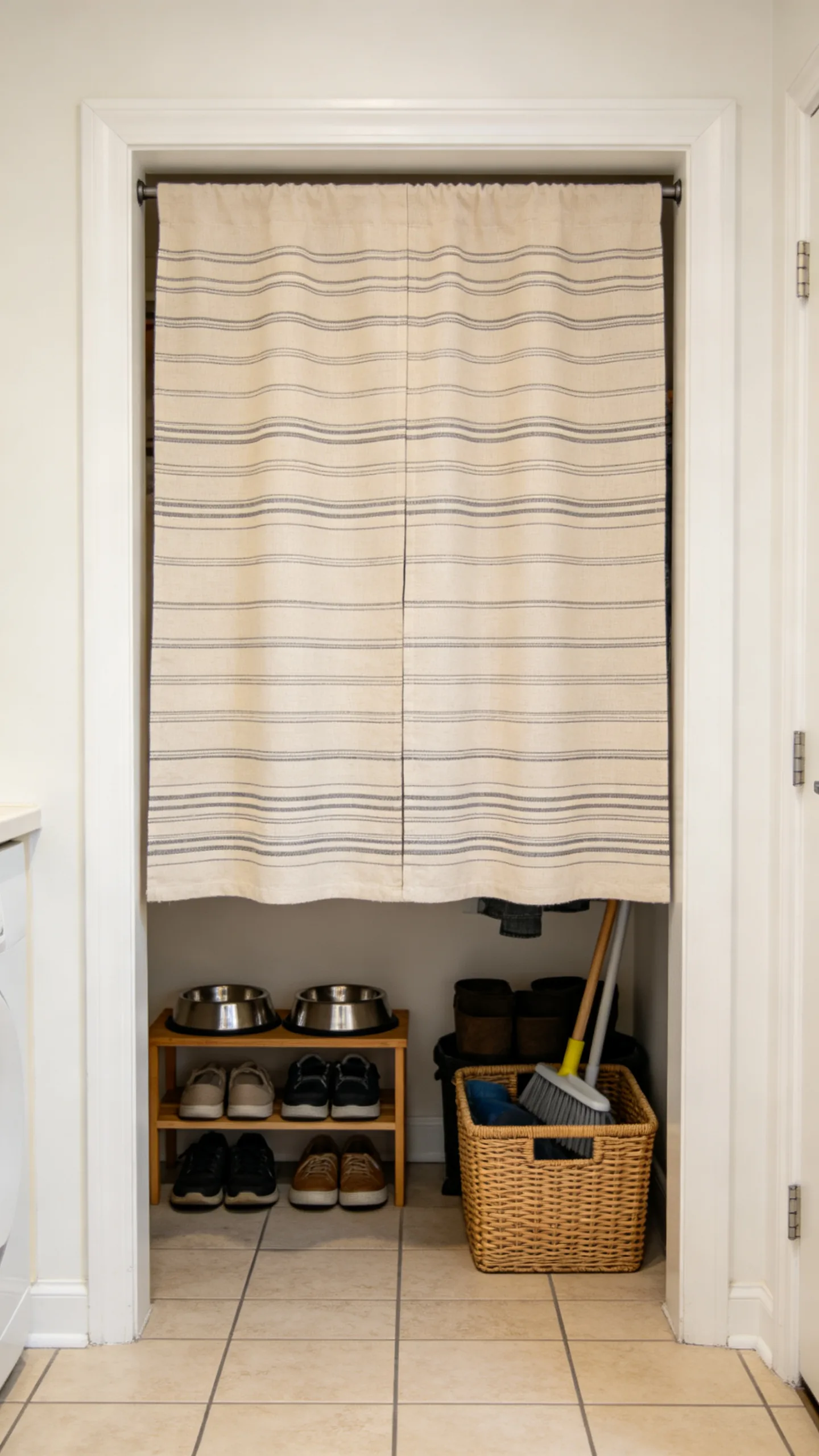
A shorter doorway curtain can be practical in busy spaces where a floor-length panel would get stepped on, pulled, or dirty. Use it for a laundry nook, pantry, mudroom, pet area, or utility closet.
Let the curtain fall just below the doorway midpoint or a few inches above the floor, depending on what you need to hide. A washable cotton or canvas fabric is best for spaces with shoes, pet bowls, cleaning supplies, or frequent movement. Choose a simple pattern or solid color so the curtain adds privacy without making the doorway feel crowded.

From the editors
Decor Compass Editorial Team
We turn practical home research into clear, useful room-by-room ideas.