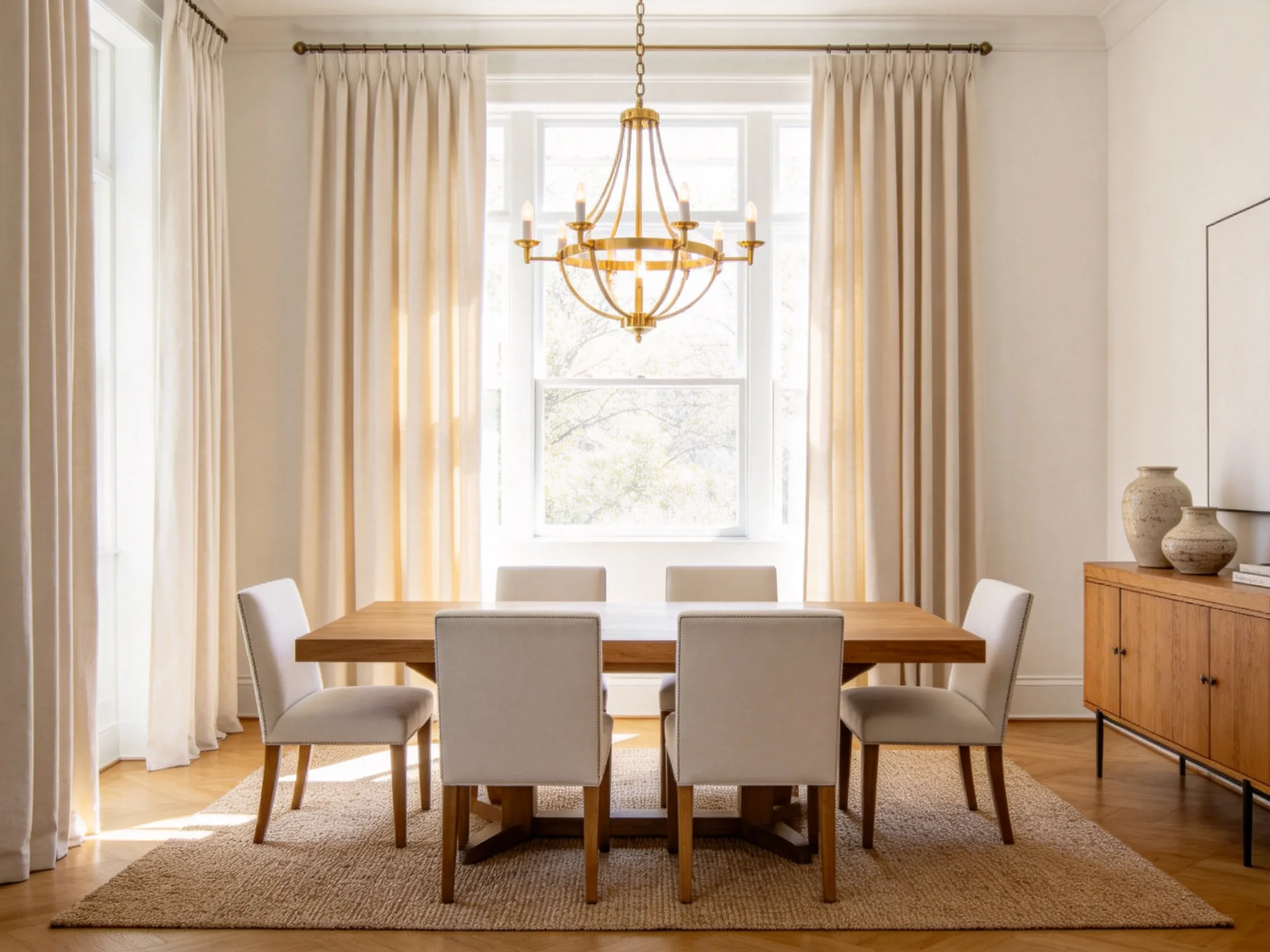
Dining room curtains can do more than cover a window. The right fabric, length, color, and hardware can soften hard furniture lines, frame a view, improve evening ambiance, and make the entire room feel intentionally designed. These dining room curtain ideas focus on polished, livable choices that work around real tables, chairs, sideboards, lighting, and everyday traffic flow.
1. Floor-Length Linen Panels for a Soft, Relaxed Finish
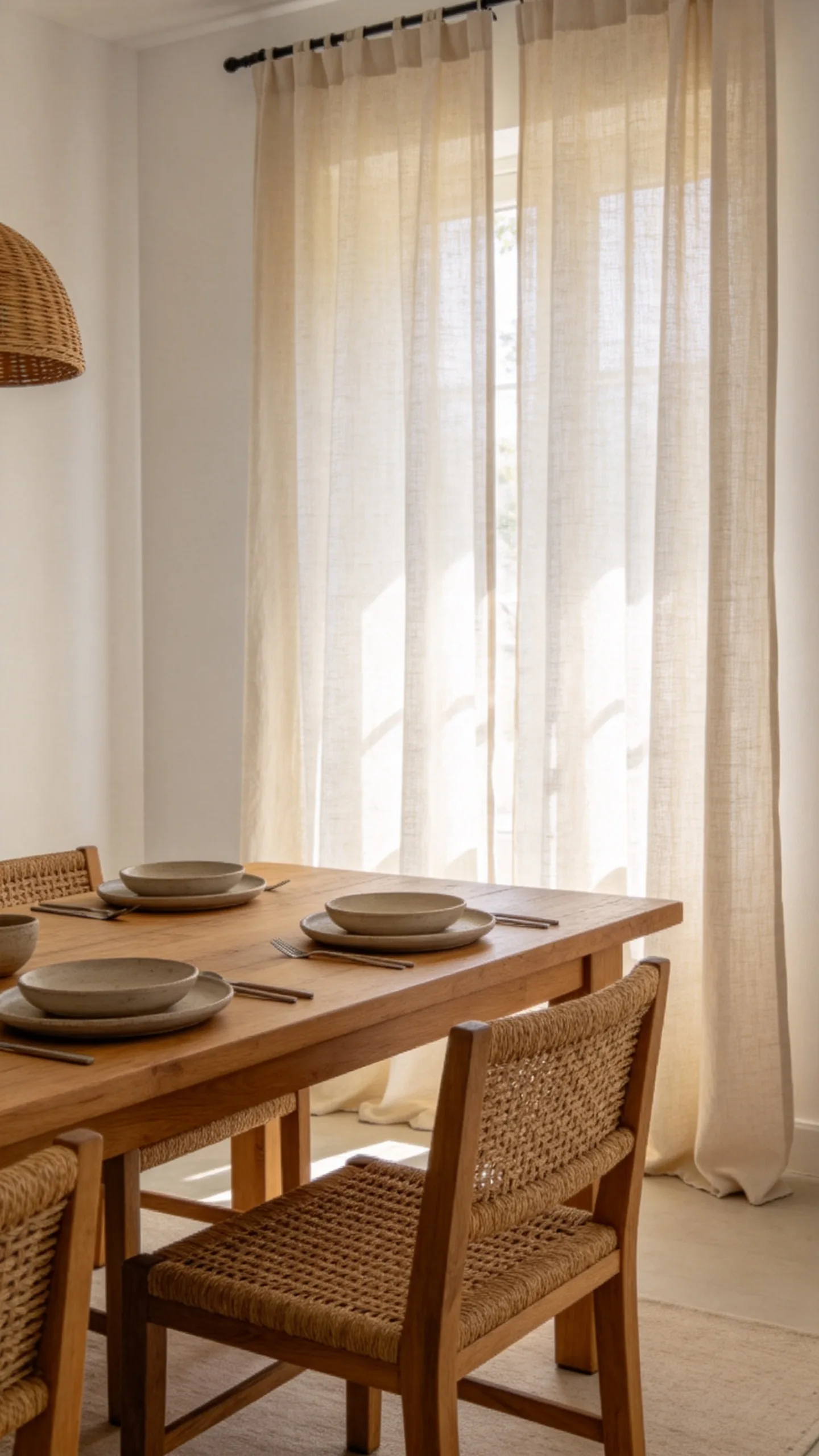
Floor-length linen curtains are one of the easiest ways to make a dining room feel complete without making it feel overly formal. The natural texture works especially well beside wood dining tables, woven chairs, stoneware dishes, and matte wall colors like warm white, greige, sage, or mushroom.
Hang the panels high and wide so the fabric frames the window instead of blocking daylight. A rod placed a few inches below the ceiling helps draw the eye upward, which is useful in compact dining rooms or breakfast nooks. Let the curtains just kiss the floor for a clean look that still feels soft.
Choose light-filtering linen if the room gets harsh afternoon sun, especially near a south- or west-facing window. The fabric will diffuse glare during meals while keeping the space bright enough for daytime dining.
2. Pinch Pleat Curtains for a Tailored Dining Room Look
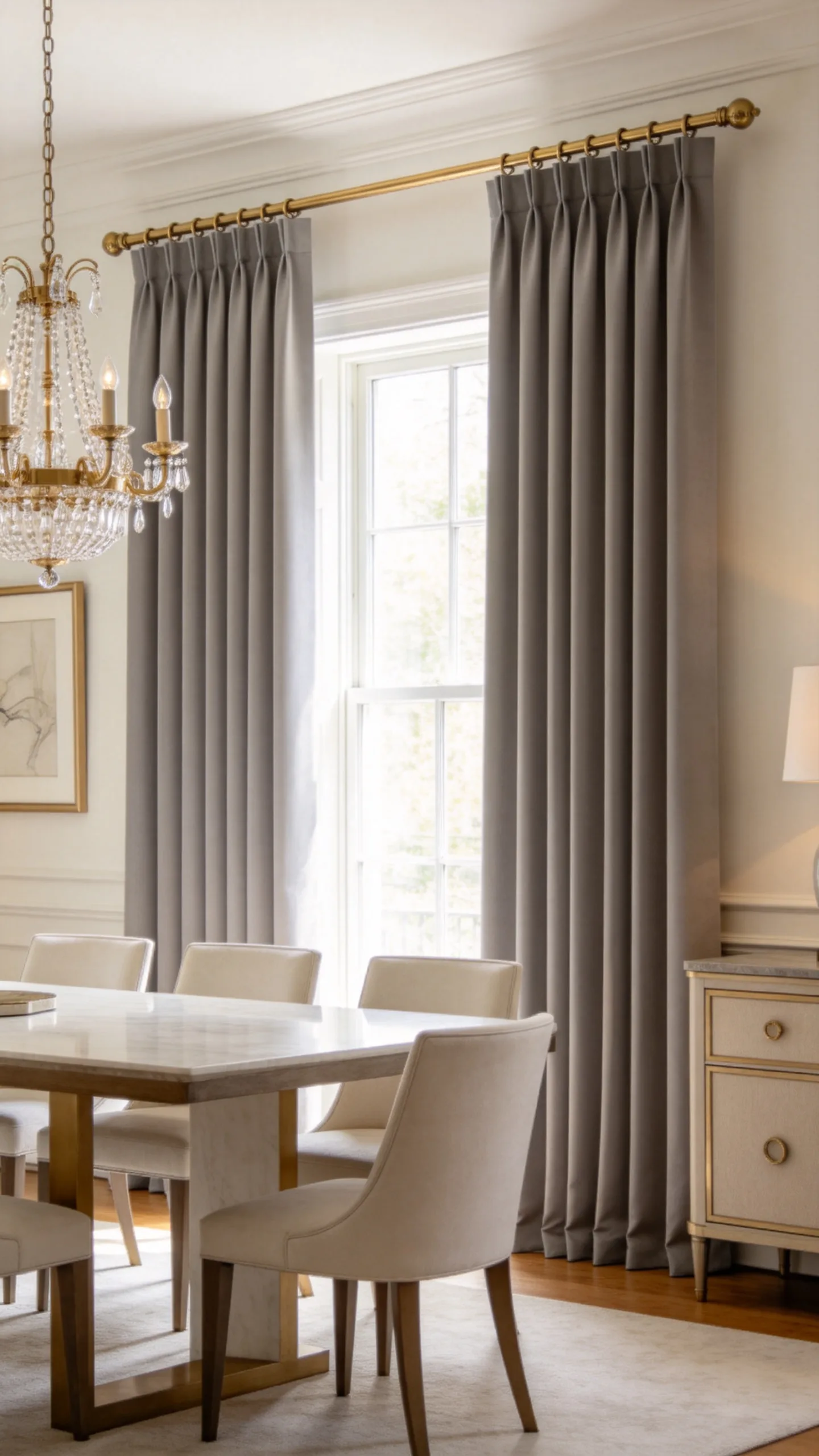
Pinch pleat curtains instantly make a dining room feel more polished because the folds stay structured from top to bottom. This style works beautifully in traditional, transitional, and modern classic dining rooms where the table, chandelier, and sideboard already have a more refined feel.
Use pinch pleat panels on rings or a track for smooth movement, especially if the curtains will be opened and closed often. The repeated vertical folds create order around the window, which can help balance busy wallpaper, detailed millwork, or a gallery wall nearby.
For fabric, consider cotton-linen blends, velvet, or lined polyester in a solid color. Ivory, taupe, slate blue, olive, and warm gray all pair well with wood furniture and brass, black, or polished nickel curtain hardware.
3. Sheer White Curtains for Airy Daytime Dining
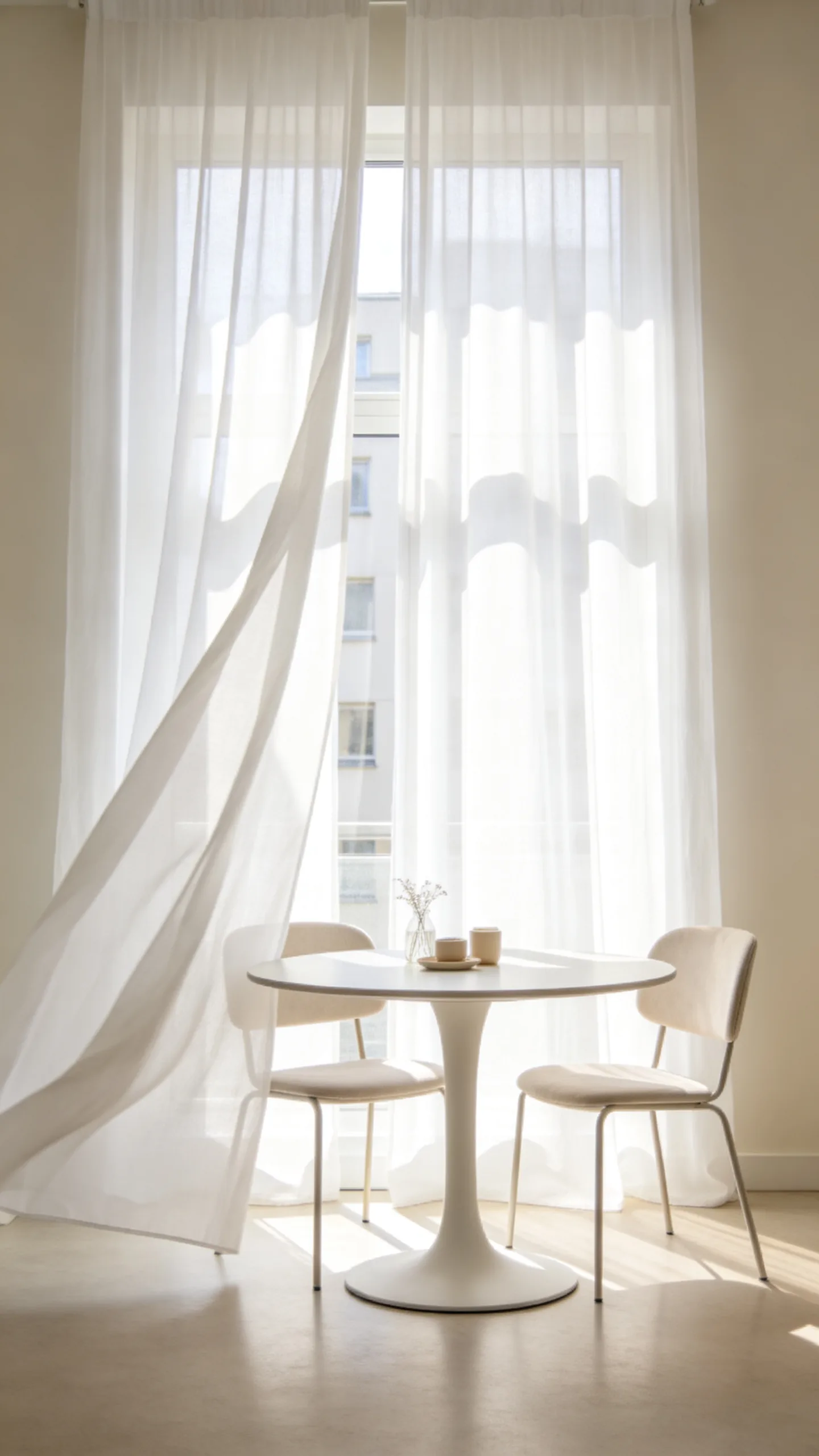
Sheer white curtains are ideal when the dining room needs softness but not visual weight. They work well in small dining areas, apartments, and open-plan spaces where heavy fabric might make the room feel crowded.
Use sheers to filter direct sunlight, soften window frames, and add movement without blocking the view. They are especially helpful behind a round pedestal table or slim rectangular table because the lighter fabric keeps sightlines open around the room.
For a more finished look, choose extra-wide sheer panels so the fabric still looks full when closed. Avoid panels that barely cover the window, since skimpy sheers can make the space feel unfinished rather than intentional.
4. Velvet Curtains for Evening Warmth and Drama
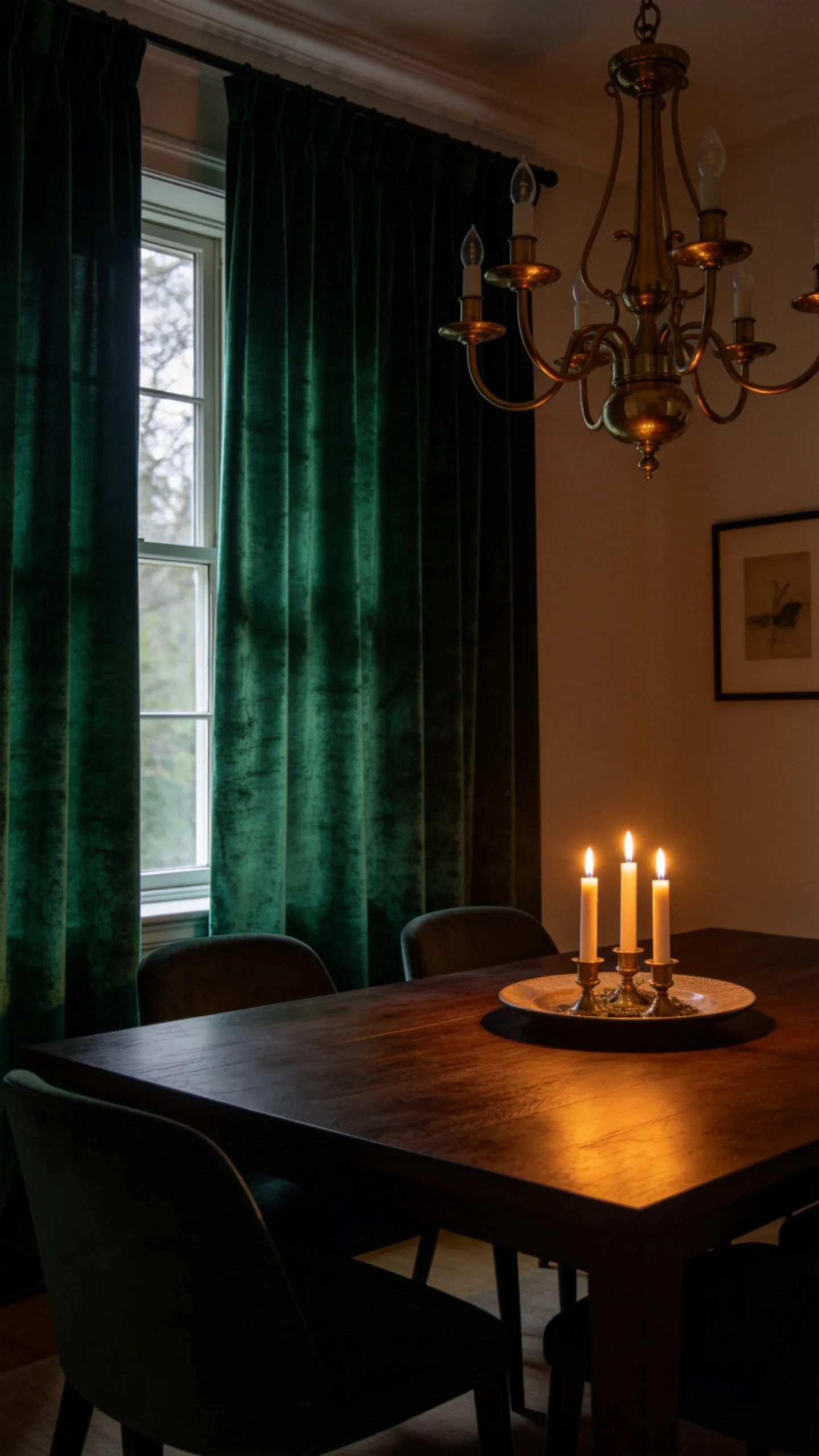
Velvet curtains can make a dining room feel warm, intimate, and ready for dinner parties. The fabric absorbs light beautifully, which is helpful in rooms with a chandelier, wall sconces, or candlelight on the table.
Deep colors like forest green, navy, rust, espresso, and charcoal look especially rich against white walls, dark wood tables, brass hardware, and framed artwork. If the dining room is small, keep the rest of the palette simpler so the curtains act as the main focal point rather than competing with patterned rugs or busy upholstery.
Because velvet is visually heavier, hang the rod wider than the window frame. This lets the panels stack mostly on the wall when open, preserving daylight and keeping traffic around the dining chairs from feeling cramped.
5. Patterned Curtains That Coordinate with the Rug
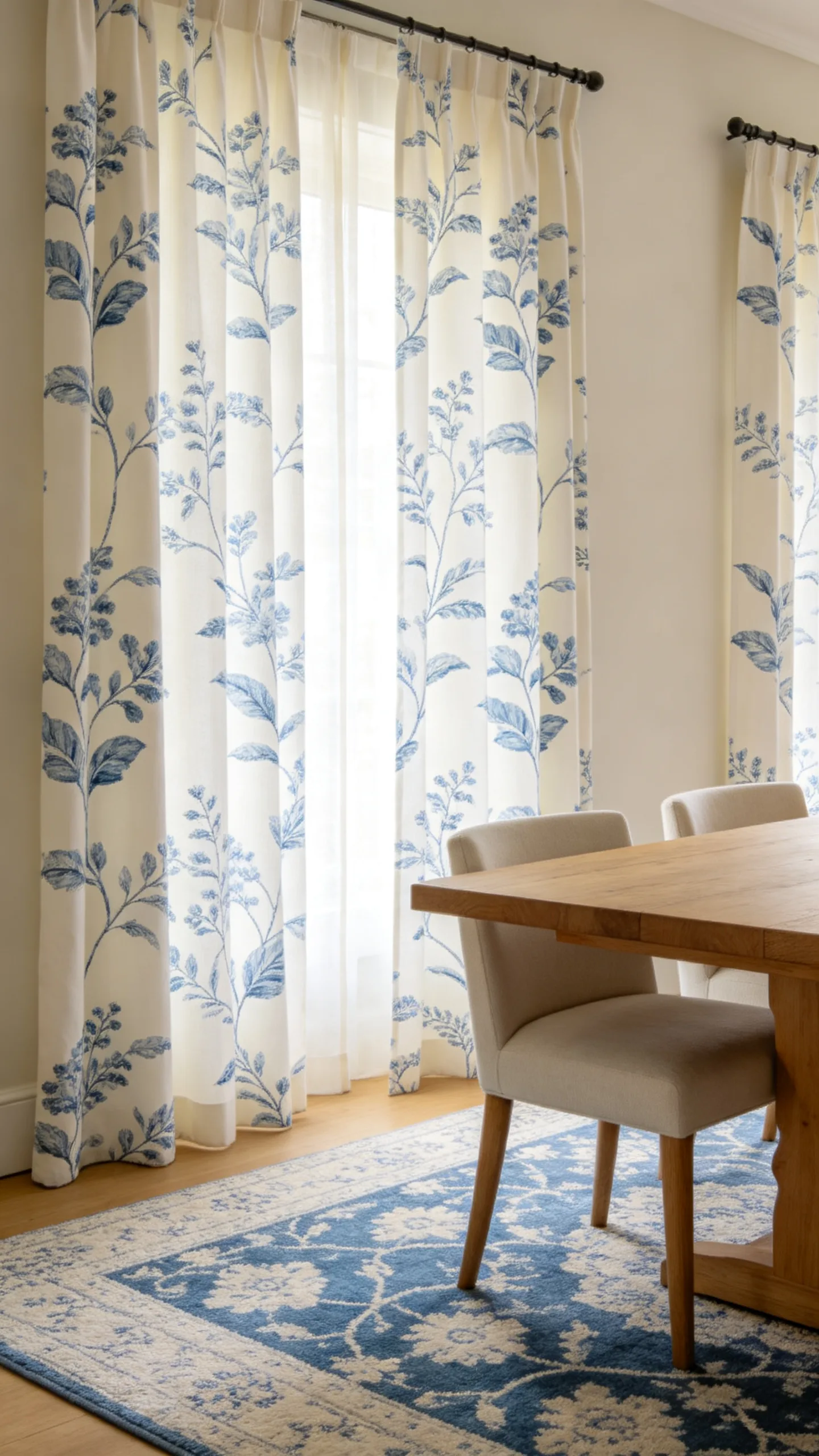
Patterned curtains can tie a dining room together when they repeat a color already found in the rug. This is especially useful when the table, chairs, and walls feel disconnected or too plain.
Look for patterns that share one or two tones with the rug rather than matching it exactly. For example, a blue-and-cream rug can work with cream curtains that have a soft blue botanical print. A terracotta vintage-style rug can pair with striped or block-printed curtains that include rust, tan, or faded red.
To keep the room from feeling busy, balance the pattern scale. If the rug has a dense, small-scale design, choose curtains with a larger, more open pattern. If the rug is simple, the curtains can carry more detail.
6. Café Curtains for a Charming Breakfast Dining Corner
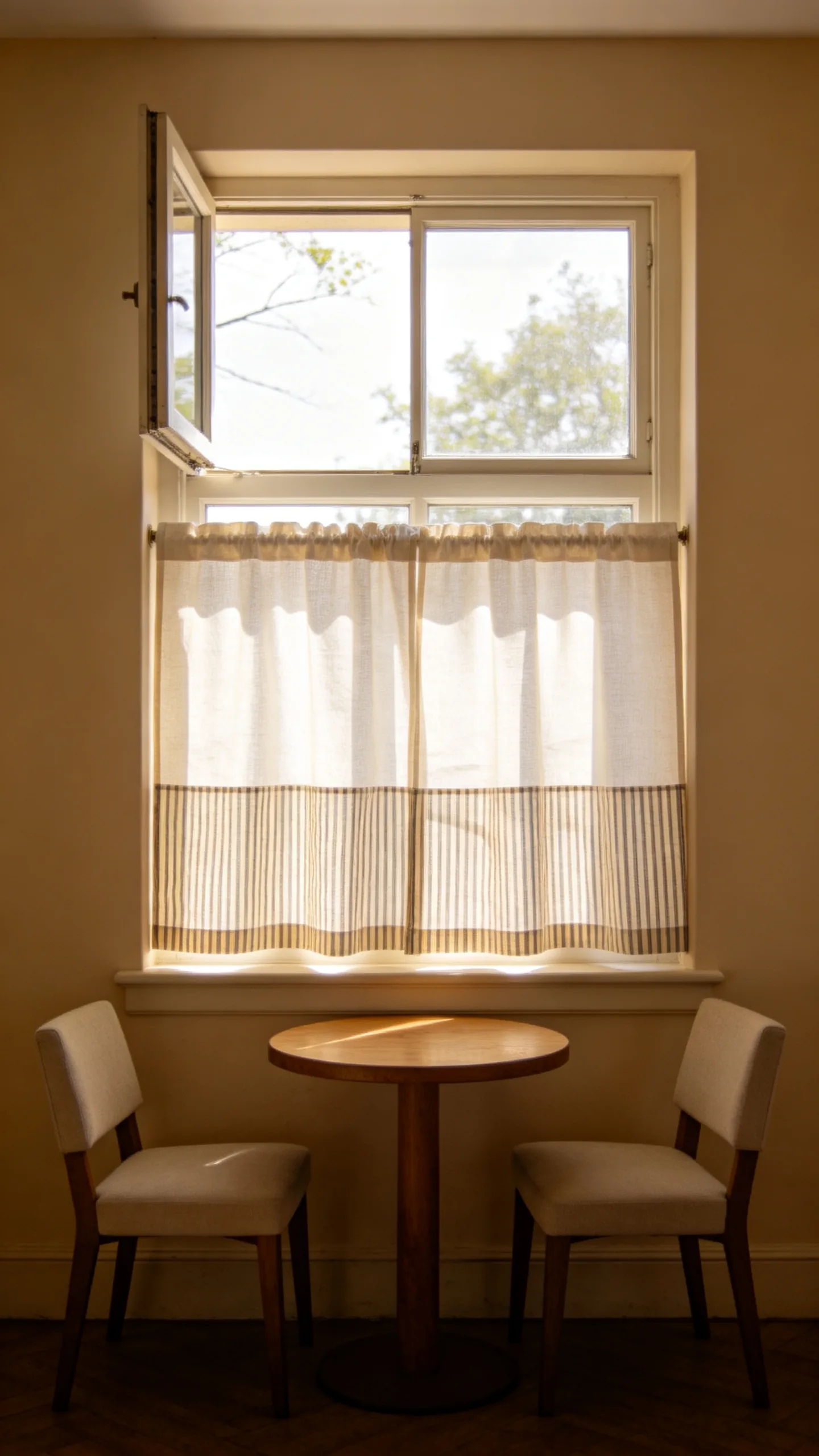
Café curtains are a smart choice for casual dining areas, especially when the window faces a street, neighbor, or walkway. They cover the lower portion of the glass for privacy while leaving the upper window open for daylight.
This style works well in breakfast nooks, small dining rooms, and kitchens with a dining table near the window. Use cotton, linen, gingham, ticking stripe, or a small floral print to add charm without overwhelming the table area.
Mount the café rod inside the window frame or slightly across the lower sash. Because the fabric is shorter, it does not interfere with chair movement, radiators, baseboards, or a storage bench beneath the window.
7. Roman Shades Layered Under Curtain Panels
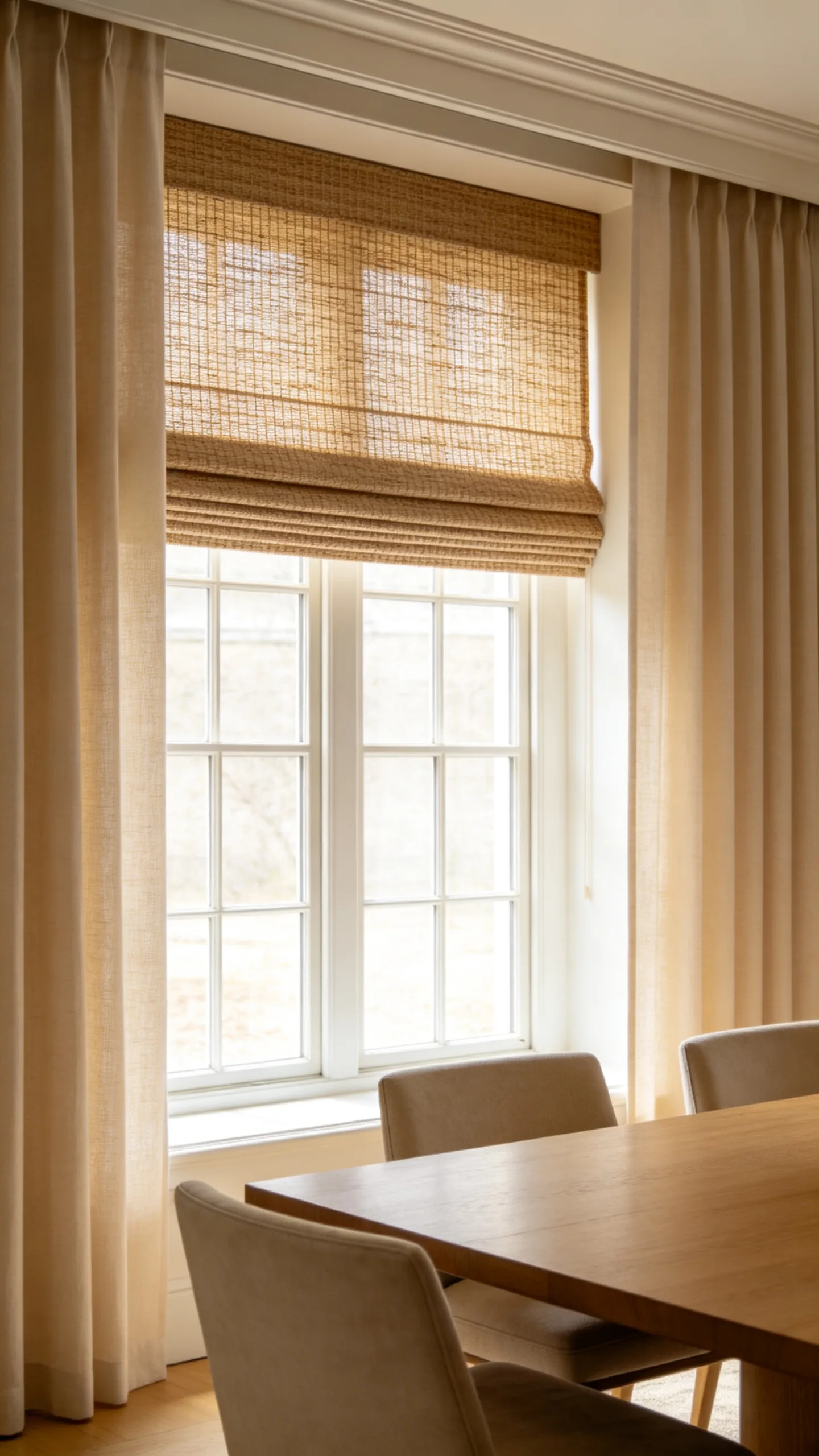
Layering Roman shades with curtain panels gives a dining room a designer-like finish while adding practical light control. The shade manages glare and privacy, while the side panels soften the wall and make the window feel larger.
This combination is especially useful in dining rooms with wide windows, bay windows, or street-facing glass. Choose a woven shade for texture, a linen shade for softness, or a flat Roman shade in a subtle print if the rest of the room is simple.
Keep the curtain panels stationary if the Roman shade does most of the work. This reduces fabric bulk around the window and keeps the dining chairs from catching on moving panels.
8. Woven Wood Shades with Simple Side Panels
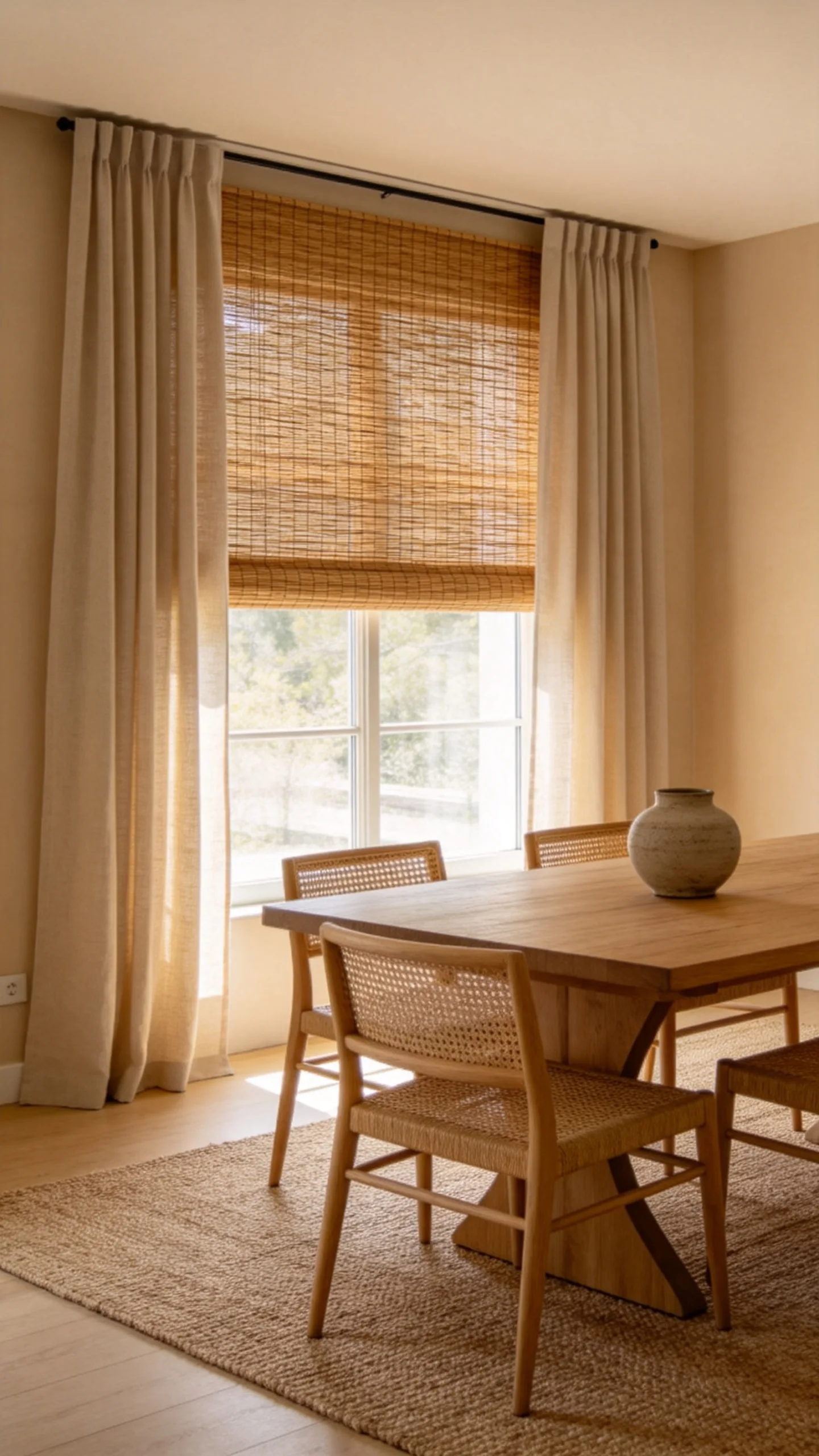
Woven wood shades bring natural texture into a dining room and pair well with rattan chairs, oak tables, jute rugs, ceramic vases, and warm neutral walls. They make the window feel dressed even when the curtains are open.
Add simple side panels in white, oatmeal, taupe, or soft gray to create a finished frame around the shade. This layered look is especially effective in dining rooms that feel too hard because of wood floors, painted walls, and rectangular furniture.
For privacy or evening use, choose woven shades with a liner. An unlined shade can look beautiful during the day but may not offer enough coverage at night when the dining room lights are on.
9. Ceiling-Mounted Curtain Tracks for a Clean Modern Wall
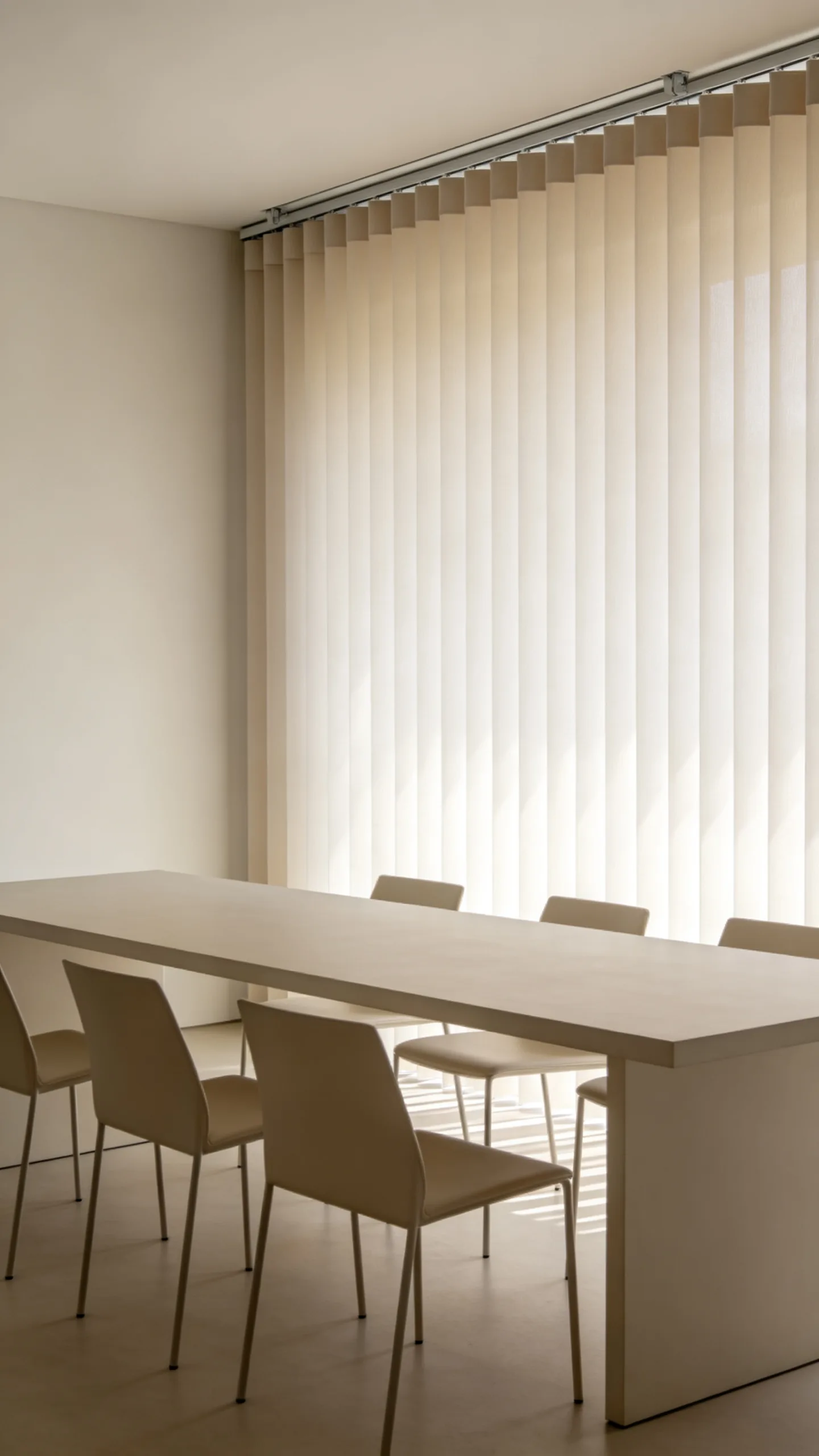
A ceiling-mounted curtain track creates a sleek, architectural look and works especially well in modern dining rooms, apartments, and rooms with awkward window placement. Because the fabric drops from the ceiling, the wall feels taller and less interrupted.
Use this idea when there is not enough room for a traditional rod above the window or when the dining room window sits close to a corner. A track also allows curtains to glide smoothly behind a long rectangular table or along a full wall of glass.
Choose ripple fold or softly gathered panels for a clean finish. Neutral fabric keeps the look minimal, while a saturated color can turn the curtain wall into the room’s main design feature.
10. Bold Black Curtain Rods for Definition
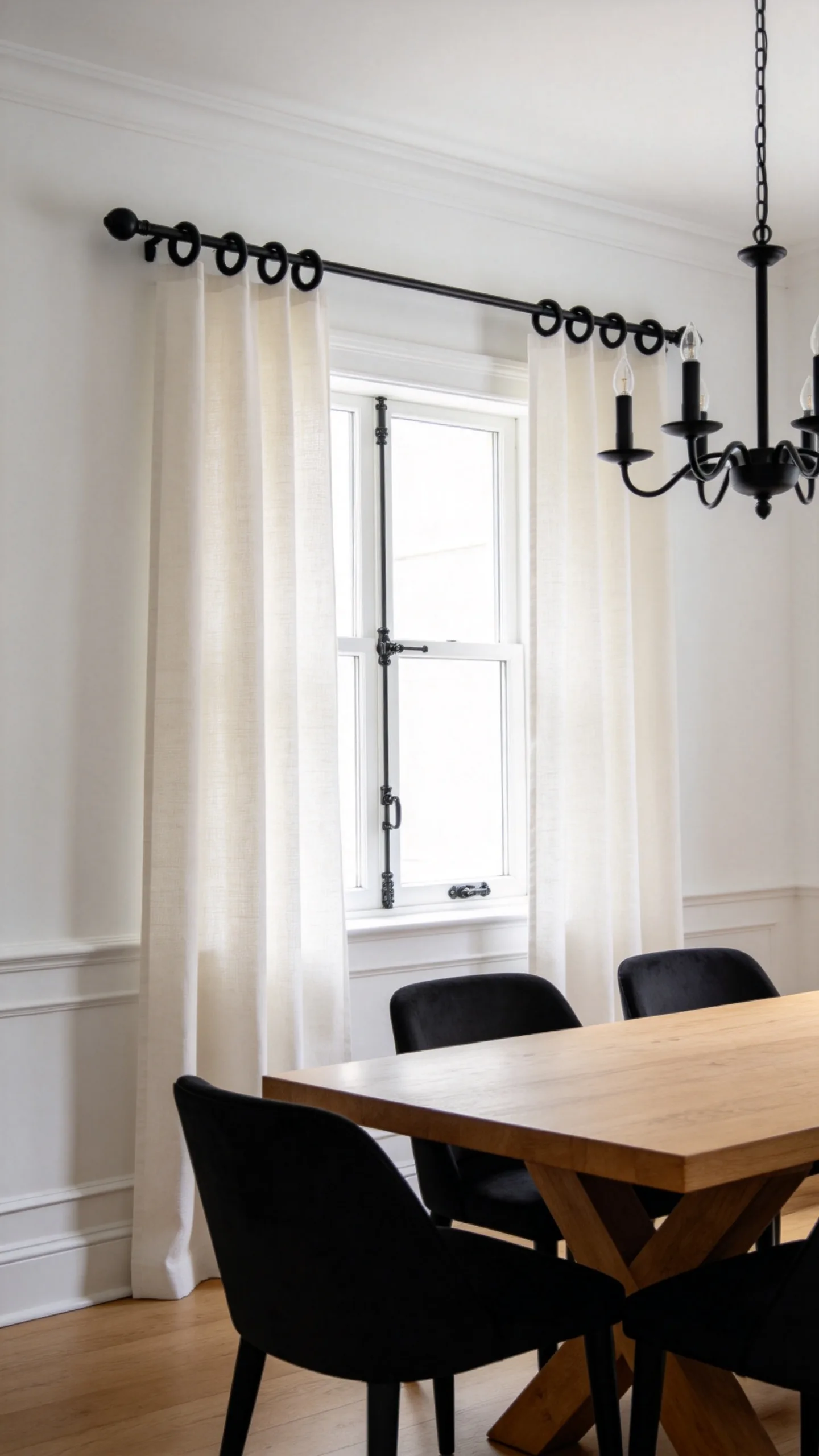
A black curtain rod can sharpen the look of a dining room, especially when the space includes black dining chairs, a black chandelier, dark picture frames, or black cabinet hardware on a nearby built-in. The rod acts like a thin outline that gives the window more structure.
Pair black hardware with linen, cotton, velvet, or patterned panels. The contrast looks crisp against white or light neutral walls, and it can make simple curtains feel more intentional.
Use rings if you want a classic look and easy movement. For a cleaner finish, choose a slim rod with simple end caps rather than large decorative finials that may distract from the dining room table or artwork.
11. Tone-on-Tone Curtains for a Calm Finished Look
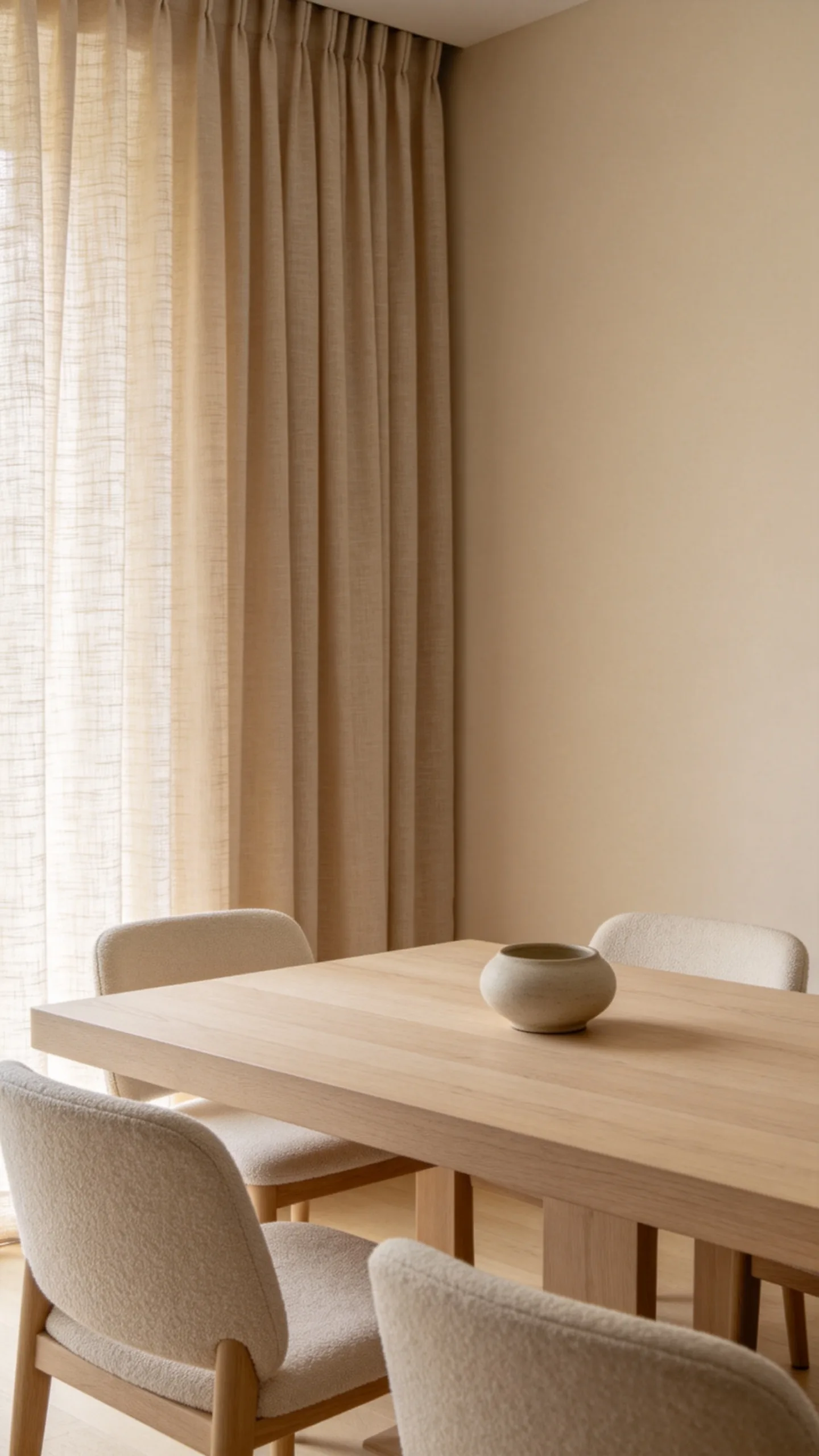
Tone-on-tone curtains create a polished dining room without strong contrast. This approach works by choosing curtain fabric that is close to the wall color, such as ivory curtains on warm white walls, beige curtains on tan walls, or pale gray curtains on soft gray walls.
The effect is subtle but powerful: the window looks finished, yet the room still feels open and calm. This is helpful in smaller dining rooms where high contrast panels might visually chop up the wall.
Add interest through texture instead of bold color. Linen slubs, woven cotton, subtle herringbone, or a small tonal stripe can keep the curtains from looking flat while preserving the soft overall palette.
12. Striped Curtains to Add Height and Rhythm
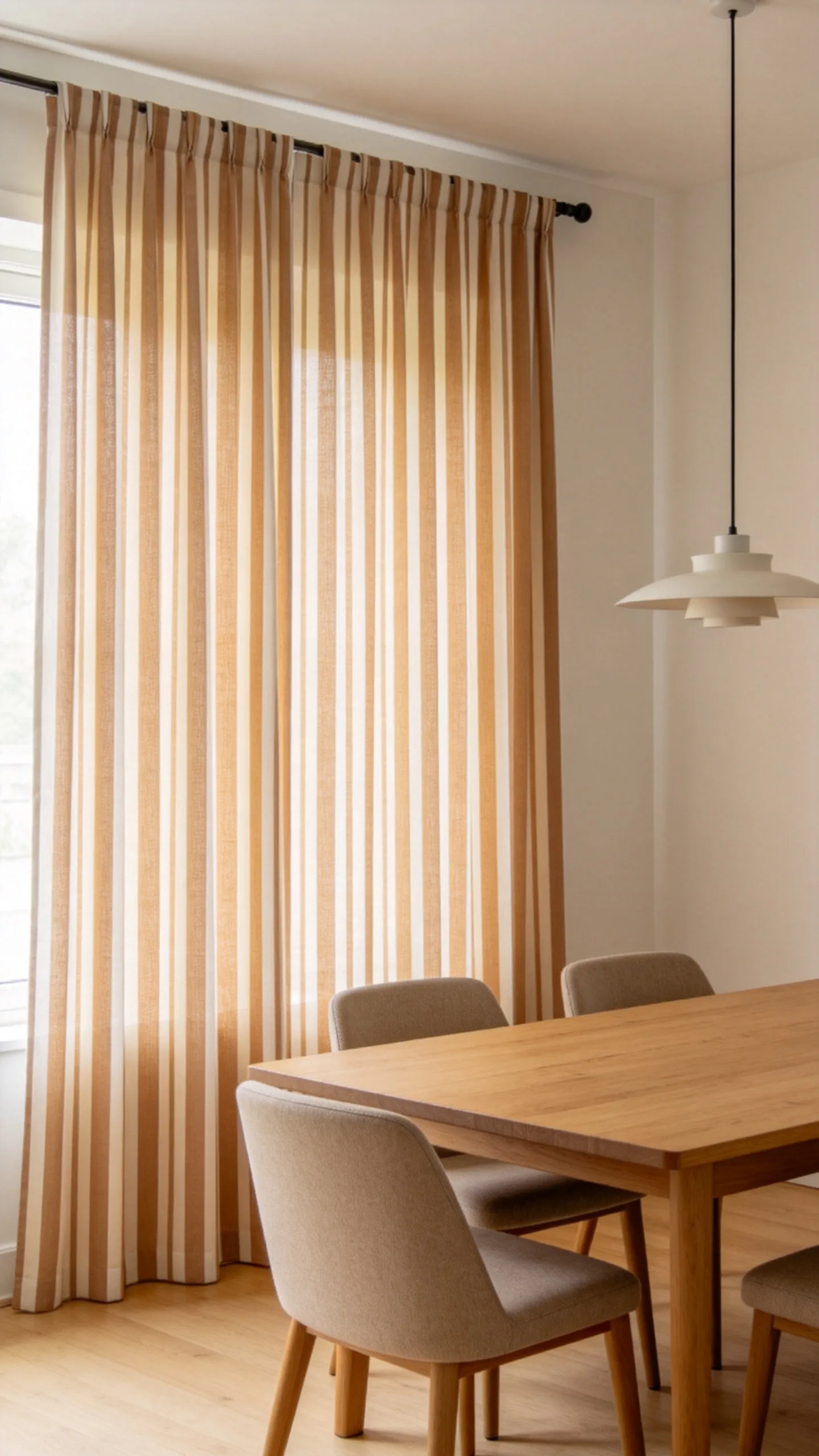
Striped curtains can make a dining room feel taller and more orderly. Vertical stripes naturally draw the eye upward, which is useful in rooms with standard-height ceilings or windows that feel squat.
Choose thin ticking stripes for a casual cottage look, wider cabana stripes for a bolder statement, or muted woven stripes for a more tailored dining room. Keep the stripe colors connected to the rest of the room, such as navy with blue upholstered chairs or tan with a natural wood table.
Hang striped curtains carefully so the pattern falls straight. Uneven hems or poorly spaced panels are more noticeable with stripes, so full-length panels and sturdy hardware make a big difference.
13. Moody Curtains Against Dark Dining Room Walls
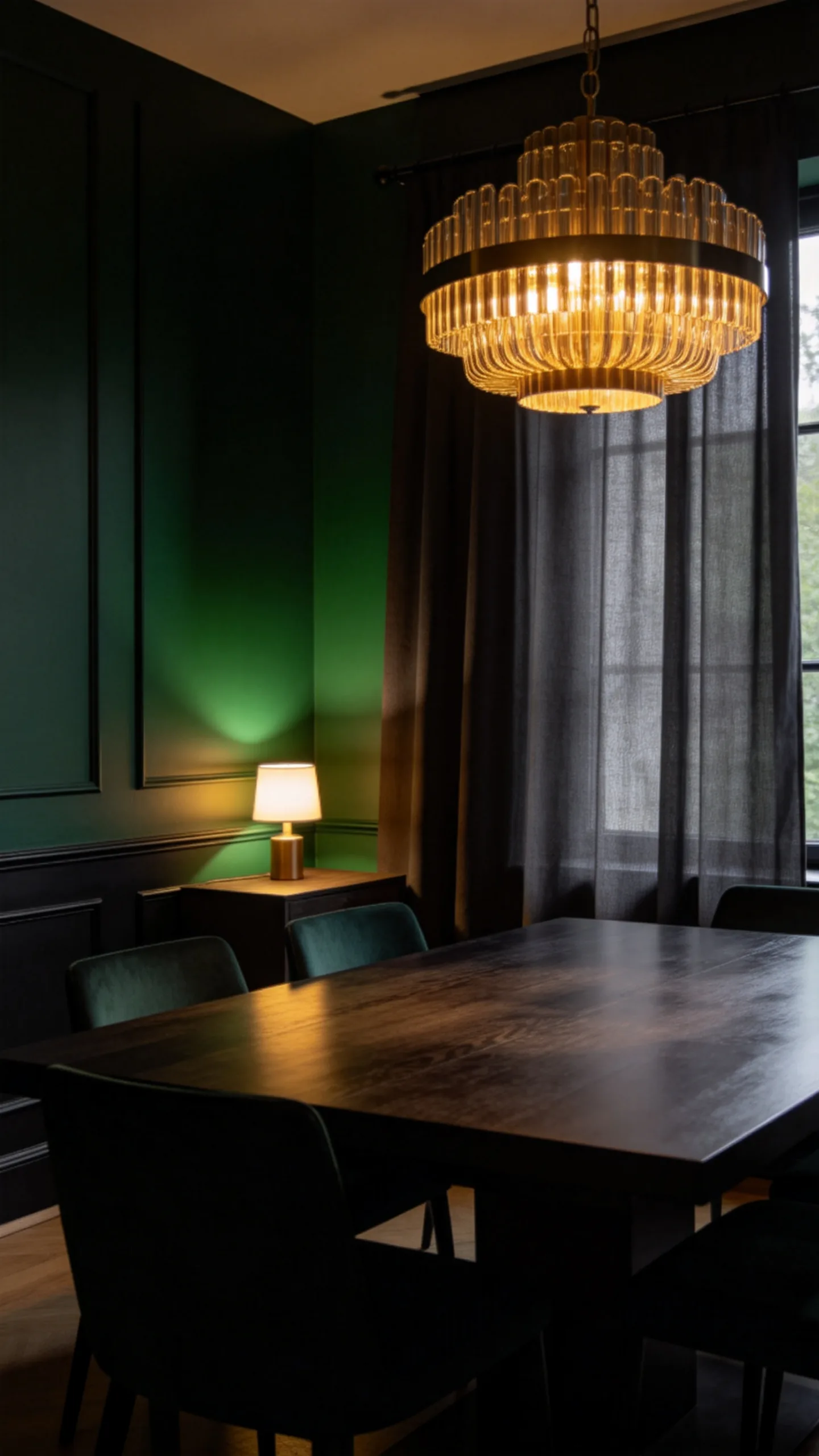
Dark walls can make a dining room feel cozy, but bare windows may look unfinished against a moody paint color. Curtains in a coordinating deep tone help complete the room and soften the contrast around the glass.
Try charcoal curtains on black-green walls, navy curtains on deep blue walls, or chocolate brown curtains on warm plum or espresso walls. This creates a layered look instead of a harsh outline around the window.
Add warm lighting to balance the depth of the fabric and wall color. A chandelier with dimmable bulbs, picture lights over art, or a small lamp on a sideboard can keep the dining room inviting rather than heavy.
14. Light Neutral Curtains for a Dark Wood Dining Set
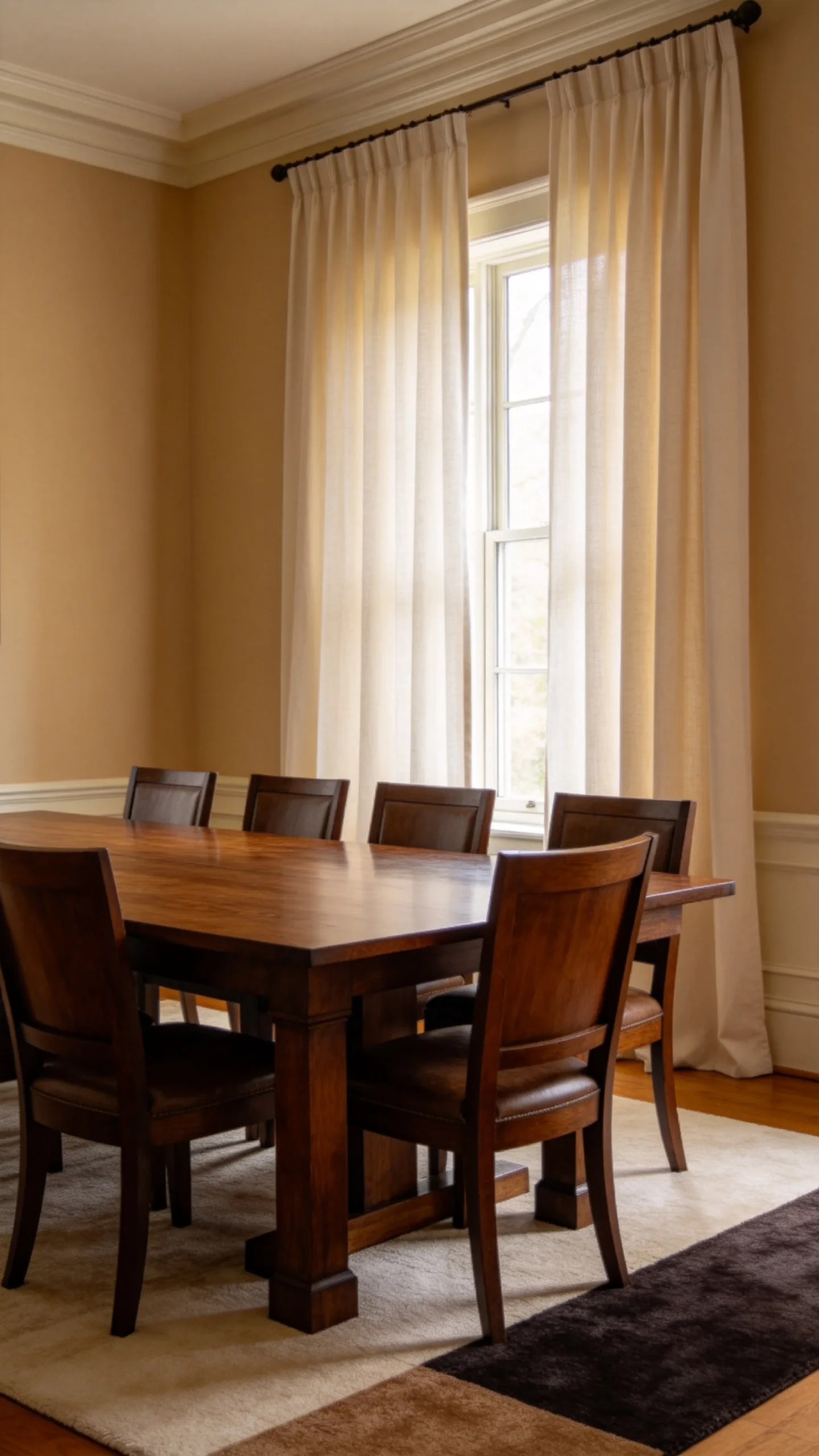
A dark wood dining table and chairs can feel visually heavy, especially in a smaller room. Light neutral curtains help balance that weight by adding softness and brightness around the window.
Choose ivory, oatmeal, flax, or warm beige rather than stark white if the furniture has cherry, walnut, mahogany, or espresso tones. The warmer undertone will feel more connected to the wood.
Use generous fabric fullness so the curtains do not look thin beside substantial furniture. A rug with both light and dark tones can bridge the contrast between the pale curtains and the deeper dining set.
15. Printed Botanical Curtains for a Garden-Inspired Dining Room
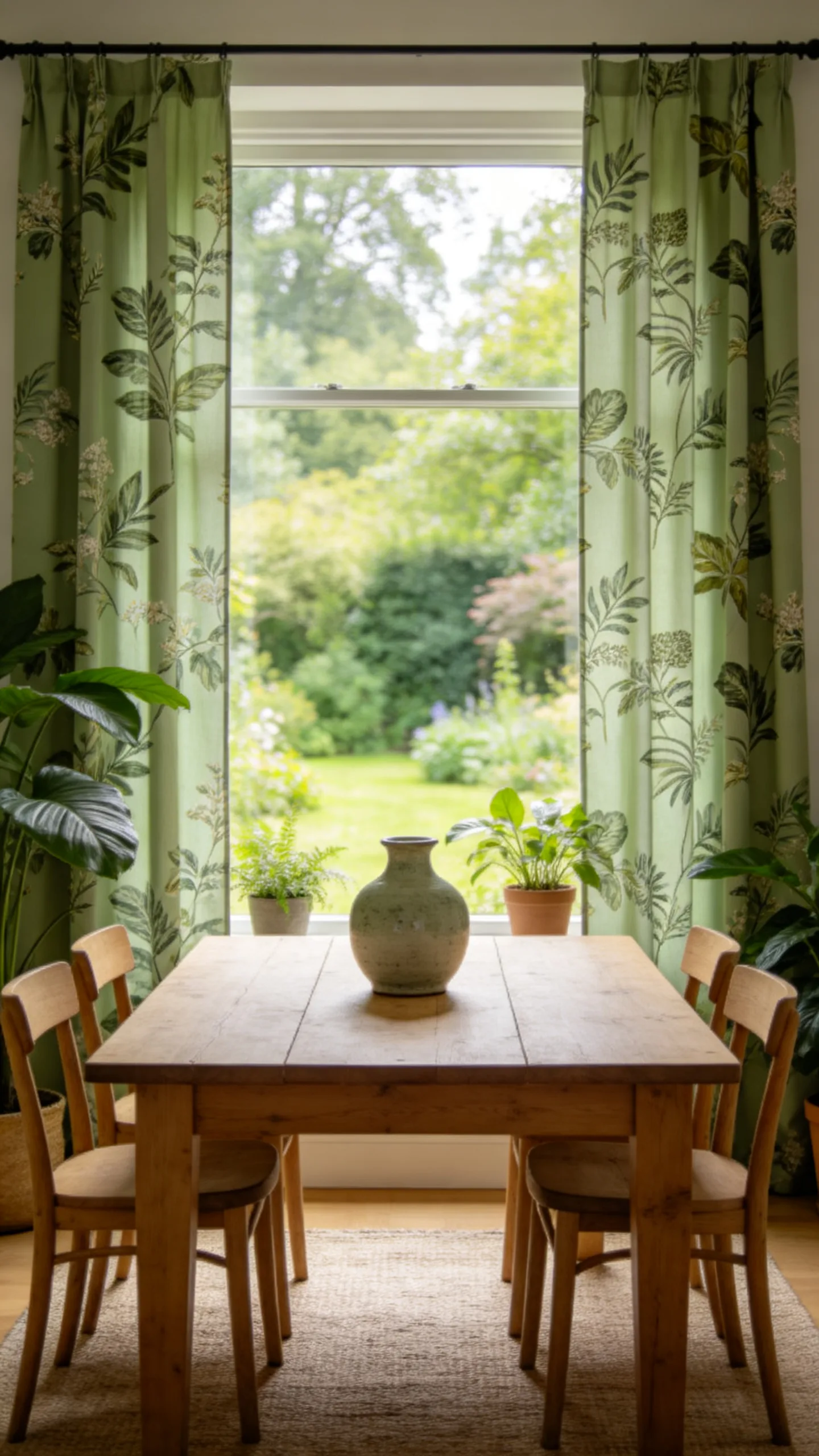
Botanical curtains can make a dining room feel fresh, collected, and connected to the outdoors. Leaf, vine, floral, or branch patterns work particularly well near windows with garden views, houseplants, or natural wood furniture.
For a soft look, choose botanical prints in muted green, blue, cream, or taupe. For a more dramatic dining room, try oversized florals on a dark background paired with simple chairs and solid table linens.
Keep nearby artwork and rug patterns quieter so the curtains can be the decorative feature. A ceramic vase, woven tray, or linen runner can echo the natural theme without making the room feel overly themed.
16. Extra-Wide Curtains for a Larger Window Illusion
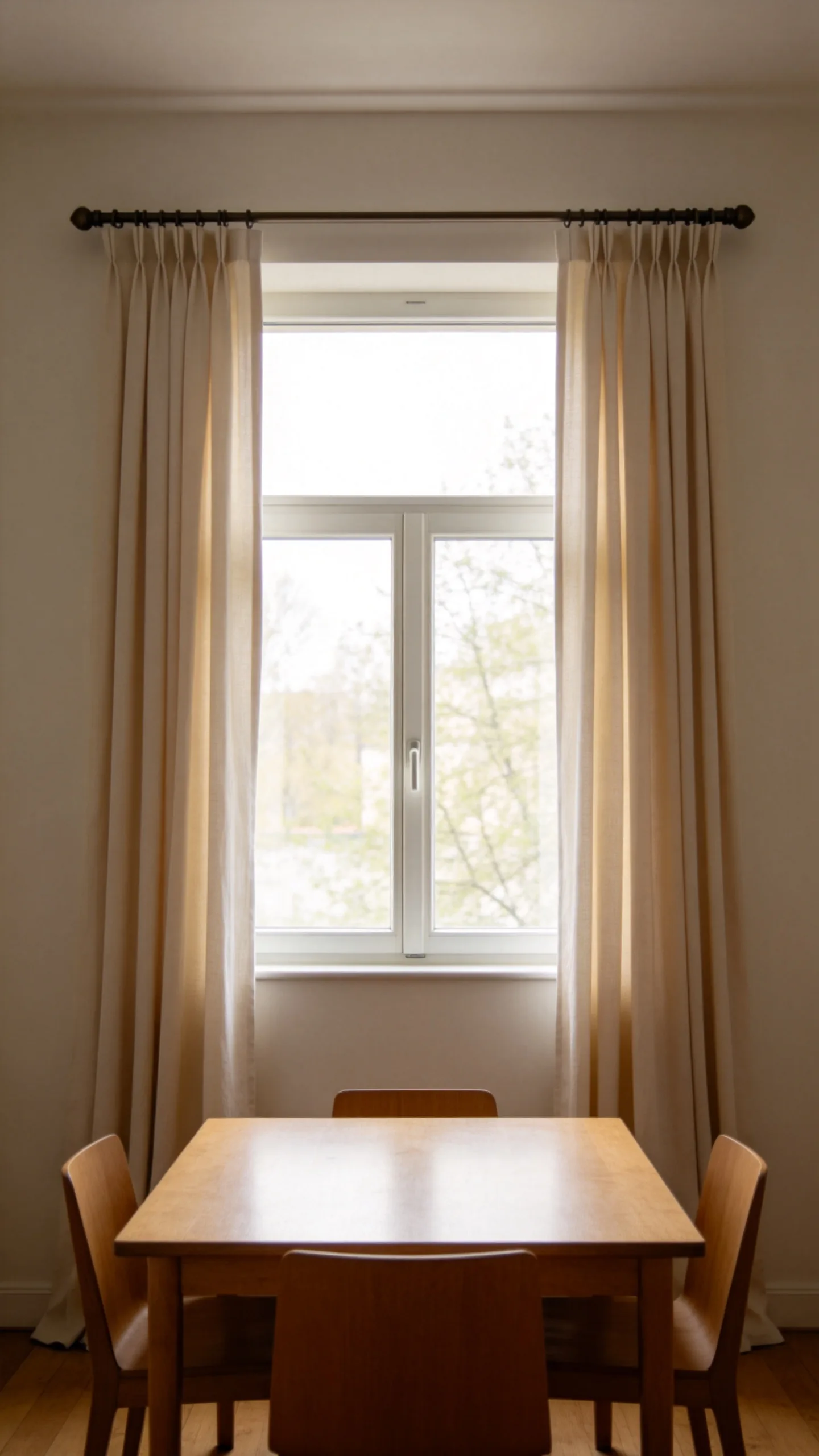
If a dining room window feels too small for the wall, extend the curtain rod well beyond the frame and use extra-wide panels. This makes the window appear broader and gives the wall a more balanced focal point.
The trick works especially well behind a dining table, where the window often anchors the room. When the panels hang mostly outside the glass, they create the illusion of a larger opening while allowing more natural light to enter.
Choose enough fabric so the curtains look full even when pulled closed. Flat, narrow panels can make the window look undersized again, while generous fullness adds the finished look that dining rooms often need.
17. Matching Curtain and Chair Fabric Accents
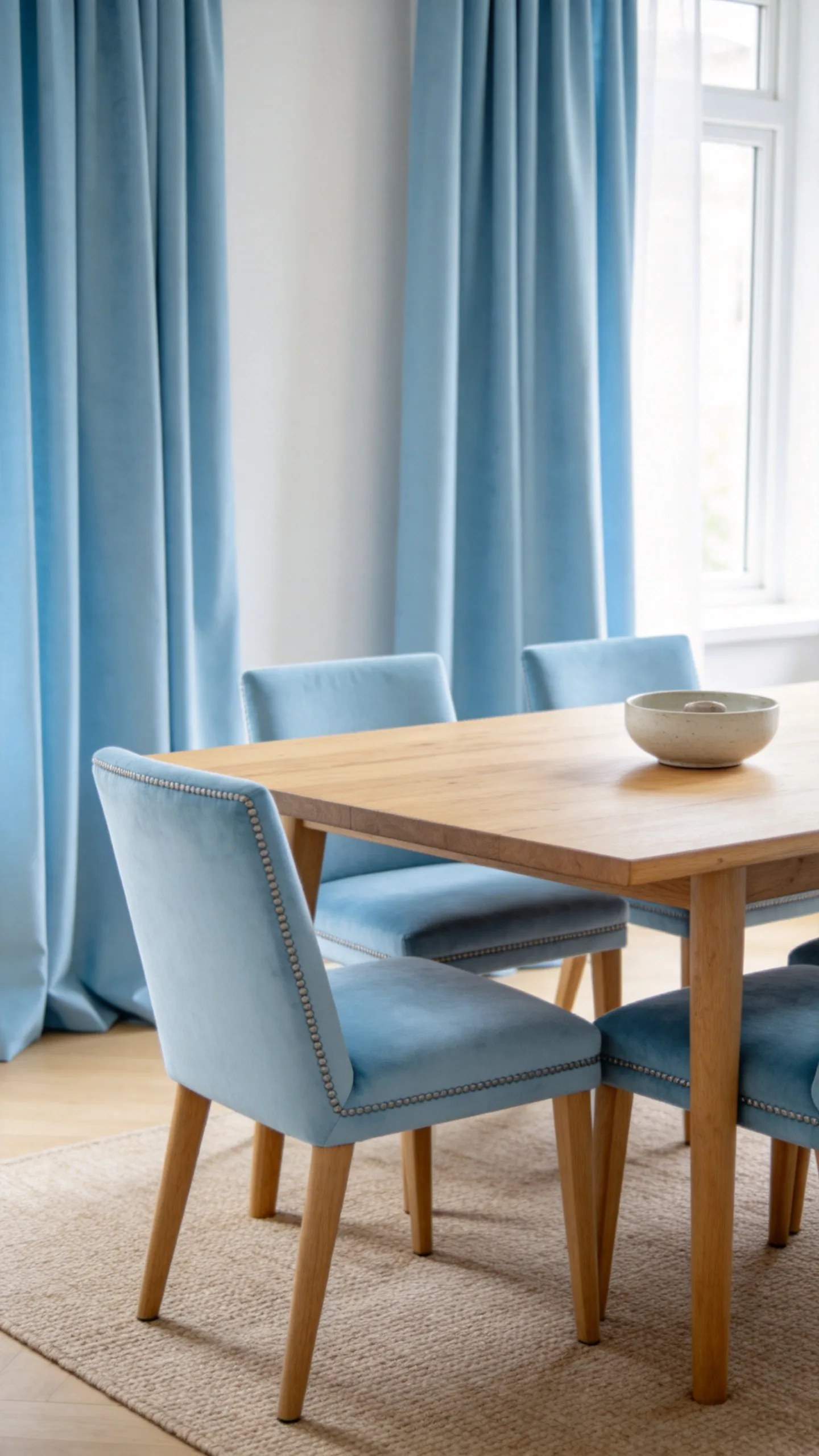
Coordinating curtain fabric with dining chair details can make the room feel thoughtfully planned. This does not mean everything needs to match exactly; even a shared color can create a cohesive look.
For example, blue curtains can connect to blue chair cushions, green patterned panels can echo a green welt on upholstered chairs, or neutral linen curtains can match a bench cushion under the window. This approach is useful when the dining area is open to a living room or kitchen and needs a clear visual identity.
Keep larger furniture pieces simple if the fabric pattern is noticeable. A wood table, plain rug, and simple centerpiece will let the coordinated textiles feel intentional rather than busy.
18. Cream Curtains with Brass Hardware for Warm Elegance
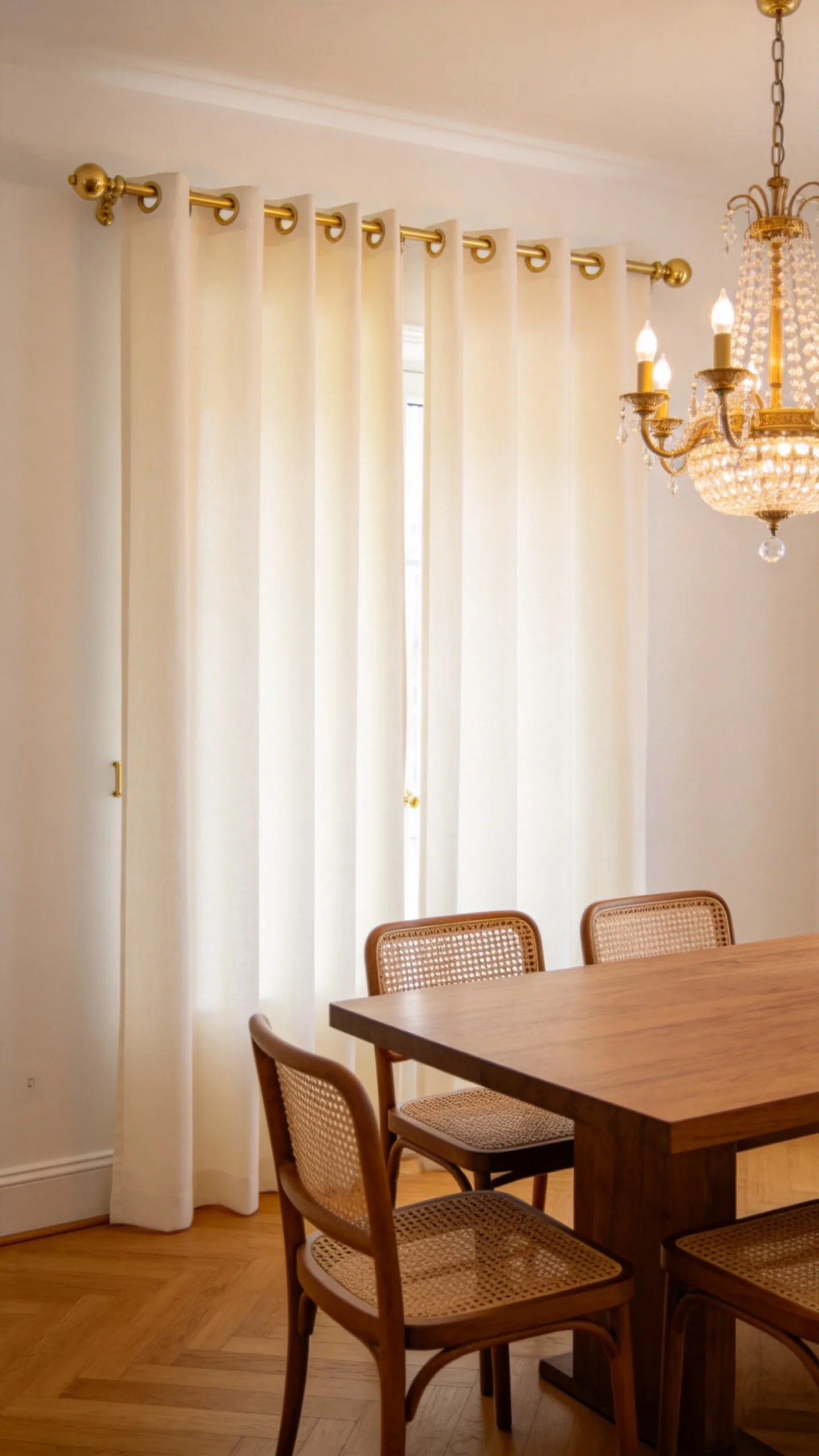
Cream curtains paired with brass hardware create a warm, finished look that works in many dining room styles. The brass adds a little shine, while the cream fabric keeps the room soft and inviting.
This combination is especially effective with warm white walls, oak floors, walnut tables, cane chairs, and classic chandeliers. It can also soften a dining room with black accents by adding warmth near the window.
Choose a brass rod with simple rings or understated finials. If the room already has brass lighting or cabinet pulls nearby, matching the curtain hardware helps the entire space feel connected.
19. Color-Blocked Curtains for a Subtle Custom Look
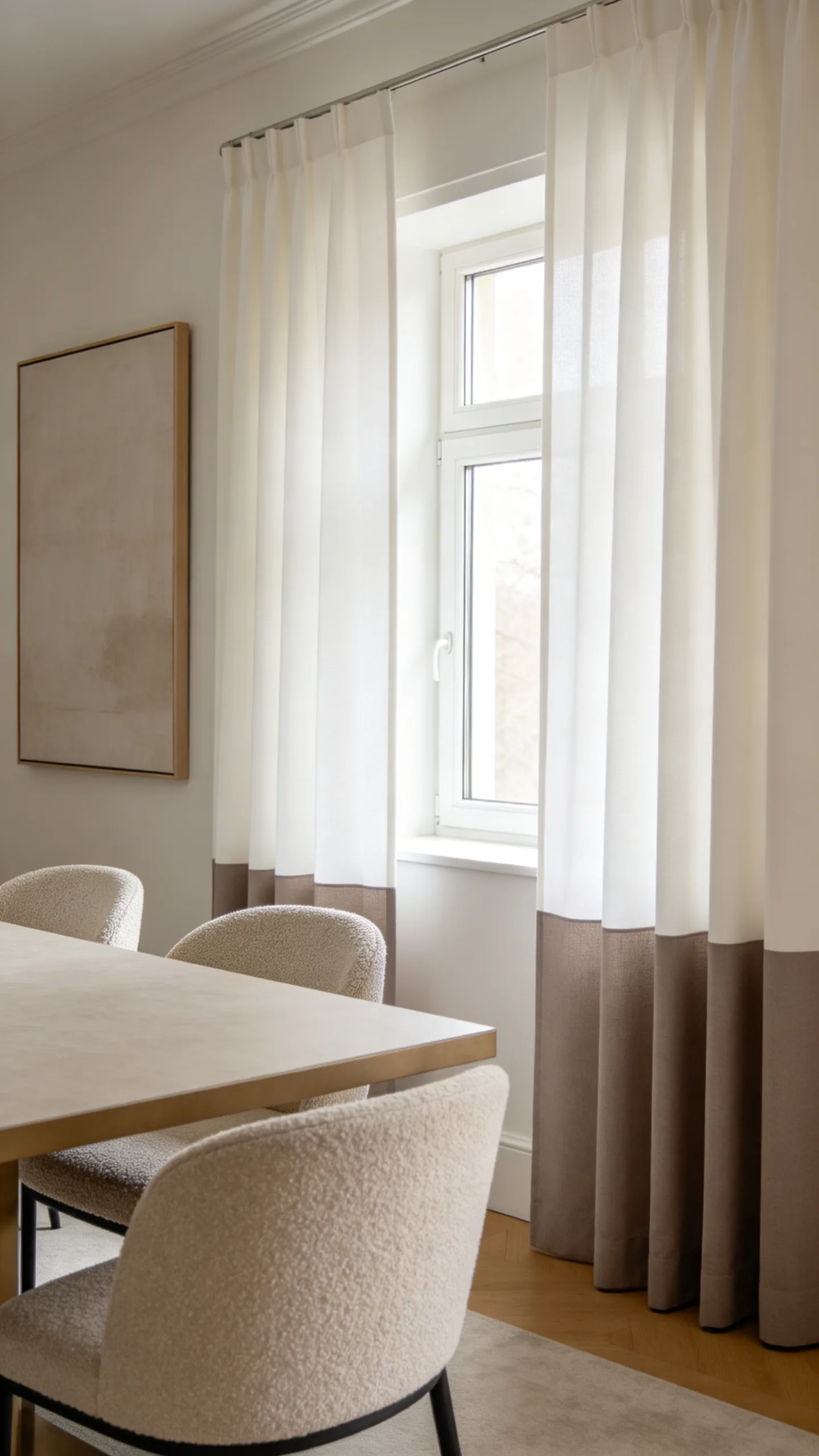
Color-blocked curtains add interest without relying on a busy pattern. They work well in dining rooms that need a focal point but already have a patterned rug, textured chairs, or detailed artwork.
A light upper section with a darker lower band can ground the curtains near the floor. A vertical color block along the leading edge can frame the window and add contrast when the panels are open.
Choose colors from the existing dining room palette. For example, ivory curtains with a taupe border can suit a neutral room, while cream panels with a navy or olive edge can connect to upholstered chairs or a painted sideboard.
20. Short Curtains for Windows Above Built-Ins or Radiators
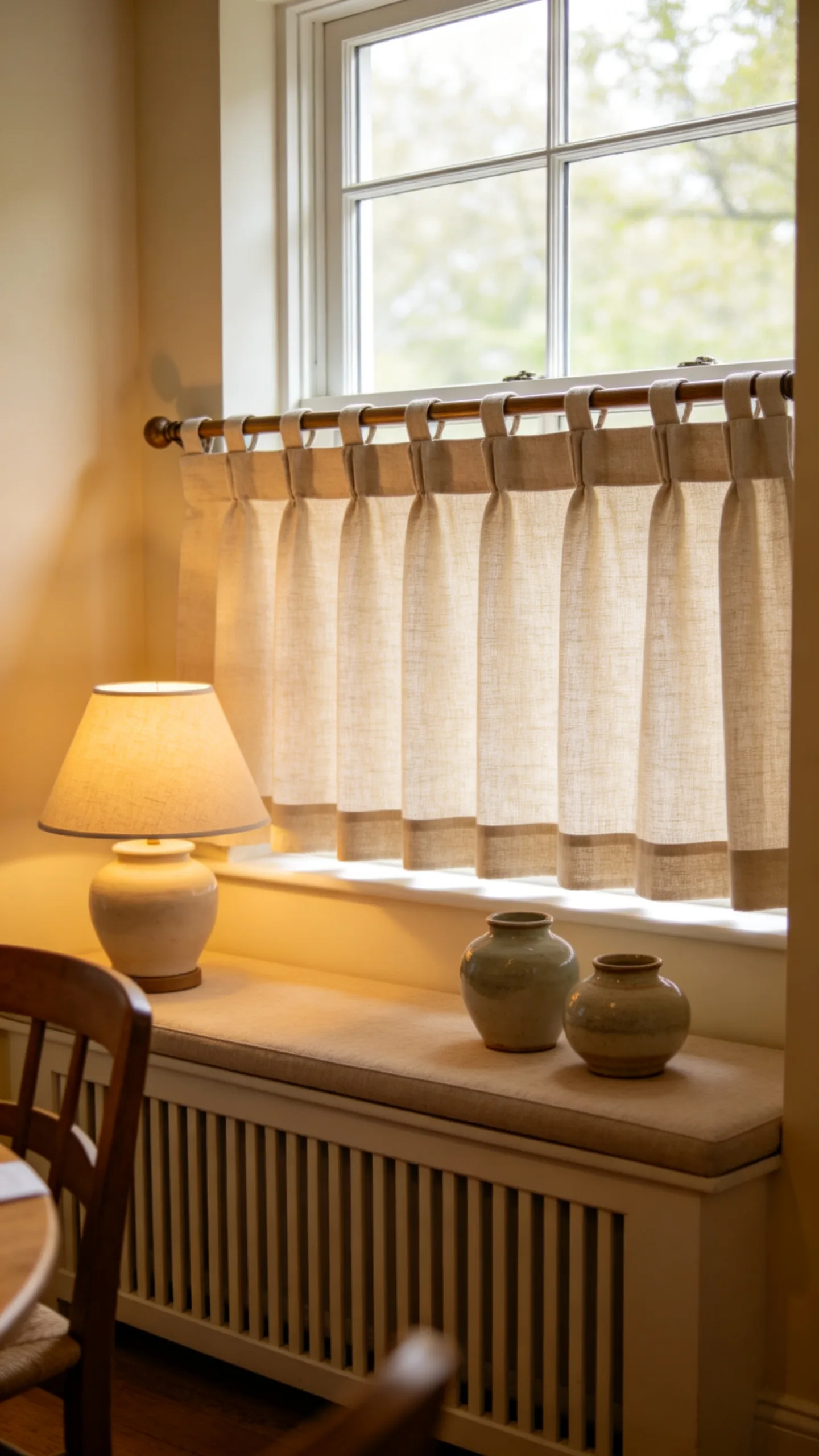
Not every dining room can handle floor-length curtains. If the window sits above a radiator, built-in bench, cabinet, or sideboard, short curtains can still look finished when they are chosen intentionally.
Use tailored sill-length or apron-length panels rather than random short curtains that look like the wrong size. Fabric should relate to the room’s style, such as linen for casual dining, a small print for cottage charm, or a structured cotton blend for a cleaner look.
Keep the hem neat and the rod properly scaled to the window. Short curtains look best when they appear purposeful and when the area below the window is styled with a lamp, artwork, storage baskets, or a simple tabletop vignette.
21. Curtains That Match the Wall Trim
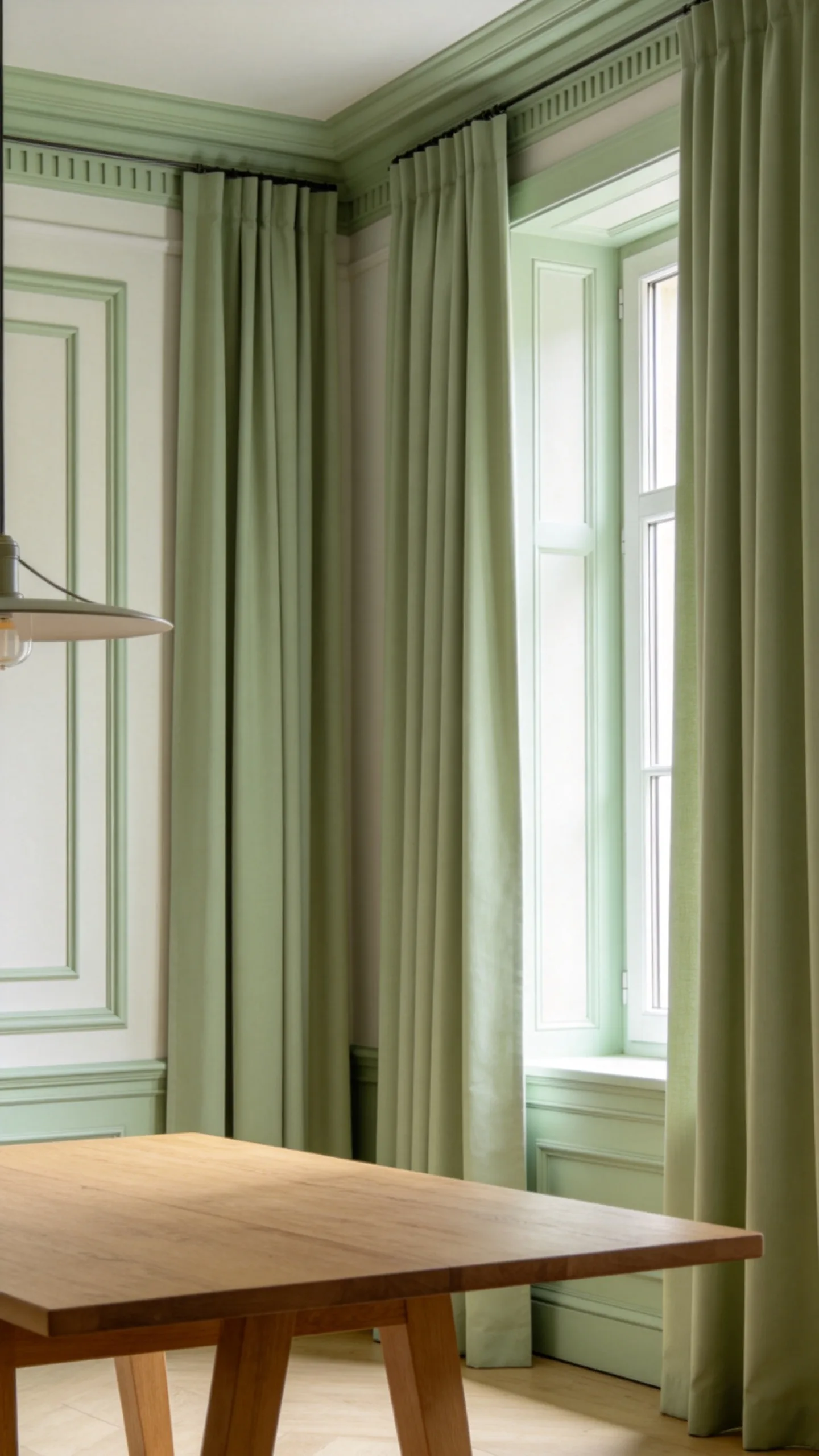
Matching curtains to the wall trim can make a dining room feel crisp and architectural. This idea works particularly well in rooms with wainscoting, crown molding, picture-frame molding, or painted window casings.
If the trim is white, ivory curtains can soften the contrast between the window and the wall. If the trim is a color, such as sage, charcoal, taupe, or blue-gray, curtains in a similar shade can create a more custom look.
Use this approach when you want the room’s millwork, table, lighting, or artwork to be the star. The curtains support the design instead of pulling attention away from other focal points.
22. Soft Blue Curtains for a Serene Dining Space
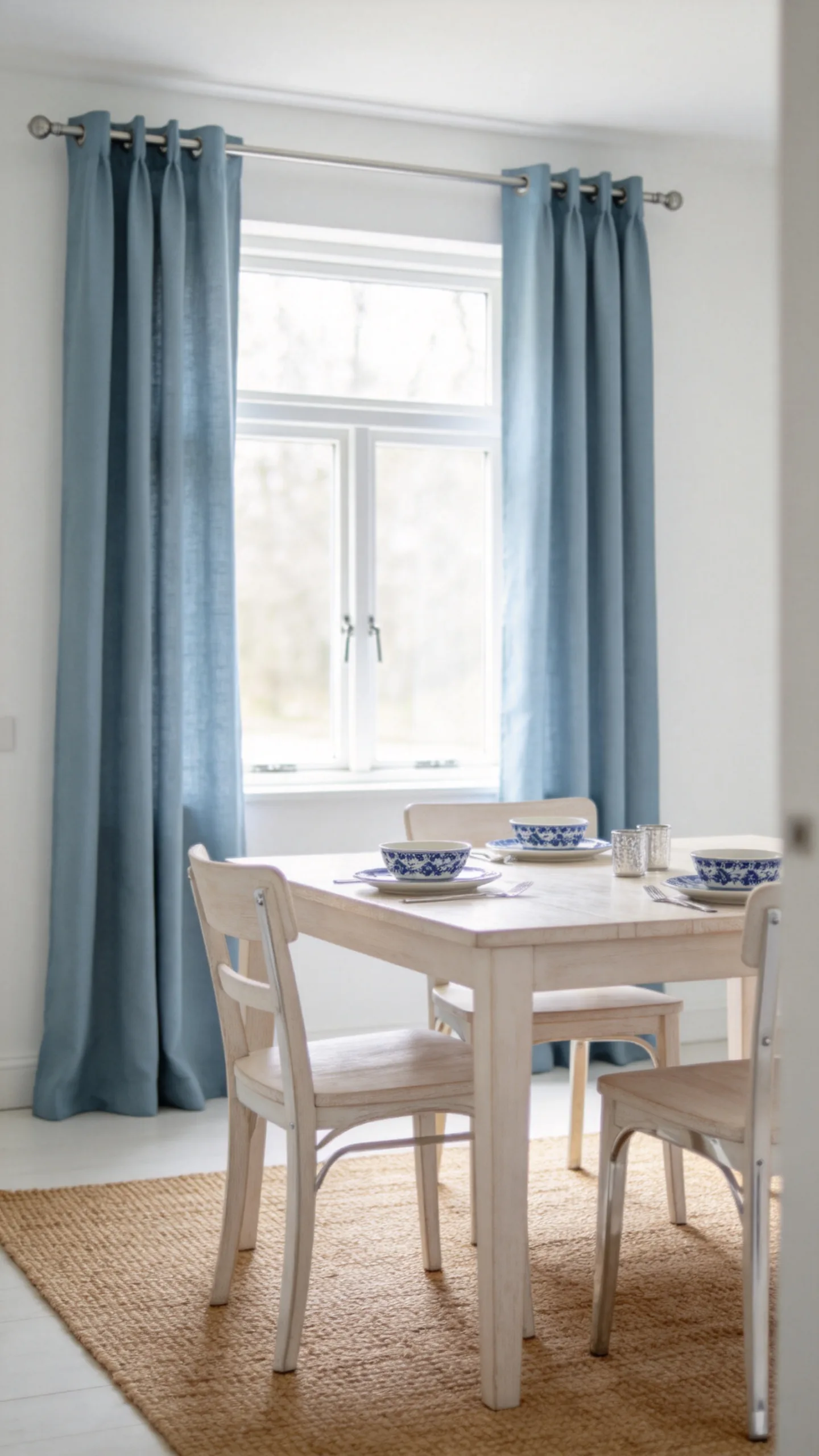
Soft blue curtains can make a dining room feel calm, fresh, and welcoming. They pair especially well with white walls, pale wood furniture, blue-and-white dishes, nickel hardware, and coastal or traditional accents.
Choose dusty blue, chambray, blue-gray, or muted slate instead of bright primary blue for a more finished look. These softer shades blend easily with neutral rugs, natural fibers, and classic table settings.
Blue curtains are also useful when the dining room needs a hint of color but the homeowner wants to avoid anything too bold. The color feels noticeable at the window while still keeping the overall room peaceful.
23. Earth-Tone Curtains for Warmth Around the Table
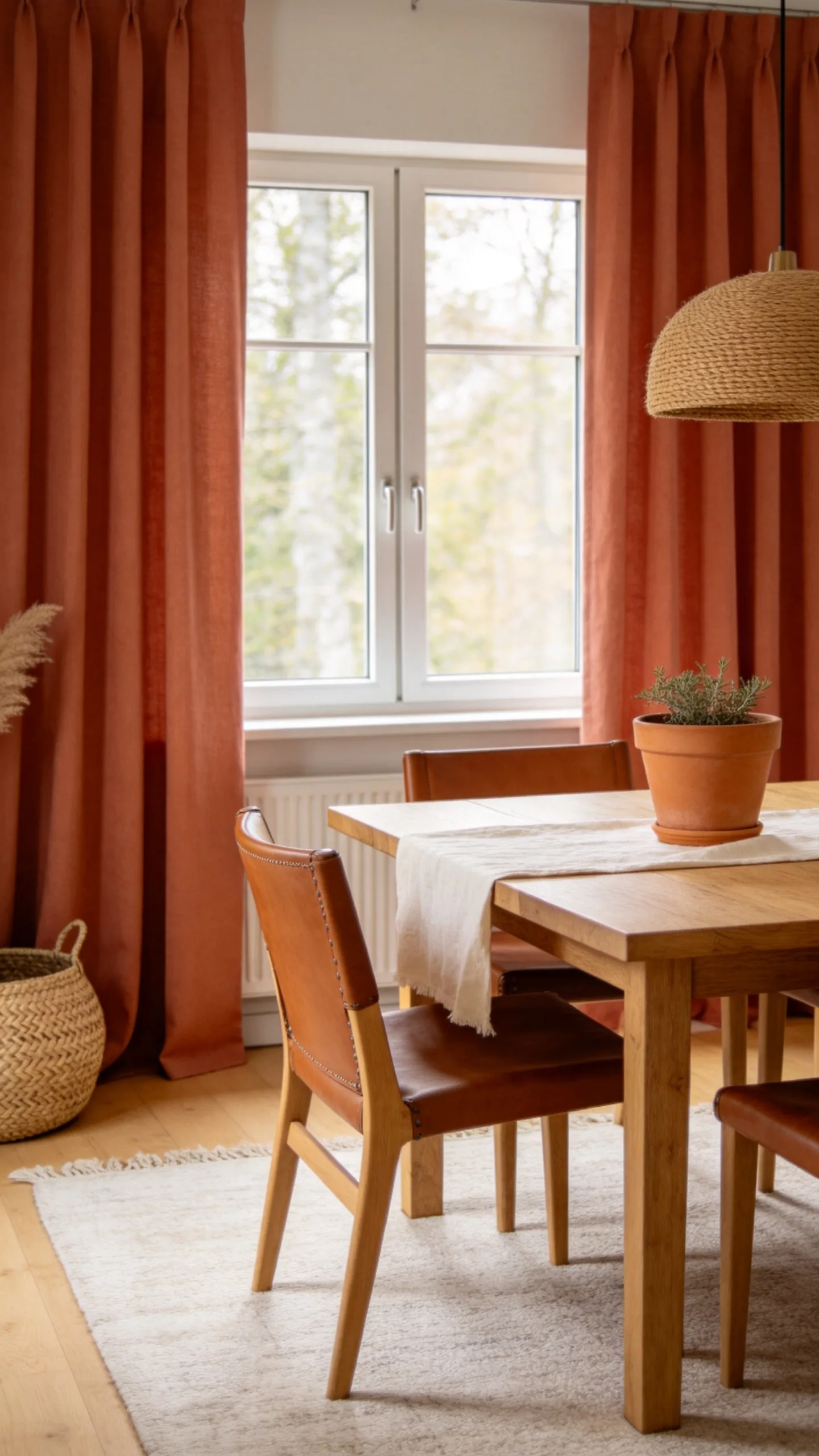
Earth-tone curtains can make a dining room feel grounded and inviting. Colors like clay, camel, olive, rust, ochre, and warm brown work beautifully with wood tables, terracotta planters, woven shades, leather chairs, and vintage rugs.
Use these colors to warm up dining rooms with white walls, gray floors, or minimal furniture. Even simple curtain panels in a muted earthy tone can make the room feel less bare and more connected.
Balance deeper earth tones with lighter elements, such as cream table linens, a pale rug, or white ceramic dishes. This keeps the space warm without making it feel visually heavy.
24. Double Curtain Rods for Flexible Light and Privacy
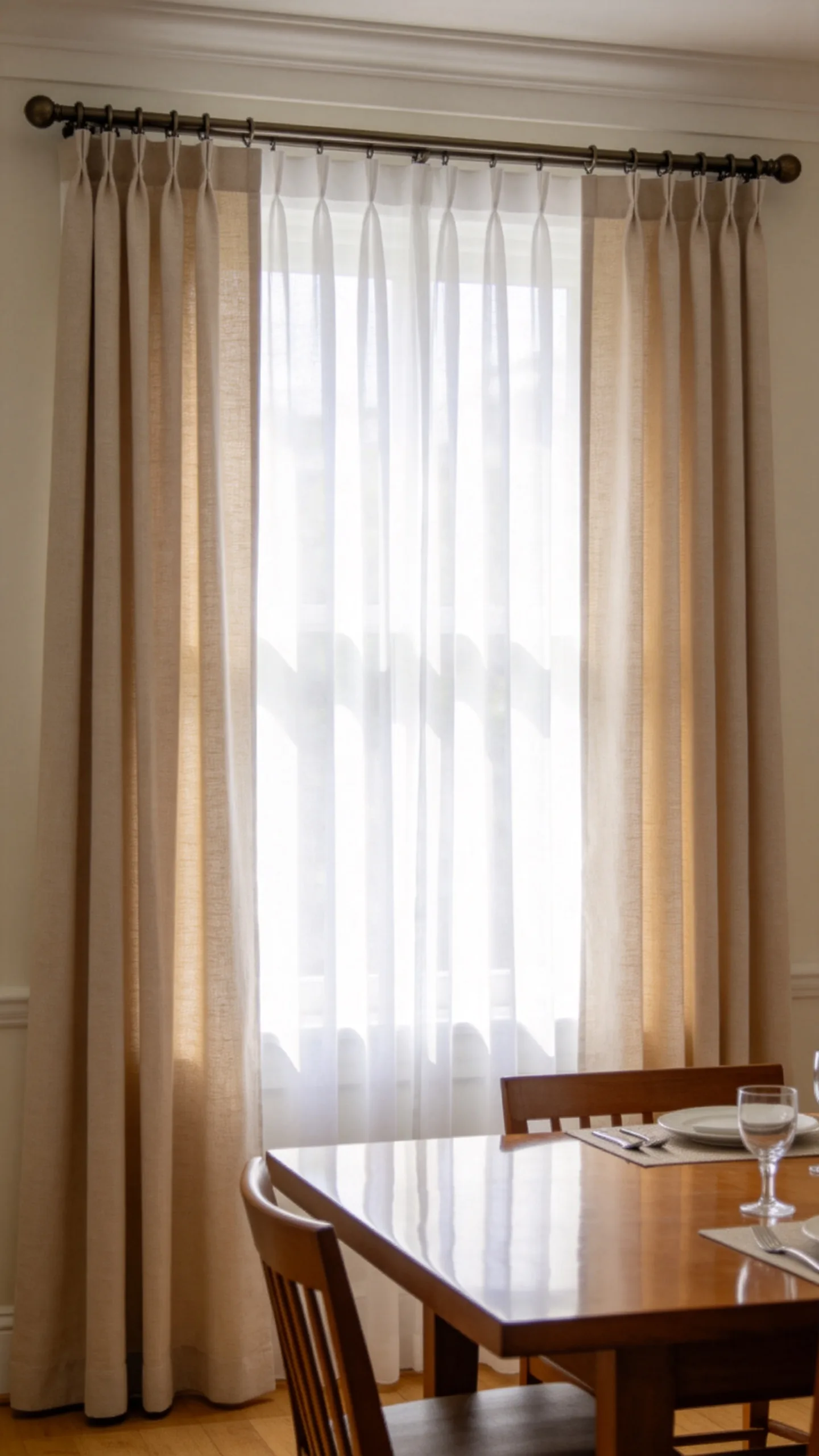
A double curtain rod lets you layer sheer curtains behind heavier panels, which gives the dining room more flexibility throughout the day. The sheers can stay closed during breakfast or lunch to soften glare, while the outer panels can close at night for privacy.
This setup is practical for dining rooms that face a street, patio, or neighboring home. It also creates a fuller, more finished window treatment than a single layer alone.
Keep the layers coordinated so the window does not feel cluttered. White sheers with linen panels, ivory sheers with velvet panels, or soft gray sheers with patterned outer curtains can all work depending on the room’s color palette.
25. Full Wall Curtains Behind the Dining Table
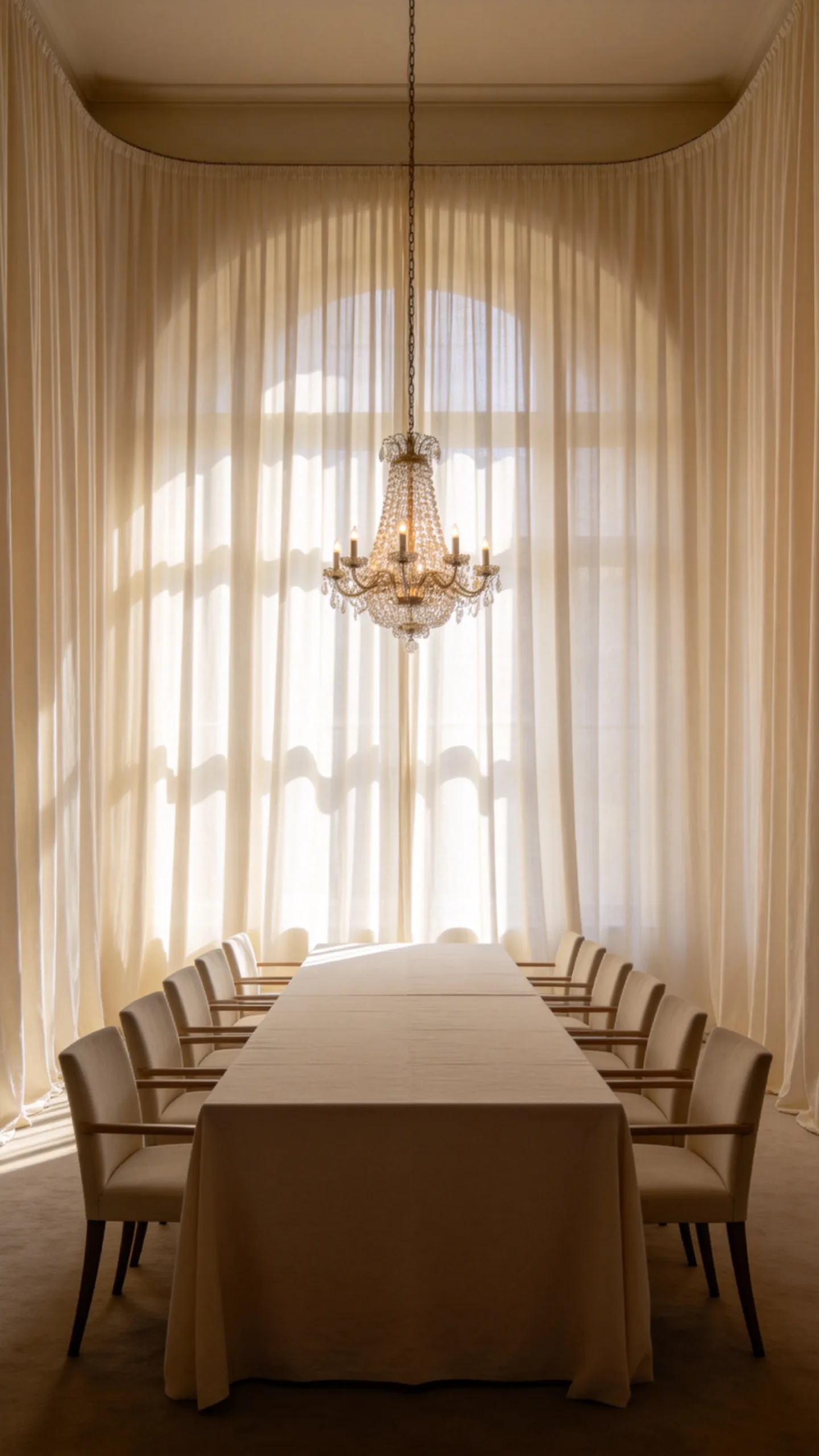
Full wall curtains can make a dining room feel dramatic, cohesive, and complete, especially when the window wall looks uneven or has off-center glass. By covering the entire wall with fabric, you create one large backdrop behind the dining table.
This idea works well with rectangular tables, banquettes, and dining rooms where the window is the main focal point. A continuous curtain wall can hide awkward window proportions, soften echoes, and make the room feel more intimate during evening meals.
Choose a fabric that suits the scale of the wall. Light linen keeps the look airy, velvet adds drama, and a subtle woven texture creates depth without overwhelming the dining furniture. Use enough panels so the fabric hangs with fullness from one side of the wall to the other.

From the editors
Decor Compass Editorial Team
We turn practical home research into clear, useful room-by-room ideas.