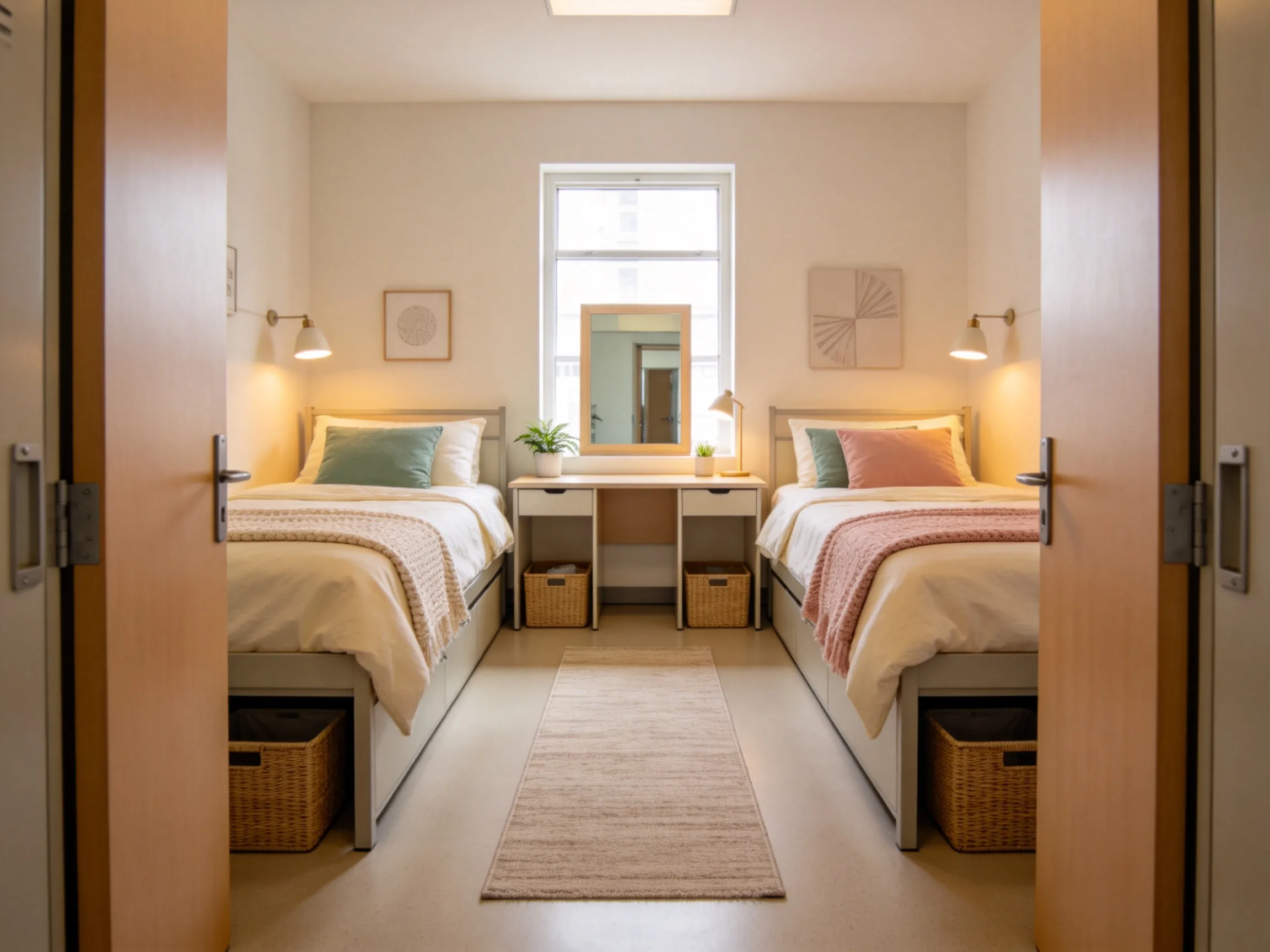
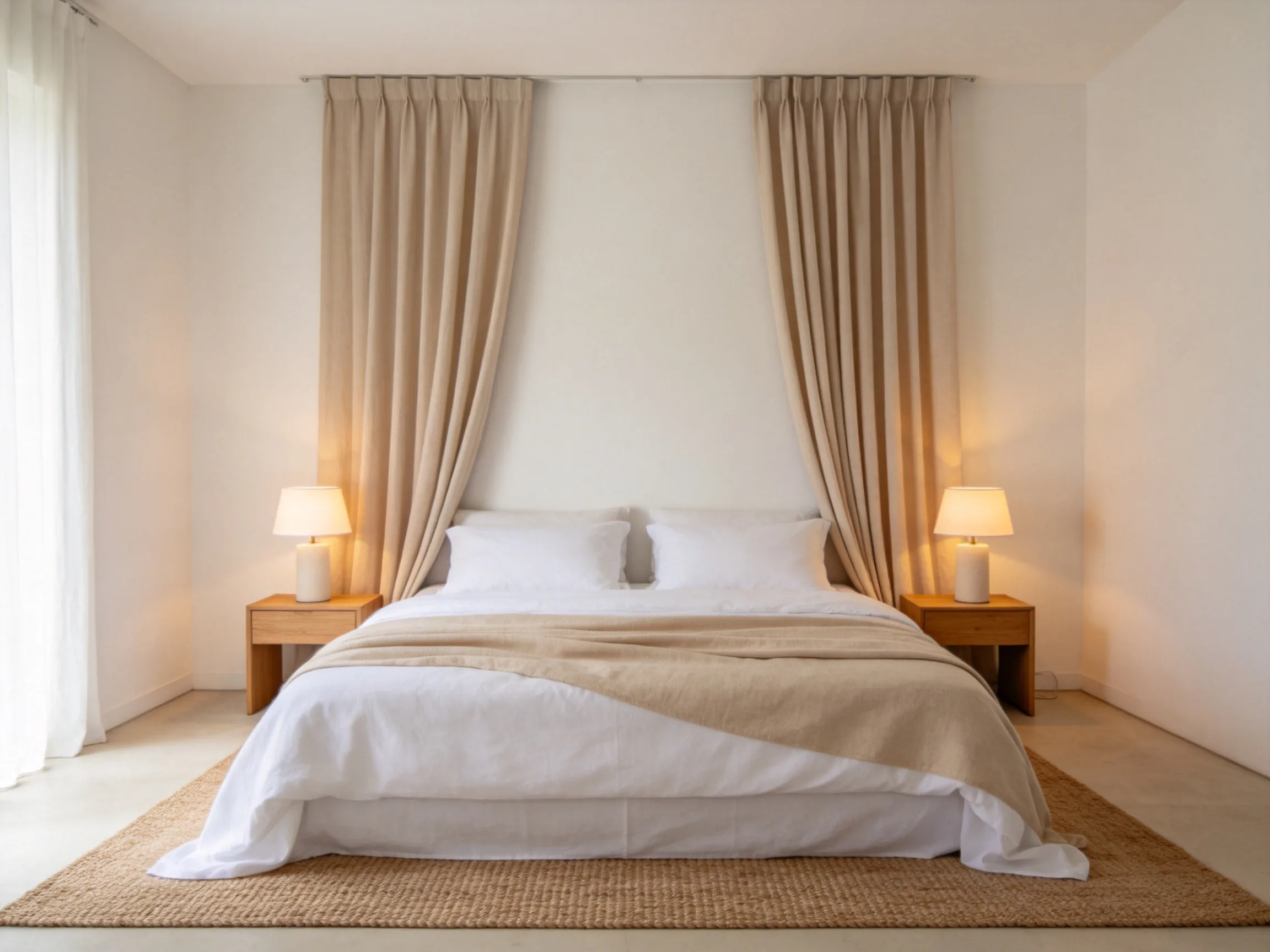
A curtain headboard is one of the easiest ways to make a plain bed wall look designed without committing to a built-in feature or major renovation. Fabric adds height, softness, color, and texture behind the bed, which can help the whole room feel more finished. These curtain headboard ideas work for bedrooms with blank walls, rental spaces, awkward window placement, low ceilings, or beds without traditional headboards.
1. Floor-to-Ceiling Linen Curtain Headboard
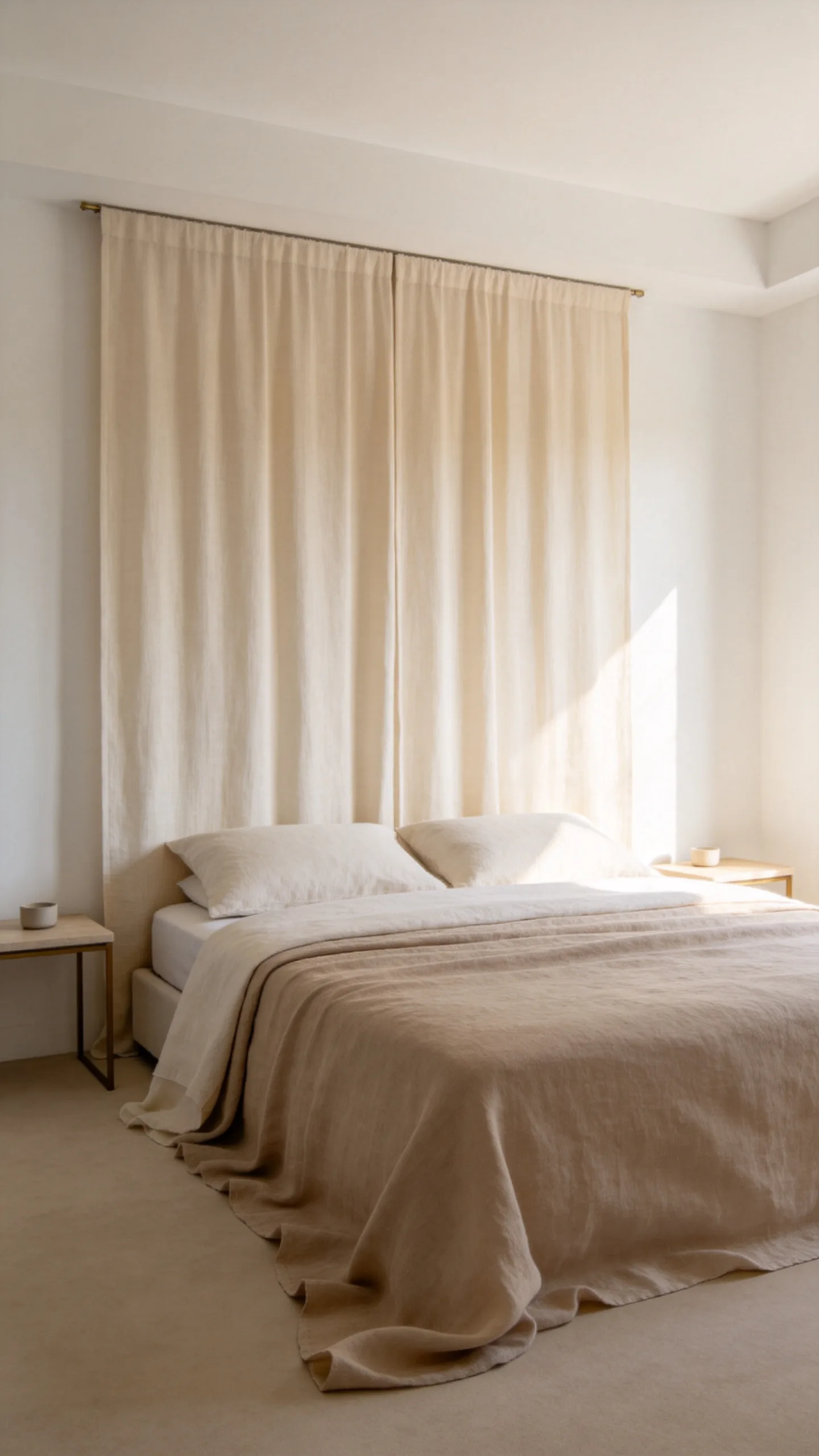
A floor-to-ceiling linen curtain creates a soft, tailored backdrop behind the bed while making the wall look taller. Mount a slim curtain rod or ceiling track several inches above the bed and extend it wider than the mattress so the fabric frames the sleeping area instead of looking like a narrow panel.
Natural linen works especially well in bedrooms with white, cream, beige, greige, or warm gray walls. Choose ivory, oatmeal, flax, or soft taupe panels for a calm look. The fabric should lightly touch the floor or hover just above it to keep the sightline clean and intentional.
This idea is useful when the bed wall feels flat but you do not want a bulky upholstered headboard. The vertical folds draw the eye upward, soften the wall surface, and make the bed feel anchored without taking up much floor space.
2. Velvet Curtain Headboard for a Cozy Statement Wall

Velvet curtains instantly make the bed wall feel richer and more dramatic because the fabric catches light differently throughout the day. Deep green, navy, rust, plum, charcoal, or chocolate velvet can create a strong focal point behind a simple wood or metal bed frame.
Use a sturdy rod or ceiling-mounted track because velvet is heavier than cotton or linen. For a polished look, choose panels that are at least twice the width of the bed wall section so the fabric has full, soft folds even when it is not spread out.
This curtain headboard idea works especially well in bedrooms with warm lamps, brass sconces, dark wood nightstands, or layered bedding. It adds visual weight behind the bed, which helps balance tall ceilings, large blank walls, or minimal furniture.
3. Sheer White Curtain Headboard for an Airy Bedroom
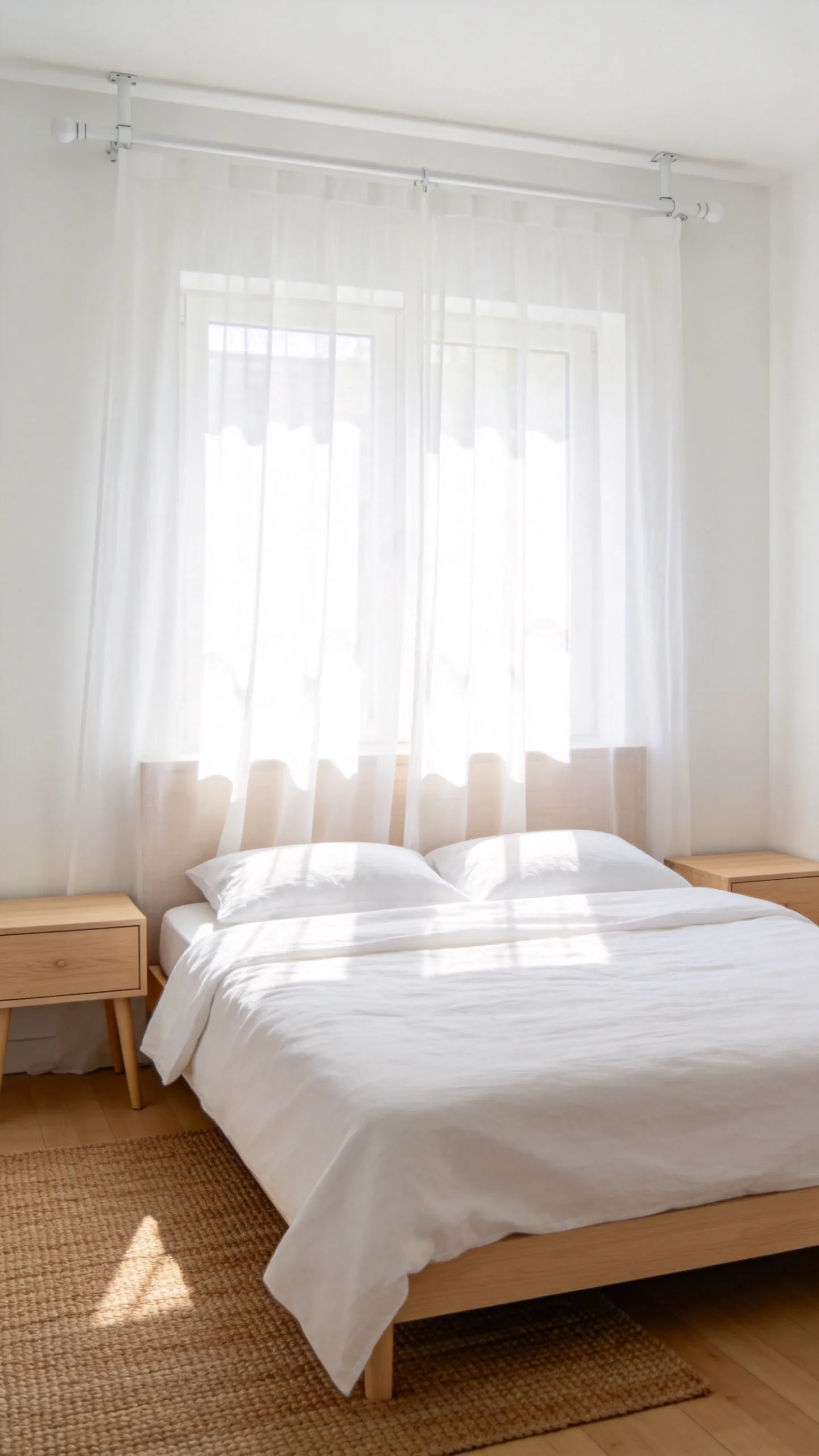
Sheer white curtains make a plain bed wall feel light, soft, and relaxed. They are ideal for small bedrooms because they add texture without visually closing in the room. The translucent fabric keeps the wall from feeling heavy, which helps preserve open sightlines.
Install the sheers on a white ceiling track or a simple white rod so the hardware blends into the wall. Pair the curtain headboard with white bedding, pale wood furniture, and a woven rug for a soft layered look that still feels uncluttered.
This approach is also useful when the bedroom already has strong elements, such as patterned bedding, colorful art, or a dark rug. The sheer curtain adds movement and softness behind the bed without competing for attention.
4. Wall-to-Wall Curtain Headboard Behind the Entire Bed Wall
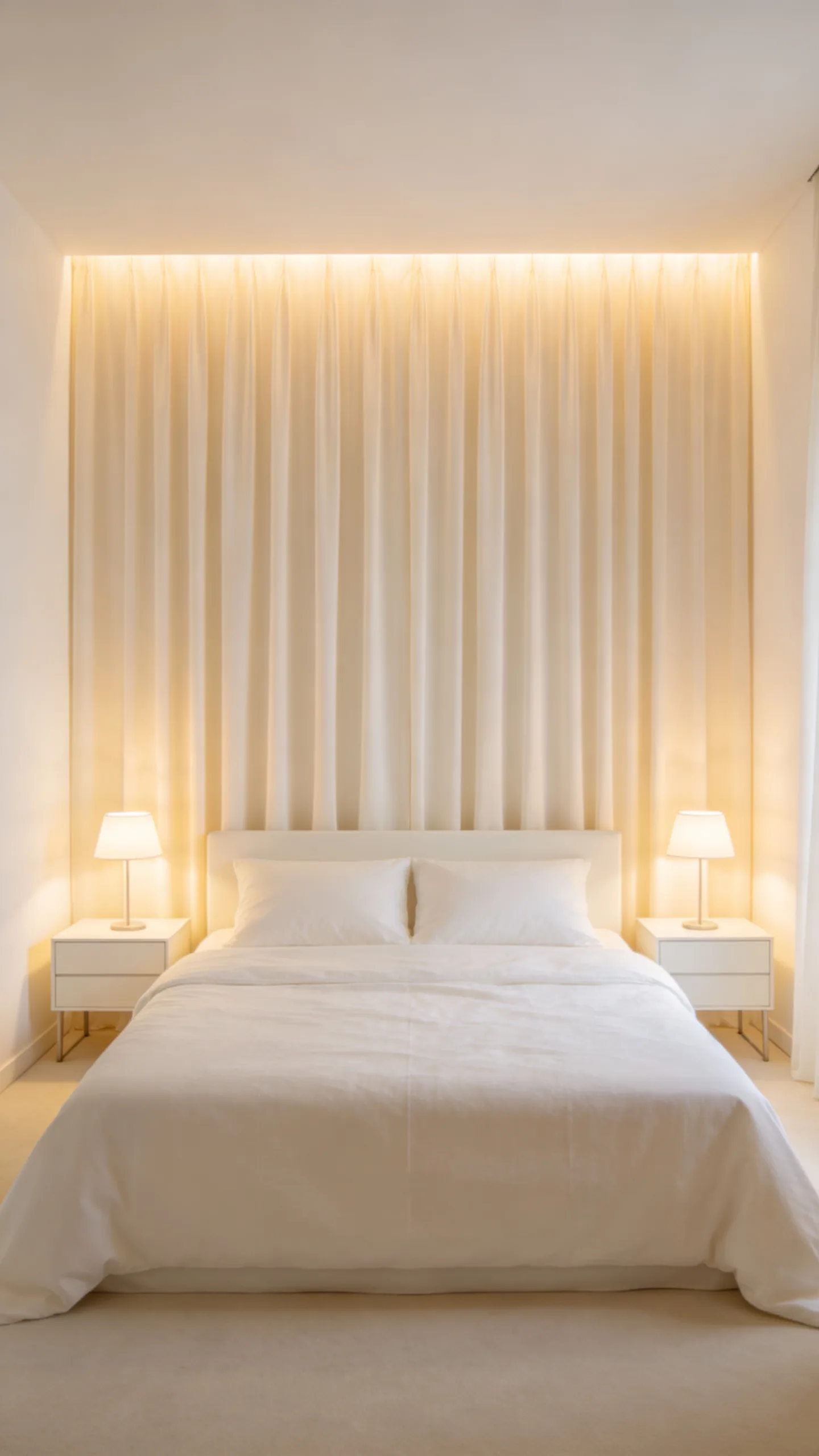
A wall-to-wall curtain headboard turns the entire wall behind the bed into one large fabric feature. Instead of stopping the curtains at the width of the mattress, run the rod or track from one corner of the room to the other. This makes the bed wall look wider and more intentional.
This idea works beautifully in bedrooms where the bed wall has off-center outlets, awkward trim, uneven paint, or a small window that disrupts symmetry. The continuous curtain layer hides visual interruptions and creates a cleaner background for the bed and nightstands.
Choose fabric that complements the wall color rather than fighting it. Cream curtains on warm white walls, soft gray curtains on pale gray walls, or tan curtains on beige walls can create a subtle tone-on-tone effect that feels calm and spacious.
5. Canopy-Style Curtain Headboard Over the Bed
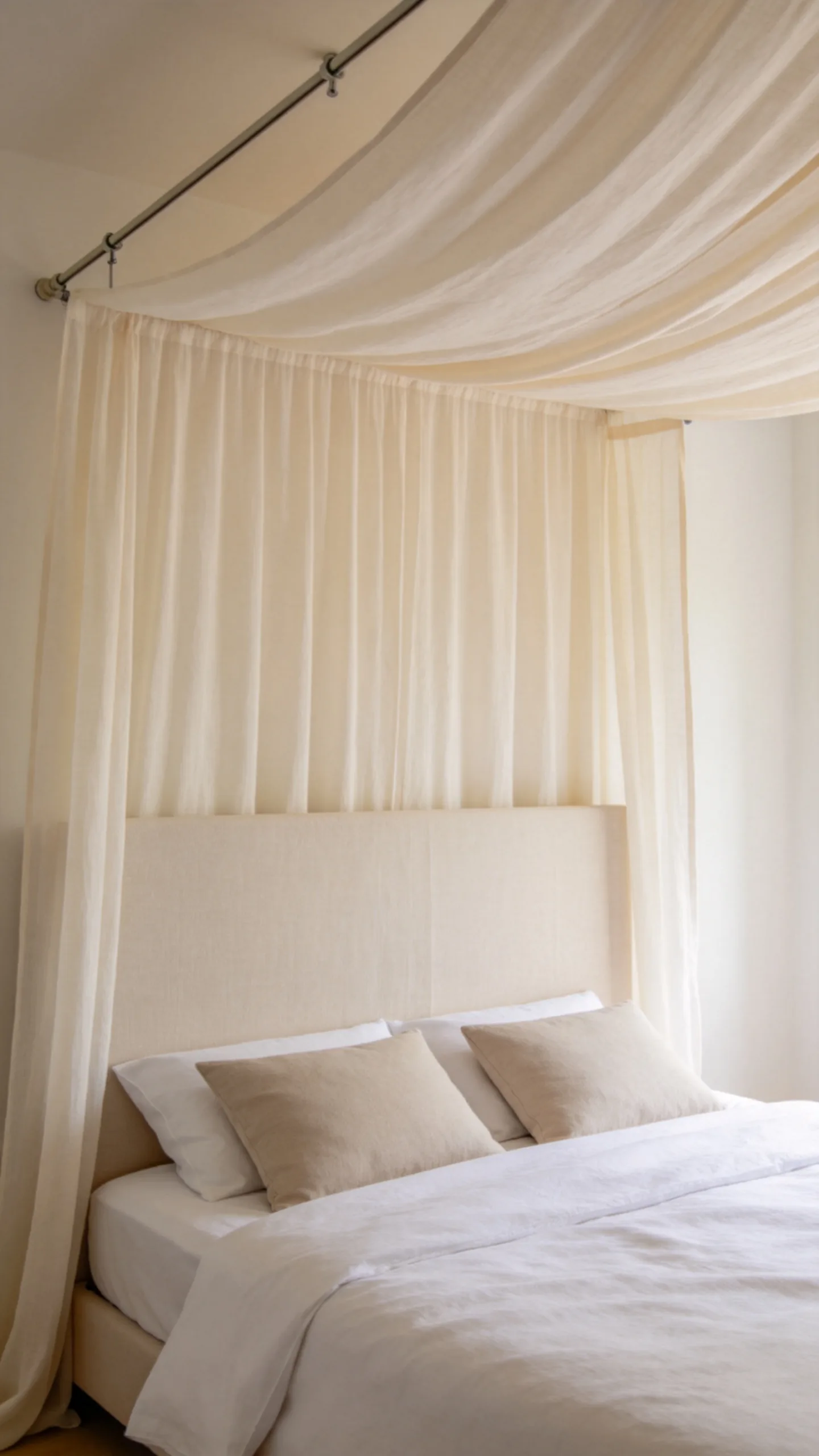
A canopy-style curtain headboard uses fabric behind the bed and across part of the ceiling to create a cocooned sleeping zone. Mount one rod or ceiling track on the wall behind the bed and another above the front edge of the bed, then let the fabric drape softly overhead.
This look is especially useful in bedrooms with high ceilings or a bed that feels lost on a large wall. The overhead fabric brings the scale down and makes the sleeping area feel more intimate without adding bulky furniture.
Stick with lightweight cotton, linen, or voile so the canopy does not feel heavy. Keep the bedding simple, such as a white duvet, neutral quilt, and two or three pillows, so the fabric feature remains the focal point.
6. Double-Layer Curtain Headboard With Sheers and Solid Panels
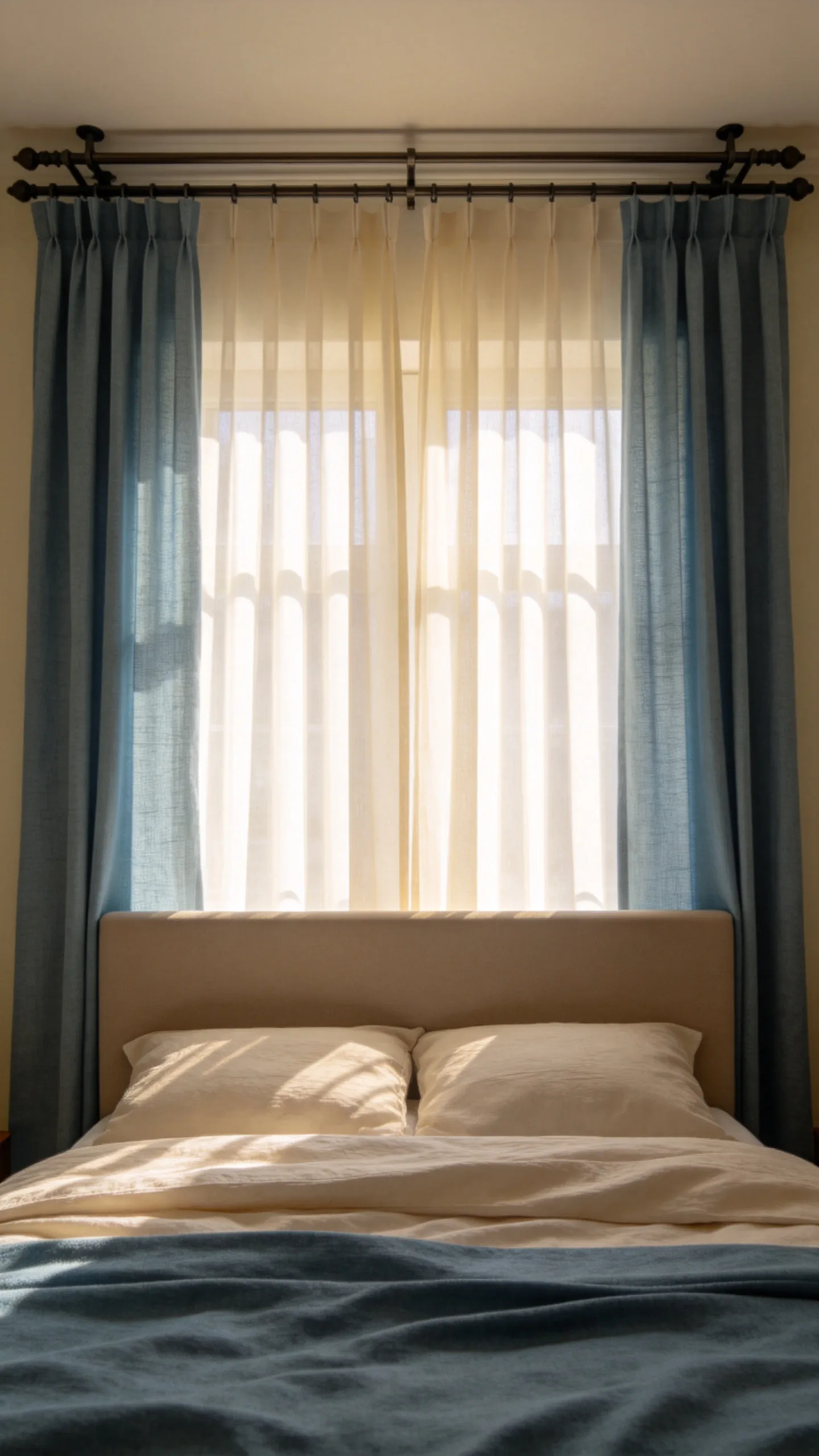
Layering sheer curtains behind solid panels gives the bed wall depth and flexibility. The sheers create a soft base layer, while heavier side panels frame the bed like drapery around a window. This makes the wall look finished from edge to edge.
Use a double curtain rod or a ceiling track with two channels. Place sheer white or ivory panels closest to the wall, then add linen, cotton, or velvet panels in a deeper color at the sides. The contrast helps define the bed area without needing oversized art.
This idea is especially practical if the wall behind the bed includes a window. The layered curtains can function as real window treatments while still creating the look of a curtain headboard.
7. Patterned Curtain Headboard With Simple Bedding
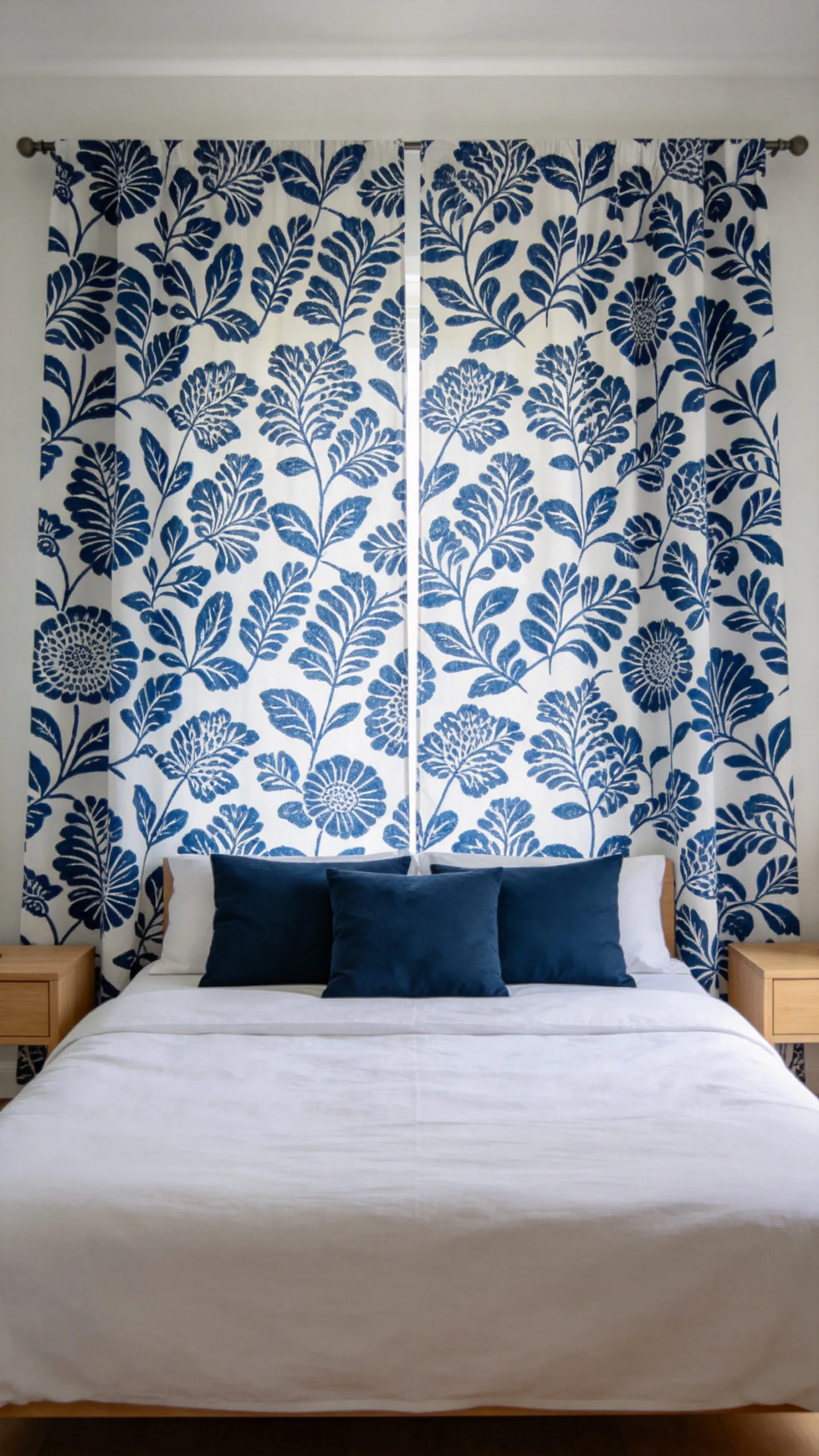
A patterned curtain headboard can replace large artwork behind the bed. Florals, block prints, stripes, checks, or botanical patterns add personality to the room and help a plain bed wall feel decorated. The key is to keep the bedding and nightstand styling quieter so the pattern does not overwhelm the space.
For a calm bedroom, choose a pattern with two or three colors that already appear elsewhere in the room. For example, blue-and-white block print curtains can coordinate with navy pillow shams, a white duvet, and a light wood dresser.
This is a smart option for renters or anyone who wants wallpaper impact without applying wallpaper. The curtain panels can be changed seasonally or moved to another room later.
8. Arched Curtain Headboard Using a Curved Rod
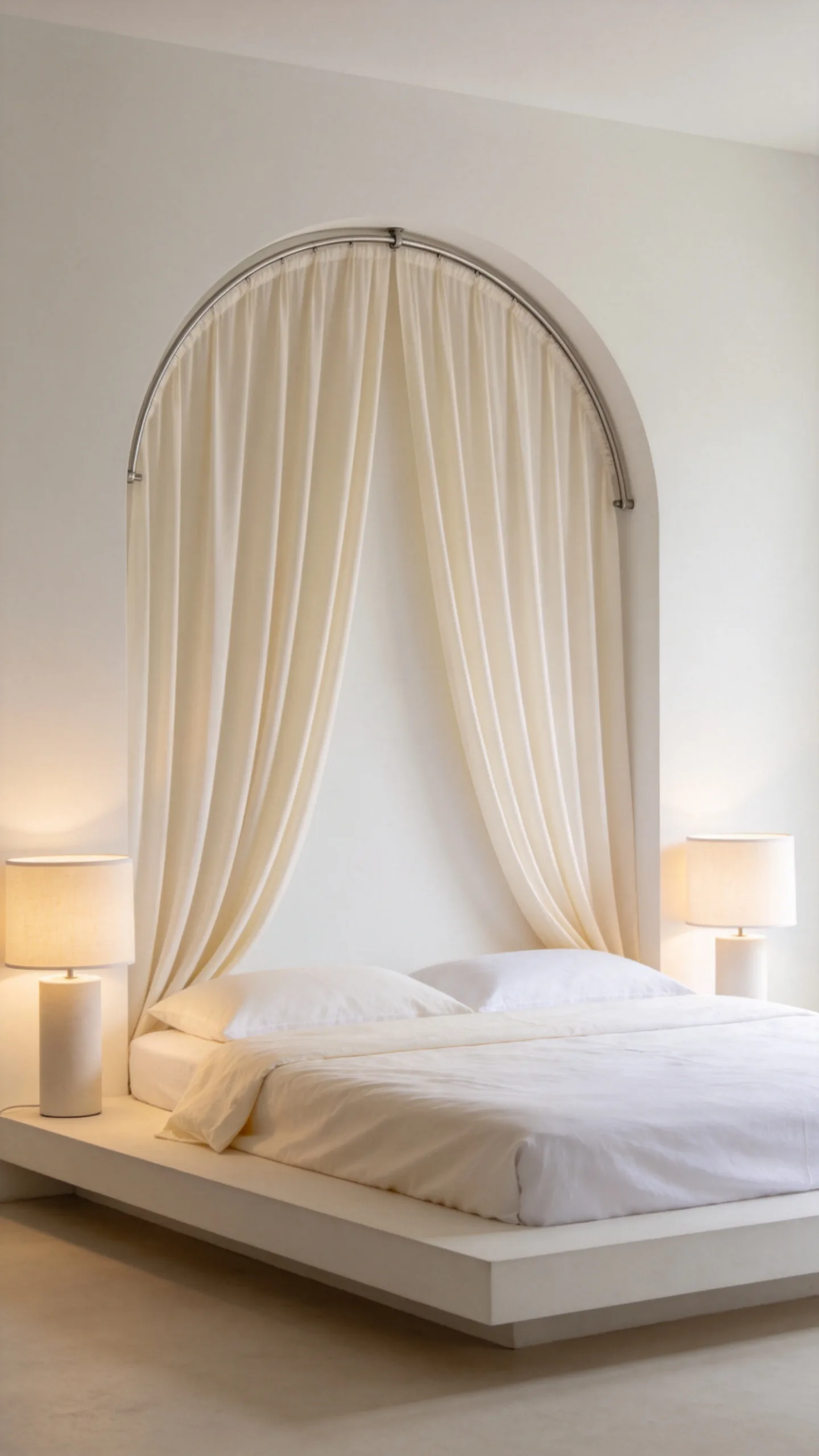
An arched curtain headboard adds architectural shape to a flat wall. Use a curved or flexible curtain track to create a soft arch above the bed, then hang lightweight fabric so it falls behind the headboard area. The arch frames the bed and gives the wall a custom look.
This design works well with beds that have no headboard or a low platform frame. The curved fabric shape becomes the main visual anchor, especially when paired with matching bedside lamps or sconces.
Keep the fabric simple so the arch remains the focus. White, cream, sand, sage, or dusty blue curtains can highlight the shape without making the wall feel busy.
9. Ceiling Track Curtain Headboard for a Clean Modern Look
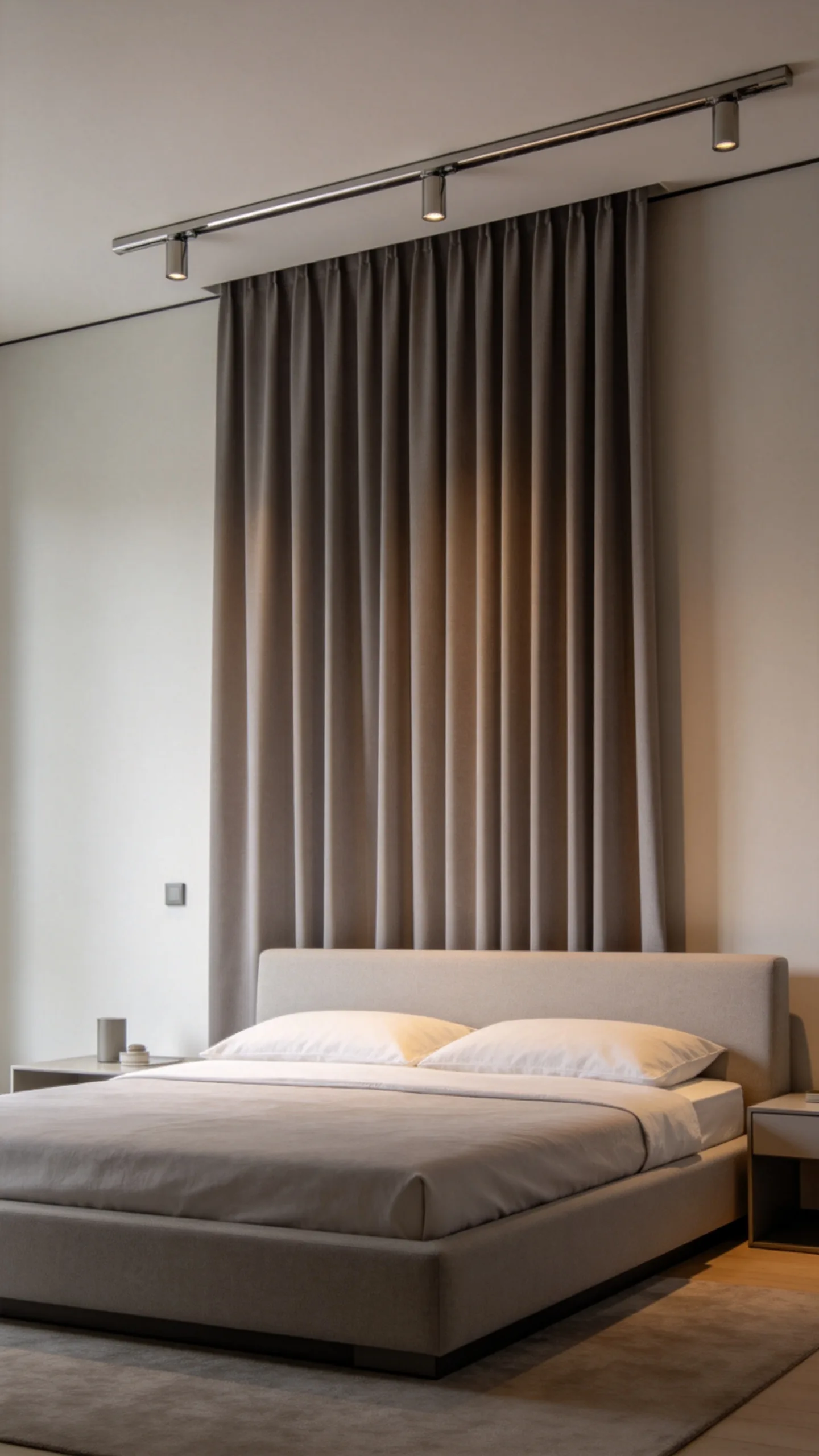
A ceiling track gives a curtain headboard a sleek, built-in appearance. Unlike a visible rod, the track sits close to the ceiling and allows the fabric to fall in a clean vertical line. This is useful in modern, minimalist, or small bedrooms where bulky hardware would distract from the design.
Choose ripple-fold or pinch-pleat curtains for a neat, consistent drape. These heading styles keep the fabric looking orderly rather than casual, which makes the bed wall feel more polished.
This option is also helpful for low ceilings. Mounting the track at the ceiling draws the eye upward and makes the room feel taller, especially when the curtains extend all the way to the floor.
10. Macrame Curtain Headboard for a Boho Bedroom
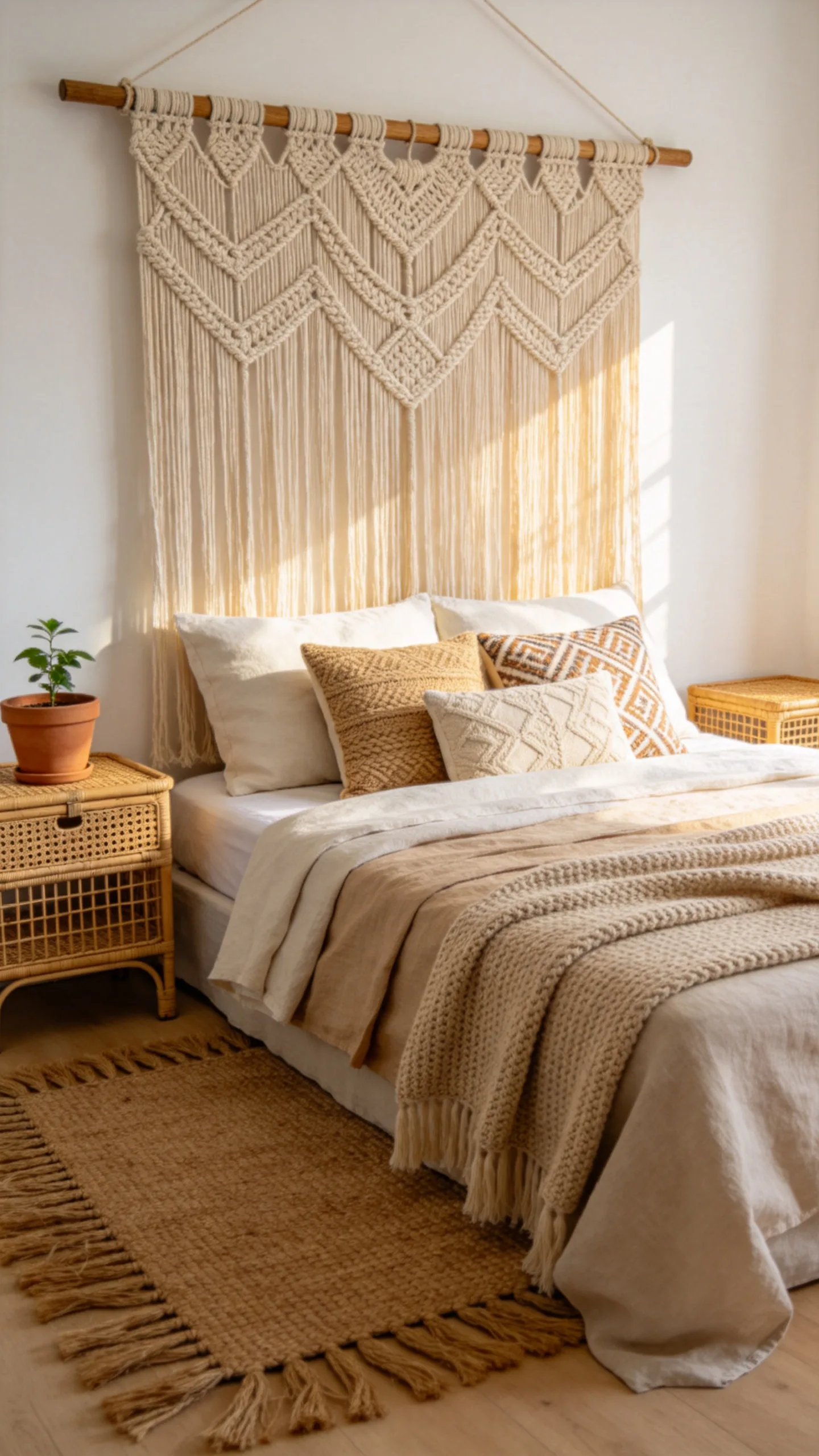
A macrame curtain headboard adds texture and handmade detail to the bed wall. Instead of using solid fabric panels, hang a large macrame curtain, wall hanging, or knotted cotton panel behind the bed. The open weave keeps the look airy while still creating a strong focal point.
This idea works well with rattan nightstands, woven pendant lights, jute rugs, terra-cotta planters, and layered neutral bedding. The texture helps warm up white walls and prevents a neutral bedroom from looking flat.
For a practical layout, make sure the macrame hangs above pillow height or sits flat against the wall so it does not interfere with sleeping. A wood dowel or black metal rod can make the piece feel intentional.
11. Color-Blocked Curtain Headboard Panels
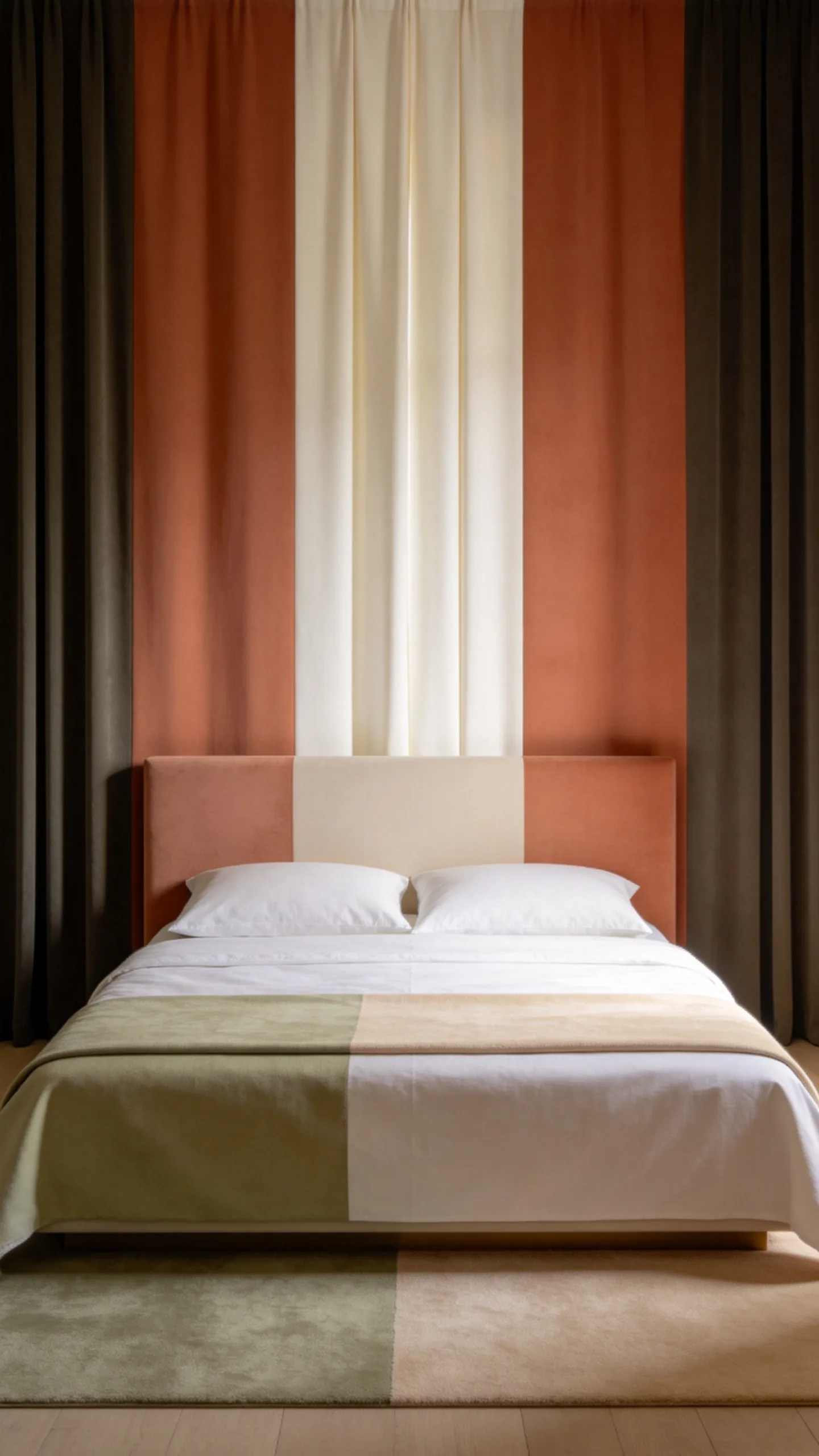
Color-blocked curtain panels add a graphic look behind the bed without painting the wall. Use two or three curtain colors arranged in vertical sections, such as ivory panels in the middle with terracotta panels on the sides, or sage green panels flanked by beige.
This approach is great for tying together the room’s palette. Pull one curtain color from the rug, another from the bedding, and another from the wall color. The result feels coordinated but not overly matched.
Color-blocking can also help correct awkward room proportions. Darker panels at the outer edges can make the bed area feel wider, while a lighter center panel keeps the sleeping zone bright.
12. Curtain Headboard With Wall Sconces in Front
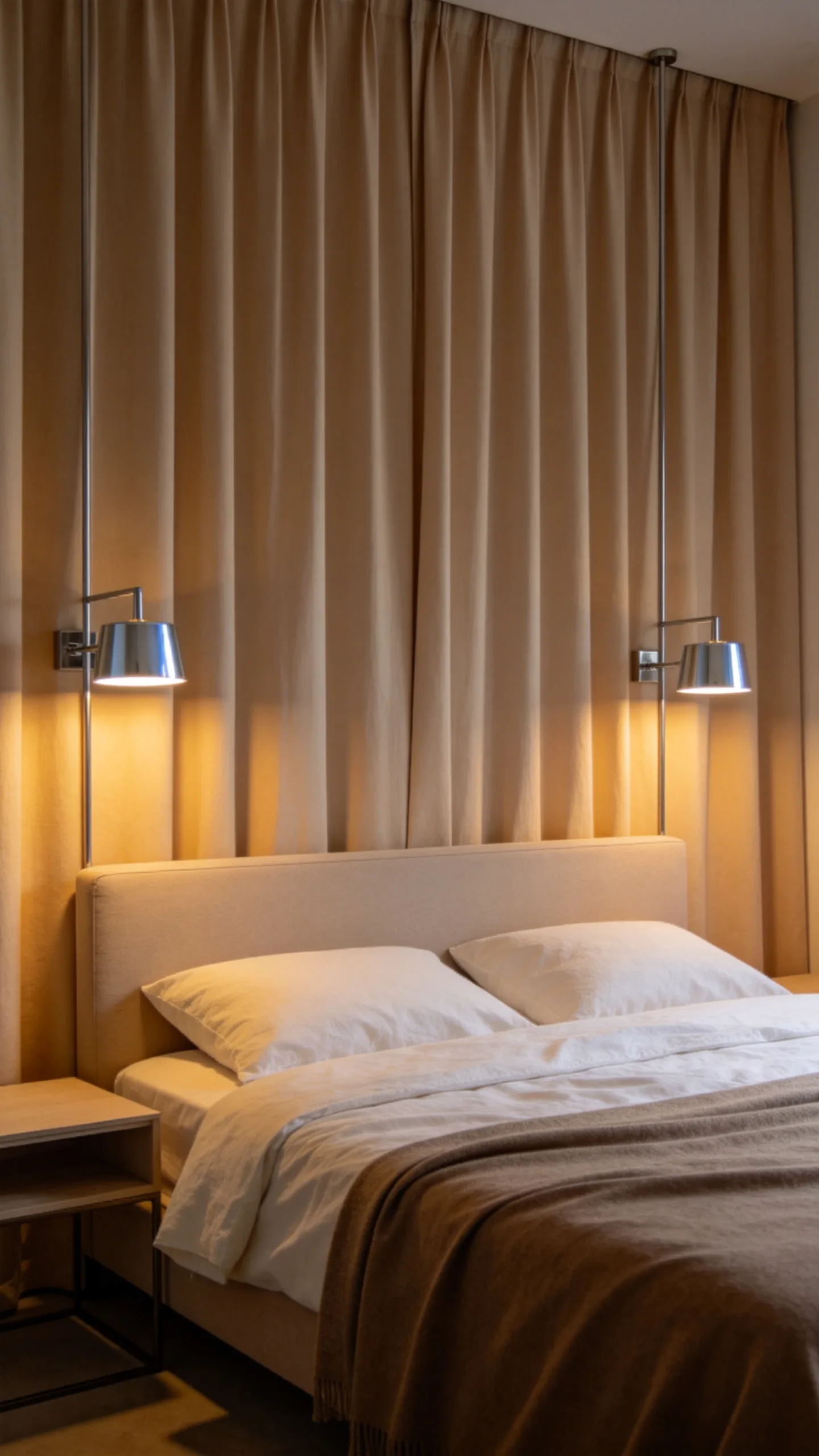
Pairing a curtain headboard with wall sconces creates a layered, boutique-style bed wall. Install plug-in or hardwired sconces on either side of the bed so the lights sit in front of the curtain panels. The fabric softens the wall, while the sconces provide functional reading light.
For safety and function, keep fabric clear of hot bulbs and choose LED bulbs that stay cool. Swing-arm sconces work well because they can be adjusted over the nightstand or bed without needing table lamps.
This is especially useful in small bedrooms where nightstand surfaces are limited. The curtain headboard adds softness, and the sconces free up space for books, a water glass, or a small tray.
13. Half-Wall Curtain Headboard Above a Low Bed
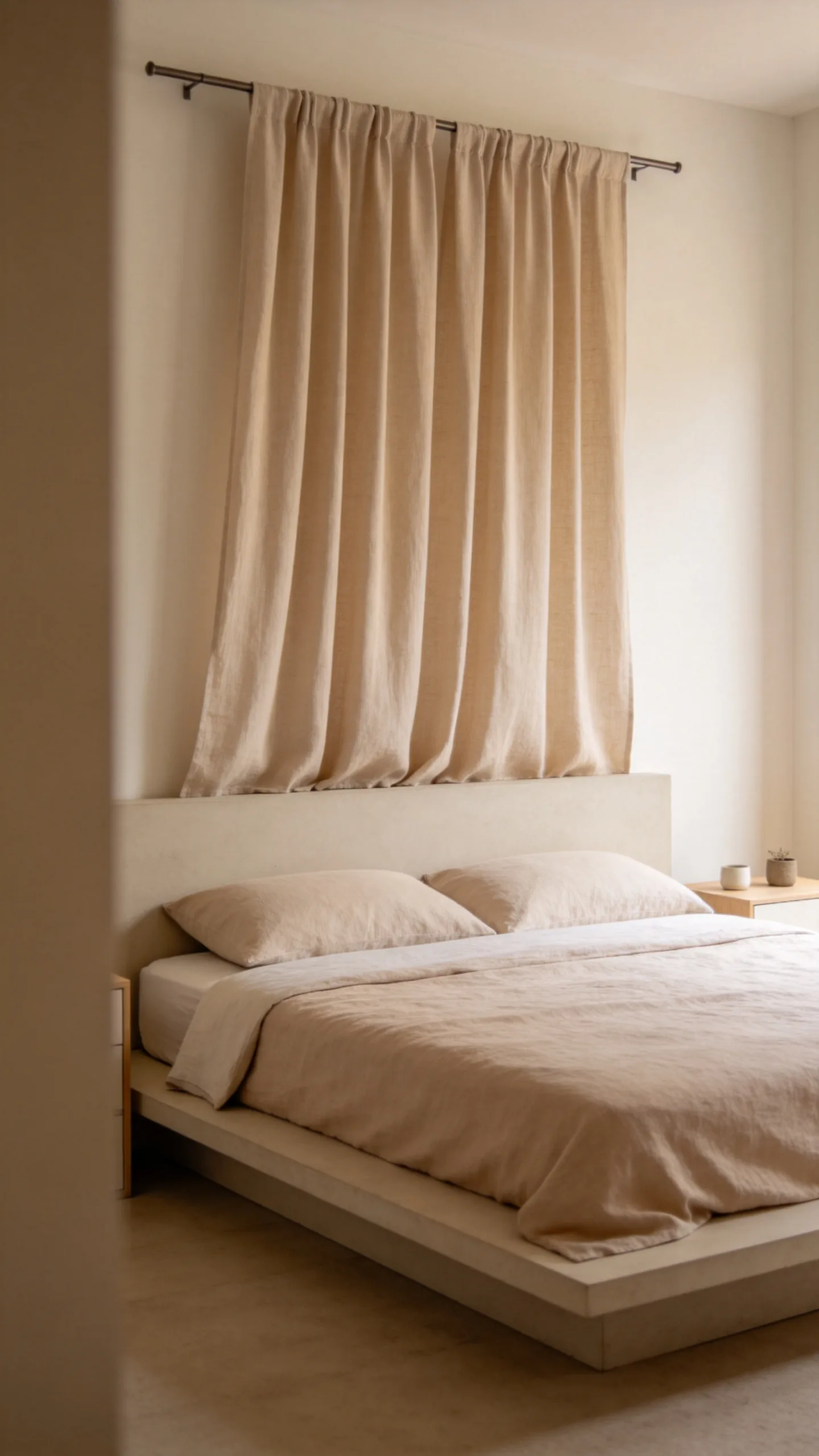
A half-wall curtain headboard is a good option when full-length panels feel too formal or when furniture placement makes floor-length curtains impractical. Mount a rod several feet above the bed and let the curtain panels fall to just below pillow height or to the top of a low platform frame.
This creates the visual softness of a fabric headboard without covering the entire wall. It works especially well in bedrooms with low ceilings, because the shorter fabric treatment avoids crowding the room.
Choose a fabric with enough weight to hang smoothly, such as cotton duck, linen blend, or light canvas. Pair it with a low-profile bed, simple bedding, and uncluttered nightstands so the wall detail looks clean rather than unfinished.
14. Curtain Headboard Behind a Real Upholstered Headboard
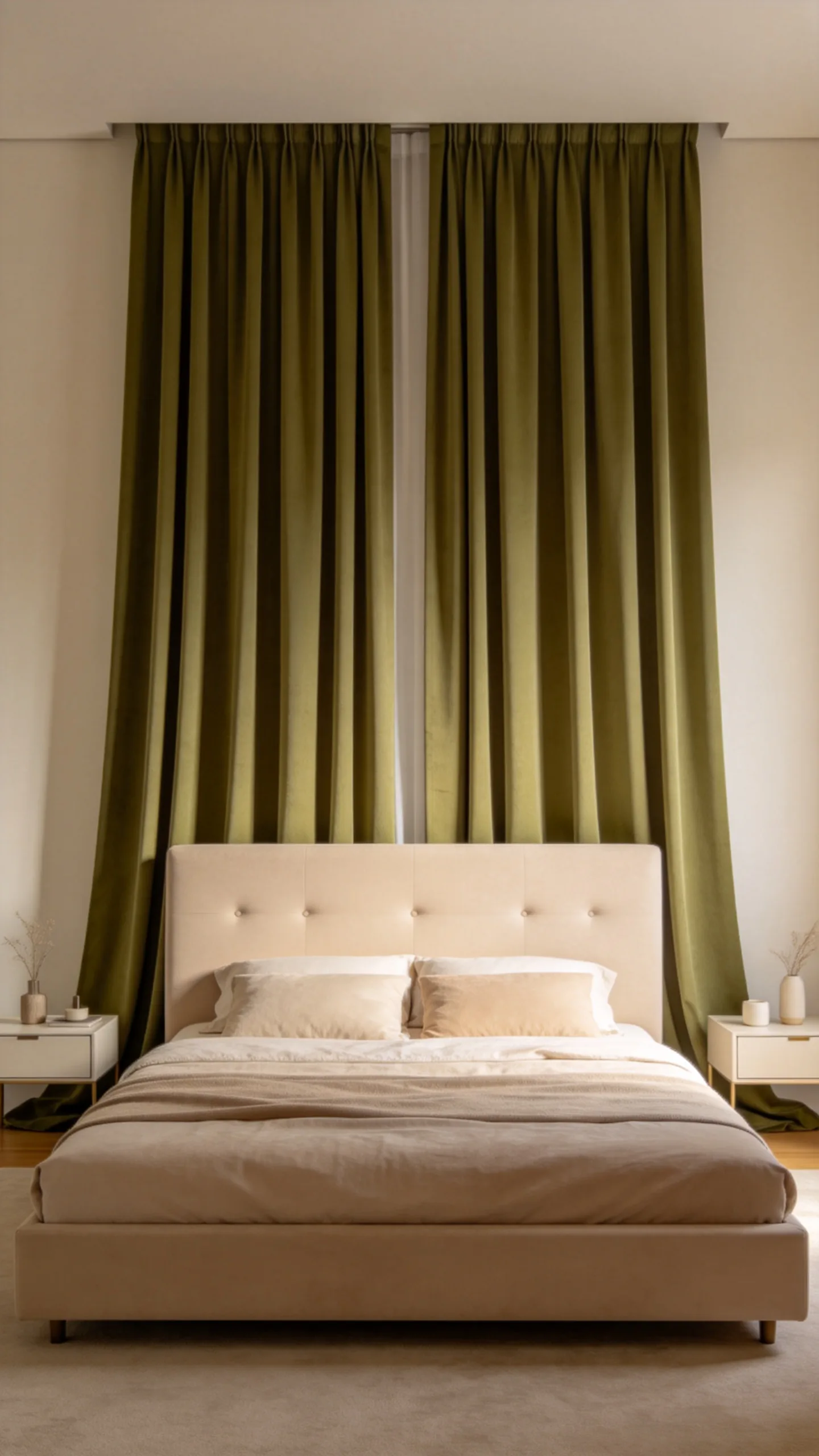
A curtain headboard can work behind an existing upholstered headboard to add height and layering. If the current headboard feels too short for the wall, hang curtains behind it from near the ceiling to the floor. The fabric creates a taller visual frame while the upholstered headboard remains comfortable for sitting up in bed.
Use a curtain color that contrasts gently with the headboard. A beige upholstered headboard can look more defined against olive, rust, charcoal, or soft blue curtains. A dark headboard can be softened with ivory or warm white panels.
This idea is helpful when the bed wall needs more presence but you do not want to replace existing furniture. The curtain layer makes the whole bed arrangement feel larger and more deliberate.
15. Pleated Curtain Headboard for a Tailored Bedroom
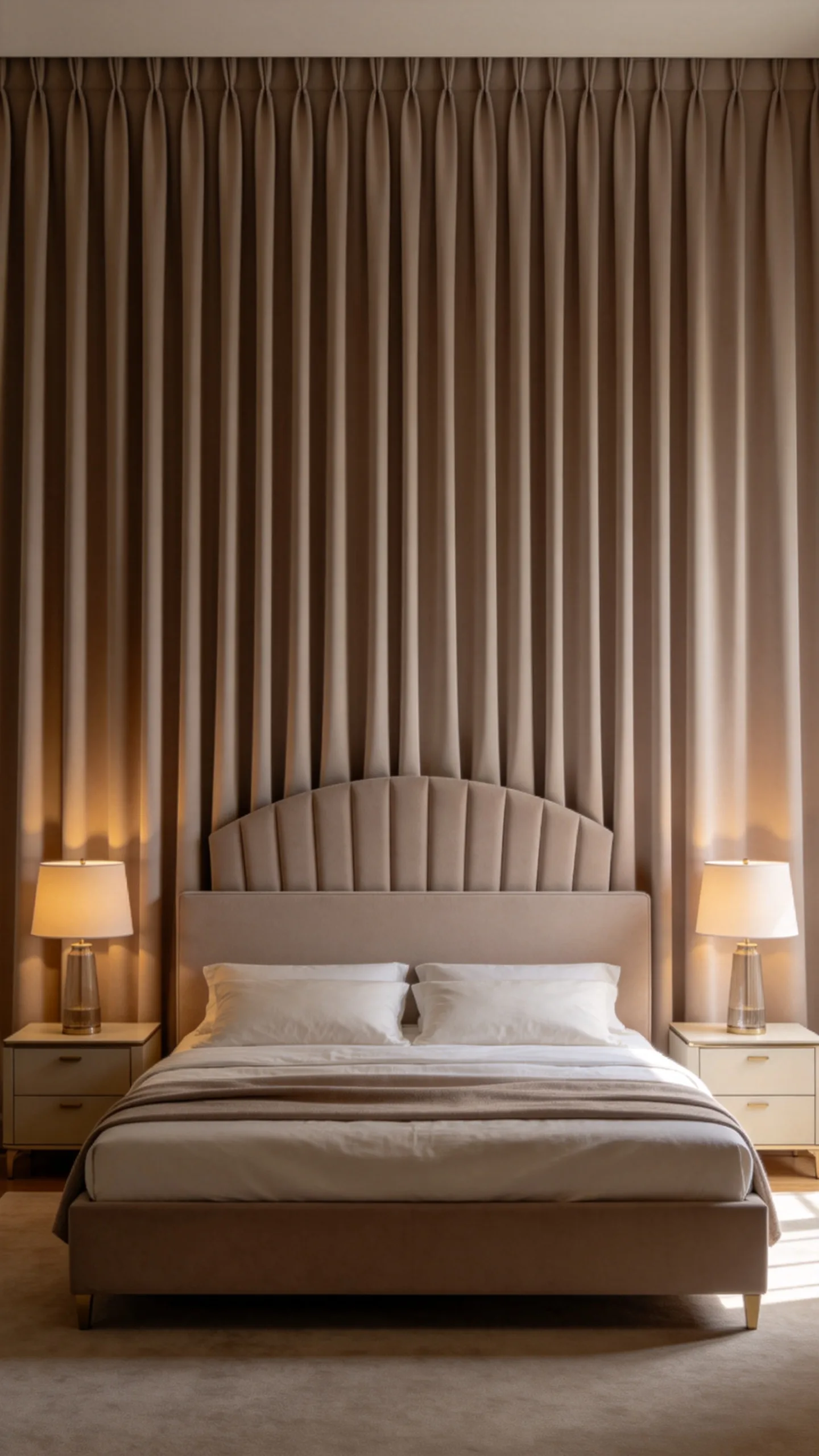
Pleated curtains give a headboard wall a structured, designer-style look. Pinch pleats, tailored pleats, or ripple folds create consistent vertical lines that make the fabric look intentional rather than temporary. This works well in traditional, transitional, and modern bedrooms.
Use a wider curtain span than the bed so the pleats have room to sit properly. If the panels are too narrow, the headboard wall can look skimpy. Full fabric coverage makes the bed feel grounded and balanced.
Pleated panels look especially polished with matching nightstands, lamps, and symmetrical art or mirrors. The clean rhythm of the folds adds order to the room without needing a lot of extra decoration.
16. Moody Dark Curtain Headboard on a Light Wall
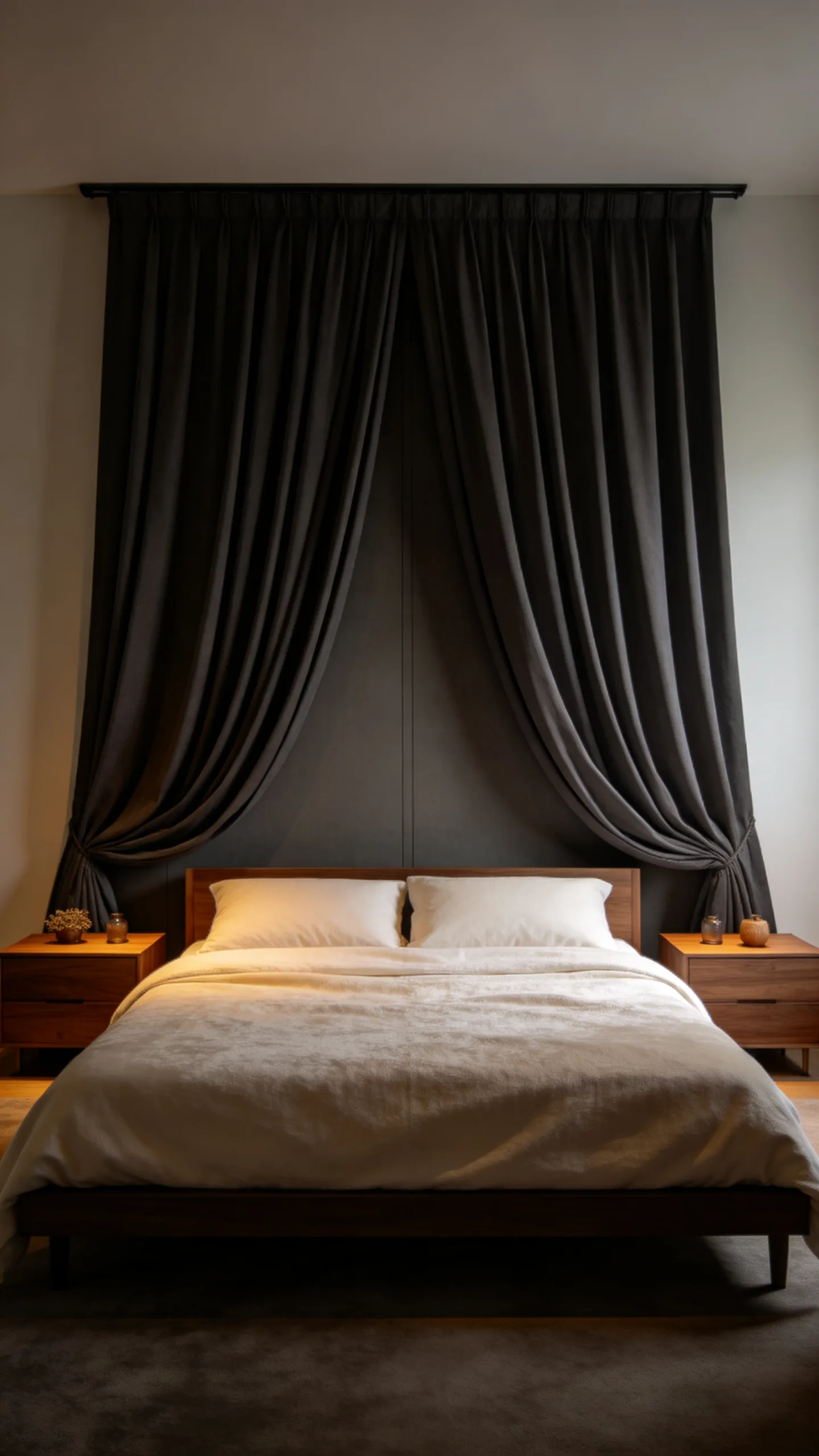
Dark curtains on a light wall can create a dramatic focal point behind the bed. Charcoal, espresso, forest green, indigo, or deep burgundy panels add contrast and make the bed area feel grounded. This is a strong choice if the rest of the bedroom feels too pale or unfinished.
Keep the curtain installation tall and wide so the dark fabric looks intentional rather than like a narrow strip behind the pillows. Add lighter bedding, such as a cream duvet or pale linen sheets, to keep the room from feeling too heavy.
This idea works well with warm metallic accents, black picture frames, walnut furniture, or a patterned rug that includes the curtain color. The dark fabric gives the eye a clear place to land.
17. Neutral Tone-on-Tone Curtain Headboard
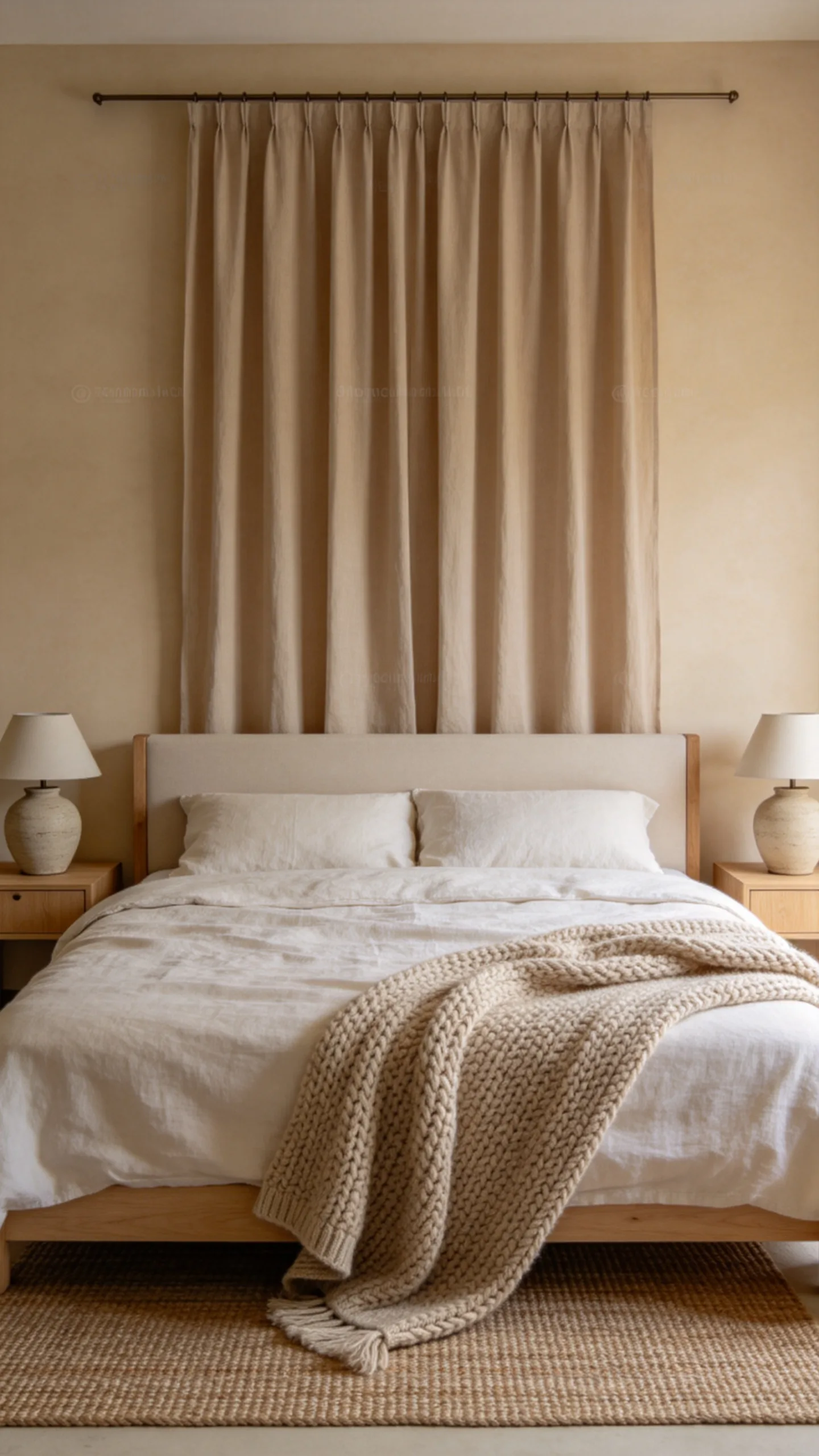
A tone-on-tone curtain headboard uses fabric close to the wall color for a subtle, layered effect. For example, pair warm white walls with ivory curtains, beige walls with sand curtains, or pale gray walls with dove gray panels. The result feels calm and cohesive.
This is a strong option for small bedrooms because it adds texture without creating harsh contrast. The wall still feels open, but the fabric folds give it depth and softness.
To keep the look from becoming flat, mix materials across the bed area. Use cotton sheets, a chunky knit throw, a woven rug, ceramic lamps, or a wood bench at the foot of the bed. The curtain headboard becomes part of a quiet layered palette.
18. Striped Curtain Headboard to Make the Room Feel Taller
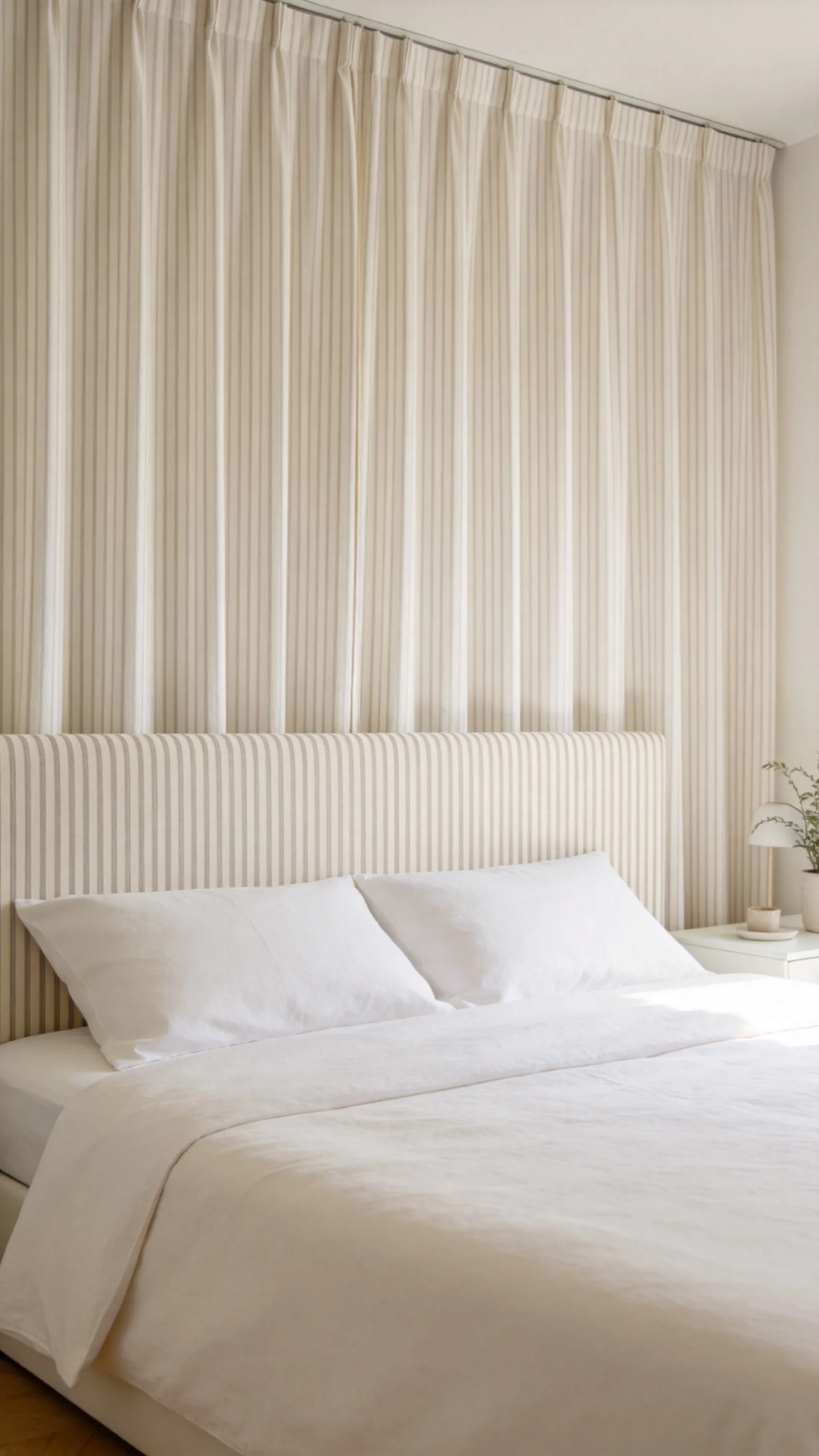
Vertical striped curtains can make the bed wall feel taller and more structured. Thin ticking stripes, wide cabana stripes, or subtle tonal stripes all work depending on the mood of the bedroom. The vertical lines naturally draw the eye upward.
This is especially useful in rooms with low ceilings or beds placed on short walls. Hang the curtain rod close to the ceiling and let the striped fabric run to the floor for the strongest height-enhancing effect.
Keep nearby patterns simple. If the curtain headboard has bold stripes, use solid bedding or small-scale patterned pillows. A simple rug and clean nightstand styling will let the vertical pattern do the visual work.
19. Curtain Headboard With Hidden Storage Behind It
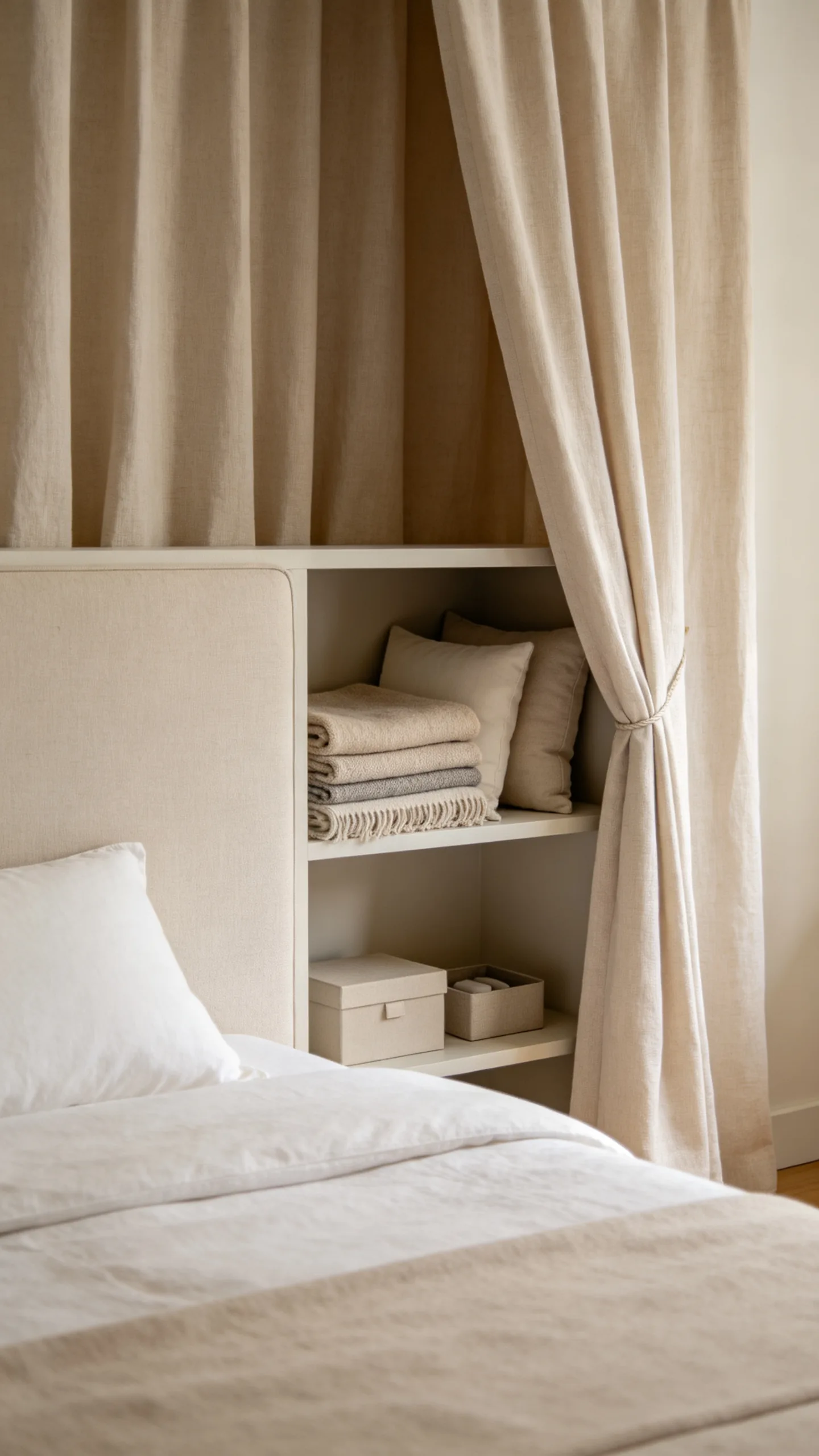
A curtain headboard can hide shallow wall storage behind the bed. Install a narrow shelf, wall-mounted ledge, or slim storage rail behind the curtain panels, then use the fabric to conceal extra pillows, seasonal throws, books, or charging cords.
This is useful in small bedrooms where visible clutter quickly makes the room feel crowded. The curtain softens the wall while hiding practical storage that would otherwise look busy.
Keep the hidden storage shallow so it does not push the bed too far into the room or disrupt traffic flow around the mattress. Choose lightweight items for the shelves and make sure the curtain can glide or lift easily when you need access.
20. Corner Curtain Headboard for a Bed Against Two Walls
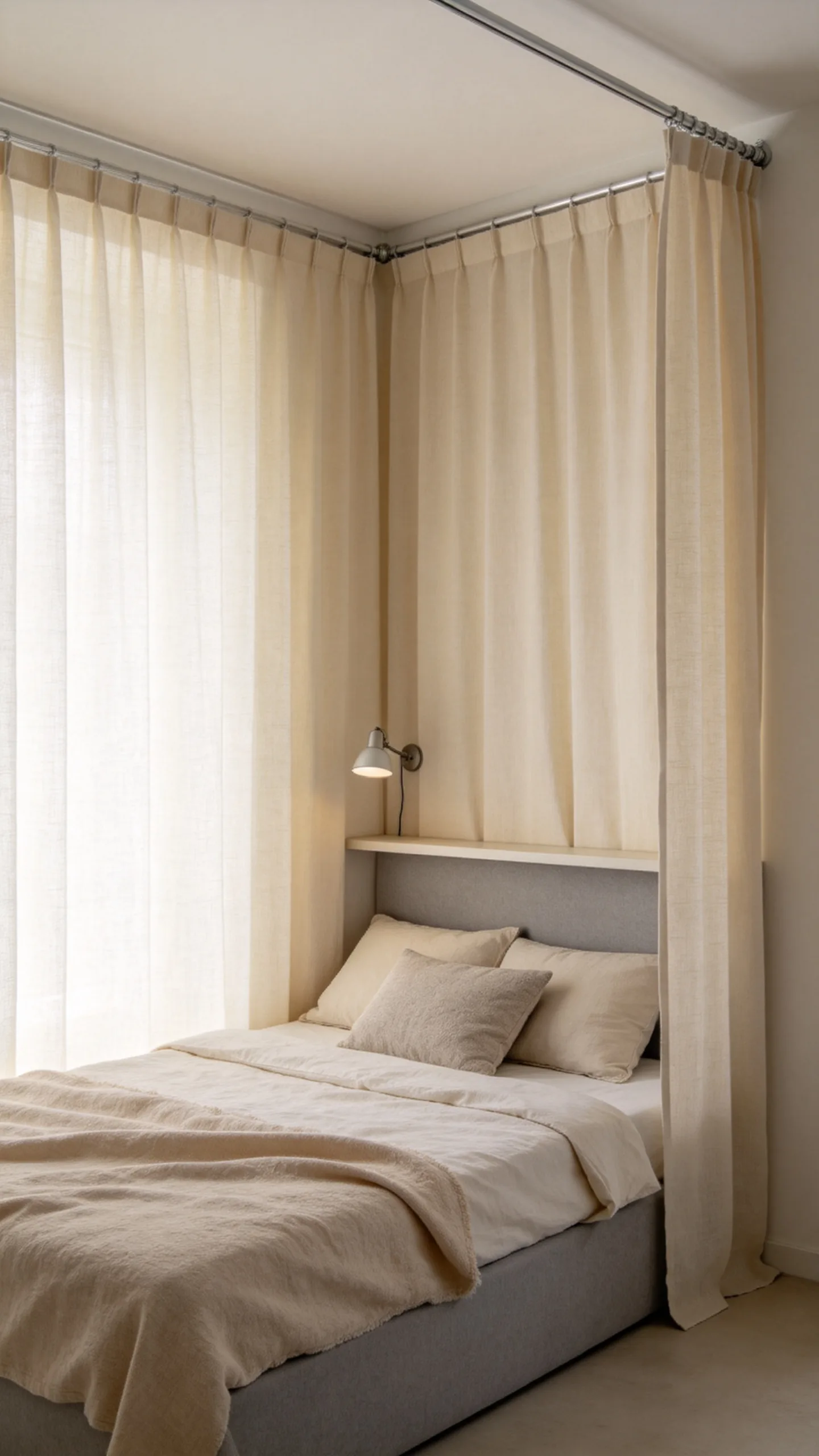
If the bed sits in a corner, a curtain headboard can wrap the sleeping area and make the placement feel intentional. Hang curtains along the back wall and part of the side wall to create a cozy nook effect. This works especially well for twin beds, daybeds, guest rooms, and small apartments.
Use ceiling tracks or two rods that meet at the corner. Let the fabric fall in soft folds so the bed feels framed rather than shoved into the corner. Light-colored curtains can keep the nook from feeling cramped.
This layout improves the visual balance of an awkward room because the fabric defines the bed zone. Add a wall-mounted reading light, narrow shelf, or small bedside table to make the corner functional.
21. Curtain Headboard With a Picture Ledge in Front
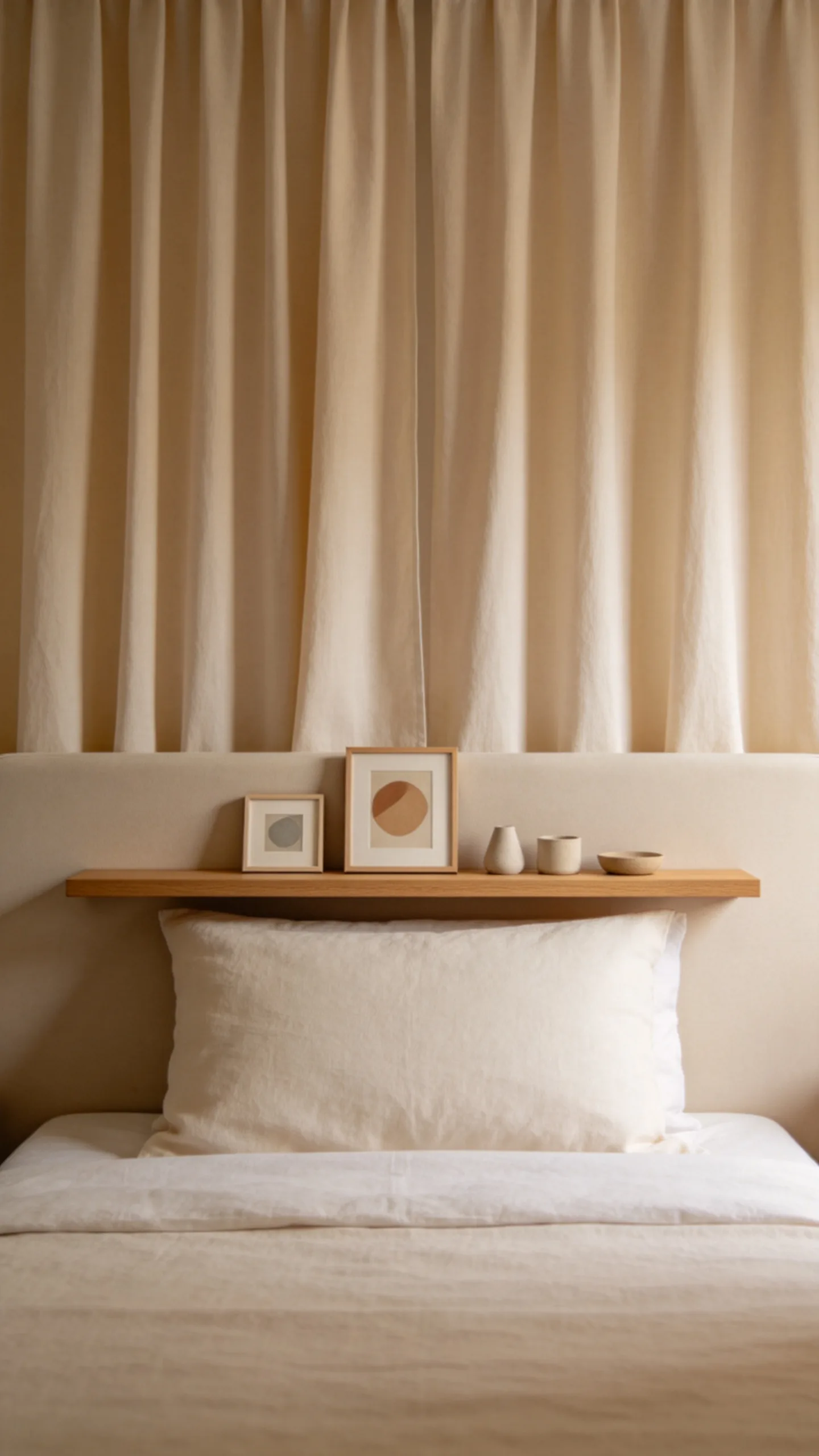
A picture ledge layered in front of a curtain headboard creates depth and gives you a place to style small art. Mount a slim ledge slightly above pillow height, then hang curtain panels behind it. The fabric acts as a soft backdrop for framed prints, small canvases, or decorative objects.
This works best with a ledge that is not too deep, so it does not interfere with sitting up in bed. Choose lightweight frames and keep the arrangement simple to avoid clutter behind the pillows.
The idea is useful when a plain wall needs more detail but a single large artwork feels too flat. The combination of fabric, frames, and a ledge gives the bed wall a layered, collected look.
22. Rattan or Bamboo Rod Curtain Headboard
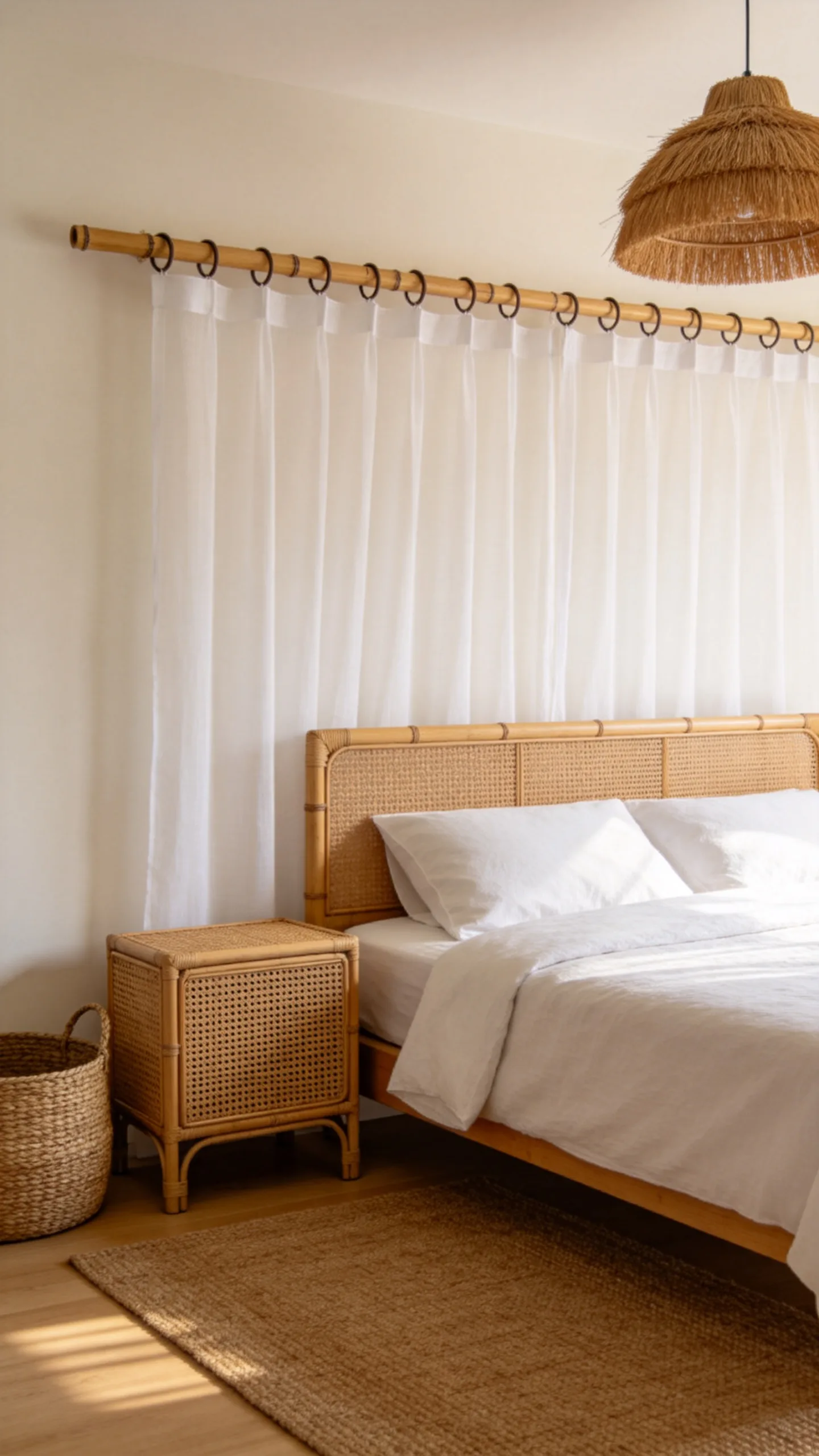
A rattan or bamboo curtain rod adds natural texture above the bed and makes the curtain headboard feel warmer. This detail works well in coastal, boho, cottage, and organic modern bedrooms. Pair it with linen, cotton, or gauze curtains for an easy relaxed look.
The rod itself becomes part of the design, so choose visible rings or simple ties that complement the material. Natural wood tones look good against white walls, clay-colored walls, sage green walls, or soft beige paint.
This idea is especially useful if the room has other woven elements, such as a jute rug, cane nightstand, wicker basket, or seagrass pendant. The curtain headboard helps repeat those textures on the vertical wall surface.
23. Bed Nook Curtain Headboard for a Studio Apartment
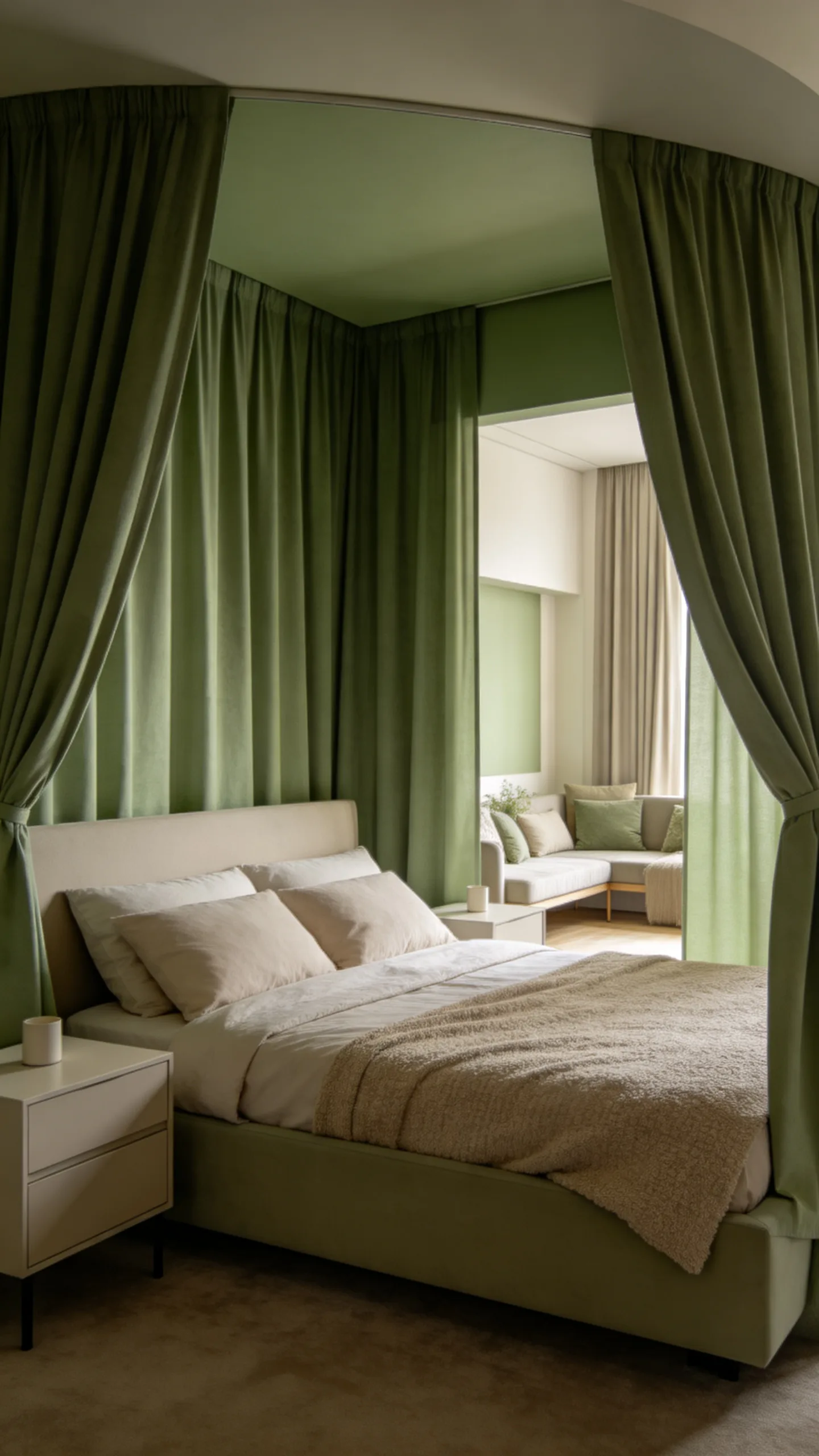
In a studio apartment or multipurpose room, a curtain headboard can help define the sleeping area. Place the bed against a wall and hang curtains behind it that extend wider than the mattress, or wrap the fabric slightly around the sides to create a partial nook.
This gives the bed a designated zone without building a wall or adding a large divider. The fabric softens the background and helps the sleeping area look styled rather than temporary.
Choose curtains that coordinate with the living area palette so the bed does not feel disconnected from the rest of the room. Neutral linen, soft gray cotton, or muted green panels can create separation while keeping the overall space cohesive.
24. Romantic Draped Curtain Headboard With Tiebacks
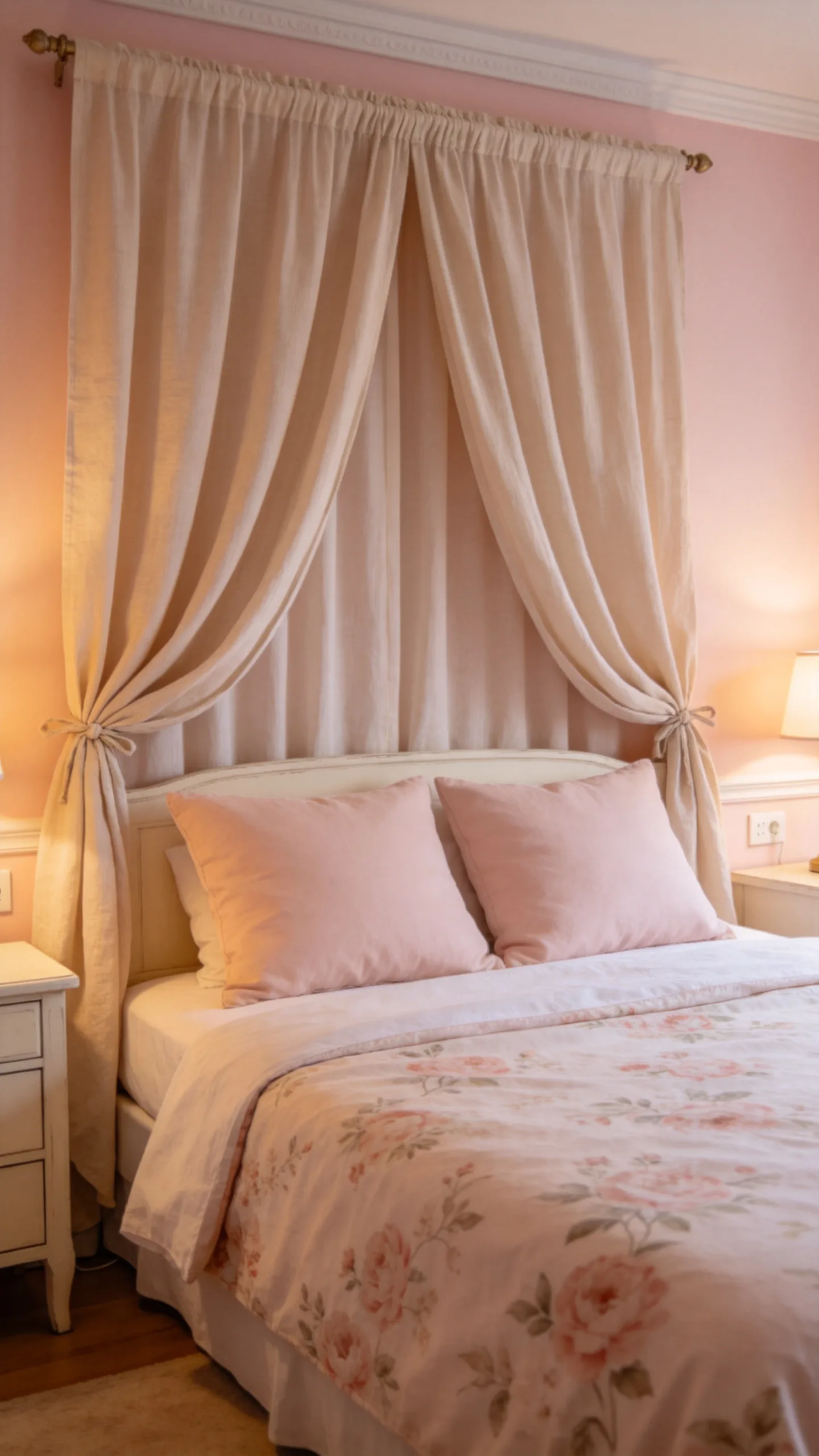
A draped curtain headboard with tiebacks creates a soft romantic focal point. Hang generous fabric panels behind the bed and gather them loosely to each side with fabric ties, rope, tassels, or simple wall hooks. The gathered shape adds movement and frames the pillows.
This works well with antique-style beds, painted wood furniture, floral bedding, lace details, or soft pastel walls. For a more updated version, use plain linen or cotton panels and simple tiebacks instead of ornate hardware.
Make sure the draping stays clear of lamps, candles, and outlets. The gathered fabric should look relaxed but still controlled, especially in a small bedroom where excess fabric can quickly feel cluttered.
25. Minimal Single-Panel Curtain Headboard
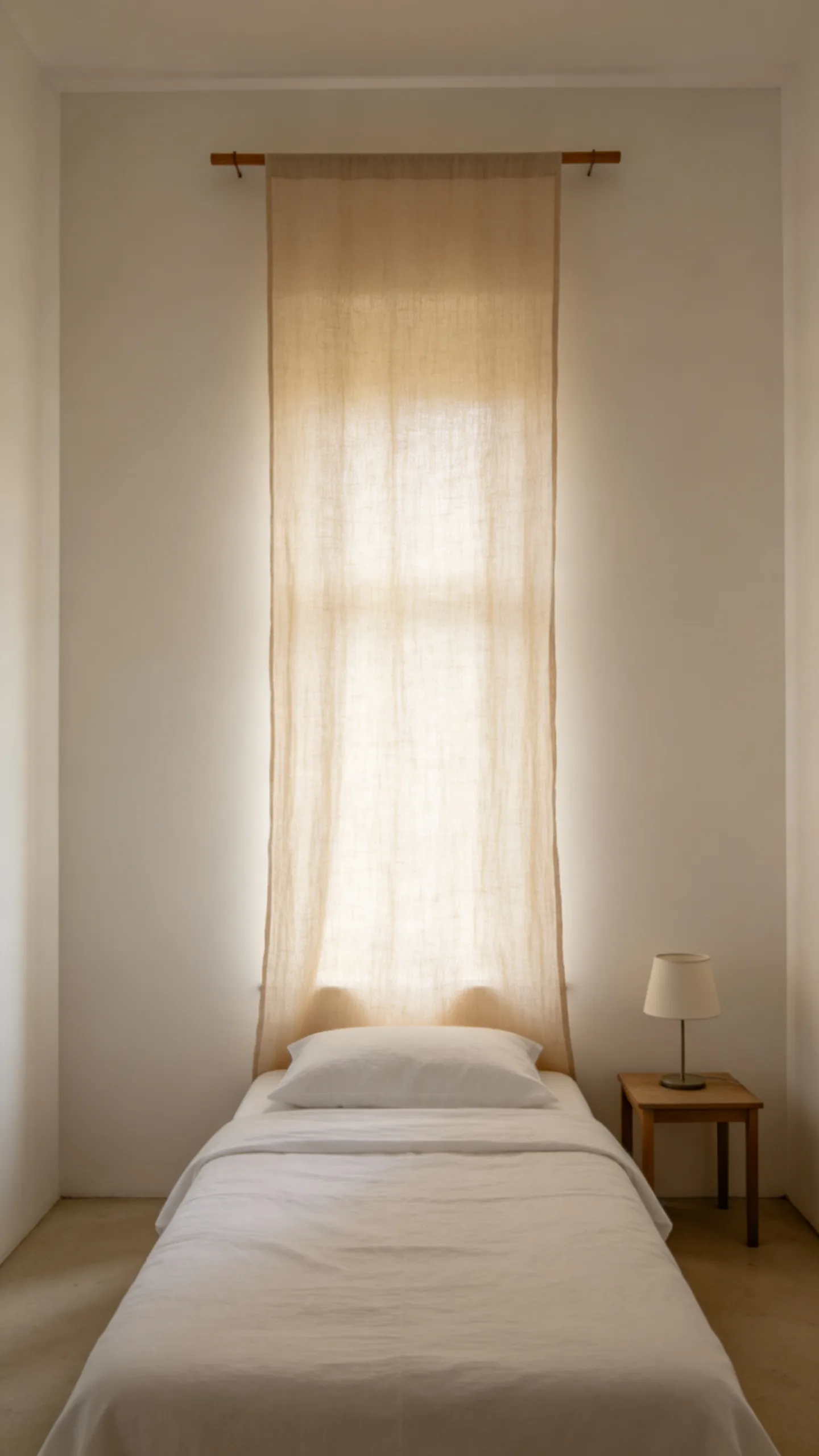
A single-panel curtain headboard is simple, affordable, and ideal for a narrow bedroom wall. Instead of using multiple curtains, hang one wide panel directly behind the bed. The panel can be centered behind the mattress like a fabric art piece.
This idea works best with a clean fabric choice, such as solid linen, cotton canvas, washed muslin, or a subtle woven texture. Mount the panel from a slim rod, wood dowel, or ceiling track so it feels purposeful rather than improvised.
Use this approach when you want a focal point but do not want the wall to feel busy. A single fabric panel adds softness, color, and vertical height while keeping the bedroom calm and easy to style.

From the editors
Decor Compass Editorial Team
We turn practical home research into clear, useful room-by-room ideas.