The right curtains can make a bedroom feel taller, softer, calmer, and more intentionally styled. Whether the room has plain white walls, awkward windows, low ceilings, or furniture that still feels disconnected, these bedroom curtain ideas focus on practical ways to add polish without changing the whole room.
1. Floor-to-Ceiling White Linen Curtains
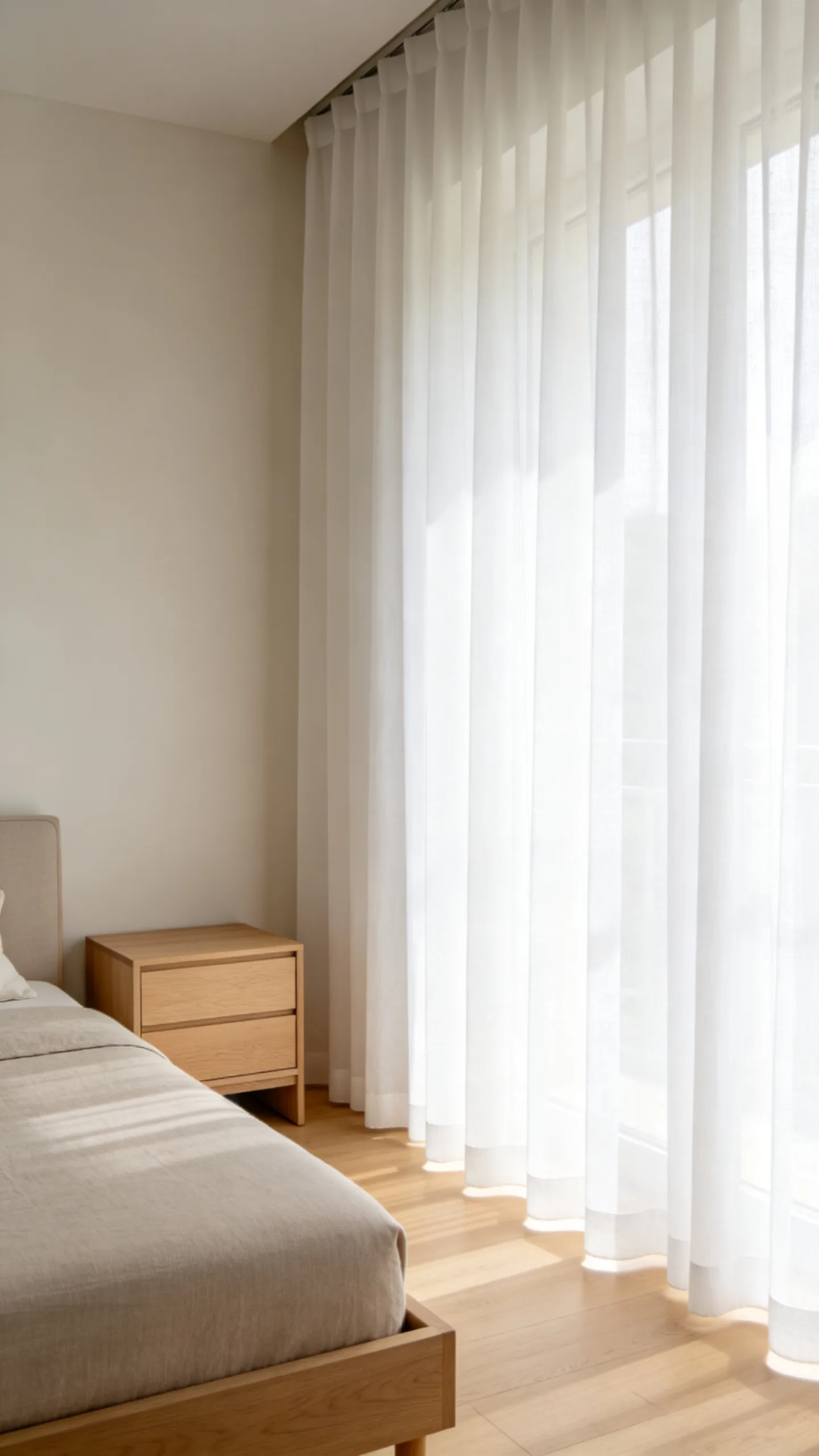
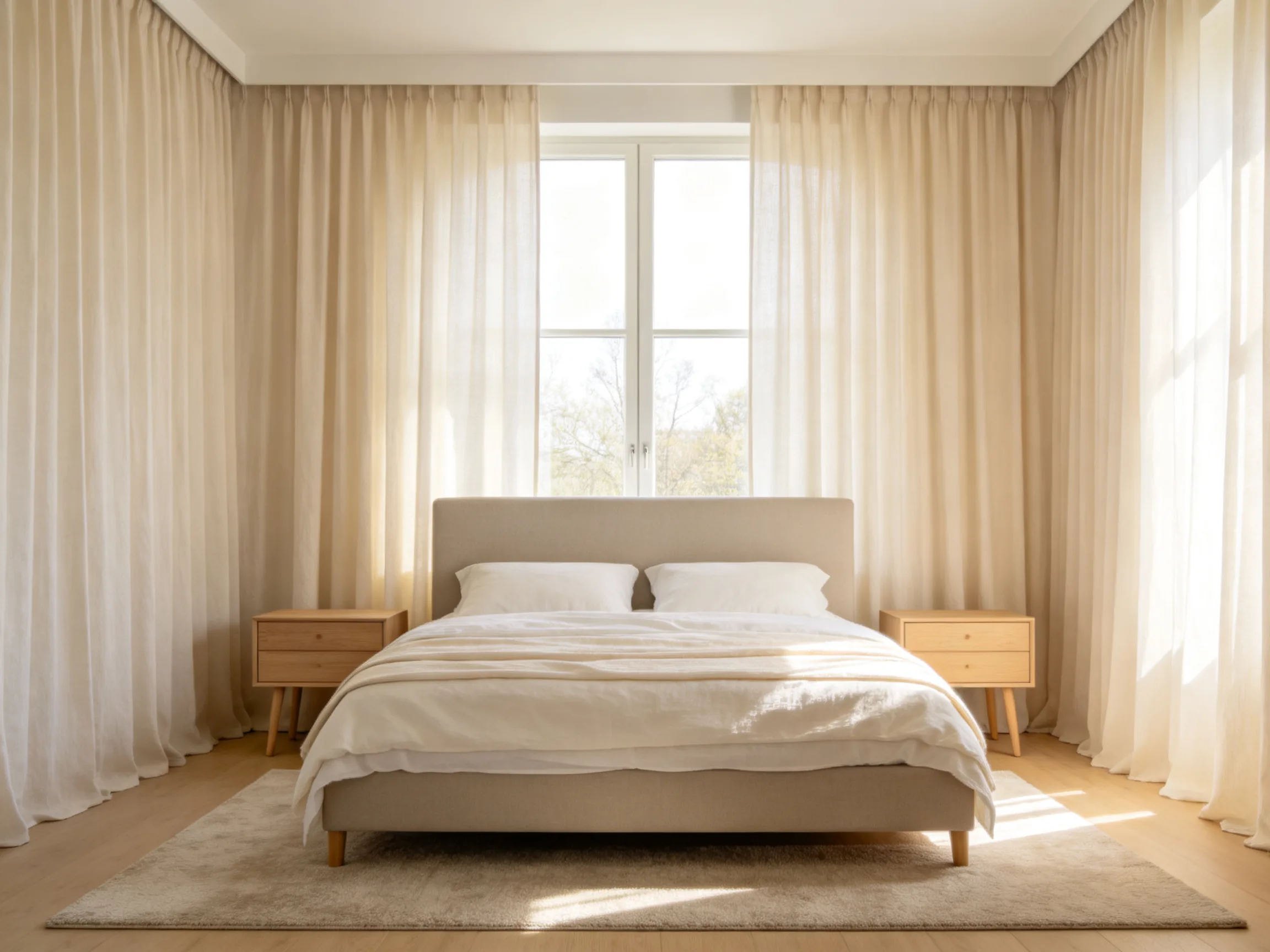
Floor-to-ceiling white linen curtains are one of the easiest ways to make a bedroom feel airy and complete. Mount the curtain rod close to the ceiling instead of directly above the window frame so the wall looks taller and the window feels more generous.
This works especially well in bedrooms with light paint colors, pale wood furniture, or a neutral upholstered bed. Choose panels that skim the floor rather than stopping at the sill, because short curtains can visually cut the wall and make the room feel unfinished.
2. Warm Beige Curtains for a Soft Neutral Bedroom
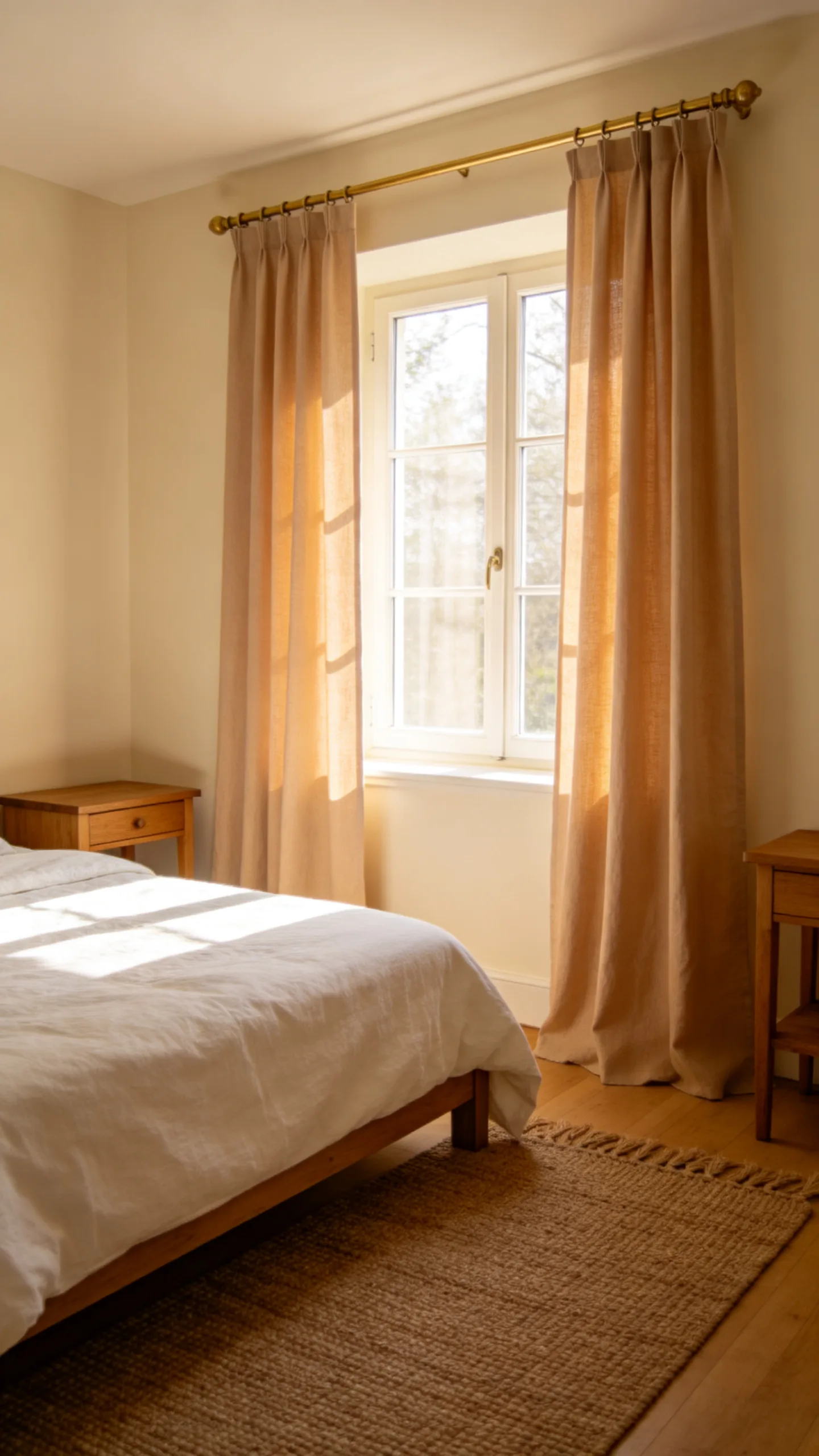
Warm beige curtains add depth to a neutral bedroom without making the space feel dark. They pair beautifully with ivory bedding, oak nightstands, cream walls, and woven textures like jute rugs or rattan benches.
For a designer-looking finish, choose beige curtains that are slightly deeper than the wall color. This creates a soft frame around the window while keeping the room calm and cohesive. Use a matte black or warm brass rod for a clean contrast.
3. Blackout Curtains Hidden Behind Sheer Panels
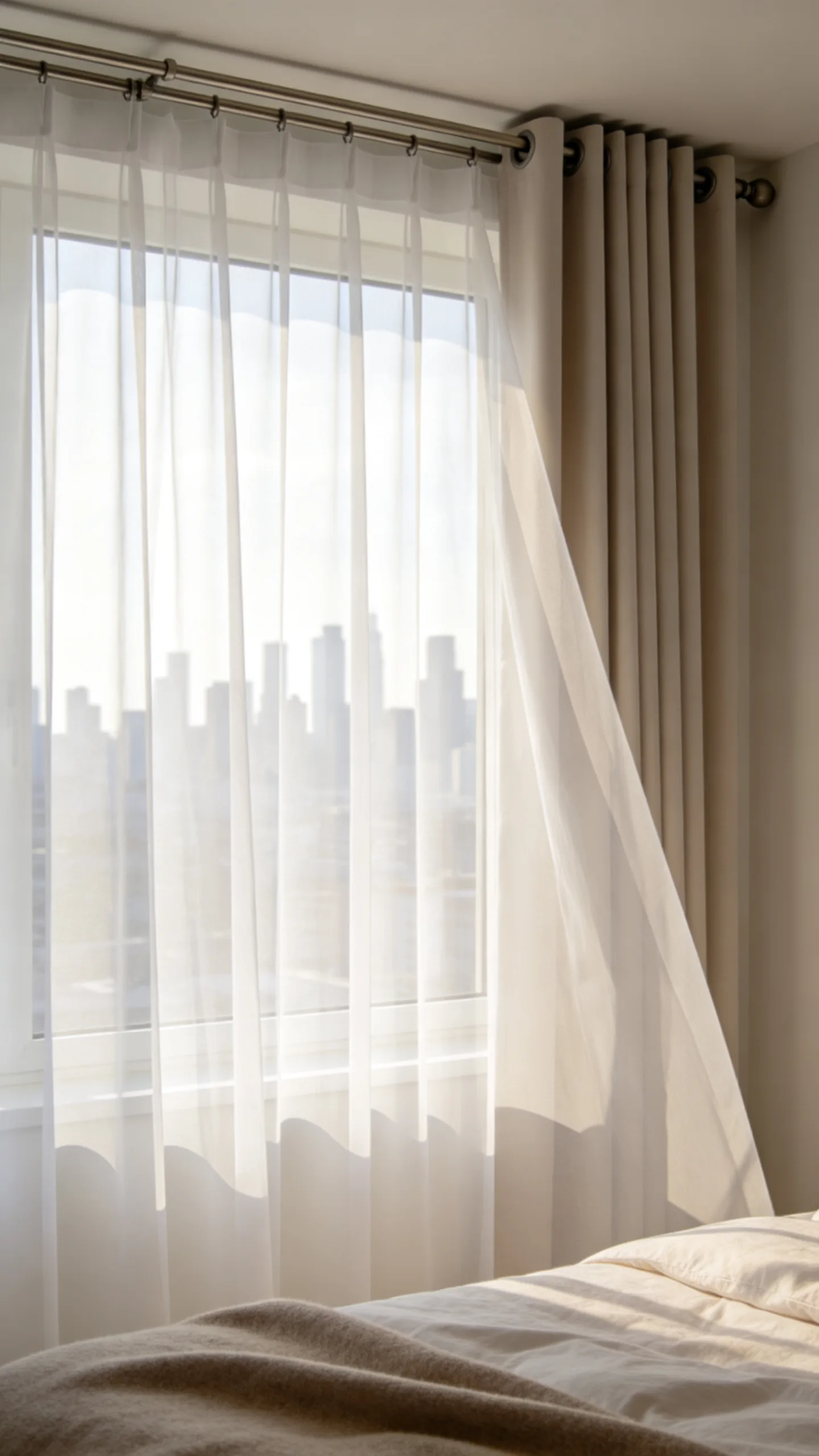
Layering blackout curtains behind sheer panels gives the bedroom both function and softness. The blackout layer helps with sleep and privacy, while the sheer layer keeps the window looking light during the day.
This setup is especially useful in city bedrooms, street-facing rooms, or spaces with bright morning light. Use a double curtain rod so each layer moves independently, and choose sheers in white, ivory, or pale gray to soften the heavier blackout fabric.
4. Pinch Pleat Curtains for a Tailored Look
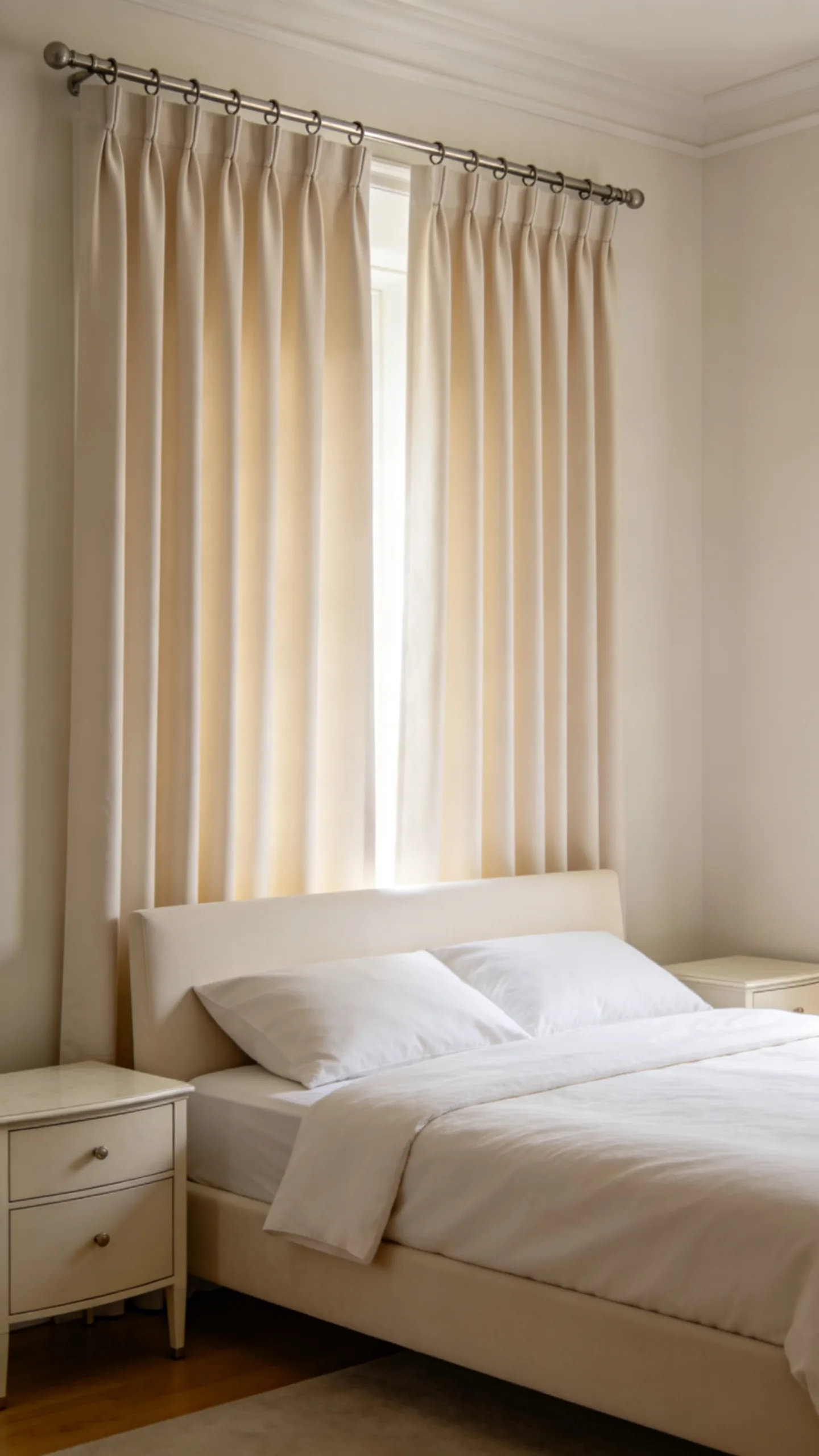
Pinch pleat curtains instantly make a bedroom feel more polished because the folds are structured and even. They work well in traditional, transitional, and modern bedrooms where the window treatment needs to look intentional rather than casual.
Hang pinch pleat panels from rings on a slim metal rod for a refined finish. This style looks especially good behind a bed, beside matching nightstands, or across a large window where the pleats can create rhythm and balance on the wall.
5. Velvet Curtains for a Cozy Bedroom Focal Point
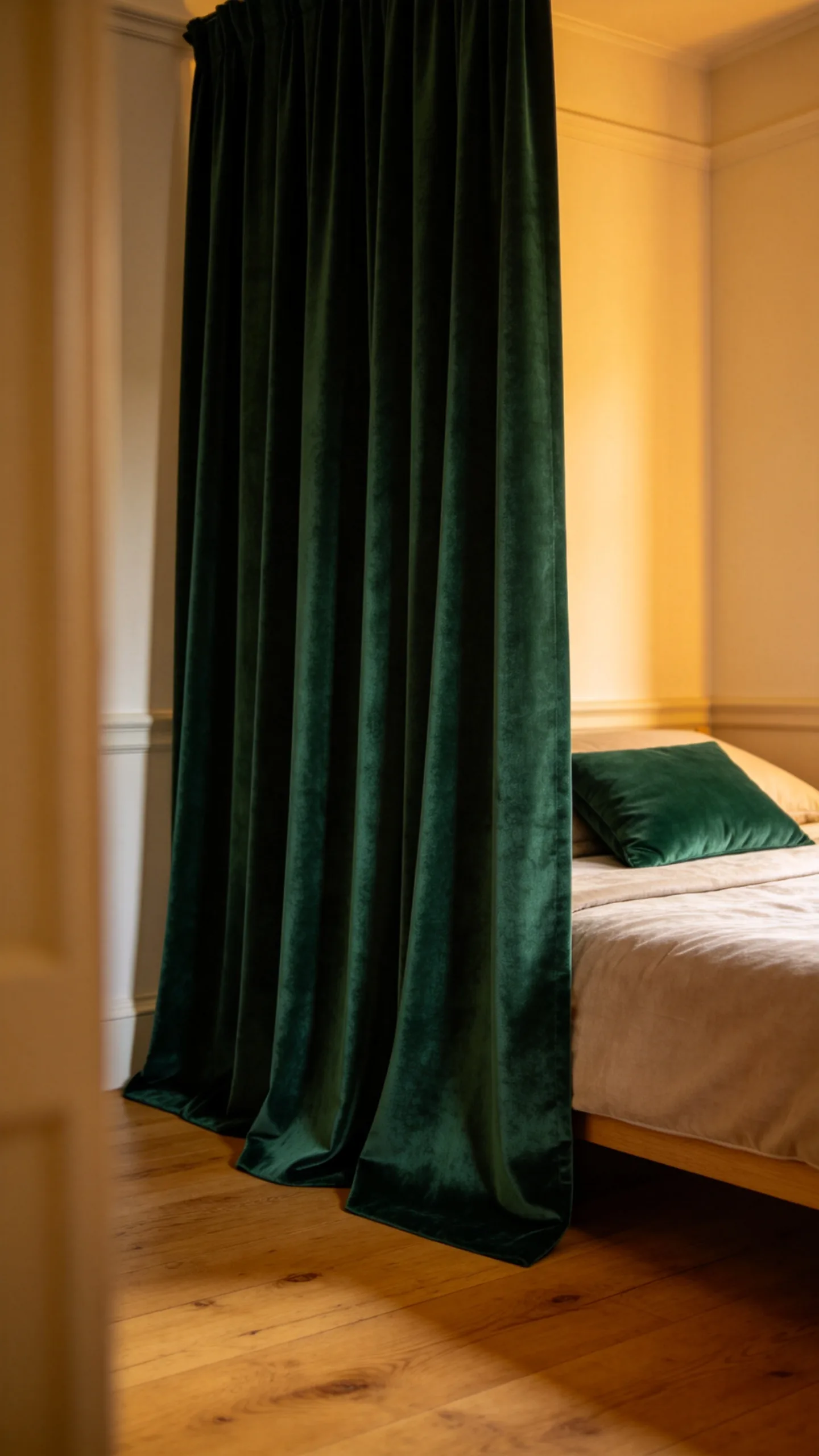
Velvet curtains add weight, softness, and a sense of warmth to a bedroom. They are especially effective in rooms with hard surfaces, such as wood floors, simple painted walls, or minimal furniture, because the fabric brings in texture and visual comfort.
Deep colors like forest green, navy, charcoal, rust, or chocolate brown can turn the window into a focal point. To keep the room balanced, repeat the curtain color in a smaller accent, such as a throw pillow, bedside lamp, or framed artwork.
6. Sheer White Curtains for a Light-Filled Bedroom
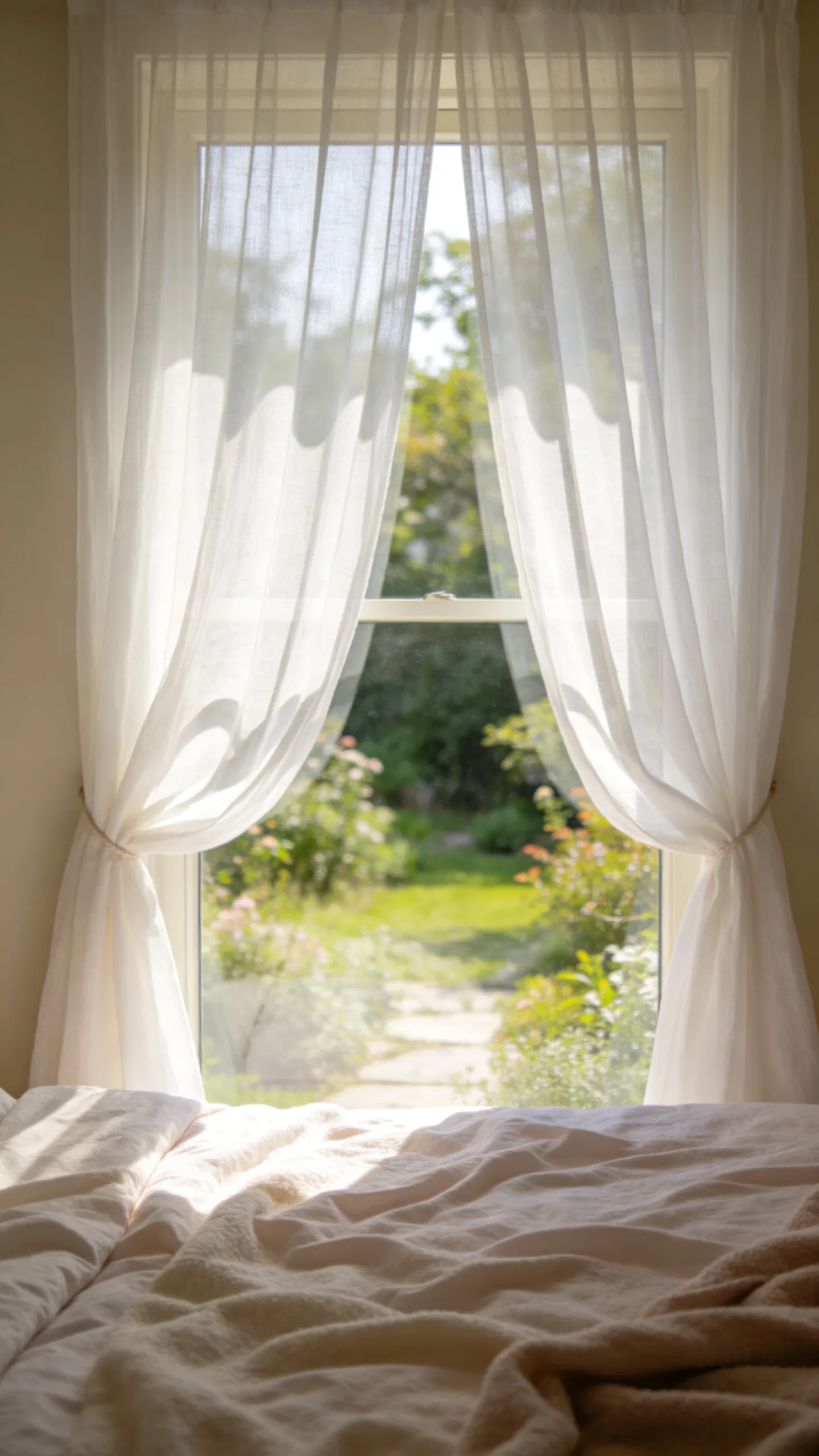
Sheer white curtains are ideal when the bedroom needs softness but not heavy coverage. They filter daylight, blur the window edges, and make the room feel breezy without blocking too much natural light.
Use them in bedrooms with private views, layered shades, or windows that face a garden or courtyard. For a finished look, choose full-width panels with enough fabric to gather softly when closed instead of hanging flat against the glass.
7. Matching Wall-Color Curtains for a Seamless Effect
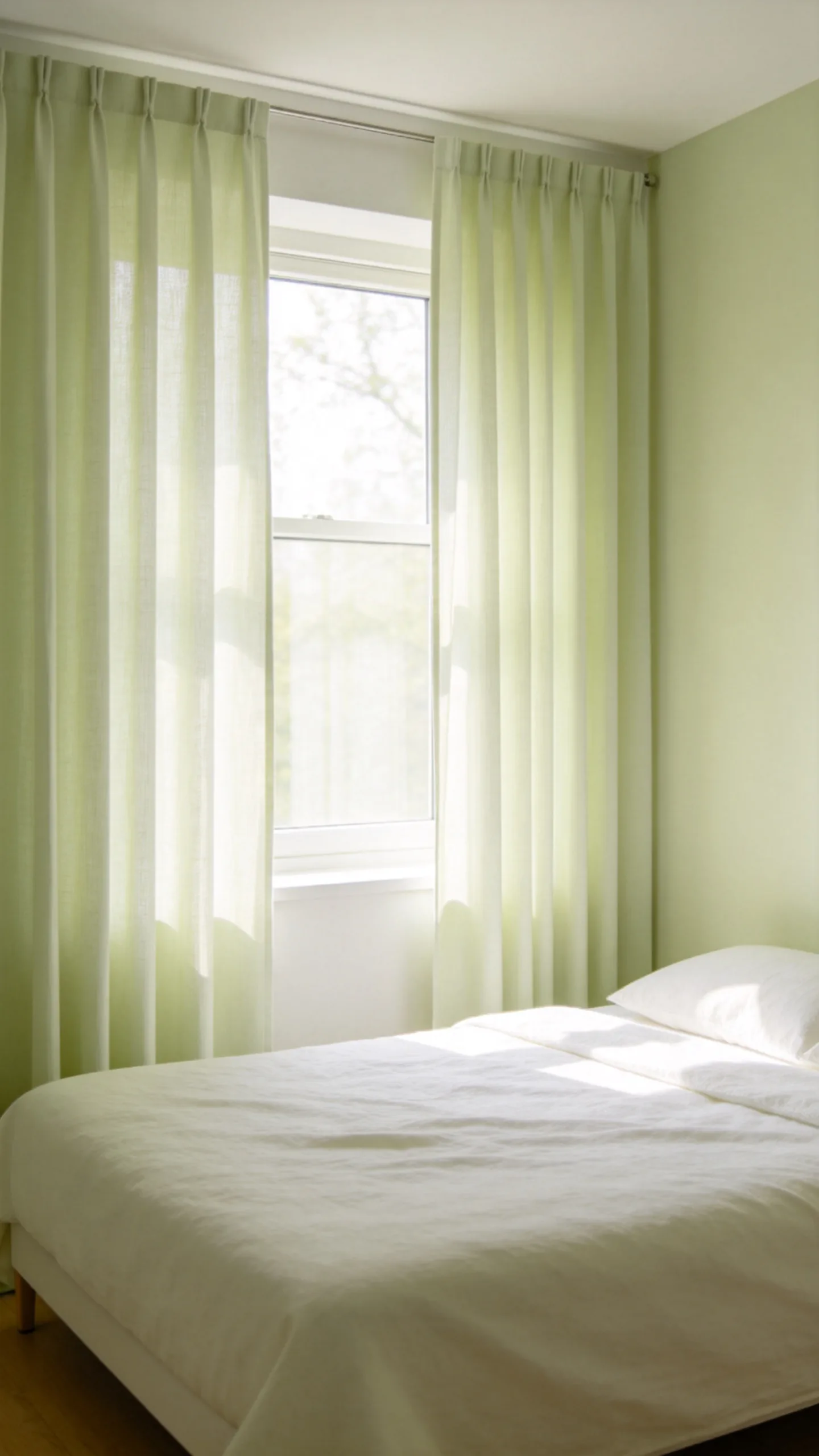
Curtains that match the bedroom wall color create a quiet, seamless background. This is a smart choice for small bedrooms because it reduces visual breaks and helps the eye move across the room more easily.
If the walls are soft gray, warm white, taupe, or sage, look for curtain panels in a similar tone. The slight texture of linen, cotton, or woven fabric will still add dimension while keeping the window from feeling busy.
8. Patterned Curtains in a Simple Bedroom
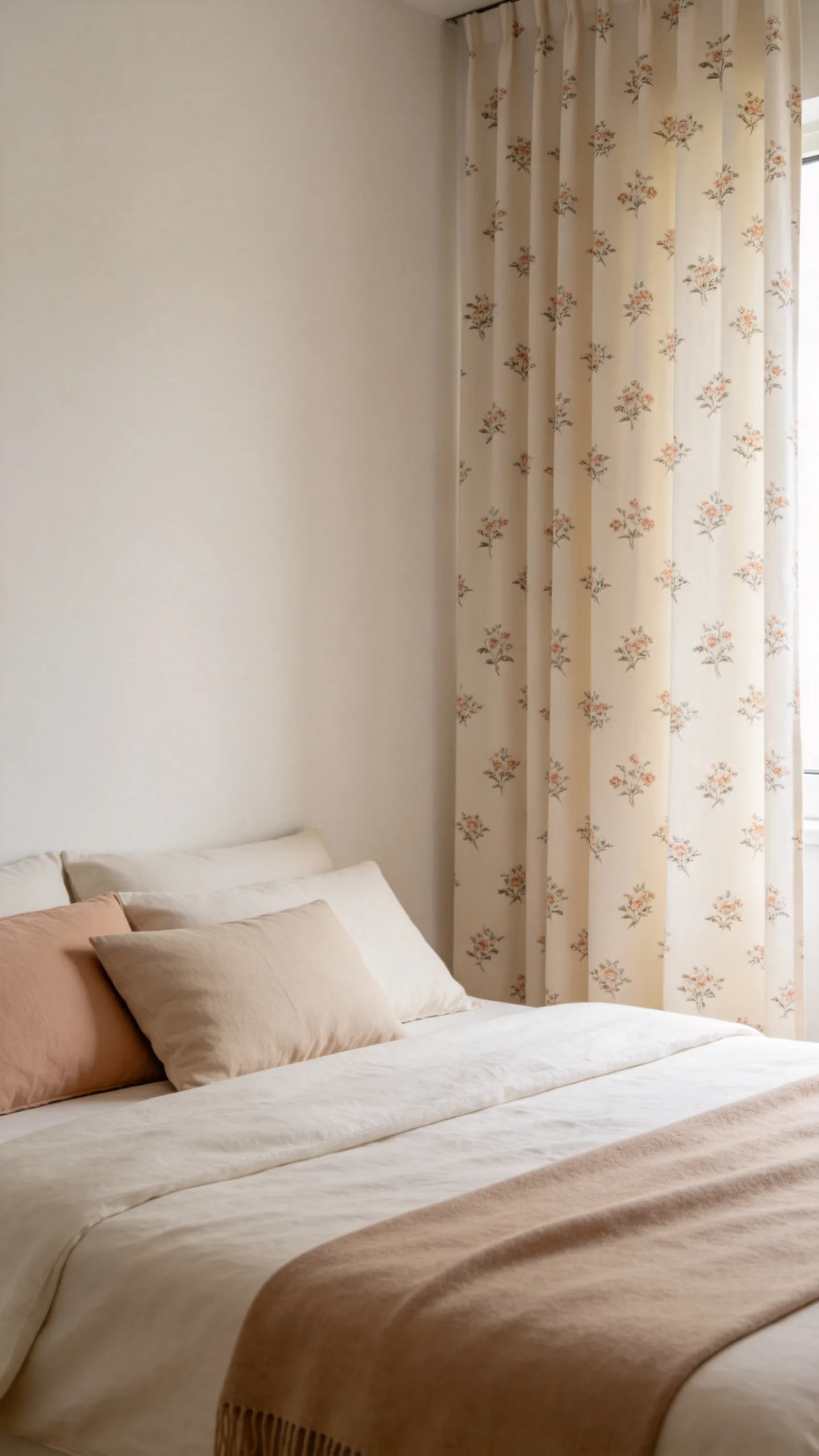
Patterned curtains can make a plain bedroom feel decorated without adding more furniture. They work best when the bedding, rug, and wall color are relatively simple, allowing the curtain pattern to become the main decorative element.
Try subtle stripes, block prints, florals, or small geometric designs. Pull one color from the curtain pattern into the bed pillows or throw blanket so the room feels coordinated rather than random.
9. Soft Gray Curtains for a Calm, Balanced Room
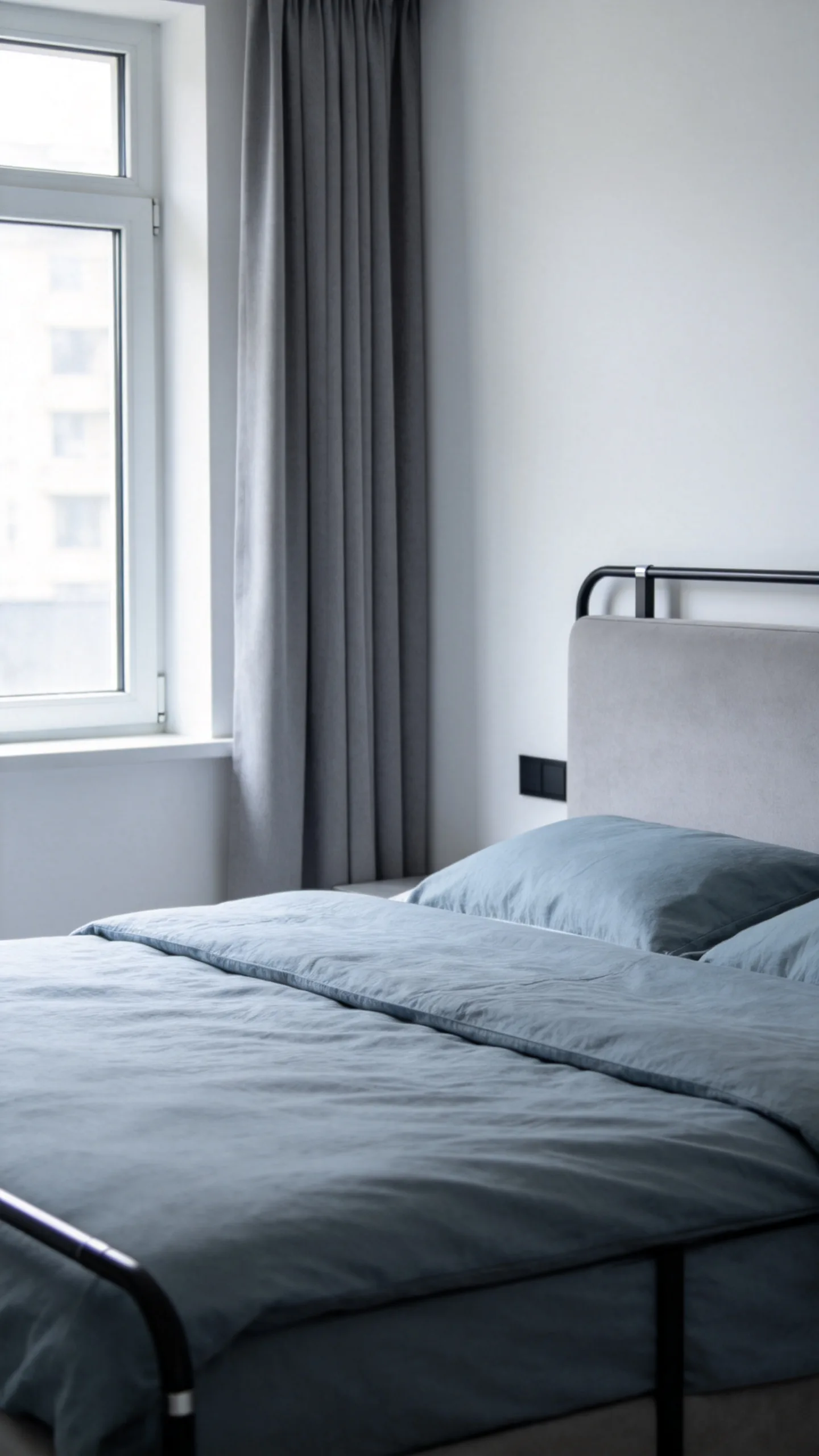
Soft gray curtains are a versatile choice for bedrooms with white walls, black accents, upholstered beds, or cool-toned bedding. They add definition around the window without feeling as strong as black or navy.
Choose a warm gray if the room has beige carpet, oak furniture, or cream bedding. Choose a cooler gray if the room includes crisp white, chrome, charcoal, or blue accents. The undertone matters because it helps the curtains blend with the rest of the bedroom palette.
10. Ceiling-Track Curtains for a Clean Modern Bedroom
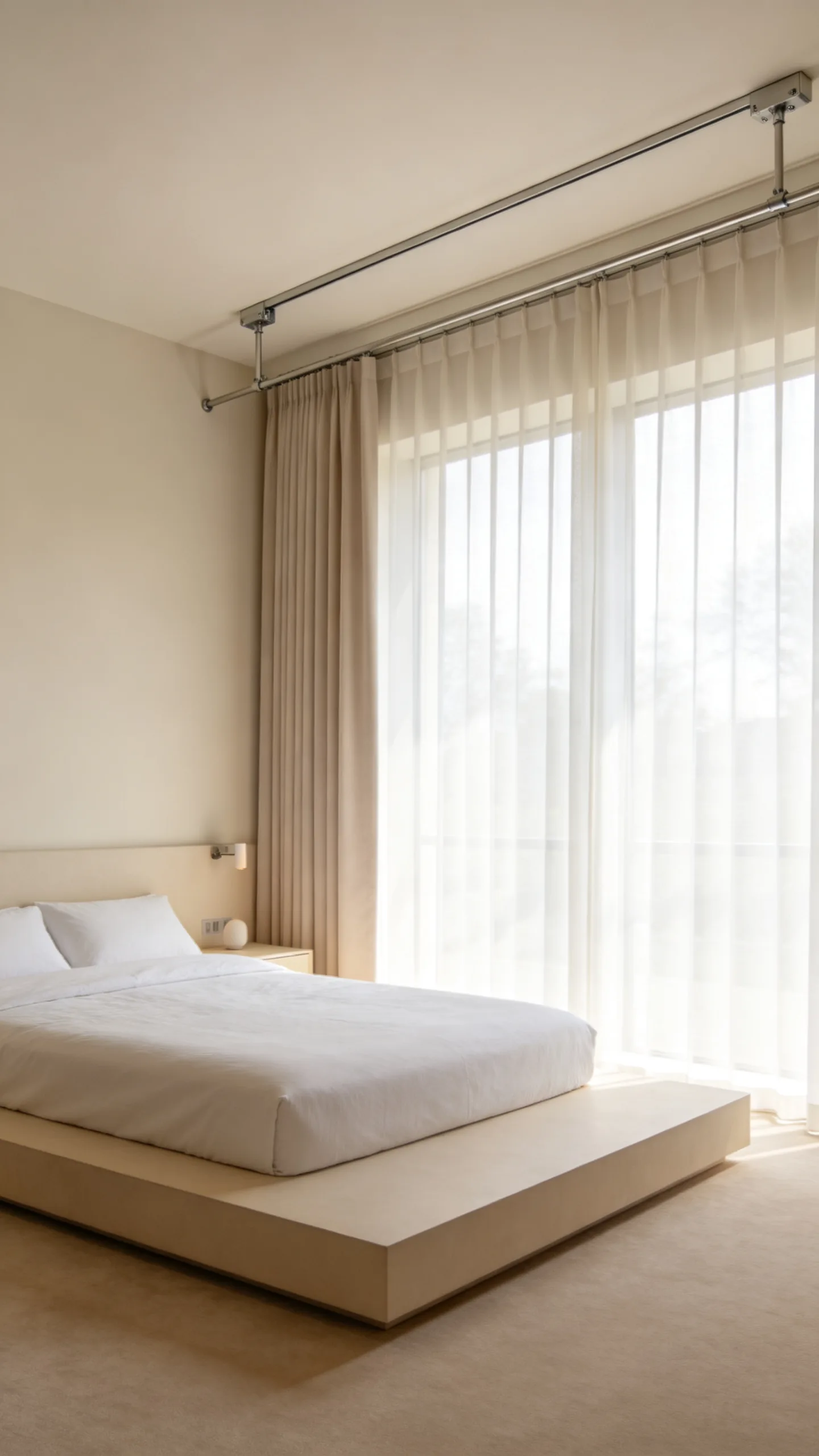
Ceiling-track curtains create a sleek, hotel-like effect because the hardware almost disappears. This is a strong option for modern bedrooms, small rooms, or spaces where a standard curtain rod would feel visually bulky.
Install the track along the ceiling and let the panels run from wall to wall if possible. This makes the entire window wall look softer and larger, which is helpful in bedrooms with low ceilings or awkwardly placed windows.
11. Curtains Wider Than the Window Frame
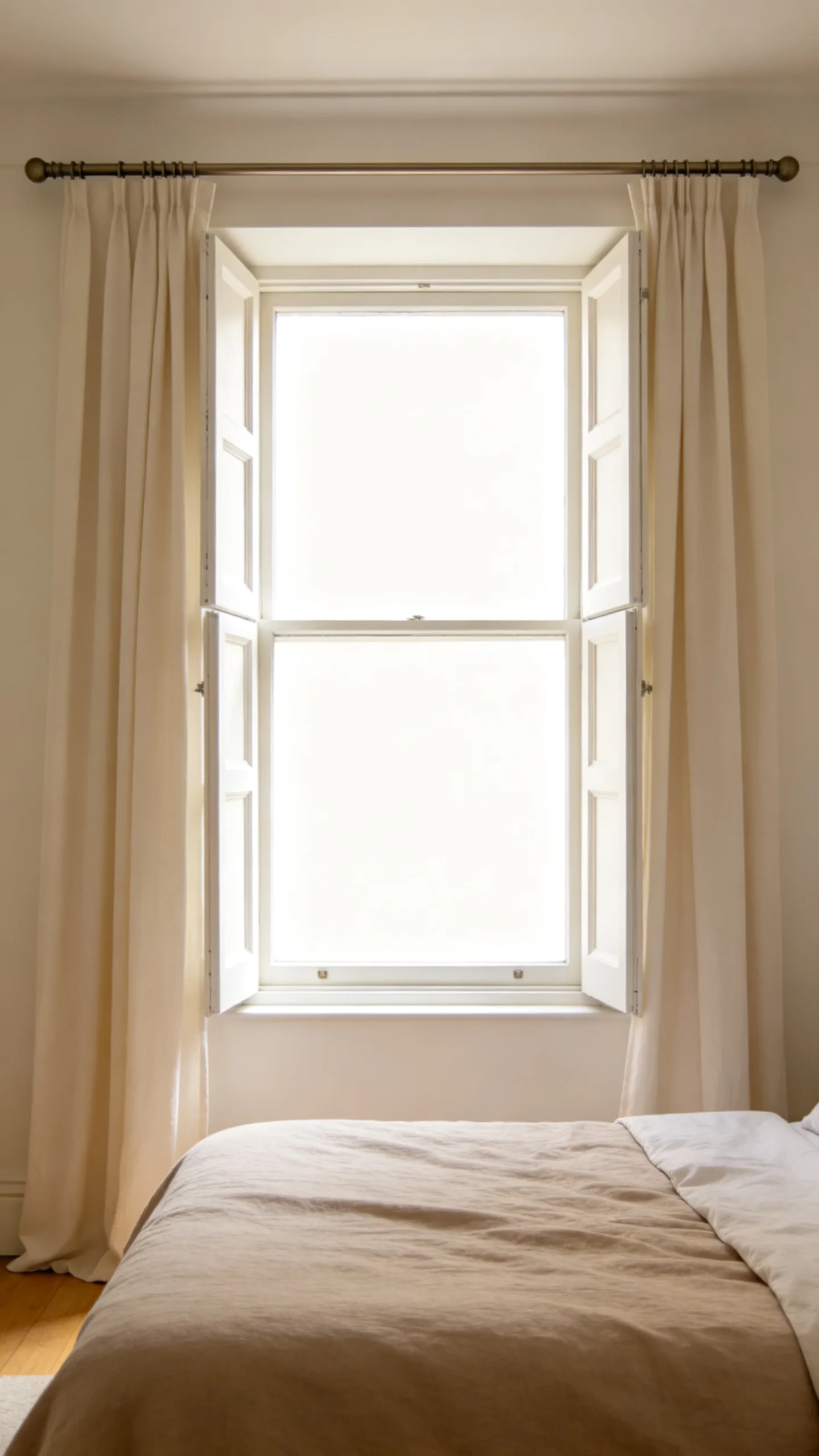
Extending curtains beyond the window frame makes the window look bigger and allows more daylight in when the panels are open. Mount the rod several inches wider than the window on both sides so the fabric stacks against the wall instead of covering the glass.
This idea works well in bedrooms where the window feels too small for the wall. Wider curtains visually stretch the architecture and help balance large furniture pieces like a king bed, dresser, or tall wardrobe.
12. Curtains That Just Kiss the Floor
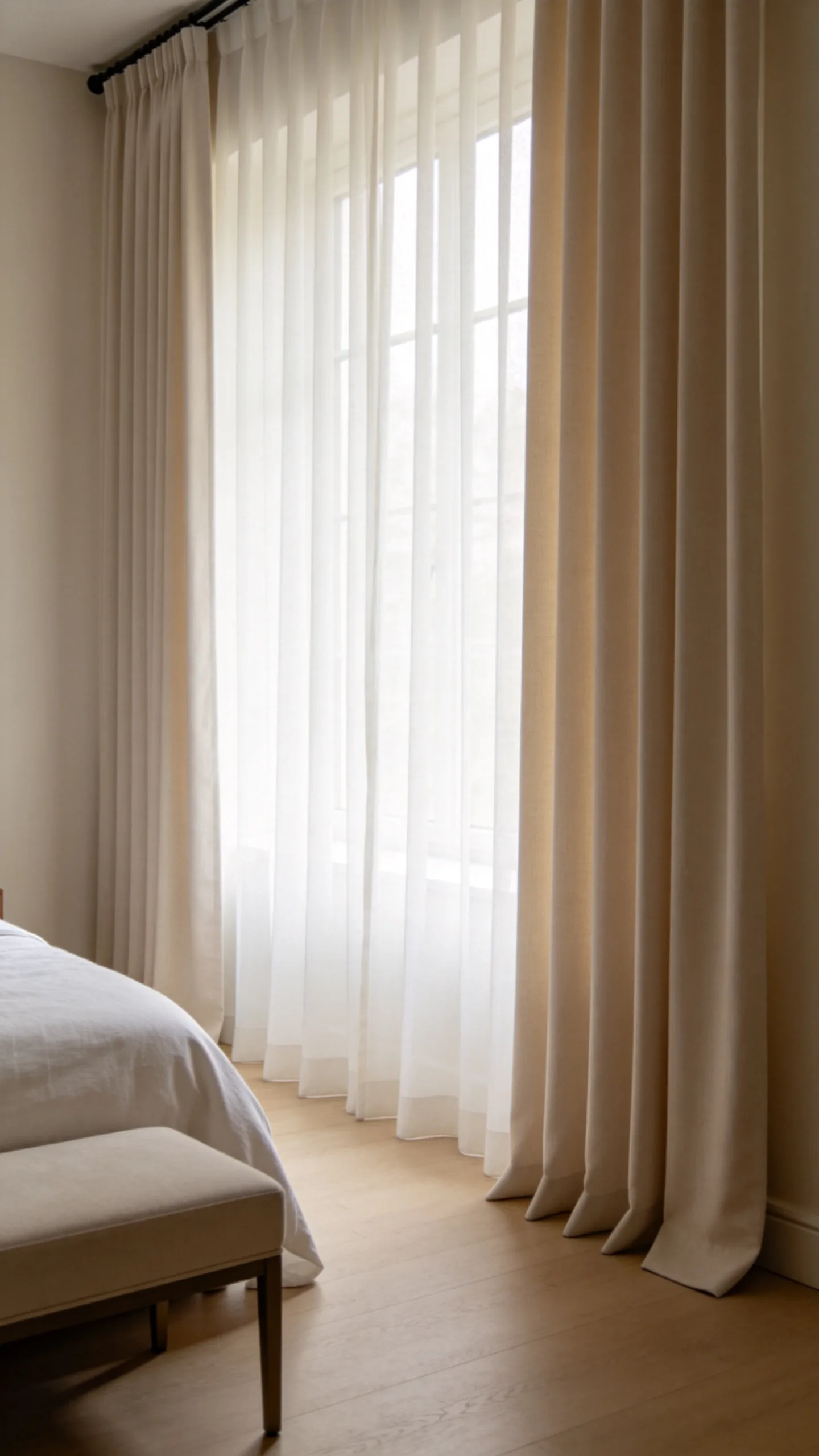
Curtains that just touch or “kiss” the floor create a crisp, intentional finish. This length is practical for bedrooms because it looks tailored while avoiding extra fabric that collects dust or gets caught under furniture.
Measure from the rod or rings to the floor before buying panels. If the bedroom has radiators, floor vents, or a bench near the window, this clean length keeps the curtains looking neat while still giving the wall a full-height effect.
13. Puddled Curtains for a Romantic Bedroom
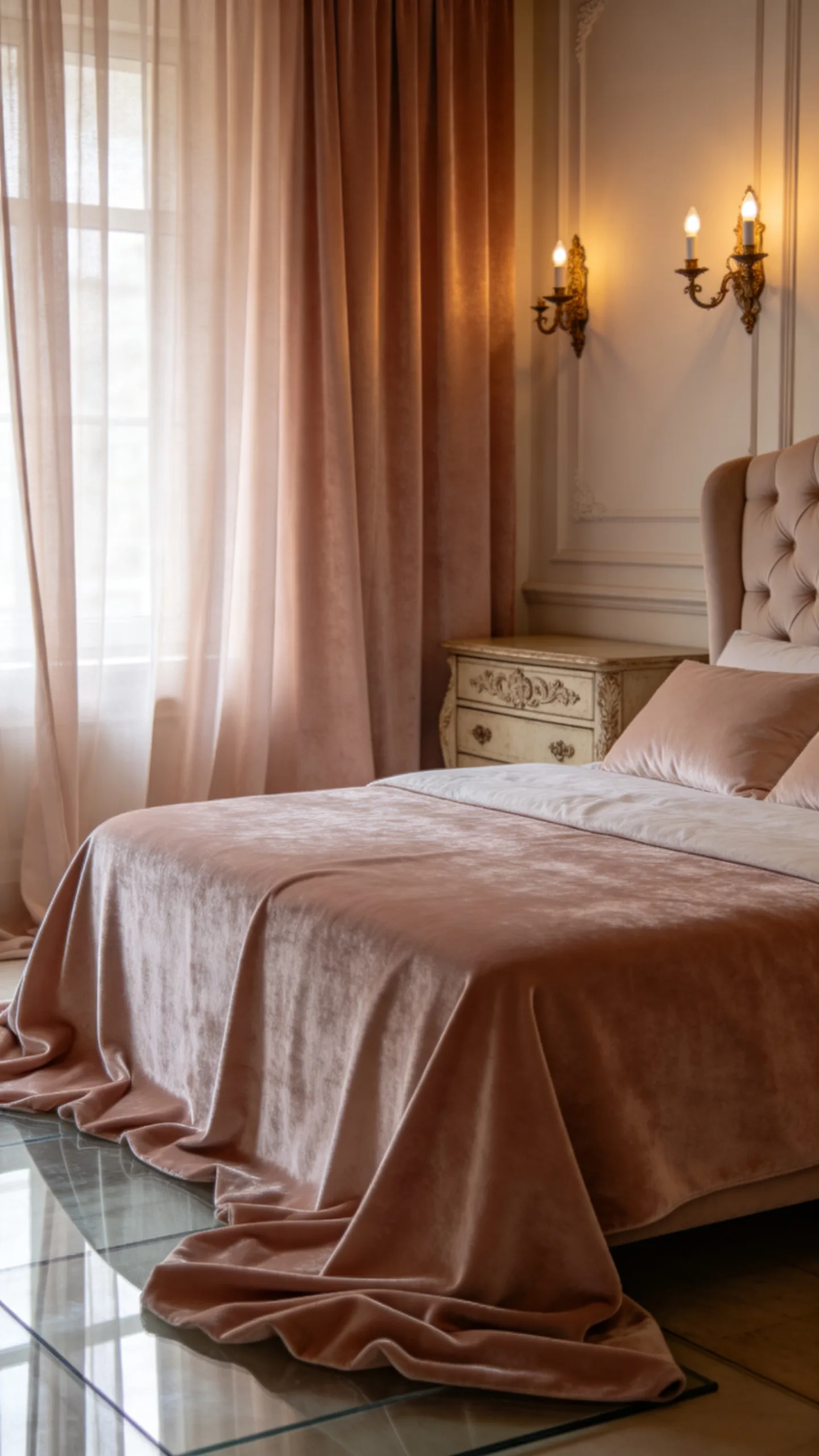
Puddled curtains add a relaxed, romantic look by allowing a few extra inches of fabric to gather on the floor. This works best with soft materials like linen, cotton voile, or lightweight velvet rather than stiff polyester panels.
Use puddled curtains in adult bedrooms where the floor space near the window stays clear. They look especially pretty beside an upholstered bed, vintage dresser, floral bedding, or antique-inspired wall sconces.
14. Two-Tone Curtains for Subtle Contrast
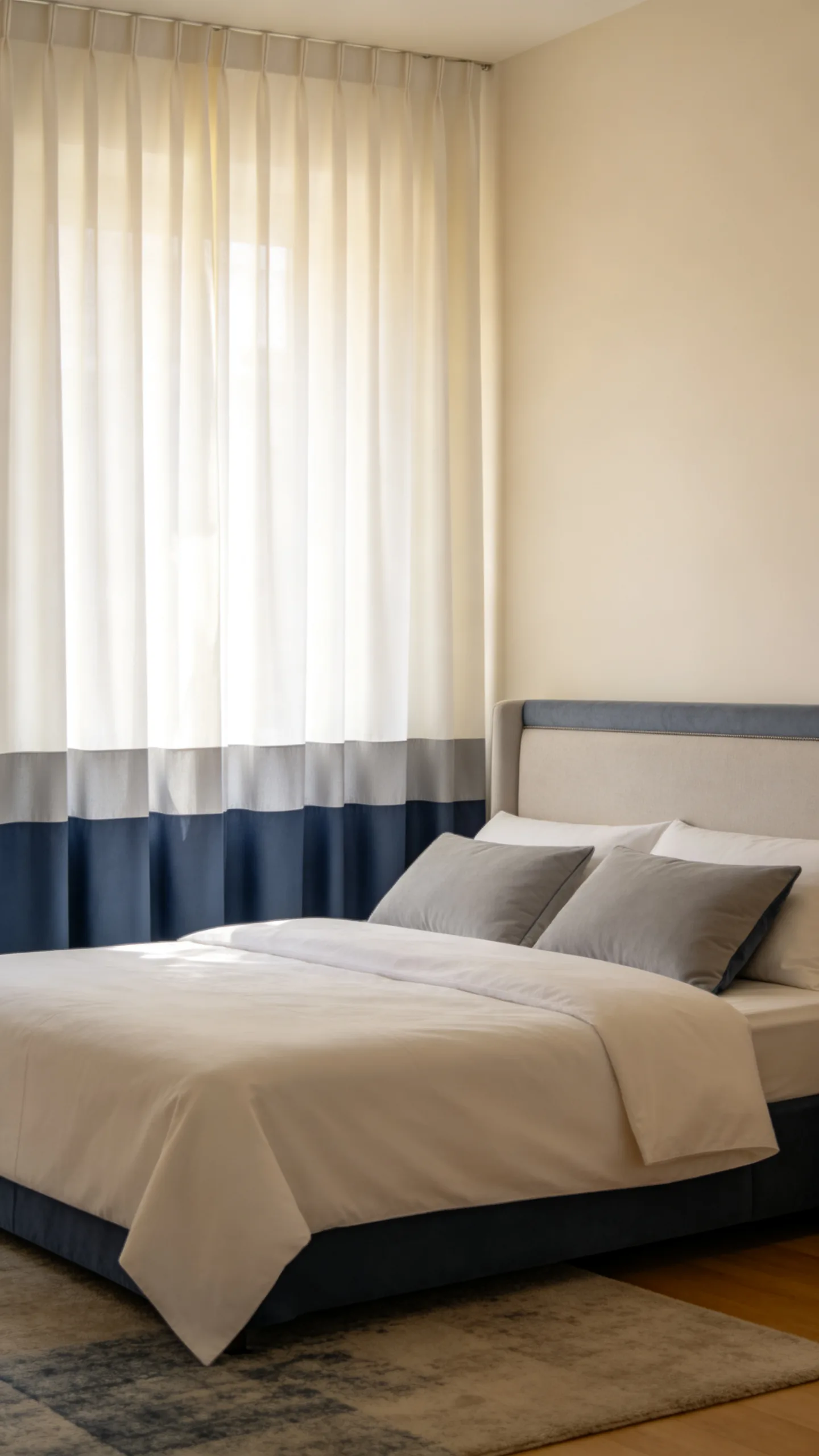
Two-tone curtains add interest without overwhelming the bedroom. A simple design with a white upper section and a beige, gray, or navy lower band can make the window feel custom and structured.
This style is useful when the room needs a bridge between light walls and darker furniture. For example, a navy band at the bottom of ivory curtains can connect to a navy headboard, dark rug, or blue patterned pillows.
15. Natural Woven Shades Layered with Curtains
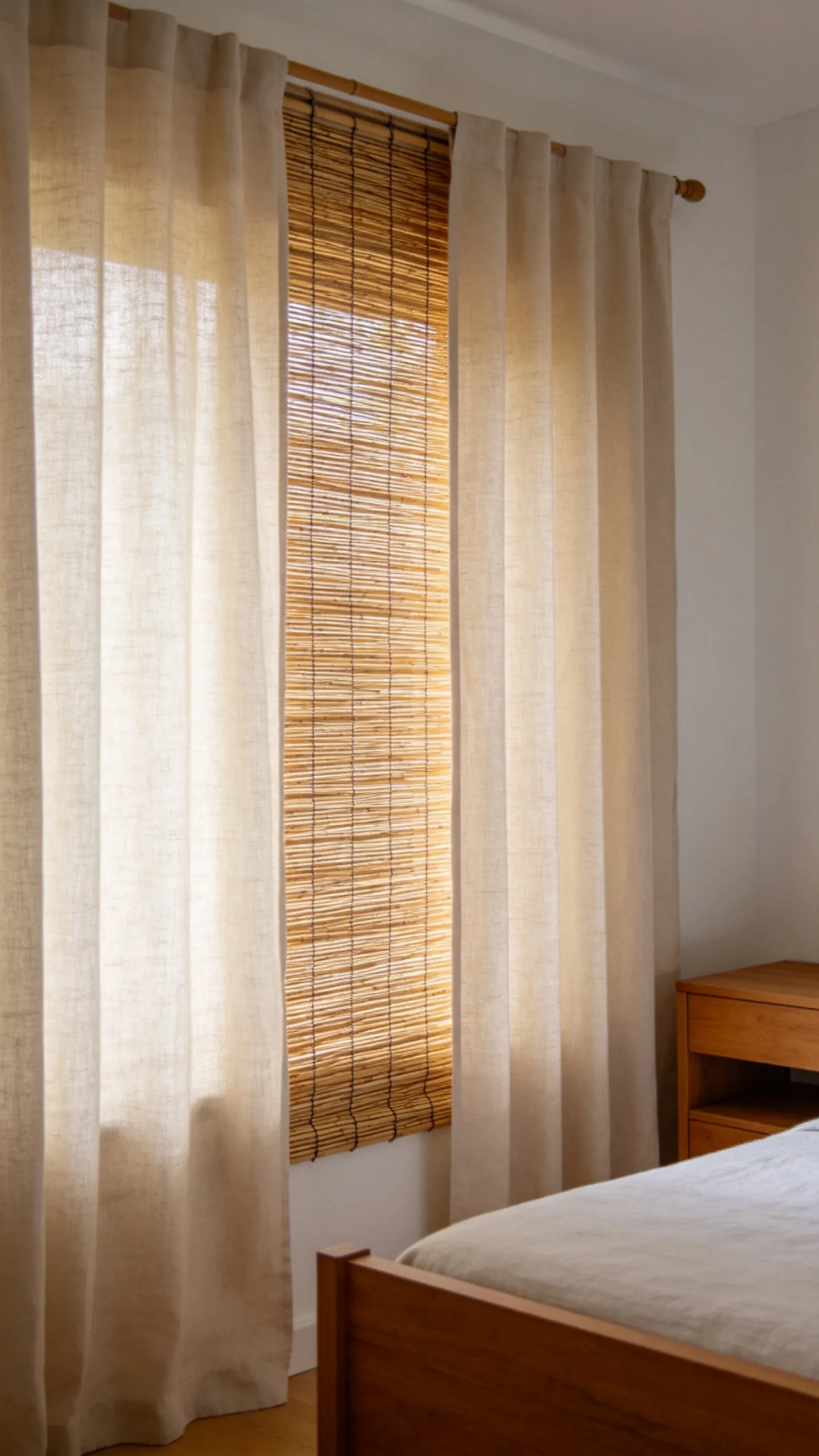
Woven shades layered under curtains add texture, privacy, and a finished designer look. Bamboo, grasscloth, or natural fiber shades bring warmth to the window, while fabric panels soften the edges.
This combination works beautifully in bedrooms with white walls, wood furniture, coastal decor, or organic modern styling. Keep the curtain fabric simple so the woven texture remains visible and doesn’t compete with a busy pattern.
16. Dark Curtains Against Light Walls
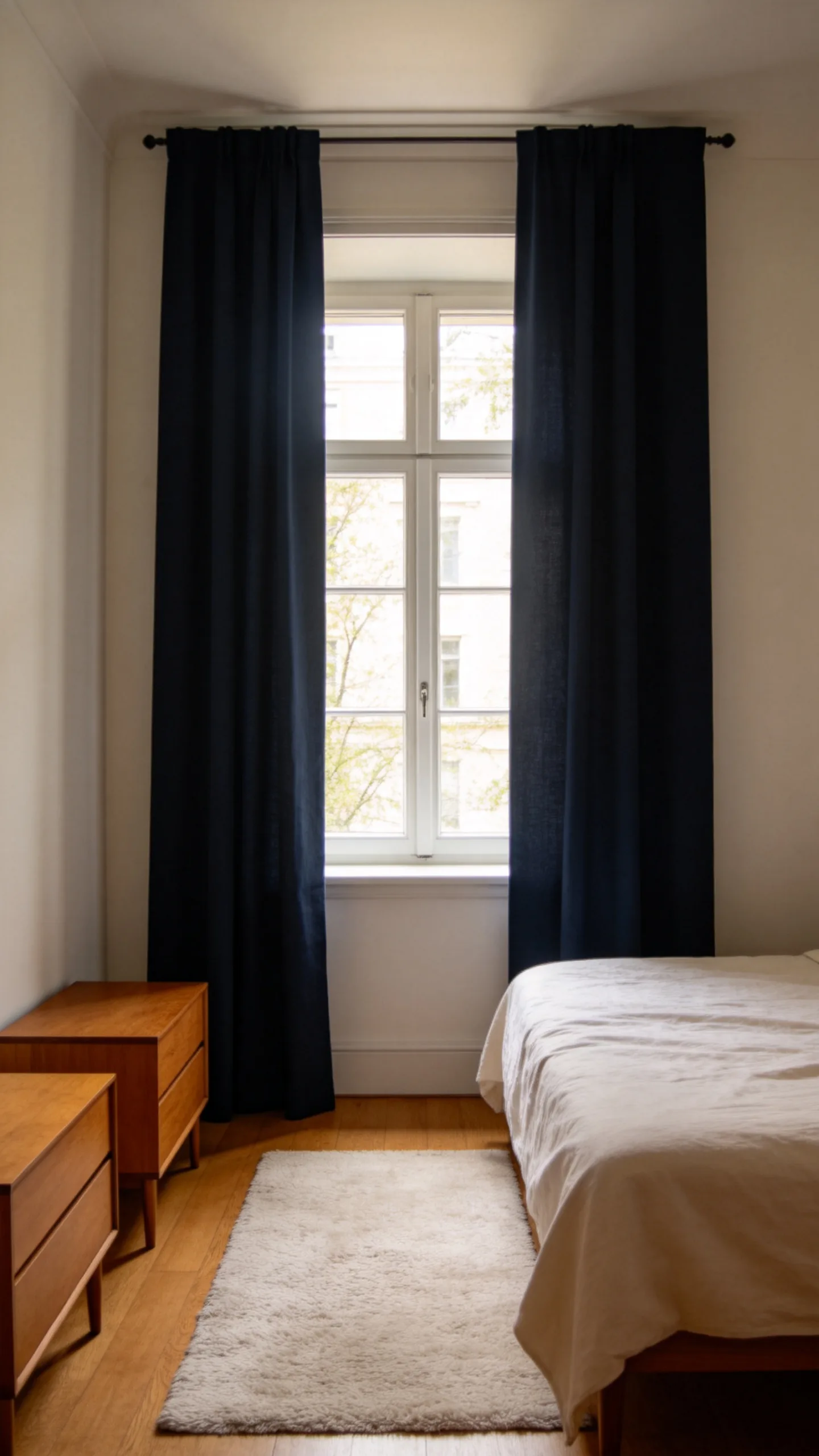
Dark curtains can ground a bedroom with pale walls and light bedding. Colors like charcoal, espresso, deep olive, or navy create a strong vertical frame that makes the window feel more important.
To keep the room from feeling heavy, balance dark curtains with lighter textiles on the bed, a pale rug, or warm wood nightstands. This contrast is especially effective in bedrooms that feel too plain or washed out.
17. Striped Curtains to Add Height
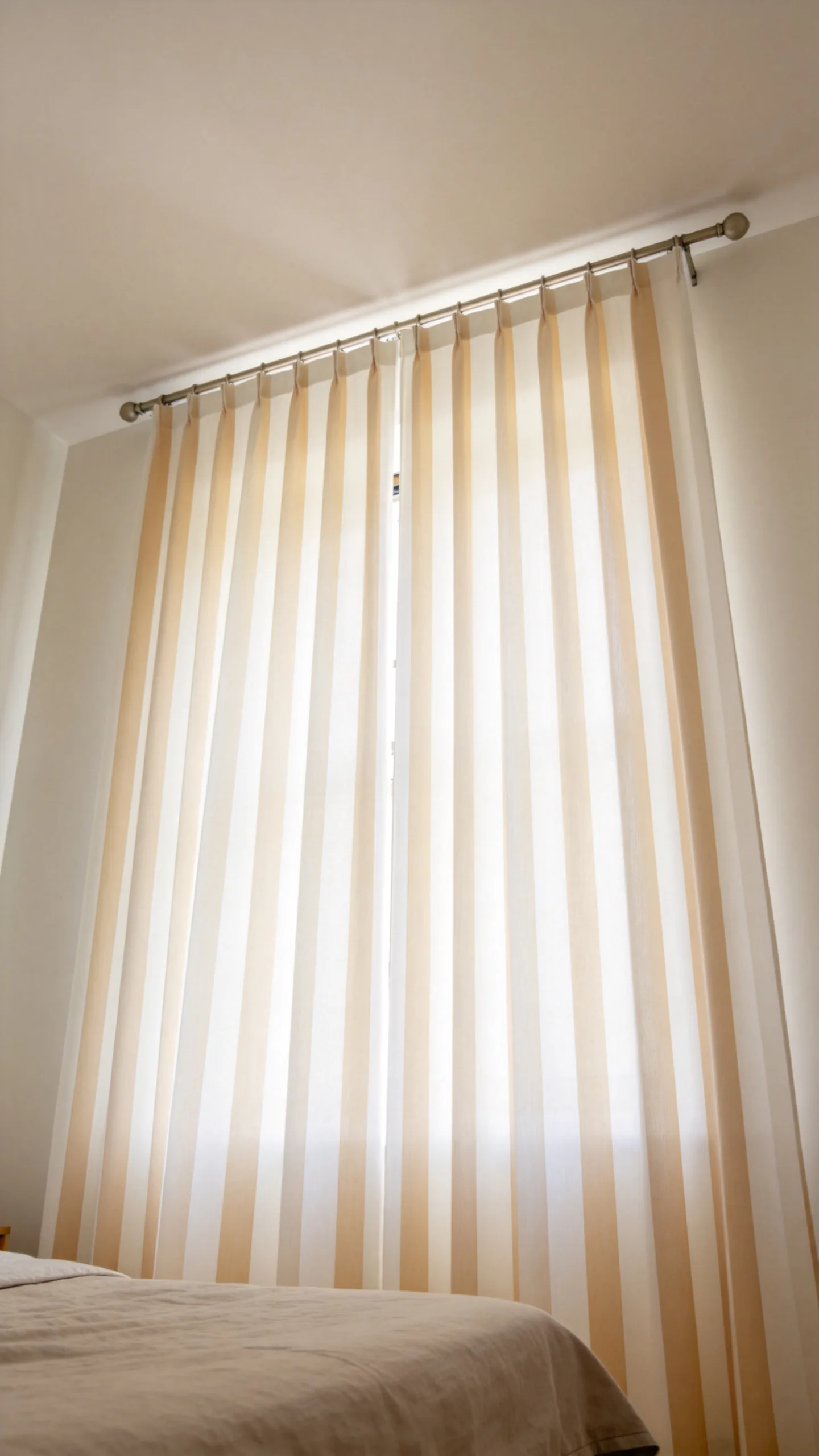
Vertical striped curtains draw the eye upward and make the wall feel taller. They are a practical choice for bedrooms with low ceilings, short windows, or simple boxy layouts that need more movement.
Choose narrow stripes for a subtle effect or wider stripes for a bolder focal point. Neutral combinations like white and beige, cream and gray, or ivory and tan keep the look polished and easy to pair with bedding.
18. Curtains Behind the Bed as a Soft Backdrop
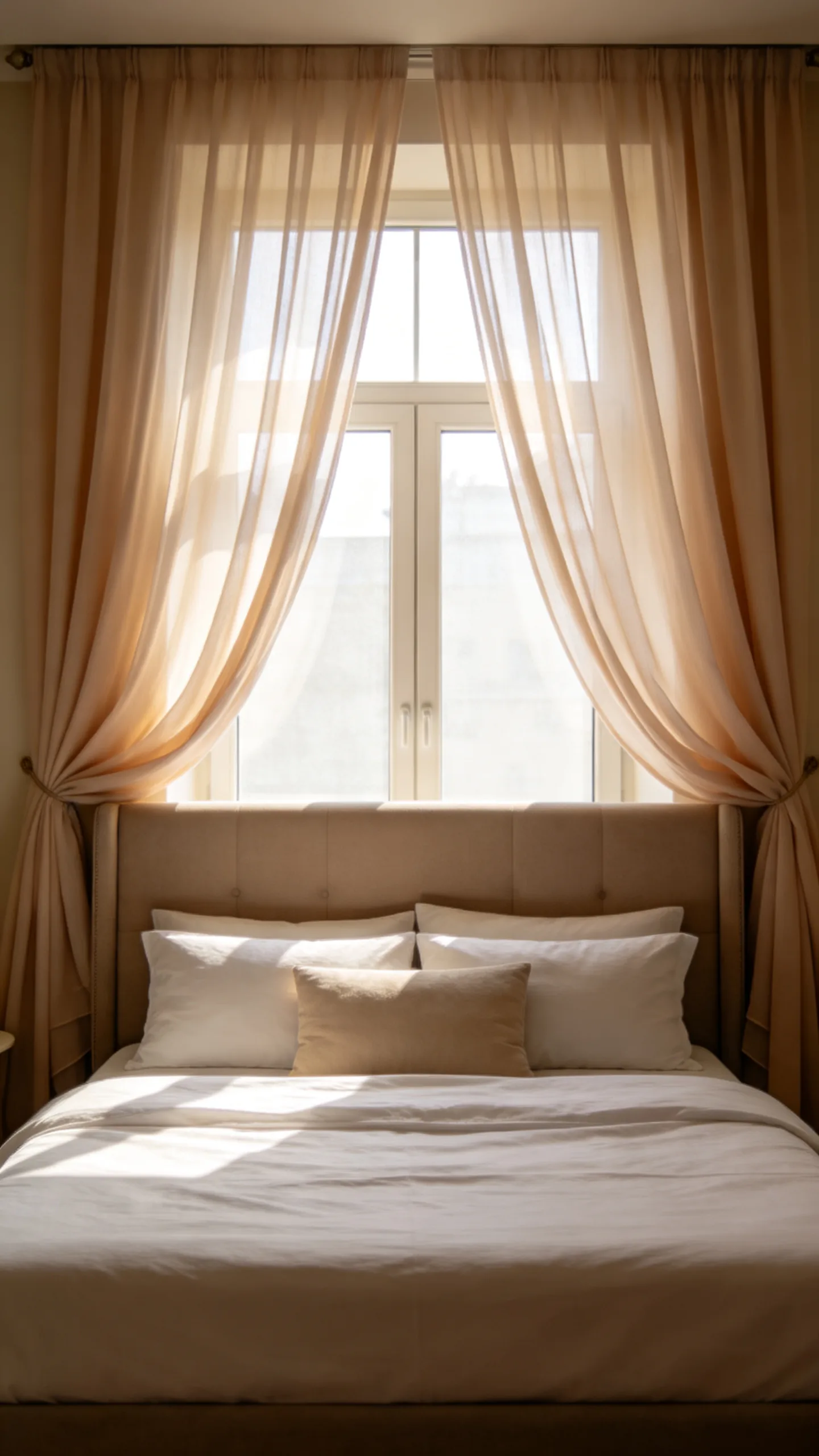
If the bed sits in front of a window, curtains can turn the wall into a soft layered backdrop. Hang panels wider than the bed frame so the fabric frames the headboard and makes the whole sleeping area feel intentional.
This works well when there is no space for large artwork above the bed. Use blackout lining if light hits the pillow area in the morning, and choose a fabric color that complements the headboard rather than blending into it completely.
19. Cream Curtains with Warm Brass Hardware
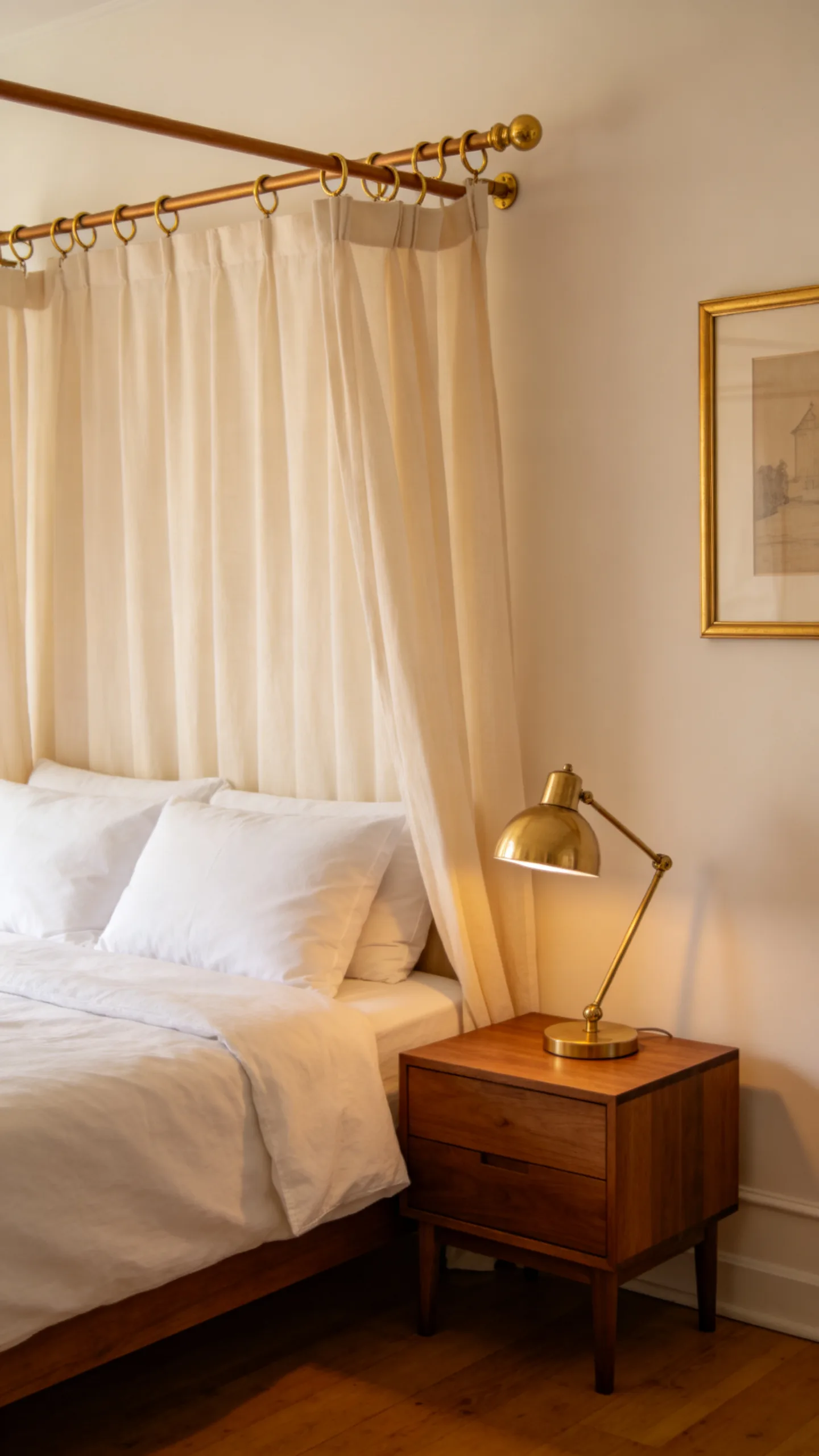
Cream curtains paired with warm brass hardware create a soft, elevated bedroom look. The brass rod and rings add just enough shine without making the room feel formal or overly decorated.
This combination works well with beige walls, white bedding, walnut furniture, and warm wood floors. Use brass again in a table lamp, picture frame, or drawer pull so the curtain hardware feels connected to the rest of the room.
20. Moody Green Curtains for an Earthy Bedroom
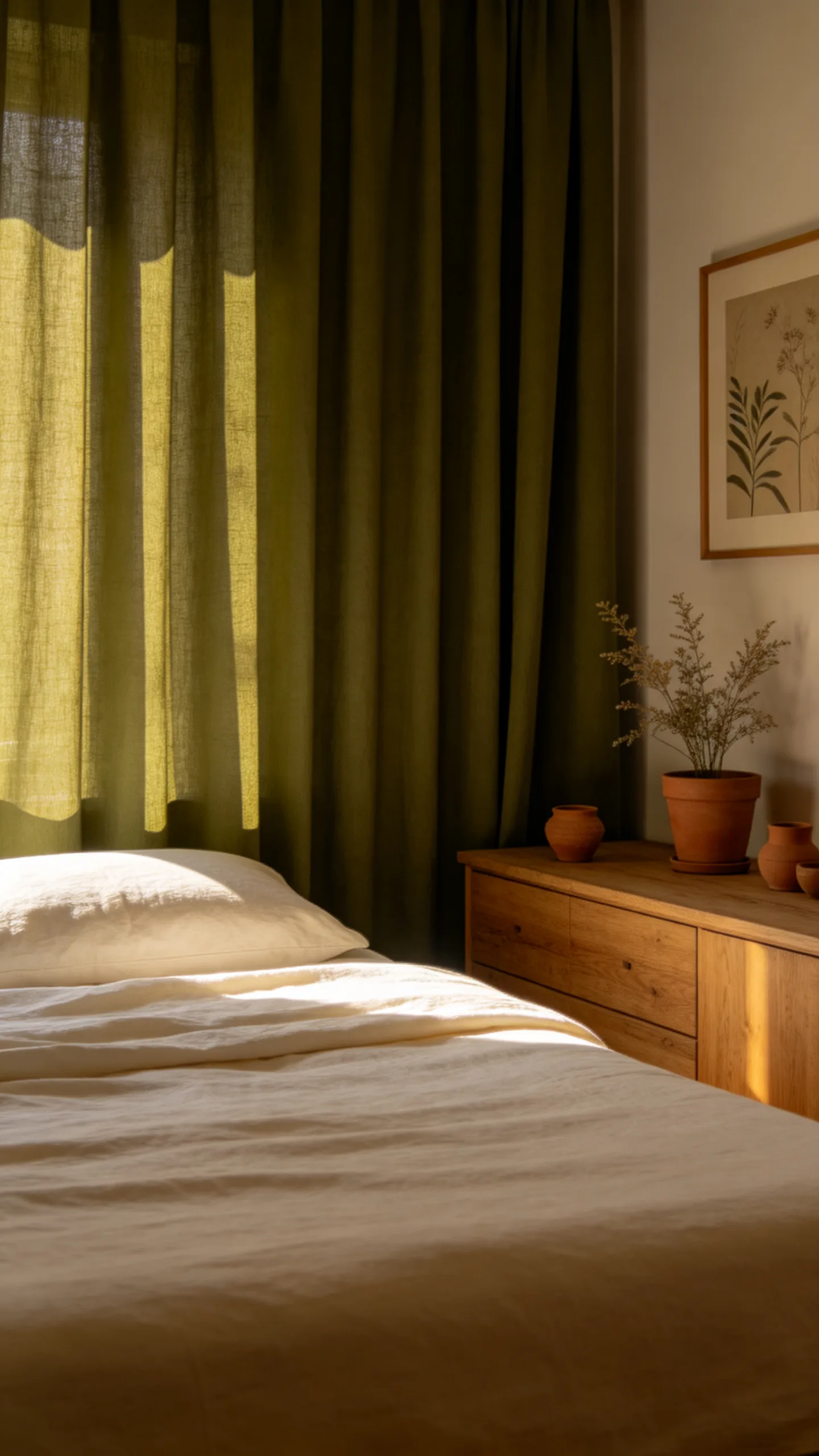
Moody green curtains bring color into a bedroom while still feeling calm and natural. Olive, moss, eucalyptus, or deep sage panels pair well with wood furniture, cream bedding, terracotta accents, and botanical artwork.
This idea is especially useful in bedrooms that need color but still need to feel restful. Keep the surrounding palette simple so the green curtains become the main color statement without making the room feel crowded.
21. Soft Blue Curtains for a Relaxed Bedroom Palette
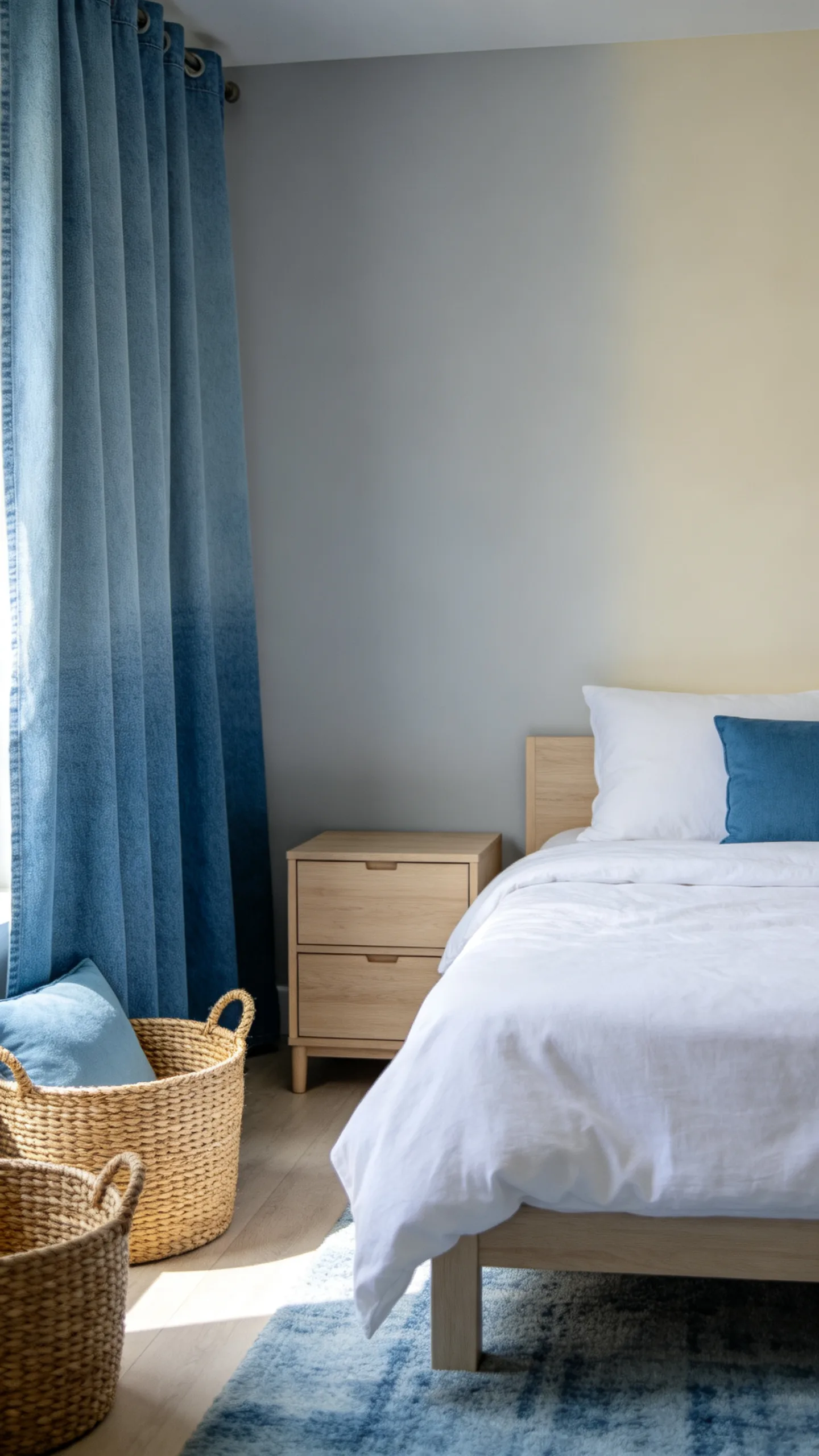
Soft blue curtains can make a bedroom feel peaceful, especially when paired with white bedding, light wood, woven baskets, and pale gray or cream walls. The color adds freshness without becoming too bold.
Use powder blue, dusty blue, or muted denim tones for a more mature look. If the room already has blue pillows or a patterned rug, choose curtains in a similar undertone so the color palette feels planned.
22. Roman Shades Framed by Curtain Panels
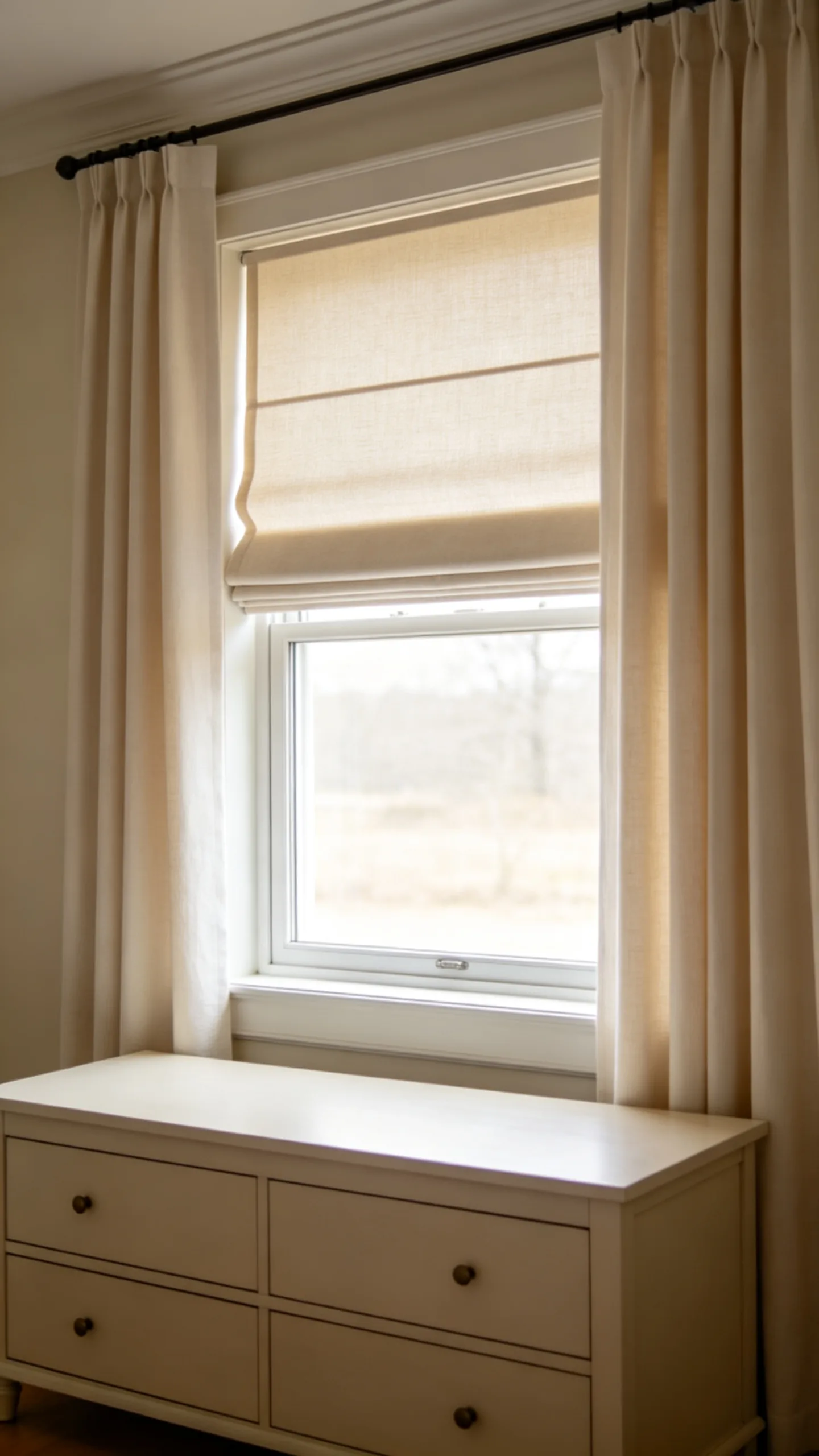
Roman shades paired with curtain panels create a layered window treatment that looks complete and practical. The Roman shade controls light and privacy, while the side panels add softness and height.
This works well for bedrooms with windows above radiators, desks, or low dressers where full curtains alone might be awkward. Keep the shade tailored and the curtain panels simple so the window looks clean rather than crowded.
23. Textured Curtains for Plain Painted Walls
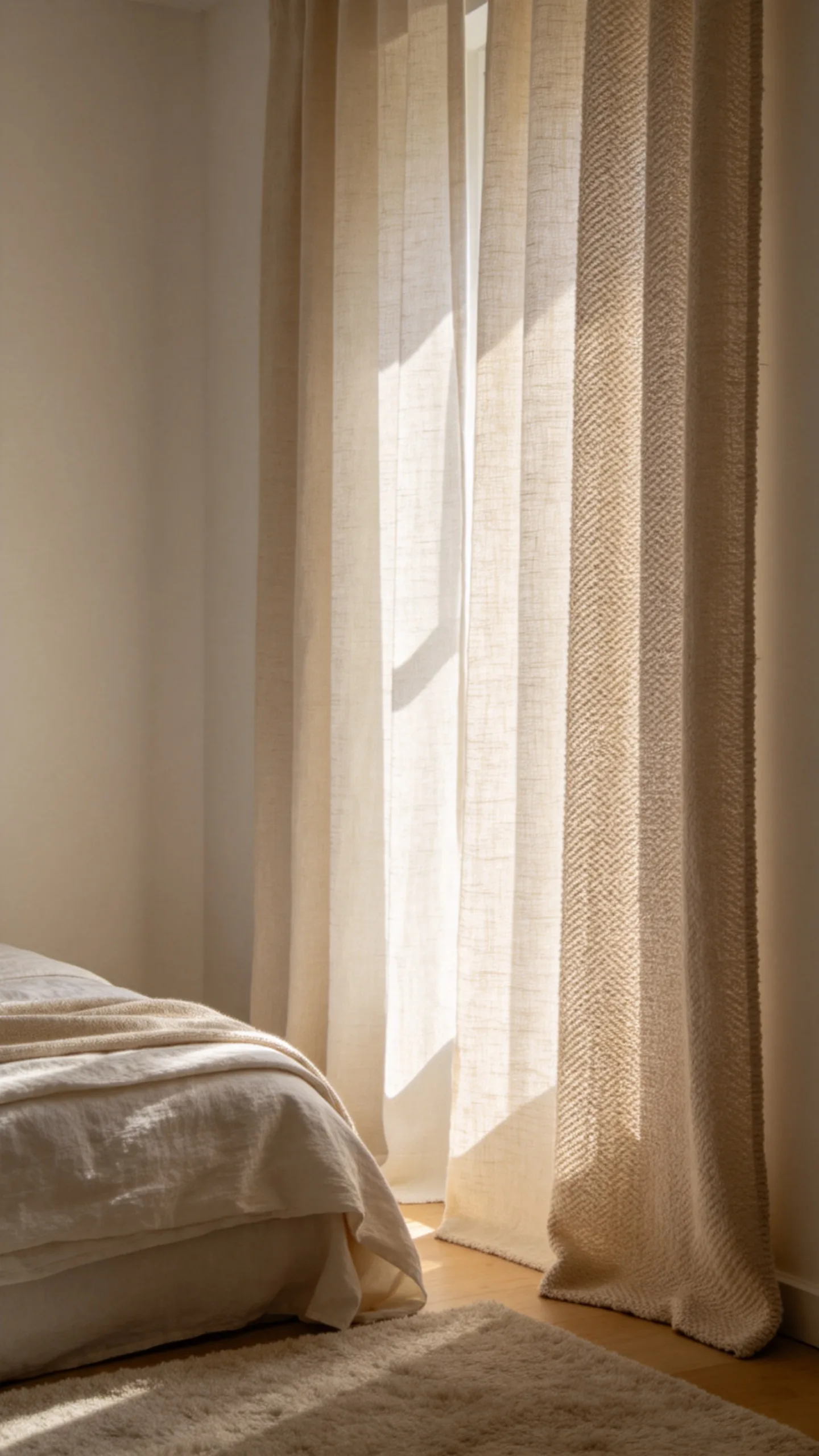
Textured curtains are perfect for bedrooms with flat painted walls and minimal decor. Fabrics like slub linen, boucle-inspired weave, cotton canvas, or subtle herringbone add dimension without relying on strong color or pattern.
This idea is helpful when the room feels bare even after adding bedding and furniture. The texture catches light during the day and makes the window feel styled, especially when paired with a soft rug and layered bed linens.
24. Extra-Full Curtains for a Designer Finish
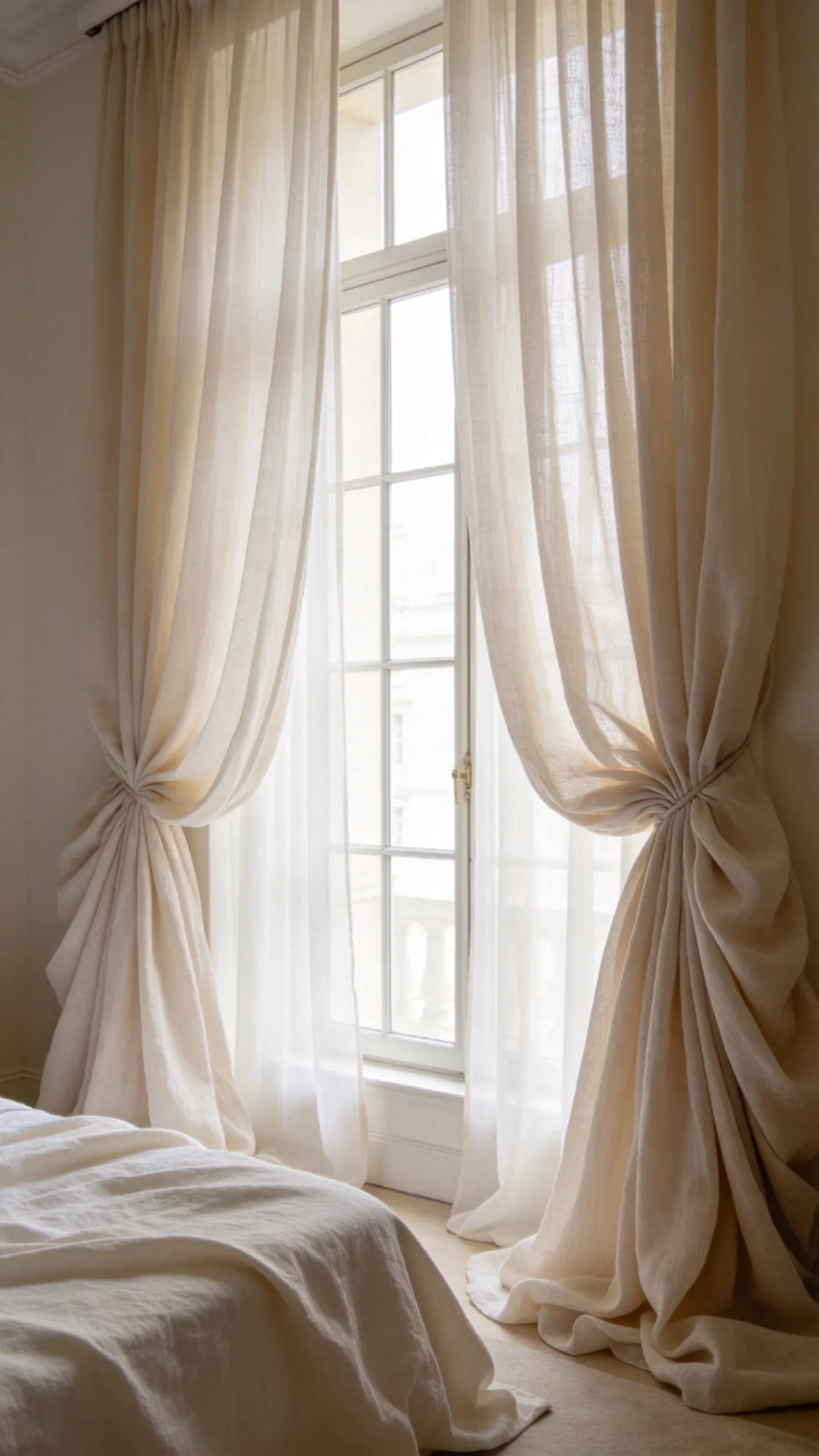
Extra-full curtains make a bedroom feel more luxurious and finished because the fabric gathers generously instead of hanging thin and flat. A good rule is to use curtain panels that are at least twice the width of the window or curtain span.
Fullness matters most with sheer, linen, and lightweight cotton panels. In a bedroom, this added fabric softens the wall, improves the sense of privacy, and makes the window treatment look intentional even when the curtains are open.
25. Simple Black Curtain Rods for Crisp Definition
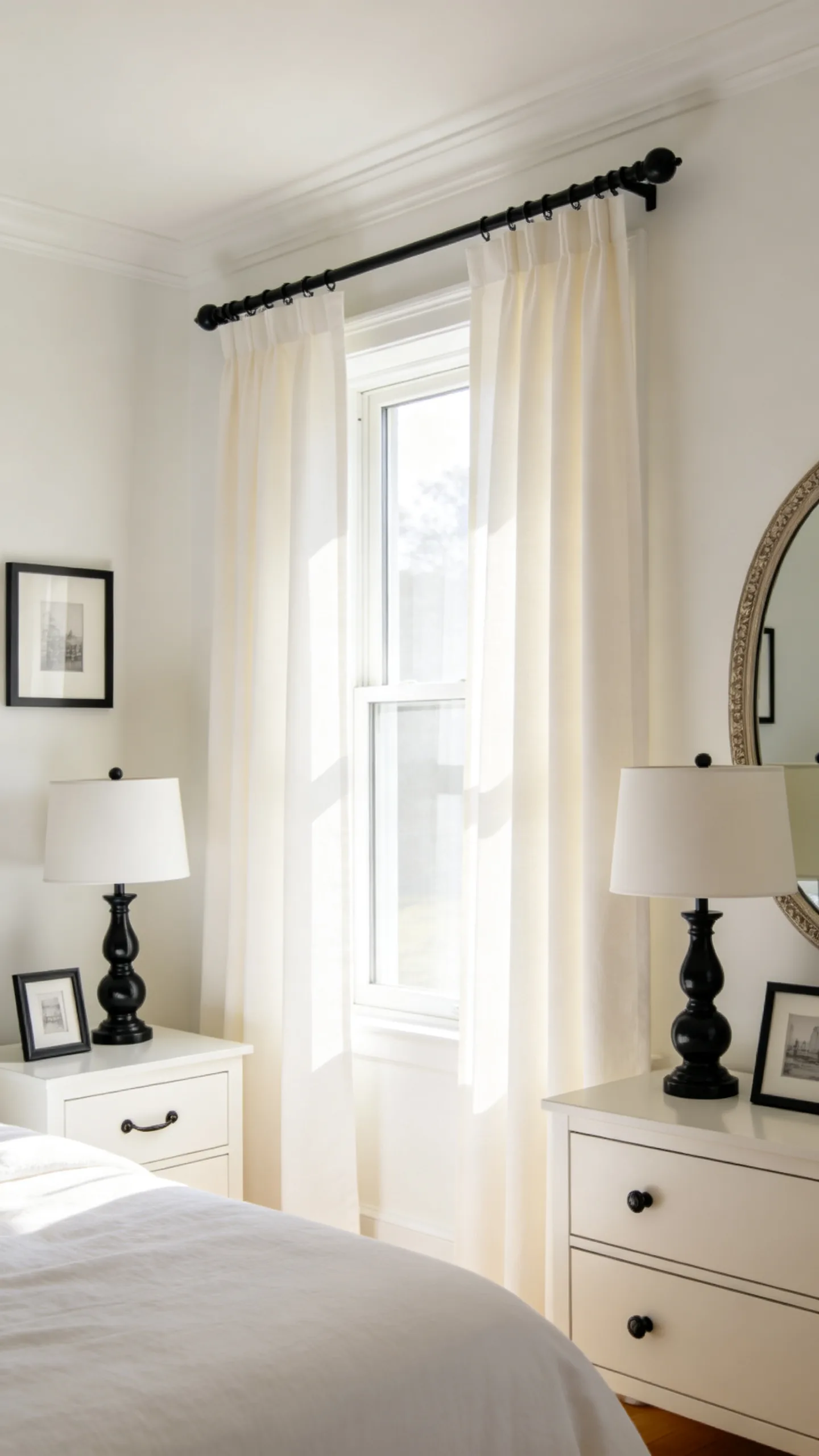
A simple black curtain rod can give the bedroom window a clean outline, especially when paired with white, cream, beige, or gray curtain panels. The dark line adds definition without needing bold fabric.
This works well in modern, farmhouse, industrial, and minimalist bedrooms. Repeat black in small details like picture frames, lamp bases, drawer pulls, or a mirror frame so the rod feels like part of the overall design instead of an isolated accent.

From the editors
Decor Compass Editorial Team
We turn practical home research into clear, useful room-by-room ideas.