The right curtains can make a living room feel taller, softer, and more finished without changing the furniture. These modern curtain ideas for living room styling focus on fabric choice, hanging height, color, texture, hardware, and layering so the window treatment looks intentional instead of like an afterthought.
1. Floor-to-Ceiling White Linen Curtains
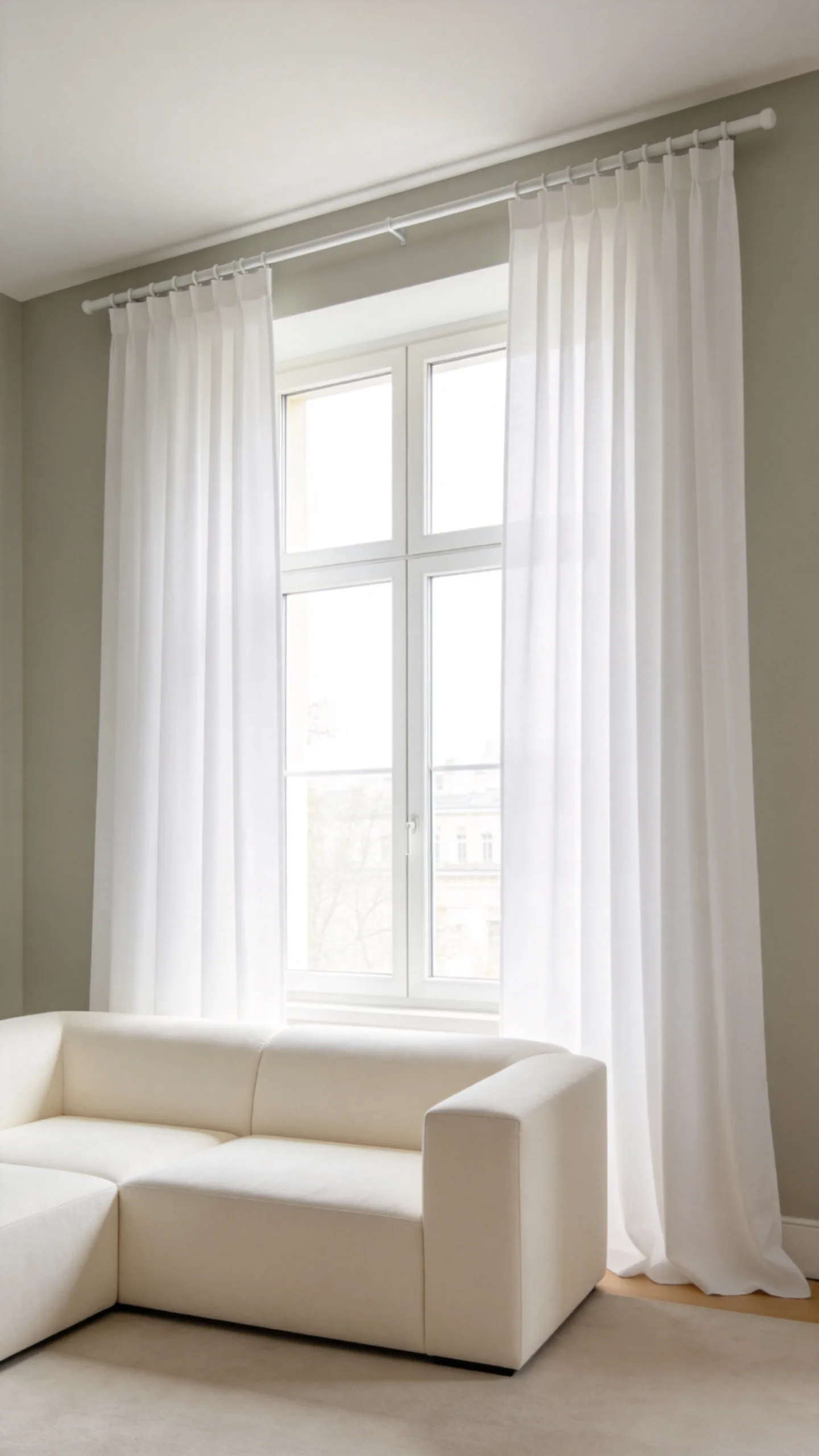
White linen curtains instantly make a living room feel airy and polished, especially when they are hung close to the ceiling instead of directly above the window frame. In a room with white, cream, greige, or pale gray walls, this creates a clean vertical line that draws the eye upward and makes the ceiling feel higher.
Choose panels that lightly kiss the floor or break by about an inch for a relaxed but tailored finish. A black, brushed brass, or matte white curtain rod keeps the look modern, while the linen texture prevents the room from feeling flat. This idea works especially well behind a sofa, around a large picture window, or in a small living room where you want softness without visual clutter.
2. Double-Layer Sheer and Blackout Curtain Panels
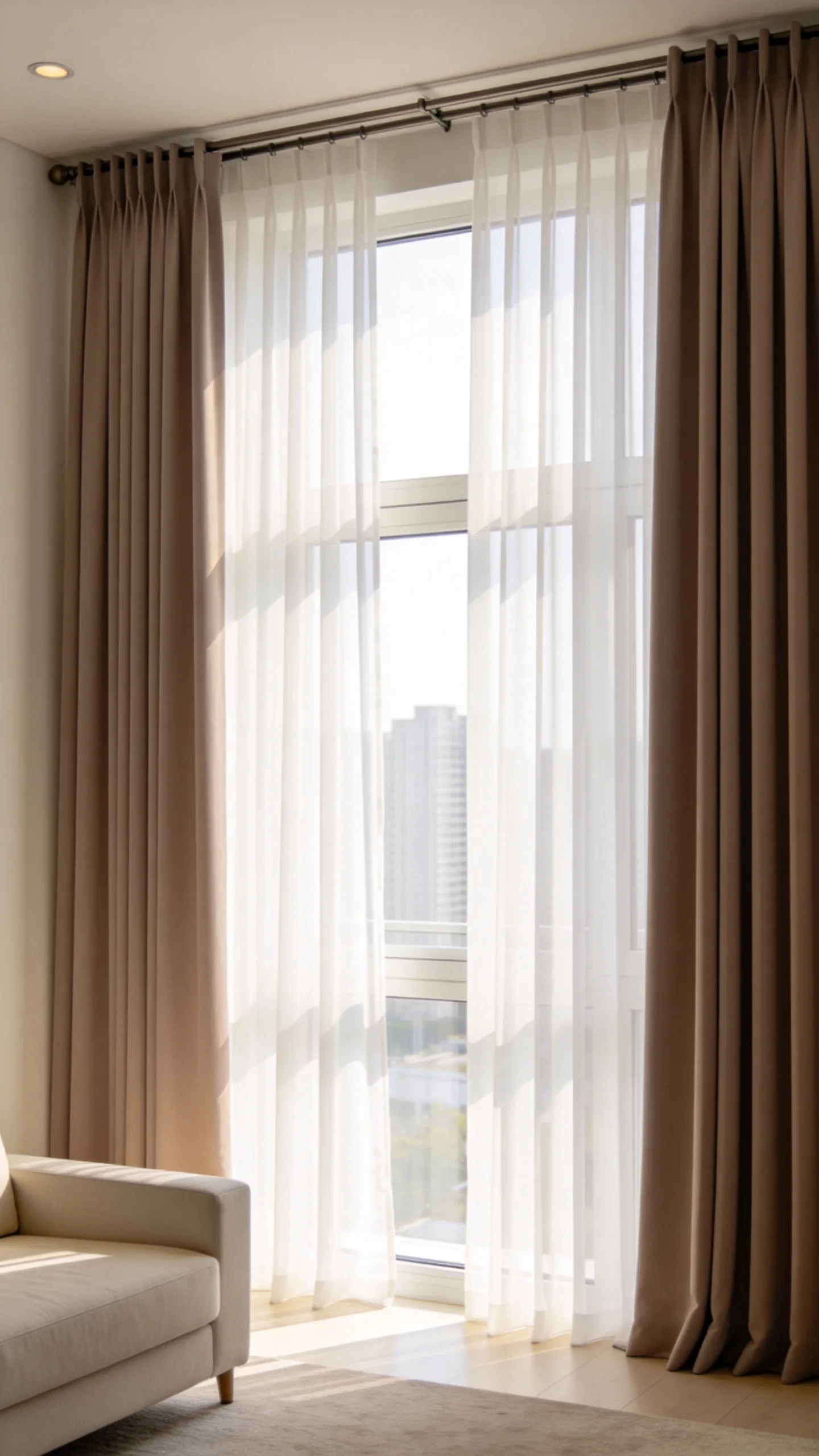
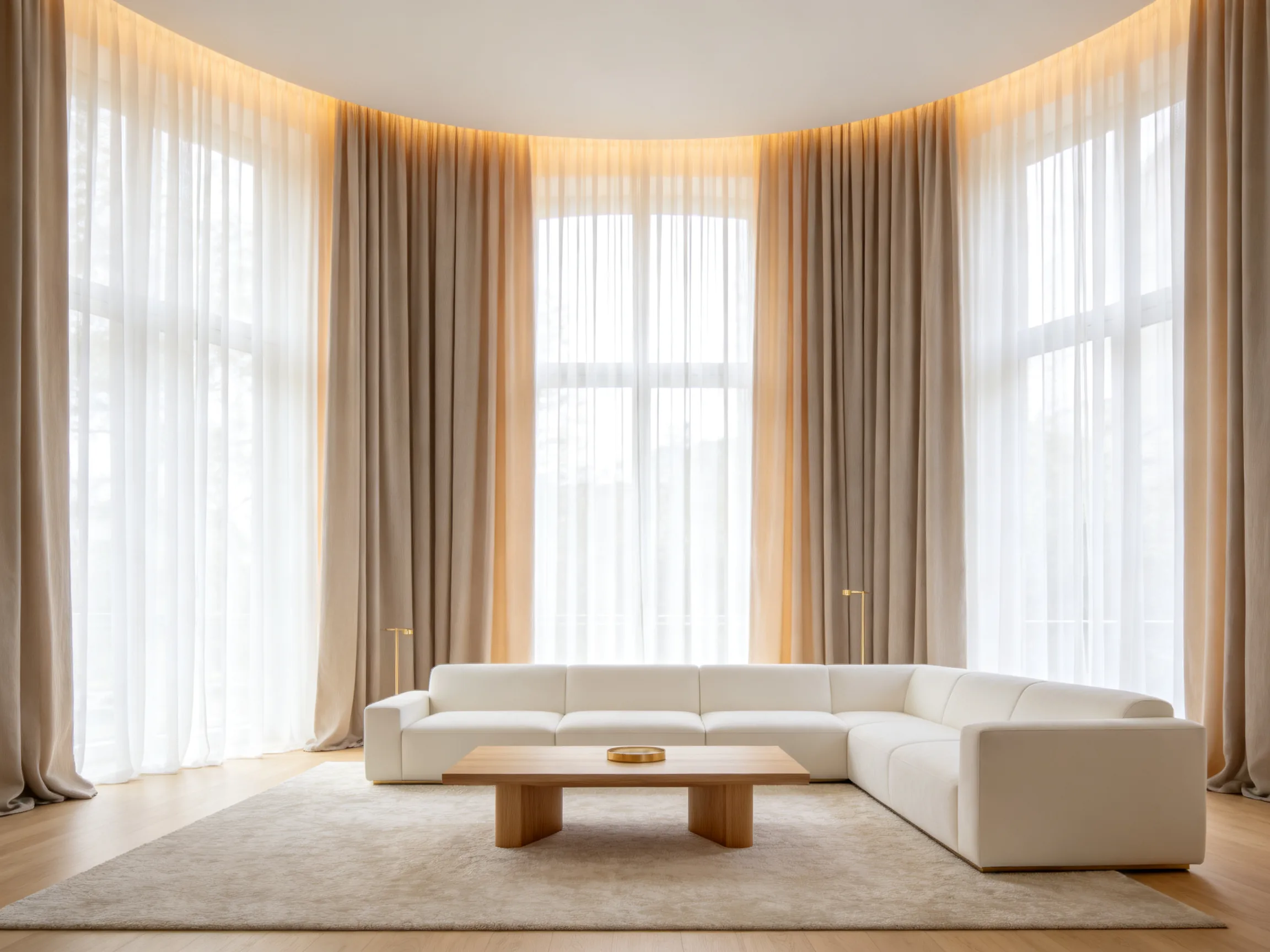
Layering sheer curtains with blackout panels gives the living room a custom, hotel-like feel. The sheer layer filters daylight during the day, while the heavier outer panels provide privacy and light control in the evening. This is especially useful for street-facing windows, apartment living rooms, or open-plan spaces where the windows are a major focal point.
Use a double curtain rod or ceiling track so each layer moves separately. For a modern expensive look, pair warm white sheers with taupe, charcoal, olive, or soft beige blackout curtains. Keep both layers the same length so the window wall looks balanced and intentional.
3. Pinch Pleat Curtains on a Slim Metal Rod
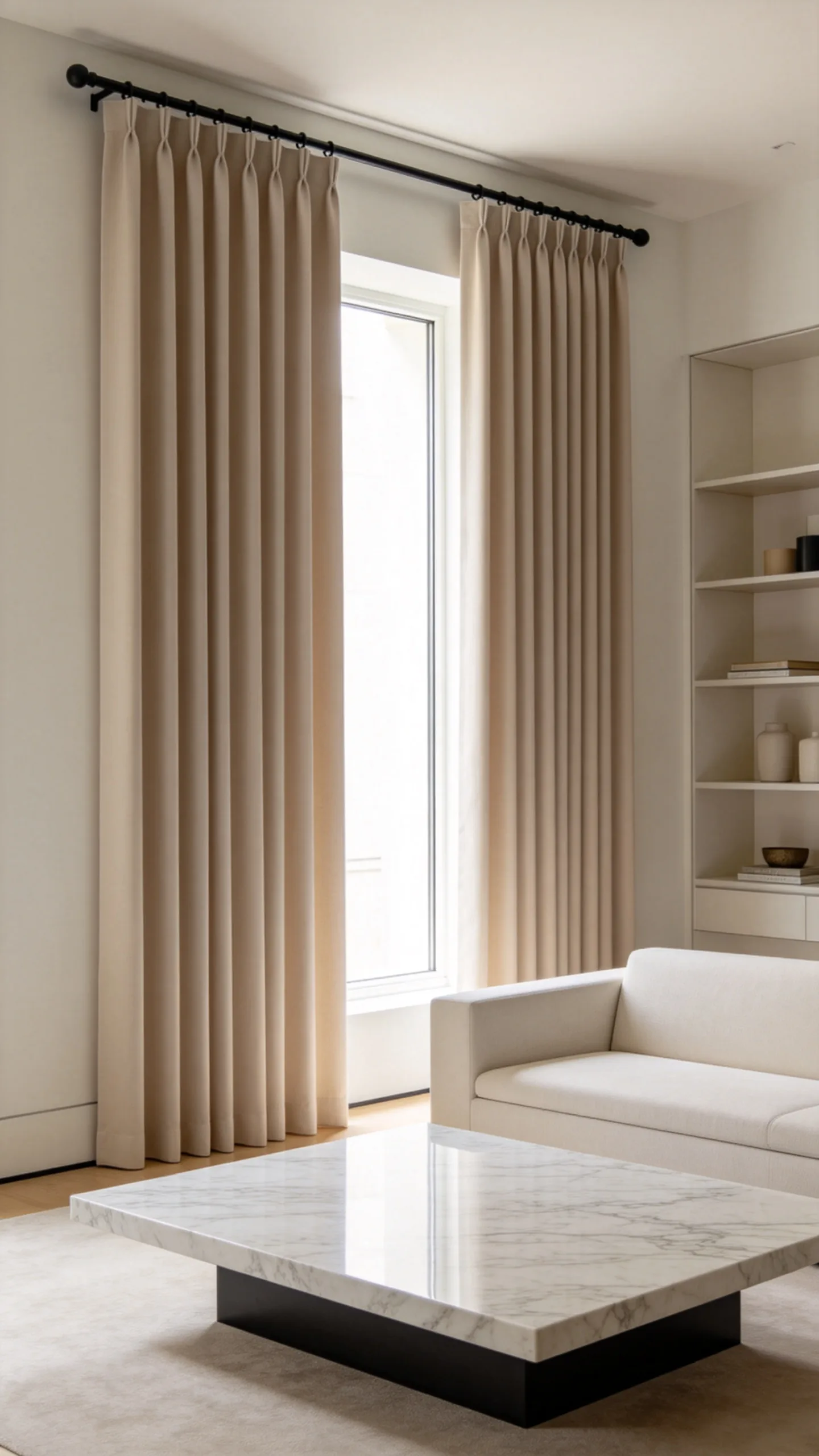
Pinch pleat curtains look more tailored than standard grommet panels because the folds are structured and evenly spaced. This detail makes even simple fabric look custom, which is why pinch pleats are a strong choice for a refined modern living room.
Hang them on curtain rings attached to a slim black, brass, or nickel rod. The rings add a classic designer detail while still feeling current. This style looks especially polished beside a marble coffee table, clean-lined sectional, built-in shelves, or a neutral area rug.
4. Warm Beige Curtains Against White Walls
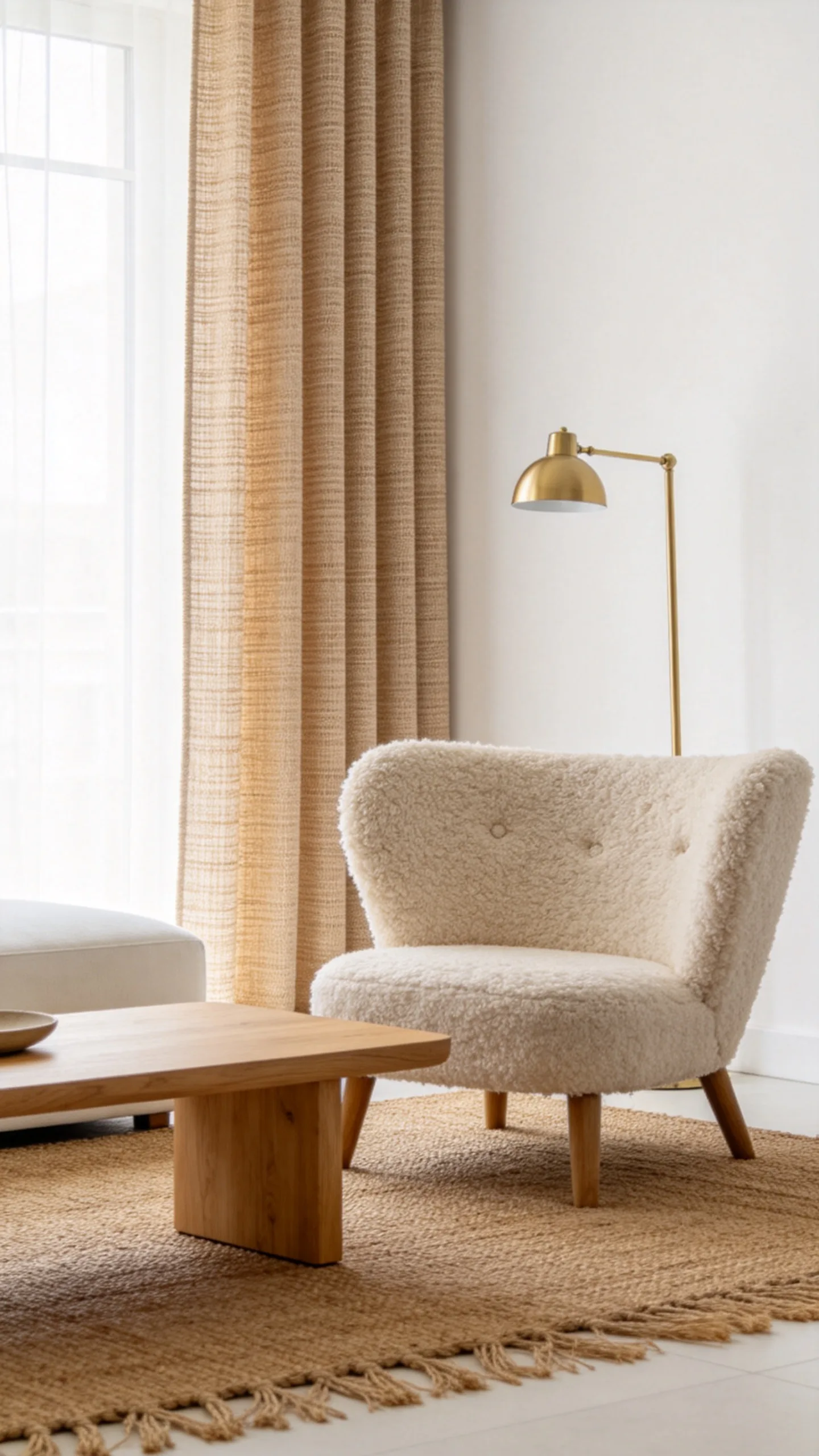
Warm beige curtains are a simple way to add depth to a white living room without introducing a bold color. The contrast is soft, so the room still feels bright, but the window area looks more layered and decorated.
Look for beige panels in linen, cotton blend, or a subtle woven fabric rather than shiny polyester. Pair them with natural wood furniture, boucle accent chairs, jute rugs, or brass lamps for a calm upscale palette. This idea is ideal for living rooms that feel too stark or unfinished with plain white walls.
5. Matte Black Curtain Rods With Neutral Panels
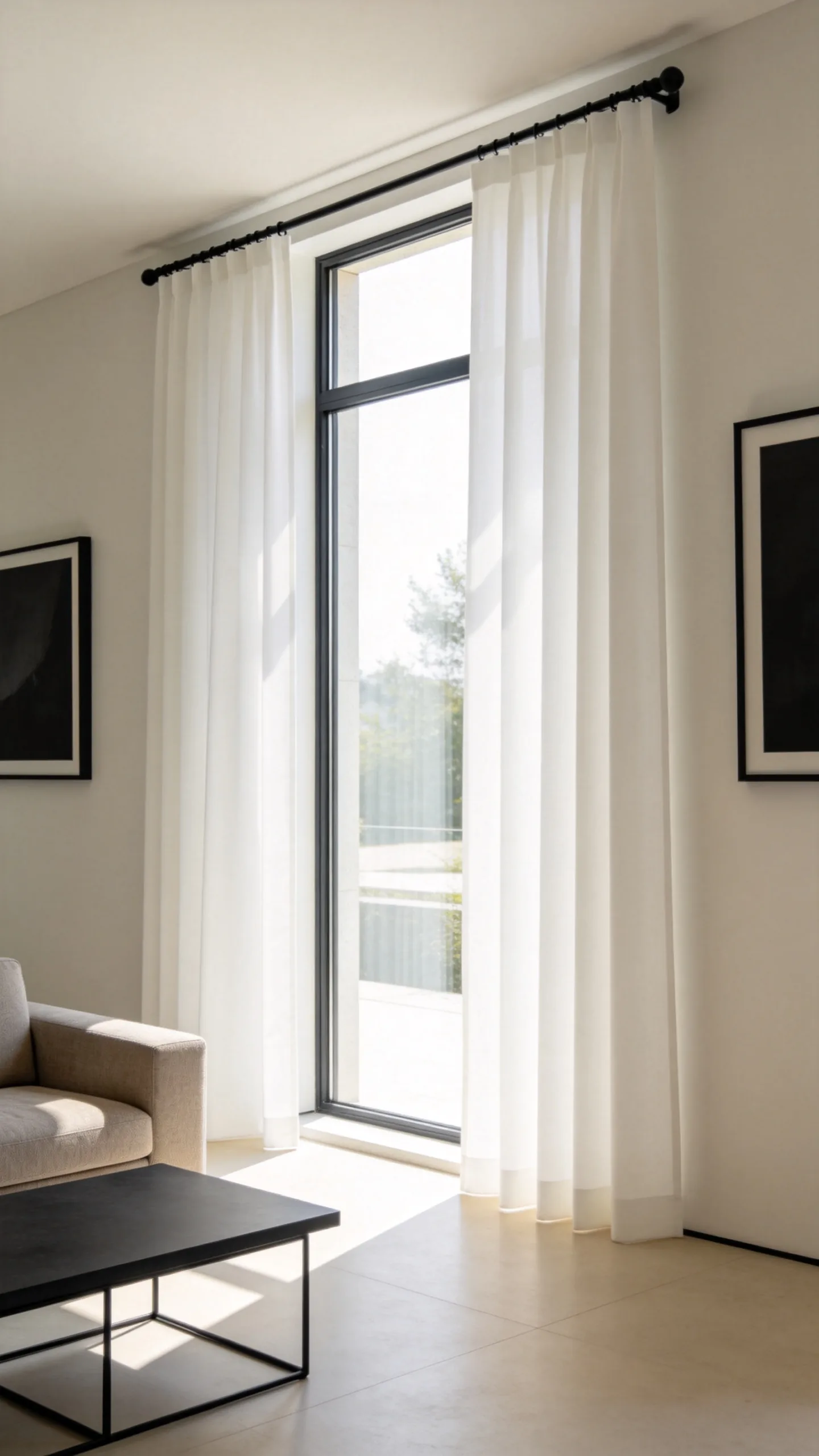
A matte black curtain rod can make basic neutral curtains look sharper and more architectural. The black line frames the window and connects well with other modern details like black picture frames, metal coffee table legs, black sconces, or a dark fireplace surround.
Use this idea with ivory, oatmeal, gray, or greige curtains for a clean contrast. Extend the rod several inches beyond the window on each side so the panels can sit outside the glass when open. This keeps natural light flowing and makes the window appear wider.
6. Ceiling-Mounted Curtain Tracks
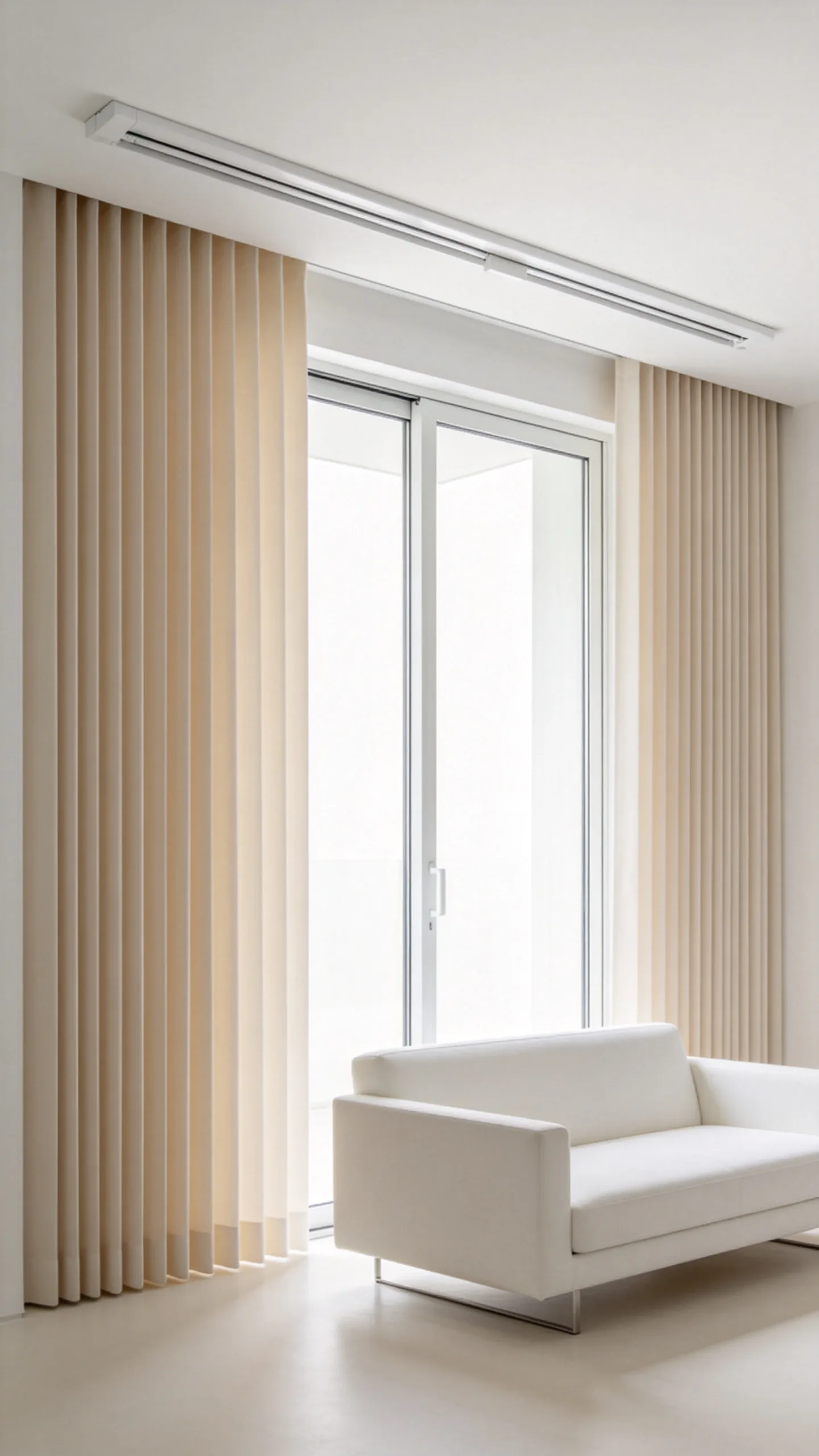
Ceiling-mounted tracks create a sleek, built-in look that feels more expensive than a standard wall-mounted rod. They are especially useful in living rooms with low ceilings, wide sliding doors, bay windows, or a wall of glass because the curtains glide cleanly from ceiling to floor.
Choose ripple fold or pleated panels for the most modern effect. A white ceiling track blends into the ceiling, while the fabric becomes the main visual feature. This keeps the sightline clean and helps the room feel taller, which is valuable in apartments and compact living rooms.
7. Taupe Curtains for a Soft Designer Neutral
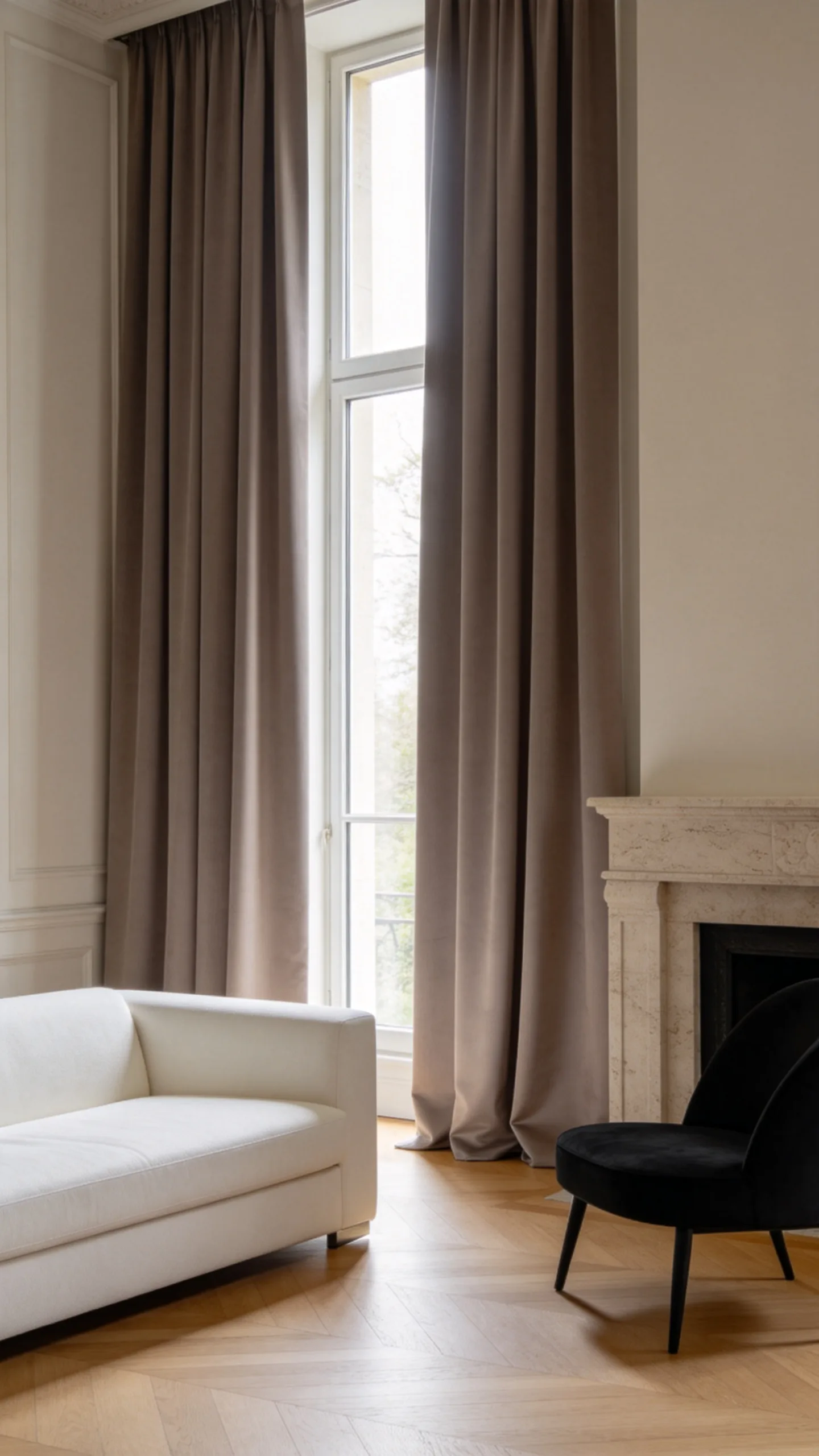
Taupe curtains offer more sophistication than plain gray and more depth than beige. The mix of brown and gray undertones works beautifully in living rooms with stone fireplaces, light oak floors, cream sofas, or black accent furniture.
For an expensive-looking result, use taupe panels in a medium-weight fabric that hangs with a smooth drape. Avoid short panels that stop at the sill, as they can make the wall feel chopped up. Full-length taupe curtains create a calm vertical frame around the window and make the room feel more complete.
8. Velvet Curtains in a Muted Color
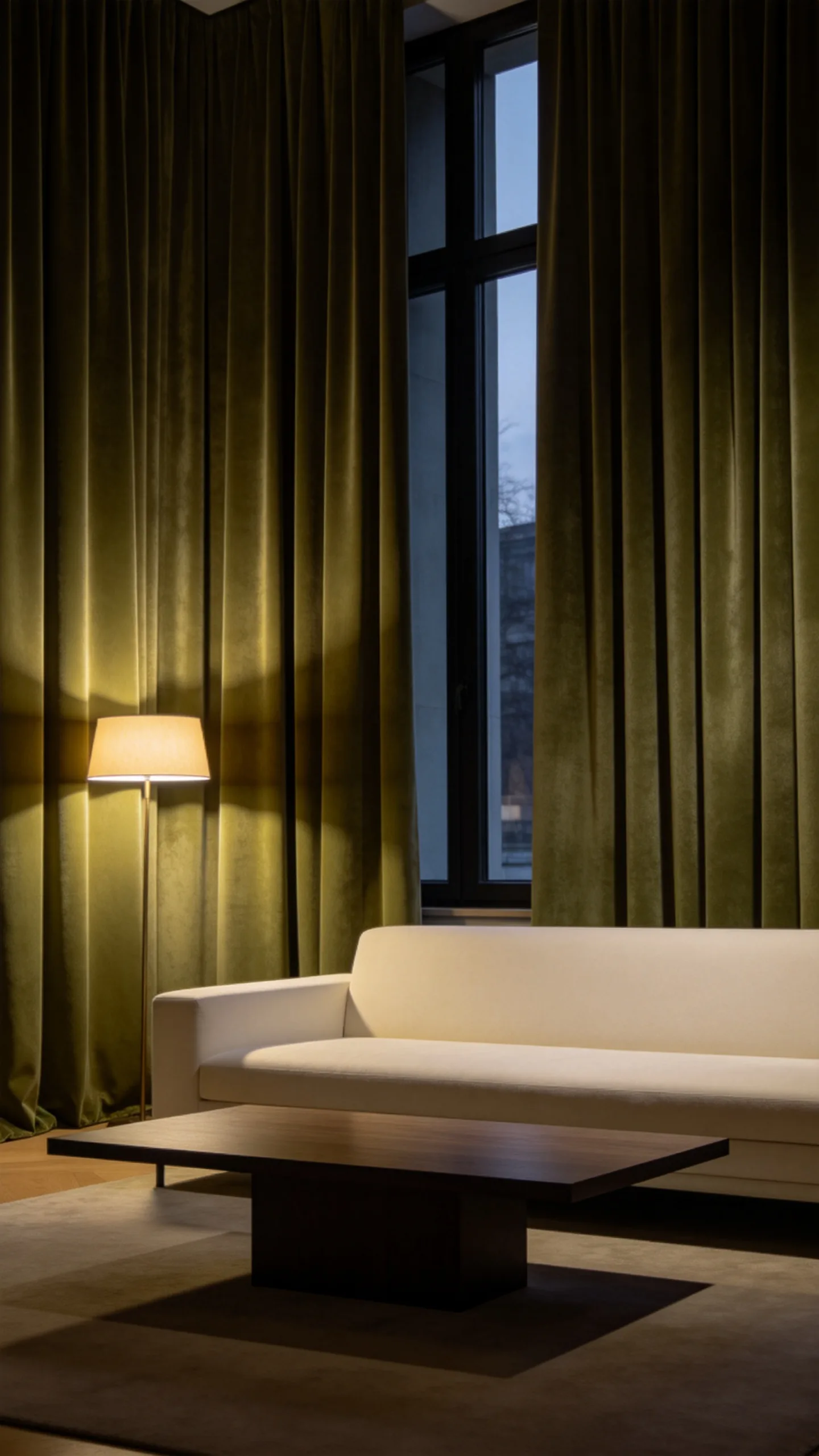
Velvet curtains can make a living room feel rich and cozy, but the most modern version uses muted colors instead of overly bright jewel tones. Try mushroom, olive, slate blue, rust, espresso, or warm gray velvet for a look that feels elevated without overpowering the room.
Because velvet is visually heavier, balance it with simple furniture lines, a low-profile sofa, and uncluttered surfaces. Velvet works especially well in living rooms used for evening entertaining, movie nights, or cozy reading because it absorbs light and adds softness around the windows.
9. Ivory Curtains With Brass Hardware
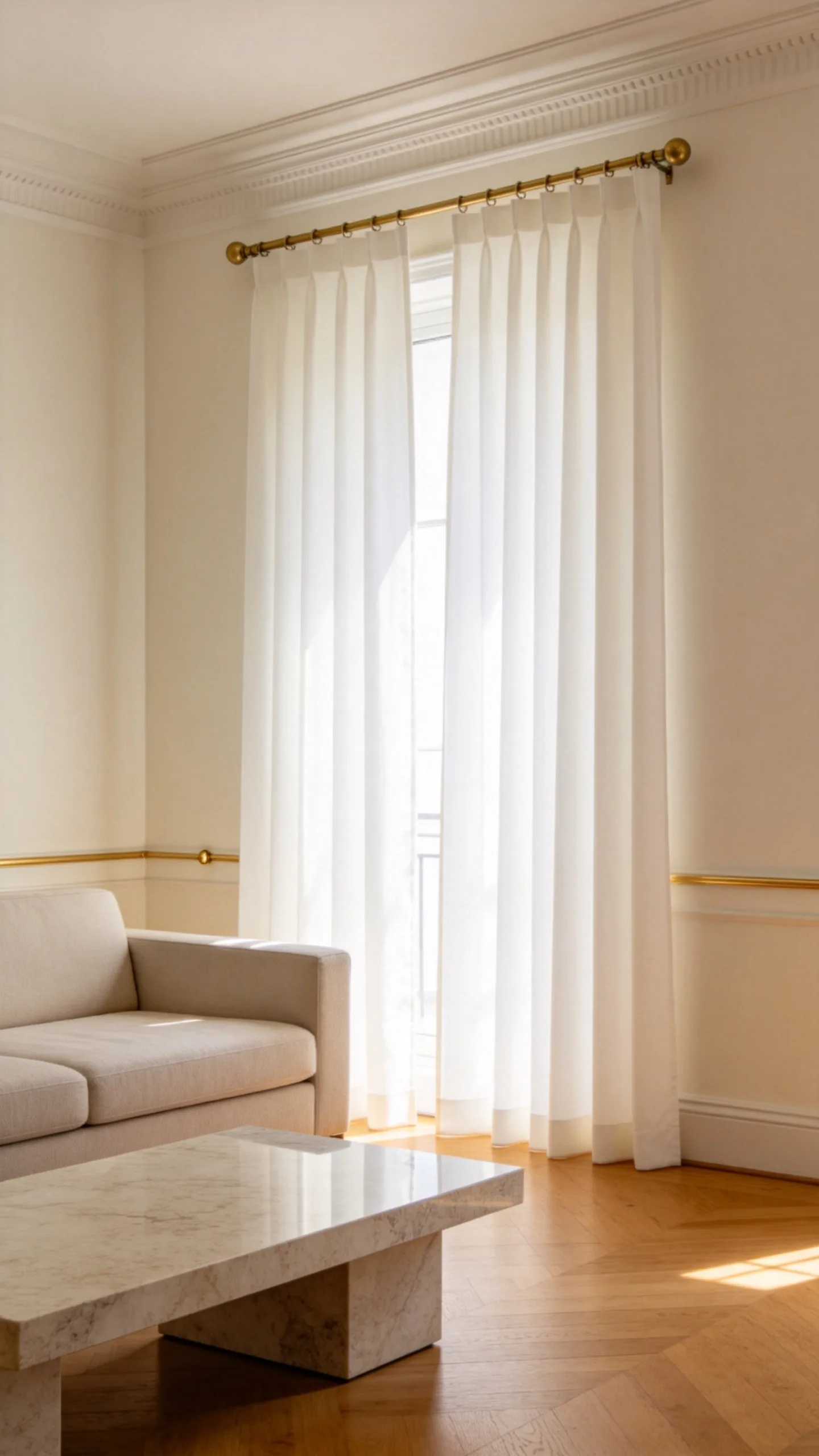
Ivory curtains paired with brass hardware create a warm, polished look that suits both modern classic and contemporary living rooms. The brass adds just enough shine, while the ivory fabric keeps the room bright and calm.
Choose a brass rod with simple end caps instead of ornate finials for a cleaner style. This combination looks beautiful with cream walls, warm wood floors, stone coffee tables, and neutral upholstery. It is also a great way to make a rental living room feel more finished without painting or replacing furniture.
10. Ripple Fold Curtains for a Clean Hotel Look
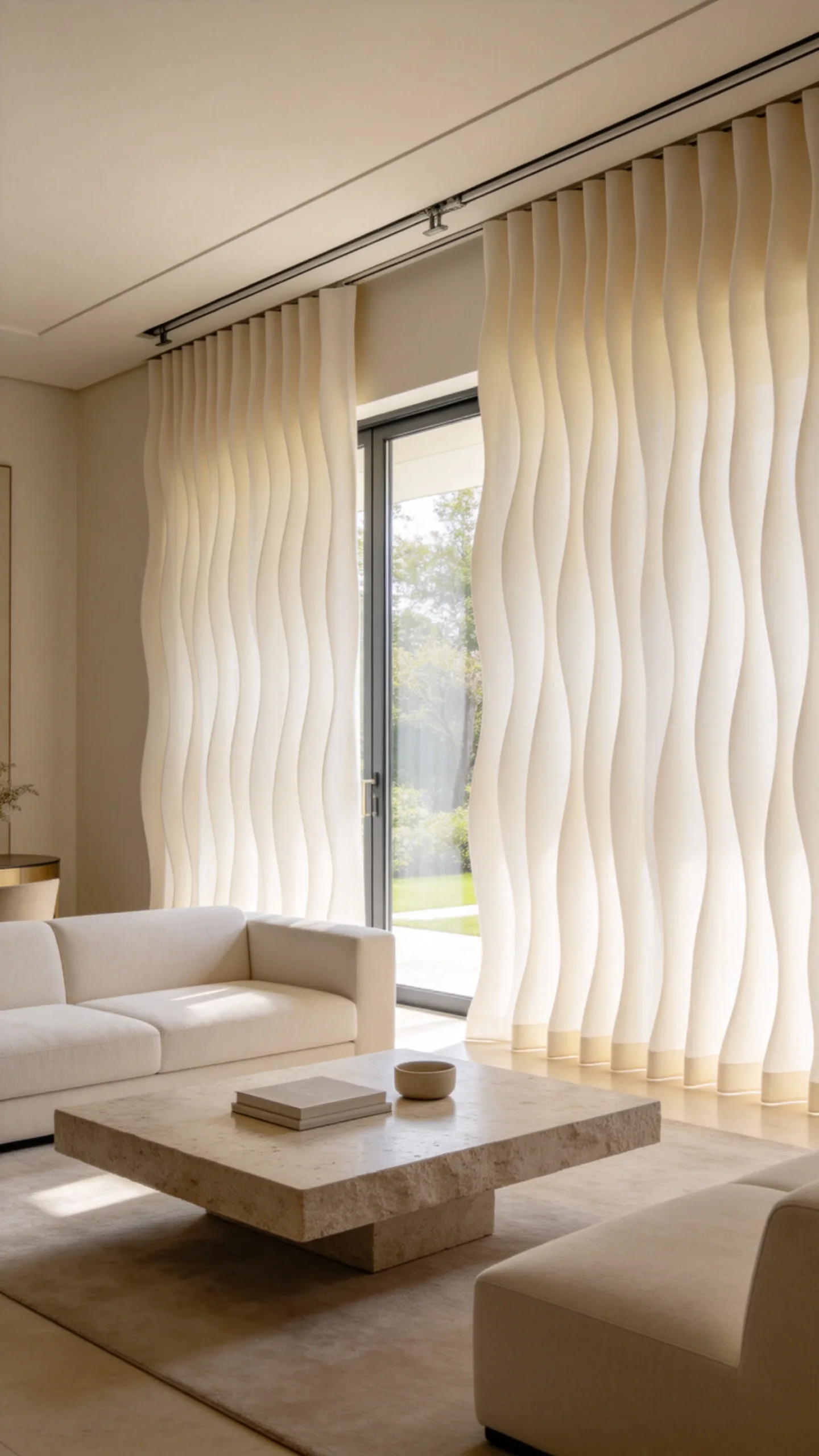
Ripple fold curtains have soft, continuous waves that look smooth from ceiling to floor. This style is common in high-end hotels and modern interiors because it feels streamlined and uncluttered.
Use ripple fold curtains on a track system for large living room windows, patio doors, or an entire window wall. They work best with solid fabrics in white, cream, gray, beige, or charcoal. The repeated folds add texture without needing a pattern, which keeps the living room visually calm.
11. Charcoal Curtains in a Light Living Room
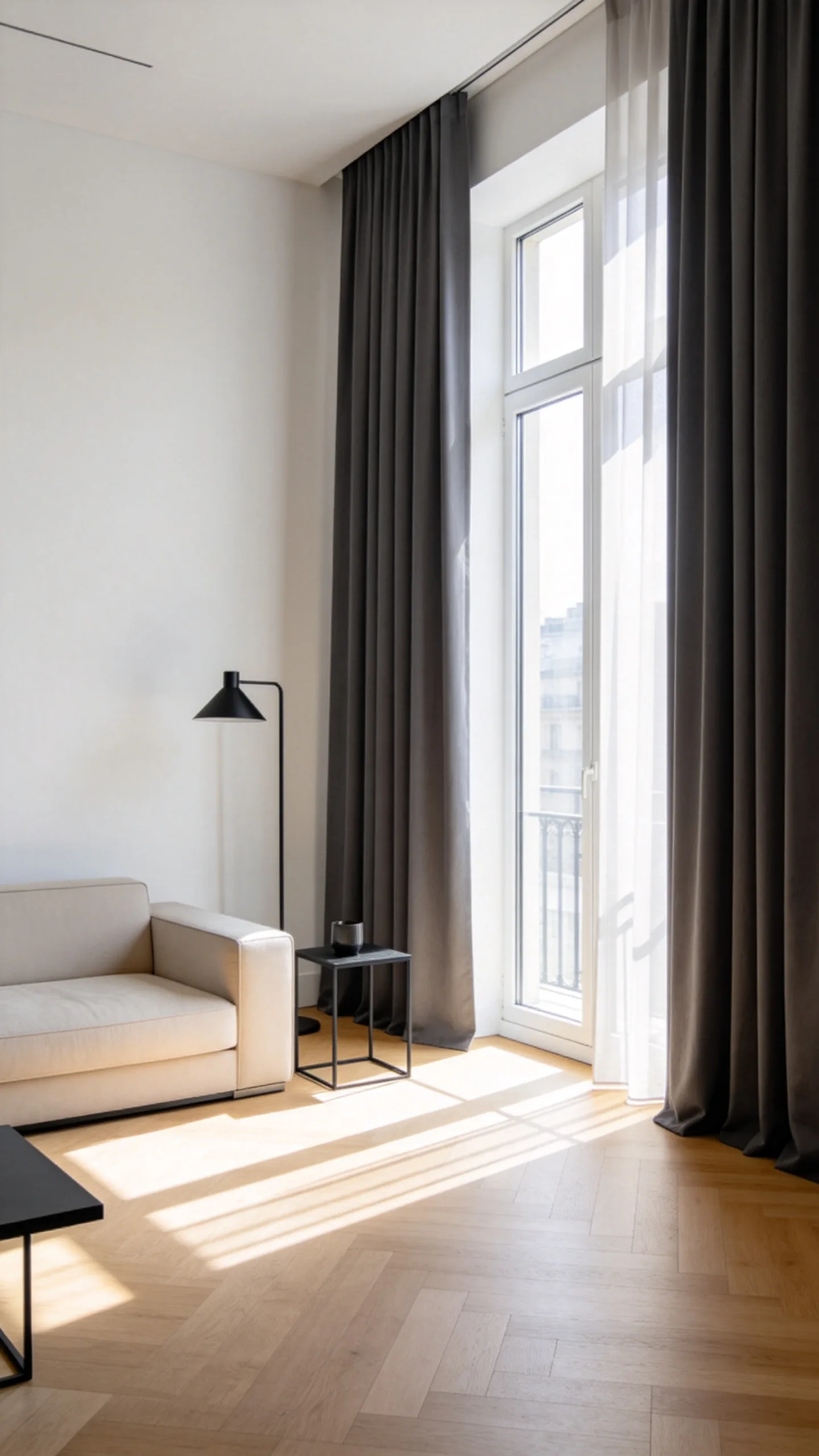
Charcoal curtains can make a pale living room feel grounded and dramatic. They work especially well when the room has white walls, light wood flooring, a beige sofa, and black accents in the lighting or furniture.
To keep the look upscale instead of heavy, choose charcoal fabric with a soft drape and hang the panels high and wide. Let plenty of wall space show around the window during the day by pulling the curtains fully to the sides. This gives the room contrast while preserving natural light and open sightlines.
12. Textured Woven Curtains for Subtle Depth
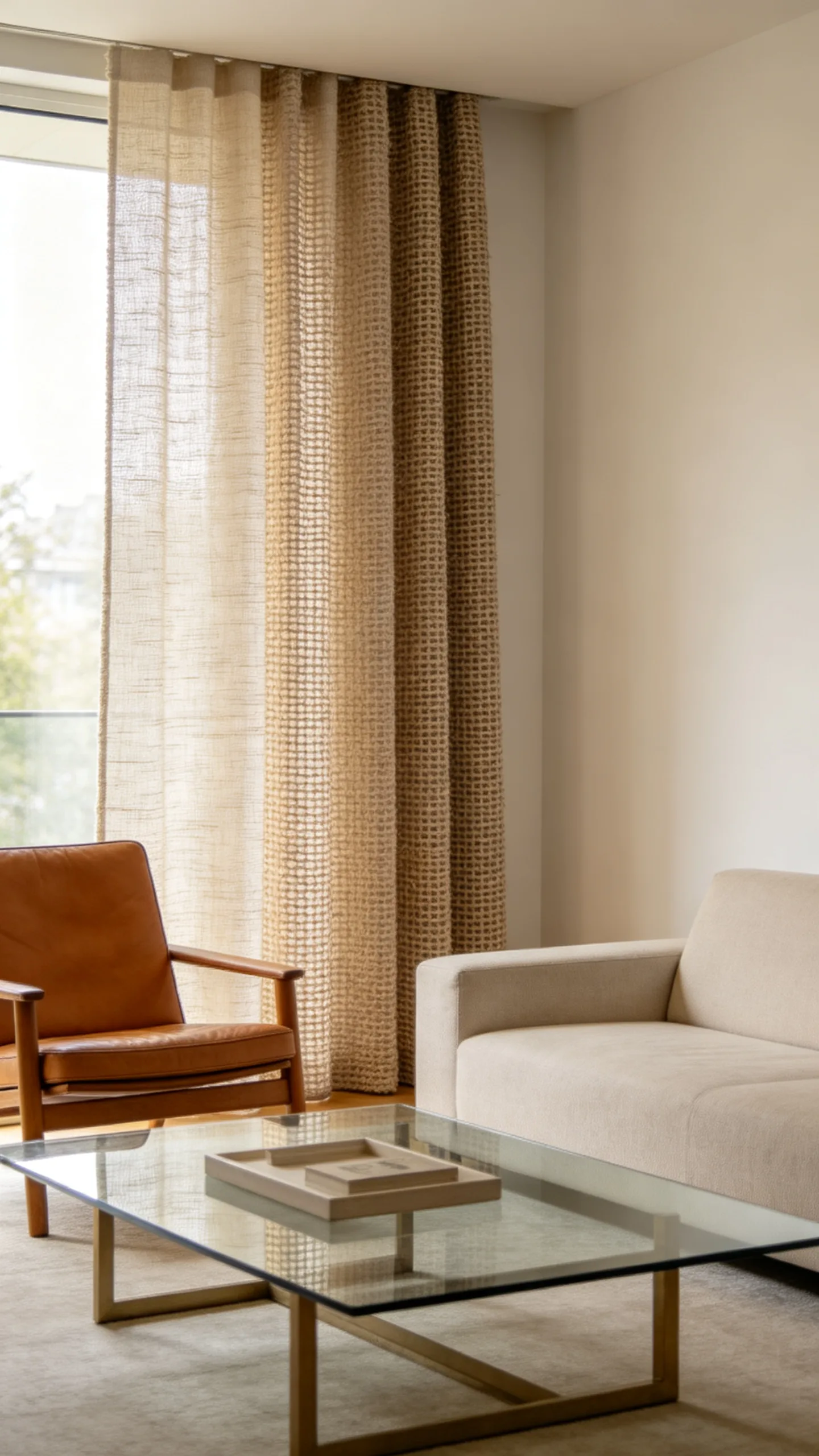
Textured woven curtains add interest without relying on a bold print. A slub linen, basketweave cotton, or lightly nubby fabric can make a modern living room feel warmer and more layered.
This idea is useful if the room already has a simple color scheme but still feels unfinished. Pair woven curtains with smooth surfaces like a glass coffee table, painted walls, or leather seating to create contrast. The texture is visible in natural light, making the window area feel styled even when the curtains are open.
13. Soft Gray Curtains With Silver or Nickel Hardware
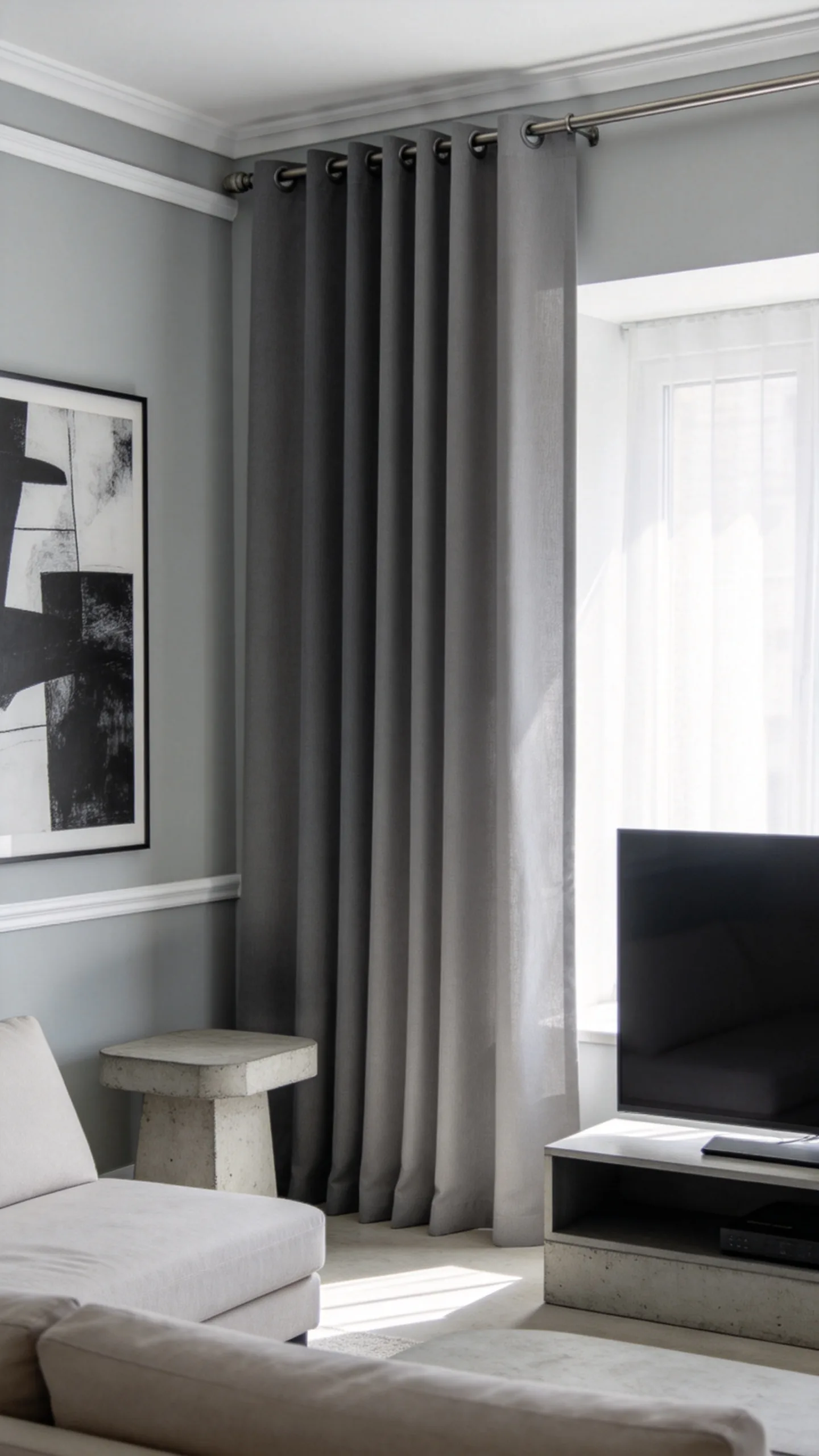
Soft gray curtains create a calm, modern backdrop for living rooms with cool-toned walls, white trim, concrete accents, or black-and-white art. When paired with brushed nickel or satin silver hardware, the look feels crisp and understated.
Choose a gray that is slightly lighter or darker than the wall color so the panels do not disappear completely. Full-length gray curtains can soften sharp architectural lines, reduce glare around the TV area, and make a neutral room feel more layered without adding strong color.
14. Wall-to-Wall Curtains Behind the Sofa
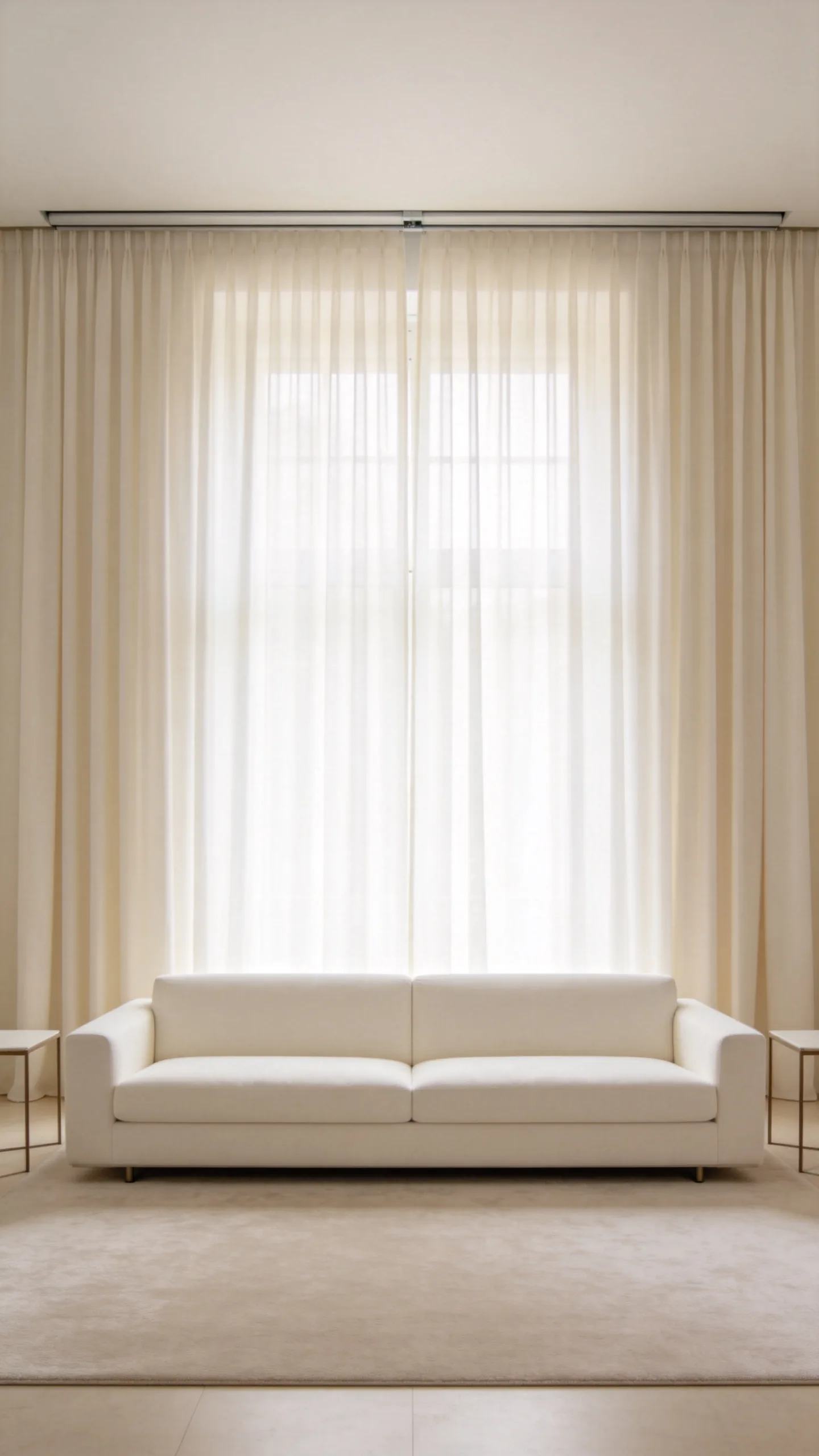
Installing curtains across an entire wall, even beyond the actual window width, creates a dramatic designer effect. This works beautifully behind a sofa because it turns the window wall into a soft backdrop instead of a broken-up surface.
Use a long rod or ceiling track that spans the wall, then choose simple solid panels in linen, sheer, or light-filtering fabric. This approach can hide awkward window placement, make narrow windows feel larger, and create a more symmetrical focal point behind the seating area.
15. Cream Blackout Curtains for a Bright but Practical Room
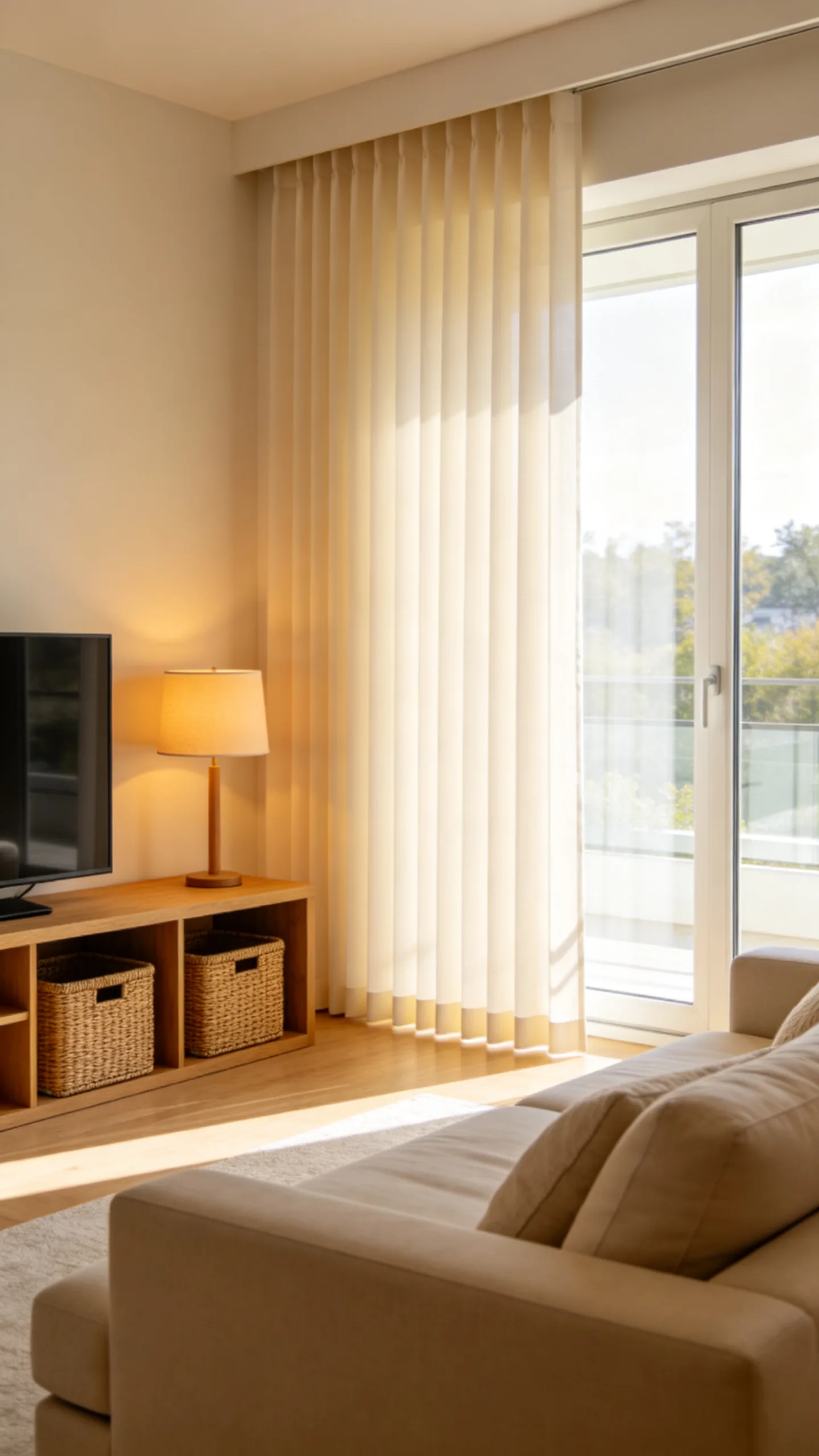
Cream blackout curtains are ideal when you want a light living room that still supports privacy, TV viewing, or afternoon naps. Unlike dark blackout curtains, cream panels keep the room feeling open while still controlling sunlight.
Look for lined panels with a smooth face fabric so they hang neatly. This idea is especially practical for living rooms with west-facing windows where glare can hit the sofa or television. Pair cream blackout curtains with wood tones, woven baskets, and warm lighting for a comfortable upscale look.
16. Natural Linen Curtains With Wood Furniture
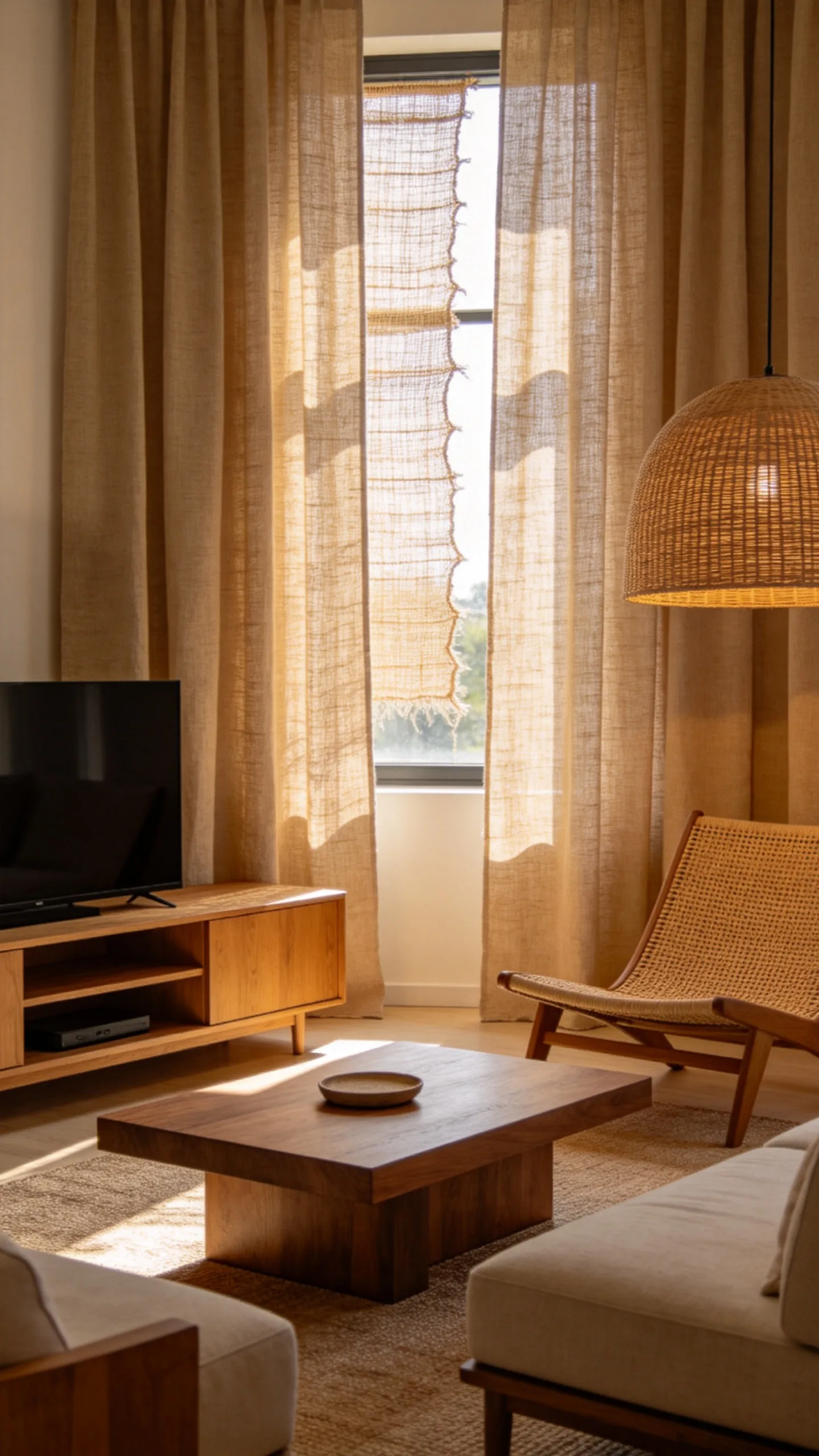
Natural linen curtains bring an effortless, expensive-looking texture to living rooms with wood furniture. The slightly irregular weave pairs well with oak media consoles, walnut coffee tables, rattan chairs, and woven shades.
Use natural linen in shades like flax, oatmeal, sand, or warm ivory. The relaxed texture softens clean-lined furniture and makes the room feel less showroom-like. Hang the curtains high and wide so the fabric frames the window without blocking light during the day.
17. Patterned Curtains in a Tone-on-Tone Design
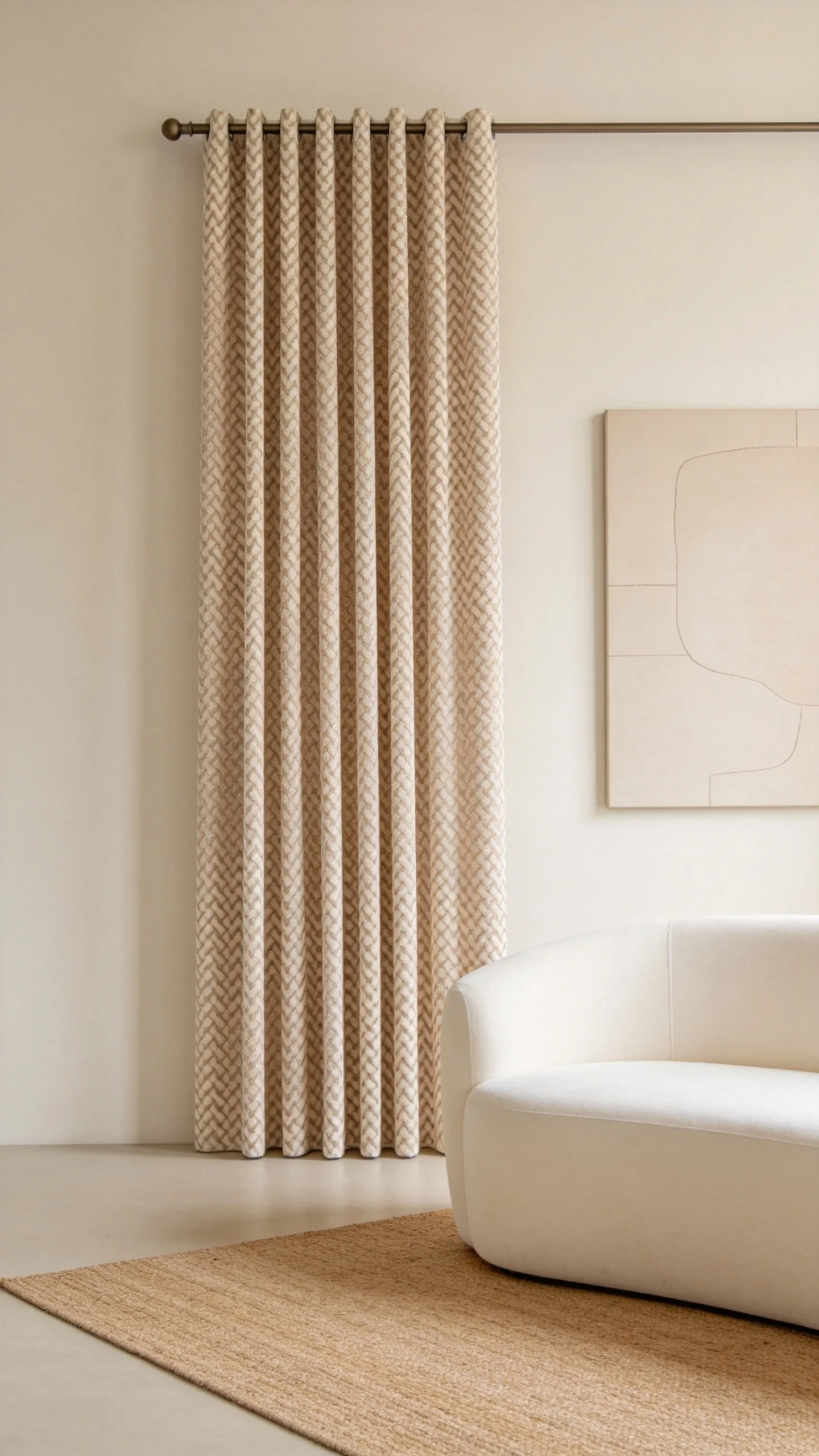
Patterned curtains can still look modern if the design is subtle and tone-on-tone. Instead of high-contrast prints, choose soft stripes, small geometrics, abstract woven patterns, or barely visible botanical motifs in similar shades.
This approach works well in living rooms with solid sofas, plain rugs, and minimal wall art. The curtains add movement and personality without overwhelming the room. Keep the rest of the window hardware simple so the pattern feels refined rather than busy.
18. Extra-Wide Curtain Panels for Fuller Draping
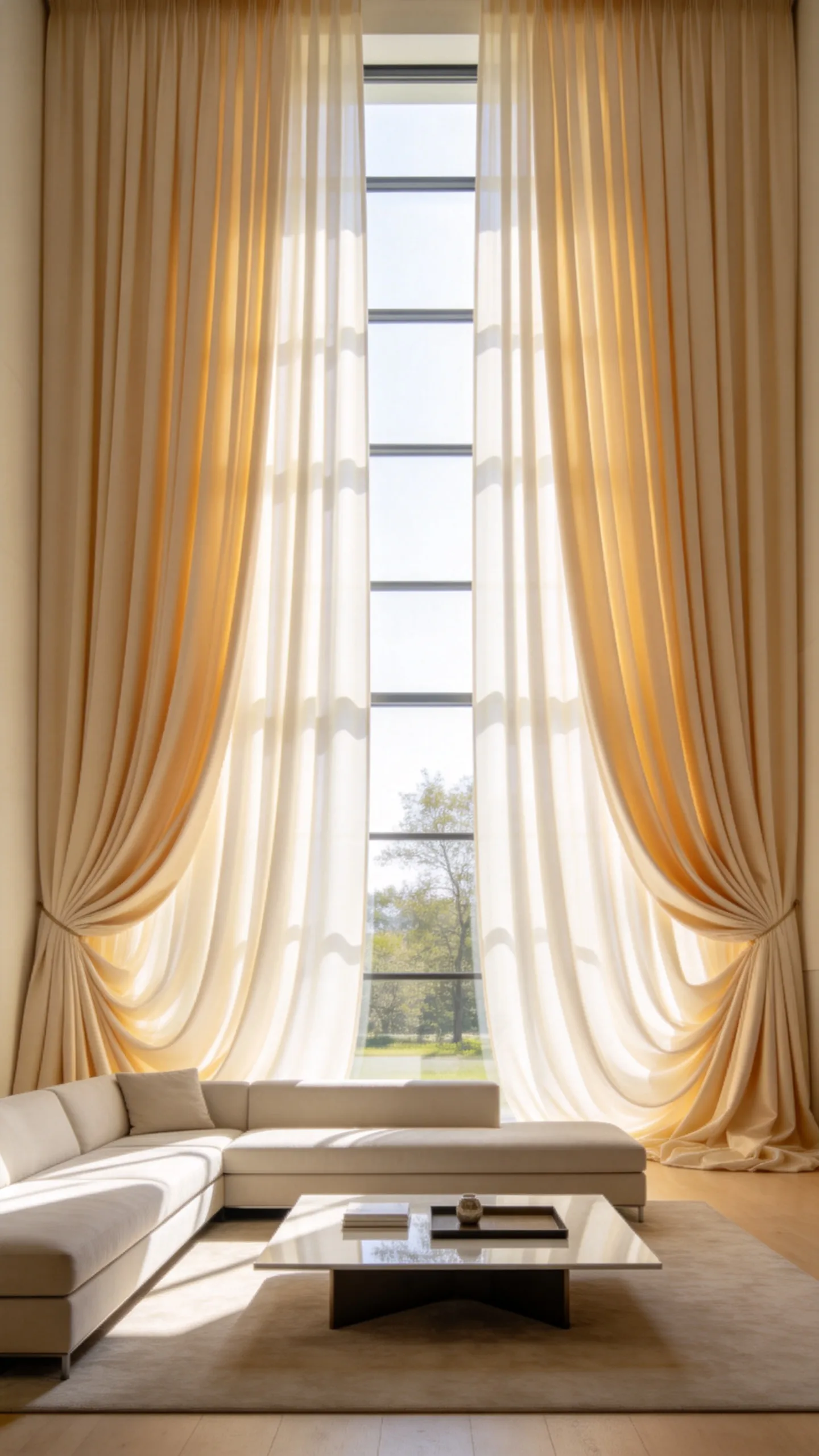
Curtains often look inexpensive when the panels are too narrow. Extra-wide panels create fuller folds, which makes the window treatment appear more custom and luxurious.
As a general styling rule, the total curtain width should be at least two times the width of the window or rod for a full look. This matters most for large living room windows, sliding doors, and picture windows. Even affordable fabric looks better when there is enough fullness to create soft, generous draping.
19. Olive Green Curtains With Neutral Furniture
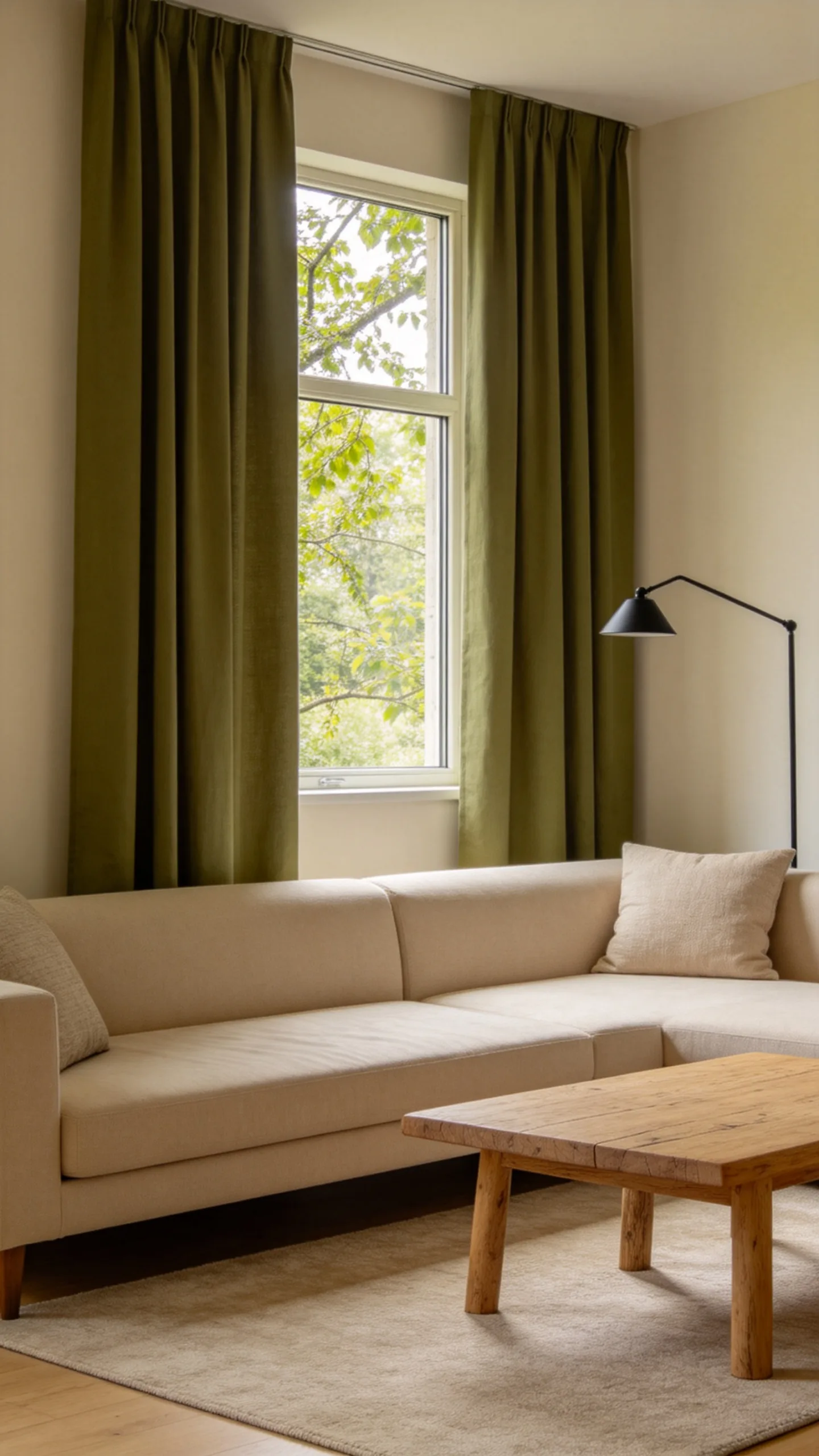
Olive green curtains add color in a mature, modern way. The shade feels earthy and grounded, especially in living rooms with beige sofas, cream walls, black metal accents, and natural wood furniture.
Choose a muted olive rather than a bright green for an expensive-looking effect. Olive panels can also connect indoor decor with outdoor views, making them a smart choice for windows overlooking trees, gardens, or patios. Keep the rug and pillows simple so the curtains can act as the main color moment.
20. White Sheer Curtains for Soft Daylight
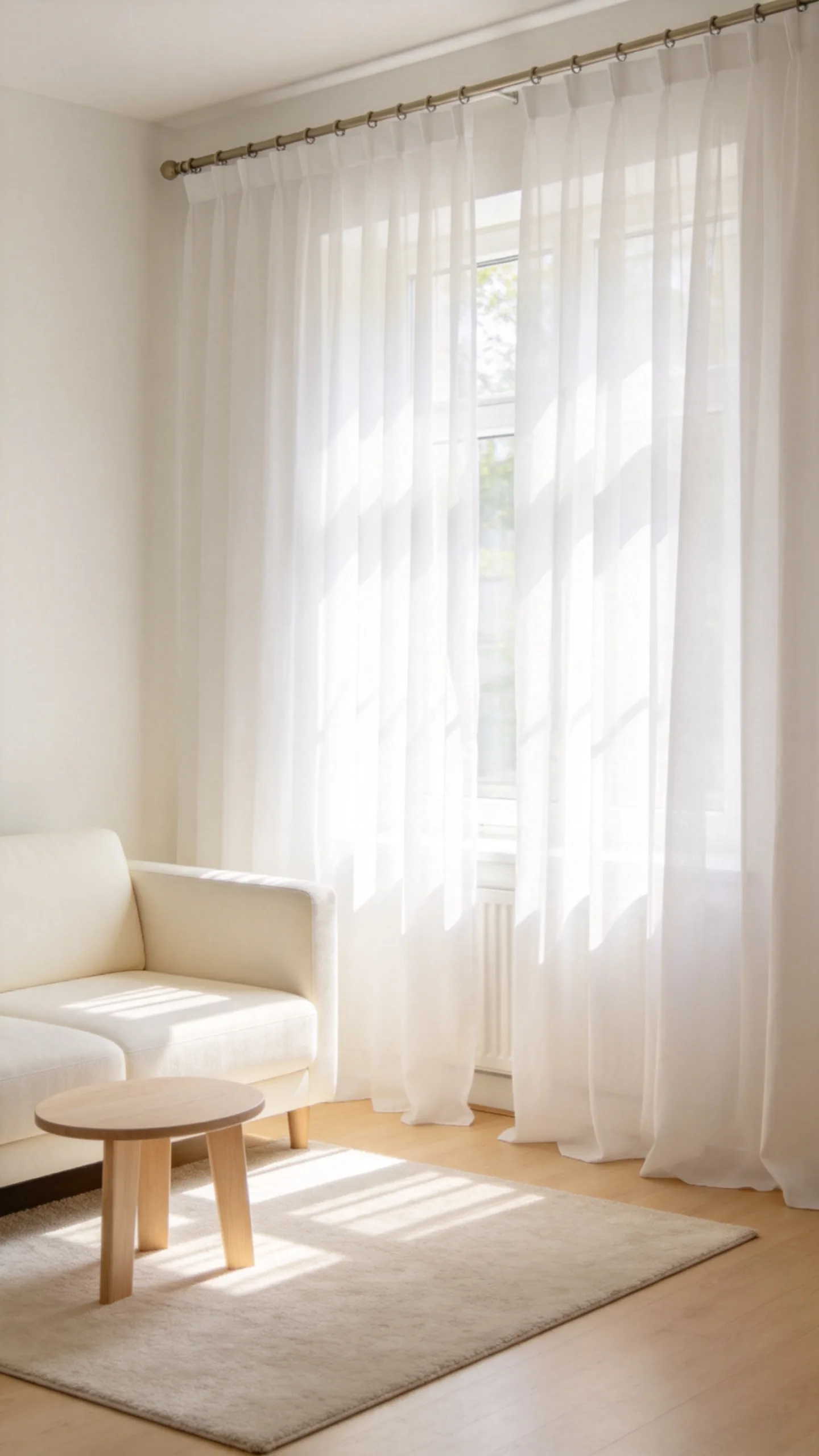
White sheer curtains are perfect for living rooms where privacy and soft daylight are more important than full darkness. They diffuse harsh sun, reduce glare, and make the window area feel light and romantic.
For a modern look, use full-length sheers with a simple ceiling track or slim rod. Avoid skimpy panels; fuller sheers look much more expensive. This idea works well in small living rooms because the fabric adds softness without visually shrinking the space.
21. Two-Tone Curtains With a Dark Bottom Border
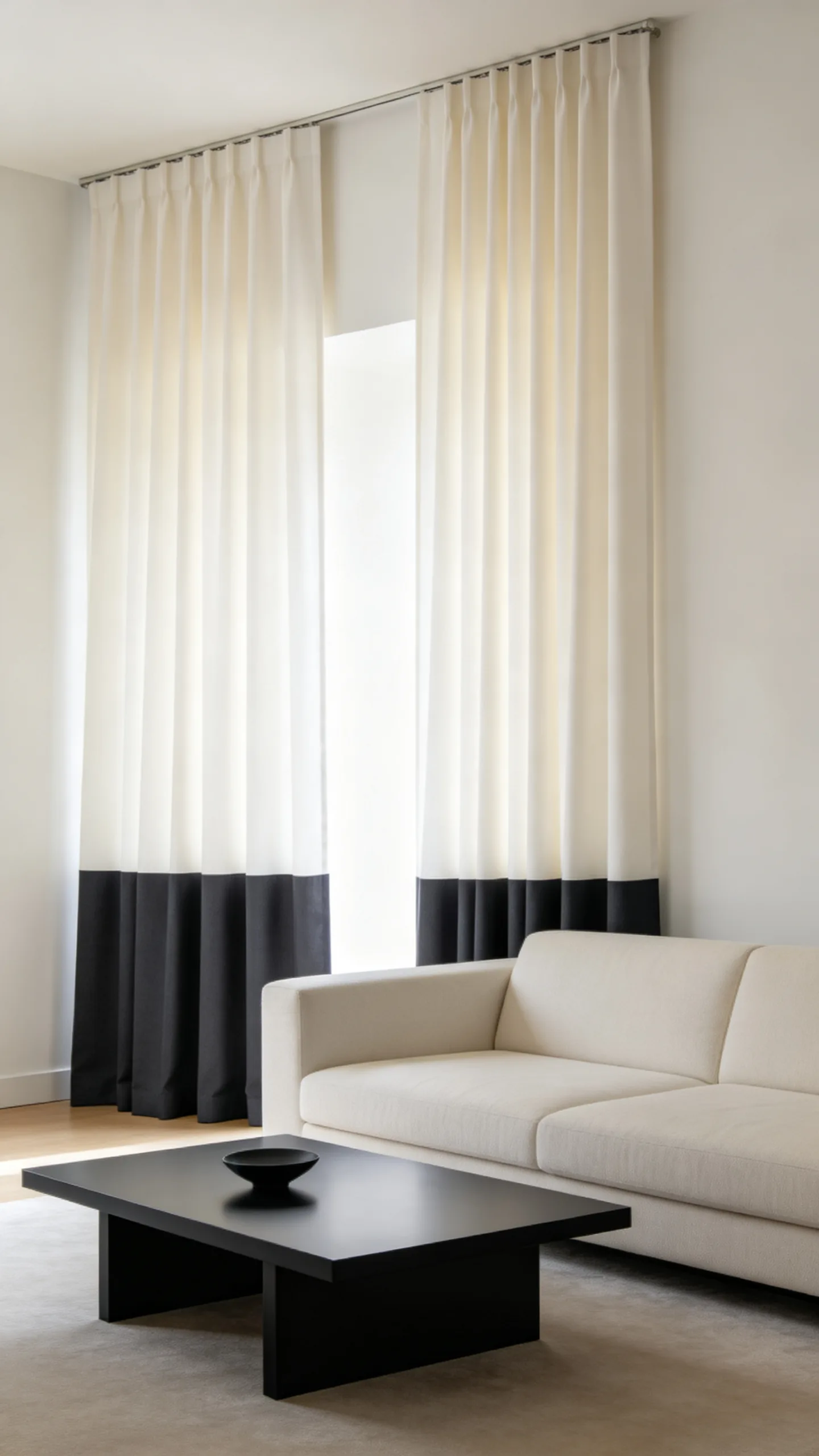
Two-tone curtains with a darker bottom border can make a living room feel custom without using a loud pattern. For example, ivory panels with a taupe, charcoal, or black lower band add structure and visual weight near the floor.
This detail works best in rooms with simple furniture and clean wall colors. The darker border can echo the color of a coffee table, fireplace, picture frames, or sofa legs. Make sure the panels are long enough to reach the floor so the border looks intentional rather than like an awkward cutoff.
22. Roman Shades Layered Under Drapery Panels
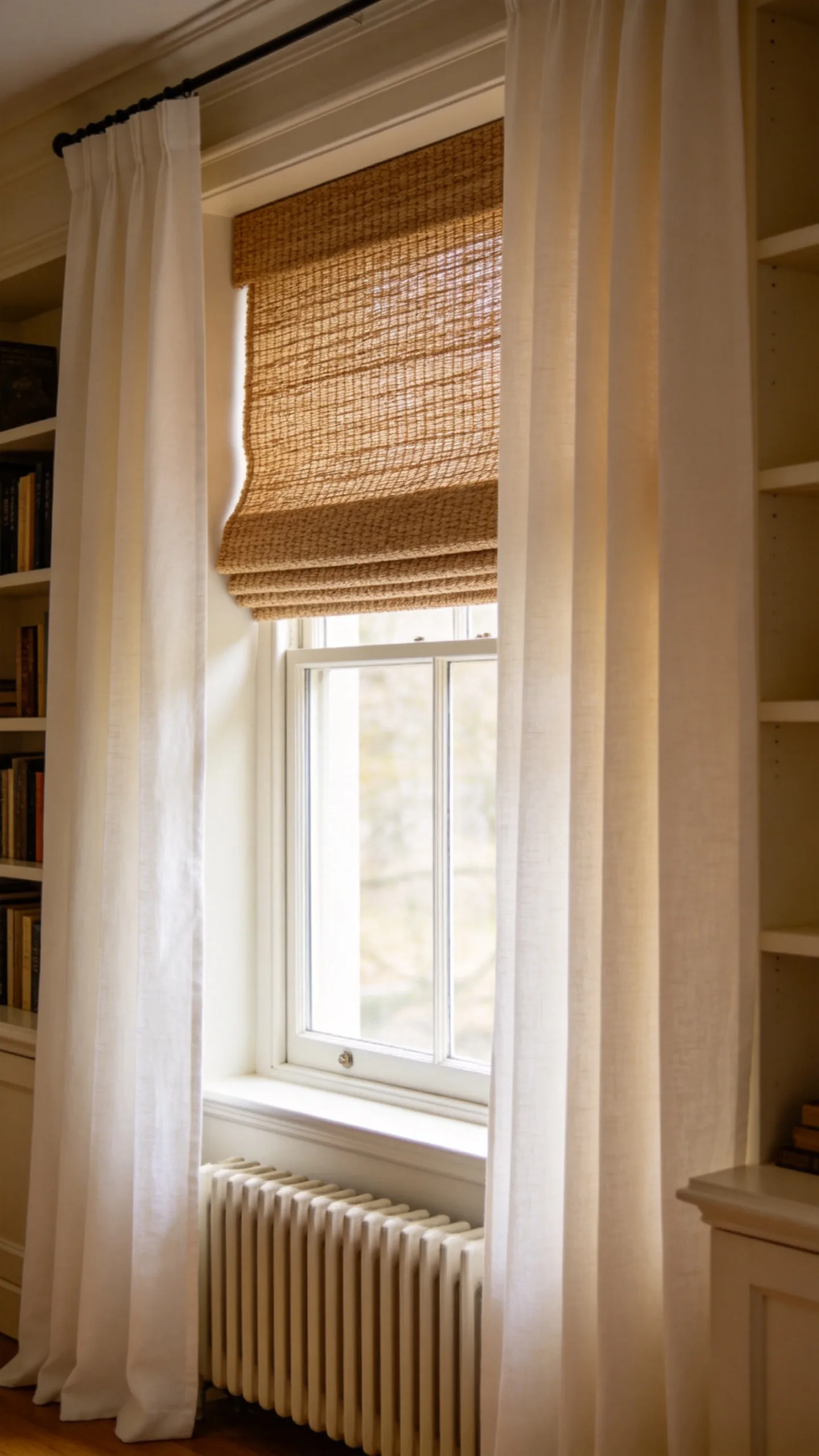
Roman shades layered under side curtain panels create a finished, tailored window treatment. The shade handles light control and privacy, while the curtain panels soften the edges of the window.
Use this combination for living rooms with shallow window frames, built-in bookcases, or windows above radiators where full curtains may not function well. A woven Roman shade with linen side panels feels warm and organic, while a flat fabric Roman shade with pleated drapes feels more formal and crisp.
23. Dark Brown Curtains for a Rich Modern Palette
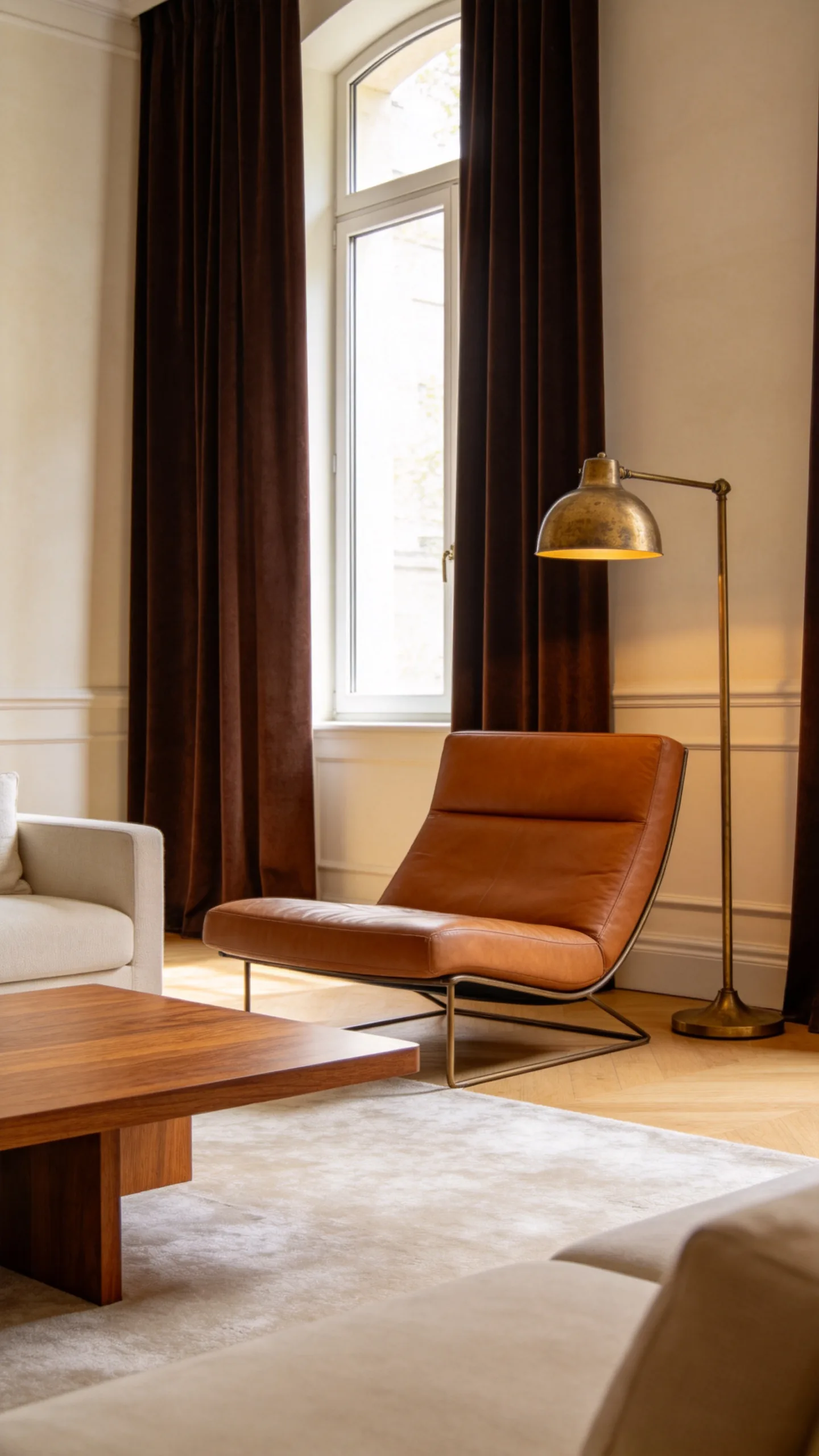
Dark brown curtains are an elegant alternative to black, especially in living rooms with warm woods, leather seating, cream walls, and aged brass lighting. The color adds depth while feeling softer and more natural than stark black.
Choose espresso, cocoa, or tobacco brown in a matte fabric for a modern finish. Dark brown curtains can make a room feel cozy in the evening and frame outdoor views beautifully during the day. Balance them with lighter upholstery and a pale rug so the space still feels open.
24. Matching Curtain and Wall Colors for a Seamless Look
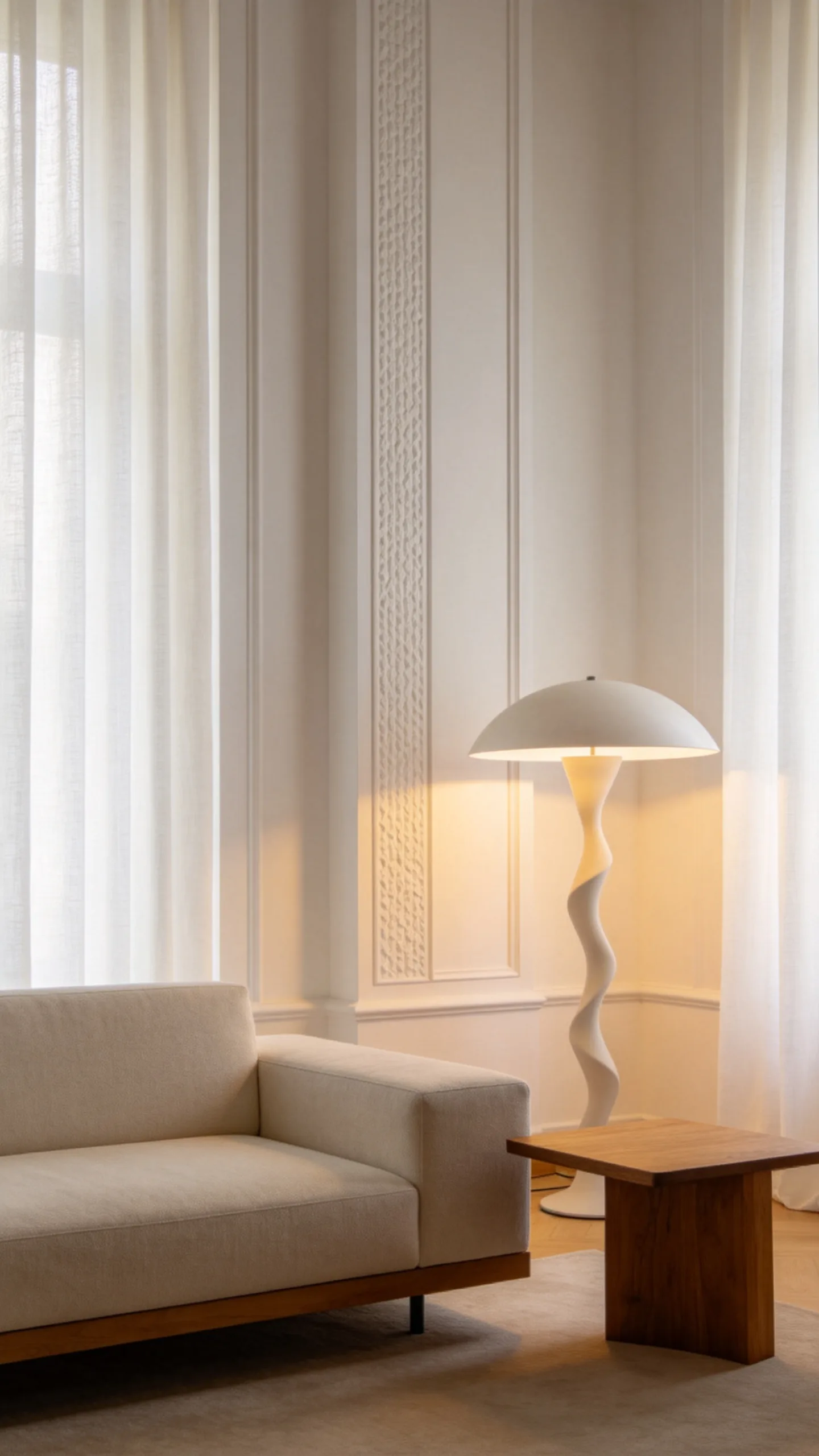
Matching the curtain color to the wall color creates a quiet, expensive-looking effect because the window treatment blends into the architecture. This works especially well with warm white, soft beige, greige, pale taupe, or muted gray walls.
The key is to vary the texture rather than the color. For example, pair matte painted walls with linen, woven cotton, or soft velvet curtains in a similar shade. This keeps the living room cohesive, reduces visual clutter, and makes furniture, art, and lighting stand out more clearly.

From the editors
Decor Compass Editorial Team
We turn practical home research into clear, useful room-by-room ideas.