The best kitchen curtain ideas soften a window, add color or texture, and still let daylight reach the sink, counters, breakfast nook, or prep area. Whether your kitchen has a small window over the sink, a wide bay window, glass doors, or a sunny eat-in corner, the right curtain style can add charm without making the room feel dim or crowded.
1. Sheer White Café Curtains for a Bright Sink Window
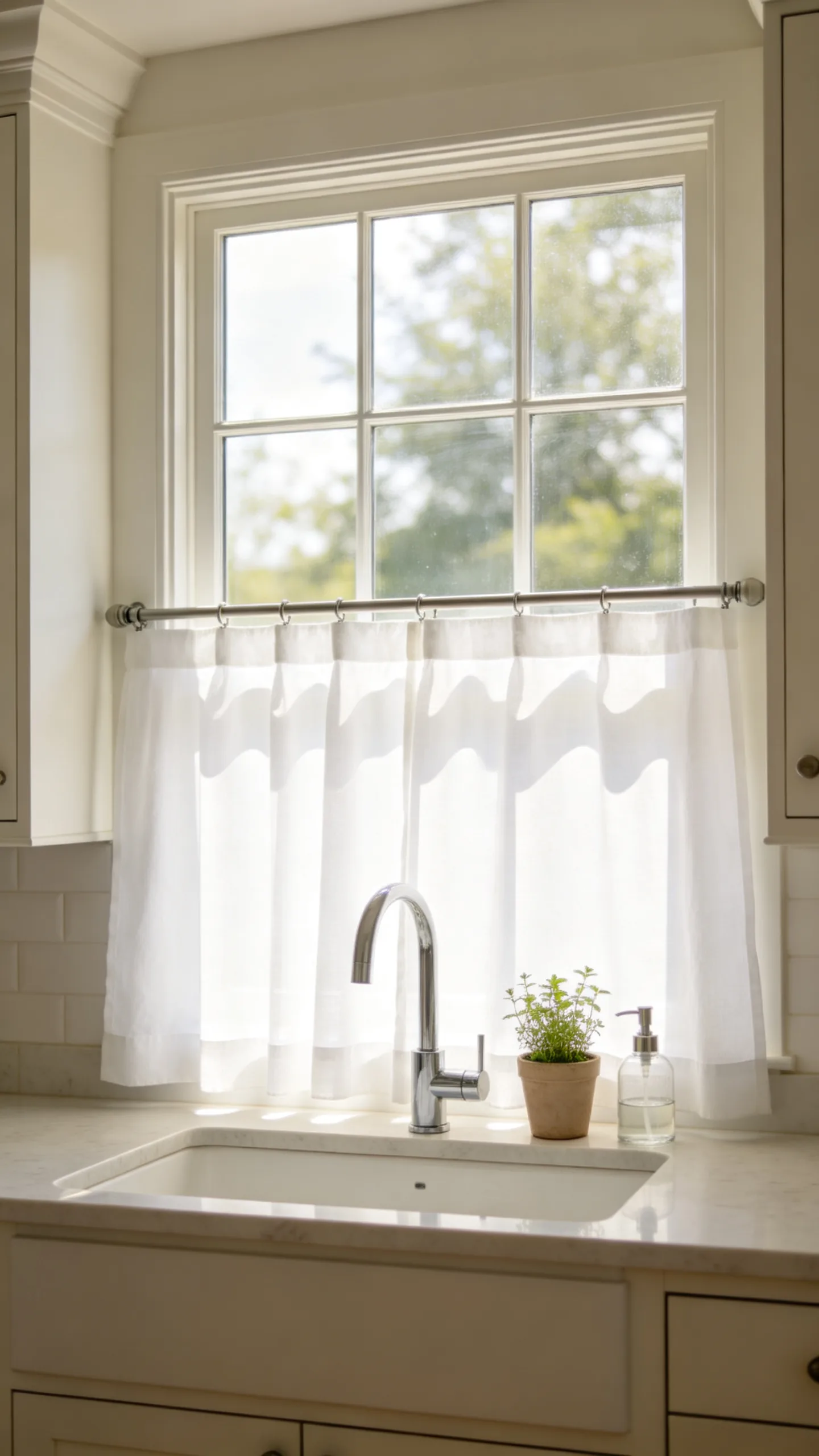
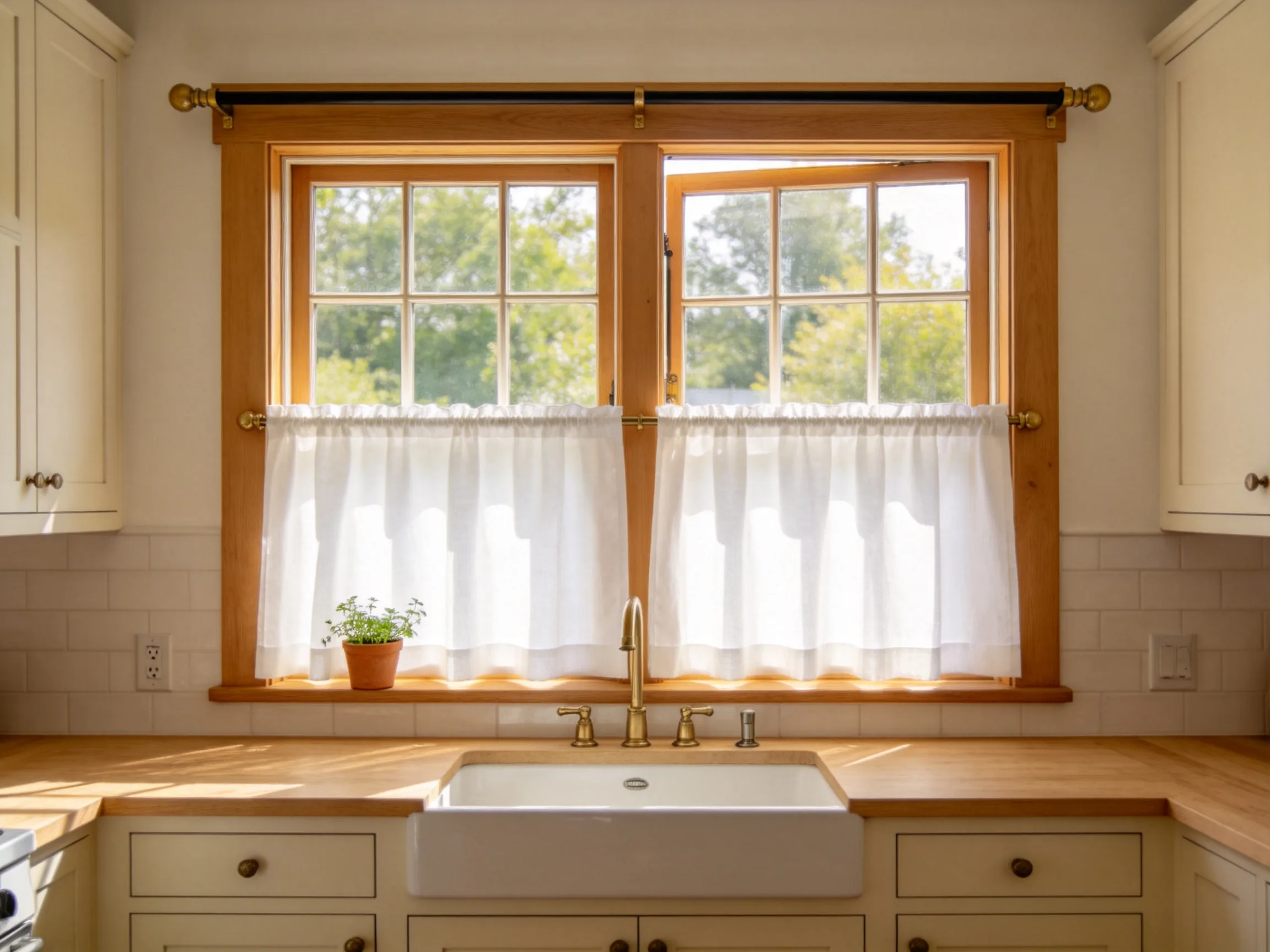
Sheer white café curtains are a classic choice for a kitchen window above the sink because they cover the lower half of the glass while leaving the upper portion open for sunlight. This works especially well if the window faces a neighbor’s house or a street, since you get privacy at eye level without shutting out the sky.
Choose a lightweight cotton voile, linen blend, or polyester sheer that can handle kitchen humidity and frequent washing. A slim brass, black, or white tension rod keeps the look simple and avoids heavy hardware around tile, painted trim, or a backsplash. For a charming finish, let the fabric just skim the sill so it does not interfere with faucet handles, soap dispensers, or herb pots.
2. Linen Half Curtains With Soft Natural Texture
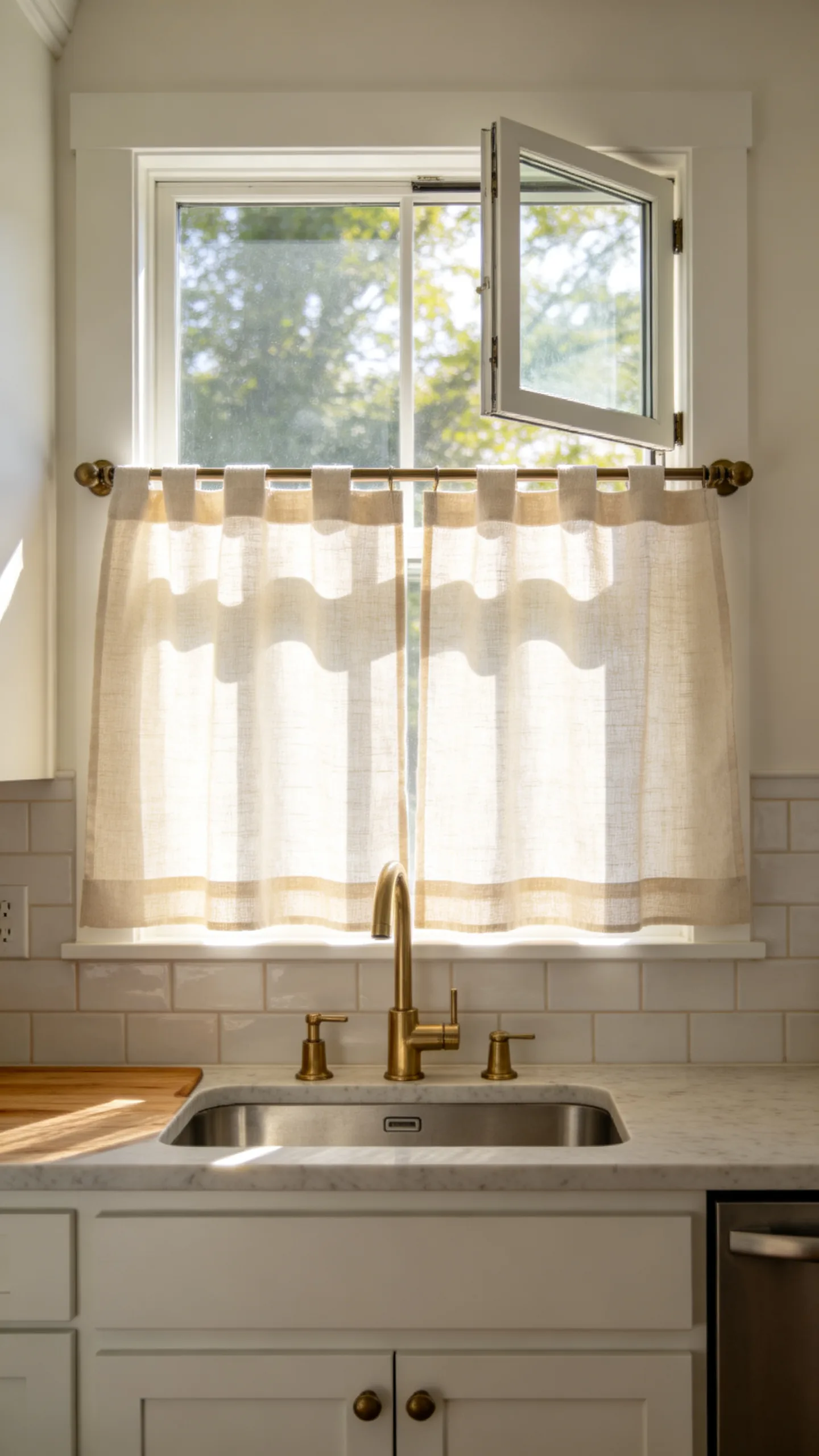
Linen half curtains add texture without making the kitchen feel heavy. Their slightly open weave filters light beautifully, which is useful in kitchens with white cabinets, butcher block counters, stone countertops, or painted walls that benefit from gentle daylight.
For a relaxed look, use unlined linen panels in oatmeal, ivory, warm gray, or pale flax. Mount them on a café rod halfway up the window frame so the top glass stays open. This style suits farmhouse kitchens, cottage kitchens, and modern organic spaces because it brings softness to hard surfaces like tile, stainless steel, and quartz.
3. Roman Shade in a Light Filtering Fabric
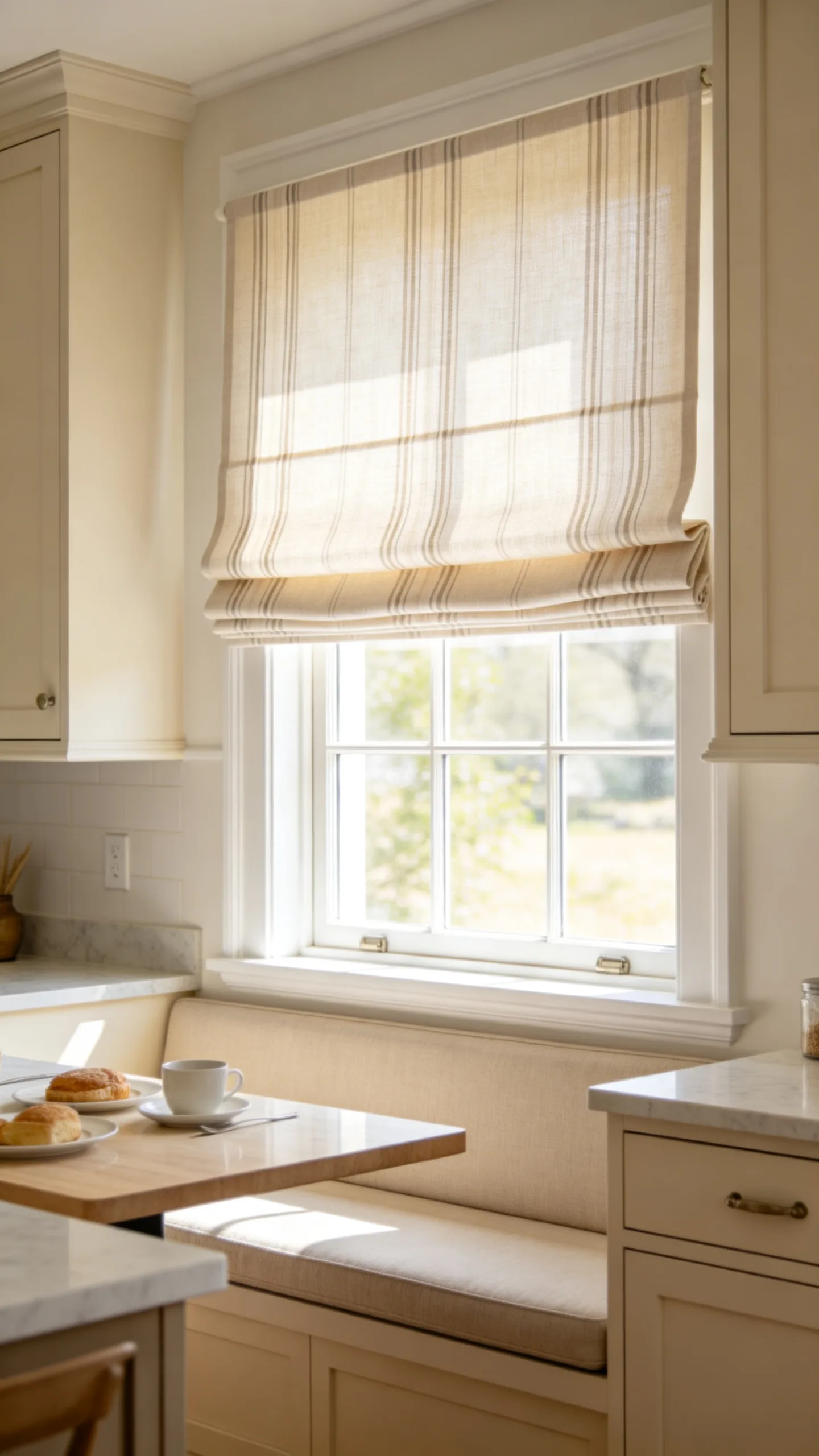
A light filtering Roman shade is practical when you want a clean, tailored window treatment that can be raised during the day and lowered when needed. It works well over kitchen sinks, breakfast banquettes, or windows near a range where long fabric panels would be inconvenient.
Pick a flat or relaxed Roman shade in linen, cotton, or a washable blend. Avoid blackout linings if your goal is brightness. A pale stripe, small floral, or woven neutral fabric gives the window personality while still keeping sightlines open when the shade is lifted. Mounting the shade slightly above the window trim can make the window appear taller and allow more glass to show.
4. Gingham Café Curtains for Cottage Charm
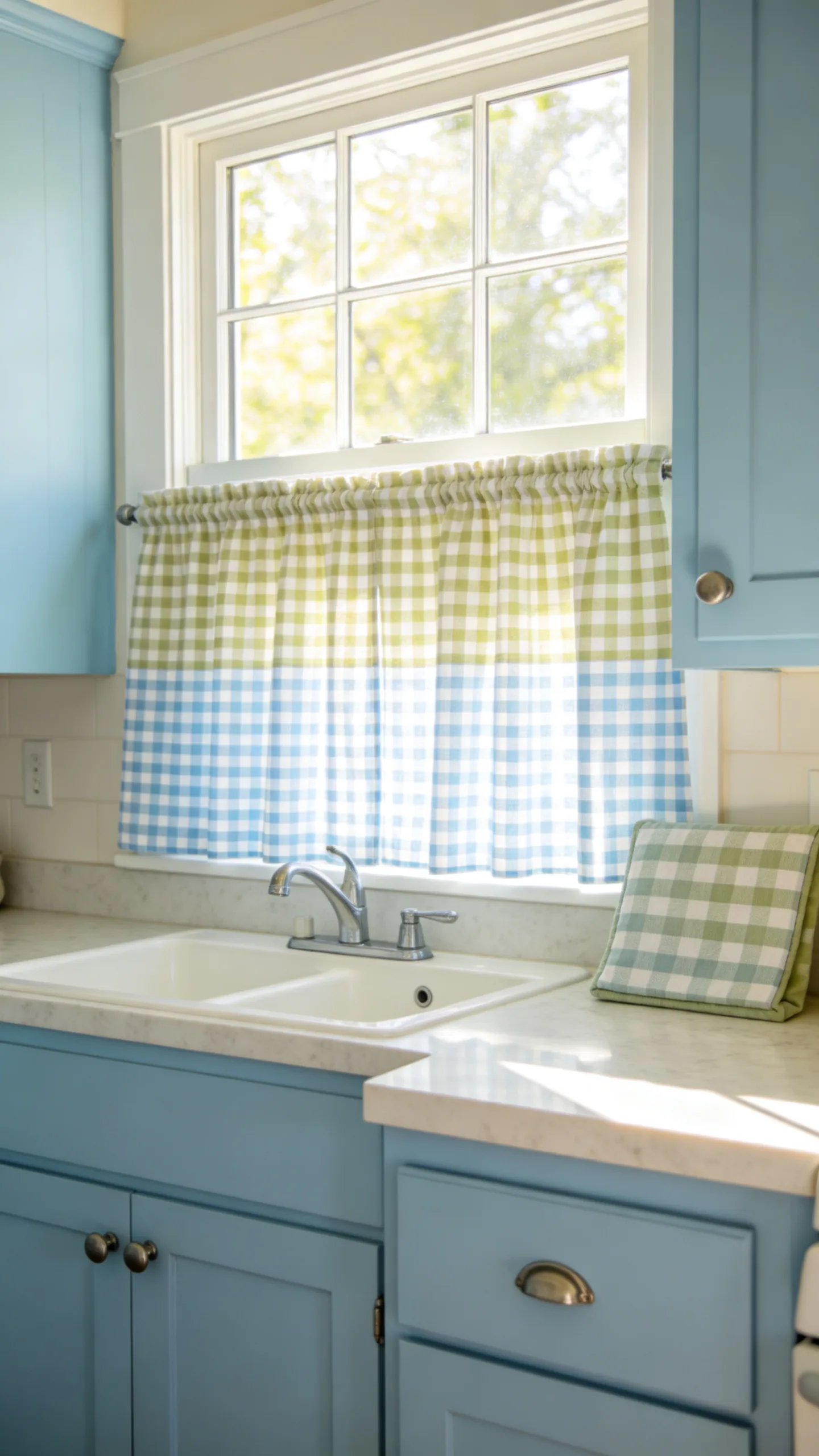
Gingham café curtains bring a cheerful, homey look to a kitchen without covering the full window. Small-scale checks in blue, sage, red, yellow, or black can coordinate with cabinet hardware, dish towels, seat cushions, or a runner rug.
Use gingham in a crisp cotton fabric for easy washing. The pattern is strong enough to add character, so the curtain shape can stay simple. A lower-half café curtain is especially useful in a small kitchen because it adds pattern at the window while keeping upper sightlines clear, helping the room feel open instead of boxed in.
5. Striped Curtains That Make the Window Look Taller
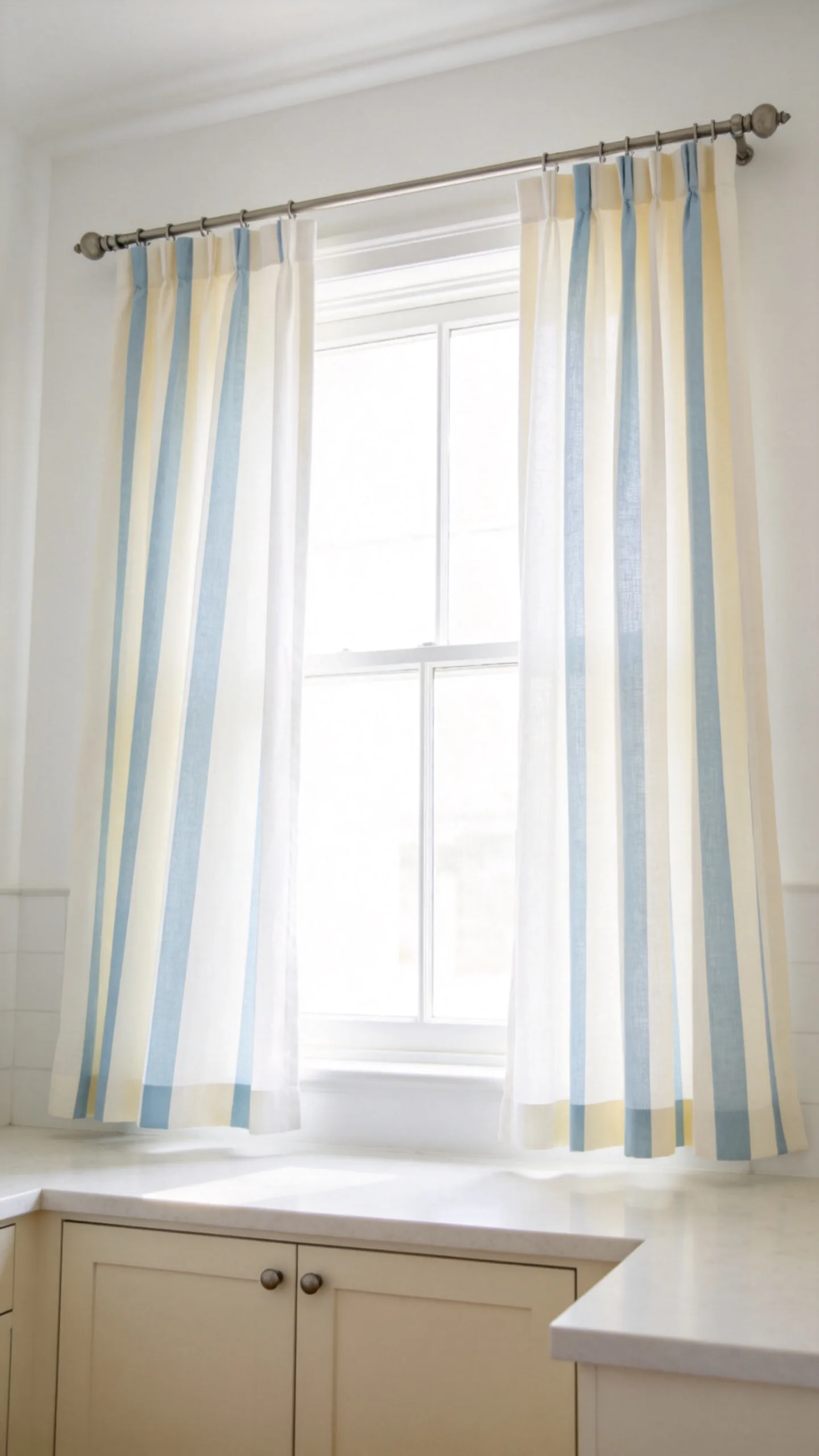
Vertical striped curtains can visually lengthen a kitchen window, especially if the window is short or placed above a counter. Thin stripes in beige and white, blue and cream, or gray and ivory add movement without overwhelming the room.
For the brightest result, choose a lightweight fabric and keep the curtain coverage minimal. Café panels, narrow side panels, or a Roman shade with a vertical stripe can all work. If your kitchen has low ceilings, mount the rod just above the trim and let the fabric drop neatly to the sill to draw the eye upward without blocking natural light.
6. Lace Panels for Vintage Kitchen Detail
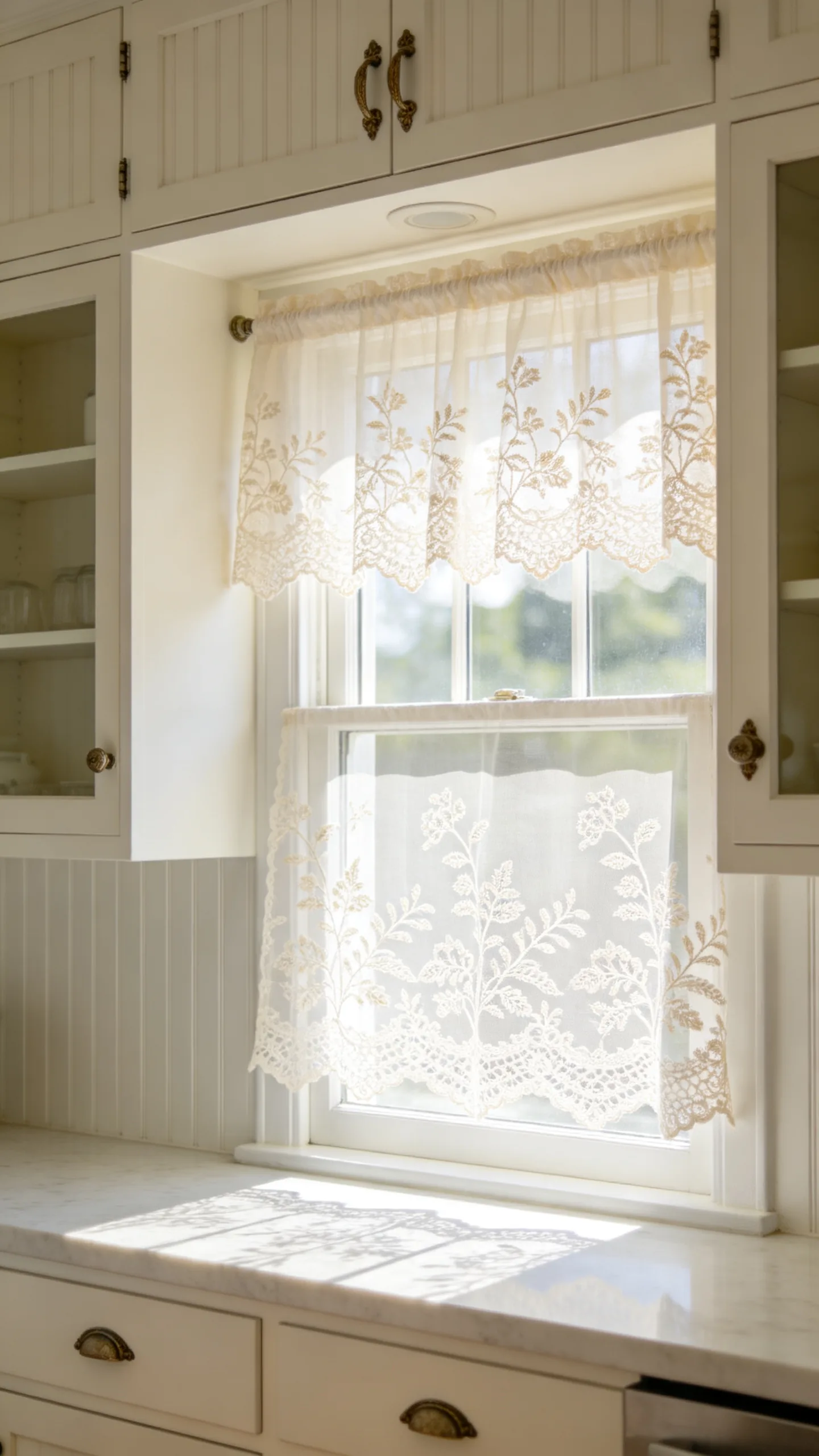
Lace panels can add vintage charm while still allowing sunlight to pass through. They are especially pretty in kitchens with painted cabinets, glass-front cupboards, open shelving, beadboard, or antique-style hardware.
Use lace sparingly so the room feels fresh rather than overly busy. A pair of short lace café curtains, a narrow lace valance, or a single lace panel on a side window can soften the space. White and ivory are the safest choices for keeping the kitchen bright, while a delicate botanical pattern can echo potted herbs, floral dishes, or garden views.
7. Bamboo Shades Layered With Sheer Panels
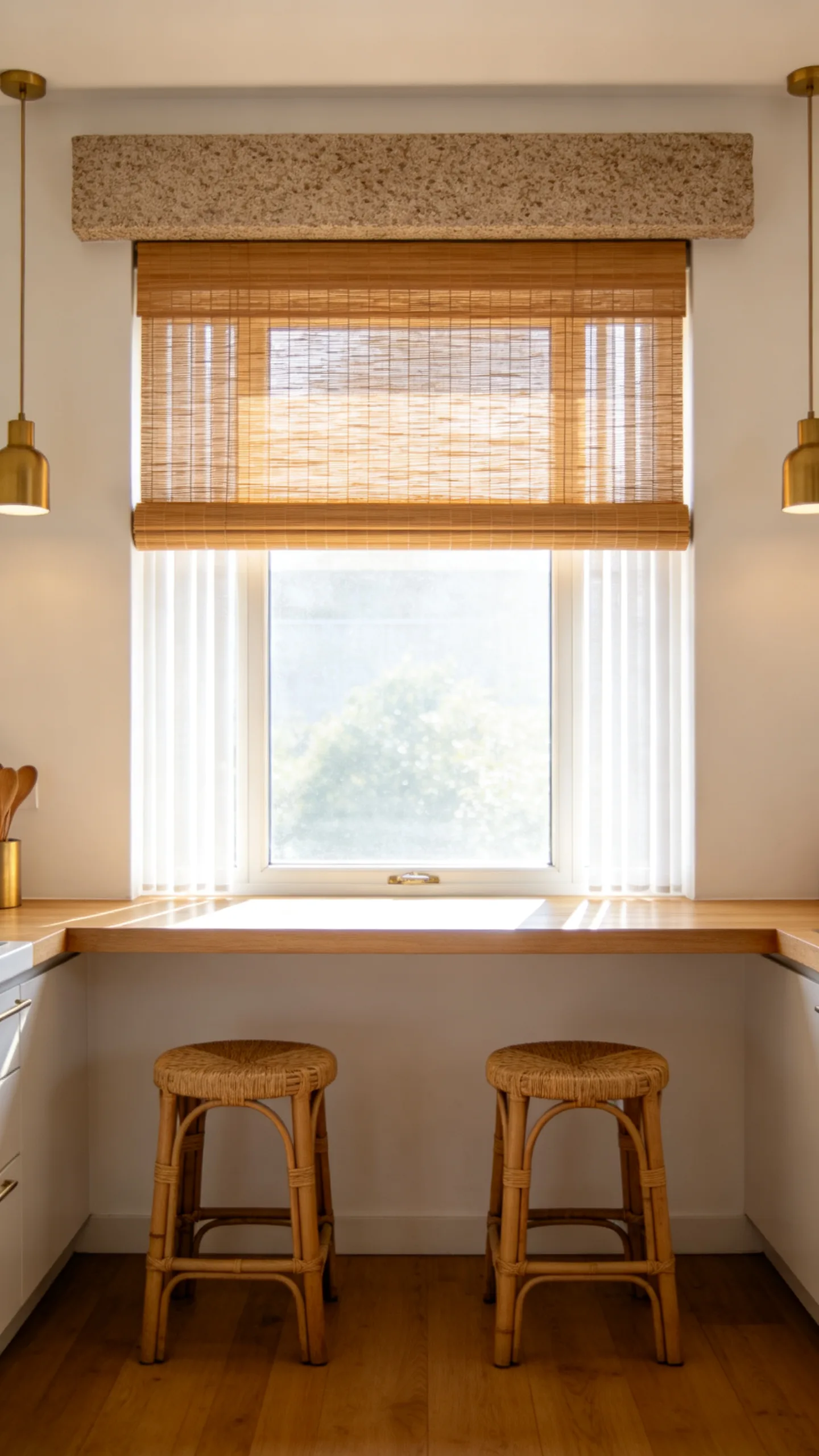
Bamboo or woven wood shades bring natural texture to a kitchen, and layering them with sheer side panels can soften the look. This combination works well in kitchens with white walls, wood floors, rattan stools, or warm brass lighting.
Choose a light-filtering woven shade rather than a tightly lined privacy shade if brightness is the goal. Keep the shade pulled up during the day so it forms a textured header above the window. Add narrow sheer panels on each side if the window has enough wall space. The layered look adds depth without covering the glass during peak daylight hours.
8. Simple Valance Above an Open Window
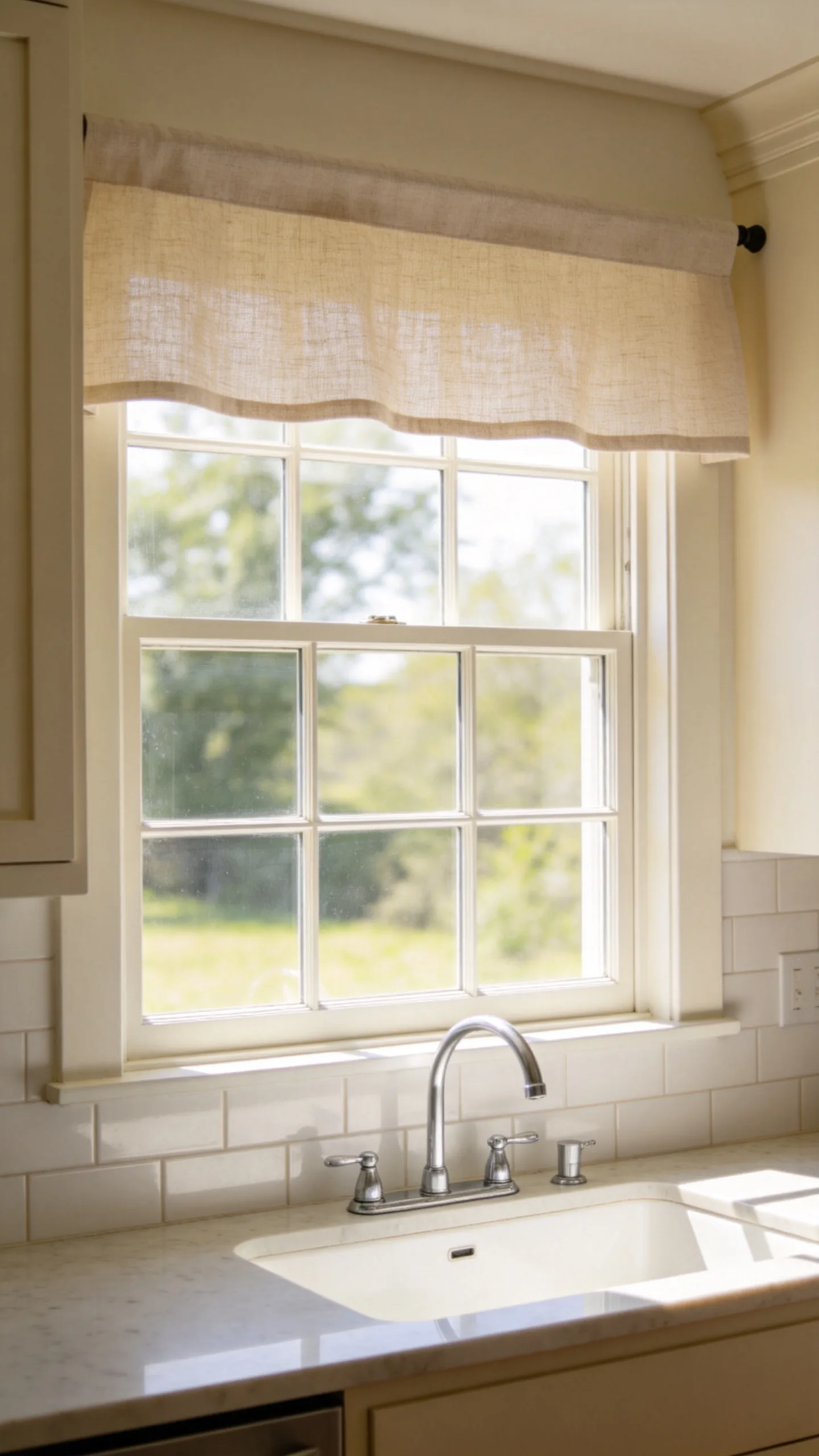
A valance is a good option when you want fabric at the window but do not want anything hanging in front of the glass. It adds color, pattern, or softness at the top of the window while keeping the full pane open.
This idea works well for small kitchens, rental kitchens, and windows above countertops where lower curtains might get splashed. Keep the valance shallow, about 10 to 14 inches depending on window height, so it does not crowd the trim. A tailored box valance feels crisp, while a gathered cotton valance suits cottage, farmhouse, or traditional kitchens.
9. Floral Café Curtains With a Small-Scale Print
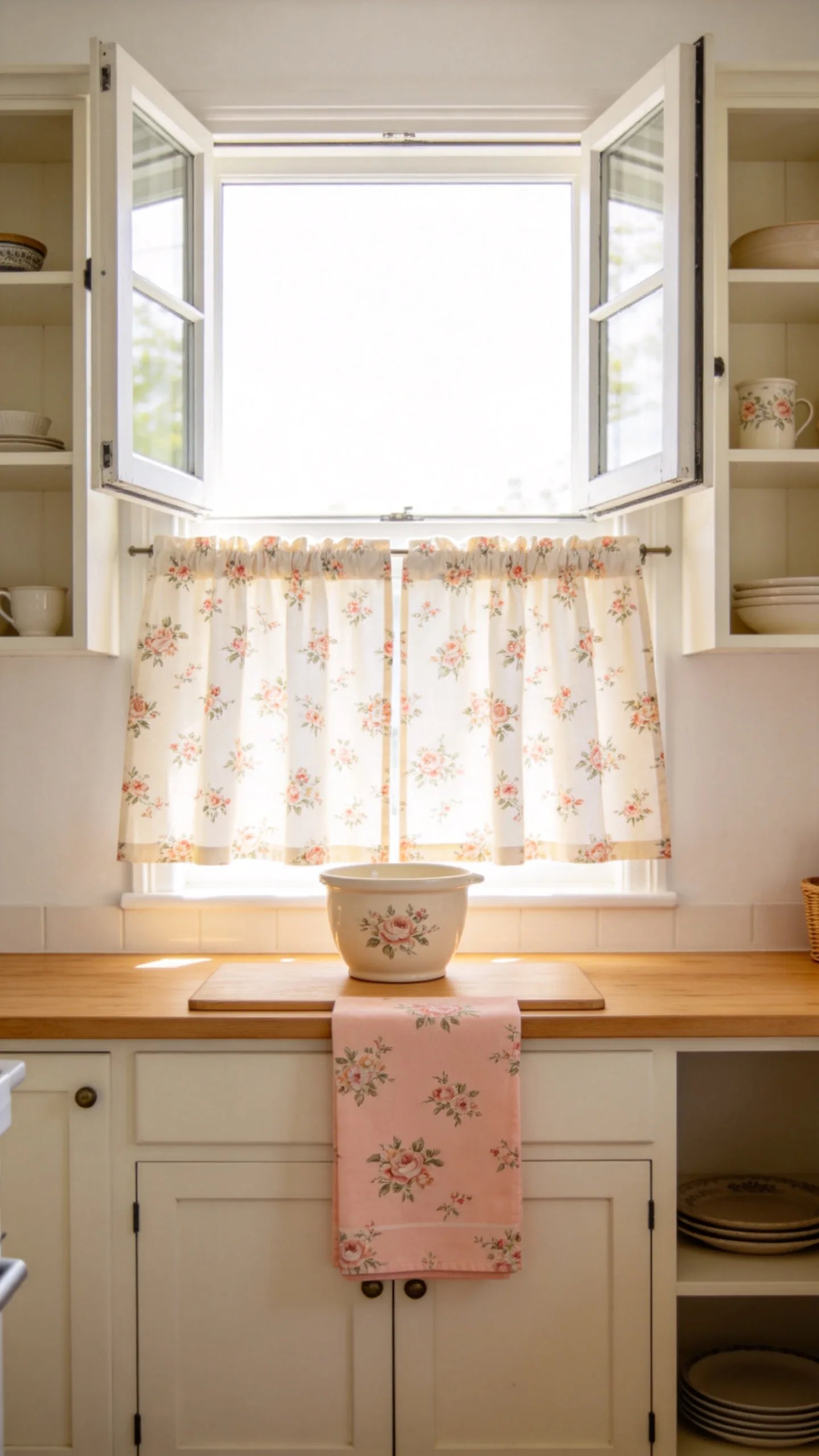
Floral café curtains can make a kitchen feel warm and collected without taking over the space. The key is choosing a small-scale print with plenty of white or light background so the fabric reflects light instead of absorbing it.
Soft blue florals, tiny yellow blossoms, faded rose prints, and green botanical patterns pair well with painted cabinets, open shelves, and vintage dishes. Use the print on the lower half of the window and repeat one color elsewhere in the room, such as on a dish towel, stool cushion, or ceramic planter, for a pulled-together look.
10. Pinch Pleat Sheers for a Polished Breakfast Nook
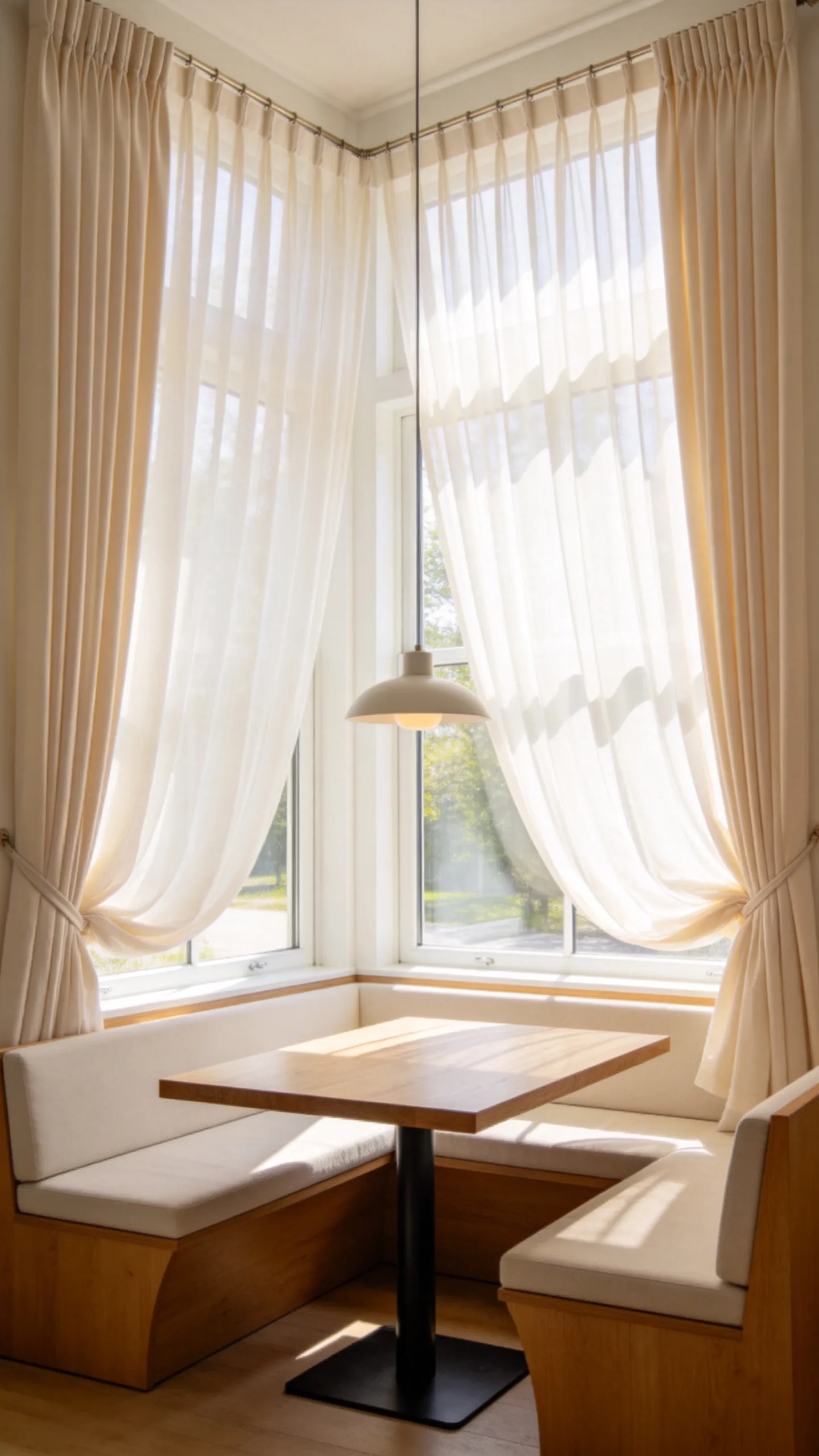
If your kitchen includes a breakfast nook or dining corner, pinch pleat sheer curtains can make the area feel finished while keeping it sunny. They look more structured than basic rod-pocket sheers, which helps the nook feel intentional rather than temporary.
Hang the curtains high and wide around the window so the panels can stack outside the glass when open. This preserves daylight and makes the window feel larger. White, ivory, or pale beige sheers work with wood tables, upholstered benches, and pendant lighting, adding softness around a hard-working eating area.
11. Scalloped Edge Curtains for a Sweet Detail
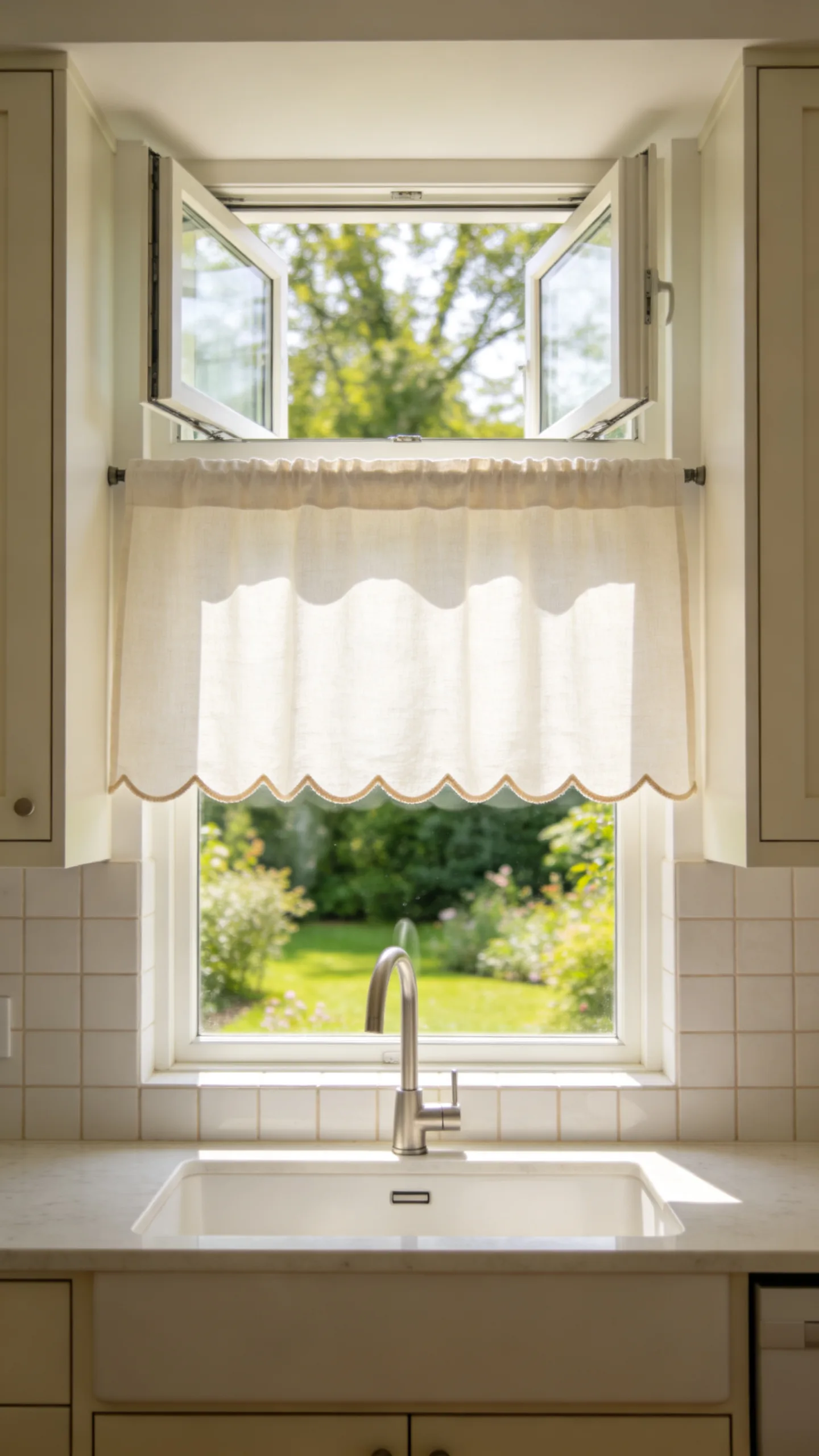
Scalloped edge curtains add a subtle decorative touch without relying on bold color or heavy fabric. The curved edge gives the window a softer outline, which can be useful in kitchens with many straight lines from cabinets, tile, appliances, and countertops.
Look for scalloped café curtains, sheer panels, or a scalloped valance in cotton or linen. This style is especially charming over a sink window, garden-facing window, or compact breakfast area. Keep the fabric light and the length practical so the detail looks clean rather than fussy.
12. Neutral Cotton Curtains With Tie Tops
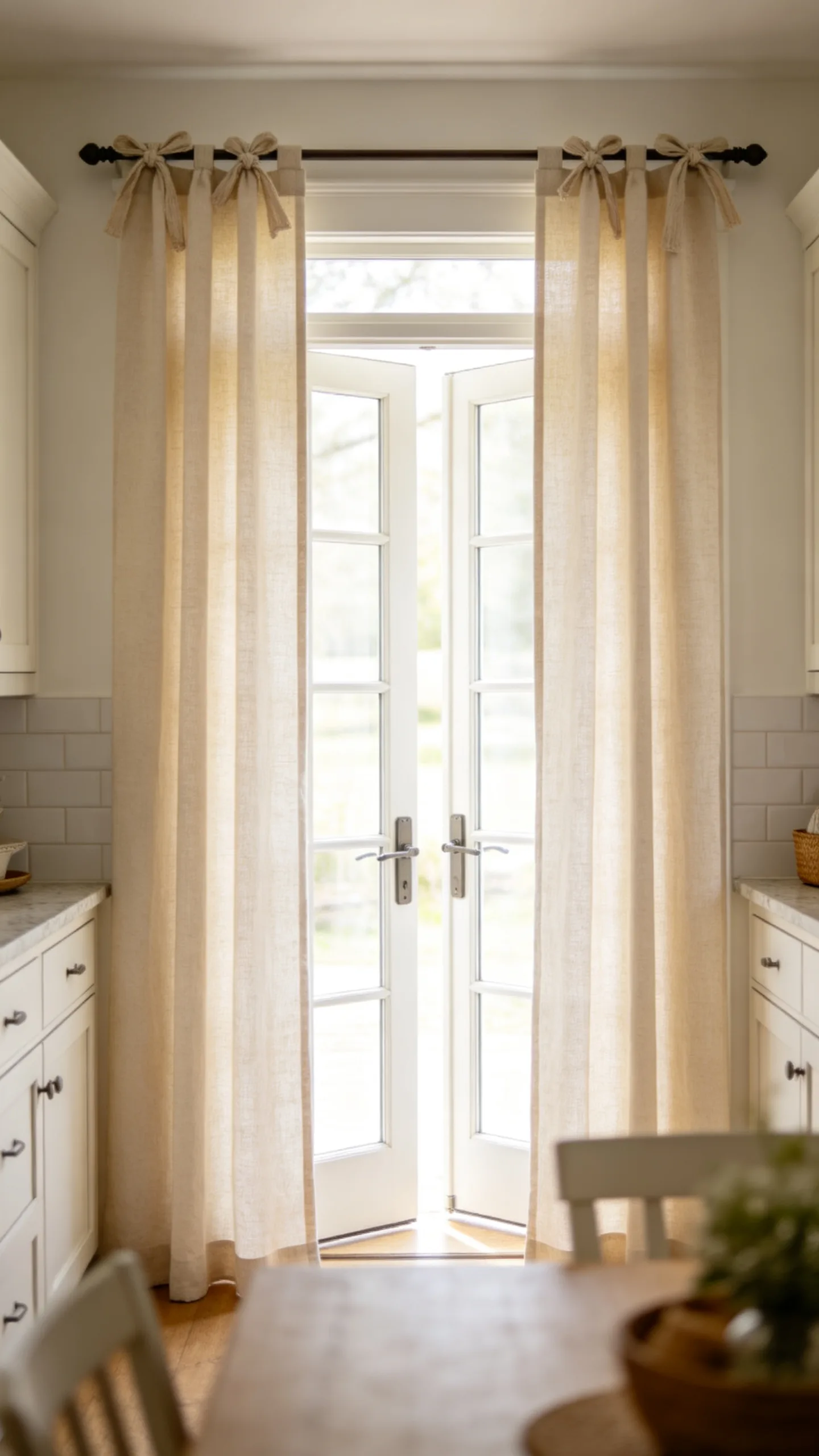
Tie-top curtains add casual charm and are easy to adjust on a simple rod. In a kitchen, they work best in lightweight cotton or linen blends so the ties do not look bulky or block too much window space.
Use neutral colors like warm white, natural beige, or pale gray if you want the ties to be the main detail. Tie-top panels can frame a breakfast nook window, French door, or pantry-area window. For a brighter effect, choose narrow panels and push them fully to the sides during the day so the glass stays open.
13. Tiered Curtains for Flexible Privacy and Light
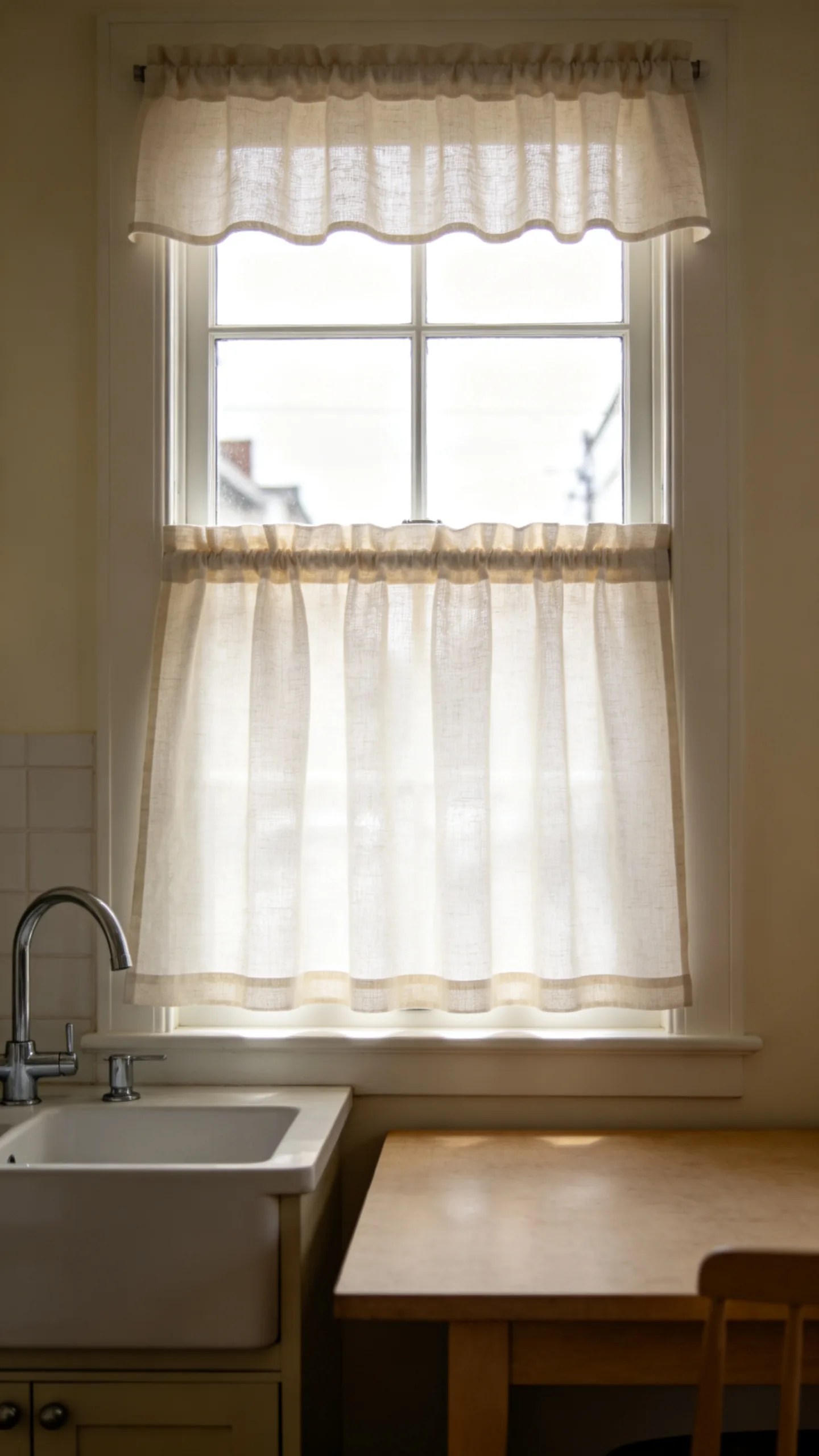
Tiered curtains give you more control than a single panel because the top and bottom sections can be handled separately. This is helpful in kitchens that face a sidewalk, driveway, or neighboring window.
Use a lower café tier for privacy and leave the top glass uncovered for daylight. If you need extra softness, add a very shallow valance above. Choose a light cotton, sheer linen, or semi-sheer blend so the layered fabric does not darken the room. This setup is practical over sinks, near breakfast tables, or on windows close to outdoor traffic.
14. Embroidered Sheers for Subtle Pattern
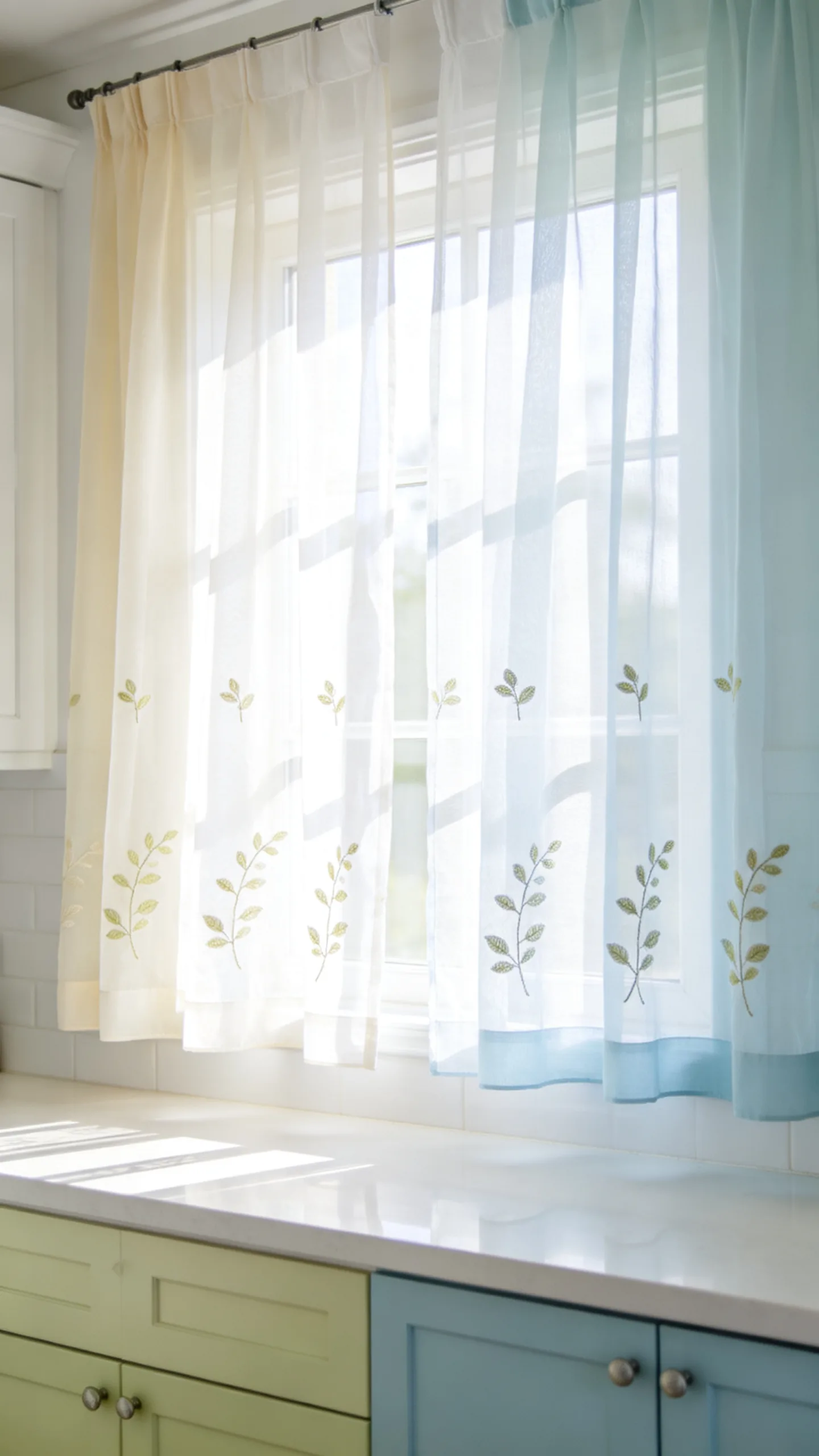
Embroidered sheers add detail while staying airy. A small leaf, vine, dot, or geometric embroidery can make a plain kitchen window feel styled without introducing a heavy print.
This idea works especially well in white, cream, sage, or pale blue kitchens where texture matters more than strong color. Use embroidered sheer café panels for a sink window or full-length sheers for a patio door near the kitchen. Because the base fabric is translucent, the window still feels bright even when the curtains are closed.
15. Checked Valance With Open Lower Glass
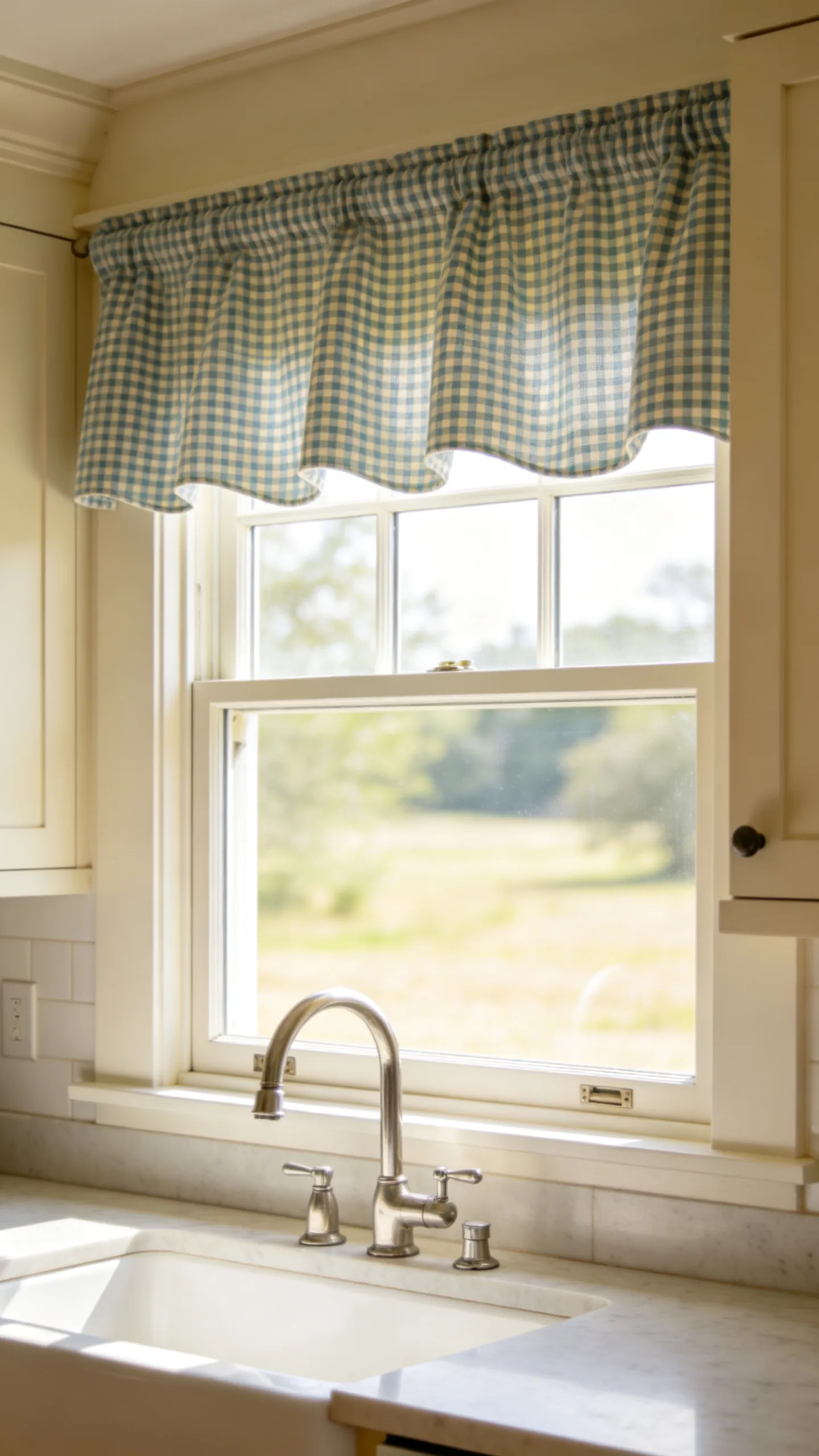
A checked valance is a simple way to bring pattern into the kitchen while leaving the rest of the window uncovered. It is especially useful when the window has a pretty view, sits above a sink, or brings in most of the room’s natural light.
Choose a check size that matches the scale of the kitchen. Small checks suit compact kitchens and narrow windows, while larger buffalo checks work better in spacious farmhouse-style rooms. Keep the valance crisp and not too deep so the top of the window does not feel weighed down.
16. Light Blue Curtains for an Airy Coastal Feel
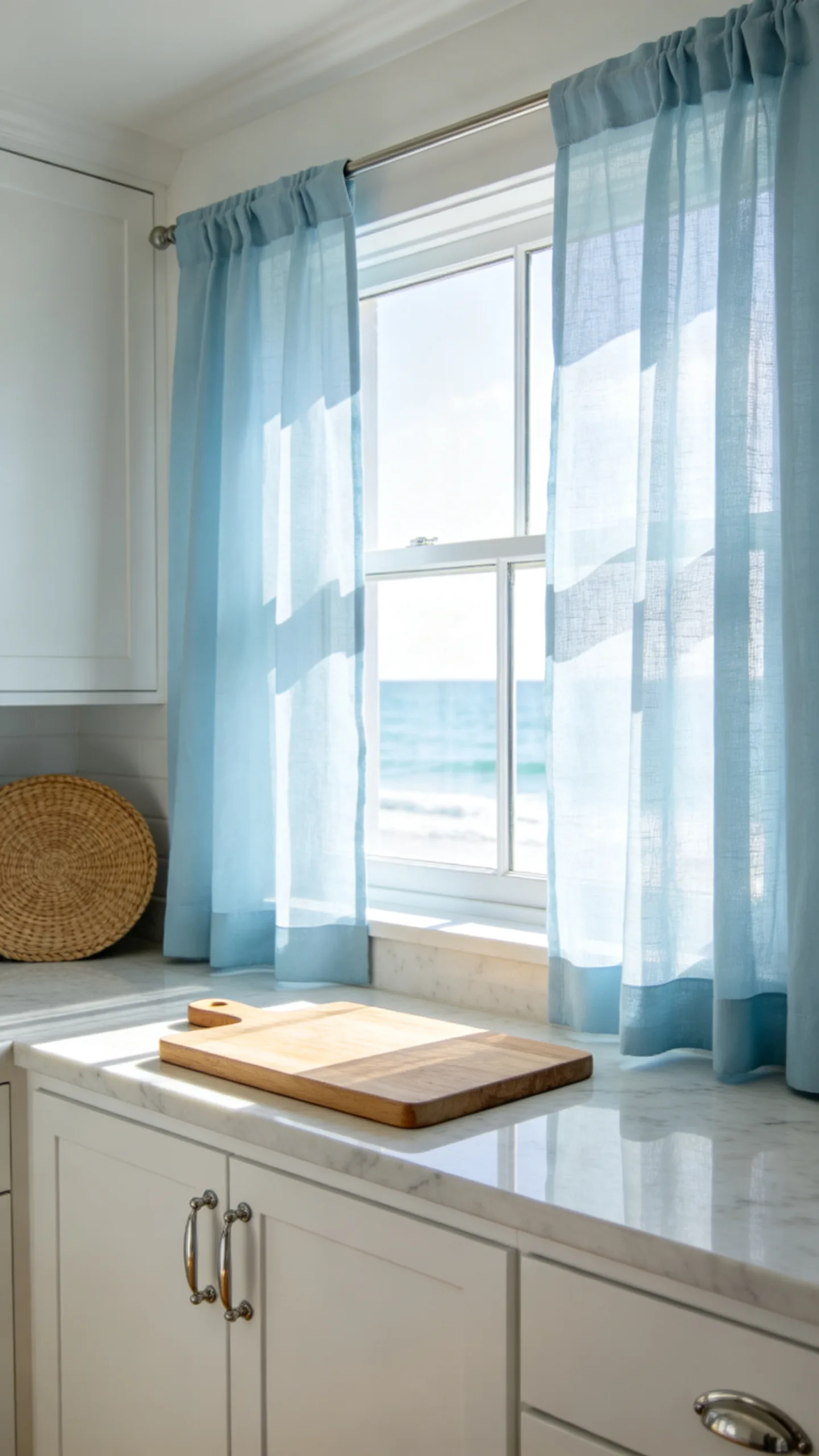
Light blue curtains can make a kitchen feel fresh and calm while still reflecting daylight. Pale blue works beautifully with white cabinets, nickel hardware, marble-look counters, rattan shades, and natural wood cutting boards.
Use the color in a sheer, linen, or cotton café curtain rather than a thick opaque panel. A blue stripe, tiny floral, or solid chambray-style fabric can all work. This is a good choice for kitchens that need color but still rely on the window to keep the room from feeling closed in.
17. Sage Green Curtains for Soft Garden Color
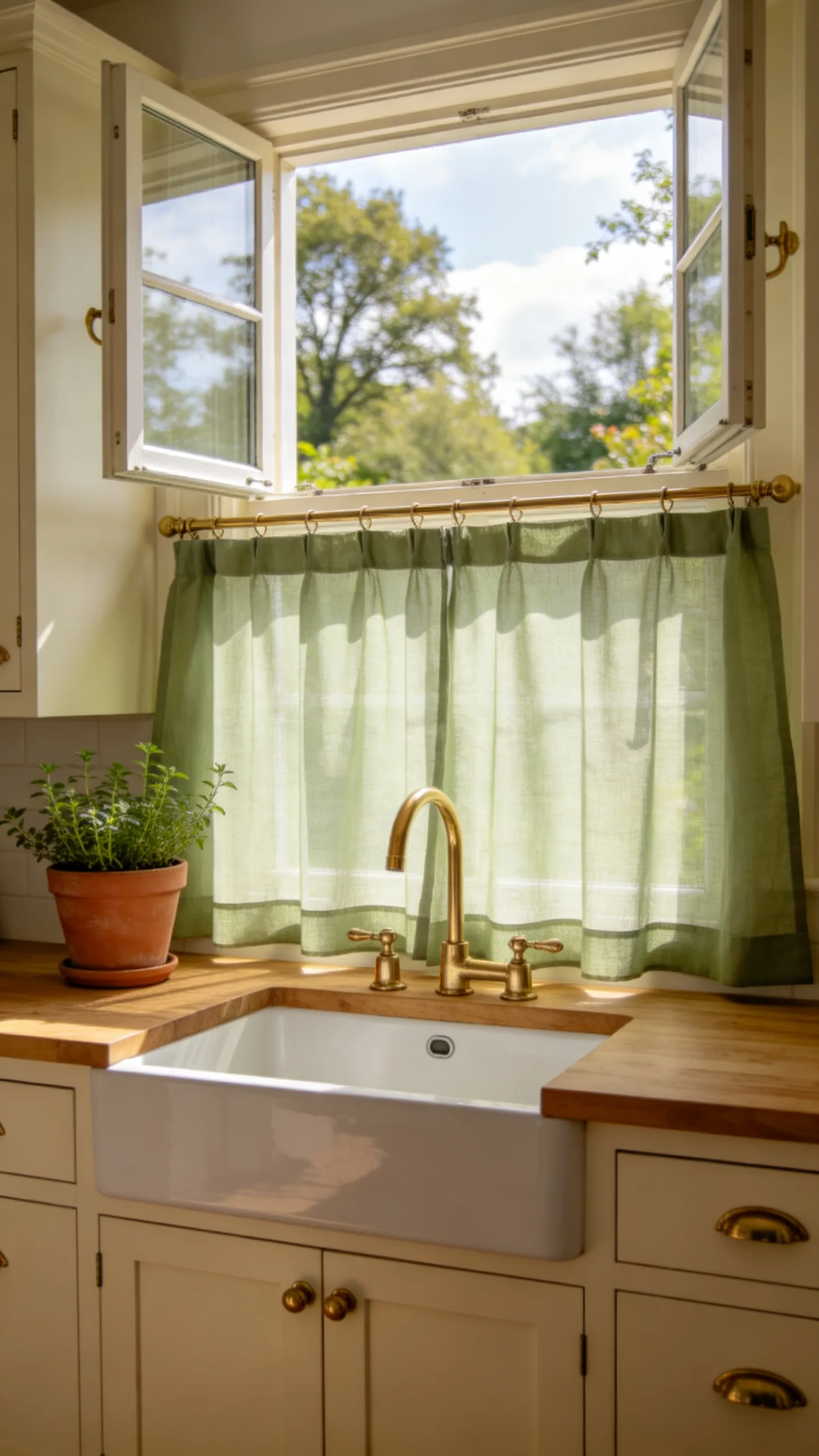
Sage green curtains bring a natural, garden-inspired look to the kitchen without making the window feel dark. The muted color pairs well with cream cabinets, butcher block, terracotta pots, brass hardware, and stone countertops.
For best light flow, choose sage in a semi-sheer linen, cotton voile, or small patterned fabric with a pale background. Café curtains are ideal if you want privacy near the sink but still want to see trees, sky, or the yard through the top of the window. Repeat the sage tone in a runner, dish towel, or herb planter for a cohesive room.
18. Narrow Side Panels That Frame the Window
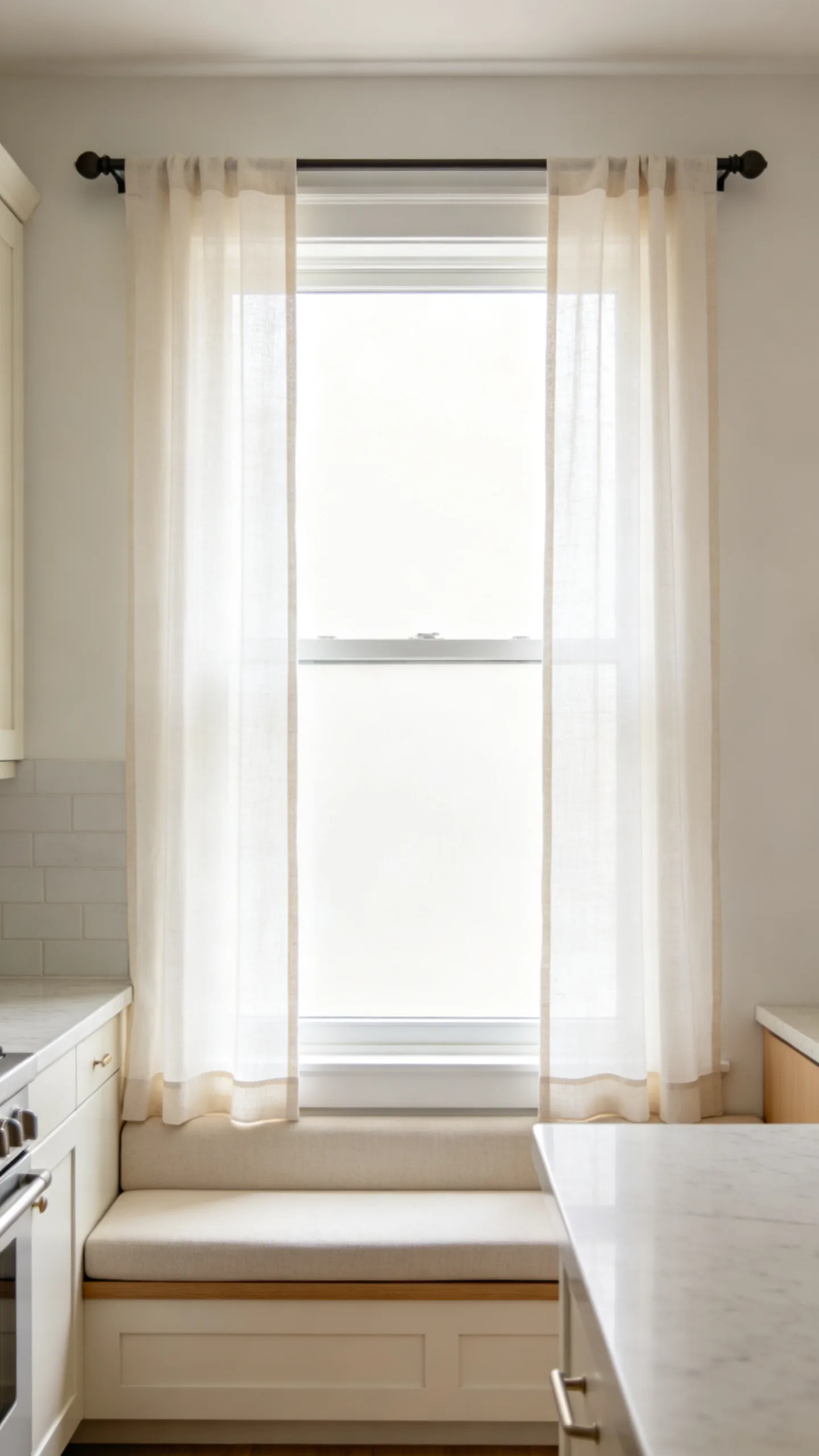
Narrow side panels add softness without covering much glass. They are a smart solution for kitchen windows that already have good privacy but need a decorative frame to feel complete.
Mount the rod wider than the window trim so the panels sit mostly on the wall when open. This keeps the glass clear and can make the window look broader. Use lightweight linen, sheer cotton, or a subtle print, and keep the panels tailored rather than bulky so they do not interfere with counters, banquette seating, or nearby cabinet doors.
19. Roller Shade in a Warm Woven Fabric
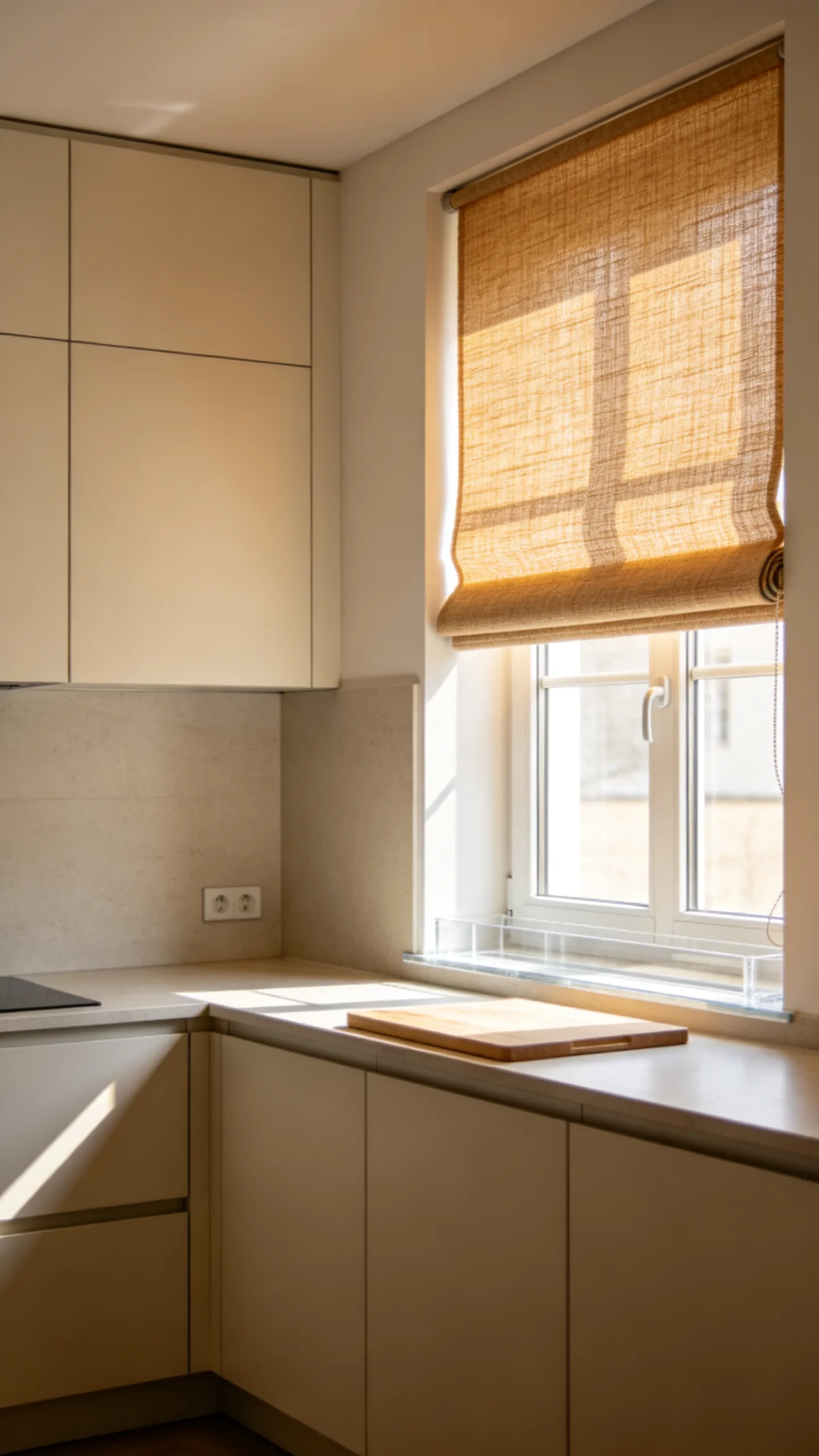
A light-filtering roller shade is a streamlined choice for modern kitchens, small kitchens, and windows close to cooking or prep areas. Unlike bulky curtains, it rolls up neatly and keeps the sill clear.
Choose a warm woven fabric, soft white textile, or pale natural shade instead of a dark blackout material. When raised, the shade nearly disappears; when lowered, it diffuses glare while keeping the room bright. This works well with flat-front cabinets, slab backsplashes, compact layouts, and kitchens where easy cleaning matters.
20. Door Curtains for Glass Kitchen Doors
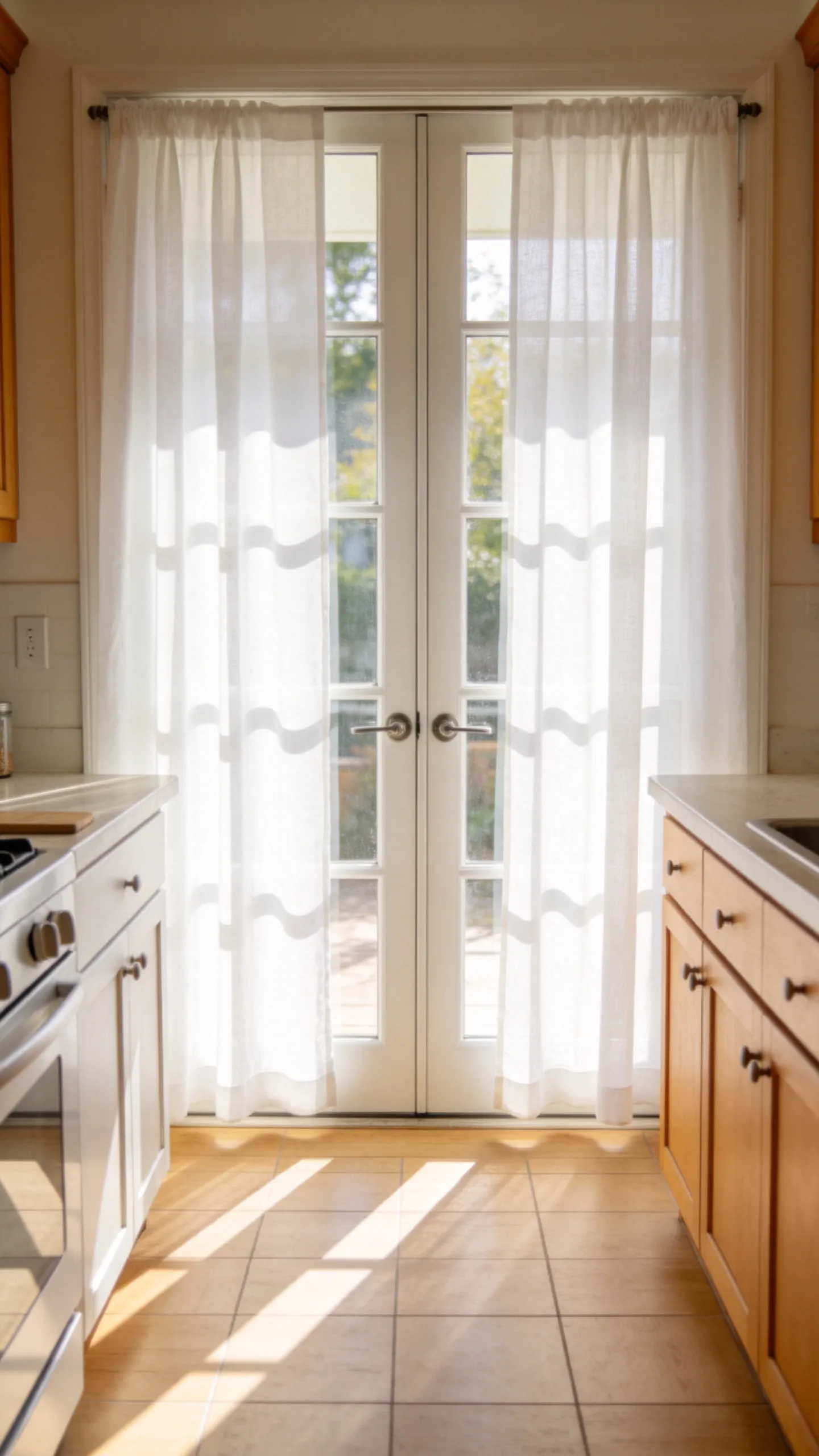
If your kitchen has a glass back door, patio door, or laundry-room door, a lightweight door curtain can add privacy without darkening the whole room. Use a sheer or semi-sheer panel mounted directly to the door so it moves with the door and does not block traffic flow.
A gathered white sheer gives a soft cottage feel, while a linen-look panel feels more tailored. For French doors, use one narrow panel per door and keep the fabric close to the glass. This keeps the walkway clear and prevents fabric from catching on chairs, stools, or pet bowls.
21. Patterned Roman Shade as the Kitchen Focal Point
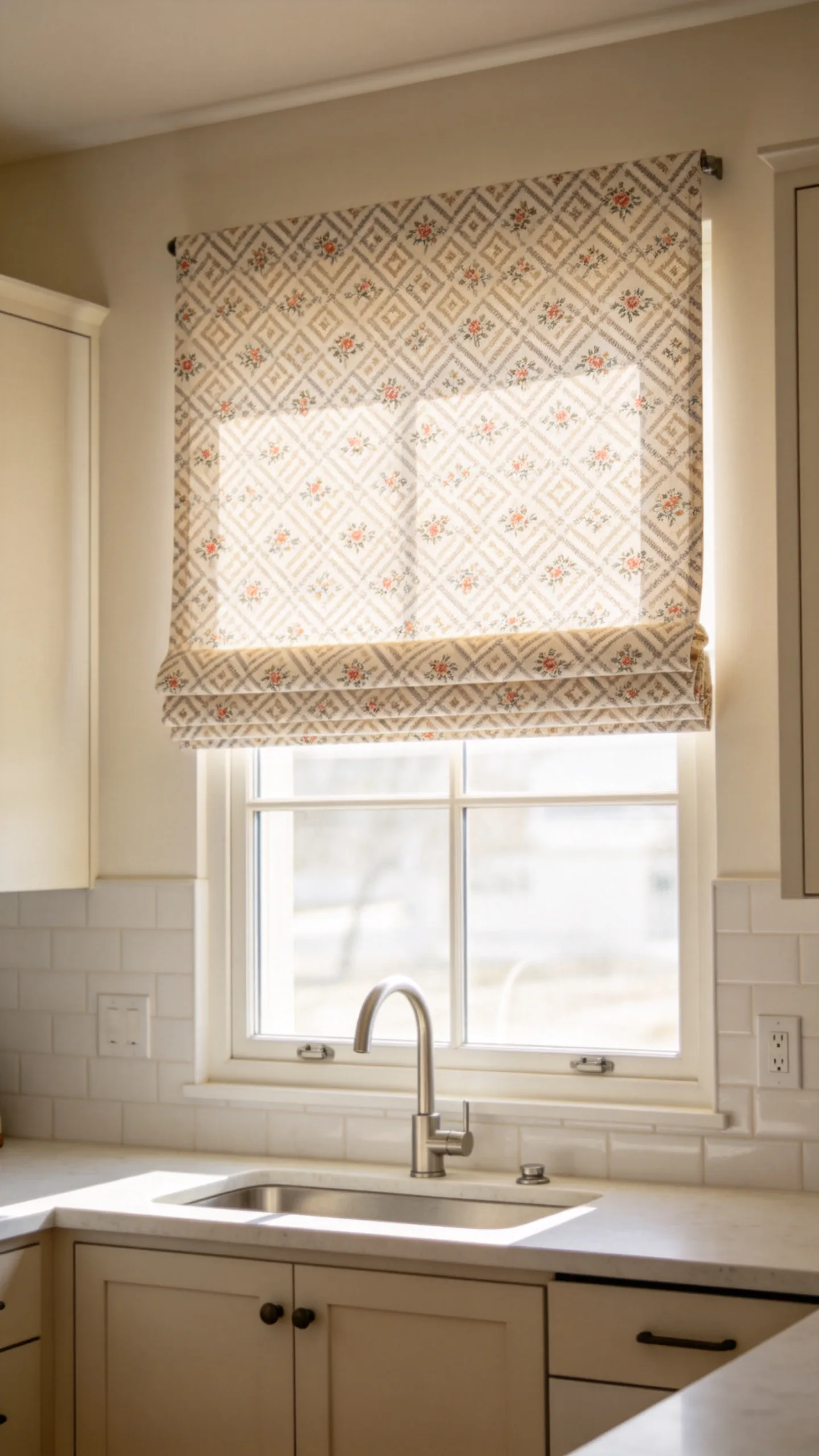
A patterned Roman shade can become the focal point of a simple kitchen while still allowing plenty of light when raised. This is a strong choice if the room has mostly plain cabinets, neutral walls, and minimal backsplash detail.
Choose a pattern that suits the kitchen’s scale: small florals for a cottage kitchen, ticking stripes for farmhouse style, block prints for a collected look, or soft geometrics for a modern space. Keep the fabric light-filtering and mount the shade high enough that it clears most of the glass during the day. The result is decorative, practical, and bright enough for everyday cooking and cleaning.

From the editors
Decor Compass Editorial Team
We turn practical home research into clear, useful room-by-room ideas.