Double curtain rods are one of the easiest ways to make windows look more finished, layered, and intentional. By pairing two different panels—such as sheers with blackout curtains, linen with velvet, or woven textures with solid drapes—you can control privacy, soften daylight, and add depth to a living room, bedroom, dining area, or home office without changing the window itself.
1. White Sheers with Warm Linen Drapes
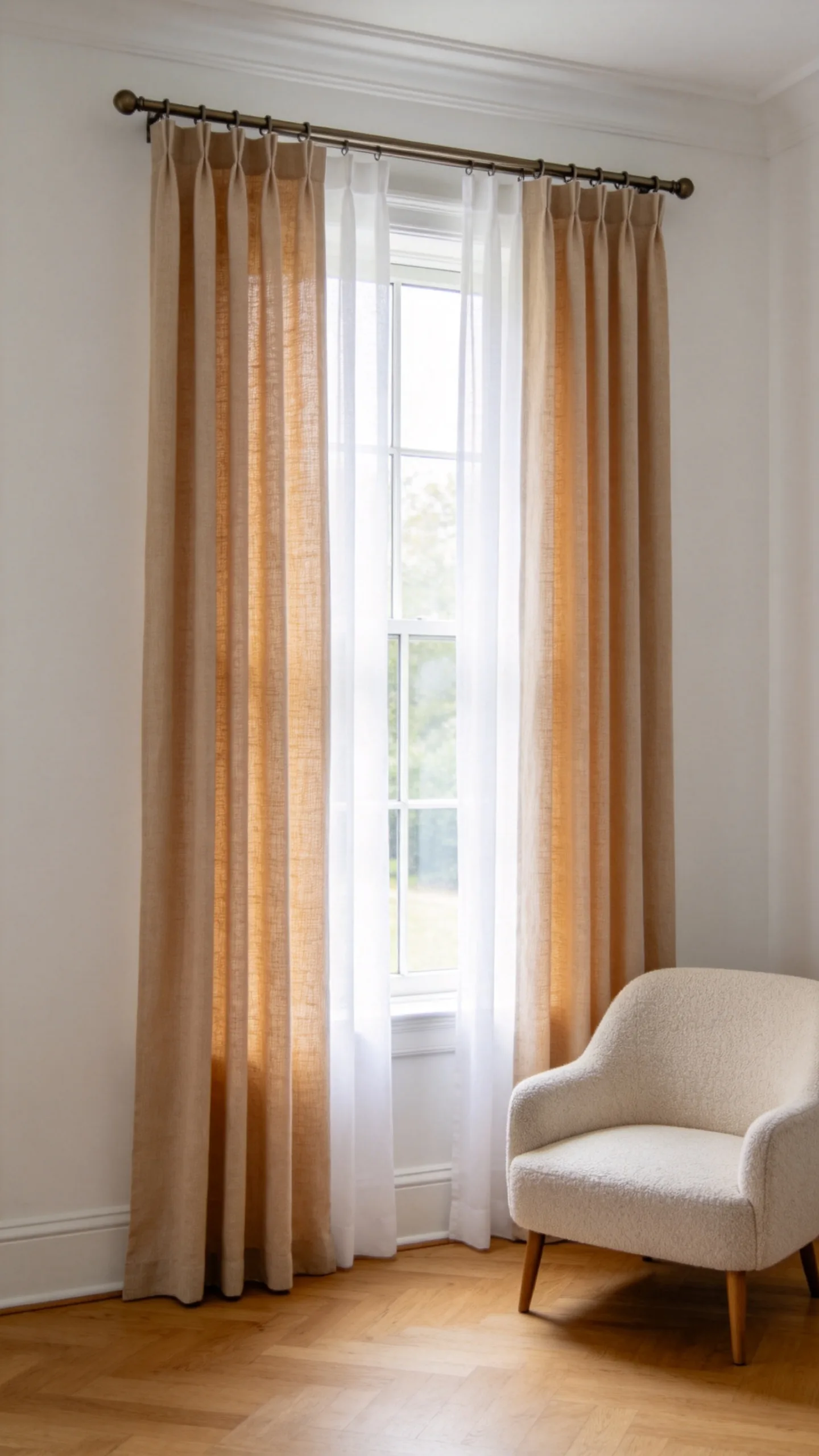
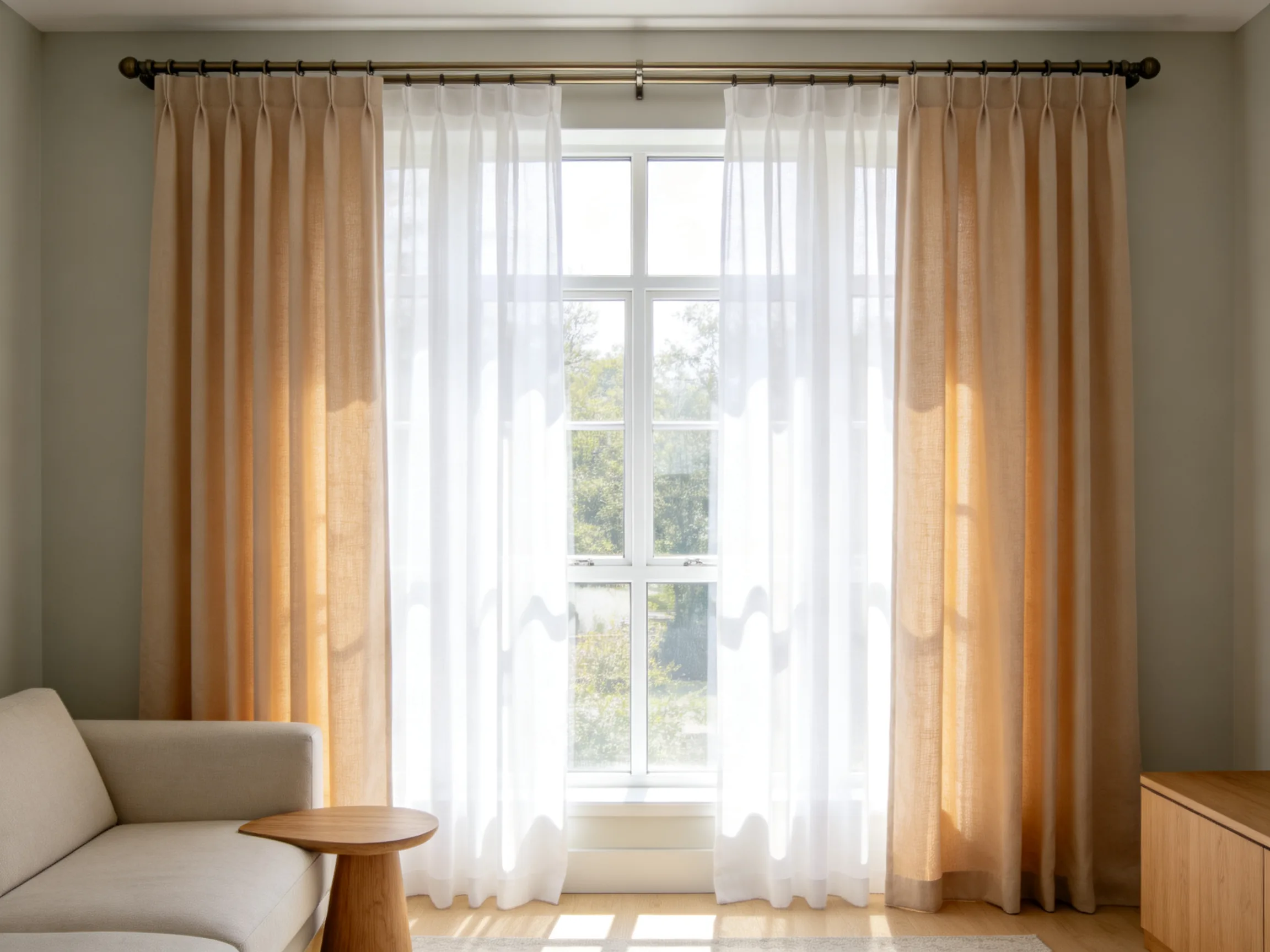
Pairing white sheers on the inner rod with warm linen drapes on the outer rod creates a relaxed, designer-looking window treatment that works especially well in living rooms and bedrooms. The sheers filter harsh daylight while still keeping the room bright, and the linen panels add texture and softness around the window frame.
Choose off-white, oatmeal, flax, or beige linen for a natural layered look against white, greige, or soft taupe walls. Hang the rods several inches above the window trim and extend them wider than the frame so the outer panels can sit mostly on the wall when open. This keeps the glass clear, improves sightlines, and makes the window feel larger.
2. Blackout Curtains Behind Decorative Front Panels
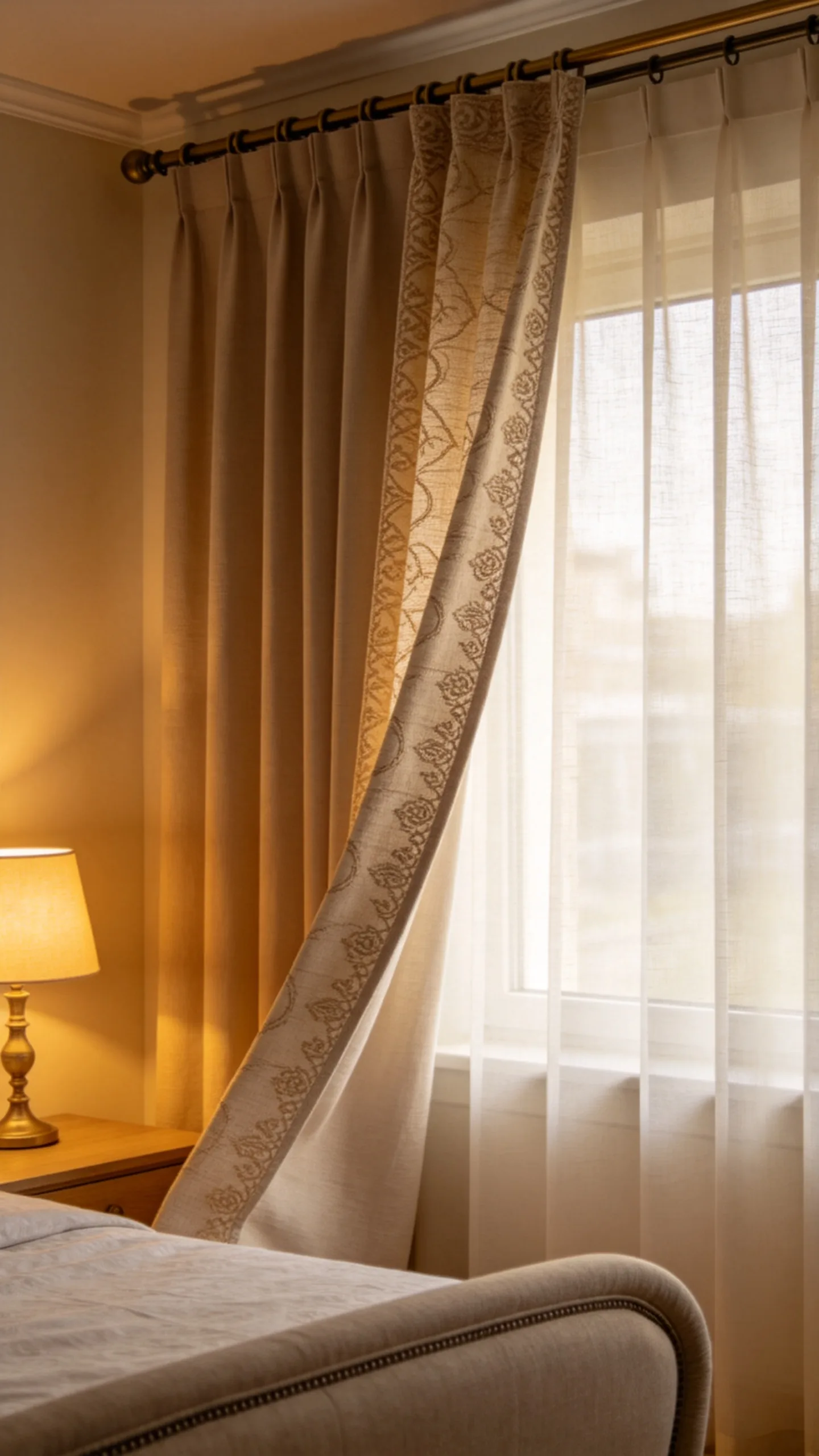
For bedrooms, nurseries, or media rooms, place blackout curtains on the back rod and a more decorative fabric on the front rod. This setup gives you practical light control without making the whole room feel heavy or purely functional.
Use a neutral blackout liner or plain blackout panel closest to the window, then layer patterned cotton, linen-look fabric, or textured drapes in front. During the day, the front panels frame the window beautifully, while the blackout layer can be pulled closed at night for privacy and darkness. This is especially helpful on street-facing bedroom windows where both style and coverage matter.
3. Velvet Drapes Over Airy Sheer Panels
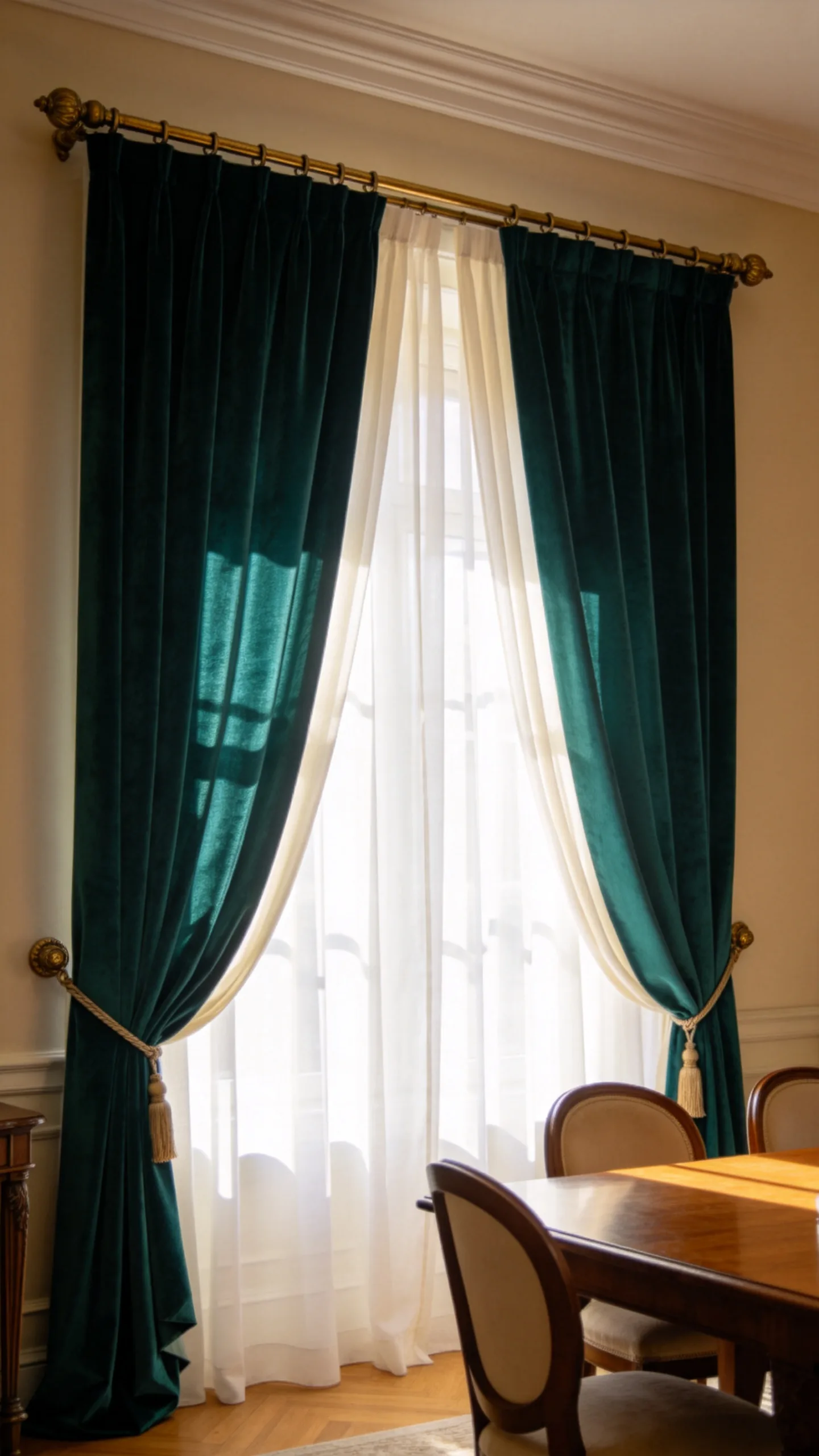
Velvet on the outer rod instantly adds depth and drama, while sheer panels behind it keep the window from feeling too dark during the day. This combination works well in formal living rooms, dining rooms, and bedrooms with tall ceilings or statement furniture.
Try deep green, navy, rust, chocolate, or charcoal velvet with crisp white or ivory sheers. The contrast between the dense velvet and light fabric makes the layers visible, which is the whole point of using a double curtain rod. Add warm brass, matte black, or antique bronze hardware to make the window treatment feel intentional rather than temporary.
4. Tone-on-Tone Neutral Layers
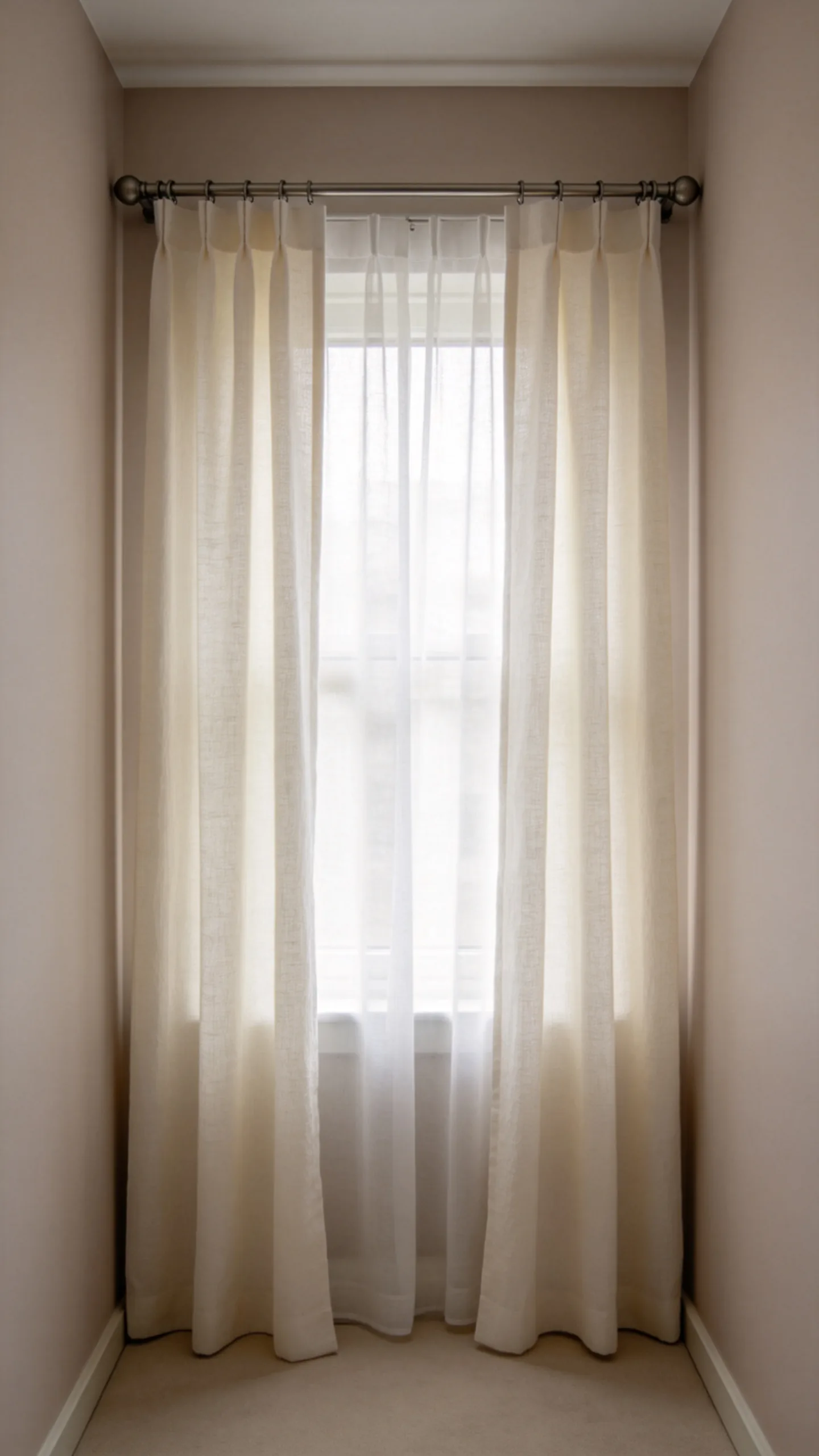
A tone-on-tone curtain pairing uses two similar colors in different fabrics, such as ivory sheers with cream linen or beige sheers with taupe cotton drapes. This is a strong choice for minimalist bedrooms, calm living rooms, and small spaces where high-contrast window treatments might feel busy.
The key is to vary texture rather than color. A gauzy inner panel, a slub linen outer curtain, and a simple metal rod create depth without visual clutter. In a compact room, this approach keeps the eye moving across the wall instead of stopping abruptly at the window, helping the space feel wider and more open.
5. Patterned Curtains with Solid Sheers
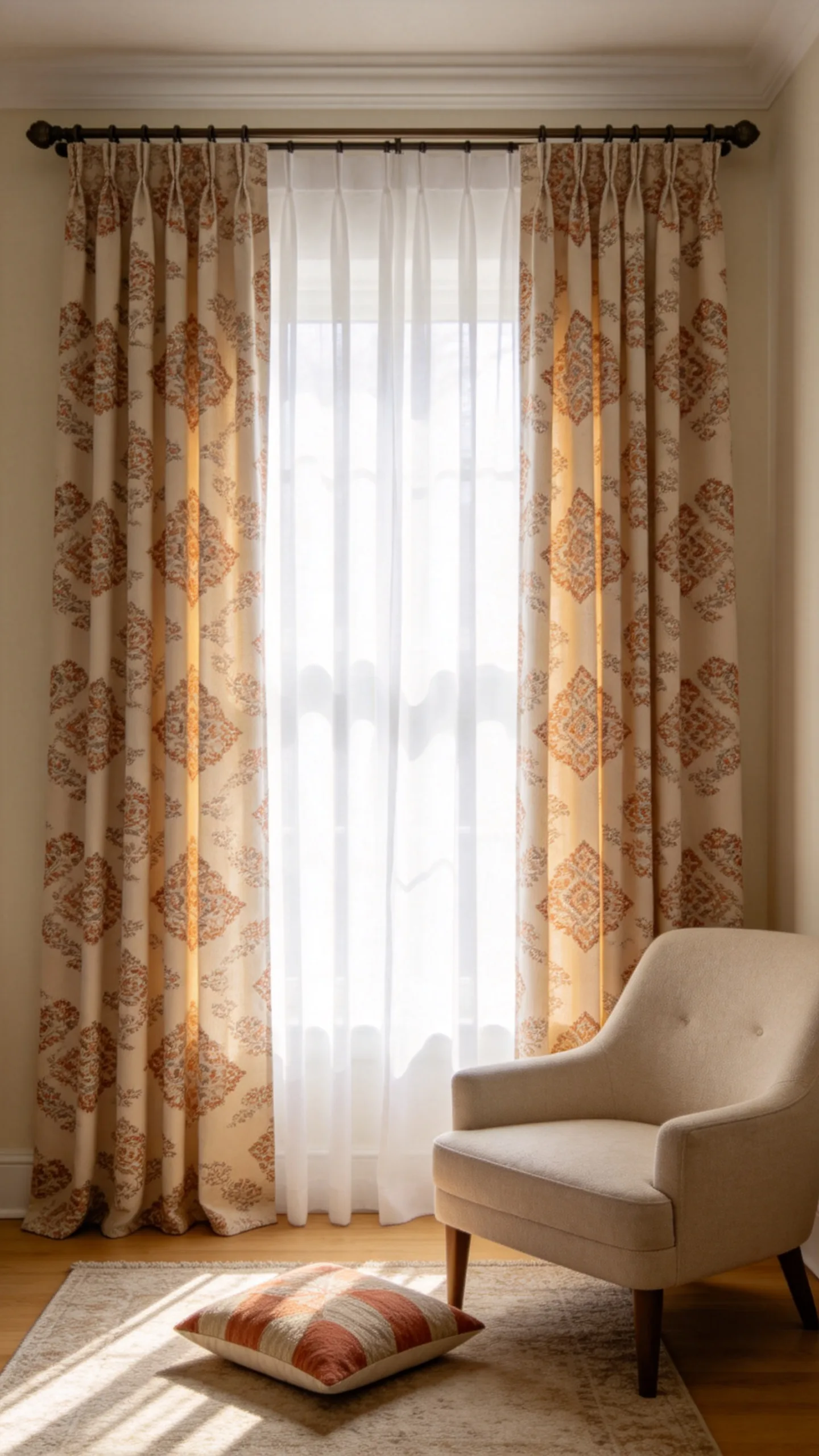
If you want pattern without overwhelming the room, use solid sheers on the inside rod and patterned curtains on the outside. Floral, stripe, block print, plaid, or geometric panels can become a focal point while the sheers keep the window useful during the day.
This works well in dining rooms, guest bedrooms, and reading corners where you want personality but still need filtered light. Pull colors from nearby decor, such as a rug, upholstered chair, throw pillows, or artwork, so the patterned curtains feel connected to the room instead of random.
6. Natural Bamboo Shades Paired with Curtain Panels
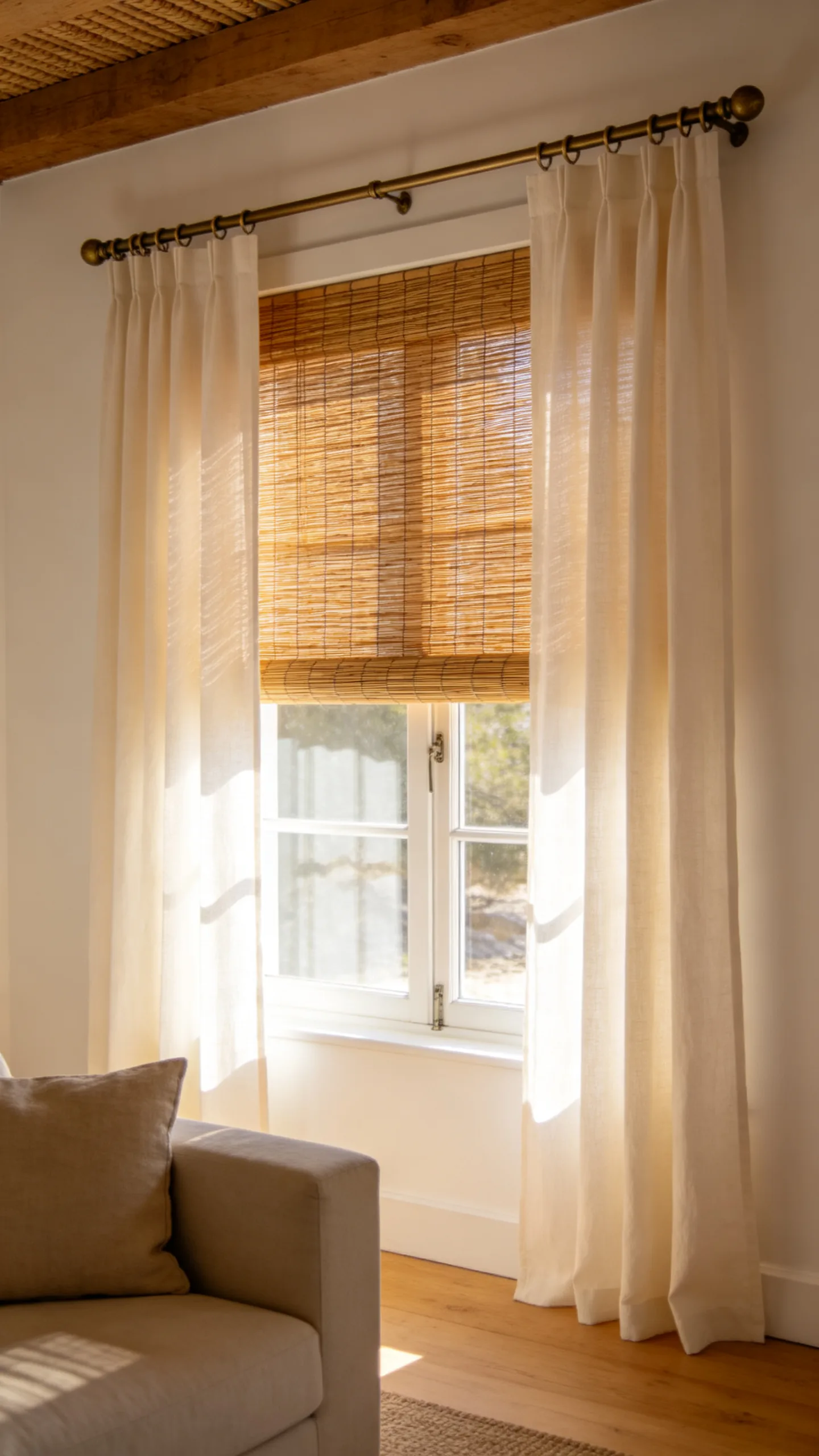
Although a bamboo shade is not hung on the double rod itself, it layers beautifully with curtain panels mounted on a double rod system or coordinated hardware above the window. Use the shade close to the glass for texture and privacy, then frame it with soft drapes on the outside.
This idea is ideal for coastal, farmhouse, organic modern, and transitional rooms. Bamboo or woven wood brings warmth to white walls, painted trim, and neutral furniture. Add linen or cotton curtains in ivory, sand, clay, or soft gray to soften the edges and make the window feel more styled.
7. Cafe Curtains Layered Under Full-Length Drapes
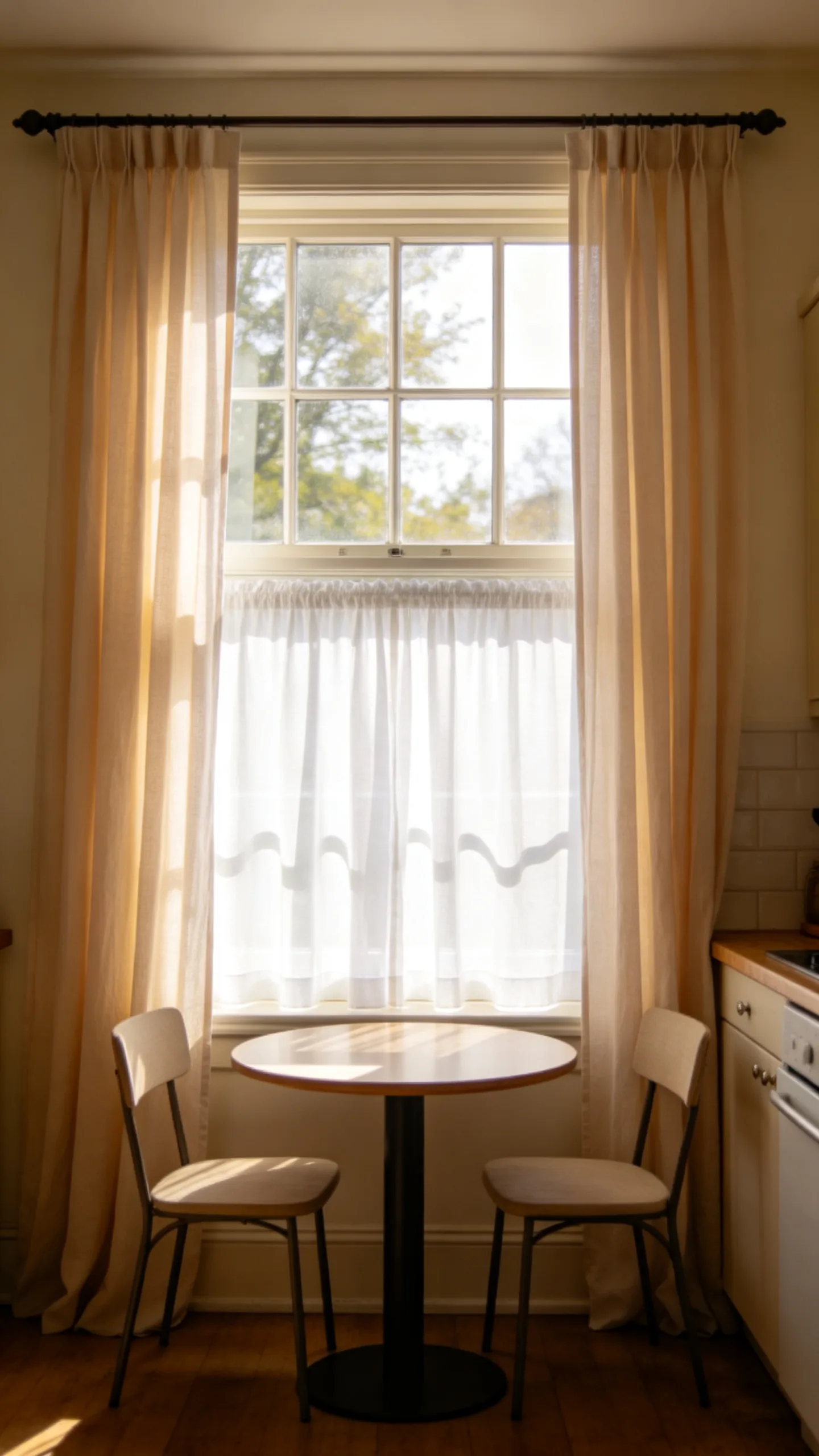
Cafe curtains cover only the lower half of a window, making them useful for kitchens, breakfast nooks, bathrooms, or street-facing living rooms. When paired with full-length curtains on an outer rod, they provide privacy at eye level while still letting light pour in from the top.
Use a slim inner rod mounted inside or just across the lower window area, then install a full double curtain rod above the frame for the longer panels. This layered approach works beautifully over a kitchen sink, in a small dining area, or on a front-facing window where you want softness without blocking all the daylight.
8. Floor-to-Ceiling Double Rods for Taller Windows
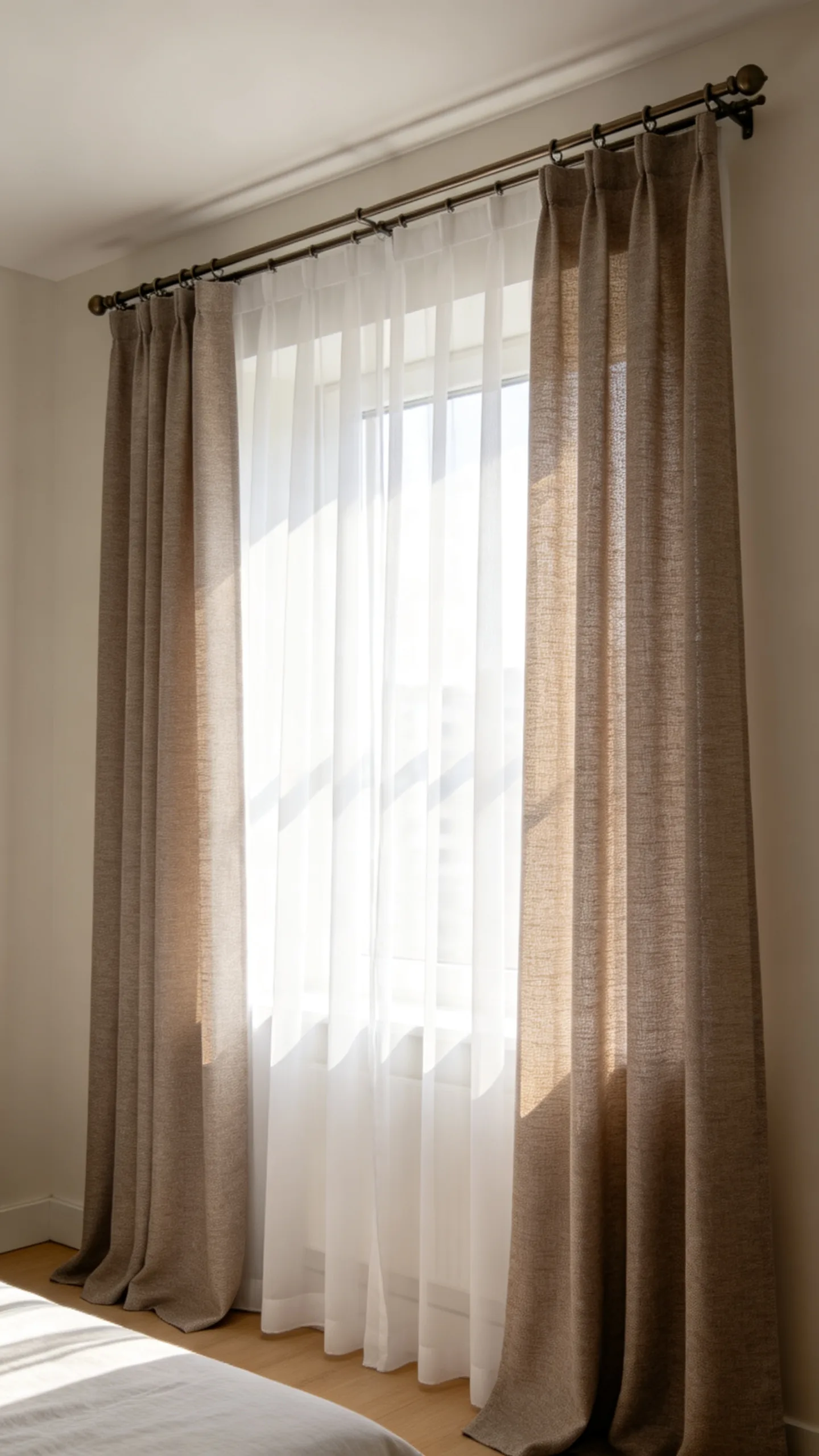
Mounting a double curtain rod close to the ceiling can make standard windows look taller and more elegant. This is especially useful in living rooms, bedrooms, and apartments where the actual window height is modest.
Choose curtain panels long enough to reach the floor or lightly kiss it. The inner layer can be sheer for daytime privacy, while the outer layer adds color, weight, or texture. Extending the rods high draws the eye upward, emphasizes vertical space, and makes the wall feel more finished.
9. Extra-Wide Rods for a Larger Window Effect
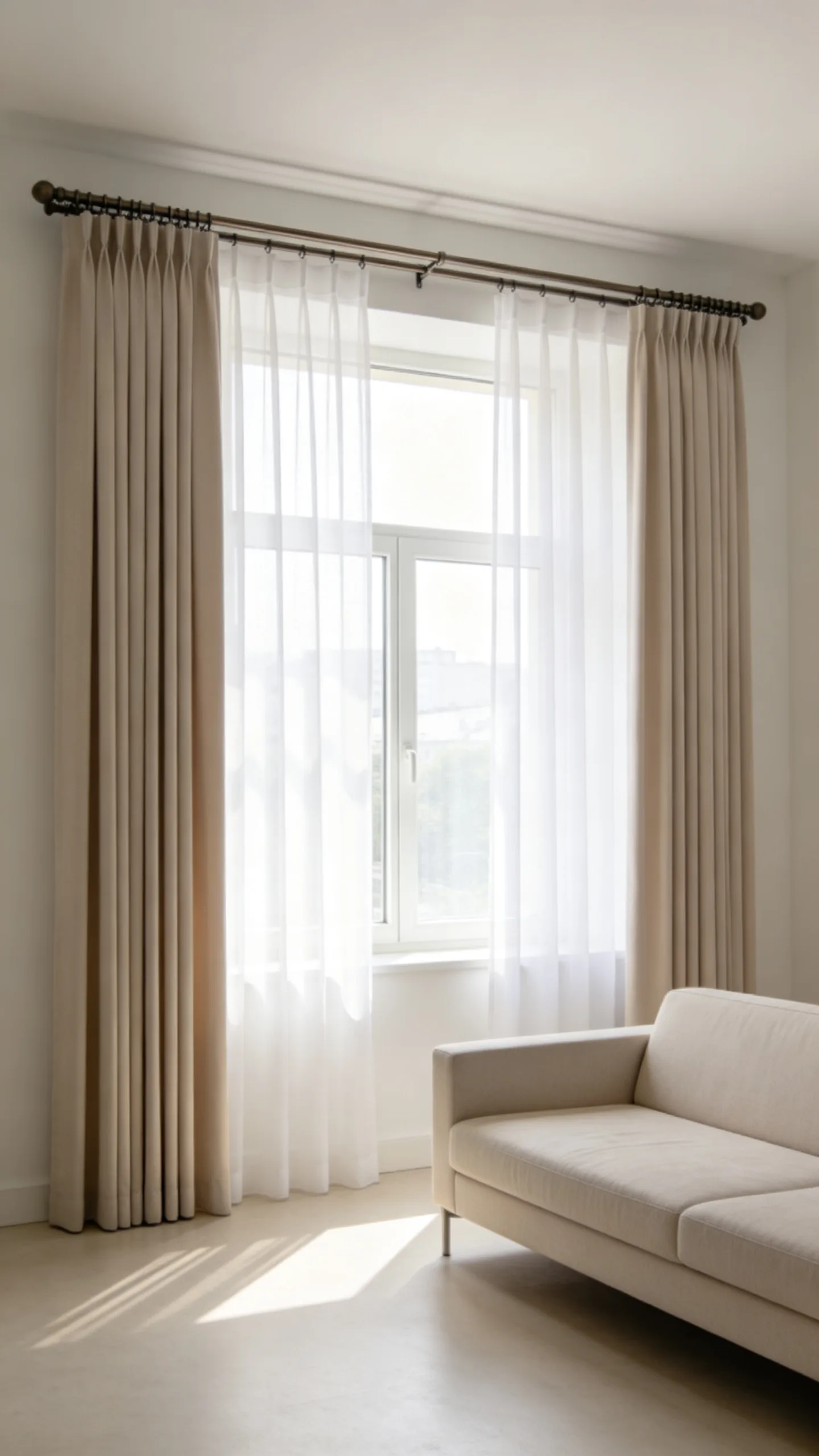
Installing the double rod wider than the window frame gives the illusion of a larger window and lets your curtain panels stack on the wall instead of covering the glass. This improves natural light and makes the whole wall feel more open.
For a designer look, extend the rod at least several inches beyond each side of the window, or more if the wall space allows. Use sheers that cover the glass when closed and outer drapes that frame the window when open. This setup is especially helpful in small living rooms where every inch of visible daylight helps the room feel bigger.
10. Matte Black Rods with Crisp White Layers
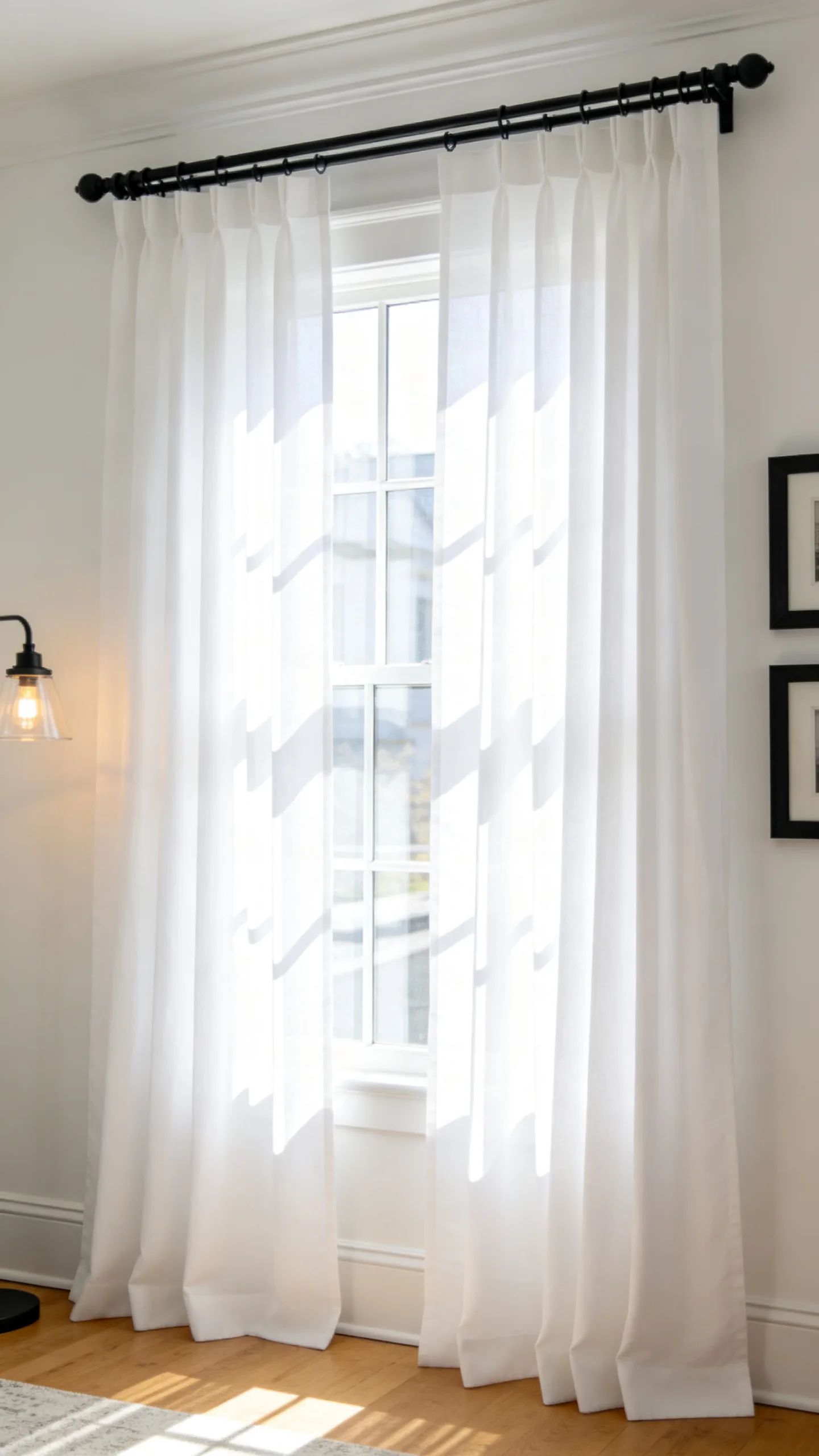
A matte black double curtain rod creates strong contrast against white walls and works well in modern, industrial, farmhouse, and transitional rooms. Pair it with white sheers and white, ivory, or light gray drapes for a clean layered look.
The black hardware outlines the window like a picture frame, making even simple curtains feel more deliberate. Use this idea in rooms with black lighting, black cabinet pulls, dark picture frames, or metal furniture legs so the curtain rod connects to the rest of the design.
11. Brass Double Rods with Cream and Taupe Curtains
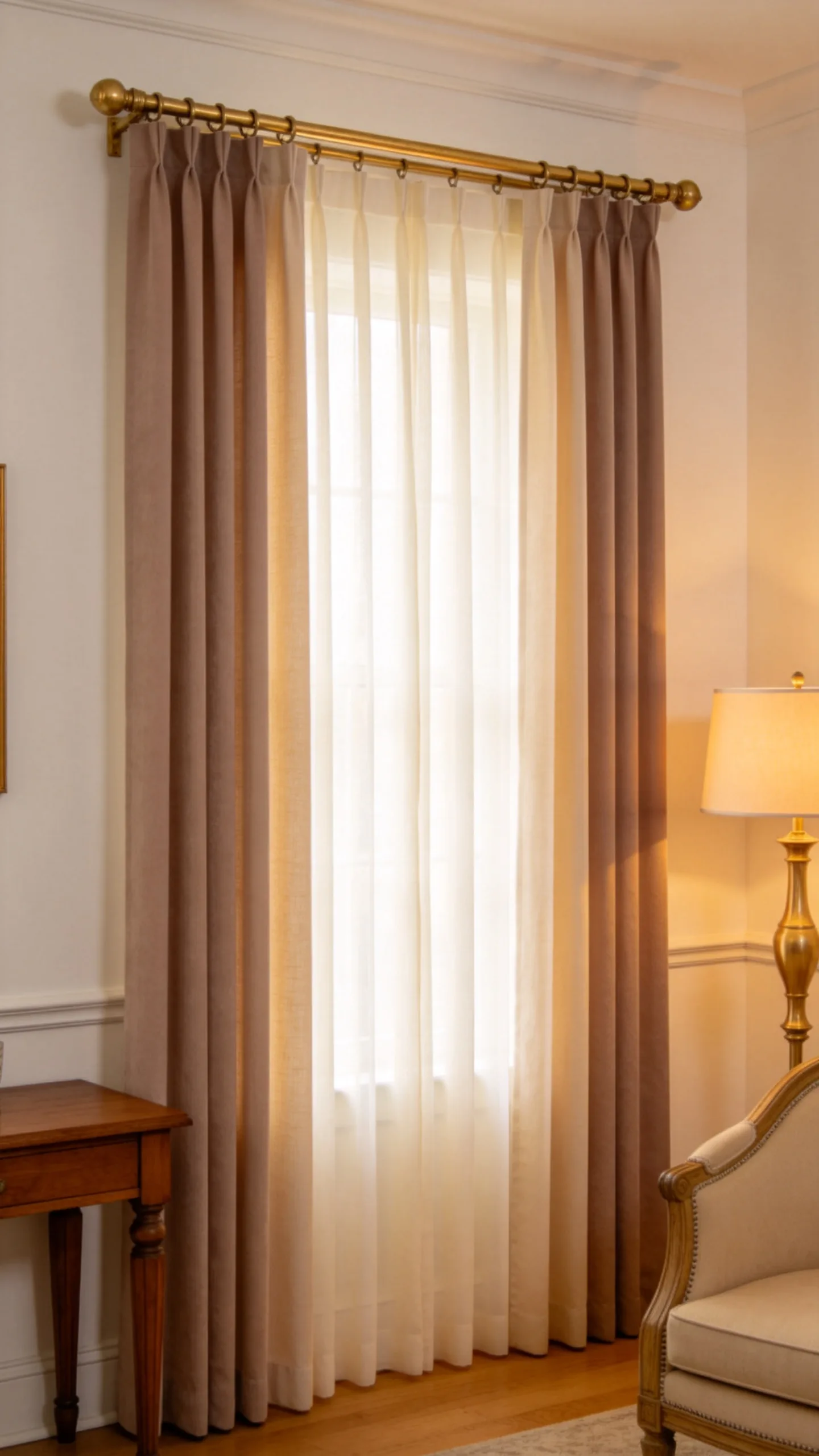
Brass hardware brings warmth to layered window treatments, especially when paired with cream sheers and taupe, camel, or mushroom-colored outer panels. This combination works well in bedrooms, sitting rooms, and dining rooms with warm wood furniture or gold-toned lighting.
Choose a brushed or antique brass finish if you want a softer look than shiny polished metal. The hardware adds a subtle decorative detail without competing with the fabric layers. Brass also pairs beautifully with off-white walls, walnut furniture, beige upholstery, and traditional or vintage-inspired decor.
12. Double Rods for Bay Windows
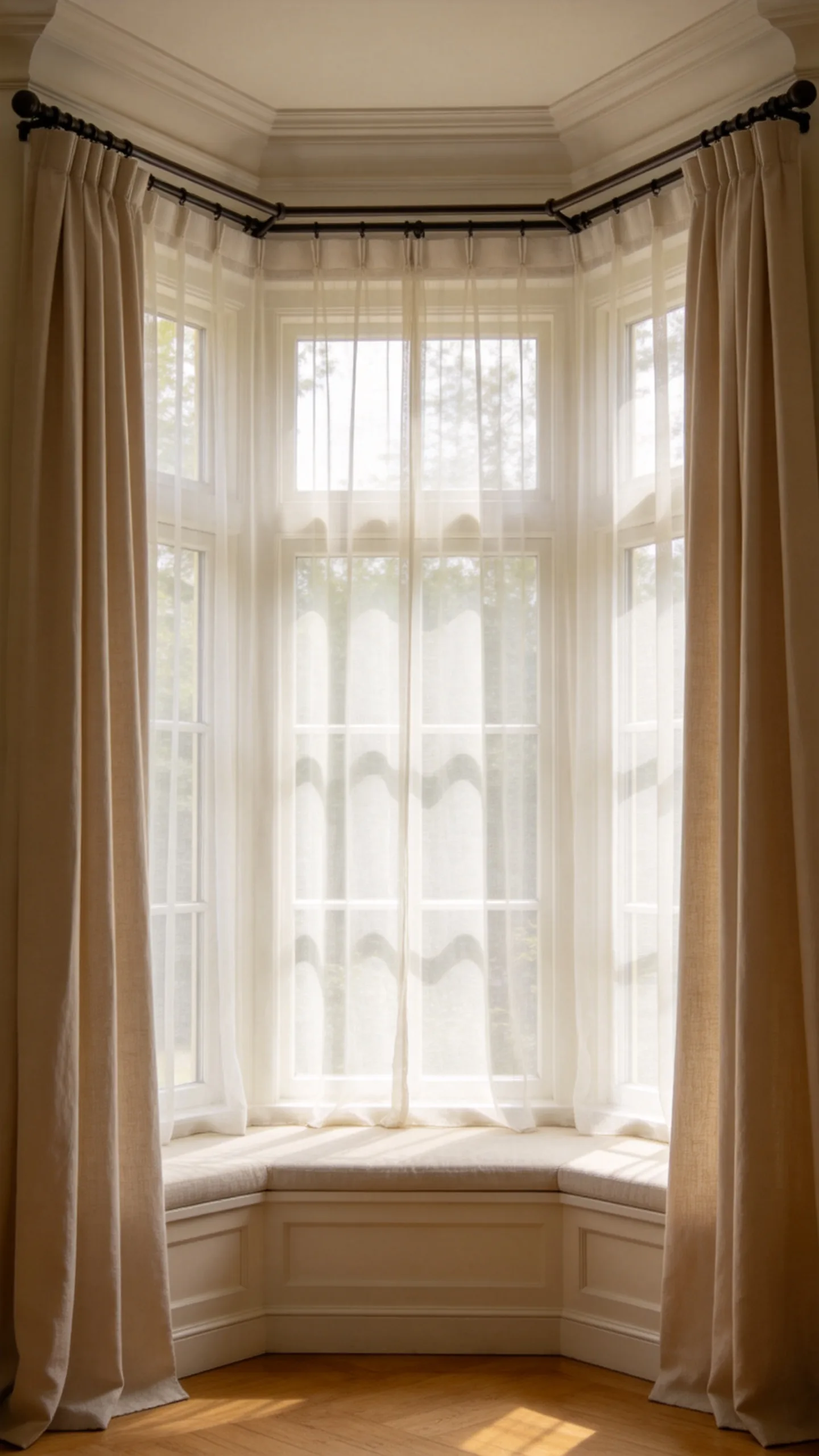
Bay windows can look unfinished when each section has a separate, disconnected curtain setup. A double rod system designed for angled or bay windows allows you to layer sheers and drapes across the full shape while preserving the architectural detail.
Use sheer panels on the inner layer to soften the glass and reduce glare, then add outer drapes at the sides or between window sections depending on the bay’s width. In a breakfast nook or living room, this creates a cozy framed area without blocking the view. Keep furniture low near the bay window so the layered curtains do not crowd the seating area.
13. Corner Window Curtain Layers
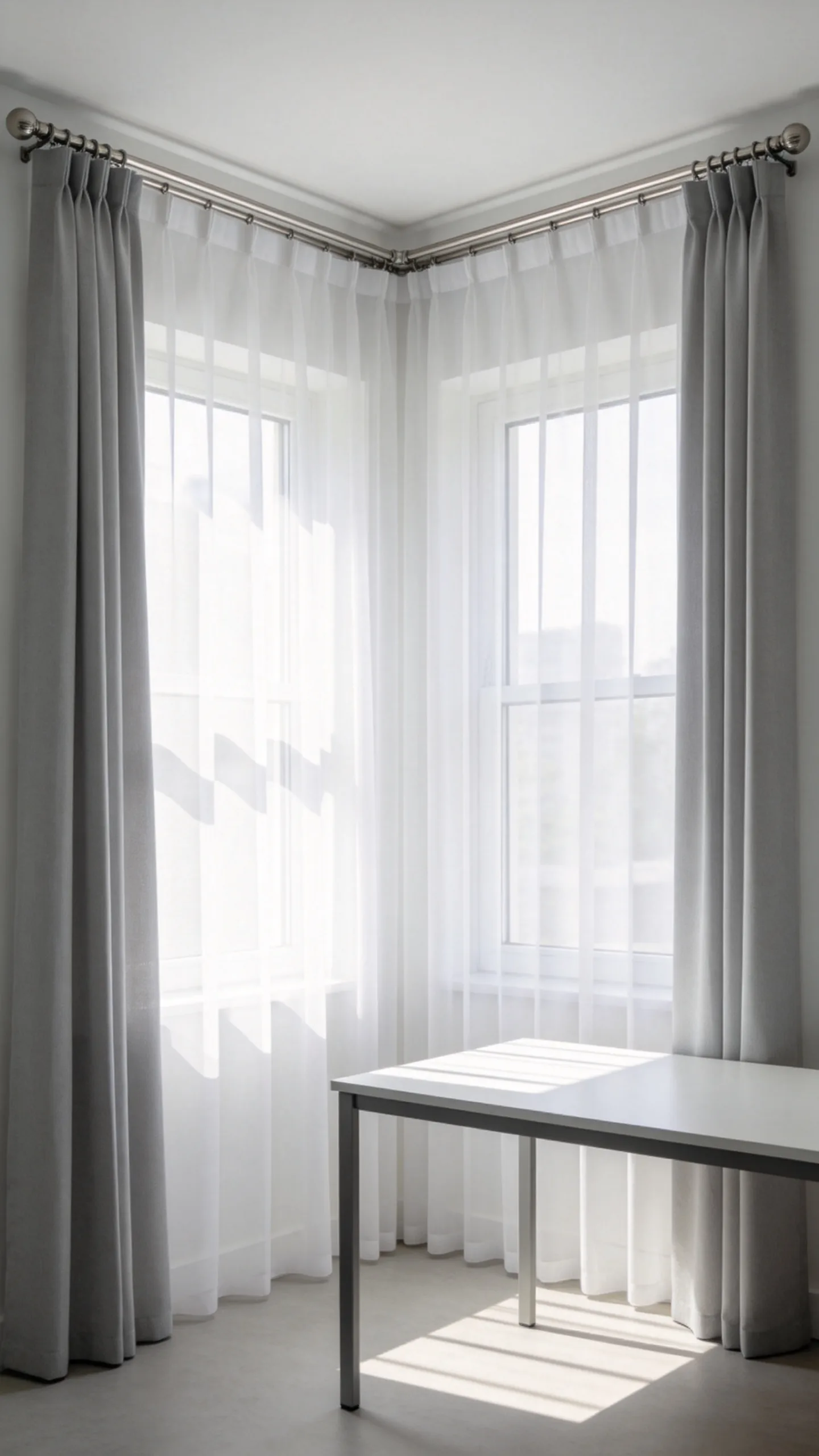
Corner windows can be tricky because two rods may collide or leave awkward gaps. A corner double curtain rod lets sheers wrap the corner while outer drapes frame both sides, making the window area feel continuous.
This is useful in bedrooms, home offices, and small apartments where corner windows provide important natural light. Choose lightweight sheers to keep the corner bright, then use simple solid drapes on the outer rod for privacy when needed. Avoid bulky finials in tight corners so the hardware does not interrupt the clean line.
14. Double Rods with Pinch Pleat Curtains
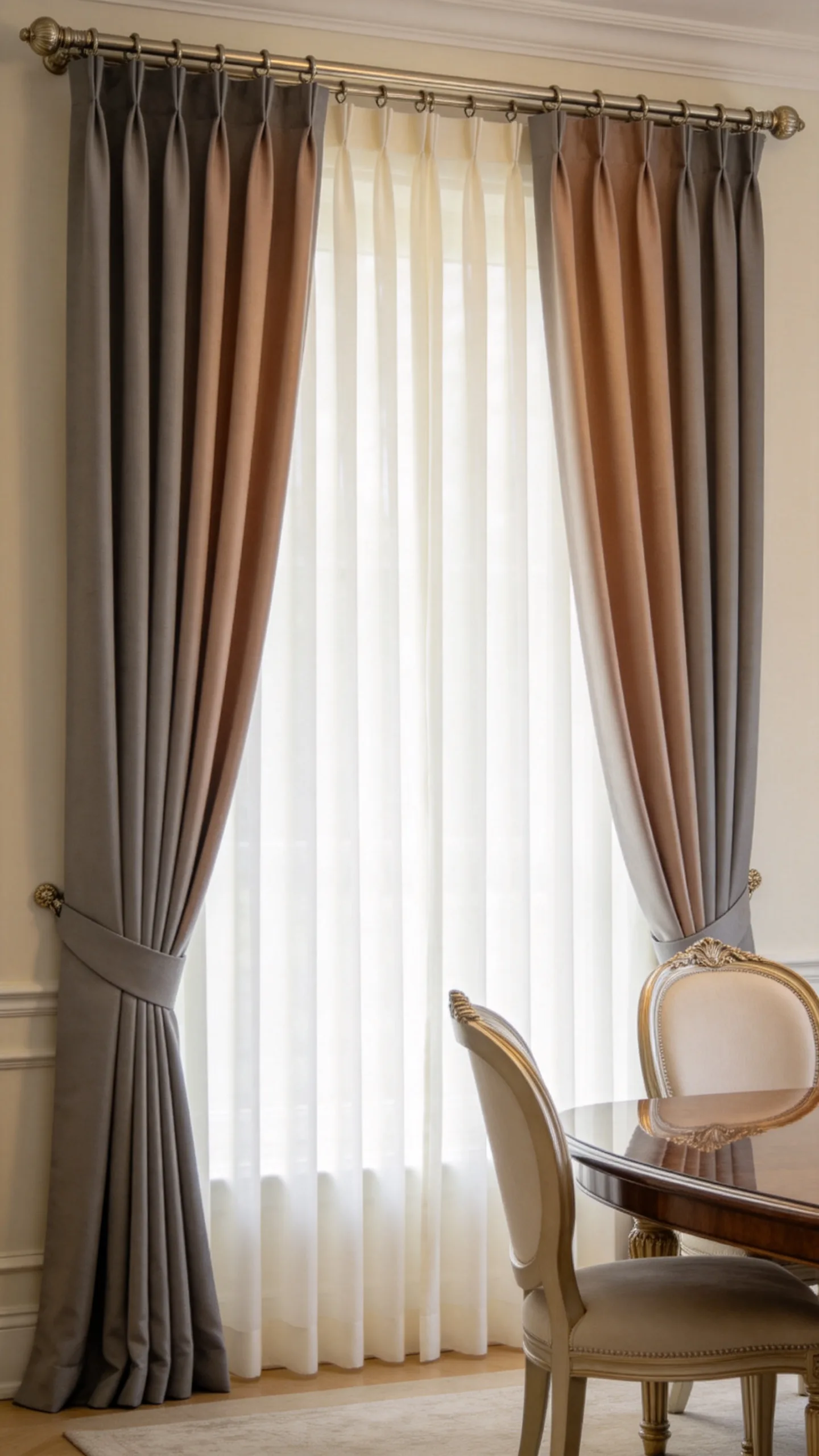
Pinch pleat curtains instantly make a double rod setup feel more tailored. Use pinch pleat sheers on the inner rod and pinch pleat drapes on the outer rod for a structured, designer-style window treatment.
This idea works especially well in formal dining rooms, primary bedrooms, and living rooms with traditional furniture. The pleats create even folds from top to bottom, which helps the layered curtains hang neatly instead of looking bunched. Pair them with curtain rings or track-style rods for smooth opening and closing.
15. Linen Sheers with Cotton Canvas Drapes
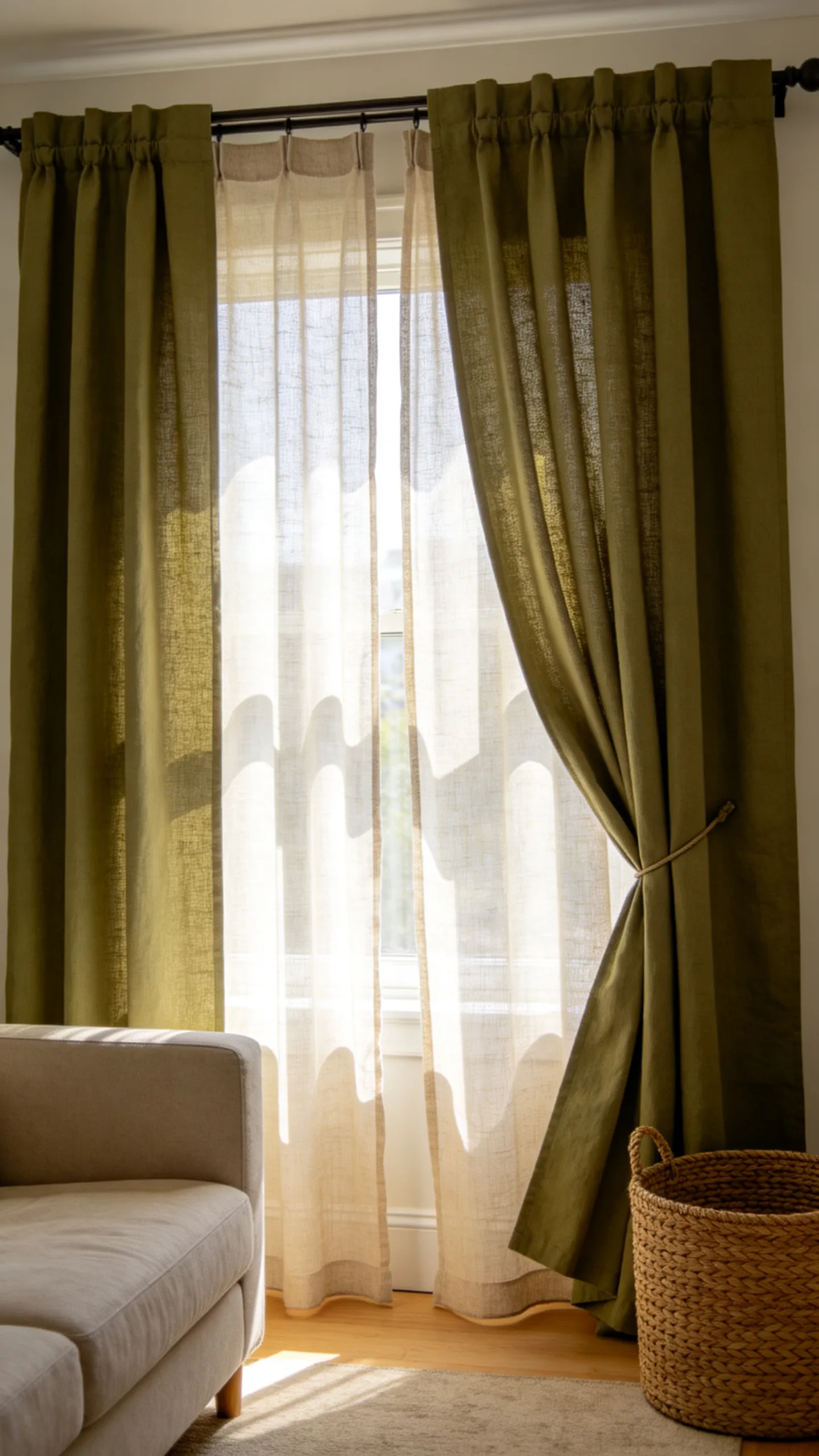
For a casual but polished look, layer linen sheers behind cotton canvas drapes. Linen sheers soften the window and add movement, while canvas panels bring a slightly heavier, more structured finish to the outer layer.
This combination works well in family rooms, kids’ rooms, and relaxed bedrooms because it feels durable without looking stiff. Choose canvas in olive, navy, tan, soft black, or warm white depending on the room’s palette. The difference in fabric weight gives the window depth while still feeling approachable and easy to style.
16. Color-Blocked Curtain Layers
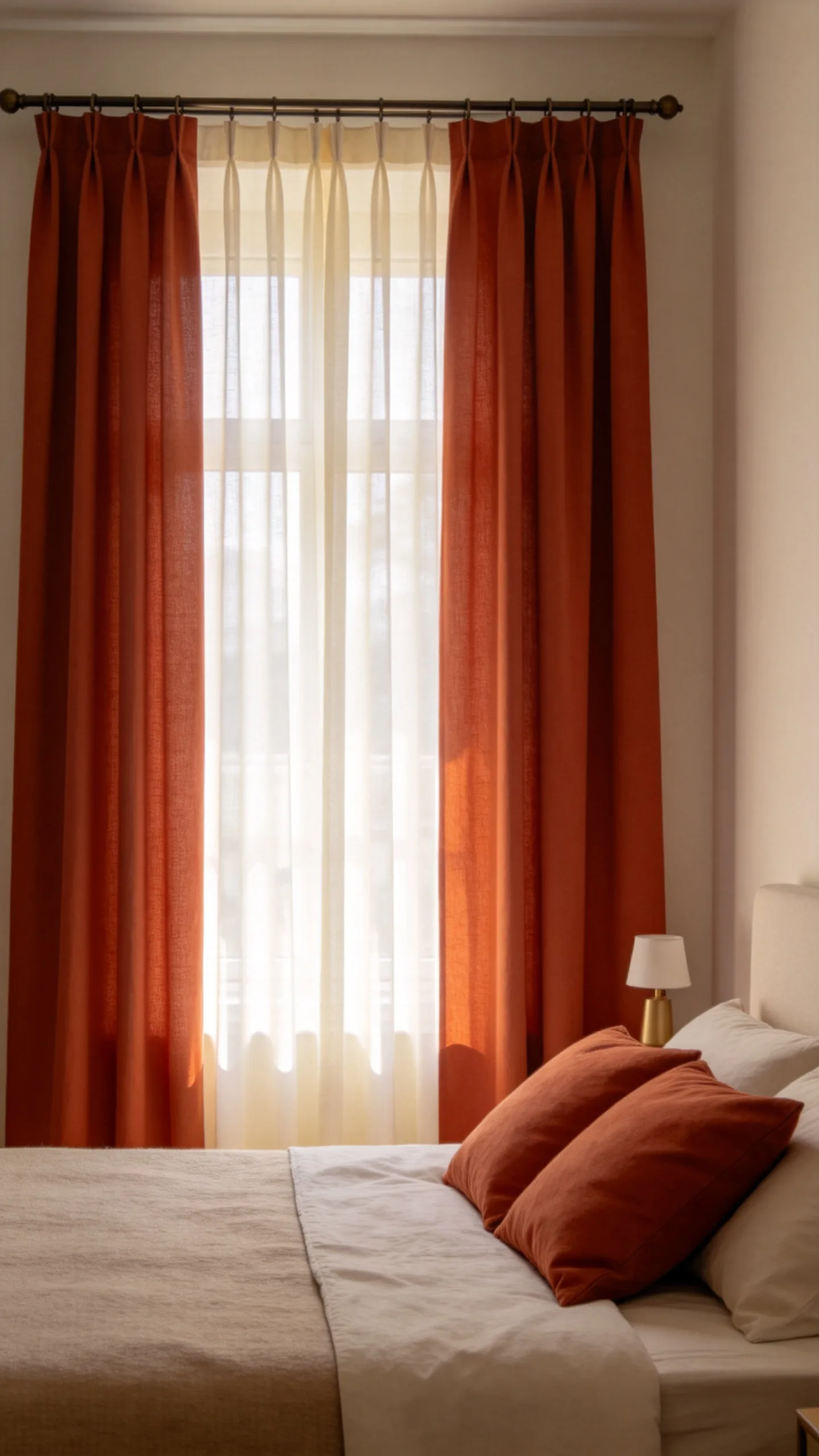
Color-blocking with a double curtain rod can make the window a focal point. Use a pale inner layer, such as white or cream sheers, and a saturated outer curtain in terracotta, sage, navy, mustard, or deep plum.
This works best when the outer curtain color repeats somewhere else in the room, such as in a rug border, bed pillow, lamp base, or artwork. In a bedroom, colored drapes can frame the bed wall and make the room feel more designed. In a living room, they can add personality without painting the walls or buying new furniture.
17. Sheer-on-Sheer Layers for Soft Light
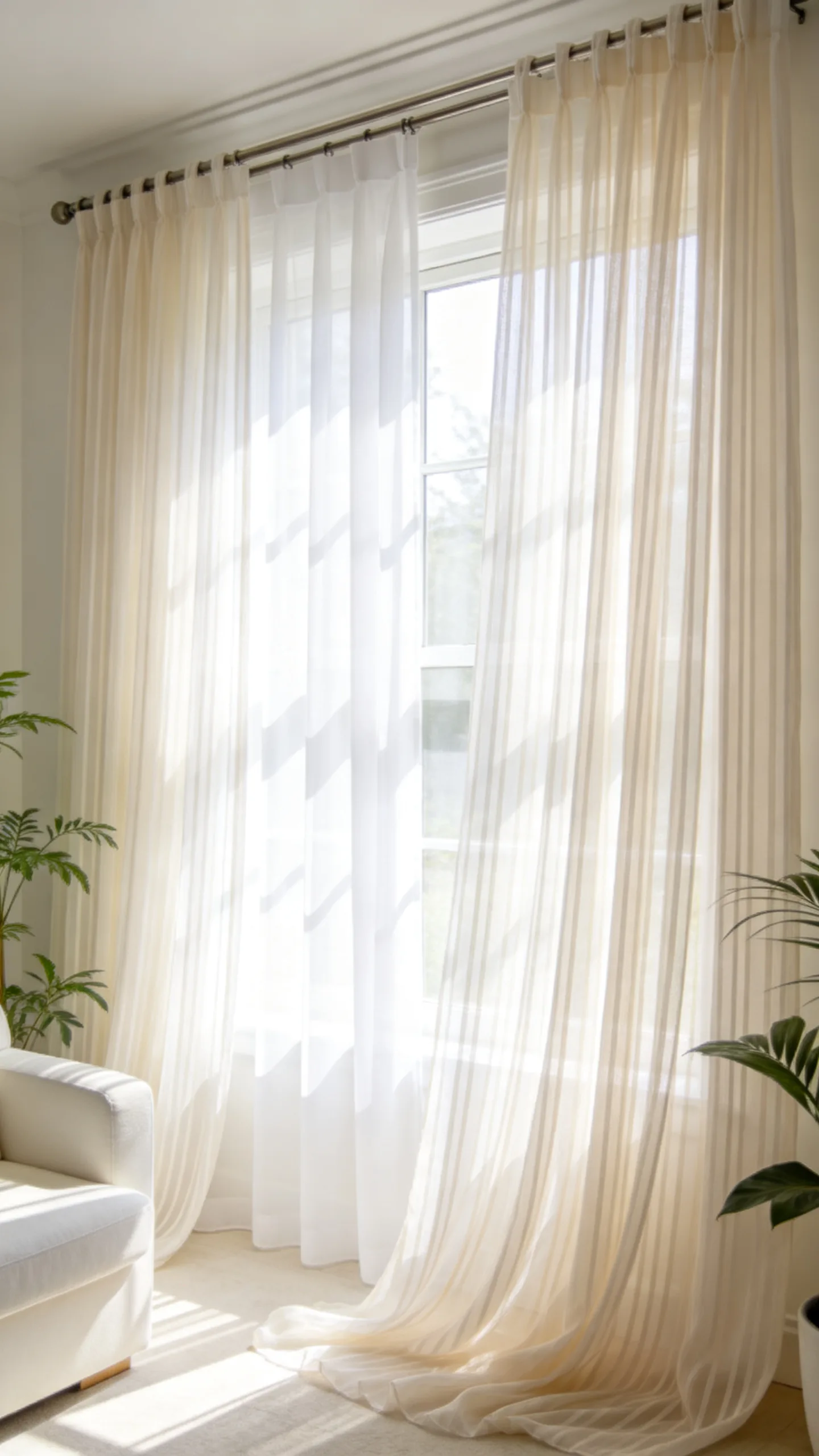
Layering two sheer fabrics creates a soft, romantic window treatment without the weight of traditional drapes. Use plain white sheers on the inner rod and textured, embroidered, striped, or lightly colored sheers on the outer rod.
This idea is best for rooms where privacy is not the main concern, such as sunrooms, upstairs bedrooms, or living rooms that do not face the street. The double sheer layers diffuse light beautifully and reduce glare on screens or shiny surfaces while keeping the room bright. Choose longer panels for a flowing look that feels airy rather than cluttered.
18. Double Rods Over Sliding Glass Doors
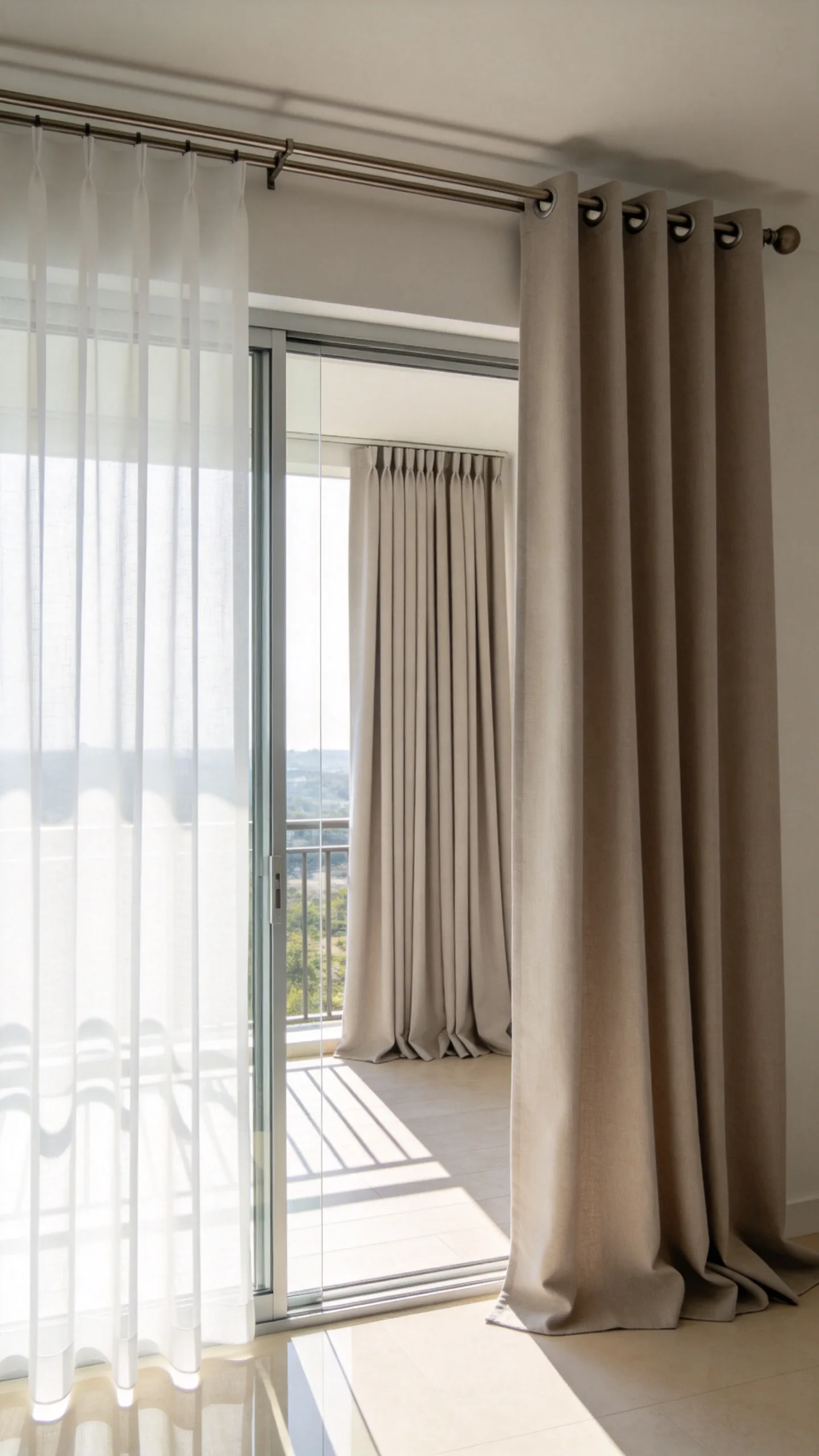
Sliding glass doors need window treatments that look good but still allow easy traffic flow. A double curtain rod can layer sheers for daytime privacy with heavier drapes for nighttime coverage, while still letting the panels slide out of the walkway.
Install the rod high and wide so the curtains can stack beyond the door opening. Use smooth rings or grommet panels if the door is used often, and avoid puddled fabric that could catch underfoot. In a living room or dining area, this makes the large glass surface feel less stark while keeping access to the patio, balcony, or deck practical.
19. Small Bedroom Layers with Light-Colored Panels
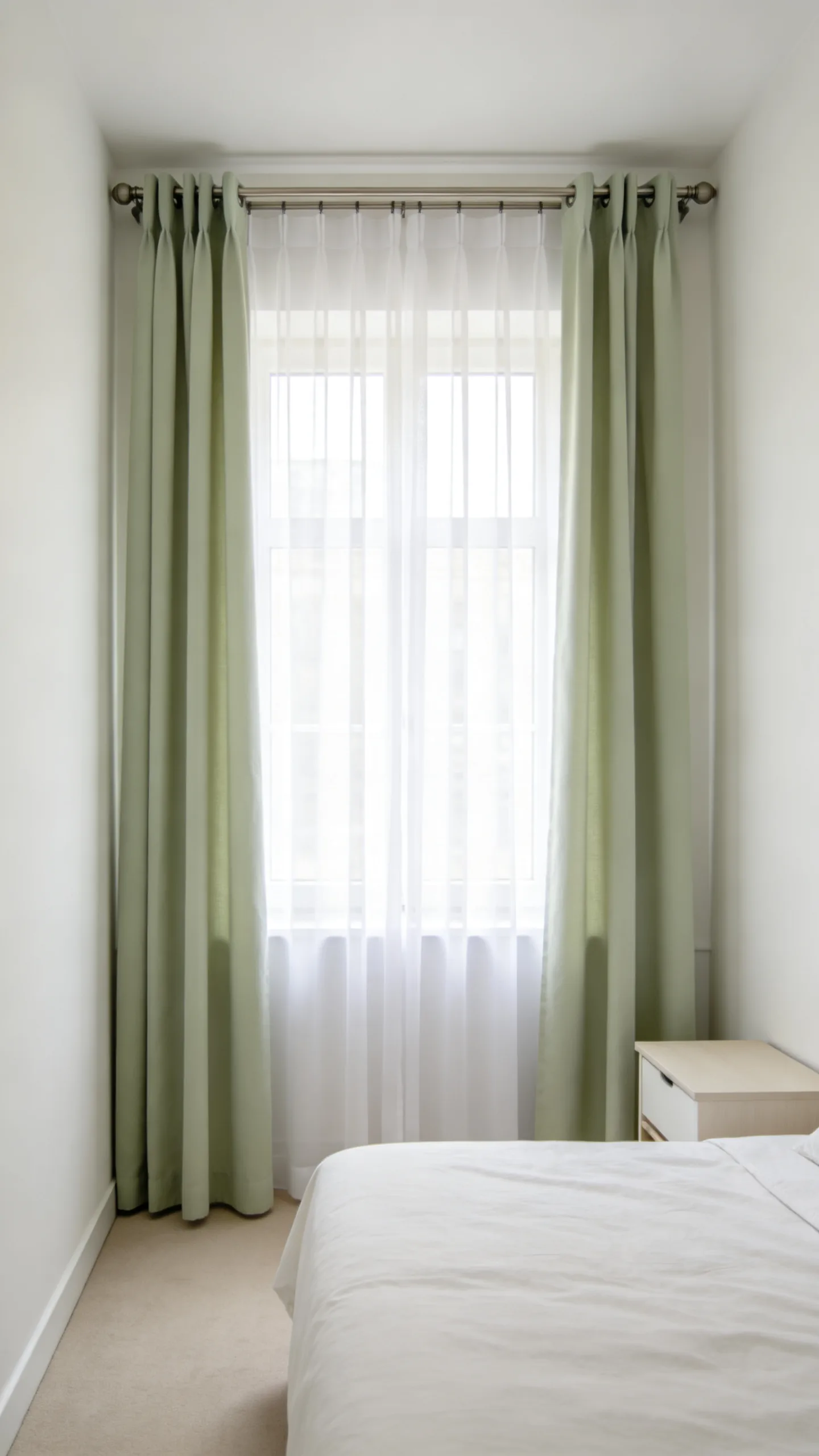
In a small bedroom, heavy dark curtains can shrink the room visually if they dominate the wall. A double rod with white sheers and light-colored outer panels keeps the layered look while protecting sightlines and brightness.
Try ivory, pale gray, oatmeal, mist blue, or soft sage drapes with simple white sheers. Hang the rod near the ceiling and extend it beyond the window frame to make the room feel taller and wider. Keep the fabric just touching the floor to avoid a crowded look around nightstands, radiators, or small dressers.
20. Double Rods with Roman Shades and Side Drapes
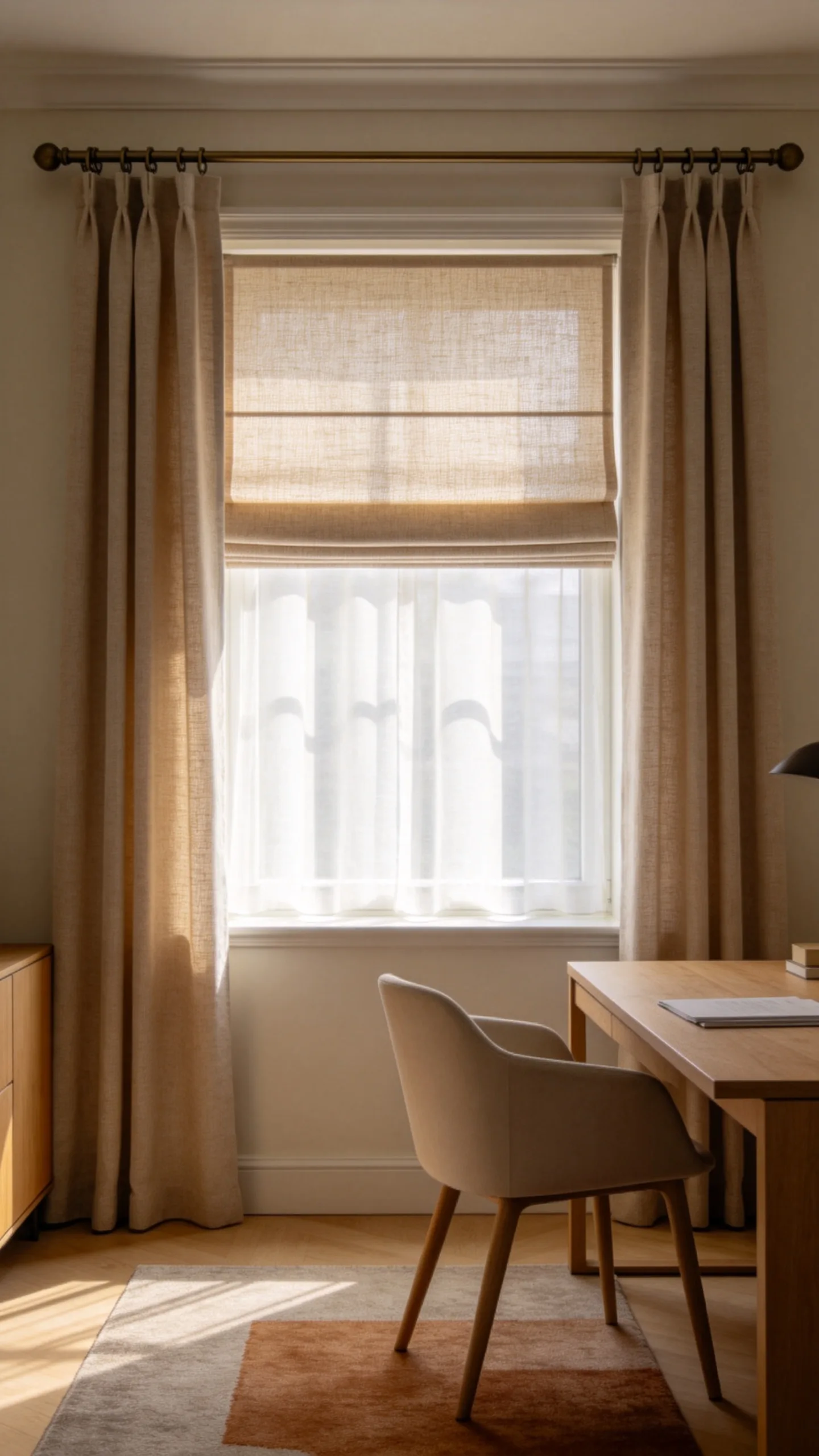
A Roman shade inside the window frame paired with drapes on a double rod creates a layered, tailored effect. Use the shade for privacy and light control, then add sheers or decorative side panels to soften the wall around the window.
This idea works well in bedrooms, home offices, and dining rooms where you want a clean window treatment that does not require bulky curtain stacks. Choose a Roman shade in linen, woven fabric, or a subtle pattern, then coordinate the drapes with the room’s bedding, rug, or chair upholstery. The layered materials make the window feel finished even when the shade is raised.
21. Dark Outer Drapes with Bright Inner Sheers
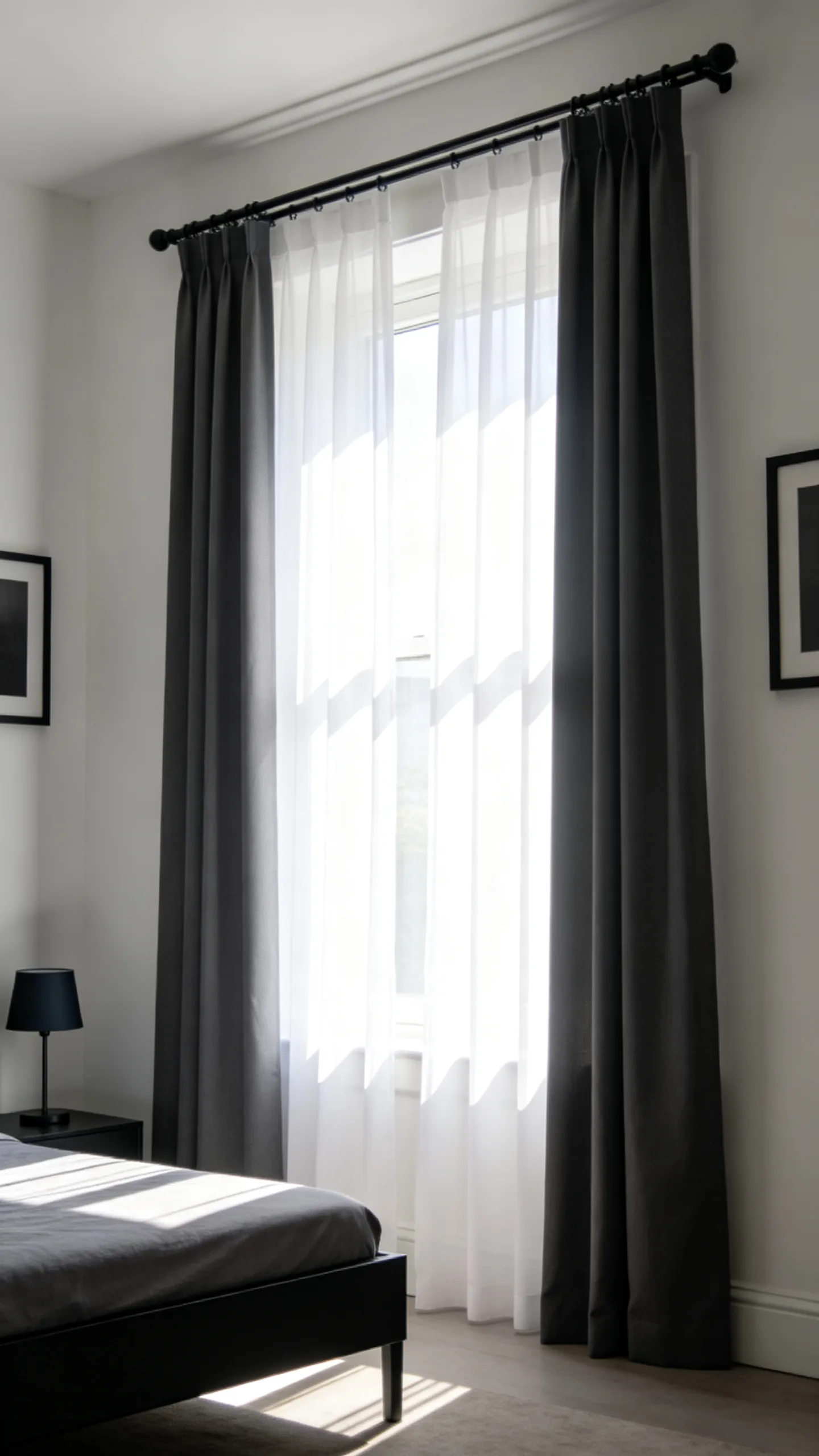
For a bold contrast, place bright white or ivory sheers behind dark outer drapes in charcoal, espresso, navy, forest green, or black. The sheers keep the daytime look fresh, while the dark panels create a strong frame when pulled to the sides.
This double curtain rod idea works especially well in rooms with light walls and dark accents, such as a black bed frame, dark wood dining table, or charcoal sofa. To keep the look balanced, repeat the dark color in smaller pieces around the room, such as a lamp, picture frame, throw blanket, or side table. The result is layered, practical, and visually anchored without repainting or remodeling.

From the editors
Decor Compass Editorial Team
We turn practical home research into clear, useful room-by-room ideas.