The right curtain rod can make a window feel taller, wider, and more custom without changing the glass, trim, or wall layout. Small details like finish, diameter, bracket placement, finials, and how far the rod extends beyond the frame can turn simple curtains into a polished focal point. These curtain rod ideas focus on high-end hardware details that work in living rooms, bedrooms, dining rooms, home offices, and small spaces where every visible line matters.
1. Ceiling-Mounted Brass Rod for Taller-Looking Windows
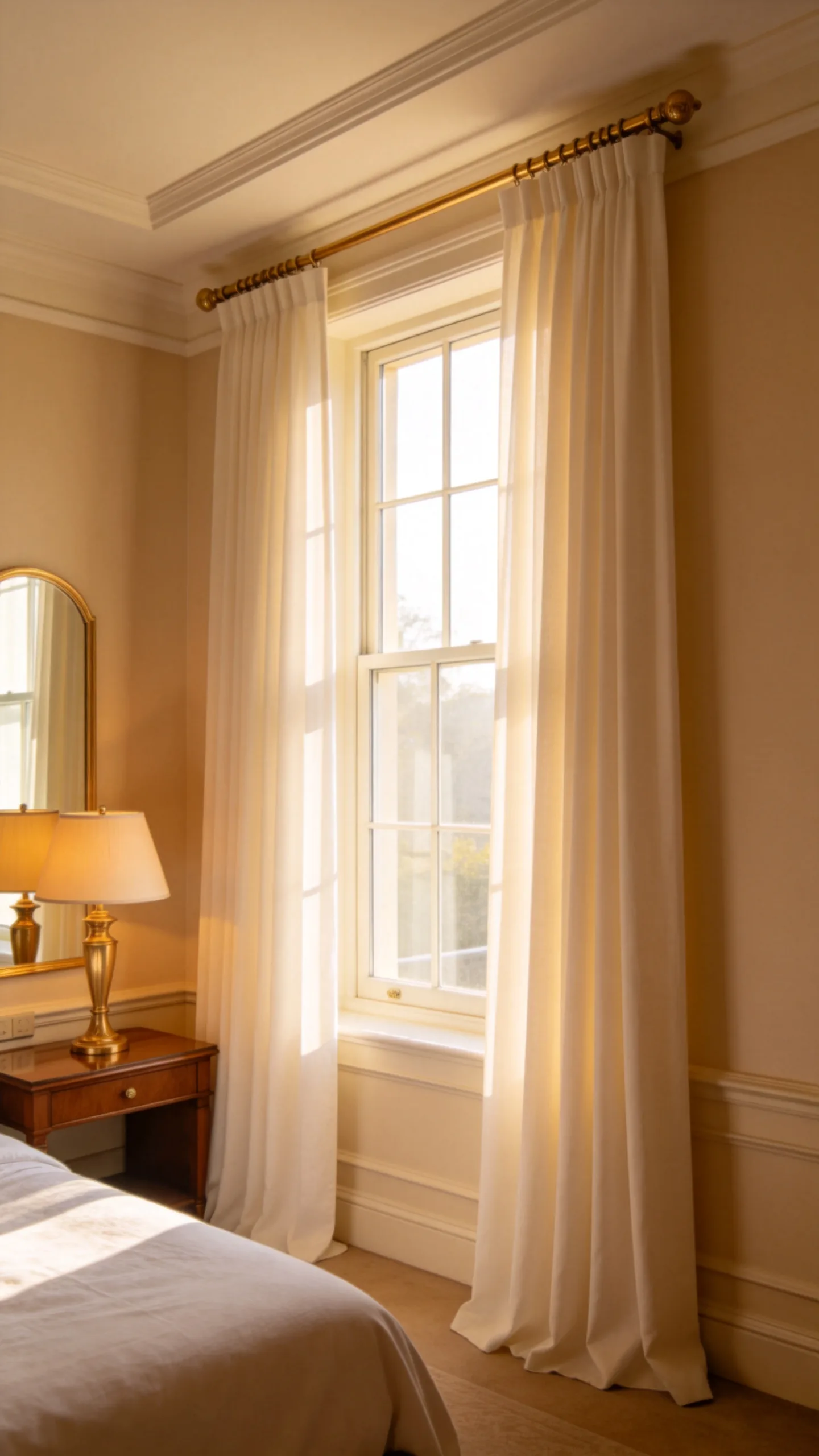
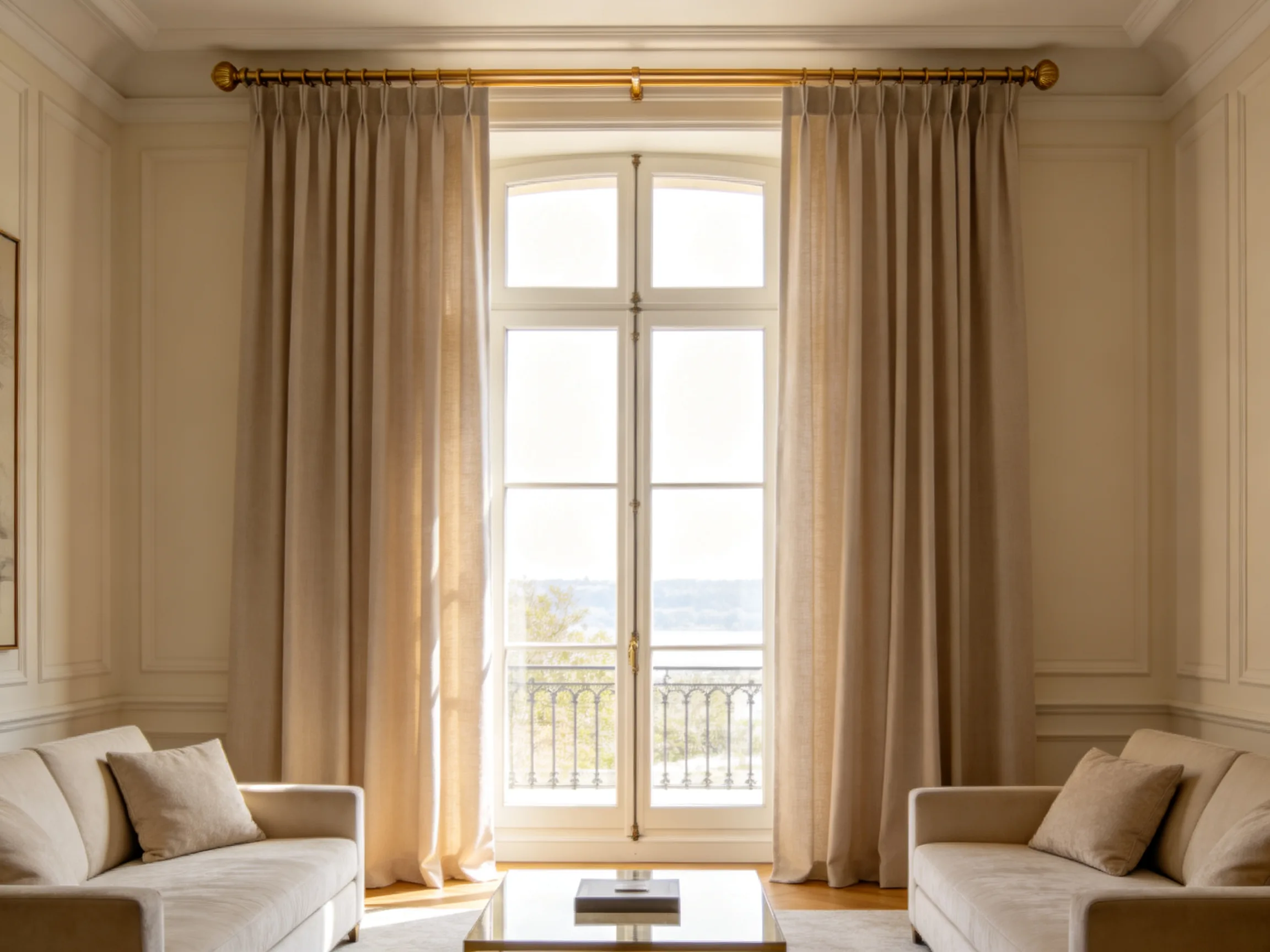
A ceiling-mounted brass curtain rod instantly draws the eye upward, especially in rooms with standard eight- or nine-foot ceilings. Instead of placing the rod just above the window trim, mounting it close to the ceiling makes the wall look taller and gives the curtains a more custom, hotel-like drop.
This idea works especially well in bedrooms and living rooms with full-length linen, velvet, or cotton curtains. Choose a warm brass finish if your room already has brass picture frames, cabinet pulls, table lamps, or a gold-framed mirror. Keeping the finish repeated across the room makes the rod look intentional instead of random.
For the most expensive-looking result, let the curtain panels reach the floor with a slight break or clean kiss at the baseboard. A ceiling-mounted rod also helps hide awkward window proportions because the viewer reads the fabric height rather than the actual frame height.
2. Extra-Wide Rod That Extends Beyond the Window Frame
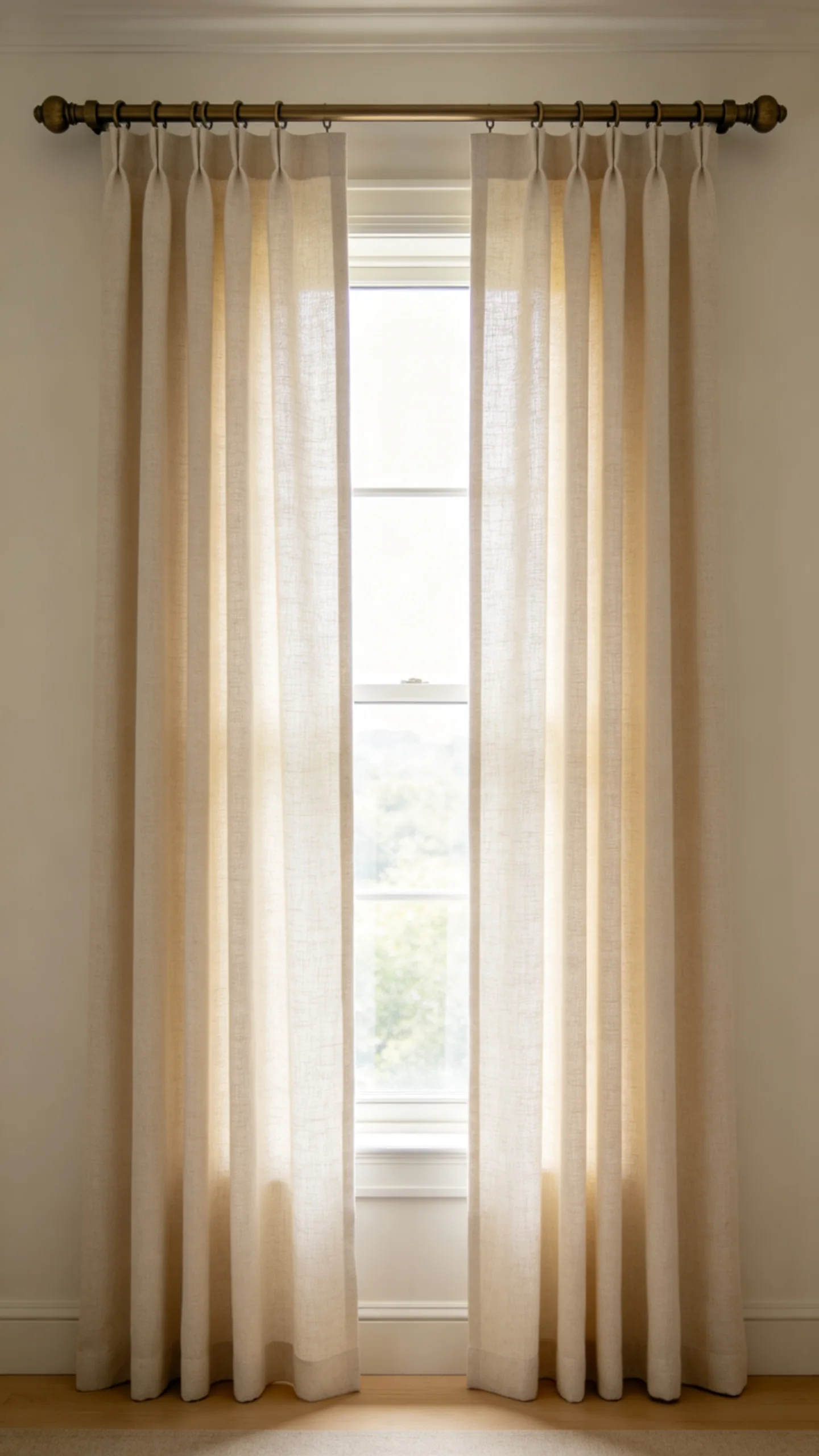
An extra-wide curtain rod can make a narrow window look much larger. Mount the rod so it extends 8 to 12 inches beyond each side of the window frame, depending on available wall space. This allows the curtain panels to stack on the wall instead of covering the glass.
In a living room or dining room, this trick brings in more daylight because the curtains are not blocking the window when open. It also creates the impression of a wider architectural opening, which feels more custom and expensive.
Use this approach with substantial panels, such as lined linen, cotton velvet, or textured woven fabric. Thin rods paired with wide spans can sag or look flimsy, so choose a rod with a strong diameter and sturdy center support if the window is large.
3. Matte Black Rod for Crisp Contrast
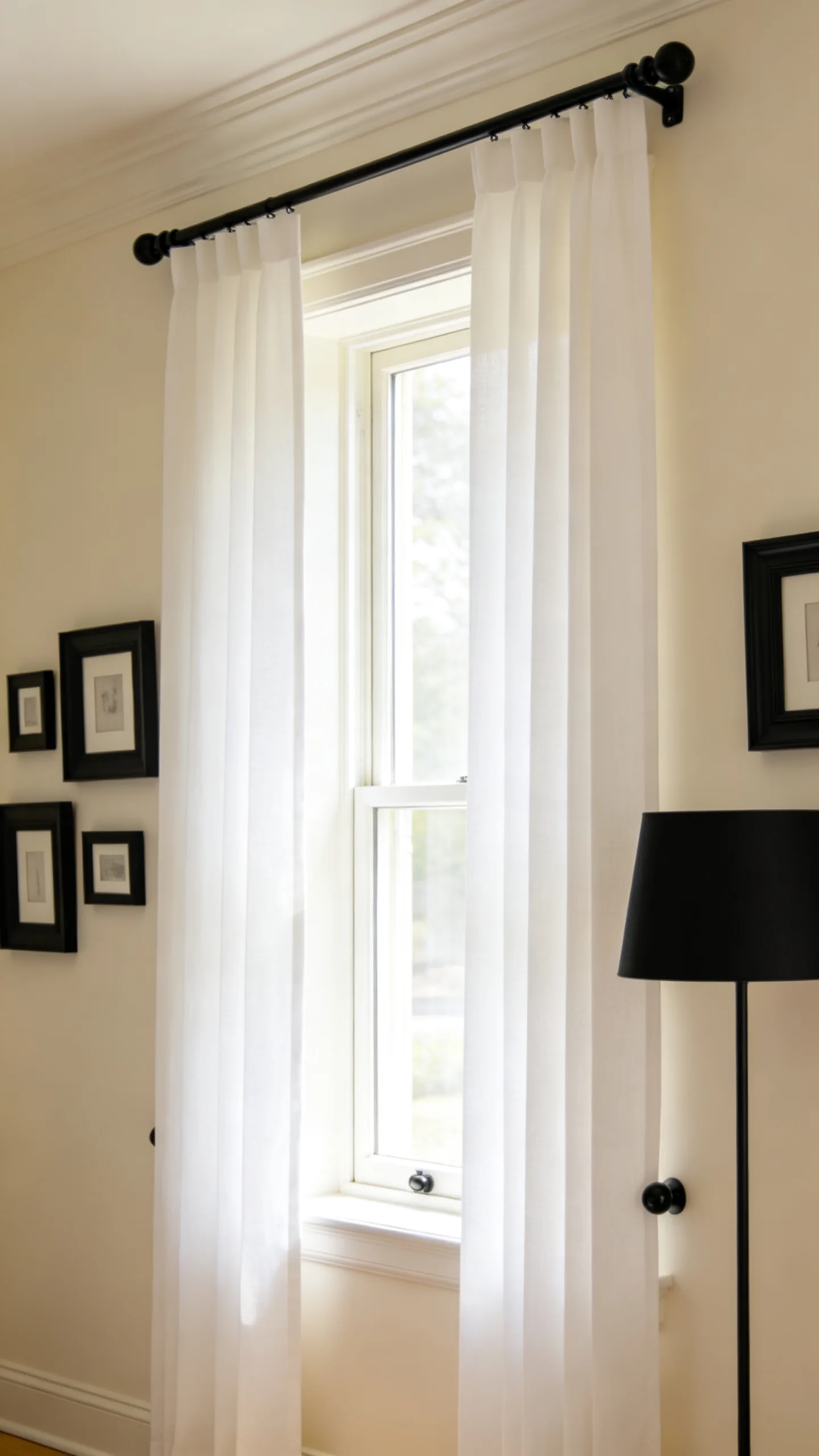
A matte black curtain rod gives a window a clean, graphic outline. It looks especially sharp against white, cream, greige, or pale gray walls because the dark line defines the window area without needing heavy trim.
This is a strong choice for modern farmhouse, industrial, transitional, and minimalist rooms. In a living room with black picture frames, a black floor lamp, or dark metal coffee table legs, a matte black rod helps repeat the finish around the space.
For a high-end look, avoid overly shiny black hardware and choose a smooth, low-sheen finish. Pair it with white linen curtains for contrast, charcoal panels for a moody effect, or beige drapes for a softer neutral room.
4. Antique Brass Rod With Simple Ball Finials
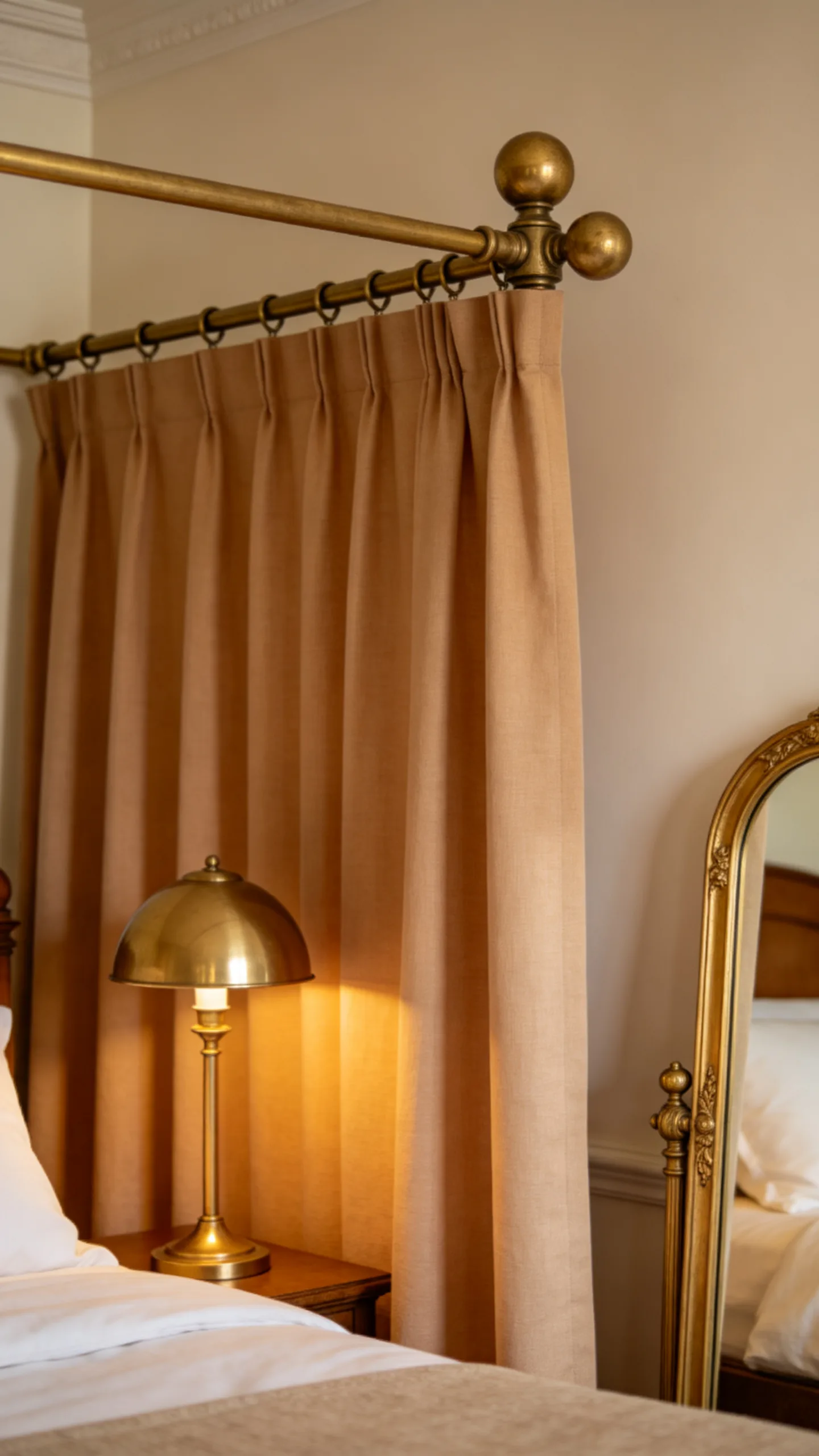
Antique brass feels warmer and more collected than bright yellow gold. A rod with simple ball finials works beautifully in bedrooms, traditional living rooms, and dining rooms where you want polish without ornate detailing.
The rounded finials add a finished end point to the curtain treatment, but they do not compete with patterned rugs, framed art, or detailed furniture legs. This makes them easy to use in both classic and updated interiors.
To make the look feel refined, coordinate the antique brass rod with at least one other metal detail in the room. A brass bedside lamp, mirror frame, chandelier, or drawer pull can make the curtain hardware feel like part of the design plan.
5. French Return Rod for a Custom Drapery Look
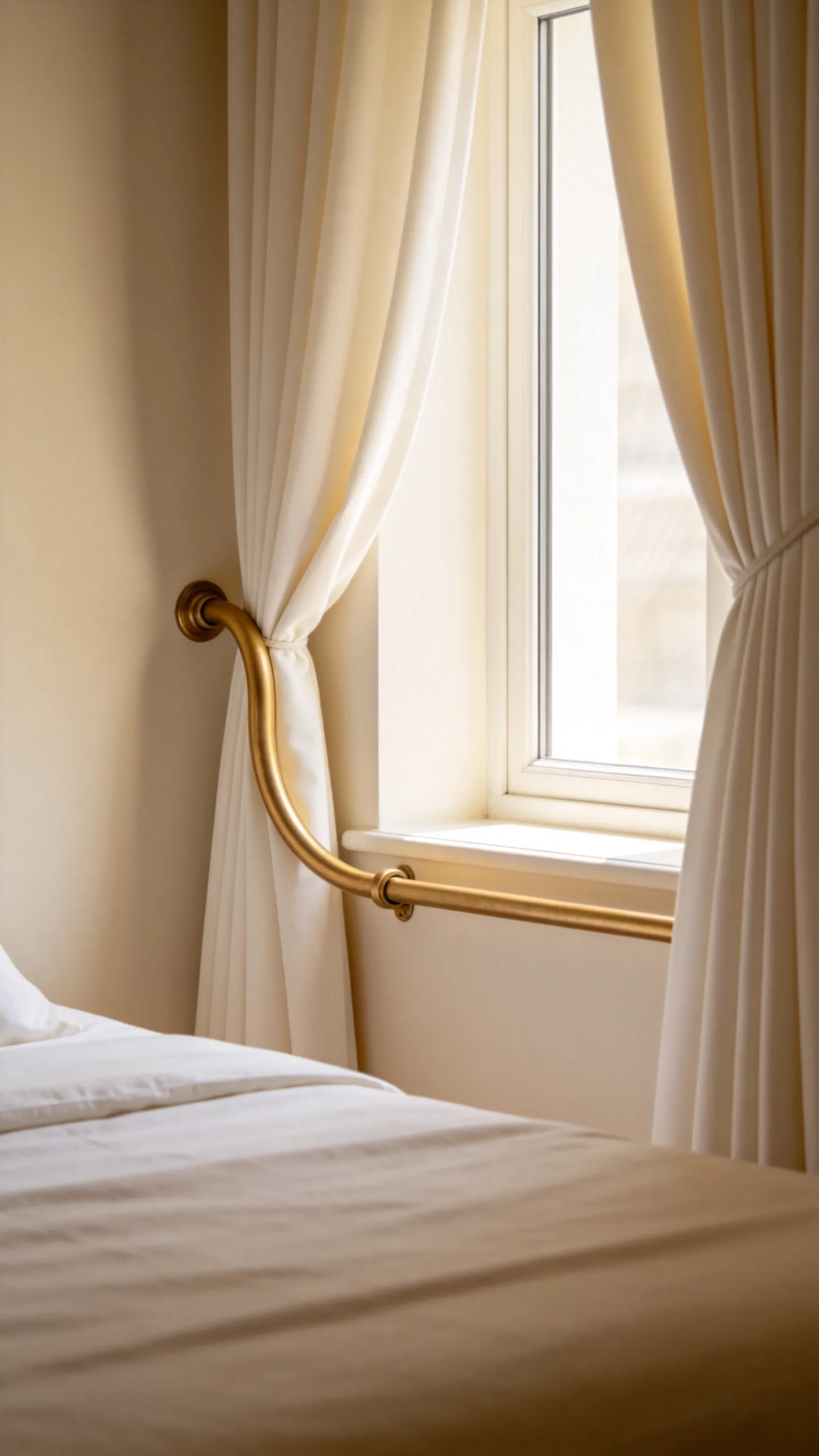
A French return rod curves back into the wall instead of ending with a decorative finial. This creates a tailored, built-in effect and helps the curtain fabric wrap neatly around the sides of the window.
This style is especially useful in bedrooms because it reduces side light gaps when the curtains are closed. It also gives living room windows a streamlined look because the rod disappears into the wall rather than sticking out visually.
French return rods work well in black, brass, bronze, or polished nickel. Pair them with pinch pleat or ripple fold curtains for a more custom window treatment, or use them with simple linen panels to make casual curtains look more elevated.
6. Acrylic Curtain Rod With Metal Brackets
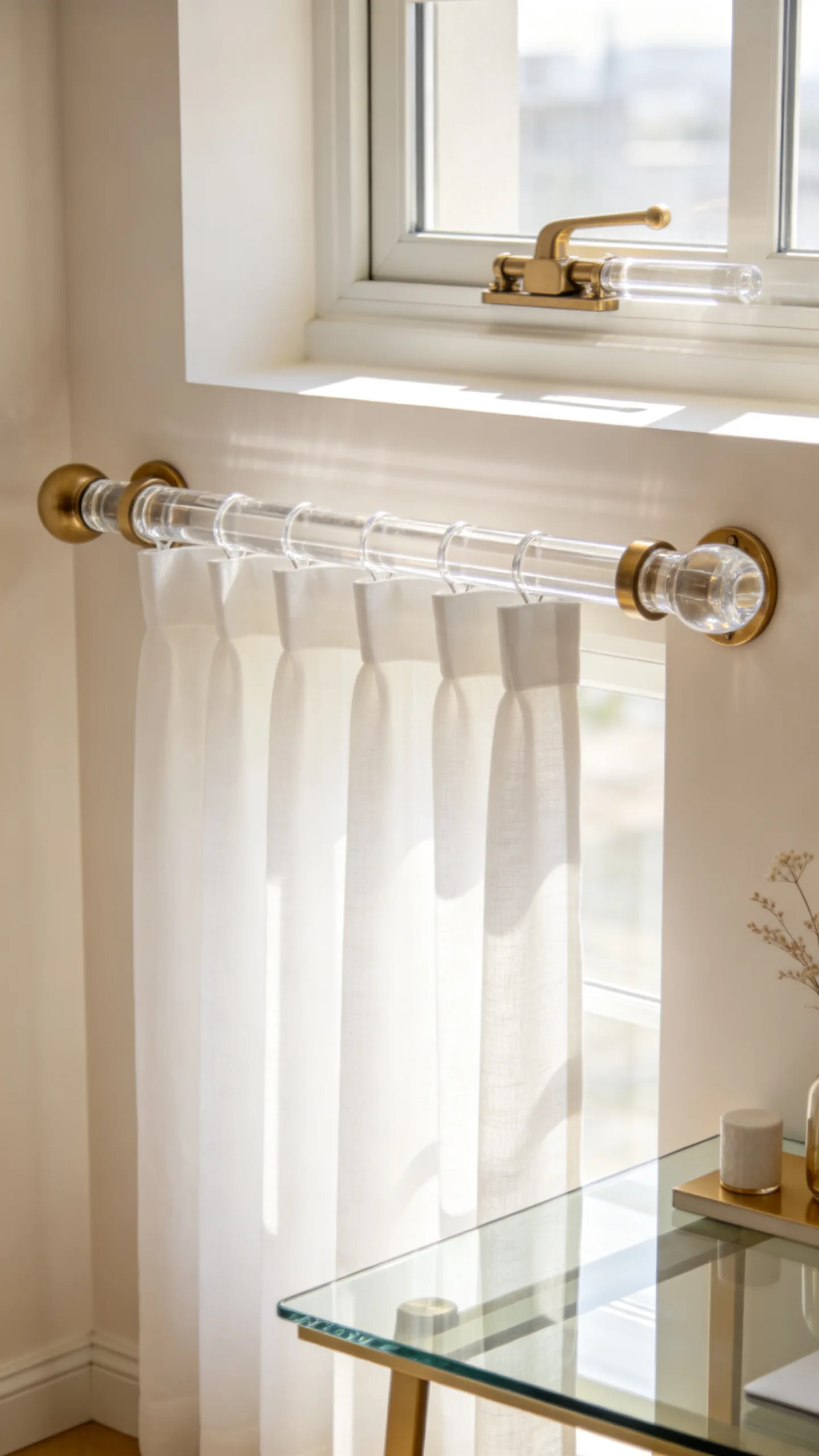
An acrylic curtain rod feels light, modern, and slightly glamorous. Because the clear rod does not create a heavy visual line, it is a smart choice for smaller rooms, apartments, nurseries, or home offices where you want the window treatment to feel airy.
Look for acrylic rods with brass, nickel, or black metal brackets. The contrast between the clear rod and the metal hardware gives the window a boutique-style detail without overwhelming the wall.
This idea works best with lightweight to medium-weight curtains, such as linen blends, cotton panels, or sheer drapes. Avoid pairing acrylic rods with extremely heavy velvet unless the rod is specifically designed to support the weight.
7. Double Curtain Rod for Layered Sheers and Drapes
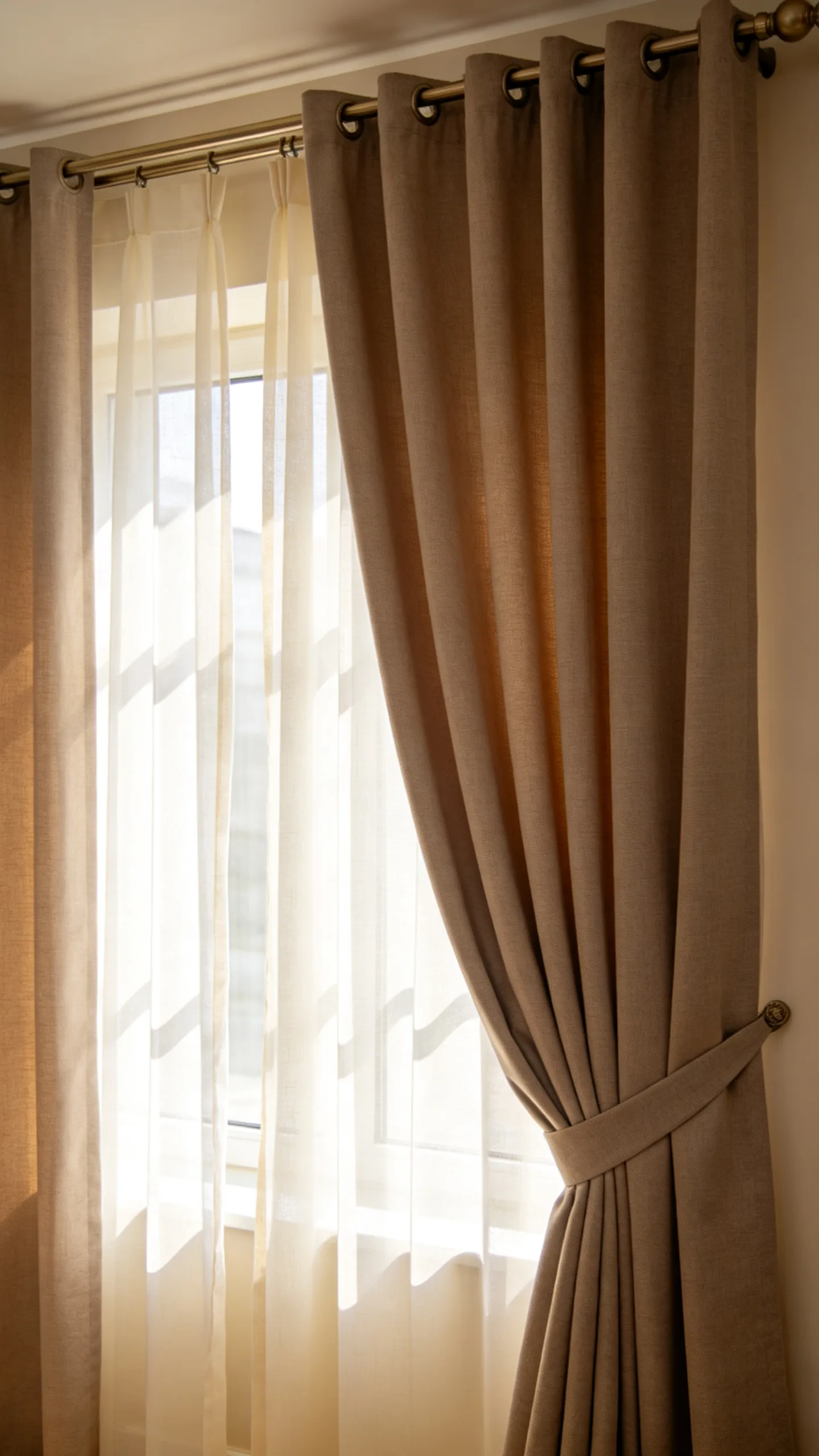
A double curtain rod lets you hang two layers: sheer curtains close to the window and heavier drapes in front. This layered look instantly feels more expensive because it adds depth, softness, and practical light control.
In a bedroom, use white or ivory sheers for daytime privacy and lined drapes for nighttime darkness. In a living room, sheer panels can soften direct sunlight while the outer panels frame the window even when left open.
Choose a double rod with matching brackets and finishes so the hardware looks clean rather than cluttered. A slim back rod for sheers and a more substantial front rod for drapes creates the best balance.
8. Polished Nickel Rod for a Bright, Refined Finish
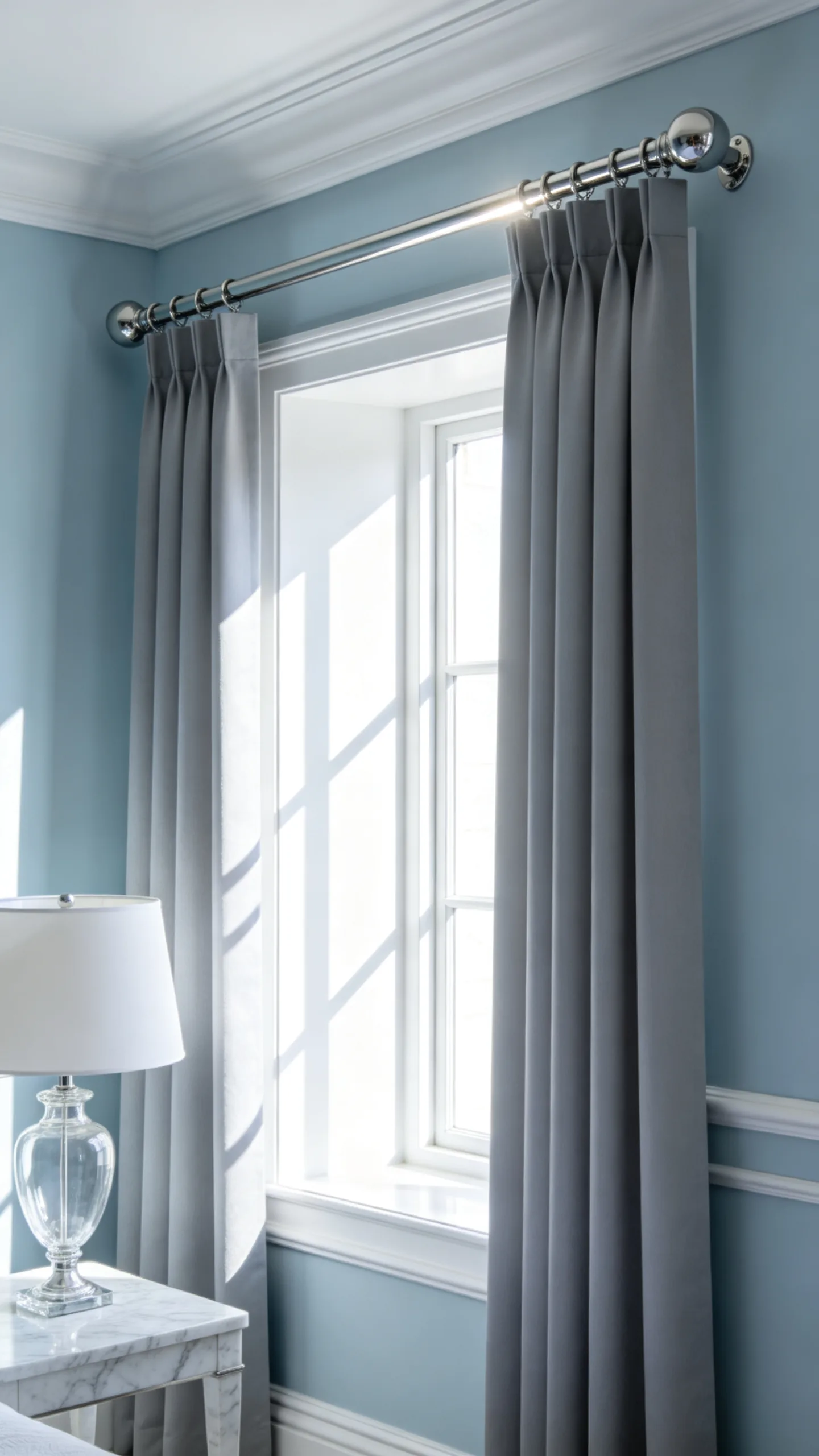
Polished nickel has a warmer shine than chrome, which makes it feel refined without looking cold. It works beautifully in rooms with cool wall colors, white trim, marble accents, glass lamps, or silver-toned picture frames.
This finish is especially effective in bathrooms, bedrooms, and formal living spaces where you want the window hardware to catch light. The subtle reflection can make the window area feel brighter and more finished.
For an expensive look, pair polished nickel with tailored curtains in solid colors like ivory, dove gray, soft blue, or taupe. Keep finials simple so the shine of the finish remains the main detail.
9. Wood Curtain Rod for Warm Texture
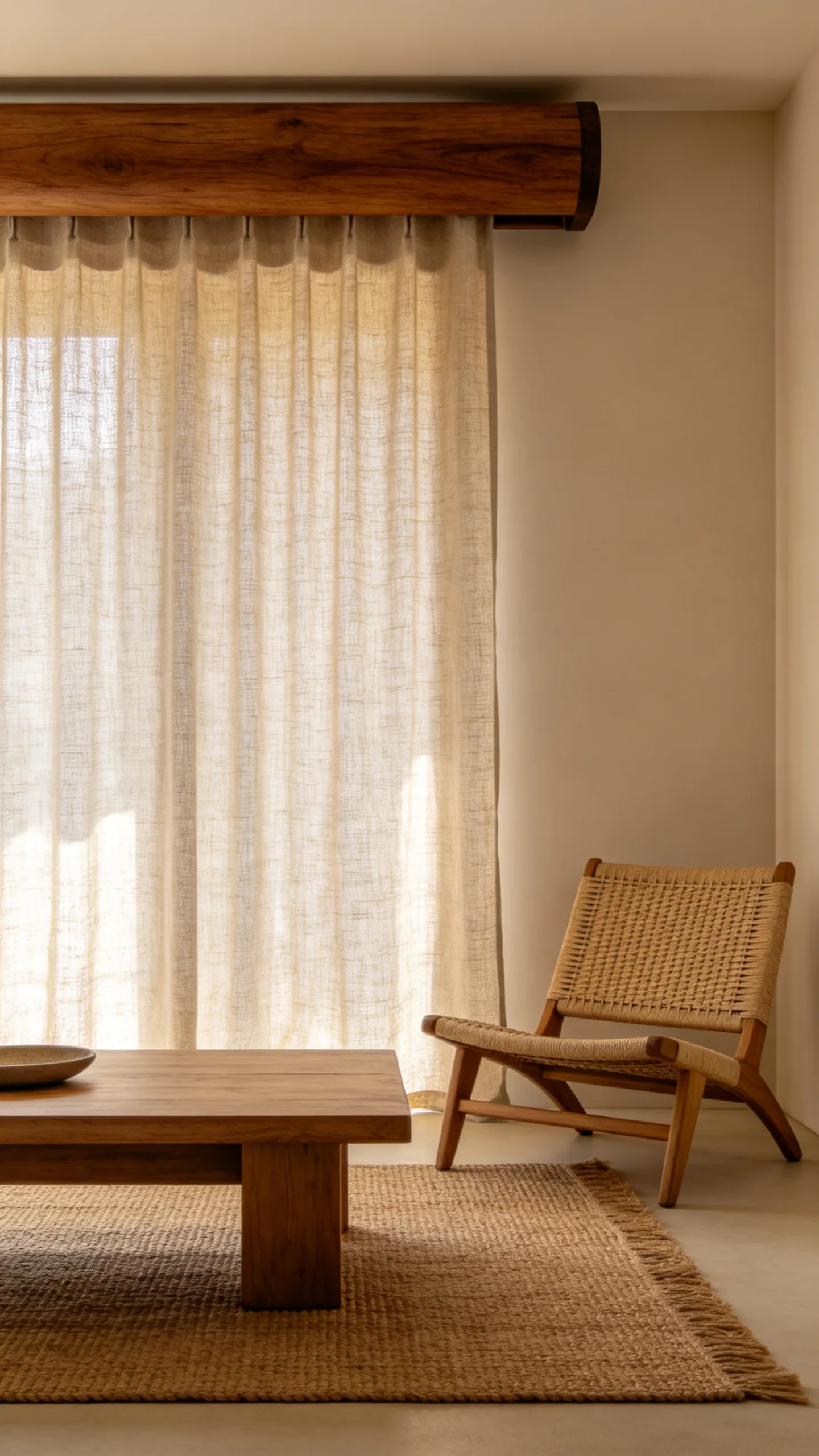
A wood curtain rod adds warmth and natural texture to a room, especially when paired with linen, cotton, or woven curtains. It is a strong choice for living rooms with wood coffee tables, rattan chairs, exposed beams, or natural fiber rugs.
Choose a stained wood tone that relates to other furniture in the room. A walnut rod can complement darker floors or mid-century furniture, while a light oak rod works well with Scandinavian, coastal, or relaxed neutral spaces.
Wood rods look more expensive when they are thick enough to feel substantial. Thin wood rods can appear flimsy, especially across wide windows, so select a diameter that visually matches the scale of the room and curtain panels.
10. Rod With Square Finials for a Tailored Edge
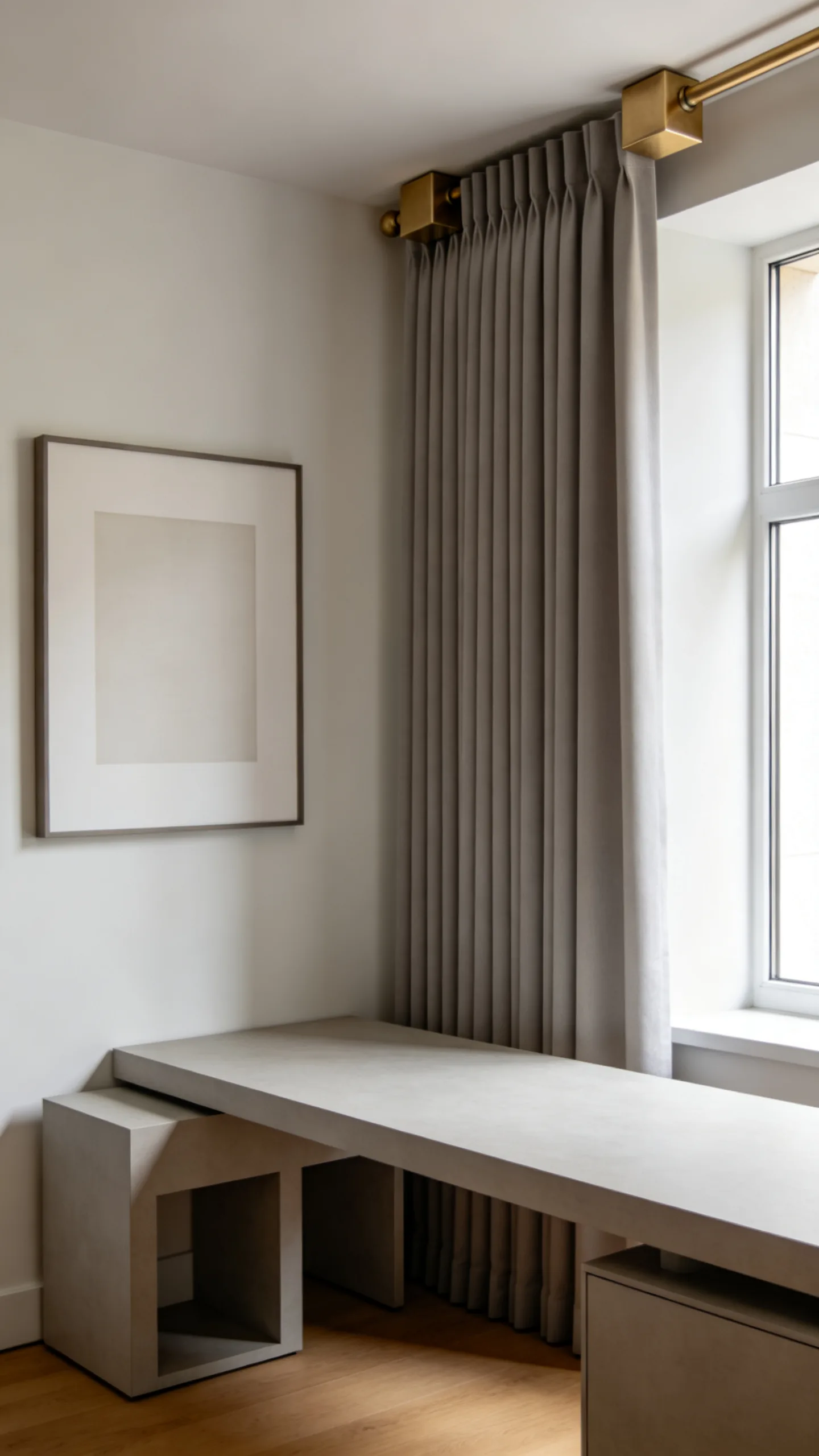
Square finials create a more architectural look than round or ornate end caps. They work well in contemporary bedrooms, home offices, and living rooms with clean-lined furniture.
This style is especially useful when the room already has square details, such as framed art, blocky side tables, paneled cabinet doors, or a rectangular mirror. Repeating the shape makes the curtain rod feel connected to the rest of the design.
For a high-end effect, choose square finials in matte black, brushed brass, or satin nickel. Pair them with structured curtain panels that hang neatly, such as grommet-free pleated curtains or back-tab panels.
11. Slim Rod in the Same Color as the Wall
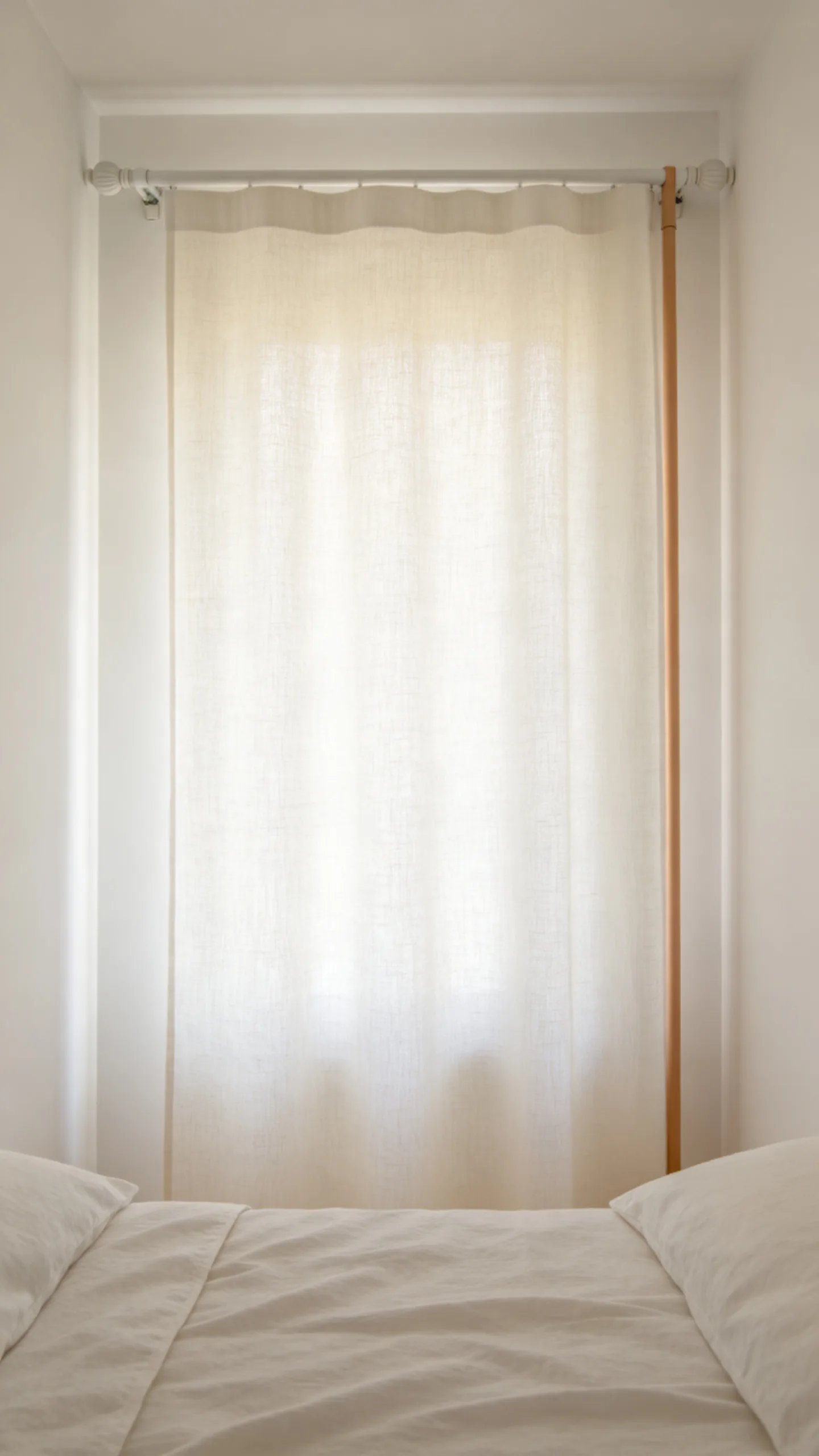
A slim curtain rod painted or chosen in a color close to the wall creates a quiet, custom look. This works well in small bedrooms, apartments, and rooms with multiple windows where bold hardware might feel busy.
For example, a white rod on a white wall lets the curtain fabric become the focus. A soft beige rod on a beige wall creates a tonal effect that feels calm and polished. This approach keeps sightlines open and reduces visual clutter.
Use this idea when the curtains themselves have texture, such as slub linen, embroidered cotton, or subtle woven stripes. The rod supports the design without adding another strong line to the room.
12. Oversized Rod Diameter for a Grander Scale
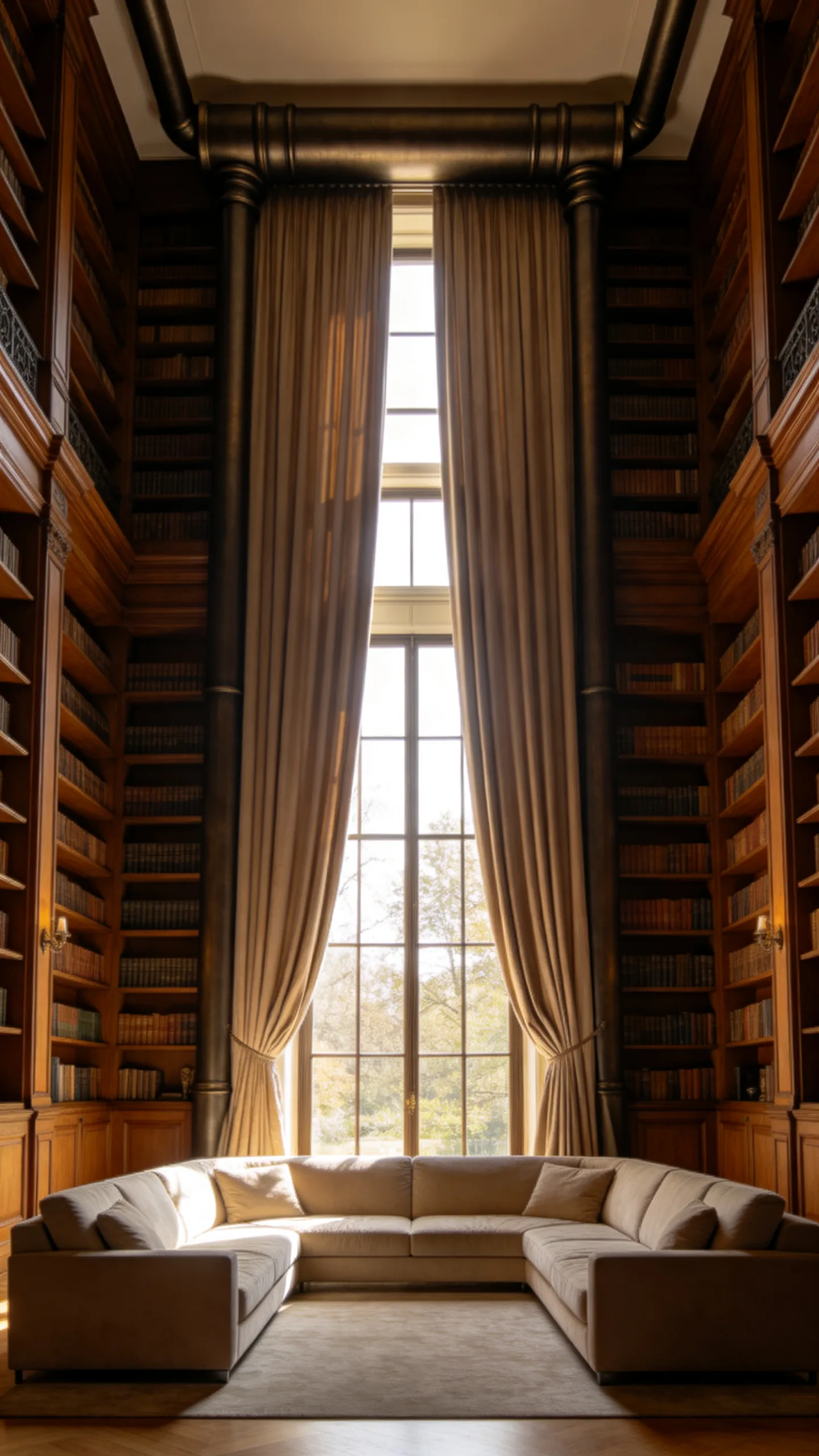
A thicker curtain rod can make a window treatment look more substantial. Instead of a thin, basic rod, choose a larger diameter that suits the scale of the room and the weight of the fabric.
This idea works especially well in rooms with high ceilings, large windows, heavy drapes, or oversized furniture. A thin rod can look under-scaled in a room with a large sectional sofa, tall bookcases, or a wide bed with a statement headboard.
The key is balance. A larger rod should look sturdy and intentional, not bulky. Matte black, bronze, wood, and antique brass finishes all work well for this elevated, designer-style effect.
13. Minimal Rod With Hidden Brackets
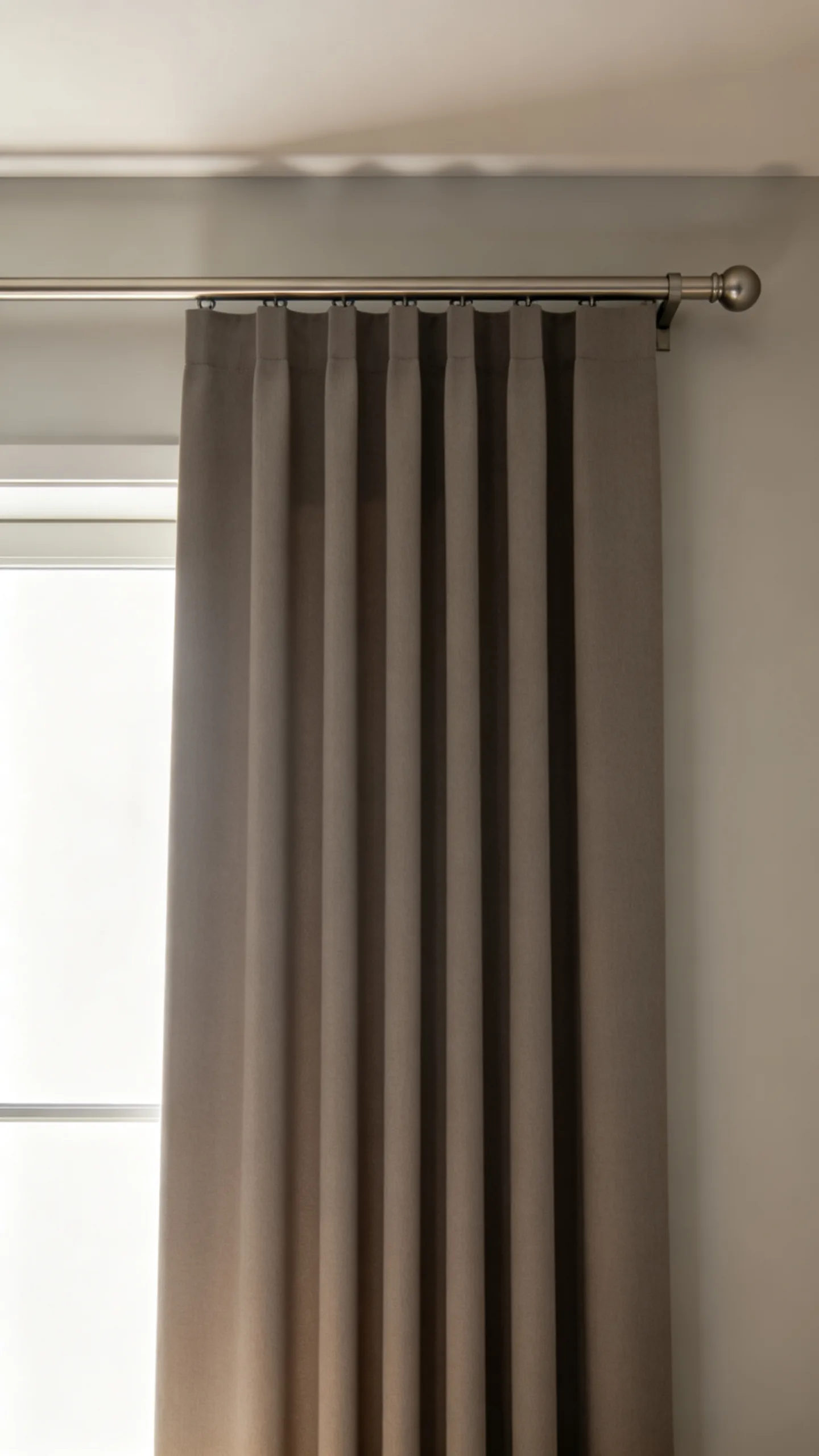
Hidden or low-profile brackets make the curtain rod look cleaner and more custom. When the brackets are not visually competing with the curtains, the window treatment feels more streamlined.
This is a good choice for modern living rooms, serene bedrooms, and small spaces where too many visible hardware pieces can make the wall feel cluttered. It also works well with solid curtain panels because the clean rod line stays simple.
To get the best look, install the brackets evenly and make sure the rod sits level. Even beautiful hardware can look inexpensive if the rod is crooked or the brackets are placed too close to the window trim.
14. Bronze Rod for a Softer Alternative to Black
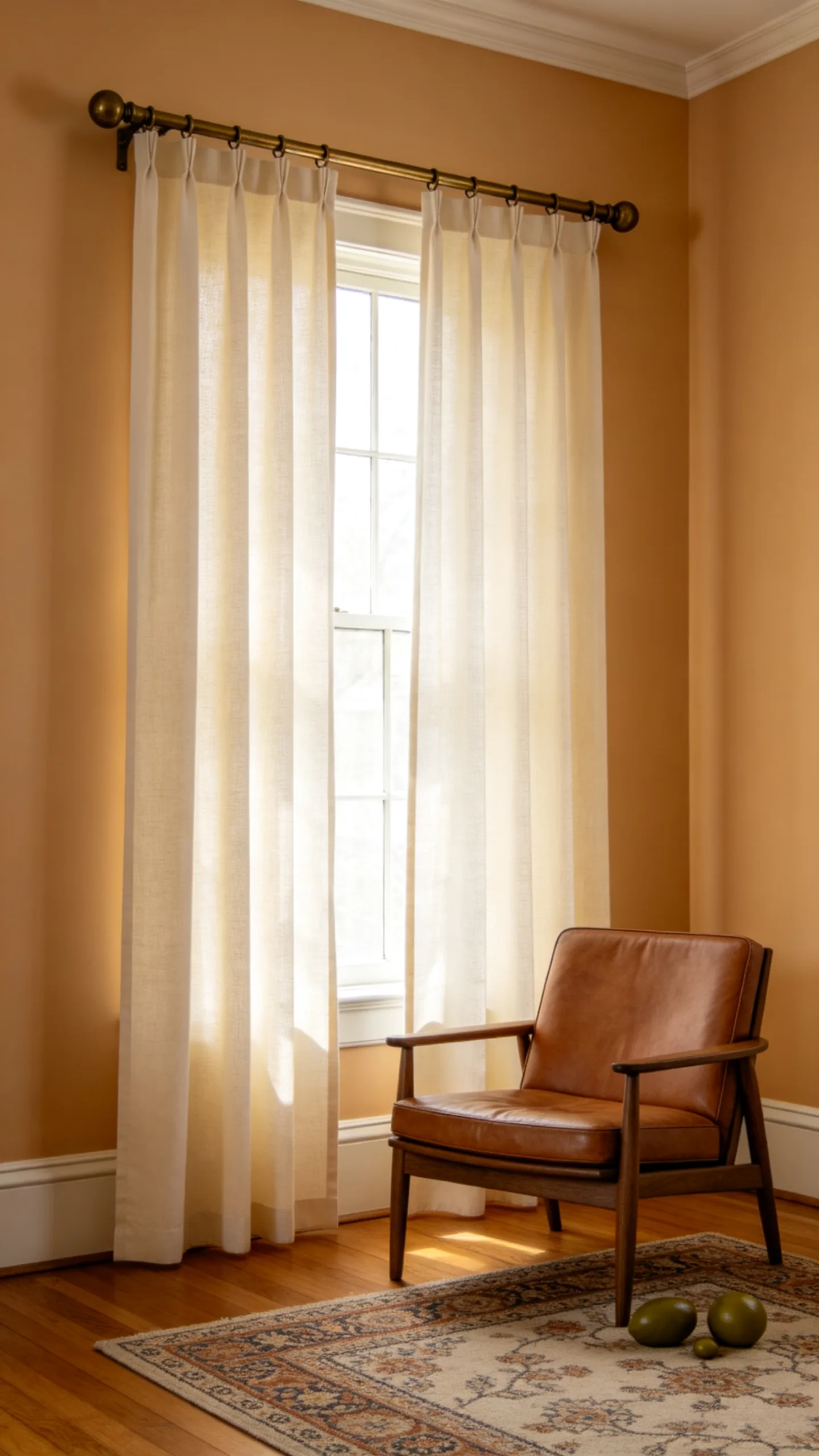
Oil-rubbed bronze or dark bronze curtain rods give you depth without the sharp contrast of pure black. This finish works beautifully in traditional, rustic, transitional, and cozy rooms.
Bronze pairs well with warm wall colors, leather furniture, wood floors, cream curtains, and patterned rugs. It adds definition to the window but feels softer than matte black, especially in rooms with beige, tan, olive, terracotta, or deep green accents.
Choose simple finials or French returns to keep the look sophisticated. Bronze hardware can become overly heavy if paired with ornate ends and thick dark curtains, so balance it with lighter fabric when the room is small.
15. Curtain Rod Mounted Above Window Trim
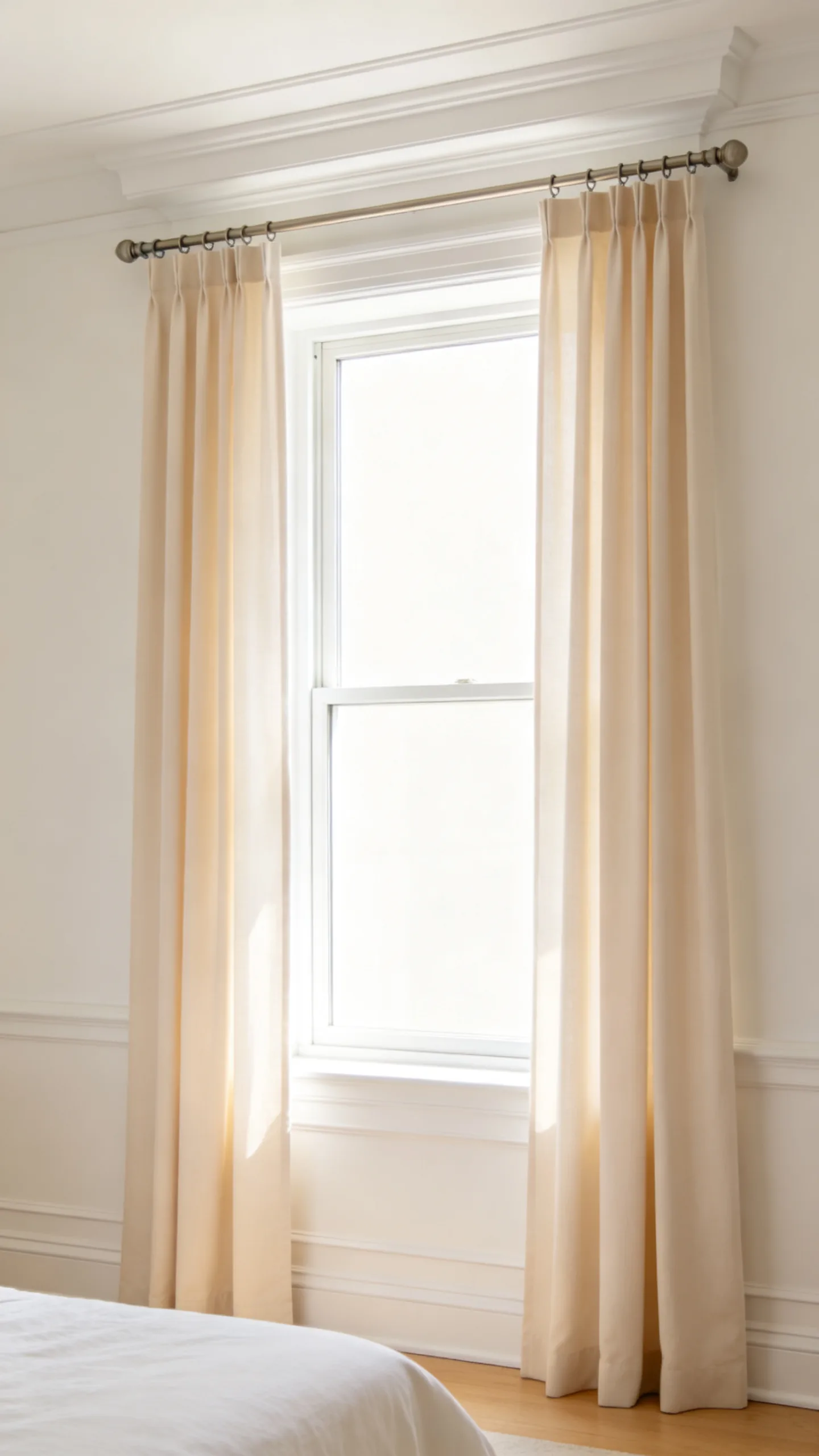
Mounting the curtain rod several inches above the window trim is one of the easiest ways to make a window feel more expensive. A good rule is to place it halfway between the top of the window trim and the ceiling, or closer to the ceiling if the room allows.
This placement visually stretches the wall and makes the curtains look longer. In bedrooms and living rooms, full-length panels hung higher can make basic windows feel more architectural.
For a polished result, avoid short curtains that stop at the sill unless the room function requires it. Floor-length panels give the high-mounted rod a more graceful finish and help the whole wall feel taller.
16. Matching Rods Across Multiple Windows
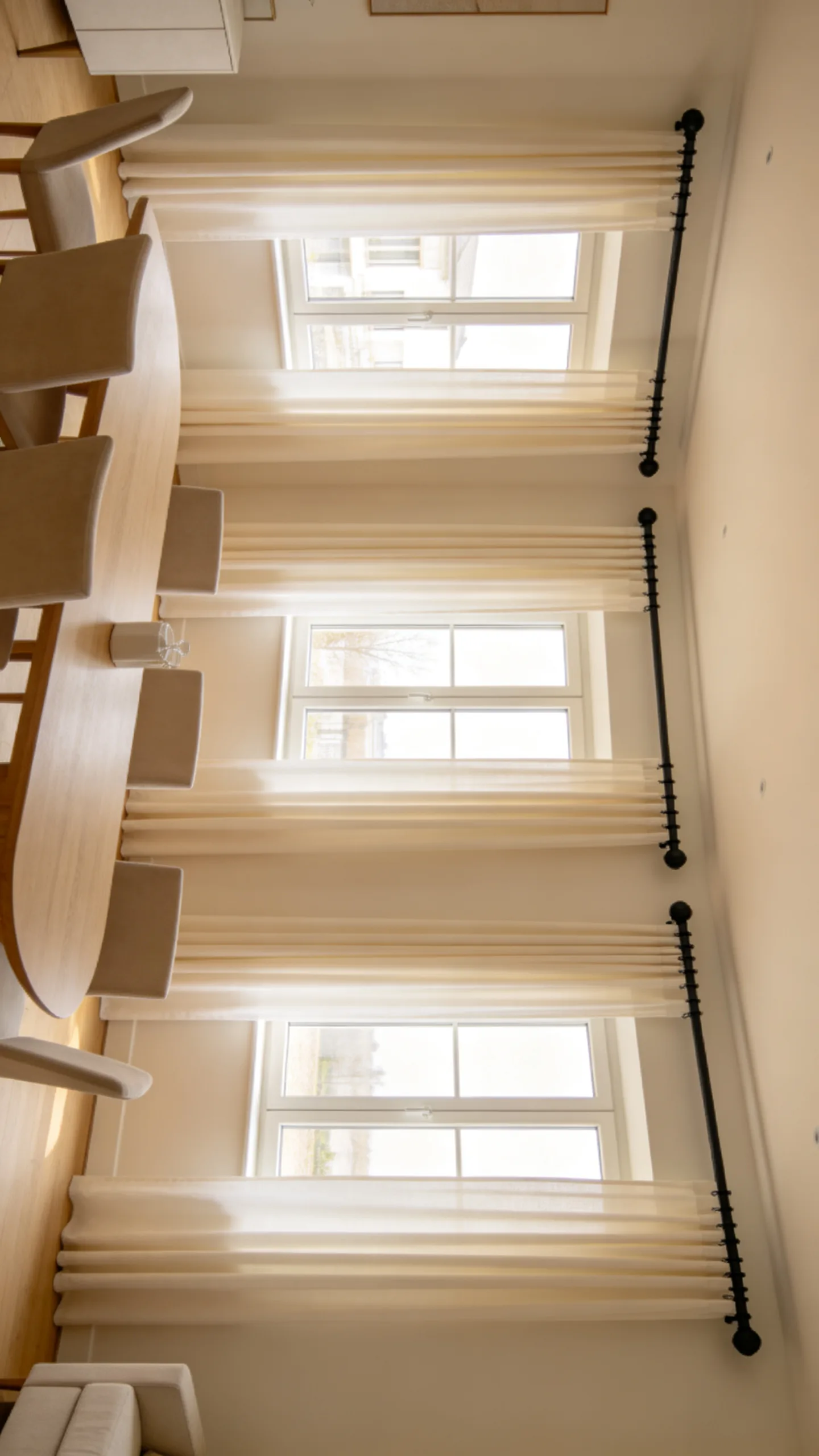
When a room has several windows, matching curtain rods create order and rhythm. This is especially important in living rooms, dining rooms, and open-plan spaces where multiple window treatments are visible at once.
Use the same finish, diameter, finials, and mounting height on every window. Even if the windows are different widths, consistent hardware makes the room feel more planned and expensive.
This idea also helps reduce visual clutter. Instead of each window feeling like a separate decision, the repeated rods create a unified design line around the room.
17. Corner Curtain Rod for Wrapped Windows
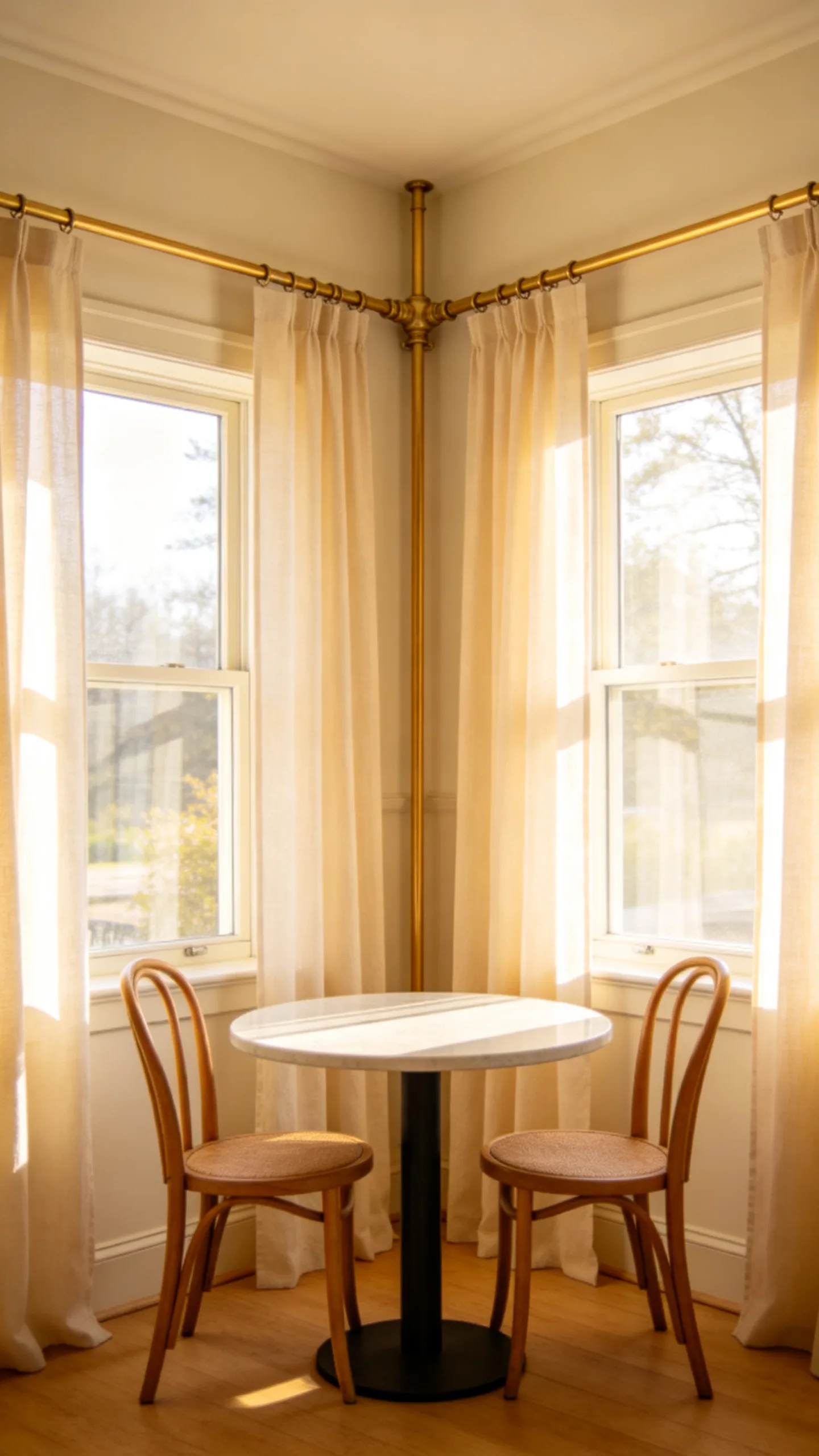
A corner curtain rod is ideal for windows that meet near a corner or wrap around two walls. Instead of using two separate rods that collide awkwardly, a connected corner rod creates a continuous, custom-looking treatment.
This works well in breakfast nooks, bedrooms, sunrooms, and living rooms with corner windows. The continuous rod softens the hard angle of the room and makes the window area feel more finished.
Use lightweight or medium-weight curtains so they can move smoothly around the corner. A matching finish on both sides keeps the look clean, while floor-length panels help disguise uneven window heights or narrow wall gaps.
18. Rod With Rings and Drapery Hooks
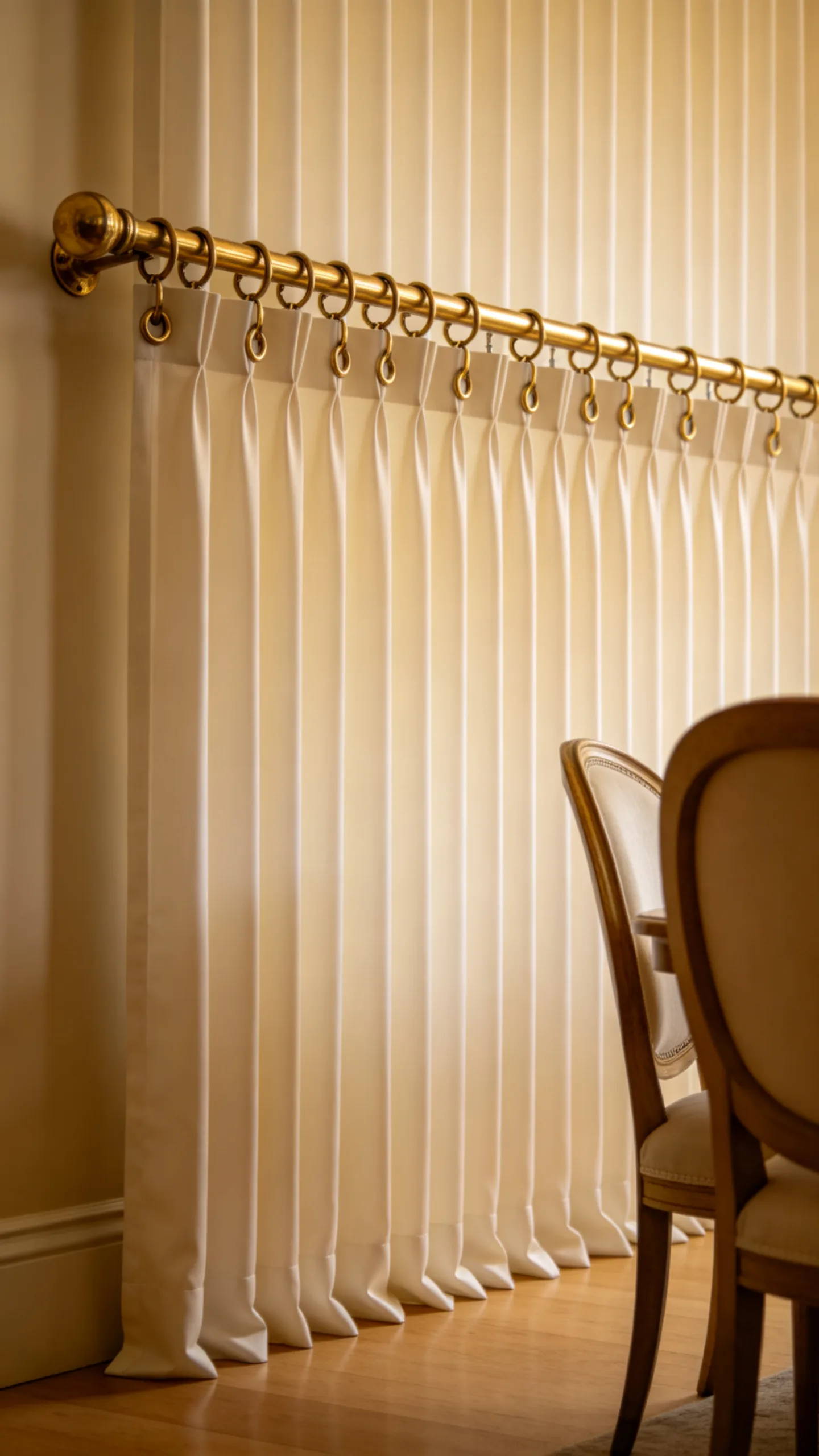
Curtain rings and drapery hooks can make simple panels look more tailored. The rings create a neat hanging line, and hooks allow the curtain fabric to fall in more structured folds than basic rod-pocket panels.
This detail is especially effective in formal living rooms, dining rooms, and primary bedrooms. Choose rings that match the rod finish, such as brass rings on a brass rod or black rings on a black rod, for a cohesive look.
For the most elevated result, use pleated curtains or add drapery hooks to compatible panels. The fabric should hang evenly from each ring, creating consistent vertical folds from rod to floor.
19. Wall-to-Wall Curtain Rod for a Boutique Hotel Effect
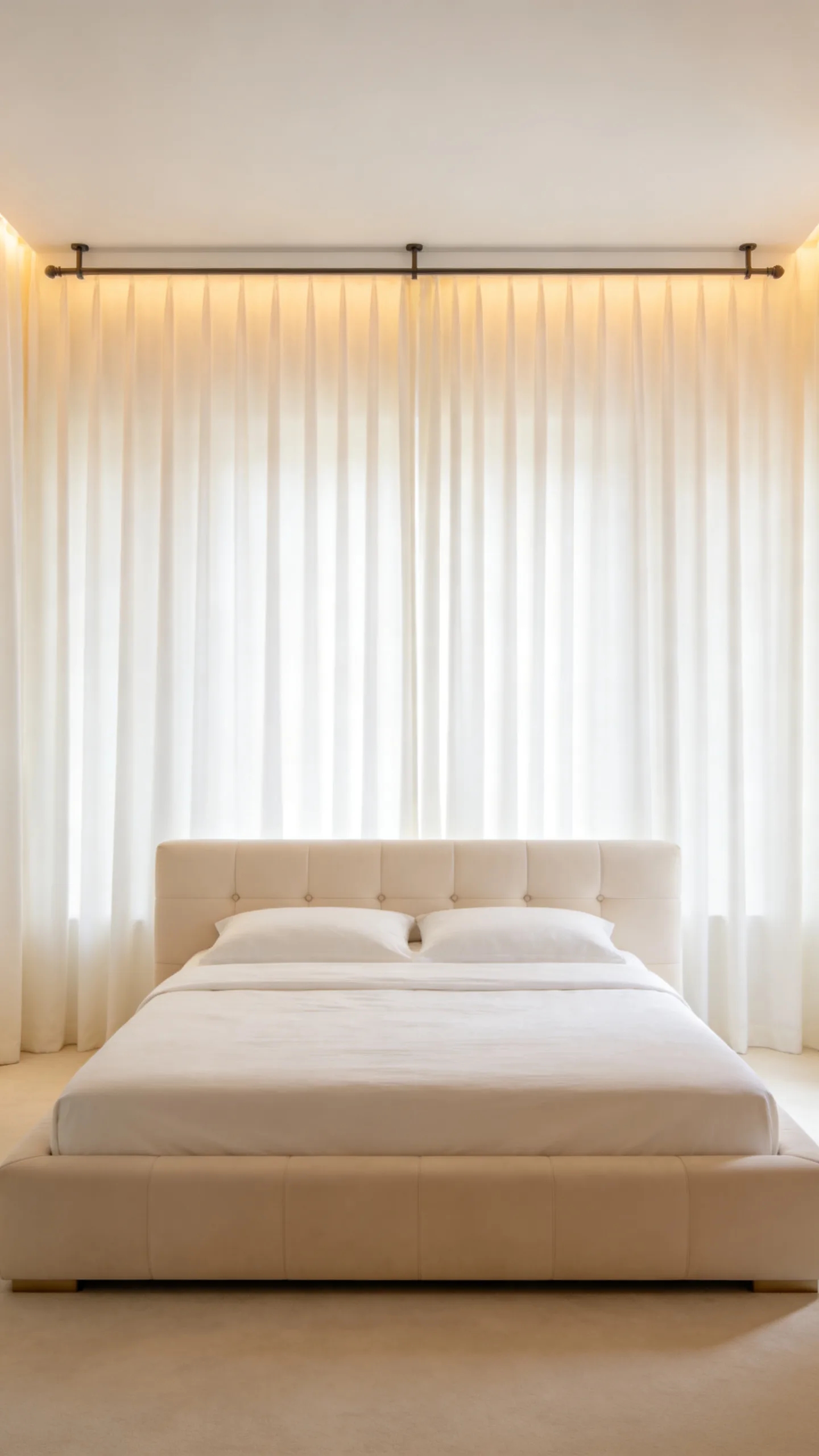
A wall-to-wall curtain rod can make an entire wall feel like a soft backdrop. Instead of framing only the window, the curtains extend across the full wall, which can hide off-center windows, awkward trim, or uneven spacing.
This idea is especially useful behind a bed, along a living room feature wall, or in a studio apartment where curtains can create softness and visual continuity. It also makes the room feel wider because the eye follows one long horizontal line.
Choose fabric with enough fullness so the curtains do not look stretched when closed. A ceiling-mounted or near-ceiling rod makes this look especially polished and helps the fabric read as an intentional design feature.
20. Brushed Brass Rod With Linen Curtains
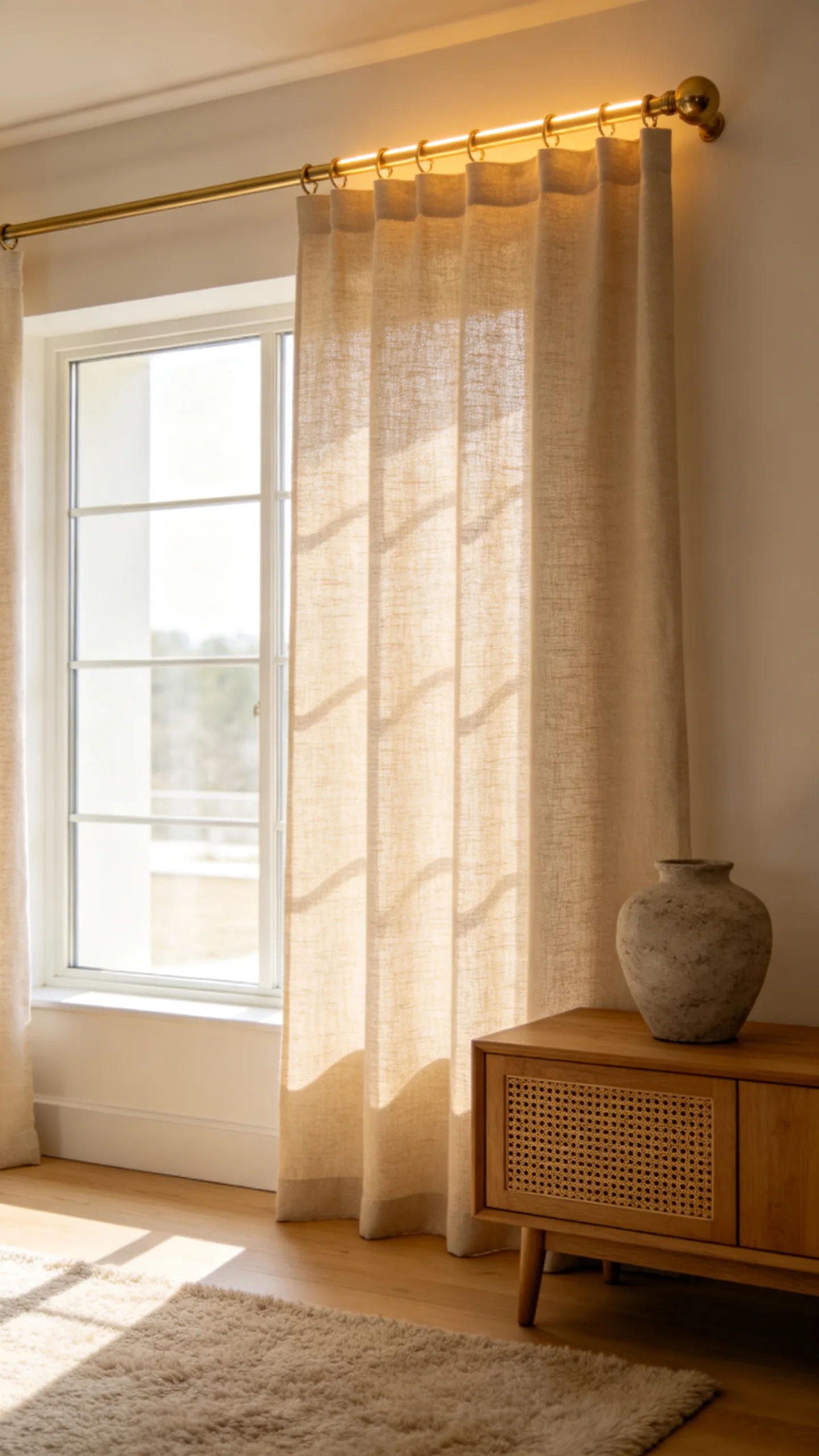
A brushed brass rod paired with linen curtains creates an effortless high-end look. The soft texture of linen balances the warm metal finish, making the window feel elegant without becoming too formal.
This combination works in bedrooms, living rooms, dining rooms, and home offices. Use ivory, oatmeal, flax, soft gray, or warm white linen panels for a calm palette that lets the hardware shine quietly.
Brushed brass is less reflective than polished brass, so it works well in rooms with natural materials like oak, rattan, stone, and wool. Keep the finials simple and let the mix of metal and fabric create the expensive-looking detail.
21. Inside-Mount Tension Rod for Small Recessed Windows
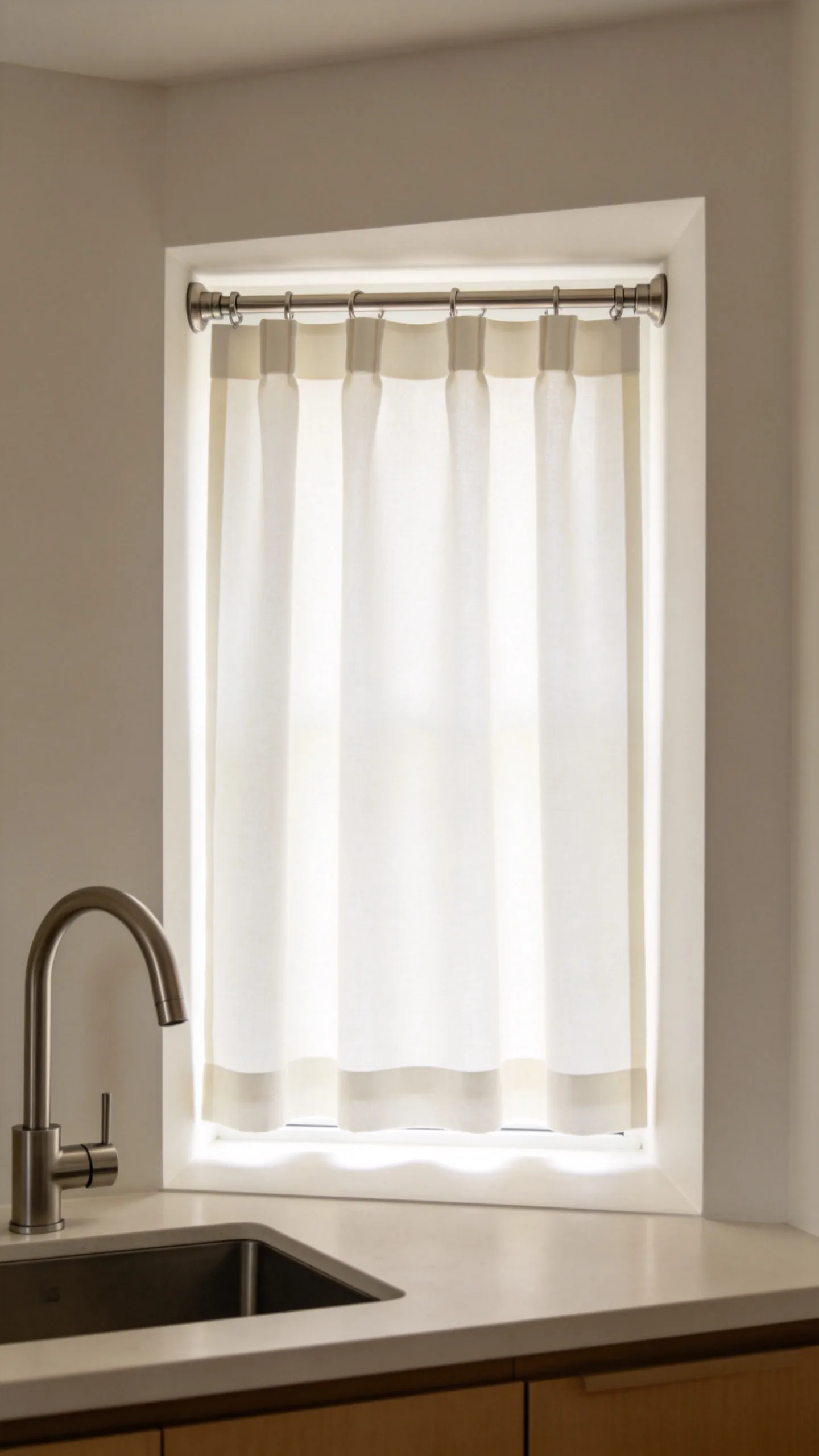
An inside-mount tension rod can look clean and intentional when used in the right setting. It is best for small recessed windows, kitchen windows, bathroom windows, laundry rooms, or built-in nooks where a full outside-mounted rod would feel bulky.
Choose a tension rod in a finish that matches nearby hardware, such as black with black cabinet pulls or brushed nickel with a chrome faucet. Pair it with a tailored café curtain, lightweight linen panel, or simple sheer rather than heavy drapery.
This idea keeps the window treatment contained within the frame, which helps preserve wall space and traffic flow in tight rooms. For a more expensive finish, make sure the rod fits snugly, the fabric is pressed, and the curtain length is deliberate rather than improvised.

From the editors
Decor Compass Editorial Team
We turn practical home research into clear, useful room-by-room ideas.