The right curtains can make a bedroom feel softer, warmer, and more finished without changing the entire room. From layered sheers to rich velvet panels, these curtain ideas for bedroom styling focus on comfort, privacy, light control, and an elegant look that works with real beds, windows, walls, rugs, and furniture layouts.
1. Floor-to-Ceiling Linen Curtains
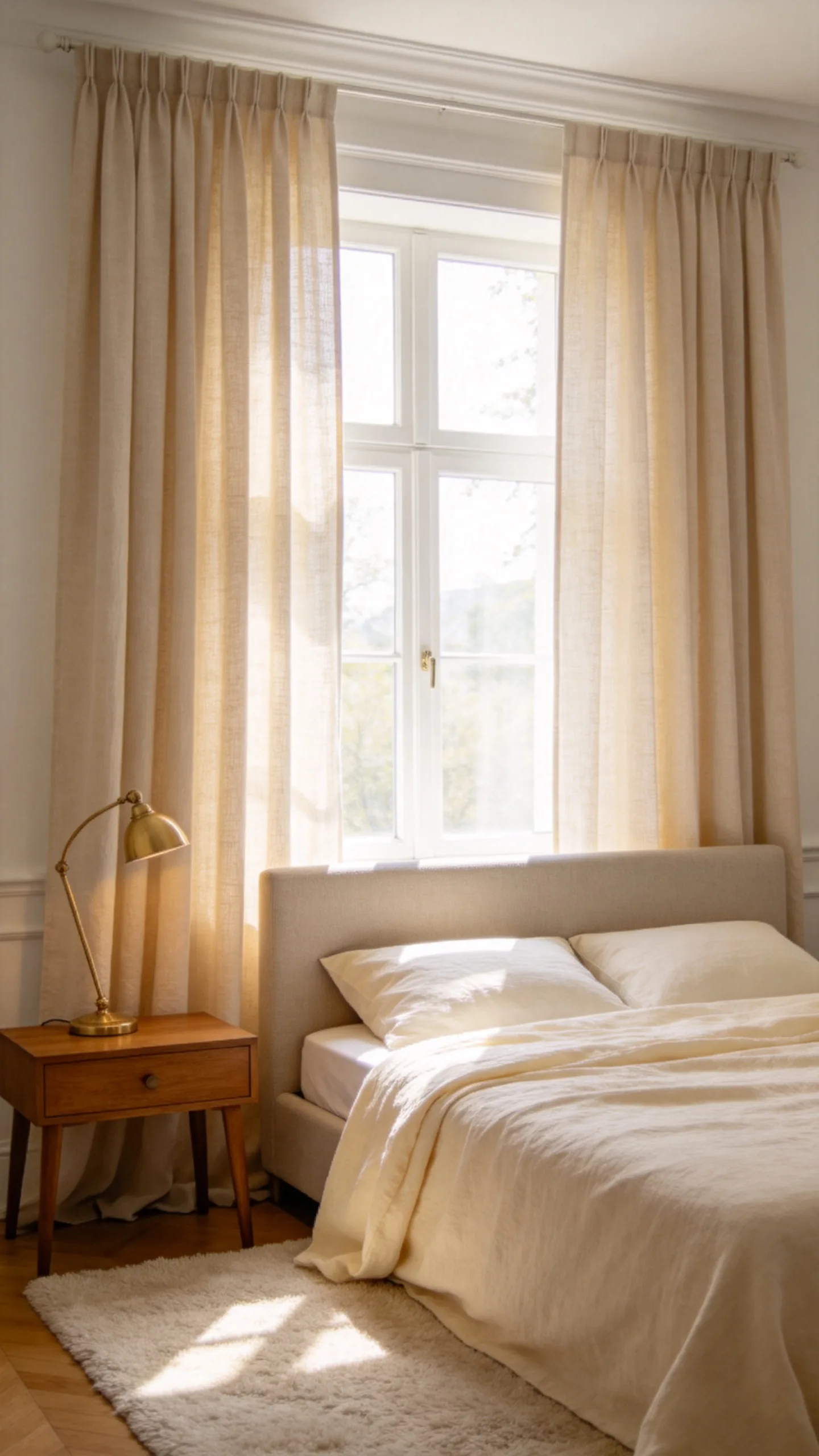
Floor-to-ceiling linen curtains are a simple way to make a bedroom feel taller and more relaxed. Hang the rod a few inches below the ceiling rather than directly above the window frame, then let the panels skim the floor. This draws the eye upward and makes the wall feel more expansive, especially in a room with standard-height ceilings.
Choose warm white, oatmeal, soft taupe, or greige linen for a cozy elegant look. These shades pair well with wood nightstands, upholstered beds, brass lamps, and neutral bedding. Linen also has a slightly textured weave, so it adds softness without looking too heavy.
For a polished finish, use enough fabric so the curtains still look full when closed. A good rule is to use panels that are roughly two times the width of the window. This keeps the bedroom feeling layered and intentional instead of sparse.
2. Sheer White Curtains Behind Heavier Drapes
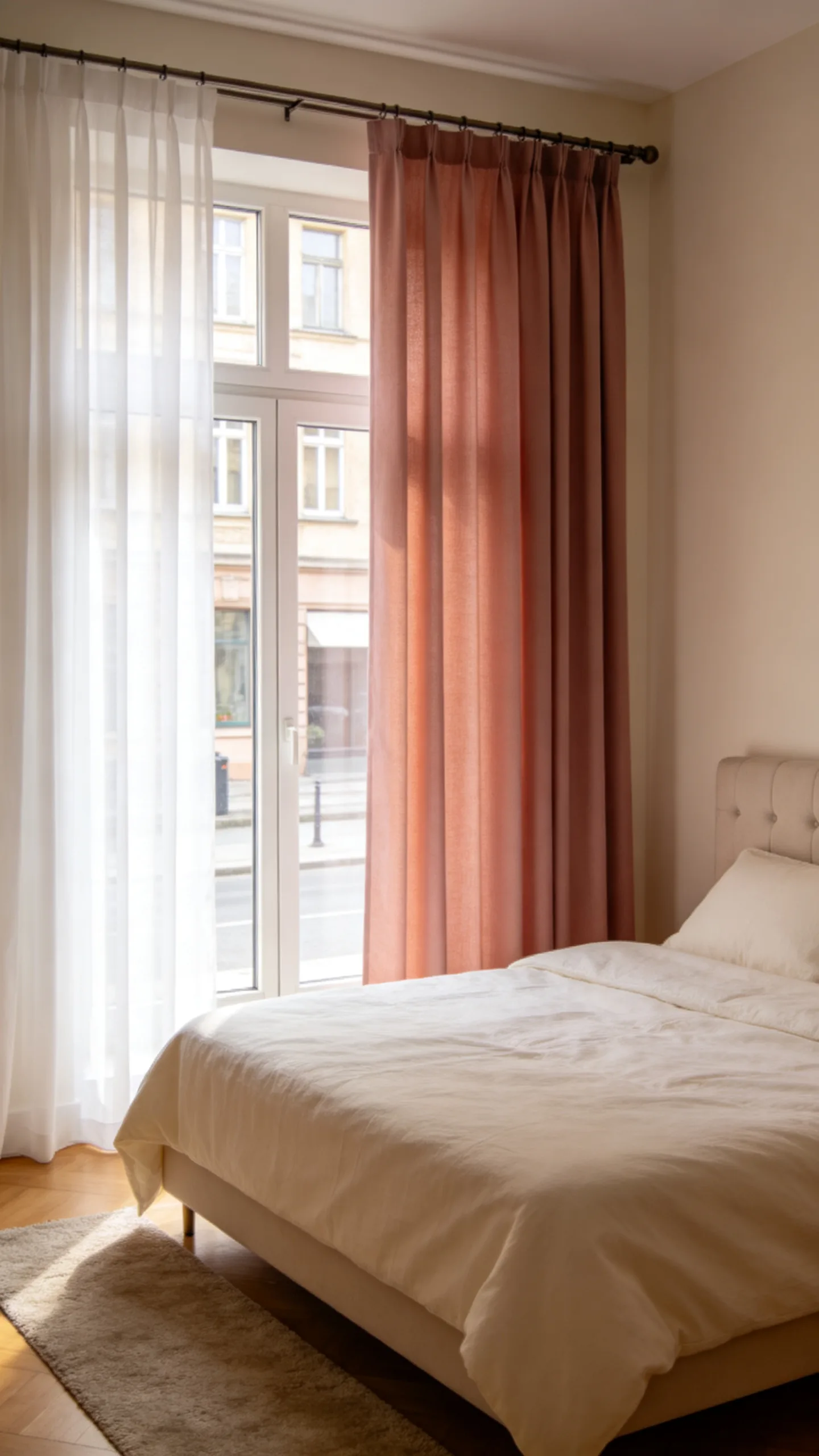
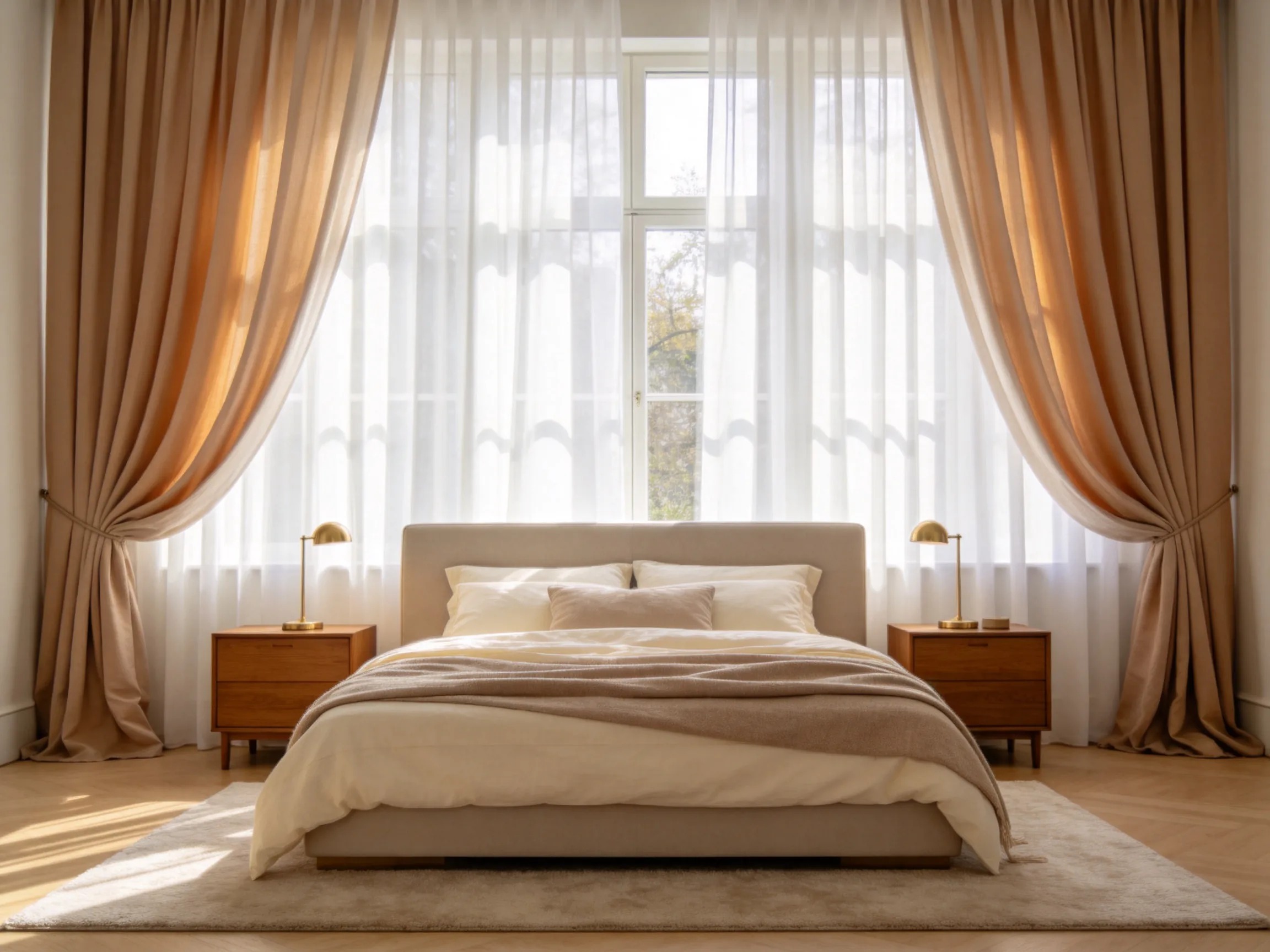
Layering sheer white curtains behind heavier drapes gives a bedroom both softness and flexibility. During the day, the sheers can filter sunlight while maintaining privacy. At night, the outer curtains can be closed for a darker, cozier sleeping space.
This works especially well in bedrooms with street-facing windows or homes where neighboring houses are close by. The sheer layer softens the view outside, while the heavier layer adds warmth and visual weight around the bed wall.
Use a double curtain rod or ceiling track to keep the layers separate. Pair white sheers with beige, charcoal, olive, navy, or dusty rose outer panels depending on your bedding and rug colors. The layered look feels elegant because it creates depth instead of relying on one flat window treatment.
3. Velvet Curtains in a Deep Jewel Tone
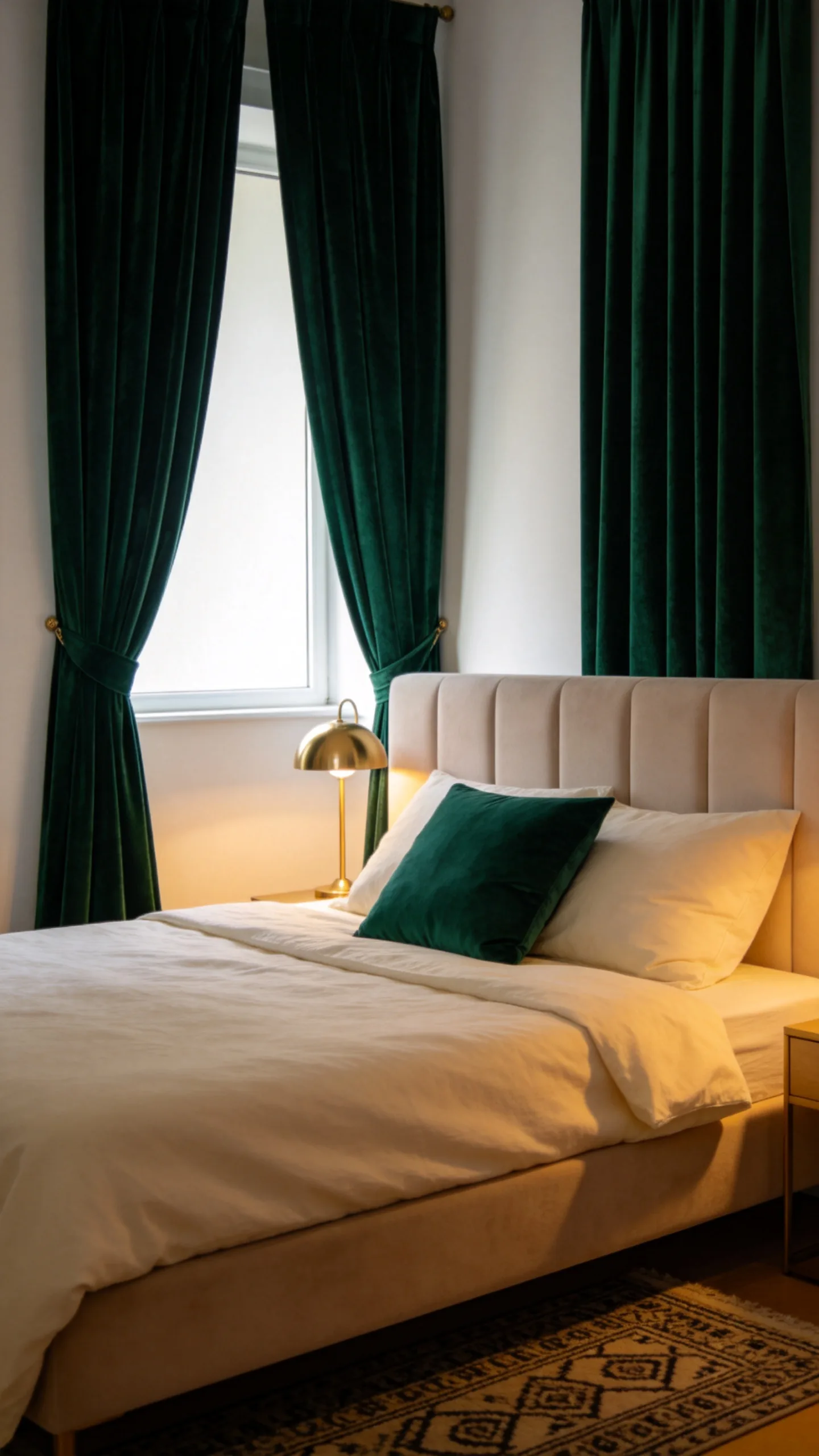
Velvet curtains bring instant warmth to a bedroom because the fabric absorbs light and adds a plush texture. Deep jewel tones such as emerald green, sapphire blue, plum, or burgundy can turn the window wall into a rich focal point without adding extra furniture.
Use velvet panels in a bedroom with simple walls, such as warm white, mushroom, pale gray, or soft beige. The contrast between the smooth wall color and the dense fabric makes the room feel cozy and dramatic. This is especially effective behind or beside a bed with a neutral upholstered headboard.
To keep the look elegant rather than overwhelming, repeat the curtain color in one or two smaller accents. A velvet pillow, patterned rug detail, lampshade, or framed artwork can connect the curtain color to the rest of the room.
4. Soft Beige Curtains for a Warm Neutral Bedroom
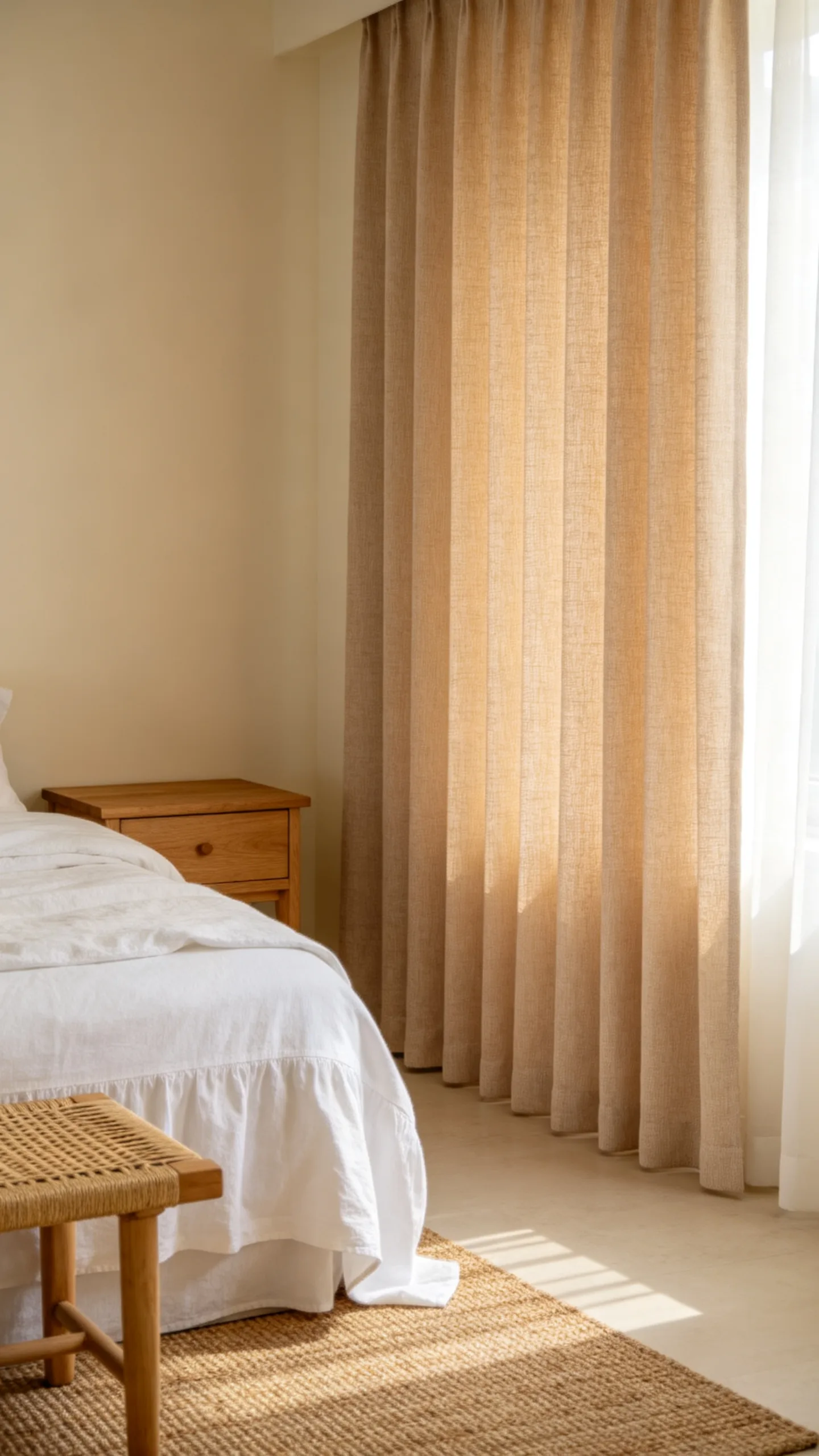
Soft beige curtains are ideal for creating a calm bedroom that still feels layered. They work well with cream walls, white bedding, natural wood furniture, and woven textures like jute rugs or rattan benches. The color adds warmth without making the room feel dark.
For a cozy elegant effect, choose beige curtains with texture instead of a flat, shiny finish. Look for linen blends, cotton slub, brushed fabric, or lightly woven panels. These materials catch light in a subtle way and make the window feel more styled.
Beige curtains are also useful in small bedrooms because they do not create a harsh visual break. When the curtain color is close to the wall color, the eye moves smoothly across the room, helping the space feel wider and less cluttered.
5. Blackout Curtains Hidden Behind Decorative Panels
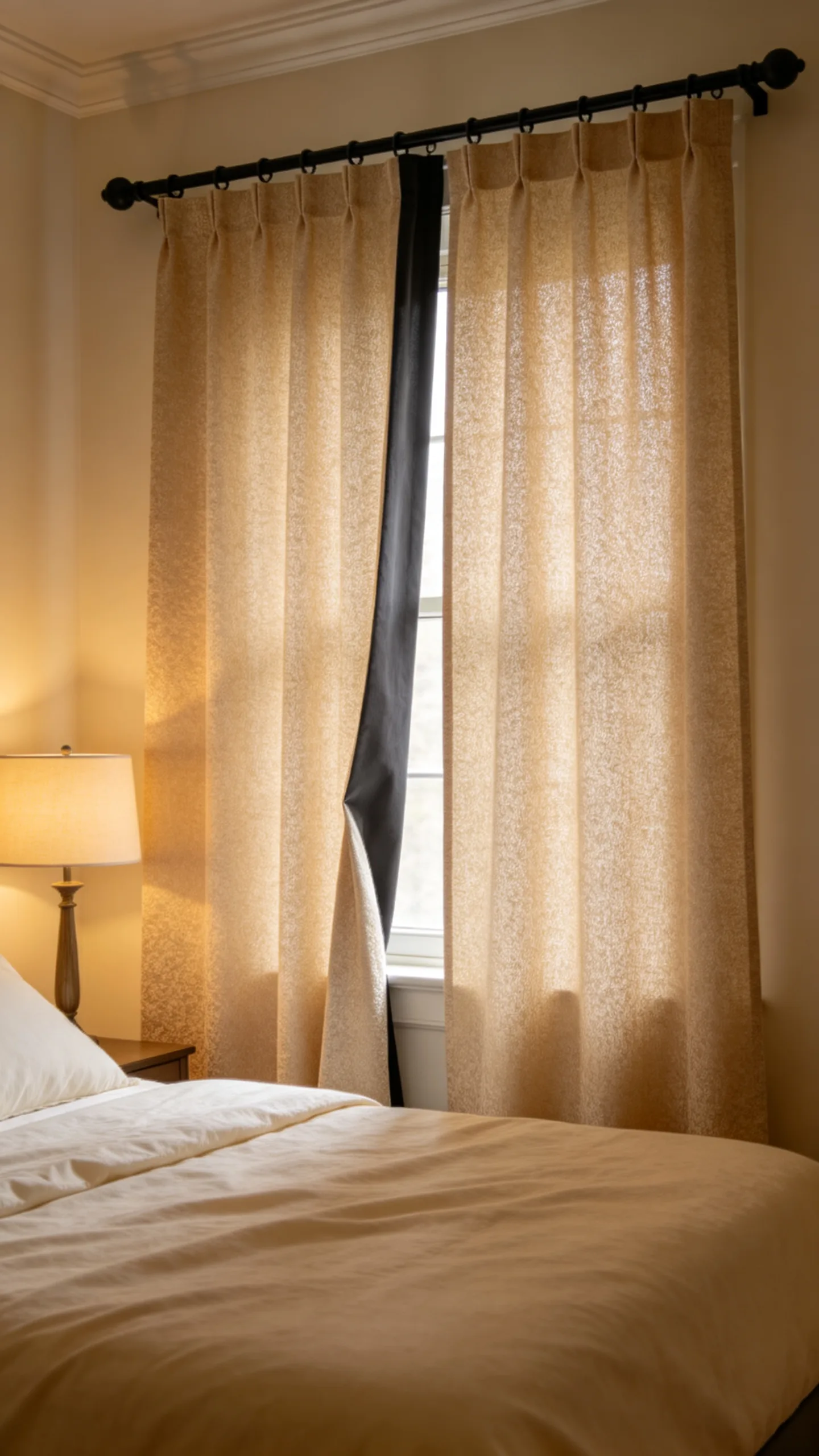
Blackout curtains are practical for sleep, but they do not always have the softest look on their own. A refined solution is to hide blackout liners behind decorative fabric panels. This gives you darkness and privacy while keeping the bedroom visually elegant.
Choose decorative outer panels in linen, cotton, velvet, or textured polyester, then add blackout liners on the back or use a second rod behind them. This setup is helpful for bedrooms with morning sun, city lights, or bright exterior lighting near the window.
Keep the hardware simple so the focus stays on the fabric. A matte black, antique brass, or brushed nickel rod can coordinate with your lamps, drawer pulls, or picture frames. The result is a bedroom that feels cozy at night and polished during the day.
6. Pinch Pleat Curtains for a Tailored Look
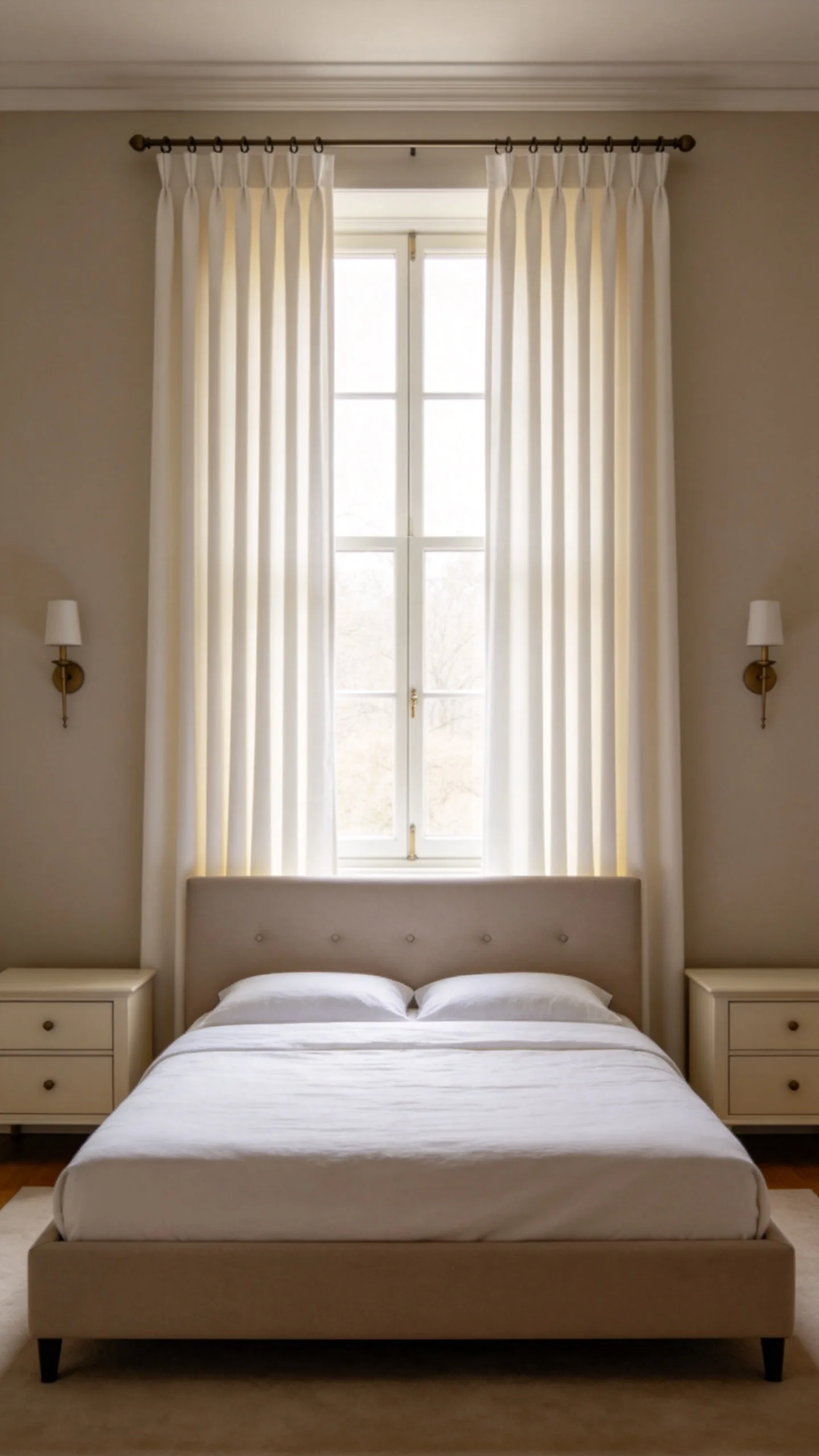
Pinch pleat curtains add structure to a bedroom window because the pleats create even, vertical folds. This style works especially well in elegant bedrooms with upholstered beds, matching nightstands, wall sconces, or symmetrical art above the headboard.
Use pinch pleat panels in a solid color if you want a calm look. Ivory, taupe, gray-blue, sage, and warm charcoal all feel refined without being too busy. The pleated header makes even simple fabric look more custom and intentional.
For the best effect, hang pinch pleat curtains on rings or a track. The panels will open and close smoothly, which is useful in bedrooms where curtains are adjusted every morning and night. The neat folds also help the room feel organized and less visually cluttered.
7. Patterned Curtains with Quiet Bedding
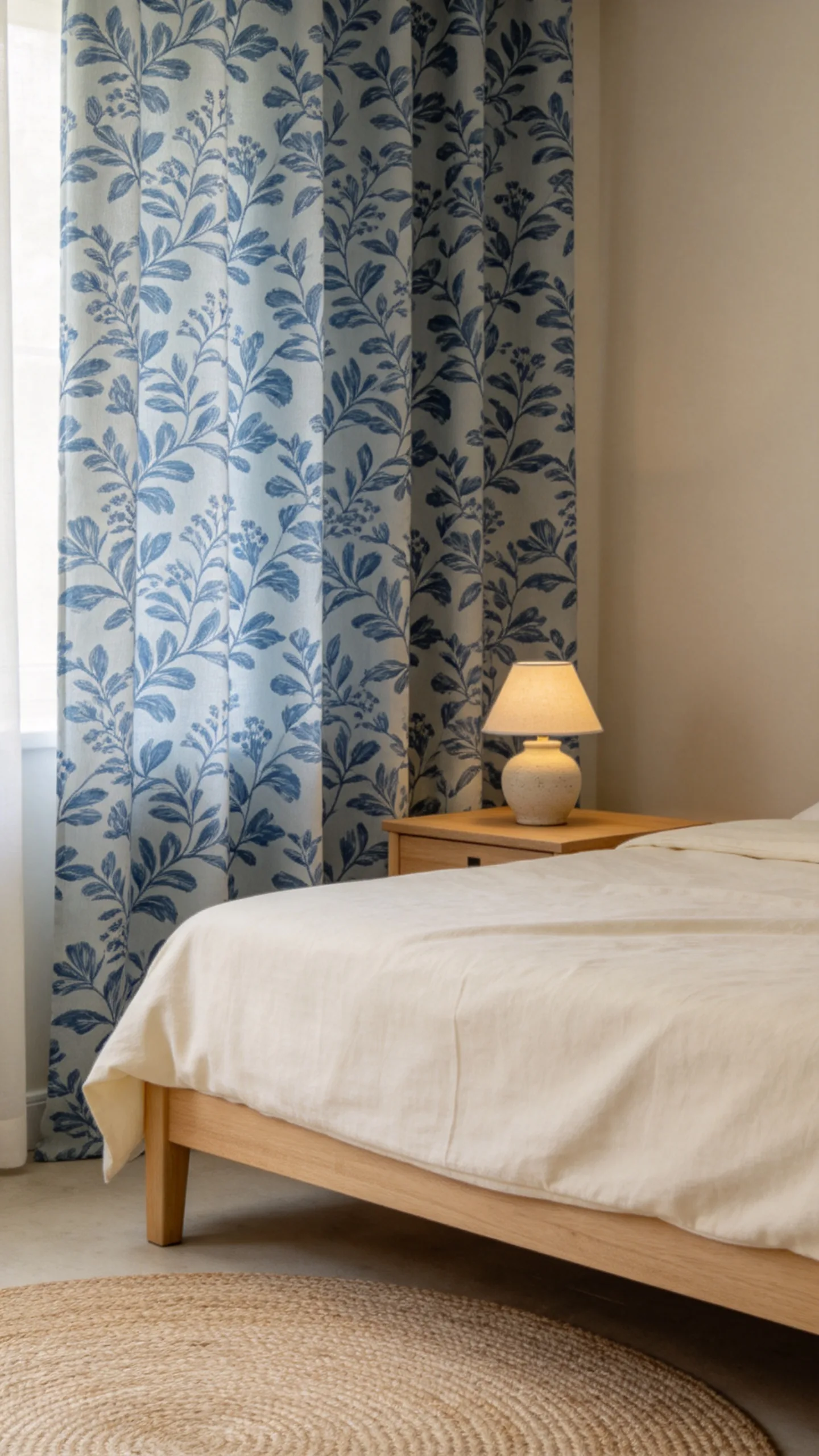
Patterned curtains can make a bedroom feel cozy and collected when the rest of the room stays calm. Florals, block prints, small geometrics, ticking stripes, or botanical patterns work well when paired with plain bedding and simple furniture.
Use the curtain pattern to pull together colors already in the room. For example, blue floral curtains can connect a navy pillow, cream duvet, and light oak nightstand. A muted sage print can soften white walls and echo a green throw blanket or ceramic lamp.
Avoid competing patterns on every surface. If the curtains are the main pattern, choose solid sheets, a textured quilt, and a rug with a subtle weave. This keeps the room elegant while still giving the window personality.
8. Warm Taupe Curtains with Brass Hardware
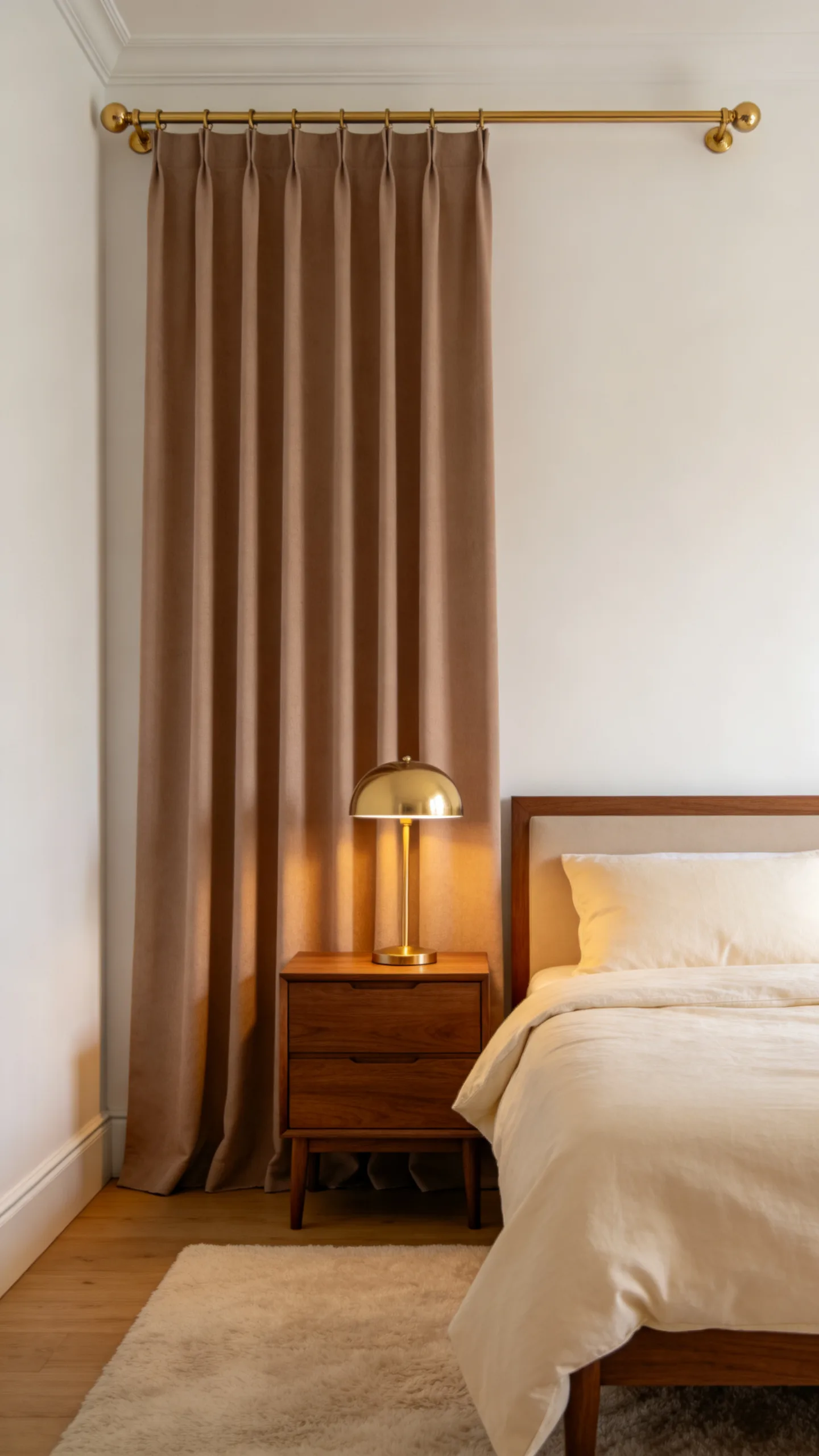
Warm taupe curtains create a refined bedroom backdrop, especially when paired with brass hardware. Taupe has enough depth to feel cozy, but it remains neutral enough for many color palettes, including cream, black, olive, blush, and walnut wood.
Use a slim brass curtain rod, brass rings, or brass finials to add a quiet decorative detail. This combination works well in bedrooms with brass bedside lamps, gold-framed mirrors, or warm-toned picture frames. Repeating the metal finish makes the room feel planned.
Taupe curtains are also practical for bedrooms with mixed furniture finishes. They can bridge the gap between dark wood dressers, pale bedding, and painted walls, making the space feel warmer and more cohesive.
9. White Curtains on White Walls for an Airy Bedroom
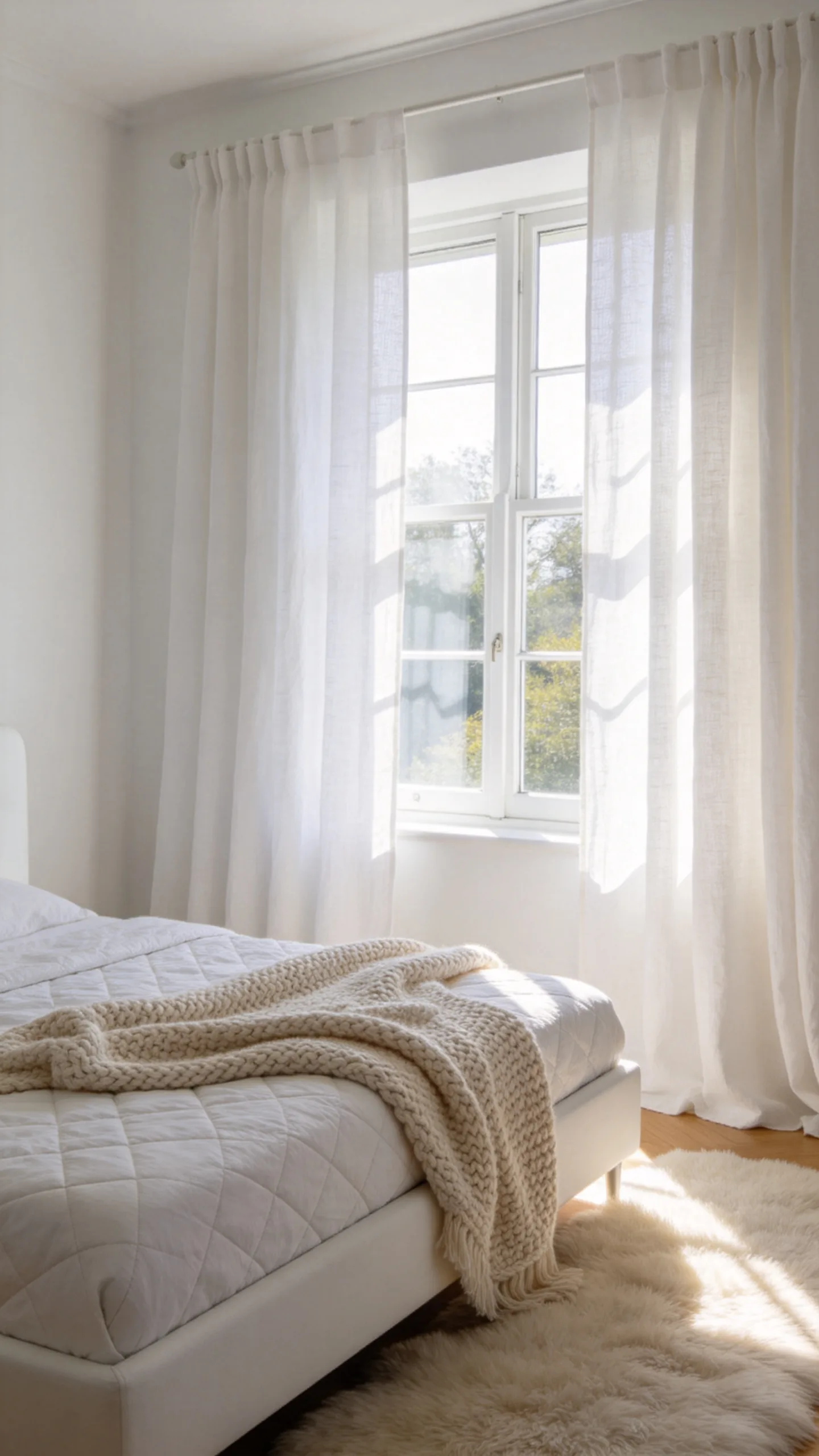
White curtains on white walls can make a bedroom feel bright, peaceful, and spacious. This is a strong choice for small bedrooms because the curtains blend into the wall instead of creating a heavy border around the window.
To keep the look cozy rather than plain, focus on texture. Choose white curtains made from linen, cotton voile, gauze, or a woven blend. Pair them with a quilted coverlet, knit throw, upholstered headboard, or soft wool rug to add depth across the room.
Hang the curtains wider than the window frame so the fabric stacks on the wall rather than blocking glass when open. This allows more daylight into the room and helps the window appear larger.
10. Moody Charcoal Curtains for a Cocoon Effect
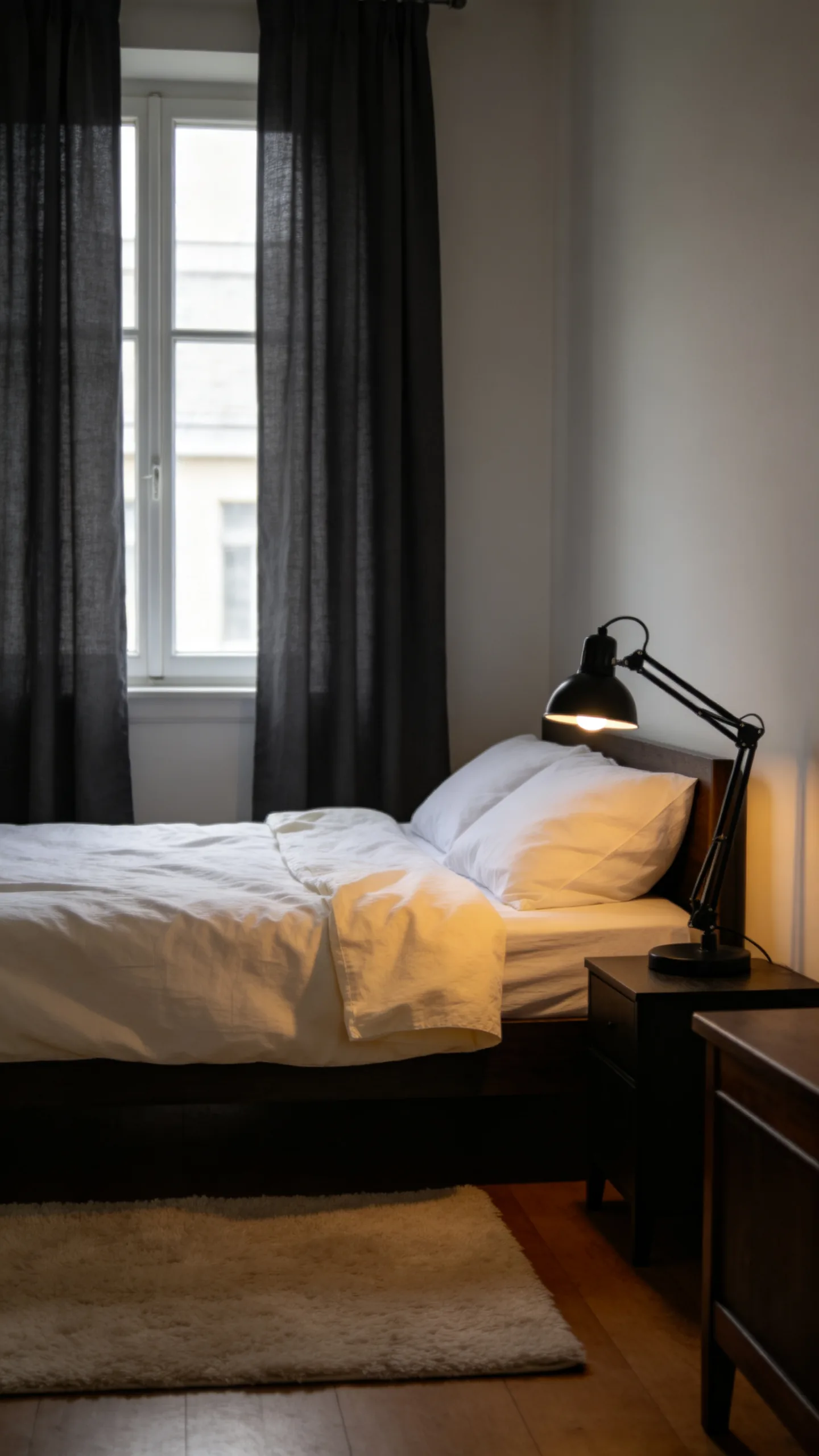
Charcoal curtains can make a bedroom feel grounded and restful, especially when the room has pale walls or light flooring. The dark fabric frames the window and creates a cocoon-like feeling that suits a sleep-focused space.
This idea works well with white bedding, black metal accents, dark wood furniture, and textured rugs. A charcoal curtain also pairs beautifully with warm lighting from table lamps or sconces, making the bedroom feel softer in the evening.
To avoid making the room feel too heavy, balance the dark panels with lighter surfaces. Use cream sheets, a pale area rug, light artwork, or a natural wood bench at the foot of the bed. The contrast keeps the design elegant instead of flat.
11. Roman Shades Paired with Side Drapes
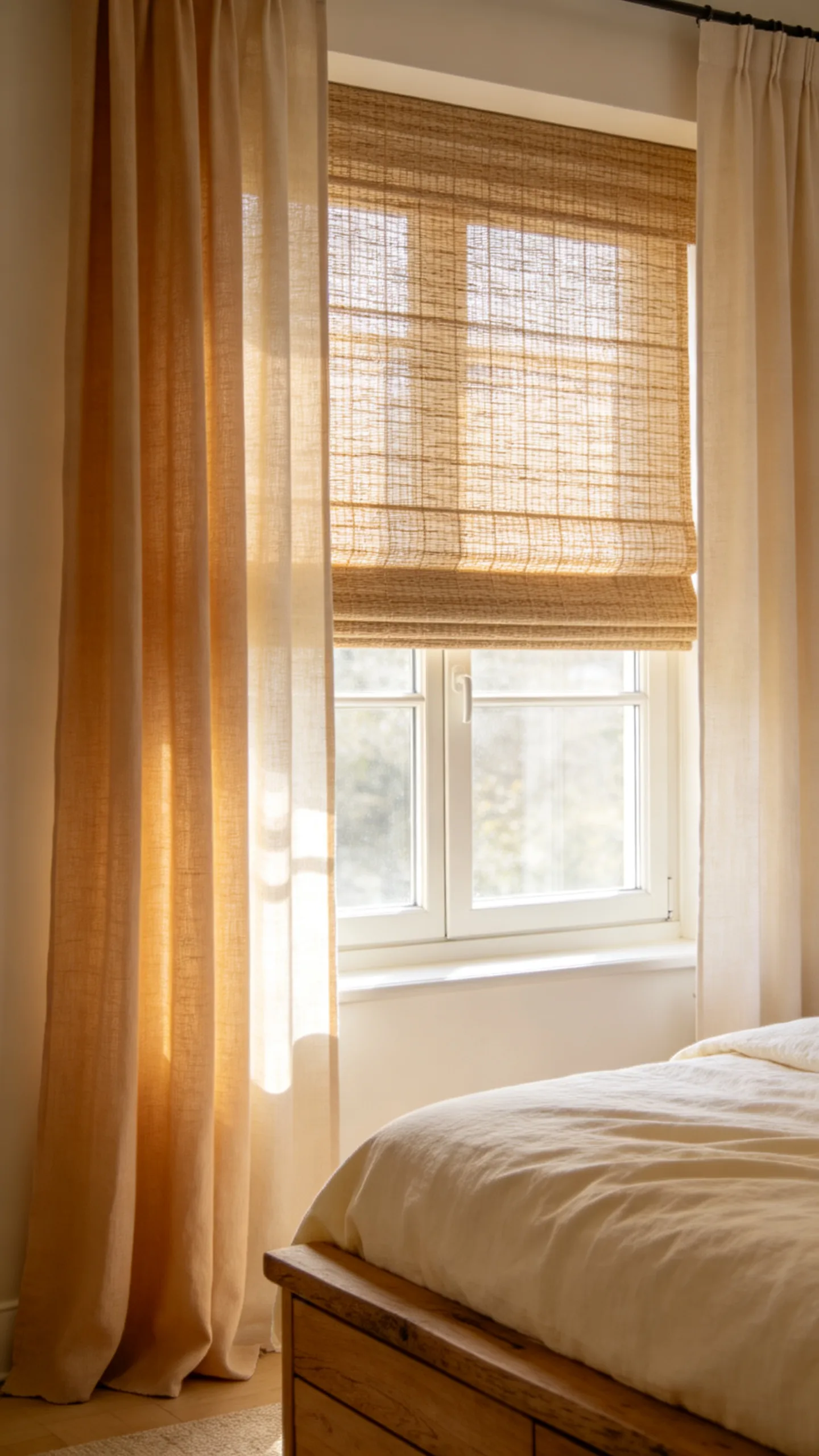
Roman shades paired with side drapes offer a tailored and layered window treatment for bedrooms. The Roman shade controls privacy and sunlight directly over the glass, while the side panels add softness around the window frame.
This layout is useful for bedrooms where a bed, dresser, or radiator sits close to the window and full-width curtains are not practical. The shade keeps the window functional, and the stationary drapes create the cozy fabric effect without blocking traffic flow.
Choose a woven Roman shade for texture, then add linen or cotton side panels in a coordinating color. This combination works well in traditional, transitional, cottage, and modern classic bedrooms.
12. Cream Curtains with a Textured Border
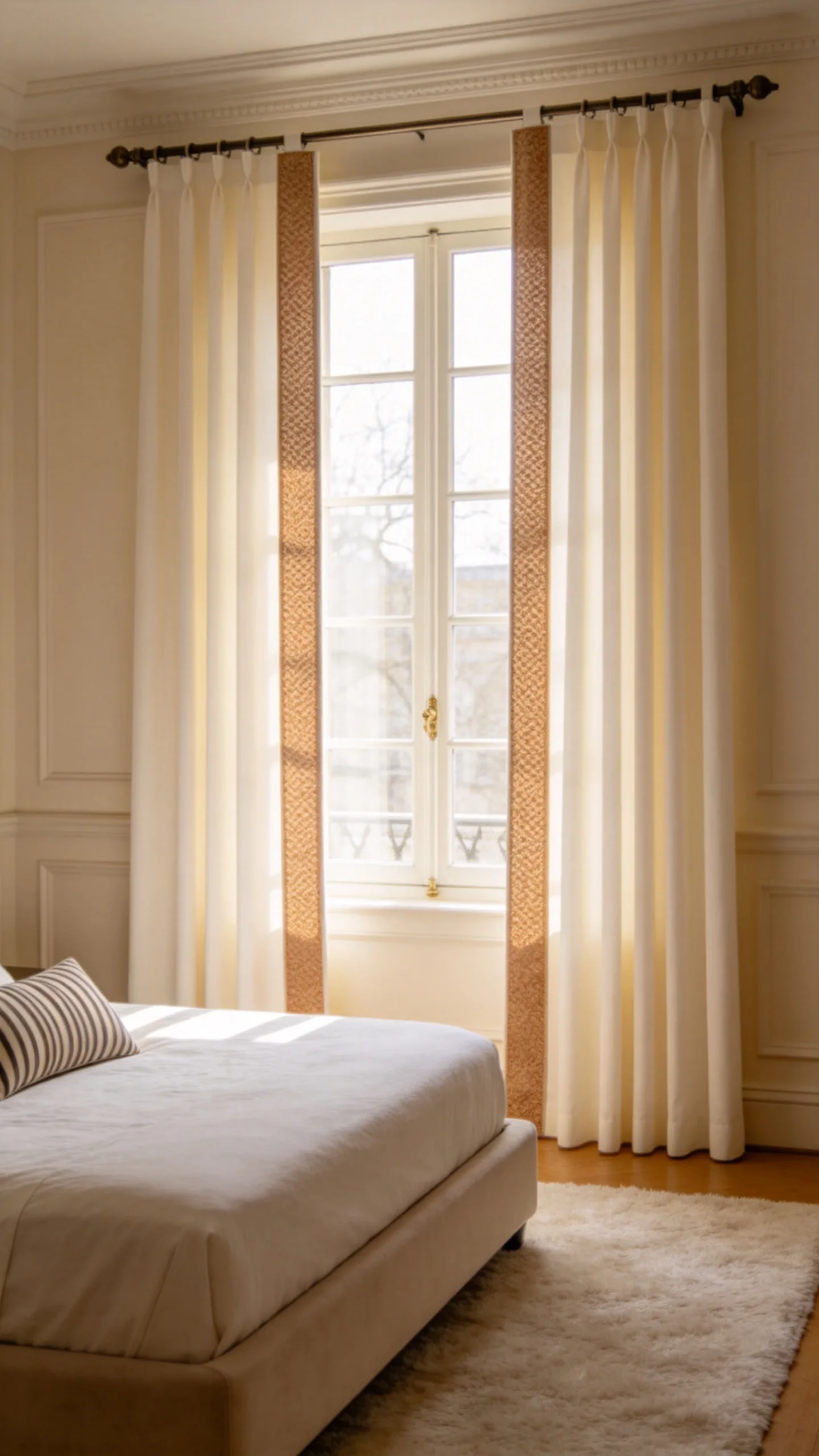
Cream curtains with a textured border add subtle detail without overwhelming the bedroom. A border in tan, gray, black, or muted blue can frame the panels and make them feel more custom than plain curtains.
This style is especially useful in bedrooms with simple bedding and minimal wall decor. The border gives the window a finished look while still keeping the color palette soft. It also works well with upholstered beds, striped pillows, or a rug that includes a similar accent color.
Place the rod high and wide so the bordered panels frame the entire window area. The vertical edge detail helps elongate the wall, which can make the bedroom feel taller and more polished.
13. Dusty Blue Curtains for a Calm Bedroom Palette
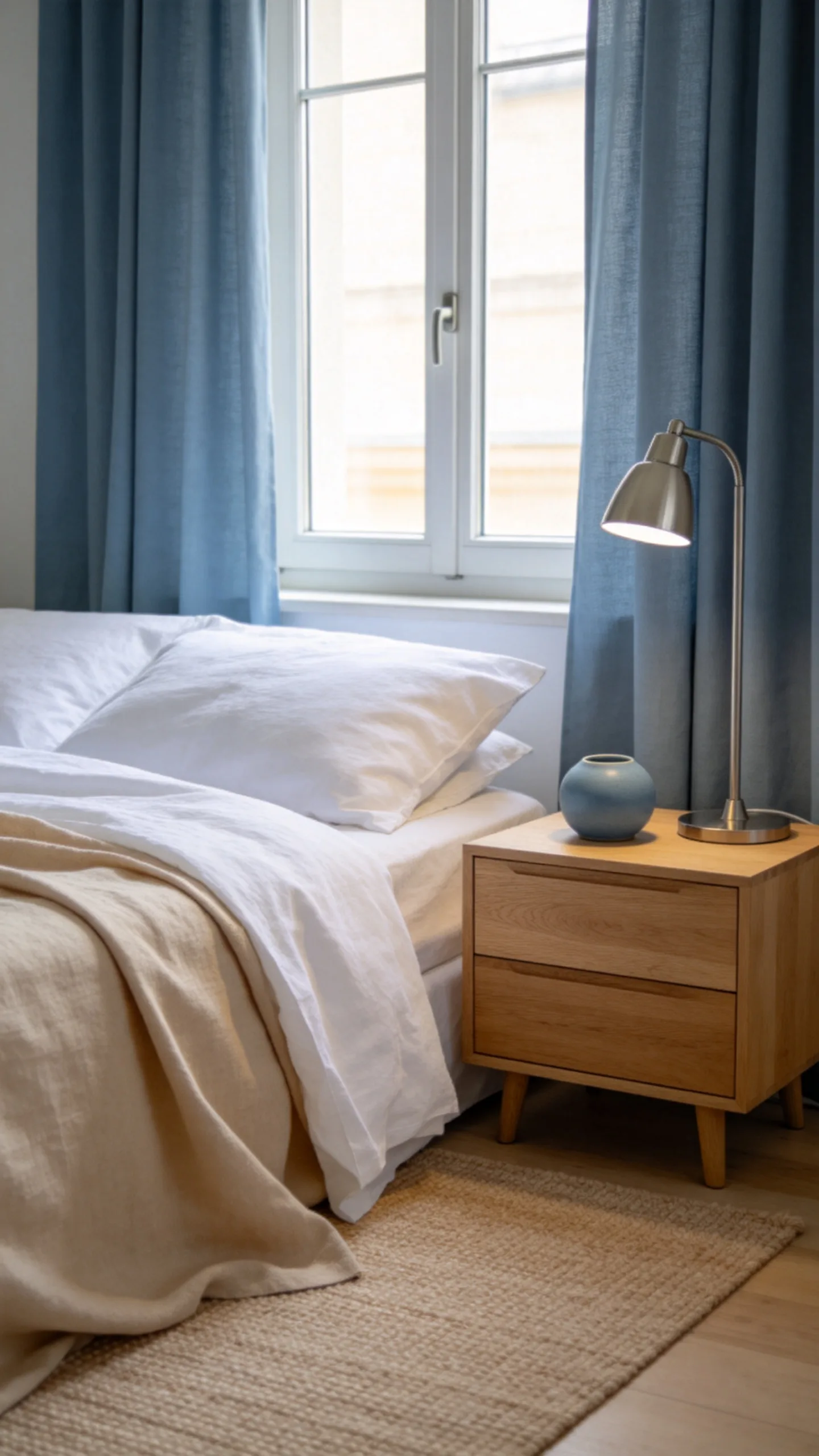
Dusty blue curtains bring color into a bedroom while still feeling serene. This muted shade works well with white, cream, gray, natural wood, and brushed nickel finishes. It is especially effective in bedrooms designed for a quiet, restful mood.
Use dusty blue curtains with crisp white bedding for a fresh look, or pair them with oatmeal linen sheets and a beige rug for something warmer. The color can also connect to blue-gray artwork, ceramic lamps, or a patterned pillow.
Because dusty blue is softer than navy, it does not dominate the room. It adds a gentle focal point to the window while keeping the overall design cozy and elegant.
14. Canopy-Style Curtains Around the Bed
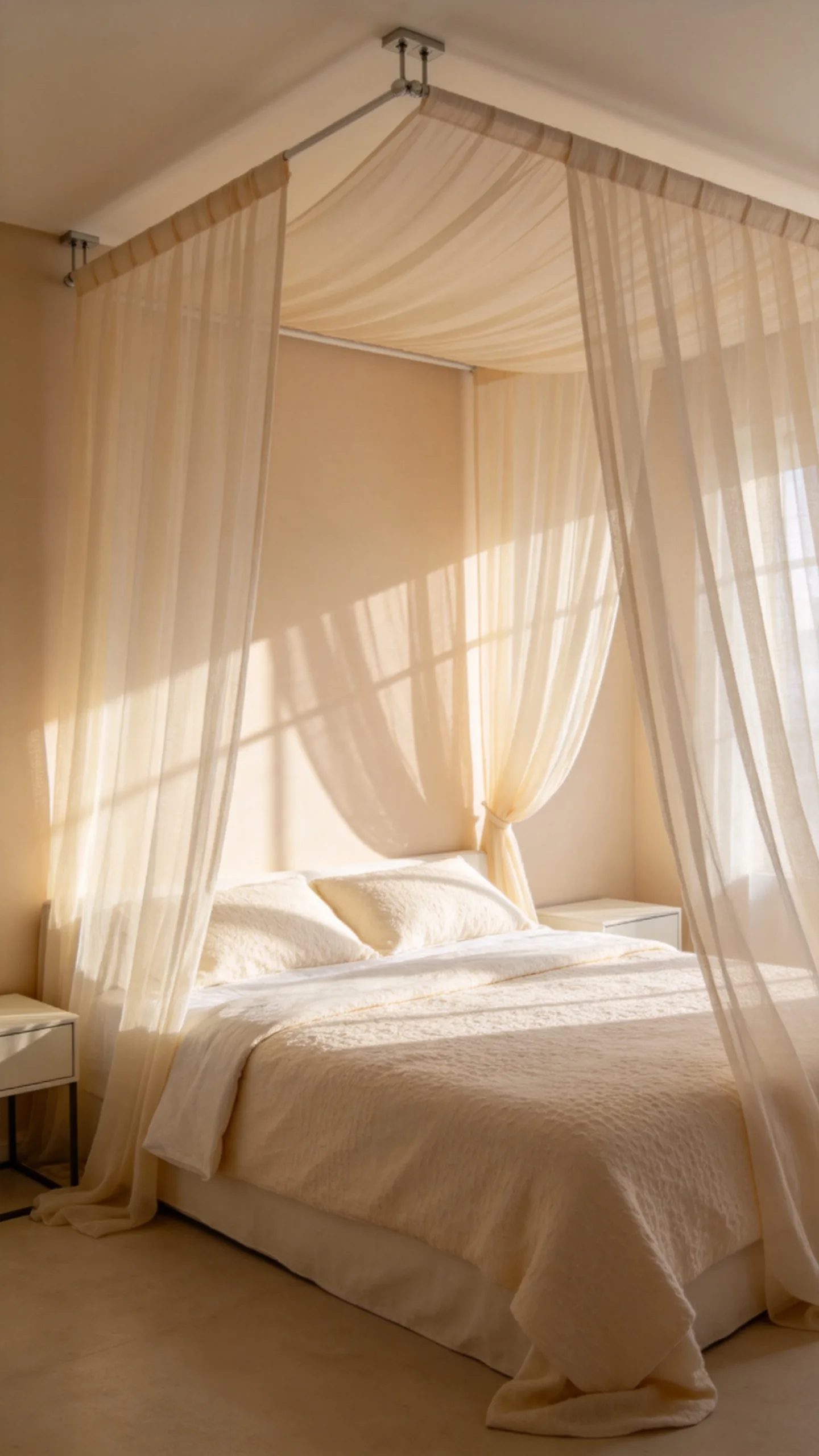
Canopy-style curtains can create a cozy sleeping zone, even without a full four-poster bed. Ceiling-mounted tracks or rods can hold light fabric panels around the head of the bed or along both sides, giving the bed a soft, enclosed feeling.
This idea works best with sheer, gauzy, or lightweight linen fabric so the bed area feels airy rather than cramped. In a small bedroom, use panels only behind the headboard or on one side to avoid blocking movement around the bed.
Keep the curtain color close to the wall or bedding color for a calm effect. Cream, white, pale beige, or soft gray fabric can create a romantic look while preserving sightlines and floor space.
15. Sage Green Curtains with Natural Wood Furniture
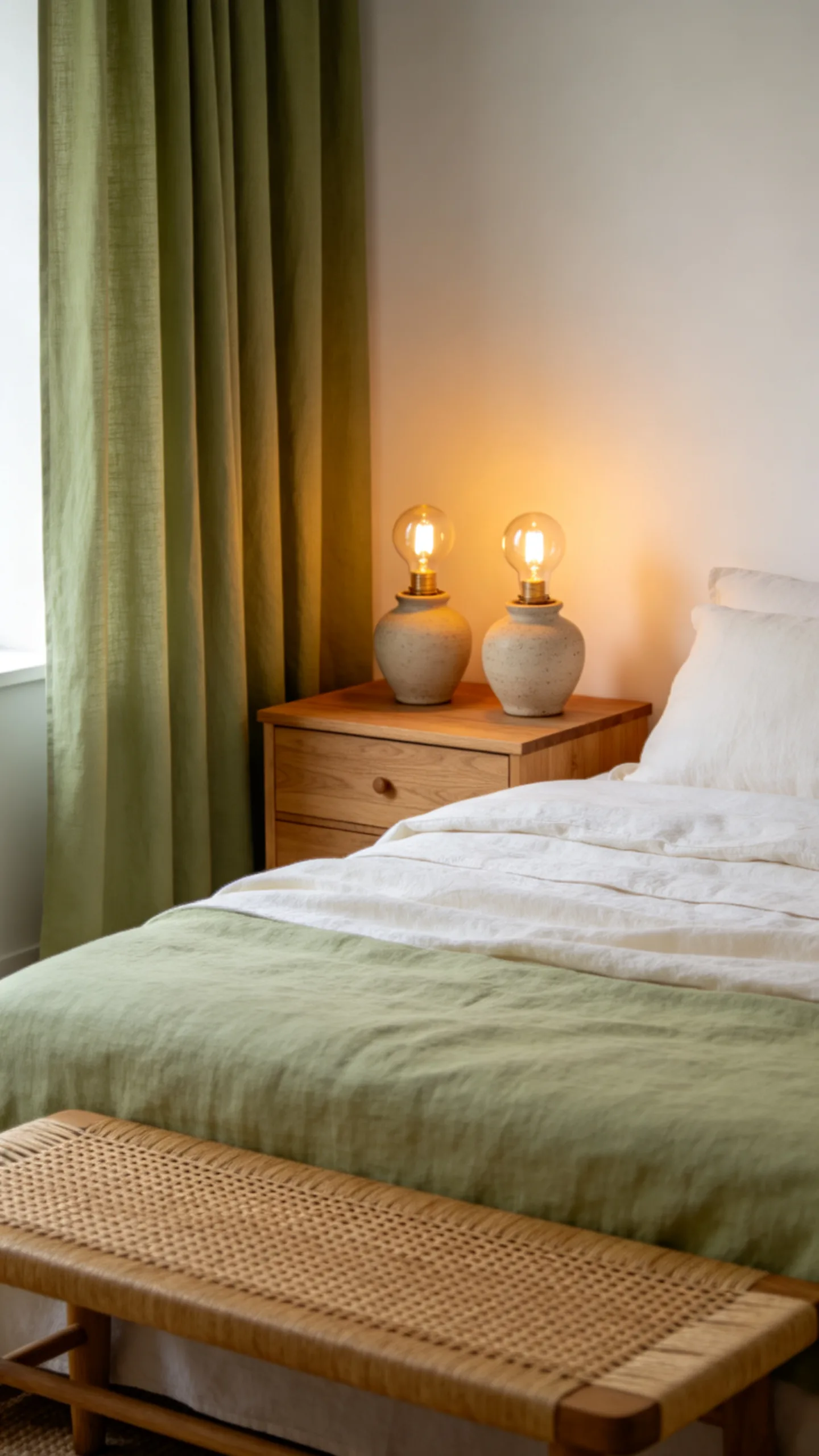
Sage green curtains add a peaceful, nature-inspired tone to a bedroom. The color pairs beautifully with natural wood furniture, rattan accents, ivory bedding, and warm white walls. It adds more personality than beige while still feeling soft.
Use sage curtains in a bedroom with oak nightstands, a walnut dresser, or a woven bench. The green fabric helps balance the warmth of the wood and creates a relaxed, organic palette.
For a cozy elegant finish, add layered lighting such as ceramic bedside lamps, a fabric pendant, or wall sconces with warm bulbs. Sage curtains look especially inviting when the room has gentle evening light.
16. Café Curtains for a Charming Bedroom Window
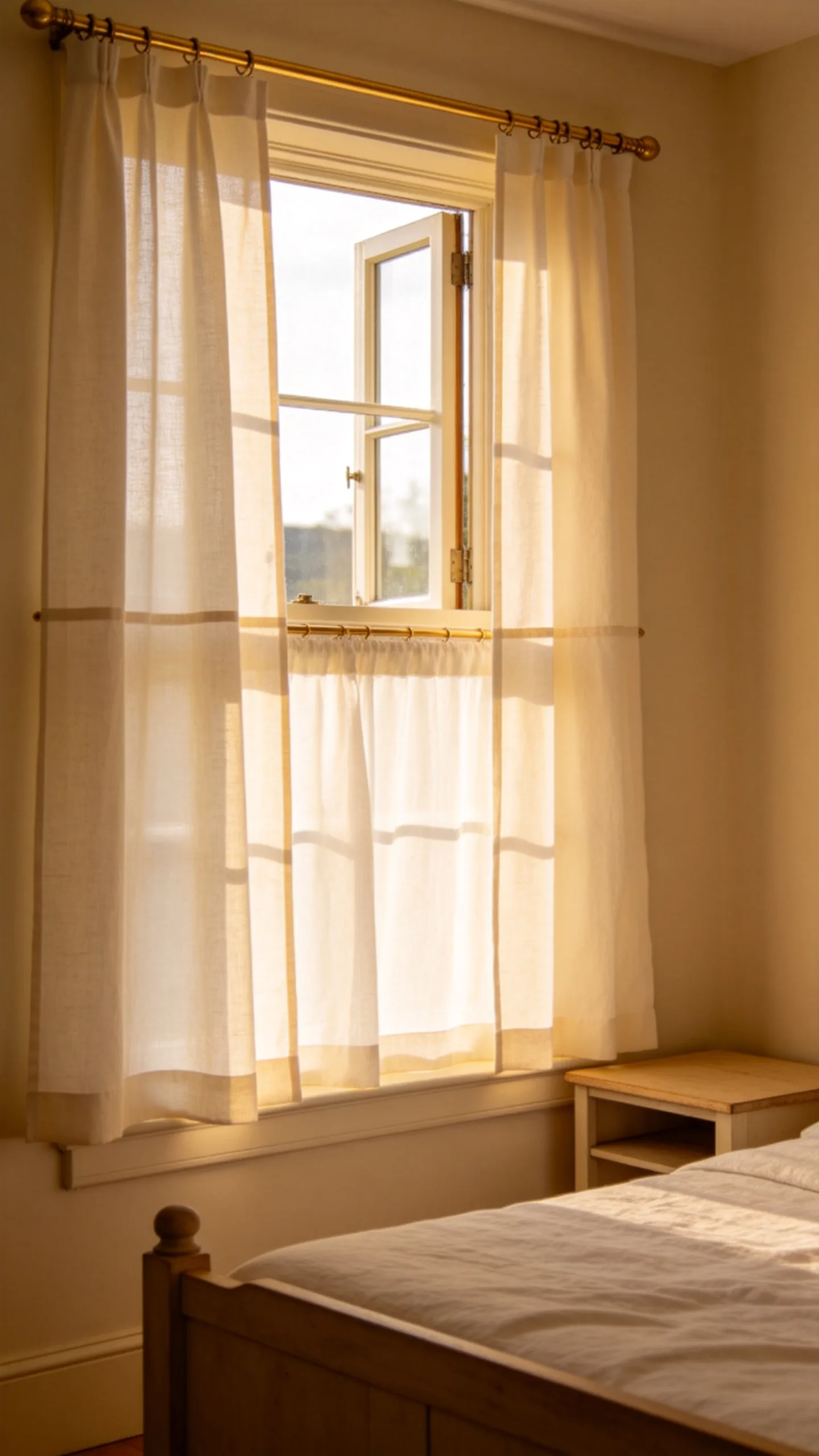
Café curtains are a charming choice for bedrooms where full privacy is needed at the lower half of the window but daylight is still welcome from above. They are especially useful for first-floor bedrooms, cottage-style rooms, or windows facing a sidewalk or neighboring home.
Use café curtains in light linen, cotton, lace, or a small print. Mount the rod halfway or two-thirds up the window, depending on the height of the glass and the privacy needed. This keeps the room bright while softening the lower view.
To make the style feel elegant, choose simple hardware and avoid overly fussy fabric. A slim brass or black rod with crisp cream linen can look refined while still feeling cozy and relaxed.
17. Patterned Floral Curtains with Vintage Furniture
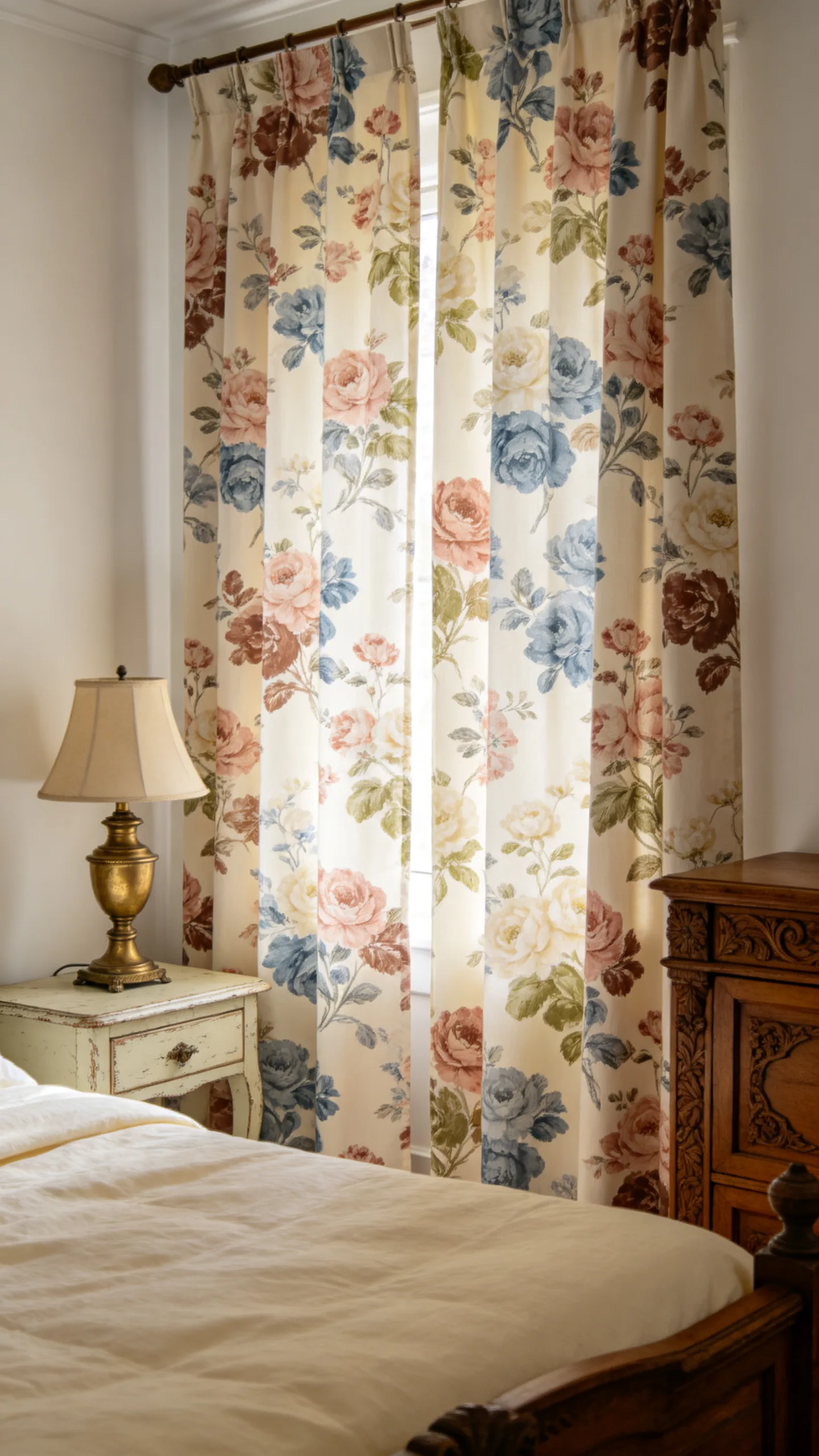
Floral curtains can give a bedroom a romantic, collected look when paired with vintage-style furniture. They work well with painted nightstands, antique brass lamps, carved wood dressers, or a curved upholstered headboard.
Choose florals with muted colors rather than overly bright tones. Faded rose, dusty blue, sage, cream, and soft brown patterns feel gentle and bedroom-friendly. These colors can be repeated in pillow covers, artwork, or a quilt at the foot of the bed.
If the curtains are full of pattern, keep the walls and larger bedding pieces simple. A warm white wall and solid duvet allow the floral panels to become the main decorative feature without making the room feel crowded.
18. Extra-Wide Curtains for a Larger Window Illusion
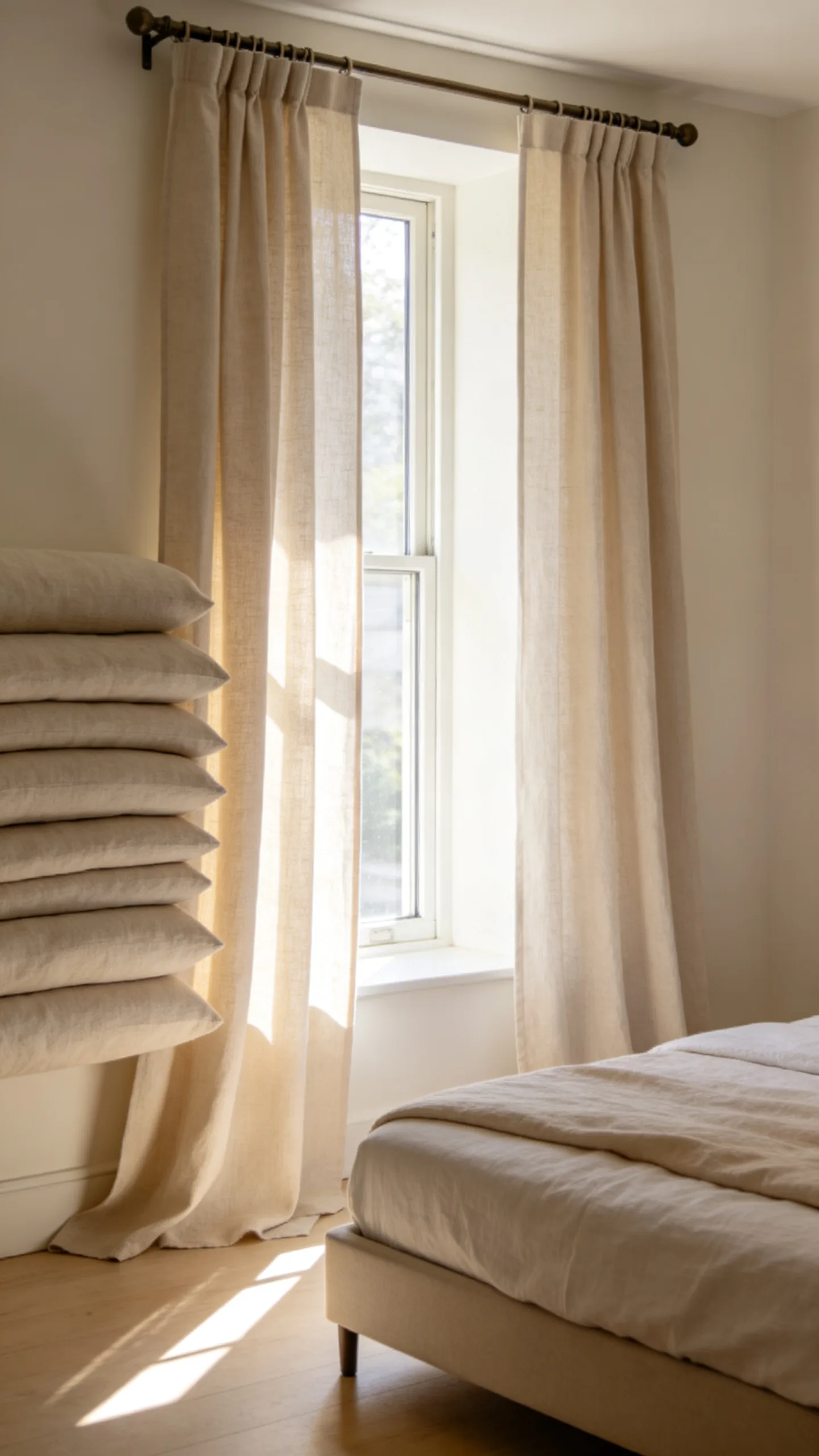
Extra-wide curtains can make a bedroom window look much larger than it really is. Install the curtain rod several inches beyond each side of the window frame so the panels rest on the wall when open. This exposes more glass and brings in more daylight.
This technique is especially helpful in small bedrooms or rooms with narrow windows. Wider curtains expand the visual width of the window wall, making the bed area or dresser wall feel more balanced.
Use full panels with enough fabric to maintain soft folds. Thin, skimpy curtains can make the trick obvious, while generous linen, cotton, or velvet panels create the appearance of a grander window.
19. Neutral Striped Curtains for Subtle Movement
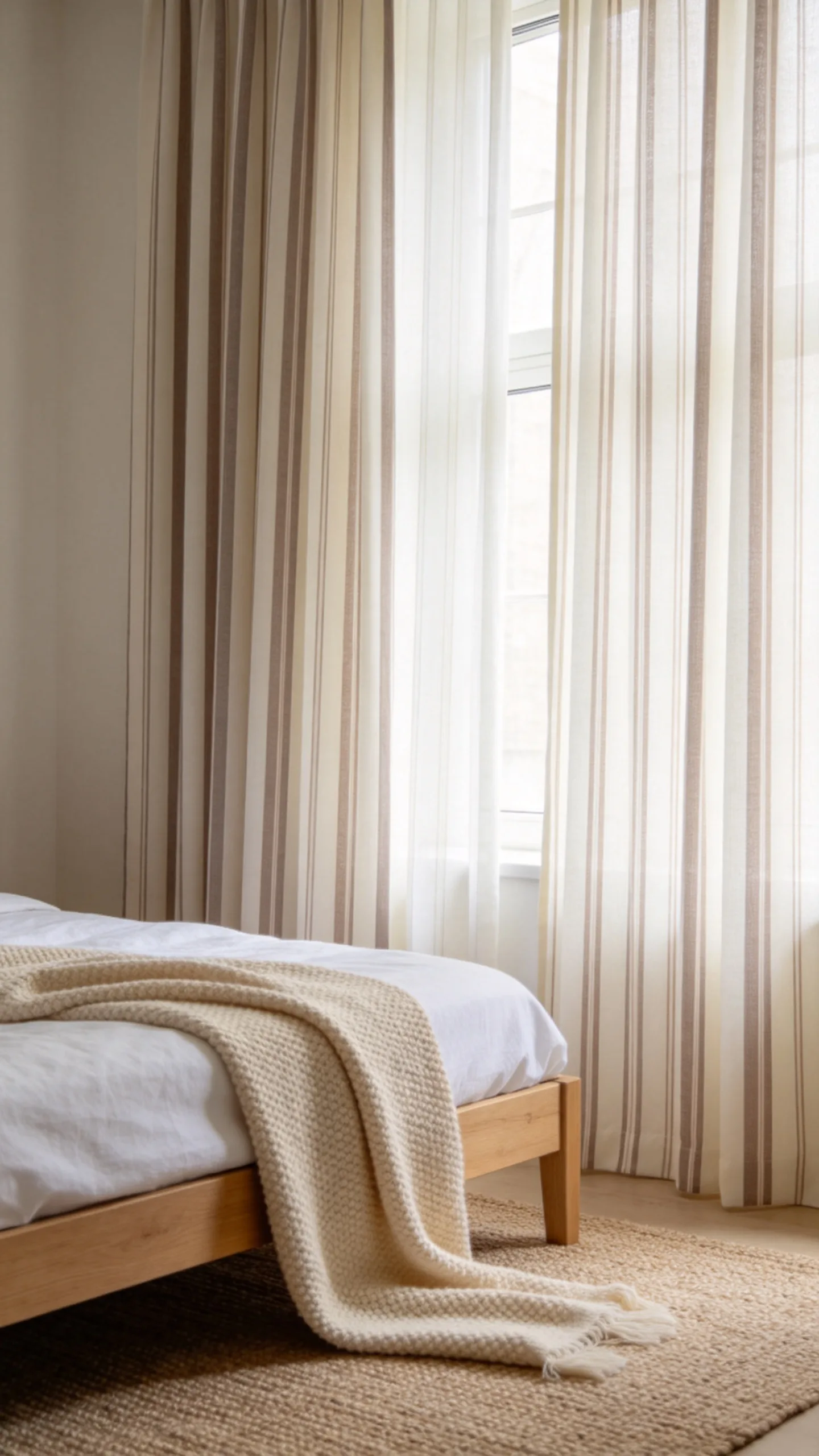
Neutral striped curtains add visual movement without overpowering a bedroom. Thin stripes in cream, beige, gray, or taupe can make the window feel taller and more finished while staying easy to pair with bedding and rugs.
Vertical stripes are especially useful in bedrooms with low ceilings because they guide the eye upward. Use them beside a simple wood bed, white duvet, and textured throw for a relaxed but polished look.
Keep the stripe scale in proportion to the room. Narrow stripes feel delicate in small bedrooms, while wider stripes can work in larger rooms with bigger windows and substantial furniture.
20. Ceiling Track Curtains for a Clean Modern Bedroom
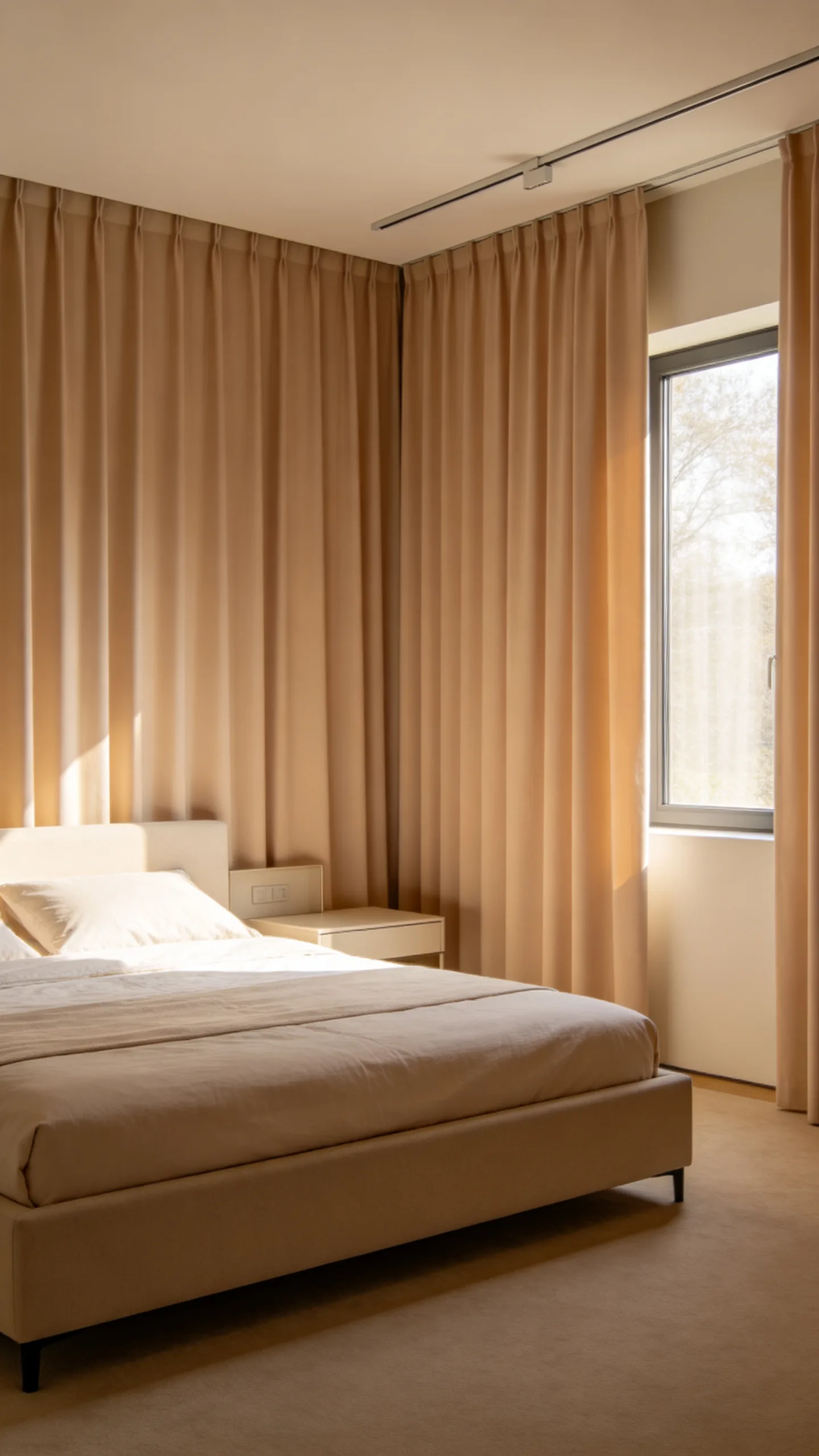
Ceiling track curtains create a sleek, hotel-inspired look while keeping the bedroom soft. Because the fabric falls directly from the ceiling, the wall appears taller and the window treatment feels built in.
This idea works well in modern bedrooms, apartments, and rooms with awkward window placement. A ceiling track can run wall to wall, making off-center windows feel more balanced and hiding uneven trim or blinds behind the curtain line.
Choose simple panels in white, beige, gray, or warm brown for a clean effect. Ceiling tracks also allow curtains to glide smoothly, which is practical for daily use in a bedroom where privacy and light control matter.
21. Layered Curtains That Match the Bedding Palette
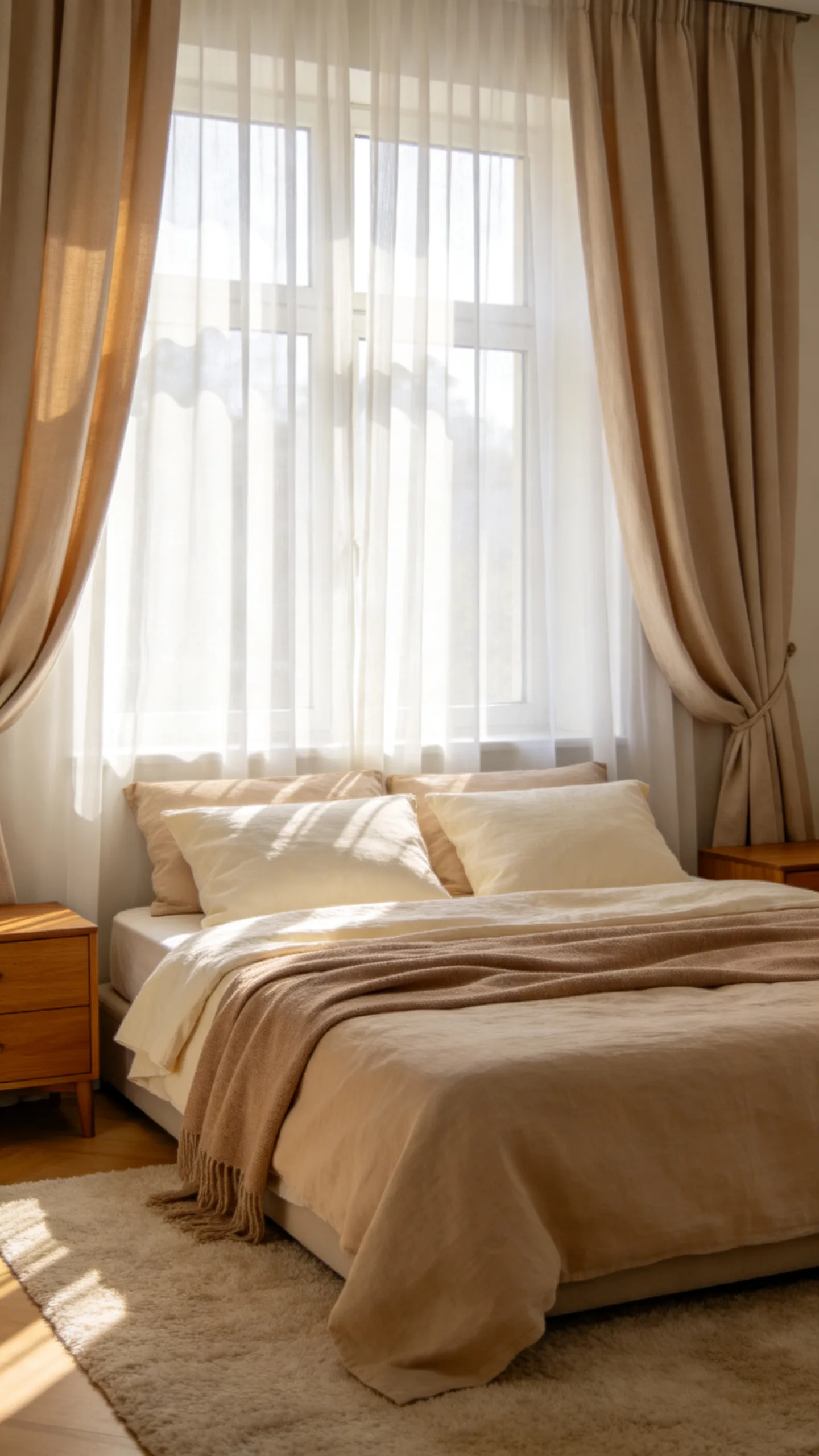
Matching layered curtains to the bedding palette creates a bedroom that feels calm and coordinated. Instead of choosing curtains as a separate accent, pull colors from the duvet, sheets, pillows, throw blanket, or rug.
For example, pair cream sheers with oatmeal outer curtains in a room with beige linen bedding. In a blue and white bedroom, use white sheers with dusty blue drapes. In a warm neutral space, combine ivory sheers with taupe or camel panels.
This approach works because it connects the window to the bed, which is usually the main focal point of the room. The repeated colors make the bedroom feel cozy, elegant, and thoughtfully styled without adding visual clutter.

From the editors
Decor Compass Editorial Team
We turn practical home research into clear, useful room-by-room ideas.