Glass doors are beautiful for bringing daylight into an entryway, dining room, kitchen, bedroom, or patio-facing living room, but they can also leave a space feeling too exposed. The best glass door curtain ideas soften the view, filter glare, protect privacy, and still let the door function easily. From airy sheers to tailored panels and compact door-mounted options, these ideas can help you choose a curtain style that looks elegant without making the room feel dark or crowded.
1. Floor-Length Sheer Panels for Soft Daytime Privacy
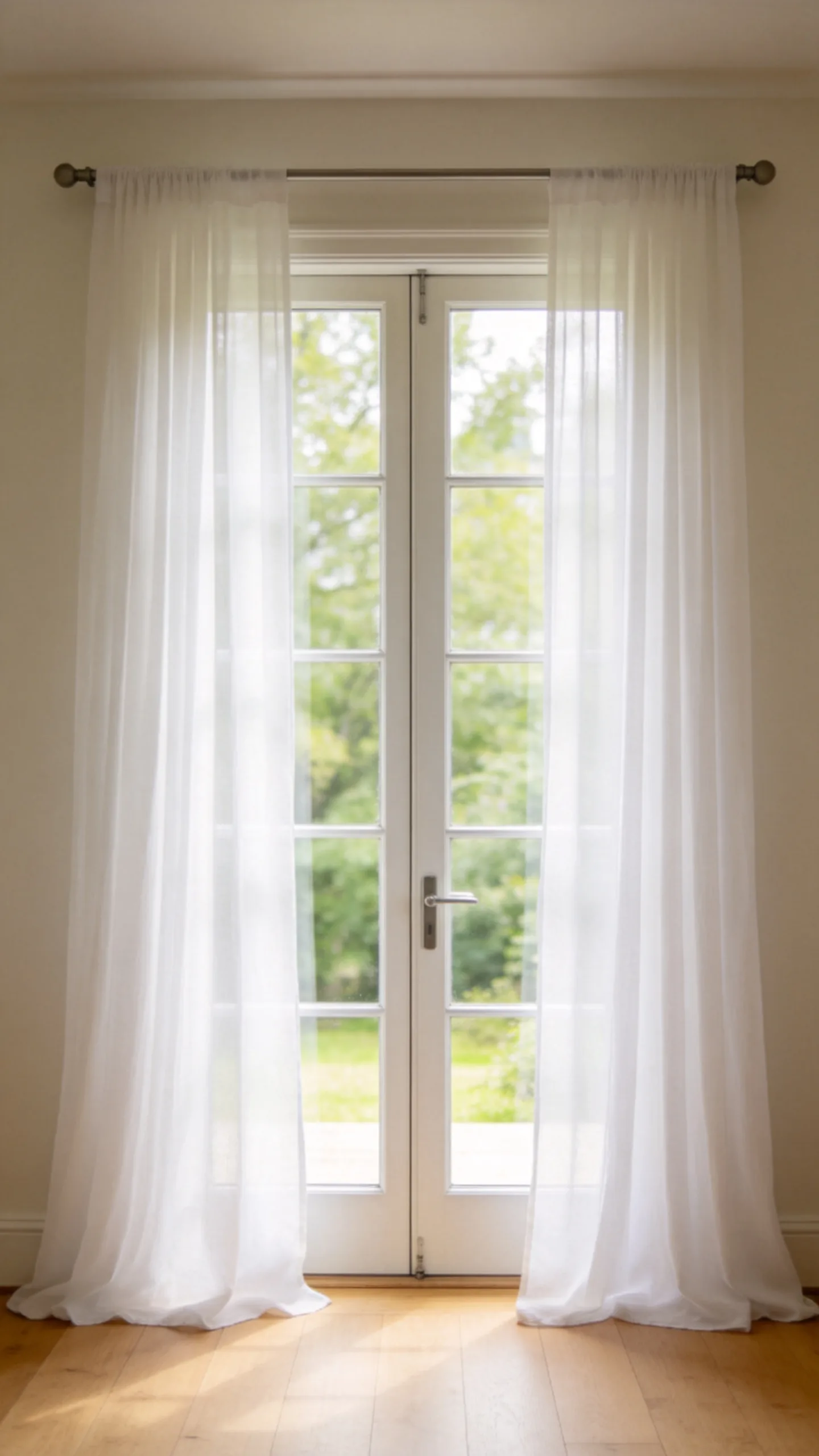
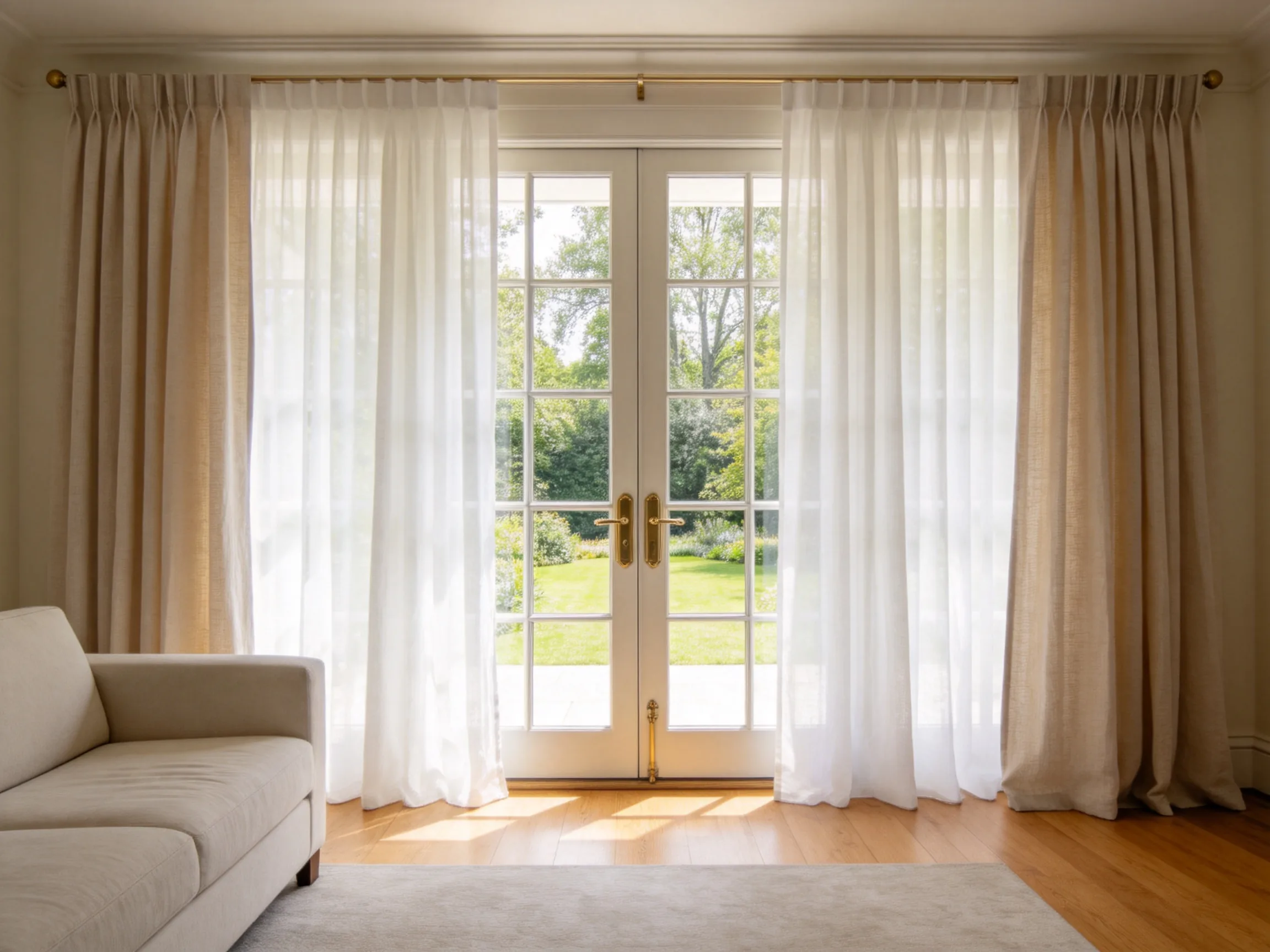
Floor-length sheer curtains are one of the simplest ways to make glass doors feel graceful while still allowing daylight to pass through. They work especially well on French doors, sliding patio doors, or full-view back doors in a living room or dining area where you want light but do not want the room fully visible from outside.
Choose white, ivory, warm beige, or pale gray sheers if the wall color is light and you want the curtains to blend into the room. For a more layered look, hang the panels from a slim metal or wood rod several inches above the door frame and extend the rod beyond both sides of the glass. This makes the doorway look wider and keeps the panels from blocking the glass when they are open.
Sheers are best for daytime privacy, not complete nighttime coverage. If the door faces a close neighbor, street, or shared courtyard, pair them with a second layer such as linen drapes, woven shades, or privacy film on the lower glass.
2. Linen Curtain Panels for Relaxed Elegance
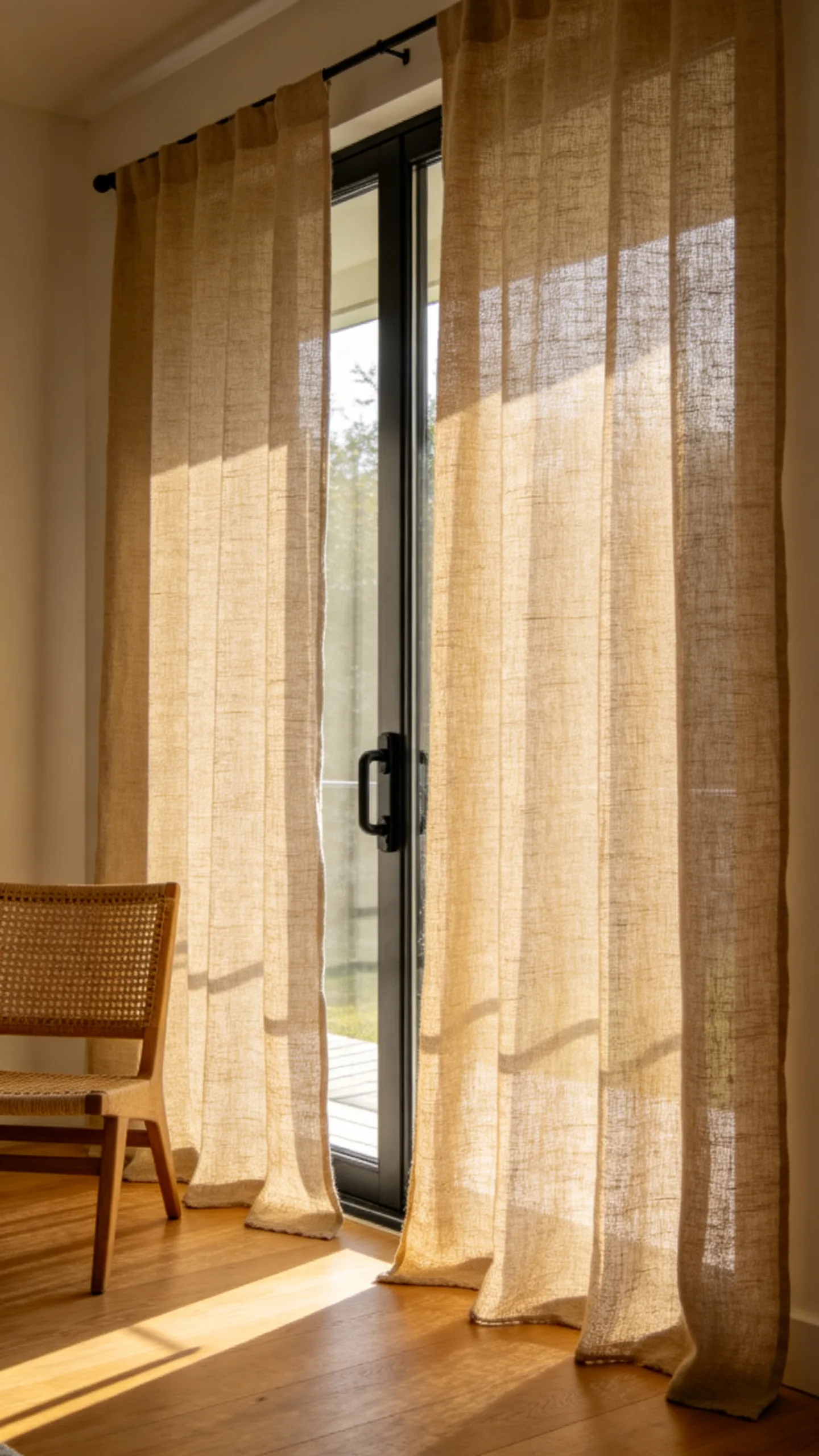
Linen curtains add texture and softness without looking heavy, making them ideal for glass doors in casual dining rooms, sunrooms, bedrooms, and neutral living spaces. The slightly slubby weave gives the door area a finished look while filtering harsh sunlight and reducing the stark reflection of bare glass.
For an elegant effect, choose linen panels in natural flax, oatmeal, off-white, mushroom, or soft taupe. These shades pair beautifully with white walls, warm wood floors, rattan chairs, black door hardware, or stone tile. Hang the curtains so they just skim the floor to keep the doorway polished and easy to clean around.
If privacy is the main concern, look for lined linen panels rather than unlined ones. A light cotton or privacy lining will make the curtain feel more substantial while still keeping the room calm and breathable.
3. French Door Curtains Mounted Directly on the Door
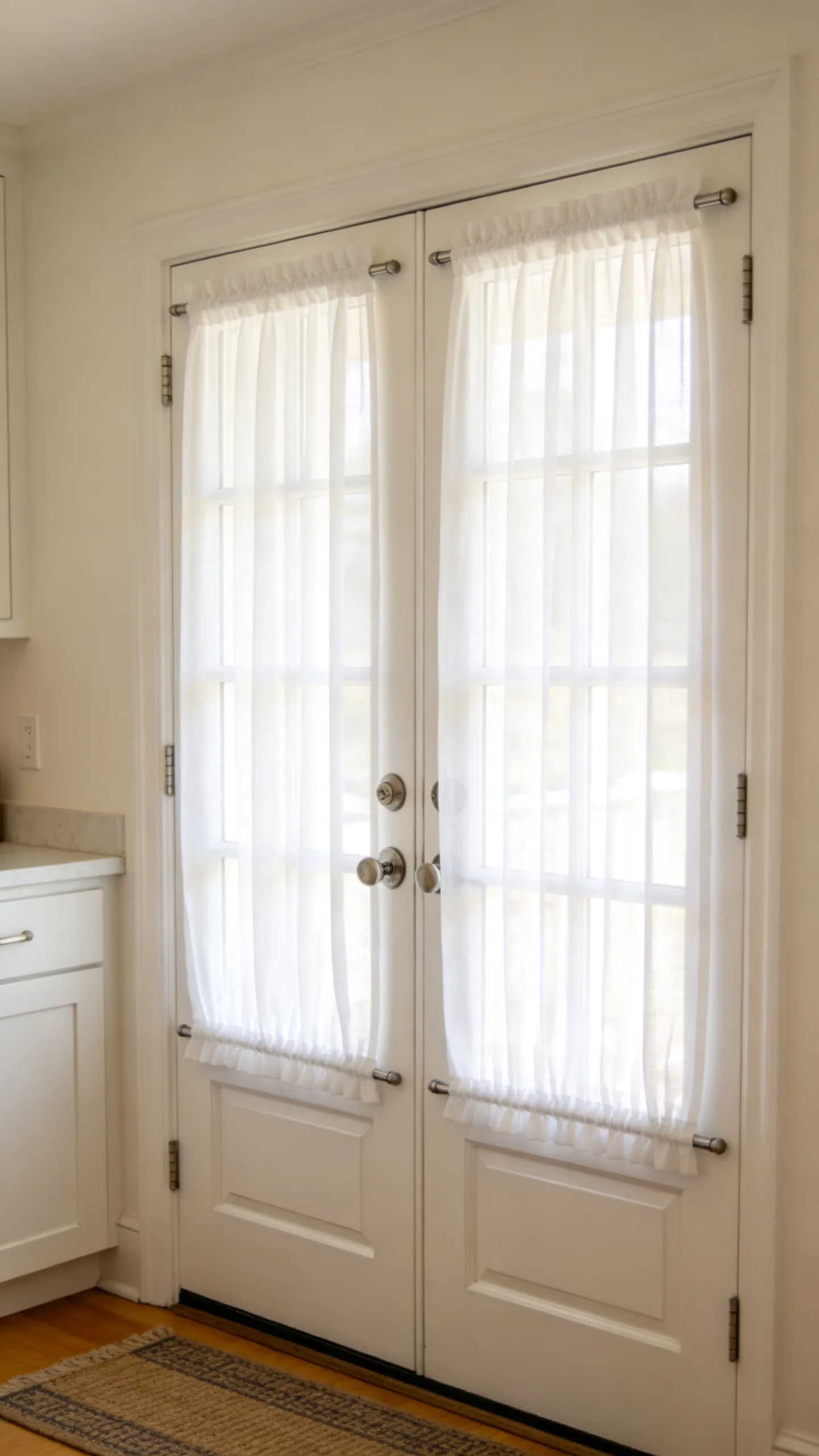
Door-mounted curtains are practical for French doors, glass-paneled entry doors, laundry room doors, and side doors because the fabric moves with the door instead of swinging separately from the wall. This is useful in narrow rooms, small kitchens, or hallways where a full curtain rod would interfere with traffic flow.
Install small sash rods at the top and bottom of each glass panel, then slide the curtain fabric onto both rods so it stays neatly in place. This creates a tailored, gathered look that covers the glass without flapping when the door opens. It also keeps the handle, lock, and door trim accessible.
For a polished style, choose a fabric that coordinates with nearby textiles such as a runner rug, breakfast nook cushions, or Roman shades. White voile feels light and cottage-inspired, while textured linen or subtle stripe fabric gives the door a more custom, designer look.
4. Pinch Pleat Drapes for a Formal Glass Door Frame
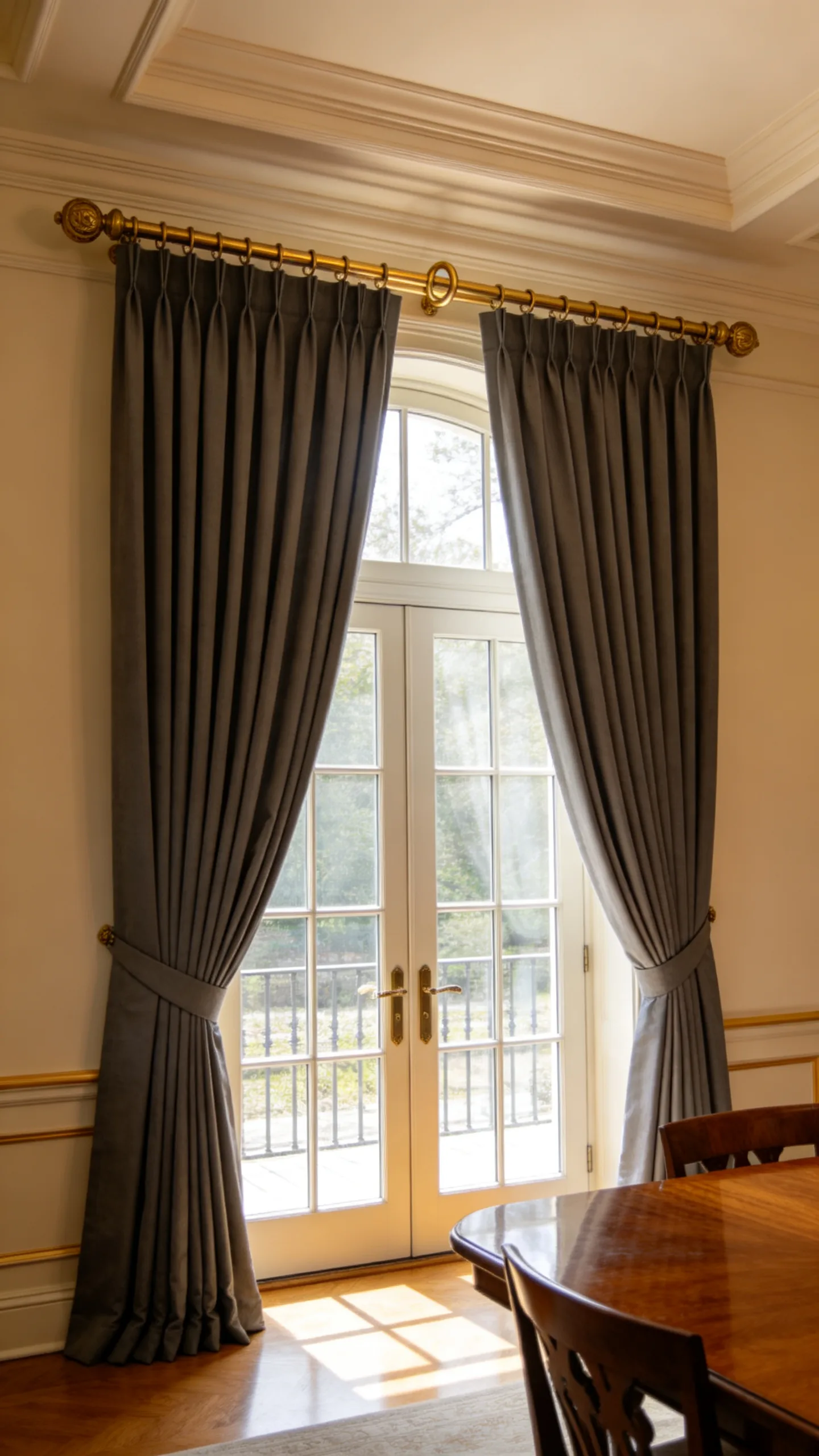
Pinch pleat drapes bring structure and elegance to large glass doors, especially in formal living rooms, dining rooms, primary bedrooms, or traditional interiors. The pleats create even folds from top to bottom, so the curtain looks intentional whether it is open or closed.
This style works best when mounted on a decorative rod with rings, placed high above the door frame. If the glass door is wide, use enough fabric fullness so the panels do not look stretched flat when closed. A fuller curtain also improves privacy and gives the door wall a more substantial focal point.
Choose pinch pleat panels in cotton, linen blend, velvet, or lined fabric depending on the room. For a refined look, match the curtain color to the wall for a seamless effect, or use a deeper tone such as charcoal, olive, navy, or warm brown to frame the glass door as an architectural feature.
5. Blackout Curtains for Bedroom Glass Doors
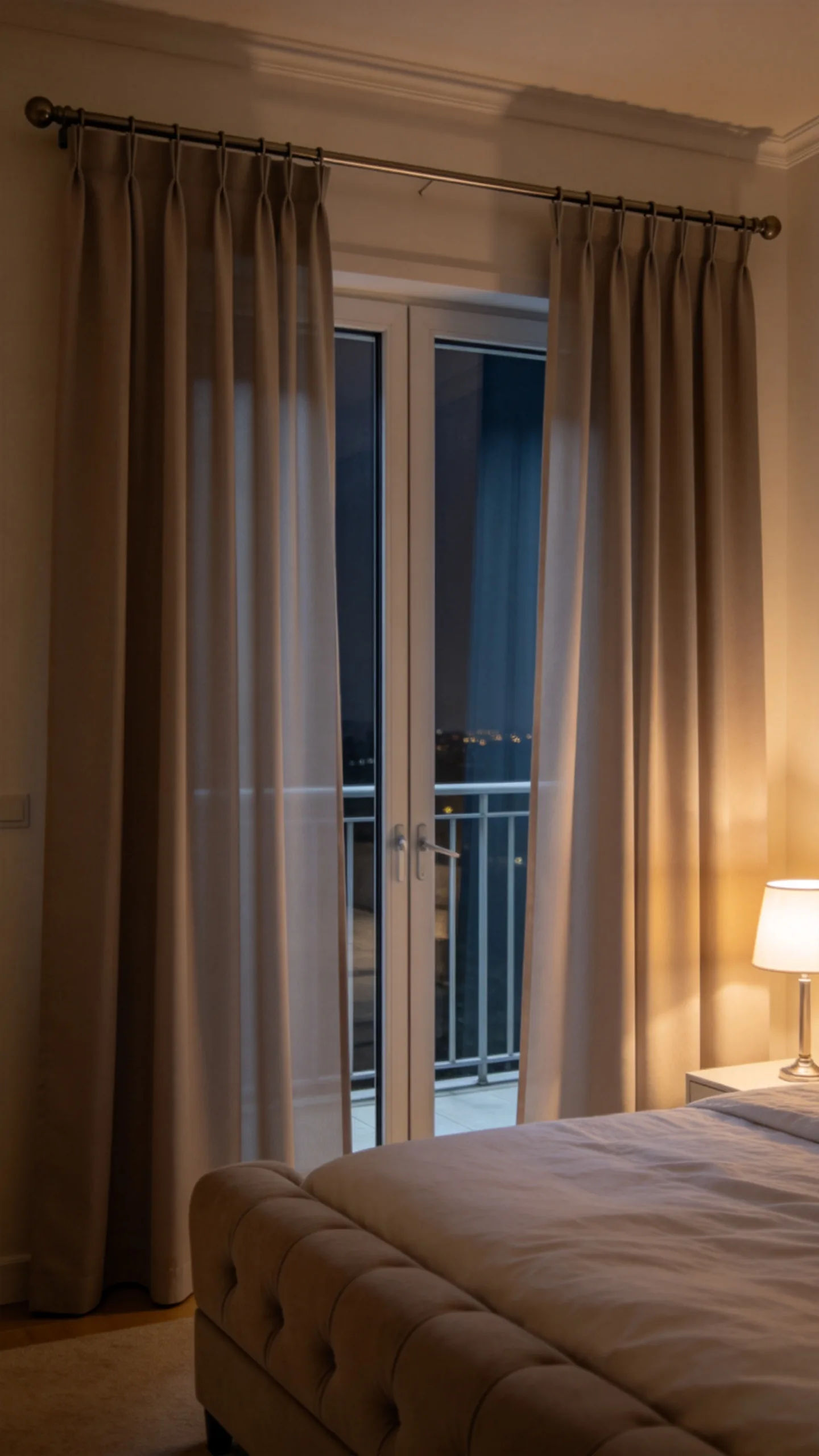
Blackout curtains are especially useful for bedroom glass doors that open to a balcony, patio, garden, or shared outdoor space. They provide privacy at night, block early morning light, and help the room feel more restful without requiring permanent changes to the door.
For the most elegant look, avoid overly shiny blackout fabric and choose matte panels in soft white, sand, greige, deep green, navy, or charcoal. Hang the rod wider than the door so the curtains can stack fully to the sides during the day. This preserves the view and keeps the doorway from feeling visually cramped.
In a small bedroom, choose curtains close to the wall color to prevent the glass door from becoming too visually heavy. In a larger bedroom, darker blackout curtains can create a cozy frame around the door and balance heavier furniture like an upholstered bed or wood dresser.
6. Double Curtain Rod with Sheers and Privacy Drapes
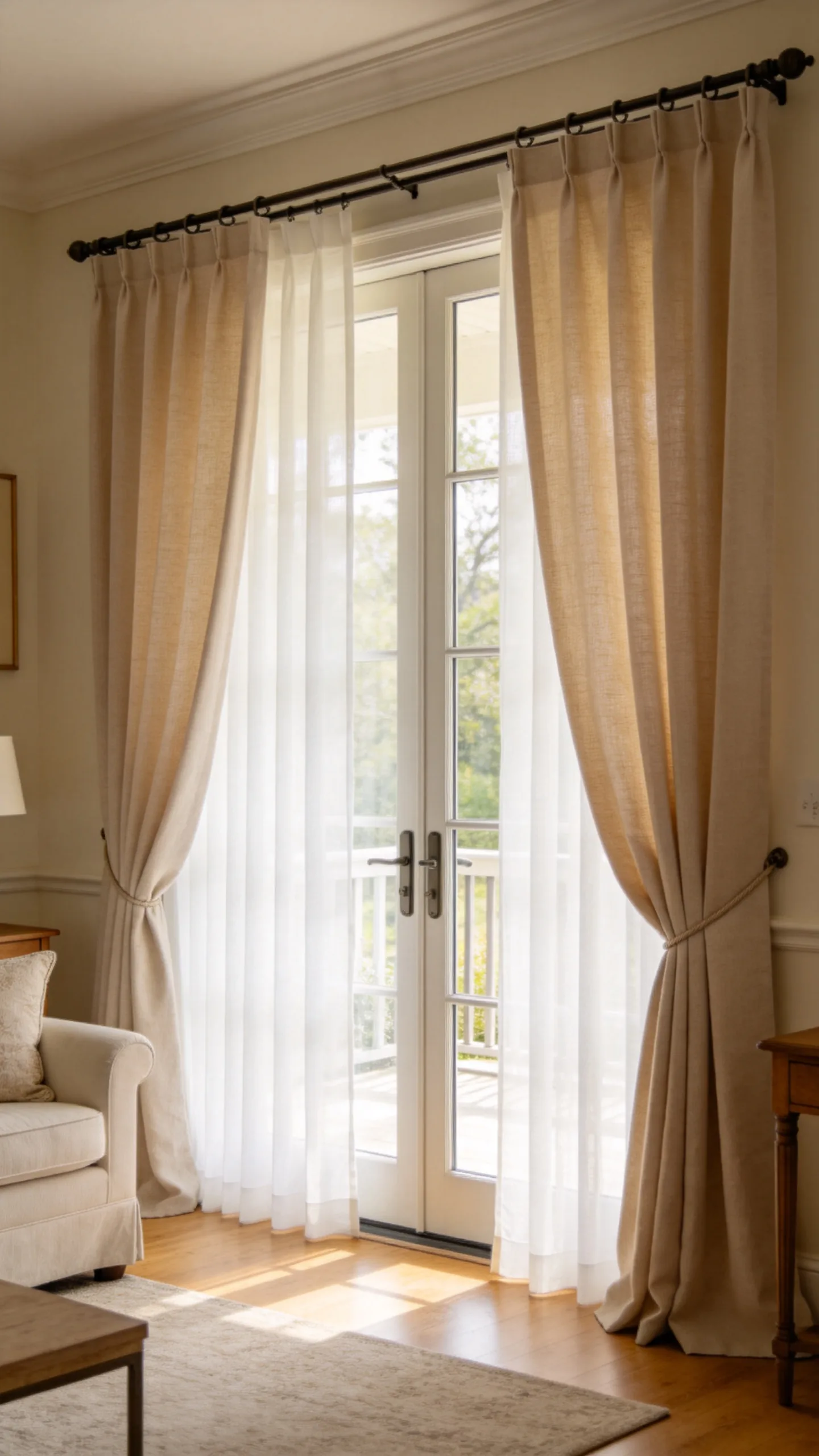
A double curtain rod gives glass doors the most flexibility because you can use sheer panels during the day and heavier drapes at night. This is a smart choice for living rooms, bedrooms, and dining areas where privacy needs change throughout the day.
Place lightweight sheers on the back rod and lined linen, cotton, or velvet panels on the front rod. During daylight hours, close the sheers to blur the view from outside while still keeping the room bright. In the evening, pull the outer drapes closed for stronger privacy and a softer, more enclosed atmosphere.
This layered approach also makes the glass door look more designed. Use similar tones for a calm look, such as ivory sheers with oatmeal drapes, or create contrast with white sheers and deep blue, forest green, or warm terracotta outer panels.
7. Woven Wood Shades Paired with Side Panels
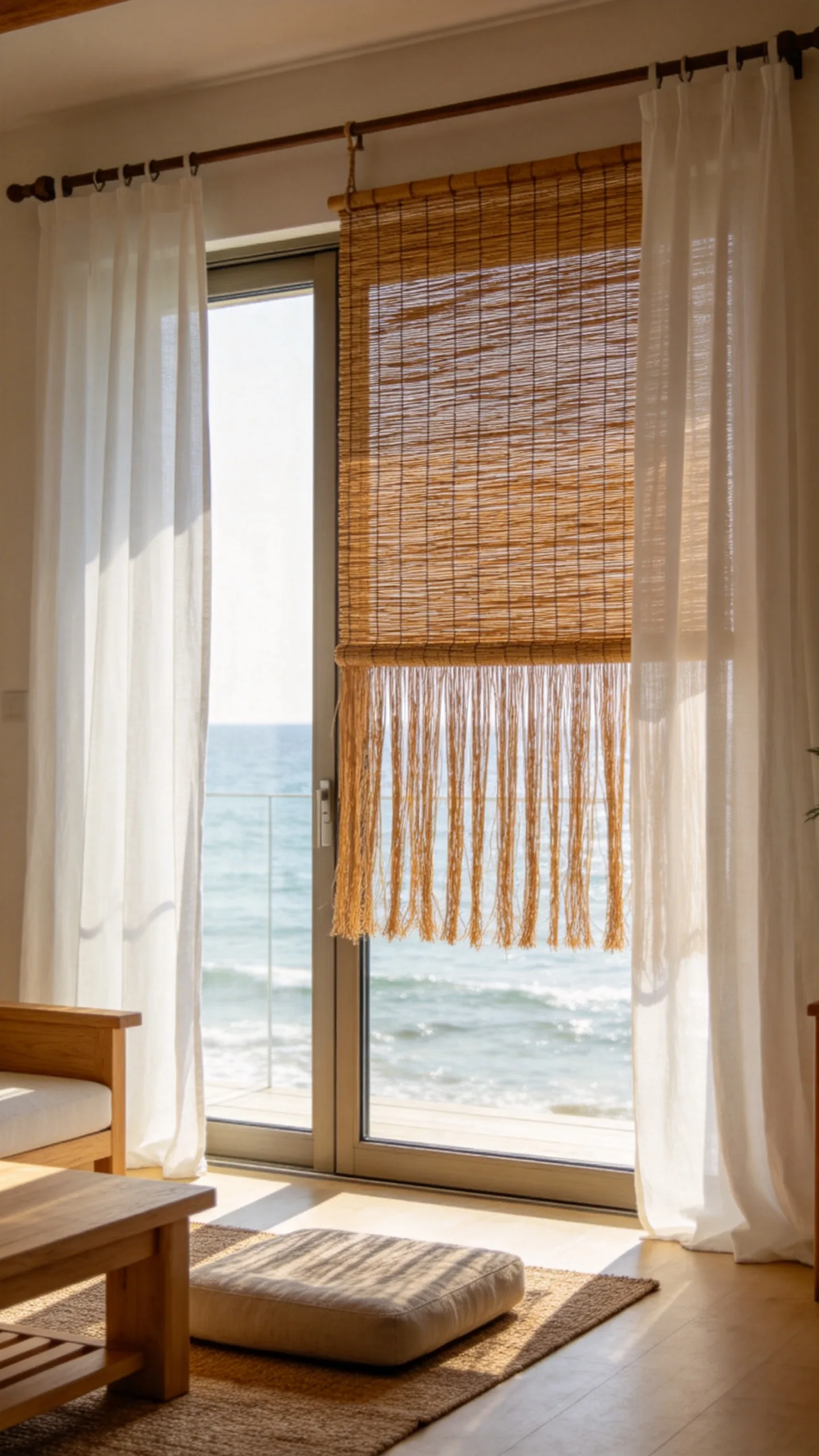
Woven wood shades add natural texture to glass doors while keeping the overall design warm and inviting. Bamboo, reed, jute, and grasscloth-style materials work especially well in coastal, organic modern, farmhouse, and transitional spaces.
For sliding doors or wide patio doors, woven shades may be installed above the door, while stationary side panels soften the edges. For French doors, smaller woven shades can sometimes be mounted directly over the glass panels, depending on the door depth and hardware clearance. Add a privacy liner if the door faces a neighbor or street.
Pair woven shades with simple linen or cotton side curtains to make the doorway feel layered rather than bare. The shade controls visibility and glare, while the panels add softness around hard surfaces like glass, metal handles, painted trim, and tile flooring.
8. Café Curtains for Lower-Half Privacy
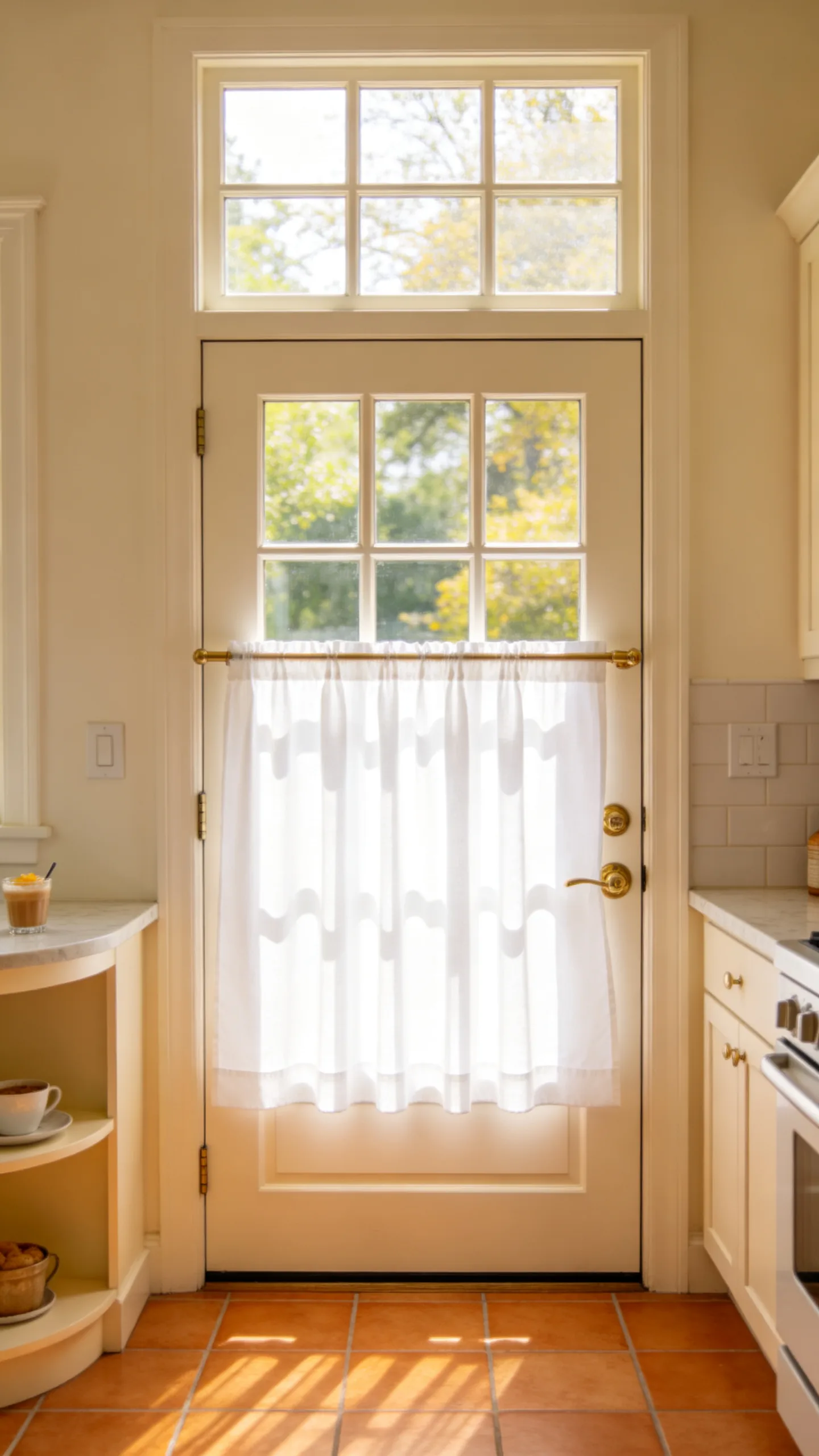
Café curtains are perfect when you want privacy on the lower portion of a glass door but still want natural light from the upper glass. This is especially useful for kitchen doors, breakfast nook doors, mudroom doors, or back doors that face a sidewalk, driveway, or neighboring window.
Mount a slim rod across the middle section of the door or slightly above eye level from outside. The lower curtain shields the view into the room while the uncovered top glass keeps the space bright and open. This can make a small kitchen or narrow entry feel less closed in than full-length curtains would.
Choose cotton, linen, lace, or a subtle woven fabric depending on the mood of the room. A crisp white café curtain looks fresh against painted doors, while natural linen adds softness to wood doors, brass hardware, and warm-toned flooring.
9. Roman Shades for a Tailored Glass Door Look
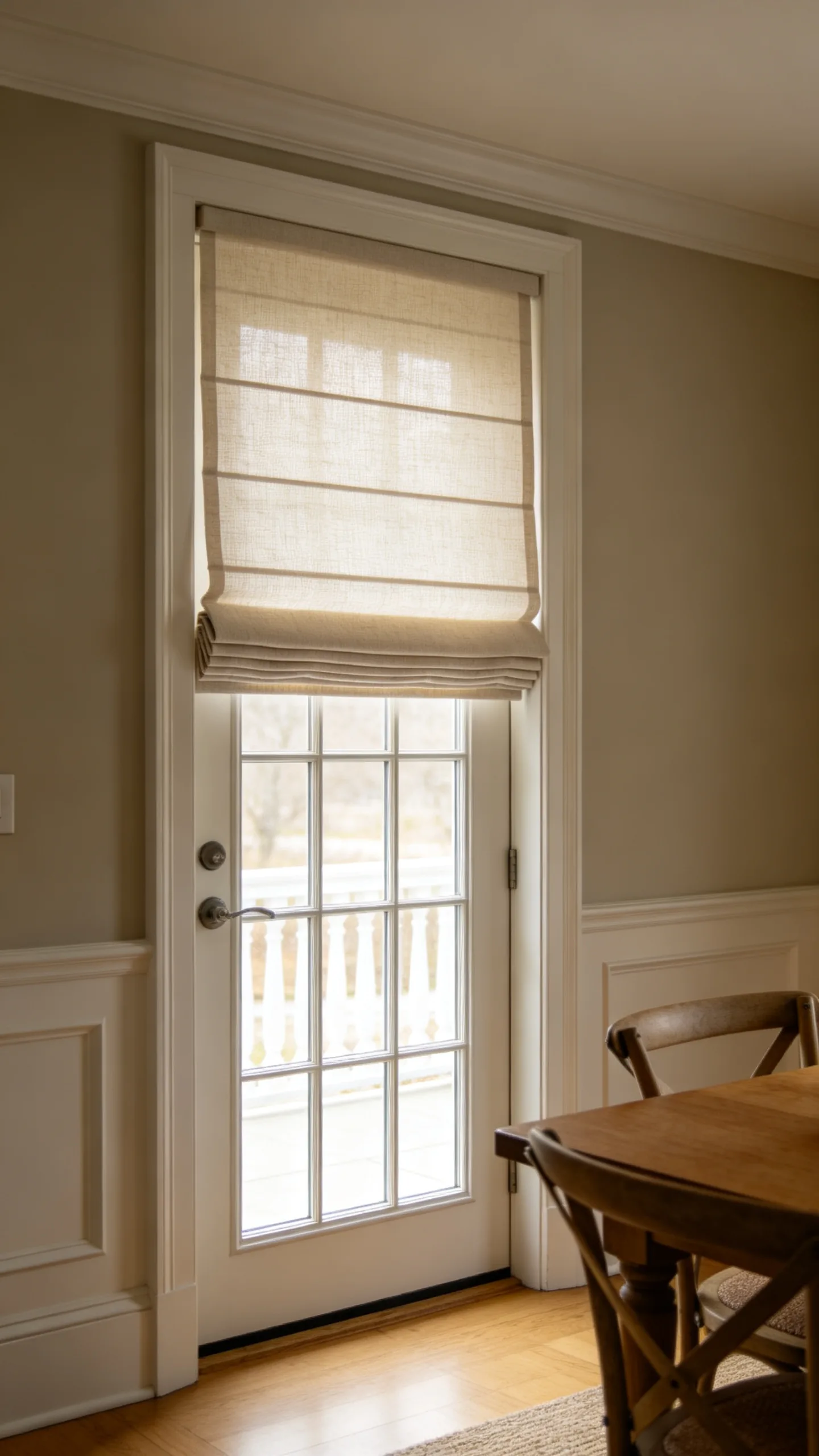
Roman shades create a clean, tailored look on glass doors where loose curtains might get in the way. They are a strong option for doors near dining tables, kitchen islands, desks, or small seating areas because they sit close to the glass and do not take up floor space.
For French doors, use individual Roman shades on each door panel if there is enough clearance for the folds and hardware. For a single glass door, one shade mounted above or on the door can provide privacy without adding bulk. Choose a cordless or neatly secured option to keep the shade safe and visually tidy.
Flat Roman shades feel modern and minimal, while relaxed Roman shades create softer folds. Linen, cotton, ticking stripe, or small-scale patterned fabric can coordinate with nearby upholstery, window treatments, or kitchen textiles.
10. Velvet Drapes for Dramatic Evening Privacy
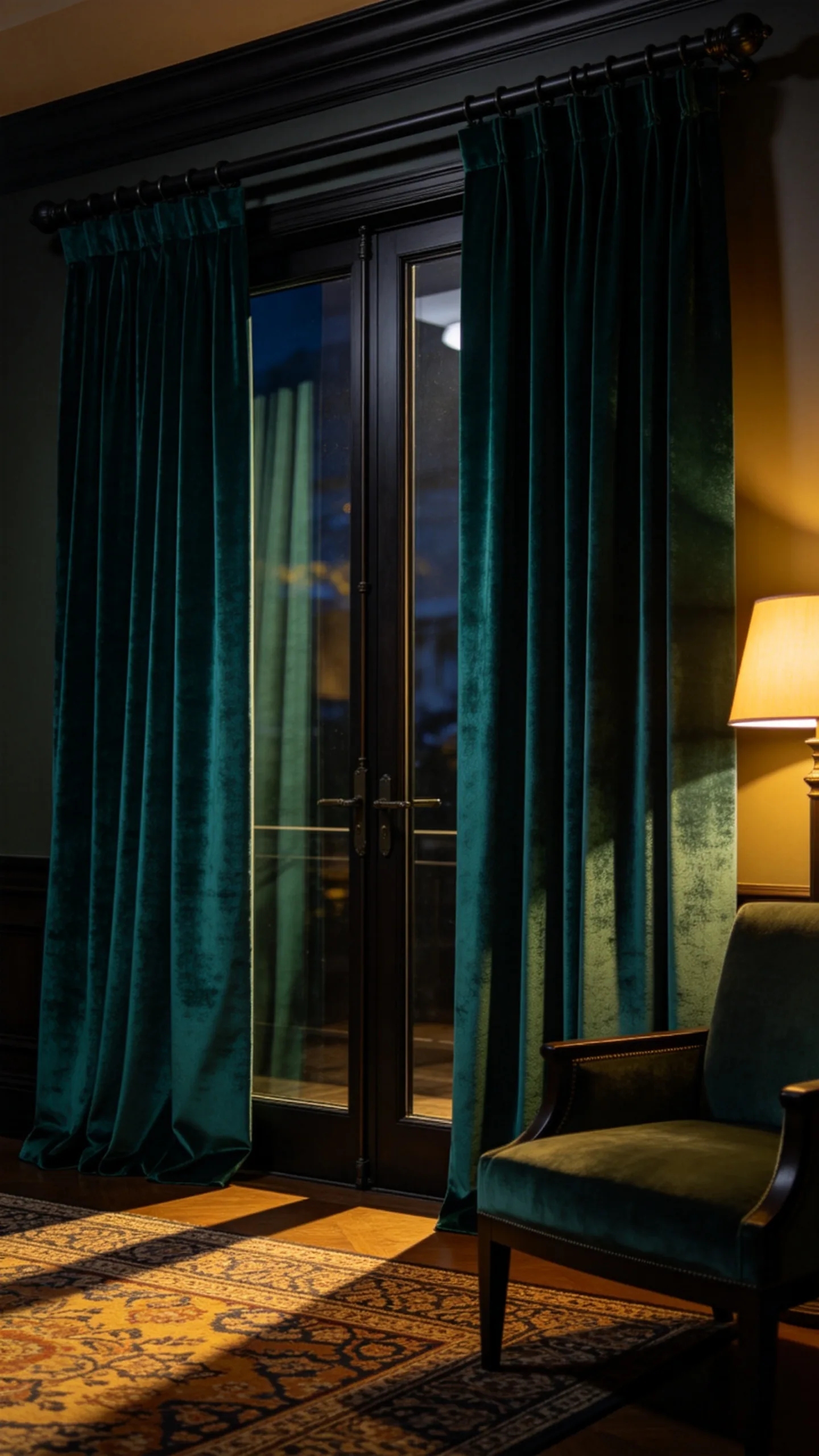
Velvet drapes make glass doors feel luxurious and private, especially in formal dining rooms, moody living rooms, libraries, and bedrooms. The dense fabric blocks views effectively and adds depth around a large glass surface that might otherwise feel cold at night.
Use velvet where the room has enough visual weight to support it, such as a space with a large rug, upholstered seating, dark wood furniture, or statement lighting. Jewel tones like emerald, sapphire, burgundy, and deep plum create drama, while taupe, camel, and slate feel more understated.
Because velvet is heavier than sheer or linen fabric, use a sturdy rod and proper wall anchors. Hang the panels high and wide so they frame the door beautifully when open and do not crowd the walkway when closed.
11. Sliding Door Curtain Panels with Wide Stack-Back
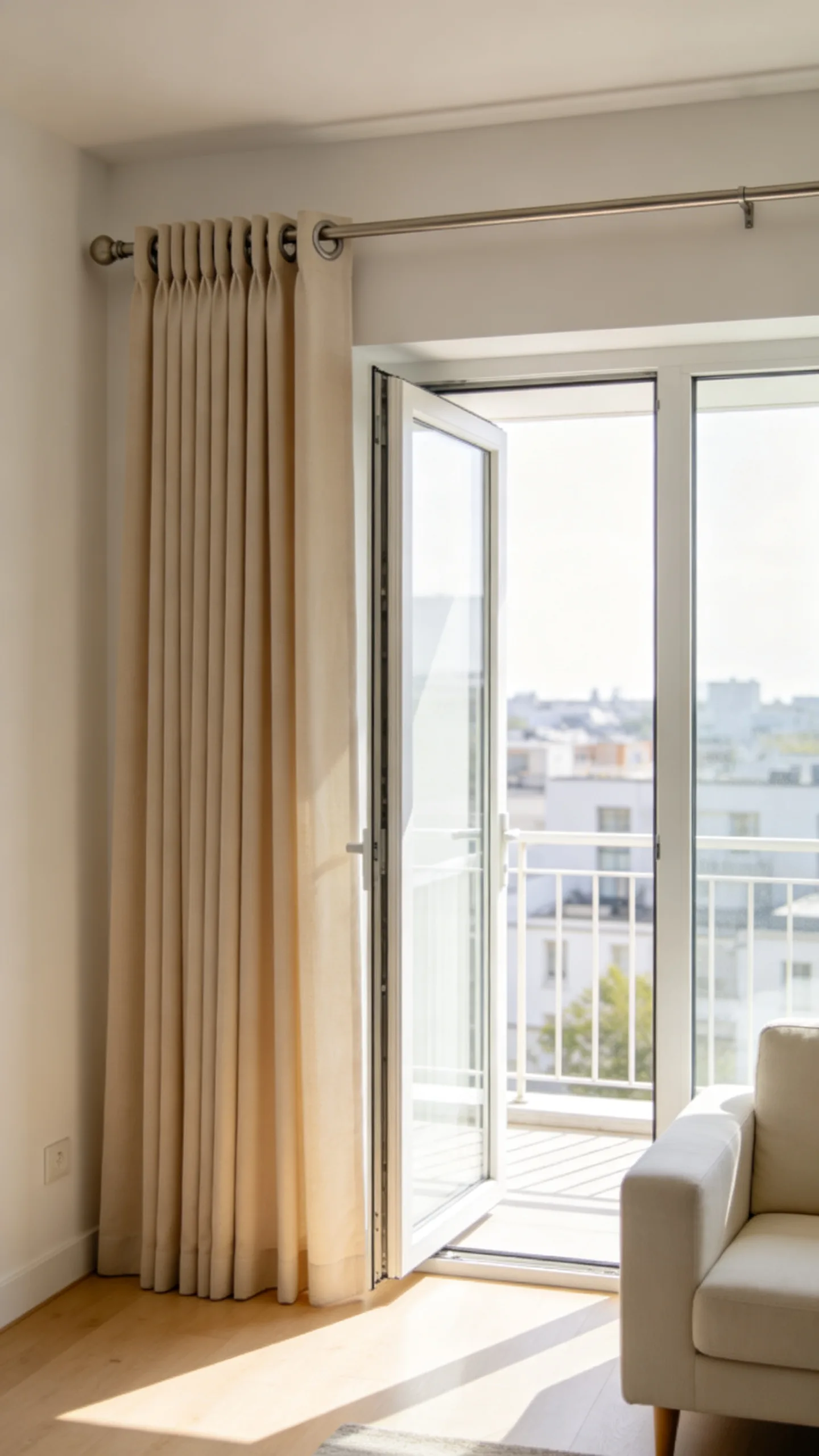
Sliding glass doors need curtain panels that can move fully out of the way. A wide stack-back means the curtain rod extends well beyond the door frame, allowing the panels to gather on the wall instead of covering the glass when open.
This is especially helpful in small living rooms, apartments, and family rooms where natural light makes the space feel larger. When the curtains stack away from the glass, the sightline to the patio, balcony, or backyard stays open and the room feels less blocked.
Use grommet, ring-top, ripple fold, or pinch pleat panels depending on the style of the room. For an elegant finish, make sure the curtain width is generous enough to close without pulling flat across the door. Full fabric folds look softer and provide better privacy.
12. Patterned Curtains to Turn the Door into a Focal Point
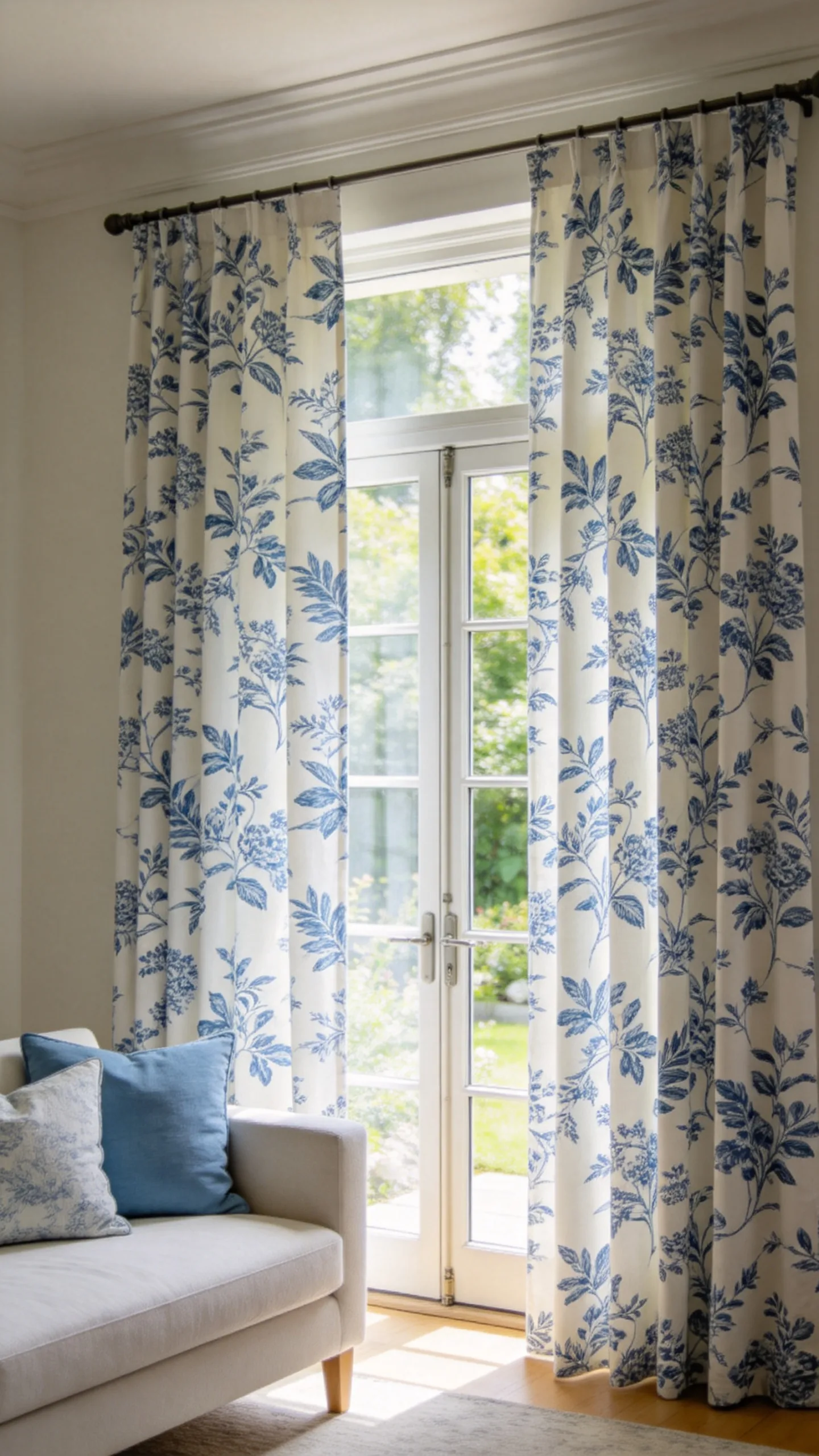
Patterned curtains can make a glass door feel like an intentional design feature rather than a privacy problem. This works well in rooms with simple walls, neutral furniture, or minimal artwork, where the door area can handle a bit of visual interest.
Botanical prints, small geometrics, ticking stripes, block prints, and subtle damask patterns all work beautifully on glass door curtains. In a dining room, a patterned curtain can echo chair upholstery or table linens. In a living room, it can connect the rug, sofa pillows, and wall art.
Keep the scale of the pattern in proportion to the door. Large sliding doors can handle bigger prints, while narrow French doors or small back doors usually look better with smaller patterns. If the room already has a busy rug or bold wallpaper, choose a quieter tone-on-tone pattern to avoid visual clutter.
13. Neutral Curtains That Match the Wall Color
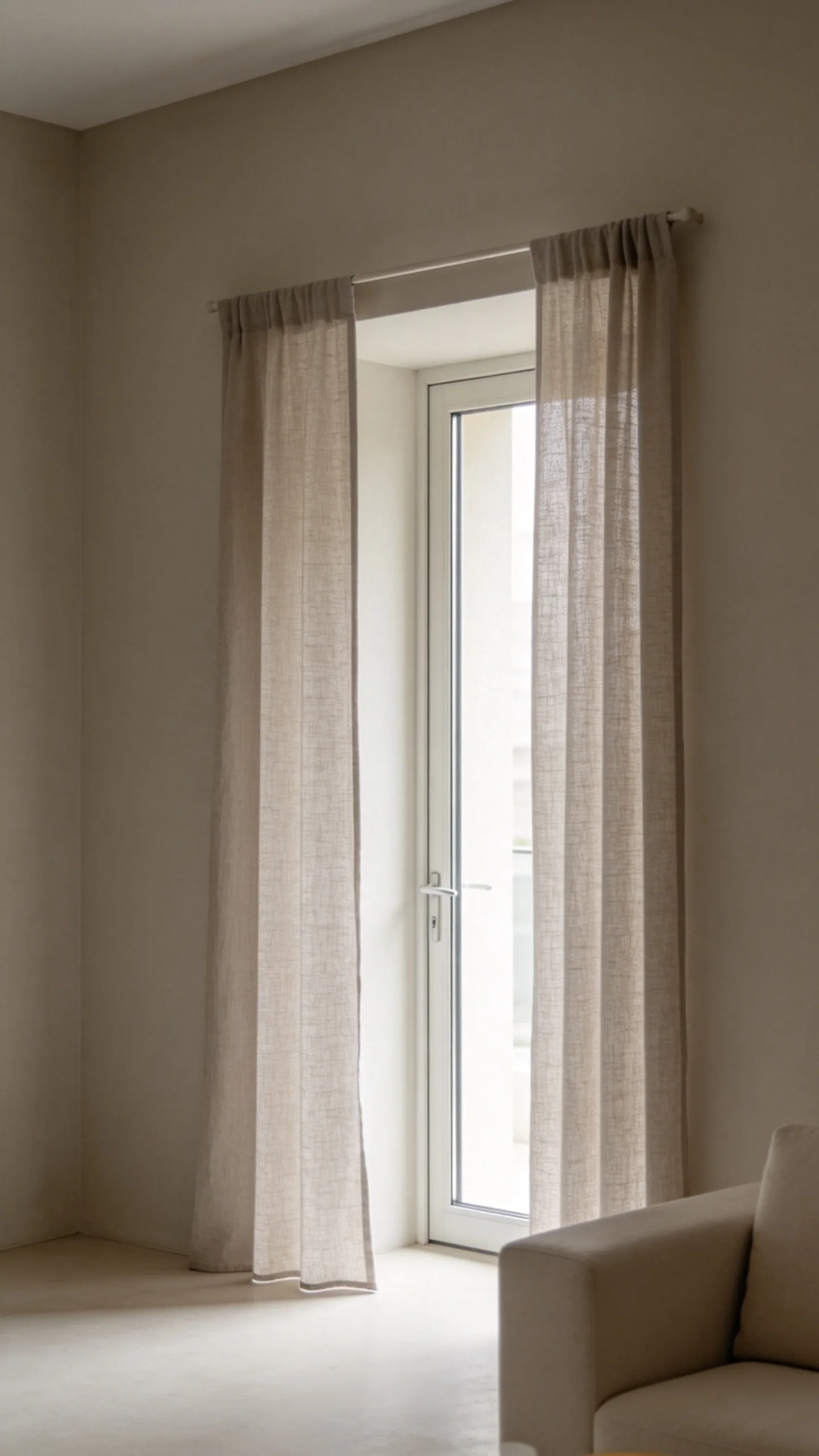
Matching glass door curtains to the wall color creates a calm, seamless look and helps the room feel larger. This is a smart approach for small spaces, open-plan rooms, apartments, and rooms where the glass door is not meant to be the main focal point.
For white walls, choose warm white, ivory, or soft cream curtains rather than stark bright white unless the trim is also very crisp. For beige, greige, gray, or taupe walls, look for curtains within the same color family but with a slightly different texture so the fabric does not disappear completely.
This idea works especially well with linen, cotton, or lightly textured polyester blends. The matched color keeps sightlines clean, while the fabric softens the door frame and gives privacy without adding a strong visual block.
14. Ceiling-Mounted Curtains for Tall Glass Doors
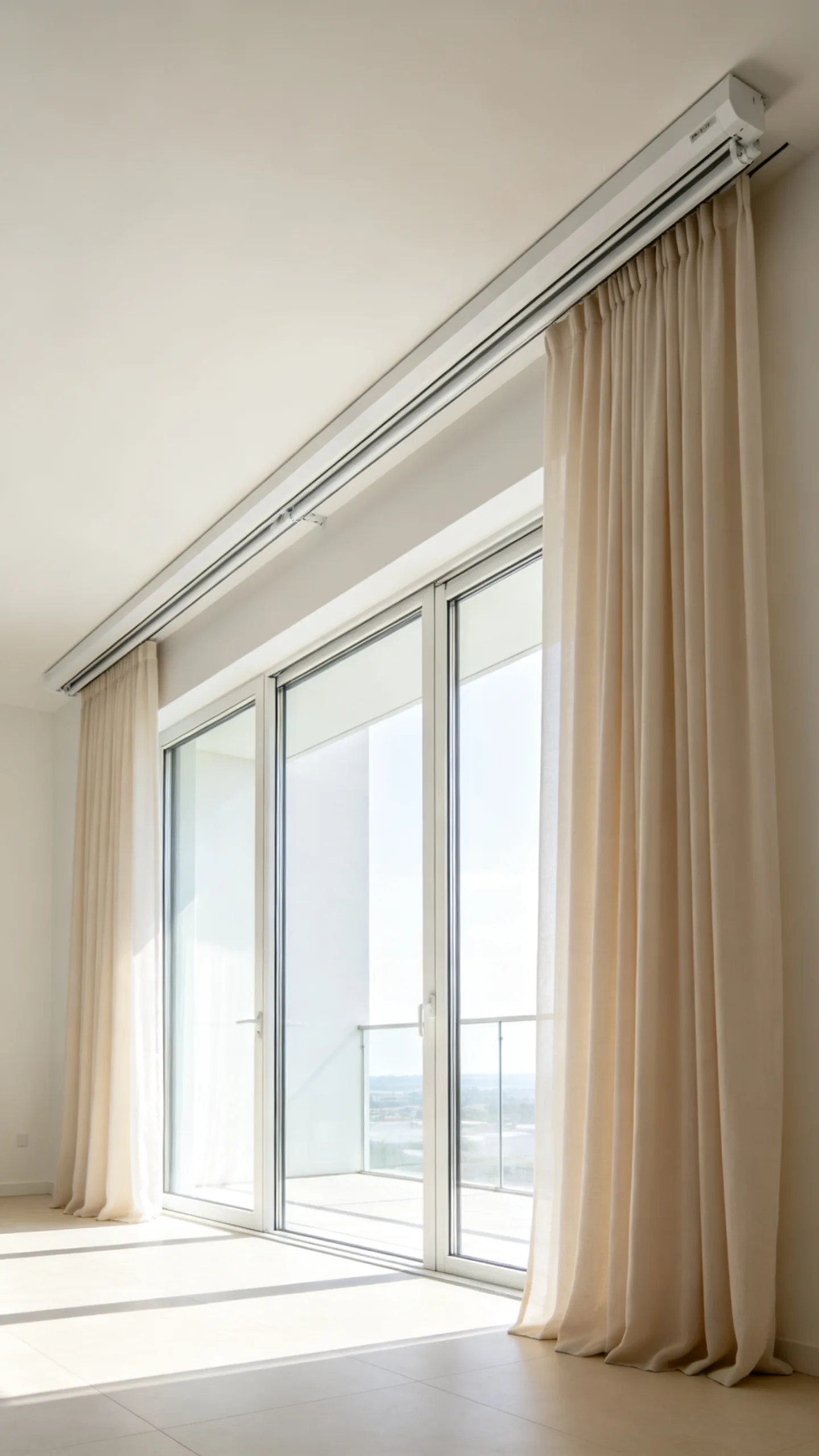
Ceiling-mounted curtains are ideal for tall glass doors, modern patio doors, loft spaces, or rooms with limited wall space above the frame. By starting the curtains at the ceiling, you draw the eye upward and make the entire wall feel taller.
Use a ceiling track for a sleek, hotel-inspired look, especially if the door spans most of the wall. The panels can glide smoothly from side to side, which is practical for wide sliding doors or glass doors used often. This also avoids bulky brackets that may compete with modern trim or minimal architecture.
Choose full-length curtains that just kiss the floor for a clean finish. In a small room, a ceiling-mounted track with light-colored curtains can make the door wall feel expansive rather than chopped up by short hardware.
15. Tie-Top or Tab-Top Curtains for Casual Charm
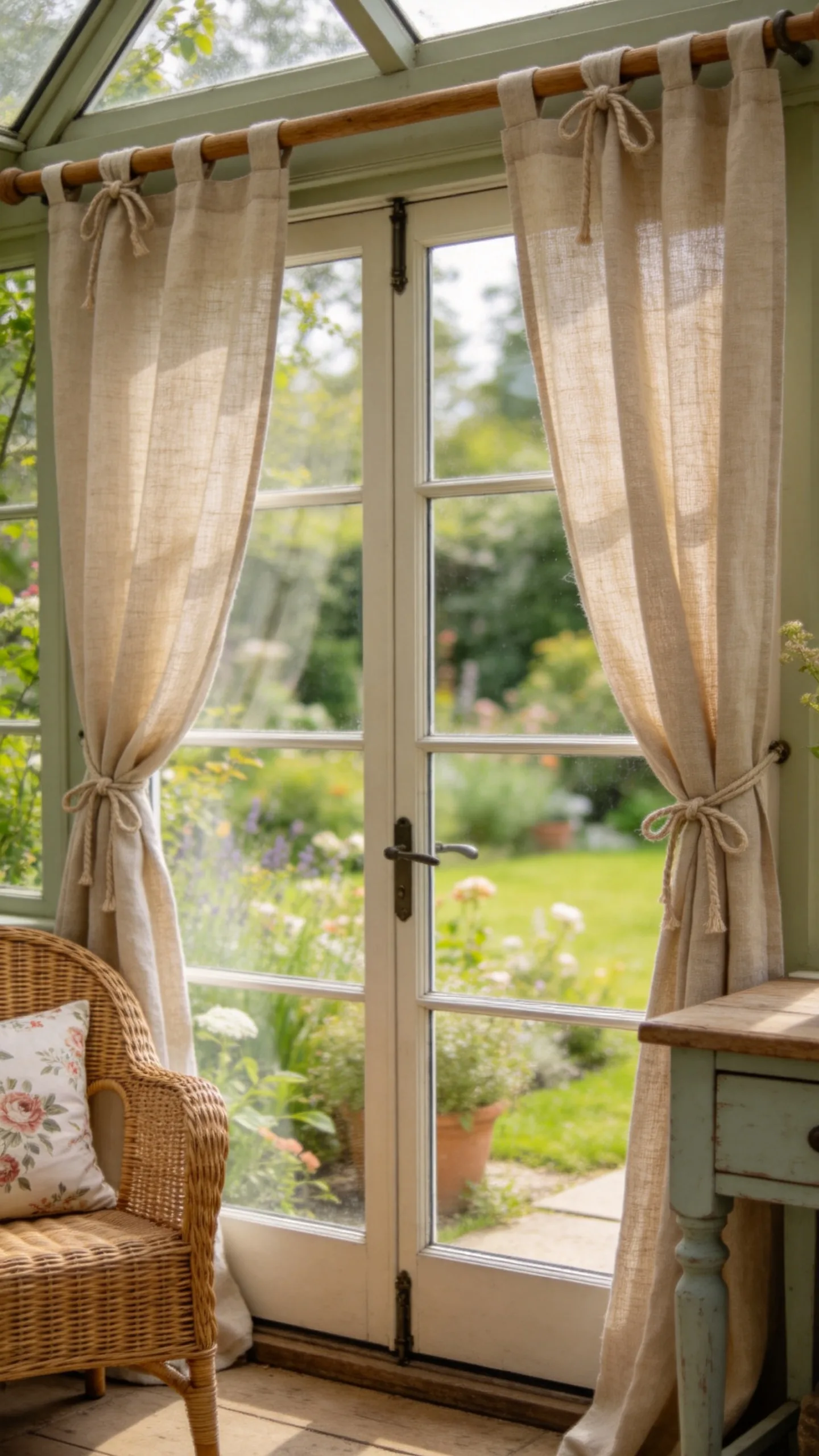
Tie-top and tab-top curtains bring a relaxed, decorative look to glass doors in cottages, casual dining rooms, sunrooms, and bedrooms. The visible fabric loops or ties add softness around the rod and make the curtain feel less formal than pleats or rings.
This style works best on doors that do not need to be opened and closed constantly, because ties and tabs may not glide as smoothly as ring clips or track systems. Use them on French doors leading to a quiet garden, a guest room balcony, or a sunroom door where the curtain can stay mostly in place.
Choose washed linen, cotton voile, chambray, or subtle stripe fabric for an easygoing look. Tie-top curtains in natural tones pair well with wicker chairs, painted wood furniture, floral cushions, and vintage-style lighting.
16. Frosted Sheer Curtains for a Light-Filtering Glow
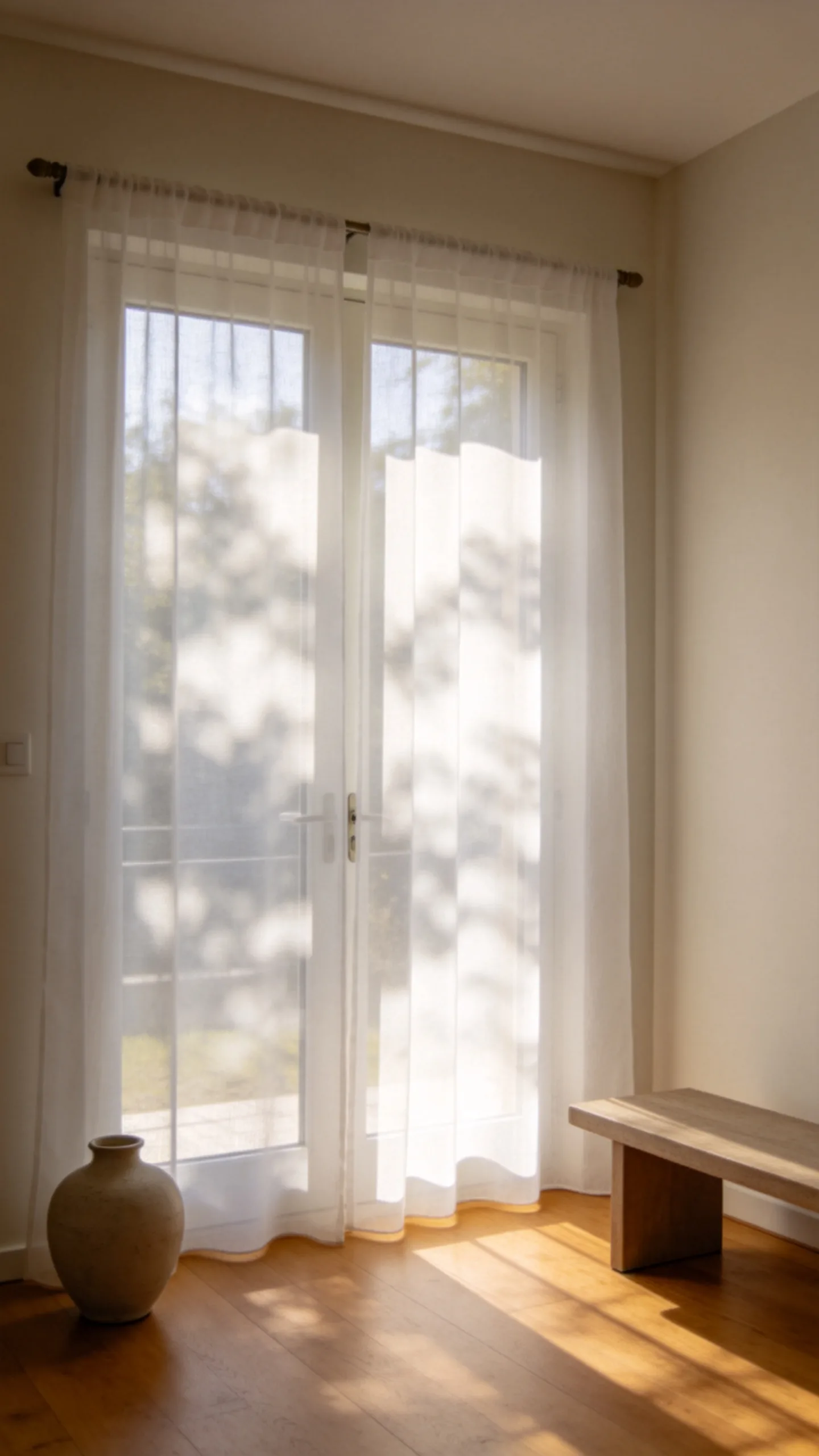
Frosted sheer curtains are a beautiful solution for glass doors where you want soft privacy without losing the glow of daylight. These curtains have a denser weave or slightly cloudy finish compared with very transparent sheers, so they blur shapes more effectively.
They work well in entryways, bathrooms with exterior glass doors, bedrooms, and patio-facing rooms where privacy matters but heavy curtains would feel too dark. The fabric diffuses sunlight across walls, floors, and furniture, which can reduce glare on screens and make the room feel calmer.
Use frosted sheers in white, pearl, mist gray, or pale beige for an airy effect. For stronger privacy, layer them with side panels or use them over frosted window film on the lower portion of the glass.
17. Curtain Panels with Decorative Holdbacks
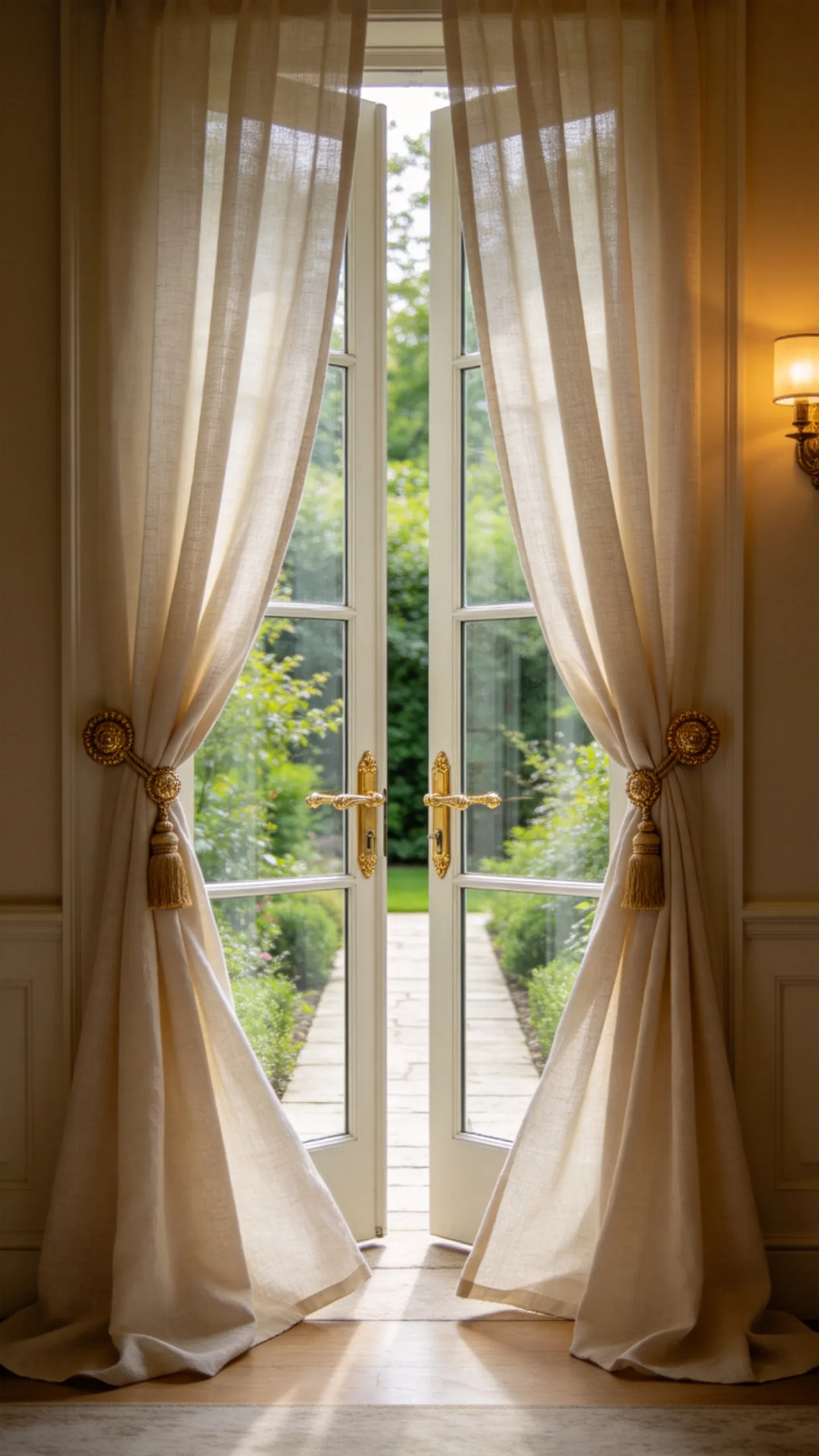
Decorative holdbacks let glass door curtains frame the view during the day and close neatly at night. They are especially useful for French doors, garden doors, and patio doors where you want the panels to stay clear of handles, hinges, and walking paths.
Install the holdbacks at a comfortable height on either side of the door frame, usually around one-third of the way up from the floor or aligned with nearby window hardware. Metal holdbacks in brass, black, bronze, or nickel can coordinate with door hardware and light fixtures. Wood or rope holdbacks add a softer, casual touch.
This idea works with linen, cotton, velvet, or patterned panels. It keeps the fabric controlled, improves traffic flow, and creates a graceful draped shape around the glass instead of letting the curtains hang flat against the doorway.
18. Layered Privacy Film and Curtains for Maximum Flexibility
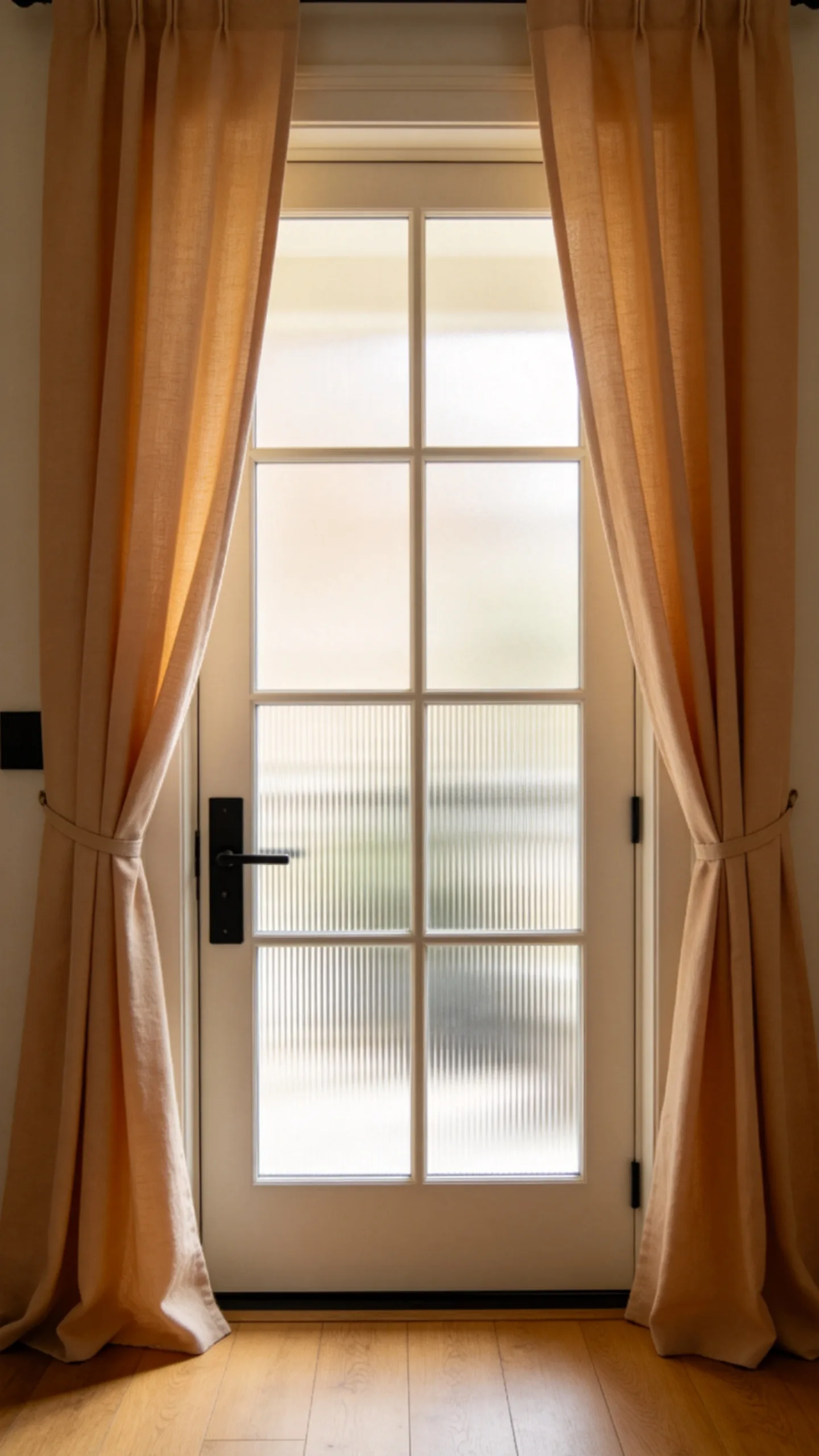
Combining privacy film with curtains is a practical choice for glass doors that face a street, sidewalk, neighbor’s patio, or shared apartment balcony. The film provides constant coverage, while the curtains add softness, color, and nighttime privacy.
Use frosted, reeded, linen-texture, or subtle patterned film on the glass, especially on the lower panels where visibility is most intrusive. Then add sheer, linen, or lined curtains depending on how much light control you need. This pairing works well for entry doors, bathroom doors, bedroom balcony doors, and kitchen doors.
The benefit is flexibility: the film handles everyday privacy even when the curtains are open, and the curtains make the door feel styled instead of purely functional. Choose curtain fabric that complements nearby finishes, such as warm linen with wood floors, white cotton with painted trim, or charcoal panels with black-framed glass doors.

From the editors
Decor Compass Editorial Team
We turn practical home research into clear, useful room-by-room ideas.