The right curtain ideas can make a basic window look taller, wider, softer, and more thoughtfully designed without replacing the window itself. Small choices like rod placement, fabric weight, pleat style, lining, and length can change how a living room, bedroom, dining room, or home office feels. These affordable luxury window treatment ideas focus on details that create a custom, high-end look while still working for real rooms, rental spaces, and everyday budgets.
1. Hang Curtains High Above the Window Frame
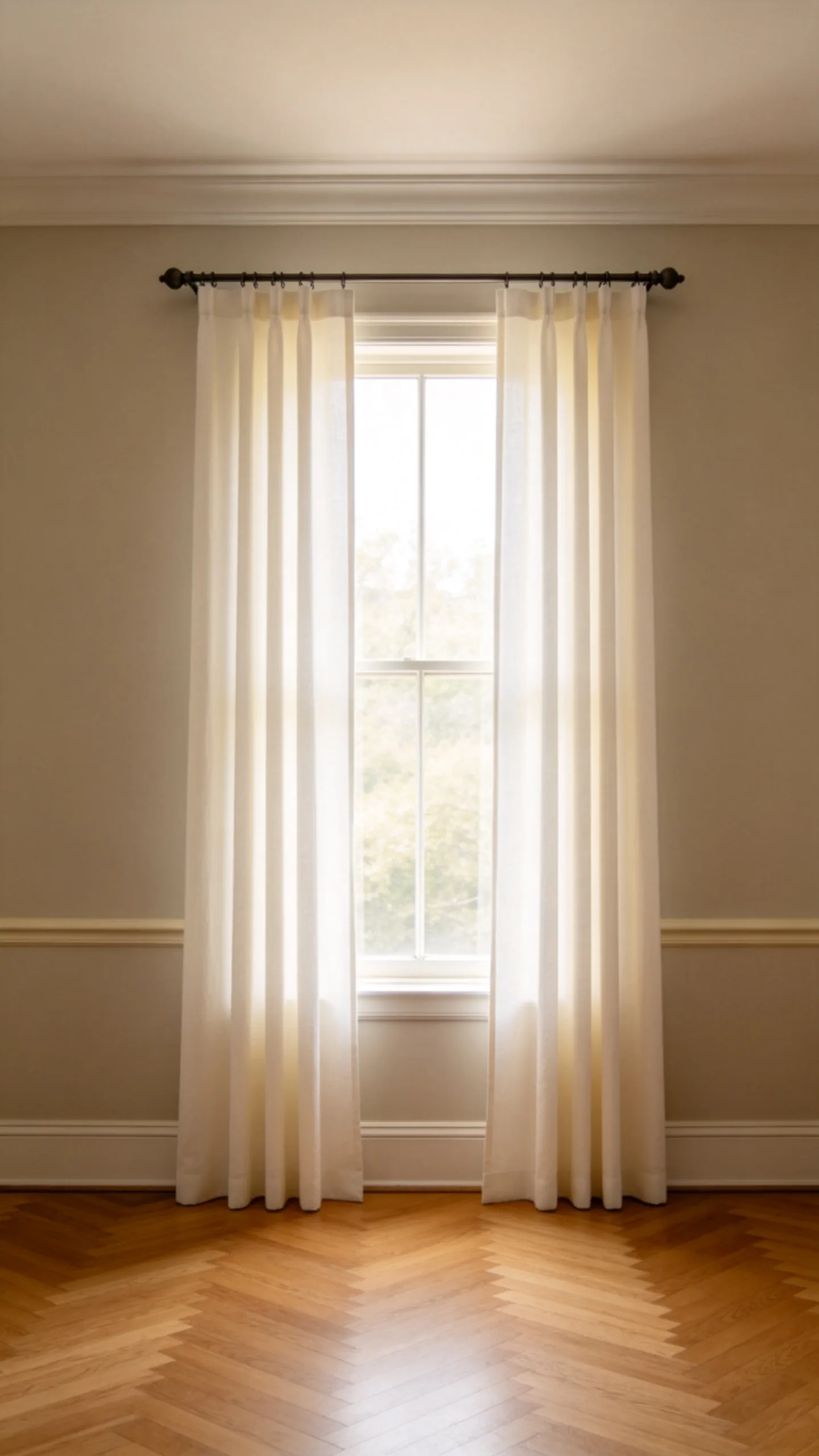
Mounting the curtain rod closer to the ceiling instantly makes a window feel taller. In a living room with standard 8-foot ceilings, placing the rod 4 to 6 inches above the window frame draws the eye upward and gives the wall more height. If the ceiling is especially low, mounting the rod just below the crown molding or ceiling line can make the room feel more vertical and polished.
This works especially well with simple linen, cotton, or velvet panels because the long vertical lines become part of the room’s architecture. Choose floor-length curtains so the fabric visually connects the ceiling area to the floor. Avoid rods mounted directly on top of the window trim, which can make the window look shorter and the treatment feel unfinished.
2. Extend the Curtain Rod Wider Than the Window
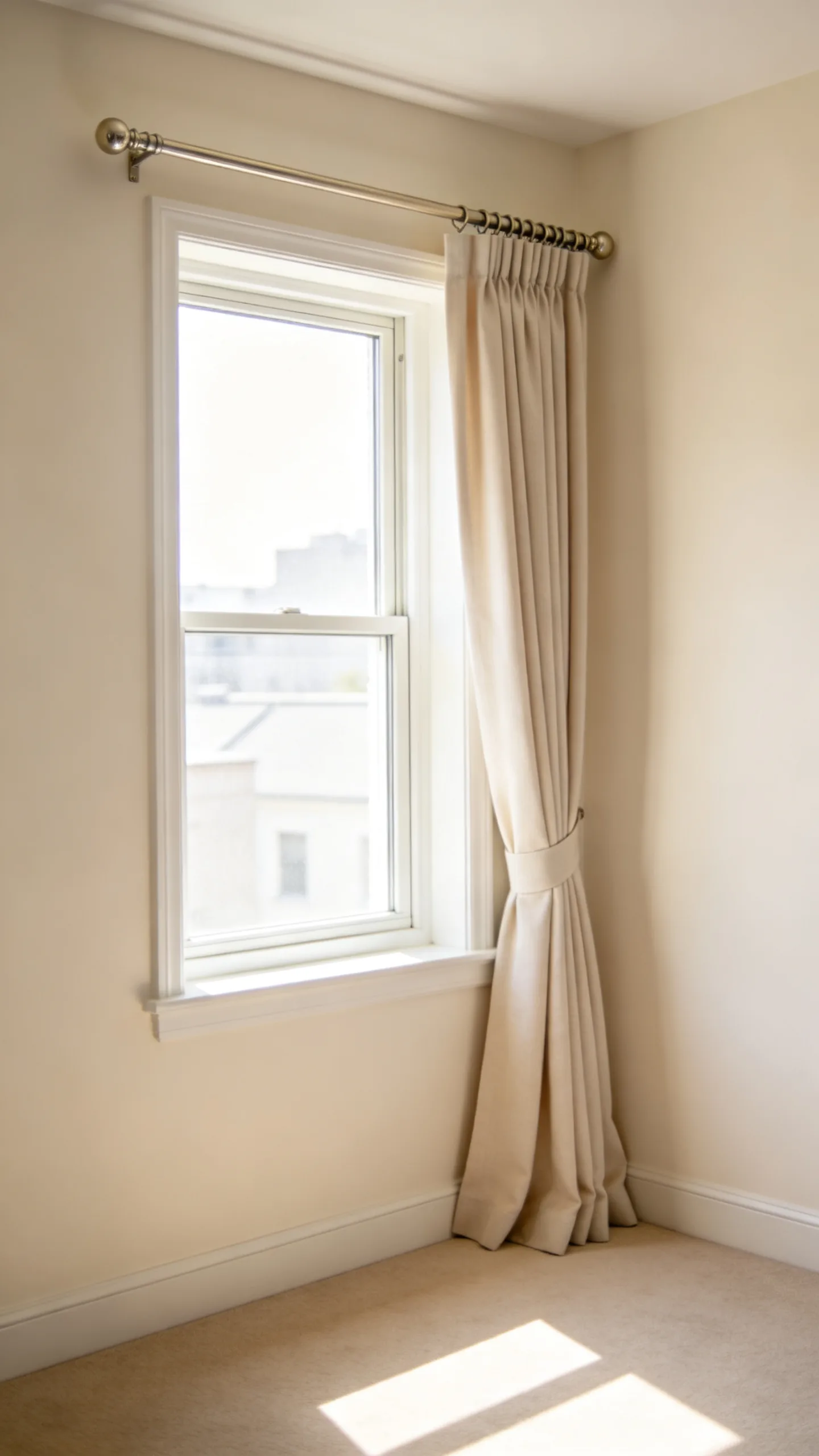
A wider curtain rod makes the window appear larger because the fabric can rest beside the glass instead of covering it. Extend the rod 8 to 12 inches beyond each side of the window frame when wall space allows. This is especially helpful in small bedrooms, narrow living rooms, or apartments where every bit of natural light matters.
When the curtains are open, the panels should frame the window rather than block the view. This keeps sightlines clear, brightens the room, and makes the wall feel more balanced. A wider rod also gives the curtains a fuller, hotel-inspired look because the fabric has room to gather neatly on each side.
3. Choose Floor-Length Panels Instead of Short Curtains
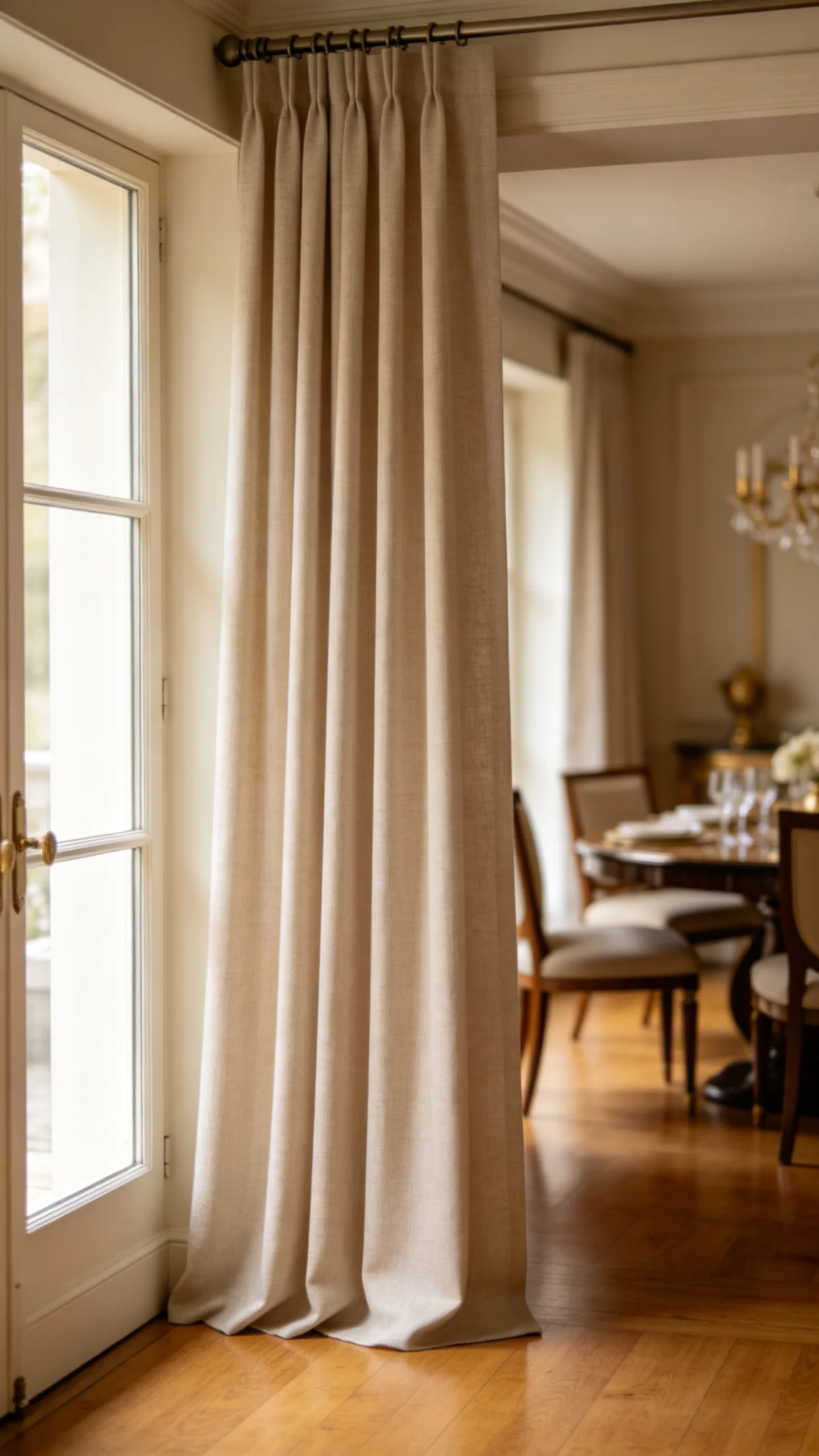
Curtains that stop at the windowsill can work in kitchens or bathrooms, but they often look less elevated in living rooms, dining rooms, and bedrooms. Floor-length panels create a cleaner and more intentional line. They make the window feel connected to the whole wall rather than treated as a small separate feature.
For the most tailored effect, let the curtain just kiss the floor or hover about half an inch above it. This length is practical for high-traffic rooms because it avoids dust buildup and dragging fabric. In a formal dining room or romantic bedroom, a slight puddle of 1 to 2 inches can look soft and luxurious, especially with linen, velvet, or silk-blend fabric.
4. Use Double-Width Curtain Panels for Fullness
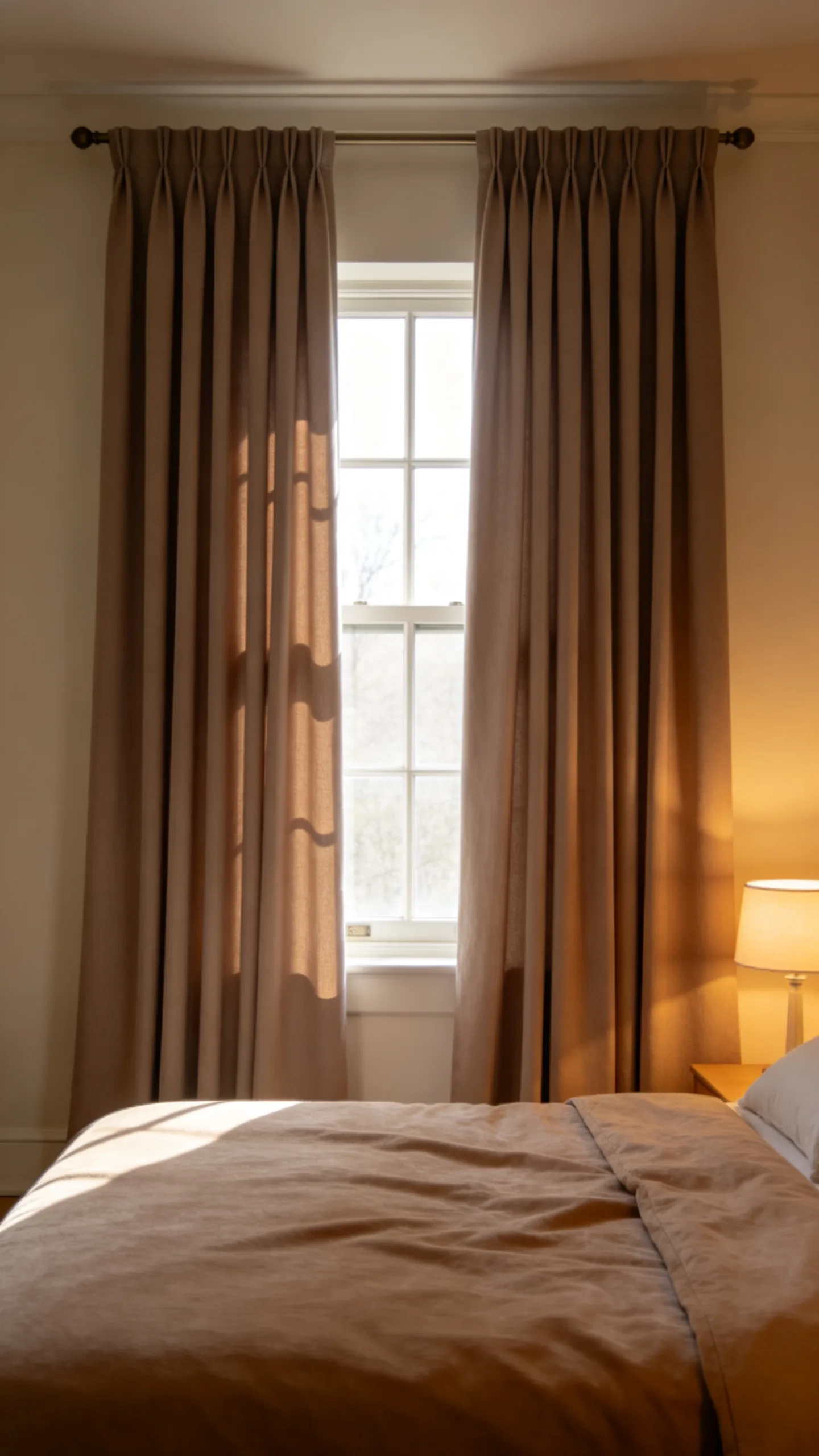
Thin, skimpy panels can make even beautiful fabric look inexpensive. A high-end curtain treatment usually has fullness, meaning the fabric still looks generous when closed. As a rule, the total curtain width should be about 1.5 to 2 times the width of the window or curtain rod.
In a bedroom with a 60-inch-wide window, use panels with a combined width of at least 90 to 120 inches. This creates soft folds instead of flat fabric. Full curtains also improve privacy and light control, making them useful as well as decorative. If your budget is limited, buying two sets of affordable panels per window can make a bigger visual impact than buying one narrow set in a more expensive fabric.
5. Add Pinch Pleat Headers for a Custom Look
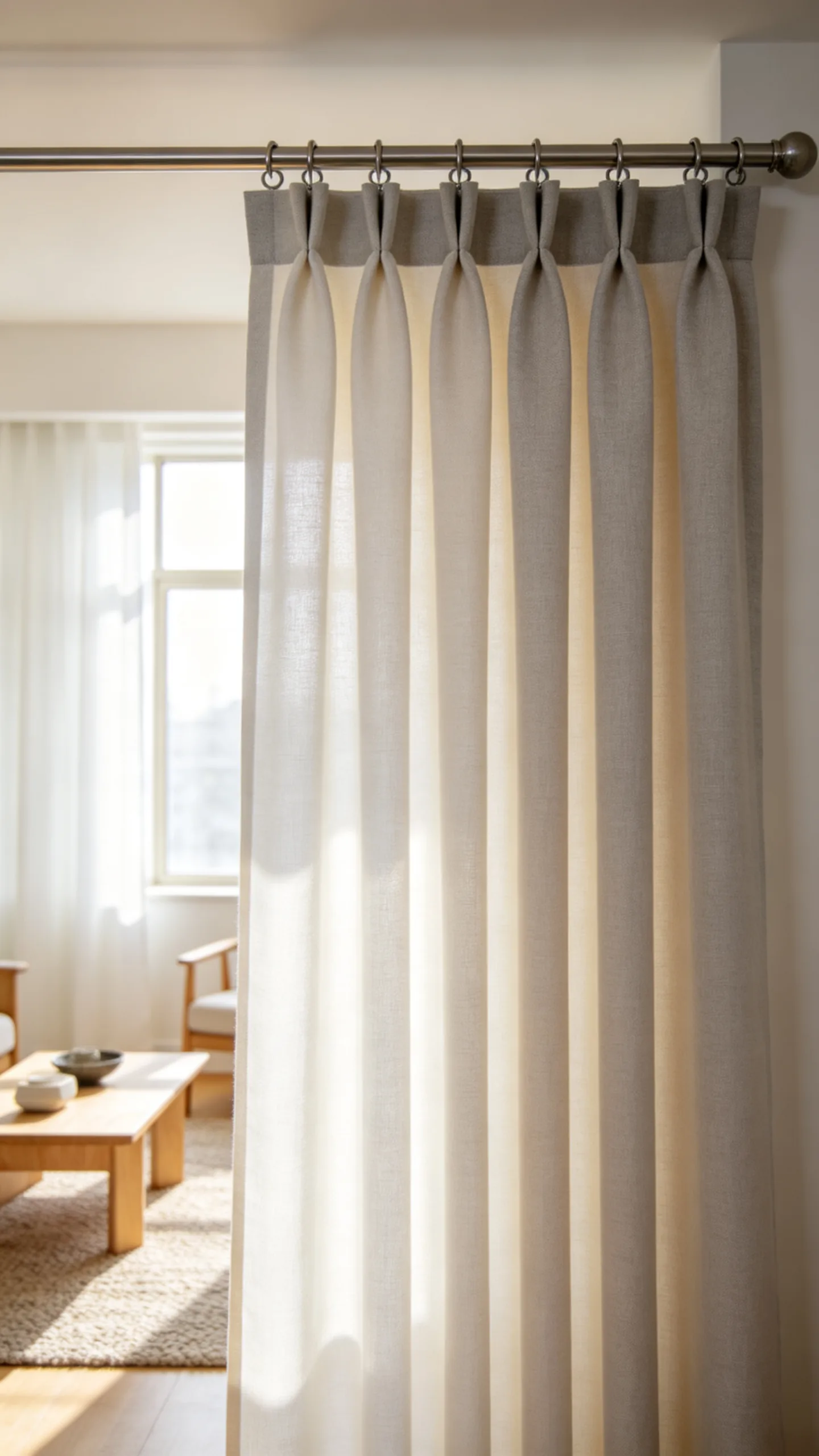
Pinch pleat curtains have structured folds sewn into the top, giving them a tailored, designer-style appearance. They look especially refined in formal living rooms, primary bedrooms, dining rooms, and home offices. The pleats help the fabric fall in even vertical lines, which makes the entire window treatment look more controlled and expensive.
You can use pinch pleat curtains with rings and drapery hooks for a classic look. This also allows the panels to glide smoothly along the rod. If custom drapes are not in the budget, look for ready-made pinch pleat panels in linen blends, cotton blends, or velvet. The header detail alone can make a simple neutral curtain feel much more upscale.
6. Swap Grommet Curtains for Rings and Hooks
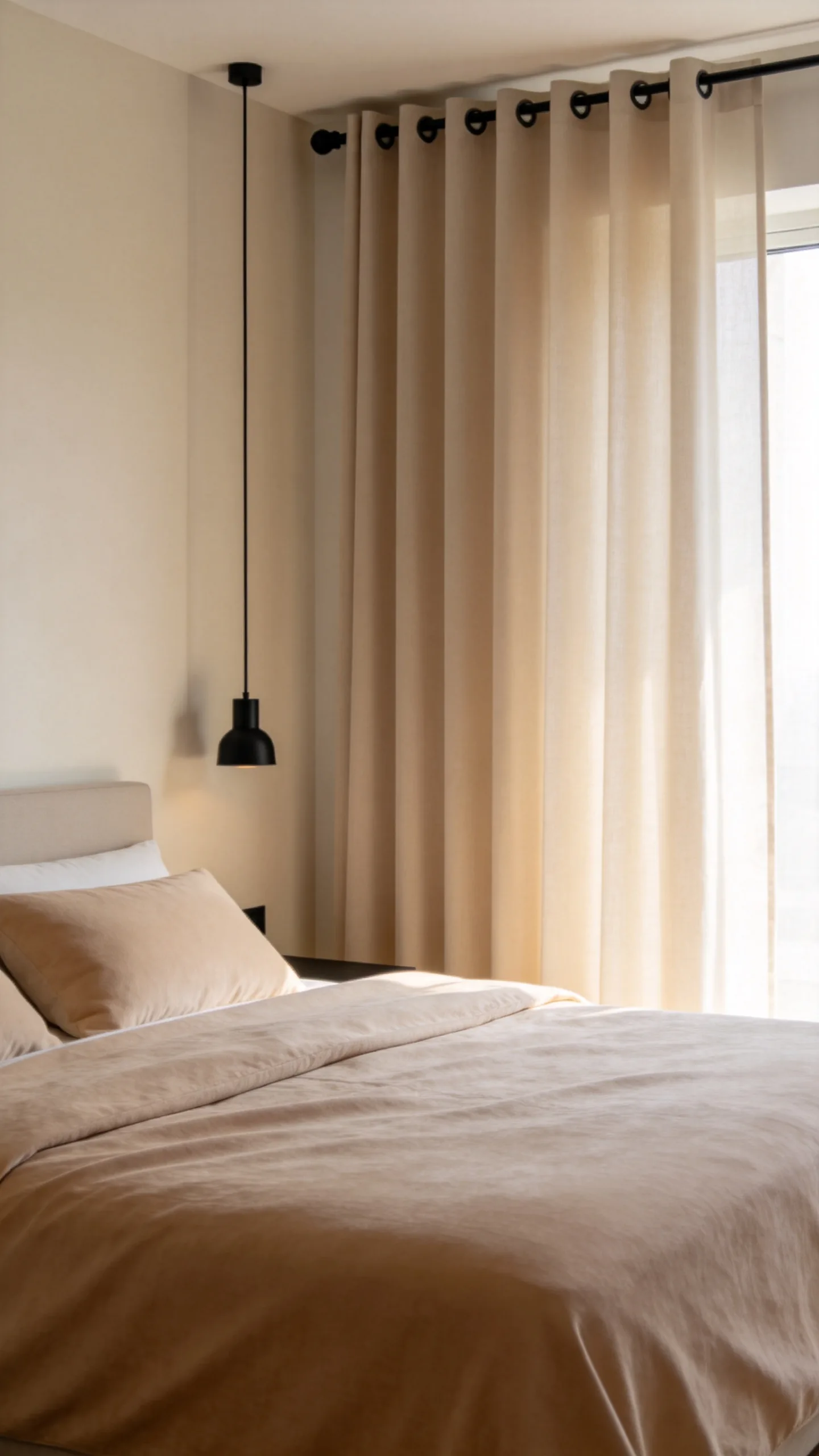
Grommet-top curtains are easy to find, but the large metal circles can make a room feel more casual. For a more expensive look, use curtain rings with small clips or drapery hooks. Rings create a cleaner top line and allow the fabric to hang with a softer, more traditional drape.
In a living room or bedroom, black, brass, bronze, or polished nickel rings can coordinate with lighting, cabinet hardware, or door handles. This small detail makes the window treatment feel connected to the rest of the room. If you already own rod-pocket panels, you can often attach rings with clips to upgrade the look without buying new curtains.
7. Layer Sheer Curtains Behind Heavier Panels
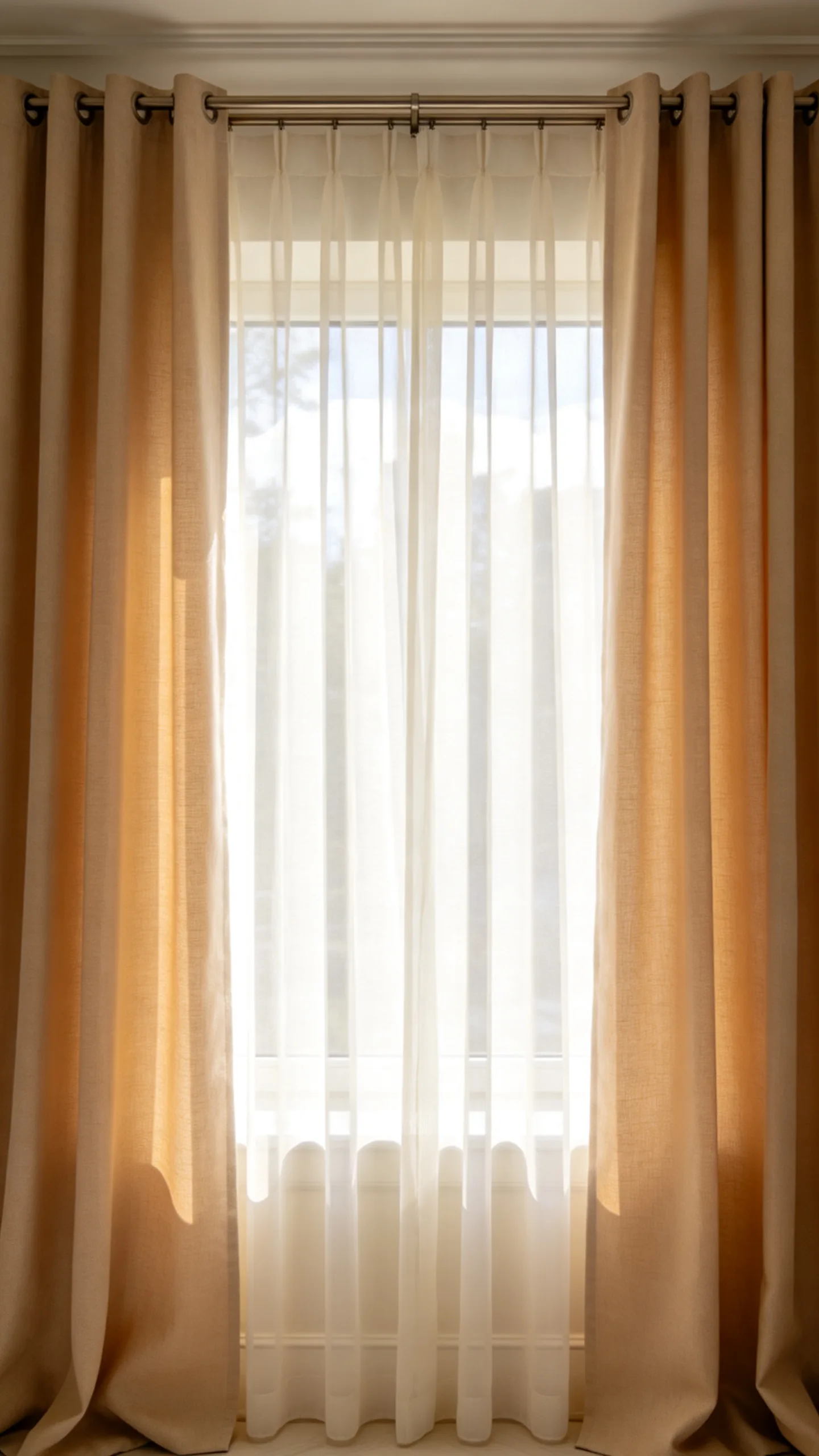
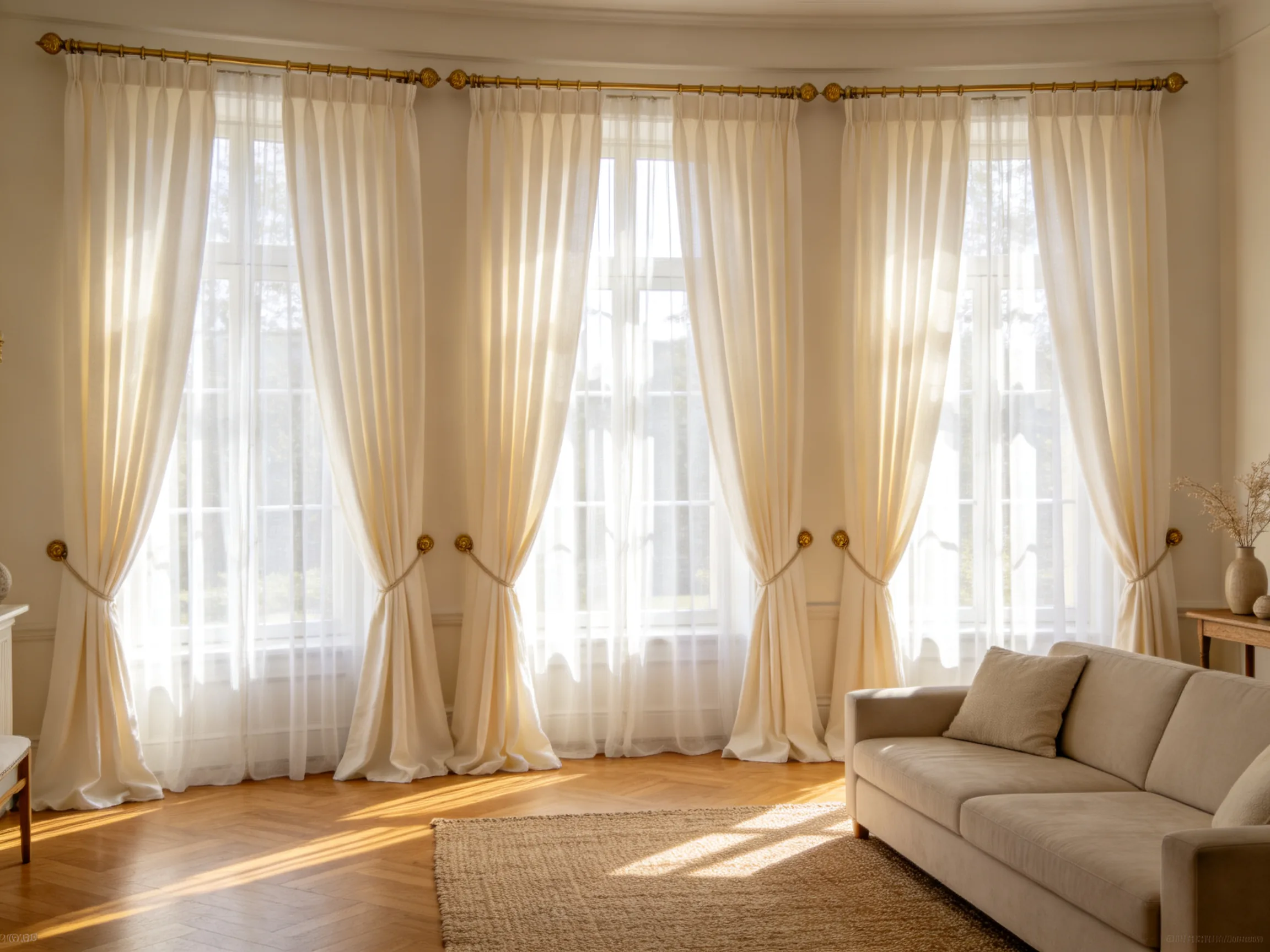
Layering curtains makes a window feel more dimensional and thoughtfully styled. Use sheer white, ivory, or warm beige panels closest to the glass, then add heavier linen, cotton, or velvet curtains on the outside. This combination works beautifully in bedrooms, living rooms, and dining rooms where you want privacy during the day and softness at night.
Sheers filter harsh sunlight while keeping the room bright, which helps small spaces feel open instead of closed off. The outer panels add structure, color, and insulation. For a more finished look, use a double curtain rod so each layer moves separately. This creates a boutique hotel effect without requiring custom window treatments.
8. Pick Warm White or Ivory Curtains for Soft Luxury
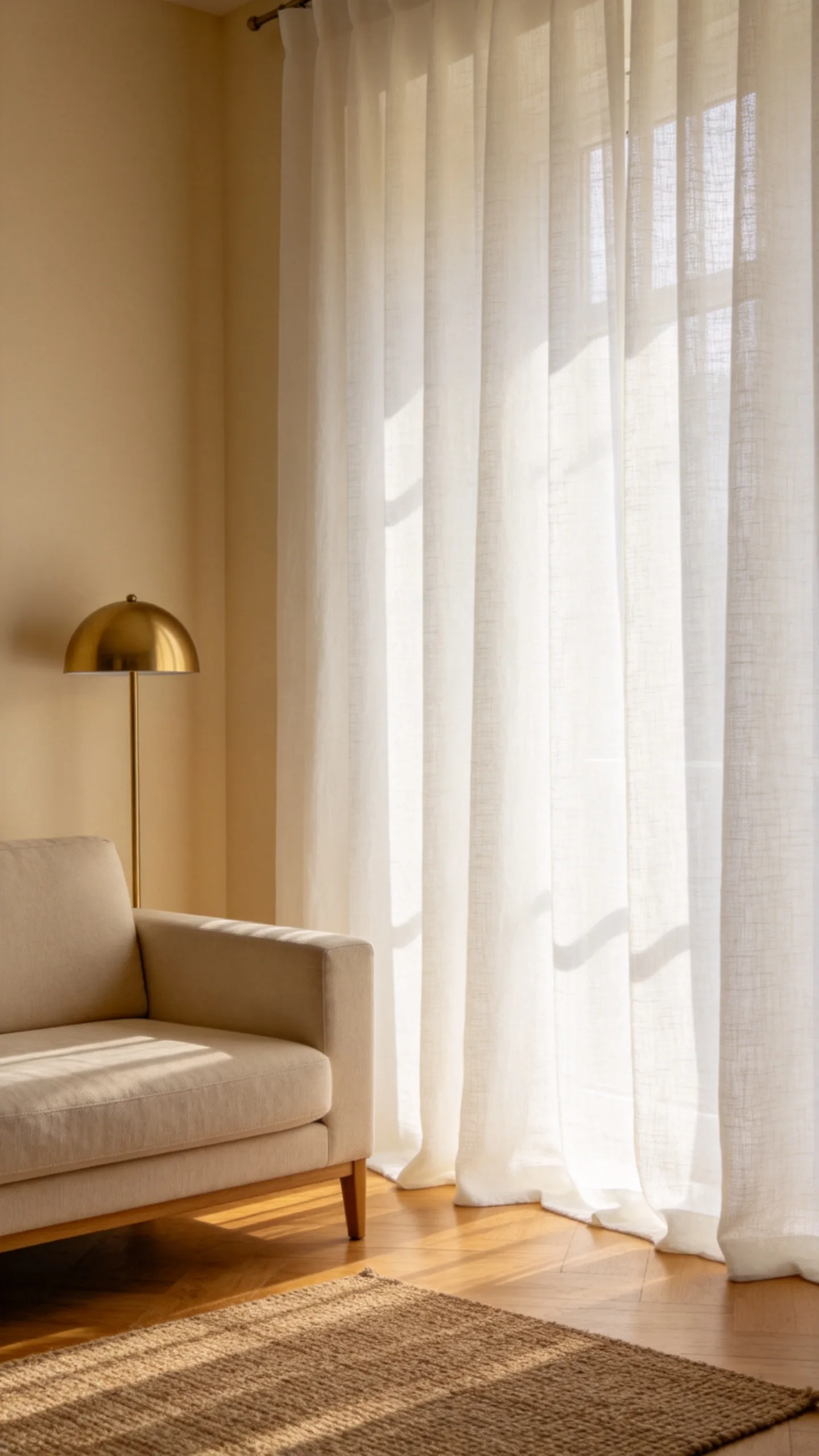
White curtains can look crisp and fresh, but warm white, ivory, or soft cream often feels more expensive than bright optic white. These shades soften daylight and pair well with beige walls, greige paint, warm wood floors, brass accents, and natural fiber rugs. They are especially useful in bedrooms and living rooms where you want a calm, airy look.
Choose fabric with visible texture, such as linen blend, cotton slub, or woven polyester, so the curtains do not look flat. Warm white panels can also make a small room feel larger because they reflect light and reduce visual clutter. For a high-end effect, match the curtain color to the wall color within one or two shades so the window treatment feels seamless.
9. Use Velvet Curtains for Rich Texture
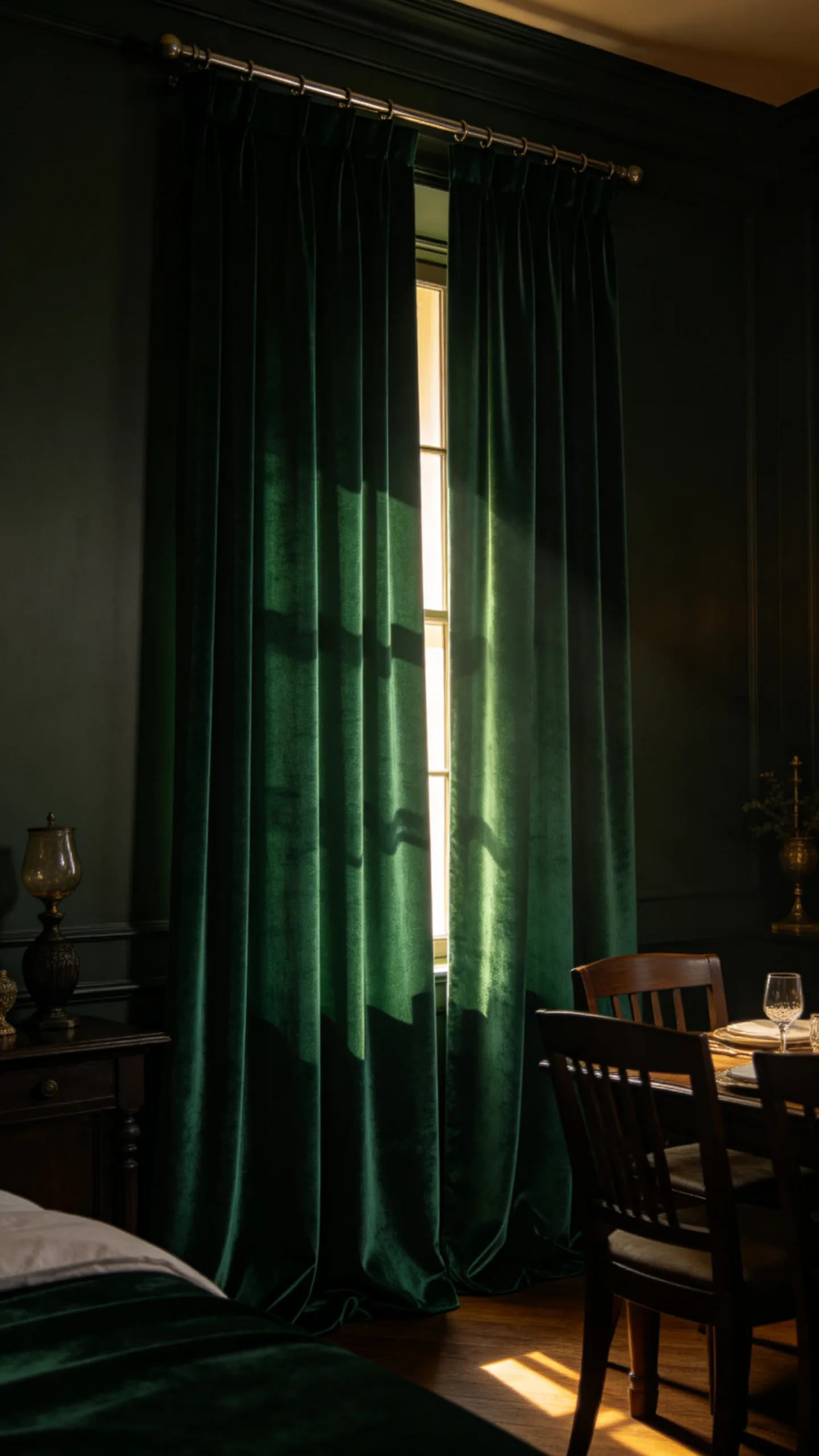
Velvet curtains instantly add depth and softness to a room. They work especially well in bedrooms, moody living rooms, media rooms, and dining rooms where a little drama feels appropriate. Deep colors like forest green, navy, chocolate brown, charcoal, burgundy, or camel can make the window feel like a focal point.
Because velvet has weight, it hangs beautifully and creates strong vertical folds. Pair velvet panels with a simple metal rod so the fabric remains the main feature. In small rooms, use velvet carefully: choose a color close to the wall color or limit the darker tone to one window wall so the room does not feel crowded. Lined velvet panels can also help block light and add privacy.
10. Try Linen Curtains for Relaxed Elegance
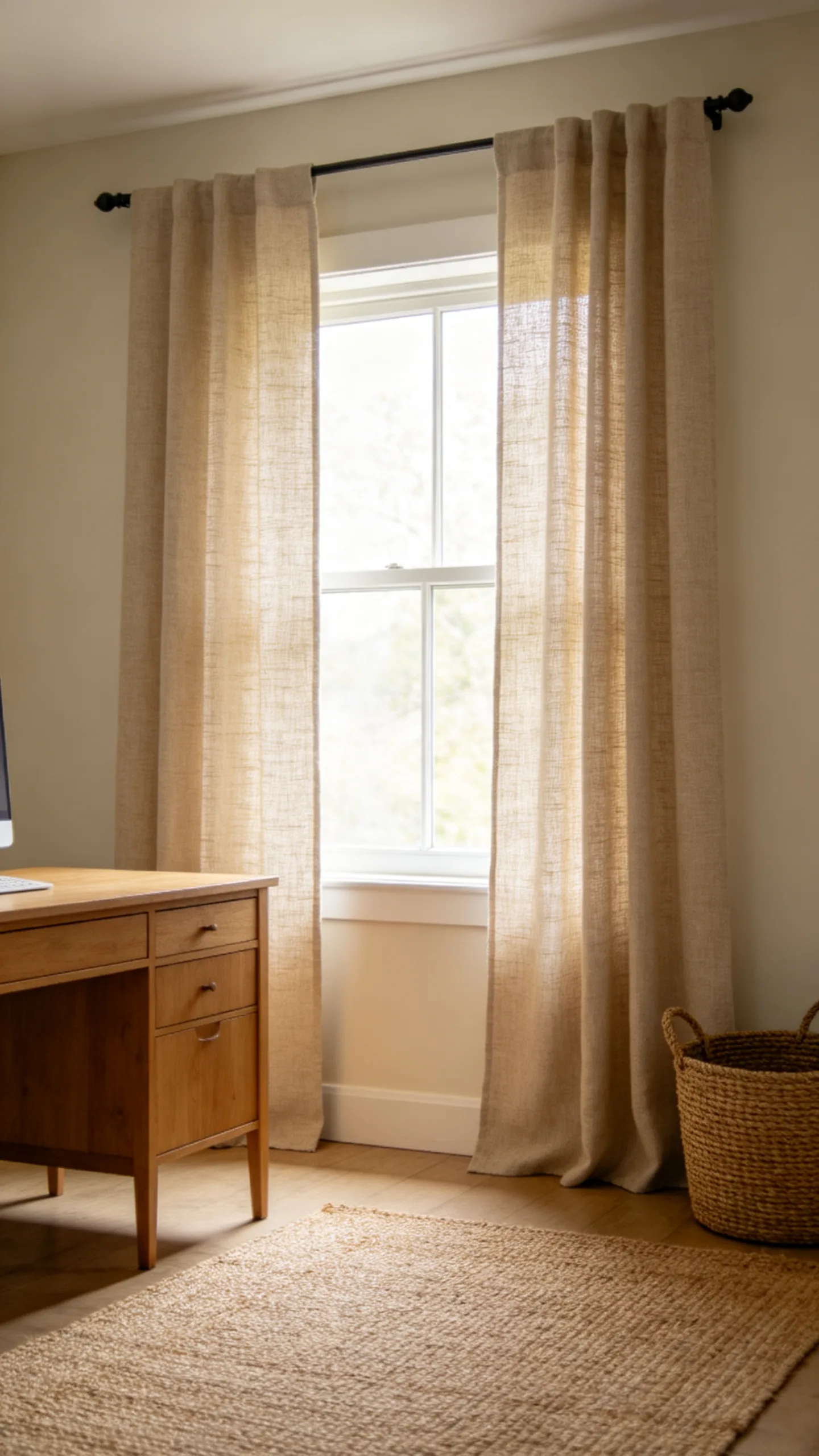
Linen curtains have a natural texture that feels elevated without looking stiff. They are ideal for casual living rooms, coastal bedrooms, dining nooks, and home offices where you want softness and movement. Linen works especially well with wood furniture, jute rugs, stoneware lamps, woven baskets, and muted wall colors.
For a more expensive appearance, choose lined linen or a linen-blend fabric with enough weight to hang straight. Unlined linen can look beautiful, but it may appear too sheer or wrinkled in formal rooms. Neutral shades like oatmeal, flax, mushroom, ivory, and taupe create a layered designer look while staying versatile for seasonal decor changes.
11. Match Curtain Color to the Wall for a Built-In Effect
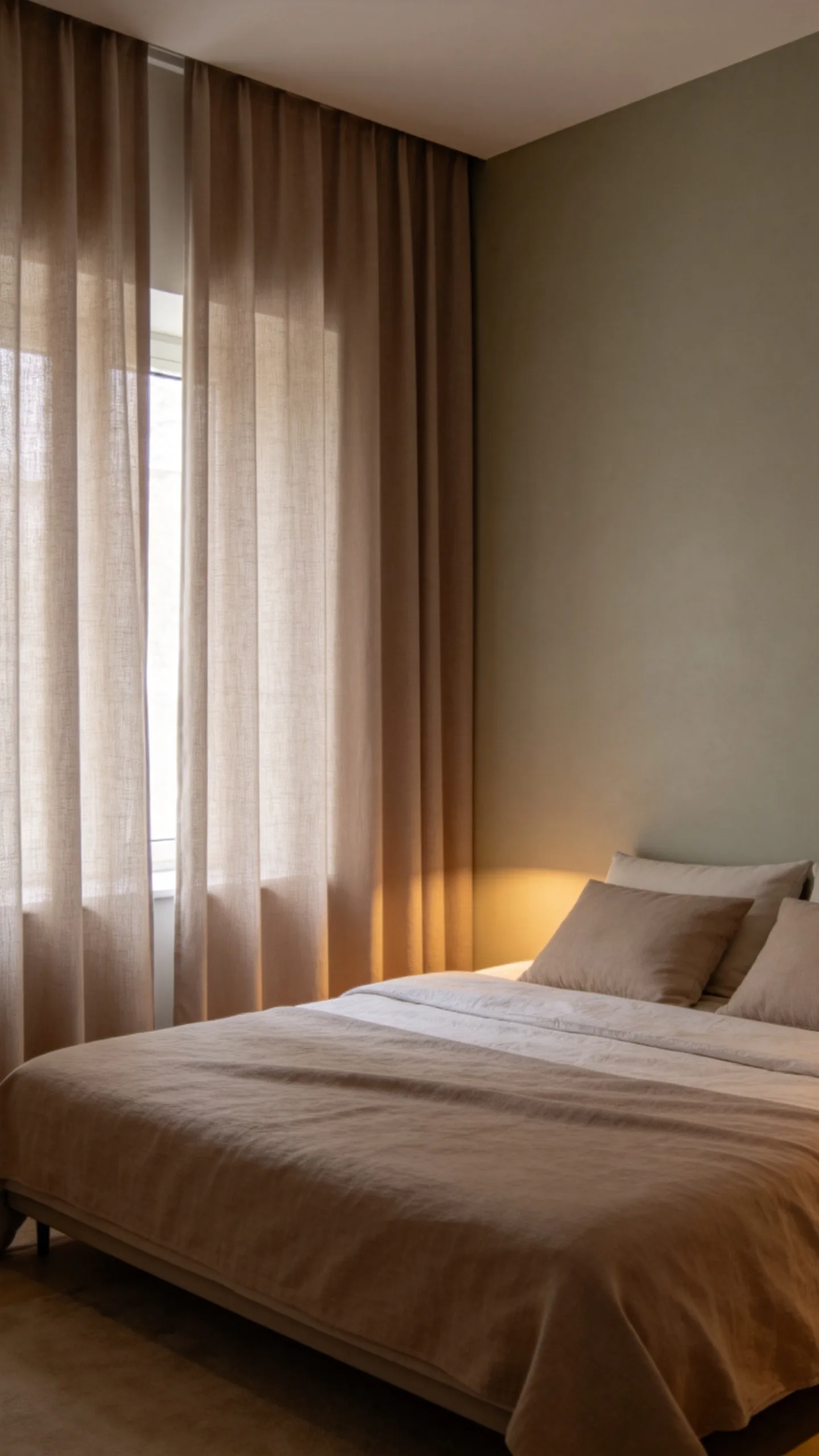
Curtains that closely match the wall color can make a room feel larger, calmer, and more custom. This approach works well in small bedrooms, compact living rooms, and apartments because it reduces contrast and keeps the eye moving across the wall. The window treatment feels integrated rather than added as an afterthought.
For example, pair soft greige walls with taupe linen curtains, sage walls with muted olive panels, or creamy walls with ivory cotton drapes. The texture of the fabric keeps the look from feeling flat. This idea is especially effective when you want the room’s focal point to be art, a bed, a fireplace, or a sofa rather than the window itself.
12. Add a Valance or Cornice for a Finished Top Edge
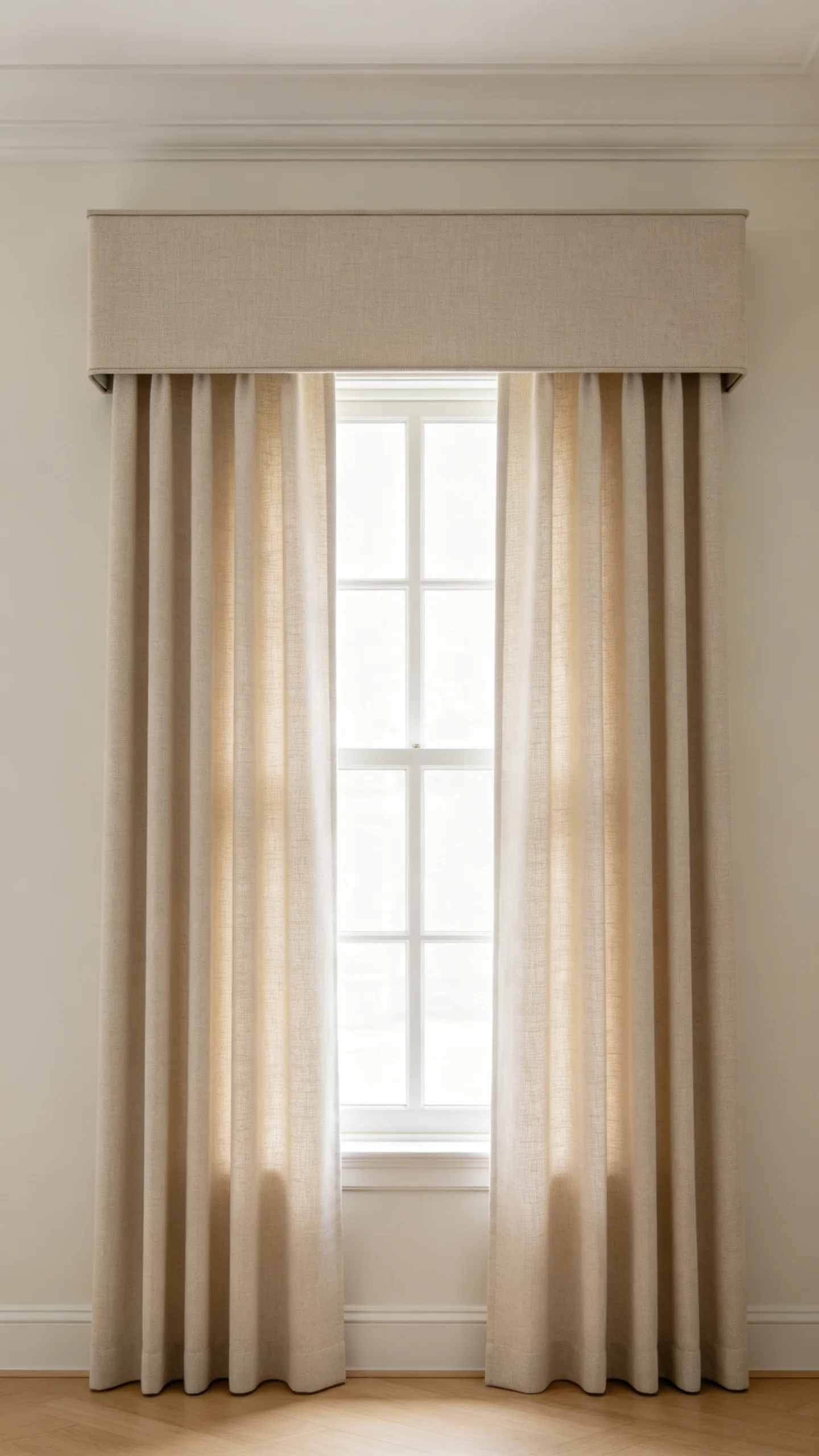
A valance or cornice can hide curtain hardware and make a window look more tailored. A fabric valance gives a softer traditional effect, while a structured upholstered cornice feels more architectural. This idea works well in dining rooms, bedrooms, nurseries, and formal living rooms where the top of the window needs more presence.
Keep the shape simple for a modern expensive look. A straight upholstered cornice in linen, velvet, or a subtle patterned fabric can make ready-made curtains appear custom. Mount it high above the window to maintain height. In small rooms, avoid bulky swags or heavy detailing because they can interrupt sightlines and make the ceiling feel lower.
13. Use Black Curtain Rods for Crisp Contrast
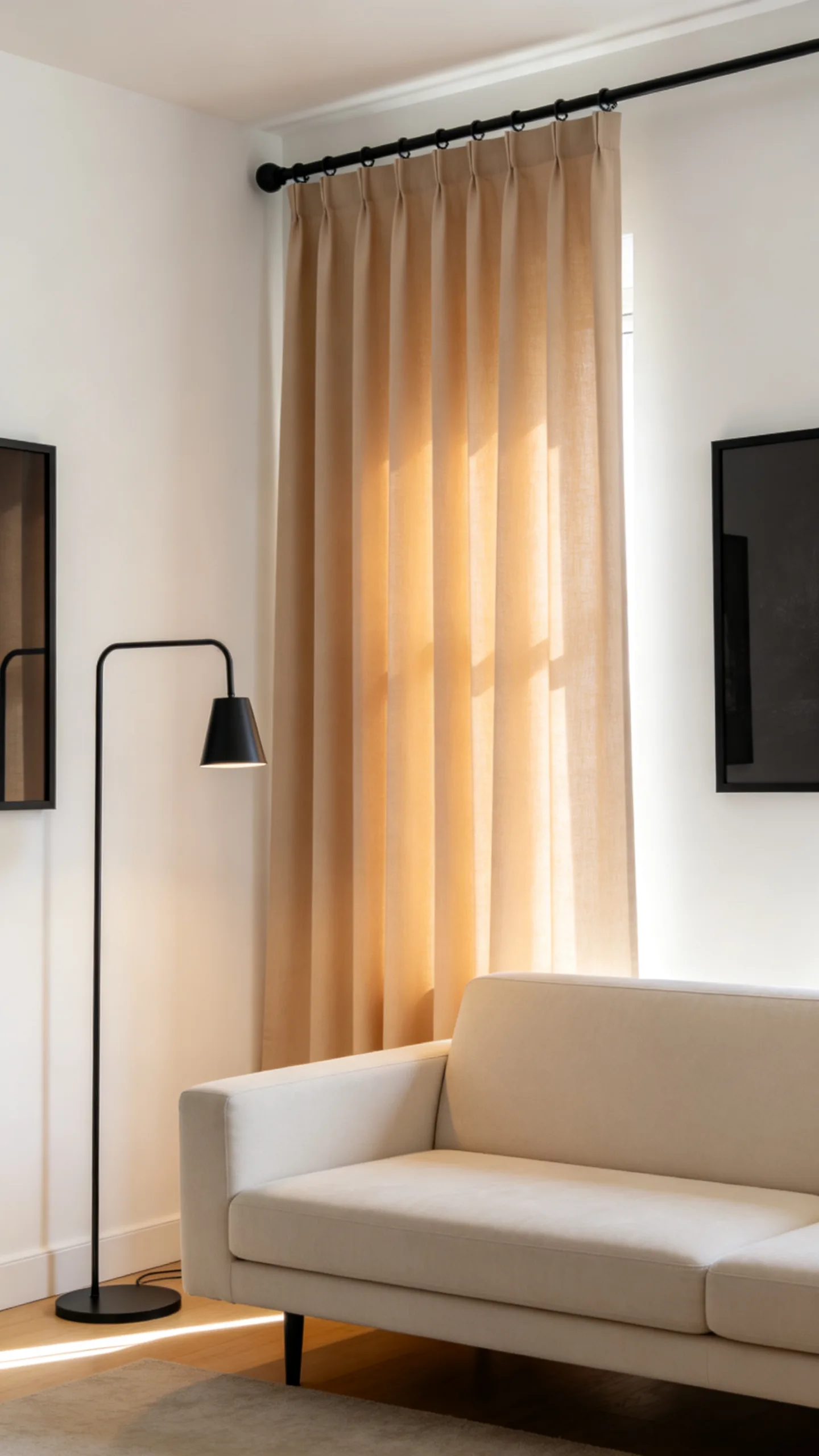
A slim black curtain rod can make even affordable curtains look sharper. Black hardware works especially well with white walls, warm neutral curtains, black window frames, modern lighting, or dark picture frames. It outlines the window treatment in a clean way without needing ornate details.
Choose a rod with simple round finials or squared end caps for a more current look. In a living room with a black metal floor lamp or a bedroom with black nightstand hardware, the rod helps repeat the color around the space. This repetition makes the design feel intentional and cohesive, which is a major part of an expensive-looking room.
14. Choose Brass Hardware for Warm Elegance
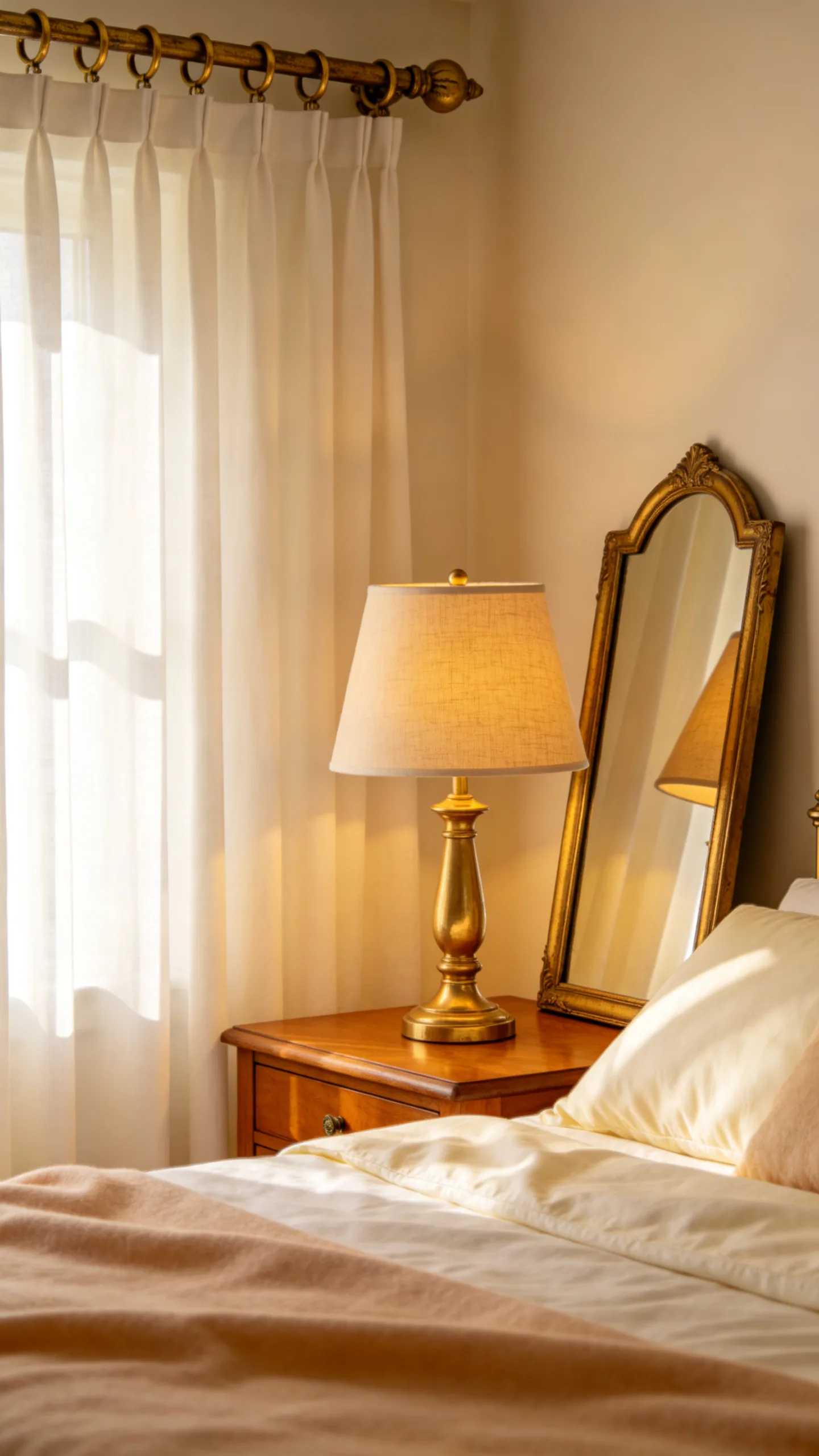
Brass curtain rods and rings can add warmth and polish to a room. They pair beautifully with cream curtains, taupe linen, olive velvet, dusty blue panels, and warm wood furniture. Brass is especially effective in bedrooms, dining rooms, and living rooms with traditional, transitional, or vintage-inspired decor.
For a refined look, choose aged brass, brushed brass, or antique brass rather than overly shiny yellow gold. Coordinate the curtain hardware with nearby accents such as table lamps, mirror frames, cabinet pulls, or picture lights. This makes the window treatment feel like part of the room’s overall design plan instead of a random purchase.
15. Add Curtain Tiebacks for Shape and Detail
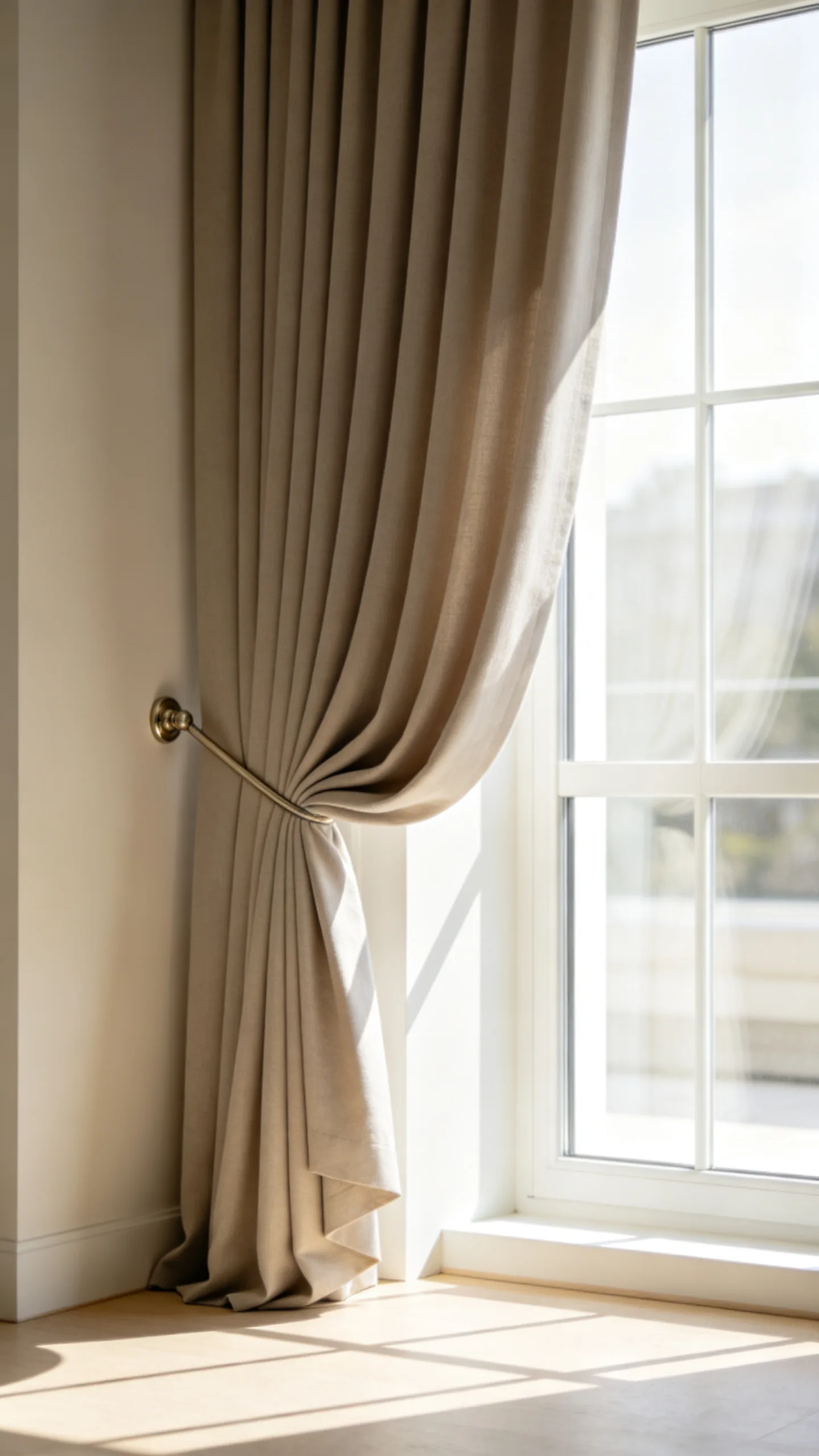
Tiebacks can make curtains look more styled, especially when the fabric is heavy or the window is narrow. In a bedroom, a fabric tieback can pull panels gently away from the glass during the day. In a living room, metal holdbacks mounted on the wall can create a graceful curve and keep curtains from interfering with furniture or walkways.
Place tiebacks about one-third of the way up from the floor for a classic draped shape. For a cleaner modern look, use simple fabric bands in the same material as the curtains or slim metal holdbacks that match the rod. Avoid overly ornate tassels unless the room already has traditional details like carved wood furniture, patterned rugs, or antique mirrors.
16. Install Curtains Across an Entire Wall
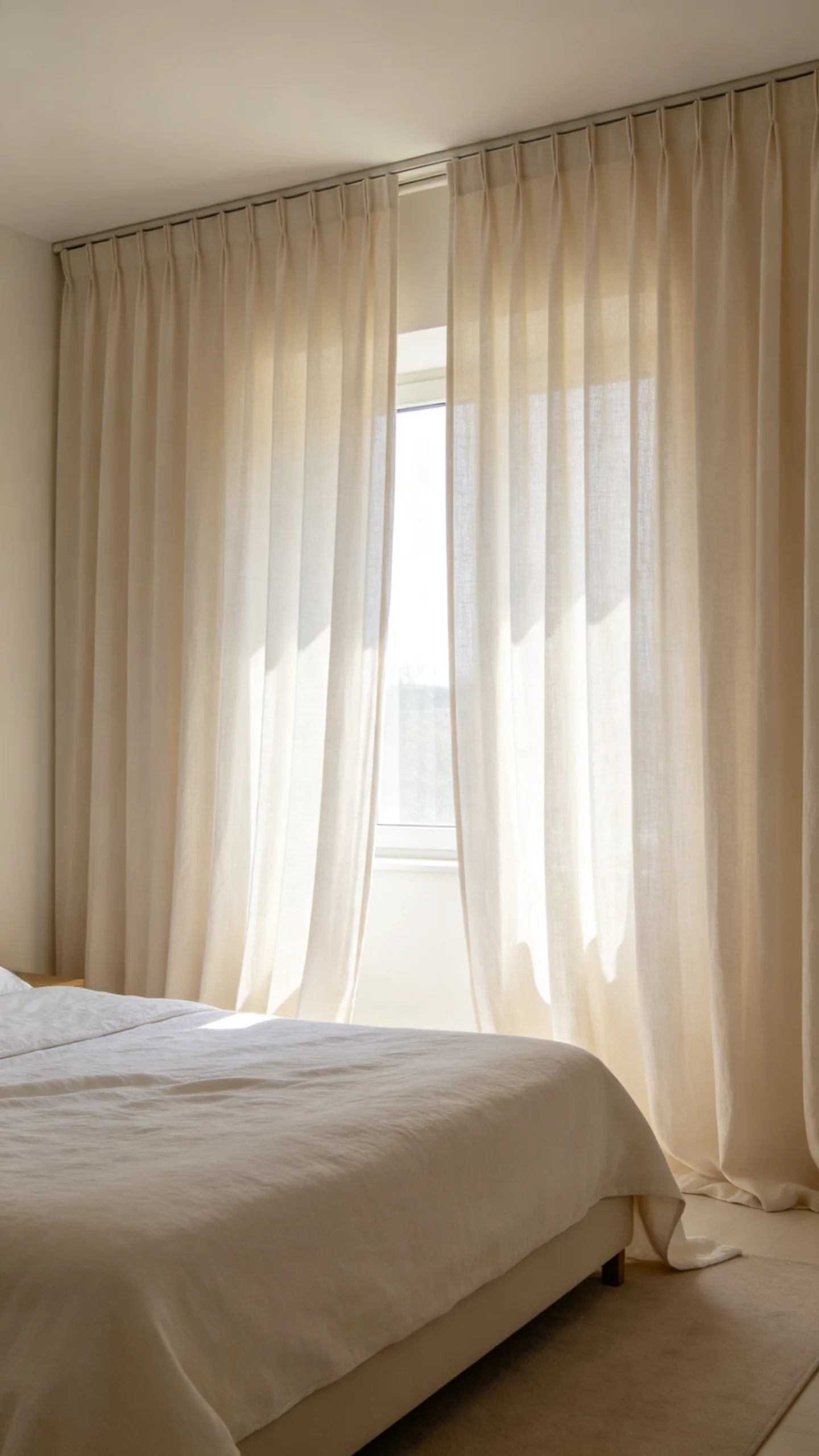
Covering a full wall with curtains can make a small or awkward window look much grander. This works especially well behind a bed, behind a sofa, or along a sliding glass door wall. Instead of emphasizing the window’s actual size, the fabric creates one continuous backdrop that feels soft and architectural.
Use ceiling-mounted tracks or an extra-long rod for the cleanest effect. Light-colored linen or sheer curtains can make the wall feel airy, while heavier panels can add drama in a bedroom or media room. This idea is also useful for hiding off-center windows, uneven trim, or less attractive blinds without doing construction. Keep furniture slightly pulled forward so the curtains can hang freely and traffic flow stays comfortable.
17. Choose Subtle Patterned Curtains Instead of Loud Prints
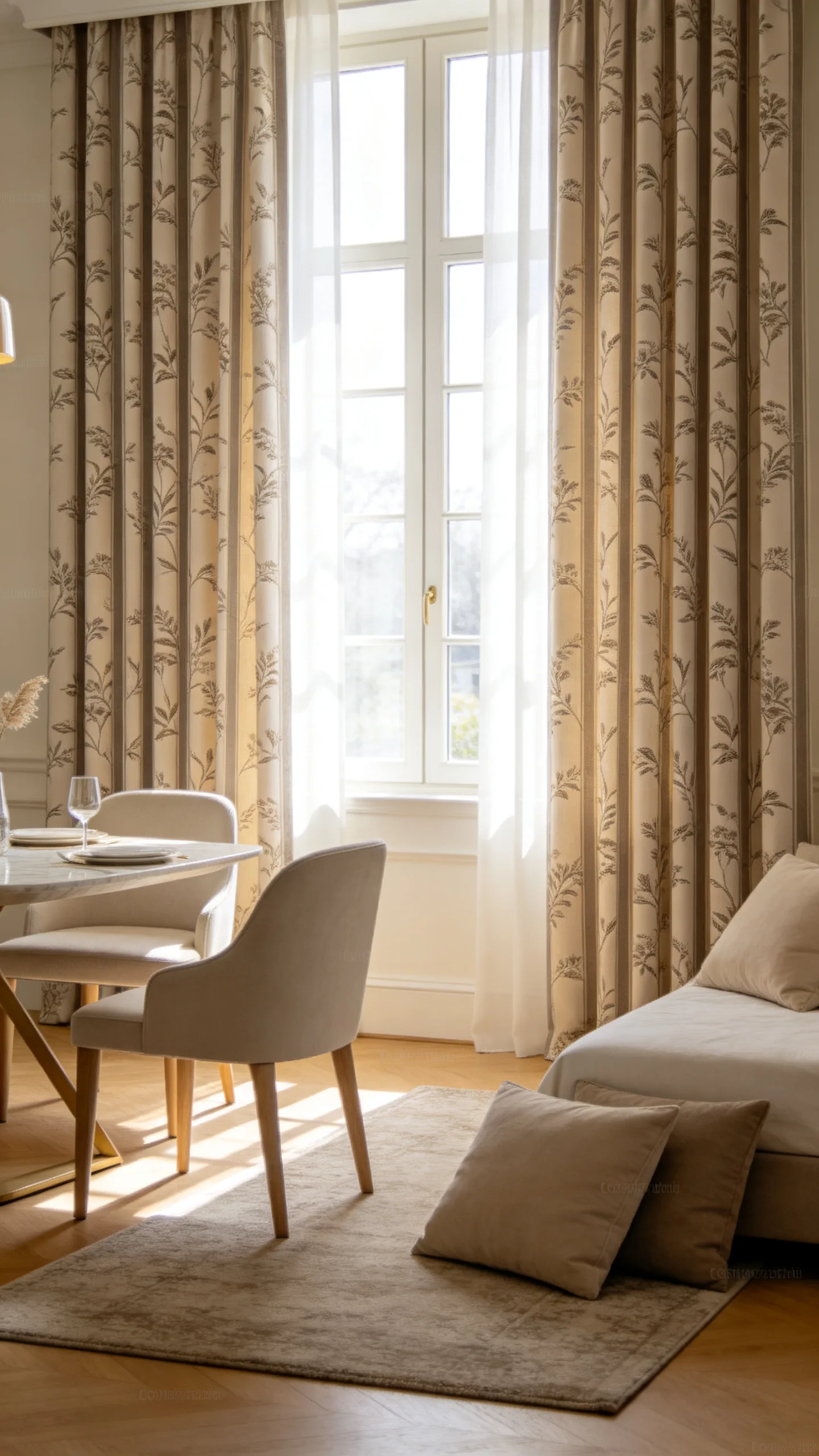
Pattern can look expensive when it is restrained and well-scaled. Instead of bold, high-contrast prints, try soft stripes, small checks, tone-on-tone florals, block prints, or delicate geometric designs. These patterns add interest without overwhelming the window or making the room feel busy.
In a dining room, a muted stripe can make the windows feel taller. In a bedroom, a soft botanical print can frame the bed without competing with bedding. For small rooms, choose patterns with similar background and motif colors so the curtains add texture without breaking up the wall. Pair patterned curtains with simpler rugs and pillows to keep the overall design balanced.
18. Add Curtain Lining for Better Weight and Light Control
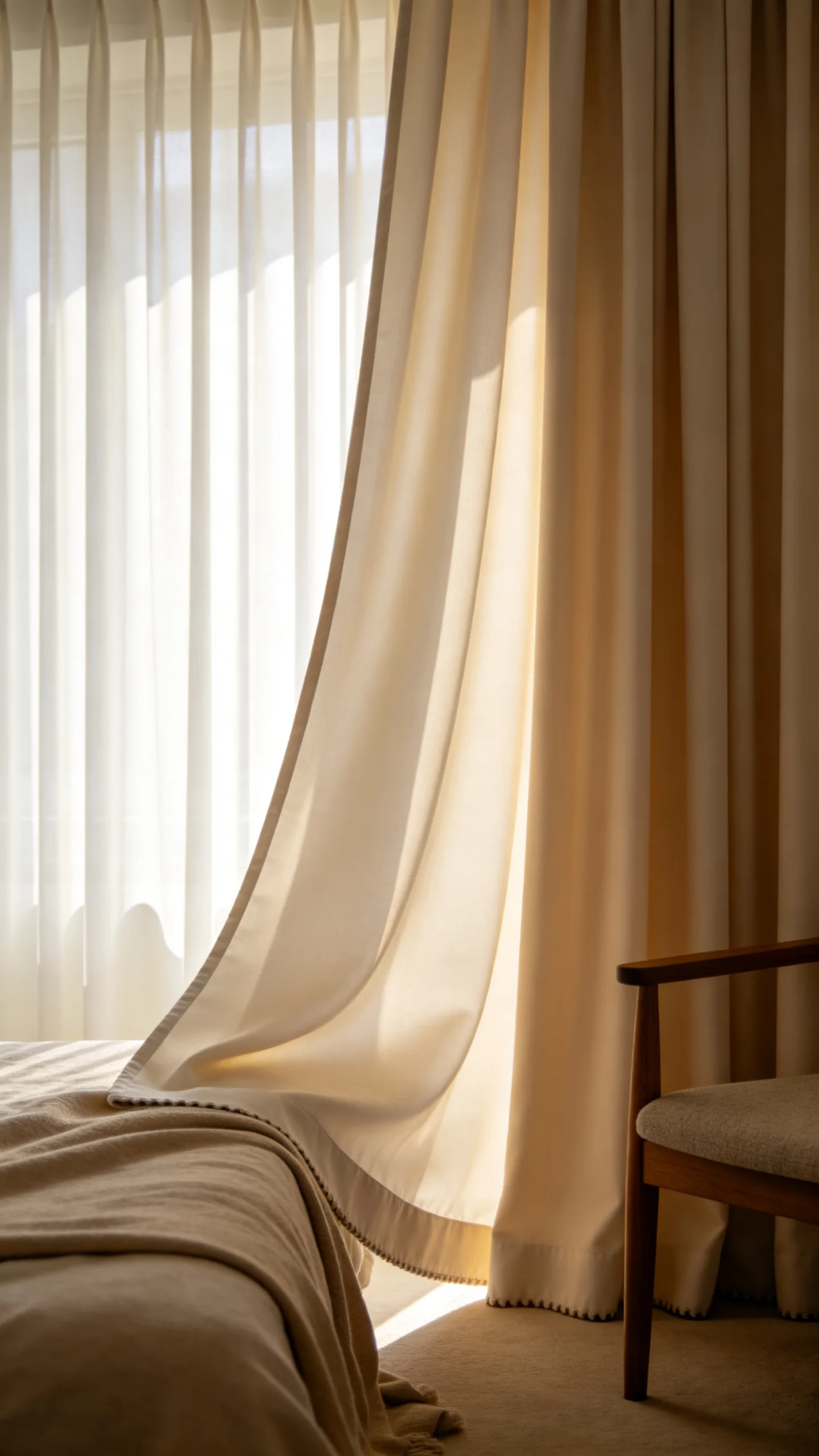
Lining is one of the details that can make curtains feel noticeably more expensive. A lined panel hangs with more weight, looks fuller from inside the room, and appears cleaner from the outside of the house. It also protects the face fabric from sun fading, which is useful for bright living rooms, south-facing bedrooms, and dining rooms with afternoon light.
For bedrooms, blackout or room-darkening lining can improve privacy and make the curtains feel more substantial. For living rooms, standard cotton or poly lining may be enough to create a better drape while still letting in a soft glow. If replacing curtains is not an option, clip-in blackout liners or sew-in lining panels can upgrade existing curtains at a lower cost.

From the editors
Decor Compass Editorial Team
We turn practical home research into clear, useful room-by-room ideas.