The right bedroom curtains can soften a window, frame the bed area, filter morning light, and make the whole room feel more finished. Whether your bedroom has a single narrow window, a wide picture window, or windows placed awkwardly around furniture, these curtain ideas for bedroom window styling focus on cozy textures, elegant proportions, and practical details you can actually use.
1. Floor-Length Linen Curtains in a Soft Neutral
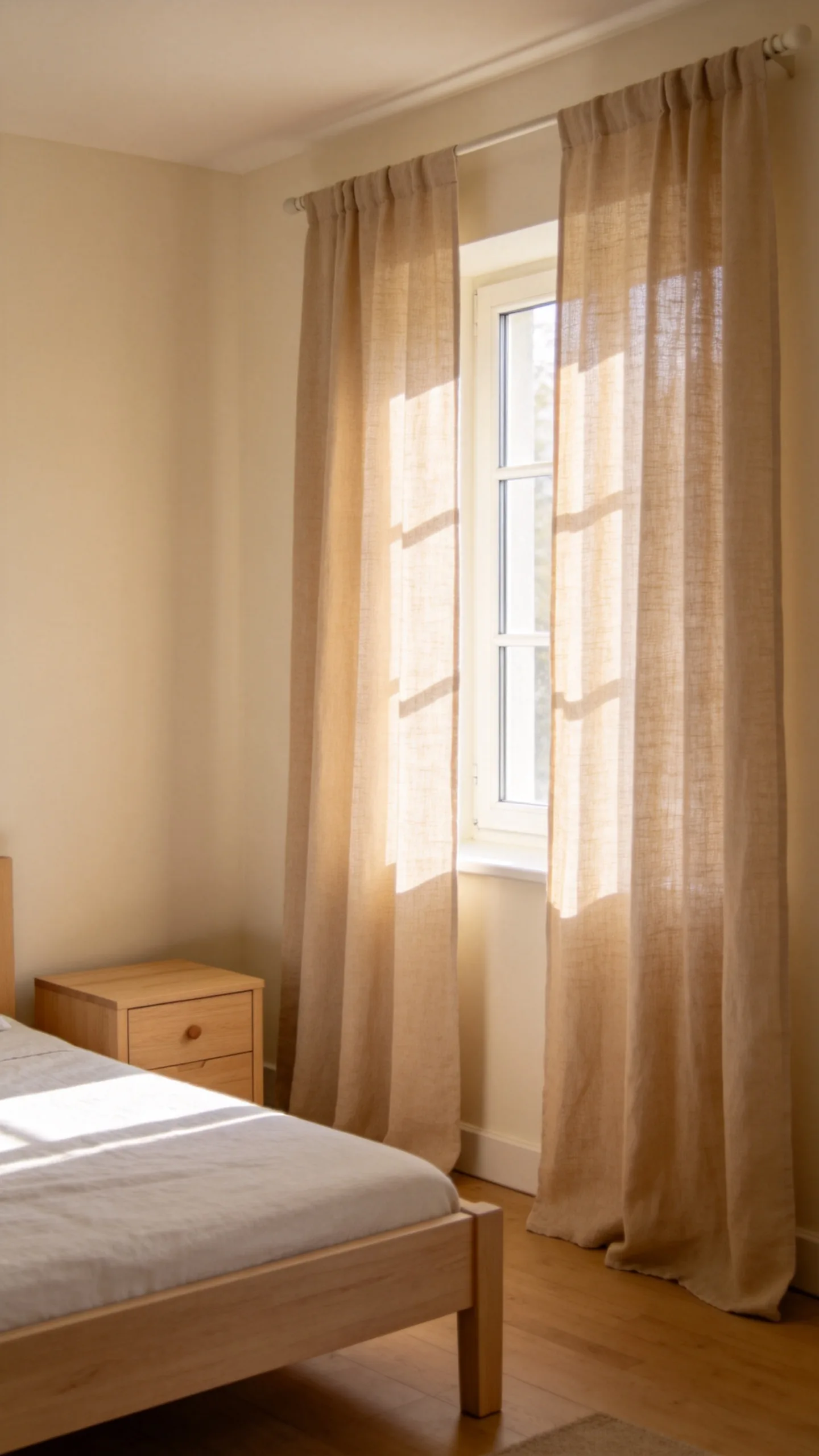
Floor-length linen curtains are one of the easiest ways to make a bedroom window feel relaxed and refined at the same time. Choose warm white, oatmeal, greige, or pale taupe linen panels if your bedroom has painted walls in cream, beige, sage, or soft gray. The natural weave adds texture without making the window treatment feel heavy.
Hang the curtain rod a few inches above the window frame and extend it wider than the glass so the panels can stack outside the window when open. This keeps more daylight coming in and makes the window look larger. In a small bedroom, this also improves sightlines because the fabric frames the wall instead of covering too much glass.
For a cozy finish, let the panels just kiss the floor rather than puddle heavily. This keeps the look elegant and easy to maintain, especially near nightstands, radiators, or low dressers.
2. Sheer White Curtains Layered Behind Heavier Drapes
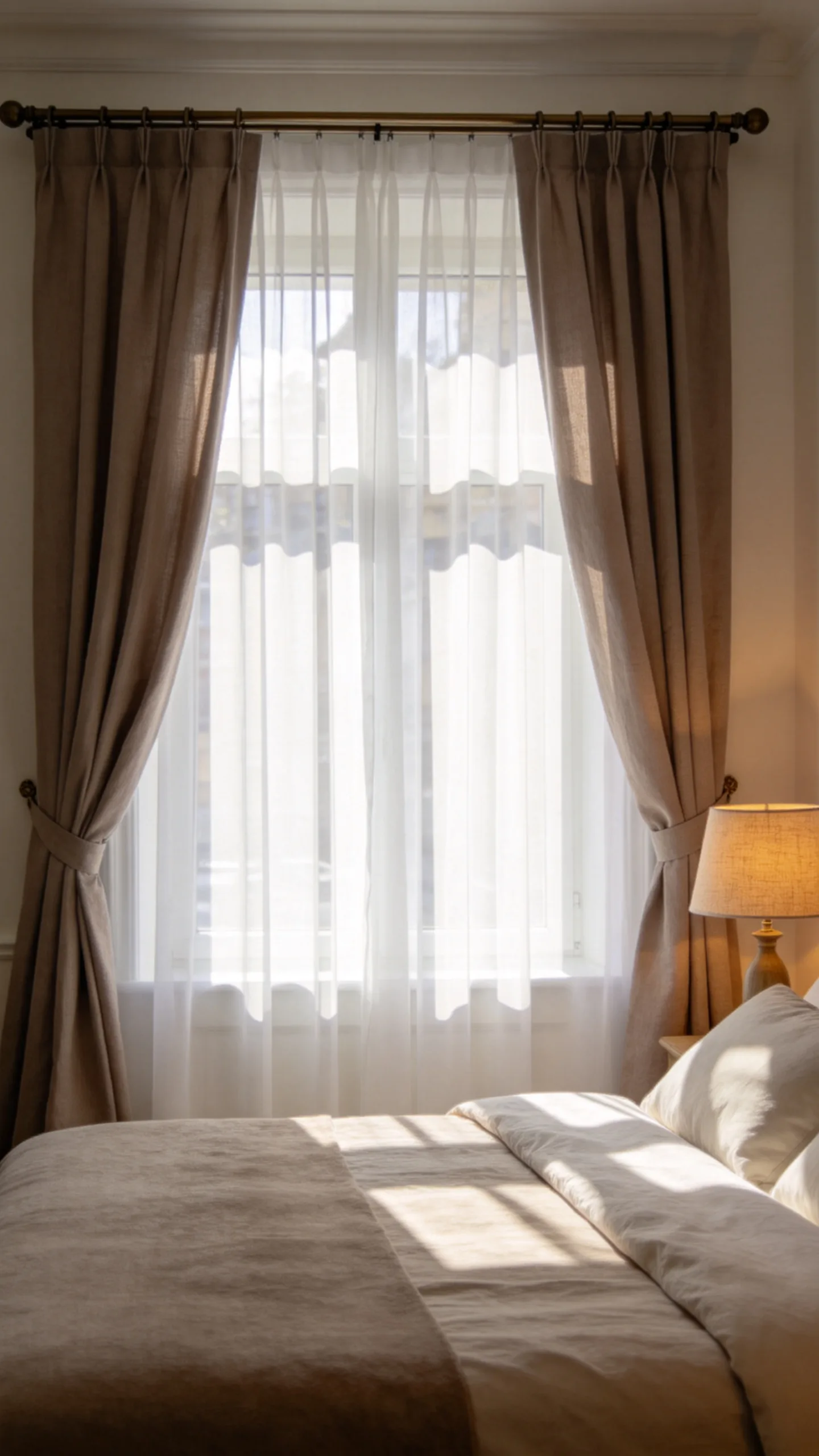
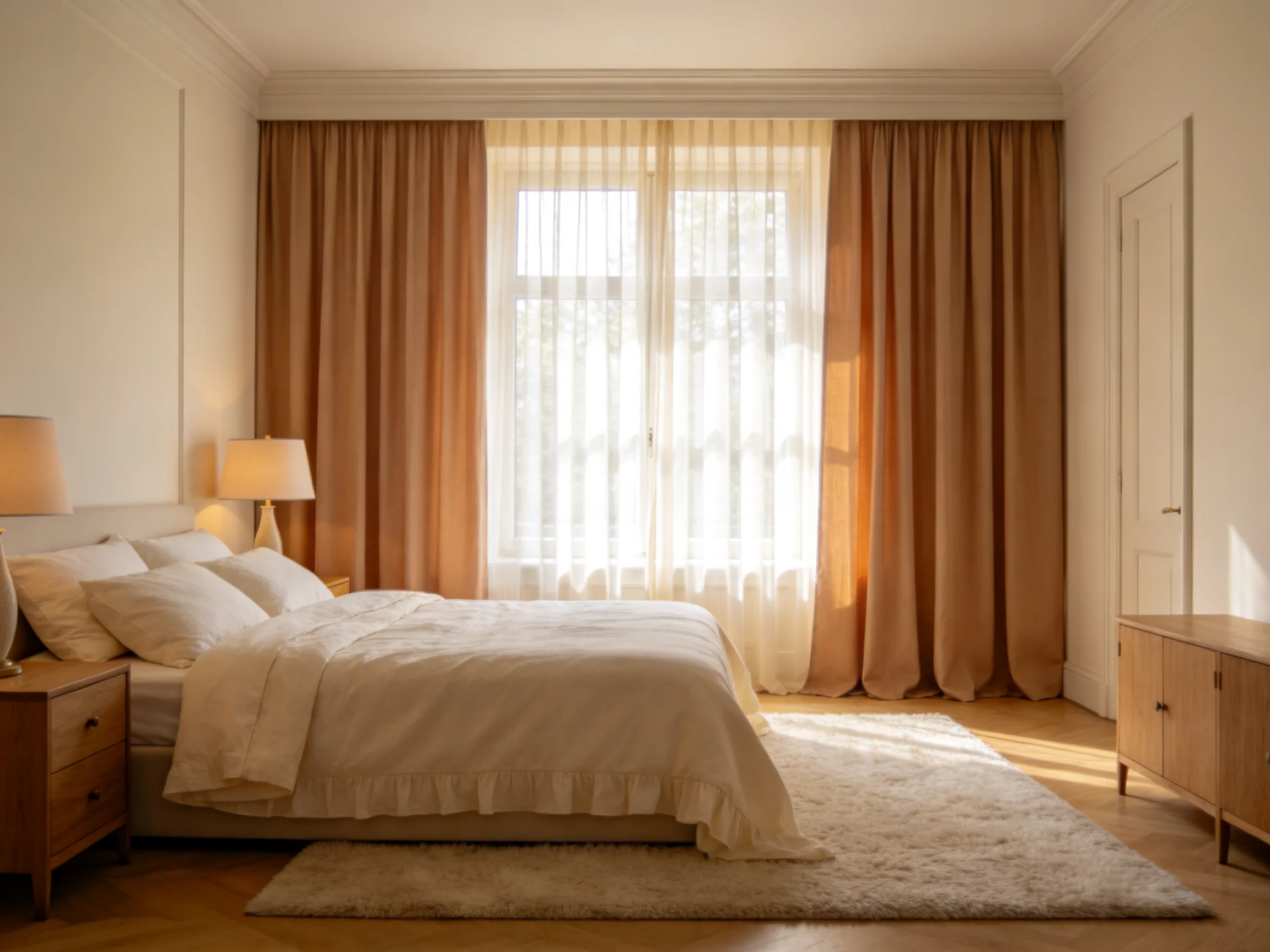
Layering sheer curtains behind heavier drapes gives a bedroom both softness and function. The sheer layer filters bright daylight during the day, while the outer drapes provide privacy and a more dressed-up evening look. This works especially well for street-facing bedrooms or windows that face a neighboring home.
Use a double curtain rod or ceiling track so each layer moves separately. White or ivory sheers pair beautifully with velvet, linen, cotton, or woven outer panels. If your bedroom walls are dark, the sheer layer can keep the window from feeling too visually heavy.
This idea is especially useful when you want a cozy bedroom but still need natural light for reading, getting dressed, or making the room feel open in the morning.
3. Velvet Curtains in a Muted Jewel Tone
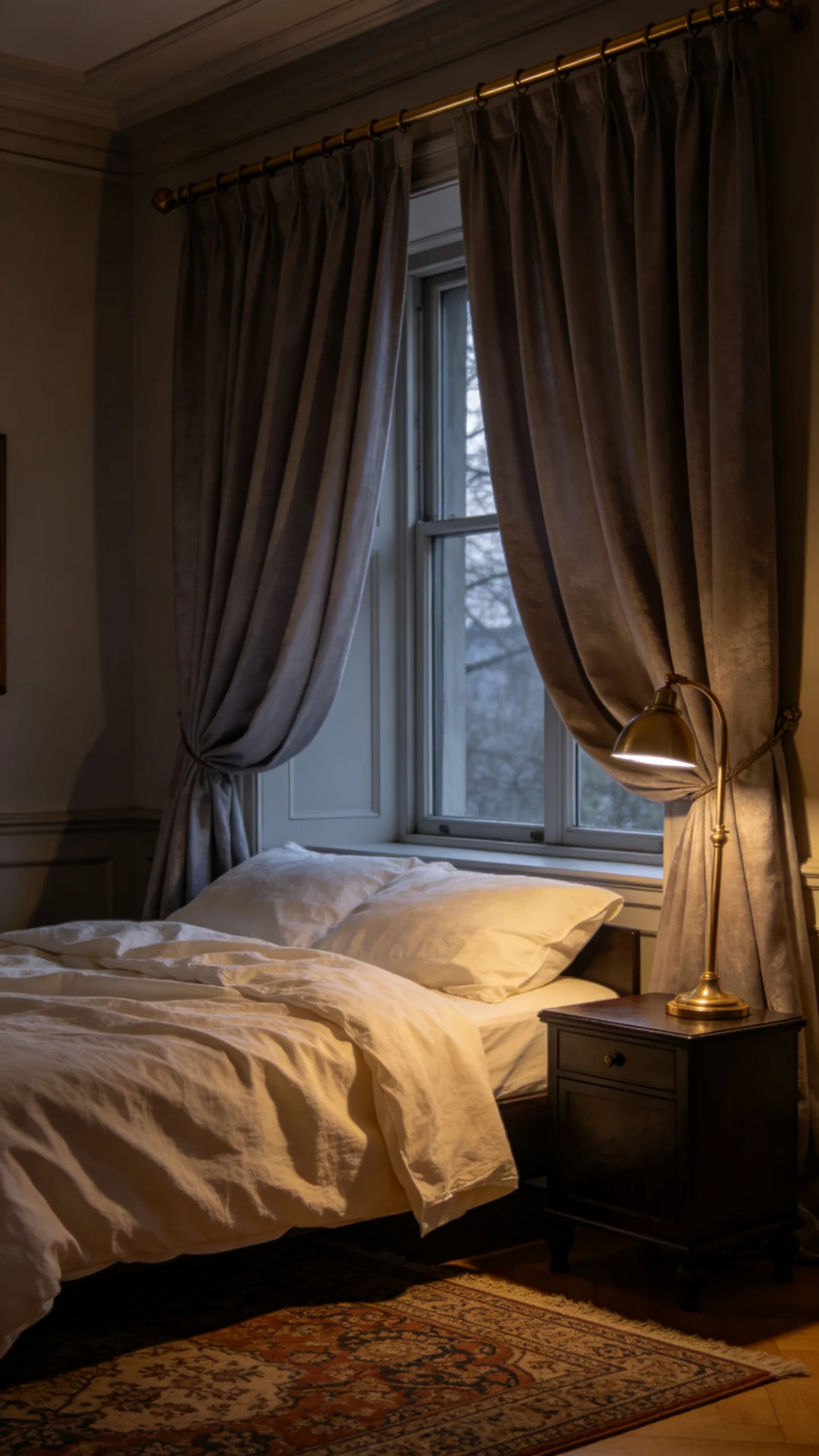
Velvet curtains can make a bedroom window feel instantly elegant, especially when the color is rich but not too loud. Try muted emerald, smoky blue, deep plum, or warm rust for a sophisticated focal point. These shades work well with wood furniture, brass lamps, cream bedding, and vintage-style rugs.
Because velvet has visual weight, use it thoughtfully in smaller rooms. Hang the panels high and wide so the fabric creates vertical lines rather than crowding the window. A slim black, brass, or antique bronze rod keeps the look polished.
Velvet is also helpful for making the room feel cocoon-like in the evening. Pair it with warm bedside lighting and layered bedding to create a bedroom that feels cozy without looking casual.
4. Pinch-Pleat Drapes for a Tailored Bedroom Window
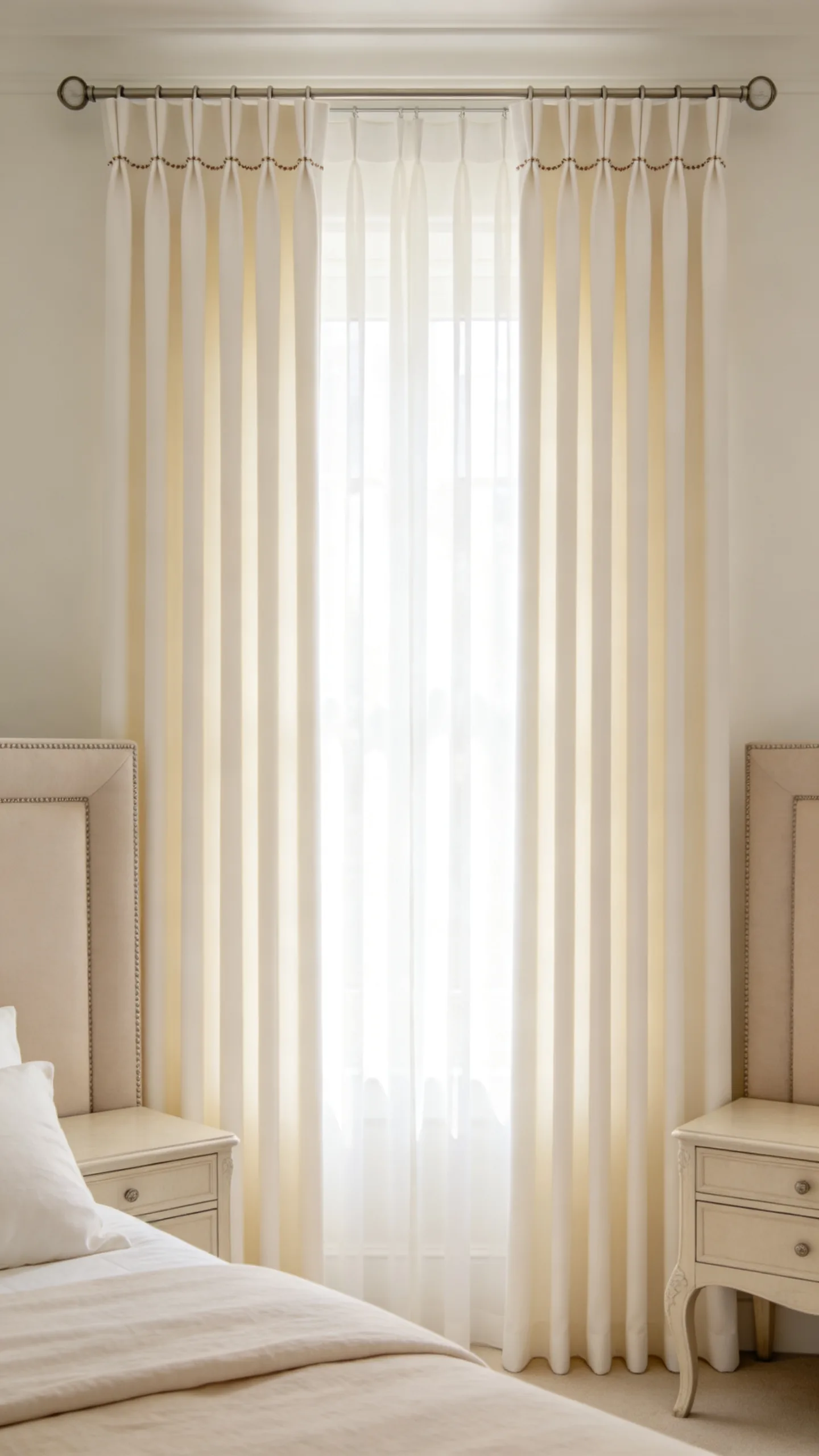
Pinch-pleat drapes bring structure to a bedroom window, making the whole space feel more intentional. The stitched pleats at the top create even folds, which look especially elegant in bedrooms with upholstered headboards, matching nightstands, or traditional furniture.
Choose a fabric with enough weight to hold the pleat shape, such as cotton-linen blend, lined linen, or light wool-look fabric. A neutral shade like ivory, mushroom, or stone will give the room a calm look, while a soft pattern can add interest without overwhelming the bed wall.
Pinch-pleat curtains work best when hung from rings or a track. The consistent folds keep the window area tidy, which is helpful in bedrooms where clutter, uneven fabric, or bulky rods can make the room feel smaller.
5. Ceiling-Mounted Curtains for Taller-Looking Walls
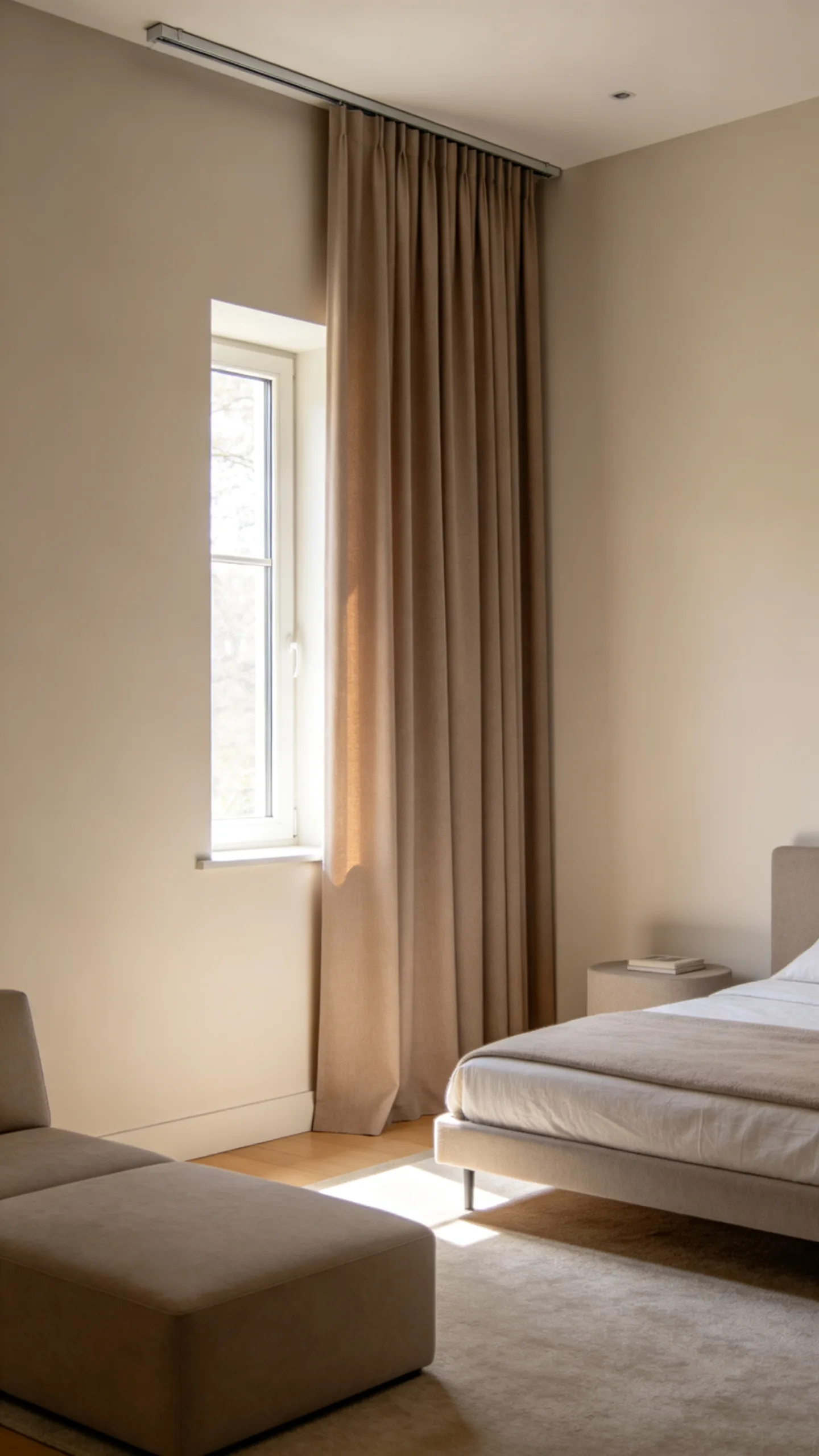
Mounting bedroom curtains at the ceiling draws the eye upward and makes the walls appear taller. This is a smart option for bedrooms with low ceilings, short window frames, or windows that feel too small for the wall. The long vertical line of fabric helps stretch the room visually.
Use a ceiling track for a clean, modern look, or install a rod just below the crown molding if you prefer visible hardware. Choose full-length panels that reach the floor so the eye travels uninterrupted from ceiling to baseboard.
This idea works particularly well behind a bed, along a full window wall, or in apartments where the room needs softness but cannot be remodeled. Keep the fabric color close to the wall color for a quiet, spacious effect.
6. Warm Beige Blackout Curtains for Better Sleep
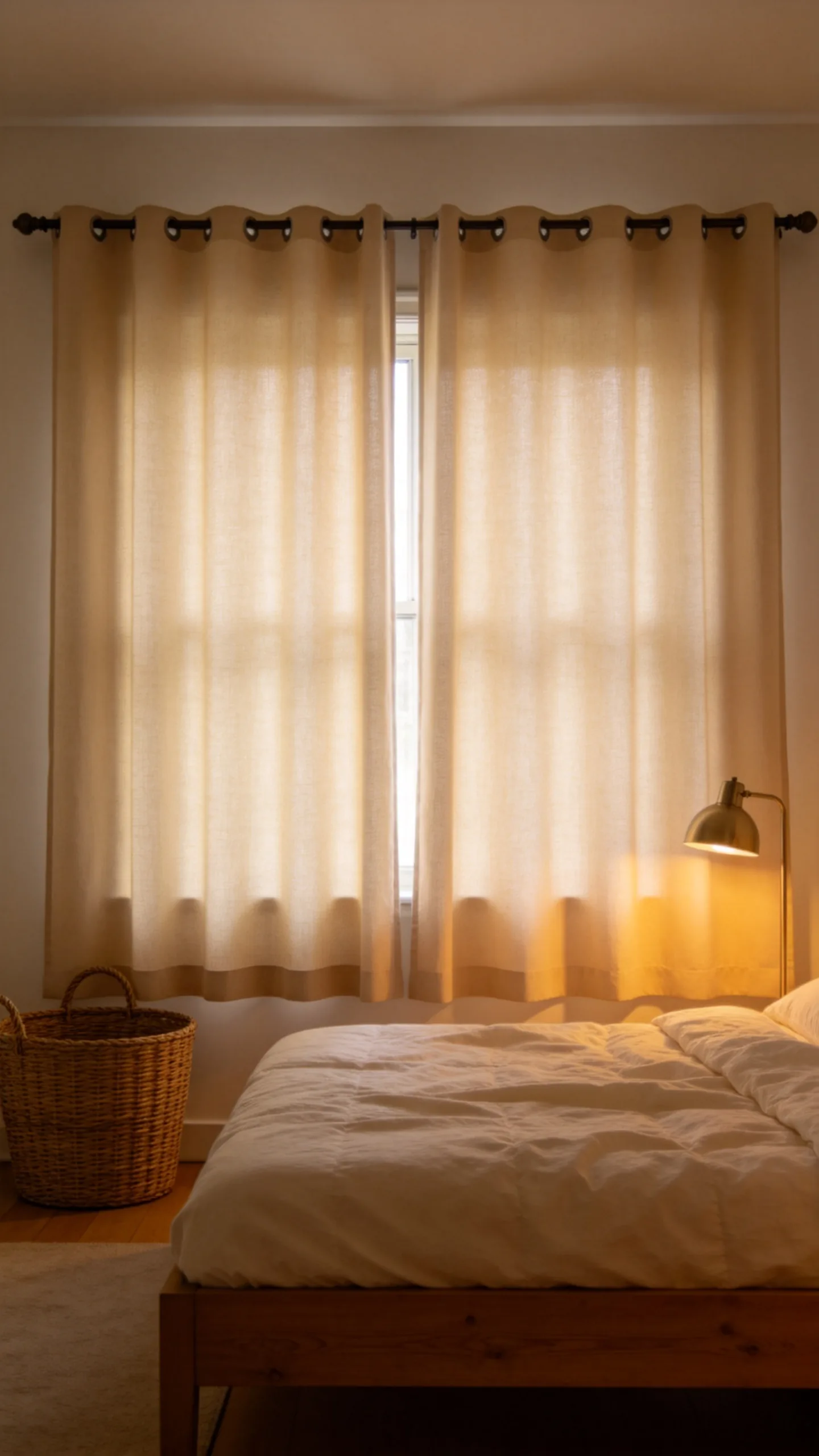
Blackout curtains do not have to look plain or heavy. Warm beige, sand, camel, or soft taupe blackout panels can create a cozy bedroom while controlling early morning light. These shades blend well with wood beds, woven baskets, cream duvets, and warm metal lighting.
Look for lined panels with a fabric face rather than a shiny synthetic finish. This gives the window a softer, more decorative appearance. If the room is small, avoid very dark blackout curtains unless you want the window to become a strong focal point.
For the best light control, install the rod wider than the window and let the curtains overlap slightly in the center. This helps block light gaps around the frame while keeping the bedroom calm and elegant.
7. Patterned Curtains with a Subtle Botanical Print
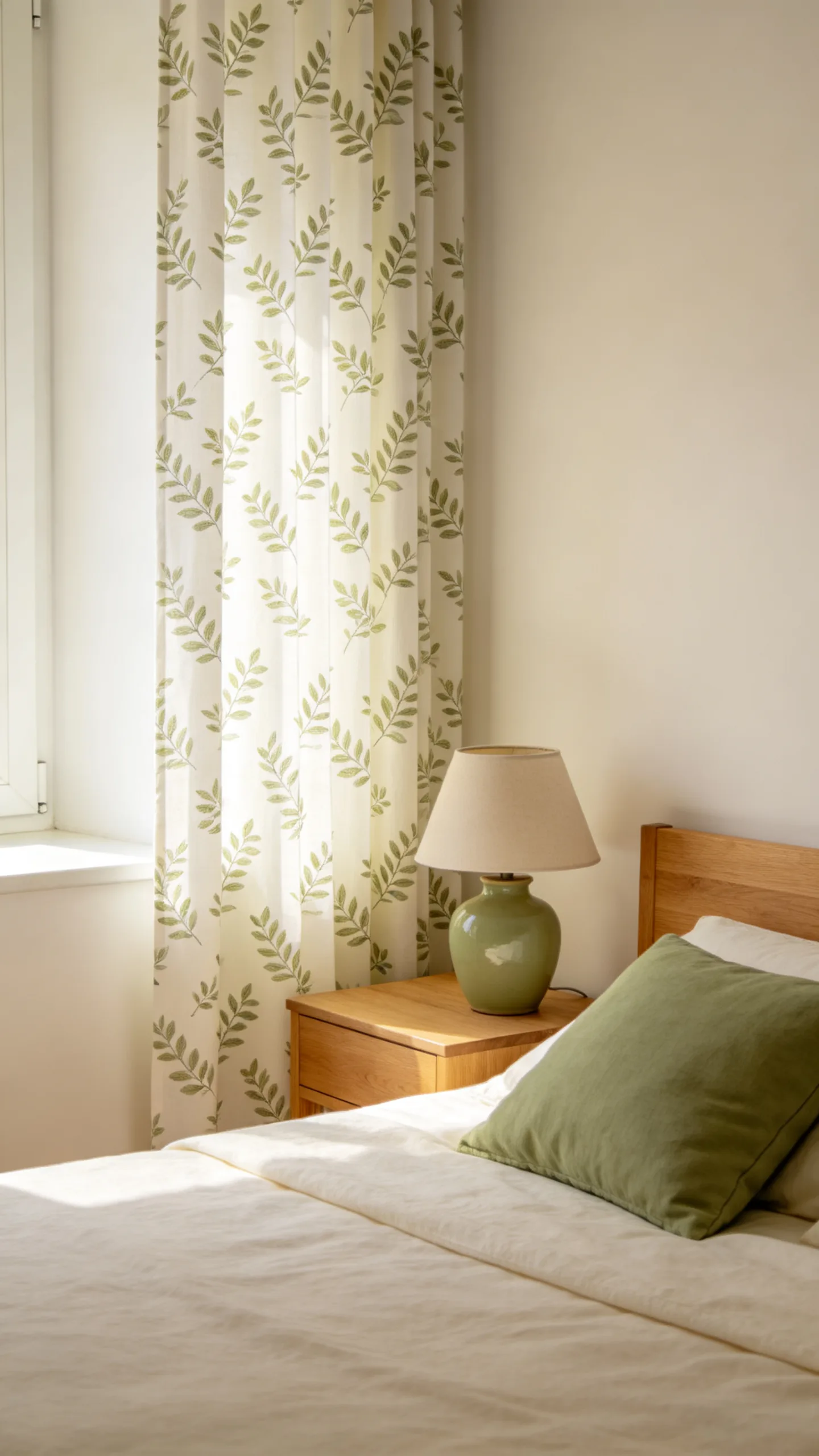
A subtle botanical print can make a bedroom window feel charming without becoming too busy. Look for small-scale leaves, trailing vines, faded florals, or block-print-inspired patterns in soft green, blue, beige, or clay. These prints pair well with solid bedding and natural wood furniture.
Patterned curtains are especially useful if the bedroom has plain walls and minimal art. They add movement and personality right at the window, creating a gentle focal point without requiring a gallery wall or bold wallpaper.
To keep the look elegant, repeat one curtain color elsewhere in the room. For example, echo sage leaves with a throw pillow, ceramic lamp, or small framed print above the dresser.
8. Roman Shades Paired with Side Curtain Panels
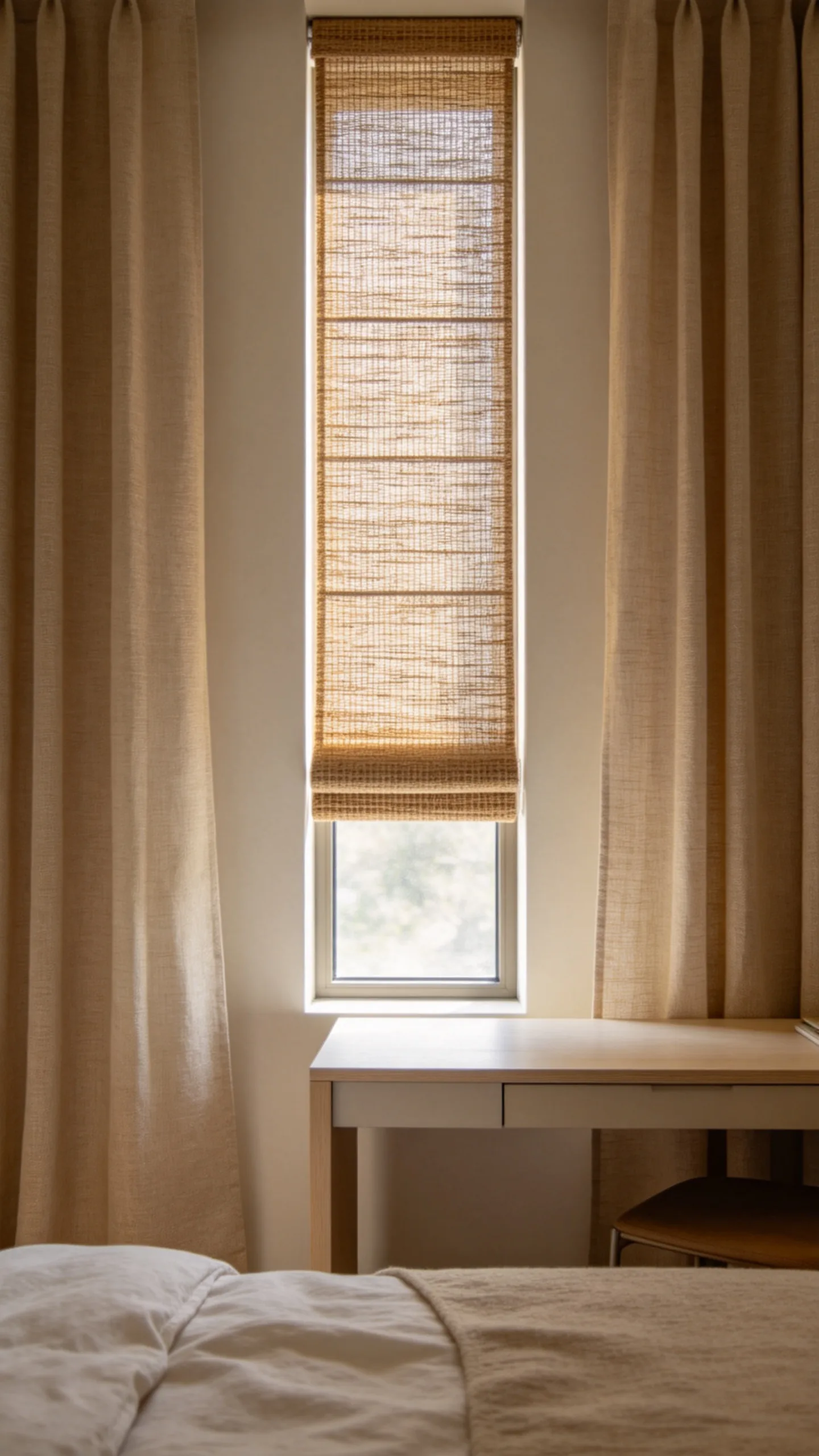
Roman shades and side curtain panels create a layered look that feels polished and practical. The Roman shade controls privacy and light directly over the glass, while the stationary side panels add softness and height around the window.
This combination works well for bedrooms where full curtains would interfere with a bed, desk, radiator, or dresser. Choose a woven Roman shade for warmth, then add linen or cotton side panels in a coordinating neutral. The side panels do not need to close fully if the shade provides coverage.
Use this idea for narrow bedroom windows that need more presence. The panels widen the visual frame, while the shade keeps the window functional and uncluttered.
9. Soft Gray Curtains for a Calm Elegant Bedroom
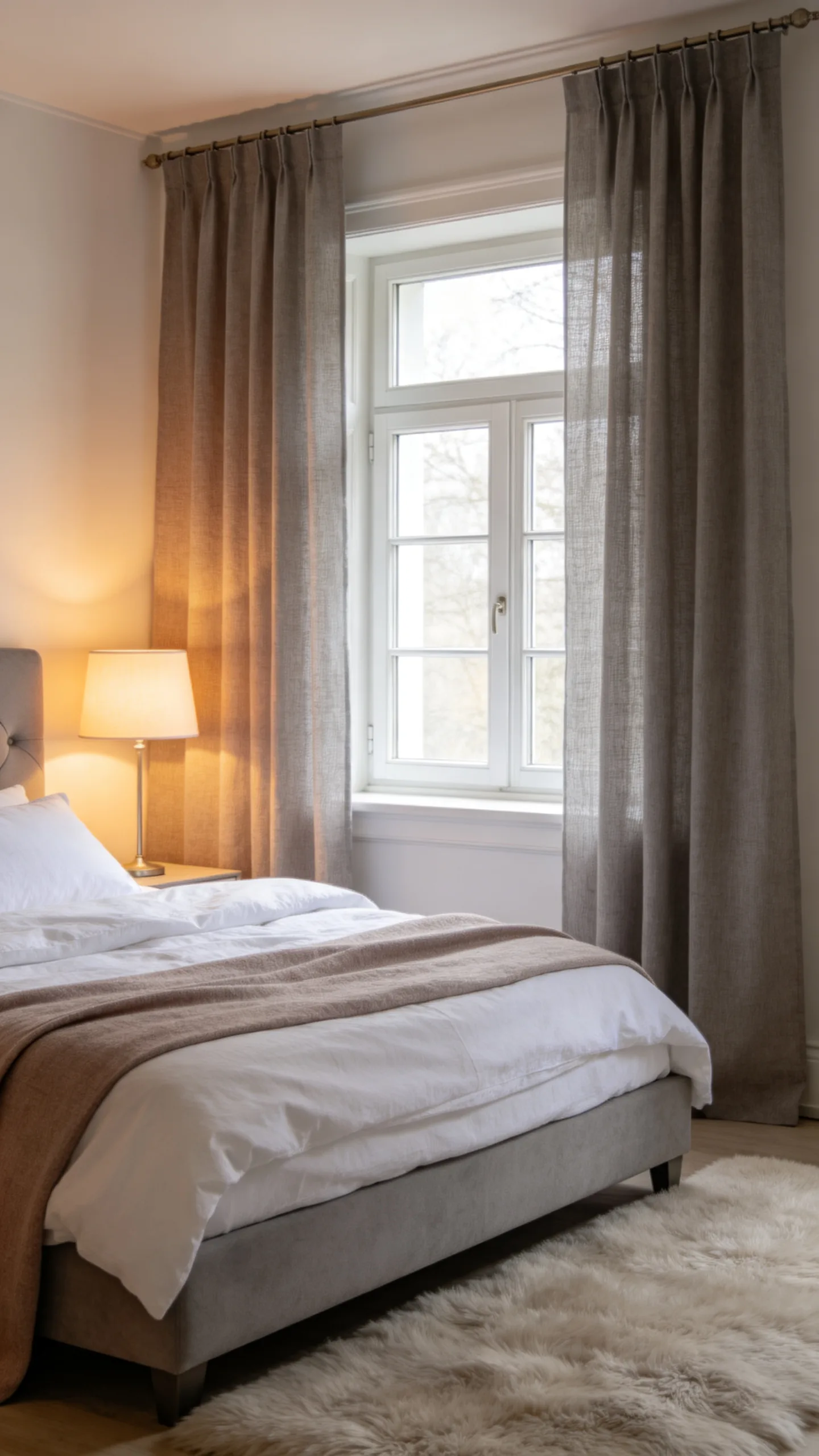
Soft gray curtains create a calm bedroom window, especially when paired with white trim, upholstered furniture, and layered bedding. Choose a warm gray for beige or cream rooms, and a cooler gray for blue, white, or charcoal accents.
Gray curtains are a good choice when you want contrast but do not want the window to dominate the room. They can ground a pale bedroom without the heaviness of black or navy. A textured fabric, such as slub linen or woven cotton, keeps the color from feeling flat.
For a cozy effect, pair gray curtains with warm bedside bulbs, a plush rug, and soft bedding textures. This balance prevents the room from feeling too cool or formal.
10. Cafe Curtains for a Charming Bedroom Nook
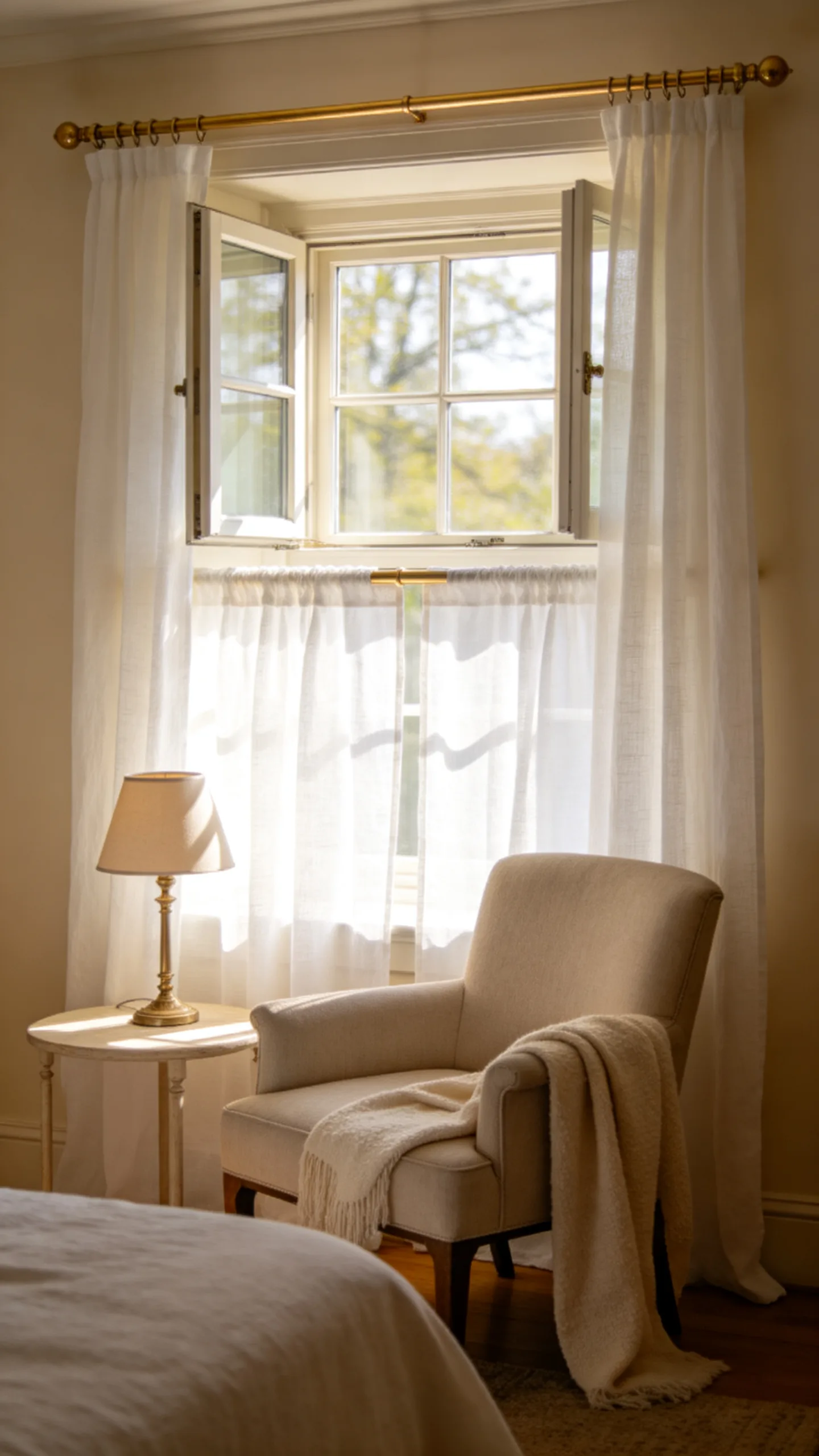
Cafe curtains cover the lower half of the window while leaving the upper glass open for daylight. In a bedroom, they work beautifully for small windows near a reading chair, vanity, desk, or built-in bench. They provide privacy without blocking the whole view.
Use lightweight linen, cotton, or embroidered fabric for a soft look. A slim brass, black, or wood rod mounted inside the window frame keeps the treatment neat and charming. This is especially useful in cottage, vintage, or relaxed traditional bedrooms.
Cafe curtains are also practical for rooms where full-length panels would interrupt furniture placement. They keep traffic flow clear and make the window feel styled without taking up floor space.
11. Cream Curtains Against Dark Bedroom Walls
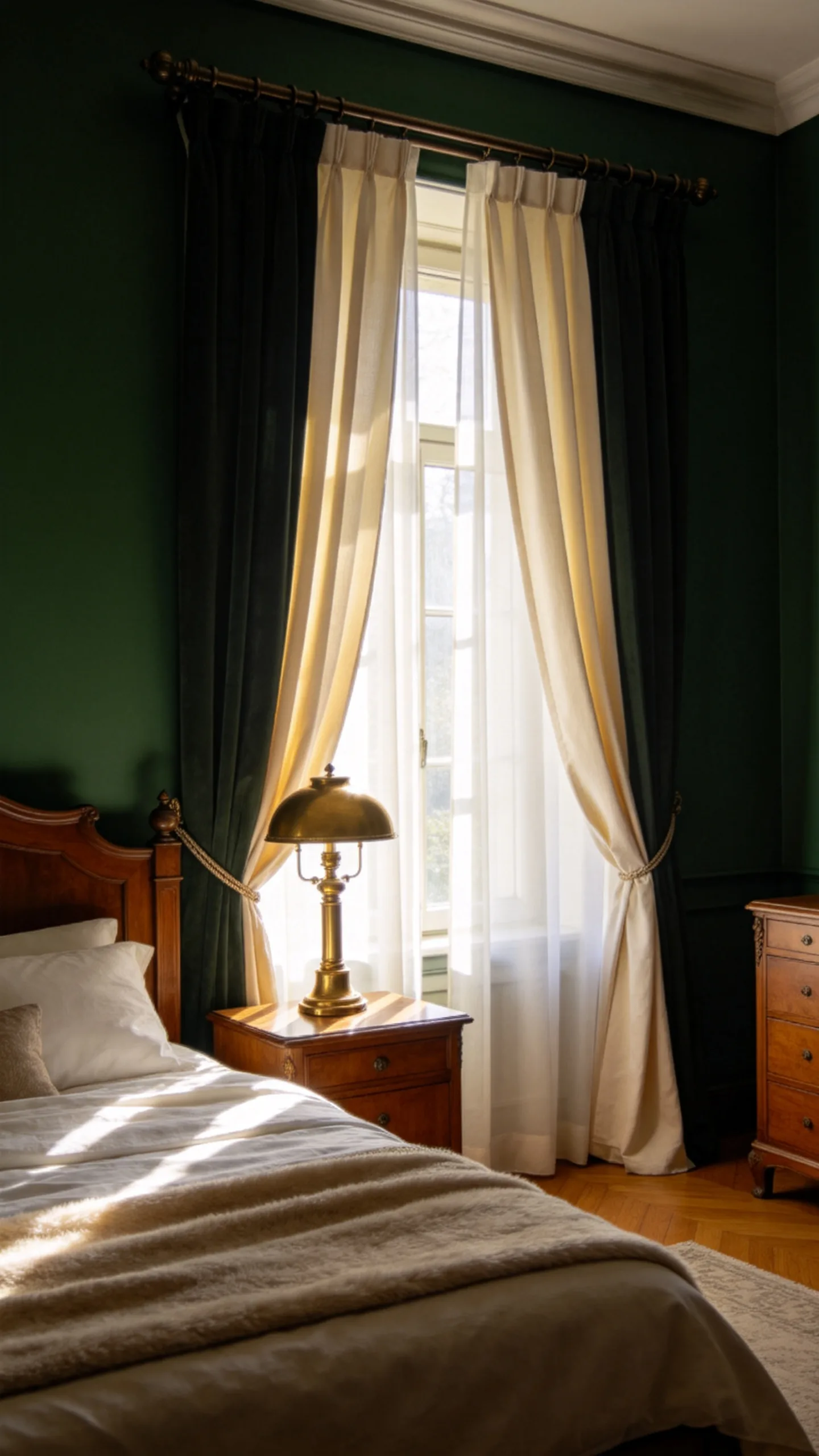
Cream curtains can look especially elegant against dark bedroom walls, such as charcoal, forest green, deep navy, or chocolate brown. The contrast frames the window clearly and keeps the room from feeling too enclosed.
Choose a substantial fabric like lined linen, cotton velvet, or textured weave so the light curtain color does not look flimsy against the bold wall. Brass or dark bronze hardware adds warmth and connects well with wood furniture or vintage lighting.
This idea works best when the curtains are hung high and wide. The cream fabric creates vertical brightness, making the room feel cozy but not cave-like.
12. Tone-on-Tone Curtains That Match the Wall Color
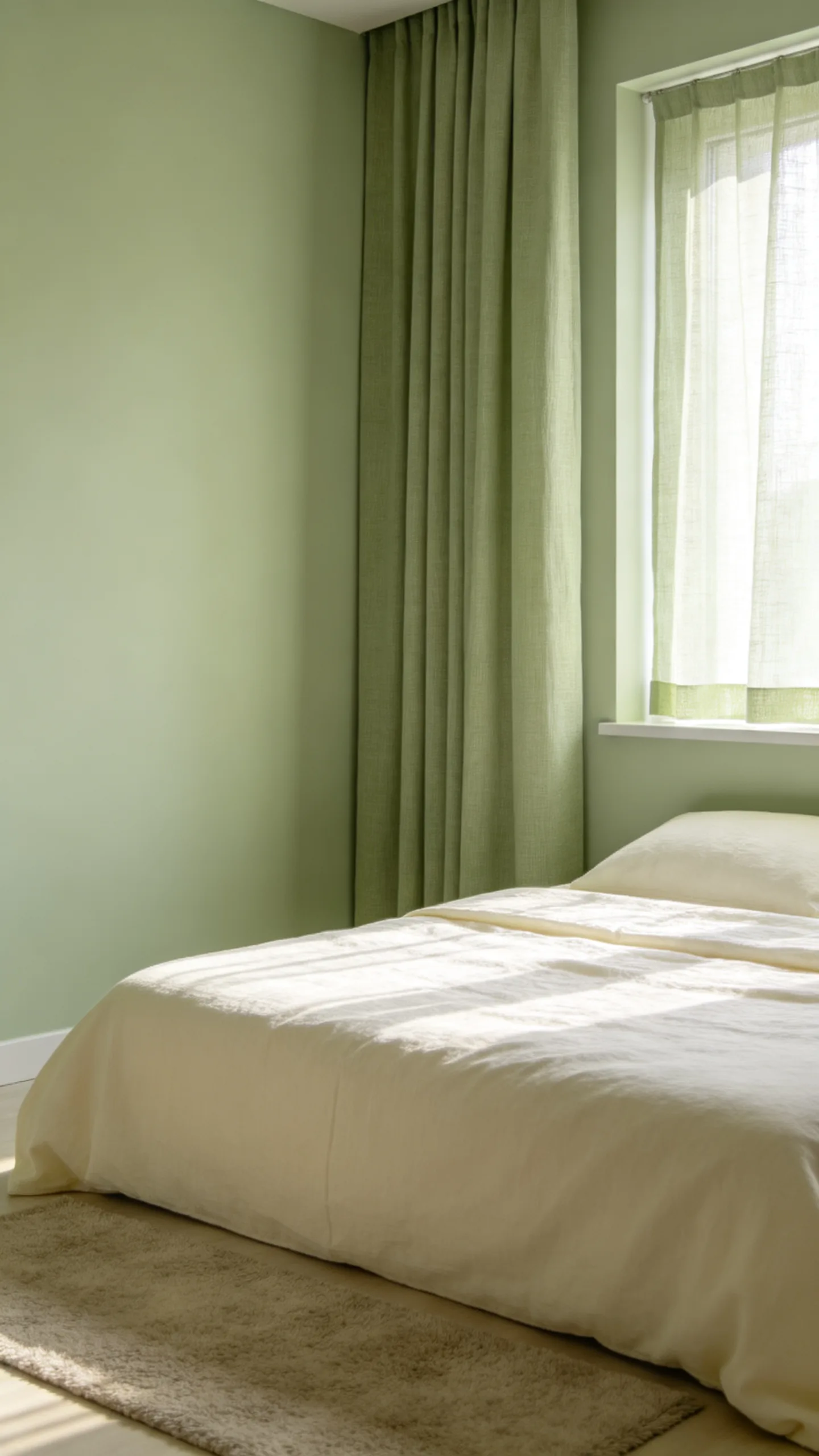
Curtains that closely match the wall color create a soft, seamless bedroom look. This is ideal for small bedrooms because the window treatment does not chop up the wall visually. Instead, the fabric blends into the room and makes the space feel calmer.
Try ivory curtains on ivory walls, beige on beige, dusty blue on blue, or sage on sage. The key is to vary texture so the curtains still feel intentional. Linen, boucle-look weave, cotton slub, or lightly textured panels can add depth without strong contrast.
Tone-on-tone curtains are especially helpful when the bed, rug, or artwork is already the main focal point. The window feels finished, but it does not compete for attention.
13. Bamboo Shades with Linen Curtains
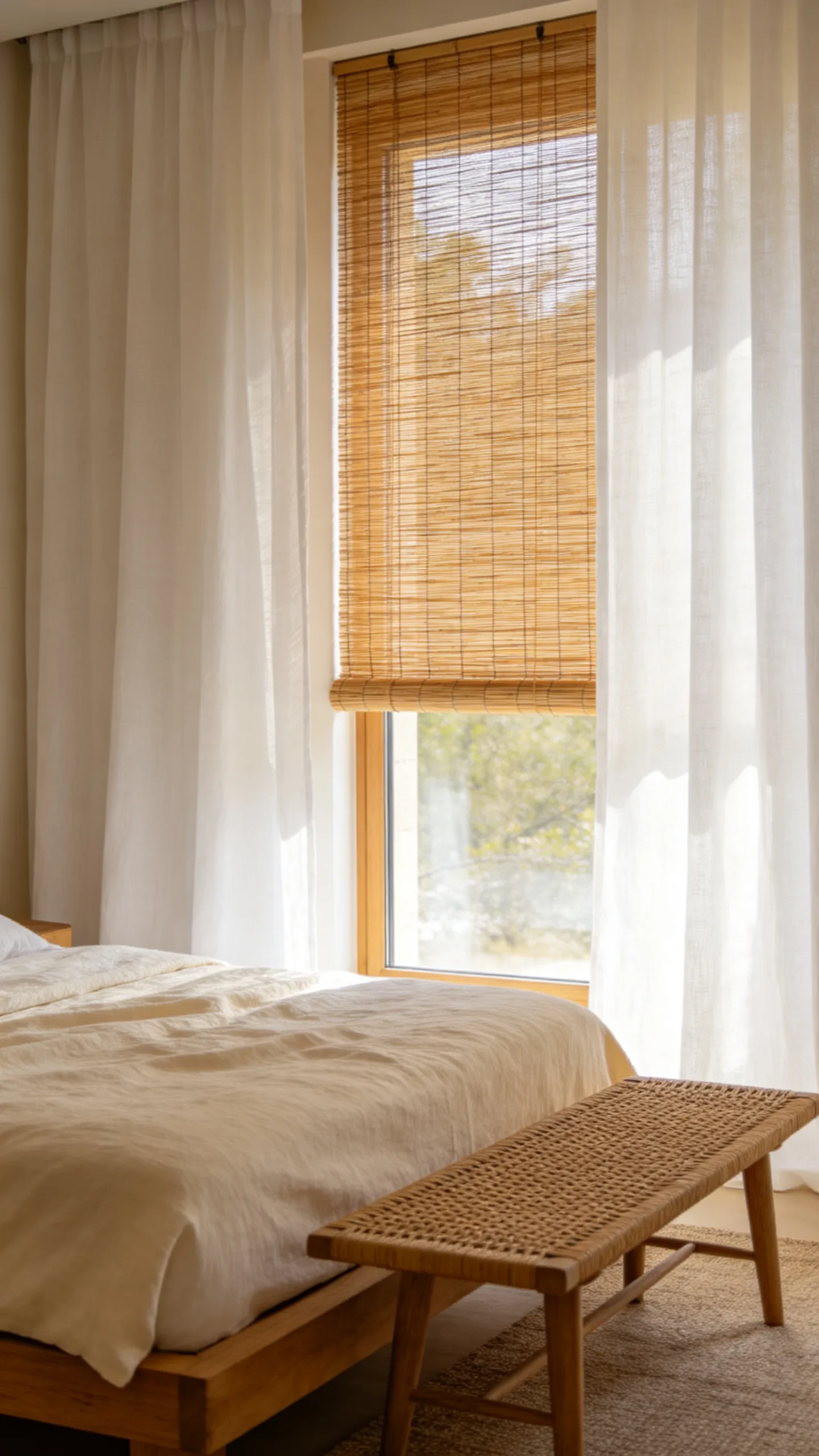
Bamboo or woven wood shades add natural warmth to a bedroom window, while linen curtains soften the edges. This combination works well in coastal, organic modern, farmhouse, and transitional bedrooms. The woven shade provides texture, and the curtains add movement.
Use light or medium bamboo tones if your room has oak, rattan, cane, or warm wood furniture. Pair them with white, cream, or flax linen curtains to keep the window feeling airy. For more privacy, choose a lined woven shade or layer it with curtains that can fully close.
This pairing is especially good for bedrooms that need visual texture but not heavy color. It brings warmth to plain walls and makes the window feel thoughtfully layered.
14. Extra-Wide Curtains for a Luxurious Fullness
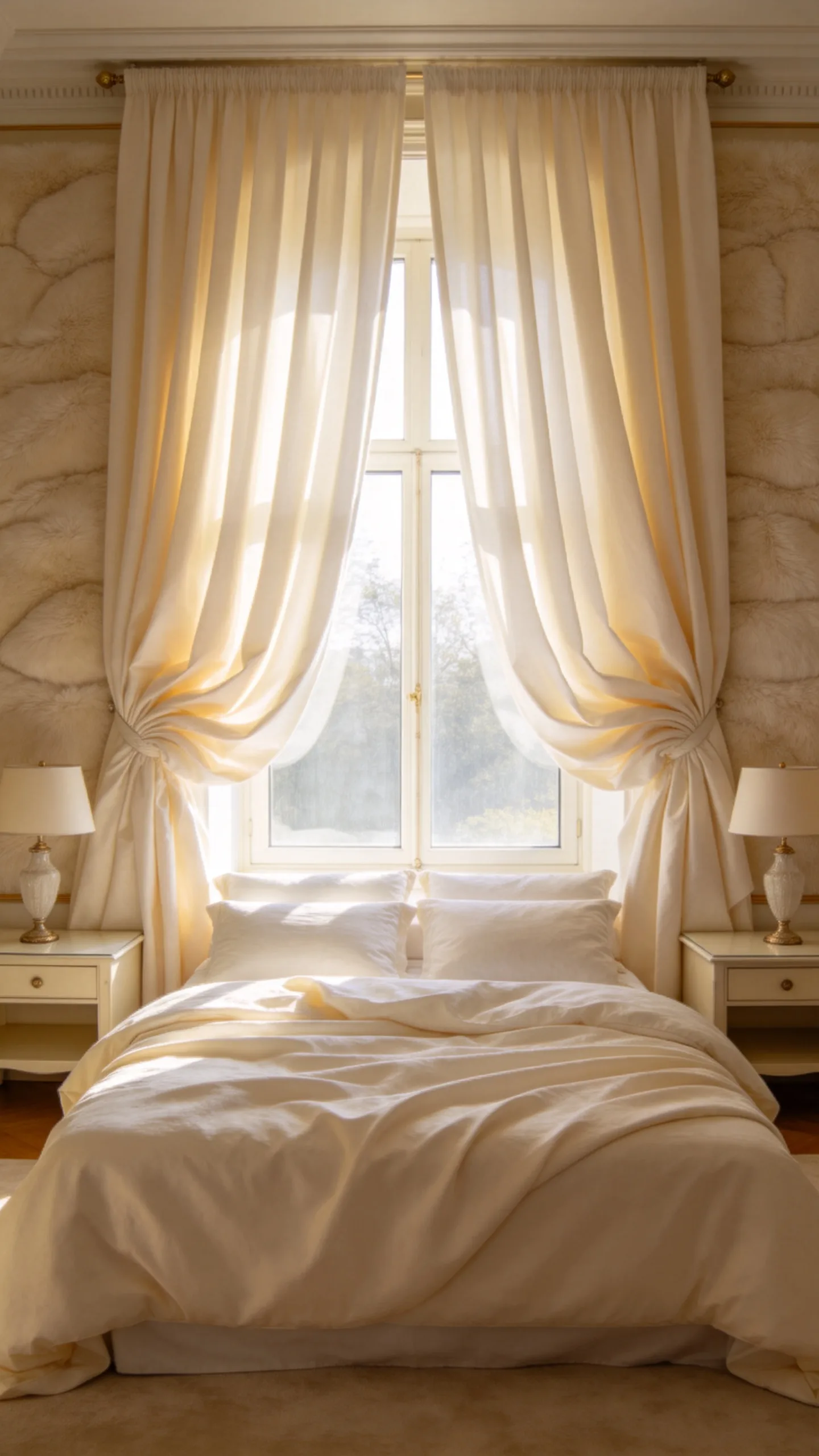
Curtains look more elegant when they have enough fabric fullness. Instead of using panels that barely cover the window, choose extra-wide panels or multiple panels on each side so the folds look generous even when closed.
A good rule is to use curtain width that is about two times the width of the window or rod span. This creates soft folds rather than a stretched sheet-like appearance. In a bedroom, fullness also helps the curtains feel cozy and substantial.
This idea is useful for wide bedroom windows, sliding doors, or windows behind a bed. Full curtains make the wall feel balanced and can turn an ordinary window into the room’s main design feature.
15. Short Curtains for Windows Above Furniture
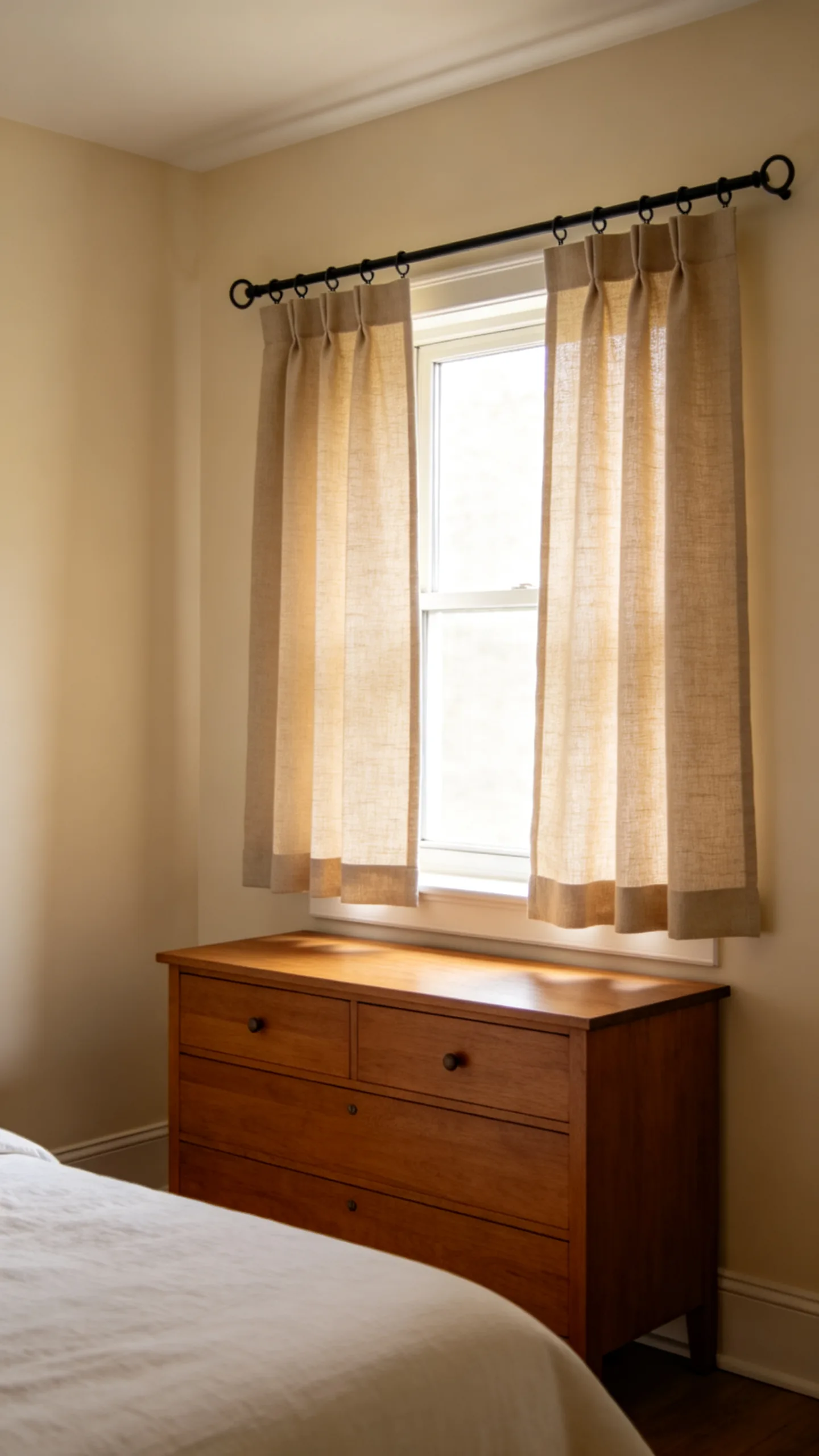
Not every bedroom window can handle floor-length curtains. If a window sits above a dresser, desk, radiator, built-in storage bench, or headboard, shorter curtains can be the more practical choice. The key is making them look intentional rather than accidental.
Choose tailored panels that end just below the sill or a few inches below the apron. Avoid awkward lengths that stop halfway between the sill and the furniture surface. A neat fabric, such as linen blend or cotton, keeps the look crisp.
Short curtains work best when the hardware is scaled to the window. Use a slim rod and simple rings or clips, and keep the fabric full enough to create soft folds. This adds coziness without blocking storage or traffic flow.
16. Double Rod Curtains with Privacy and Decorative Layers
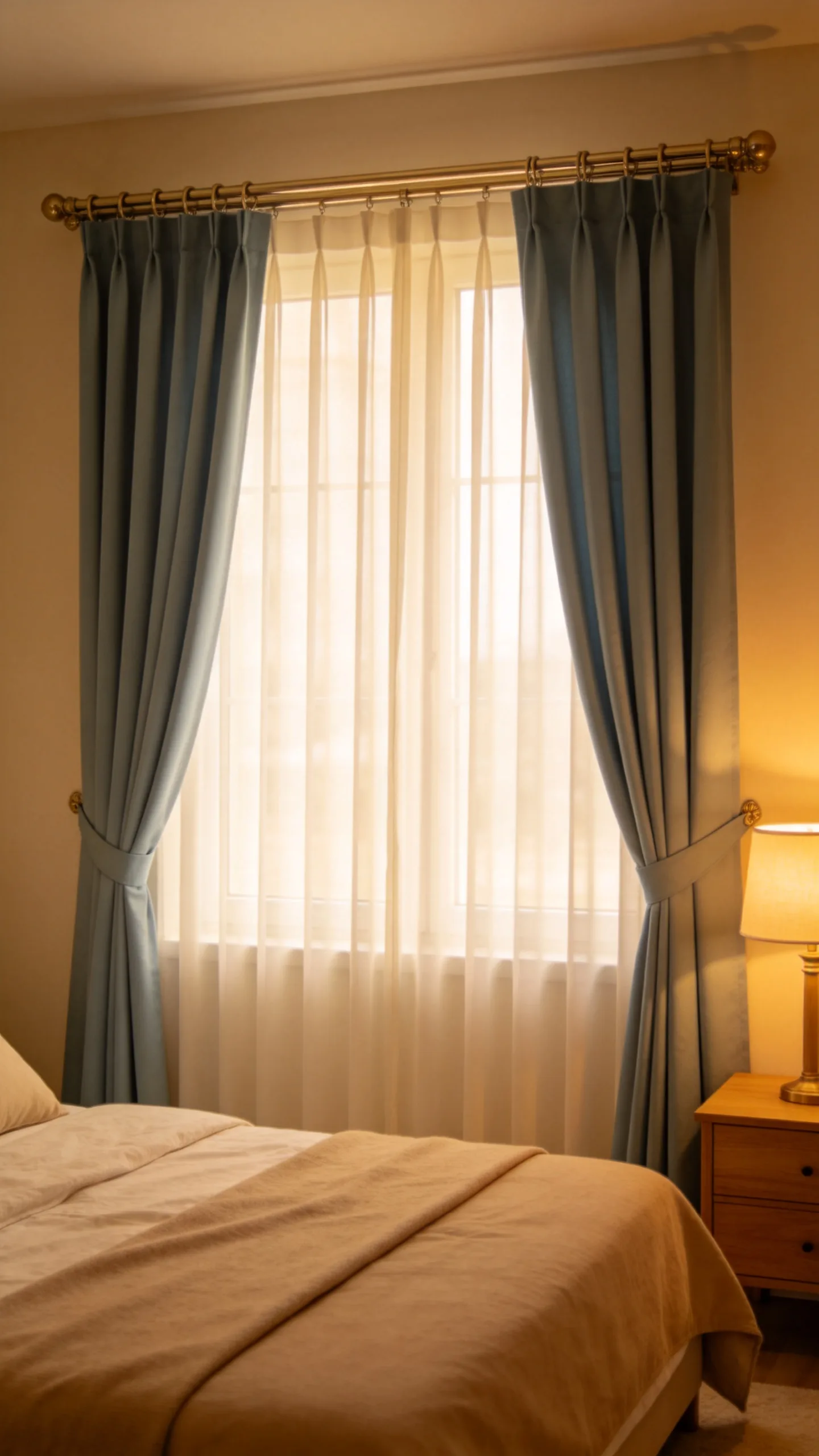
A double rod setup gives you a functional inner layer and a decorative outer layer. For the inner layer, use sheers, light-filtering curtains, or thin privacy panels. For the outer layer, choose heavier linen, velvet, cotton, or blackout curtains.
This is ideal for bedrooms that need different light levels throughout the day. You can close the sheers while getting dressed, open the heavier drapes for daylight, or close both layers at night for a cozy feel.
To keep the look elegant, coordinate the colors rather than matching everything exactly. For example, pair ivory sheers with taupe drapes, white sheers with dusty blue curtains, or beige sheers with olive panels.
17. Romantic Puddled Curtains for a Soft Bedroom Look
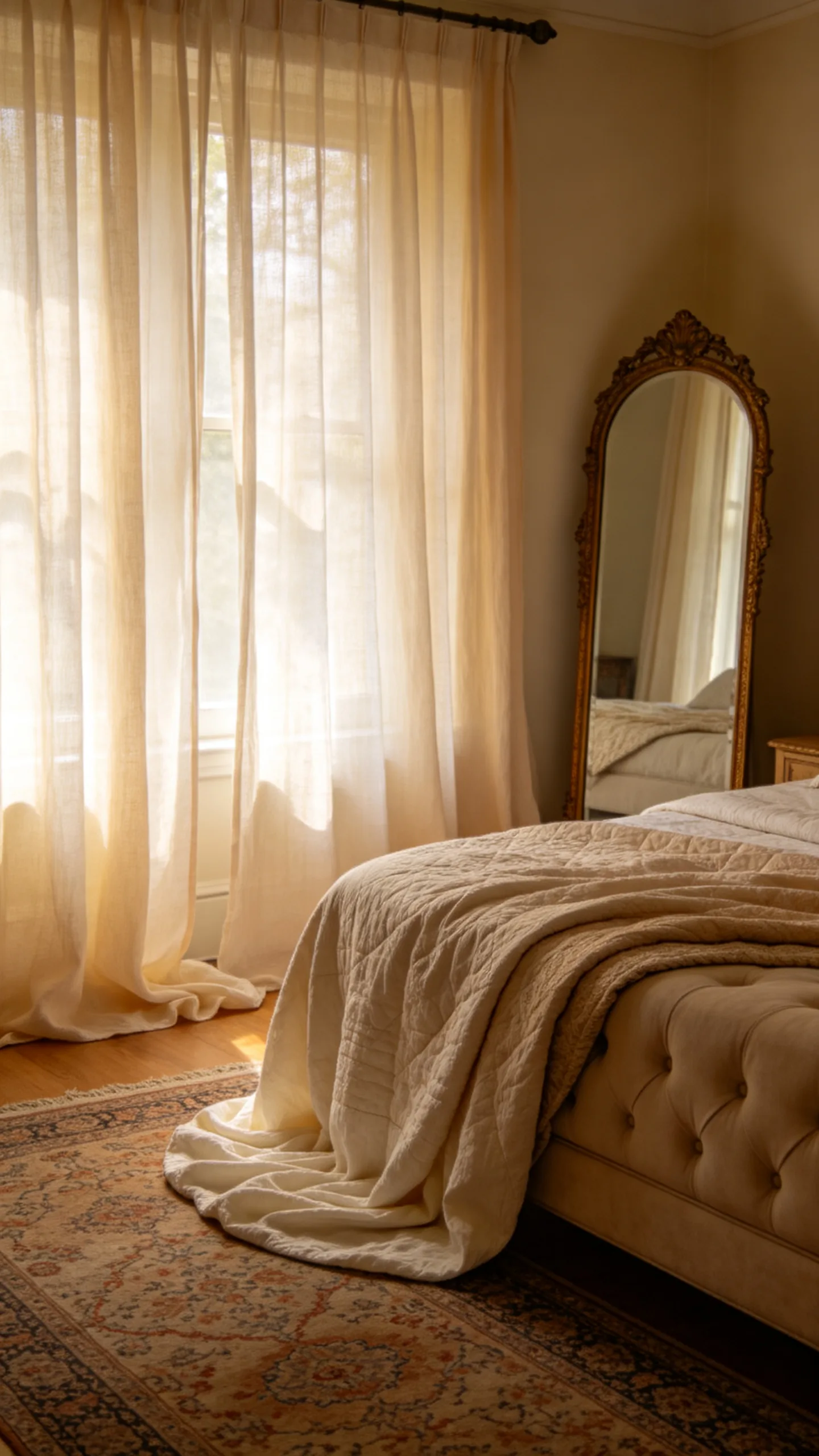
Puddled curtains create a romantic, relaxed look by allowing extra fabric to gather slightly on the floor. This style works best in bedrooms where the curtains are mostly decorative and not opened and closed constantly.
Use soft fabrics like linen, washed cotton, or lightweight velvet. A small puddle of one to three inches is usually enough to feel cozy without becoming messy. This look pairs beautifully with vintage rugs, antique-style mirrors, upholstered beds, and layered quilts.
Avoid heavy puddling in high-traffic spots, near pet beds, or beside furniture that moves often. The goal is soft elegance, not fabric that gets dusty or tangled.
18. Dark Accent Curtains for a Framed Focal Point
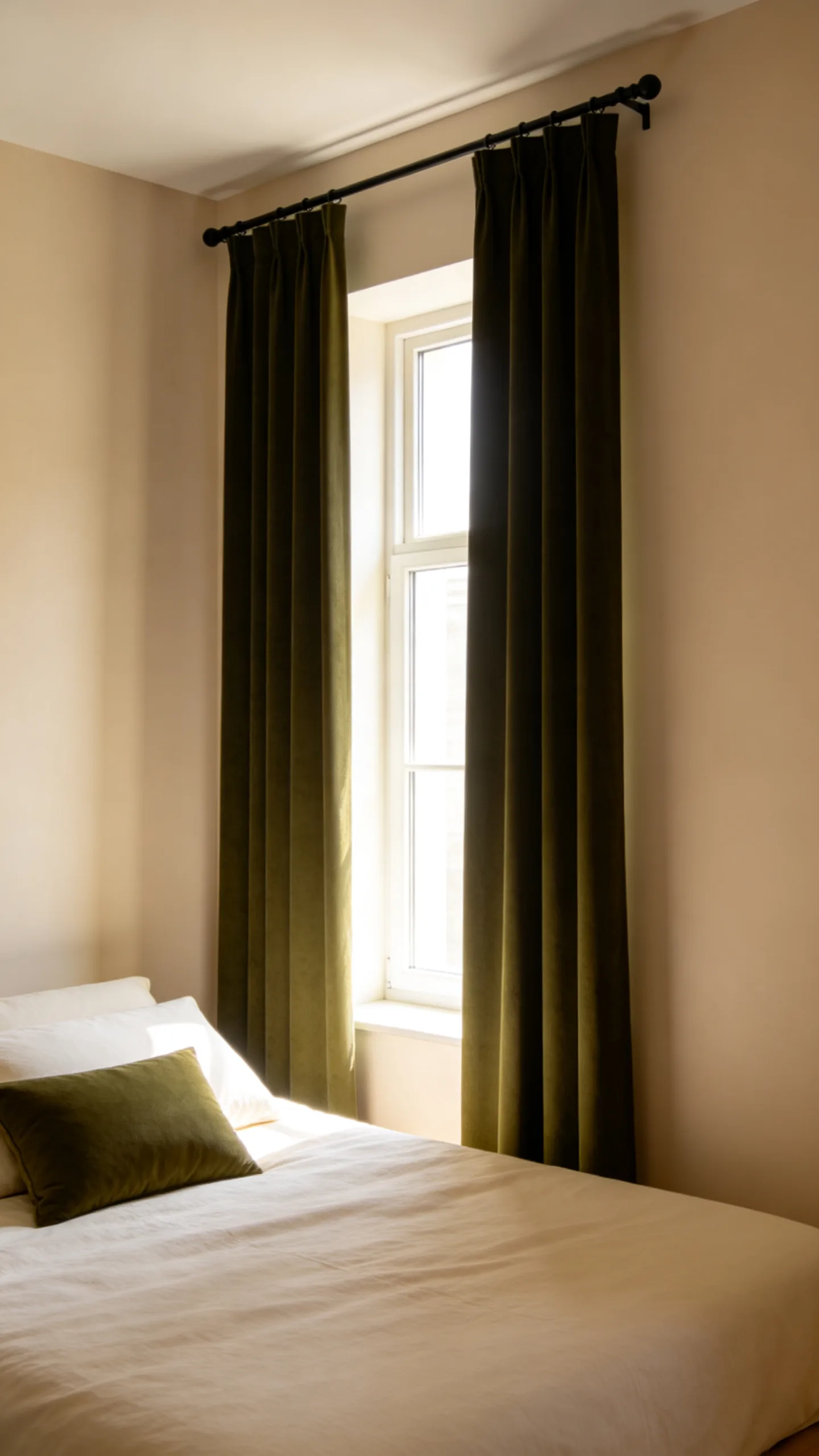
Dark accent curtains can make a bedroom window feel dramatic and elegant, especially when the rest of the room is light. Try charcoal, espresso, navy, olive, or deep aubergine curtains against white, cream, or pale beige walls.
This idea works well when you want the window to act as a focal point behind or beside the bed. Use simple bedding and repeat the curtain color in a small detail, such as a throw pillow, lampshade, framed art, or rug pattern.
In smaller bedrooms, keep the rod high and the panels narrow when open so the dark fabric does not close in the room. The contrast should frame the window and add depth while still allowing plenty of natural light during the day.

From the editors
Decor Compass Editorial Team
We turn practical home research into clear, useful room-by-room ideas.