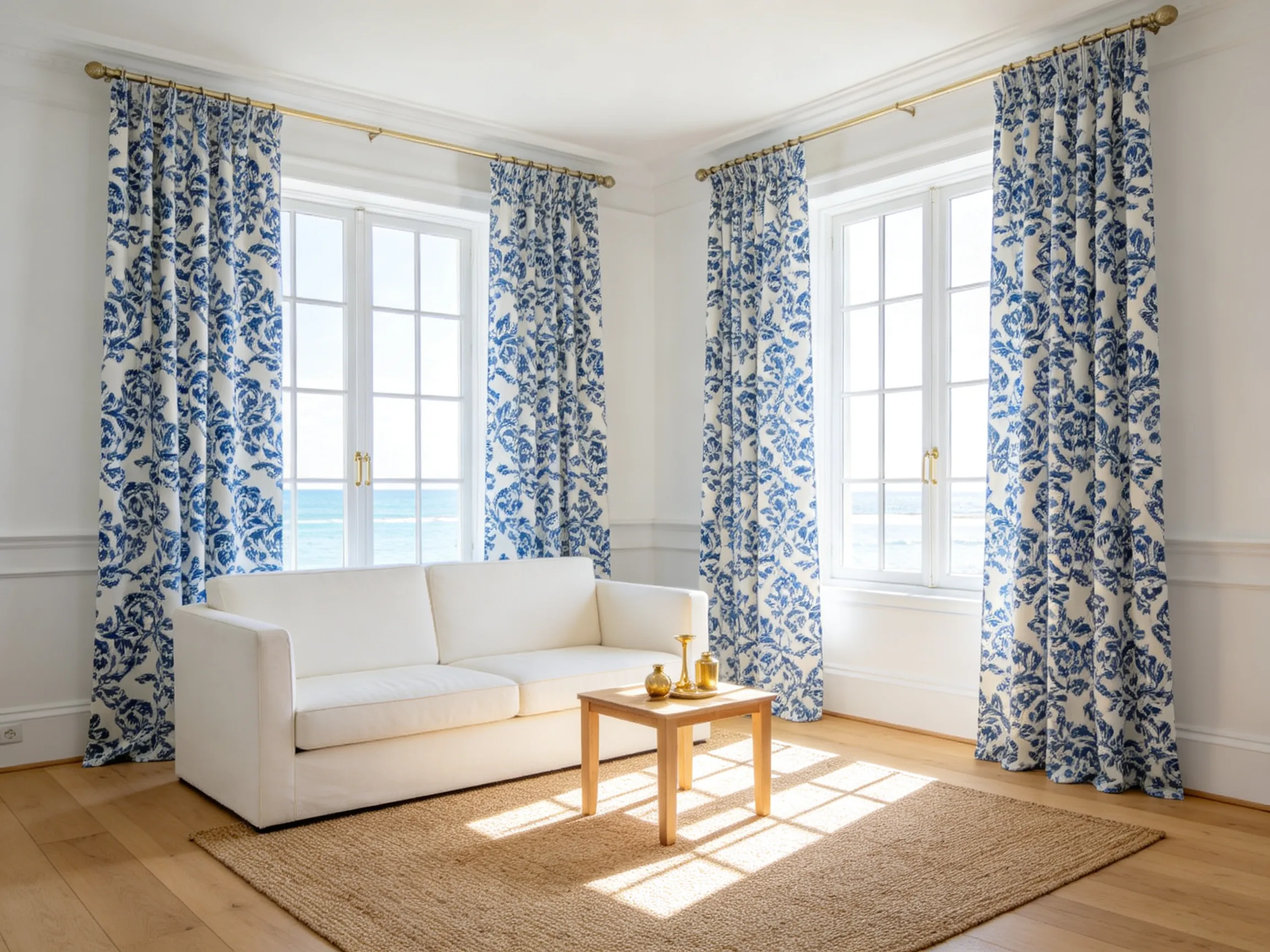
Blue and white curtains can make a room feel crisp, calm, and pulled together without changing the entire space. Whether you are styling a living room with neutral upholstery, a bedroom with white bedding, or a casual breakfast nook, this classic color pairing works well with wood, wicker, brass, navy, cream, and soft gray. These blue and white curtain ideas focus on practical ways to use pattern, fabric, length, and placement for a fresh classic look.
1. Blue and White Striped Curtains for a Clean Coastal Living Room
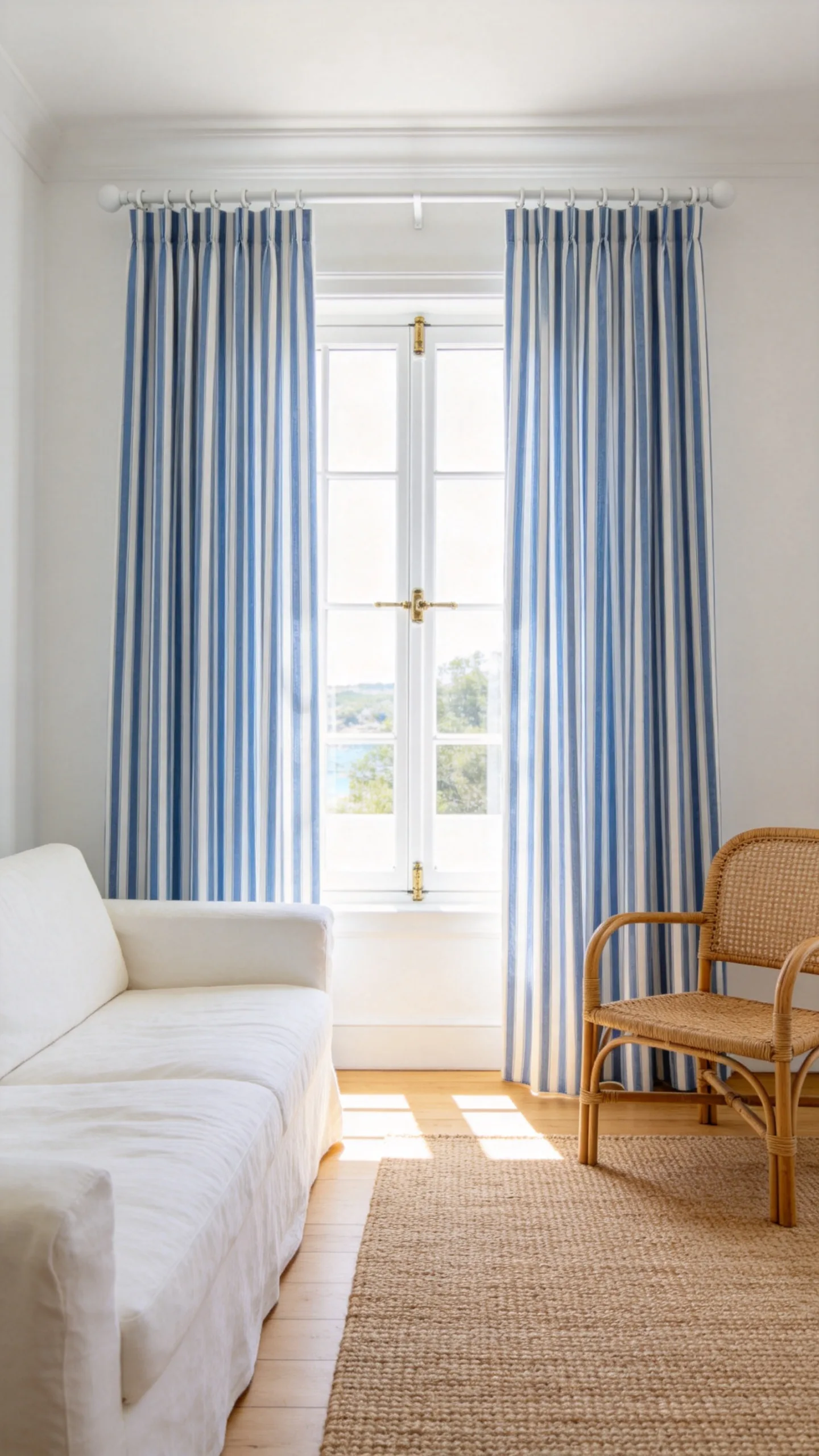
Blue and white striped curtains are one of the easiest ways to bring a fresh classic look into a living room. Vertical stripes make the walls feel taller, especially when the curtain rod is mounted several inches above the window frame. Choose narrow ticking stripes for a subtle traditional feel or wider cabana stripes if the room has slipcovered sofas, rattan chairs, or a sisal rug.
In a living room with white walls, light oak floors, and a beige or cream sofa, blue stripes add structure without making the space feel busy. Hang the panels so they just kiss the floor, and use simple white or brushed brass curtain rods to keep the look polished. This idea works especially well for windows behind a sofa because the stripes create a soft backdrop without competing with art or pillows.
2. Navy and White Floral Curtains for a Traditional Bedroom
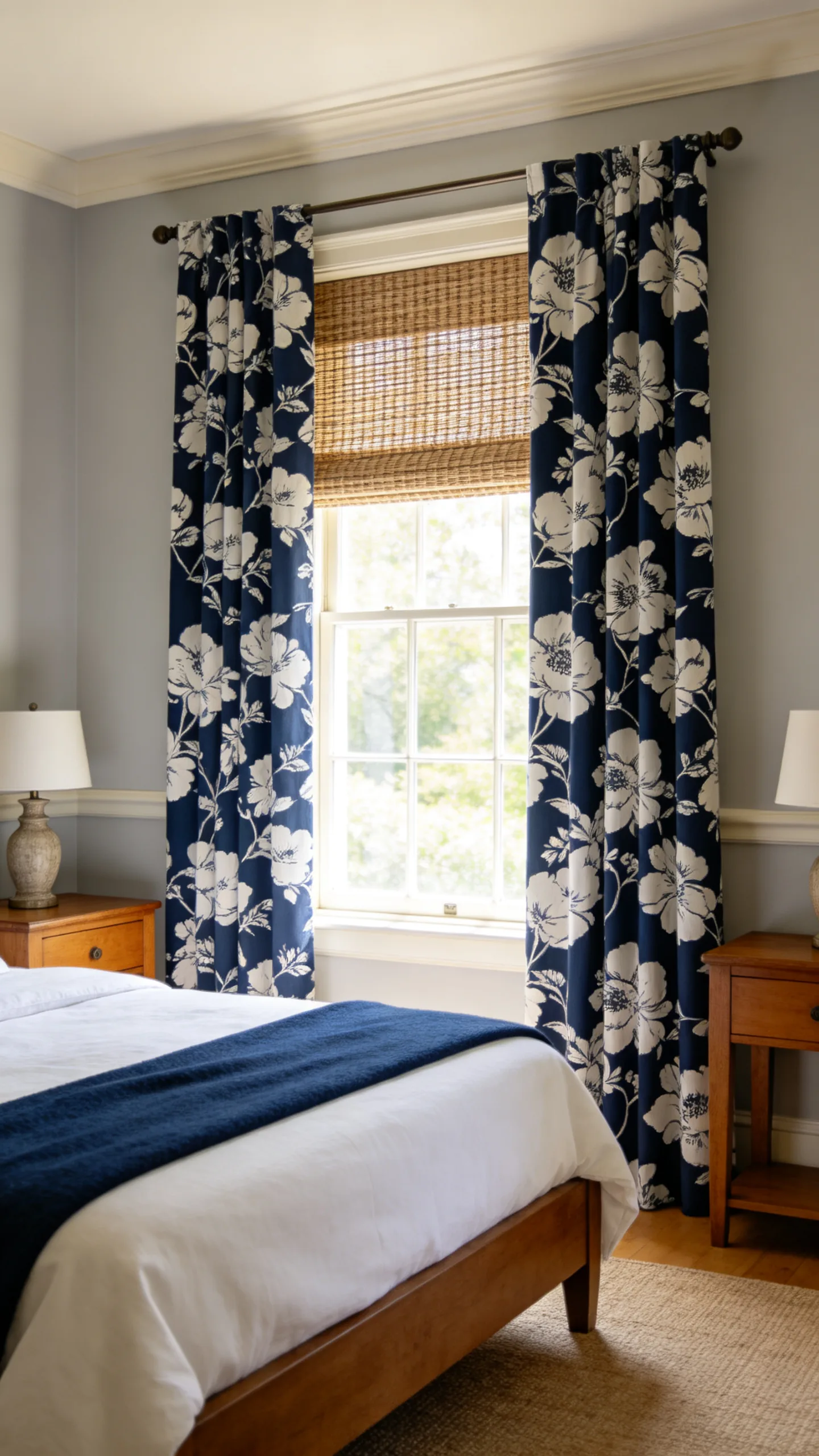
Navy and white floral curtains can give a bedroom a timeless, collected style. Look for prints with medium-scale flowers, trailing vines, or block-print-inspired motifs. These patterns pair beautifully with white bedding, a navy throw blanket, and warm wood nightstands.
For a classic bedroom layout, hang the curtains wider than the window so the fabric frames the bed wall or the main window without blocking daylight. If the room has soft gray, cream, or pale blue walls, navy floral panels create contrast while still feeling restful. Add a woven shade underneath for privacy and texture, especially in a bedroom that faces the street.
3. Pale Blue Linen Curtains for an Airy White Room
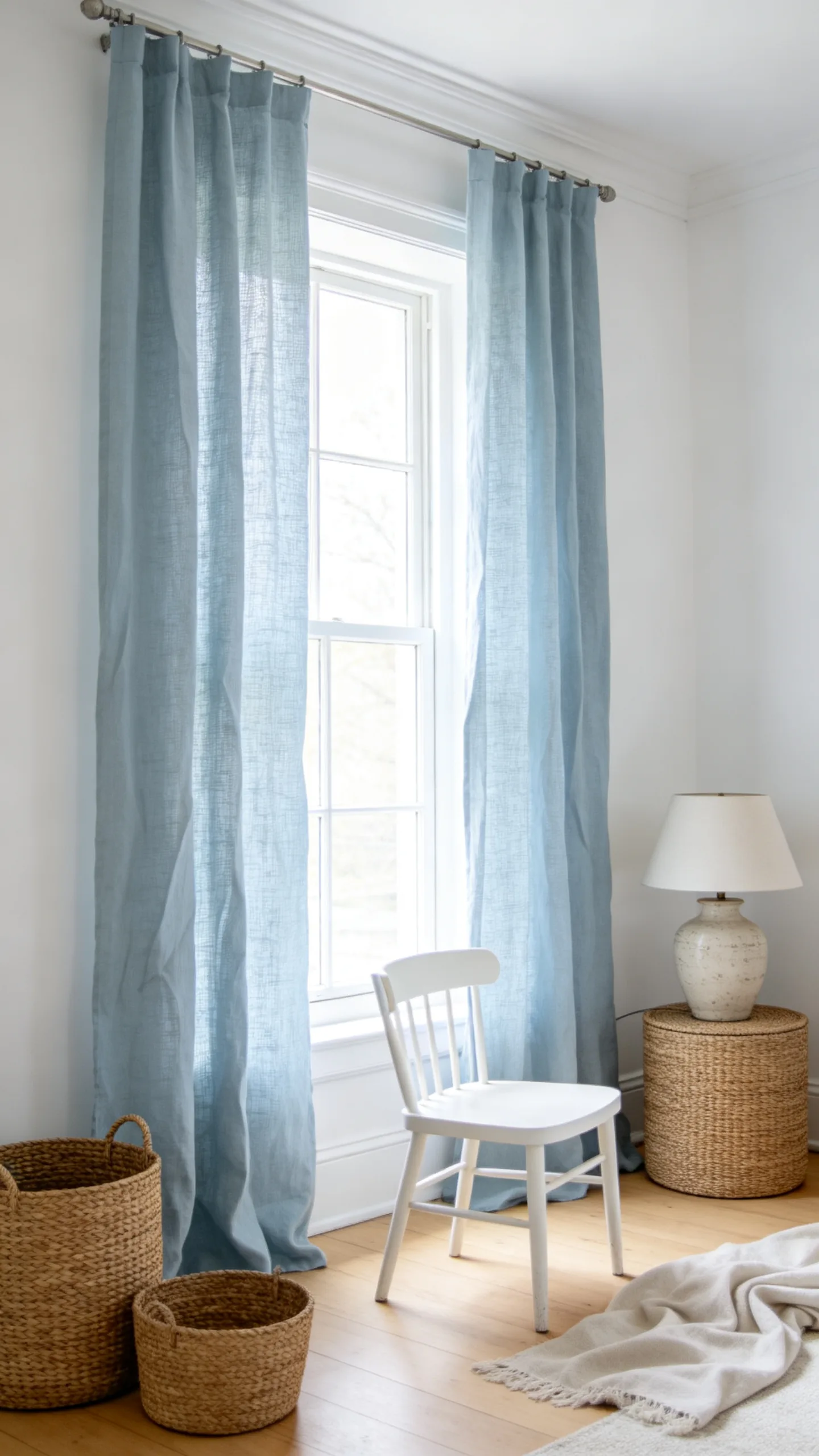
Pale blue linen curtains are ideal for a room that already has a lot of white, such as a sunroom, guest bedroom, or casual sitting area. The texture of linen keeps the curtains from looking flat, while the soft blue color adds just enough definition around the windows.
Use these curtains in rooms with white walls, painted furniture, light wood floors, and relaxed textiles. The slightly rumpled fabric works well with cotton quilts, woven baskets, and ceramic table lamps. For a more finished look, choose lined linen panels; for a breezier style, use unlined panels where privacy is not a major concern.
4. Blue and White Toile Curtains for French Country Charm
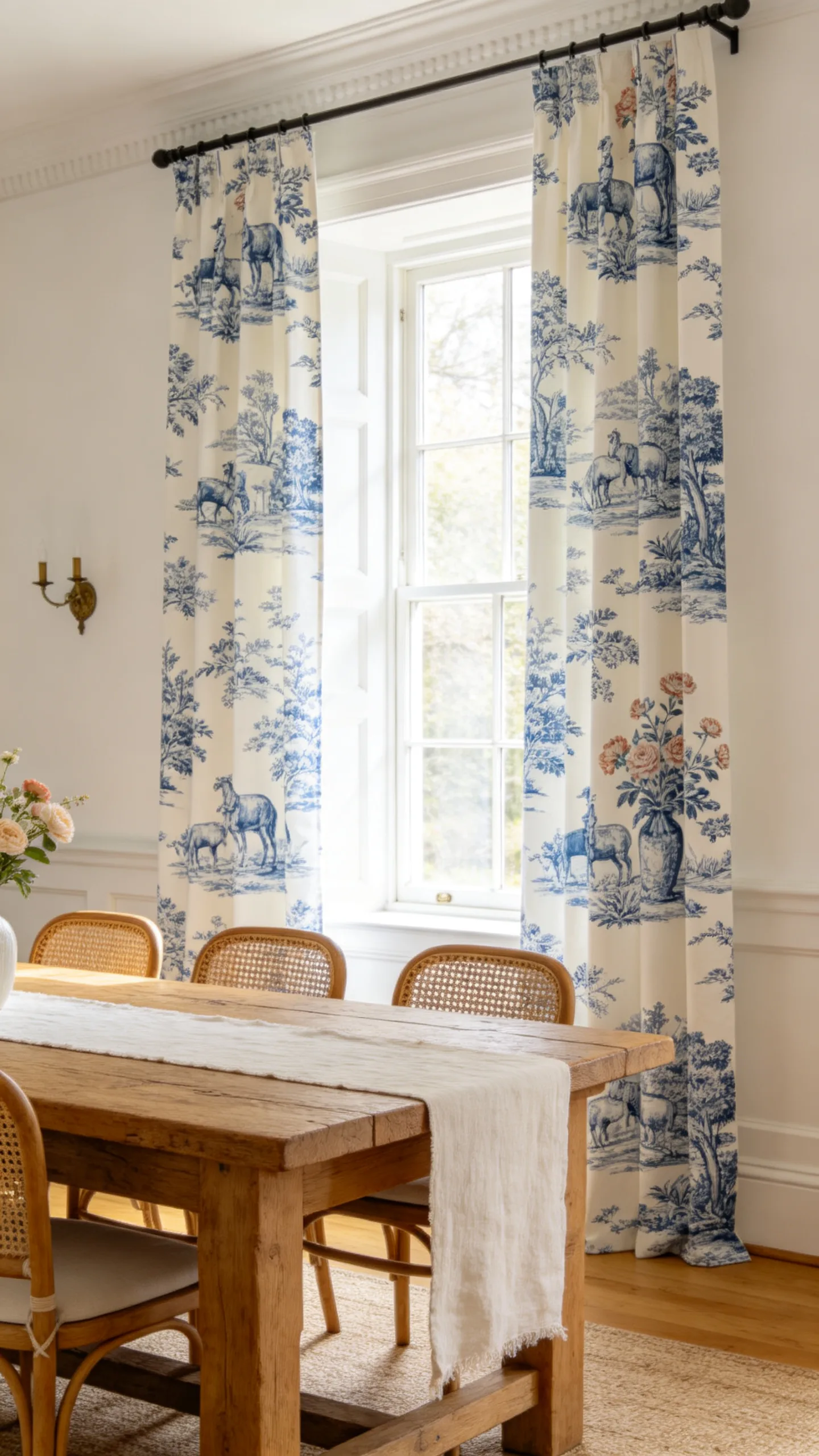
Blue and white toile curtains bring a graceful, old-world look to dining rooms, bedrooms, and formal sitting areas. Toile patterns often feature pastoral scenes, florals, or delicate figures, making them a strong decorative feature on tall windows.
To keep the room from feeling too formal, pair toile curtains with simple furniture shapes and natural materials. A farmhouse dining table, cane-back chairs, or a linen upholstered headboard can balance the detailed pattern. If the walls are warm white or soft cream, blue toile panels can become the main focal point without overwhelming the room.
5. Greek Key Trim Curtains for a Tailored Classic Look
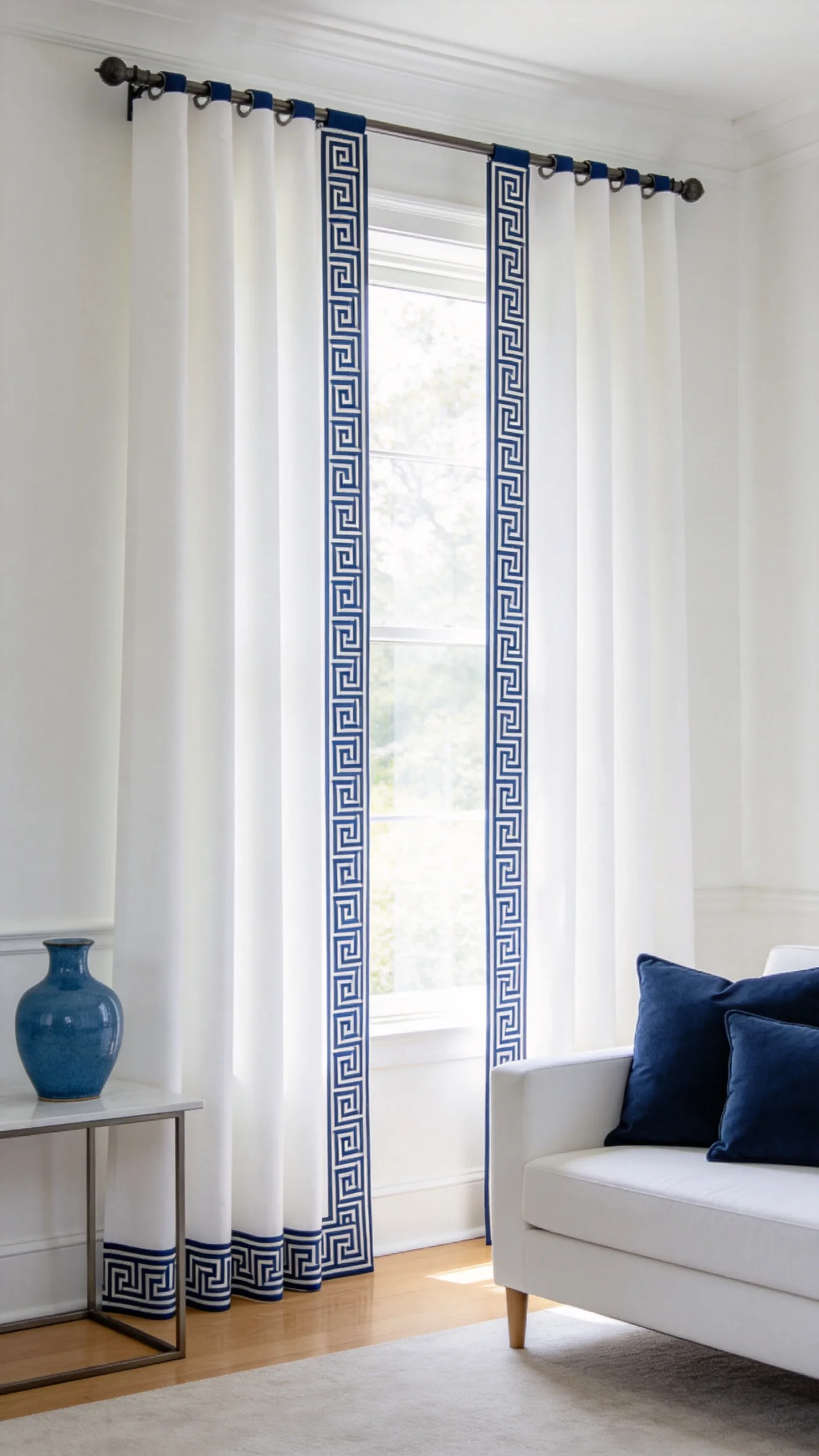
White curtains with blue Greek key trim are a smart option when you want a crisp, custom-looking window treatment. The main curtain panel stays simple, while the blue border adds a sharp decorative line along the leading edge or bottom hem.
This idea works well in living rooms, home offices, and bedrooms where the furniture already has clean lines. Pair the curtains with navy pillows, blue ceramic vases, or a patterned rug that includes a similar shade of blue. The trim helps frame the window and can make plain white panels feel more intentional.
6. Blue and White Gingham Curtains for a Casual Kitchen
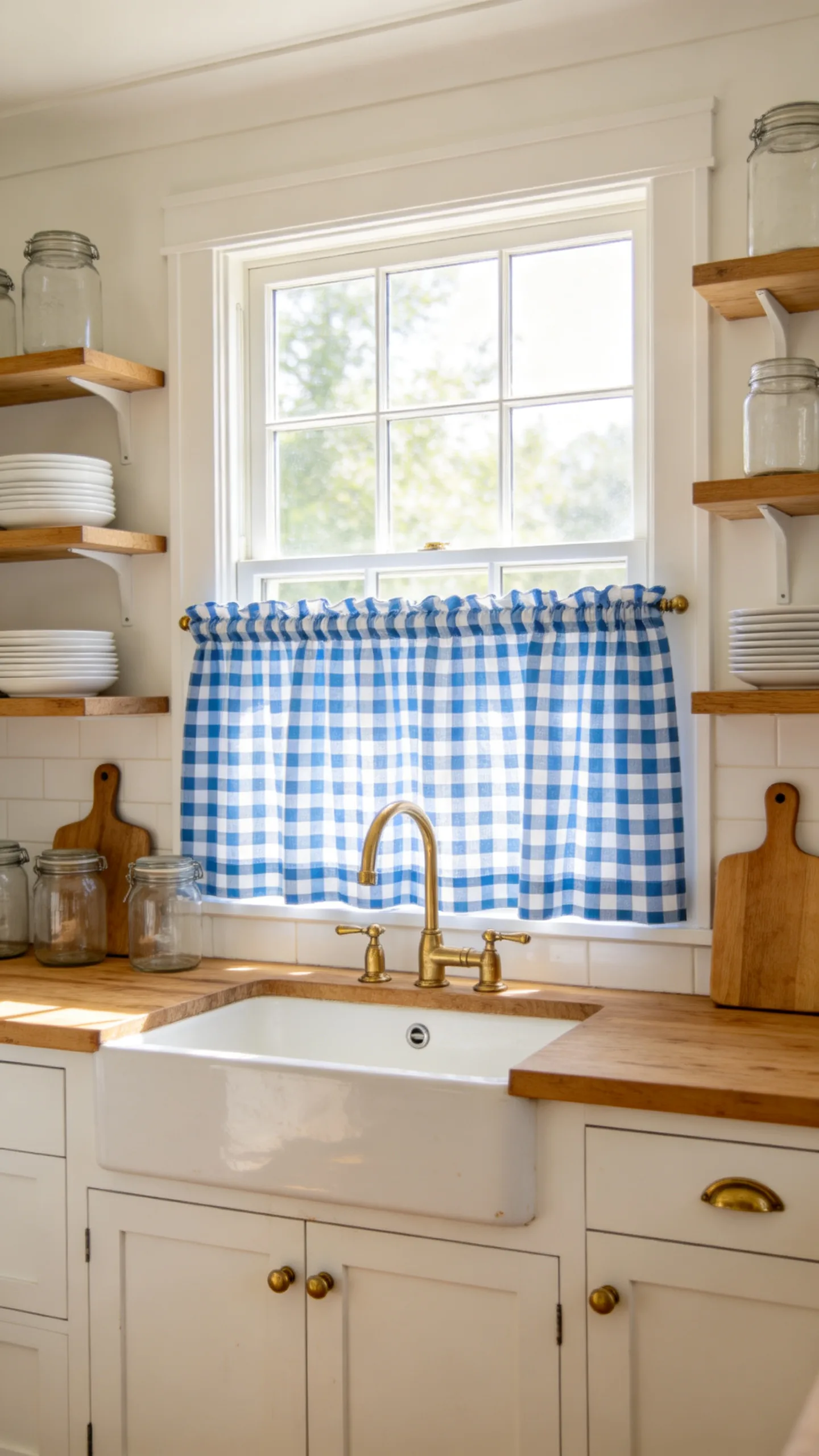
Blue and white gingham curtains are perfect for kitchens, breakfast nooks, laundry rooms, and cottage-style spaces. The small check pattern feels cheerful without requiring bold wall color or major decor changes. Use cafe curtains on the lower half of a kitchen window to allow daylight in while adding softness and privacy.
In a white kitchen with butcher block counters, brass hardware, or open shelves, blue gingham adds a friendly, lived-in detail. Keep nearby accessories simple: white dishes, clear glass jars, wood cutting boards, and a small blue pitcher are enough to repeat the color without crowding the counters.
7. Indigo Block Print Curtains for a Collected Room
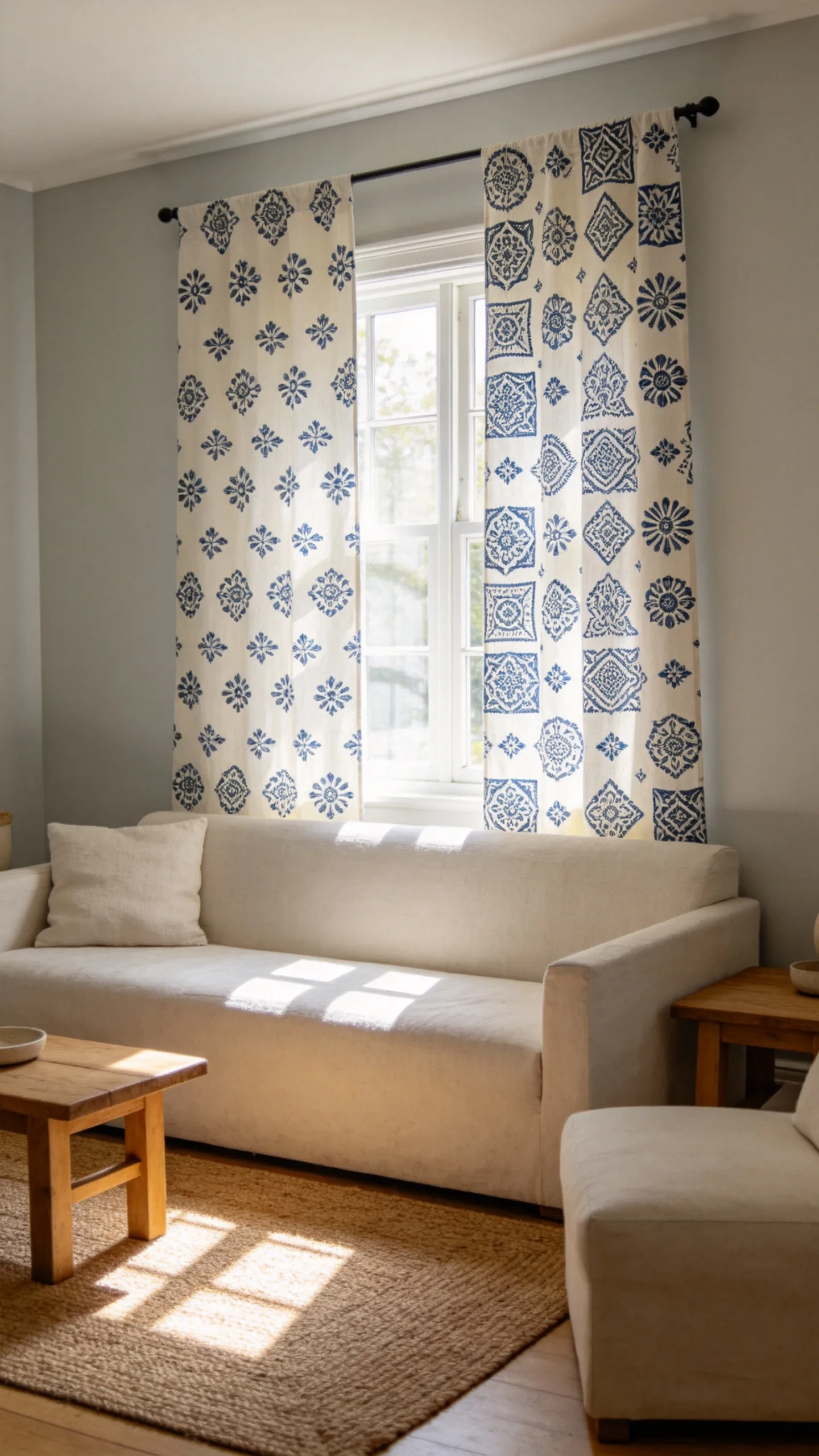
Indigo block print curtains bring a handcrafted look to living rooms, bedrooms, and reading corners. These prints often have repeating floral, paisley, or geometric motifs that feel classic but relaxed. They are especially useful in rooms with neutral furniture because they add pattern and depth without needing several colorful accents.
Try indigo block print panels against white, cream, or pale gray walls. Pair them with a natural fiber rug, a linen sofa, and wood side tables for a layered look. If the room already has patterned pillows or art, choose a smaller-scale curtain print so the window treatment supports the room rather than dominating it.
8. Blue and White Sheer Curtains for Soft Filtered Light
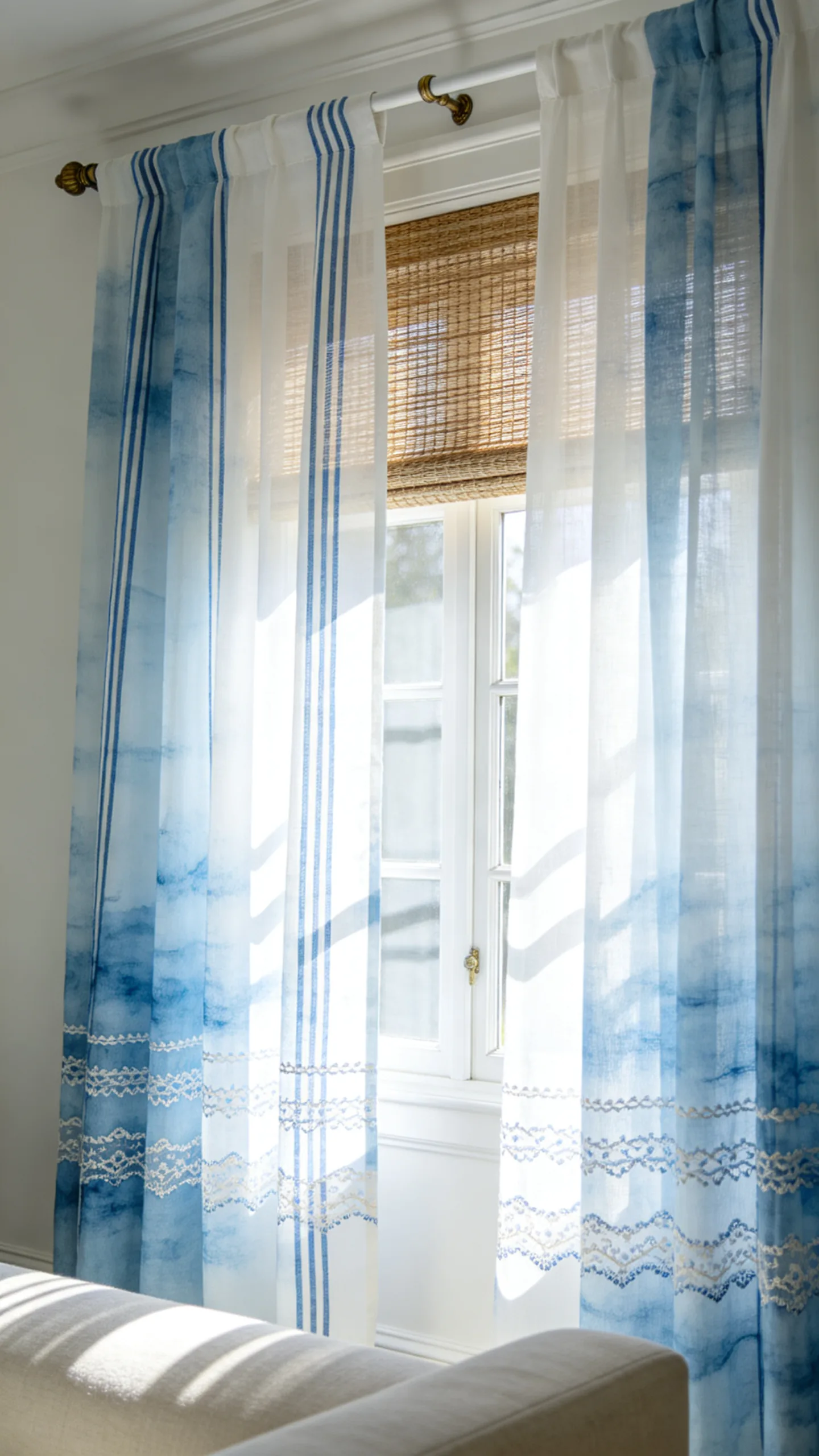
Blue and white sheer curtains are a good choice for spaces where you want softness more than privacy, such as sunrooms, sitting rooms, or layered bedroom windows. A sheer white panel with a faint blue stripe, embroidered detail, or watercolor pattern can diffuse sunlight and make the room feel lighter.
For a fresh classic effect, use sheers with woven shades or heavier side panels. This layered setup works well in rooms where you want daytime brightness but need privacy at night. Choose a slim rod in white, antique brass, or matte black depending on the other finishes in the room.
9. White Curtains with Blue Border for a Crisp Bedroom Frame
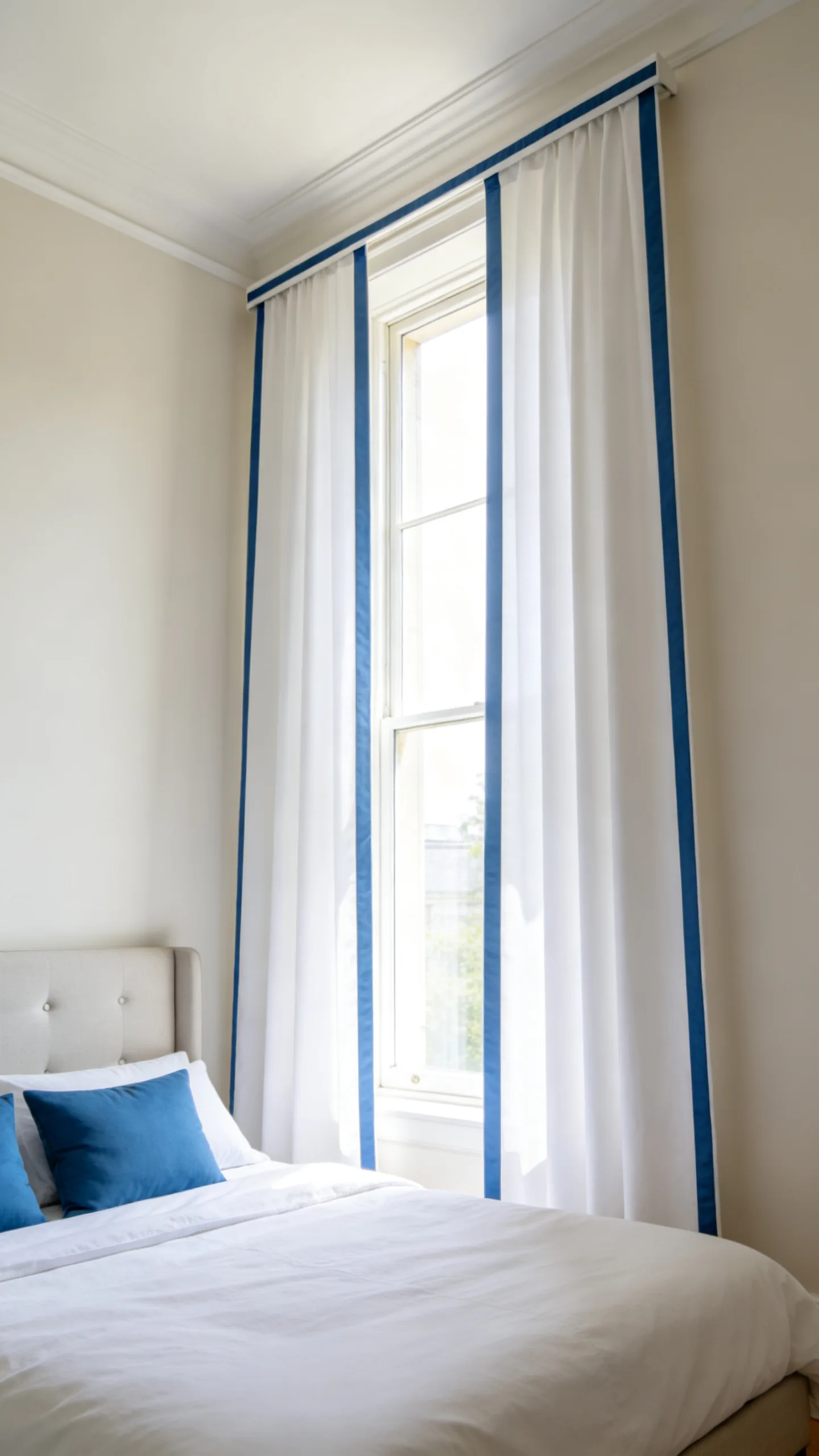
White curtains with a blue border create a clean frame around bedroom windows. The border can run along the inner edge, outer edge, or hem, giving the panels a tailored look without a busy allover pattern. This is especially useful in bedrooms where the bedding, rug, or wallpaper already has pattern.
Use these curtains with a white duvet, blue accent pillows, and a simple upholstered headboard. If the room has low ceilings, hang the rod close to the ceiling and let the panels fall straight to the floor. The blue border draws the eye vertically, helping the window wall feel taller and more finished.
10. Blue and White Ikat Curtains for a Fresh Traditional Mix
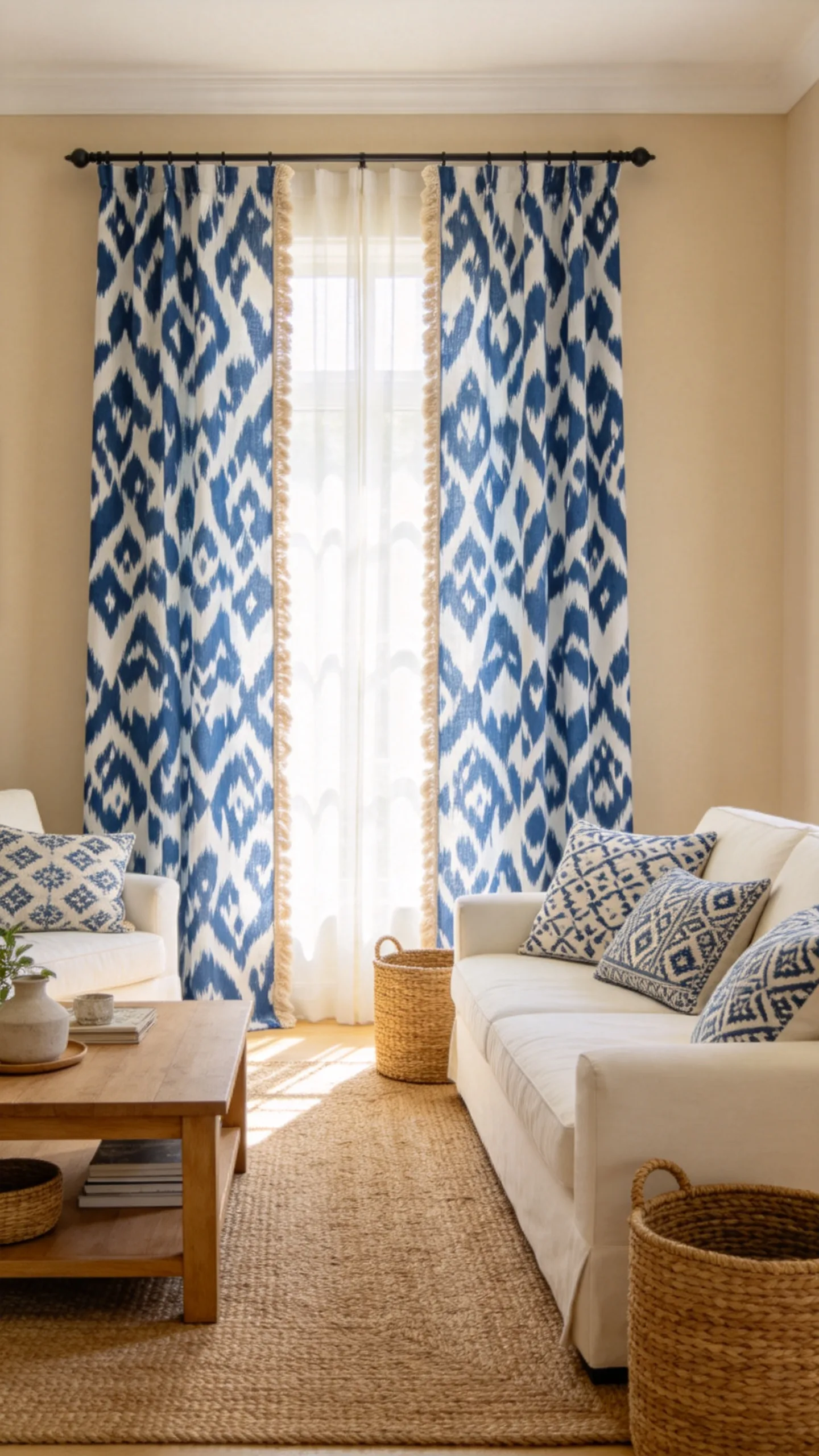
Blue and white ikat curtains are a good option when you want a classic palette with a slightly more relaxed, global-inspired pattern. The softened edges of ikat designs make them feel less formal than crisp geometrics, which works well in family rooms, guest rooms, and casual living spaces.
Pair ikat panels with solid-colored upholstery, woven baskets, and simple wood furniture. A navy and white ikat pattern can anchor a room with beige walls and a jute rug, while a lighter sky blue version can brighten a small bedroom. Keep other patterns in the room smaller or simpler so the curtains remain the main decorative print.
11. Blue Pinstripe Curtains for a Subtle Home Office
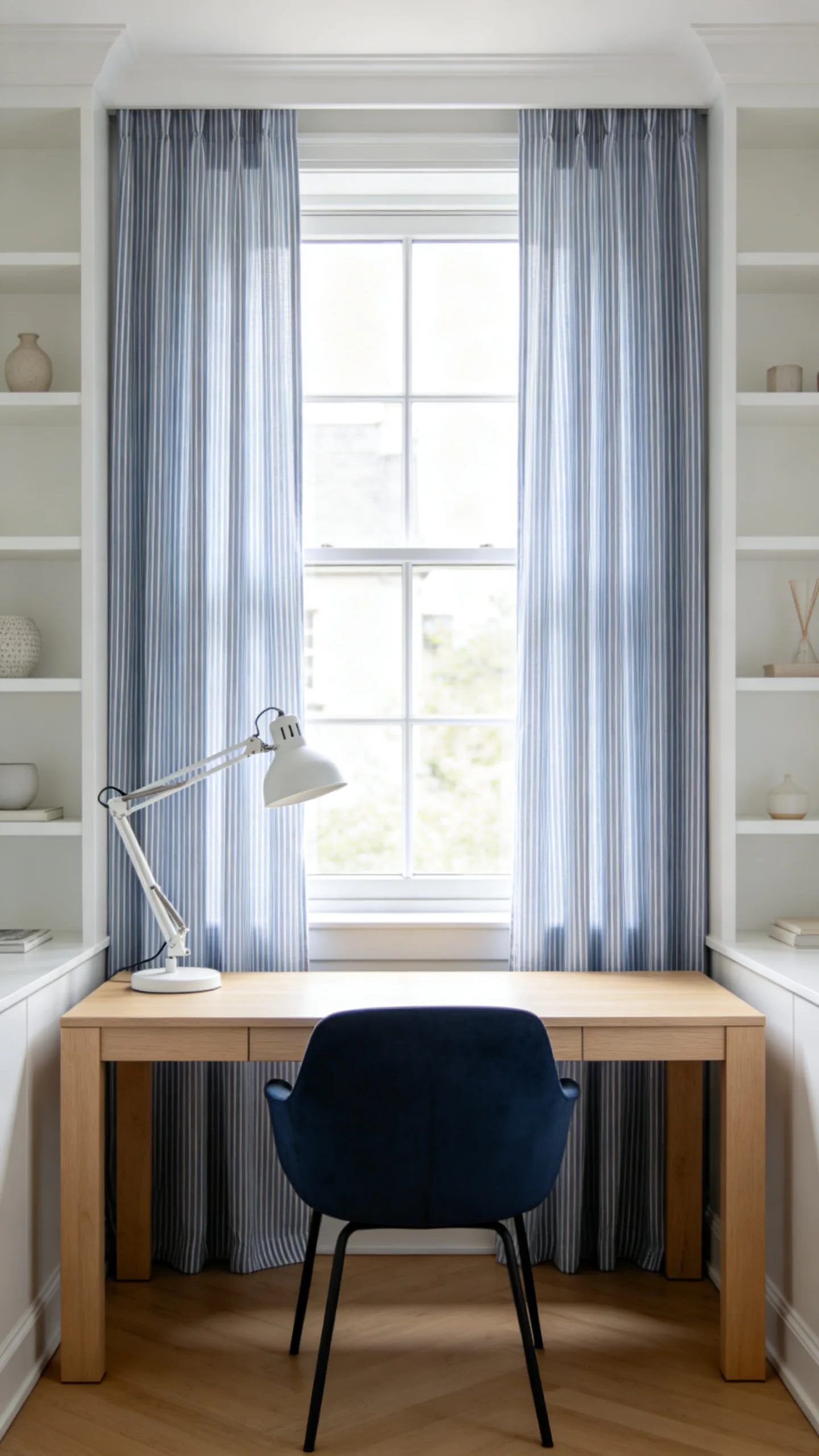
Blue pinstripe curtains are a refined choice for a home office, study nook, or small guest room. The fine vertical lines add interest while keeping the room calm and orderly. They also work well with desks, bookcases, and built-in shelving because the pattern does not visually compete with books or office supplies.
In a compact office, mount the rod wider than the window to expose as much glass as possible when the curtains are open. This helps protect sightlines and makes the room feel brighter. Pair the curtains with a navy desk chair, a white task lamp, and light wood or painted shelving for a fresh but focused workspace.
12. Blue and White Chinoiserie Curtains for a Statement Window
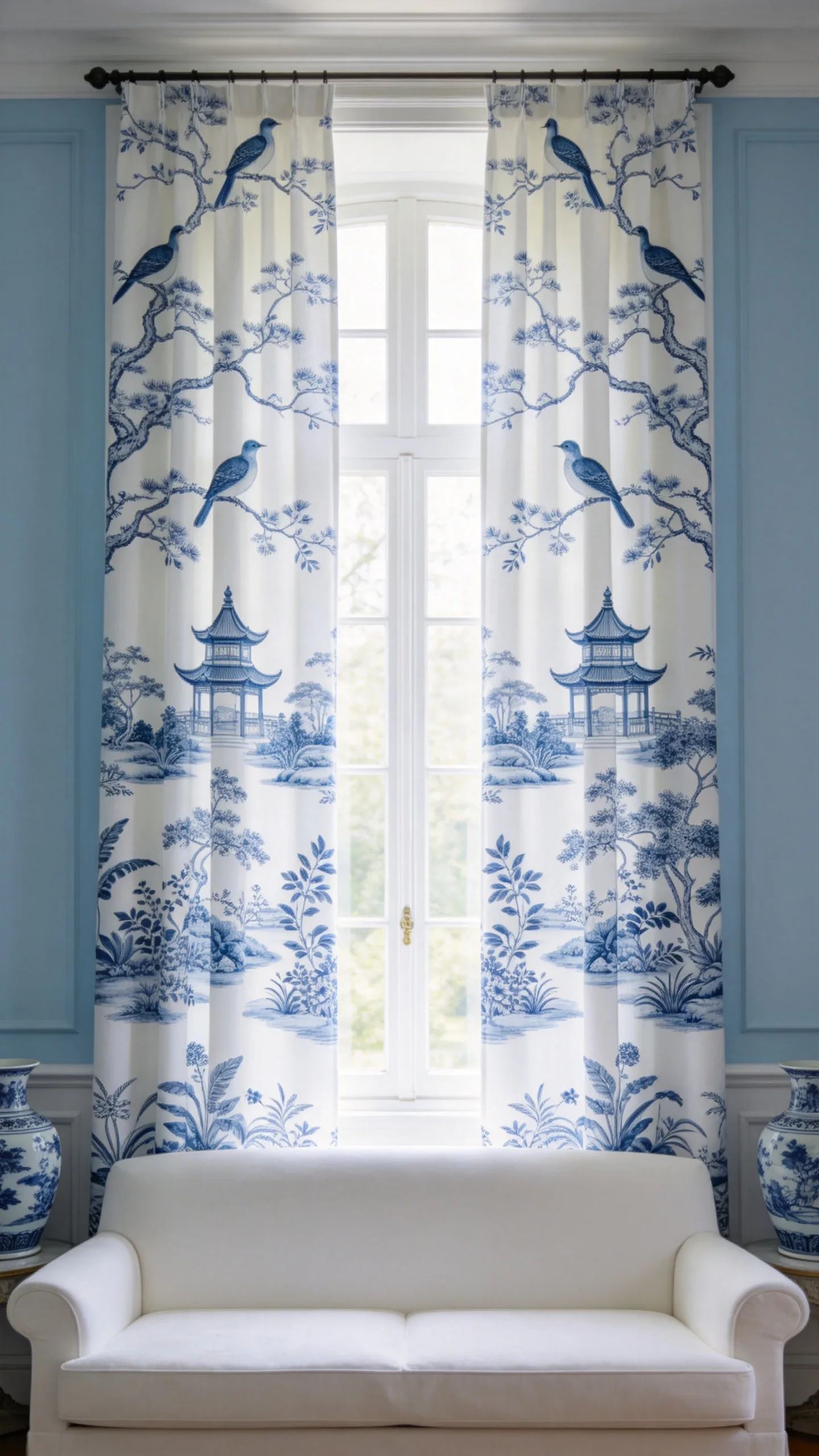
Blue and white chinoiserie curtains can act as the main decorative feature in a living room, dining room, or primary bedroom. Patterns with birds, branches, pagodas, or garden scenes bring movement and elegance to the window wall. Because the design is often detailed, these curtains look best when the surrounding furniture and walls are relatively simple.
Use chinoiserie panels in a room with white or soft blue walls, a classic sofa, and blue-and-white porcelain accents. To avoid making the space feel crowded, repeat the pattern only once or twice through smaller pieces, such as a ginger jar or lumbar pillow. Let the curtains be the focal point and keep large furniture pieces in solids.
13. Denim Blue Curtains with White Walls for Relaxed Classic Style
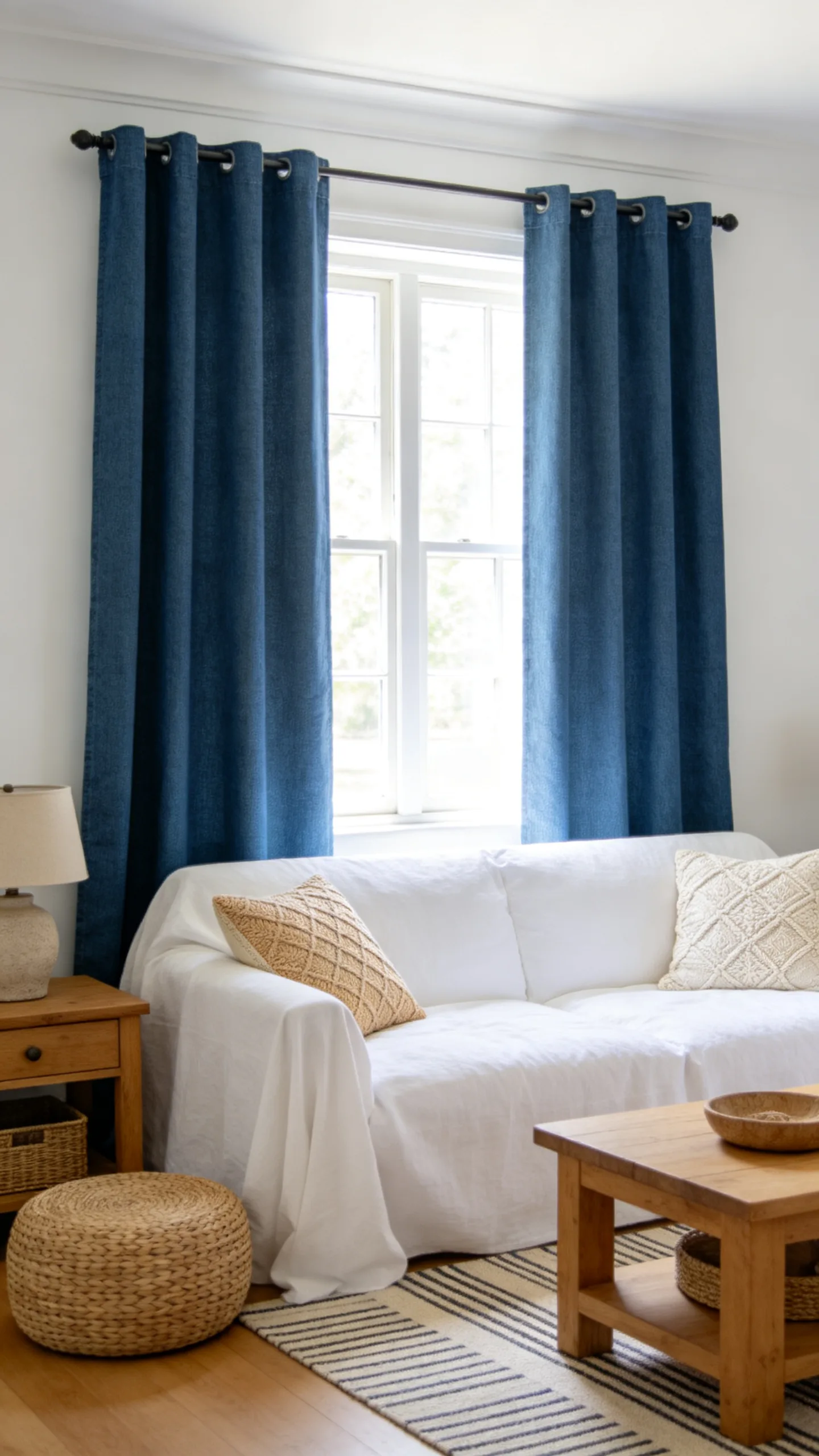
Solid denim blue curtains against white walls create a relaxed but still classic look. This idea works well in casual bedrooms, family rooms, and coastal-inspired spaces where you want color without a complicated pattern. Denim blue is softer than navy, so it pairs easily with cream, tan, natural wood, and woven textures.
Choose cotton, linen, or a cotton-linen blend for an easygoing finish. In a family room, denim blue panels can balance a white slipcovered sofa and a striped rug. In a bedroom, they add weight around the windows while still feeling calm with white bedding and light wood nightstands.
14. Blue and White Roman Shades for Small Windows
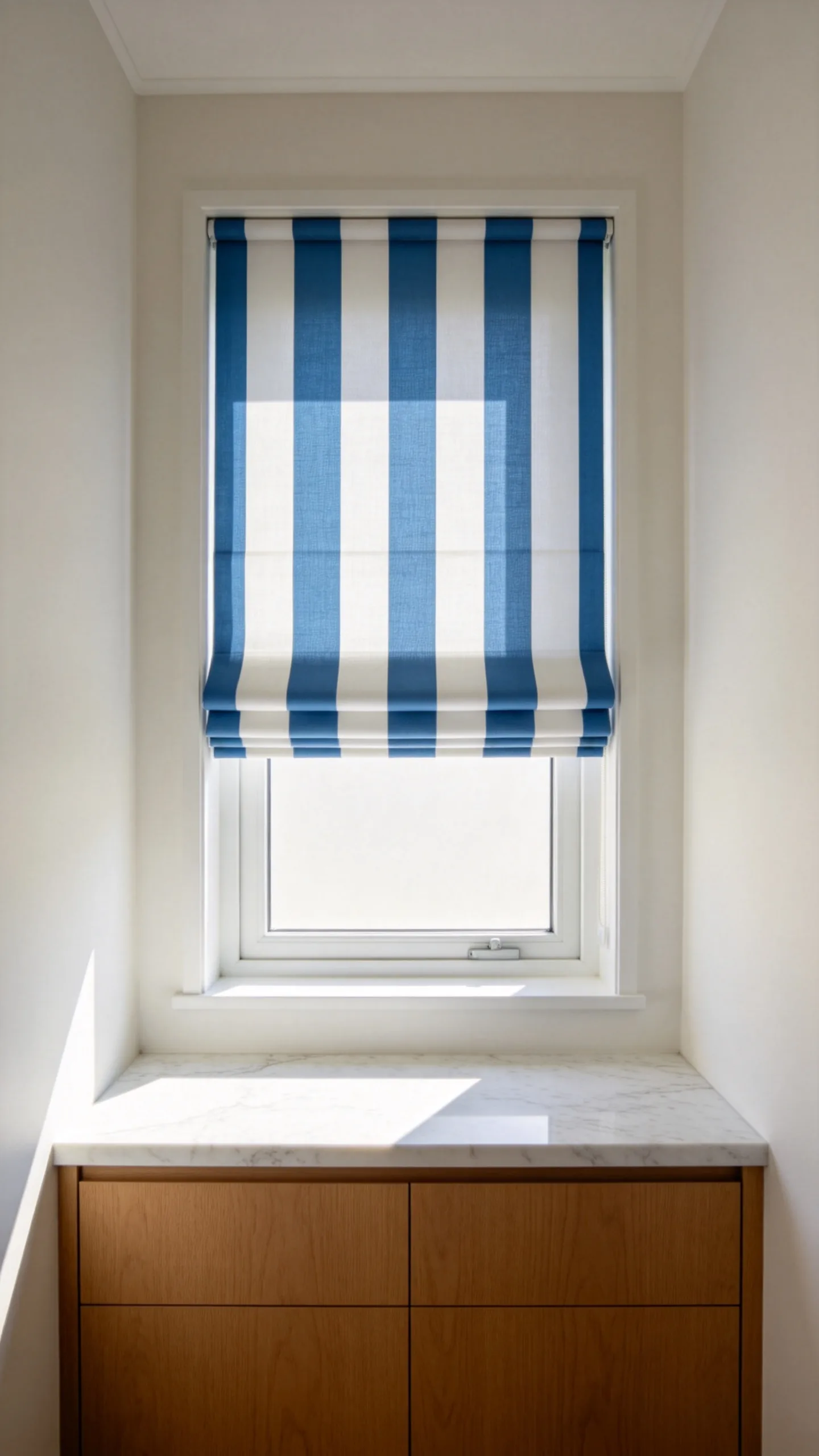
Blue and white Roman shades are a practical solution for small windows, narrow rooms, or spaces where long curtain panels would interrupt furniture placement. They work especially well in kitchens, bathrooms, laundry rooms, and bedrooms with a desk or dresser under the window.
Choose a blue and white stripe, floral, or geometric pattern depending on the room’s style. A Roman shade keeps the fabric close to the window, which preserves floor space and improves traffic flow in tight areas. Inside-mount shades create a neat built-in look, while outside-mount shades can make a small window appear larger.
15. Layered Blue Curtains with White Sheers for Flexible Light Control
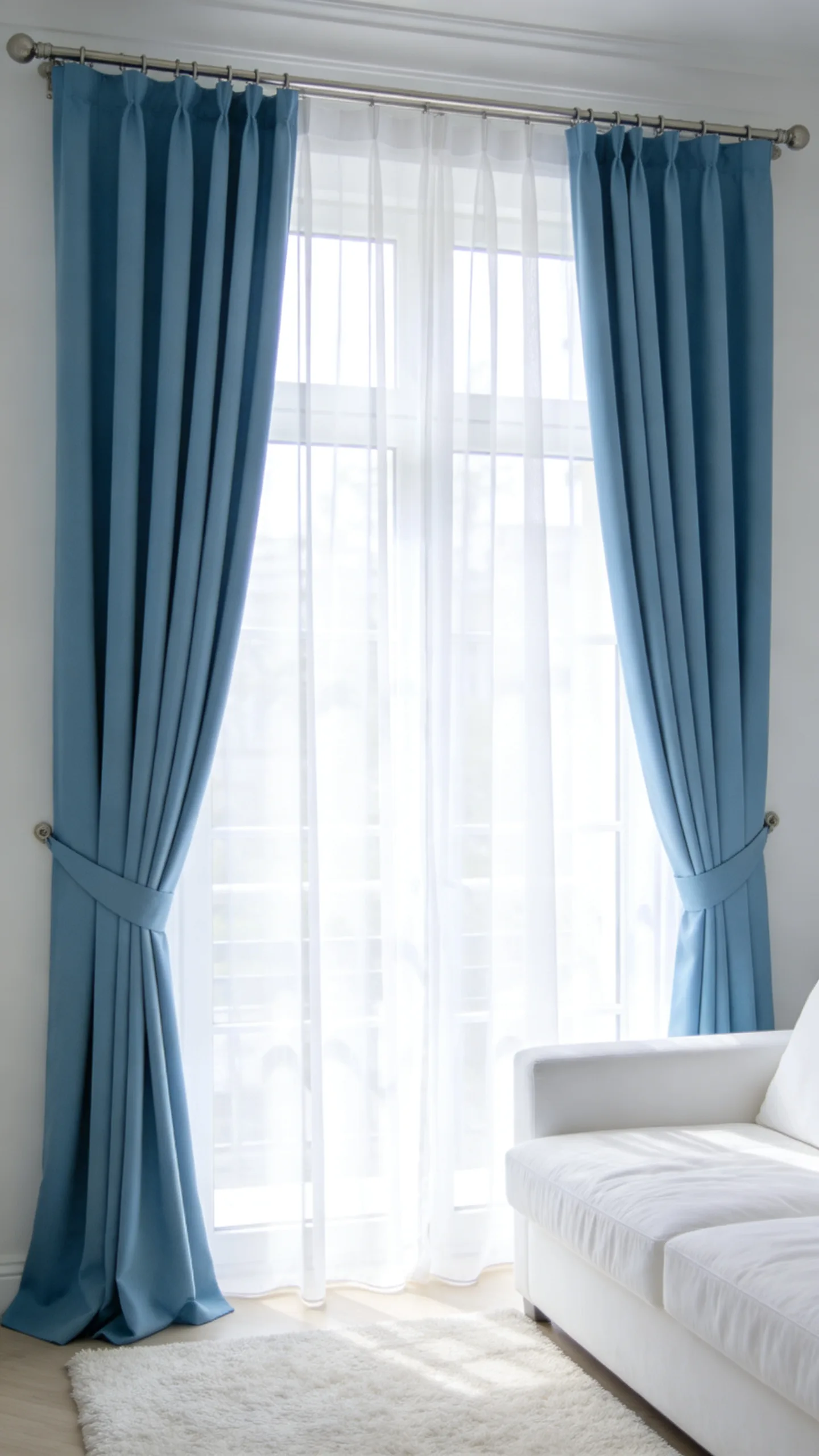
Layering blue curtains over white sheers gives a room more control over privacy, light, and softness. This combination works especially well in bedrooms and living rooms where the windows need to look finished during the day and function well at night. The white sheers filter daylight, while the blue outer panels add color and depth.
Use solid navy, denim, or pale blue outer panels depending on the room’s palette. In a bedroom, pair the layered curtains with blackout lining if you need a darker sleeping space. In a living room, keep the outer panels decorative and let the sheers soften the view. A double curtain rod makes the layers easier to open and close without bunching the fabric.

From the editors
Decor Compass Editorial Team
We turn practical home research into clear, useful room-by-room ideas.